30 Round Coffee Table Decor Ideas That Create Perfect Balance, Flow, and Elevated Living Room Styling
Round coffee tables require a completely different styling approach than rectangular ones. Without corners to guide placement, everything depends on center anchoring, radial balance, and smooth visual flow. When styled correctly, a round table softens the room, improves movement, and becomes a natural focal point without feeling heavy or cluttered.
The ideas below are built for real use—small apartments, family homes, and modern interiors—focusing on curved layouts, layered height, and intentional spacing so your table looks designed, not decorated.
1. Central Anchor Tray With Radial Styling Layout
Ideal for: Small to medium round tables that need clear structure.
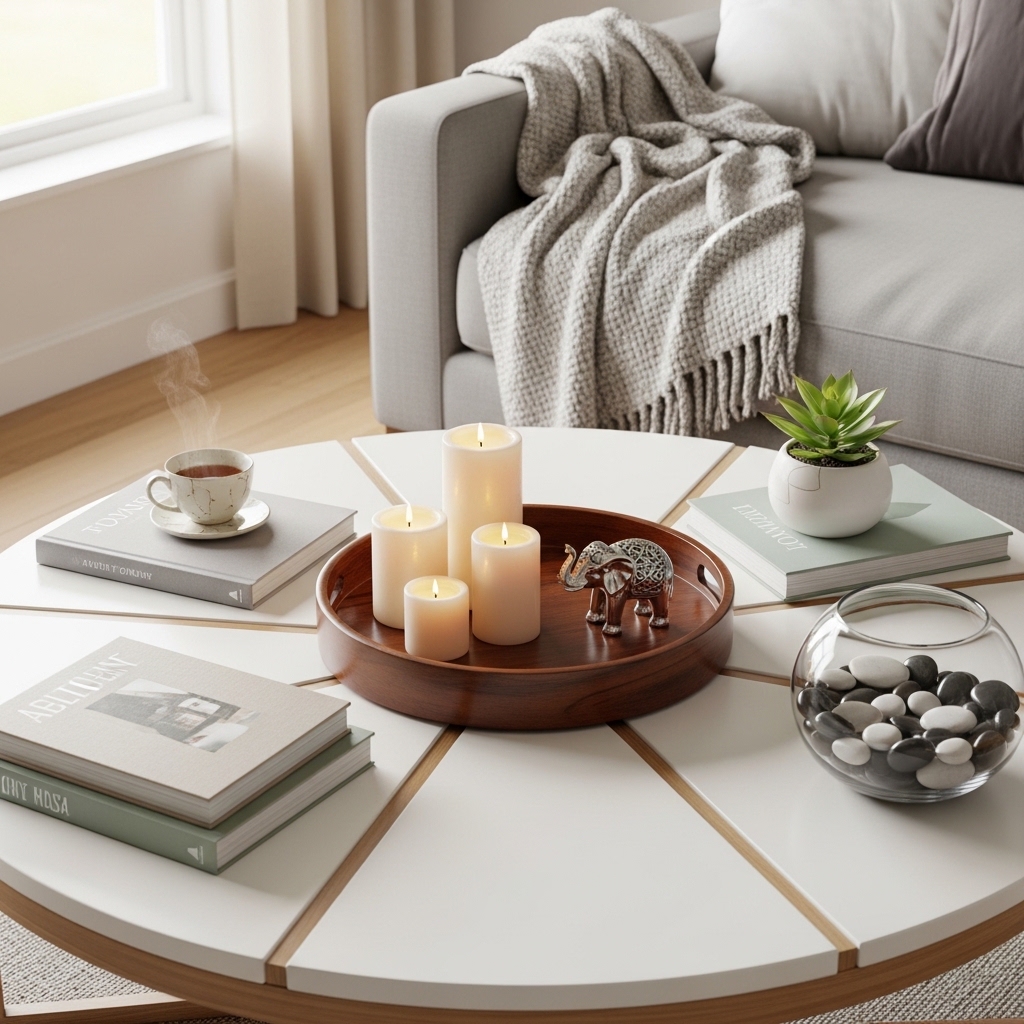
Place a round tray in the exact center of the table and build your decor inside it using 2–3 elements like a candle, small vase, and a decorative object. Keep the arrangement slightly varied in height while maintaining a tight grouping so the center feels cohesive. The outer edge of the table should remain mostly empty to preserve movement and usability.
This works because round tables need a strong central anchor to prevent items from feeling scattered. The tray creates a defined visual boundary that organizes everything into a clean, intentional layout while still respecting the circular shape. Without this structure, decor often looks randomly placed.
Pro Tip: Choose a tray that’s about one-third the diameter of your table.
Mistake to Avoid: Don’t push the tray off-center—it breaks circular balance.
2. Single Elevated Centerpiece for Clean Minimal Focus
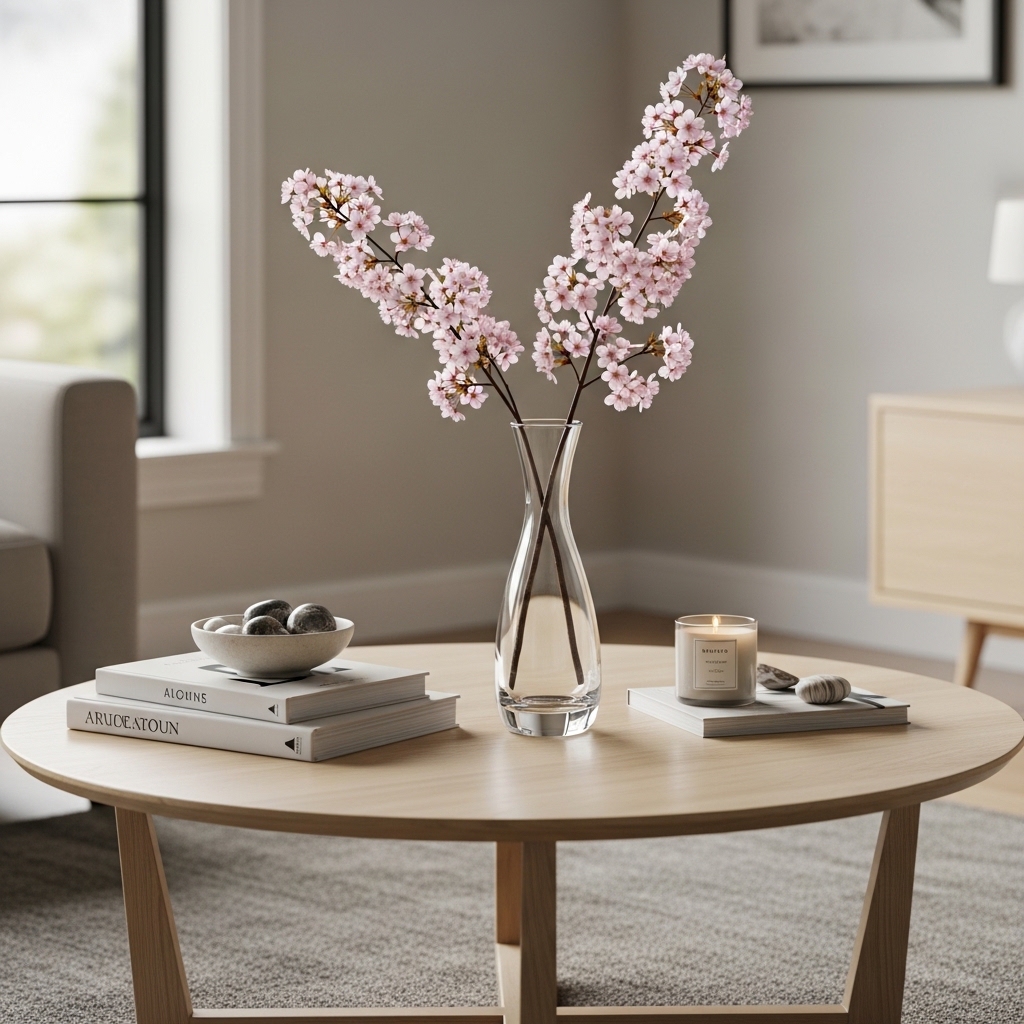
Ideal for: Minimalist interiors and small living rooms.
Use one medium-height object—like a ceramic vase or sculptural decor—placed directly at the center. Keep the rest of the table empty so the eye naturally focuses on that one piece. Choose curved or soft-edged shapes to complement the round surface.
This works because the center of a round table naturally draws attention, so one strong element is enough to define the space. Adding more items dilutes the impact and creates visual clutter. Minimal styling keeps the table functional and visually calm.
Pro Tip: Use neutral tones for versatility across seasons.
Mistake to Avoid: Don’t choose an oversized object that blocks visibility.
3. Offset Duo Arrangement for Natural Circular Flow
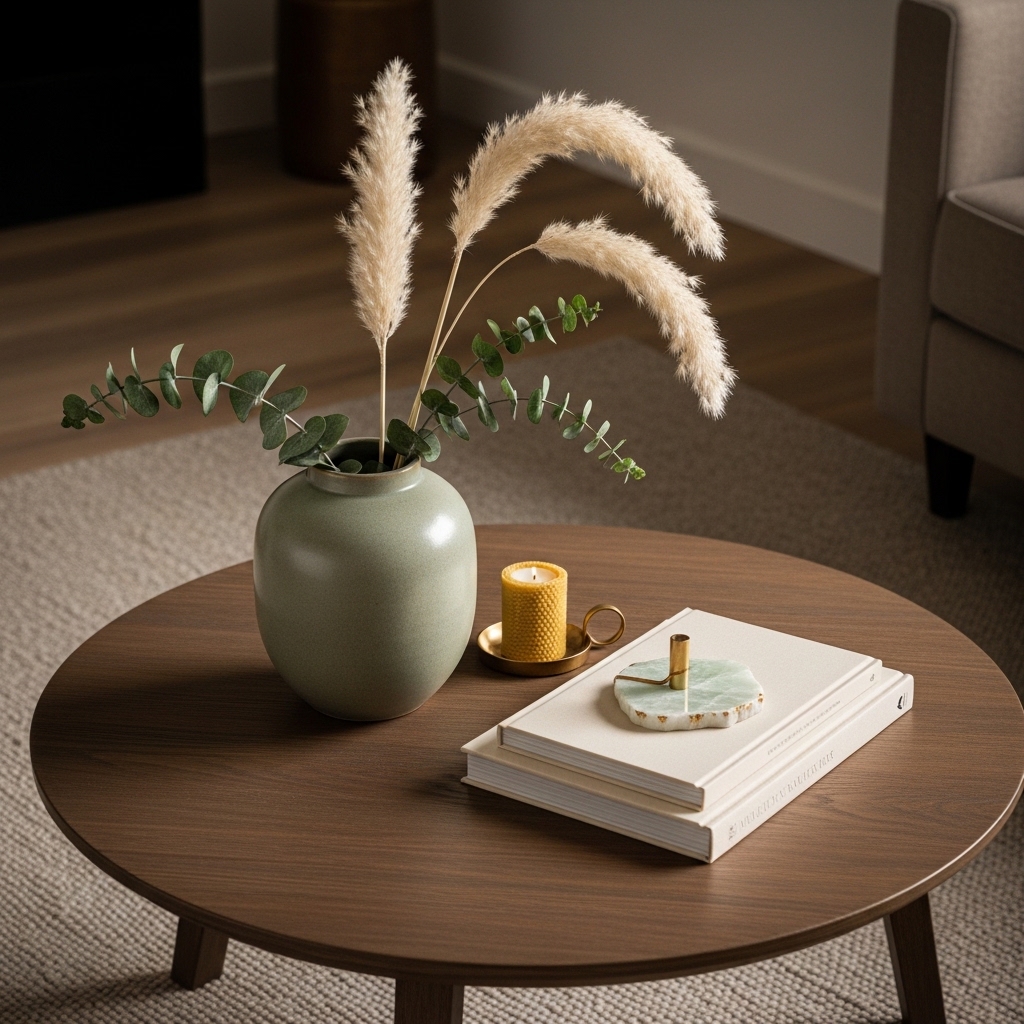
Ideal for: Casual modern living rooms and relaxed layouts.
Place two items—a vase and a candle, for example—slightly off-center, following the curve of the table rather than aligning straight. Keep one element taller than the other and allow space around them for breathing room.
This works because asymmetry works better on round surfaces, creating movement instead of rigid structure. The curved placement aligns with the table’s shape, making the arrangement feel natural and balanced.
Pro Tip: Position items along an invisible curve, not a straight line.
Mistake to Avoid: Don’t place both items tightly in the center.
4. Circular Candle Cluster for Even Warm Ambience
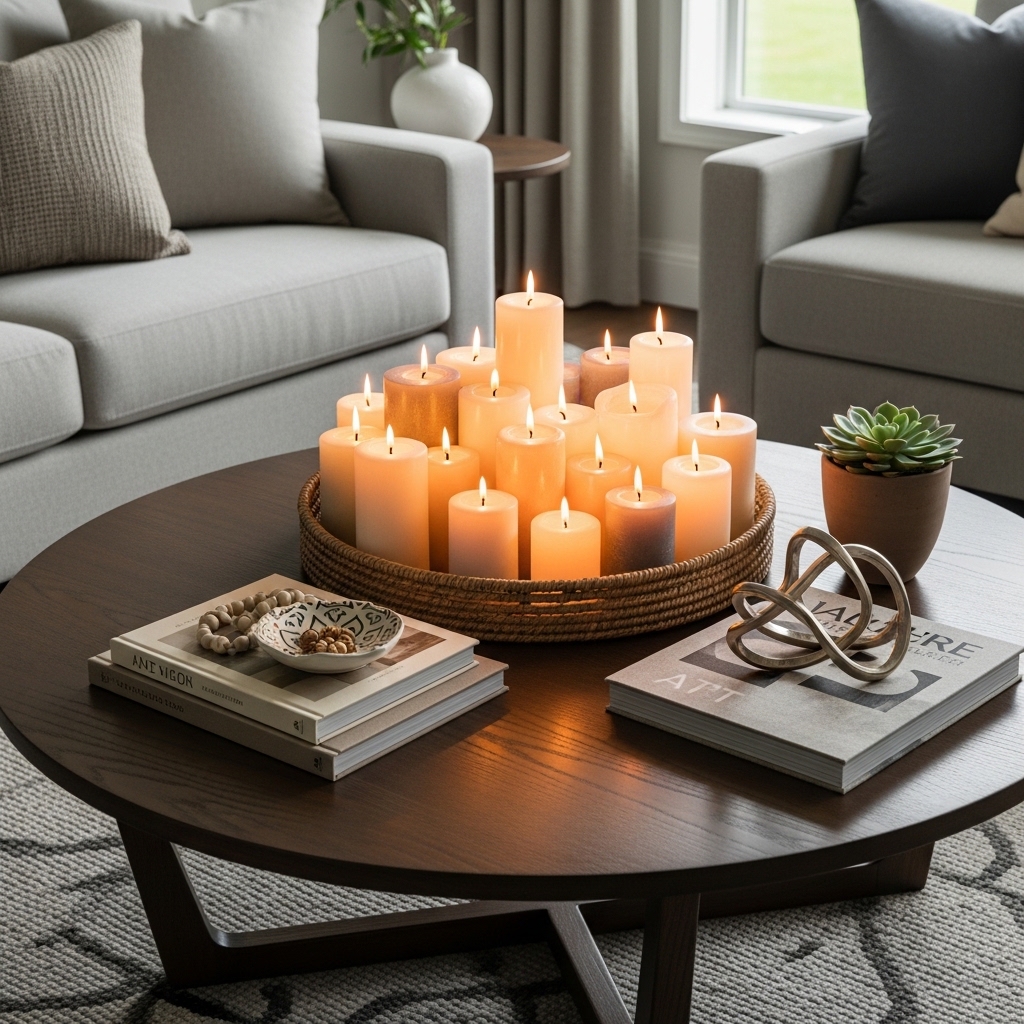
Ideal for: Evening settings and cozy interiors.
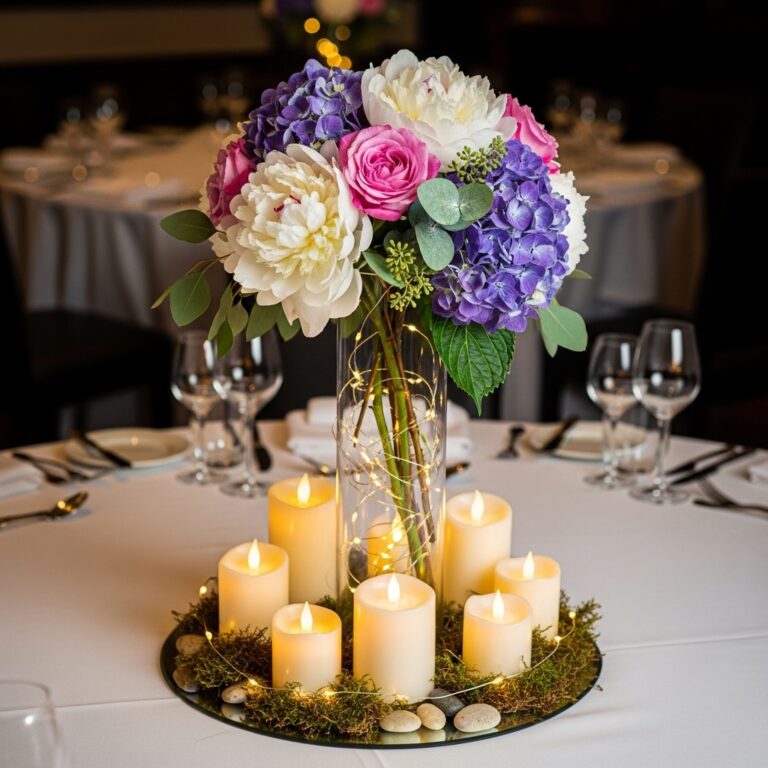
Arrange three to five candles in a loose circular formation around the center, varying heights slightly. Keep spacing consistent so the arrangement feels intentional rather than random.
This works because repeating circular shapes reinforces harmony while the candles create a soft glow across the table. Uneven spacing or mixed styles can disrupt the visual rhythm.
Pro Tip: Stick to one color palette for cohesion.
Mistake to Avoid: Don’t mix too many candle styles or sizes.
5. Low Bowl Centerpiece With Functional Styling
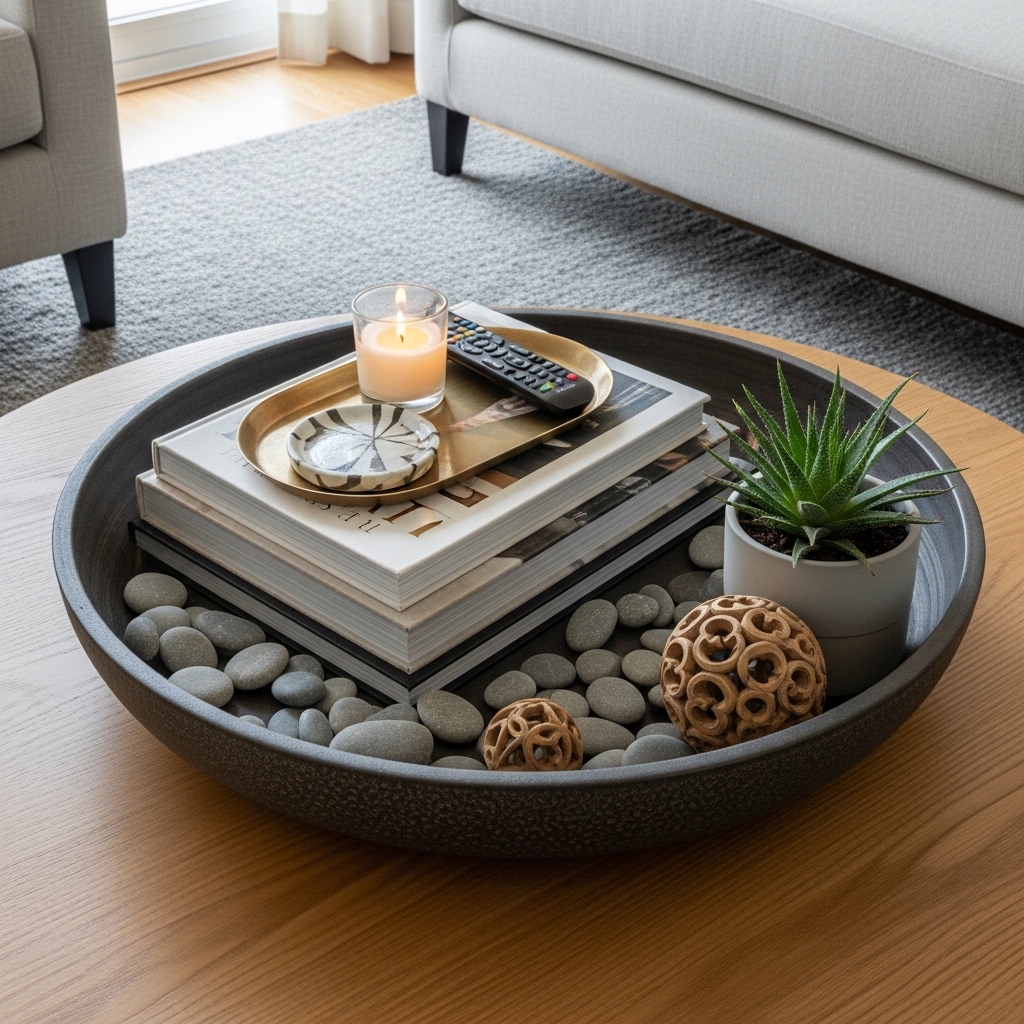
Ideal for: Family spaces and everyday use.
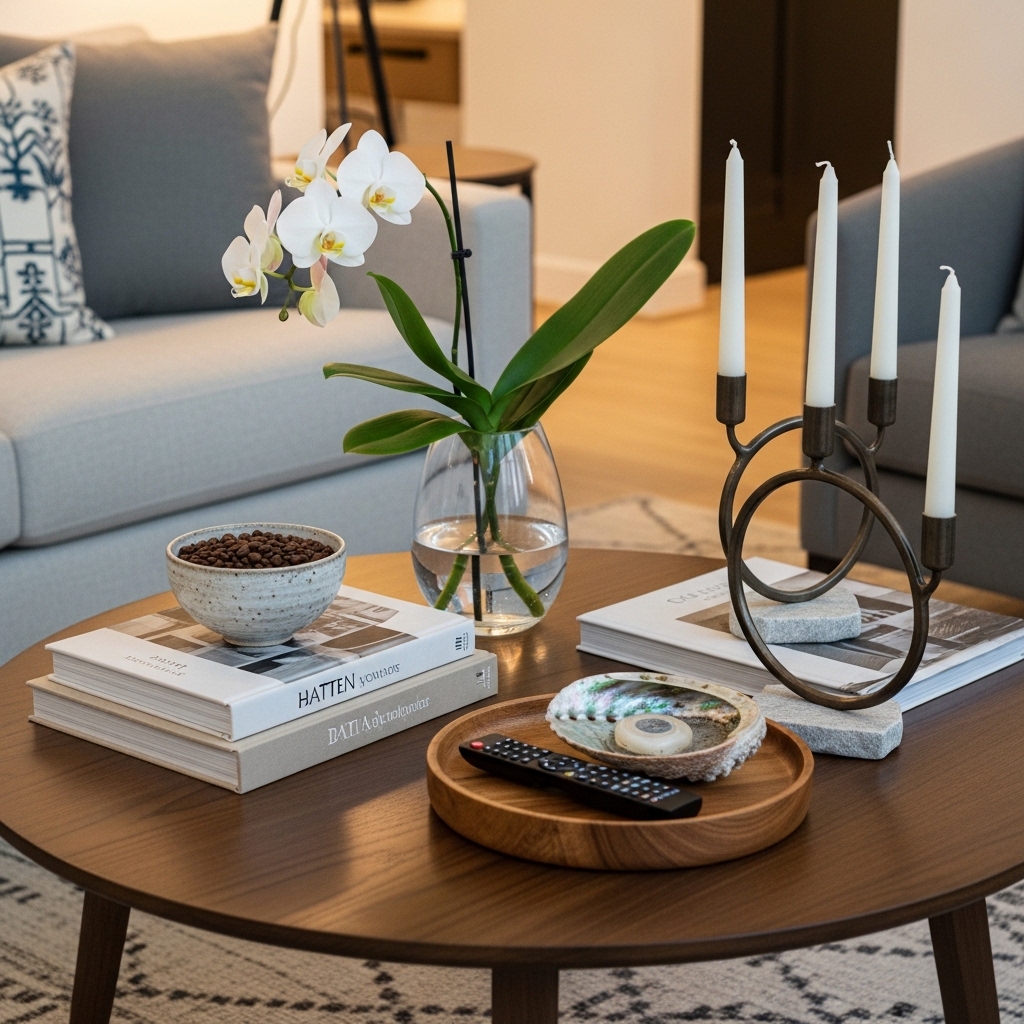
Place a shallow decorative bowl at the center and use it to hold small items like remotes or decorative accents. Keep contents minimal and neatly arranged so the bowl remains visually clean.
This works because bowls naturally match the round form and provide both style and function. They help contain clutter while maintaining a polished look. Overfilling reduces visual clarity.
Pro Tip: Choose stone or ceramic for a grounded feel.
Mistake to Avoid: Don’t overcrowd the bowl with random items.
6. Curved Book Stack With Top Accent Piece
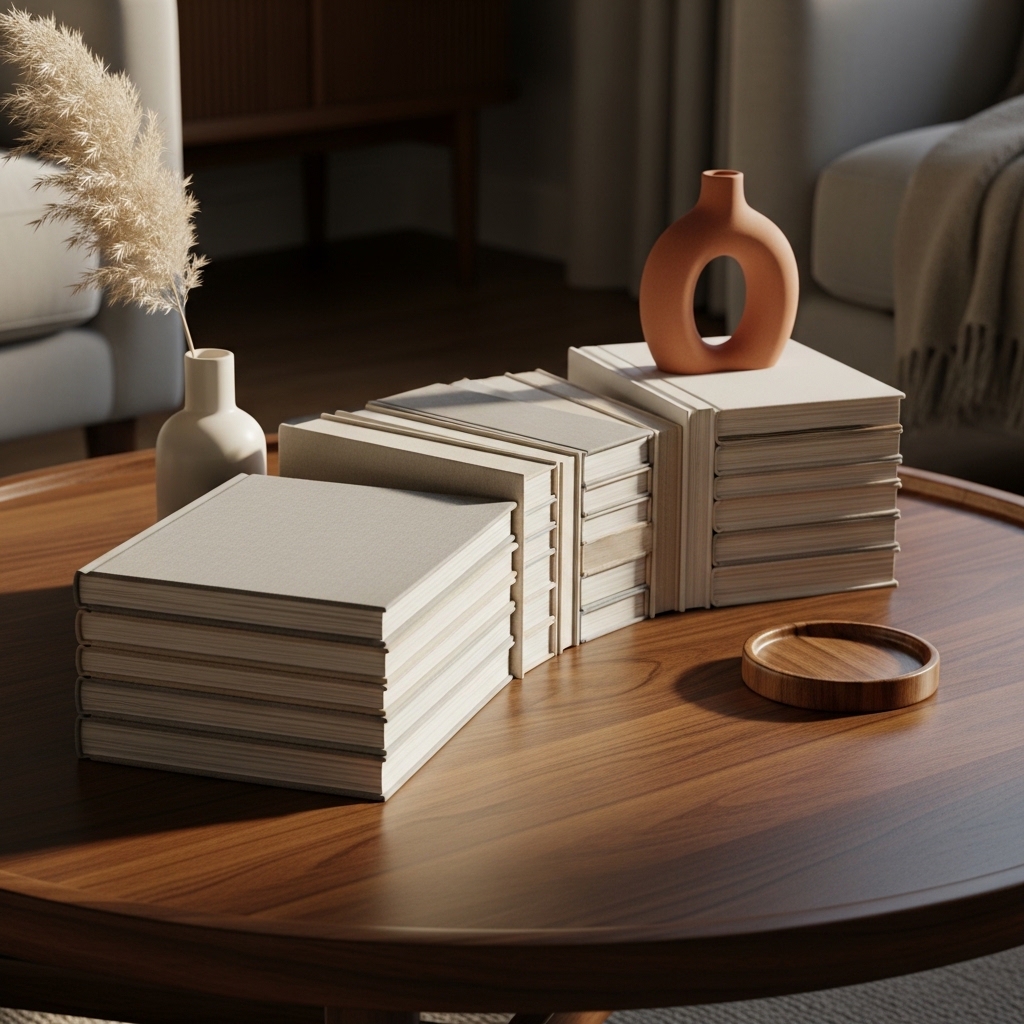
Ideal for: Medium tables needing layered height.
Stack two or three books slightly angled along the curve of the table instead of placing them straight. Add a small decor piece or candle on top to complete the setup.
This works because angled placement respects the circular form and avoids rigid lines that clash with the table shape. The layering adds depth without spreading items across the surface.
Pro Tip: Use soft or neutral-toned book covers.
Mistake to Avoid: Don’t align books in a straight horizontal line.
7. Triangular Trio Setup Adapted for Round Surfaces
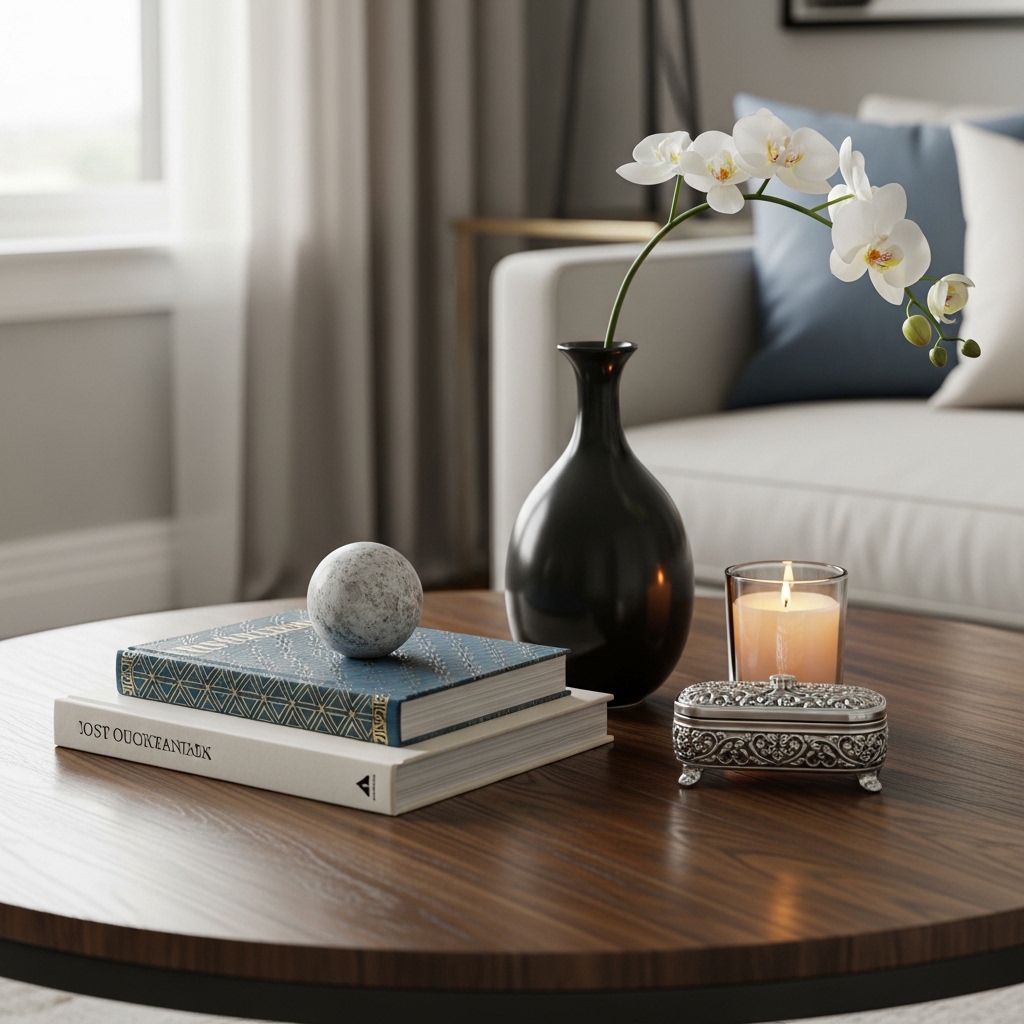
Ideal for: Beginners who want a balanced formula.
Use three items of different heights arranged in a loose triangle, but adjust spacing so the triangle feels rounded rather than sharp. Keep the tallest piece slightly off-center.
This works because the triangle creates natural balance, while soft spacing adapts it to the round table shape. It prevents the arrangement from feeling too structured or forced.
Pro Tip: Keep one dominant focal piece.
Mistake to Avoid: Don’t make the triangle too wide.
8. Greenery + Neutral Object Pairing for Soft Contrast
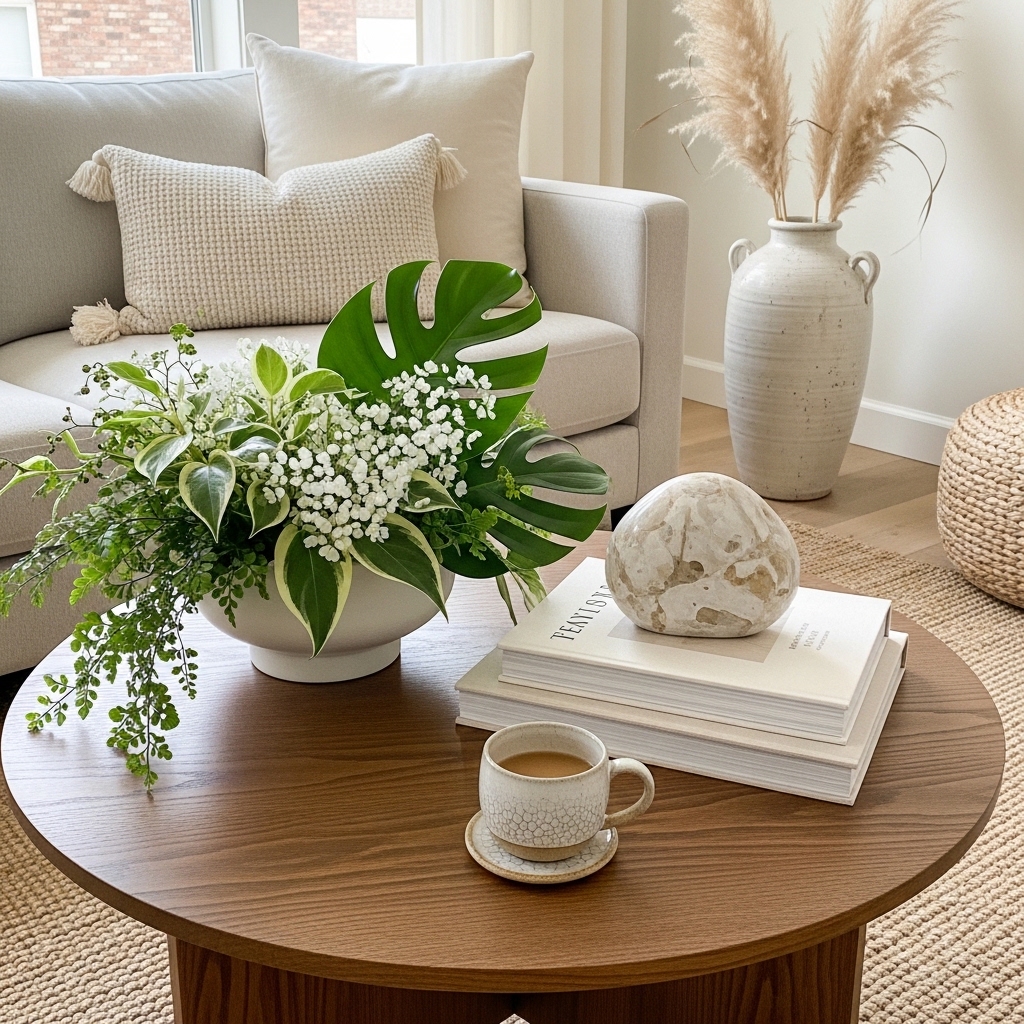
Ideal for: Bright rooms needing natural texture.
Combine a small plant with a neutral decor item like a ceramic object or candle. Place them slightly off-center with enough space between them.
This works because greenery adds life while neutral objects provide balance. Together, they create a calm, organic composition that feels effortless.
Pro Tip: Use low-maintenance plants like succulents.
Mistake to Avoid: Don’t use oversized pots.
9. Glass Accent With Minimal Placement for Light Flow
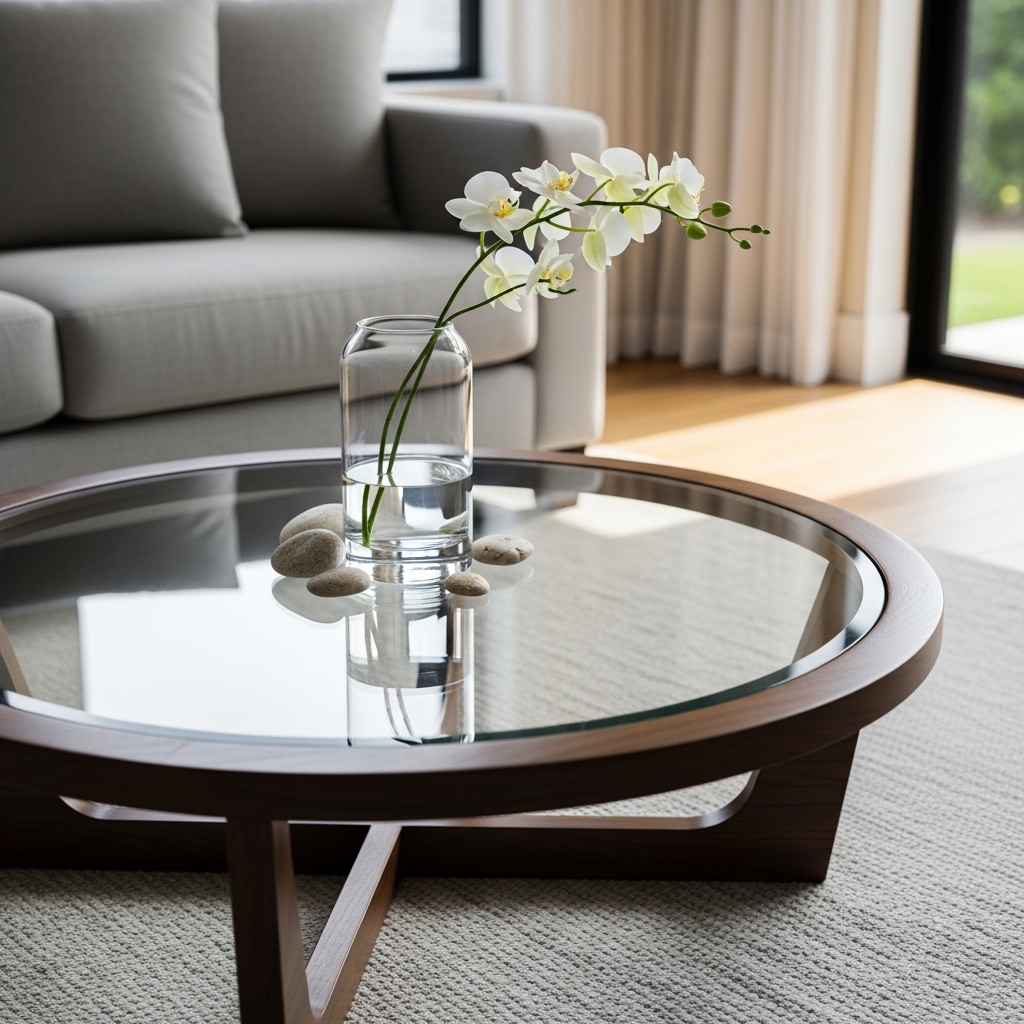
Ideal for: Small apartments and airy interiors.
Use one or two glass decor pieces placed near the center or slightly offset. Keep the rest of the table empty to maintain openness.
This works because glass reduces visual weight, allowing the table to feel light and uncluttered. Too many items cancel this effect.
Pro Tip: Pair glass with one solid element for contrast.
Mistake to Avoid: Don’t cluster multiple glass items together.
10. Radial Multi-Object Layout for Larger Tables
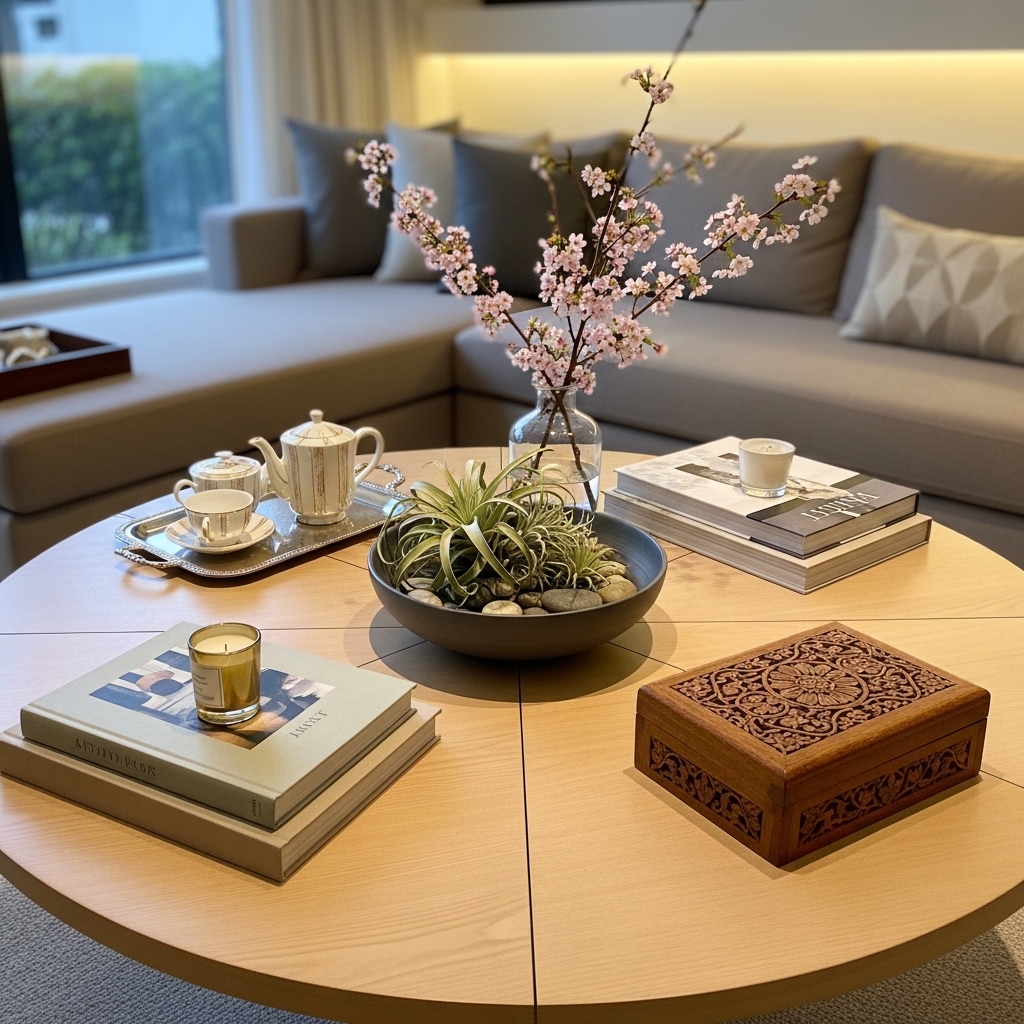
Ideal for: Large round coffee tables.
Place a central anchor piece and arrange smaller items around it in a circular pattern, keeping spacing even. Avoid spreading items too far toward the edges.
This works because radial layouts mirror the table’s shape, creating harmony and flow. It fills space without making the table feel cluttered.
Pro Tip: Keep the outer edge mostly clear.
Mistake to Avoid: Don’t push decor to the perimeter.
11. Soft Fabric Base Layer for Grounded Styling
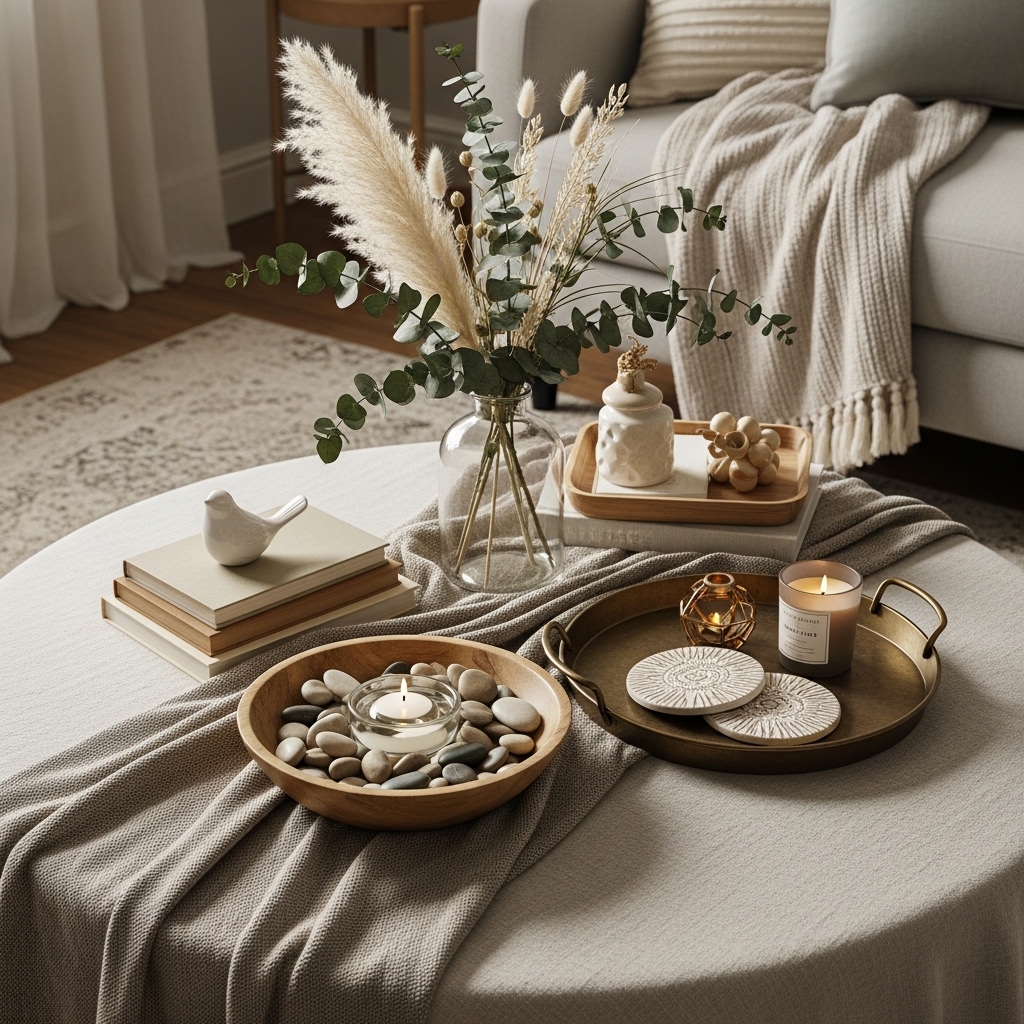
Ideal for: Hard-surface tables needing warmth.
Place a round fabric mat or soft textile under your decor cluster. Keep it proportionate and centered.
This works because fabric adds softness and anchors items visually.
Pro Tip: Use linen or cotton textures.
Mistake to Avoid: Don’t use oversized fabric.
12. Marble Accent Center Focus for Subtle Luxury
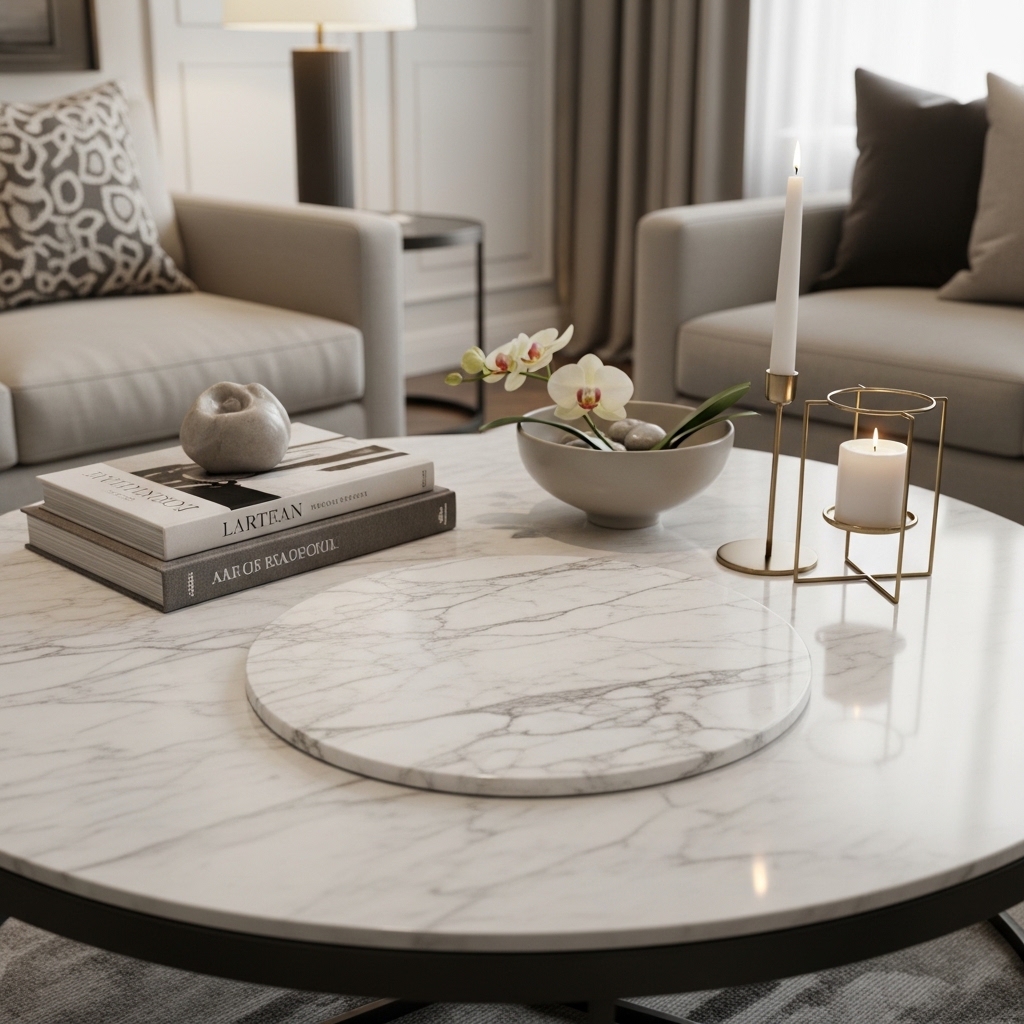
Ideal for: Modern and elegant interiors.
Place a marble object or tray in the center with minimal surrounding decor.
This works because marble adds refinement without clutter.
Pro Tip: Pair with soft textures.
Mistake to Avoid: Don’t overuse stone pieces.
13. Neutral Layered Cluster for Calm Visual Balance
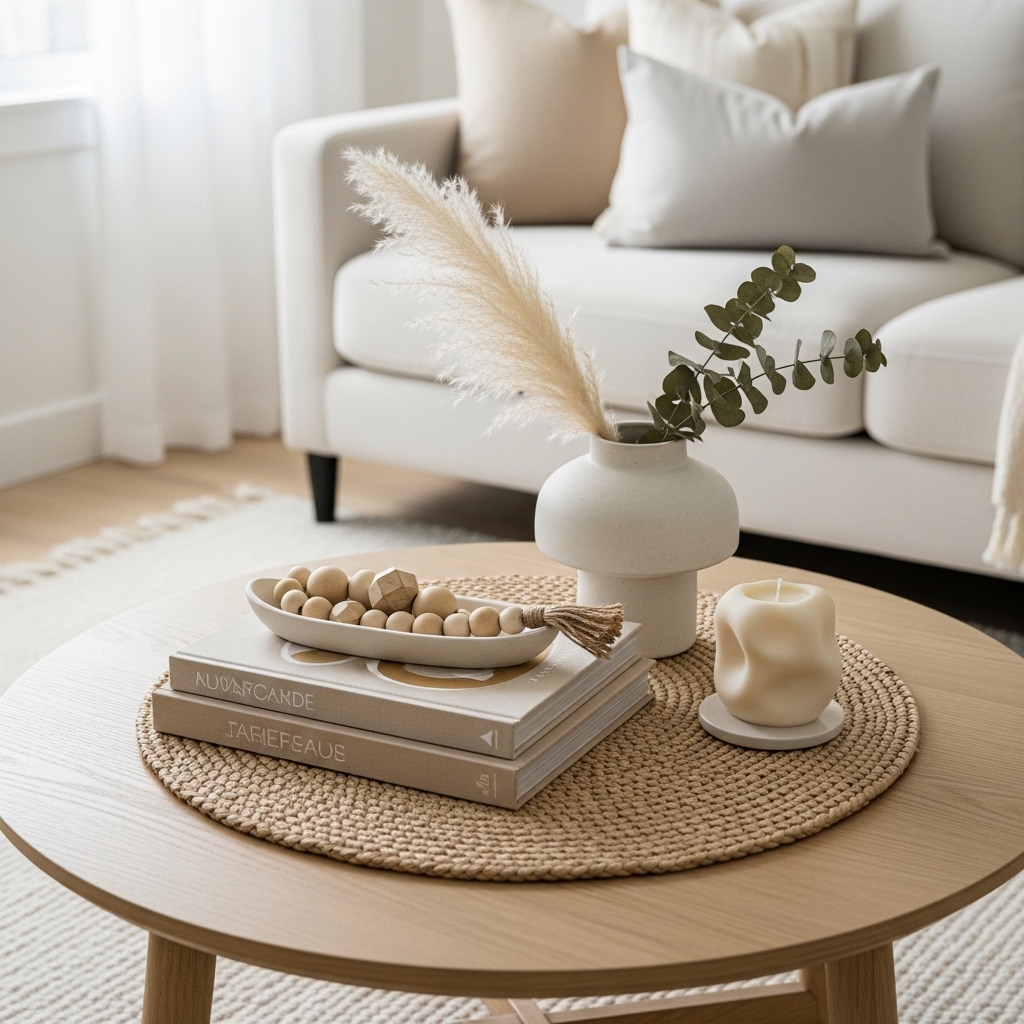
Ideal for: Minimal interiors.
Use layered neutral decor arranged centrally.
This works because consistent tones reduce clutter.
Pro Tip: Mix textures not colors.
Mistake to Avoid: Don’t add bold accents.
14. Mixed Height Central Cluster for Depth
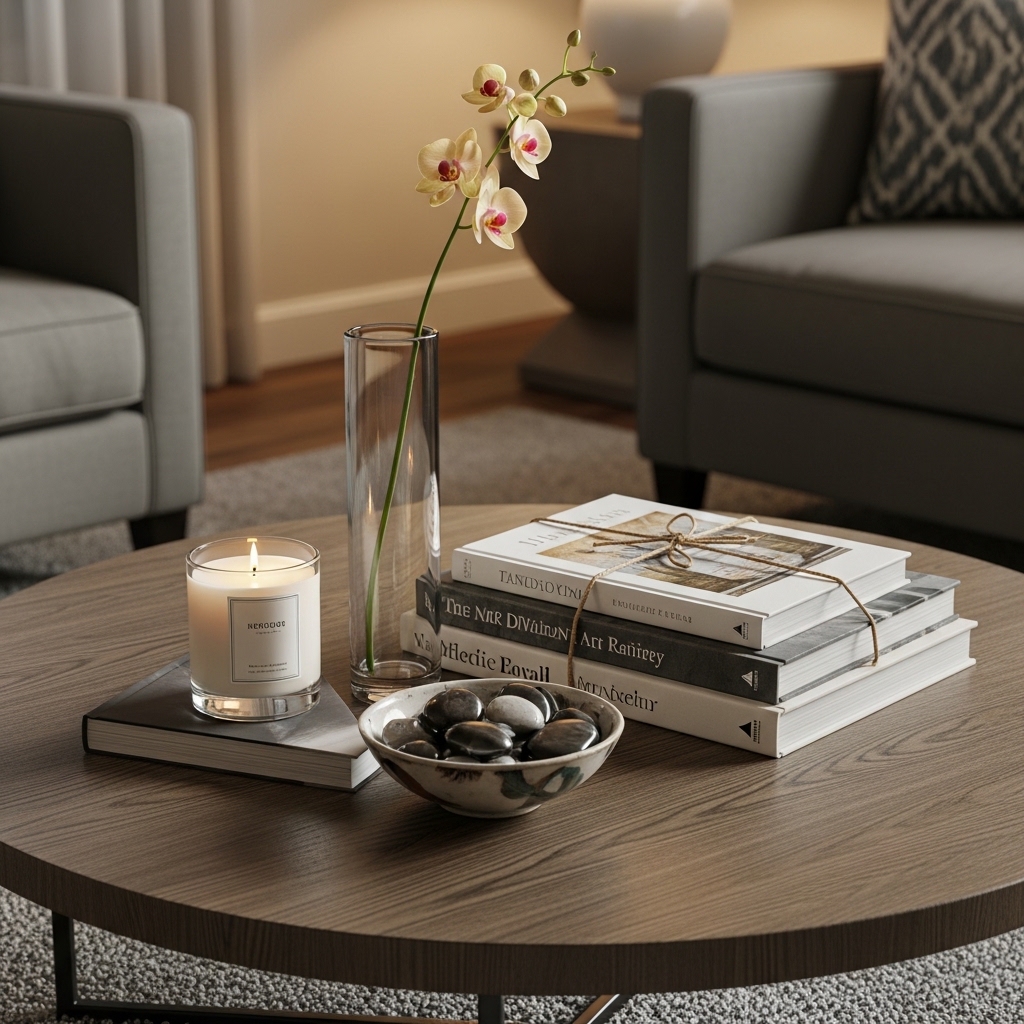
Ideal for: Medium tables.
Group items with varying heights in the center.
This works because height variation creates interest.
Pro Tip: Keep tallest item central.
Mistake to Avoid: Don’t use equal heights.
15. Wooden Element Accent for Warm Contrast
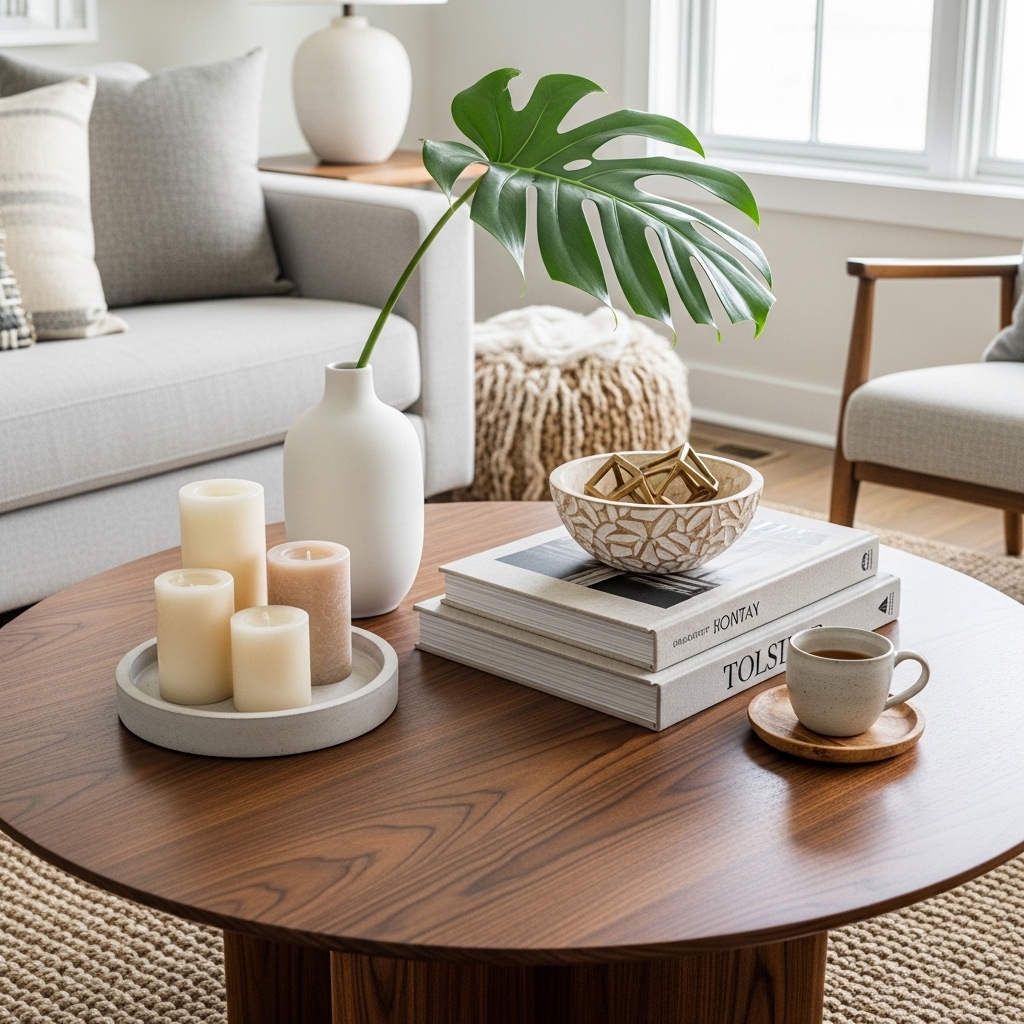
Ideal for: Cozy interiors.
Add a wood tray or bowl to the center.
This works because wood adds warmth.
Pro Tip: Use light finishes.
Mistake to Avoid: Don’t mix wood tones.
16. Coastal Light-Tone Circular Styling for Relaxed Spaces
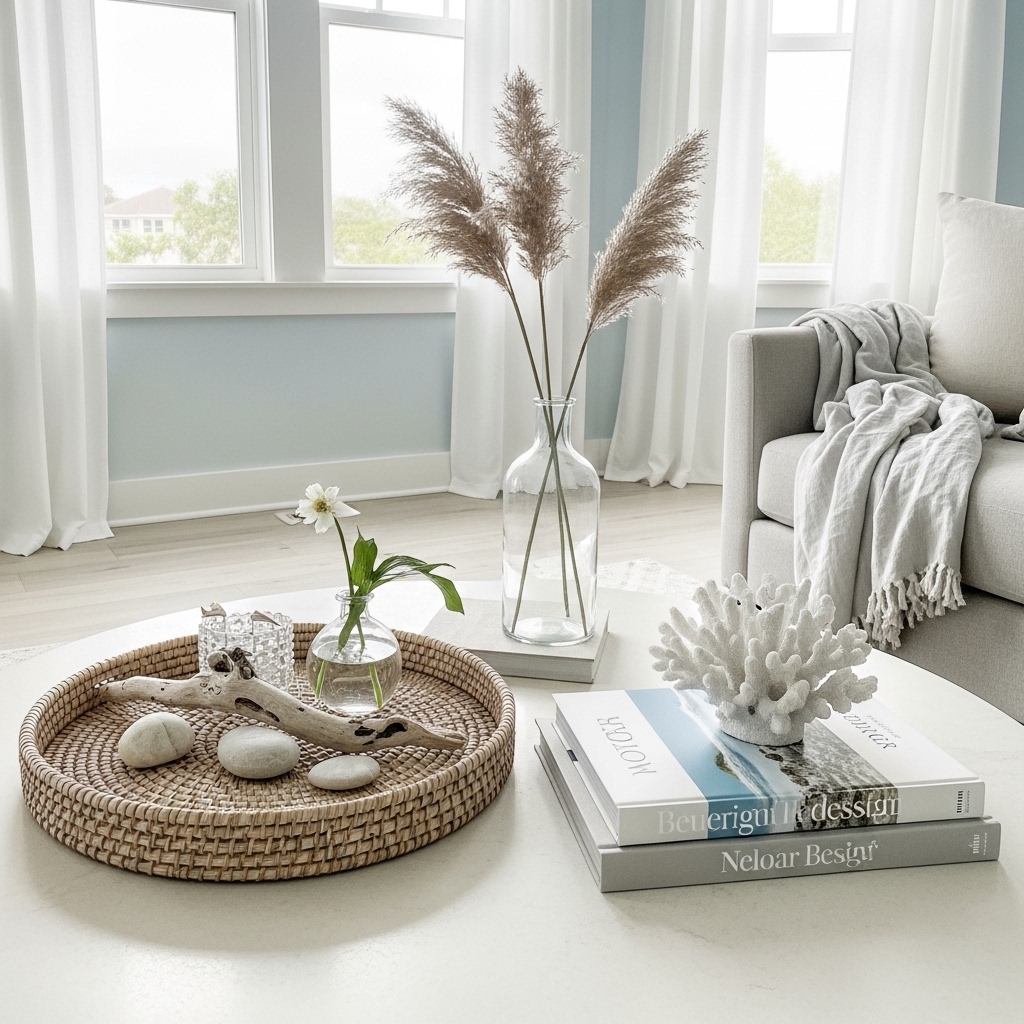
Use soft blue, white, and sand tones arranged in a loose central grouping. Keep decor minimal and breathable, focusing on light materials like glass and ceramics.
This works because light tones enhance openness and align with the soft curves of a round table, creating a relaxed, airy feel.
Pro Tip: Keep palette soft and cohesive.
Mistake to Avoid: Don’t over-theme with coastal items.
17. Black and White Contrast Cluster for Defined Focus
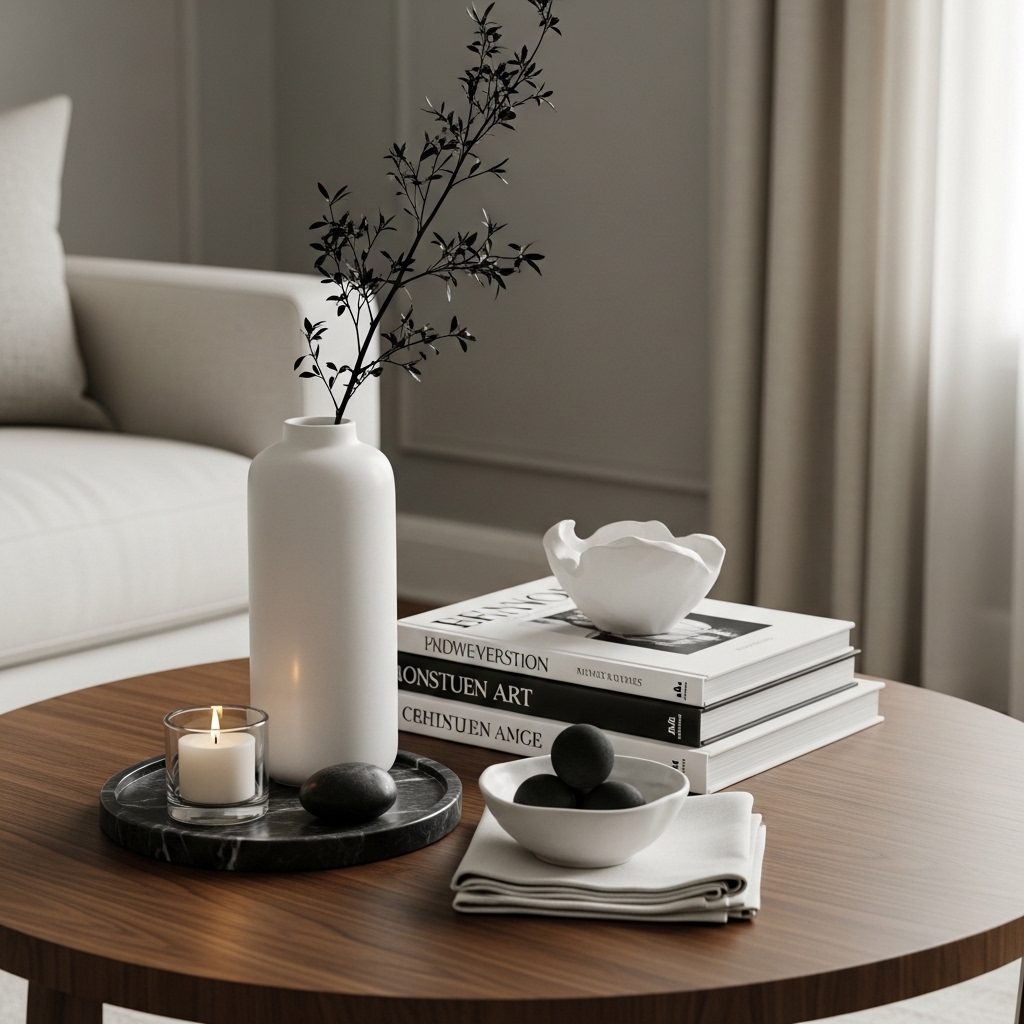
Use a mix of black and white decor pieces arranged centrally with slight variation in height. Keep shapes simple and modern.
This works because contrast creates clarity and makes even minimal setups feel intentional and bold.
Pro Tip: Balance both tones evenly.
Mistake to Avoid: Don’t let one color dominate.
18. Metallic Accent Highlight for Reflective Detail
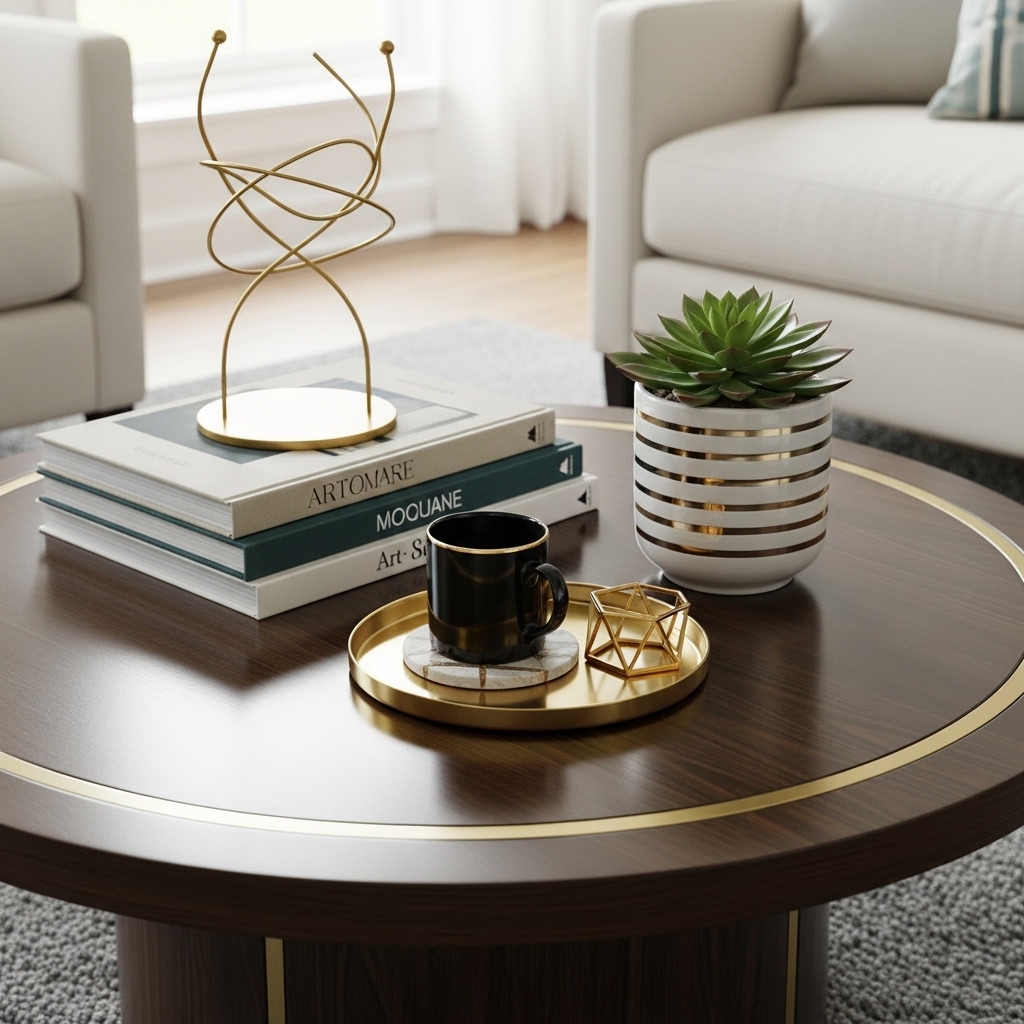
Add one metallic object within a central grouping to reflect light subtly. Pair with matte items for balance.
This works because metallics introduce brightness without adding bulk.
Pro Tip: Stick to one metal tone.
Mistake to Avoid: Don’t mix multiple finishes.
19. Candle + Book Radial Pair for Cozy Structure
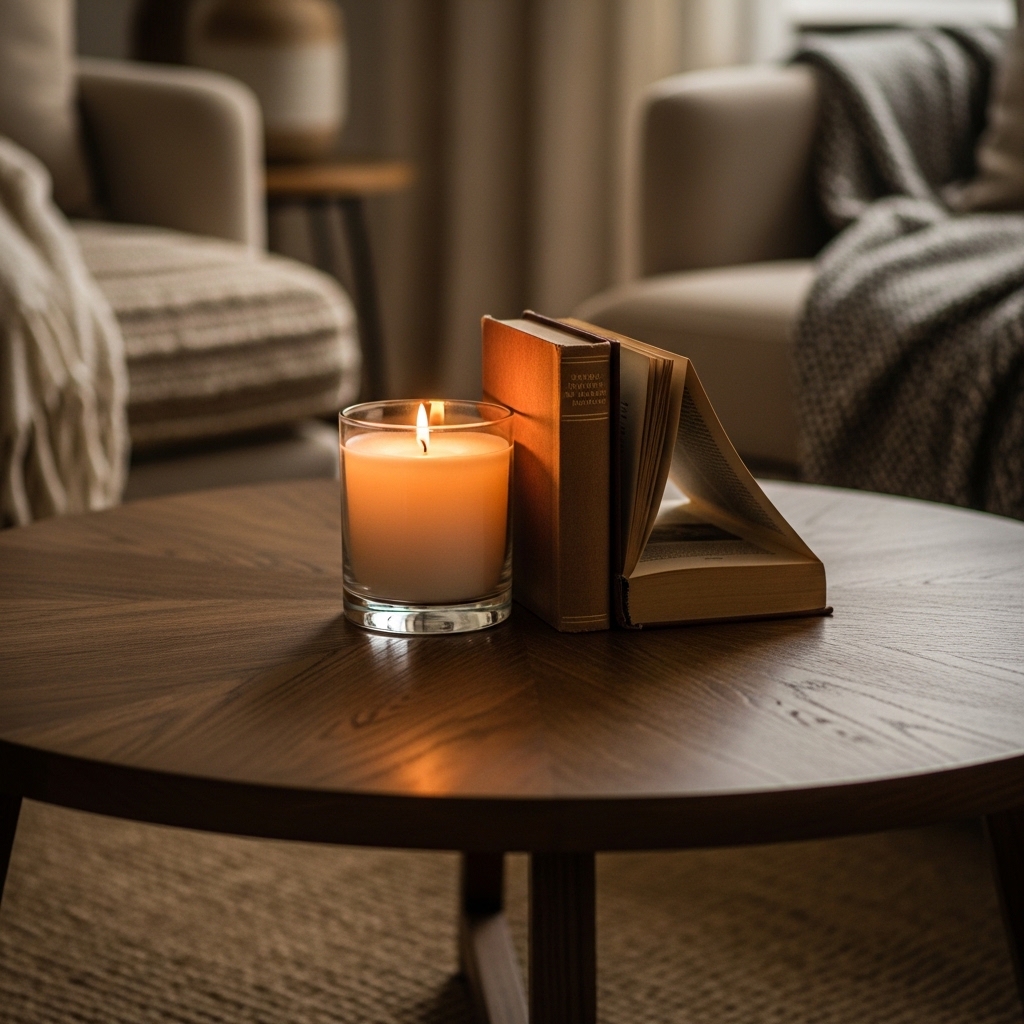
Place a small book stack with a candle on top slightly off-center. Keep arrangement compact and curved.
This works because it balances structure and warmth.
Pro Tip: Use soft-toned candles.
Mistake to Avoid: Don’t oversize the stack.
20. Tray + Vase Offset Curve Layout
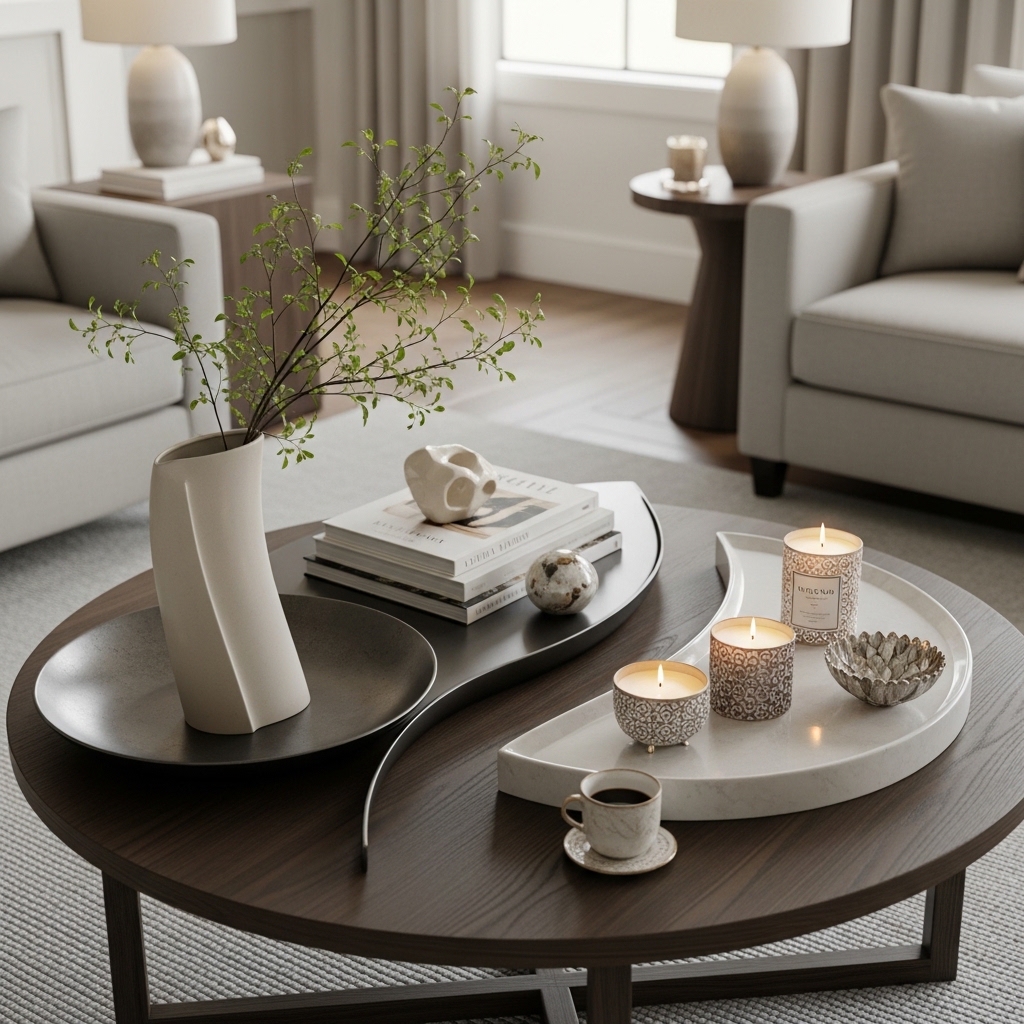
Place a tray slightly off-center and balance it with a vase on the opposite side.
This works because it creates dynamic asymmetry while maintaining flow.
Pro Tip: Match scale carefully.
Mistake to Avoid: Don’t separate too far.
21. Symmetrical Central Layout for Formal Rooms
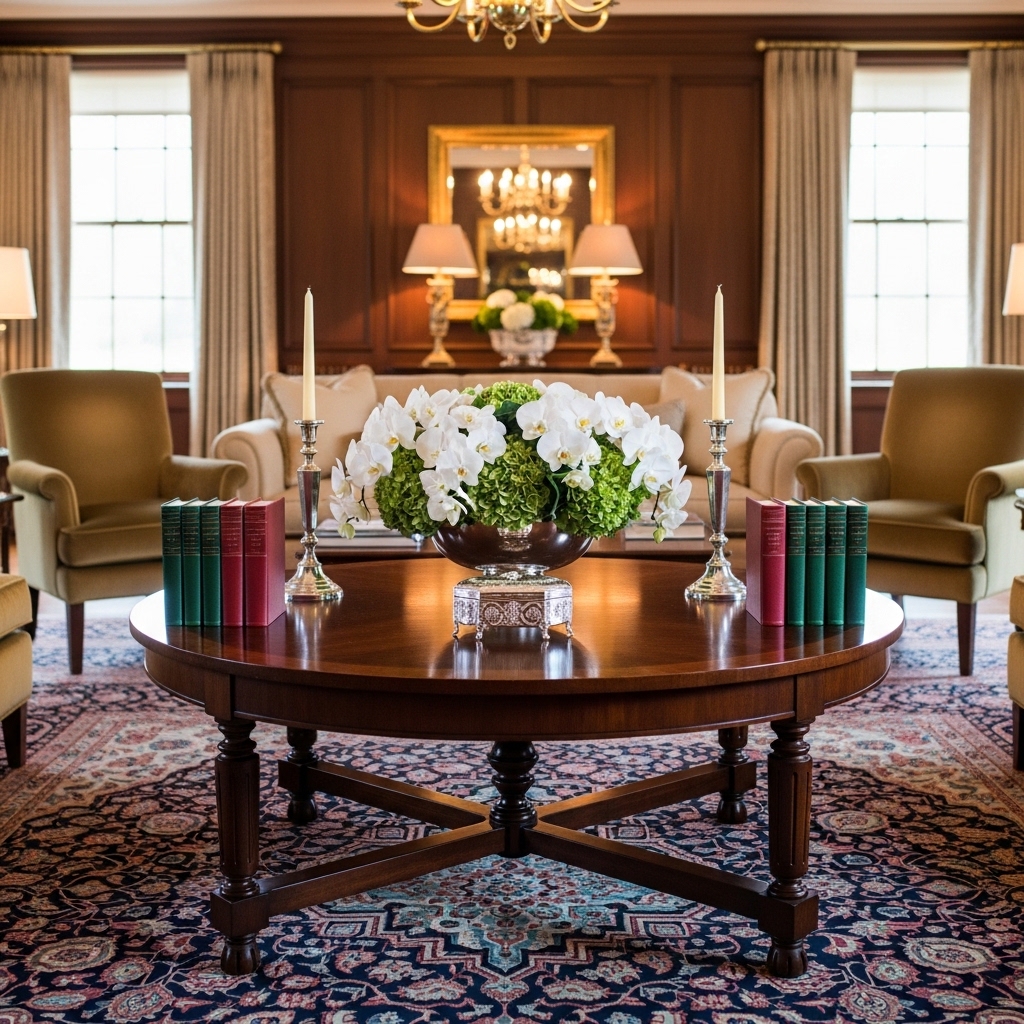
Use evenly spaced items around a central point.
This works because symmetry creates order and calm.
Pro Tip: Keep equal spacing.
Mistake to Avoid: Don’t mix styles.
22. Organic Asymmetrical Flow for Modern Feel
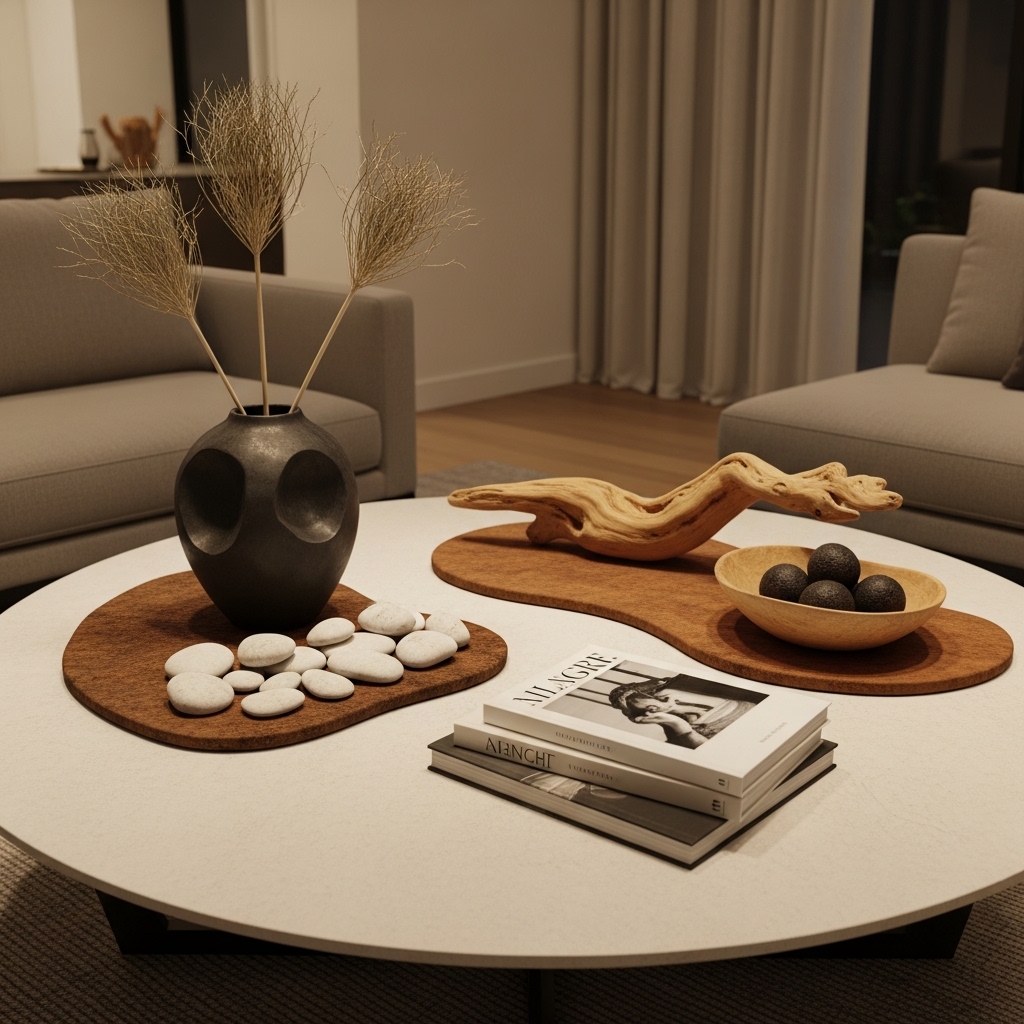
Place items loosely with balanced weight.
This works because it feels natural and relaxed.
Pro Tip: Balance visually, not physically.
Mistake to Avoid: Don’t cluster items tightly.
23. Compact Minimal Styling for Small Tables
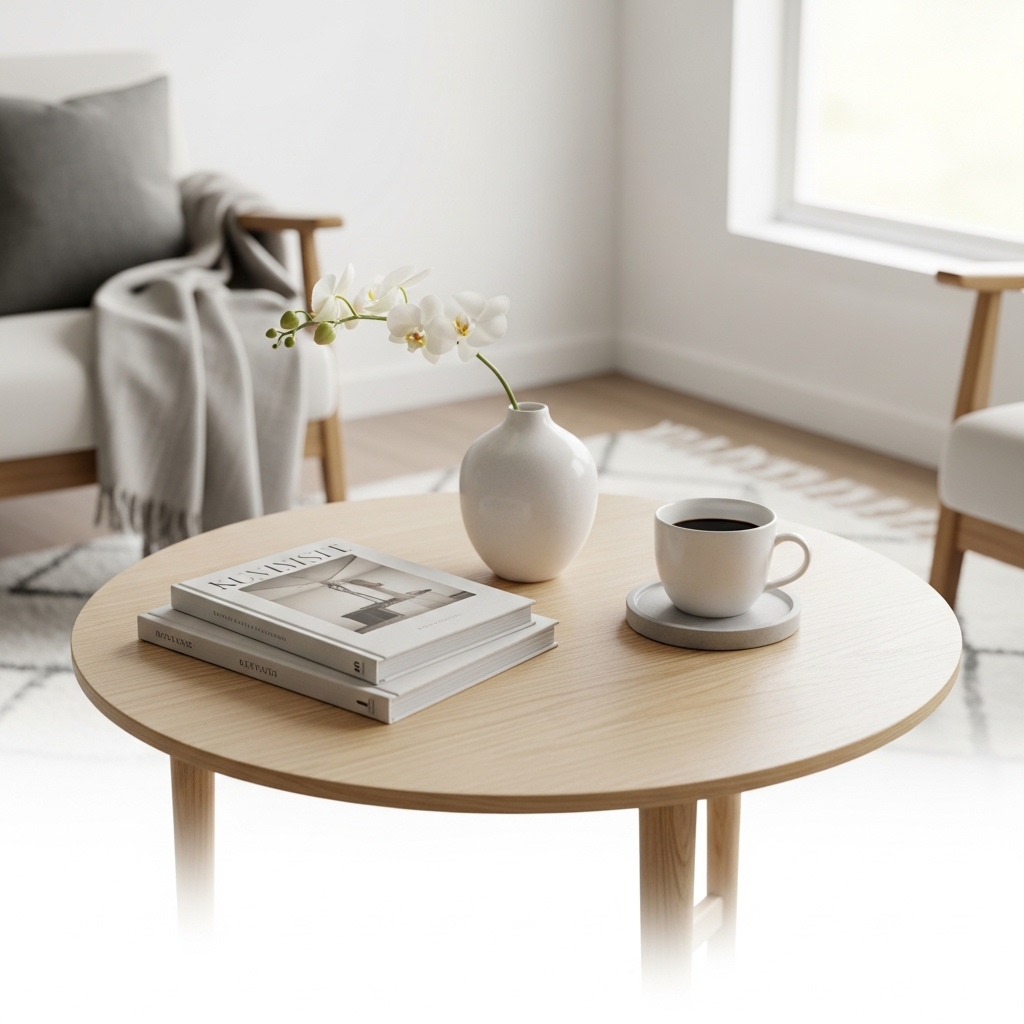
Use one or two items only.
This works because minimal decor keeps space functional.
Pro Tip: Choose multi-use items.
Mistake to Avoid: Don’t overcrowd.
24. Oversized Statement Centerpiece for Large Tables
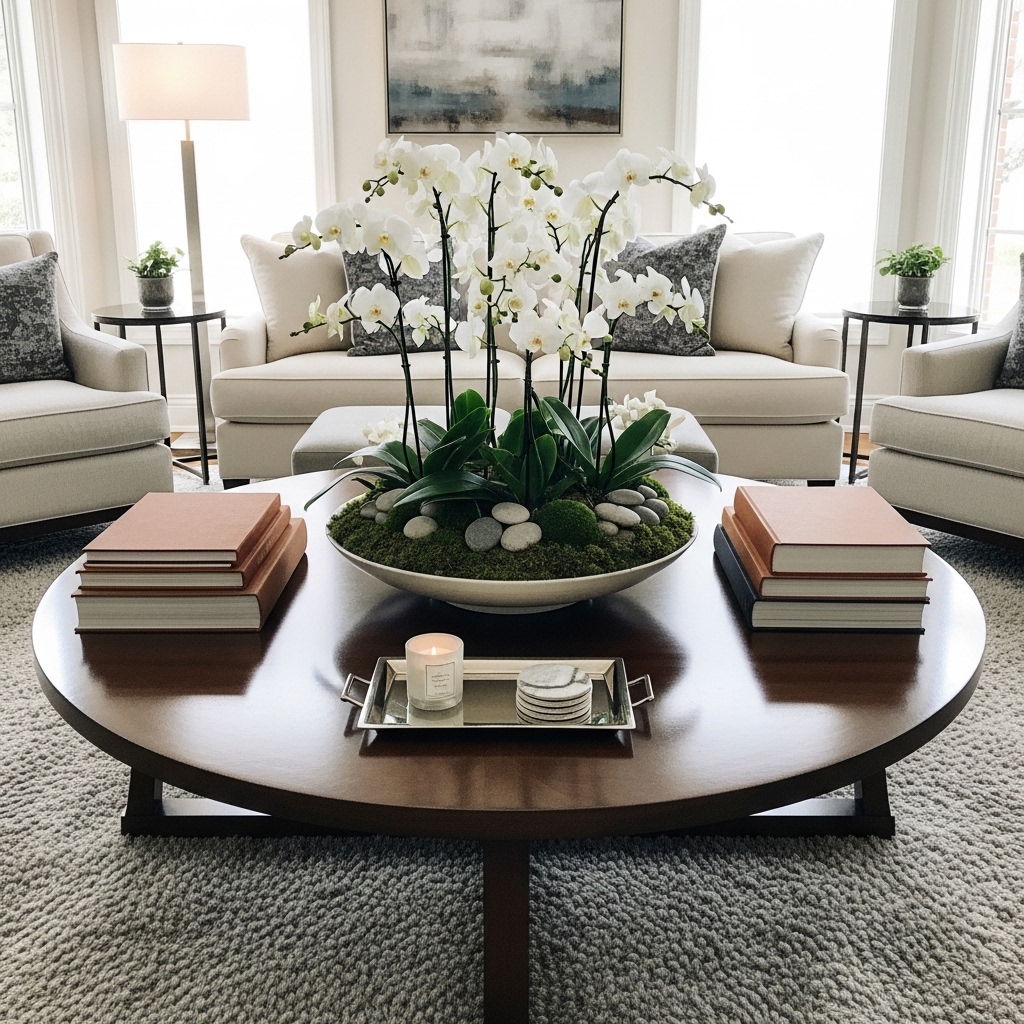
Use one bold decor piece in the center.
This works because it anchors large surfaces.
Pro Tip: Leave surrounding space empty.
Mistake to Avoid: Don’t add competing items.
25. Layered Stack System With Circular Alignment
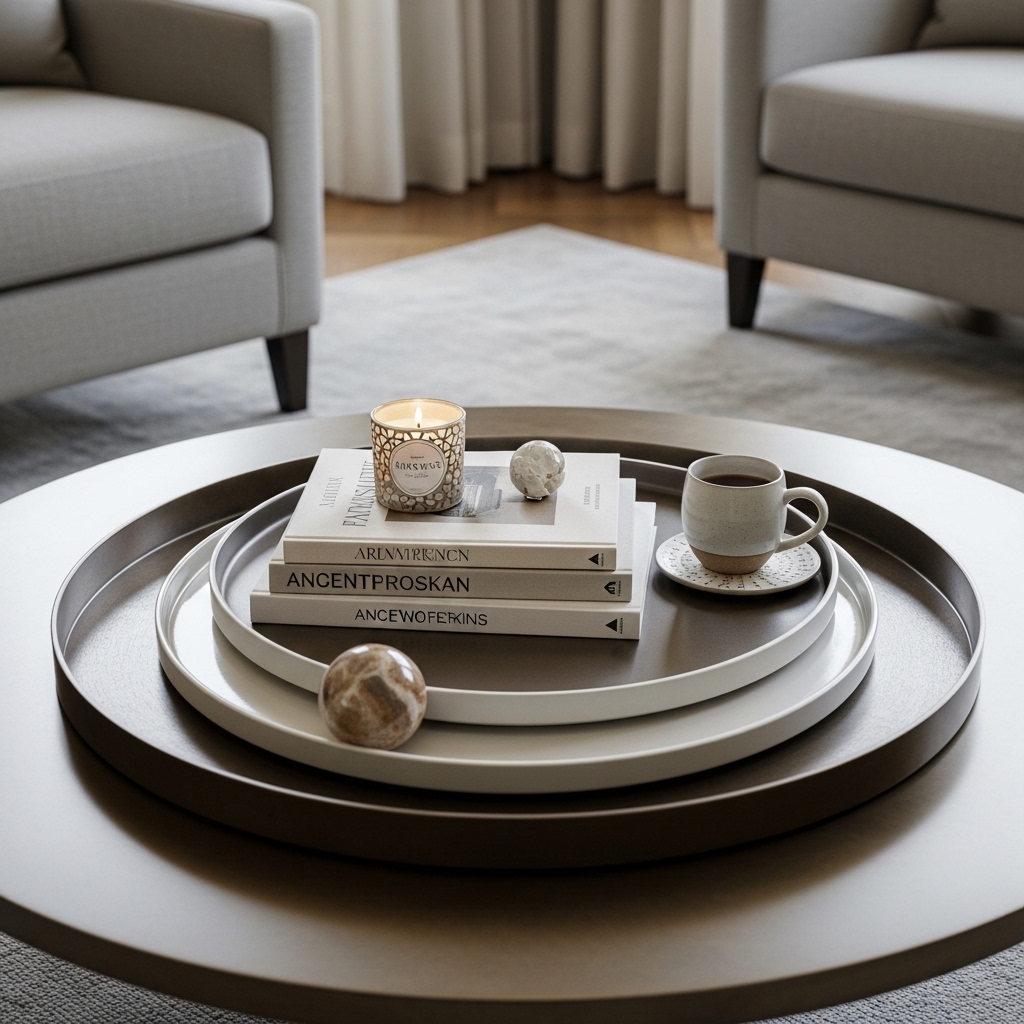
Layer books, tray, and decor in a curved layout.
This works because layering adds depth without clutter.
Pro Tip: Limit to 2–3 layers.
Mistake to Avoid: Don’t over-stack.
26. Neutral Ceramic Cluster for Soft Elegance
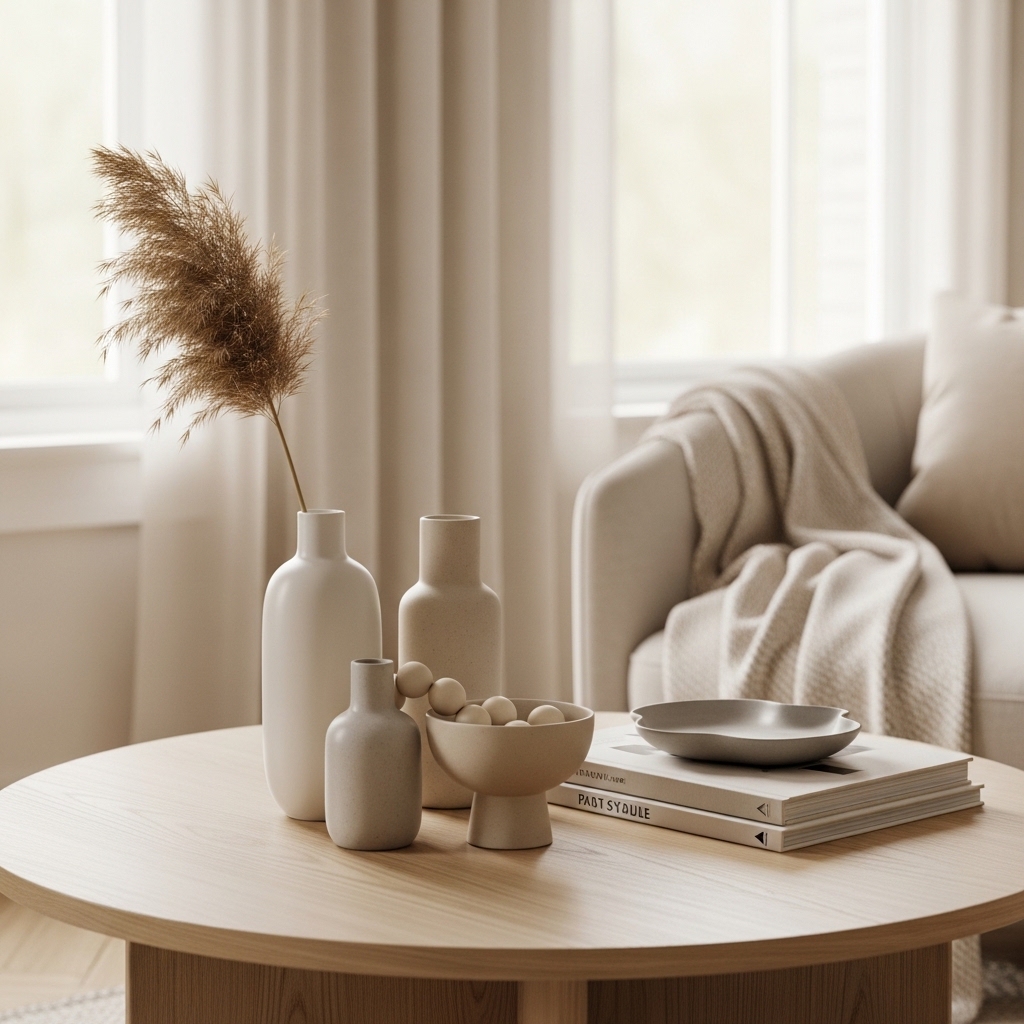
Use ceramic pieces grouped centrally.
This works because soft textures create calmness.
Pro Tip: Use matte finishes.
Mistake to Avoid: Don’t overuse gloss.
27. Stone Accent Pairing for Grounded Look
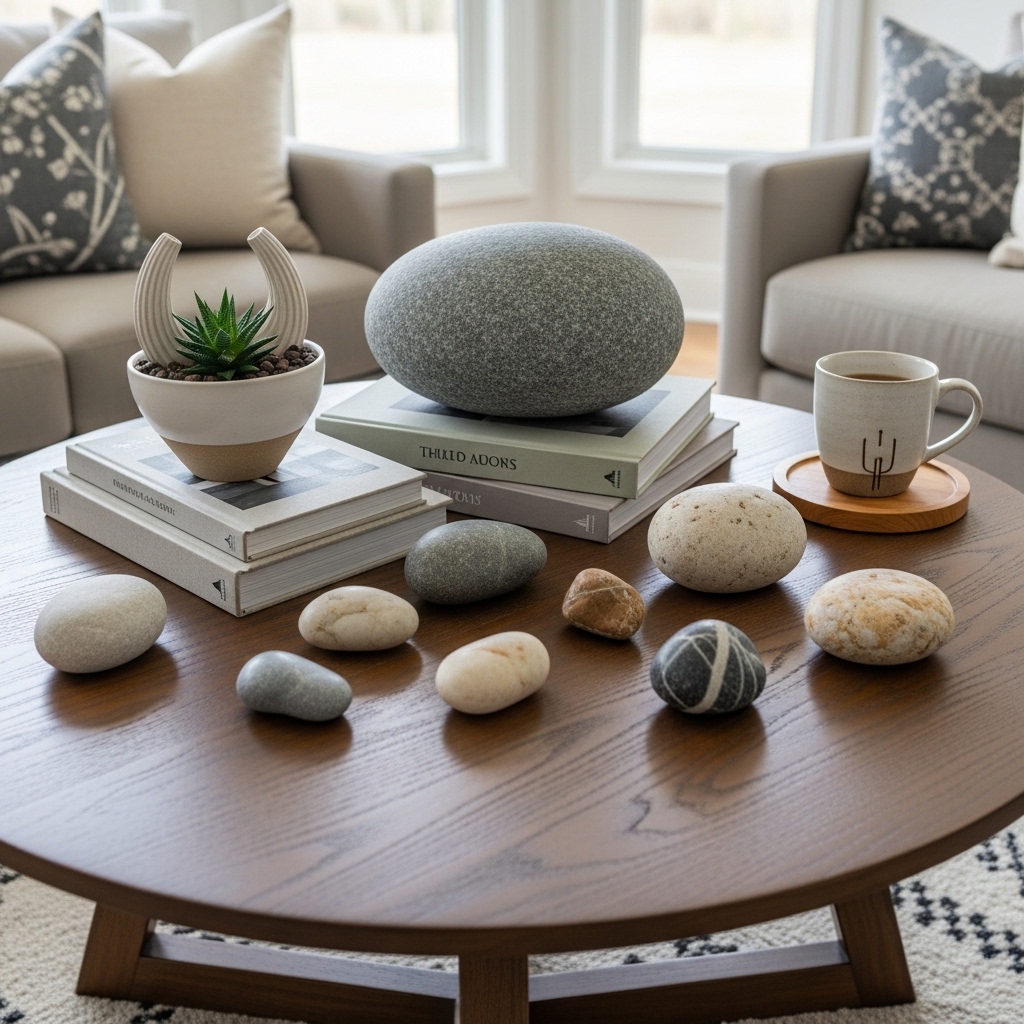
Use stone decor paired with soft elements.
This works because it adds texture and weight balance.
Pro Tip: Keep pairing minimal.
Mistake to Avoid: Don’t overload stone items.
28. Green + Candle Balanced Duo
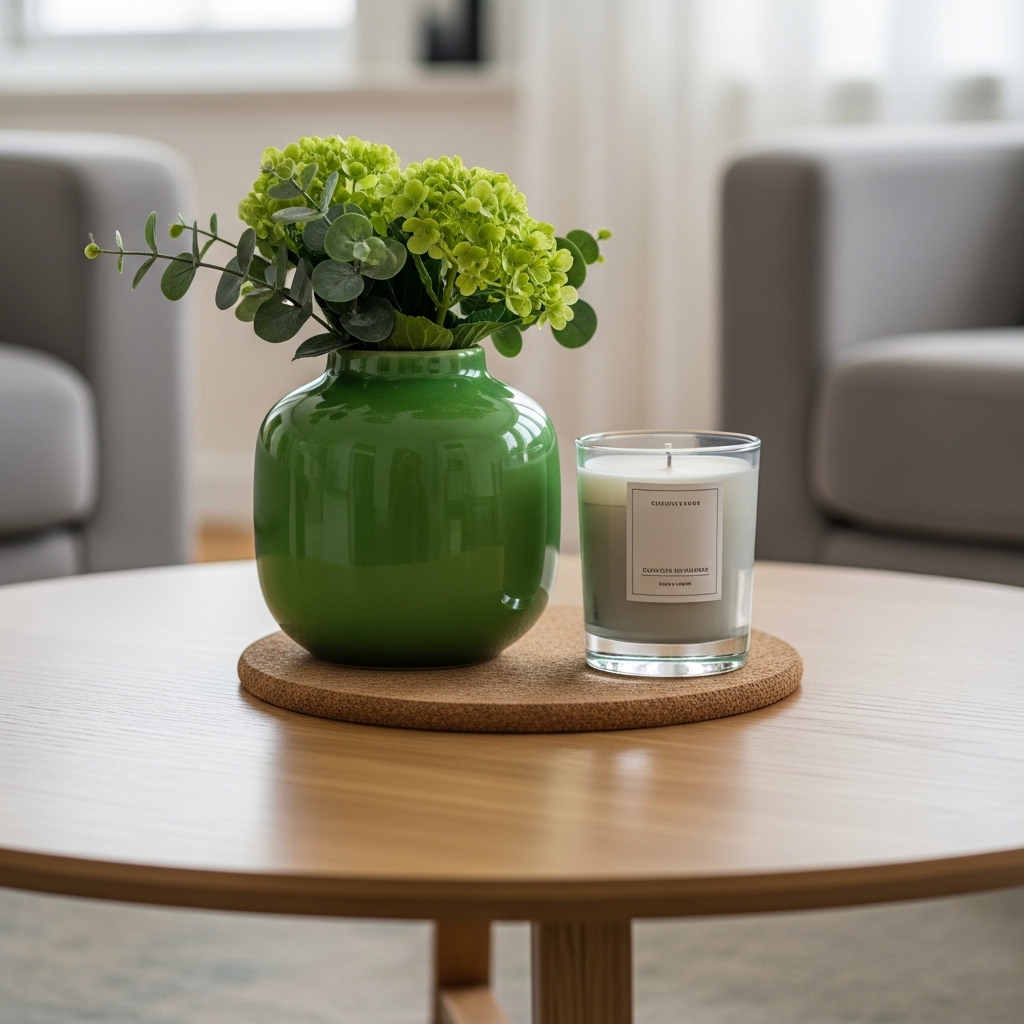
Combine one plant and one candle centrally.
This works because it balances freshness and warmth.
Pro Tip: Keep spacing clean.
Mistake to Avoid: Don’t add extras.
29. Scandinavian Light Styling for Open Feel
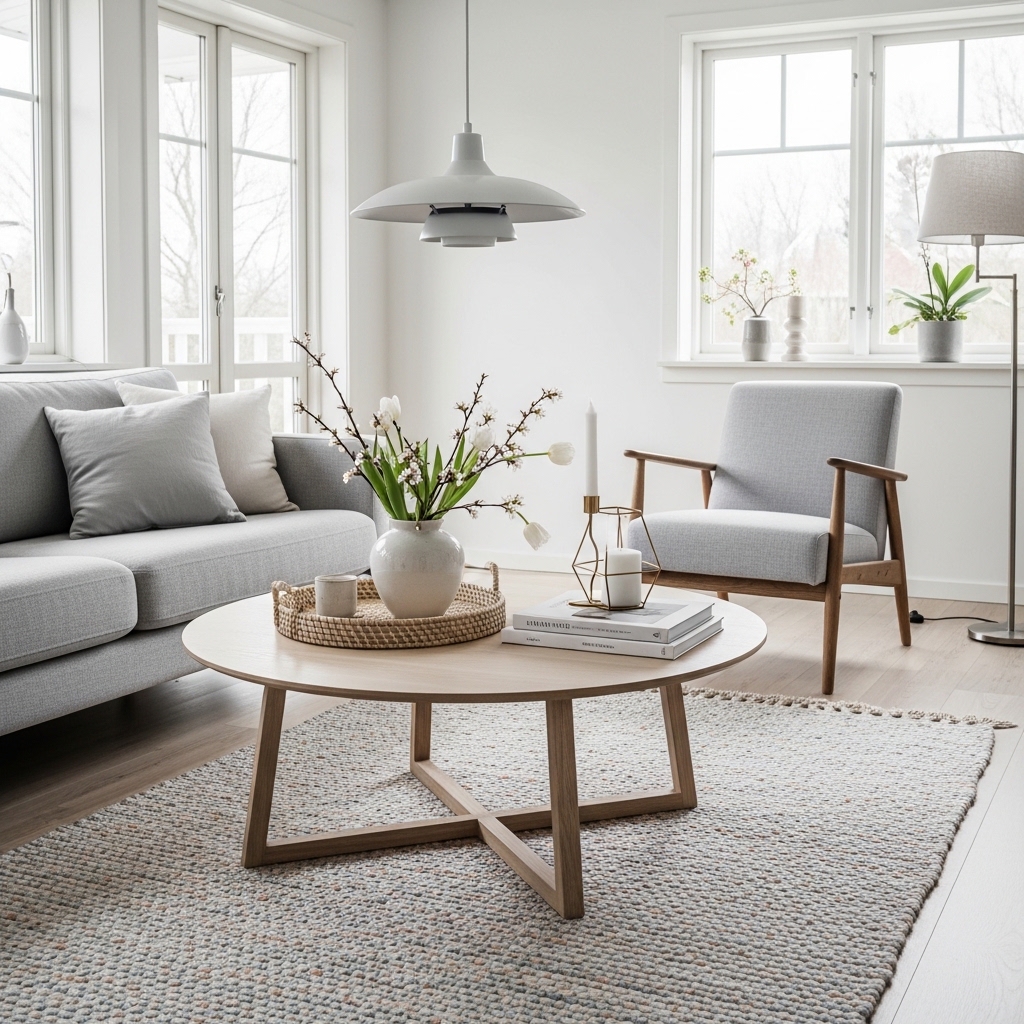
Use light tones and minimal decor.
This works because simplicity enhances openness.
Pro Tip: Focus on natural materials.
Mistake to Avoid: Don’t clutter.
30. Functional Storage Decor With Circular Layout
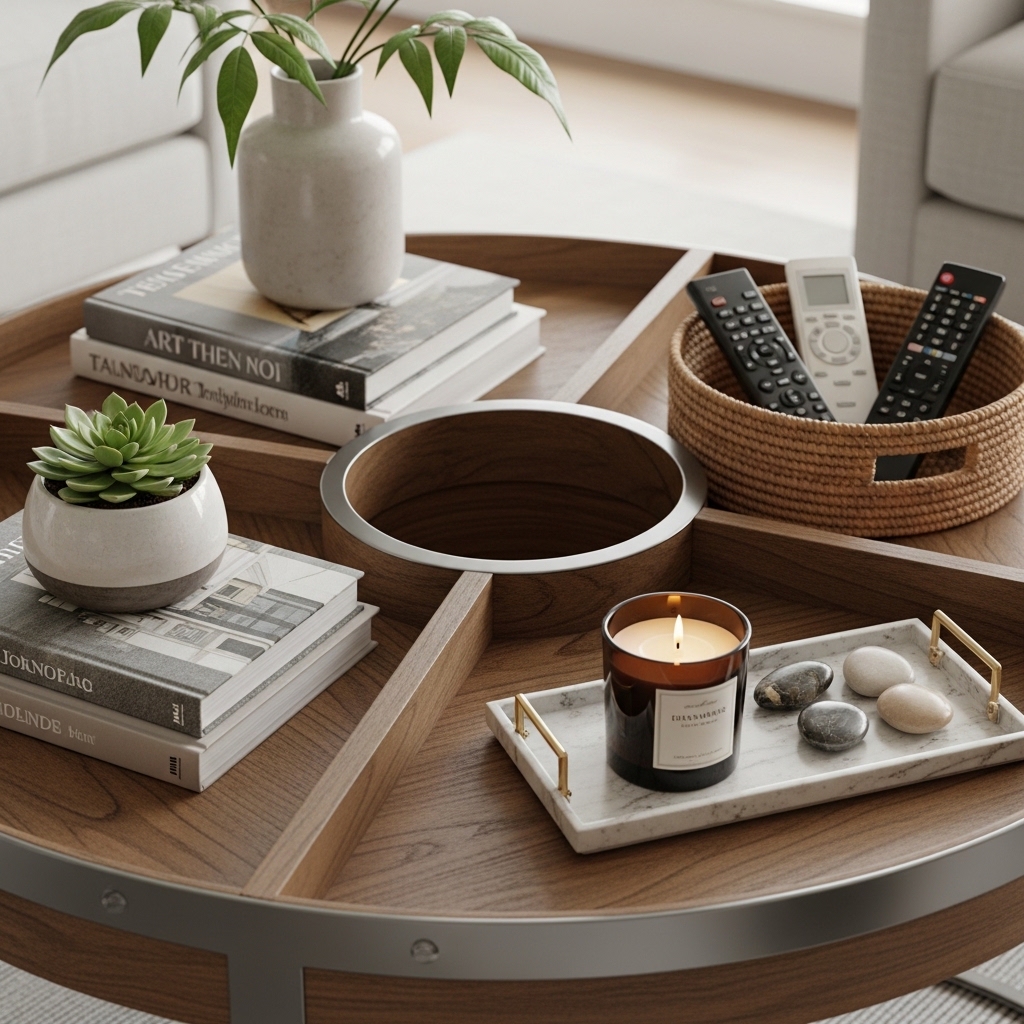
Use decorative boxes or trays arranged centrally.
This works because it combines storage and style.
Pro Tip: Keep storage visually light.
Mistake to Avoid: Don’t use bulky items.
Conclusion
Round coffee table decor is all about center balance, curved alignment, and intentional spacing. Unlike rectangular tables, the goal is to create flow—not structure alone.
When styled correctly, a round table becomes a soft focal point that enhances both movement and comfort in your living space.