20 Coffee Table Styling Ideas That Create Balance, Function, and High-End Living Room Flow
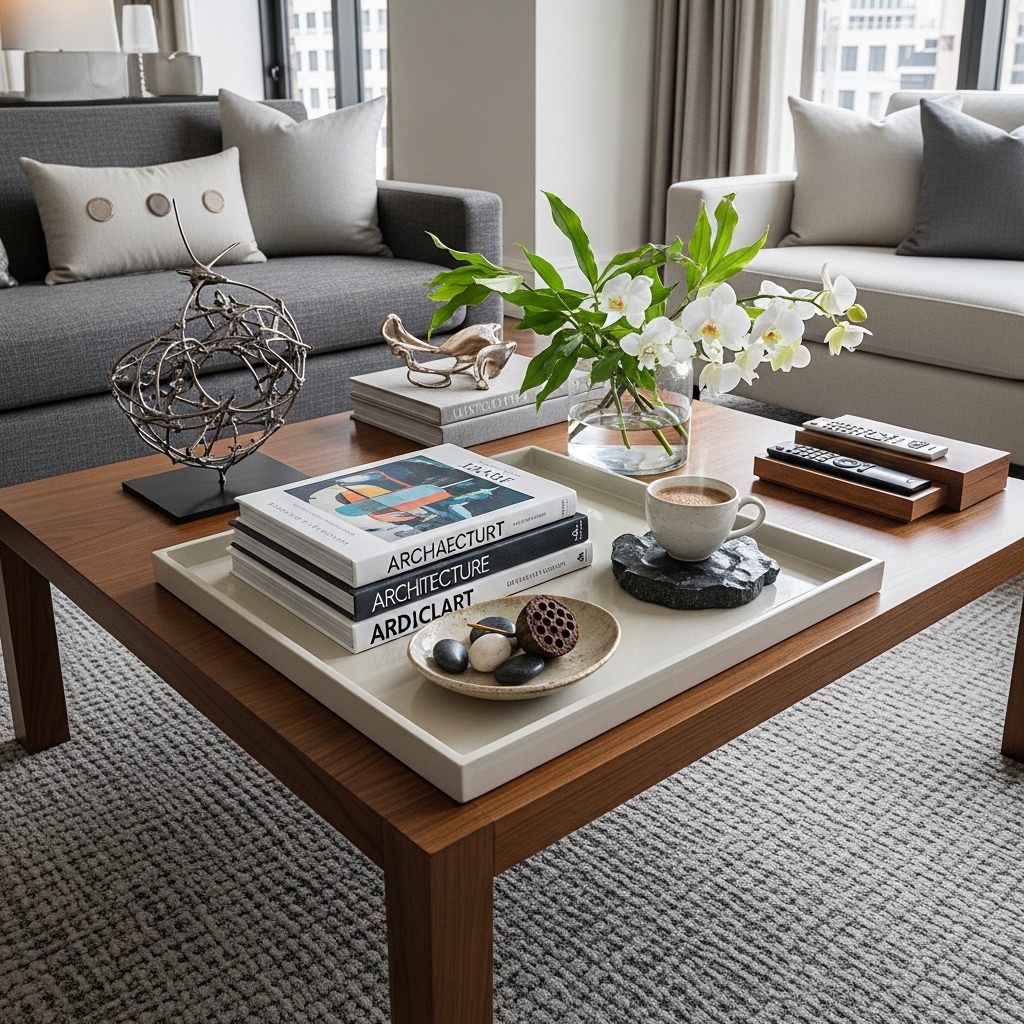
A well-styled coffee table does more than look good—it organizes your living room visually, connects furniture pieces, and creates a focal point that feels intentional rather than cluttered. The difference between a styled table and a messy one comes down to placement logic, scale, and layering, not just the objects you use.
The ideas below are designed for real homes—small apartments, family spaces, and modern interiors—focusing on practical styling that looks curated but remains usable every day. Each concept explains exactly who it’s for, when to use it, how to apply it, and why it works.
1. Structured Book Stack With Elevated Accent
Ideal for: Small to medium coffee tables that need height without clutter.
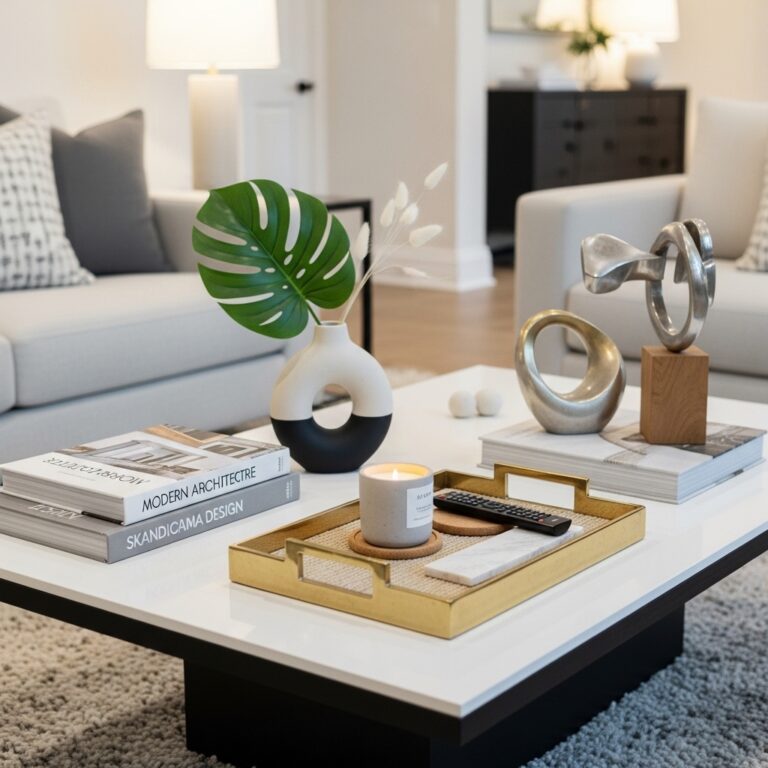
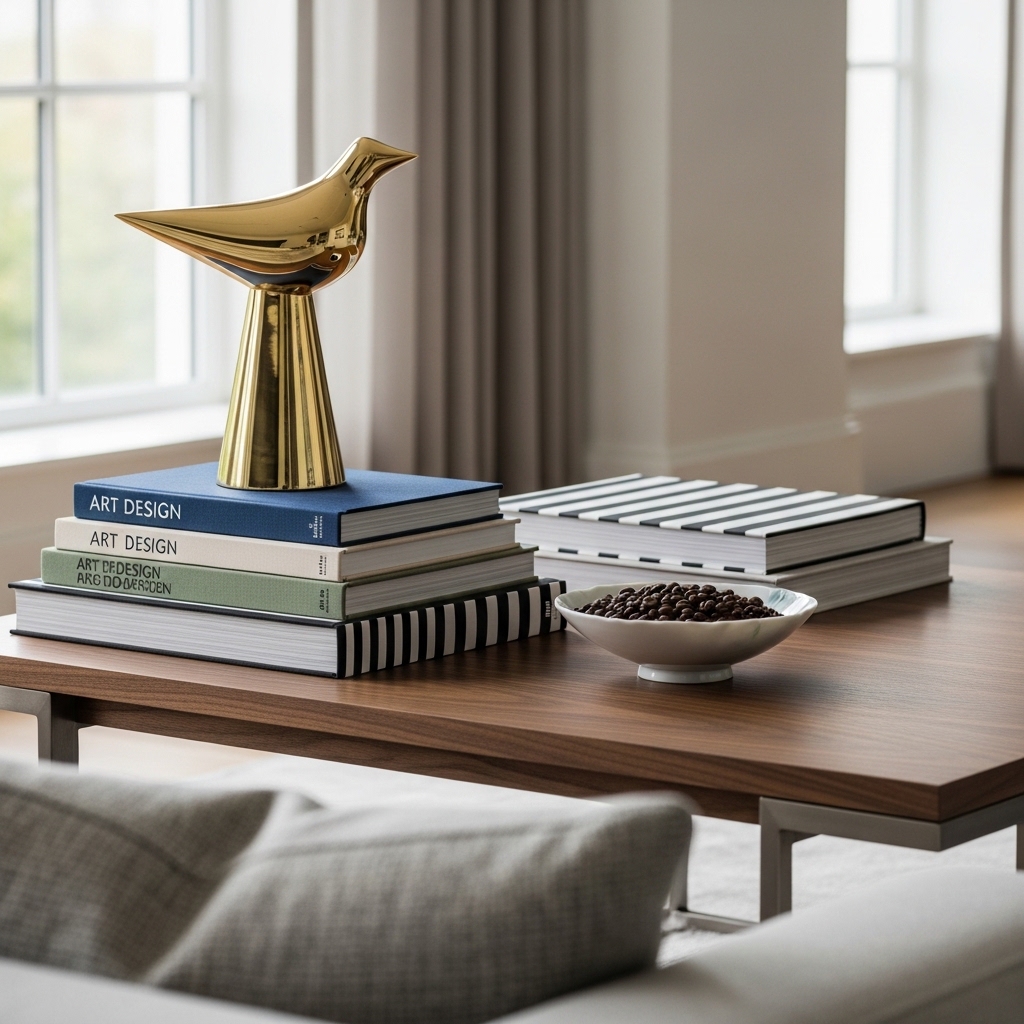
Start by stacking two or three large coffee table books horizontally to form a base layer. Place a smaller decorative object—like a candle or sculptural piece—on top, keeping the stack slightly off-center rather than perfectly aligned. This setup works best when you want a quick styling upgrade without filling the entire table.
This works because layering creates vertical interest while keeping the footprint compact, making the table feel styled but still functional. The top object acts as a focal point, anchoring the arrangement visually. Without this structure, decor often appears flat and scattered.
Pro Tip: Choose books with neutral or cohesive covers to maintain flow.
Mistake to Avoid: Don’t stack too many books—it creates unnecessary bulk.
2. Center Tray Composition for Controlled Styling
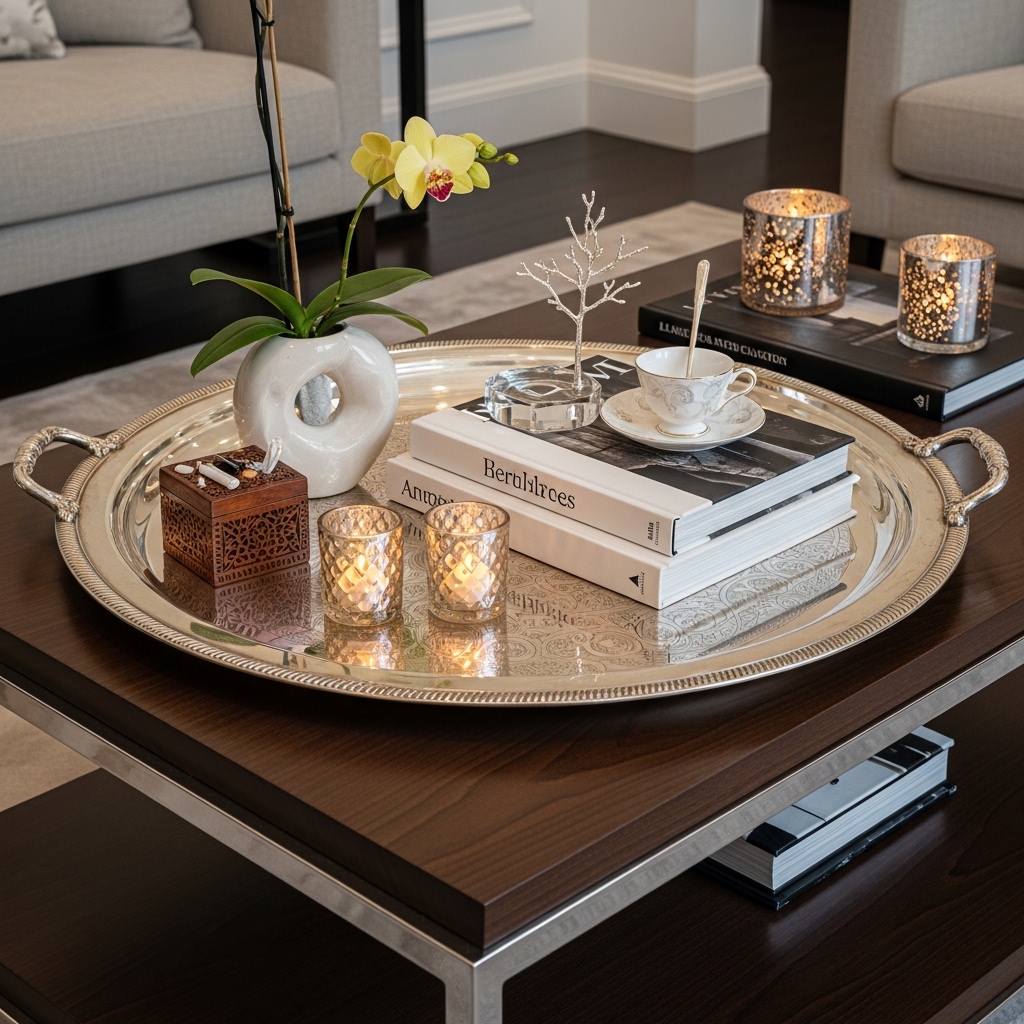
Ideal for: Busy households needing organized, movable decor.
Place a tray at the center of the coffee table and group items like candles, coasters, and small decor inside it. Keep the arrangement tight within the tray while leaving space around it so the table doesn’t feel crowded. This is perfect when you need both style and practicality.
This works because a tray creates a defined boundary, visually organizing multiple items into one cohesive unit. It also allows you to move everything at once when needed. Without a tray, smaller objects can feel randomly scattered.
Pro Tip: Use a tray that contrasts slightly with the table surface.
Mistake to Avoid: Don’t overload the tray with too many elements.
3. Minimal Single Statement Styling
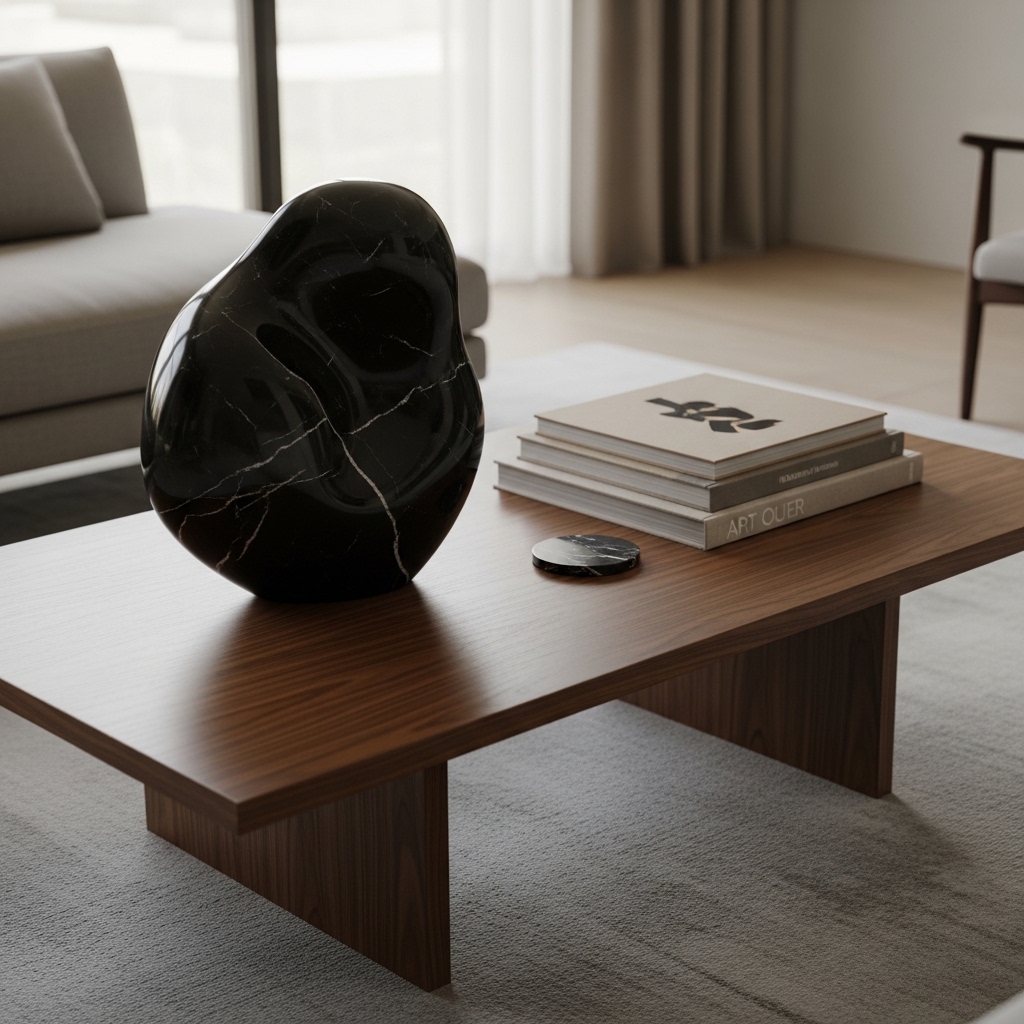
Ideal for: Minimalist interiors and compact spaces.
Use one strong decor piece, such as a ceramic vase or sculptural object, placed either centrally or slightly off-center. Keep the rest of the table completely clear to maintain a clean, modern look. This works best when you want simplicity without sacrificing style.
This works because a single focal element creates clarity and prevents visual overload. It allows the eye to rest and keeps the table usable for daily activities. Adding more items would weaken the impact and create clutter.
Pro Tip: Choose pieces with interesting shapes rather than bold colors.
Mistake to Avoid: Don’t use oversized decor that dominates the table.
4. Balanced Trio Arrangement for Easy Styling
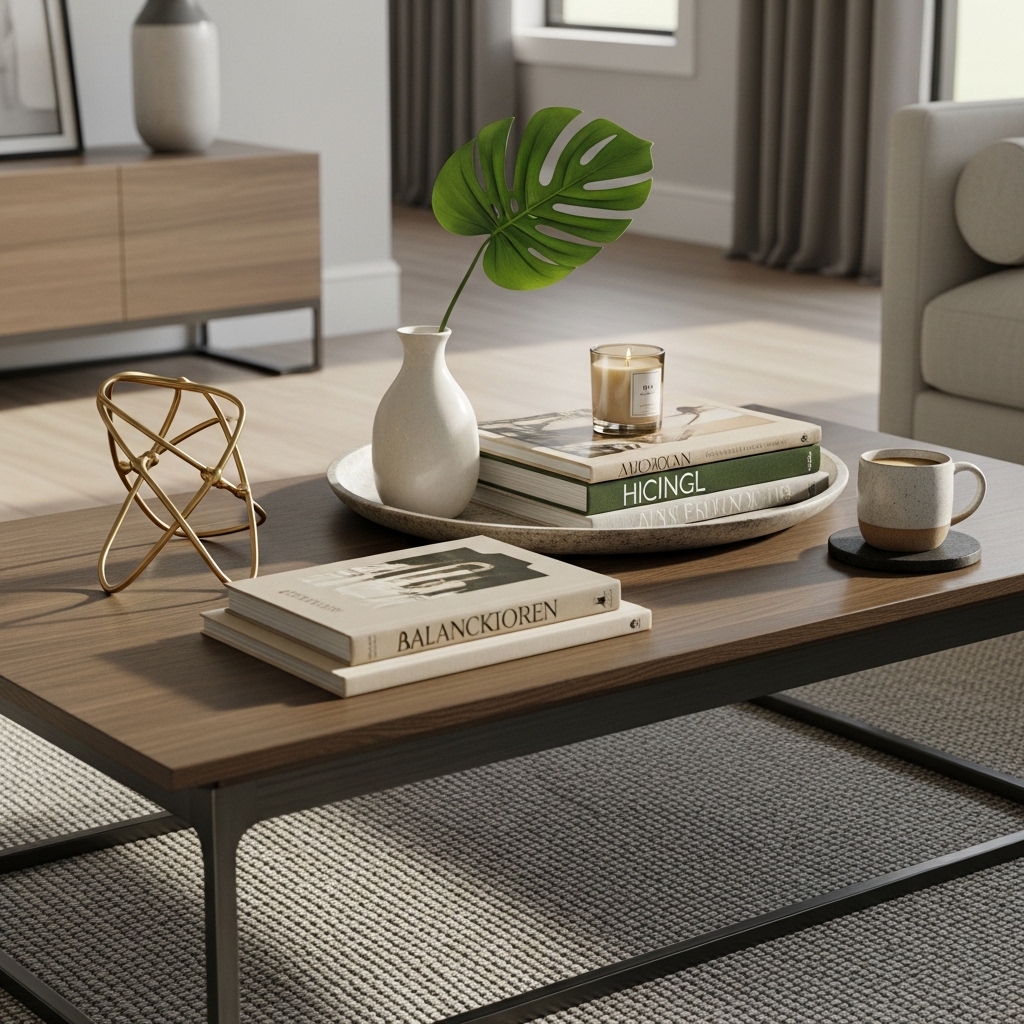
Ideal for: Beginners who want a foolproof styling method.
Select three items—such as a book stack, a candle, and a small plant—and arrange them in a triangular formation. Keep one item taller, one medium, and one low to create variation. This setup works well for almost any table size.
This works because odd-number groupings feel more natural and balanced than even ones. The triangular layout guides the eye smoothly across the table, creating harmony without rigidity.
Pro Tip: Keep spacing consistent between items.
Mistake to Avoid: Don’t use items of equal height.
5. Greenery-Led Styling for Natural Freshness
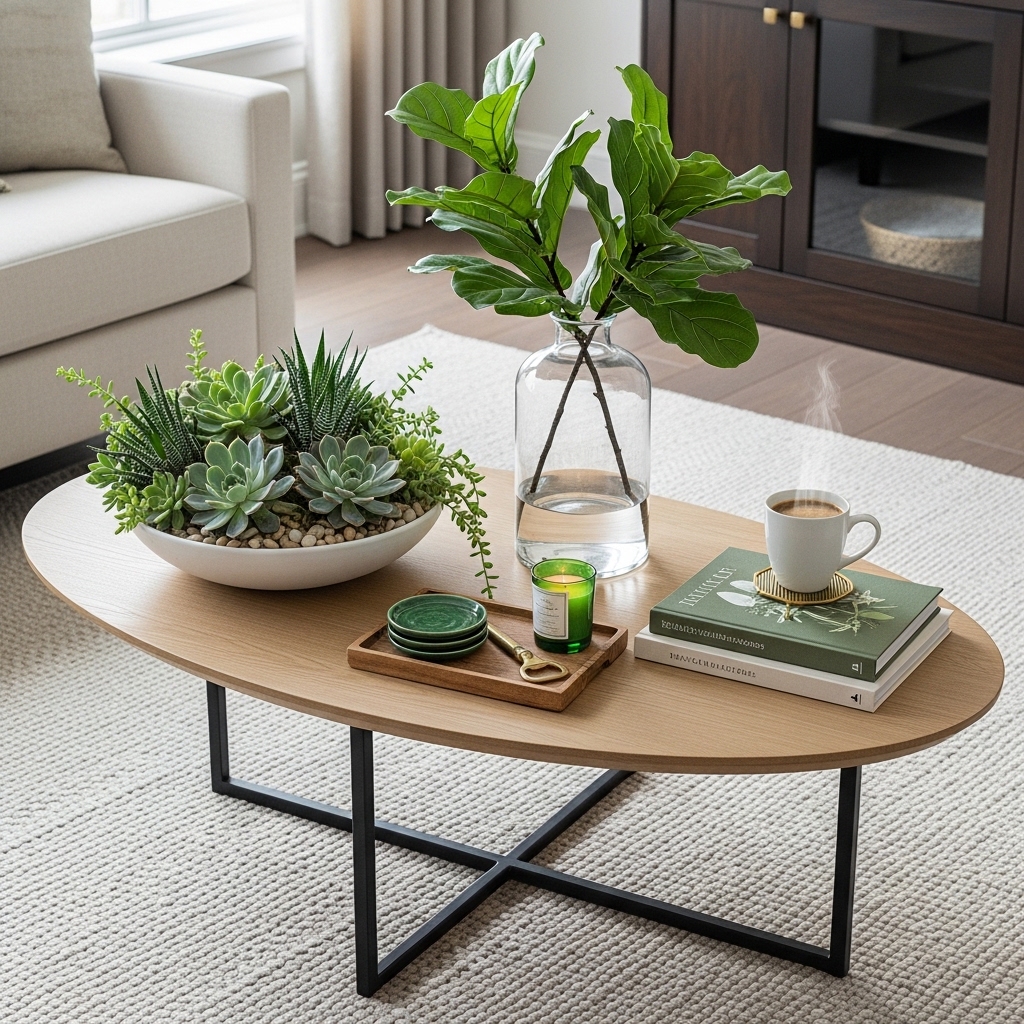
Ideal for: Bright living rooms needing softness and life.
Place a small indoor plant or floral arrangement on the table, either alone or paired with one additional item. Position it slightly off-center to avoid a static look. This works especially well in modern or neutral interiors.
This works because greenery introduces organic texture and movement, softening the hard lines of furniture. It creates a natural focal point that feels fresh and inviting.
Pro Tip: Use low-maintenance plants like succulents or eucalyptus.
Mistake to Avoid: Don’t use oversized or messy plants.
6. Layered Candle Grouping for Warm Ambience
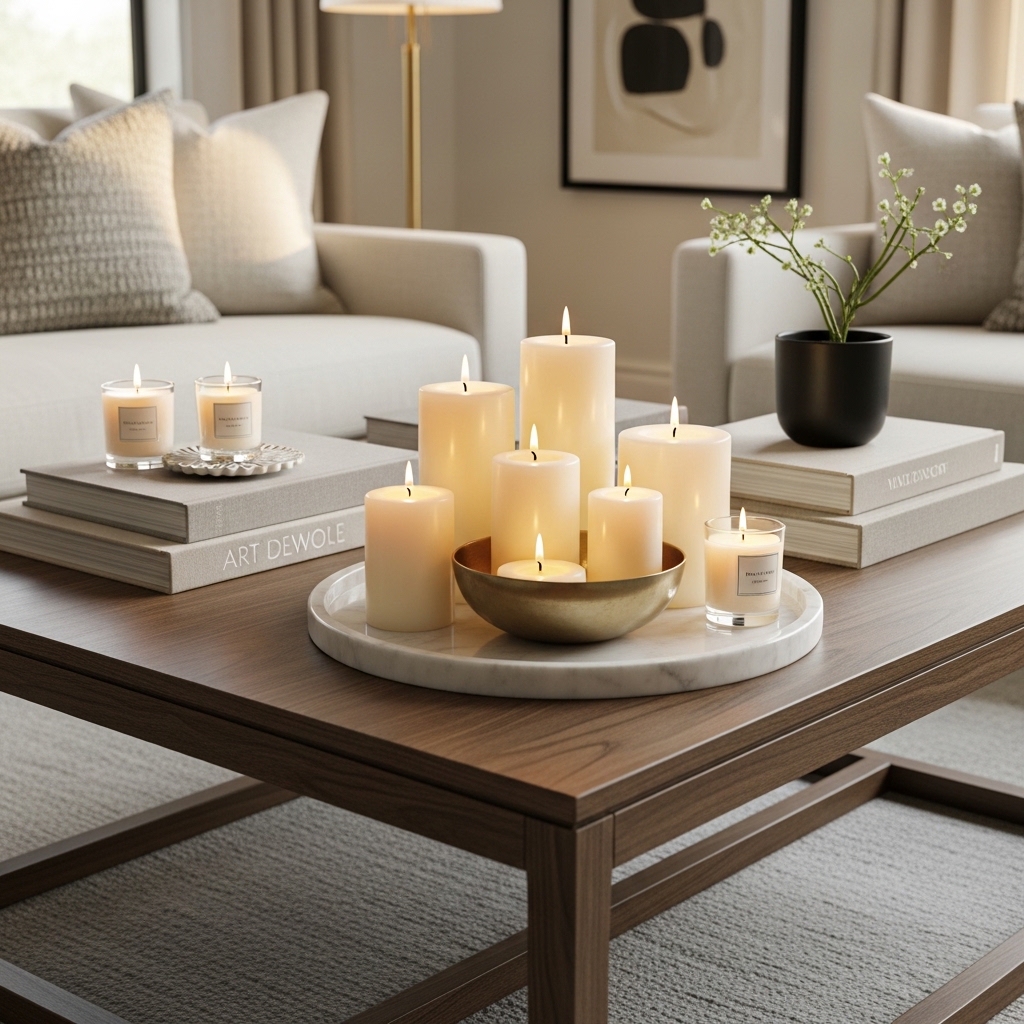
Ideal for: Cozy spaces and evening-focused living rooms.
Group two to four candles of varying heights together on one section of the table or within a tray. Keep colors consistent and spacing intentional. This setup works well for creating warmth without overdecorating.
This works because height variation adds depth while candlelight introduces softness and atmosphere. It enhances the mood without taking up too much space.
Pro Tip: Stick to neutral or muted tones for cohesion.
Mistake to Avoid: Don’t mix too many candle styles or colors.
7. Decorative Bowl With Functional Purpose
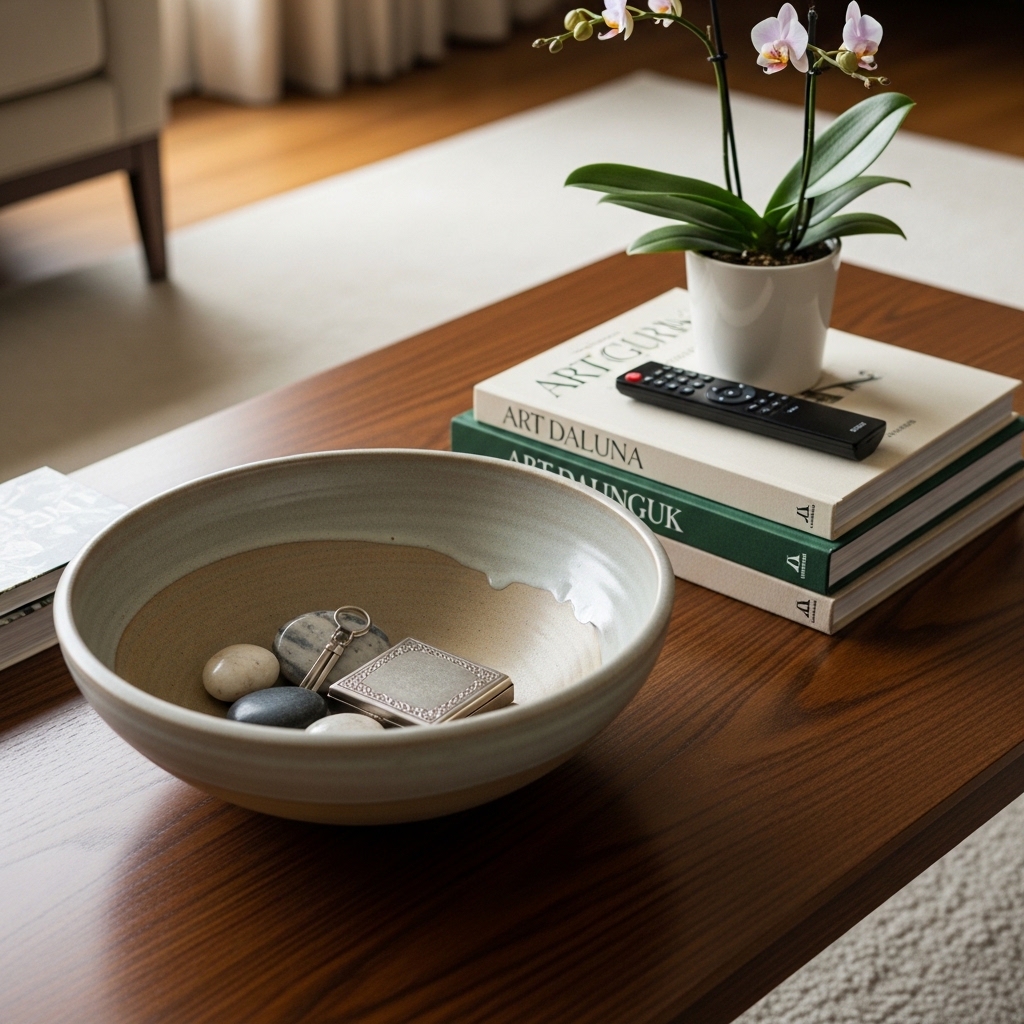
Ideal for: Family spaces where practicality matters.
Place a shallow bowl at the center or slightly off-center and use it to hold small everyday items like remotes or keys. Keep the contents minimal and neatly arranged.
This works because it combines function with style, keeping clutter contained while still looking intentional. It prevents the table from becoming messy over time.
Pro Tip: Choose natural materials like wood or ceramic.
Mistake to Avoid: Don’t overfill the bowl.
8. Symmetrical Layout for Formal Living Rooms
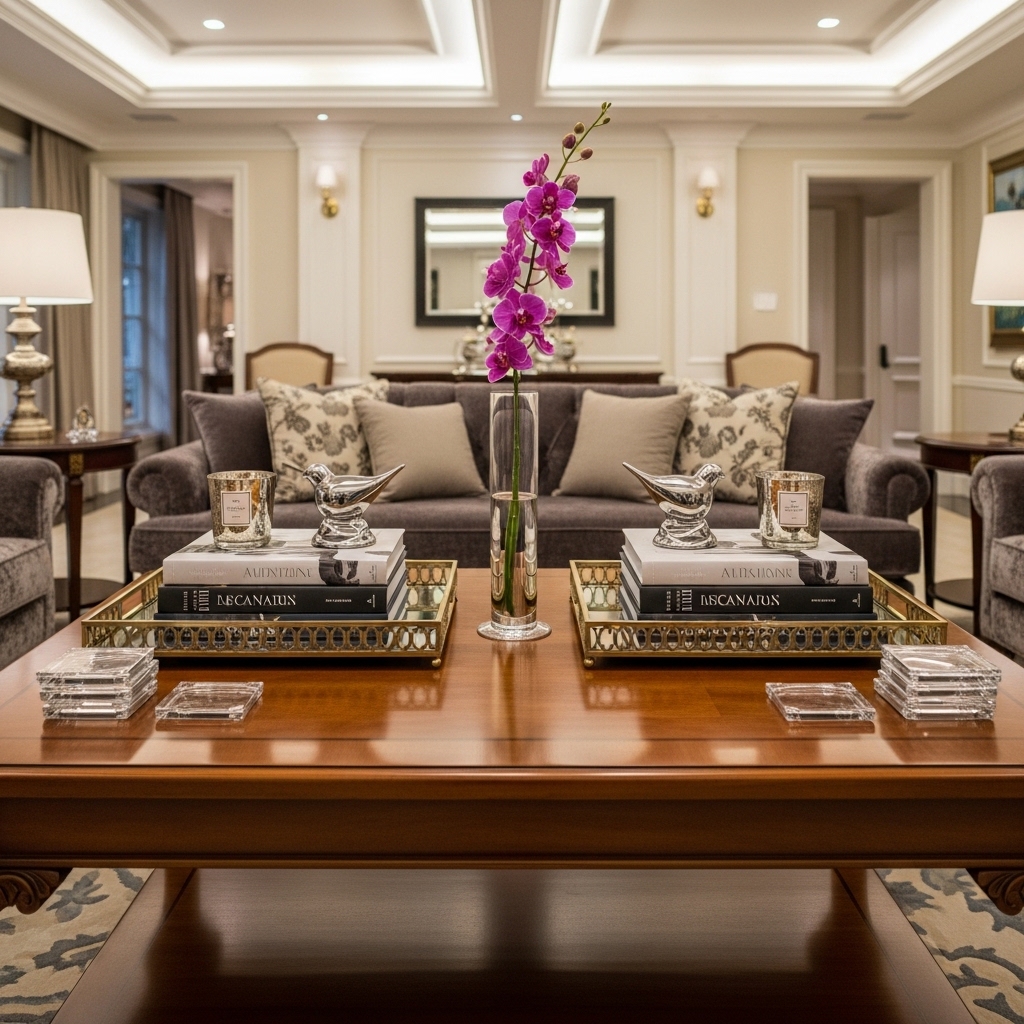
Ideal for: Traditional or structured interiors.
Place identical decor items on both sides of the table, such as matching candles or vases, with a central anchor piece if needed. Keep spacing equal and alignment precise.
This works because symmetry creates order and visual stability, making the space feel polished and formal. It’s especially effective in larger or more traditional settings.
Pro Tip: Measure spacing for perfect alignment.
Mistake to Avoid: Don’t mix different styles in a symmetrical setup.
9. Asymmetrical Styling for Modern Flow
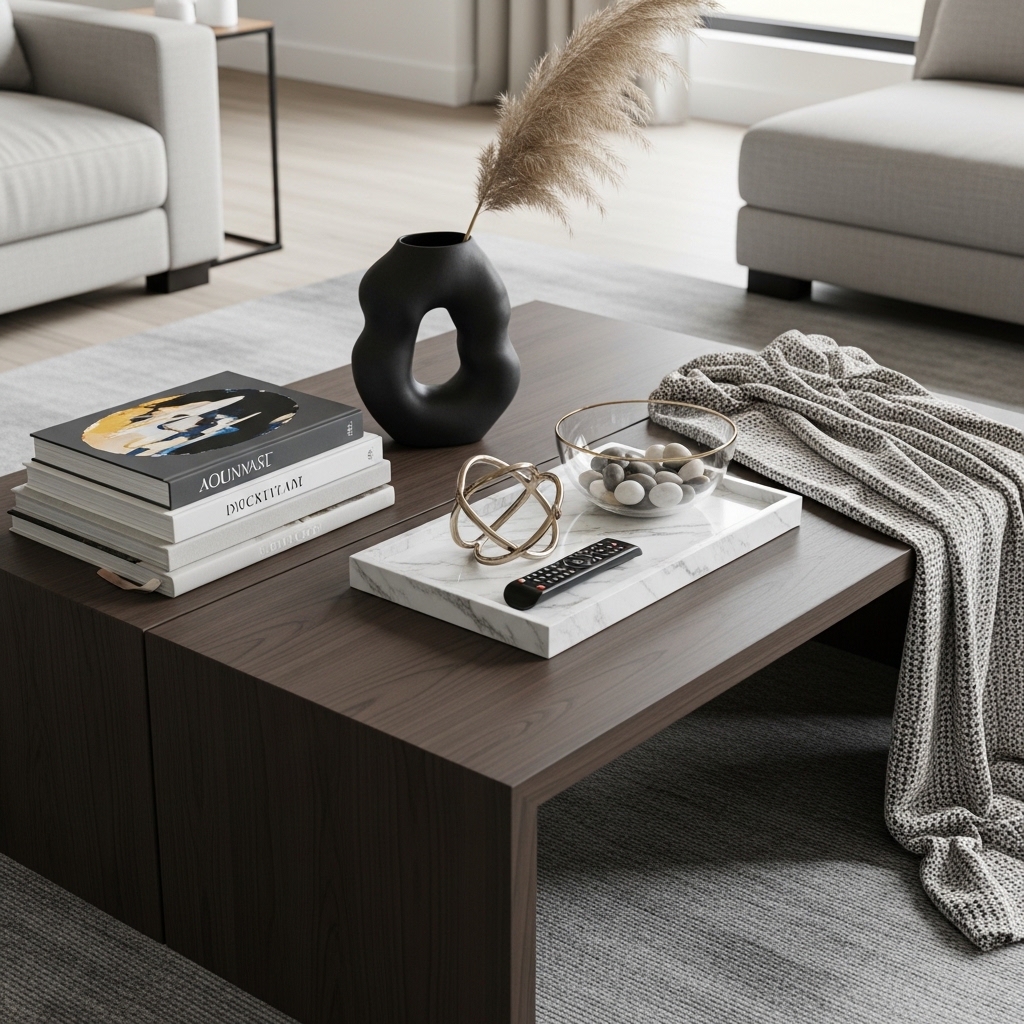
Ideal for: Contemporary and casual interiors.
Arrange decor unevenly across the table but balance the visual weight by varying sizes and spacing. Place heavier items on one side and lighter ones on the other.
This works because asymmetry creates movement and feels more relaxed while still maintaining balance. It’s perfect for modern interiors that avoid rigid layouts.
Pro Tip: Focus on visual weight, not exact placement.
Mistake to Avoid: Don’t cluster everything on one side.
10. Glass and Solid Mix for Light Contrast
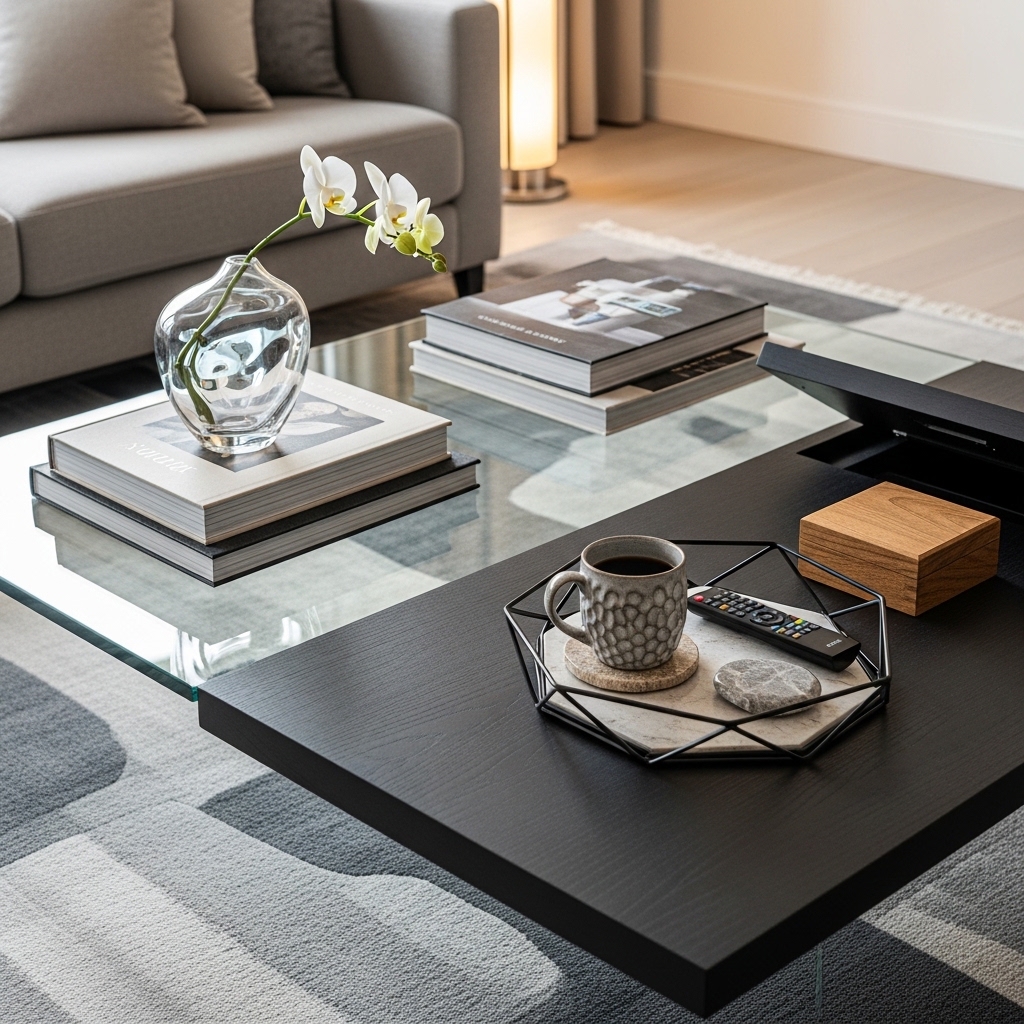
Ideal for: Small spaces needing an airy feel.
Combine one or two glass decor pieces with a solid object like a book stack or ceramic vase. Keep the arrangement minimal and spaced out.
This works because glass reduces visual weight while solid items provide grounding. The contrast creates a balanced, open look.
Pro Tip: Keep glass pieces clean and simple.
Mistake to Avoid: Don’t use too many transparent items.
11. Fabric Layer Base for Soft Styling
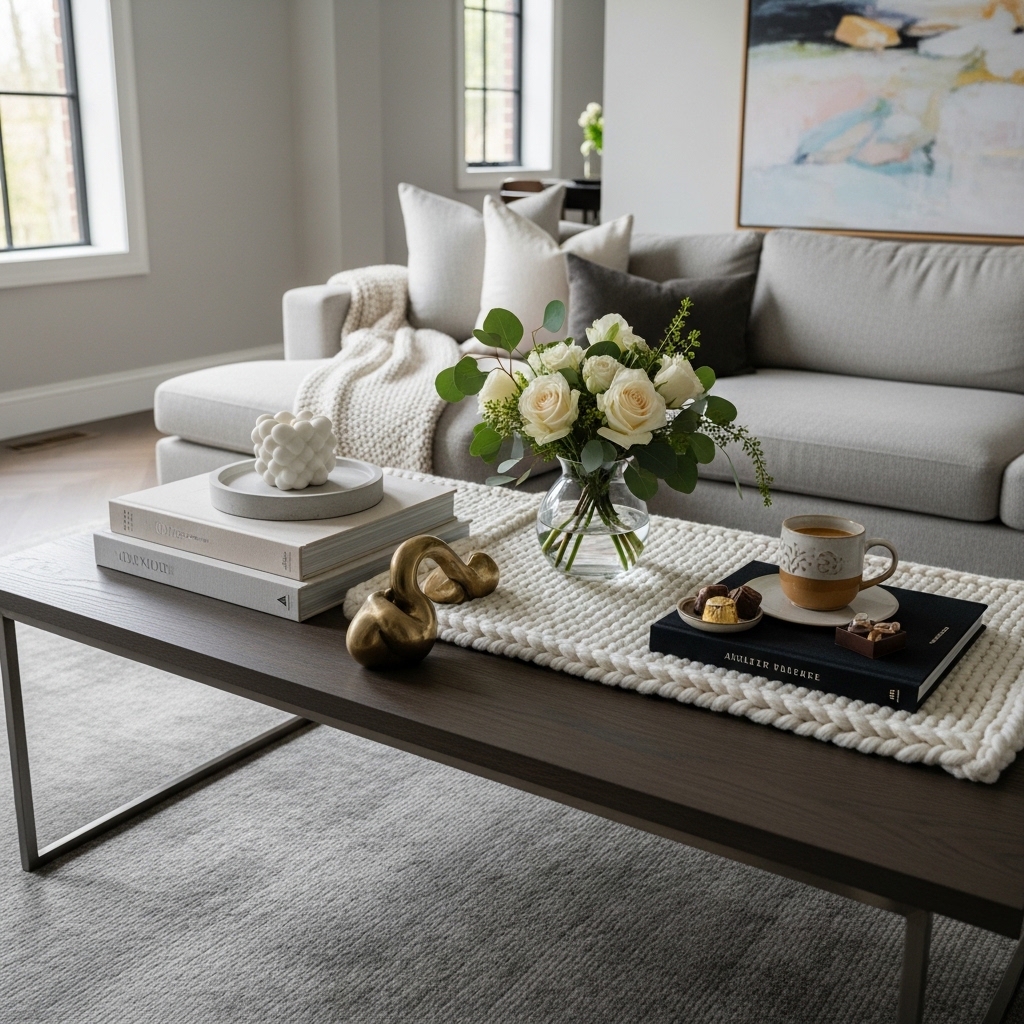
Ideal for: Hard-surface tables needing warmth.
Place a small fabric runner or mat under your decor items to create a base layer. Keep it centered and proportionate to the table size.
This works because fabric softens the look and visually anchors the arrangement. It adds texture without adding bulk.
Pro Tip: Use neutral textured fabrics.
Mistake to Avoid: Don’t use bold patterns.
12. Metallic Accent for Subtle Luxury
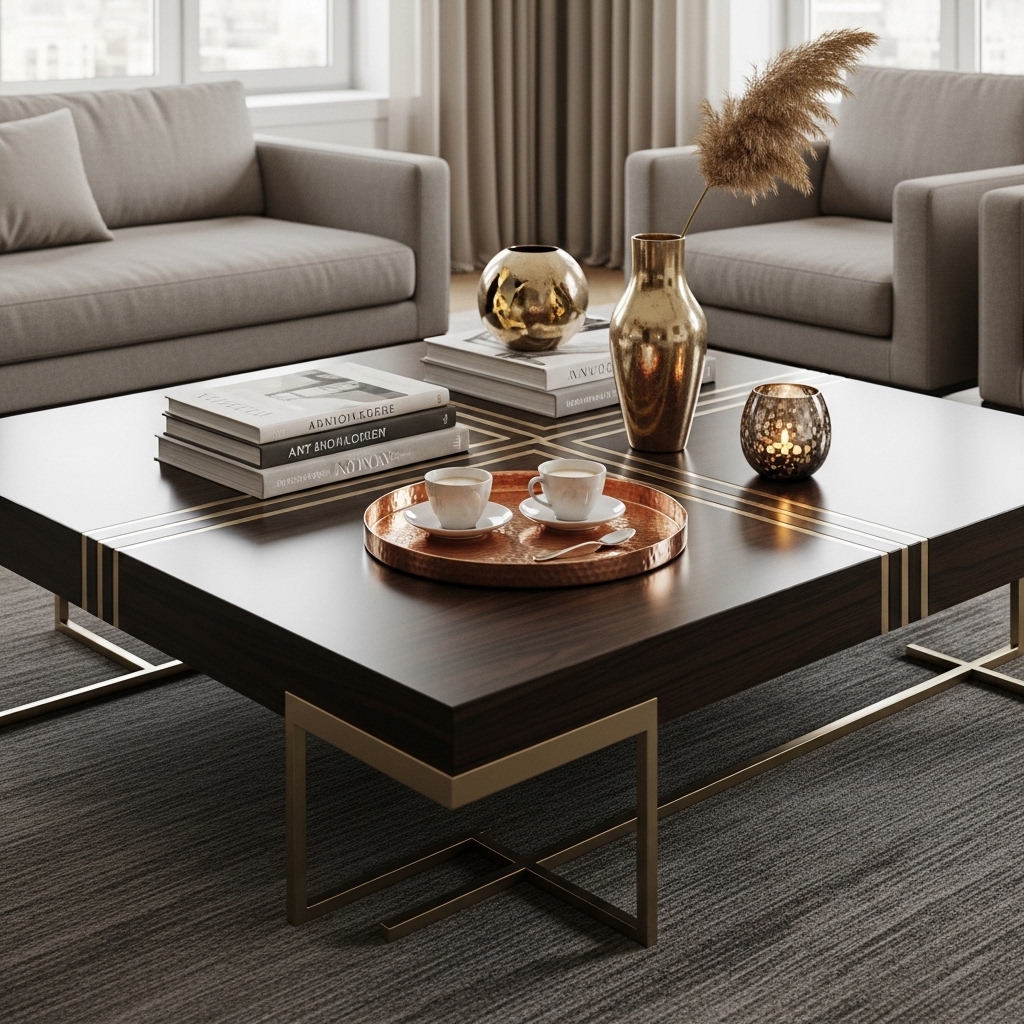
Ideal for: Modern glam or upscale interiors.
Add one metallic element like a tray or candle holder and pair it with neutral items. Keep the overall setup minimal.
This works because metallic finishes reflect light and elevate the look without requiring many pieces.
Pro Tip: Stick to one metal tone.
Mistake to Avoid: Don’t mix multiple finishes.
13. Neutral Layered Styling for Calm Interiors
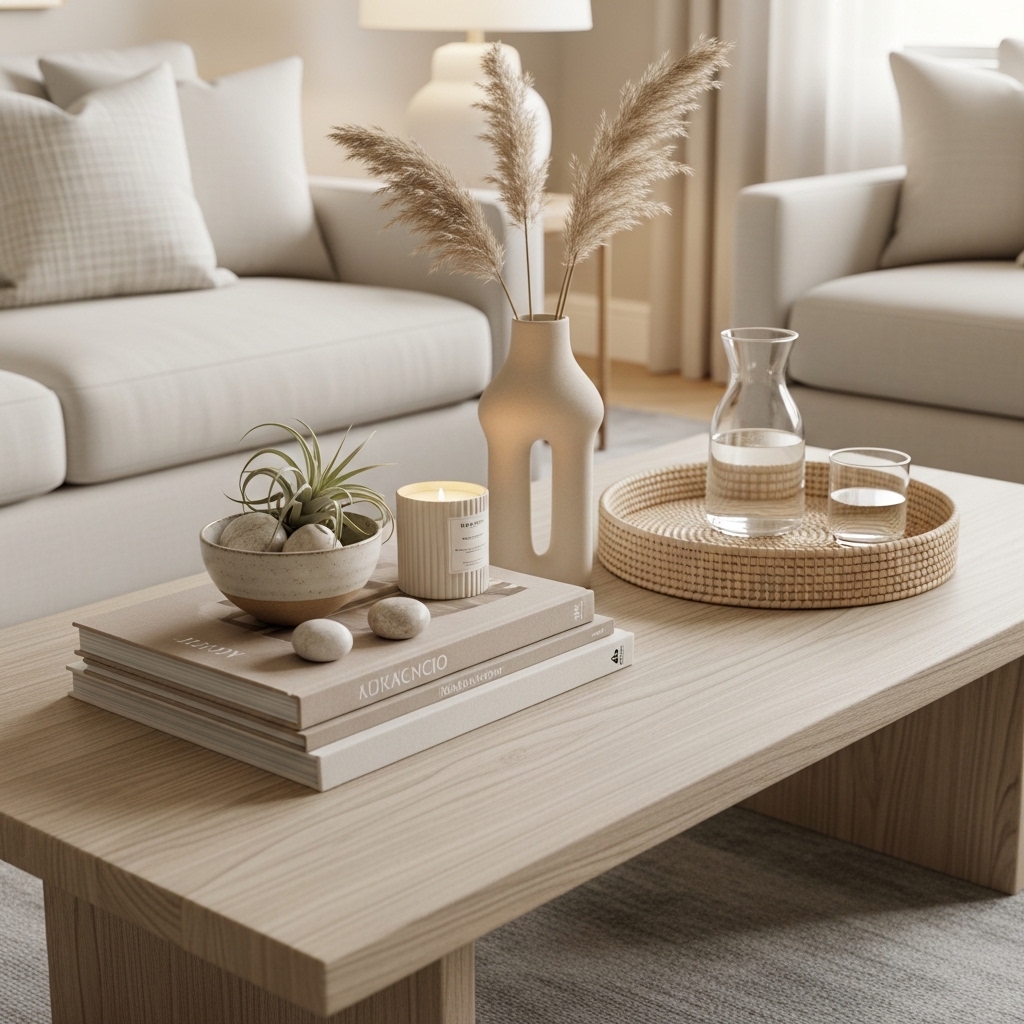
Ideal for: Minimal and Scandinavian spaces.
Use decor in soft tones like beige, white, and gray, layered with books and small objects. Keep color variation minimal.
This works because neutral palettes reduce visual noise and create a calm, cohesive environment.
Pro Tip: Focus on texture variation.
Mistake to Avoid: Don’t add bright accents.
14. Mixed Height Grouping for Visual Depth
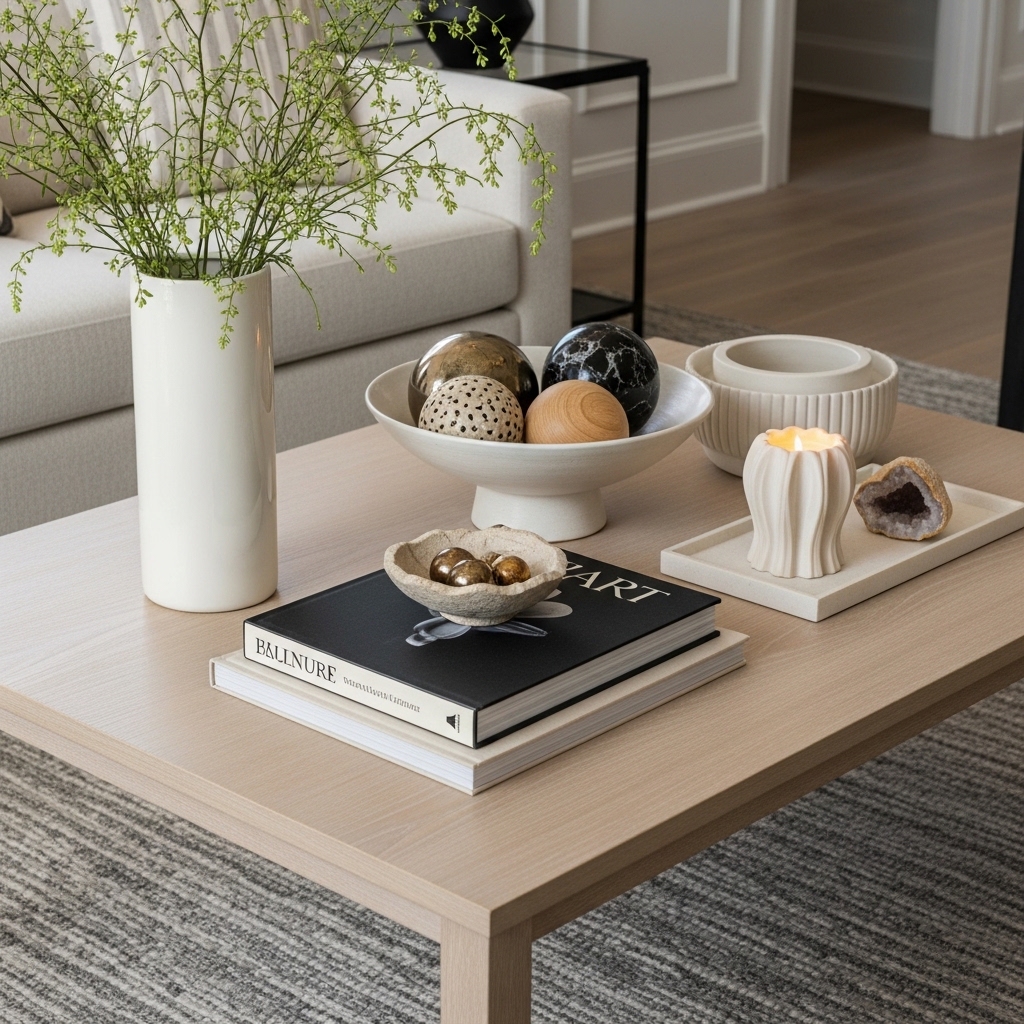
Ideal for: Medium to large tables.
Combine items of different heights in one grouping, such as a tall vase, medium candle, and low books.
This works because height variation creates movement and prevents the table from looking flat.
Pro Tip: Keep the tallest item slightly off-center.
Mistake to Avoid: Don’t align all items evenly.
15. Oversized Statement Piece for Bold Impact
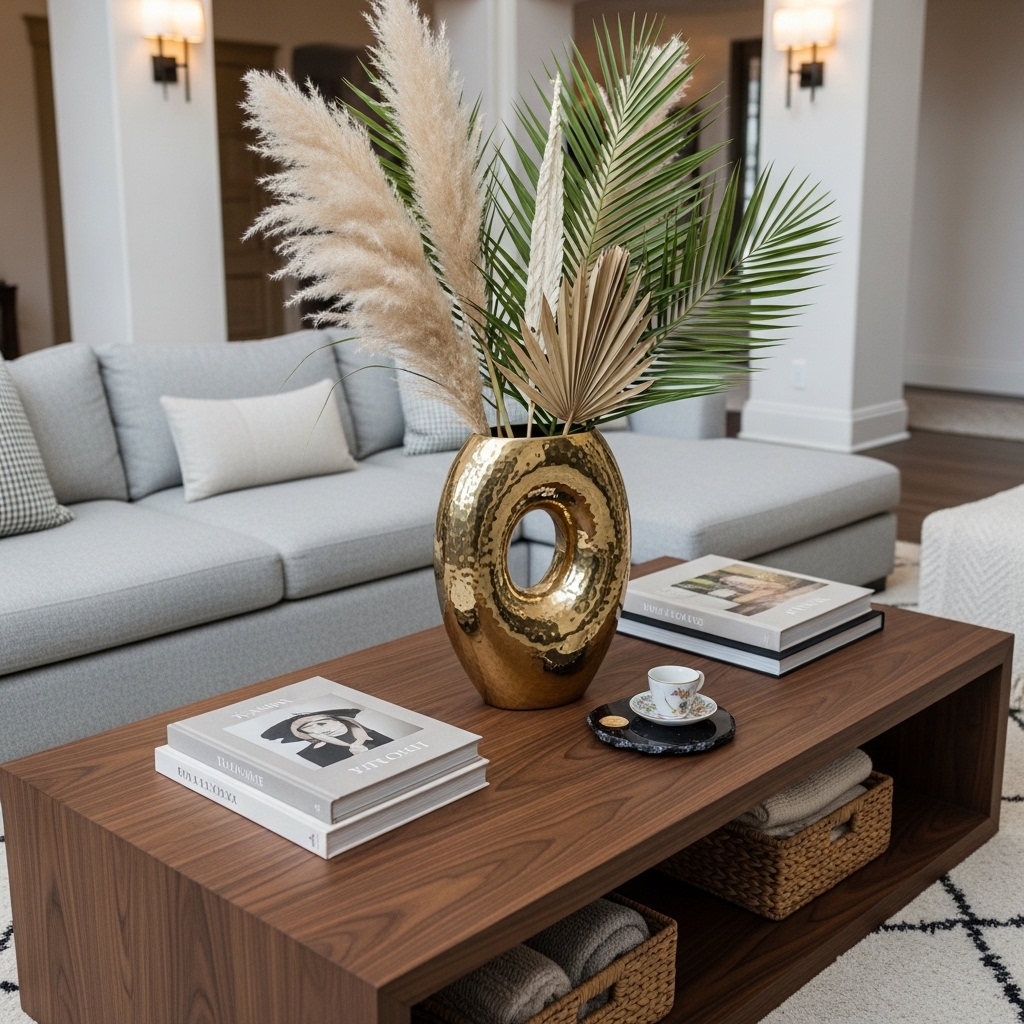
Ideal for: Large coffee tables.
Use one oversized decor item as the main focal point and leave the rest of the table empty.
This works because a single bold piece anchors the space and prevents clutter.
Pro Tip: Choose sculptural shapes.
Mistake to Avoid: Don’t add smaller competing items.
16. Compact Styling for Small Tables
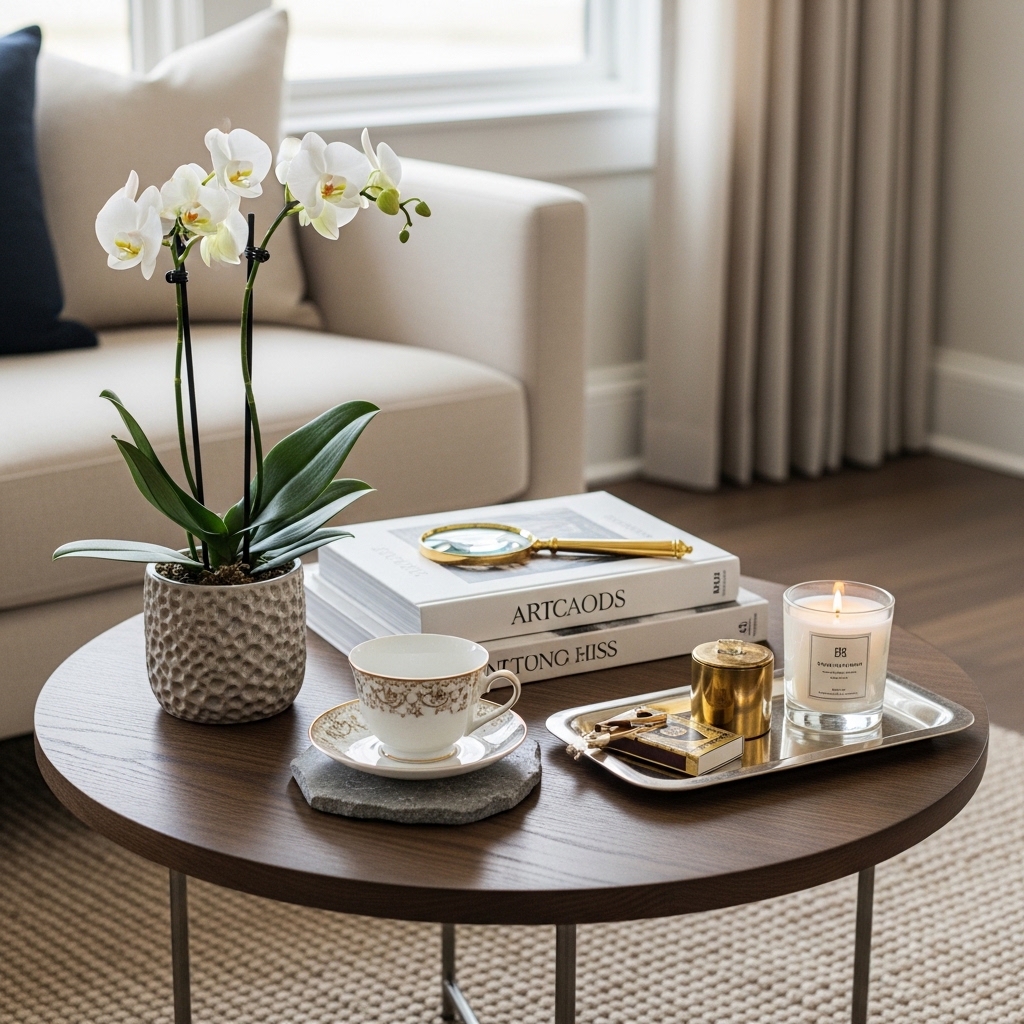
Ideal for: Studio apartments and tight spaces.
Use only one or two small items with plenty of empty space around them.
This works because minimal decor keeps the table functional and uncluttered.
Pro Tip: Choose multi-purpose items.
Mistake to Avoid: Don’t overdecorate.
17. Book + Candle Pairing for Cozy Simplicity
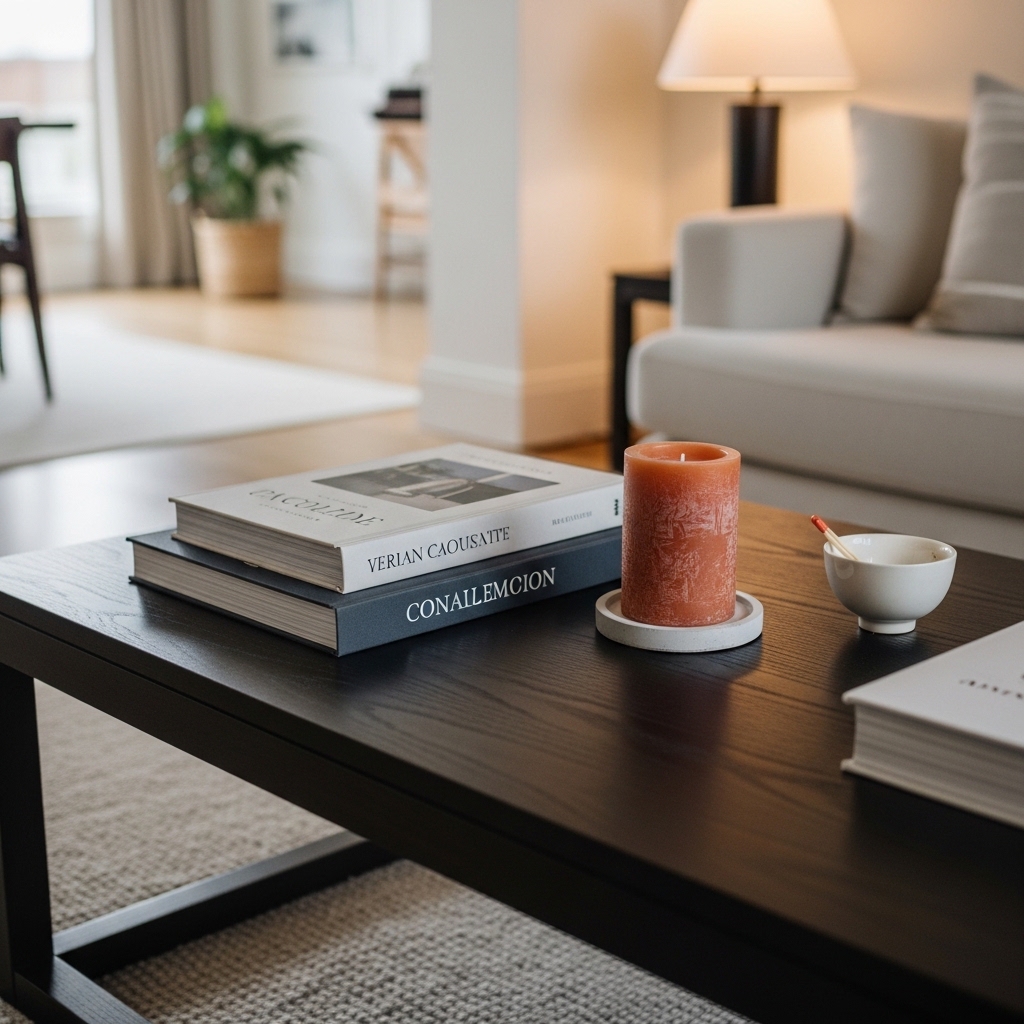
Ideal for: Relaxed everyday styling.
Combine a small book stack with one candle placed on or beside it.
This works because it balances structure and warmth in a simple way.
Pro Tip: Use soft-toned candles.
Mistake to Avoid: Don’t oversize the stack.
18. Stone or Marble Accent for Grounded Look
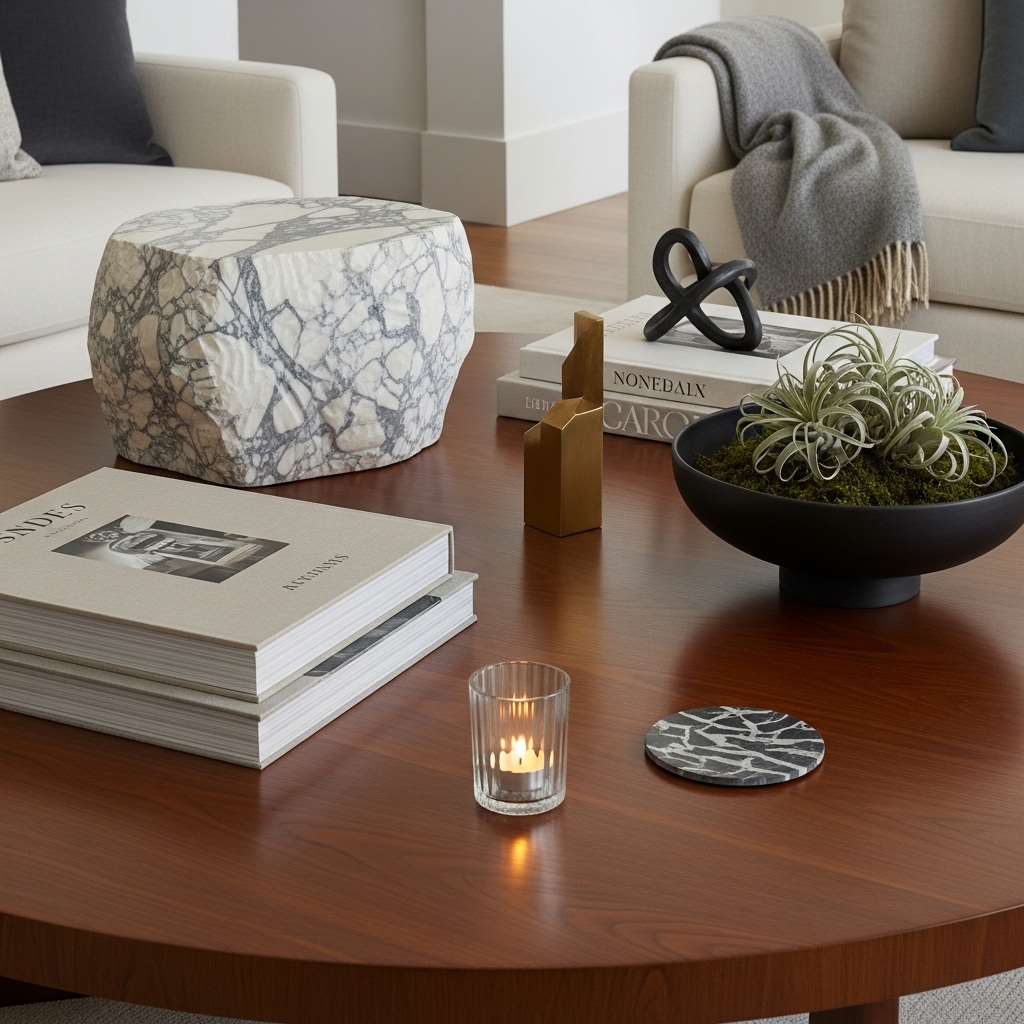
Ideal for: Modern and earthy interiors.
Use a stone or marble decor piece as part of your arrangement.
This works because natural materials add texture and weight balance.
Pro Tip: Pair with softer elements.
Mistake to Avoid: Don’t overload heavy materials.
19. Seasonal Swap Styling System
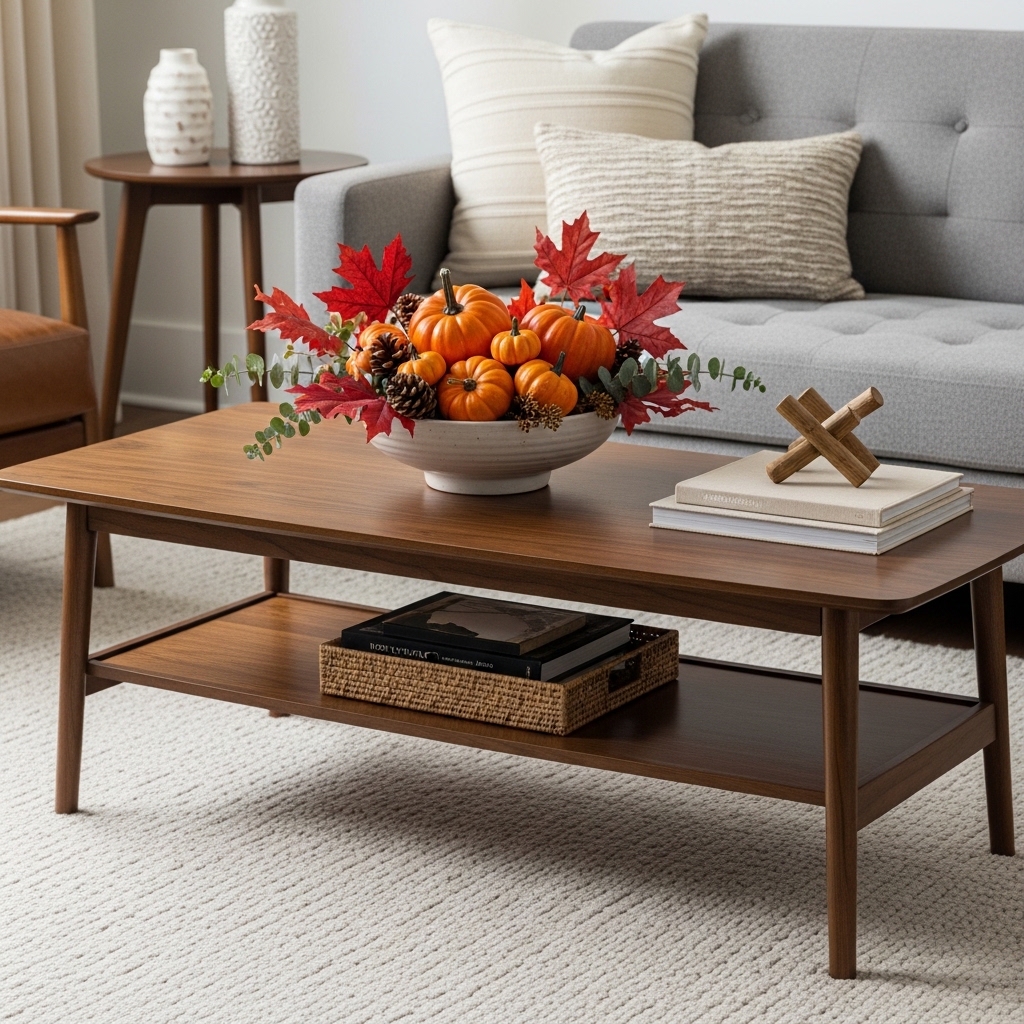
Ideal for: Homes that change decor frequently.
Keep a base layout and swap small items based on the season.
This works because it refreshes the space without redesigning it.
Pro Tip: Keep core pieces neutral.
Mistake to Avoid: Don’t change the layout often.
20. Functional Storage Styling for Daily Use
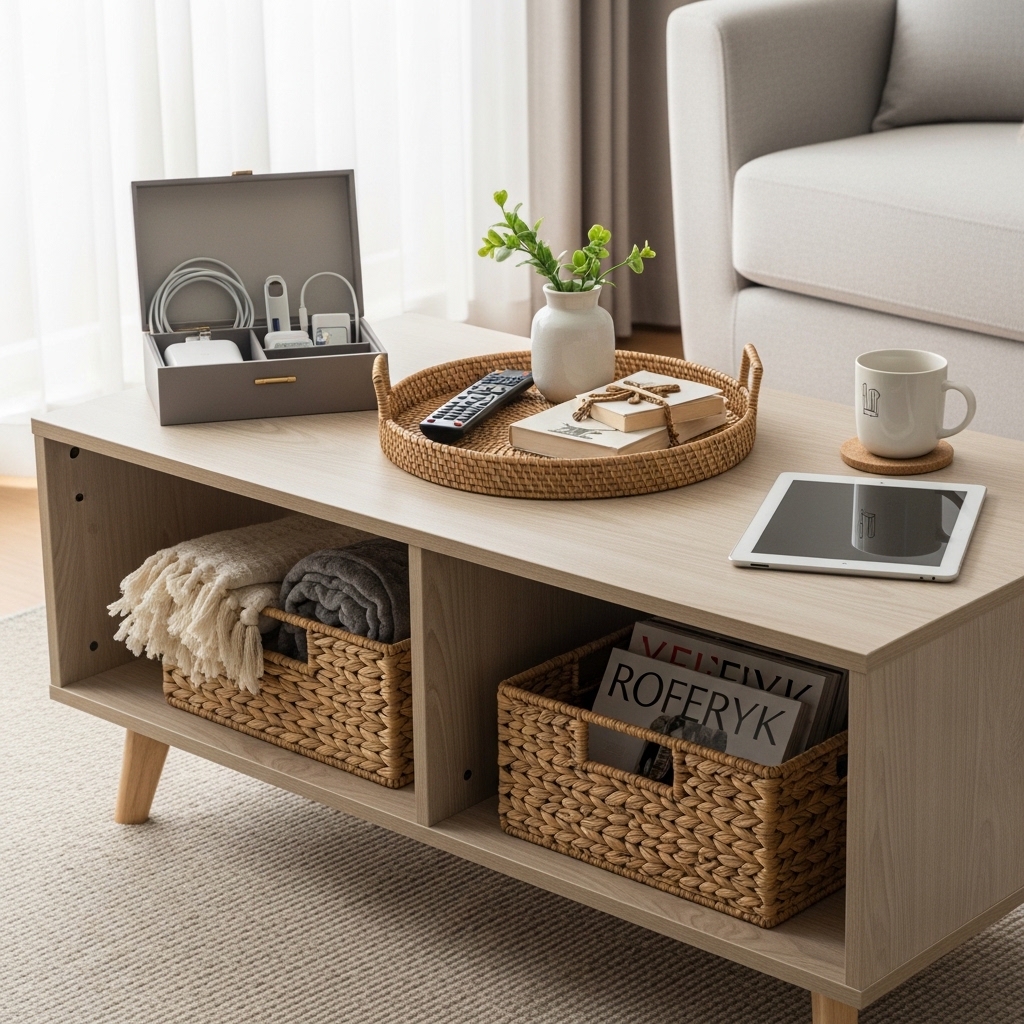
Ideal for: Practical households.
Use decorative boxes or trays that double as storage for small items.
This works because it combines style with everyday functionality.
Pro Tip: Keep storage visually minimal.
Mistake to Avoid: Don’t use bulky containers.
Conclusion
Coffee table styling is about balance, proportion, and intentional placement, not filling every inch of space. The best setups combine function with design, creating a surface that looks curated but still works for daily life.
When done right, your coffee table becomes a natural focal point that ties the entire living room together without adding clutter.