20 Amazing Table scape Ideas That Turn Everyday Meals Into Memorable Dining Experiences
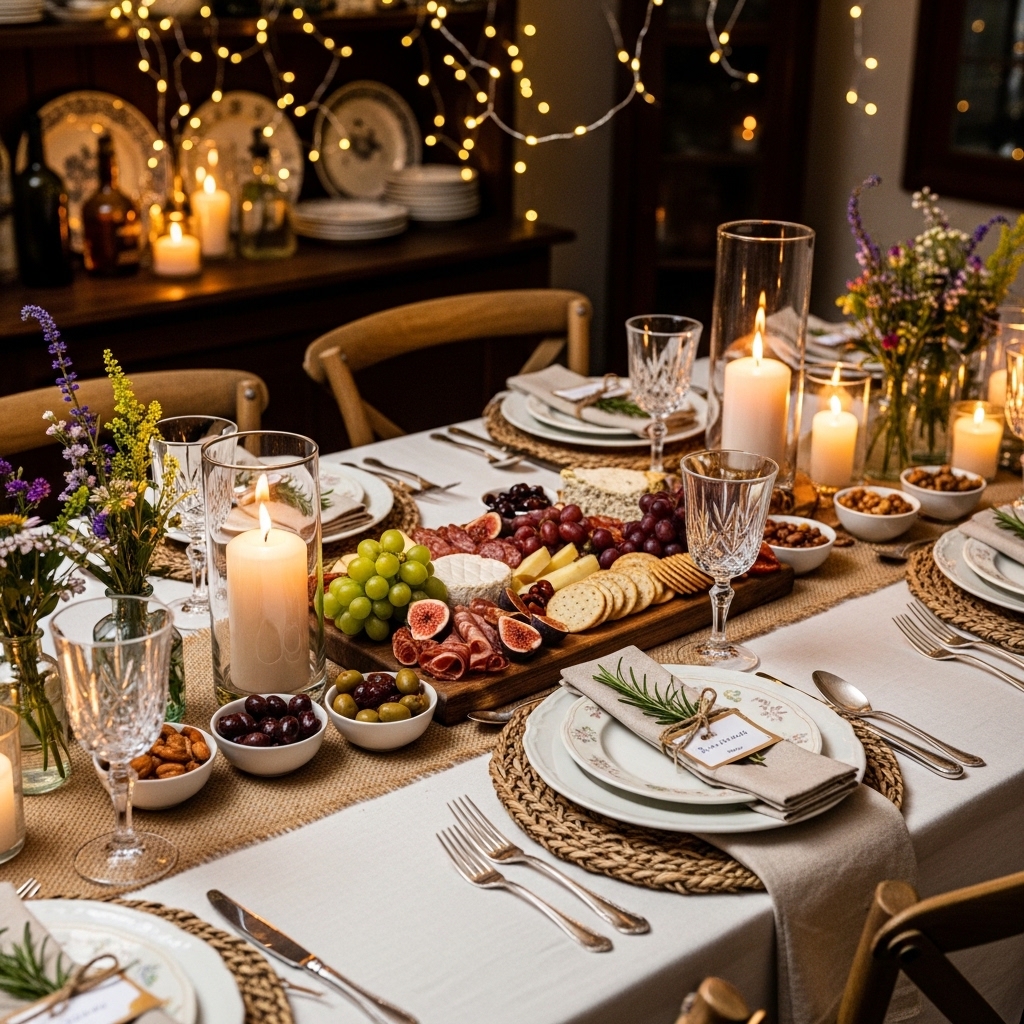
A table set with intention feels different. The food tastes better. The conversation flows more easily. Guests feel welcomed before they sit down.
Tablescaping is not just for holidays or dinner parties. Everyday meals deserve beauty too. The right tablescape transforms a quick weeknight dinner into a moment worth pausing for.
This guide delivers 20 tablescape ideas for every occasion, every season, and every budget. From minimalist settings to layered feasts, each idea brings warmth and personality to your table.
1. Minimalist White on White for Clean Elegance
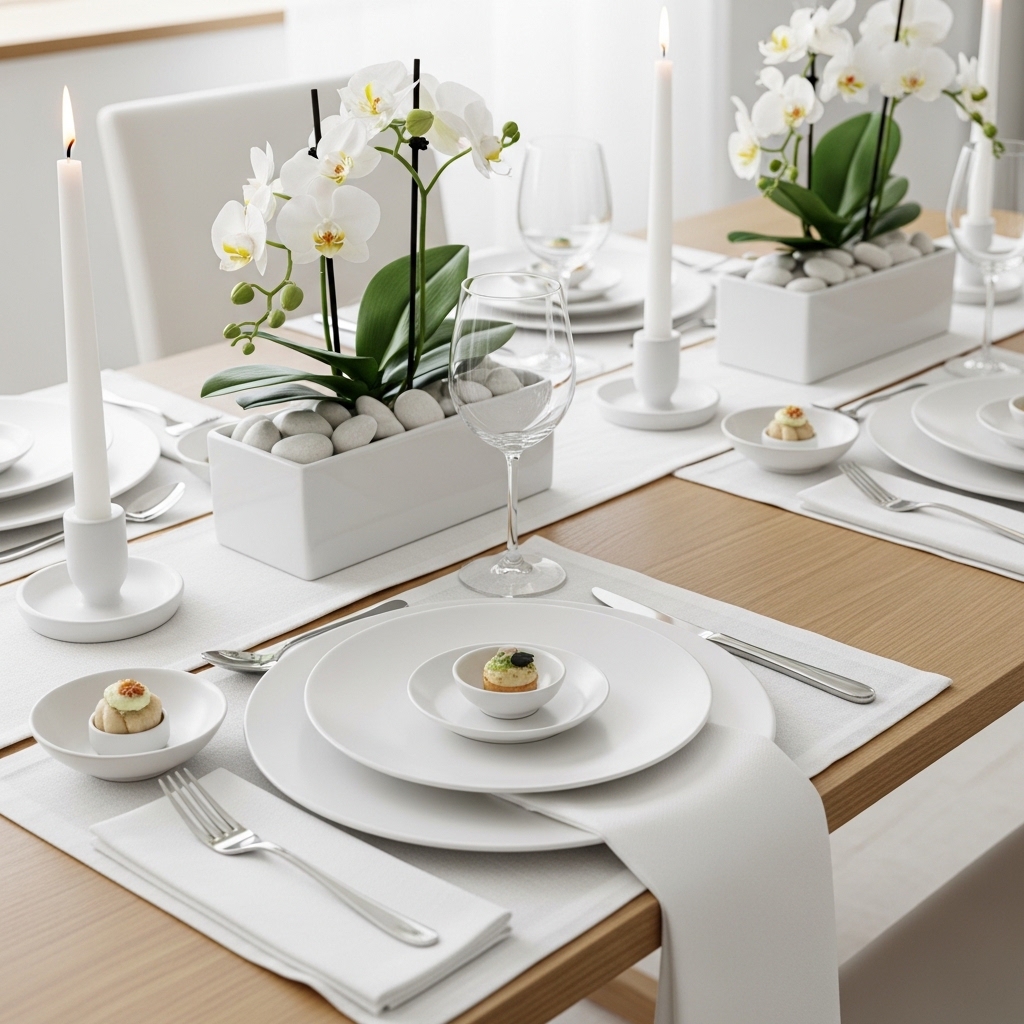
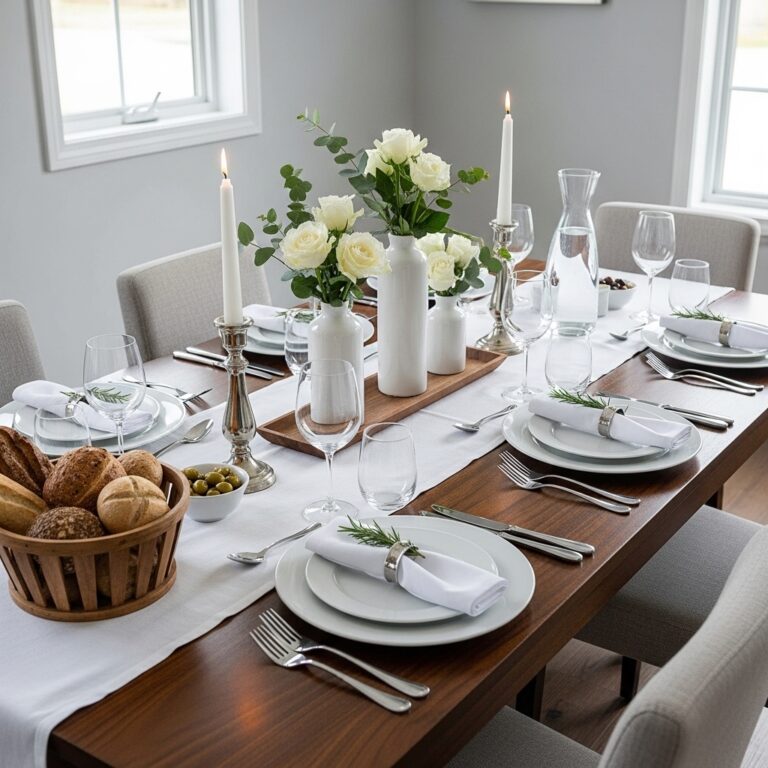
White plates on a white tablecloth. White napkins. White candles. The lack of color is the statement.
Layer different textures to add interest. Linen napkins. Matte plates. Glossy candles. The subtle variations keep the eye engaged.
Pro Tip: Add a single green leaf to each plate. The tiny pop of color breaks the monotony.
Mistake to Avoid: Do not use off-white and bright white together. The mismatch looks accidental.
2. Single Stem in a Small Bottle at Each Place Setting
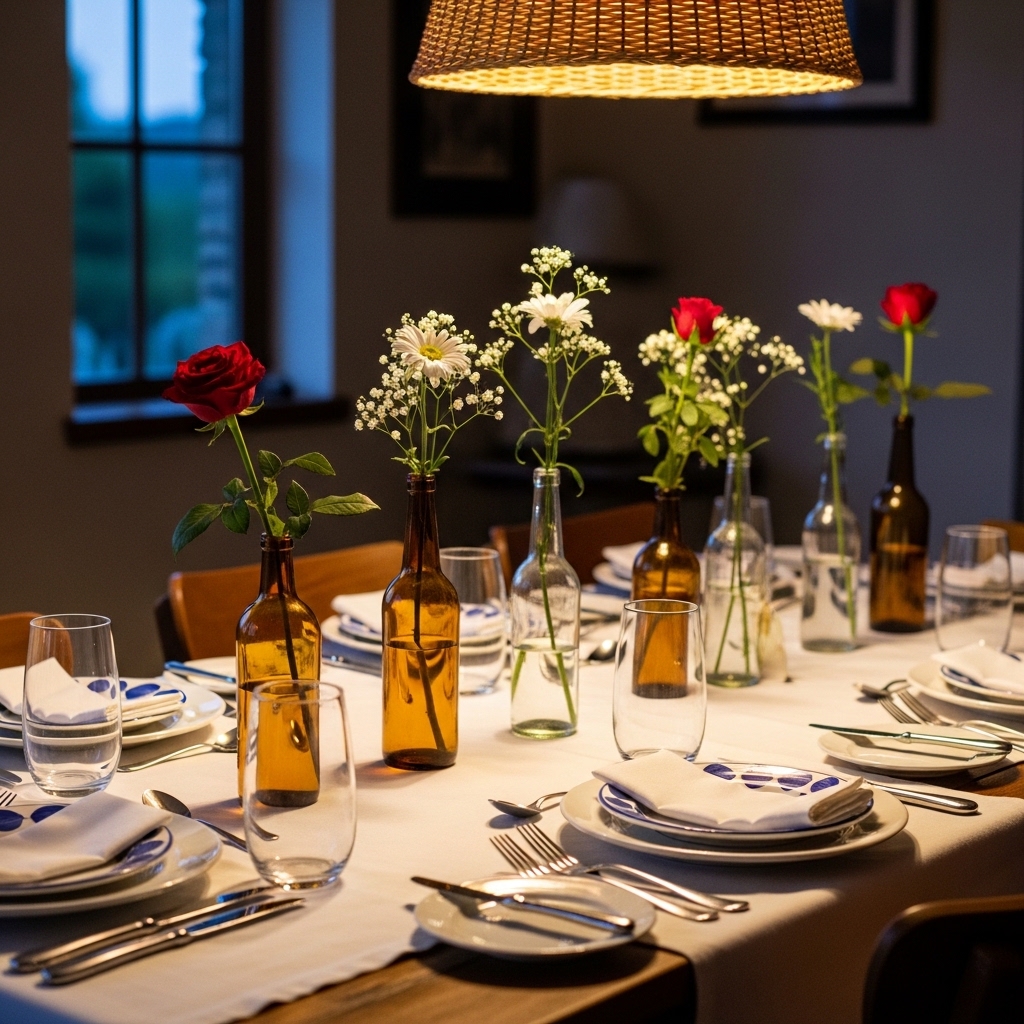
One flower per person is more personal than a large bouquet. Each guest has their own bloom.
Use small bottles or test tubes as vases. Place one at each setting. Use the same flower for all settings or mix them.
Pro Tip: Use herbs like rosemary or lavender. The scent adds another layer to the experience.
Mistake to Avoid: Do not use flowers with heavy pollen. Pollen drops on the tablecloth.
3. Layered Chargers and Plates for Depth
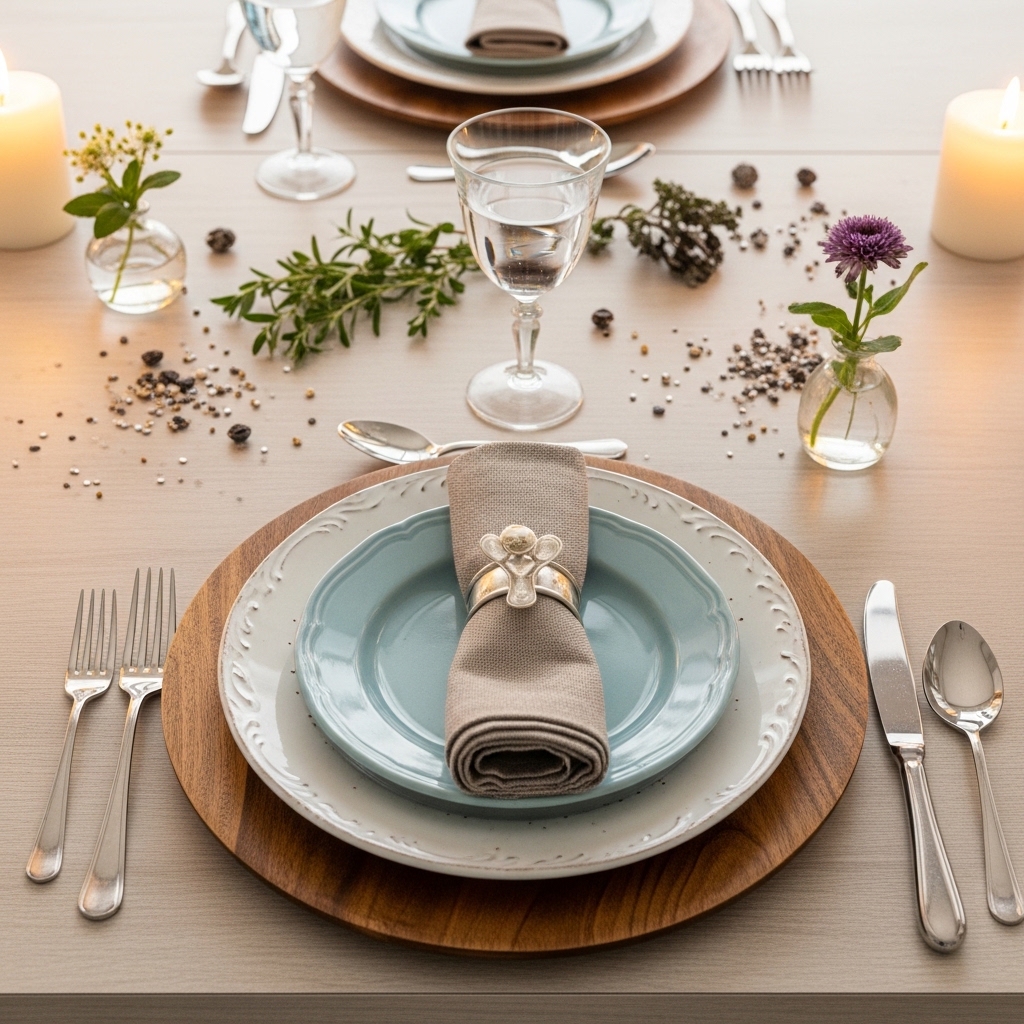
A charger is a large plate that stays on the table. Dinner plates go on top. Salad plates on top of those.
Use chargers in a contrasting color or material. Wood under white porcelain. Rattan under ceramic. The layers add richness.
Pro Tip: Use the charger as a bread plate after the main course. Guests appreciate the utility.
Mistake to Avoid: Do not use chargers that are too heavy. Guests should be able to move them easily.
4. Long Table Runner with Taper Candles
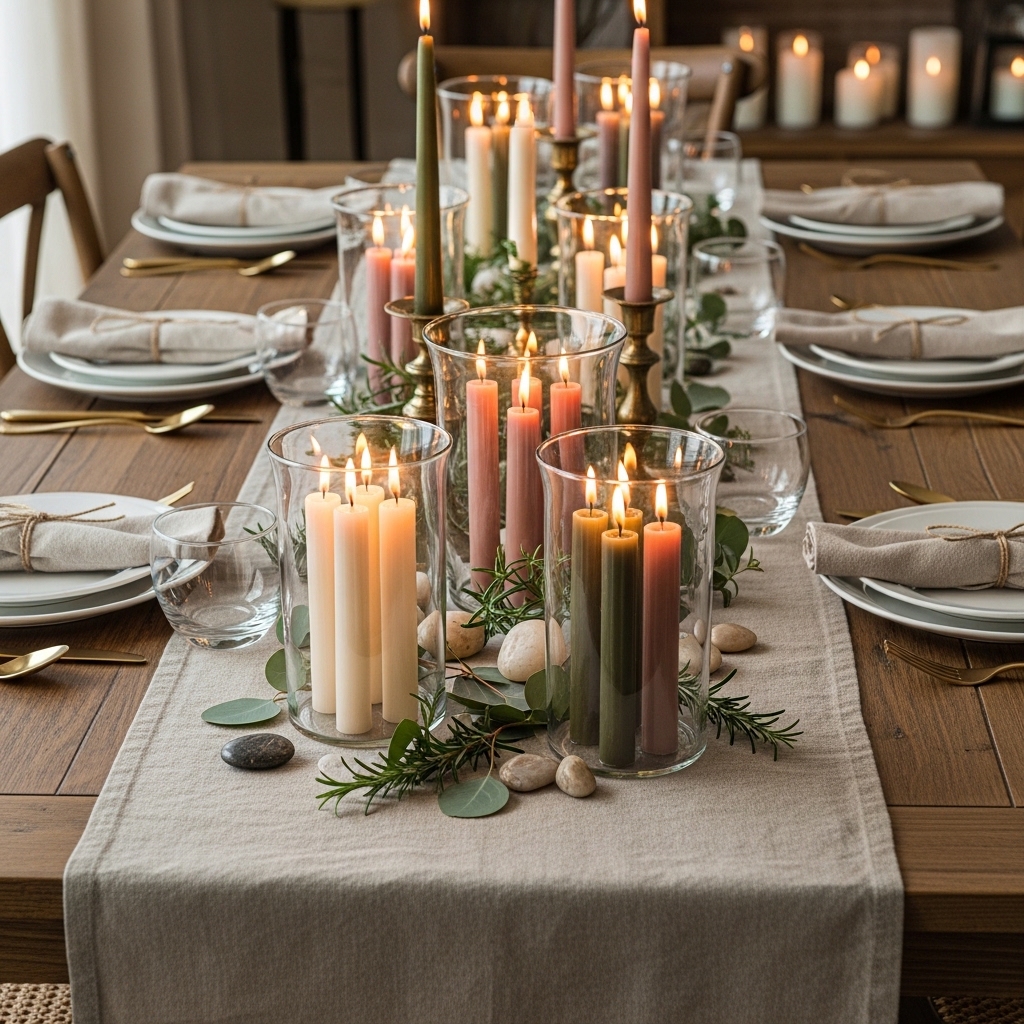
A runner anchors the table. It provides a surface for candles and decor. It adds color and texture.
Use a narrow runner (12-16 inches wide). Place taper candles in holders along the center. Space them evenly.
Pro Tip: Use unscented candles on dining tables. Scented candles interfere with food aromas.
Mistake to Avoid: Do not use candles that are too tall. Guests should see each other across the table.
5. Seasonal Fruit as Centerpiece and Place Card
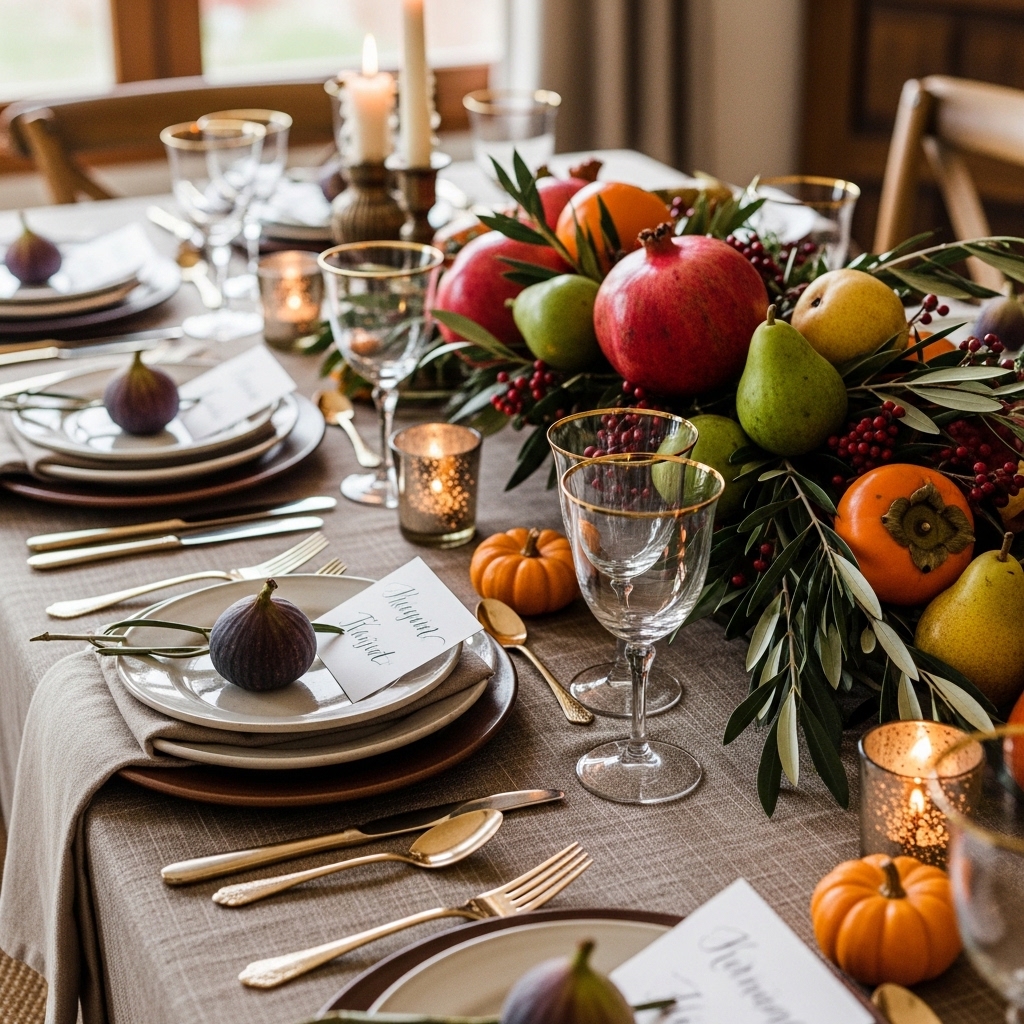
Fruit is edible decor. It adds color, texture, and a snack for after the meal.
Place a small fruit at each setting. Write the guest’s name on a tag tied to the stem. Apples in fall. Citrus in winter. Berries in summer.
Pro Tip: Use fruit that is in season. Seasonal fruit is cheaper, fresher, and more flavorful.
Mistake to Avoid: Do not use fruit that bruises easily. Peaches and bananas look messy within hours.
6. Monochromatic Blue and White for Coastal Feel
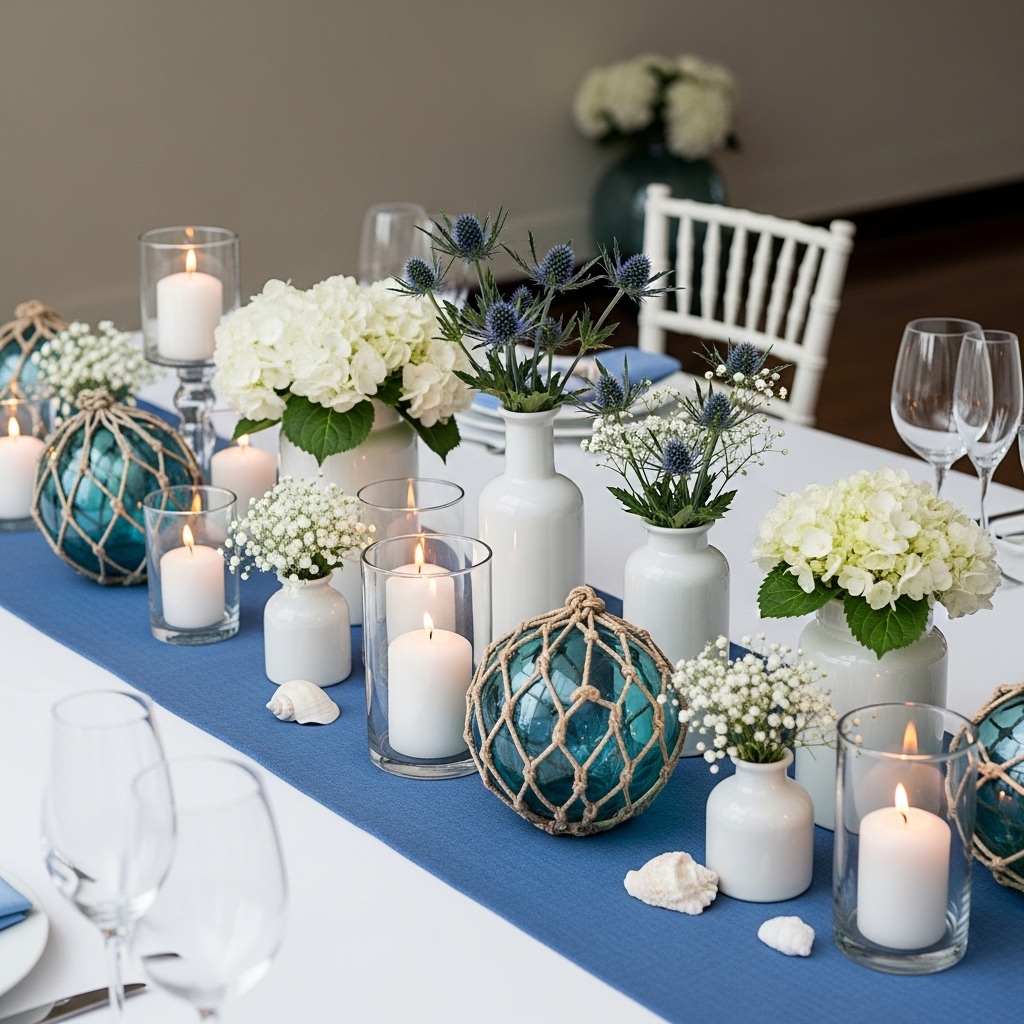
Blue and white is classic. It feels clean, calm, and coastal. It works for breakfast, lunch, and dinner.
Use white plates on blue placemats. Blue napkins on white plates. A blue and white vase as the centerpiece.
Pro Tip: Use blue glassware. The tinted glass adds another layer of blue without matching exactly.
Mistake to Avoid: Do not use too many shades of blue. Two shades plus white is plenty.
7. Wooden Board as a Family-Style Centerpiece
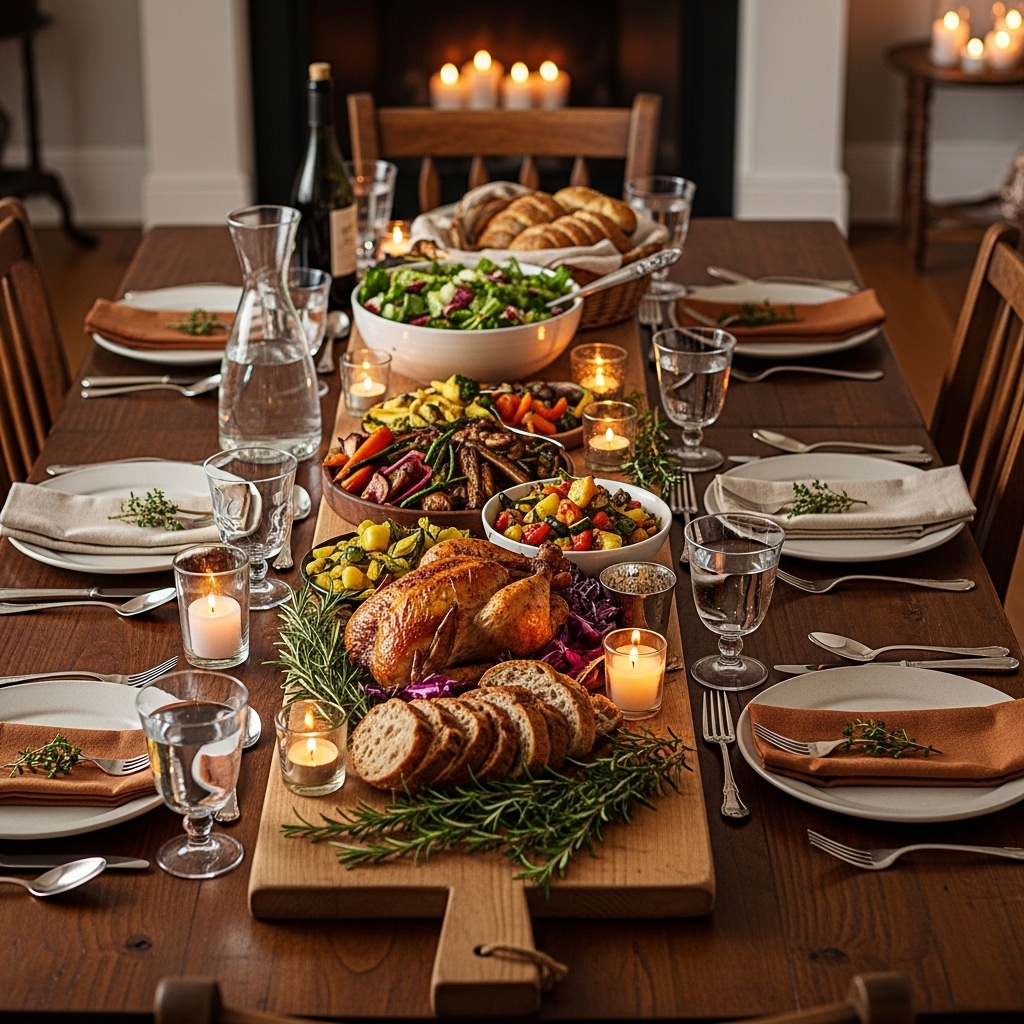
A wooden cutting board becomes a serving vessel. Place it in the center of the table. Fill it with bread, cheese, or olives.
The board adds warmth and texture. It encourages sharing. It eliminates the need for separate serving bowls.
Pro Tip: Use a board with a juice groove. The groove catches oil from marinated items.
Mistake to Avoid: Do not overcrowd the board. Leave space between items.
8. Napkin Folded into a Simple Pocket
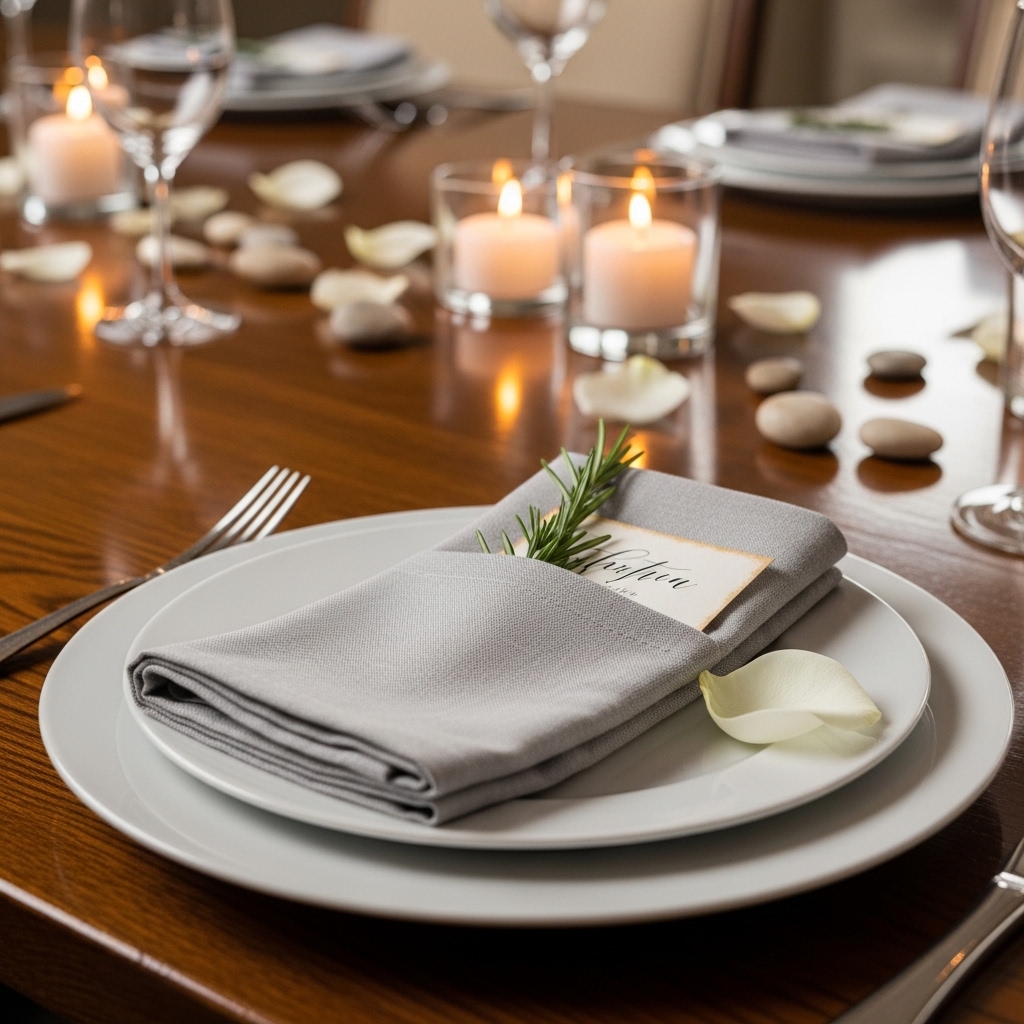
A folded napkin is expected. A napkin folded into a pocket is unexpected. Slip a sprig of rosemary or a small utensil inside.
Use linen napkins for the best folds. Starch them before folding. The stiffness holds the shape.
Pro Tip: Practice the fold before the meal. Napkin folding takes patience.
Mistake to Avoid: Do not use paper napkins for complex folds. Paper tears.
9. Fresh Herb Sprig on Each Plate
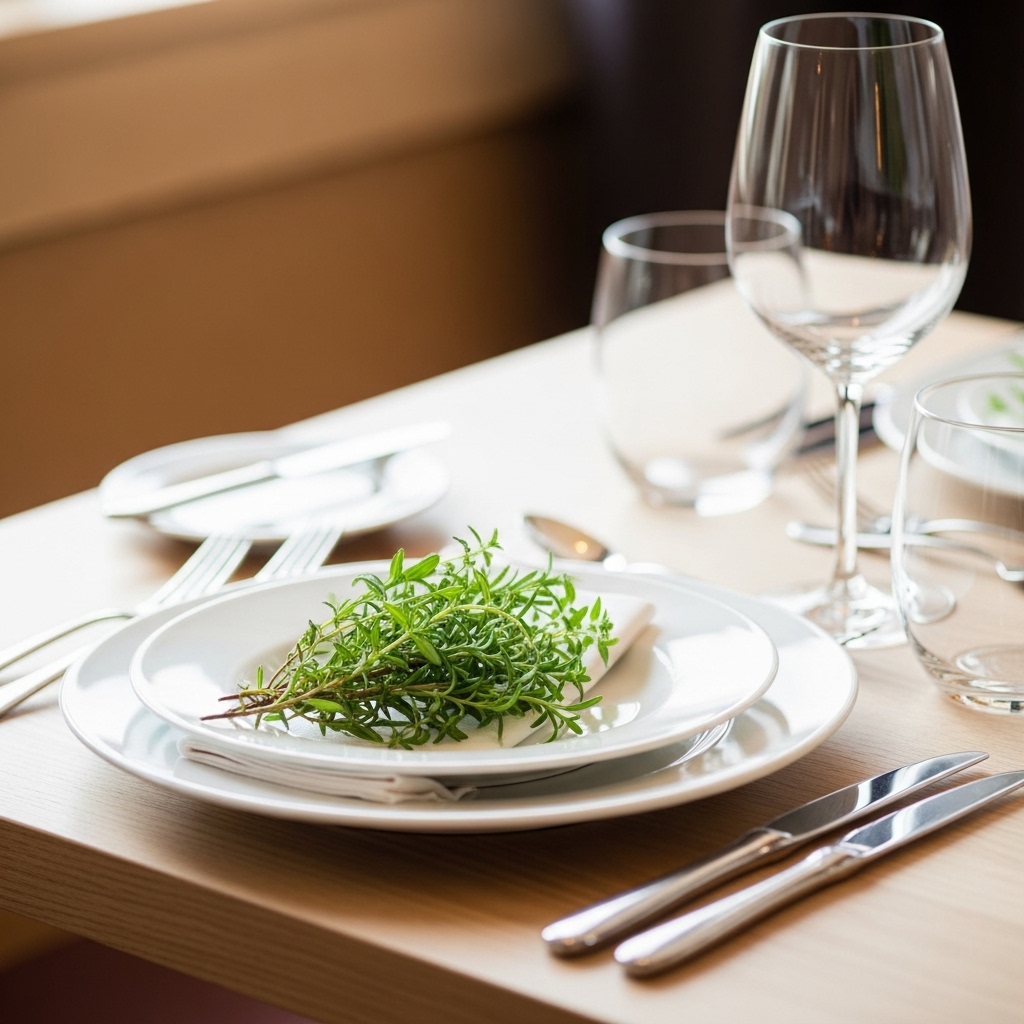
A sprig of rosemary or thyme on each plate adds color and scent. It costs almost nothing. It takes seconds to place.
Lay the sprig across the plate diagonally. Remove it before serving the first course. The scent lingers.
Pro Tip: Use herbs that will be used in the meal. The garnish previews the flavors to come.
Mistake to Avoid: Do not use herbs that are wilted. Freshness matters.
10. Mismatched Vintage Plates for Eclectic Charm
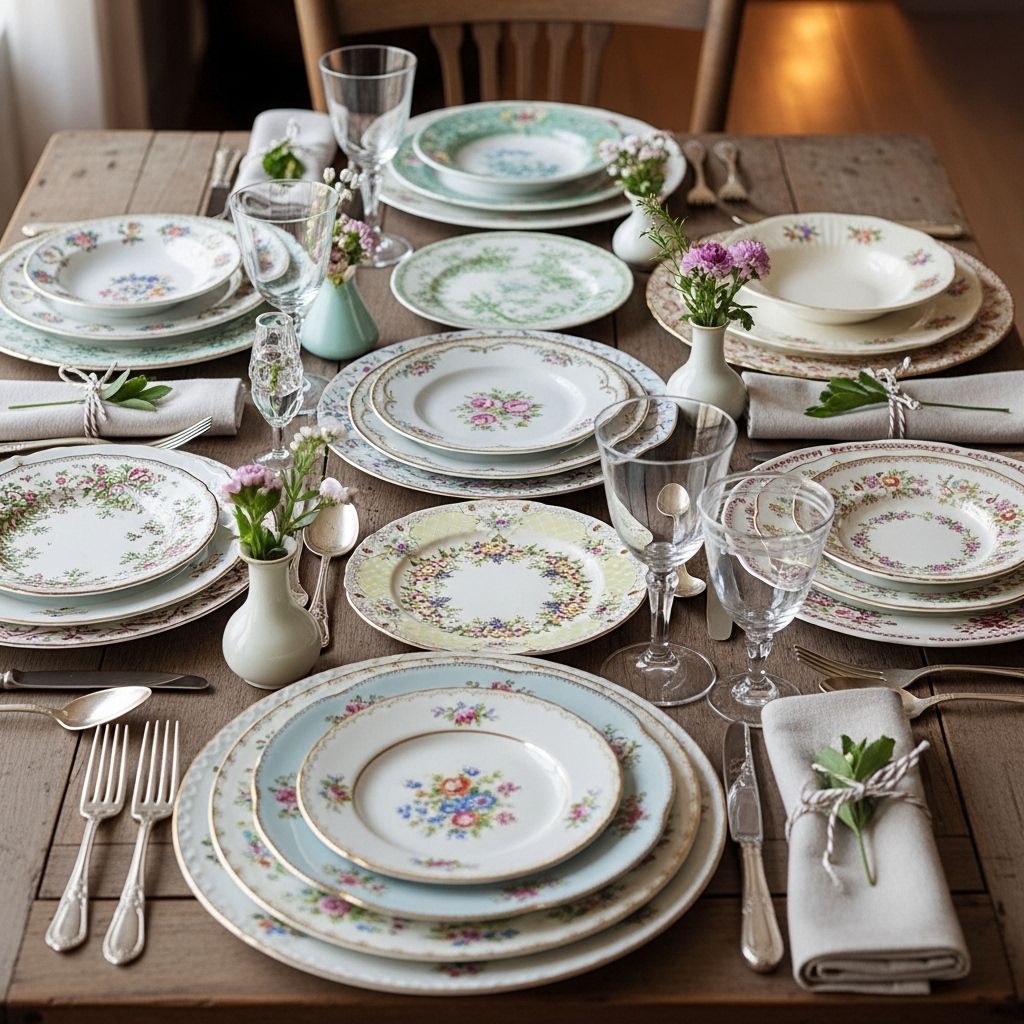
Matching plates are predictable. Mismatched plates are personal. A collection of vintage plates tells a story.
Choose plates that share a color palette. All white with different blue patterns. All cream with different floral prints. The shared palette creates cohesion.
Pro Tip: Collect plates slowly over time. Thrift stores and estate sales are excellent sources.
Mistake to Avoid: Do not use plates that are chipped or cracked. Damage looks shabby, not charming.
11. Woven Placemats with Simple White Dishes
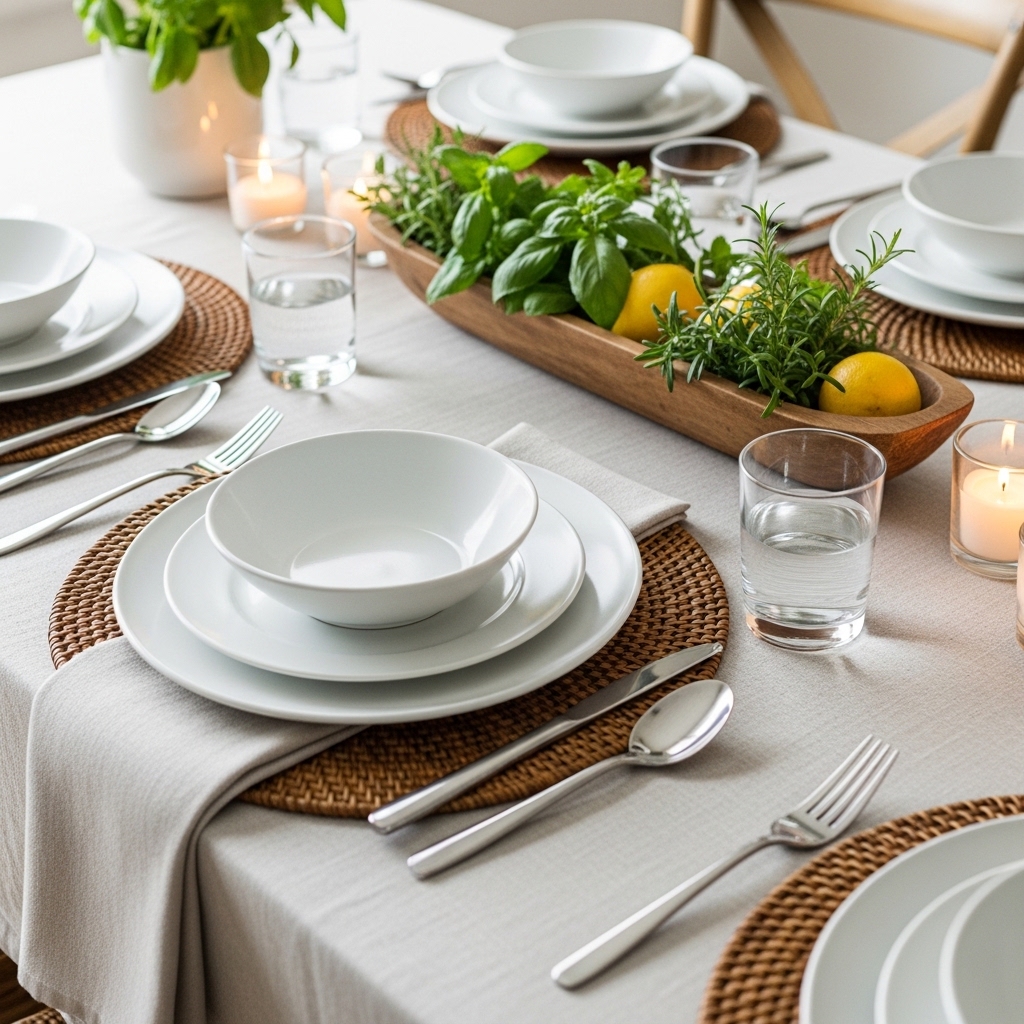
Woven placemats add texture and warmth. They ground each setting. They define each guest’s space.
Use placemats in natural fibers—rattan, bamboo, or seagrass. Place white dishes on top. The contrast is clean and striking.
Pro Tip: Use round placemats for round tables. Square placemats for square tables. Match the shape.
Mistake to Avoid: Do not use placemats that are too large. The placemat should fit within the table edge.
12. Glass Bottles as Water Carafes at Each Setting
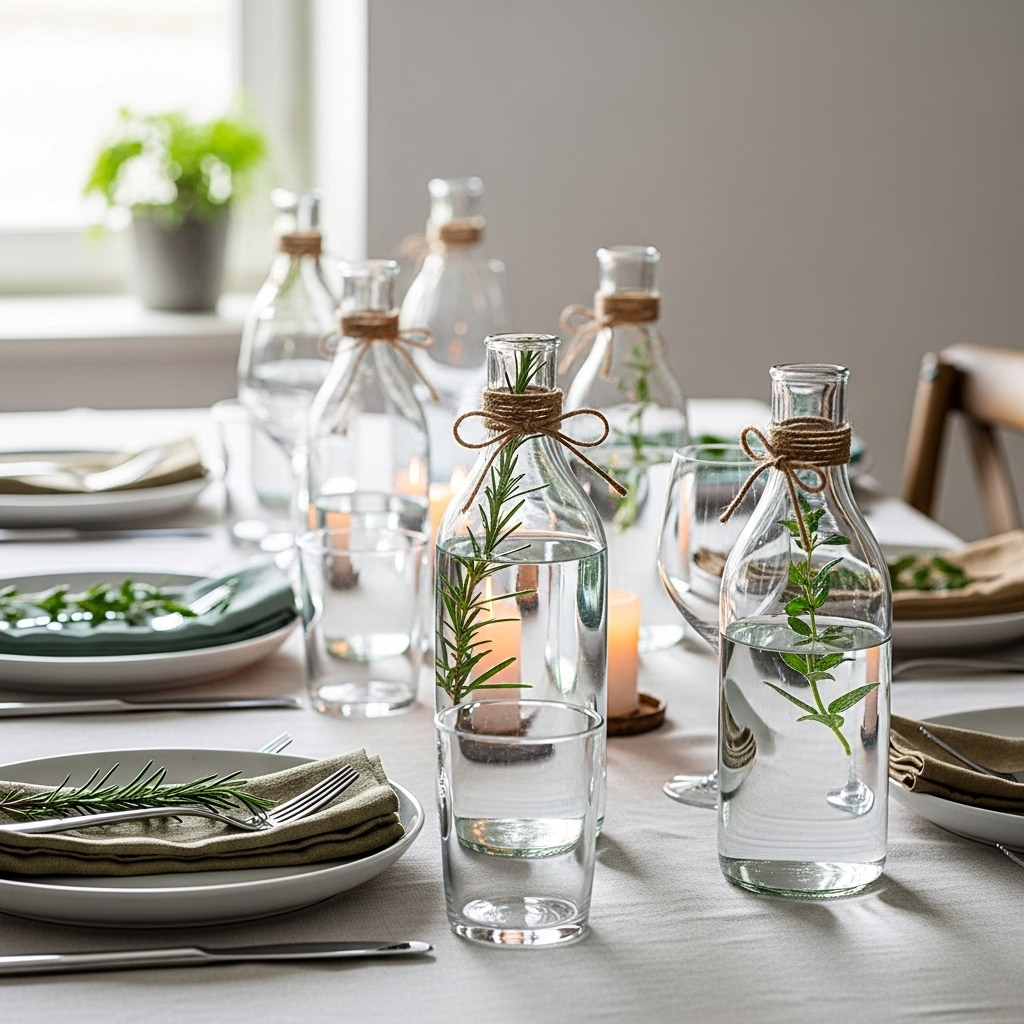
A small glass bottle of water at each setting eliminates the need for passing a pitcher. It also adds visual interest.
Use bottles with narrow necks. Cork stoppers keep insects out. Fill them before guests arrive.
Pro Tip: Infuse the water with citrus slices or cucumber. The flavor adds a thoughtful touch.
Mistake to Avoid: Do not use bottles that are difficult to pour. Test each bottle before the meal.
13. Seasonal Wreath as a Centerpiece Ring
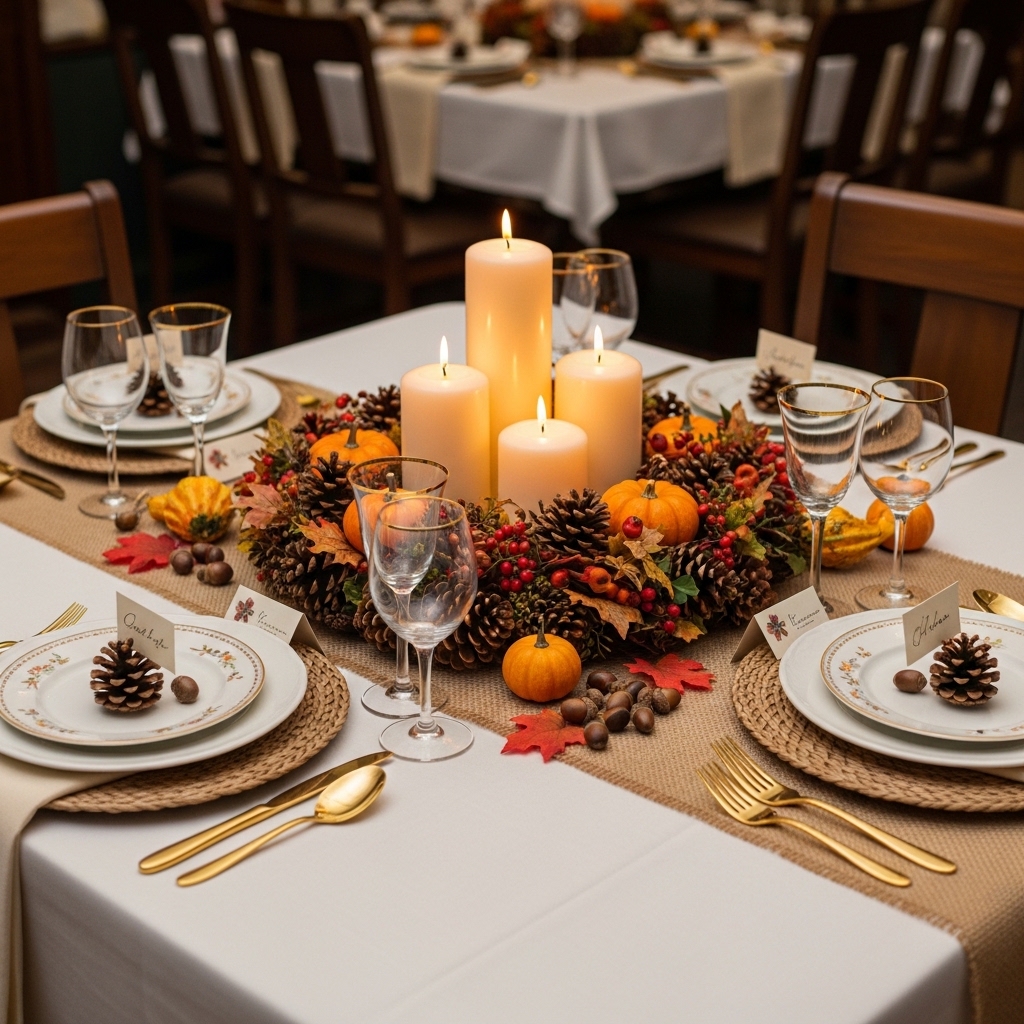
A small wreath laid flat becomes a ring. Place candles or a bowl inside the ring. The wreath frames the centerpiece.
Use a wreath made of seasonal materials. Eucalyptus in summer. Pine in winter. Dried flowers in fall.
Pro Tip: Use a battery-operated candle inside the wreath. No fire risk. No dripping wax.
Mistake to Avoid: Do not use a wreath that is too large. The wreath should fit within the table edges.
14. Colored Glassware for a Pop of Color
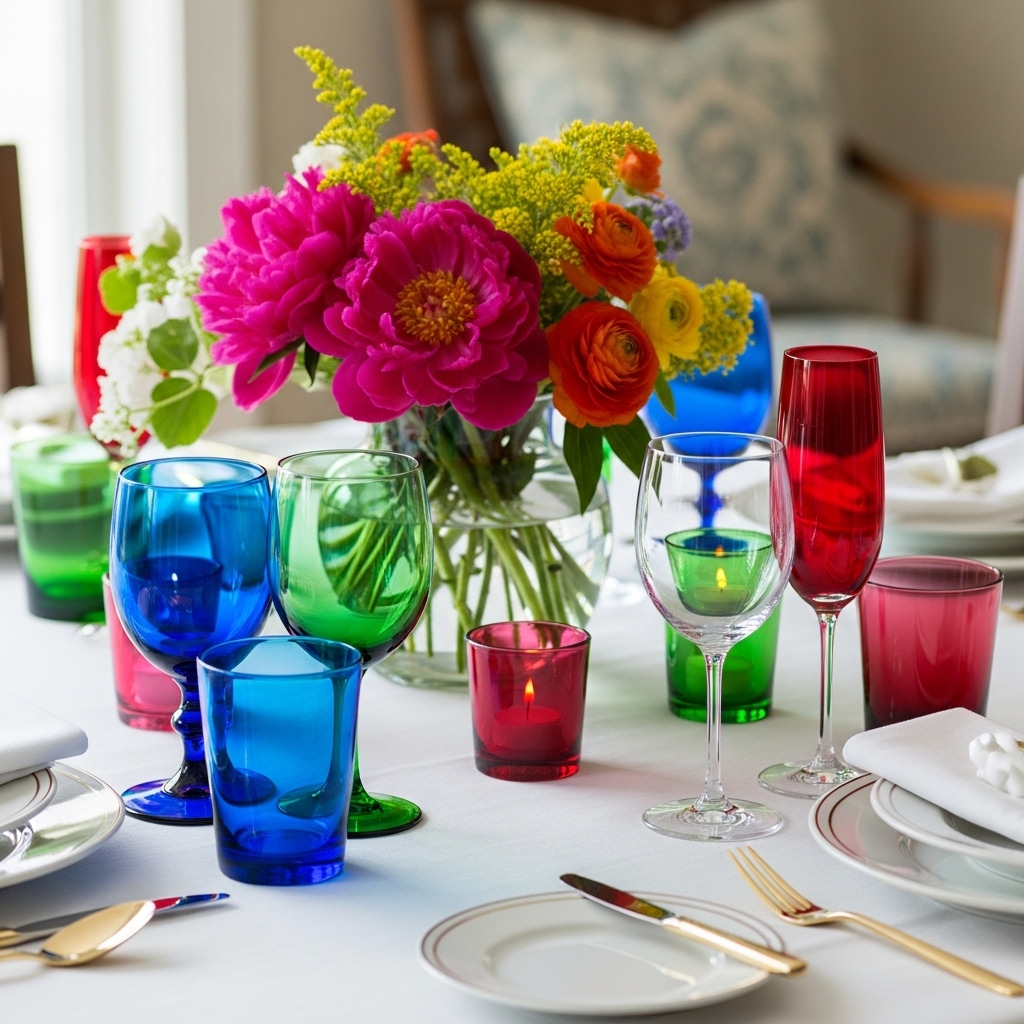
Clear glass is standard. Colored glass is intentional. Amber, blue, or green glass adds personality without effort.
Use colored water glasses. Keep the rest of the table neutral. The color becomes the accent.
Pro Tip: Use the same color for all glasses. Mixed colors look less intentional.
Mistake to Avoid: Do not use colored glass for wine. The color distorts perception of the wine.
15. Paper Menu at Each Setting
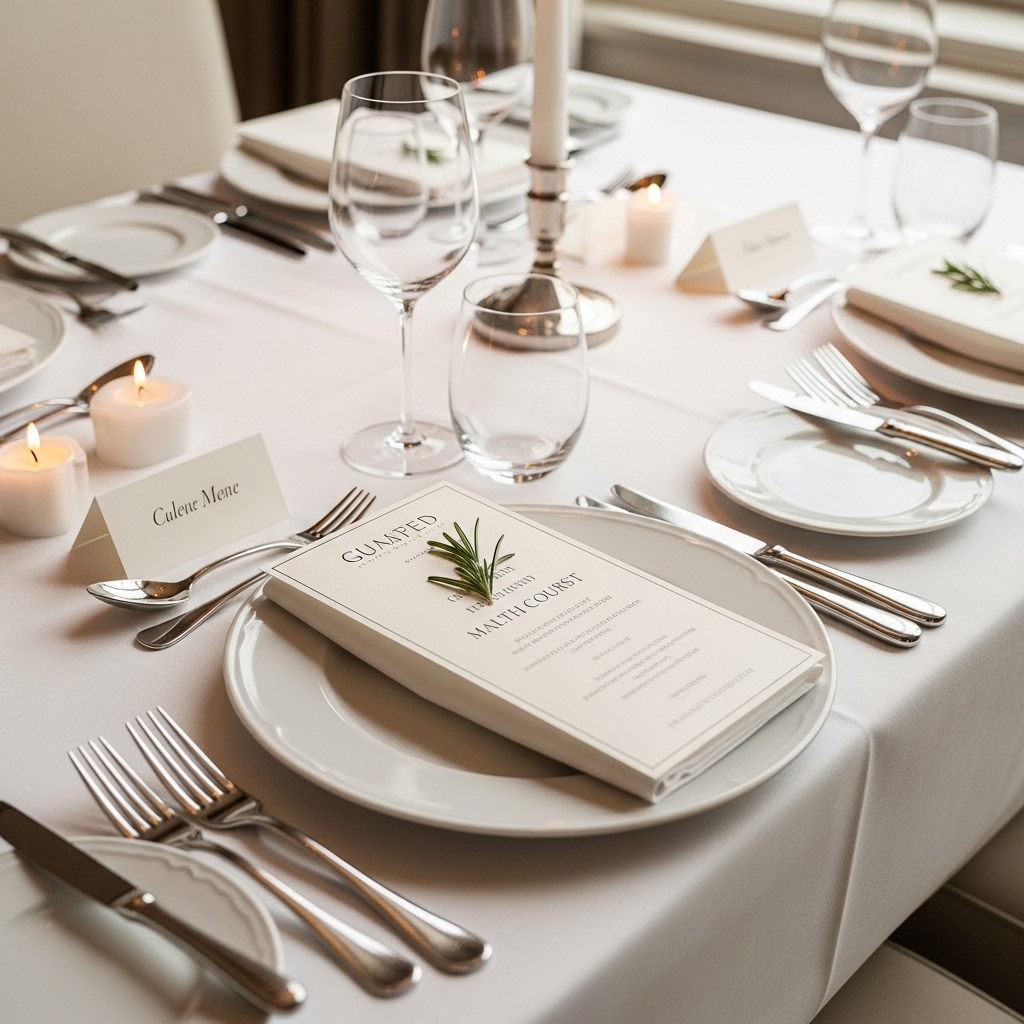
A menu is not just for restaurants. A handwritten menu at each setting makes guests feel special.
Write or print the menu on heavy paper. List each course. Add the date or occasion at the top.
Pro Tip: Use the menu as a place card. Write the guest’s name at the top.
Mistake to Avoid: Do not use flimsy paper. The menu should stand upright or lay flat.
16. Copper Flatware for Warmth and Shine
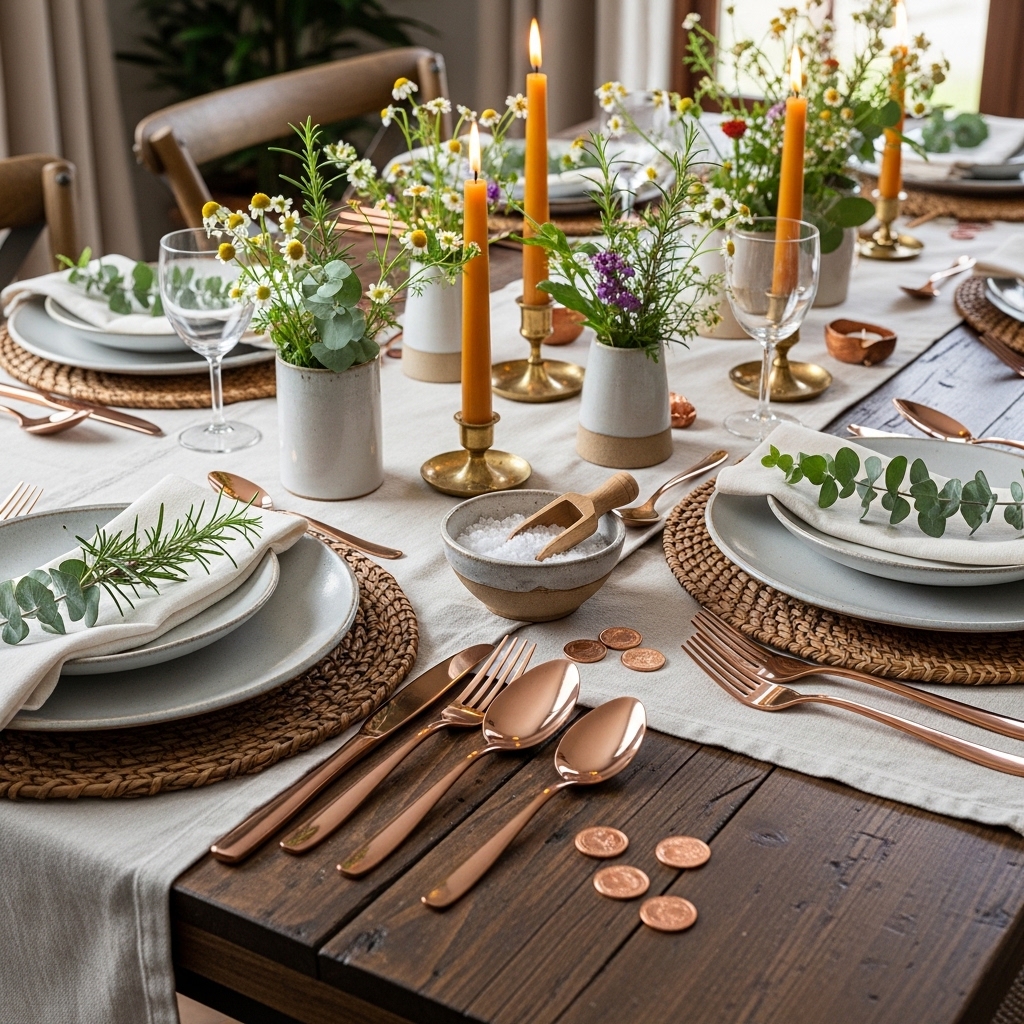
Stainless steel is standard. Copper flatware is unexpected. The warm tone adds richness to any table.
Use copper flatware with white dishes. The contrast is striking. Use it with wood chargers for a rustic feel.
Pro Tip: Polish copper flatware before each use. Fingerprints show clearly on the surface.
Mistake to Avoid: Do not put copper flatware in the dishwasher. Hand wash only.
17. Fabric Napkins in a Bold Color
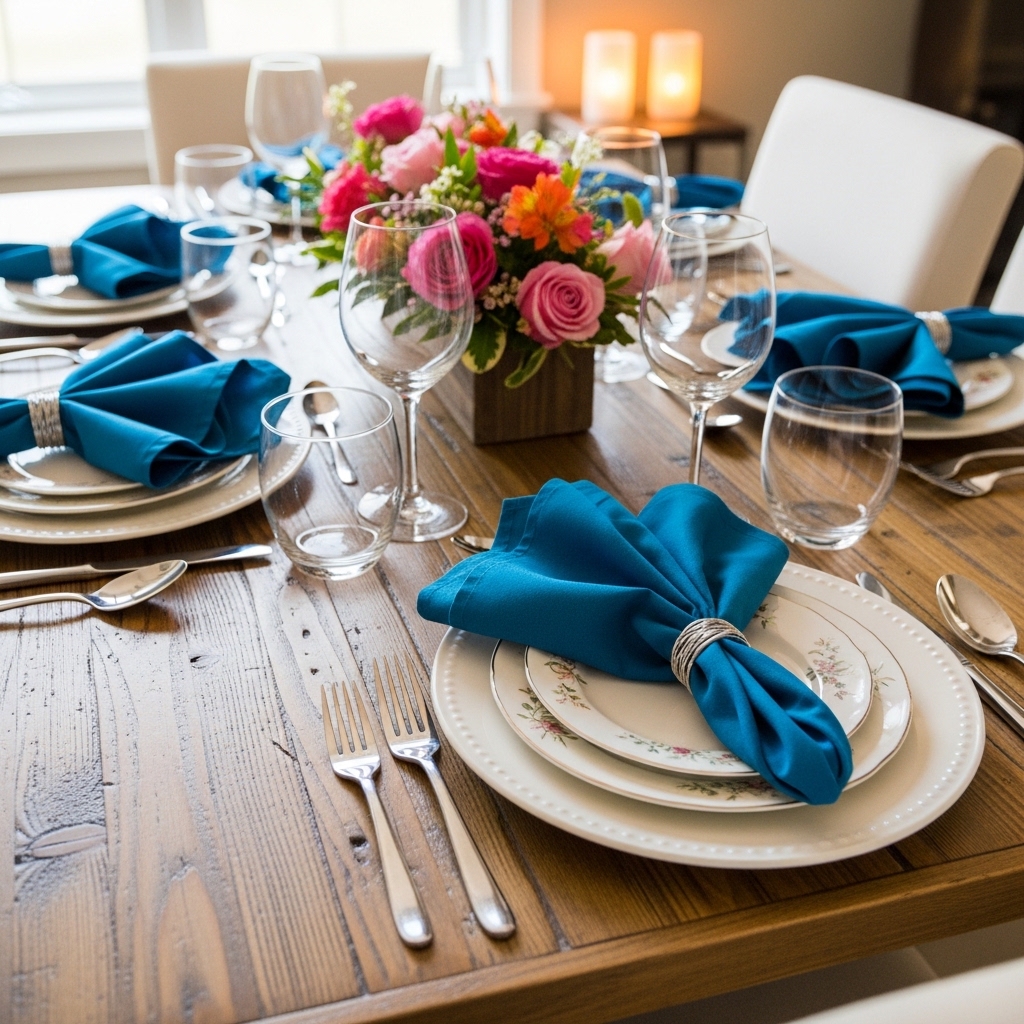
White napkins are safe. Colored napkins are intentional. A bold napkin becomes the accent of the table.
Choose a color that appears nowhere else on the table. Fold the napkin simply. The color does the work.
Pro Tip: Iron the napkins before folding. Wrinkles look sloppy.
Mistake to Avoid: Do not use napkins that bleed dye. Wash them before the first use.
18. Personalized Place Cards for Every Guest
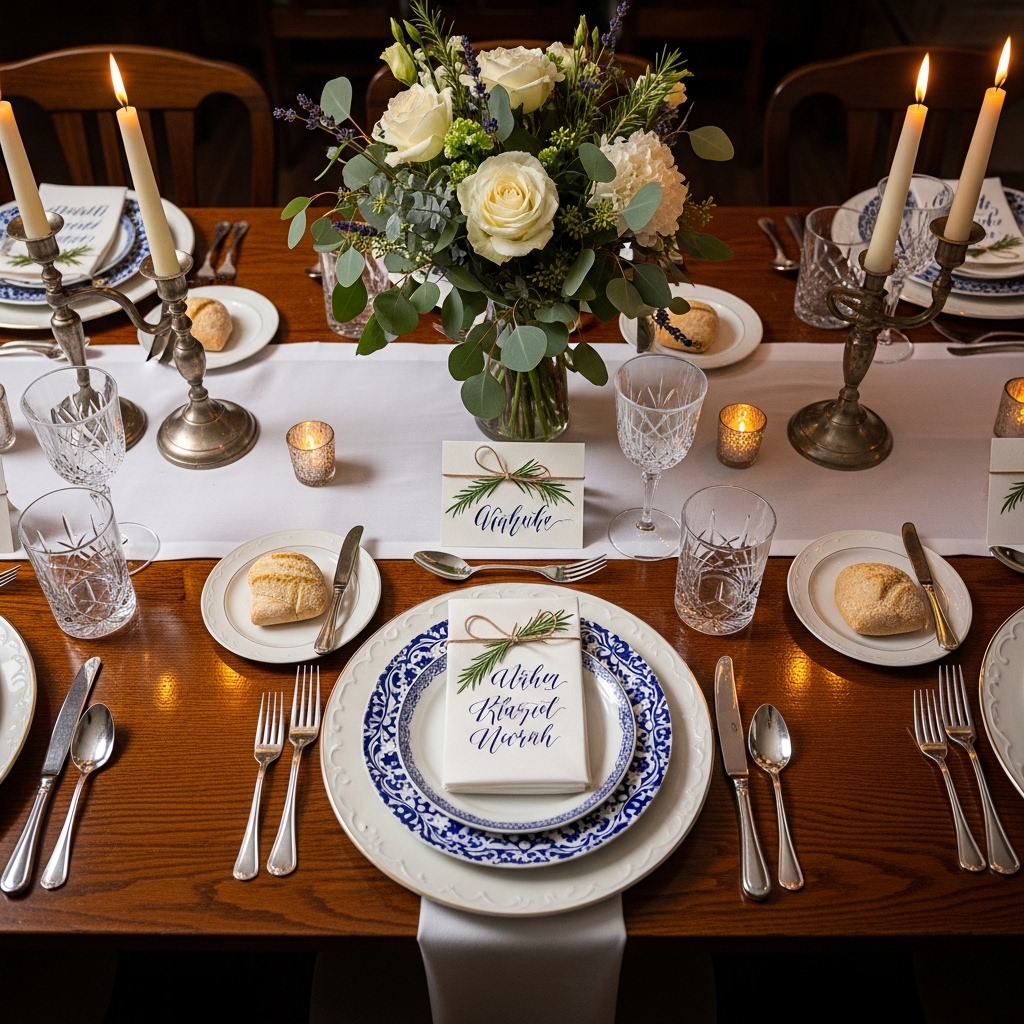
A place card tells each guest where to sit. It also tells them they were expected.
Write names by hand. Use thick card stock. Place the card above the plate or on the napkin.
Pro Tip: Write the name of each guest’s favorite dish on the back. A hidden surprise.
Mistake to Avoid: Do not use small cards. The name should be readable from across the table.
19. Single Large Candle as the Only Centerpiece
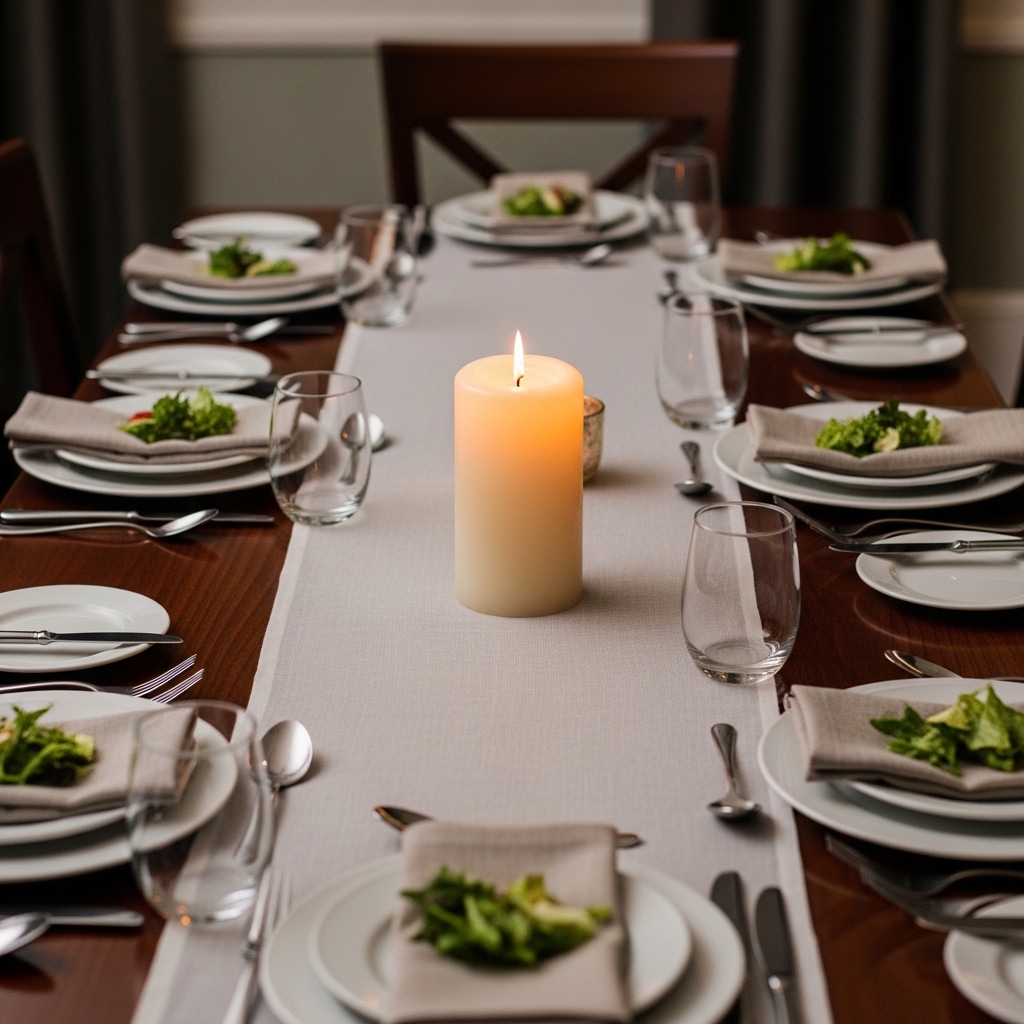
One large candle is dramatic. It asks for nothing else. The flame is the decoration.
Choose a candle that is thick and tall. Place it in a simple holder. Light it when guests arrive.
Pro Tip: Use a candle with a long burn time. The candle should last through the entire meal.
Mistake to Avoid: Do not use a scented candle. The scent will compete with the food.
20. One Simple Element Done with Intention
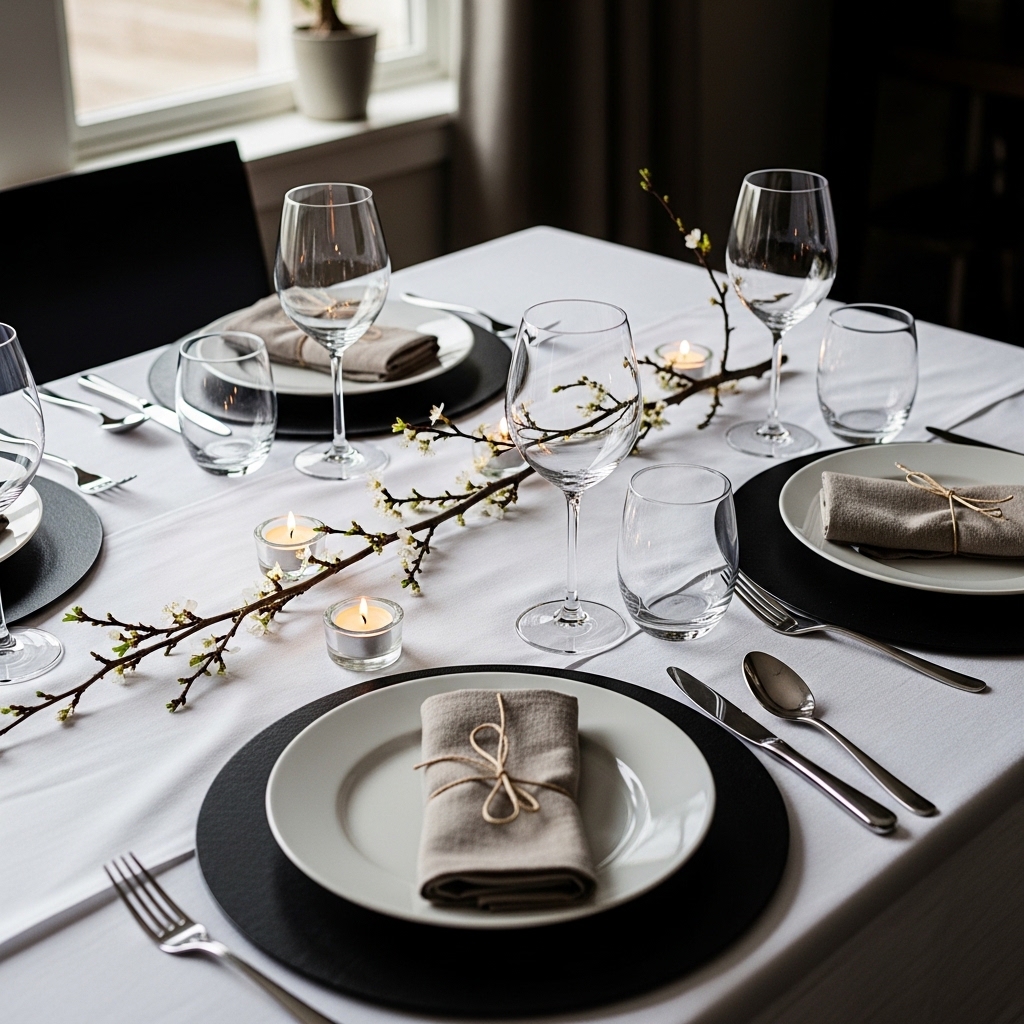
The most sophisticated tablescape is sometimes the simplest. One element. Placed with intention. Nothing else.
A single flower in a small vase at each setting. A single candle in the center. A single sprig of rosemary on each plate. Choose one thing. Do it well.
Pro Tip: Let the food be the star. The tablescape should enhance, not compete.
Mistake to Avoid: Do not add more elements because you think you should. One strong element is better than several weak ones.
Frequently Asked Questions
What is a tablescape?
A tablescape is an arranged setting of a table. It includes linens, dishes, glassware, flatware, and centerpieces. The goal is visual harmony and a welcoming atmosphere.
How do I create a tablescape on a budget?
Use what you have. White dishes work with anything. Add fresh herbs from the garden. Use fruit as decor. Fold napkins in a new way. Borrow from neighbors for special occasions.
What is the most common tablescape mistake?
Too many elements. A cluttered table feels chaotic. Guests have no room for their plates. Edit ruthlessly. Leave empty space.
How do I choose a tablescape color palette?
Start with the dishes. Pull a color from the pattern. Use that color for napkins or candles. Add one accent color. Neutral everything else.
Conclusion
A tablescape transforms a meal into an experience. White on white for elegance. Single stems for personal touch. Layered chargers for depth. A runner with candles for warmth. Seasonal fruit for color. Mismatched plates for charm. Colored glass for personality. And sometimes, one simple element done with intention.
Start with one meal tonight. Place a single flower on the table. Fold the napkins differently. Light a candle. The meal will feel different. The conversation will flow. The moment will matter.