12 Flower Garden Ideas That Improve Color, Layout, and Blooming Success
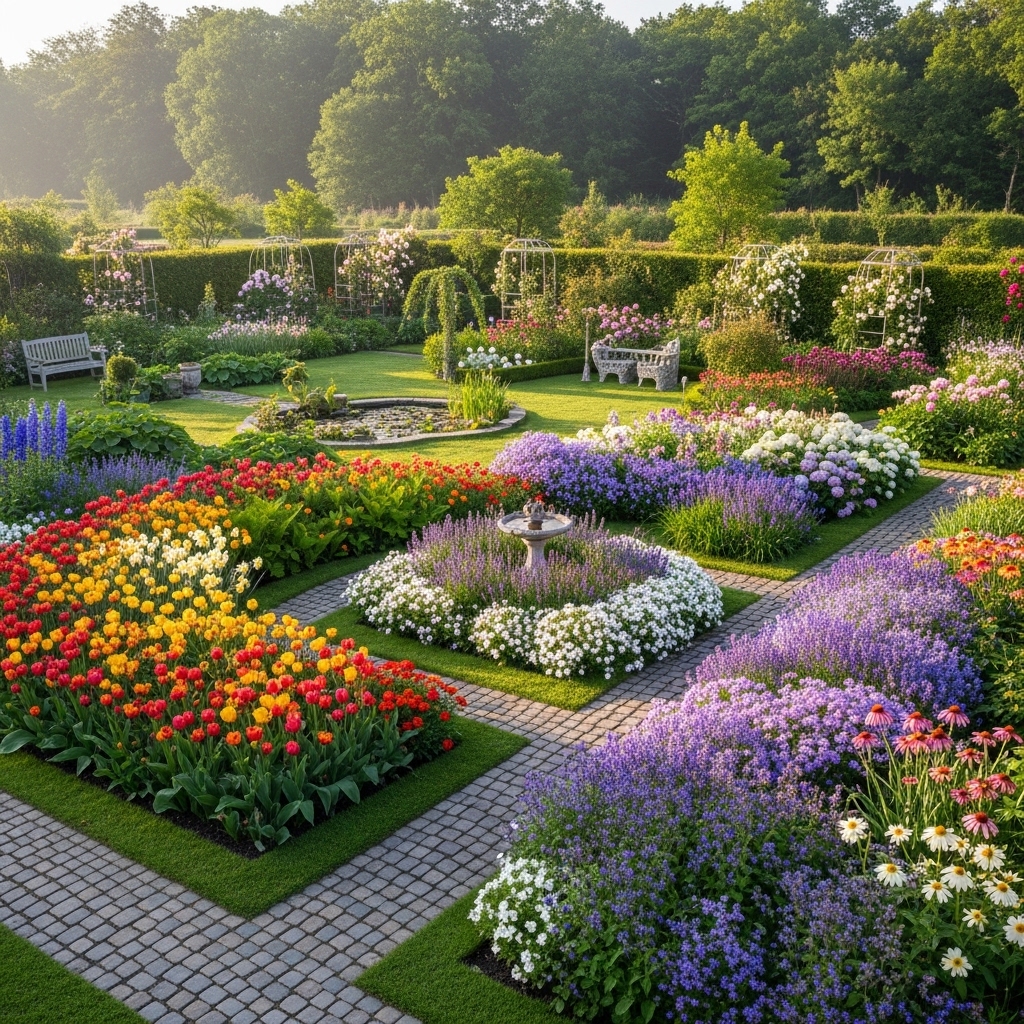
Flower gardens look great at first. They can get messy fast. This happens when plants are too close don’t bloom at the time or are just placed anywhere.
If you don’t plan you might end up with spaces, too many plants, in one spot or colors that don’t match throughout the year.
This guide shares flower garden tips to make your garden look good all year.
These ideas help you make a garden that has flowers blooming at the time is easy to look at and doesn’t take too much work to keep up. Each idea helps you design a garden that stays pretty organized and full of life in every season.
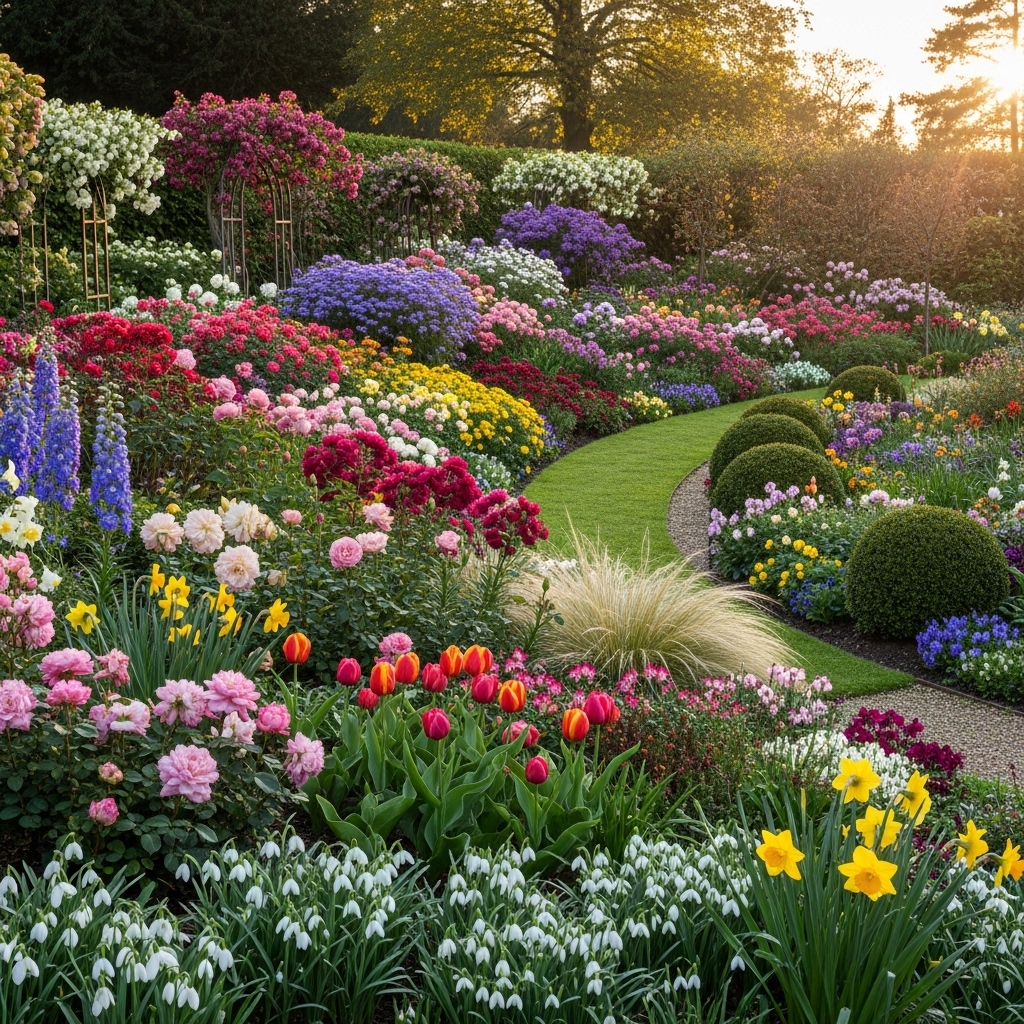
1. Plan Blooms by Season for Year-Round Color
Ideal for: Gardens that look empty part of the year.
Choose a mix of early, mid, and late-season flowering plants so something is always blooming. Arrange them strategically across beds.
This works because it prevents gaps in color and keeps the garden visually active throughout the year.
Avoid planting only one bloom season.
Pro Tip: Combine spring bulbs, summer perennials, and fall bloomers.
2. Layer Flowers by Height for a Balanced Look
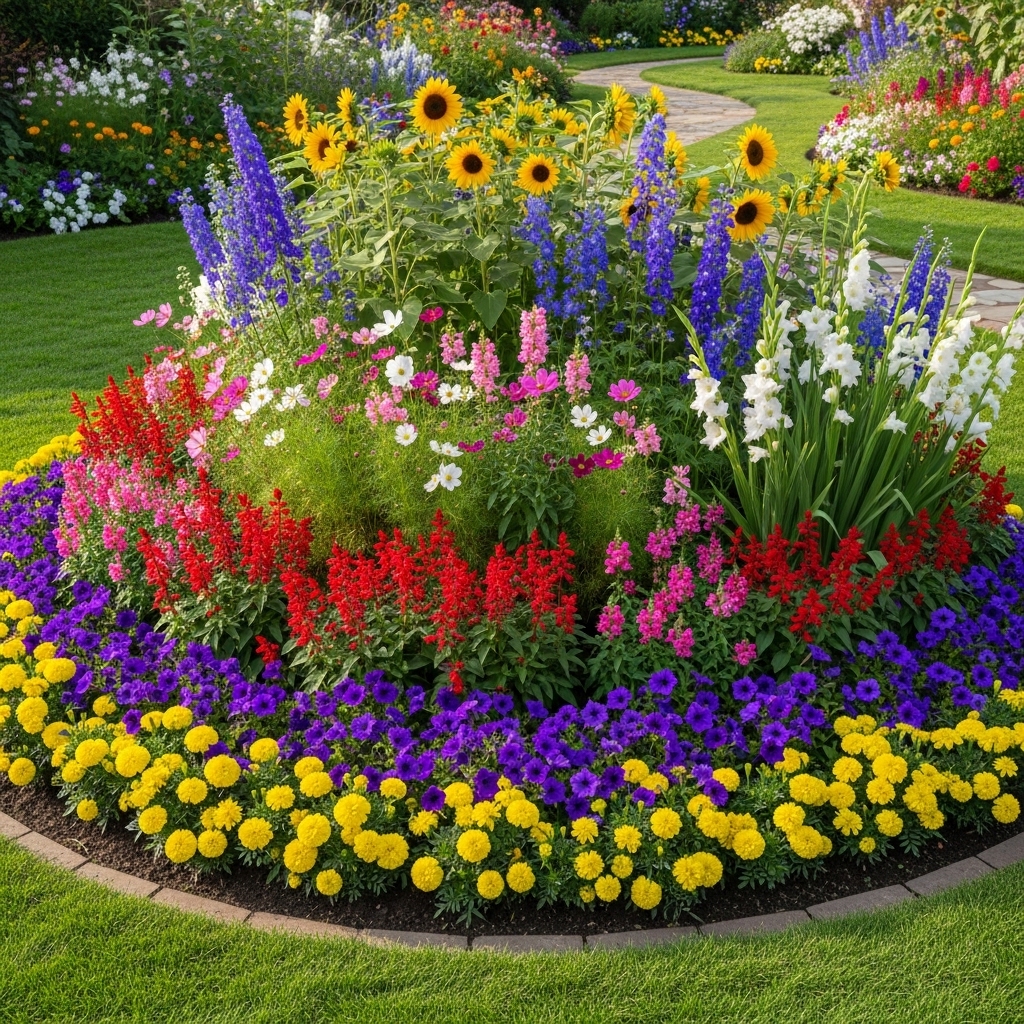
Best for: Flat or unstructured flower beds.
Place taller flowers at the back, medium in the middle, and shorter ones at the front. Maintain spacing for growth.
Layering adds depth and ensures every plant remains visible.
Avoid placing tall plants in front where they block others.
Pro Tip: Use height variation for natural flow.
3. Group Flowers in Clusters Instead of Scattering
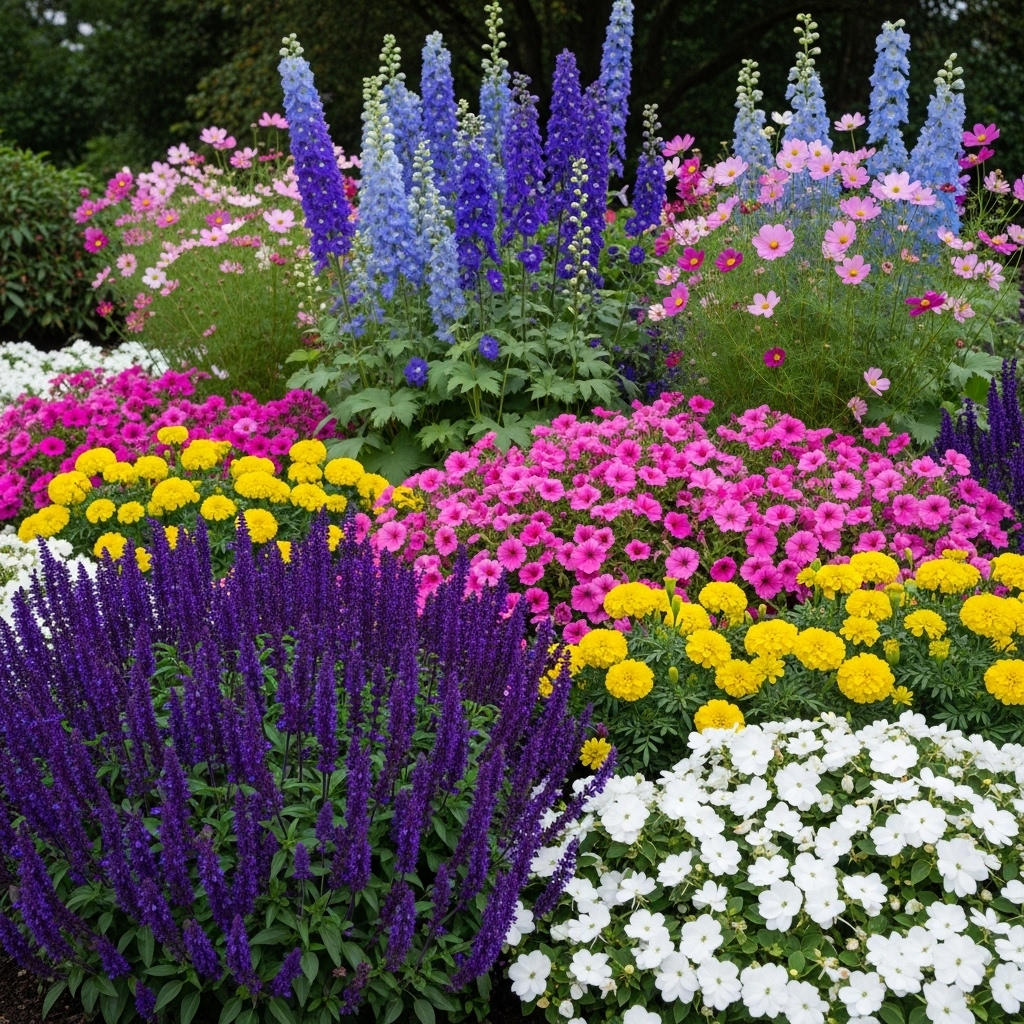
Great for: Creating strong visual impact.
Plant flowers in small groups of the same type instead of spreading them out individually.
This creates bold color sections that are easier to notice and more visually appealing.
Avoid random, single plant placements.
Pro Tip: Repeat clusters across the garden for cohesion.
4. Choose a Color Palette to Keep the Garden Cohesive
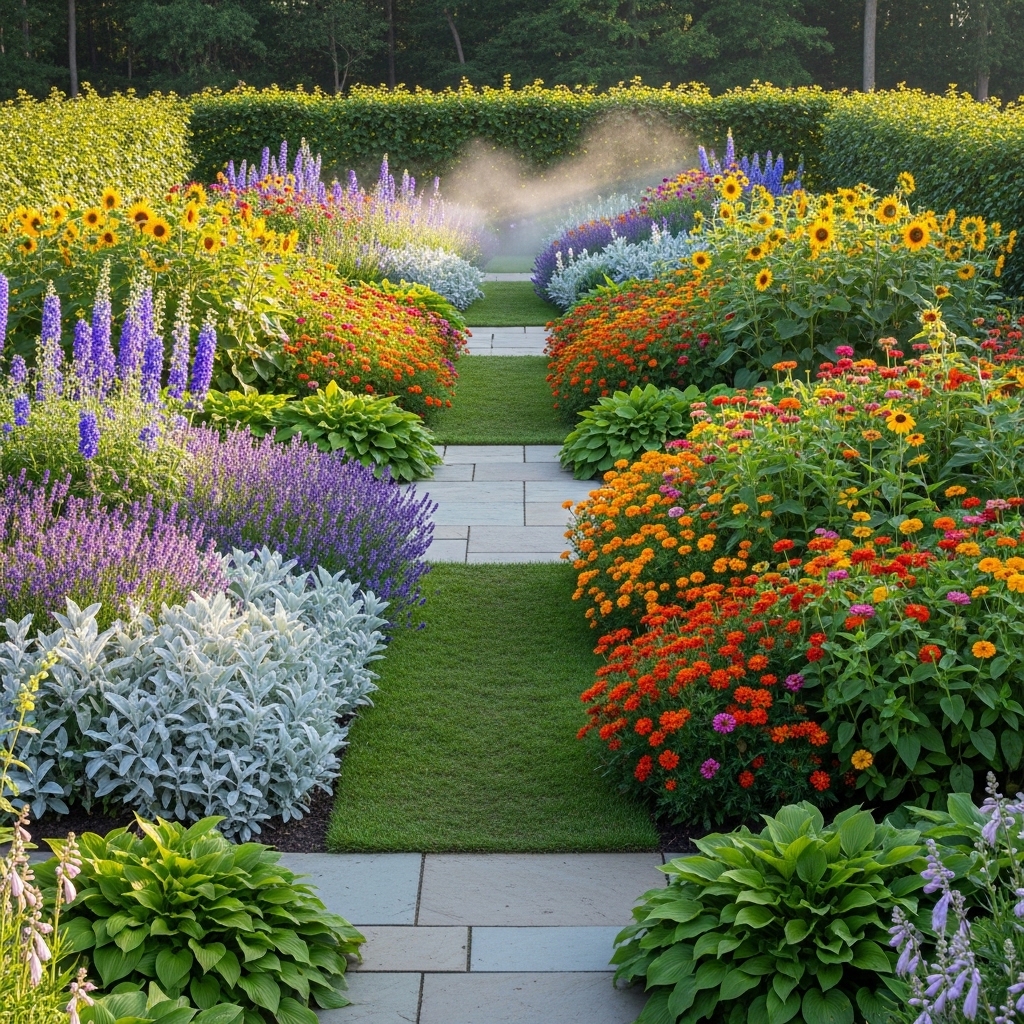
Ideal for: Gardens that feel visually messy.
Select 2–4 main colors and build your flower selection around them. Keep combinations consistent.
This works because it creates harmony and prevents overwhelming contrast.
Avoid mixing too many unrelated colors.
Pro Tip: Use neutral tones to balance bright flowers.
5. Use Perennials for Long-Term Stability
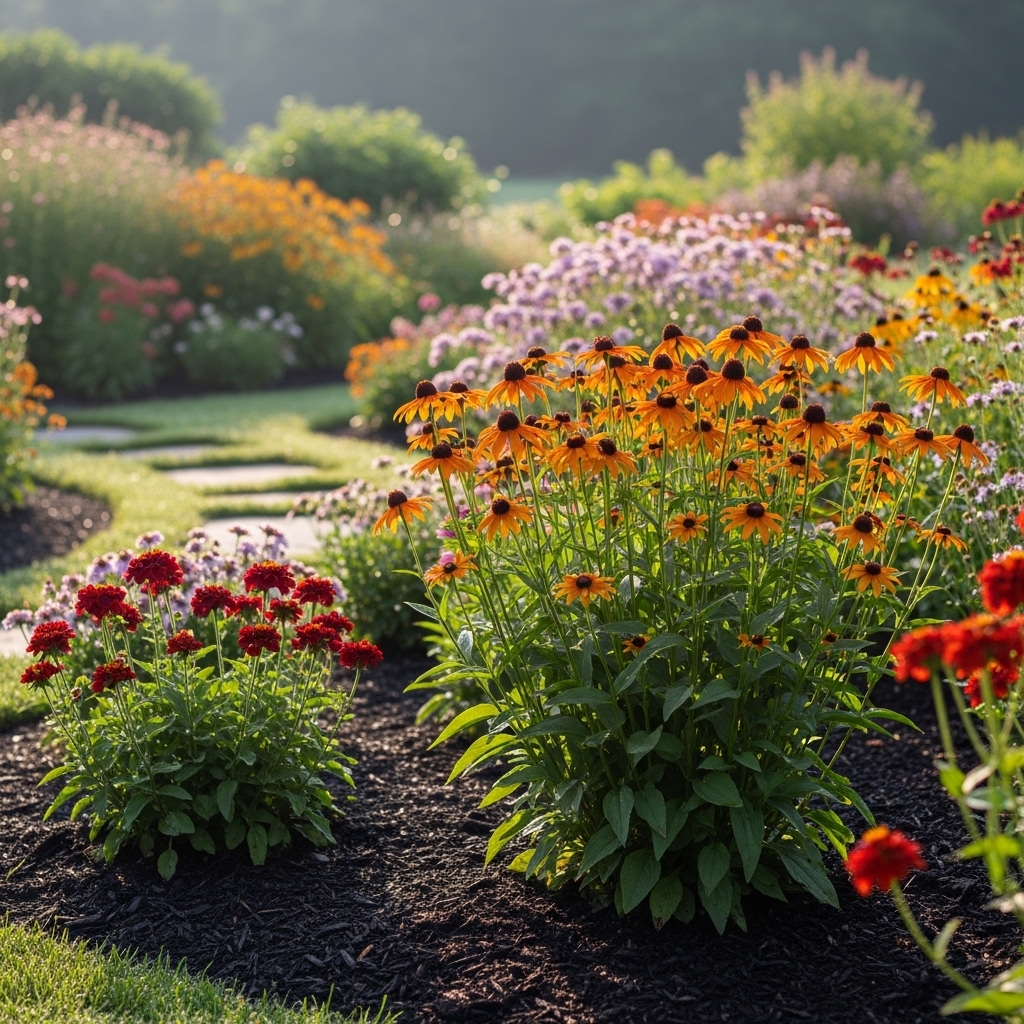
Best for: Low-maintenance flower gardens.
Plant perennials that return each year, reducing the need for replanting. Combine with seasonal flowers.
Perennials provide a stable base for your garden design.
Avoid relying only on annuals.
Pro Tip: Choose hardy perennials suited to your climate.
6. Add Mulch to Enhance Appearance and Soil Health
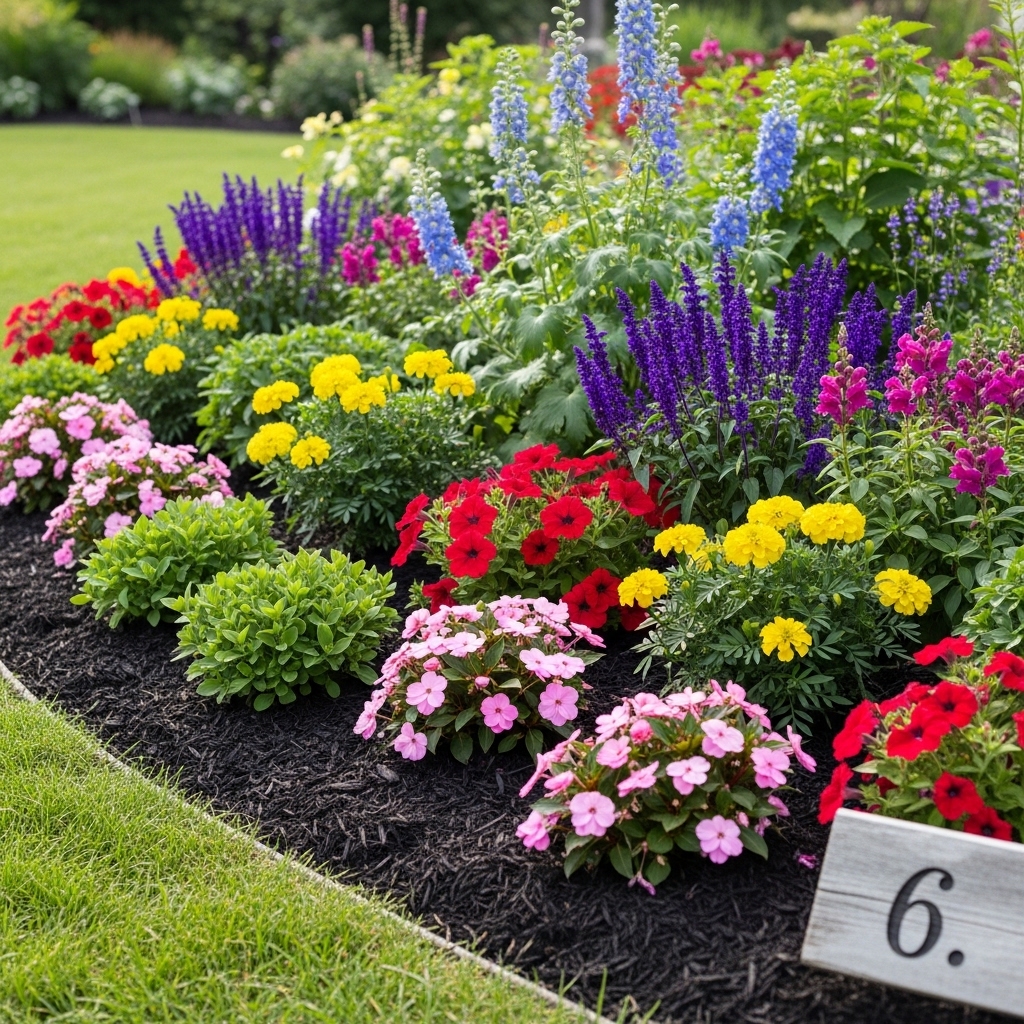
Great for: Keeping flower beds neat.
Apply mulch around plants to retain moisture and suppress weeds. Keep it evenly spread.
Mulch improves plant health while making beds look clean and organized.
Avoid piling mulch against stems.
Pro Tip: Refresh mulch as needed.
7. Create Defined Edges for a Clean Garden Look
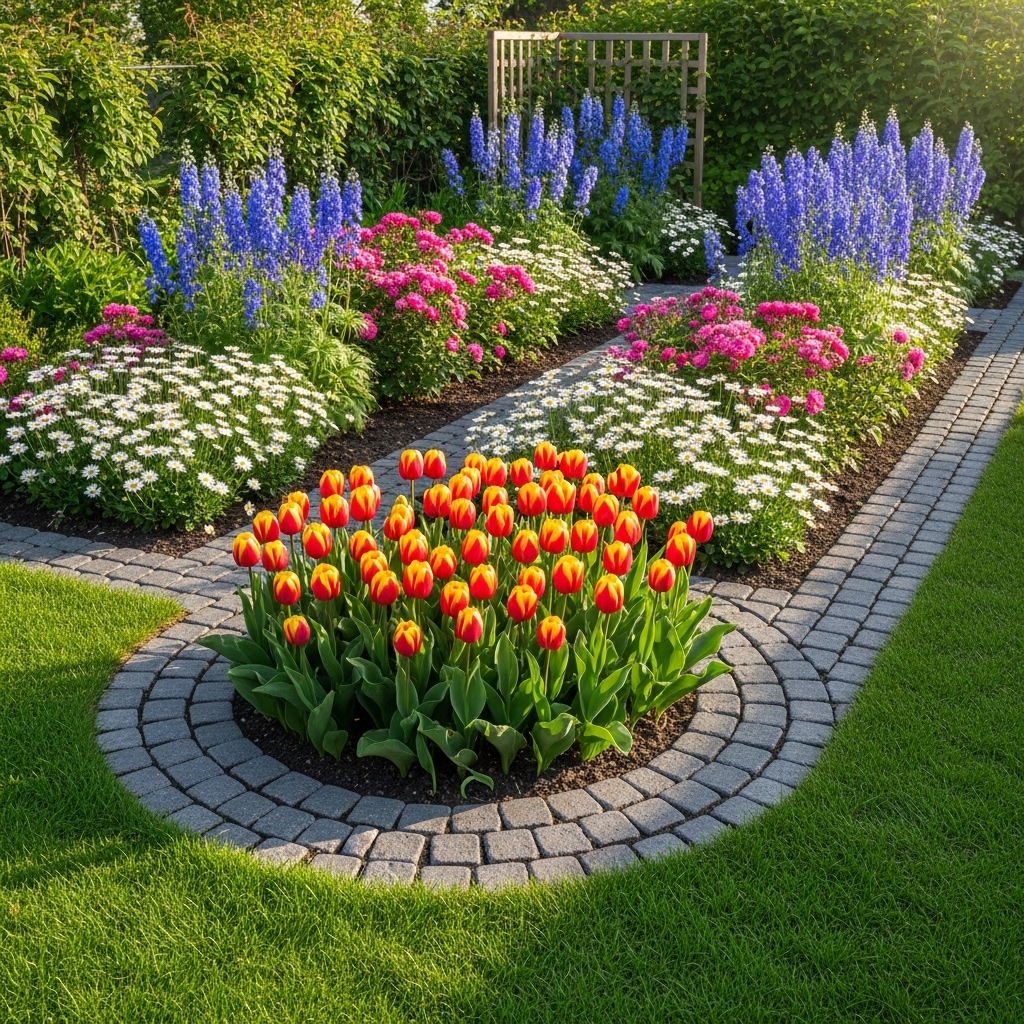
Ideal for: Preventing messy boundaries.
Use edging materials to separate flower beds from lawns or pathways. Keep lines smooth.
This makes the garden look intentional and easier to maintain.
Avoid uneven or broken edges.
Pro Tip: Choose simple, consistent edging materials.
8. Mix Flower Types for Texture and Variety
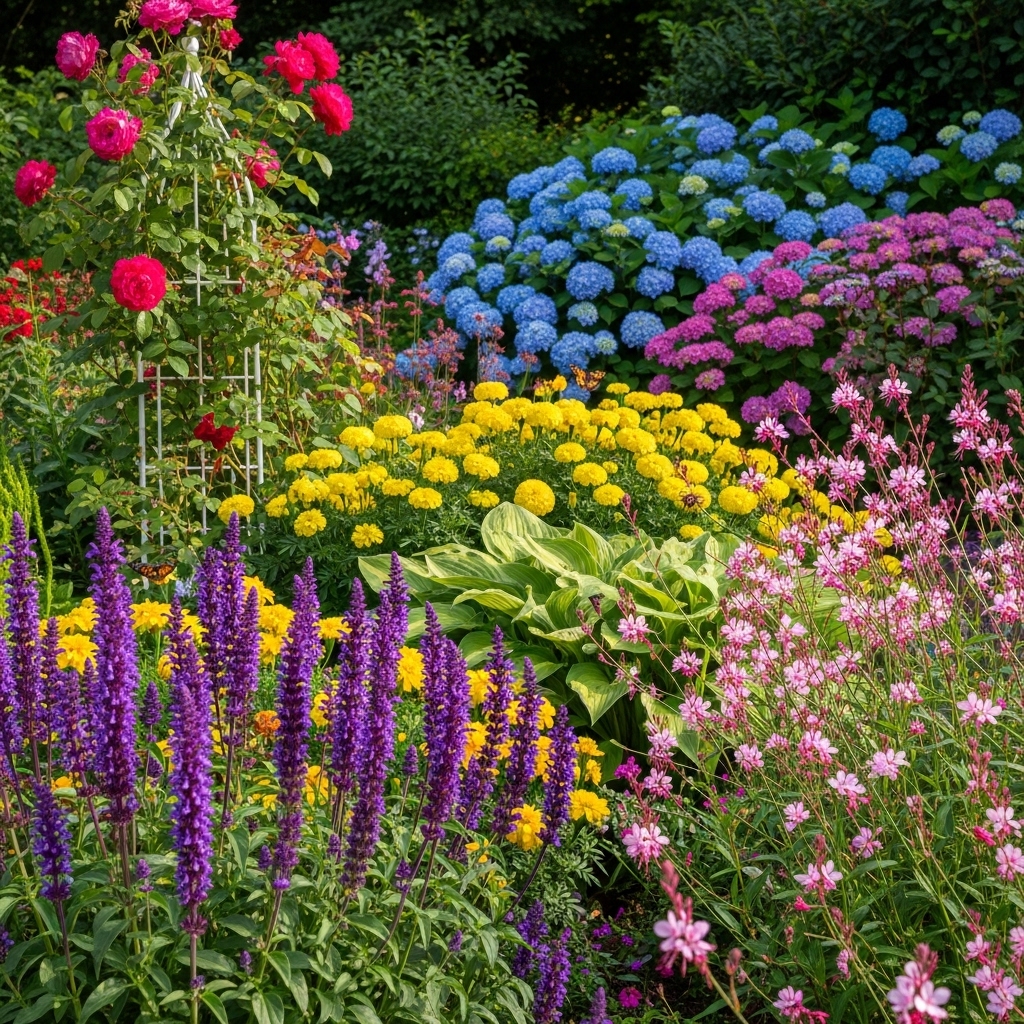
Best for: Adding visual interest.
Combine different flower shapes, sizes, and textures while maintaining a balanced layout.
This keeps the garden from looking flat or repetitive.
Avoid overcrowding too many varieties in one spot.
Pro Tip: Balance bold flowers with softer ones.
9. Use Containers to Add Flexible Flower Displays
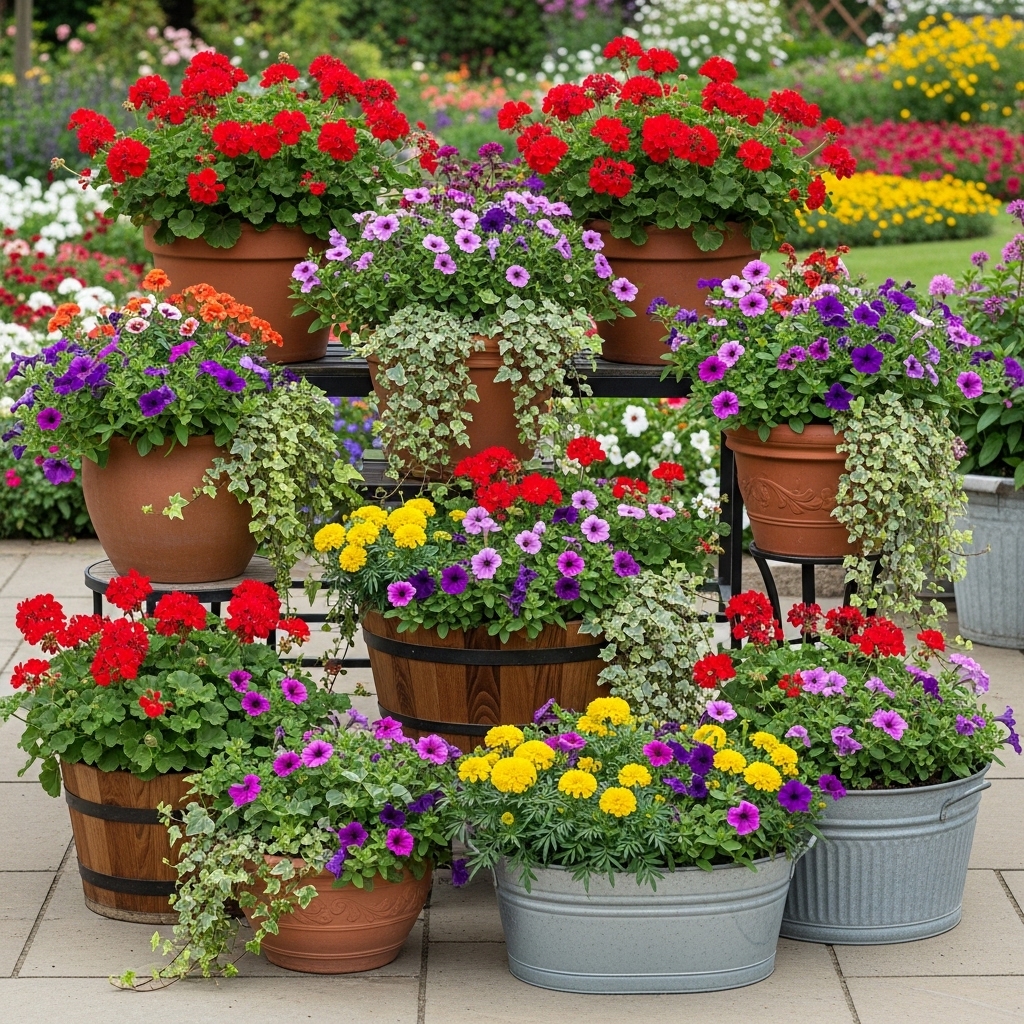
Great for: Small spaces or patios.
Place flowers in pots or containers that can be moved and rearranged easily.
This allows flexibility in design and placement.
Avoid using containers without proper drainage.
Pro Tip: Group containers for stronger impact.
10. Plant Flowers That Attract Pollinators
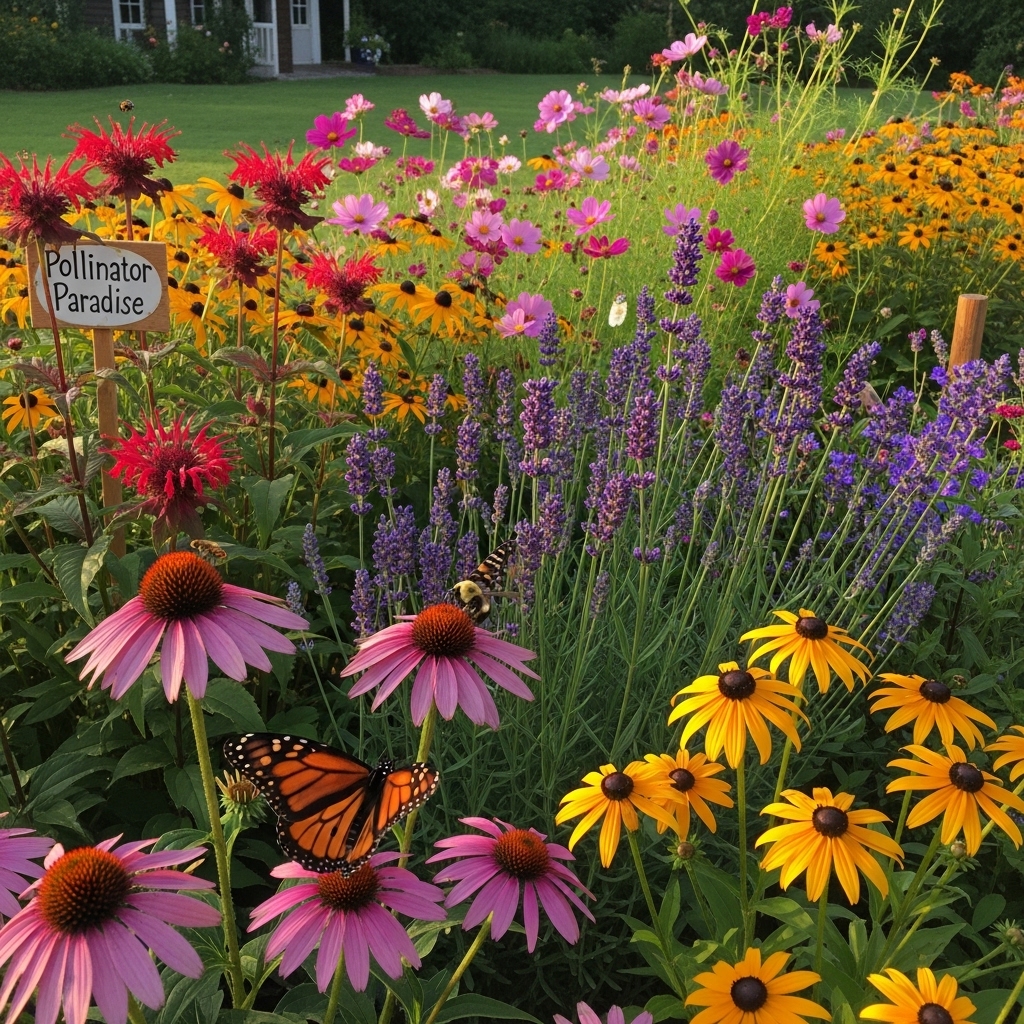
Ideal for: Supporting garden health.
Choose flowers that attract bees, butterflies, and other pollinators. Place them throughout the garden.
Pollinators improve plant growth and overall garden vitality.
Avoid using only non-pollinator-friendly plants.
Pro Tip: Include a variety of bloom shapes.
11. Keep Spacing Based on Mature Plant Size
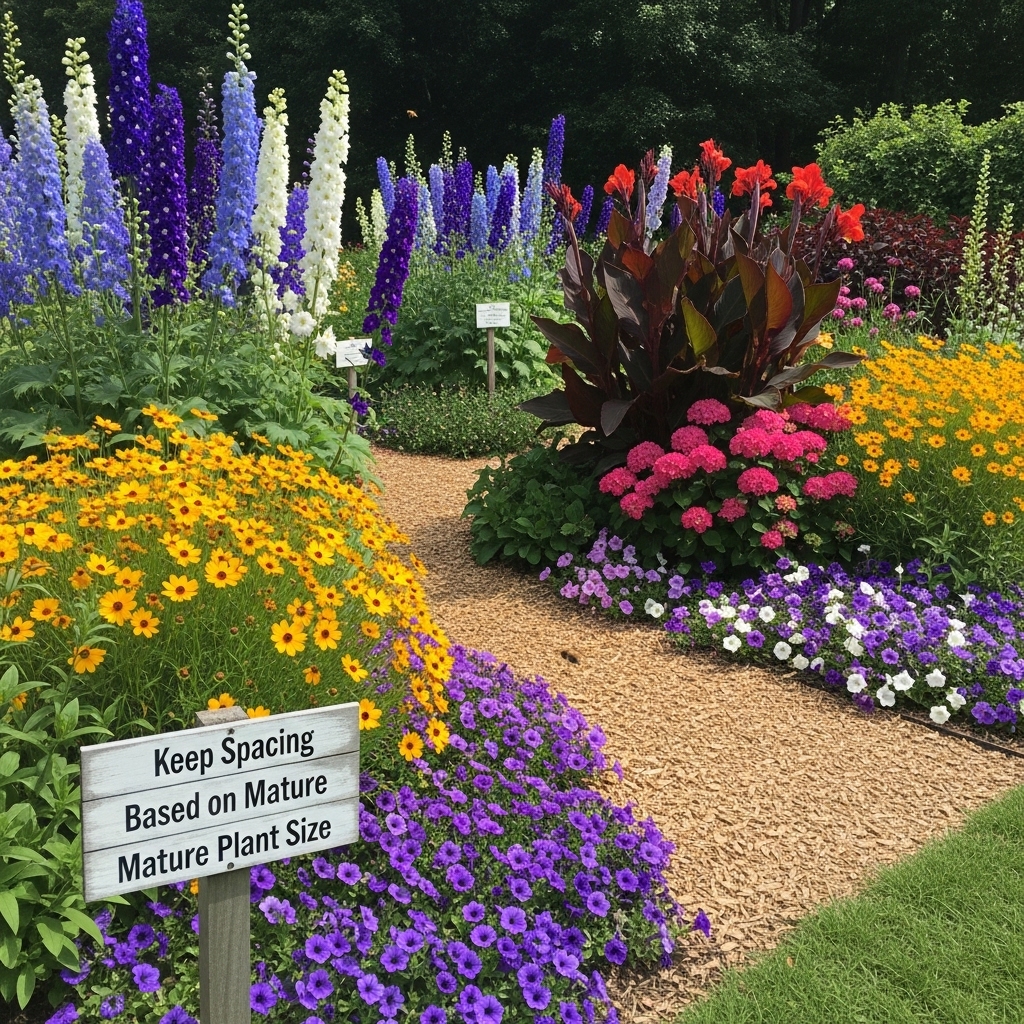
Best for: Preventing overcrowding.
Allow enough space between plants based on how large they will grow over time.
Proper spacing improves airflow and reduces disease risk.
Avoid planting too closely for quick fullness.
Pro Tip: Check plant labels before planting.
12. Adjust Layout Each Season Based on Results
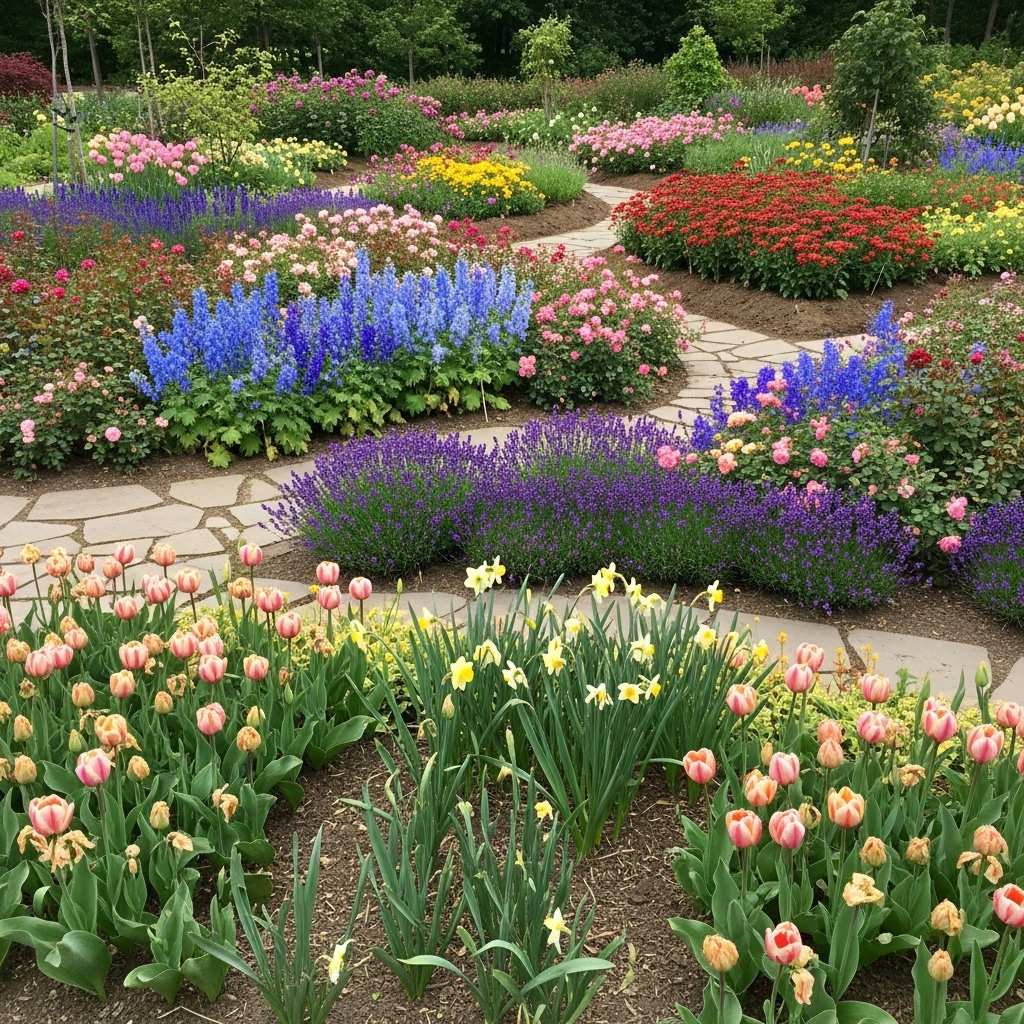
Great for: Improving garden performance over time.
Observe which flowers thrive and which struggle, then rearrange or replace accordingly.
This ensures your garden evolves into a more successful design.
Avoid repeating ineffective planting patterns.
Pro Tip: Keep notes on seasonal performance.
Conclusion: A Beautiful Flower Garden Comes From Planning, Not Just Planting
A good flower garden is not about having plants. It is about picking the plants and putting them in the right spot. How you arrange, space and plan, for seasons really matters for long-term success.
Here are 12 flower garden ideas to help you make a garden that looks great has a balance and is easy to take care of all year round.