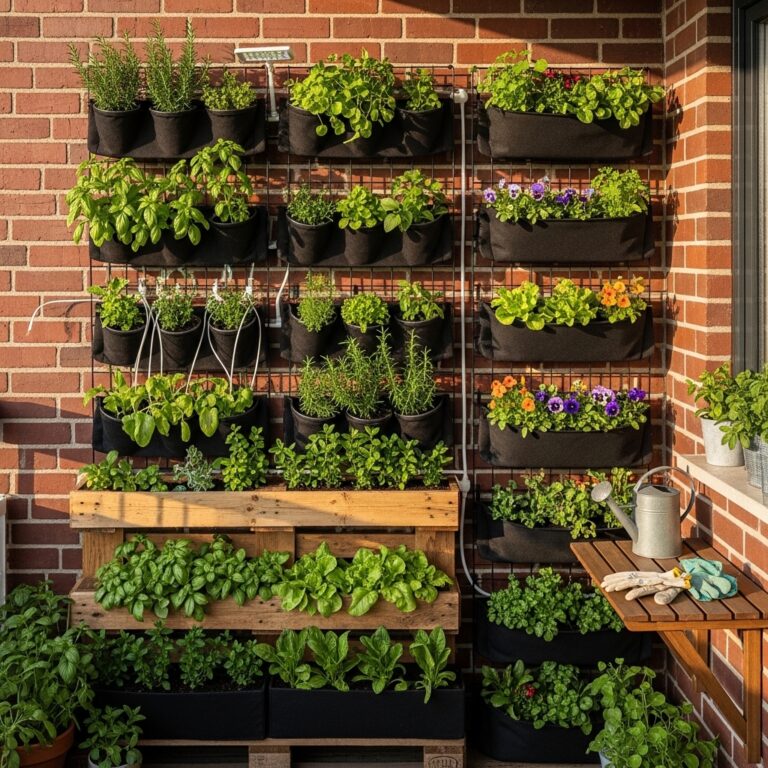
10 Orchard Garden Ideas That Maximize Yield, Spacing, and Long-Term Productivity
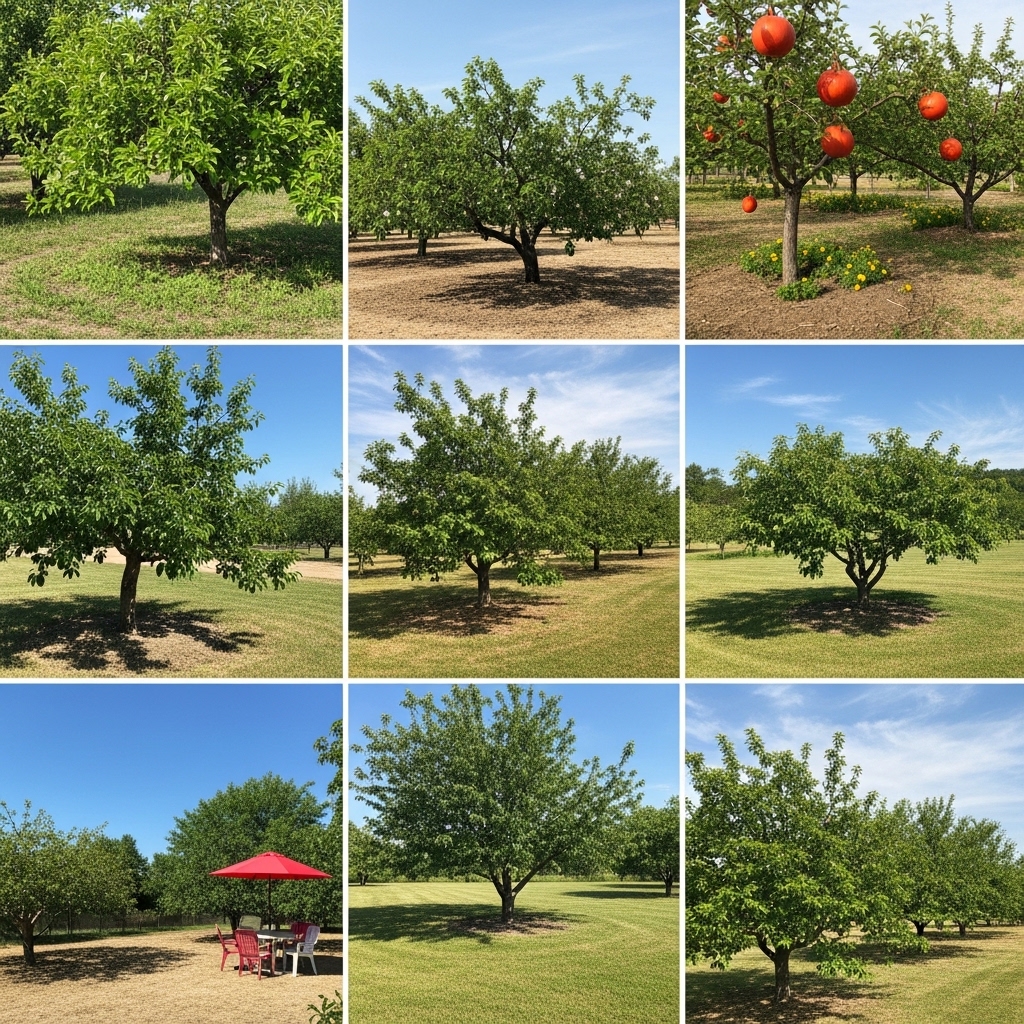
Orchard gardens do not do well if trees are planted without considering how apart they should be how much sunlight they need and how big they will get over time.
A tidy layout can fast become an difficult-to-care-for garden that produces fewer fruits as time goes on.
This guide shares useful tips for making your orchard garden better.
The tips help trees stay healthy make caring, for them easier and get fruits. Each tip aims to help you create an orchard that stays fruitful well-organized and easy to look after for a time.
1. Start With a Small, Well-Spaced Orchard Instead of Overplanting
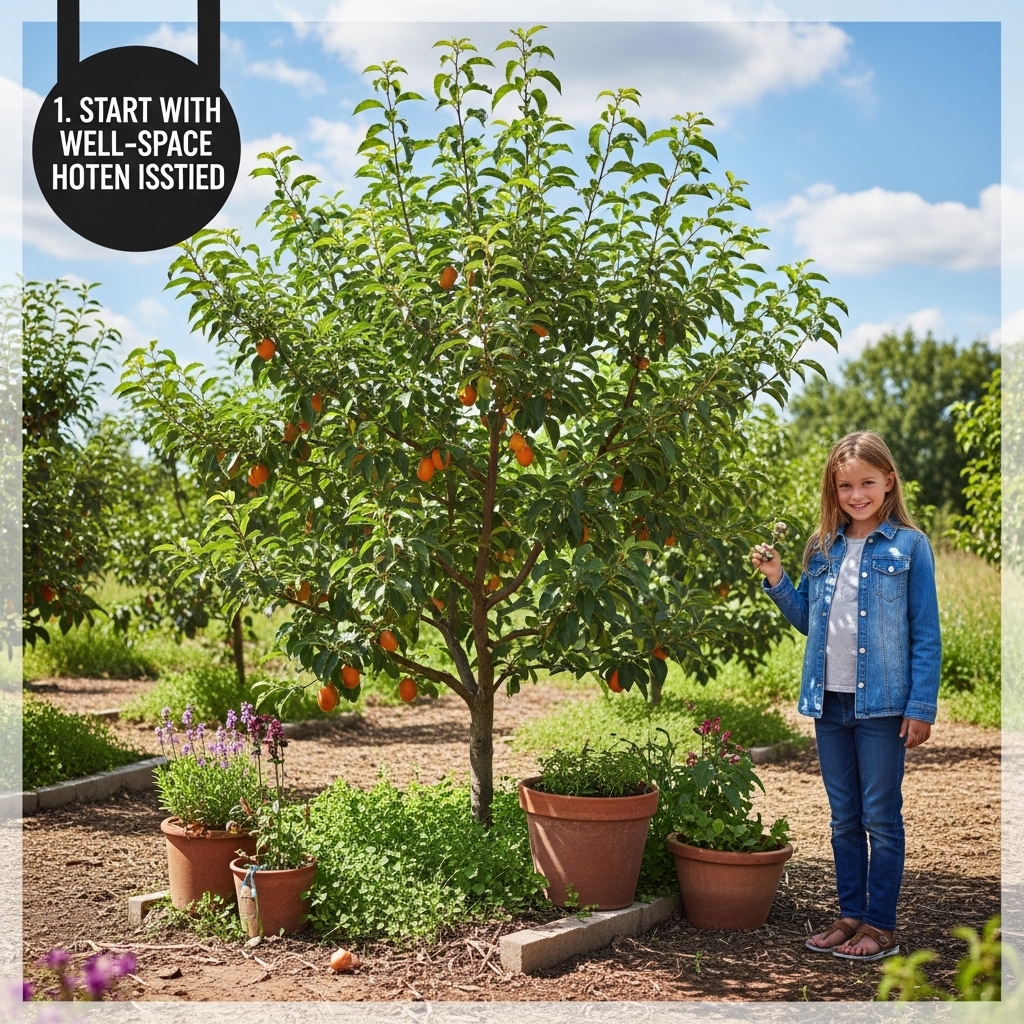
Ideal for: Beginners or backyard orchard setups.
Plant fewer trees with proper spacing instead of filling your space too quickly. Measure mature tree width and leave enough room between each tree for sunlight and airflow. Focus on quality placement rather than quantity in the beginning.
This works because overcrowding is one of the biggest reasons orchards underperform. Trees compete for light, water, and nutrients, leading to weak growth and poor fruit production.
Many beginners plant too many trees early, which creates long-term layout problems that are hard to fix later.
Pro Tip: Plan spacing based on full-grown tree size, not sapling size.
Mistake to Avoid: Don’t plant trees close just to make the orchard look full.
2. Use Dwarf or Semi-Dwarf Trees for Manageable Growth
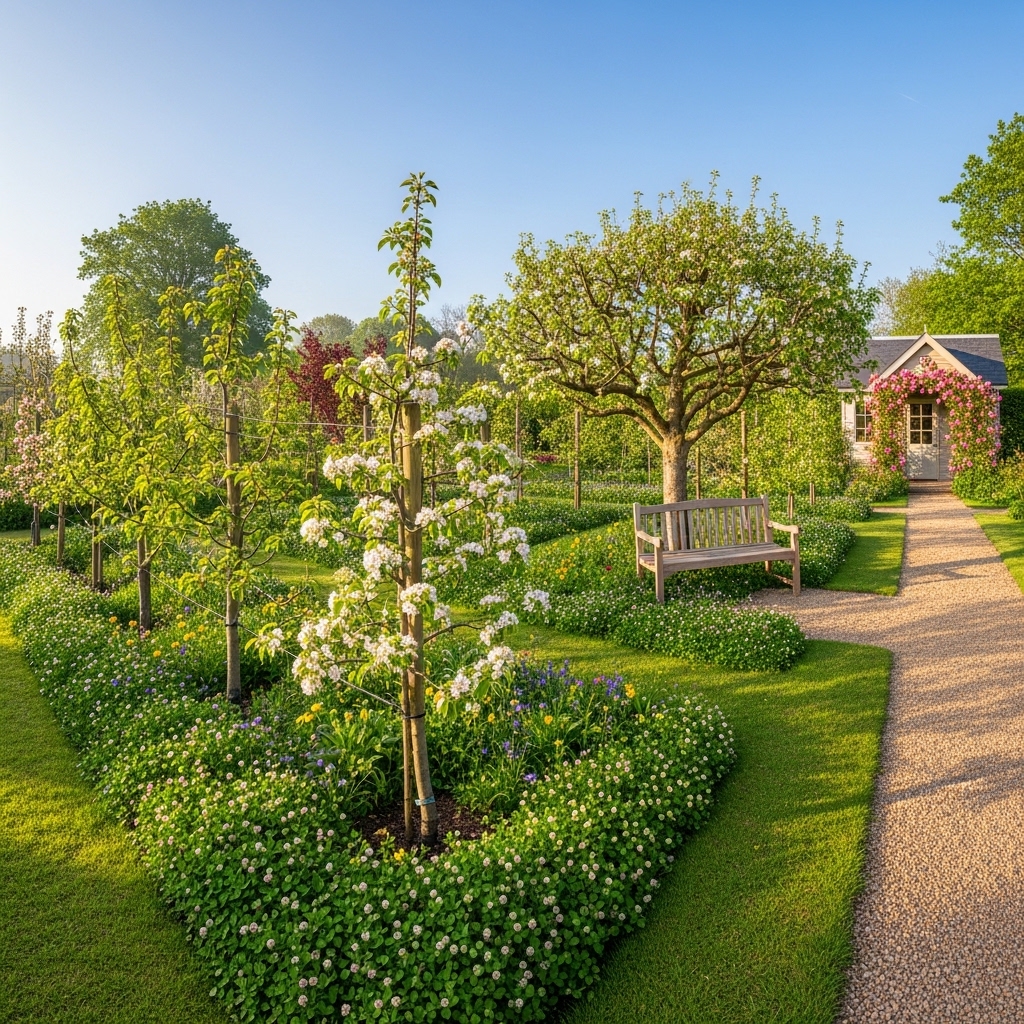
Best for: Small to medium backyard orchards.
Choose dwarf or semi-dwarf fruit trees that stay compact and easier to maintain. These trees require less space, are easier to prune, and allow you to harvest fruit without specialized tools.
This works because smaller trees make orchard management practical, especially for homeowners. They also produce fruit earlier compared to full-size trees.
A common mistake is planting full-size trees in limited space, which leads to overcrowding and difficult maintenance within a few years.
Pro Tip: Choose tree varieties suited to your climate for better success.
Mistake to Avoid: Don’t underestimate how large full-size trees will grow.
3. Arrange Trees in Rows for Easy Access and Maintenance
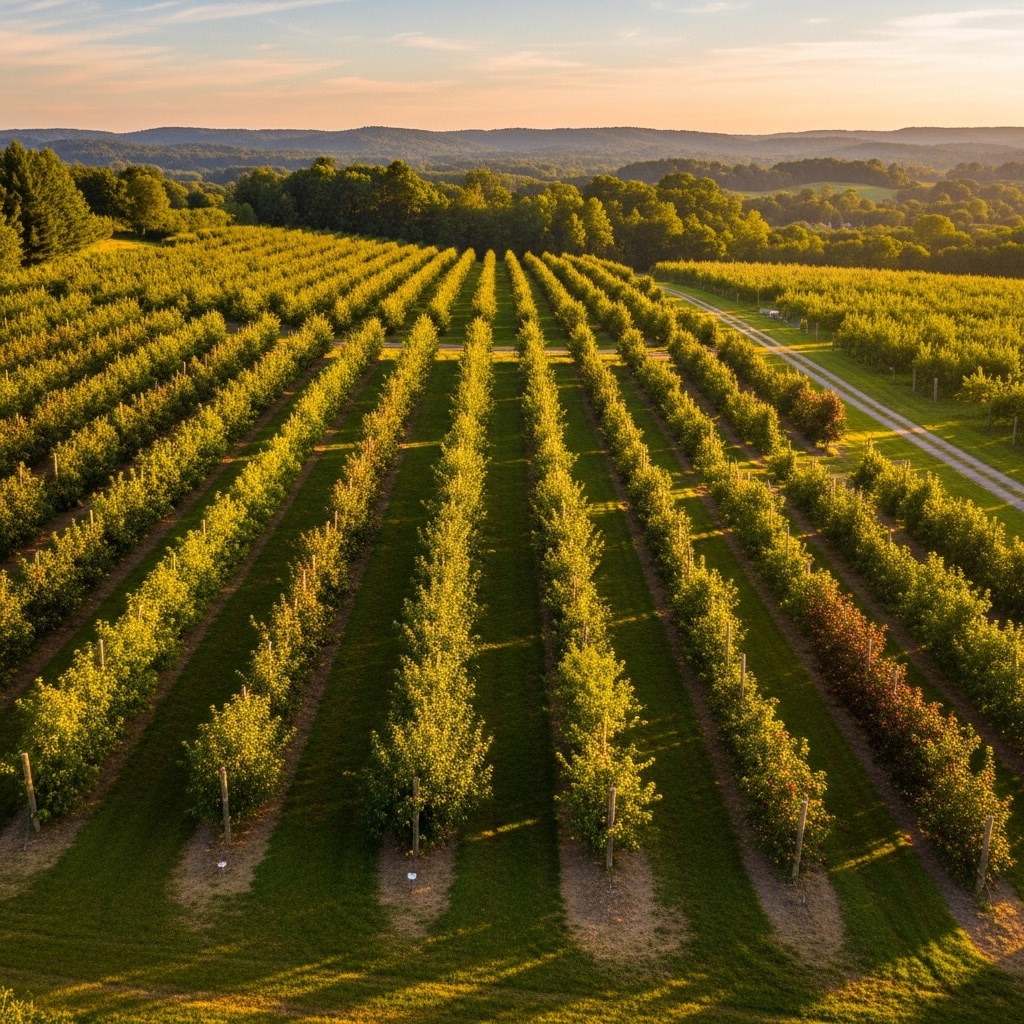
Ideal for: Organized and efficient orchard layouts.
Plant trees in straight or slightly curved rows with clear walking paths between them. Ensure there’s enough space to move comfortably for watering, pruning, and harvesting.
This works because structured layouts make orchard care easier and more efficient. It also improves sunlight distribution across all trees.
Many people plant trees randomly, which creates confusion and makes maintenance tasks more time-consuming.
Pro Tip: Keep rows aligned with sunlight direction for better exposure.
Mistake to Avoid: Don’t block access paths with uneven spacing.
4. Create a Multi-Layer Orchard With Companion Planting
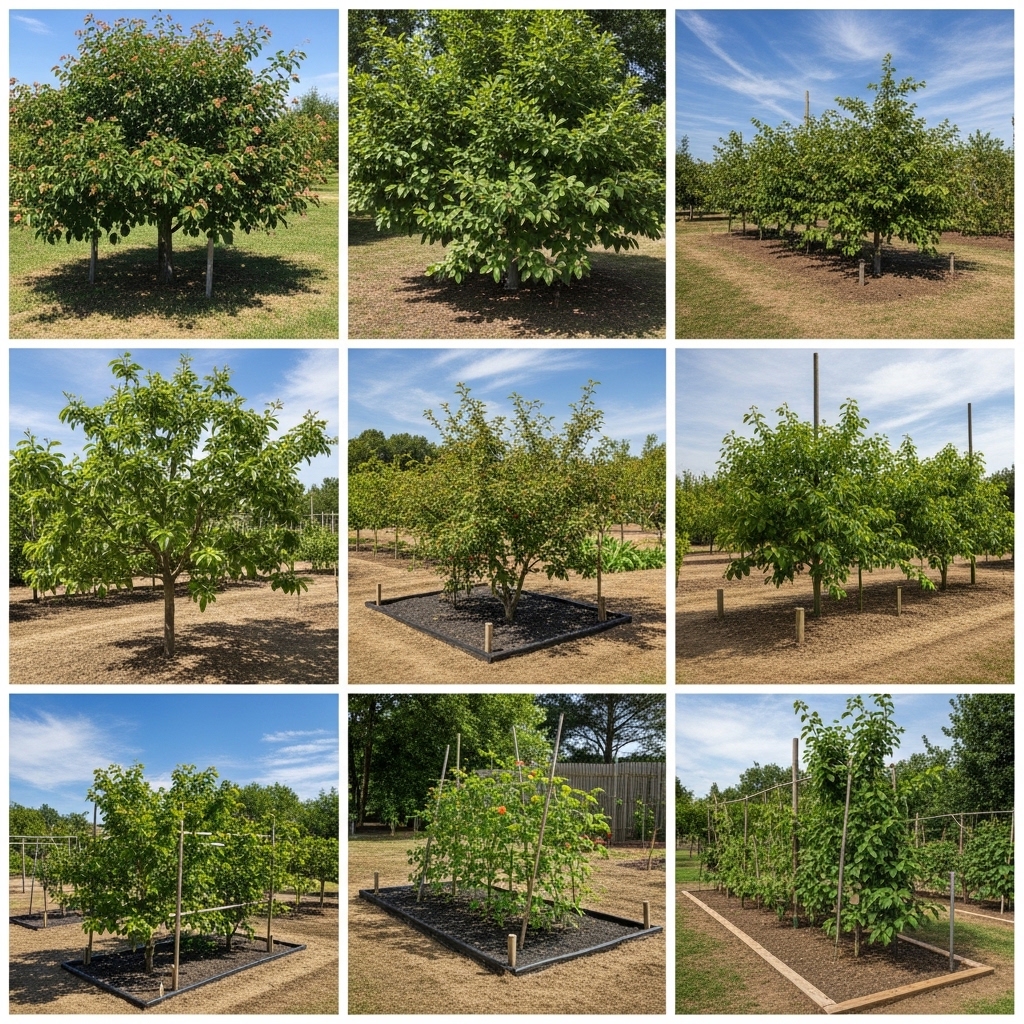
Best for: Maximizing space and improving soil health.
Add low-growing plants like herbs or ground covers beneath fruit trees to use space efficiently. Choose plants that don’t compete heavily with tree roots and can improve soil quality.
This works because it creates a balanced ecosystem that supports tree growth while using space productively.
It also helps retain soil moisture and reduce weeds. A common mistake is planting aggressive plants that compete for nutrients and weaken trees.
Pro Tip: Use shallow-root plants under trees to avoid competition.
Mistake to Avoid: Don’t overcrowd the base of trees with dense planting.
5. Install a Simple Irrigation System for Consistent Watering
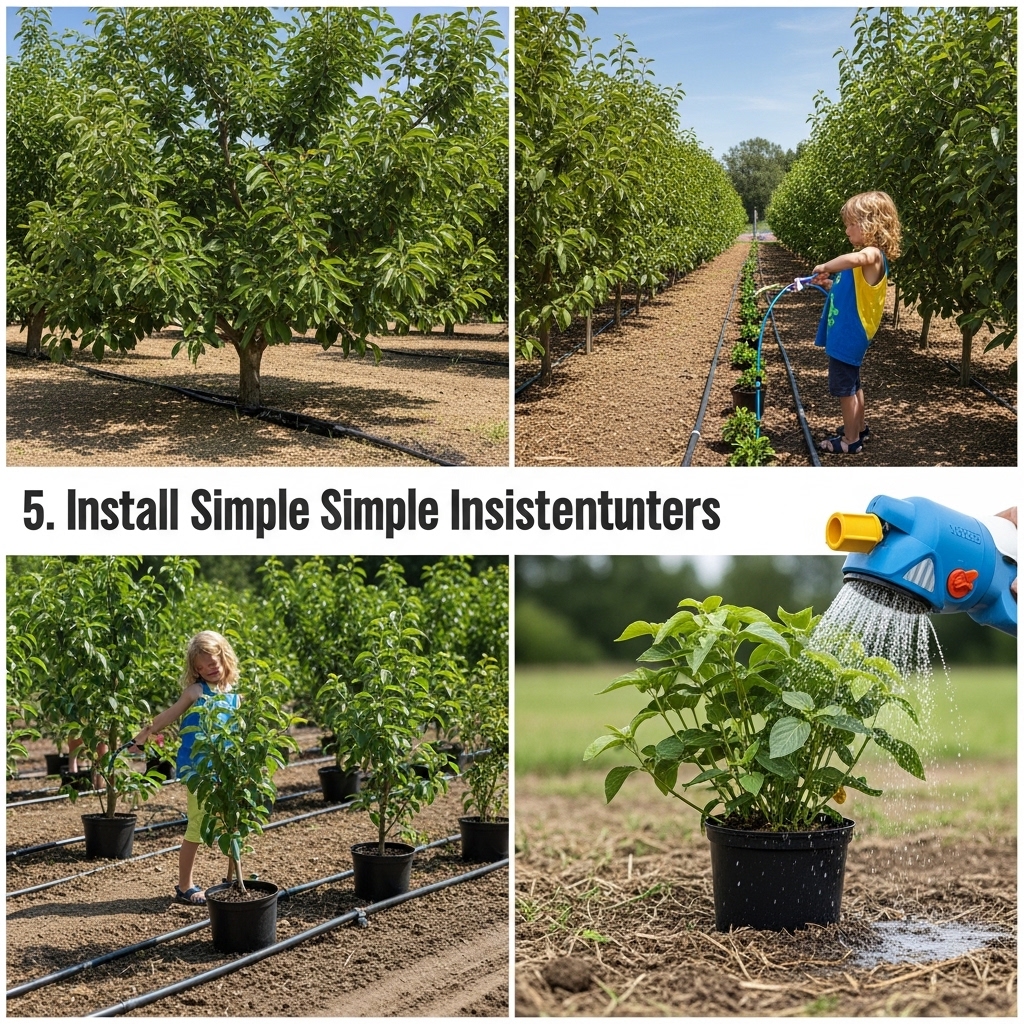
Ideal for: Busy gardeners or hot climates.
Set up drip irrigation or slow watering systems to ensure trees receive consistent moisture. Position water lines near the root zone and adjust flow based on seasonal needs.
This works because fruit trees require steady watering for proper growth and fruit development. Inconsistent watering leads to stress and reduced yield. Many orchard setups fail because watering is irregular or uneven across trees.
Pro Tip: Water deeply but less frequently to encourage strong roots.
Mistake to Avoid: Don’t rely on surface watering alone.
6. Prune Trees Regularly to Maintain Shape and Productivity
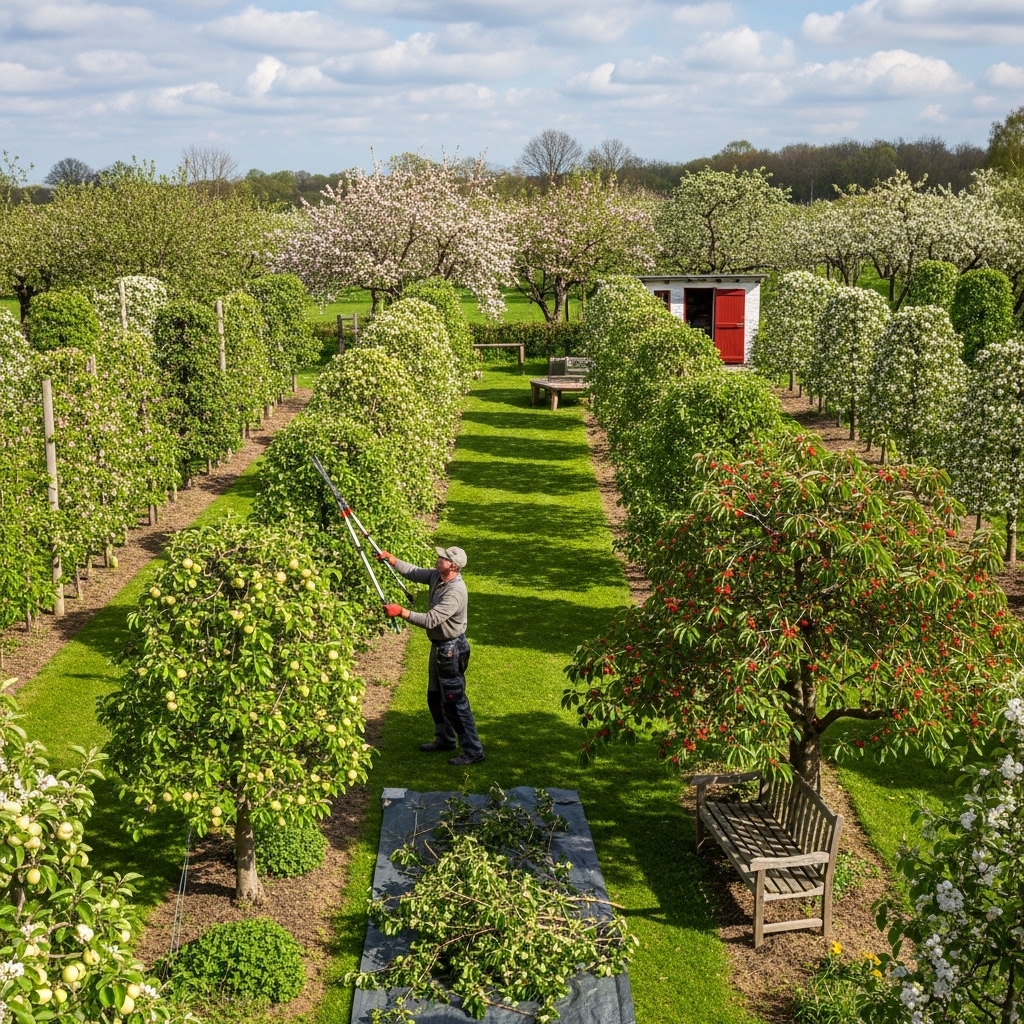
Best for: Long-term orchard health and yield.
Trim trees to remove dead branches, improve airflow, and shape growth. Focus on opening up the center of the tree to allow sunlight penetration.
This works because pruning directs energy into productive branches and improves fruit quality. It also reduces disease risk. Many gardeners avoid pruning out of fear, which leads to dense, unproductive trees over time.
Pro Tip: Learn basic pruning patterns for each tree type.
Mistake to Avoid: Don’t over-prune or cut randomly.
7. Protect Your Orchard From Pests Early
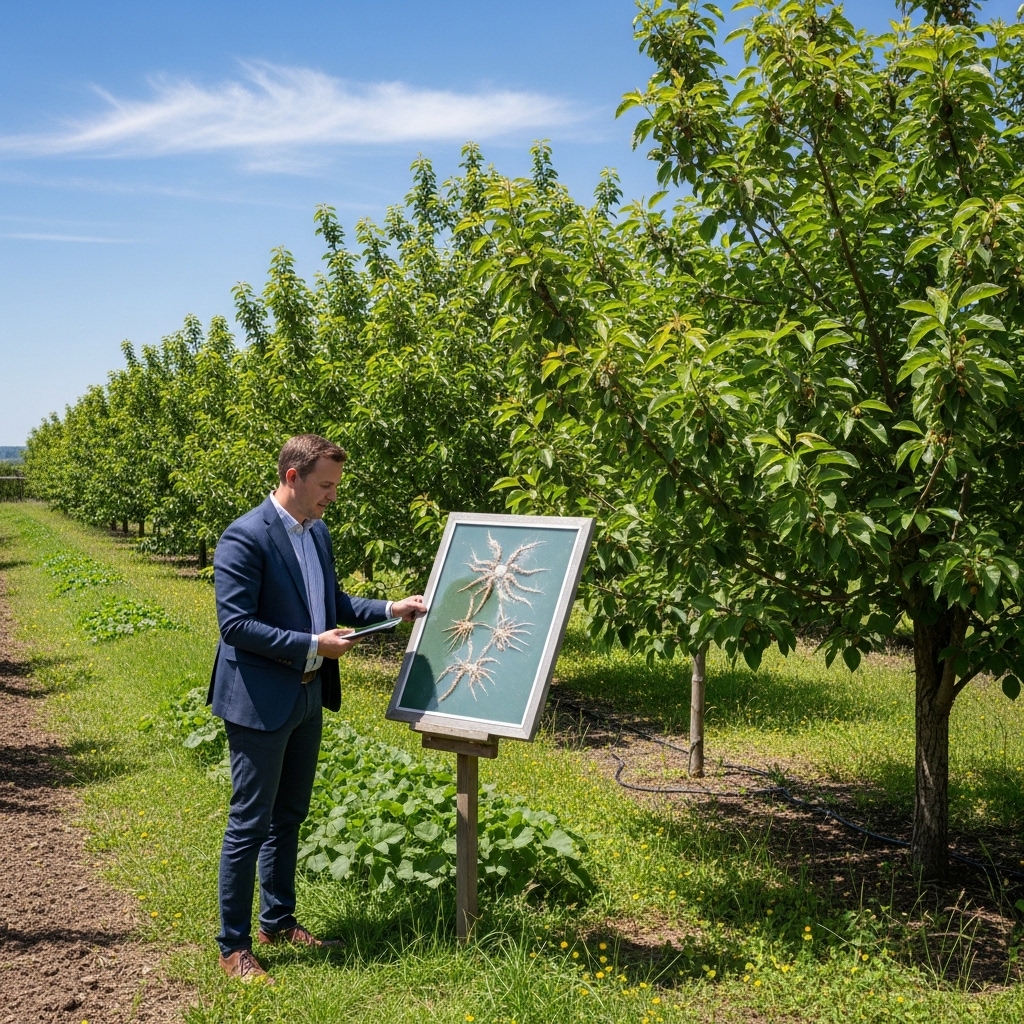
Ideal for: Preventing crop loss.
Use netting, organic sprays, or natural deterrents to protect fruit as it develops. Monitor trees regularly for early signs of pests or disease.
This works because early intervention prevents damage before it spreads across the orchard. Once pests establish, they’re much harder to control. Many orchard owners react too late, losing a significant portion of their harvest.
Pro Tip: Inspect trees weekly during fruiting season.
Mistake to Avoid: Don’t ignore small signs of pest activity.
8. Use Mulch Around Trees to Improve Soil Conditions
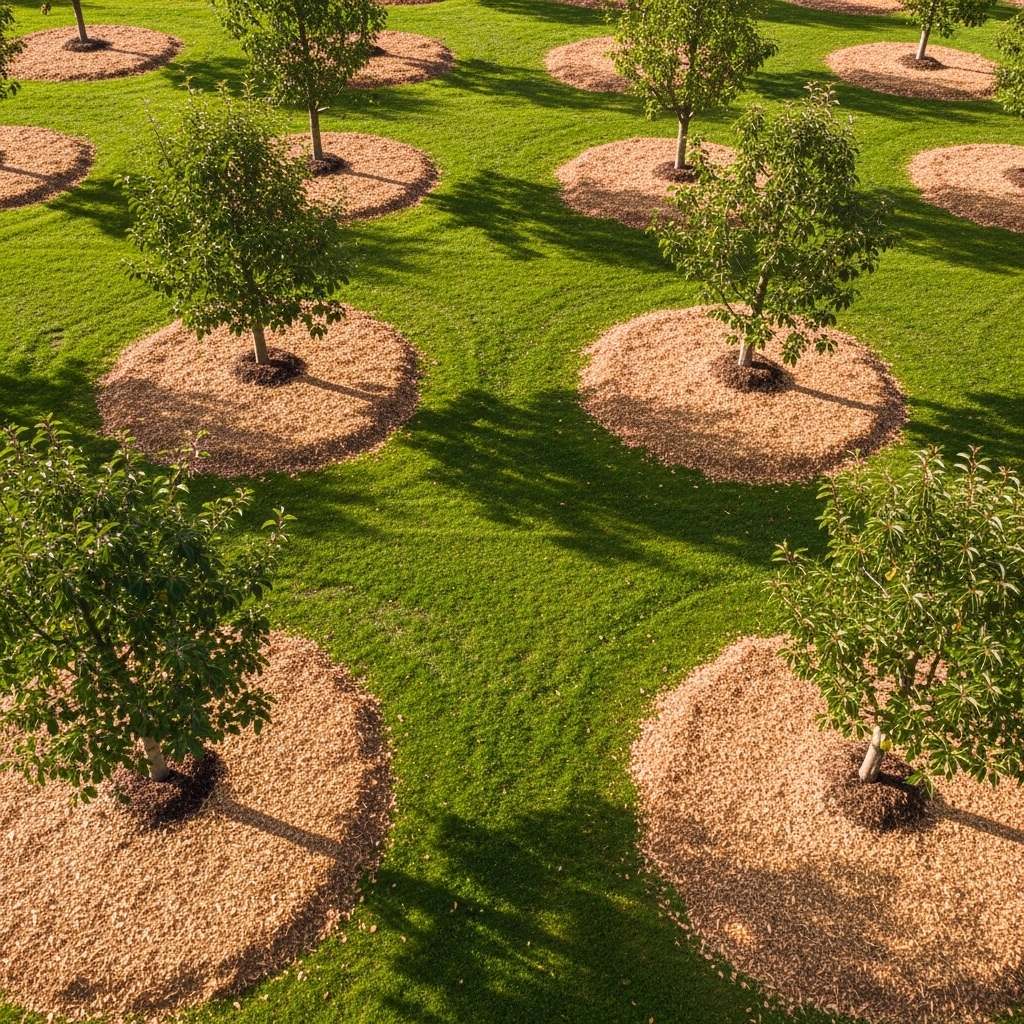
Best for: Maintaining healthy roots and moisture levels.
Apply mulch around the base of trees to retain moisture, regulate temperature, and suppress weeds. Keep mulch evenly spread but away from the trunk.
This works because consistent soil conditions support better root development and fruit production. It also reduces maintenance effort. Many gardeners skip mulching, which leads to dry soil and weaker trees.
Pro Tip: Use organic mulch like wood chips or straw.
Mistake to Avoid: Don’t pile mulch directly against the trunk.
9. Plan Pollination for Better Fruit Production
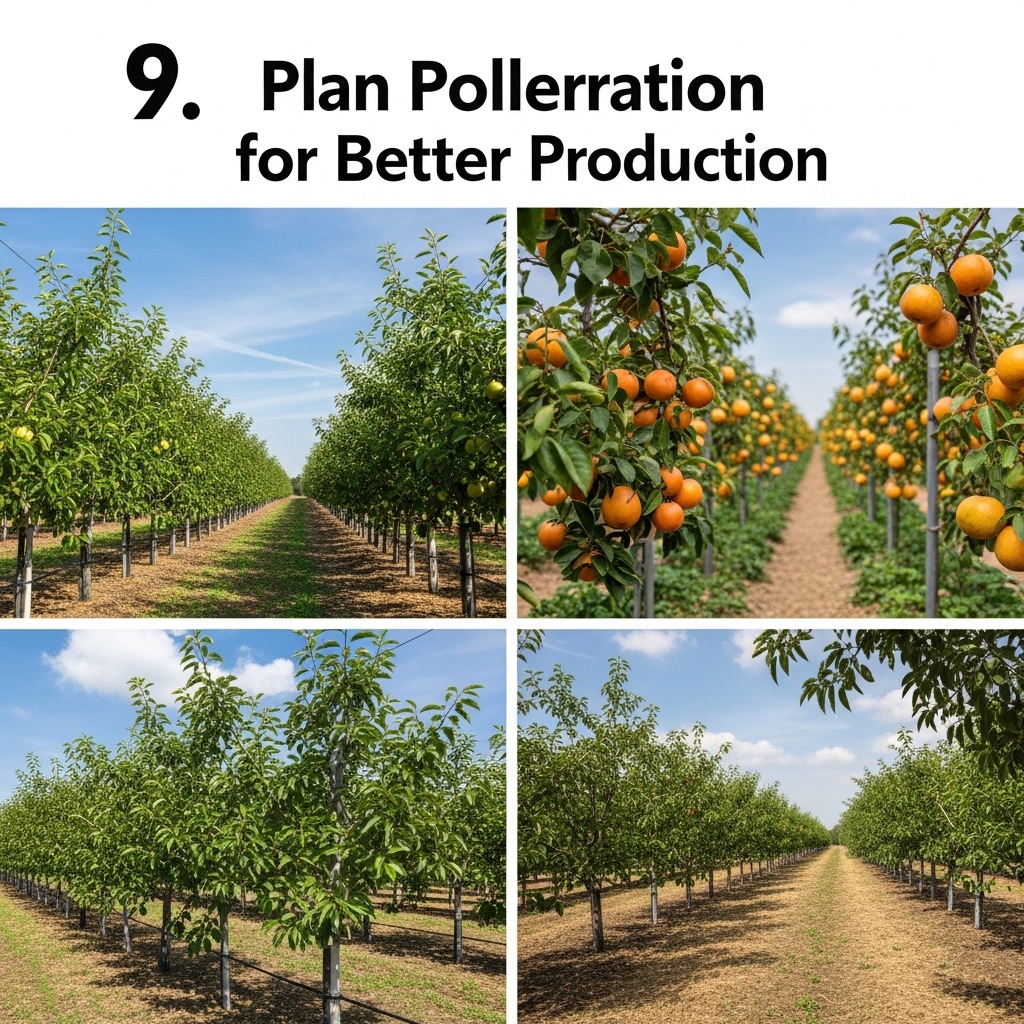
Ideal for: Increasing yield naturally.
Plant compatible tree varieties that can cross-pollinate or ensure pollinators have access to your orchard. Add flowering plants nearby to attract bees.
This works because proper pollination directly impacts fruit quantity and quality. Without it, trees may grow but produce little fruit. A common mistake is planting a single tree type that cannot self-pollinate effectively.
Pro Tip: Research pollination requirements before planting.
Mistake to Avoid: Don’t assume all trees can self-pollinate.
10. Adjust Orchard Layout Over Time Based on Tree Growth
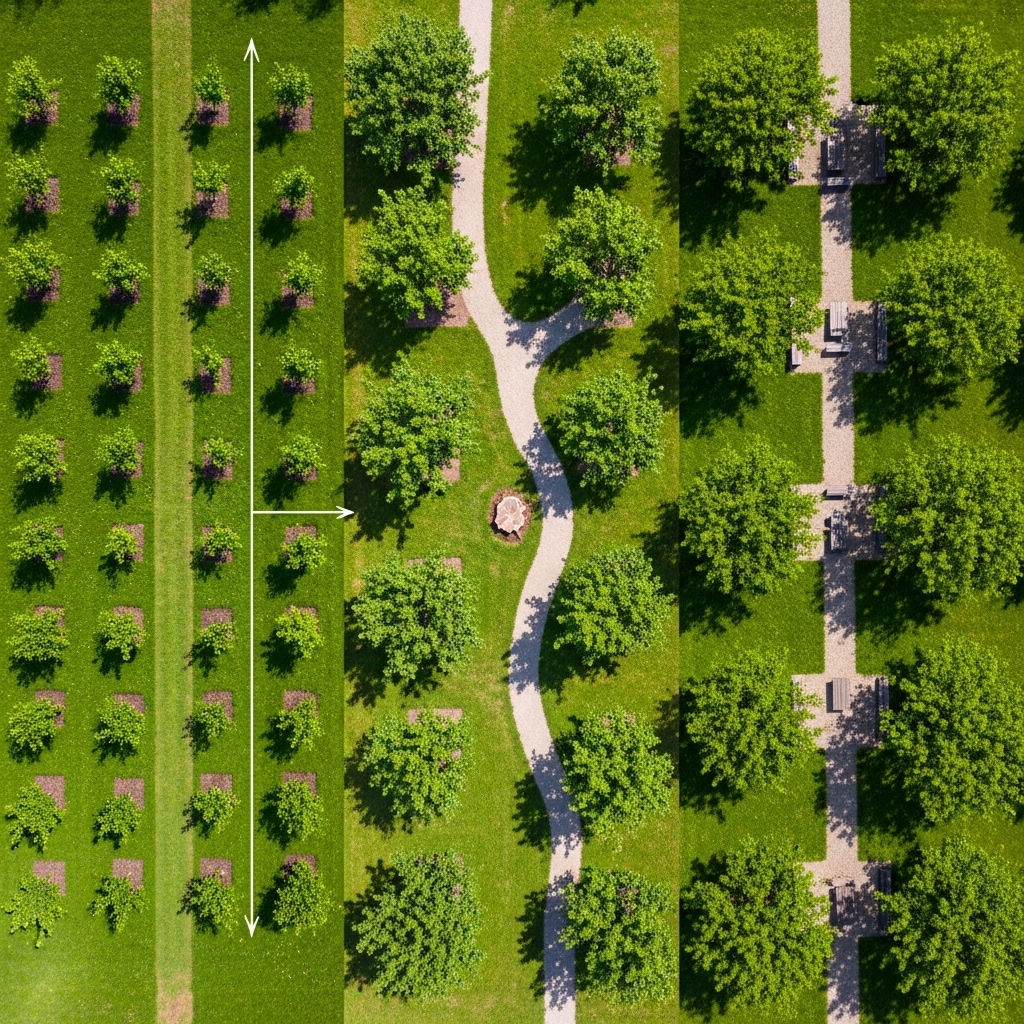
Best for: Long-term orchard success.
Observe how trees grow and make adjustments such as pruning more aggressively, removing weak trees, or adding spacing where needed. Treat your orchard as a system that evolves.
This works because trees change significantly over time, and adapting your layout prevents overcrowding and decline in productivity. Many gardeners stick to their original plan even when it stops working.
Pro Tip: Review your orchard layout every season.
Mistake to Avoid: Don’t ignore changes in tree size and spacing needs.
Conclusion: A Successful Orchard Is Built on Spacing, Structure, and Long-Term Thinking
Orchard gardening is something that you have to think about for a time. You need to plan for the future. Not just think about planting trees today.
If you want your orchard to do well you have to make sure the trees are not too close together take care of them all the time and make choices.
If you follow these ten ideas for your orchard garden you can make a system that gives you fruit is easy to keep track of and is not too hard to take care of even when your trees get really big.