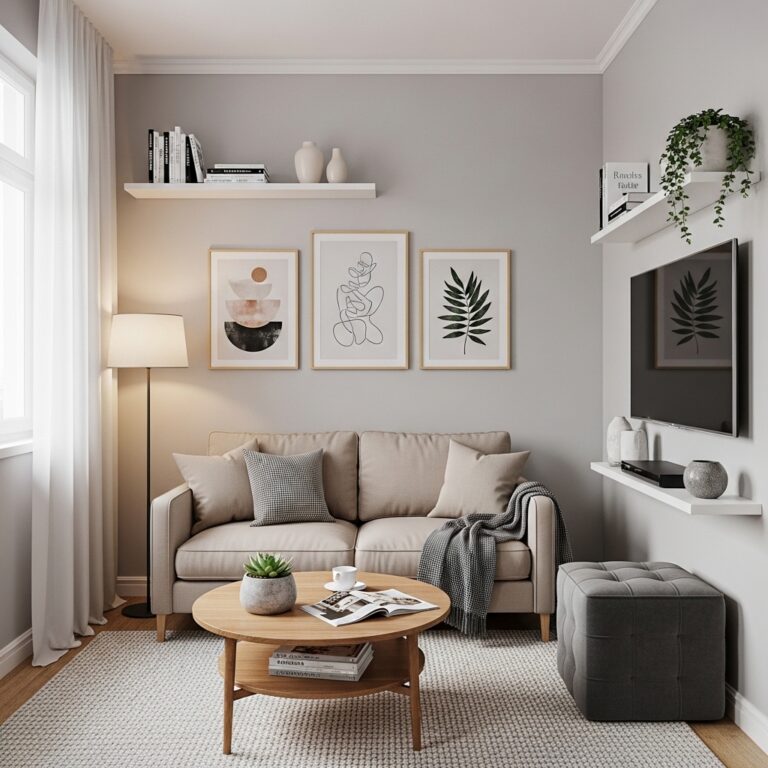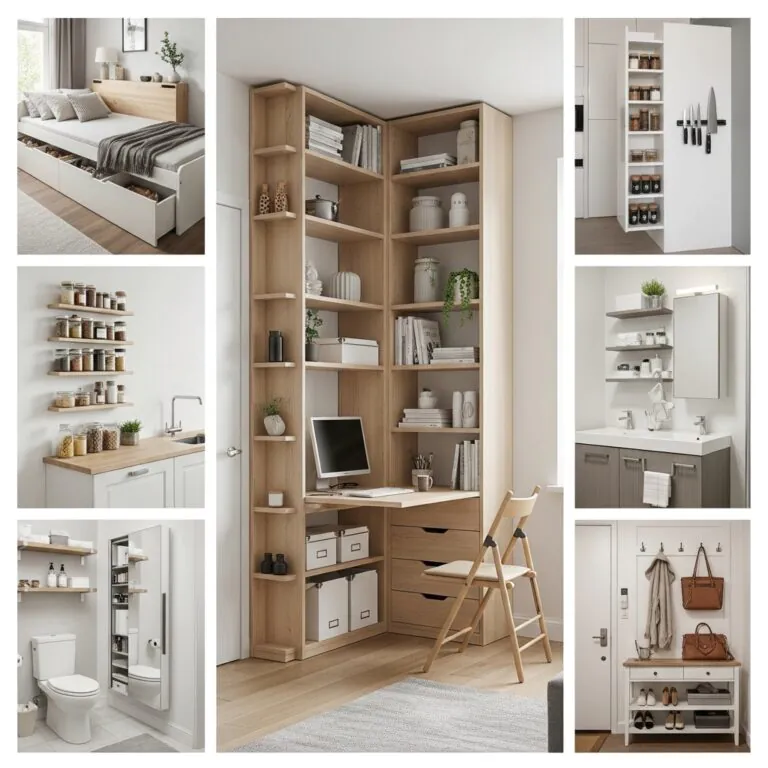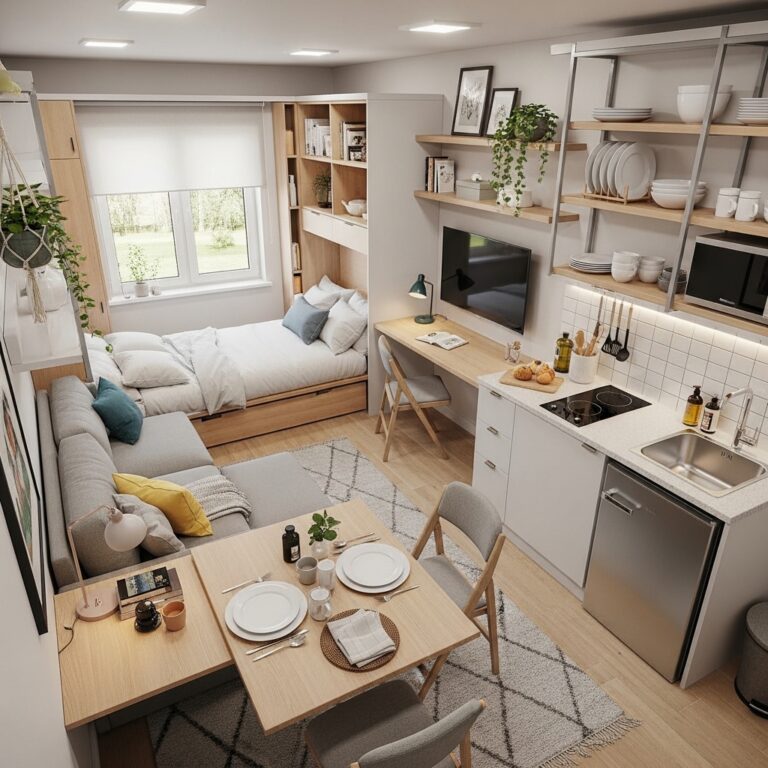
10 Studio Apartment Ideas That Make One Room Feel Like a Fully Designed Home
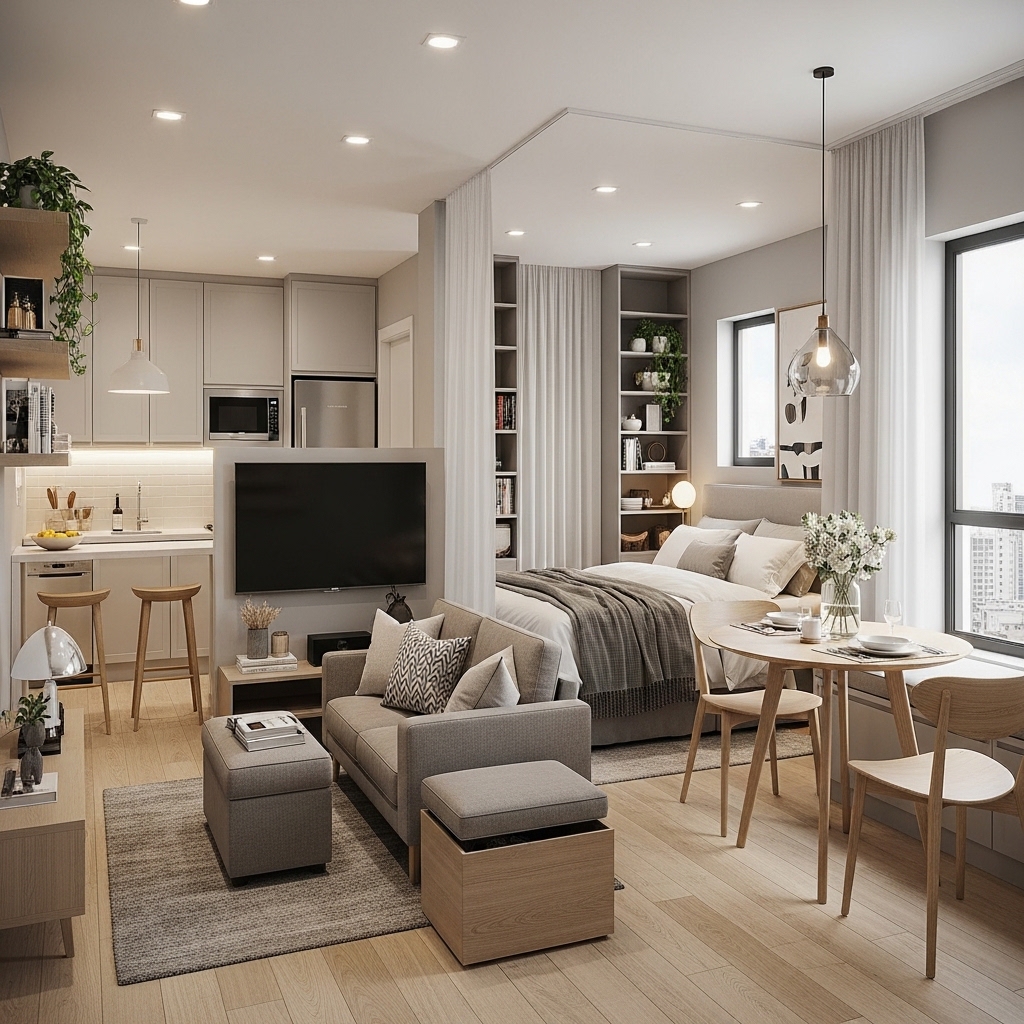
Studio apartments are tough because you have to think about how to use the space in a way. Everything is in one room so you have to figure out how to make it work. The goal is not just to separate the areas but to make sure everything works well together without getting in the way of something else.
These ideas are, about making choices when it comes to how you lay out your studio apartment and how you behave in the space. You want to make sure everything looks good and feels balanced so your studio apartment feels organized and comfortable.
Each idea helps you use the space in a way without making it feel cluttered or crowded with too much furniture. Studio apartments need planning and these ideas can help you create a studio apartment that is practical and nice to live in.
1. Design a “Backbone Layout” That Organizes Everything Around One Line
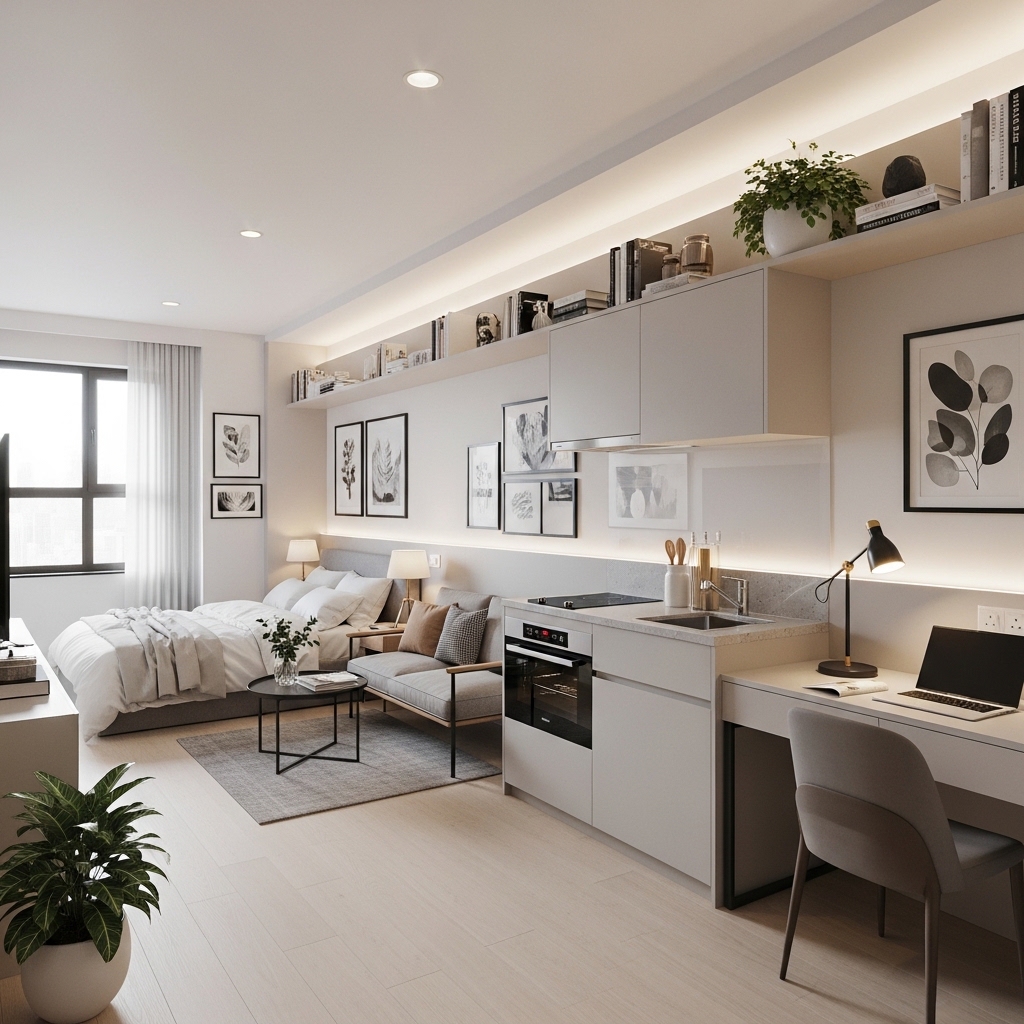
Ideal for: Long or rectangular studios that feel difficult to arrange.
Create an imaginary straight line from one end of the room to the other and align major furniture like the bed, sofa, and storage along it. Keep movement zones on one side.
This works because a clear backbone prevents scattered placement and creates a predictable flow. It simplifies the layout and keeps everything visually connected.
Avoid placing furniture randomly on both sides, as it breaks structure and creates confusion.
Pro Tip: Keep the walking path parallel to your layout line for better flow.
2. Use Opposing Functions to Naturally Separate Zones
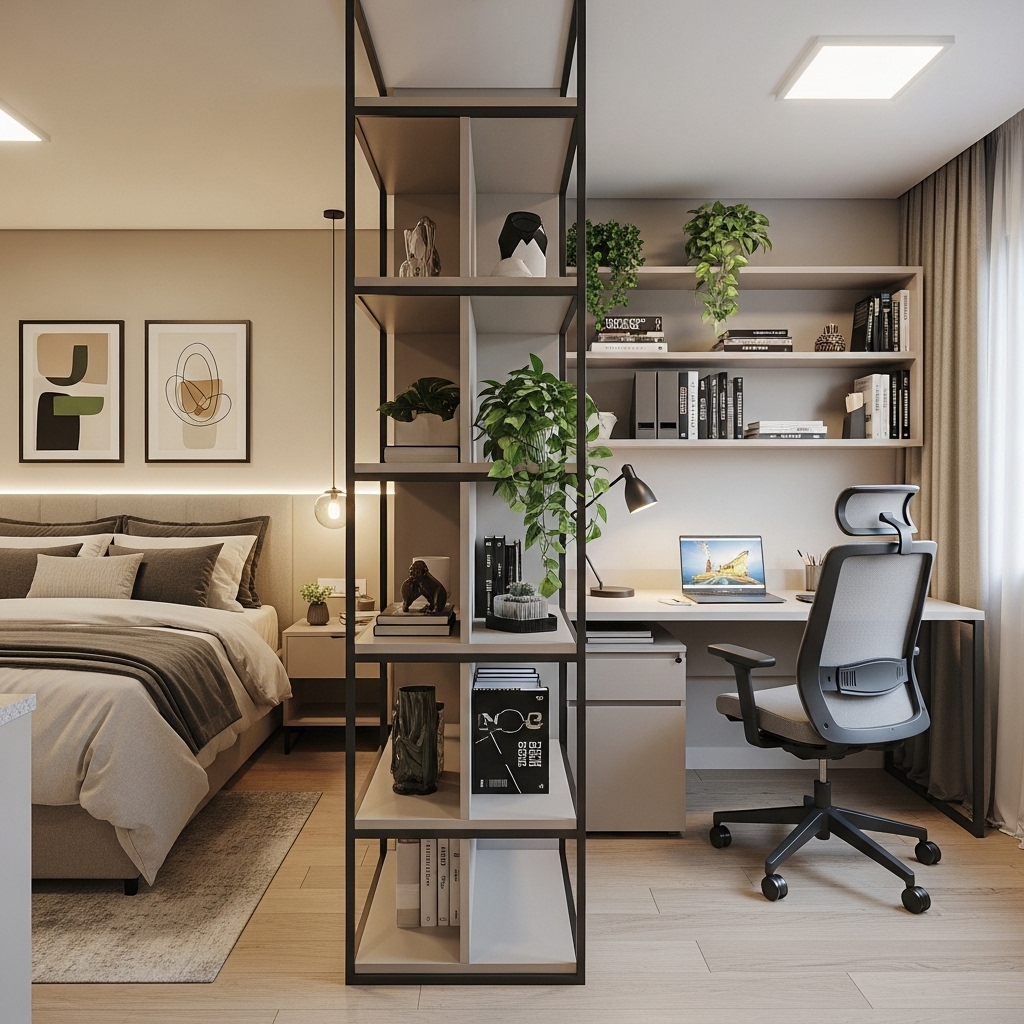
Best for: Studios where activities overlap too much.
Place contrasting functions—like sleeping and working—on opposite ends of the room. Keep their layouts visually distinct.
This separation reduces mental overlap and helps your brain switch between activities more easily. It improves focus and relaxation.
Avoid mixing conflicting zones too closely, such as placing a desk right next to the bed.
Pro Tip: Use lighting differences to reinforce separation.
3. Build a “Drop Zone” Near the Entrance to Stop Clutter Spread
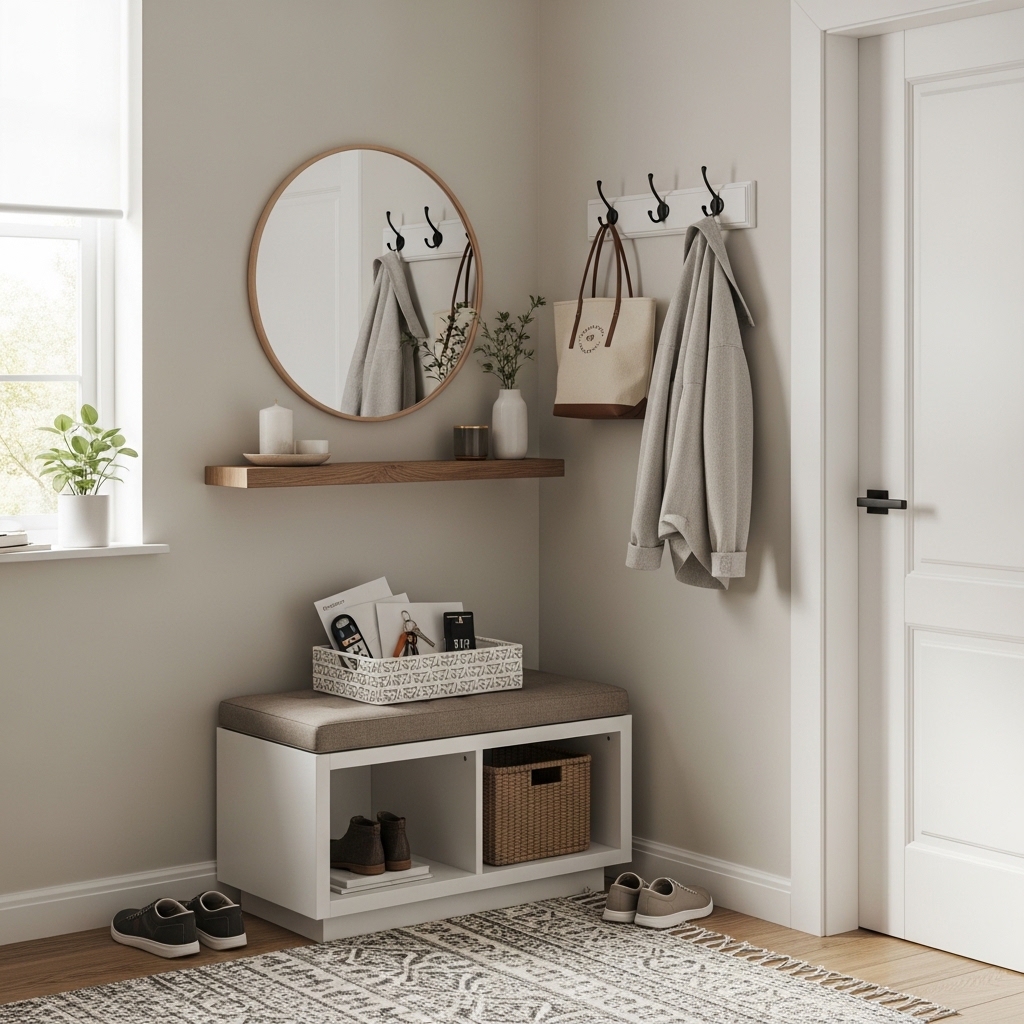
Great for: Studios where clutter enters and spreads quickly.
Create a small entry setup with hooks, a tray, or a narrow shelf for keys, bags, and daily items. Keep it minimal.
This works because it contains clutter at the source, preventing it from spreading across the entire studio. It also improves organization.
Avoid skipping this area, as it leads to items being placed randomly throughout the space.
Pro Tip: Use vertical storage to keep the drop zone compact.
4. Use Furniture Gaps to Create Invisible Walkways
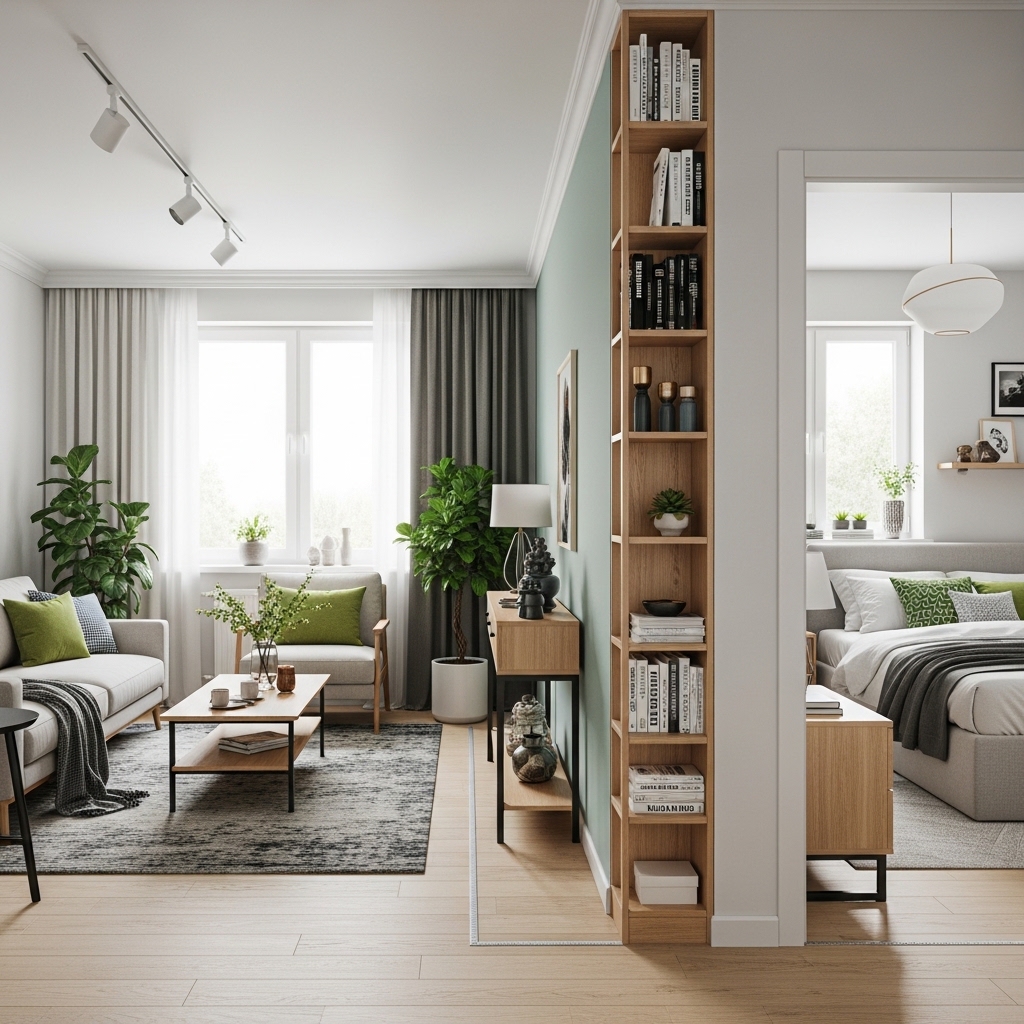
Ideal for: Studios that feel cramped despite minimal furniture.
Instead of defining walkways with rugs or barriers, leave consistent gaps between furniture to guide movement naturally.
This works because the brain interprets open gaps as pathways, improving flow without taking up extra space.
Avoid placing furniture too close together, which blocks natural movement.
Pro Tip: Maintain at least 24 inches for comfortable walking space.
5. Create a “Visual Pause” Area to Reduce Overwhelm
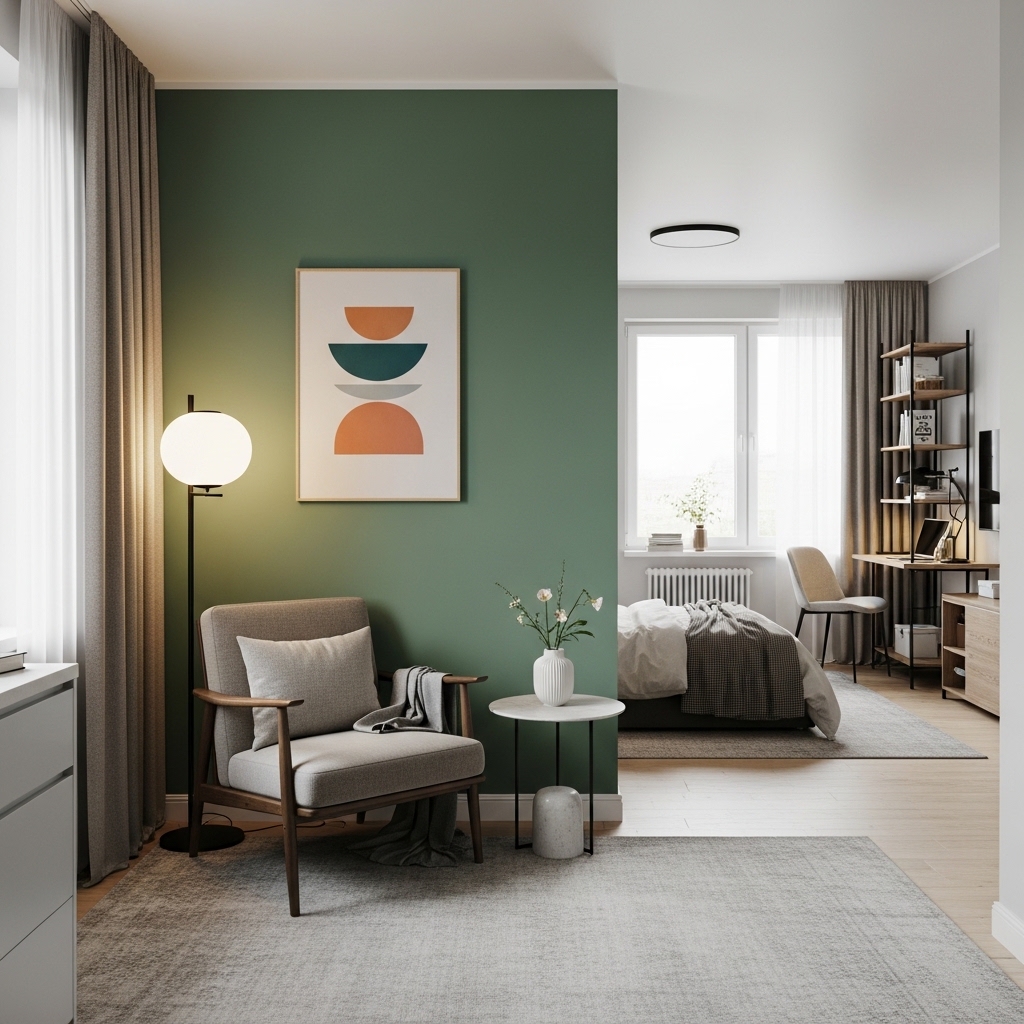
Best for: Studios that feel visually busy or tiring.
Leave one wall or section intentionally minimal with little to no decor. Keep it clean and open.
This works because it gives the eye a place to rest, balancing out more active areas of the room. It reduces mental clutter.
Avoid filling every wall, as it makes the space feel smaller and more chaotic.
Pro Tip: Use soft lighting in this area for a calming effect.
6. Stack Functions Vertically Instead of Horizontally
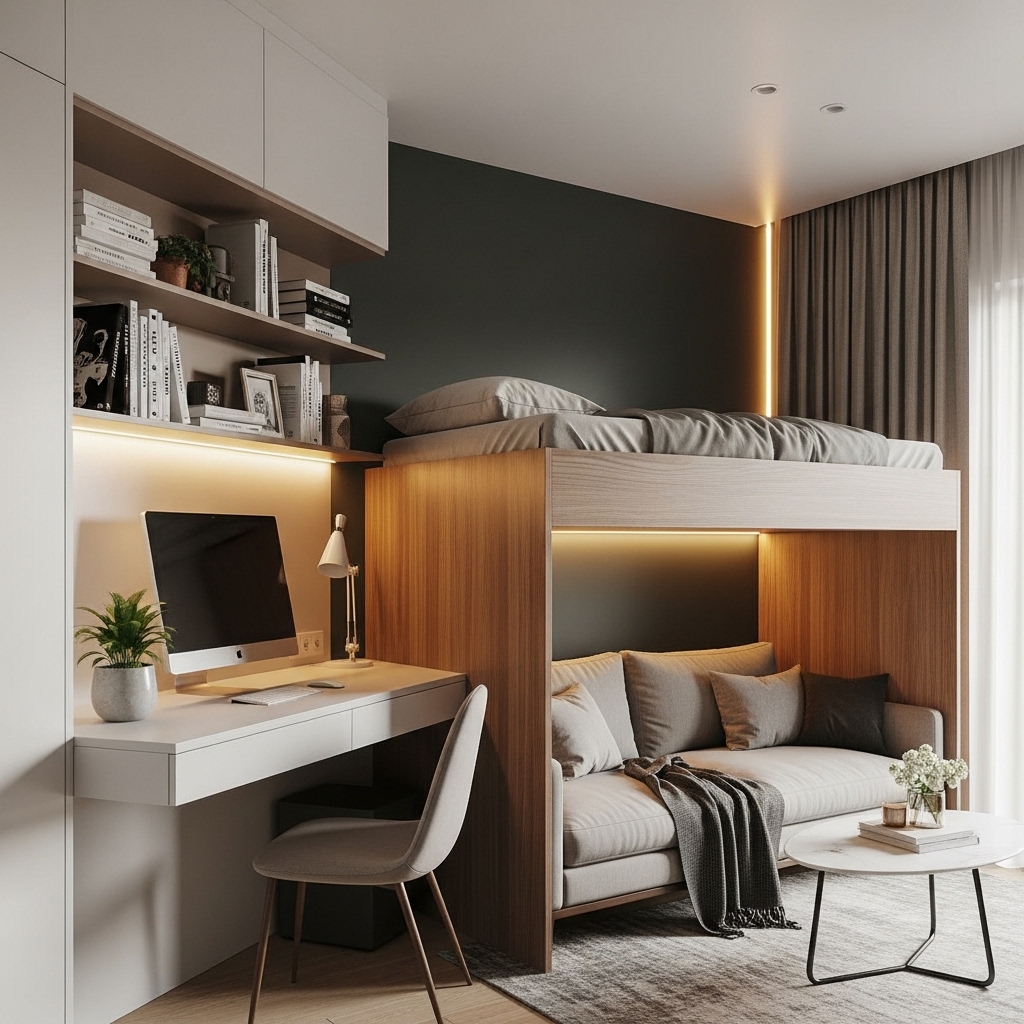
Great for: Studios with limited floor space but decent height.
Combine functions vertically, such as loft beds with workspaces underneath or stacked storage systems.
This maximizes usable space without expanding the footprint. It also keeps zones compact and efficient.
Avoid unstable or overcrowded vertical setups. Keep them safe and accessible.
Pro Tip: Use ladders or steps that double as storage.
7. Use Repetition Instead of Variety to Simplify the Space
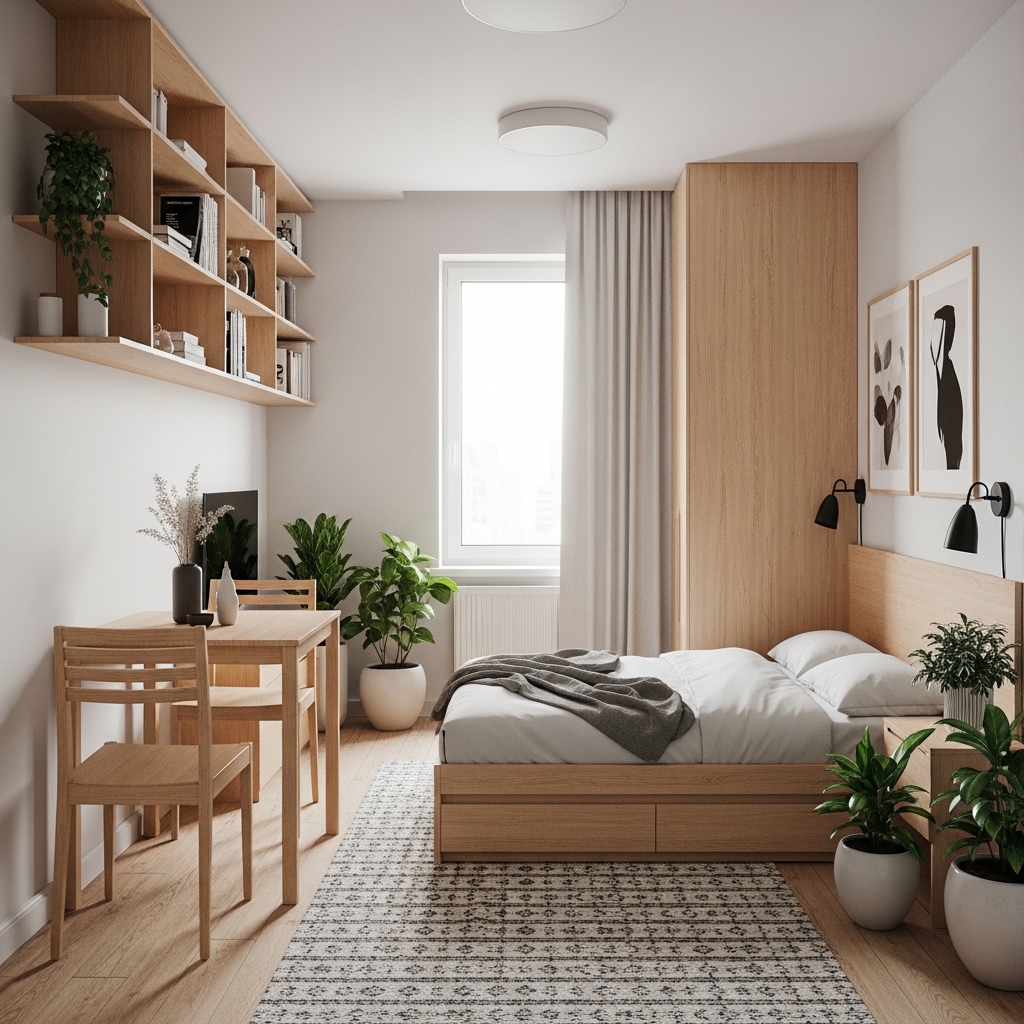
Ideal for: Studios that feel cluttered due to too many styles.
Repeat similar materials, shapes, or colors across furniture and decor to create consistency.
Repetition reduces visual noise and makes the space feel more cohesive. It also simplifies decision-making.
Avoid introducing too many unique elements that don’t connect visually.
Pro Tip: Stick to one dominant material and one accent.
8. Position the Bed Where It Doesn’t Interrupt Movement
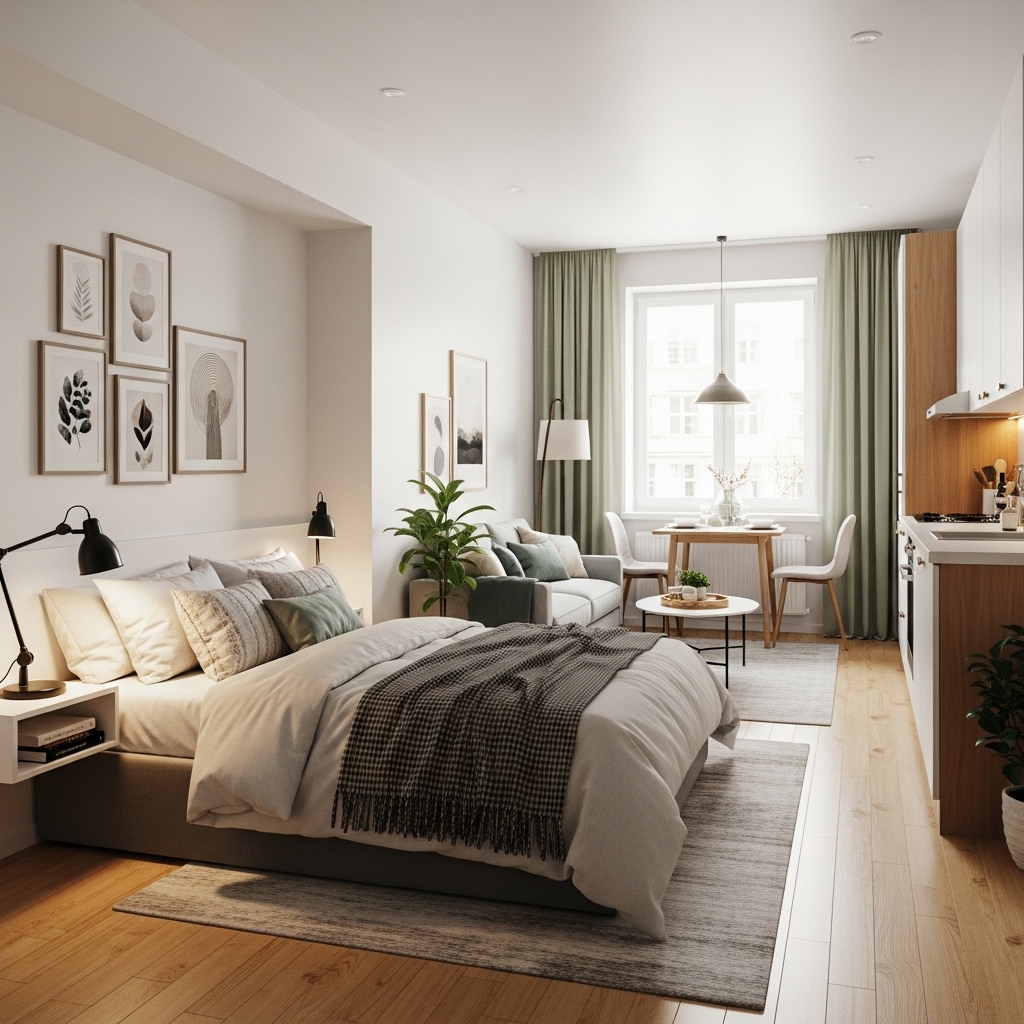
Best for: Studios where the bed dominates the layout.
Place the bed in a location that doesn’t block major pathways, even if it means using a corner or edge.
This improves flow and prevents the sleeping area from interfering with daily activities.
Avoid placing the bed in the center of high-traffic zones.
Pro Tip: Use low-profile beds to reduce visual impact.
9. Create Depth Using Layered Placement Instead of Size
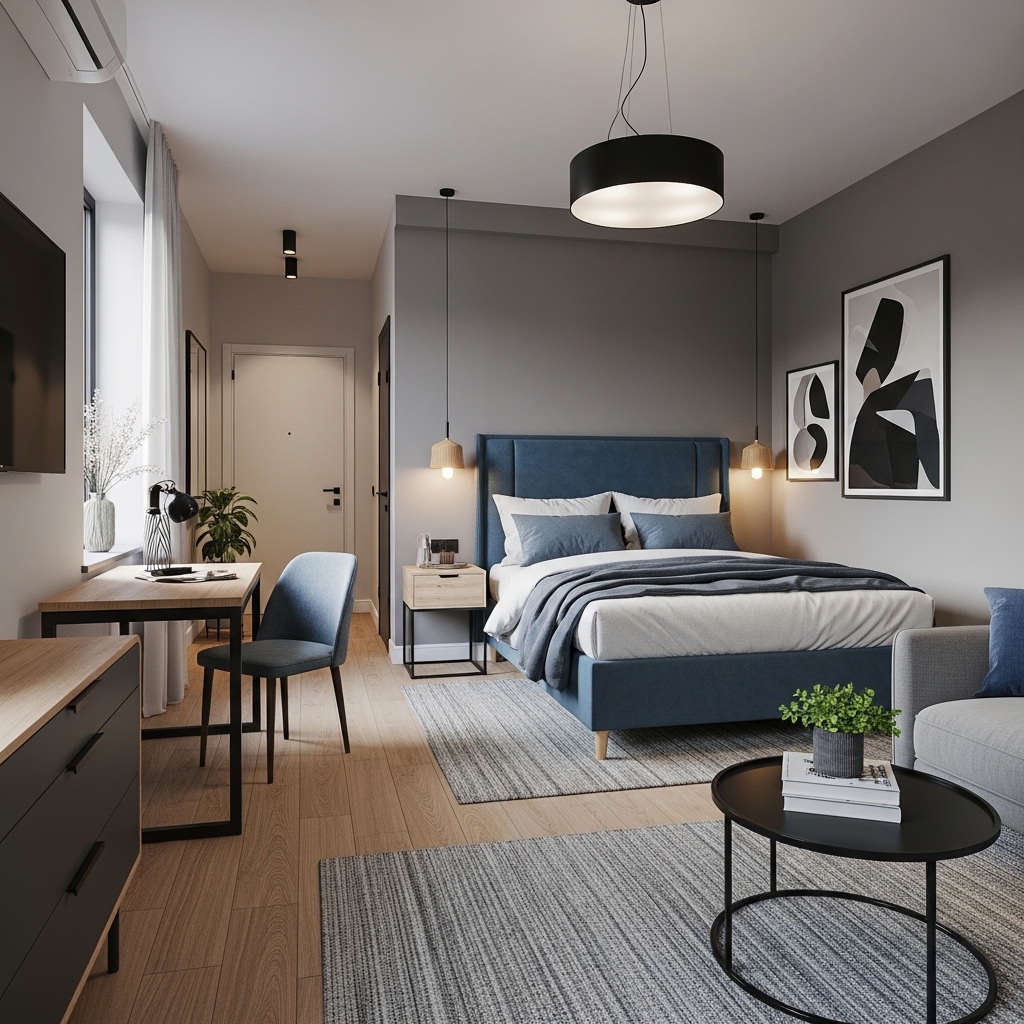
Great for: Studios that feel flat or one-dimensional.
Layer furniture slightly in front of each other instead of lining everything up against walls. Keep spacing balanced.
This adds depth and makes the room feel more dynamic without adding more items.
Avoid pushing all furniture against walls, as it flattens the layout.
Pro Tip: Use rugs to anchor layered arrangements.
10. Adjust Layout Based on Time-of-Day Usage
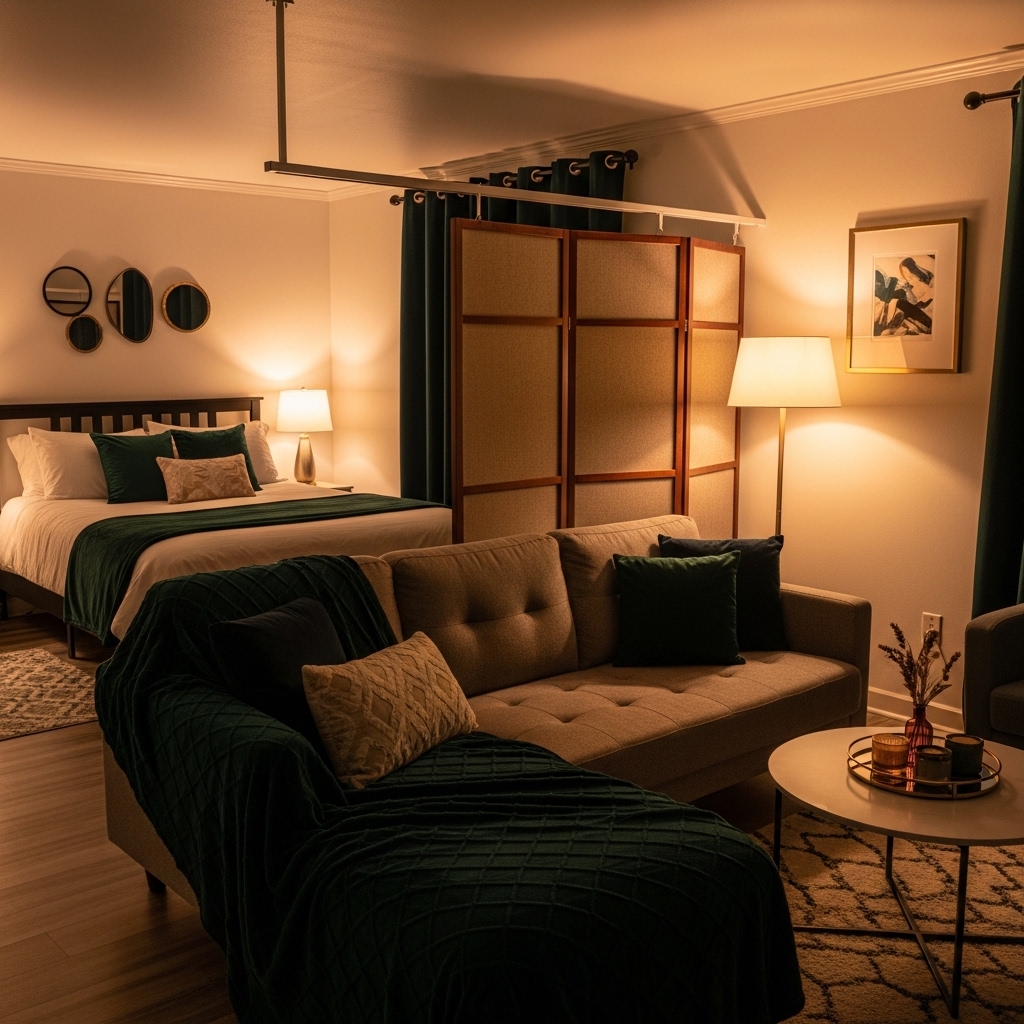
Ideal for: Studios used for multiple purposes throughout the day.
Rearrange or adapt certain elements based on your routine, like shifting a table for work or opening space for relaxation.
This flexibility ensures your studio supports different activities without feeling overcrowded.
Avoid rigid layouts that don’t adapt to your lifestyle.
Pro Tip: Keep movable furniture lightweight for easy changes.
Conclusion: Studio Living Becomes Easier When Layout Matches Your Lifestyle
A studio apartment can feel just as good as a house with rooms when every part of the studio apartment is designed to be useful.
The main thing is to set up the studio apartment so that it works with how you move and what you do every day instead of trying to make it into separate rooms, like a big house.
With these ten studio apartment ideas you can make a studio apartment that feels nice and organized and you can use it in ways and it will be comfortable. Without making a mess or making the studio apartment too complicated.