15 Toddler Room Ideas That Create Safe, Independent & Wonder-Filled Spaces to Explore
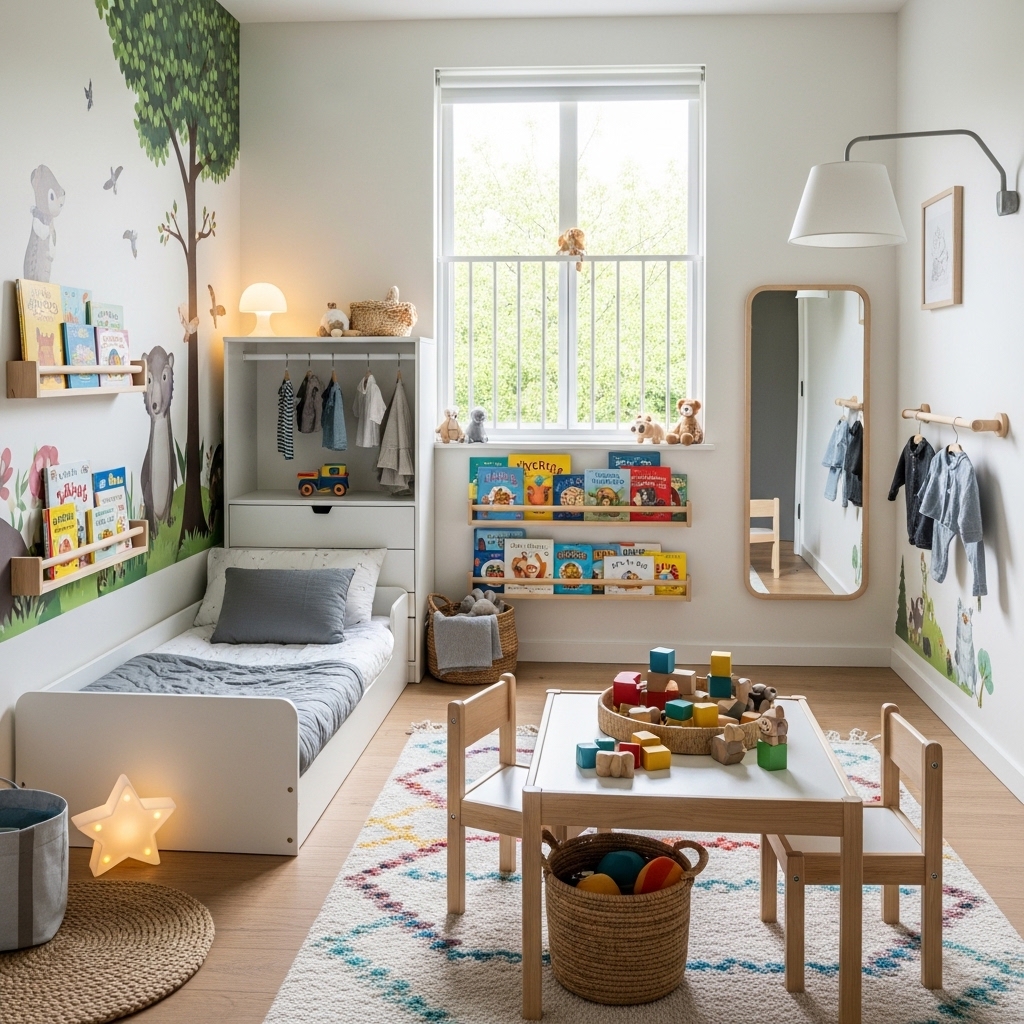
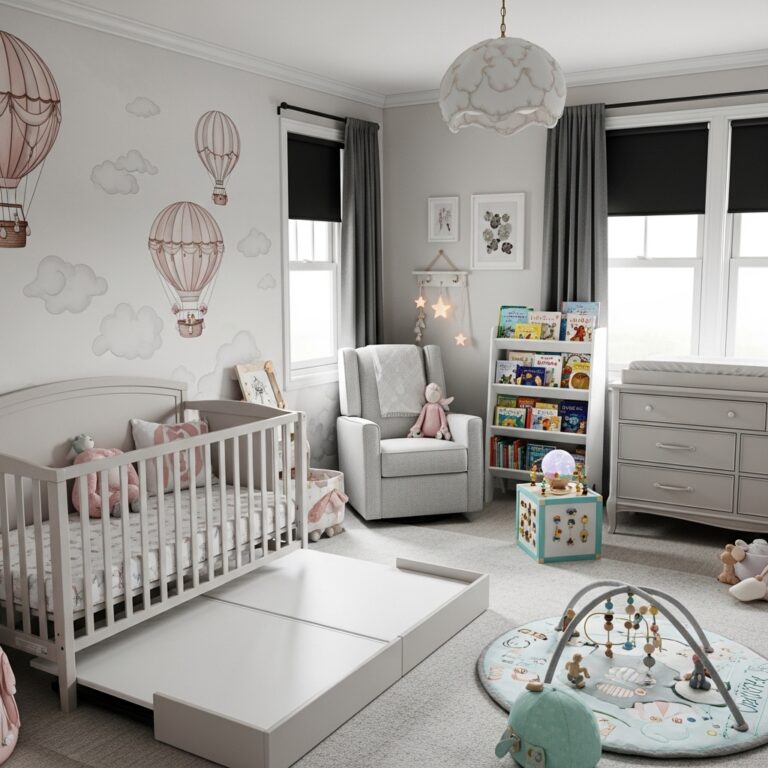
The toddler years are a whirlwind of growth, curiosity, and endless energy.
Your child is transitioning from baby to independent little person with opinions and preferences.
Their room needs to keep up. Safe enough for solo play. Engaging enough for curious minds.
Durable enough for daily chaos. Flexible enough to change as your toddler develops new skills.
A well-designed toddler room supports independence while giving you peace of mind.
This guide delivers 15 toddler room ideas that create safe, independent, and wonder-filled spaces.
From low shelves to climbing zones, each idea honors your toddler’s drive to explore and learn.
1. Install Low Open Shelves for Independent Toy Access
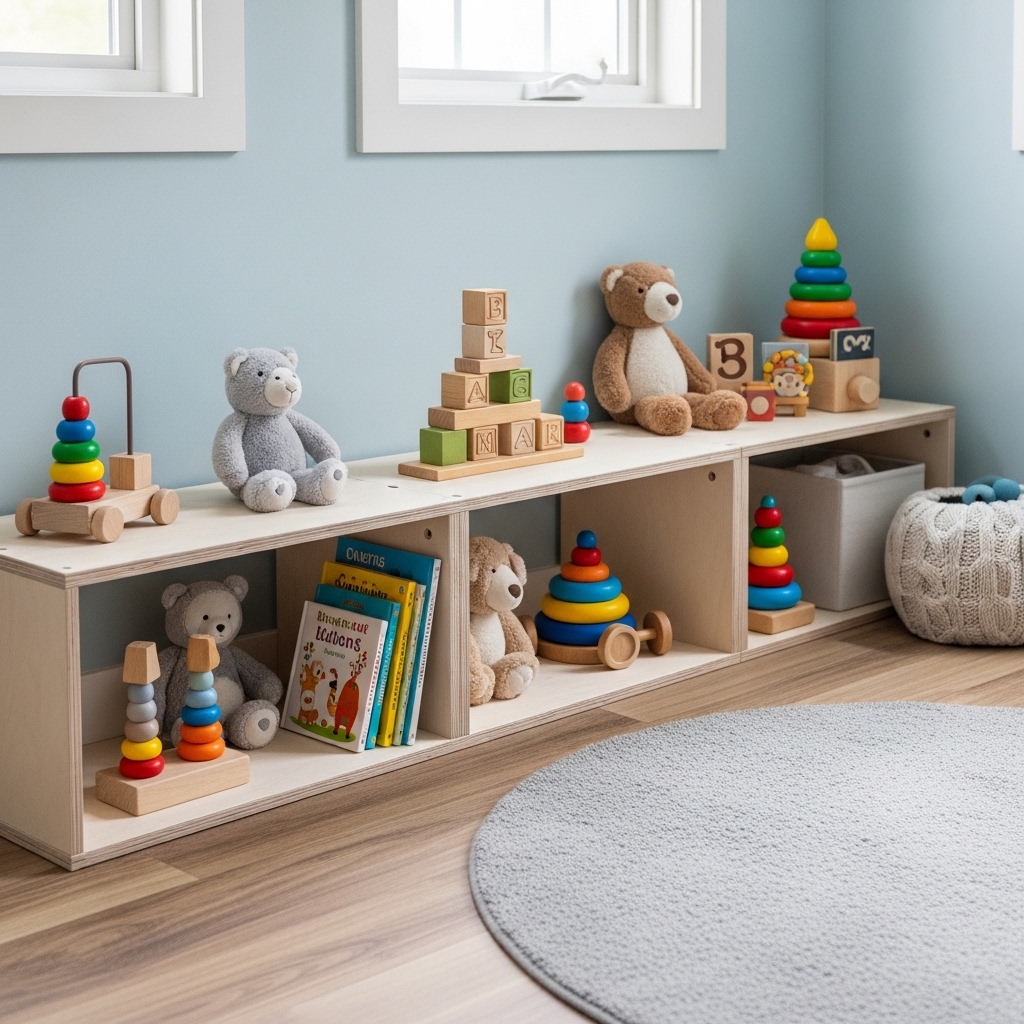
Use this idea when your toddler constantly asks you to get toys down from high shelves.
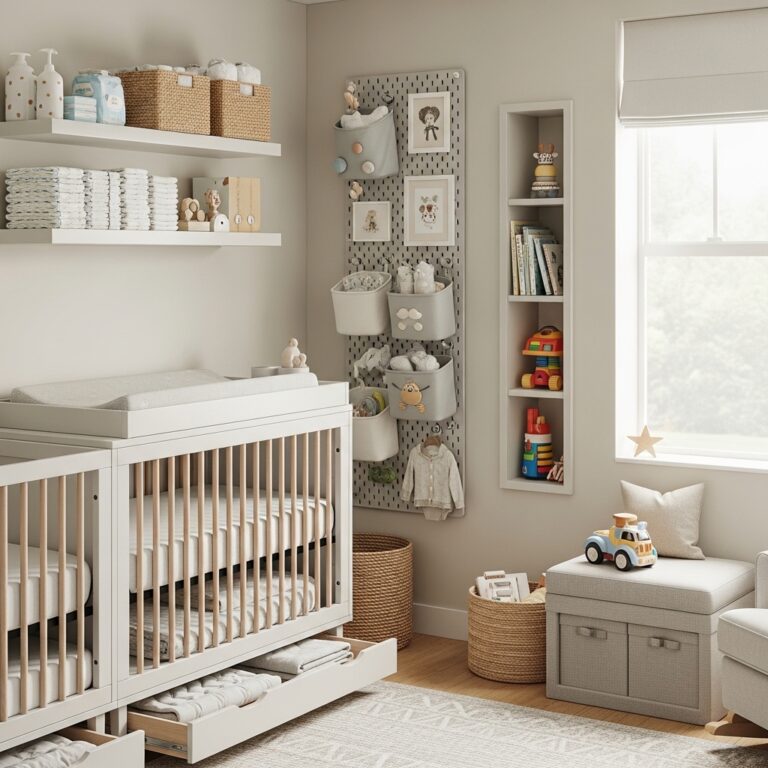
Mount open shelves no higher than 24 inches from the floor. Place toys in small bins or directly on shelves.
Your toddler sees every toy and chooses what to play with independently. No more asking for help.
Closed cabinets hide toys from view. Open shelves invite exploration and build decision-making skills.
Pro Tip: Rotate toys weekly. Store half your toddler’s toys in a closet. Swap them out to keep the shelves feeling new.
Mistake to Avoid: Do not overfill your shelves. Each shelf should have three to five toy options maximum. Too many choices overwhelm toddlers.
2. Create a Floor Bed for Safe Sleeping Independence
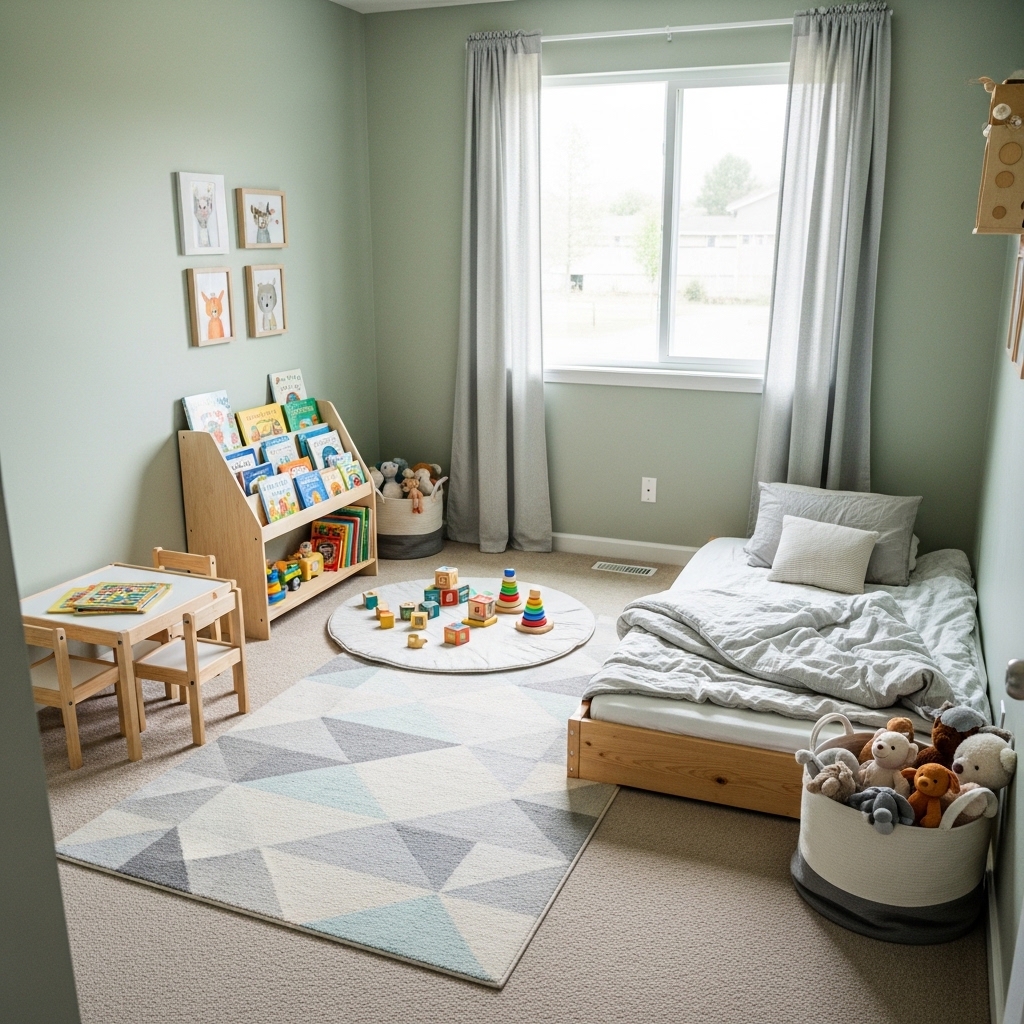
Choose this approach when your toddler has started climbing out of their crib.
Replace the crib with a floor bed. A twin mattress placed directly on the floor or in a low frame.
Your toddler gets in and out of bed independently. No climbing over high rails. No dangerous falls.
Cribs confine. Floor beds empower. Your toddler learns to self-soothe and manage their own sleep.
Pro Tip: Place a small soft rug or foam mat next to the bed. If your toddler rolls out, they land on something soft.
Mistake to Avoid: Do not place a floor bed against a wall with a window. Window cords and drafts are safety hazards for toddlers.
3. Paint a Large Chalkboard Wall at Toddler Height
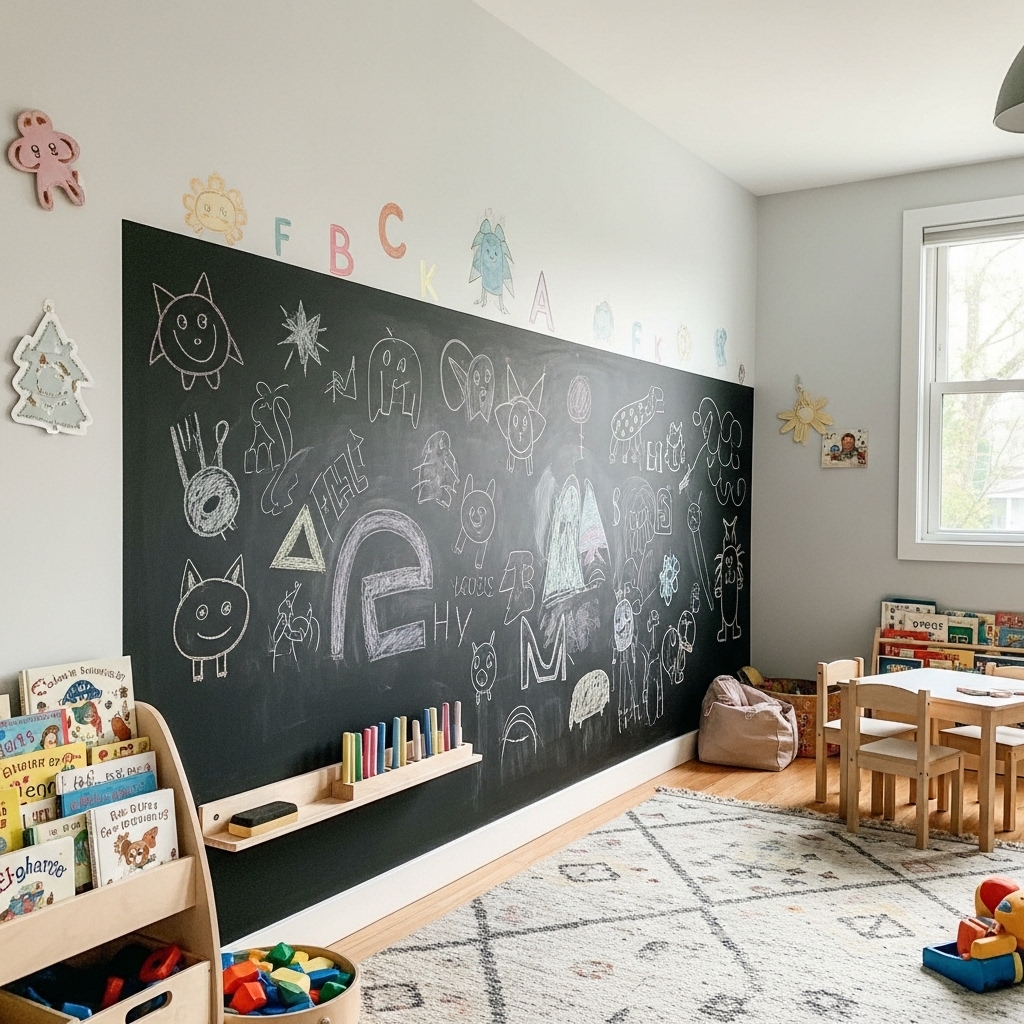
Apply this method when your toddler loves to draw and you want to contain the mess.
Paint a lower wall section with chalkboard paint. Start at baseboard height and go up to 36 inches.
Your toddler draws standing up or sitting down. The wall becomes their giant, no-limits canvas.
Paper tears and moves around. A chalkboard wall stays put and offers endless creative possibilities.
Pro Tip: Use dustless chalk and a washable chalk holder. Dustless chalk keeps chalk dust off your floors and furniture.
Mistake to Avoid: Do not paint the chalkboard wall near your toddler’s bed. Chalk dust floating through the air can irritate young lungs during sleep.
4. Install a Wall-Mounted Activity Board for Fine Motor Play
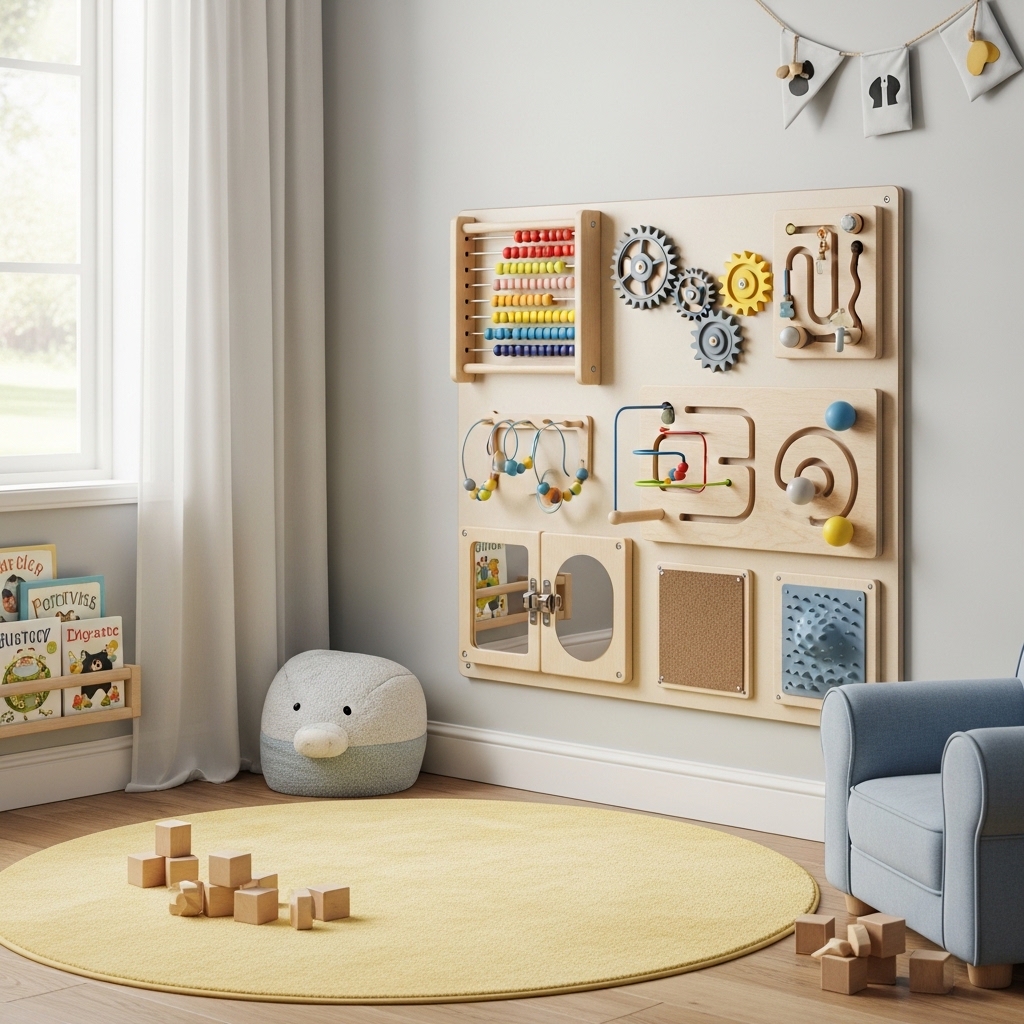
Use this strategy when your toddler loves touching, turning, and figuring out how things work.
Mount a large pegboard or plywood board on a wall at your toddler’s standing height.
Attach latches, switches, wheels, door knockers, zippers, and different textured fabrics to the board.
Your toddler stands and plays quietly. Fine motor skills, problem-solving, and focus develop naturally.
Individual toys get lost and scattered. An activity board stays put and engages for months.
Pro Tip: Use a mix of easy and challenging activities. Easy tasks build confidence. Challenging tasks build persistence.
Mistake to Avoid: Do not attach small parts that could come loose. Screw and glue everything securely. Toddlers pull off anything not fastened tightly.
5. Create a Cozy Reading Nook in a Corner or Closet
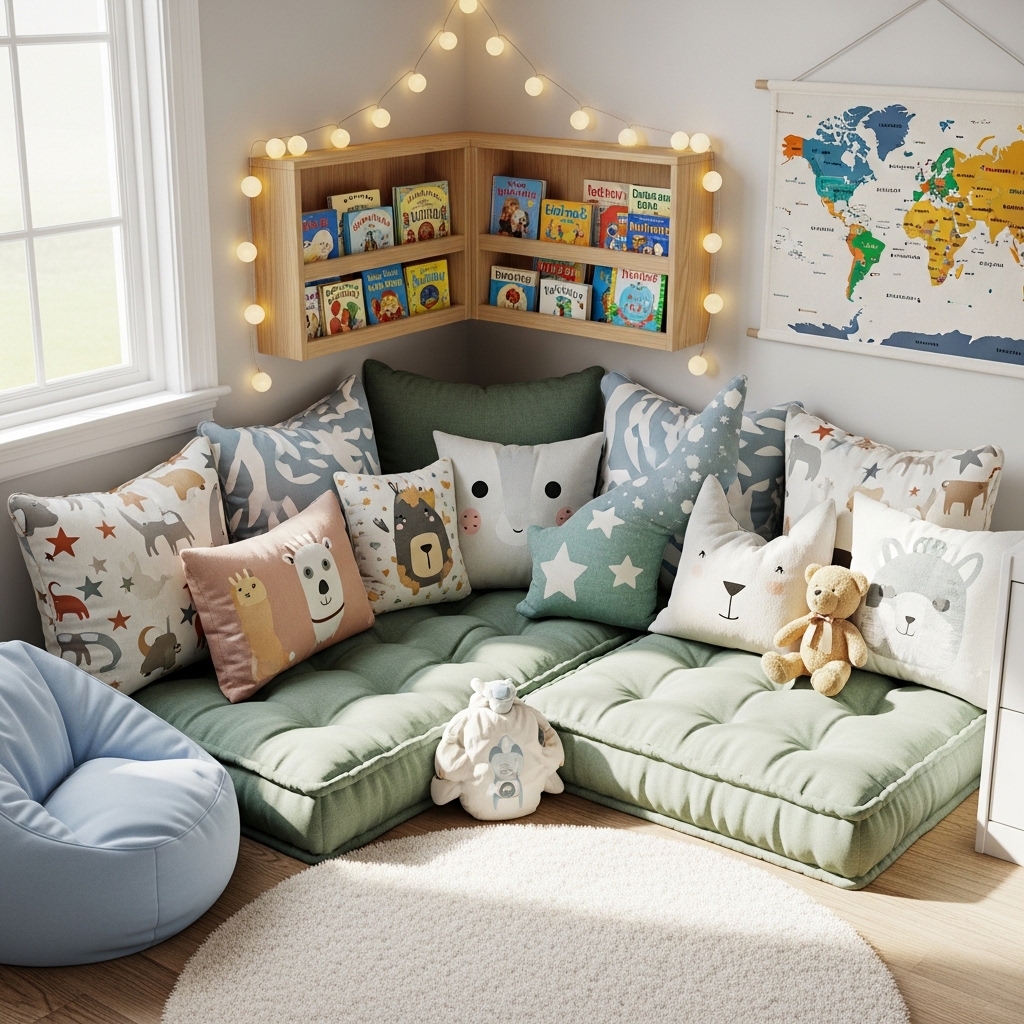
Choose this approach when you want to encourage a love of books from the toddler years.
Remove the door from a small closet or use an empty corner. Add soft pillows, a small rug, and a low bookshelf.
The cozy enclosure feels like a secret hideaway. Your toddler will crawl in with books independently.
An unused closet holds junk. A reading nook holds the key to a lifetime love of reading.
Pro Tip: Install a battery-operated push light on the ceiling of your nook. Your toddler turns the light on and off independently.
Mistake to Avoid: Do not enclose your reading nook completely. Leave the front open for airflow and so you can see your toddler inside.
6. Use a Low Clothes Rod for Independent Dressing
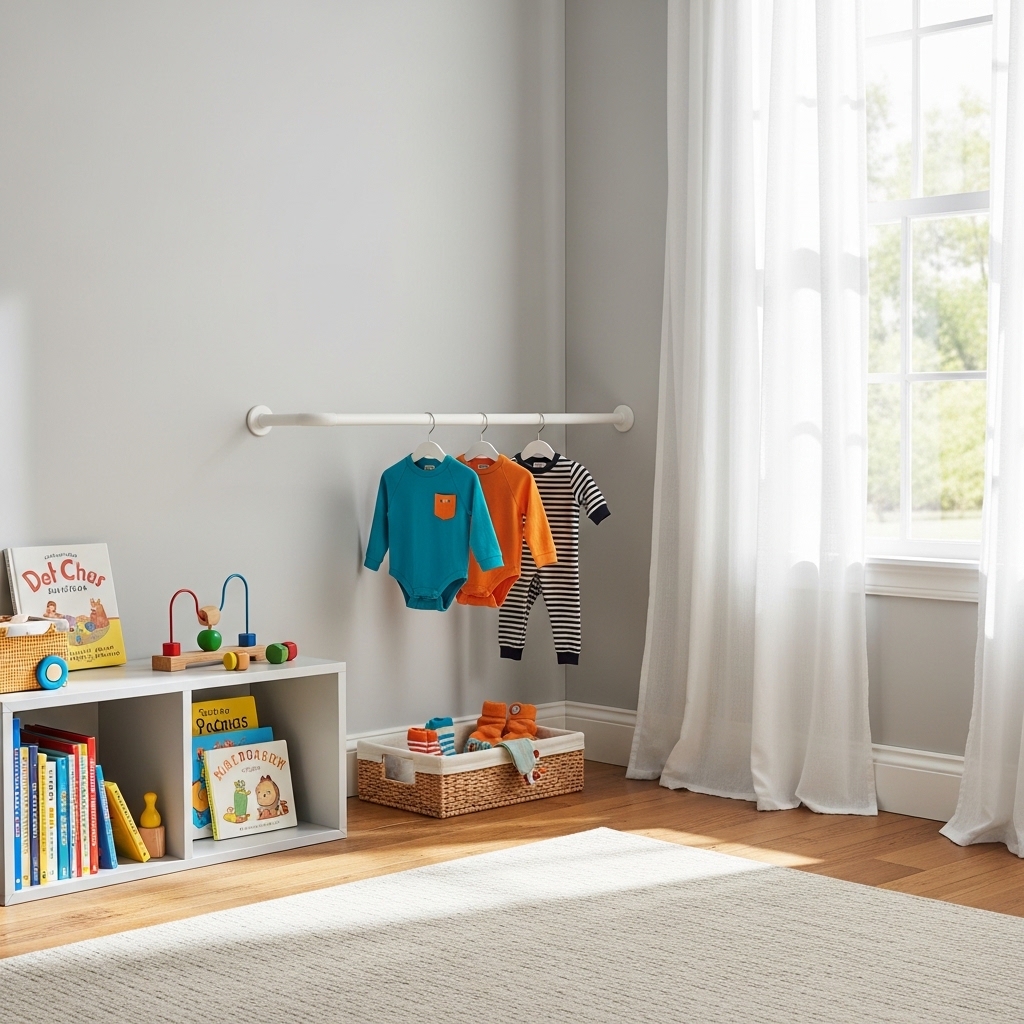
Apply this method when your toddler wants to choose their own clothes every single morning.
Install a second hanging rod in your toddler’s closet at their height, roughly 30 to 36 inches from the floor.
Hang five to seven season-appropriate outfits on the low rod. Your toddler chooses what to wear.
Clothes hanging high are out of reach. A low rod empowers your toddler to dress themselves daily.
Pro Tip: Use colored hangers for each day of the week. Monday red, Tuesday blue, Wednesday green. Your toddler learns days of the week through dressing.
Mistake to Avoid: Do not hang too many options. Five to seven outfits is plenty. Too many choices overwhelm toddlers and slow down mornings.
7. Paint a Growth Chart Ruler Directly on the Wall
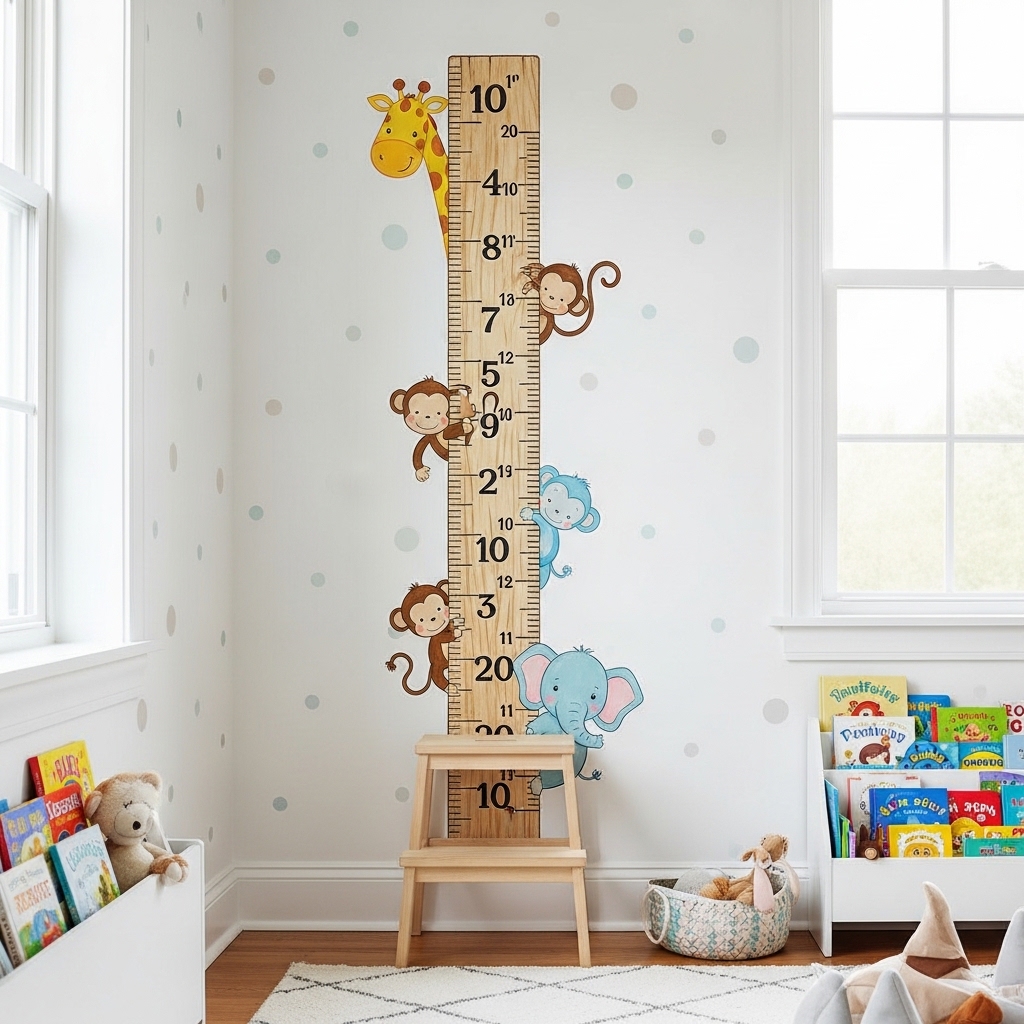
Use this idea when you want a keepsake that grows with your toddler for years to come.
Paint a large ruler directly on one wall. Mark inches from floor to 48 inches high.
You mark your toddler’s height every birthday directly on the wall. The marks become a family treasure.
Paper growth charts get lost. A painted ruler stays with the house and becomes part of your family’s history.
Pro Tip: Paint small animals or stars at each inch mark. Decorative details make measurement fun for toddlers.
Mistake to Avoid: Do not paint your ruler on a wall that might be removed during future renovation.
8. Install a Small Climbing Zone with Foam Mats
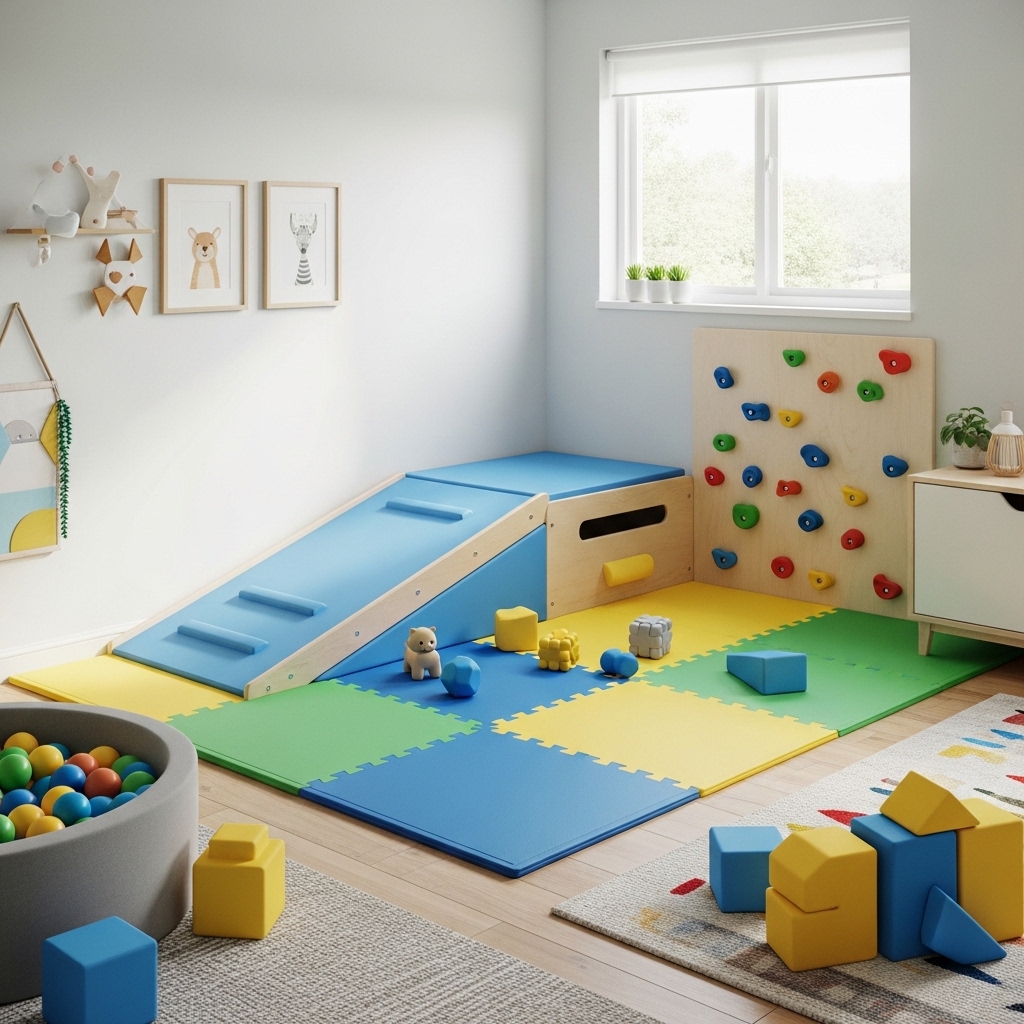
Choose this approach when your toddler has endless energy and needs a safe outlet for climbing.
Place thick foam climbing blocks or a small indoor slide in one corner of the room. Add foam floor mats underneath.
Your toddler climbs, slides, and jumps safely. Gross motor skills, balance, and confidence develop rapidly.
Toddlers climb furniture dangerously when no safe climbing outlet exists. A climbing zone redirects that energy.
Pro Tip: Choose foam blocks that connect with Velcro. You reconfigure the climbing zone into different shapes each week to keep it interesting.
Mistake to Avoid: Do not place your climbing zone near windows or furniture with sharp corners. Toddlers fall in unexpected directions.
9. Use Clear Bins with Picture Labels for Toy Storage
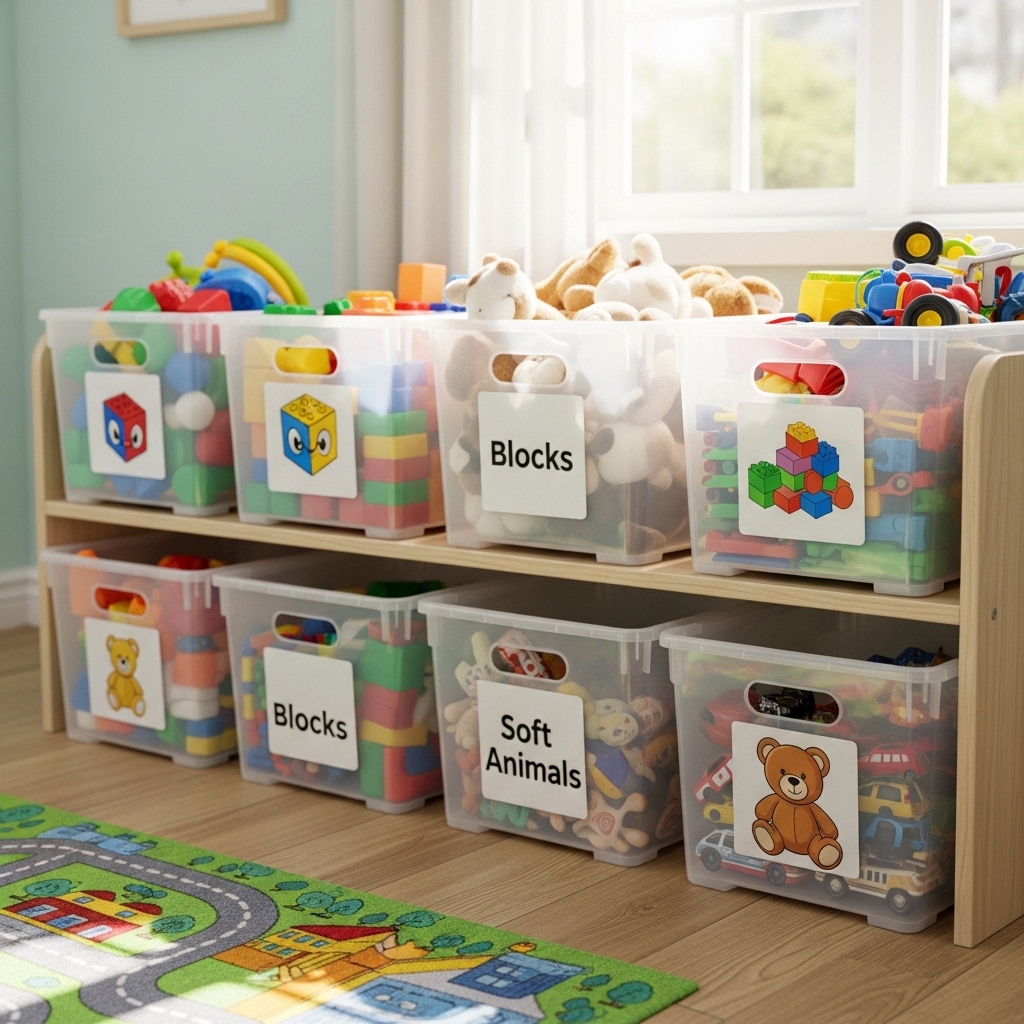
Apply this method when your toddler cannot read but needs to learn where toys belong.
Buy clear plastic bins in various sizes. Take a photo of each bin’s contents. Tape the photo to the front.
Your toddler sees the photo and knows exactly where each toy belongs. Cleanup becomes a matching game.
Solid bins hide everything. A toddler cannot remember what is inside. Clear bins with photos solve this problem.
Pro Tip: Store bins on low open shelves. Your toddler pulls the bin out, plays, and slides it back in independently.
Mistake to Avoid: Do not use bins that are too heavy for your toddler to carry. Test each bin’s weight before putting it on a low shelf.
10. Hang a Full-Length Unbreakable Mirror at Toddler Height
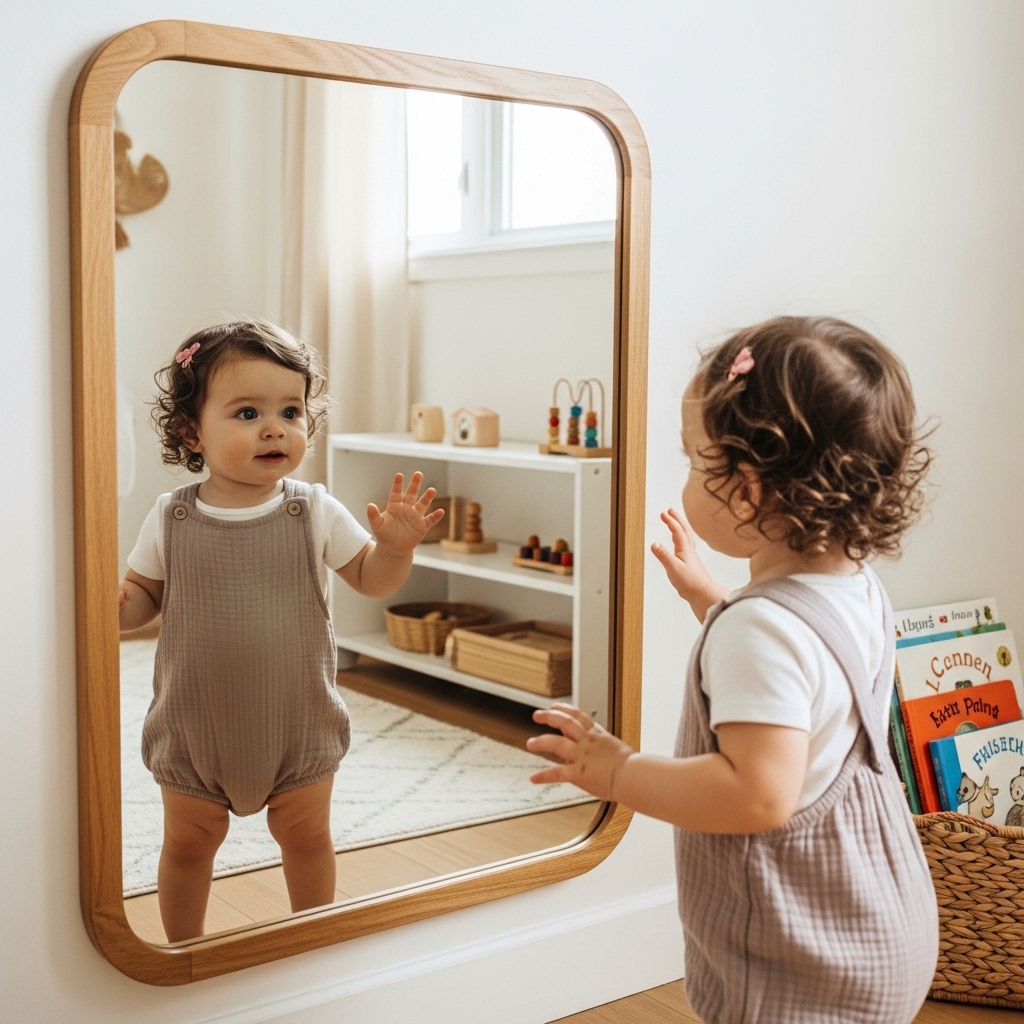
Use this strategy when your toddler loves looking at themselves and needs to develop self-awareness.
Mount a shatterproof acrylic mirror on a wall at floor level. Start 6 inches above the floor. Go up to 36 inches.
Your toddler sees their full body during play. Self-recognition, body awareness, and language develop naturally.
A mirror at adult height is useless to a toddler. A toddler-height mirror becomes a daily learning tool.
Pro Tip: Frame your mirror with colorful painted wood. A frame makes the mirror look intentional and keeps little fingers away from the edges.
Mistake to Avoid: Do not use glass mirrors in a toddler’s room. Acrylic mirrors only. Glass breaks dangerously when knocked over.
11. Create a Calming Corner with Soft Textures
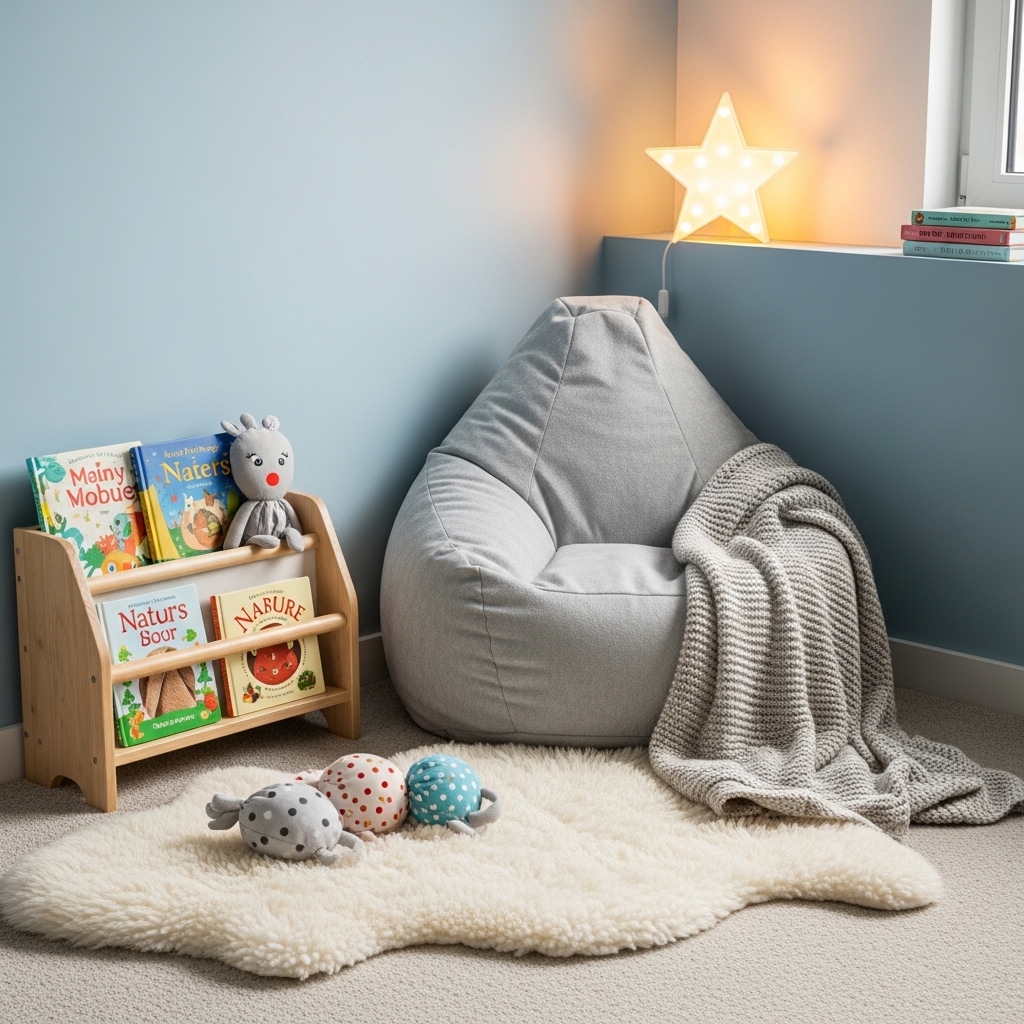
Choose this approach when your toddler experiences big emotions and needs a safe space to regulate.
Designate a corner of the room with a soft rug, a small tent or canopy, stuffed animals, and a few calm books.
Your toddler retreats here when feeling overwhelmed. The space teaches self-regulation and emotional intelligence.
Toddlers need to learn to calm themselves down. A calming corner gives them the tools to do exactly that.
Pro Tip: Add a small hourglass or time timer. Your toddler watches the sand fall and knows calming time lasts until the sand runs out.
Mistake to Avoid: Do not use your calming corner as a time-out spot. The corner should feel safe and inviting, not like punishment.
12. Install a Wall-Mounted Paper Roll Holder
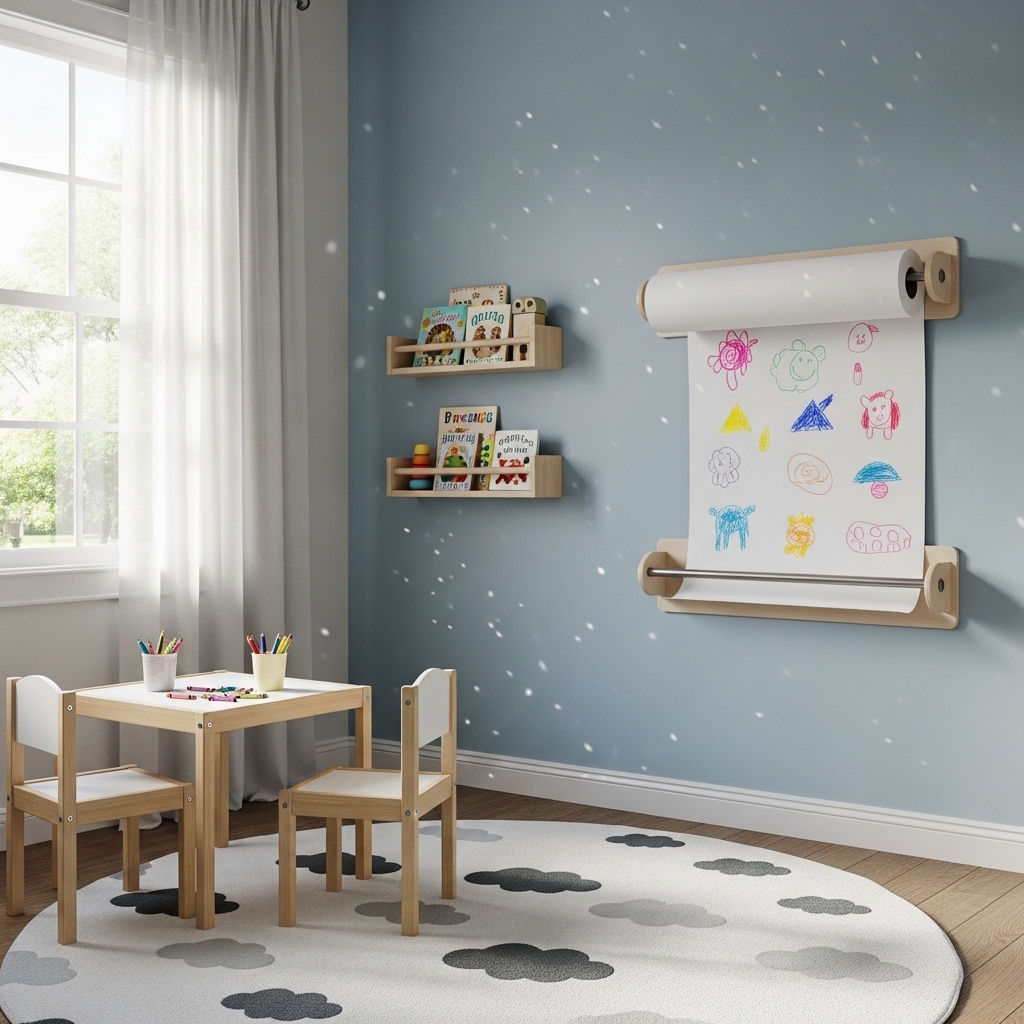
Apply this method when your toddler loves to draw and you want to provide endless paper without waste.
Mount a wall-mounted paper roll holder at your toddler’s height. Thread a roll of kraft paper through it.
Your toddler pulls down as much paper as they need. Tear it off along the built-in cutter.
Individual paper sheets get used up quickly. A paper roll gives your toddler unlimited drawing surface.
Pro Tip: Install a small shelf below the paper holder. The shelf holds washable crayons and markers within your toddler’s reach.
Mistake to Avoid: Do not install the paper holder above your toddler’s bed. Your toddler will pull paper while half asleep and create a mess.
13. Use a Small Table and Chairs for Snacks and Activities
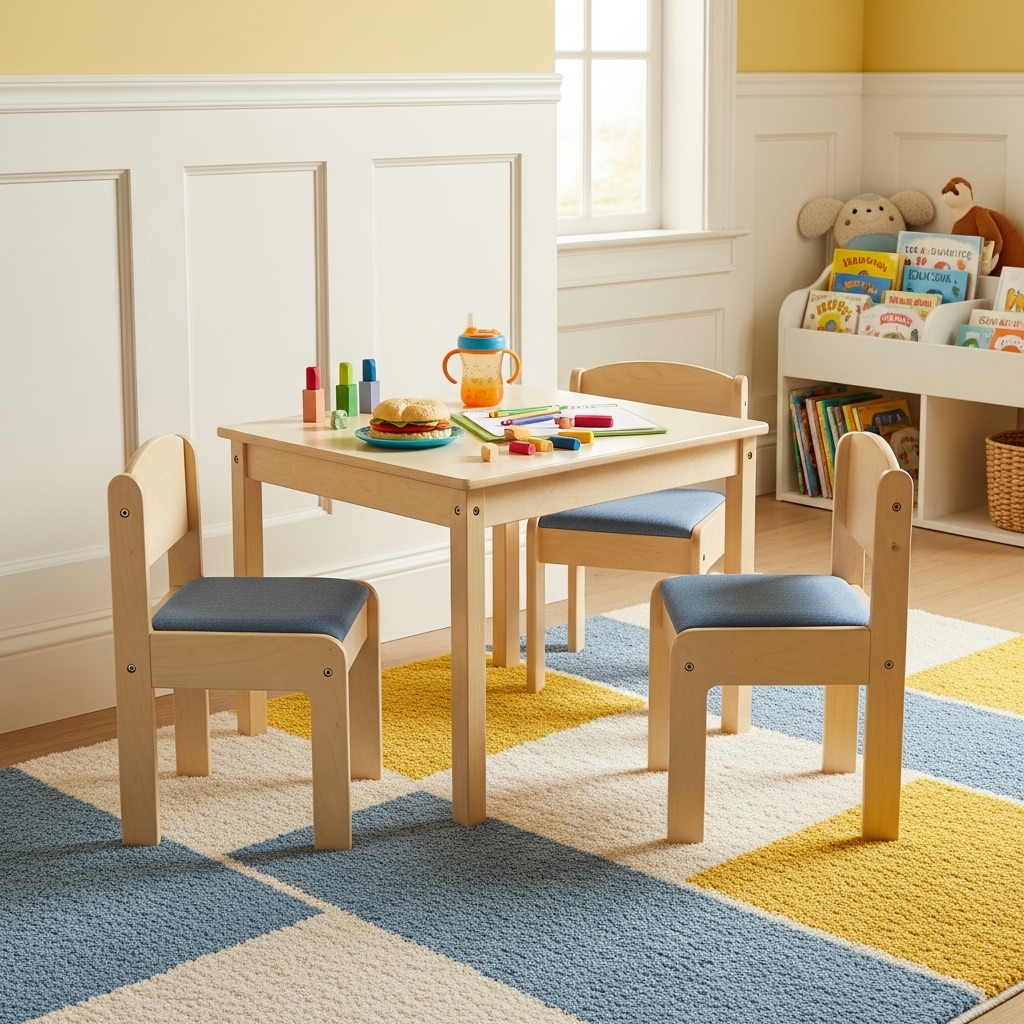
Use this idea when your toddler needs a dedicated surface for eating, drawing, and playing.
Place a small wooden table with two toddler-sized chairs in the corner of the room.
Your toddler uses the table for snacks, puzzles, playdough, coloring, and tea parties with stuffed animals.
The floor is not a table. A toddler-sized table teaches your child where eating and creating belong.
Pro Tip: Choose a table with a removable top that reveals a playdough or sand tray underneath. Two surfaces in one piece of furniture.
Mistake to Avoid: Do not buy a plastic table. Wooden tables are more stable and do not tip over when your toddler leans on them.
14. Paint a Magnetic Wall for Letters and Shapes
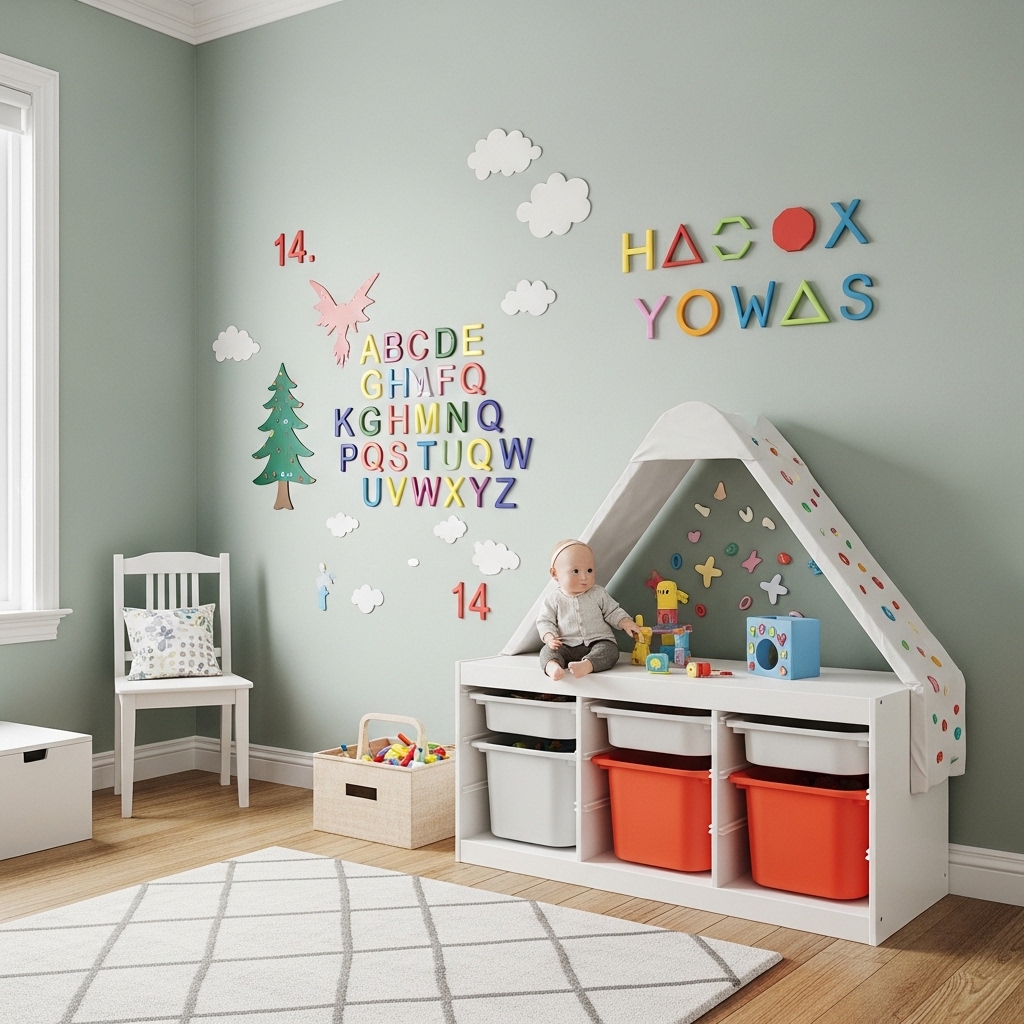
Choose this approach when you want to support early literacy and math learning through play.
Paint one wall section with magnetic paint. Apply a top coat of regular paint in a fun color.
Your toddler attaches magnetic letters, numbers, shapes, and animals to the wall. Learning happens naturally.
Magnetic letters on the fridge are fine. A magnetic wall gives your toddler a dedicated, full-surface learning zone.
Pro Tip: Buy large foam magnetic letters. Foam letters are soft, safe, and easy for small hands to grip and place.
Mistake to Avoid: Do not use small magnetic letters. Small magnets are choking hazards if they fall off and go into your toddler’s mouth.
15. Install a Tent or Teepee for Quiet Play Retreat
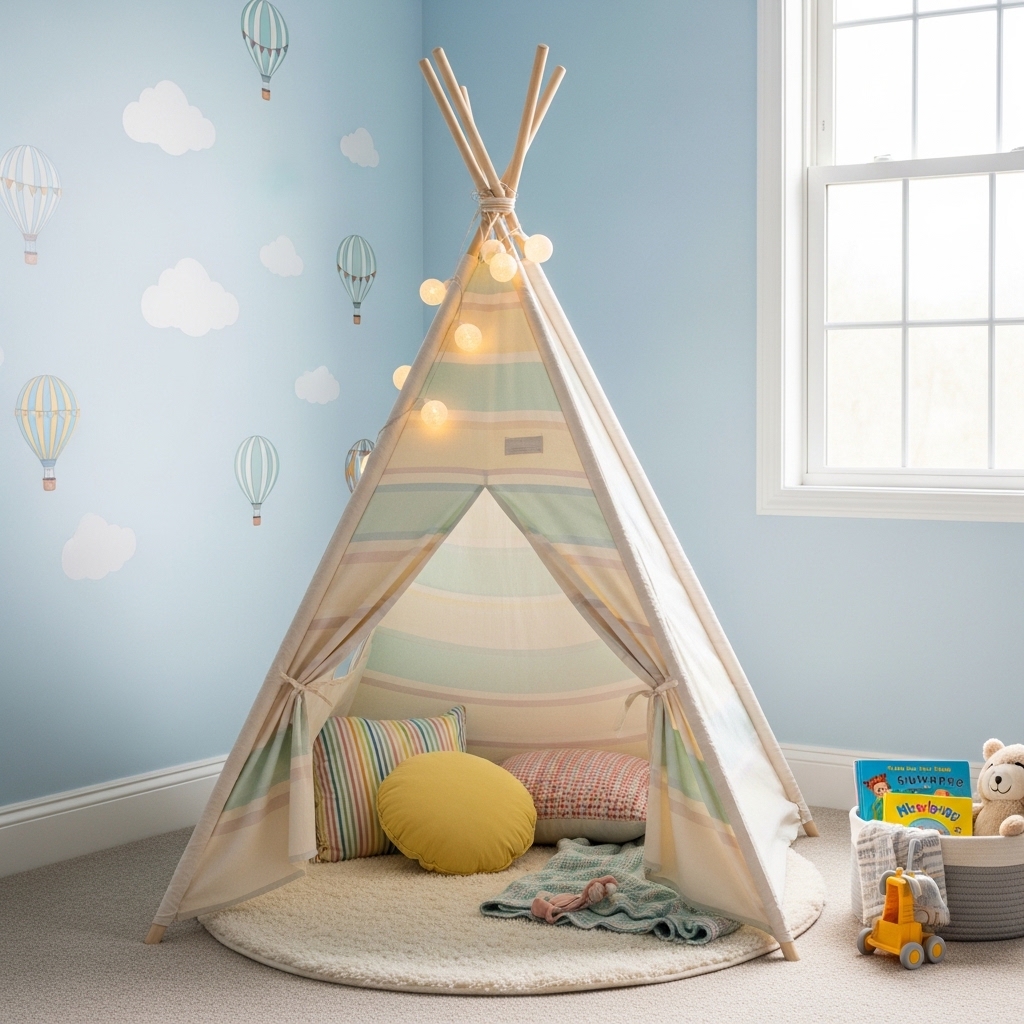
Apply this method when your toddler needs a special space that feels completely their own.
Set up a small canvas teepee or pop-up tent in the corner of your toddler’s room.
Your toddler uses the teepee for reading, playing with stuffed animals, or just hiding from the world.
An empty corner offers no invitation for play. A teepee says “this space belongs to you” to your toddler.
Pro Tip: Fill the teepee with soft floor cushions and a small basket of board books. The cushions invite sitting. The books invite reading.
Mistake to Avoid: Do not use a teepee with long tie strings. Choose Velcro or snap closures only. Strings are strangulation hazards for toddlers.
Conclusion
The toddler years move fast. Their room should move right along with them.
The 15 ideas above prove that safe, independent, and wonder-filled spaces come from thoughtful design.
Install low open shelves for independent toy access. Create a floor bed for safe sleeping independence.
Paint a large chalkboard wall at toddler height. Install a wall-mounted activity board for fine motor play.
Create a cozy reading nook in a corner or closet. Use a low clothes rod for independent dressing.
Paint a growth chart ruler directly on the wall. Install a small climbing zone with foam mats.
Use clear bins with picture labels for toy storage. Hang a full-length unbreakable mirror at toddler height.
Create a calming corner with soft textures. Install a wall-mounted paper roll holder.
Use a small table and chairs for snacks and activities. Paint a magnetic wall for letters and shapes.
Install a tent or teepee for quiet play retreats that feel completely your toddler’s own.
Start with one idea that solves your biggest daily struggle. Implement it this weekend.
Then add another idea next month. Your toddler’s room should evolve as they develop new skills.
The best toddler rooms are never truly finished. They change as your child changes.
Take back the room from chaos starting today. Create a space where your toddler can thrive independently.