12 Concrete Patio Ideas That Transform Plain Slabs Into Stylish Outdoor Spaces
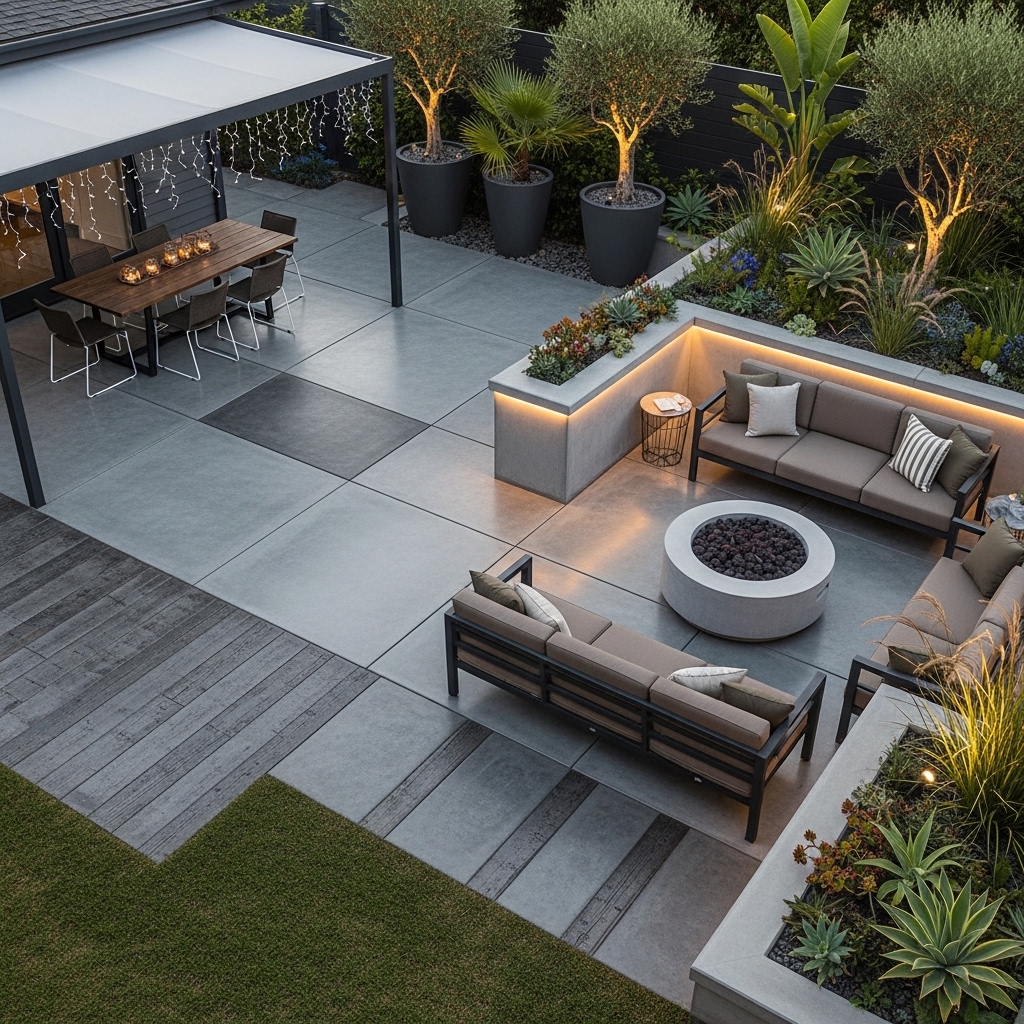
Concrete patios are usually thought of plain and boring.. With a good design plan they can be really versatile and stylish outdoor areas.
The problem isn’t the concrete itself. It’s how its designed, built and added to the rest of the space.
This guide is, about practical ways to upgrade your concrete patio. These ideas will make it look better and be more useful. Each one will help you turn a concrete slab into a great outdoor living space.
We will show you how to avoid mistakes when designing your patio.
1. Use Stamped Concrete to Mimic High-End Materials Without the Cost
Ideal for: Homeowners wanting a premium look on a budget.
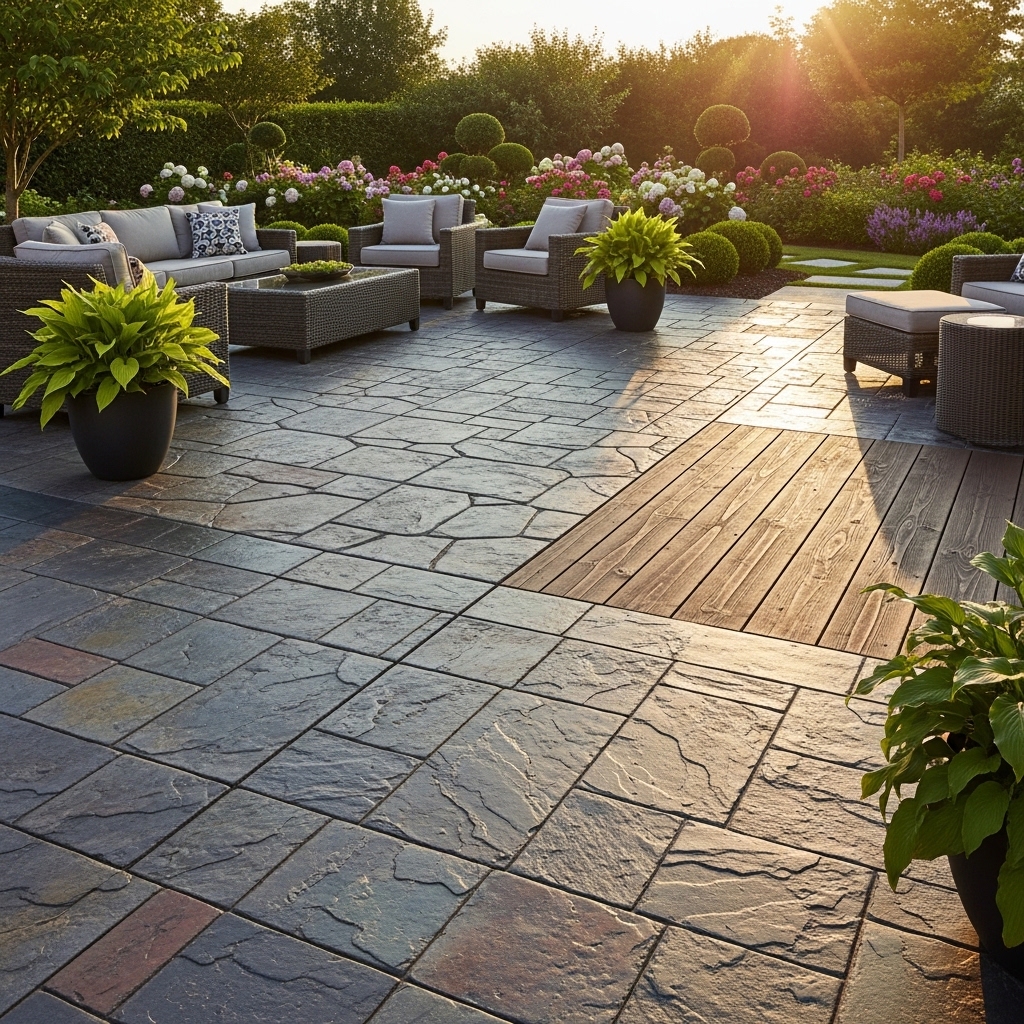
Stamped concrete allows you to replicate textures like stone, brick, or wood while keeping installation costs lower than natural materials. Choose patterns that match your home style and keep spacing consistent for realism.
This works because it delivers a high-end visual without the maintenance issues of real stone or wood. It also provides durability in outdoor conditions.
Avoid overly complex patterns in small patios, which can feel busy and overwhelming.
Pro Tip: Stick to neutral tones for a timeless appearance.
2. Divide Large Concrete Slabs Into Sections for Better Visual Balance
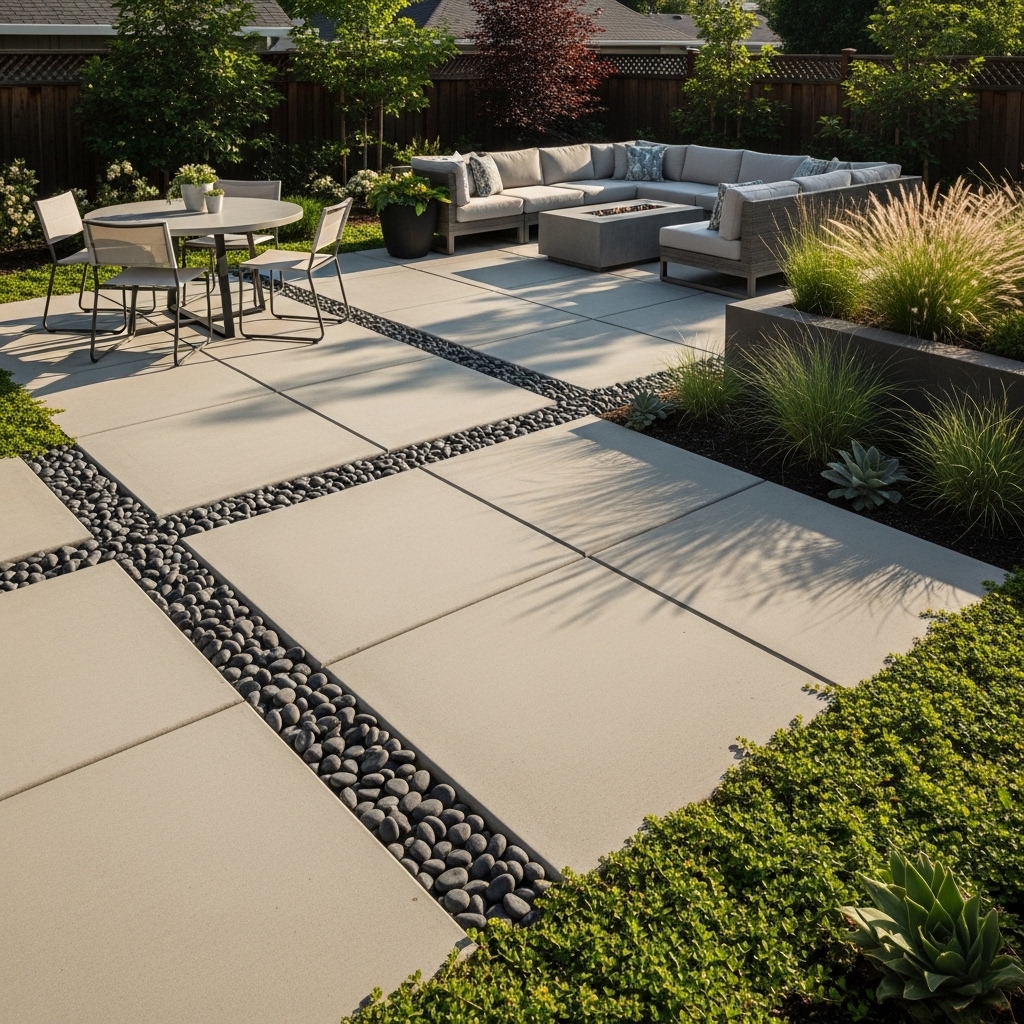
Best for: Wide patios that feel flat and empty.
Use scoring or saw cuts to break the slab into smaller sections, creating a grid or geometric layout. Align these divisions with furniture placement.
This approach adds structure and prevents the patio from looking like one large unfinished surface. It also helps guide layout flow.
Avoid uneven or random cuts, which disrupt visual harmony.
Pro Tip: Match section sizes to furniture zones for cohesion.
3. Add a Smooth and Matte Finish for a Modern Look
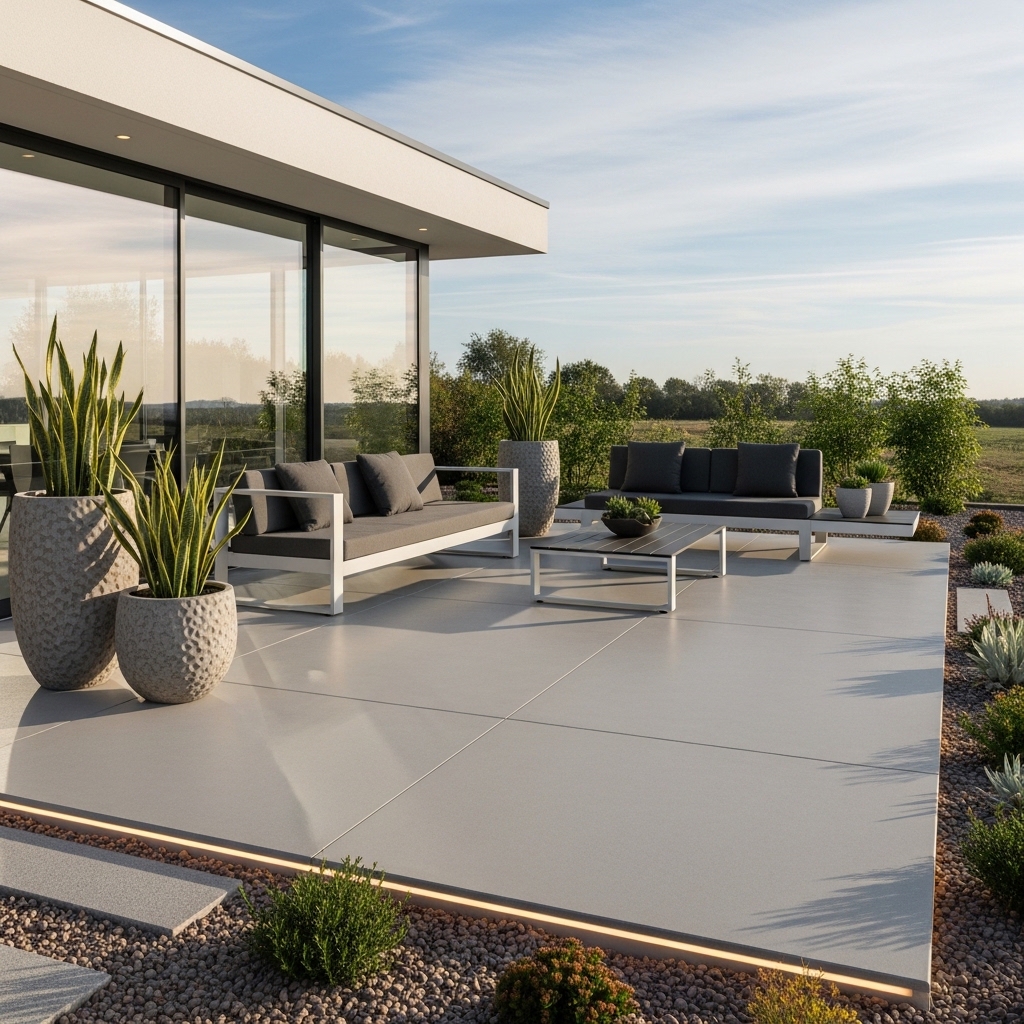
Great for: Contemporary homes and minimalist patios.
Opt for a smooth, matte finish instead of a glossy surface. This reduces glare and creates a clean, understated look.
Matte finishes work because they feel more natural and are less slippery, improving safety and usability.
Avoid polished finishes outdoors, which can become hazardous when wet.
Pro Tip: Combine matte concrete with metal or wood furniture for contrast.
4. Use Concrete Borders to Frame the Patio Design
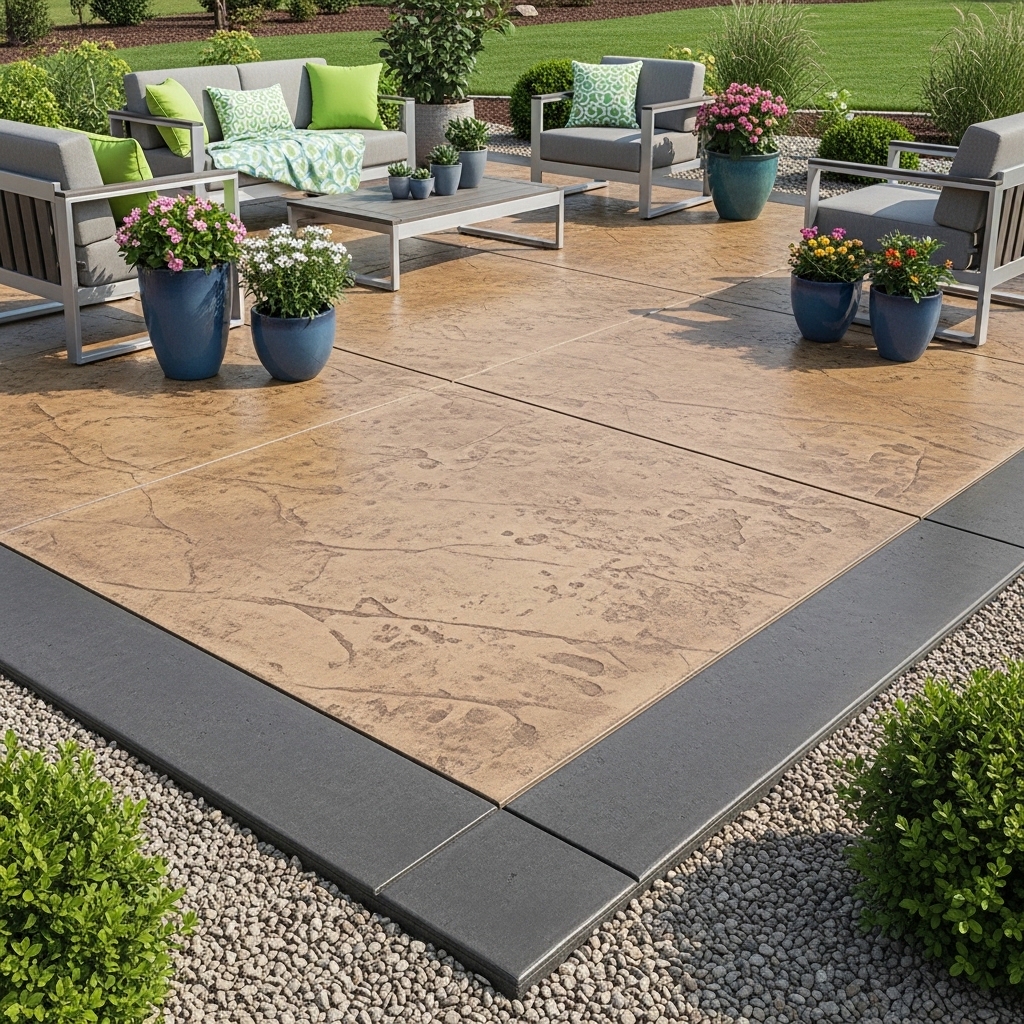
Ideal for: Patios that need clearer definition.
Create a contrasting border around the edges using a different color or texture. Keep the border width consistent.
Borders visually frame the space, making it feel intentional and complete. They also help separate the patio from surrounding areas.
Avoid overly thick borders that dominate the design.
Pro Tip: Use subtle contrast for a refined look.
5. Integrate Built-In Seating Directly Into the Concrete Layout
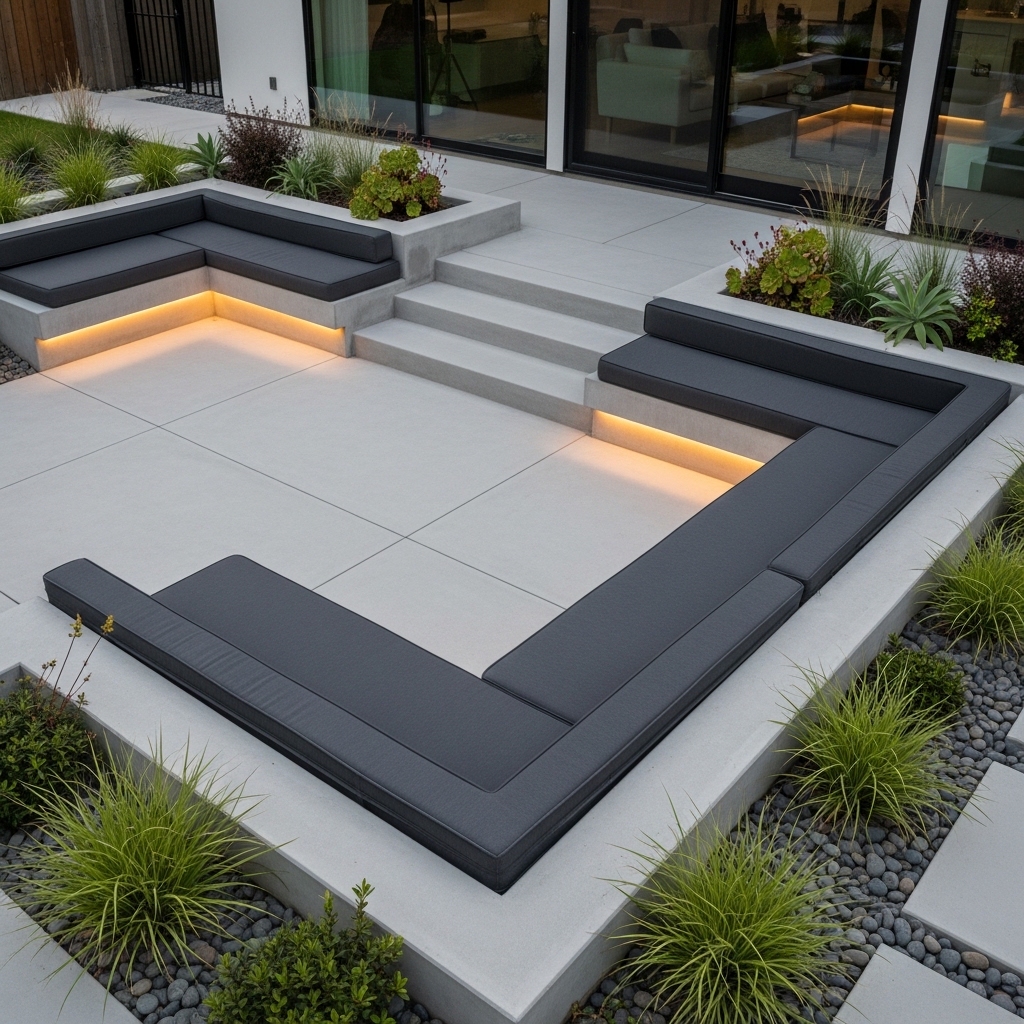
Best for: Small patios needing space-saving solutions.
Design concrete benches along the edges of the patio. Add cushions for comfort and flexibility.
Built-in seating saves space and reduces the need for extra furniture. It also creates a cohesive design.
Avoid hard edges without cushions, which reduce comfort.
Pro Tip: Position seating near shade or focal points.
6. Add a Slight Elevation Change to Define Zones
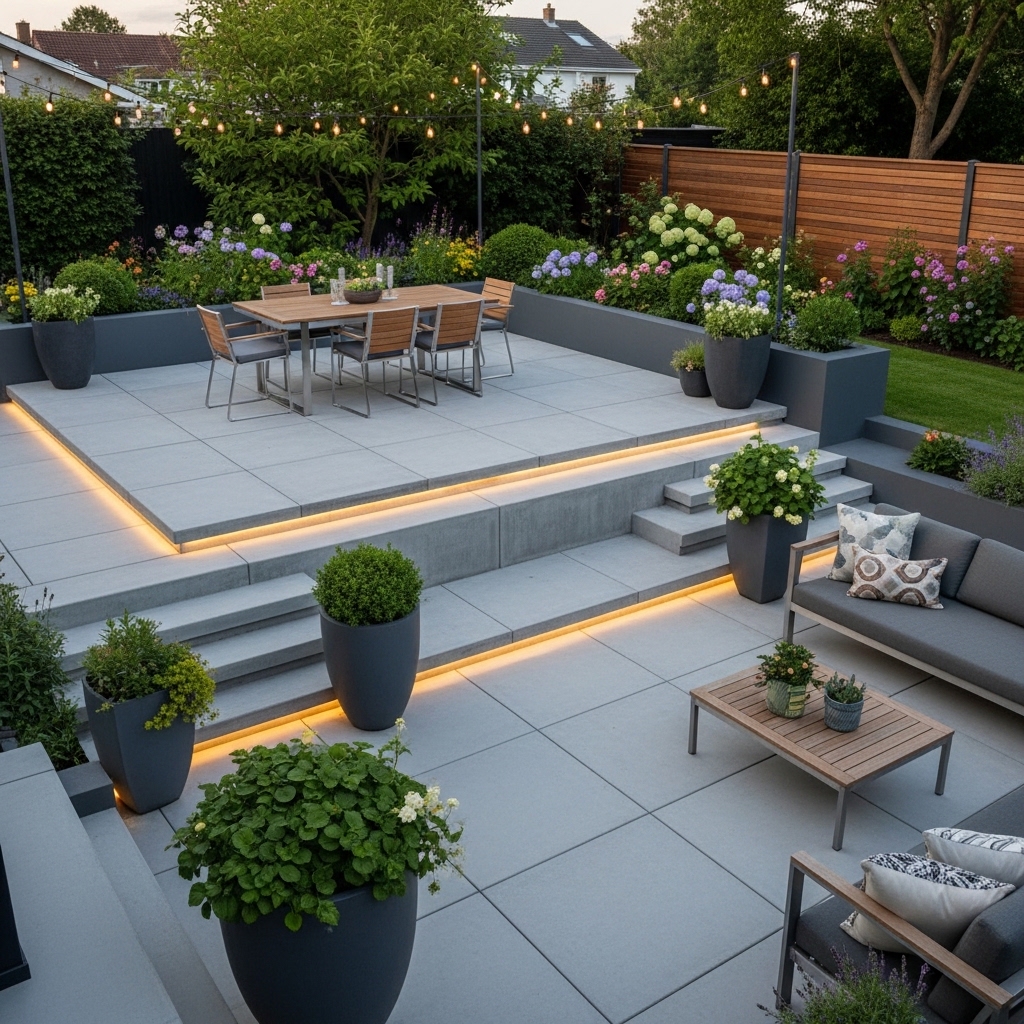
Great for: Patios with multiple uses.
Raise or lower sections slightly to separate dining, lounging, or activity areas. Keep transitions subtle.
Level changes create natural zoning without adding barriers. They also improve visual depth.
Avoid steep steps that disrupt flow.
Pro Tip: Keep height differences minimal for safety.
7. Combine Concrete With Wood Accents for Warmth
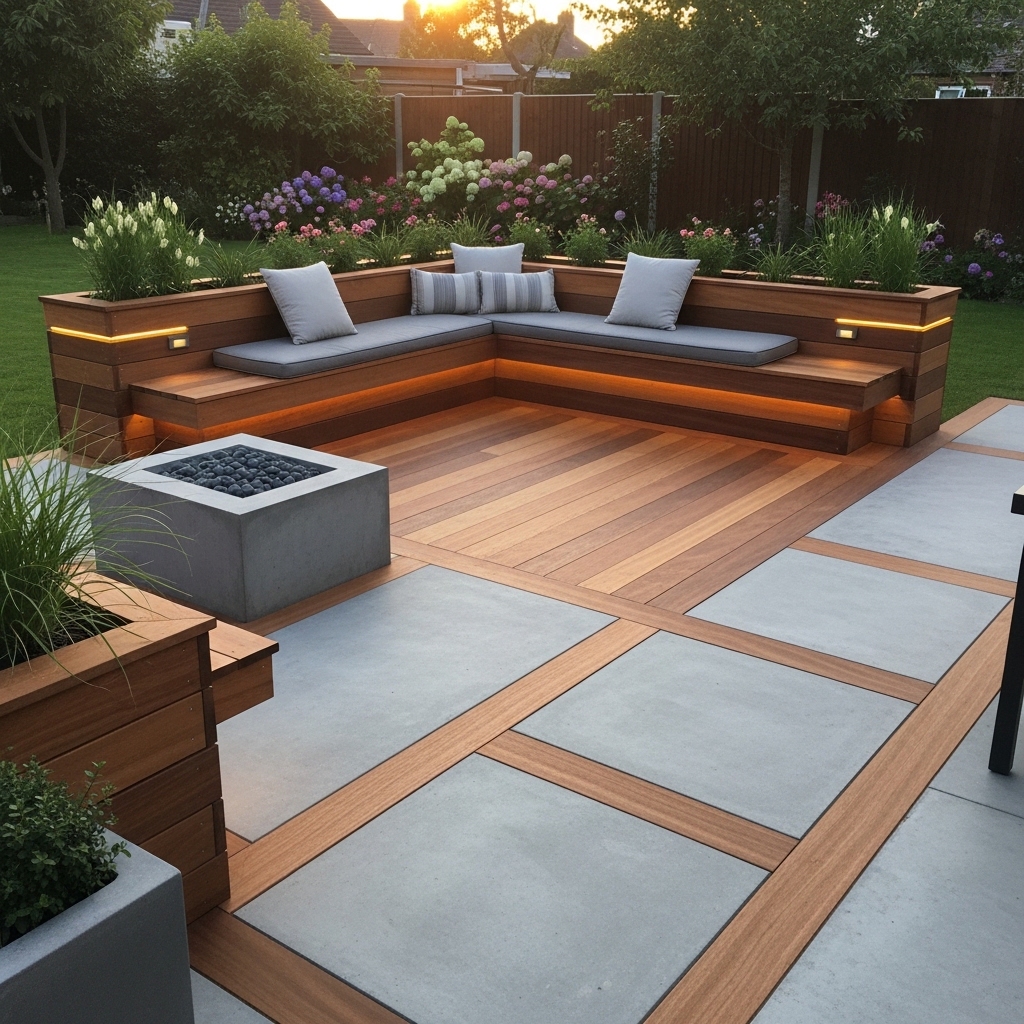
Ideal for: Patios that feel too cold or industrial.
Incorporate wooden decking strips, furniture, or planters alongside concrete surfaces. Balance both materials.
This works because wood softens the look of concrete while maintaining durability. It creates a balanced aesthetic.
Avoid overusing wood, which can increase maintenance.
Pro Tip: Use treated wood for outdoor longevity.
8. Use Concrete Planters to Match the Patio Design
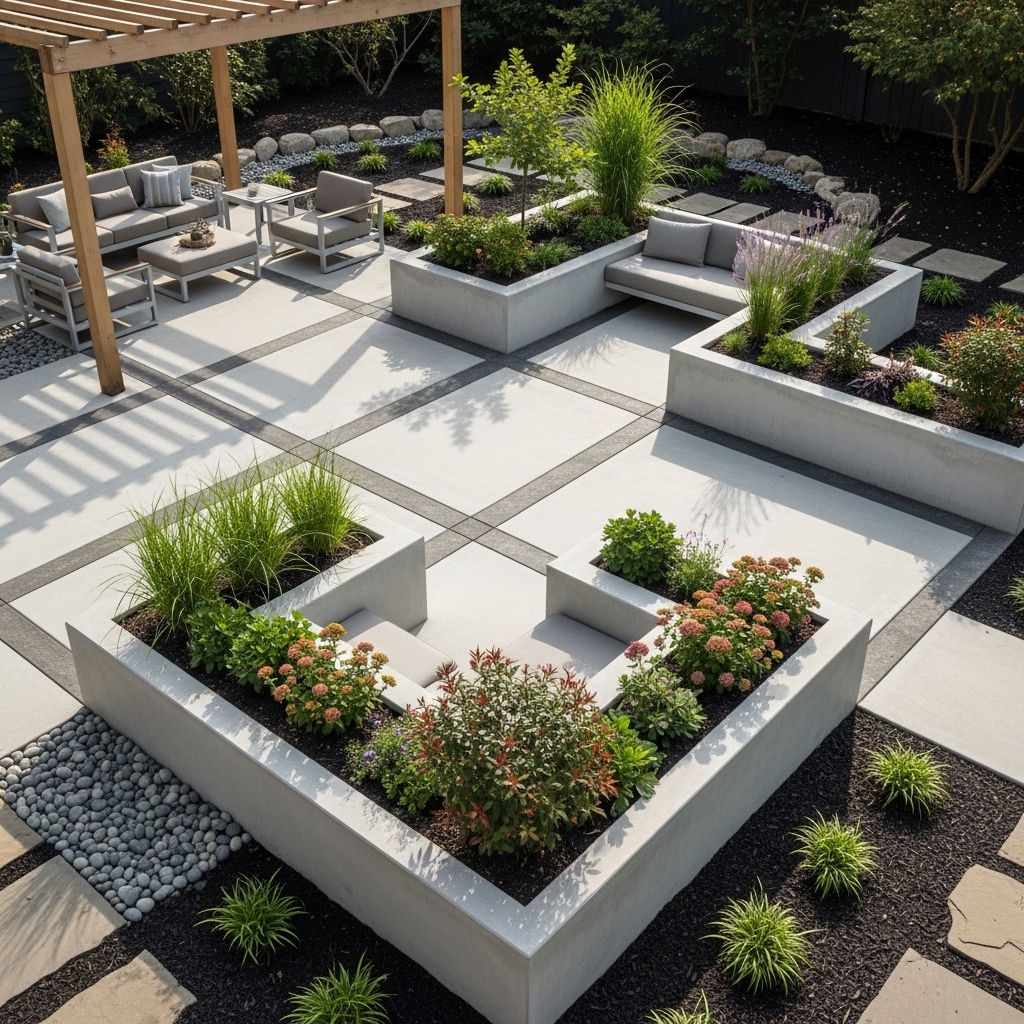
Best for: Creating a cohesive outdoor space.
Install concrete planters that match the patio surface in tone and texture. Place them strategically around edges.
Matching elements unify the design and create a seamless look. They also add greenery without clutter.
Avoid random planter styles that break consistency.
Pro Tip: Vary plant heights for visual interest.
9. Add Drainage Slopes to Prevent Water Pooling
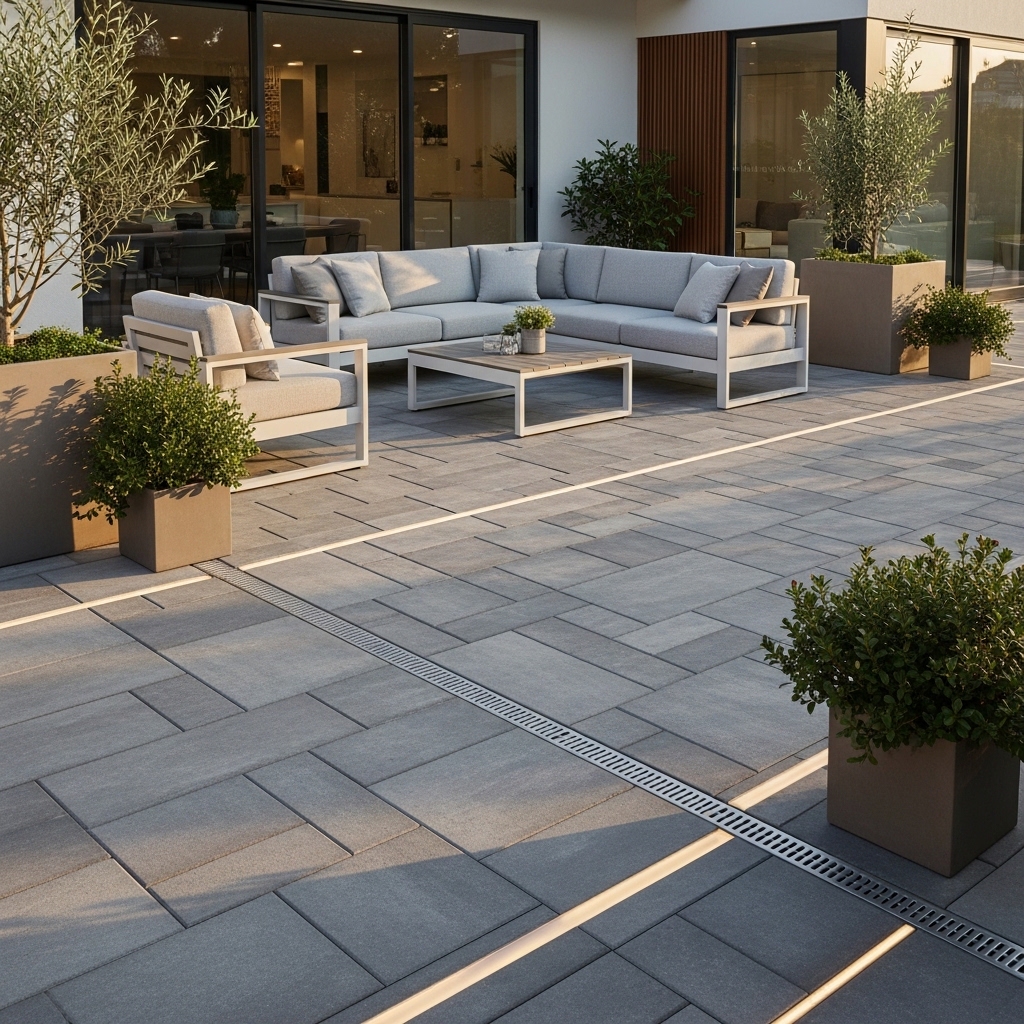
Great for: Areas with frequent rain or washing.
Design the patio with a slight slope away from the house to direct water flow. Keep the slope subtle.
Proper drainage improves durability and prevents surface damage over time.
Avoid flat installations that lead to pooling water.
Pro Tip: Test drainage before finalizing the surface.
10. Use Outdoor Rugs to Soften the Concrete Surface
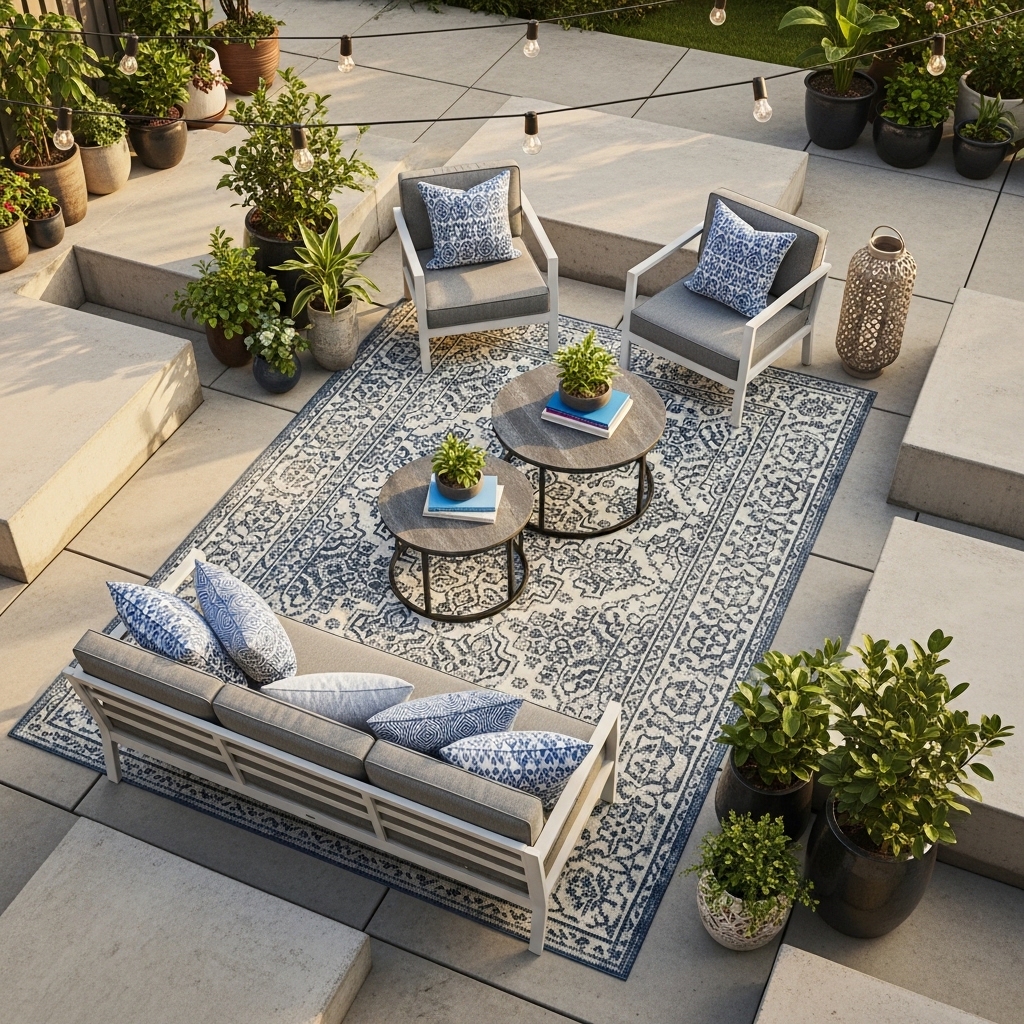
Ideal for: Patios that feel too hard or plain.
Place weather-resistant rugs under seating or dining areas to add comfort and visual warmth.
Rugs break up the concrete surface and make the space feel more inviting.
Avoid rugs that are too small, which disrupt layout balance.
Pro Tip: Choose neutral patterns for versatility.
11. Incorporate Subtle Color Variations for Depth
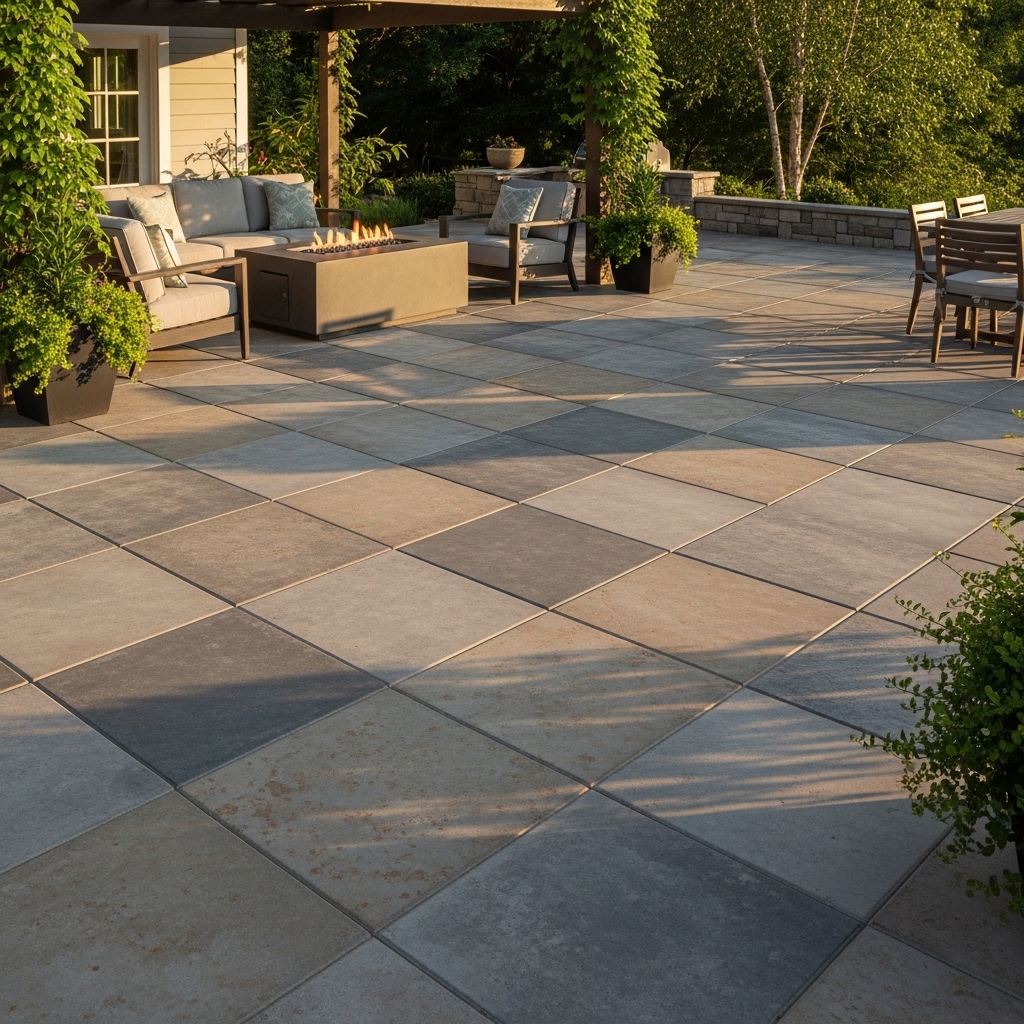
Best for: Patios that look too uniform.
Use staining or tinting techniques to add slight color variations across the surface. Keep tones cohesive.
Color variation adds depth and prevents the patio from feeling flat. It also enhances visual appeal.
Avoid overly bold colors that may fade or clash.
Pro Tip: Stick to earthy tones for longevity.
12. Adjust the Layout Based on How You Use the Patio
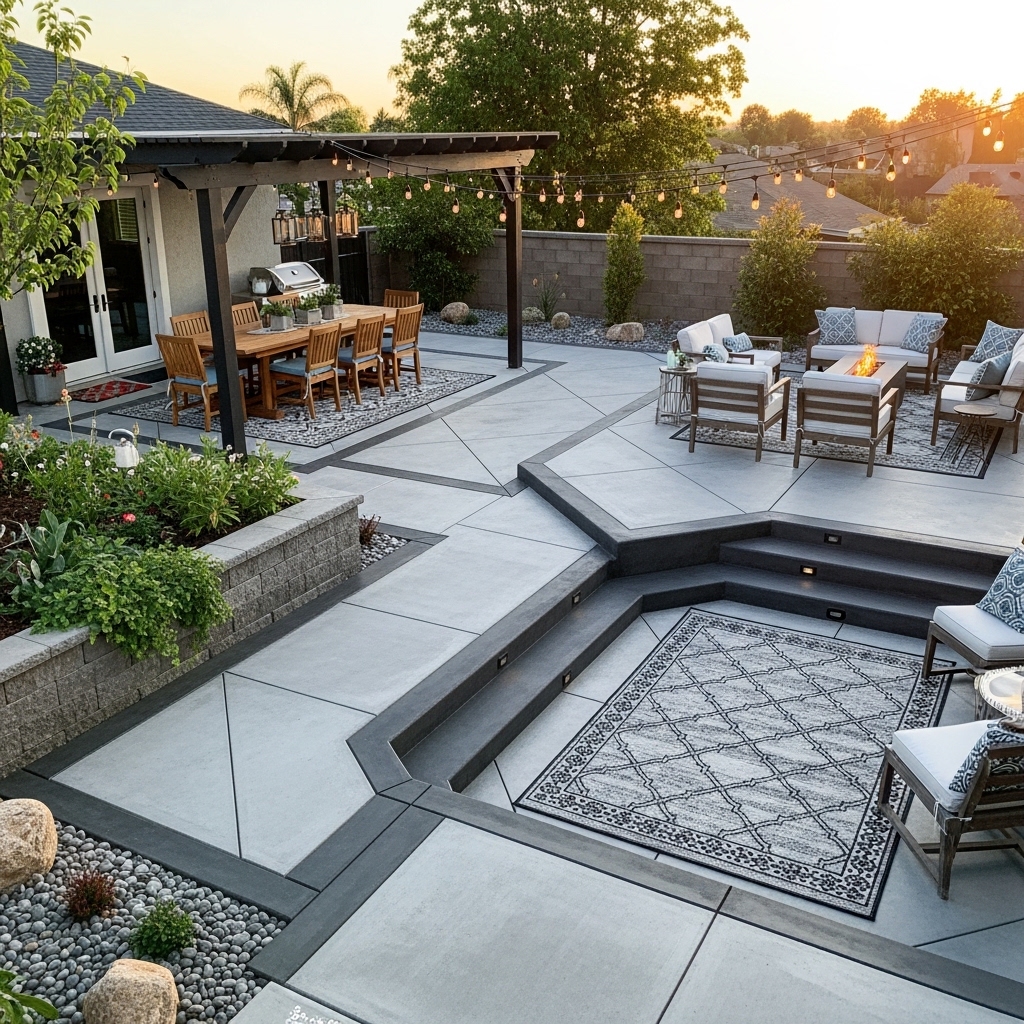
Great for: Patios that feel underutilized.
Rearrange furniture and zones based on daily use patterns. Focus on comfort and accessibility.
This ensures the patio remains practical and aligned with your lifestyle.
Avoid sticking to a layout that doesn’t work in real life.
Pro Tip: Make small adjustments regularly for improvement.
Conclusion: Concrete Patios Perform Best When Design Meets Function
Concrete is a patio material it’s really versatile.. It needs to be designed well and fit in with your outdoor space. If you don’t plan it properly it can look boring. If you do it right it’s super useful and looks great.
Here are 12 concrete patio ideas to help you turn a slab into a strong good-looking and cozy outdoor space thats perfect, for daily use.
Concrete patios can be really great and with these ideas you can make the most of them.