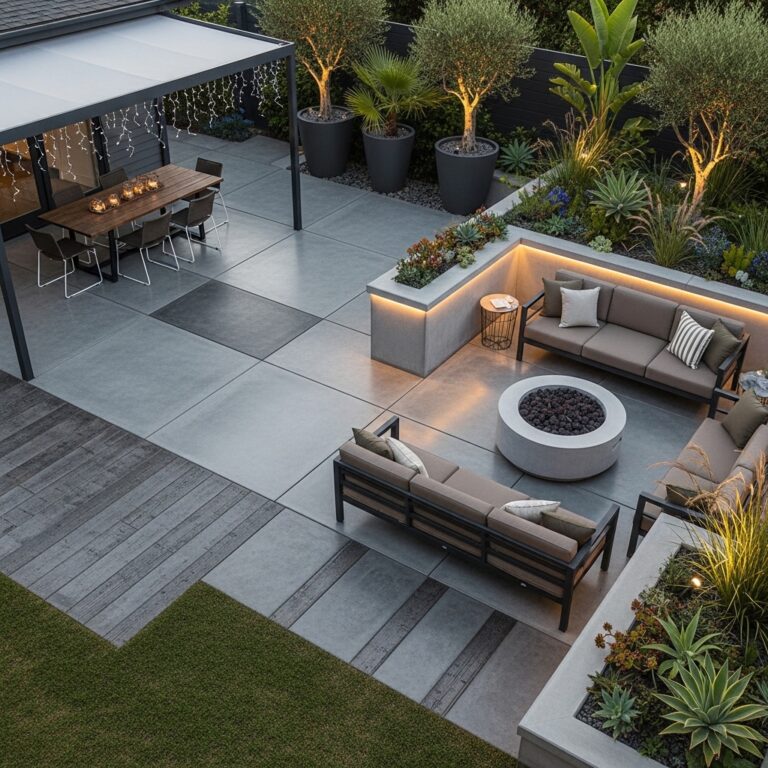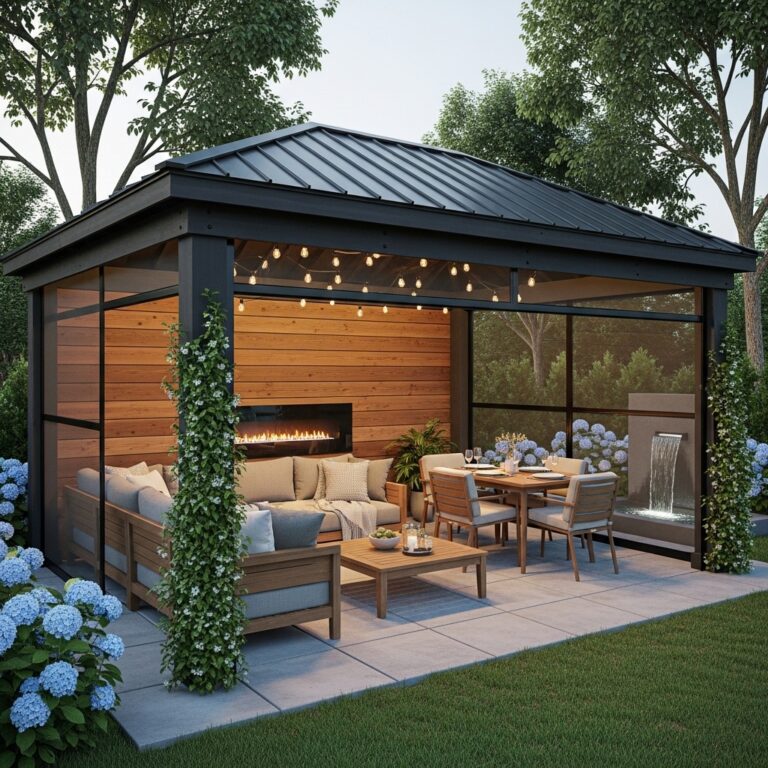
15 Large Outdoor Patio Ideas That Turn Open Space Into Functional Luxury Living
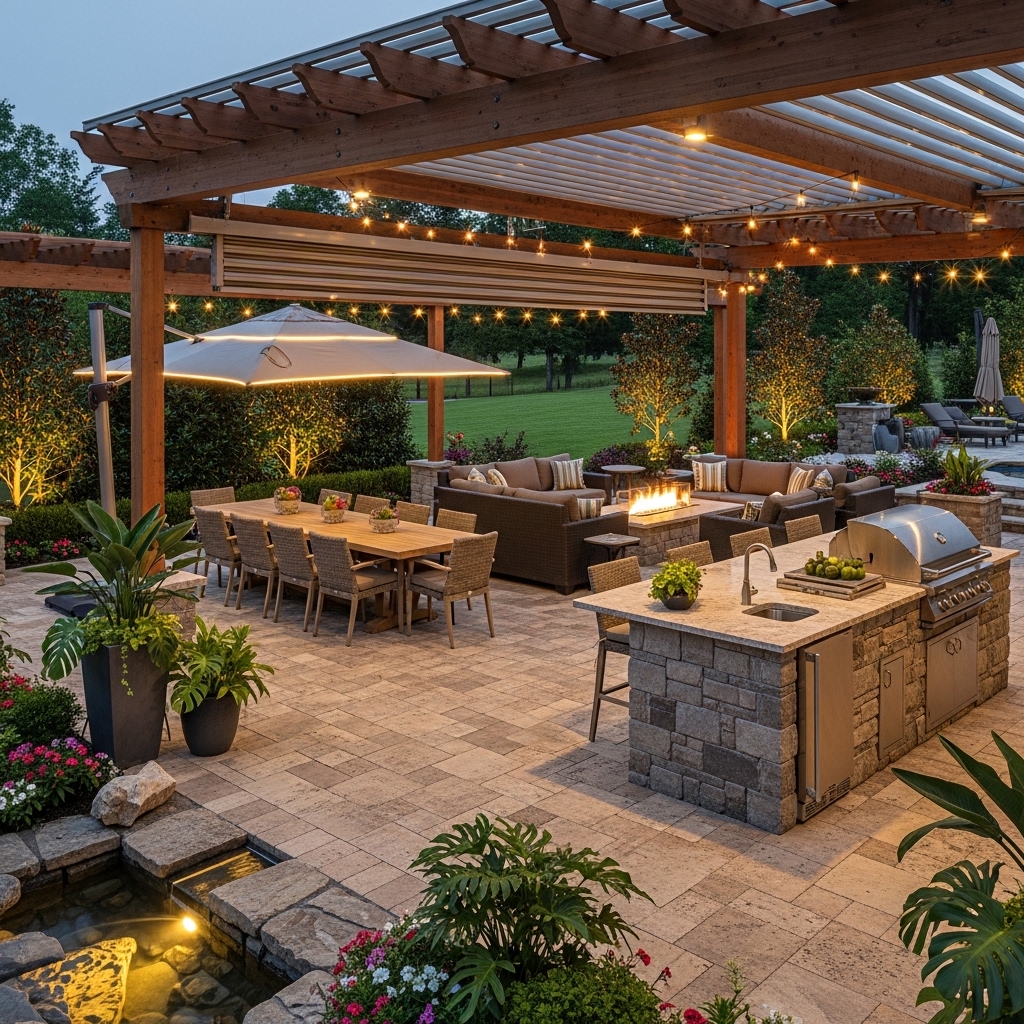
Large patios are often not used much because they are seen as one big area, not many separate areas for different things. Without a plan even a big patio can feel empty and not very useful.
This guide is about dividing your patio into zones on purpose how to lay it out and making it useful, in life.
It is so your patio can be a place to relax have parties and use every day. Each idea will help you use the space well and keep it feeling open.
1. Divide the Patio Into Purpose-Led Zones Instead of One Open Area
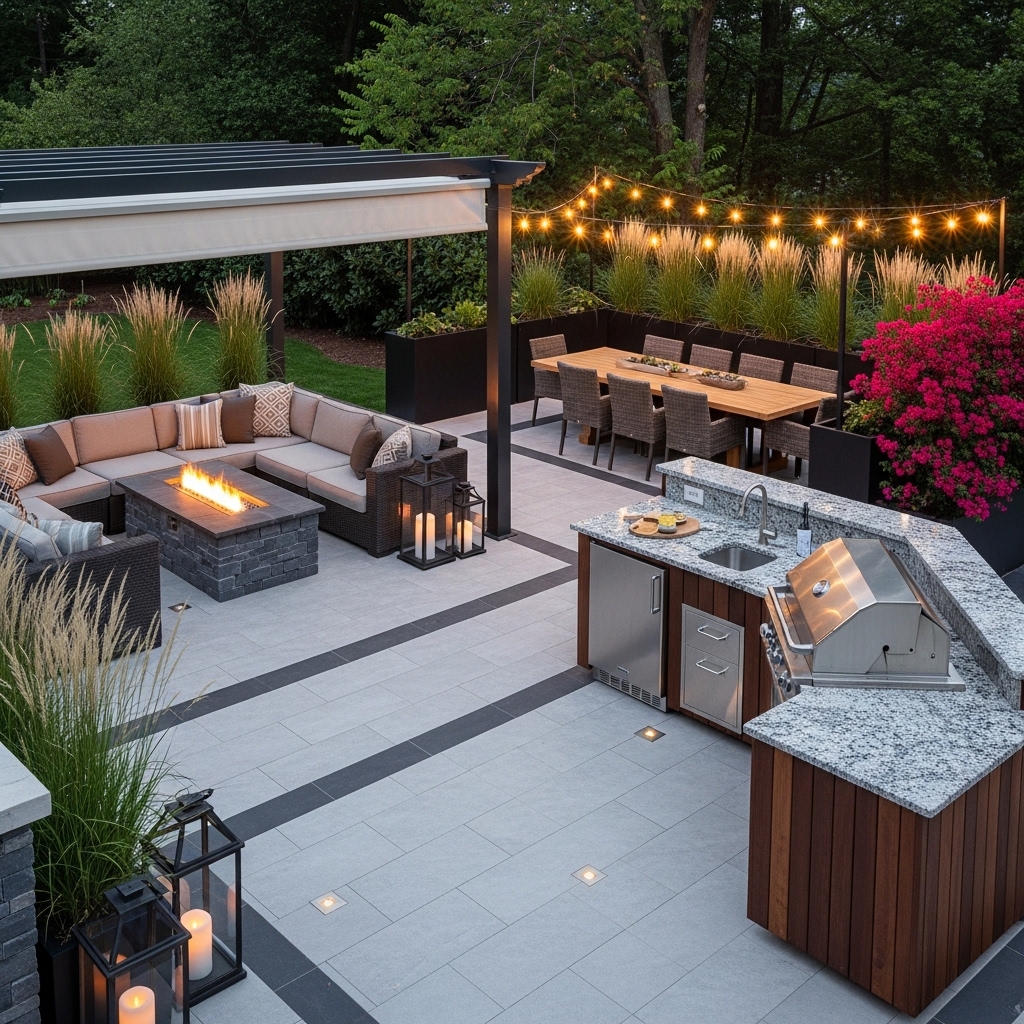
Ideal for: Large patios that feel empty or undefined.
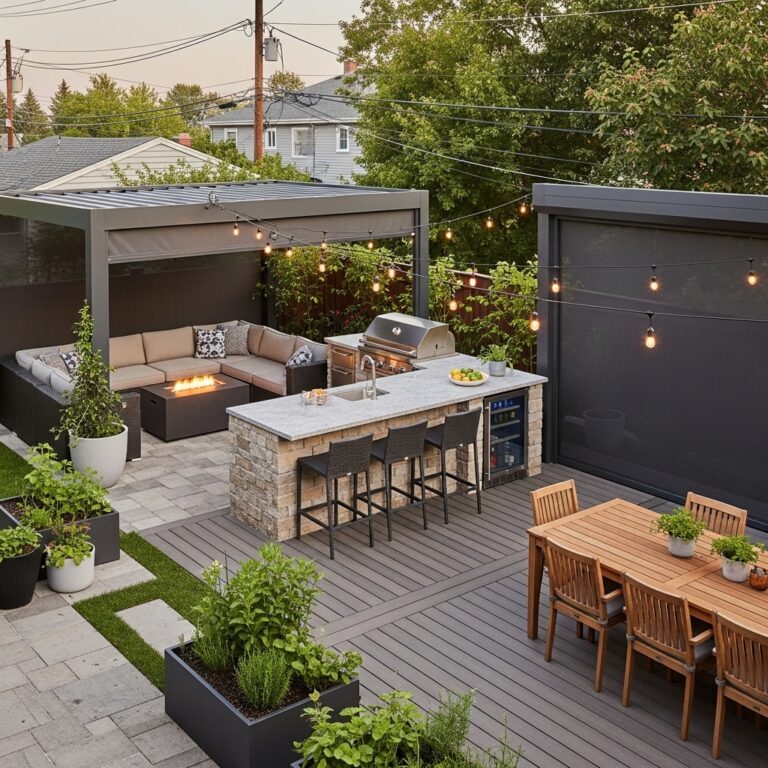
Break your patio into clear zones like lounging, dining, and quiet relaxation using furniture placement rather than walls. Keep enough spacing between zones so each area feels intentional but still connected.
This works because the brain naturally understands separate functions when layouts are grouped. It transforms a large empty patio into a usable, structured outdoor living space.
Avoid placing all furniture in one cluster, which wastes space and reduces usability across the patio.
Pro Tip: Leave walking gaps of at least 3 feet between zones for smooth flow.
2. Anchor Each Zone With a Different Ground Material
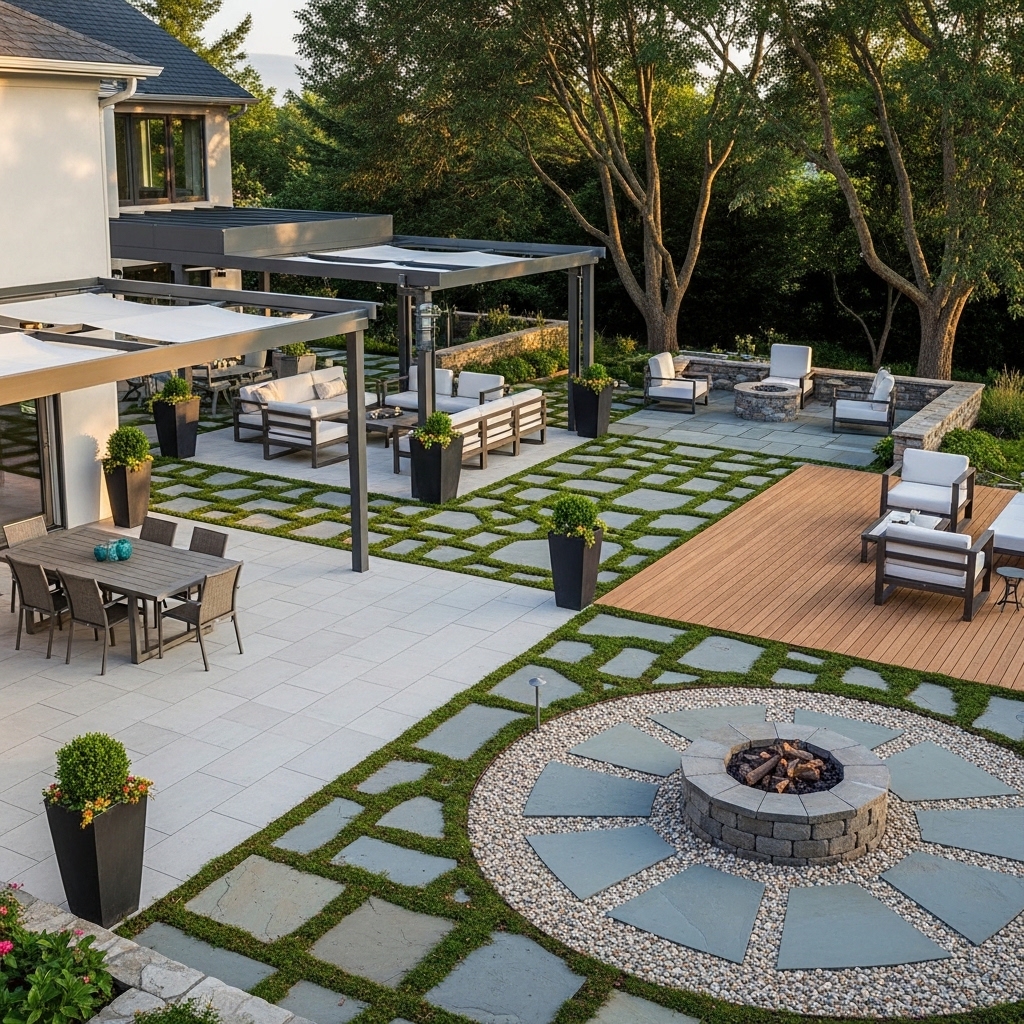
Best for: Patios that need visual separation without physical barriers.
Use different materials like outdoor rugs, decking tiles, or gravel sections to define each area. Keep transitions clean and aligned with furniture placement.
This approach creates natural divisions while maintaining openness. It also adds visual interest and prevents the space from feeling flat.
Avoid using too many contrasting materials, which can make the patio look chaotic.
Pro Tip: Stick to 2–3 complementary textures for consistency.
3. Create a Central Gathering Hub Instead of Spreading Seating Everywhere
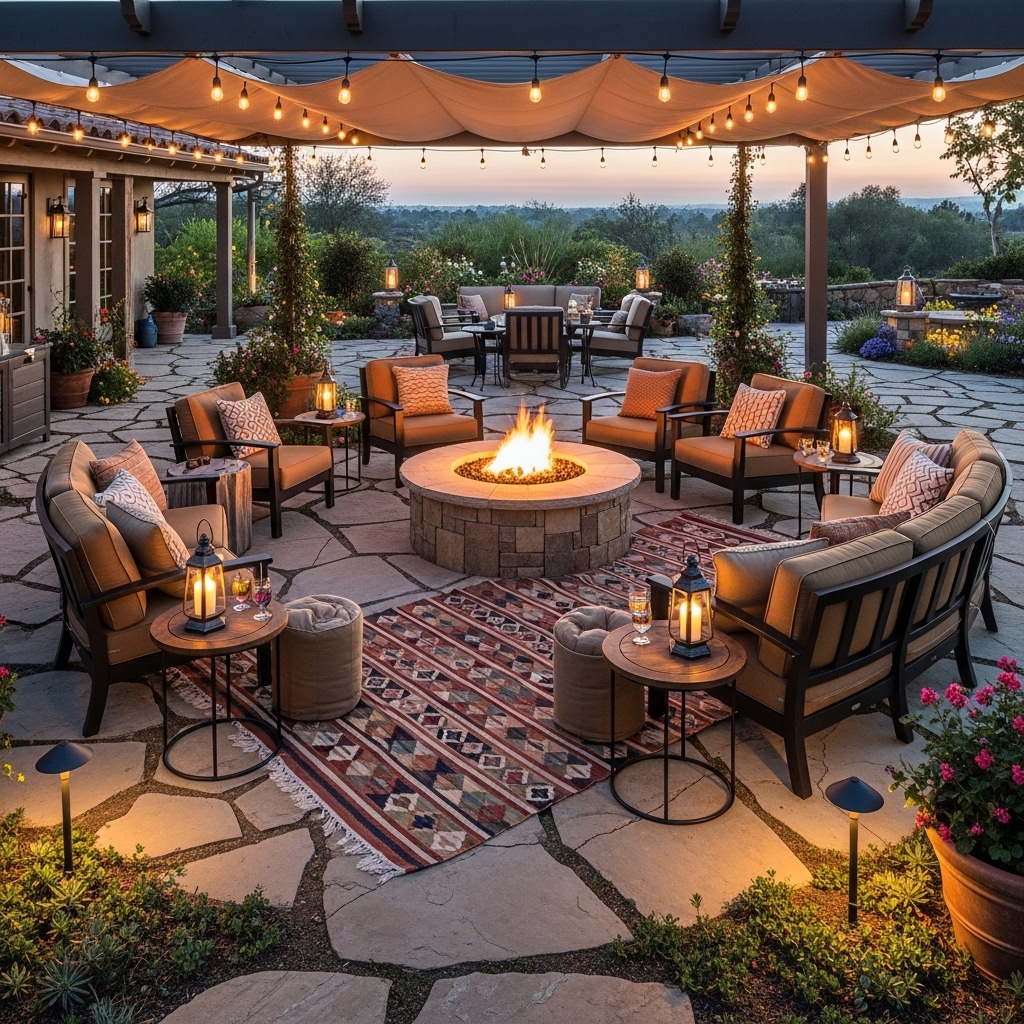
Great for: Entertaining-focused patios.
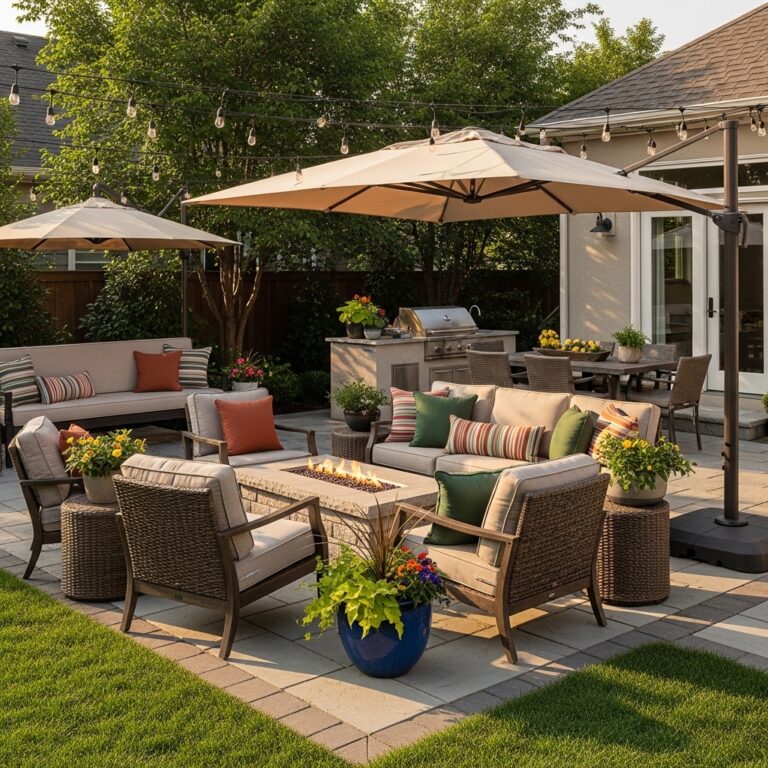
Design one main seating area where people naturally gather, then build secondary zones around it. Keep the main hub comfortable and accessible.
This works because it encourages social interaction and prevents the patio from feeling fragmented. It also makes hosting easier.
Avoid scattering seating across the patio, which breaks connection between guests.
Pro Tip: Place the main hub near shade or lighting for usability at all times.
4. Use Large-Scale Furniture to Match the Patio Proportion
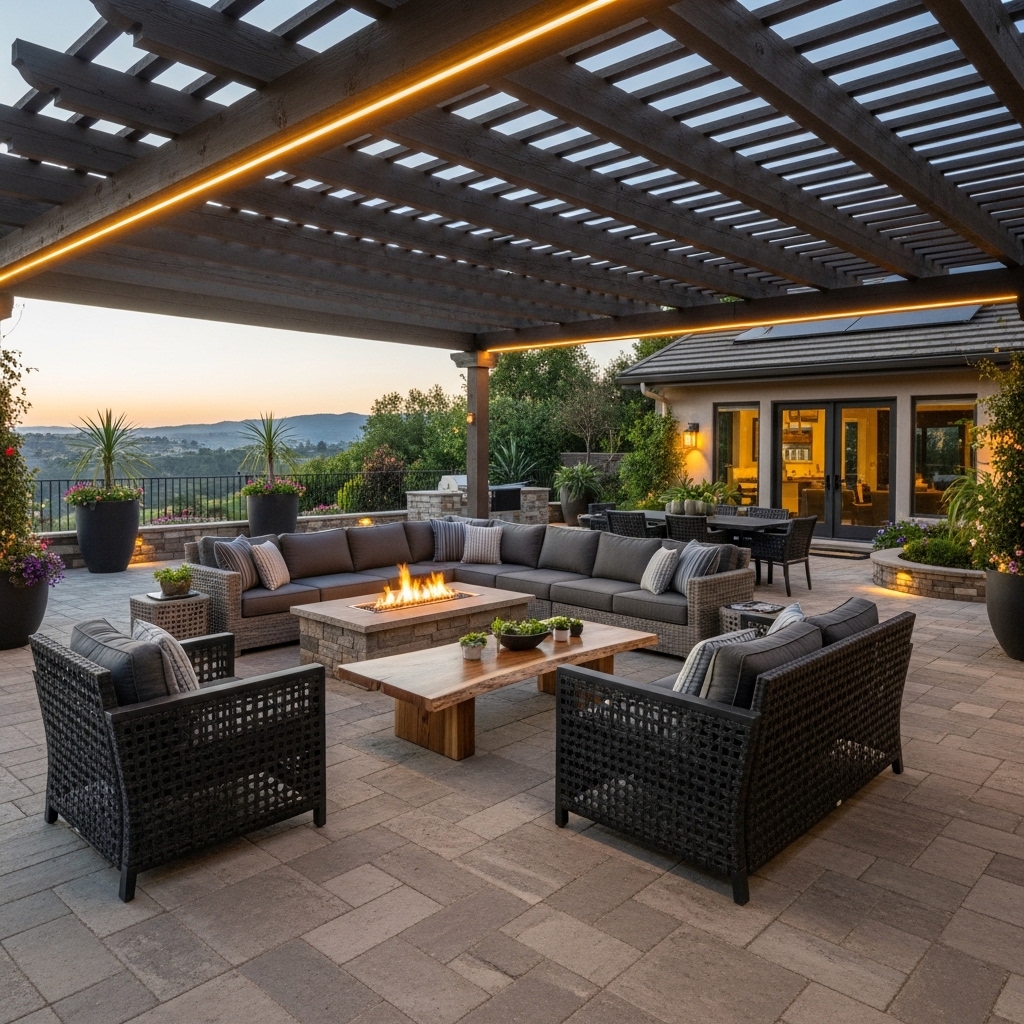
Ideal for: Patios where small furniture looks out of place.
Choose larger sofas, dining tables, or sectionals that match the scale of the space. Keep spacing balanced.
Large furniture fills space properly and prevents the patio from feeling under-designed. It also improves comfort for groups.
Avoid using small, scattered pieces that make the area feel incomplete.
Pro Tip: Use fewer, bigger pieces instead of many small ones.
5. Build a Layered Lighting Plan for Night Use
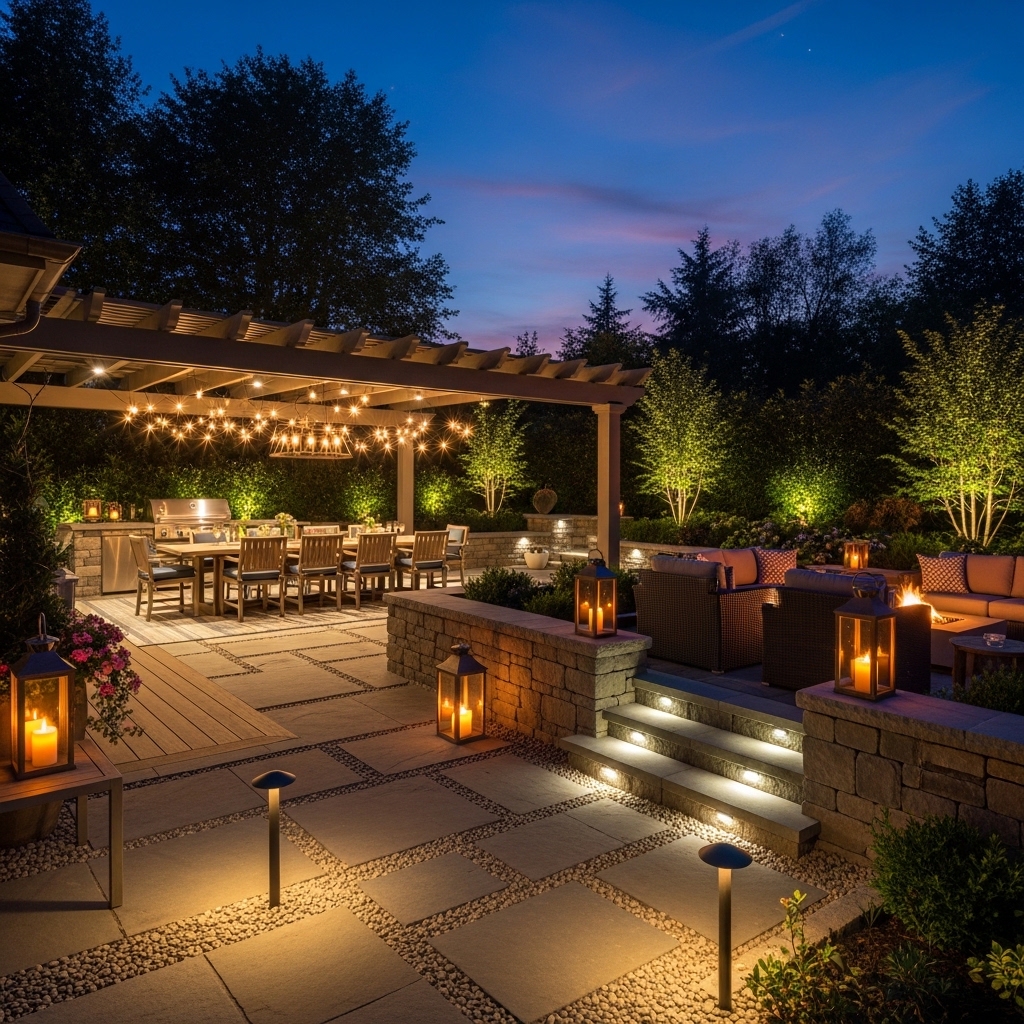
Best for: Patios used during evenings or gatherings.
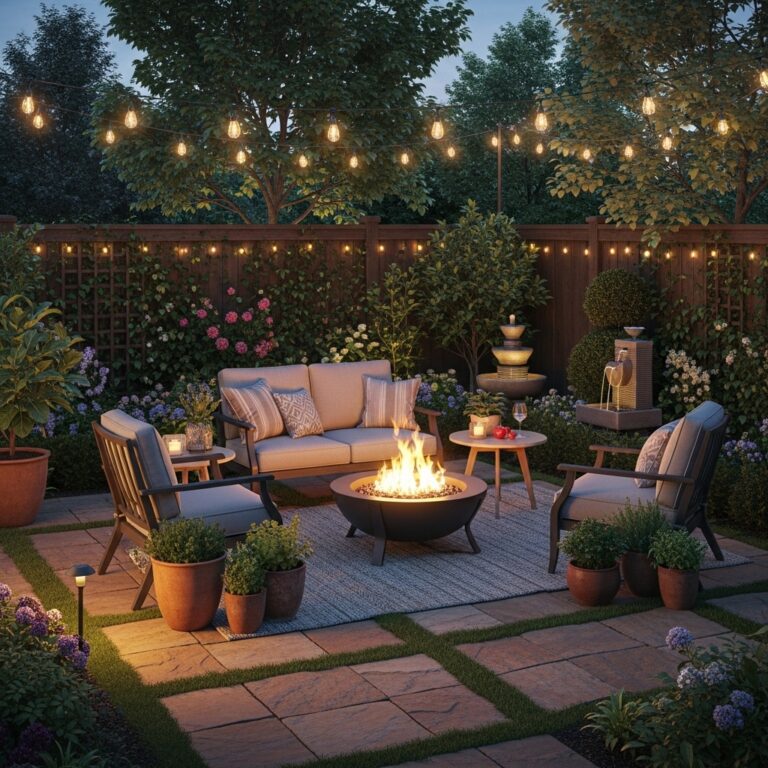
Combine overhead lighting, floor lamps, and pathway lights to create layers. Assign lighting based on zone function.
Layered lighting improves usability and adds depth, making the patio functional after sunset.
Avoid relying on a single light source, which creates uneven brightness.
Pro Tip: Use warm lighting in seating areas and brighter light for dining zones.
6. Add a Dedicated Outdoor Dining Zone With Clear Boundaries
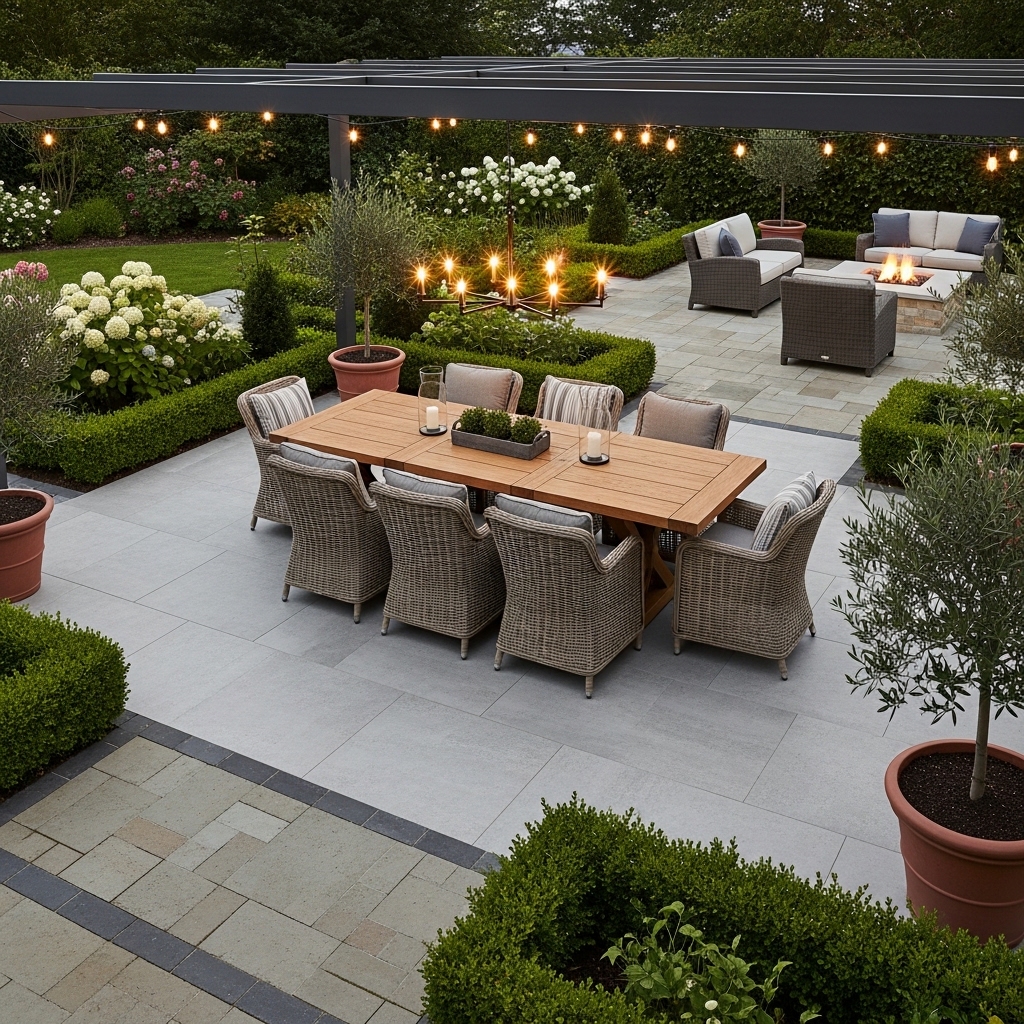
Great for: Families or frequent hosts.
Set up a dining table in a defined area with enough clearance for chairs and movement. Position it near the kitchen if possible.
This works because it creates a clear purpose and improves functionality during meals or gatherings.
Avoid placing dining areas too close to lounging zones, which can feel crowded.
Pro Tip: Keep at least 36 inches around the table for comfortable movement.
7. Use Pergolas or Shade Structures to Define Key Areas
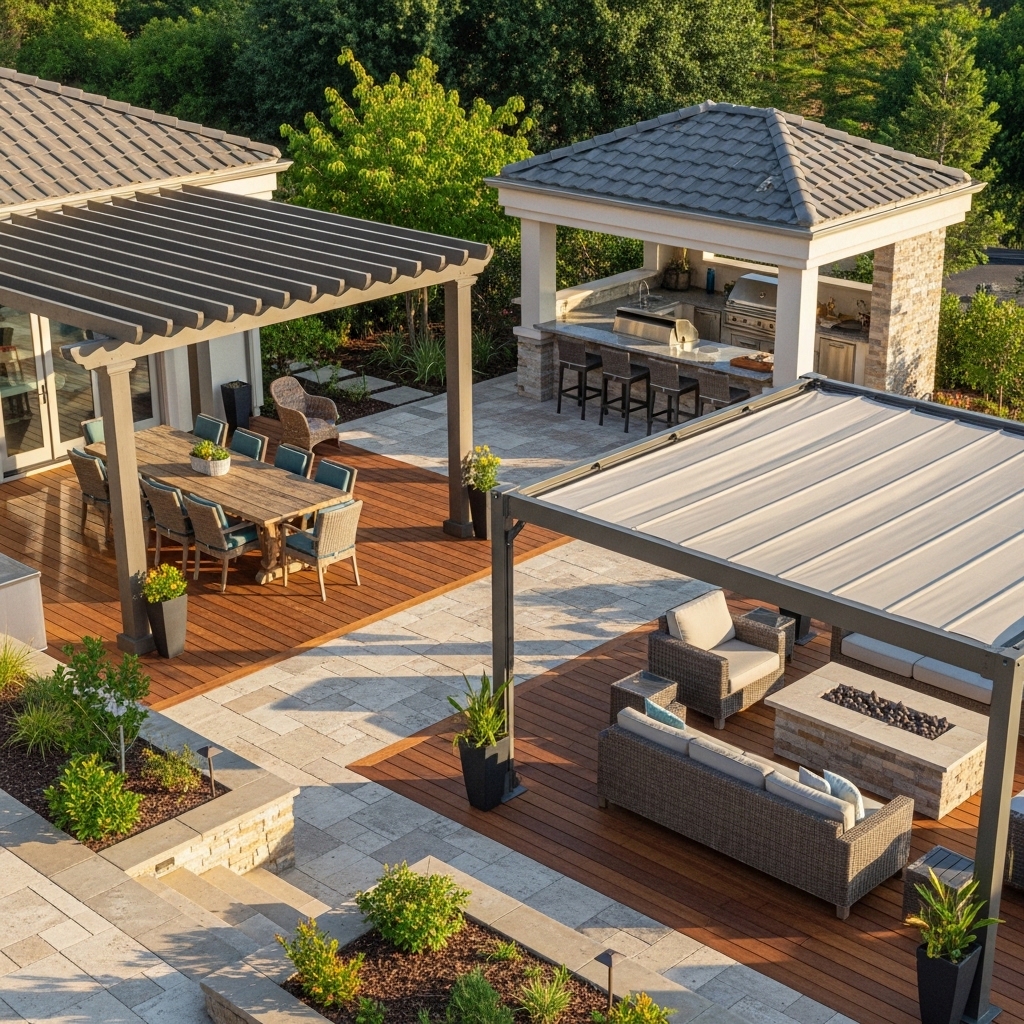
Ideal for: Patios exposed to direct sunlight.
Install pergolas, umbrellas, or shade sails over main zones like seating or dining areas. Keep placement aligned with layout.
Shade structures create comfort while visually defining zones. They also extend usability during hot weather.
Avoid random placement that doesn’t match furniture layout.
Pro Tip: Align shade structures directly above main seating areas.
8. Create a Quiet Corner Away From Social Zones
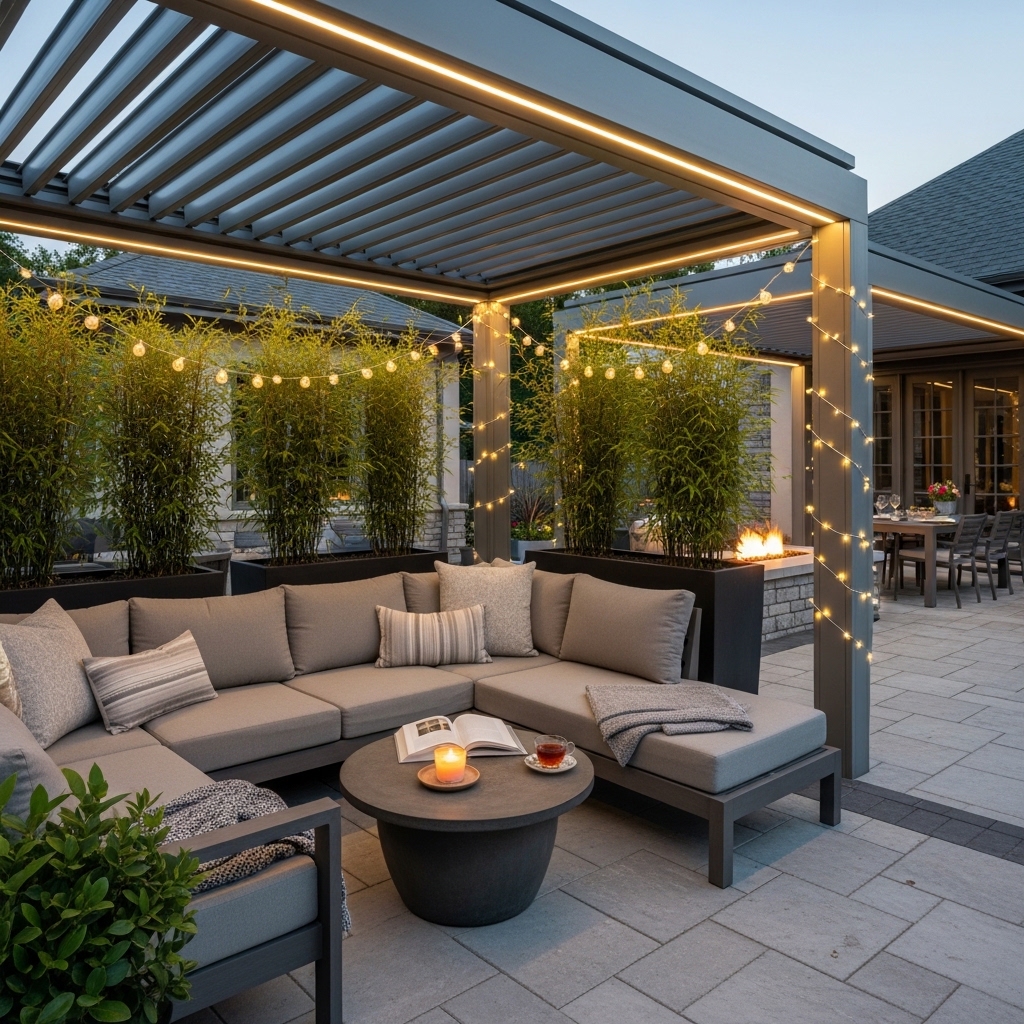
Best for: Large patios that need a private retreat.
Design a small corner with minimal seating, soft lighting, and greenery. Keep it slightly separated from main areas.
This works because it provides balance between social and personal spaces. It’s ideal for relaxation or reading.
Avoid placing this zone too close to high-traffic areas.
Pro Tip: Use plants as natural separators.
9. Use Pathways to Guide Movement Across the Patio
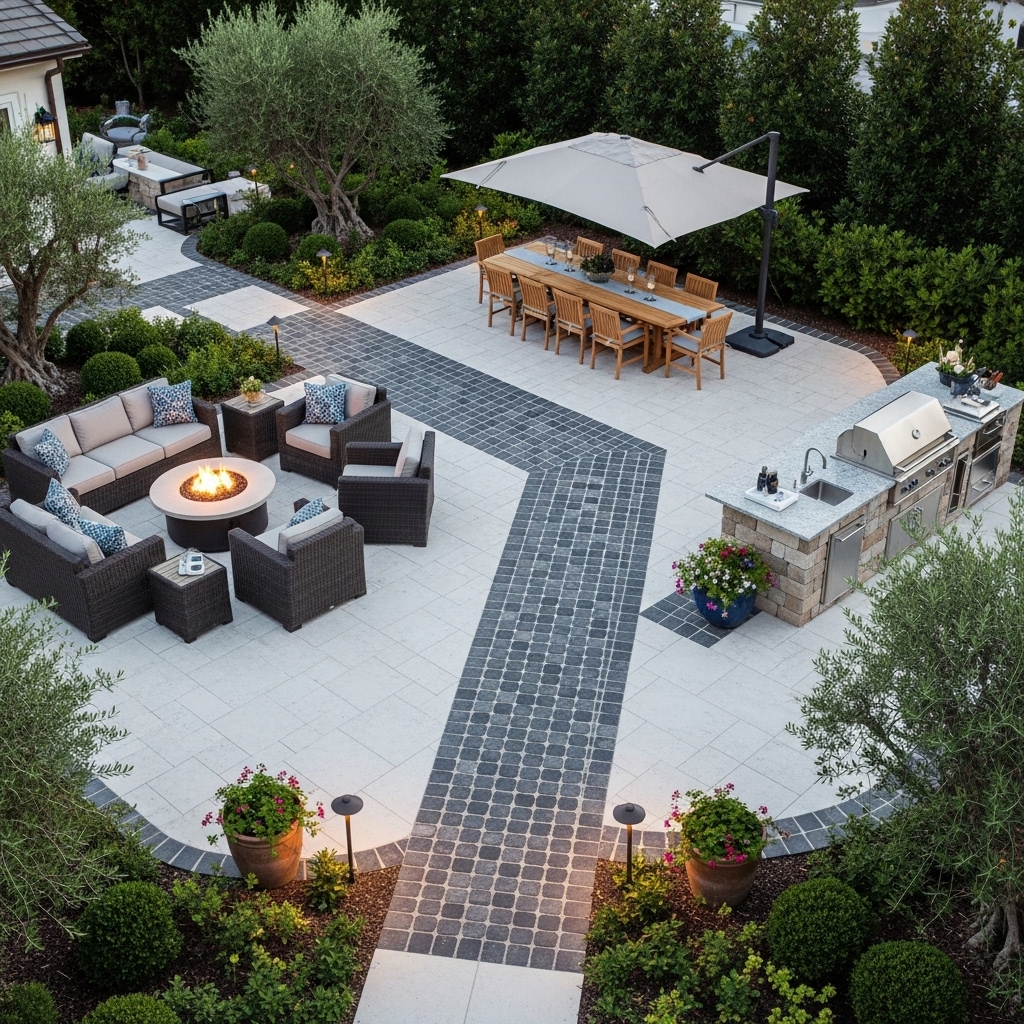
Great for: Large patios with unclear navigation.
Create subtle pathways using pavers, rugs, or lighting to guide movement between zones. Keep them unobstructed.
Defined paths improve flow and prevent confusion. They also make the patio feel more organized.
Avoid blocking pathways with furniture or decor.
Pro Tip: Keep paths at least 3 feet wide for comfort.
10. Incorporate Built-In Elements for Long-Term Structure
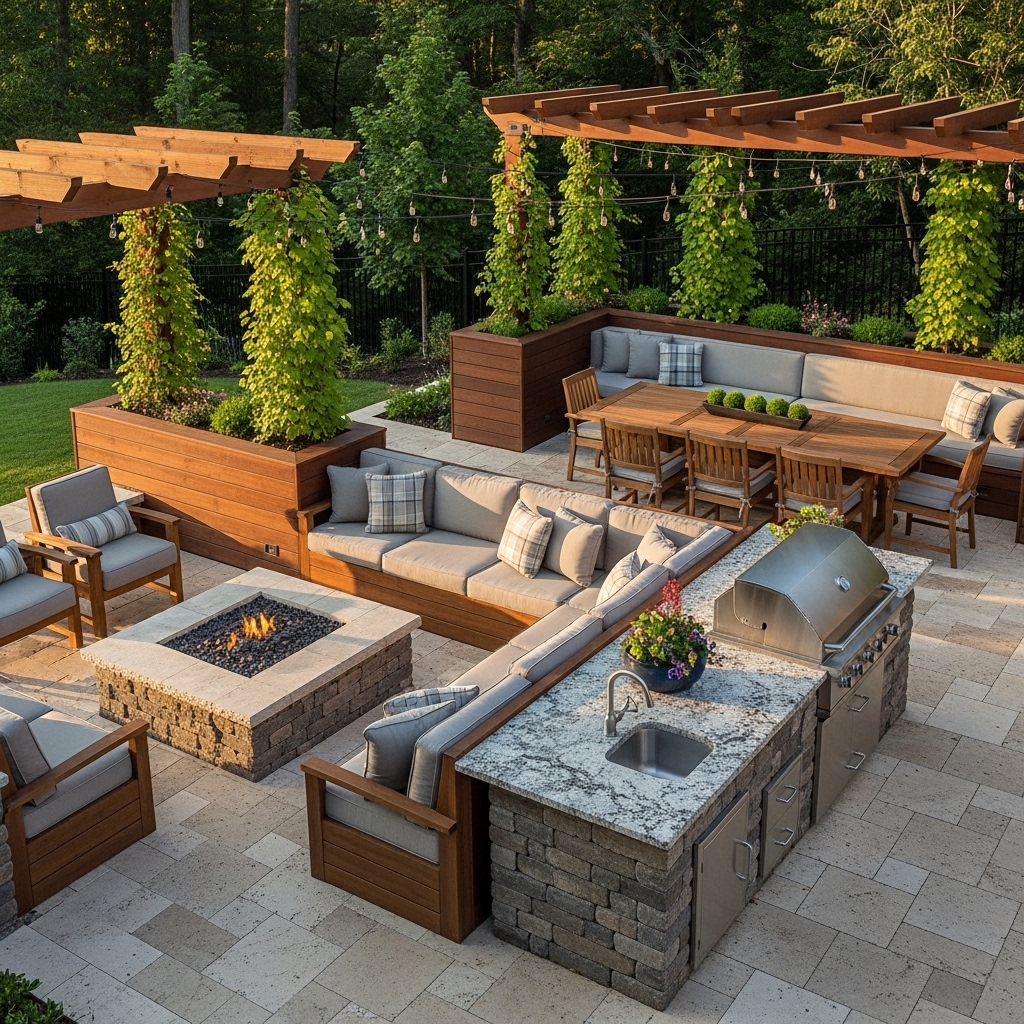
Ideal for: Permanent patio setups.
Add built-in seating, planters, or fire features to anchor the layout. Position them strategically.
Built-ins create a strong foundation and reduce the need for extra furniture. They also enhance durability.
Avoid overbuilding, which reduces flexibility.
Pro Tip: Combine built-ins with movable furniture for balance.
11. Balance Open Space With Functional Zones
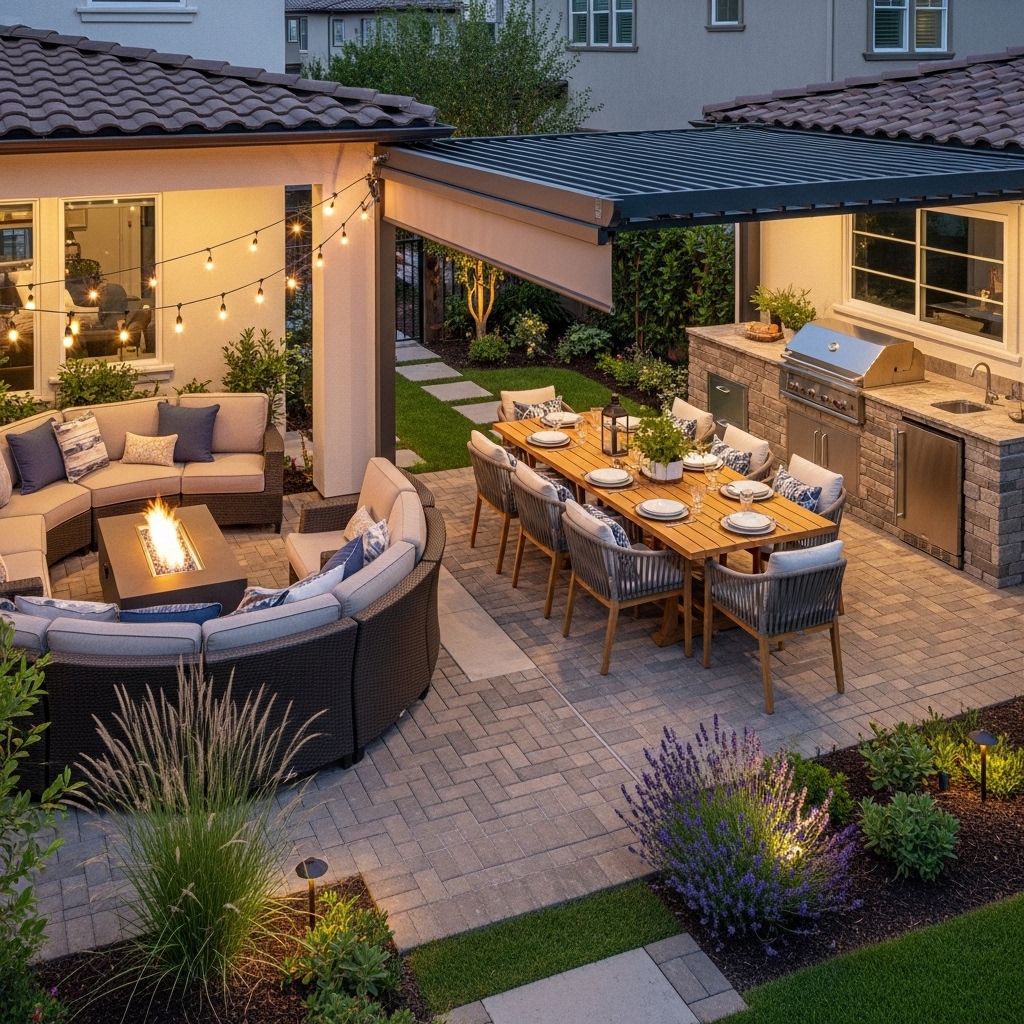
Best for: Patios that feel overcrowded or empty.
Leave intentional open areas between zones to maintain breathing room. Avoid filling every inch with furniture.
This works because negative space enhances comfort and movement. It also highlights key areas.
Avoid over-decorating or over-furnishing.
Pro Tip: Think of empty space as part of the design.
12. Use Outdoor Storage to Keep Zones Clean
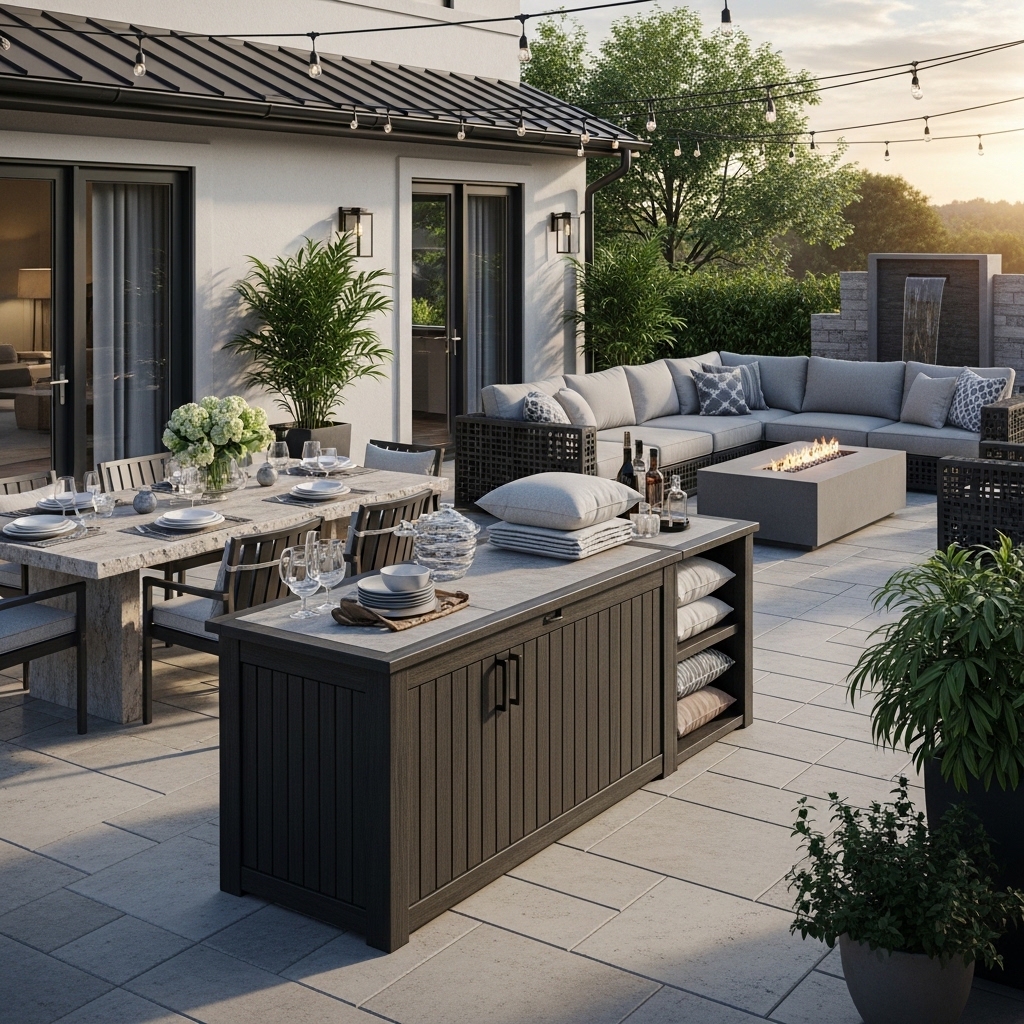
Great for: Patios with frequent use.
Add storage benches or cabinets to keep cushions, tools, and accessories organized. Place them near usage zones.
This keeps the patio tidy and functional without clutter. It also improves maintenance.
Avoid placing storage far from where items are used.
Pro Tip: Choose weather-resistant storage solutions.
13. Align Furniture to Maintain Visual Order
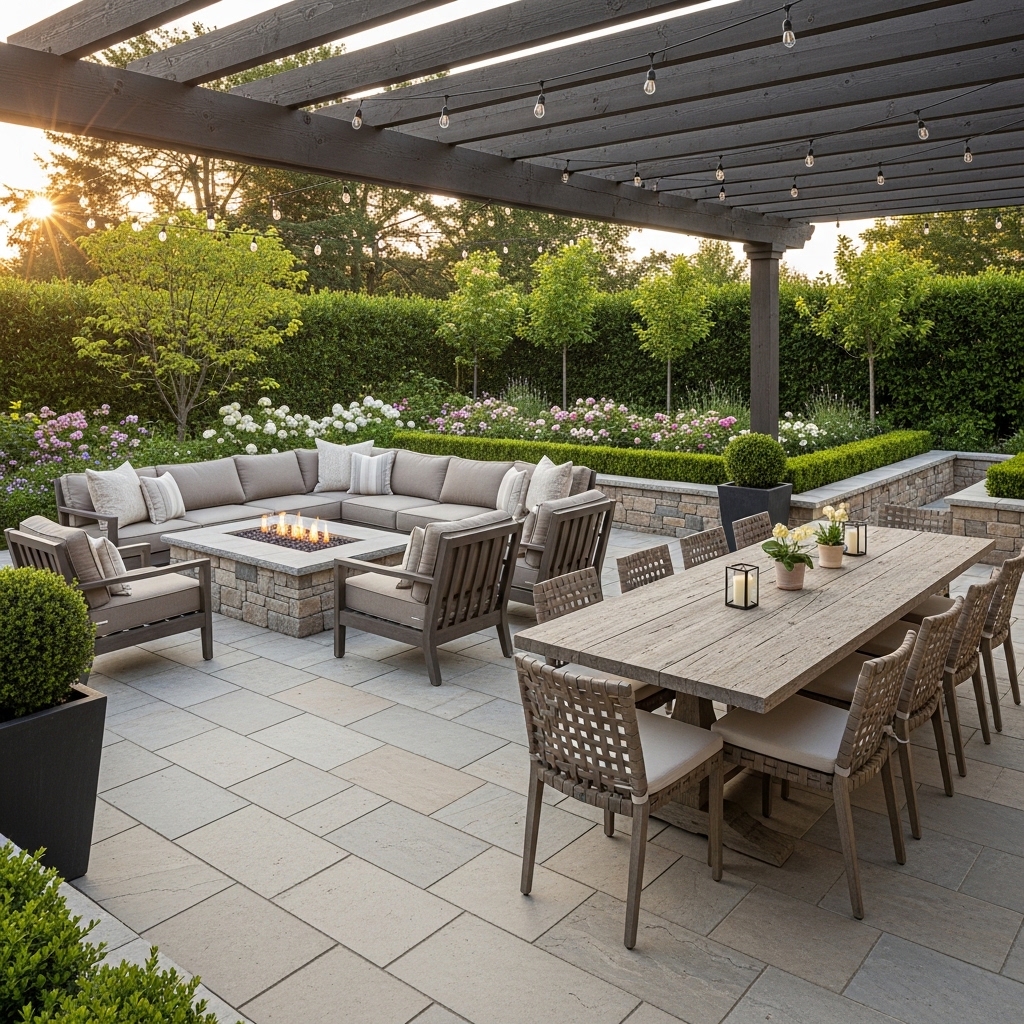
Ideal for: Large patios that feel scattered.
Position furniture in straight lines or consistent angles within each zone. Keep alignment intentional.
Aligned layouts create structure and make the space feel cohesive.
Avoid random placement that breaks visual flow.
Pro Tip: Use rugs or flooring lines as guides.
14. Add Multi-Use Zones for Flexible Living
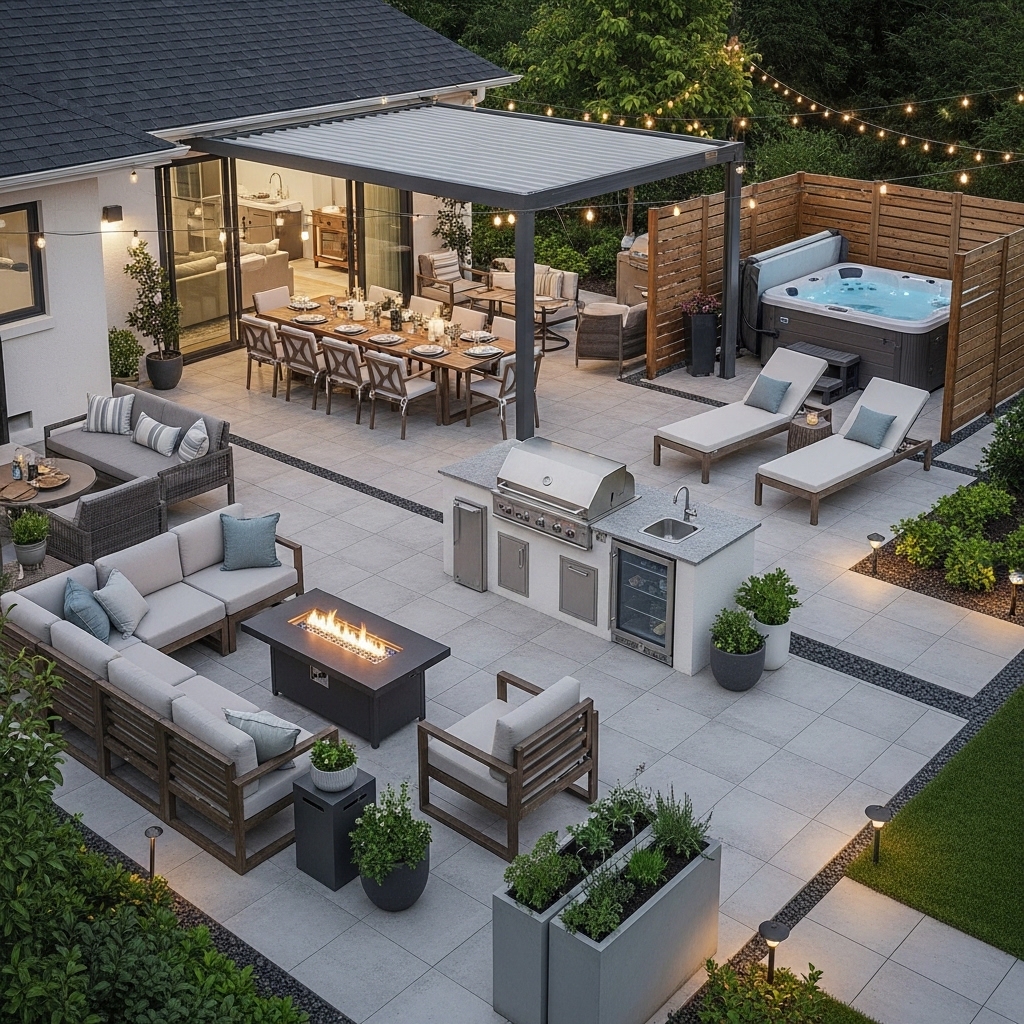
Best for: Families with changing needs.
Design areas that can shift between uses, like a lounge that doubles as a casual dining space.
Flexibility makes the patio more practical and adaptable over time.
Avoid overly fixed layouts that limit functionality.
Pro Tip: Use movable furniture for easy transitions.
15. Reevaluate Layout Based on Real Usage Patterns
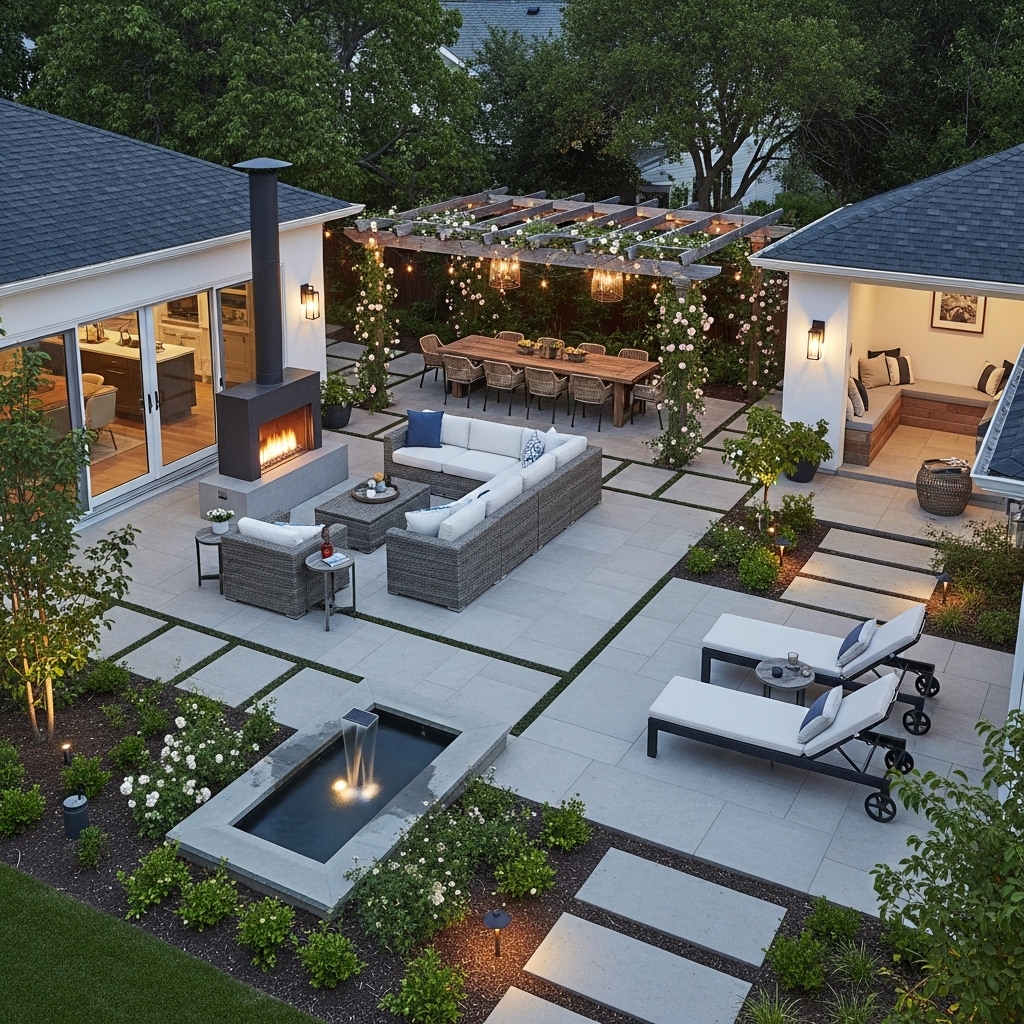
Great for: Patios that look good but feel underused.
Observe how you use the space daily and adjust zones accordingly. Move furniture to improve flow.
This ensures the patio evolves with your lifestyle and remains functional.
Avoid sticking to a layout that doesn’t work in practice.
Pro Tip: Test your setup during gatherings to identify issues.
Conclusion: Large Patios Work Best When Space Is Organized With Purpose
A big outdoor patio is really useful when its split into areas for doing things. Without a plan even huge spaces can feel like a waste. Not get used much.
Here are 15 ideas to make your big outdoor patio feel neat, cozy and great for life and parties. These ideas will help you turn your patio into a space thats perfect for living and entertaining every day.
Your patio will feel more organized and comfortable, with these outdoor patio ideas.