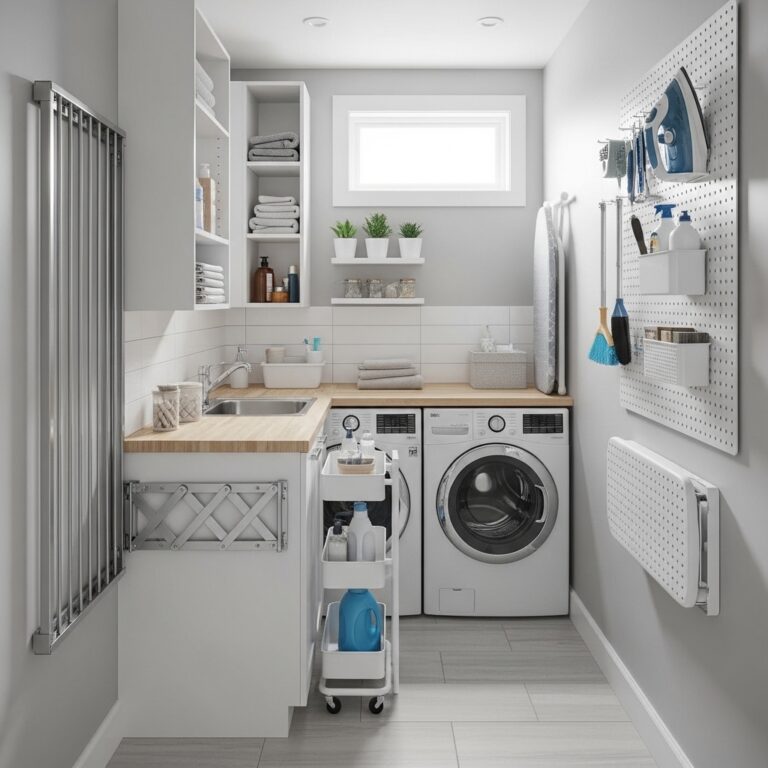
15 Best Tiny Apartment Ideas That Solve Space Problems And Feels Great
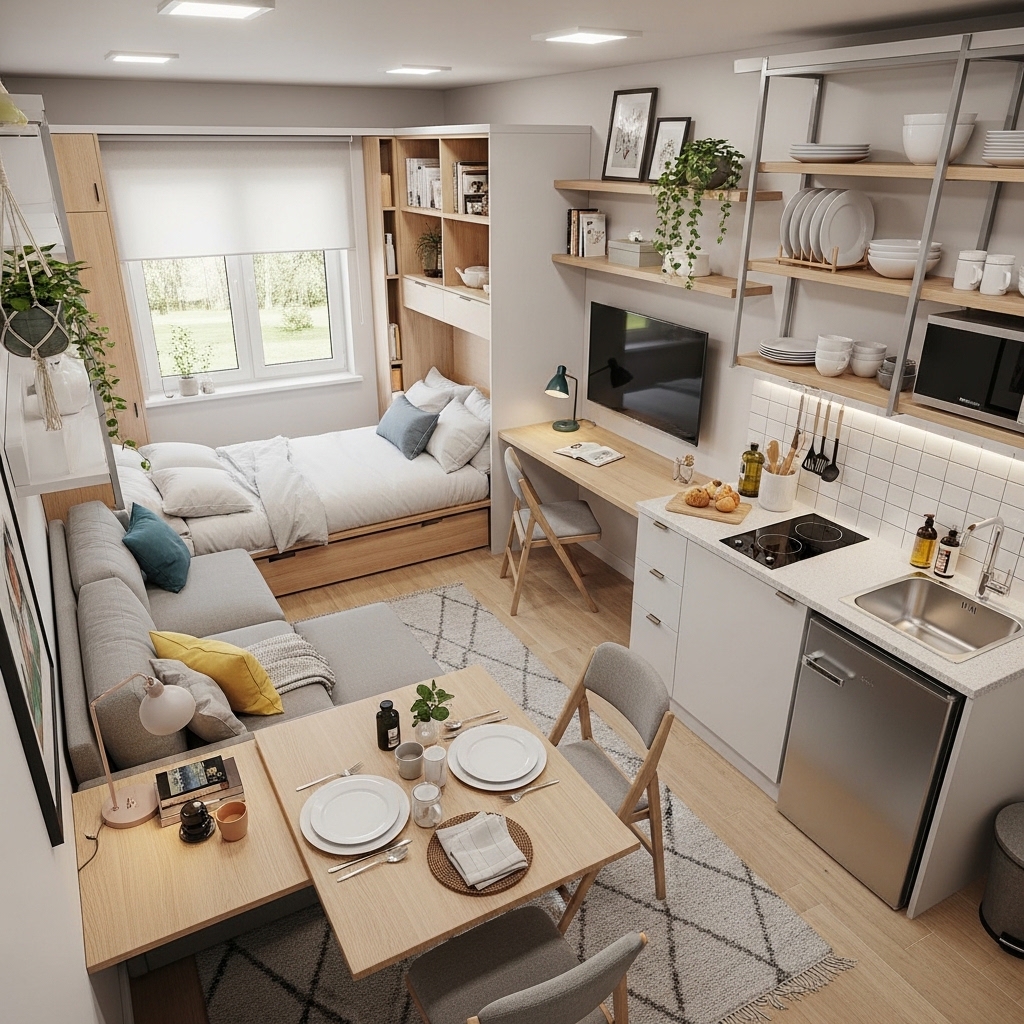
Tiny apartments do not work out because of how small they’re they do not work out because of bad decisions about how to lay them out and because the furniture is too big and there is not enough space to store things on purpose.
When people are trying to make their apartments look nice they usually start with the decorations. That is not what they should be doing. They should be thinking about how they will use the space every day.
This guide is about things that really work for studios and small apartments where every inch’s important.
Each idea in the guide will show people where to put things what to stay away from and how to make the apartment feel bigger without giving up comfort or style. The guide is, for people who live in apartments like studios and compact apartments and it will help them make the most of their space.
1. Zone Your Space Without Using Physical Dividers
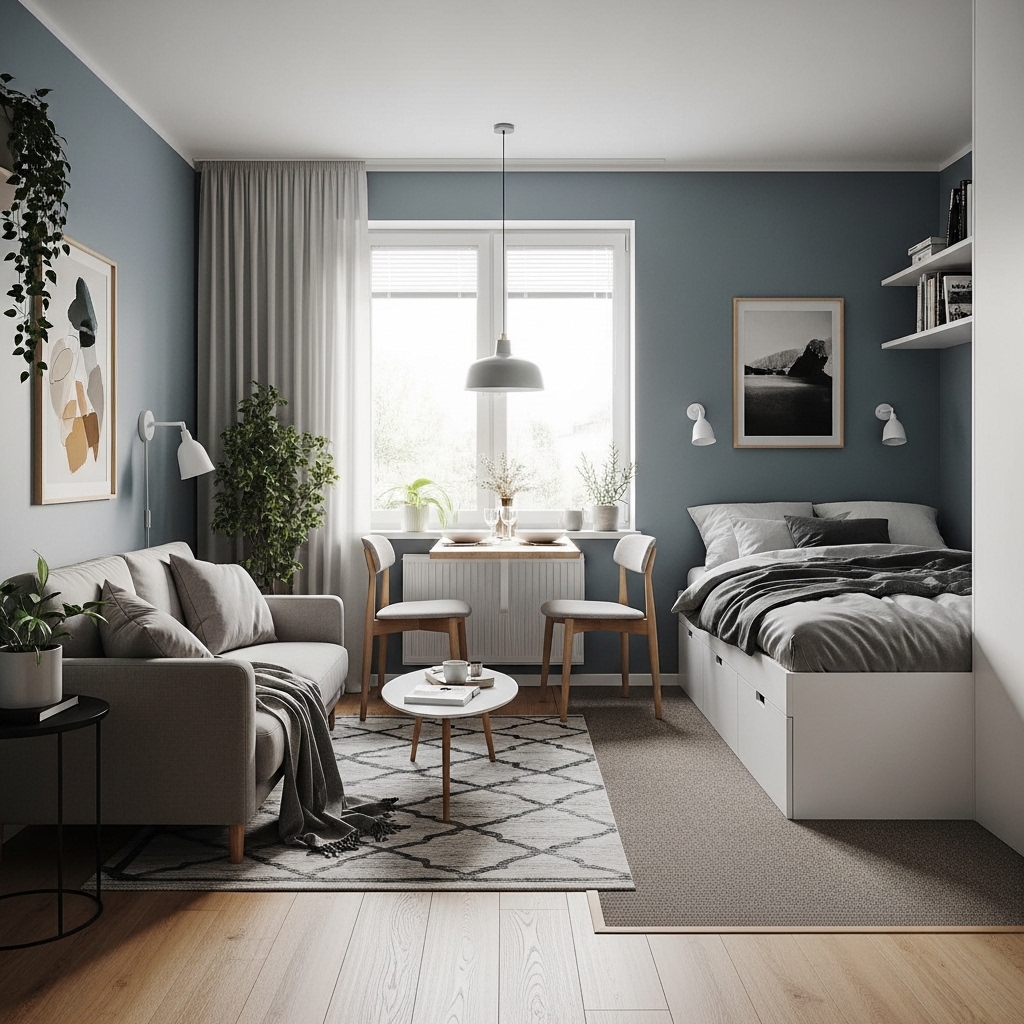
Ideal for: Studio apartments where the bed, sofa, and workspace sit in one open room.
Instead of adding walls or bulky dividers, define zones using rugs, lighting, and furniture orientation. Place a rug under your seating area and position your bed in a separate visual direction to create distinction.
This works because the brain reads layout boundaries rather than physical walls, making the space feel organized without reducing openness. It also allows light to travel freely, which is critical in small apartments.
Avoid placing all furniture against walls, as this removes natural zoning and makes the room feel flat. Keep pathways clear between zones so movement feels intentional rather than cramped.
Pro Tip: Use a floor lamp or pendant light to visually “anchor” each zone.
2. Use One Large Statement Piece Instead of Multiple Small Items
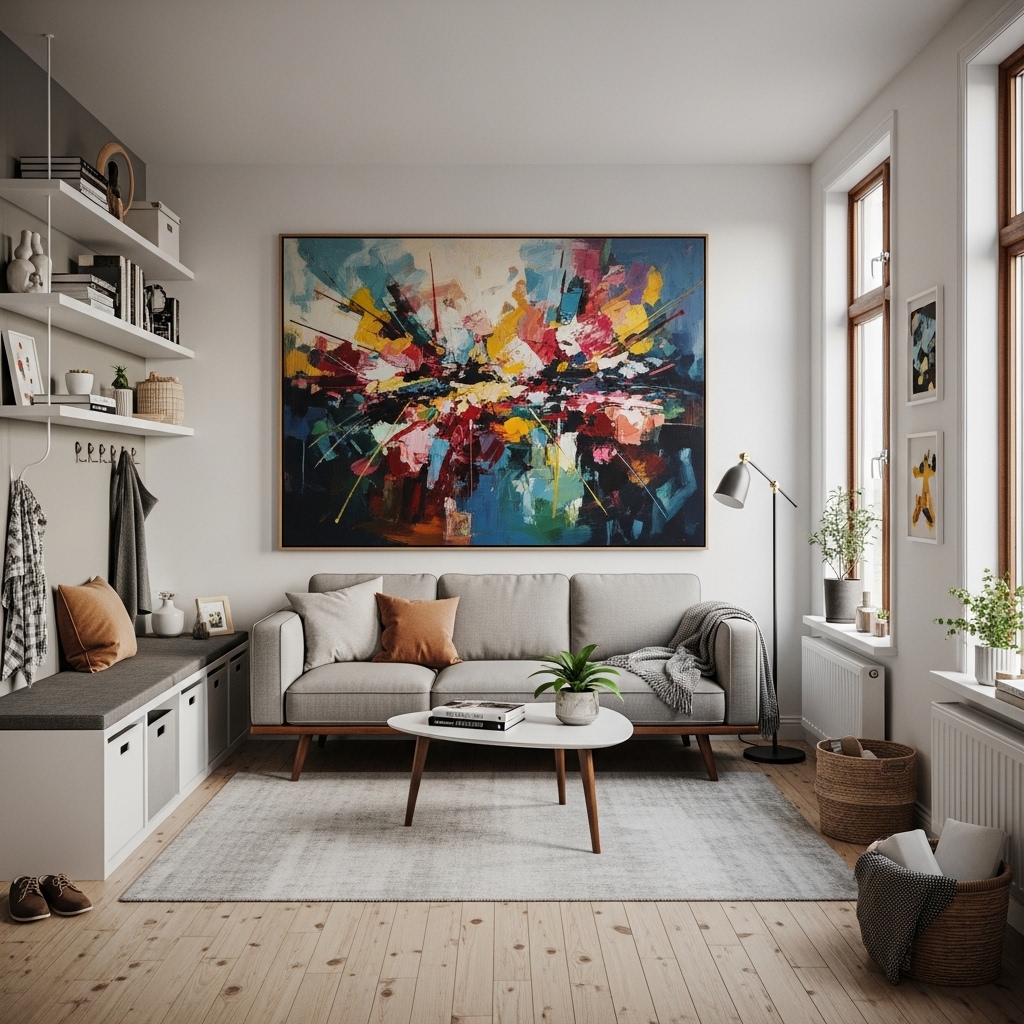
Best for: Tiny apartments that feel cluttered even with minimal decor.
Instead of adding several small decorations, choose one larger piece like a bold artwork or oversized mirror. Place it on the main wall to create a focal point.
Visually, multiple small items create fragmentation, while a single large element simplifies the space and reduces mental clutter. It also draws attention upward, making the room feel more expansive.
Avoid mixing multiple focal points in one room, as it divides attention and shrinks perceived space. Keep surrounding decor minimal to let the statement piece stand out.
Pro Tip: Mirrors work best when placed opposite natural light to amplify brightness.
3. Create a “Breathing Zone” Around Key Furniture
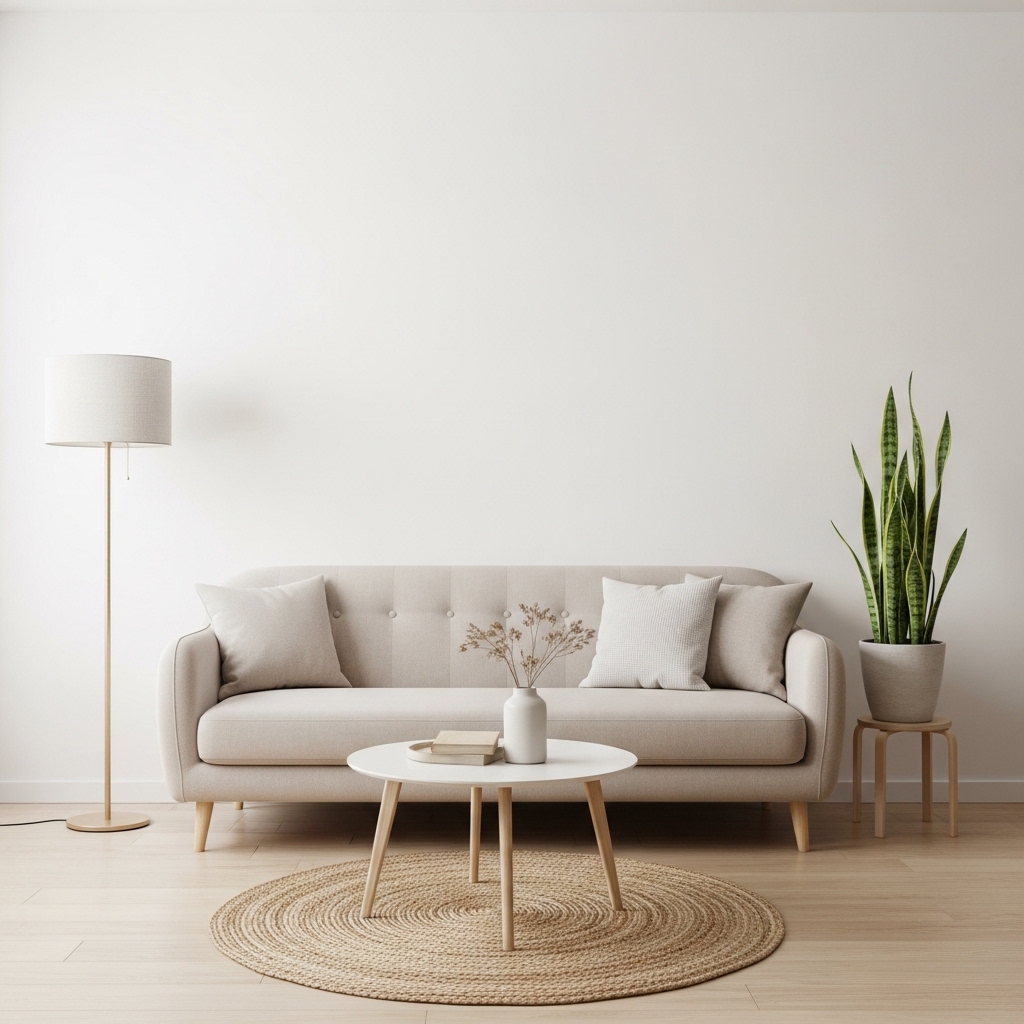
Ideal for: Apartments where furniture feels tightly packed together.
Leave intentional empty space around your main furniture pieces like the sofa or bed. Even a few inches of gap can dramatically improve how open the room feels.
This works because negative space gives the eye a place to rest, preventing the room from feeling overcrowded. It also improves movement flow and accessibility.
Avoid filling every corner with storage or decor, as this eliminates visual breathing room. Focus on fewer, better-placed pieces instead of maximizing quantity.
Pro Tip: Keep at least one side of major furniture completely open if possible.
4. Choose Low-Profile Furniture to Expand Vertical Space
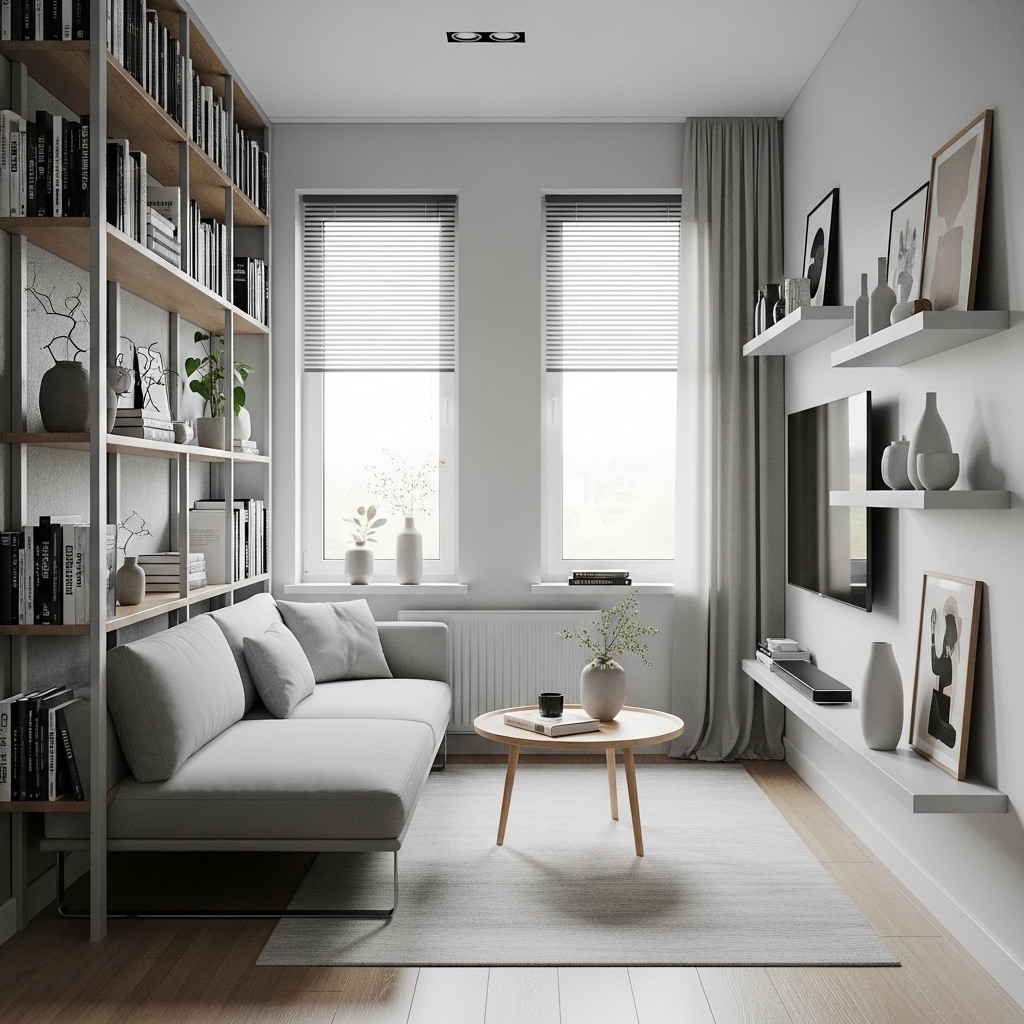
Best for: Apartments with low ceilings or limited natural light.
Use sofas, beds, and tables that sit closer to the ground. This creates more visible wall space above, making ceilings appear higher.
The eye naturally measures height based on furniture proportion, so lower pieces trick the brain into perceiving more vertical space. This is especially effective in compact rooms.
Avoid bulky or tall furniture that visually cuts off the room height. Keep upper wall areas relatively clear to maintain the effect.
Pro Tip: Pair low furniture with tall curtains to exaggerate height further.
5. Use Corners as Functional Zones Instead of Dead Space
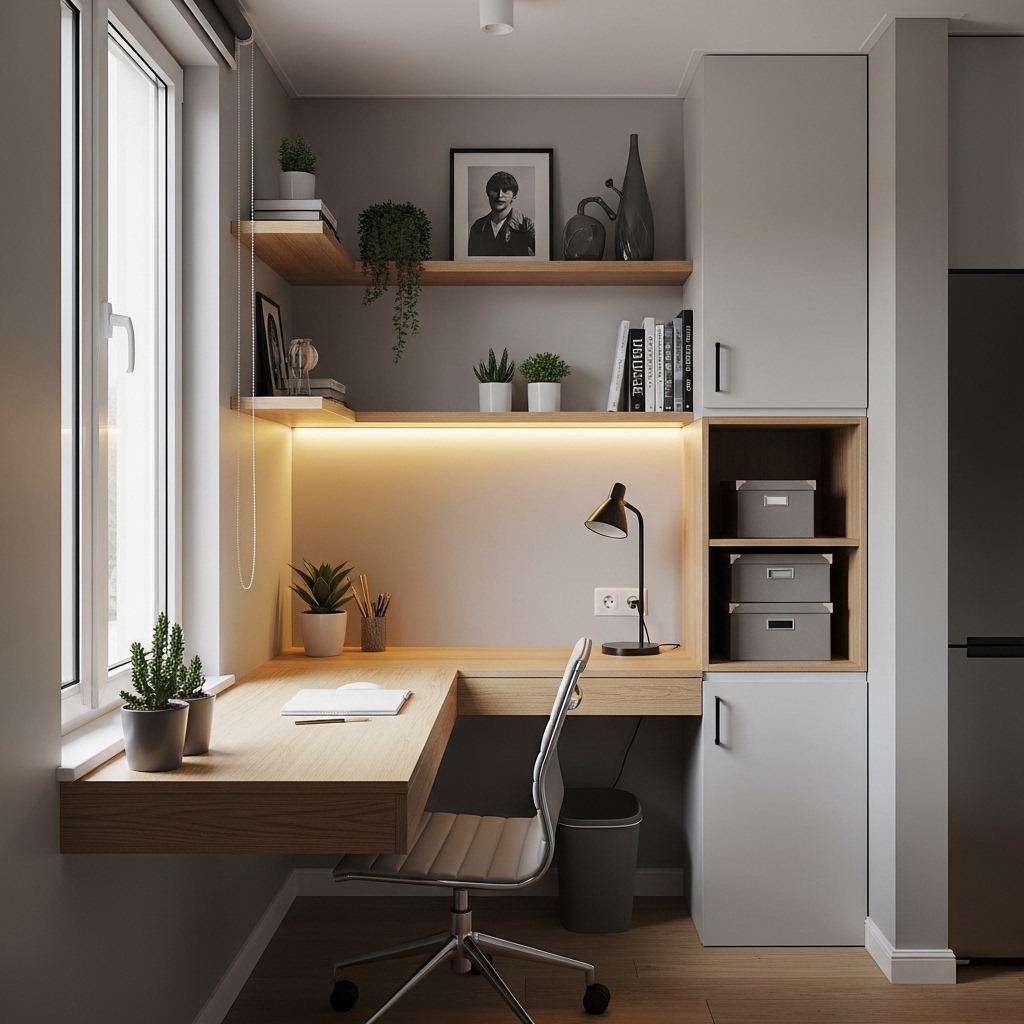
Great for: Tiny apartments where every square foot matters.
Turn unused corners into mini workstations, reading nooks, or storage spots. Use compact desks or corner shelves to maximize efficiency.
Corners are often ignored, but using them effectively increases usable space without affecting the main layout. It also keeps central areas less crowded.
Avoid placing large furniture in corners that block movement or light. Keep corner setups lightweight and purpose-driven.
Pro Tip: Add a small wall light in corners to make them feel intentional.
6. Limit Your Color Palette to Control Visual Noise
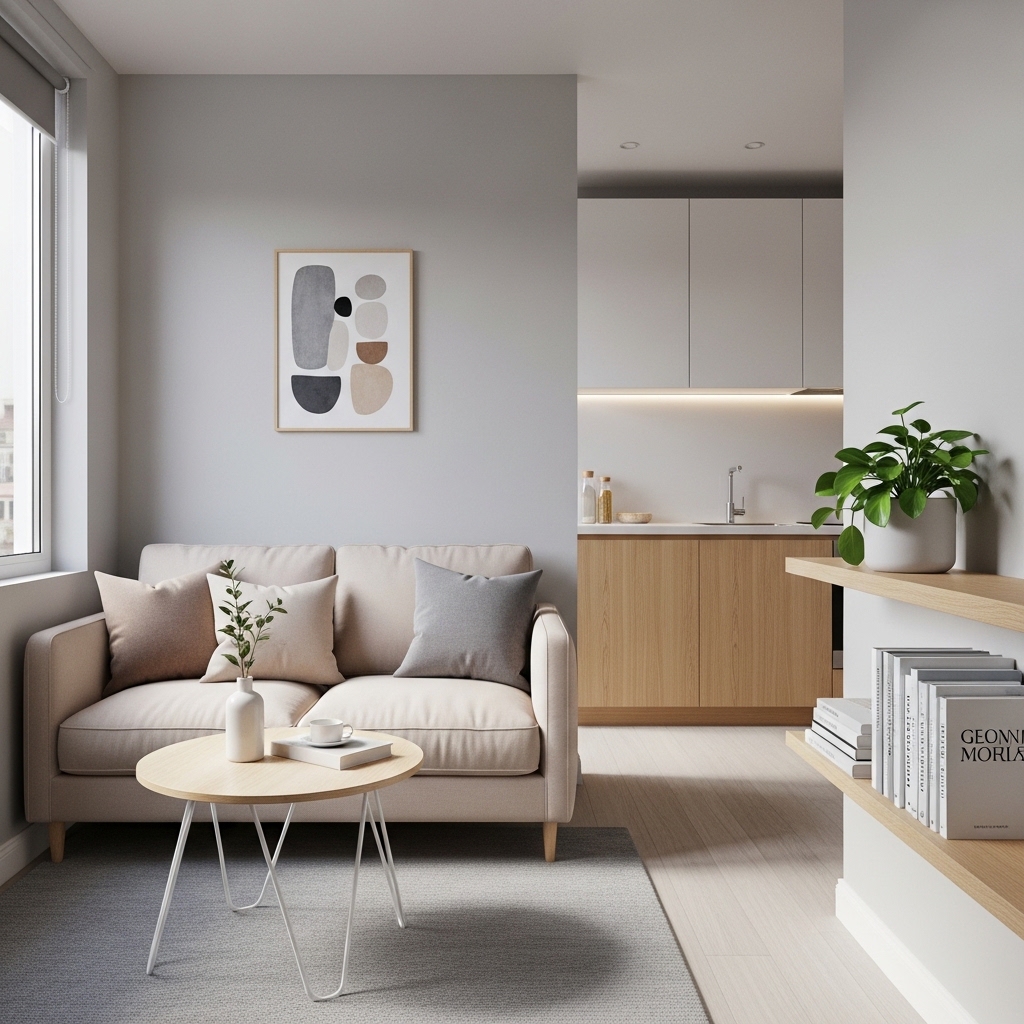
Ideal for: Apartments that feel chaotic even when clean.
Stick to a tight palette of 2–3 colors across furniture, walls, and decor. Repeat these tones consistently throughout the space.
Too many colors create visual breaks, making the apartment feel smaller. A controlled palette creates continuity, which helps the eye move smoothly across the room.
Avoid adding random accent colors that don’t connect with the overall scheme. Even small mismatches can disrupt visual flow.
Pro Tip: Use different textures instead of adding new colors.
7. Use Vertical Lighting Instead of Table Lamps
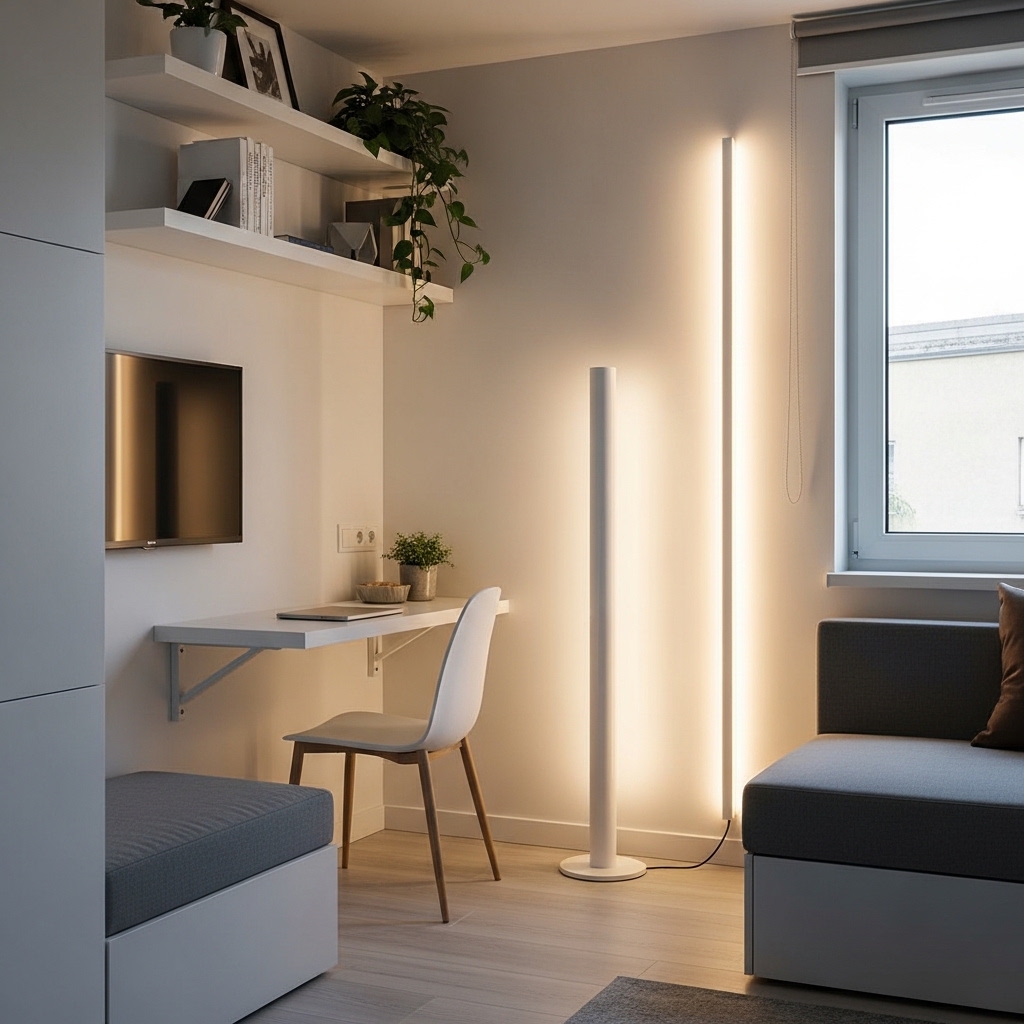
Best for: Apartments with limited surface space.
Replace table lamps with wall sconces or tall floor lamps. This keeps surfaces like nightstands and desks free for practical use.
Vertical lighting draws the eye upward, reinforcing the feeling of height while also improving overall illumination. It’s especially useful in tight layouts.
Avoid cluttering surfaces with multiple light sources, as it reduces functionality. Keep lighting placement intentional and minimal.
Pro Tip: Install plug-in wall lights if you can’t hardwire fixtures.
8. Keep Furniture Legs Visible to Reduce Visual Weight
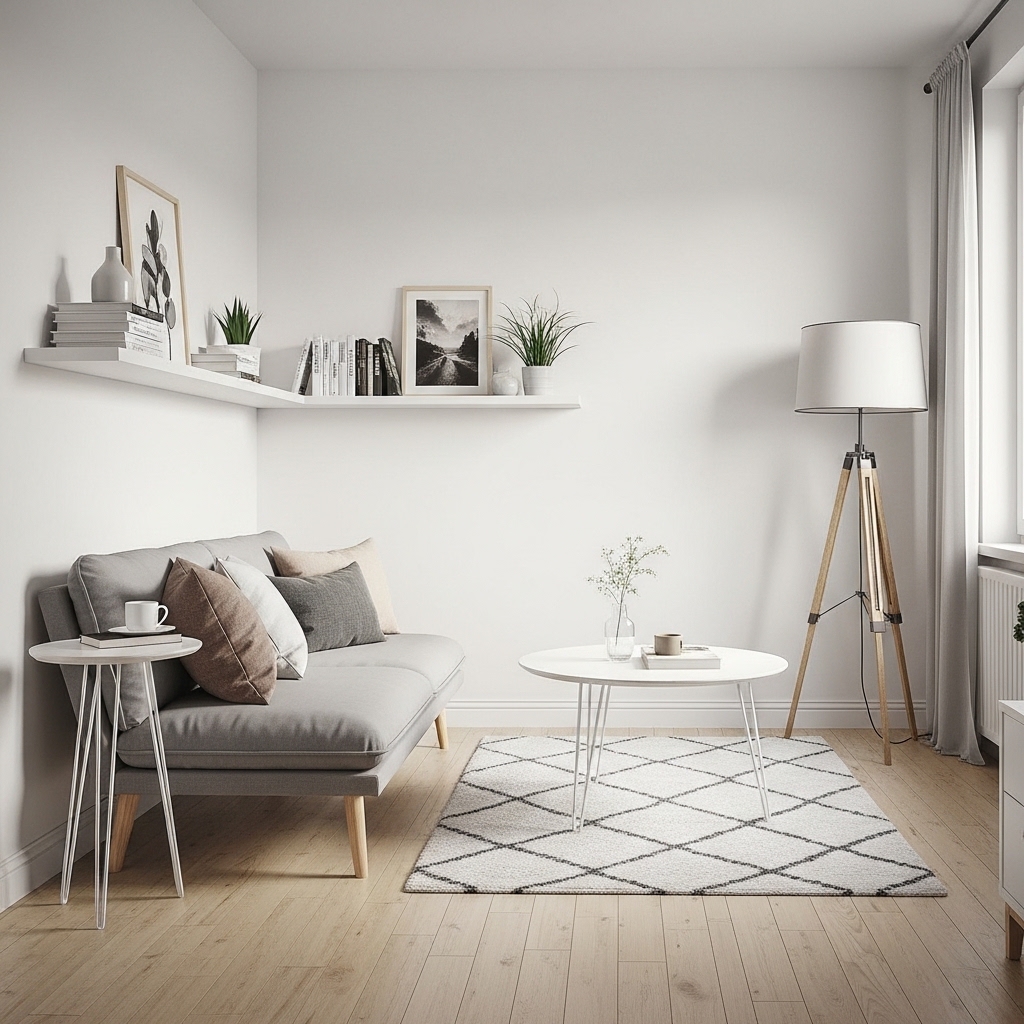
Great for: Rooms that feel heavy or crowded even with few items.
Choose furniture with exposed legs instead of solid bases. This allows light and sightlines to pass underneath.
When the floor remains partially visible, the room appears more open and less dense. It also makes cleaning easier.
Avoid boxy furniture that sits directly on the floor, as it visually blocks space. Mix materials to keep the look balanced.
Pro Tip: Use rugs that extend under furniture to unify the space.
9. Build Storage Around Your Daily Routine
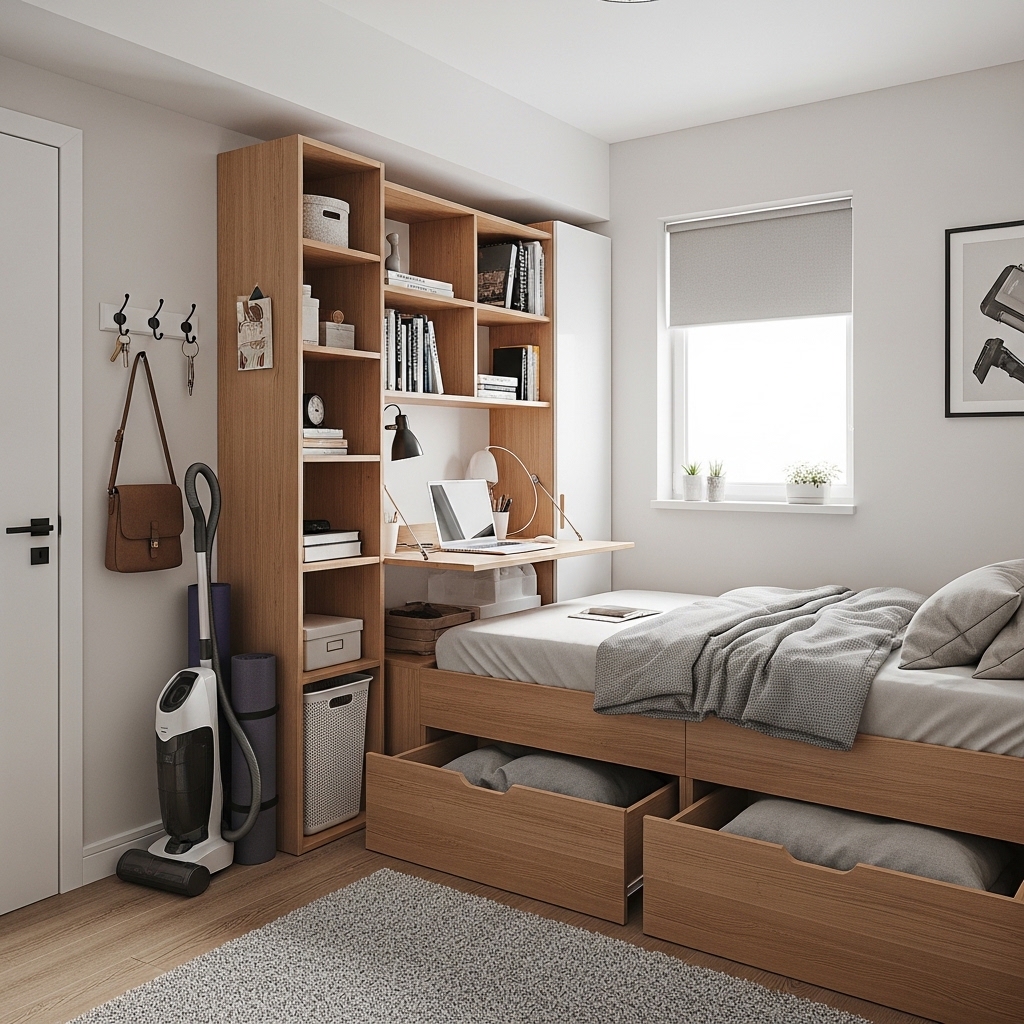
Ideal for: Apartments where clutter returns quickly after cleaning.
Design storage based on what you use daily—place frequently used items within easy reach and store rarely used items out of sight.
This works because it aligns your space with your habits, reducing friction and preventing clutter buildup. It also improves efficiency.
Avoid generic storage solutions that don’t match your lifestyle. Misplaced storage often goes unused.
Pro Tip: Re-evaluate your storage every few weeks to keep it functional.
10. Use Sliding or Pocket Solutions Instead of Swing Doors
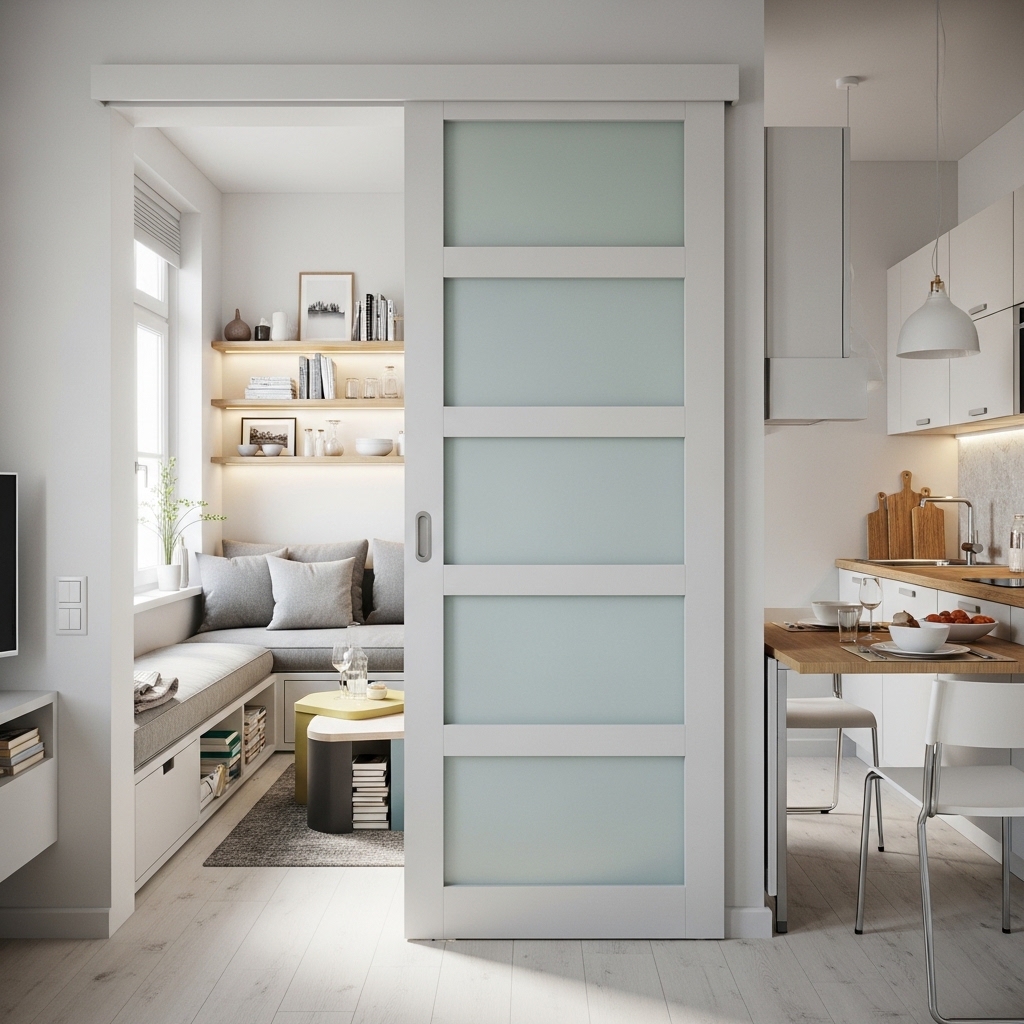
Best for: Tight layouts where doors take up too much space.
Replace traditional doors with sliding panels or curtains where possible. This frees up valuable floor area.
Swing doors require clearance, which limits furniture placement. Sliding options remove this restriction and improve flexibility.
Avoid heavy or complicated mechanisms that are hard to maintain. Keep solutions simple and lightweight.
Pro Tip: Use ceiling-mounted tracks for a cleaner look.
11. Align Furniture with Natural Light Flow
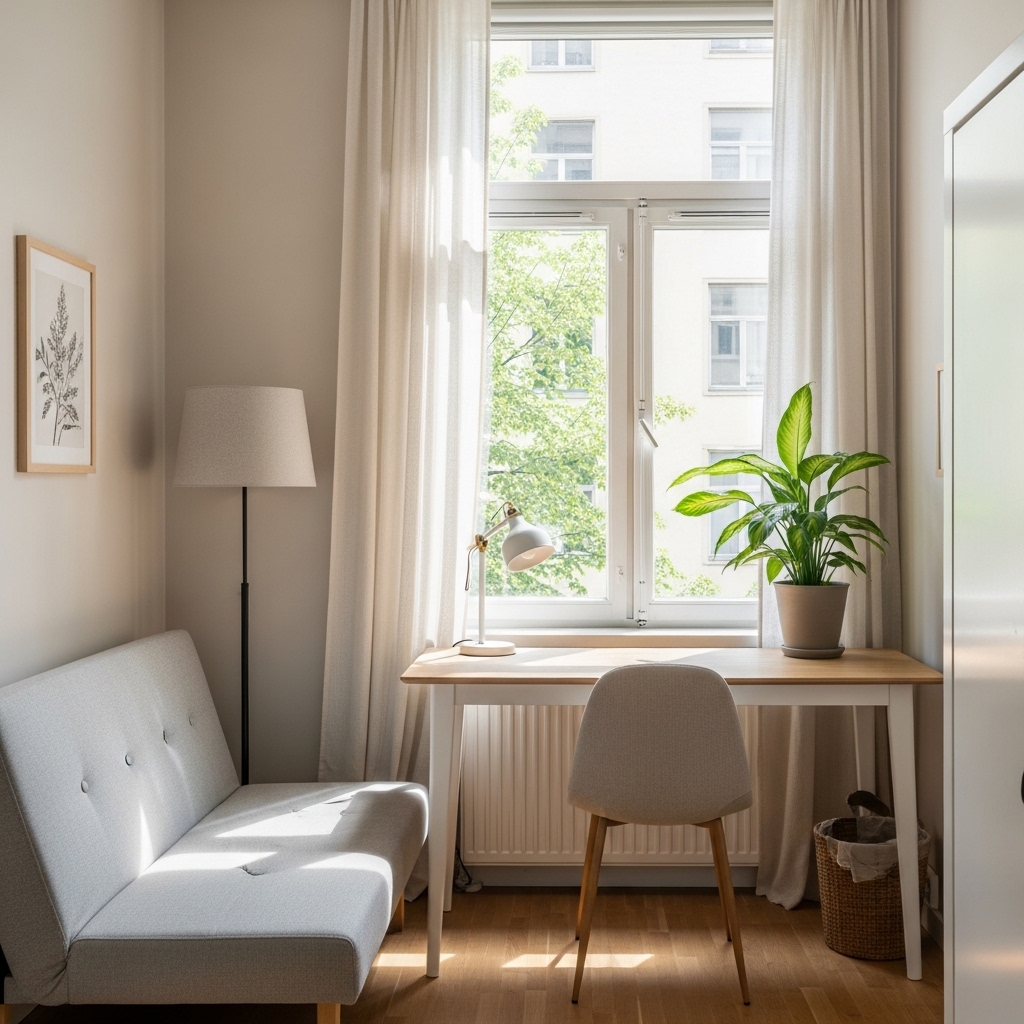
Great for: Apartments that feel darker than they should.
Position key furniture like sofas and desks near windows without blocking light. Keep tall items away from natural light sources.
Light distribution plays a major role in how large a space feels. Proper placement ensures the entire room benefits from available light.
Avoid placing bulky furniture directly in front of windows, as it cuts off brightness. Maintain open pathways for light.
Pro Tip: Use sheer curtains to maximize daylight without losing privacy.
12. Use Multipurpose Walls Instead of Decorative Walls
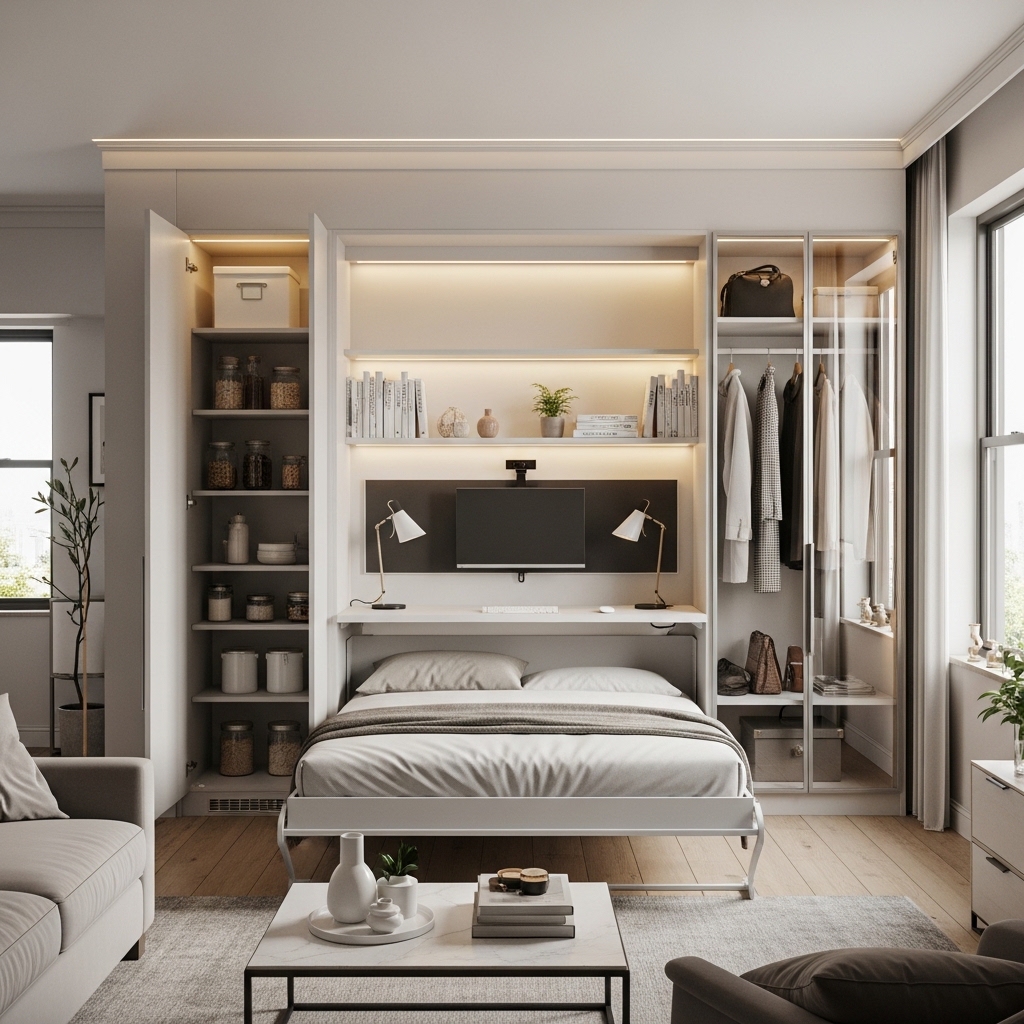
Ideal for: Tiny apartments where every surface should work harder.
Turn walls into functional areas with hooks, fold-down desks, or mounted organizers. Combine decor with usability.
This approach increases storage and function without adding extra furniture. It also keeps the floor area open.
Avoid overloading walls with too many elements, as it can feel cluttered. Keep spacing clean and intentional.
Pro Tip: Use symmetrical layouts for a more organized look.
13. Keep Walkways Clear to Improve Perceived Space
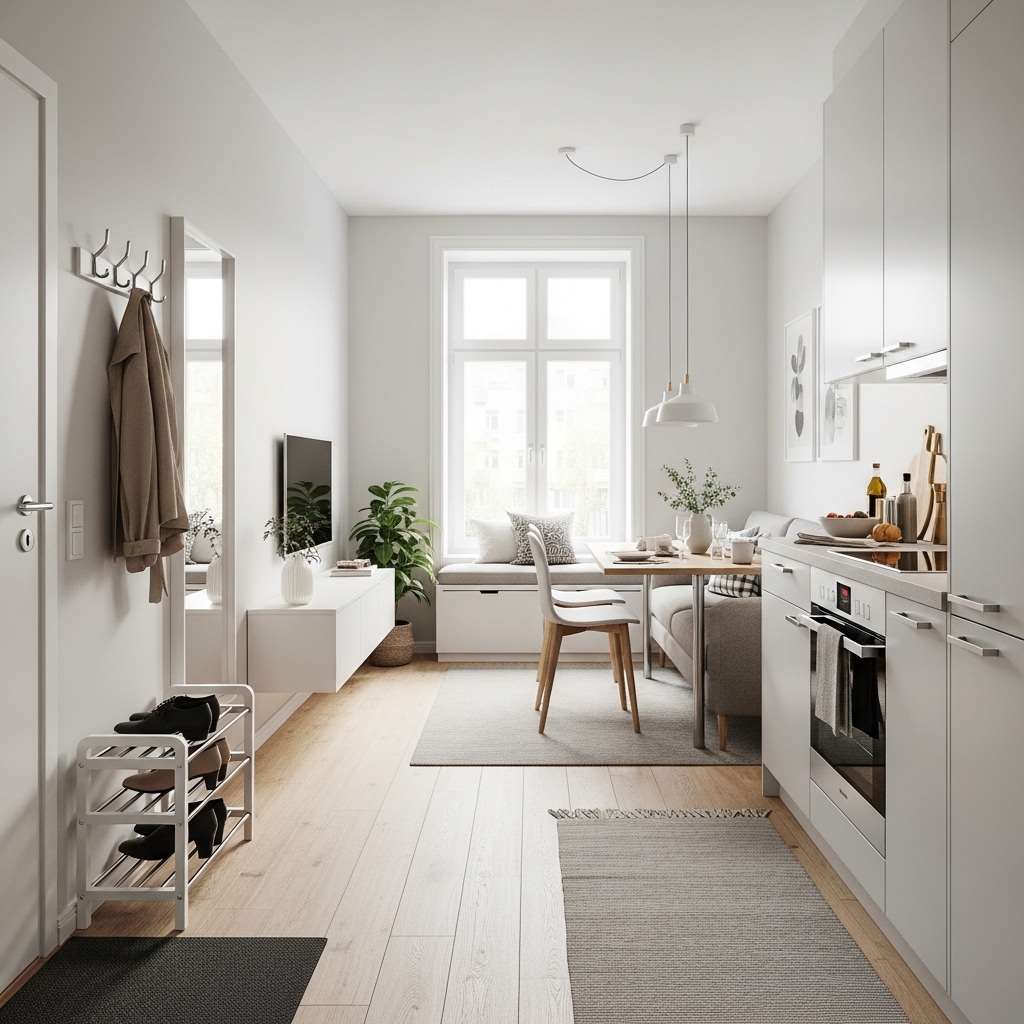
Best for: Apartments that feel cramped due to poor flow.
Ensure clear walking paths between furniture, ideally 24–30 inches wide. Rearrange pieces to maintain easy movement.
When movement is restricted, the space feels smaller regardless of actual size. Clear pathways improve both comfort and perception.
Avoid placing furniture in high-traffic areas or blocking entry points. Prioritize flow over symmetry.
Pro Tip: Test your layout by walking through it daily.
14. Use Hidden Storage in Unexpected Places
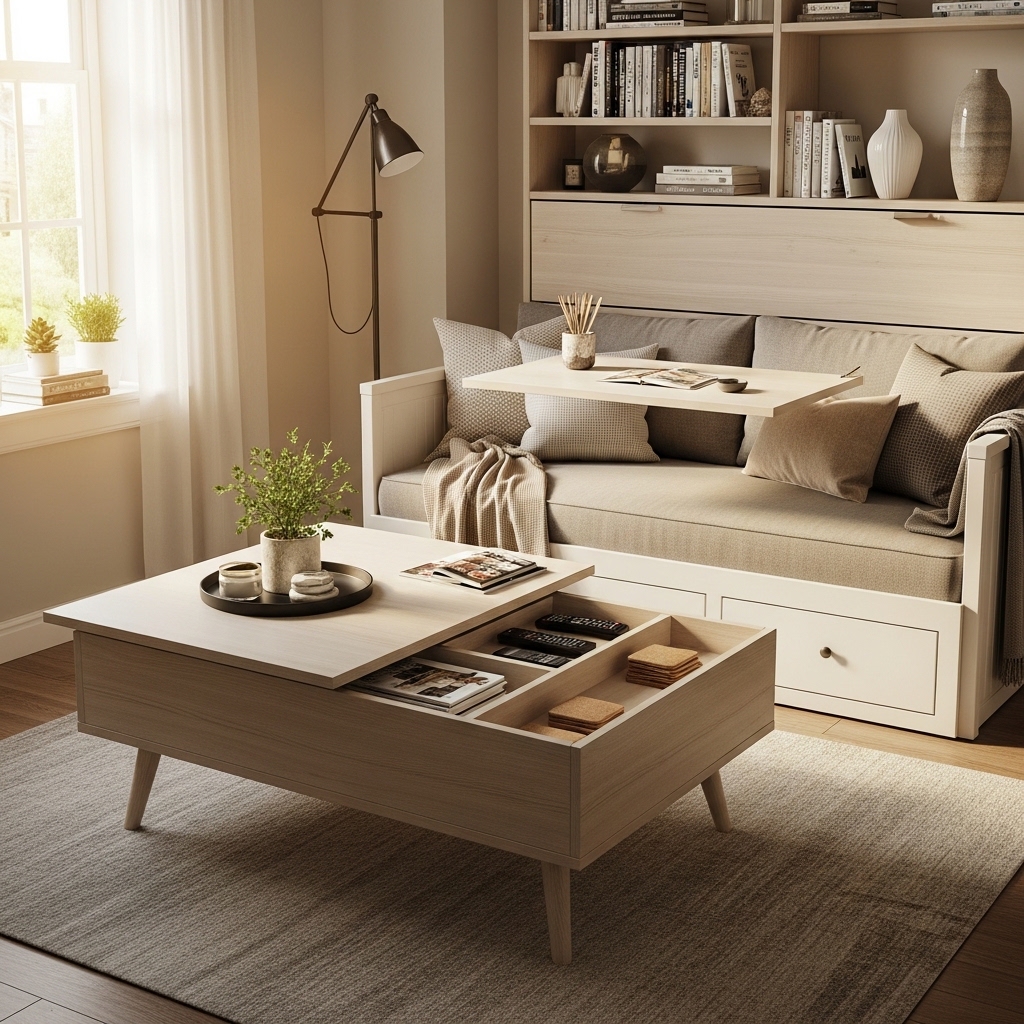
Great for: Apartments where storage always feels insufficient.
Look for under-sofa storage, behind-door organizers, or hidden compartments in furniture. Use every overlooked space wisely.
Hidden storage keeps items accessible without adding visual clutter. It also helps maintain a clean, minimal look.
Avoid storing items randomly without a system, as it leads to disorganization. Keep categories clear.
Pro Tip: Rotate seasonal items to keep storage manageable.
15. Edit Your Space Regularly to Maintain Functionality
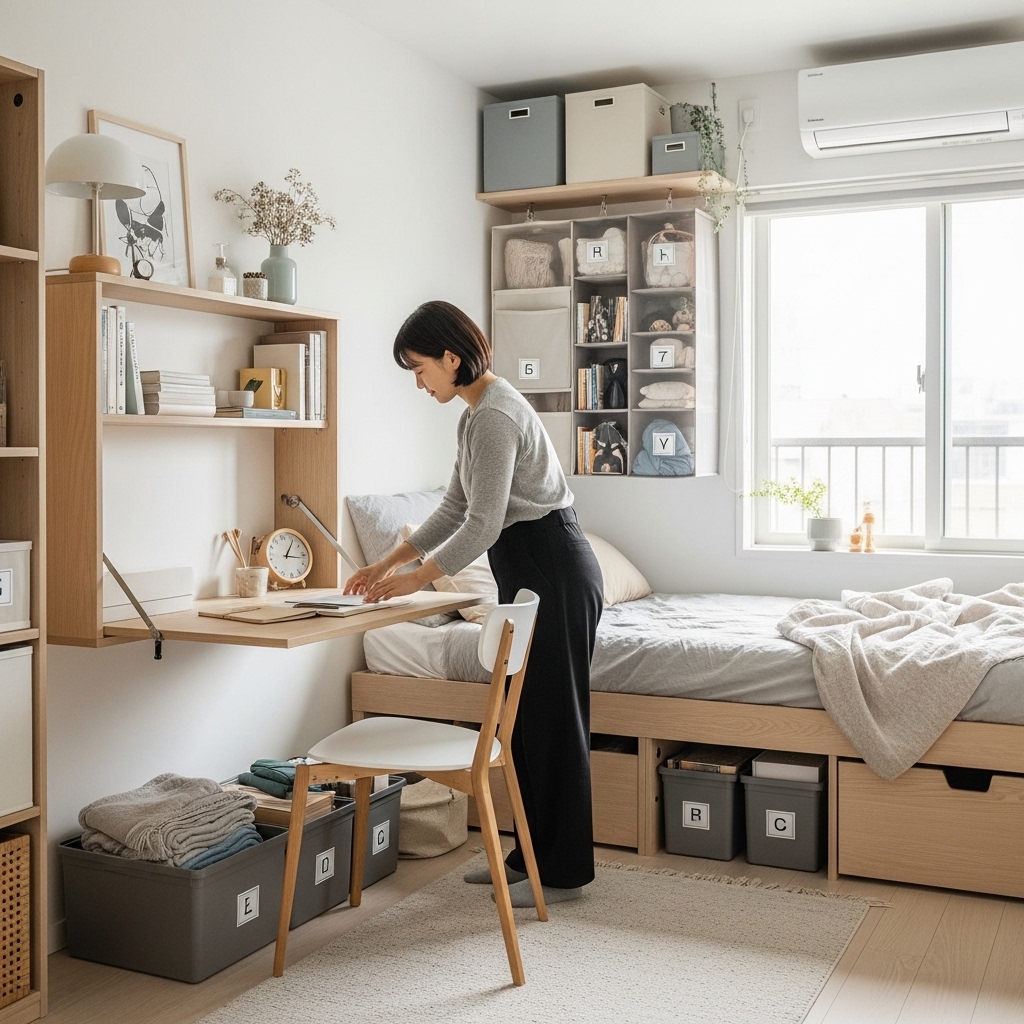
Ideal for: Anyone who notices clutter slowly returning over time.
Set a routine to remove unnecessary items and reassess your layout. Keep only what supports your daily lifestyle.
Tiny apartments require constant refinement to stay functional. Regular editing prevents buildup and keeps the space efficient.
Avoid treating decluttering as a one-time task—it’s an ongoing process. Focus on long-term usability.
Pro Tip: Remove one item for every new item you bring in.
Conclusion: Tiny Apartments Work Best When Every Choice Has a Purpose
Designing an apartment is not about limiting yourself it is about making smarter decisions that improve how your tiny apartment works every day. The successful tiny apartments are intentional they are not crowded with things.
First you need to think about the layout of your apartment and the light in your tiny apartment and the storage in your tiny apartment that is functional.
You can do these things before you add decor to your apartment. Your tiny apartment can feel open and organized and genuinely comfortable despite the size of your apartment with these ideas, for tiny apartments.