15 Kids Room Decor Ideas That Create Playful, Stylish & Growth-Friendly Spaces to Try
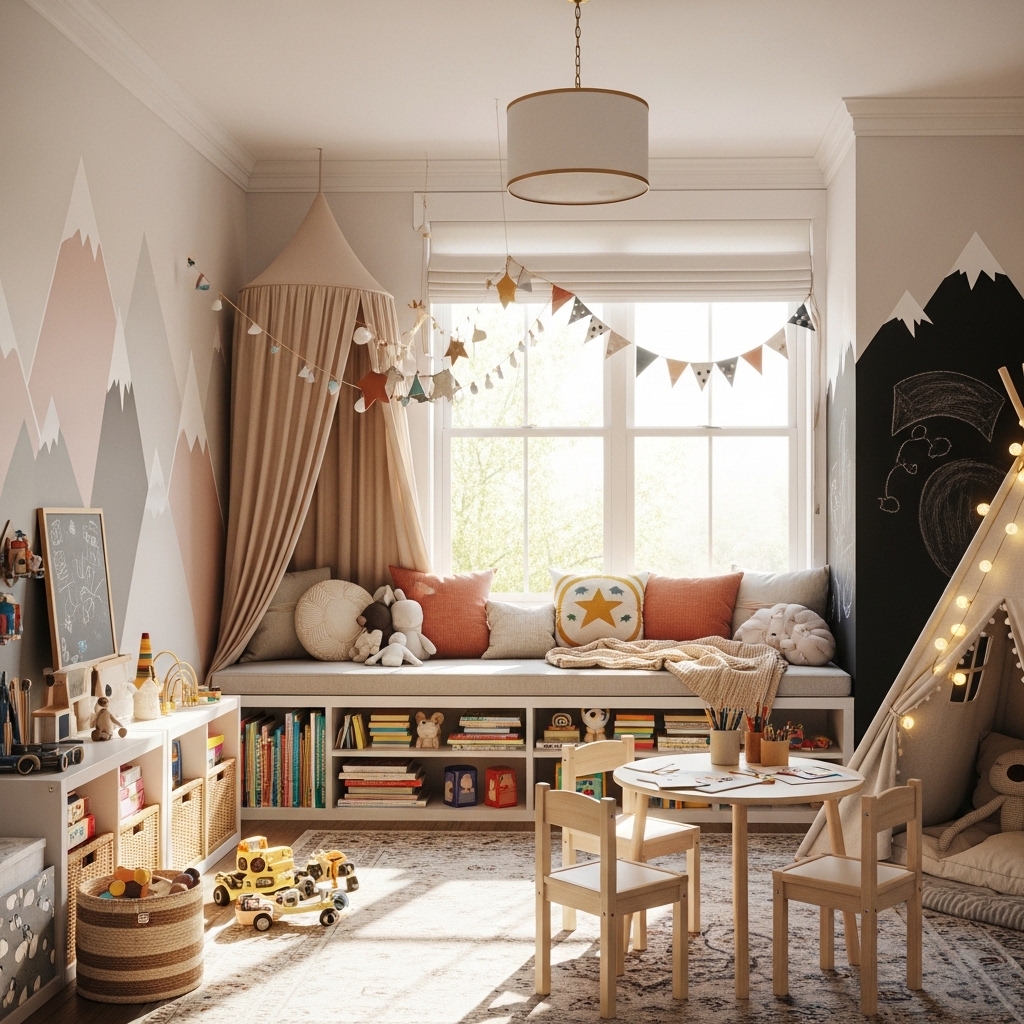
Decorating a child’s room is about more than choosing a color scheme and buying matching furniture.
You are creating an environment that shapes how your child plays, sleeps, learns, and dreams.
The best kids’ rooms grow with your child. They adapt from toddler to tween without a complete overhaul.
Playful does not mean plastic. Stylish does not mean fragile. Growth-friendly does not mean boring.
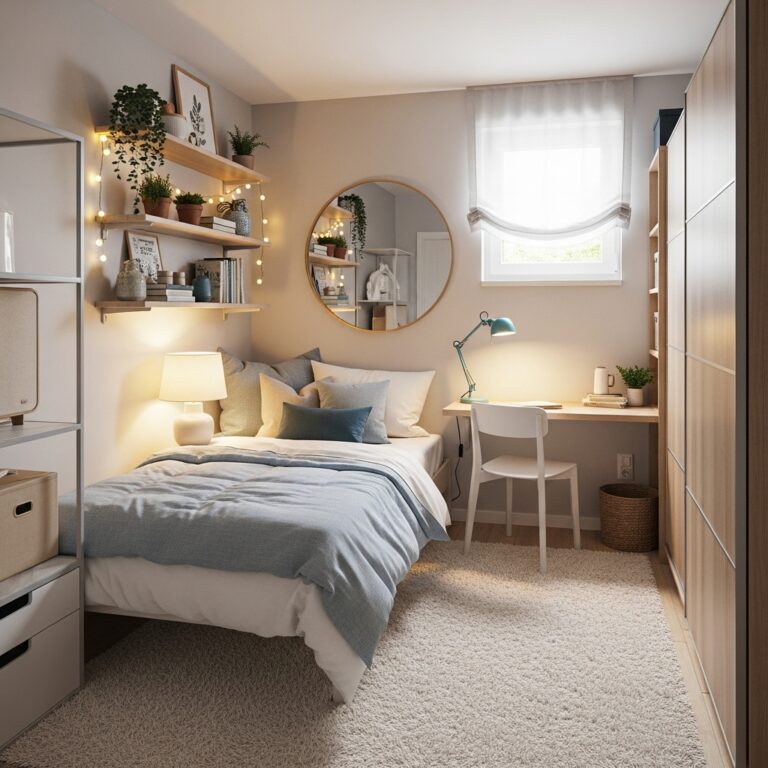
Your child deserves a room that reflects their personality while standing up to real daily life.
This guide delivers 15 kids room decor ideas that create playful, stylish, and growth-friendly spaces.
From removable wallpaper to statement rugs, each idea balances whimsy with lasting design.
1. Start with Removable Wallpaper on One Accent Wall
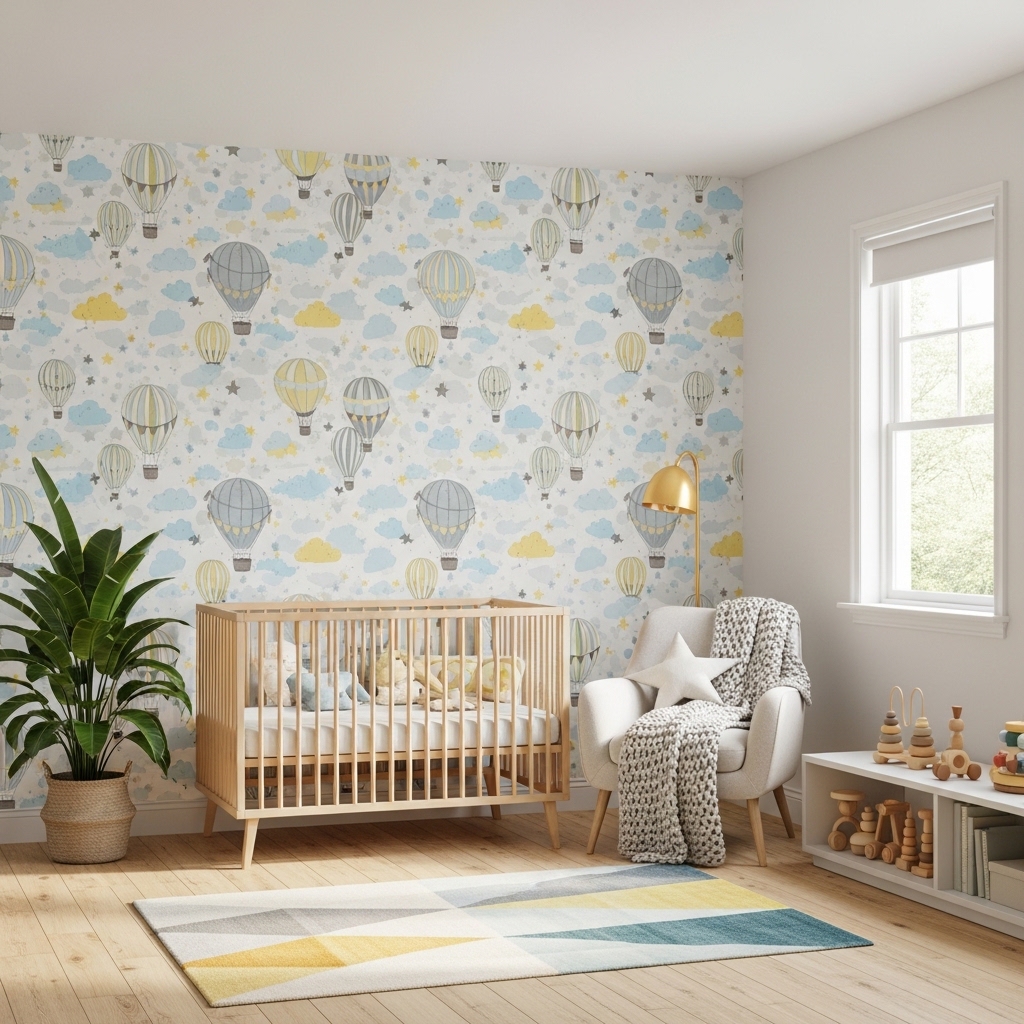
Use this idea when you want pattern and personality without committing to permanent changes.
Choose removable peel-and-stick wallpaper in a bold print like dinosaurs, space, or floral.
Apply it to one accent wall only. The wallpaper peels off cleanly when your child’s taste changes.
Paint requires repainting when trends change. Removable wallpaper updates your child’s room in an afternoon.
Pro Tip: Order a sample swatch first. Patterns look different on your wall than they do online.
Mistake to Avoid: Do not wallpaper all four walls. One accent wall makes the biggest impact with least effort.
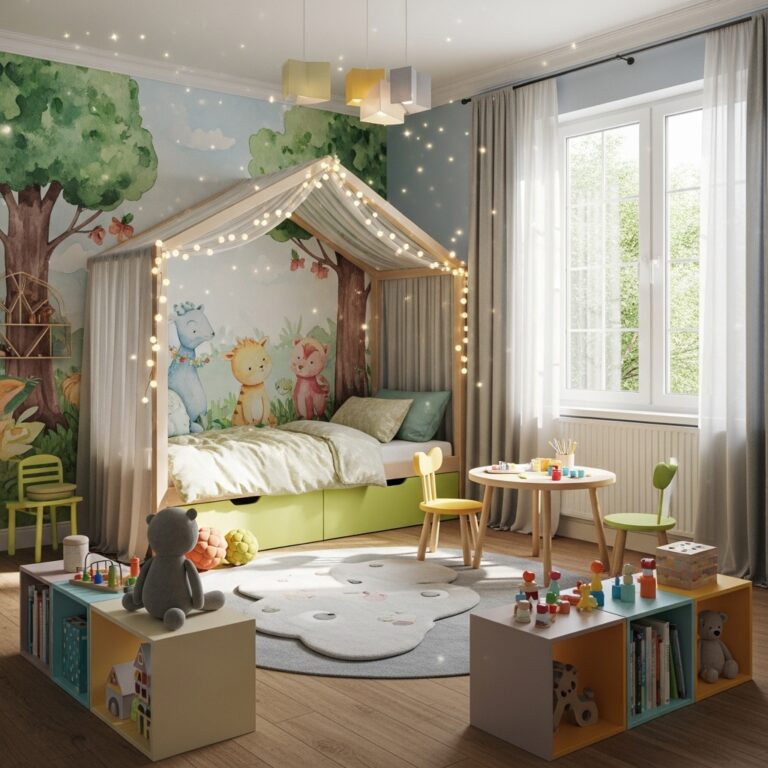
2. Hang a Statement Canopy or Teepee in the Corner
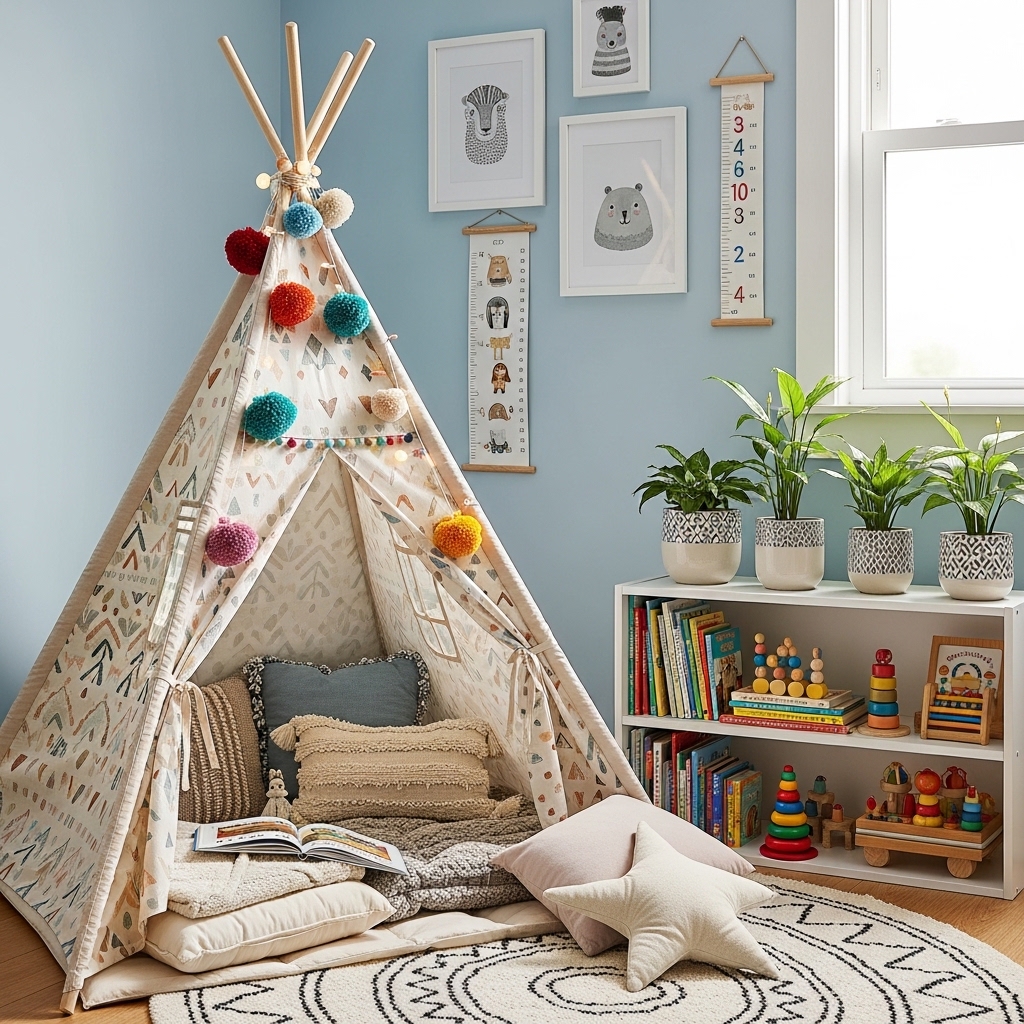
Choose this approach when your child’s room needs a focal point that invites imaginative play.
Set up a large canvas teepee or hang a flowing canopy from a ceiling hook in an empty corner.
The teepee becomes a reading nook, a fort, a castle, or a spaceship depending on your child’s mood.
An empty corner collects dust and offers no play invitation. A teepee says adventure lives here.
Pro Tip: Fill the inside with floor cushions and a battery-operated lantern. The lantern makes the space usable for evening play.
Mistake to Avoid: Do not use a teepee with long tie strings. Choose Velcro or snap closures for safety.
3. Display Your Child’s Artwork in a Gallery Wall
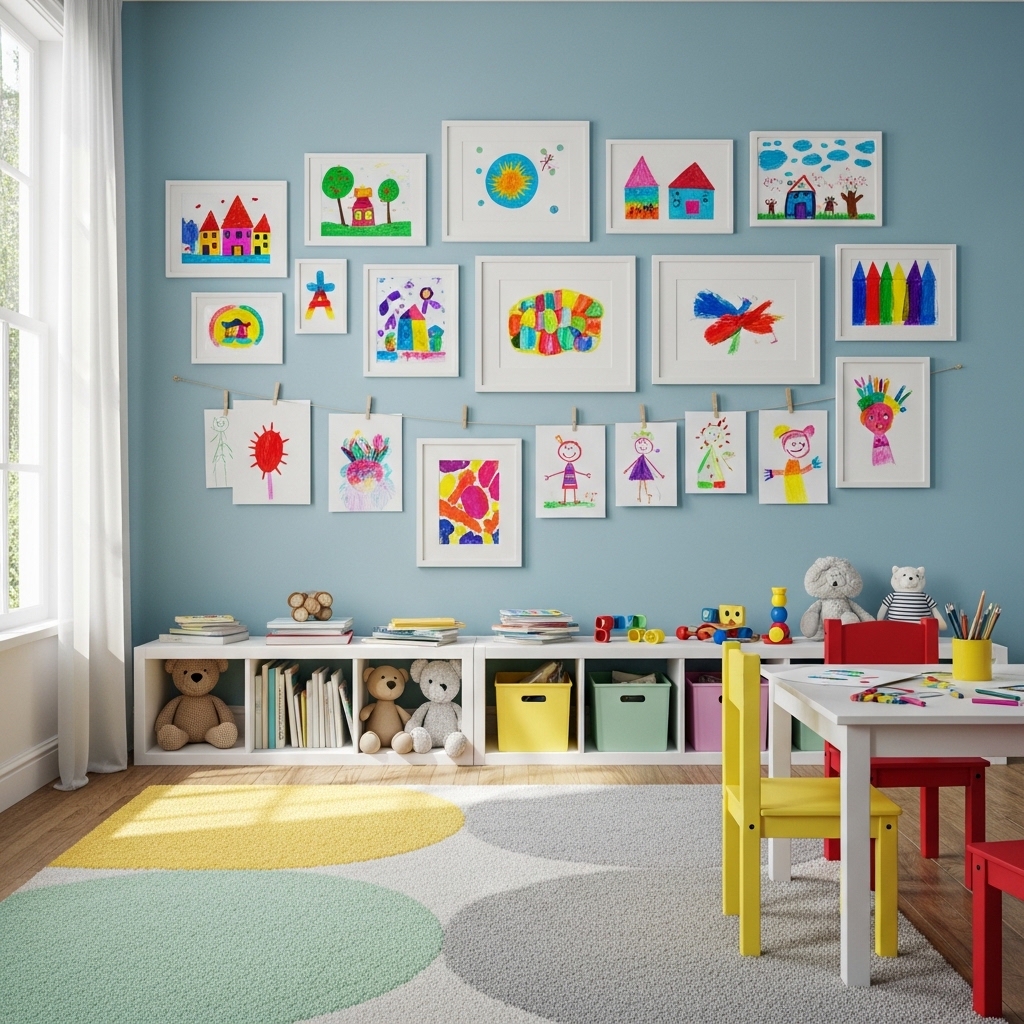
Apply this method when your child loves to create and you want to celebrate their work like fine art.
Frame your child’s best drawings and paintings in inexpensive matching frames. Arrange them at your child’s eye level.
Your child sees their work displayed proudly. Creativity, confidence, and self-esteem grow through this validation.
Unframed artwork gets crumpled and lost. A gallery wall says “what you make matters” to your child.
Pro Tip: Use acrylic frames instead of glass. Acrylic is shatterproof and safe for kids’ rooms.
Mistake to Avoid: Do not use expensive frames. Your child will create new masterpieces weekly. Swap art in and out often.
4. Paint a Chalkboard Wall for Daily Creativity
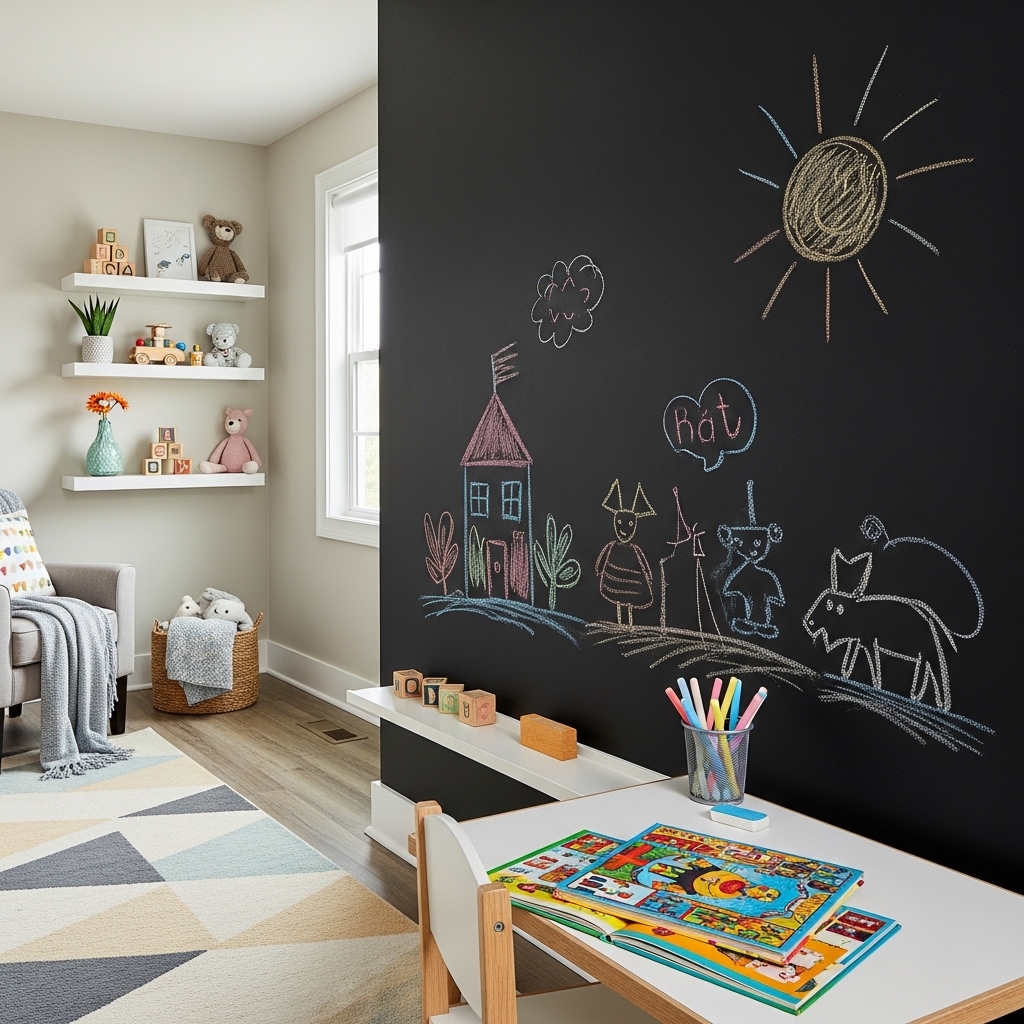
Use this strategy when your child loves to draw and you want to contain the mess to one surface.
Paint one entire wall section with chalkboard paint. Add a chalk ledge at the bottom for storage.
Your child draws, erases, and redraws endlessly. The wall changes every single day.
Paper gets used once and thrown away. A chalkboard wall offers infinite creativity without waste.
Pro Tip: Use dustless chalk. Dustless chalk keeps chalk dust off your floors, furniture, and your child’s clothes.
Mistake to Avoid: Do not paint the chalkboard wall near your child’s bed. Chalk dust floating through the air can irritate young lungs during sleep.
5. Install Floating Shelves for Display and Storage
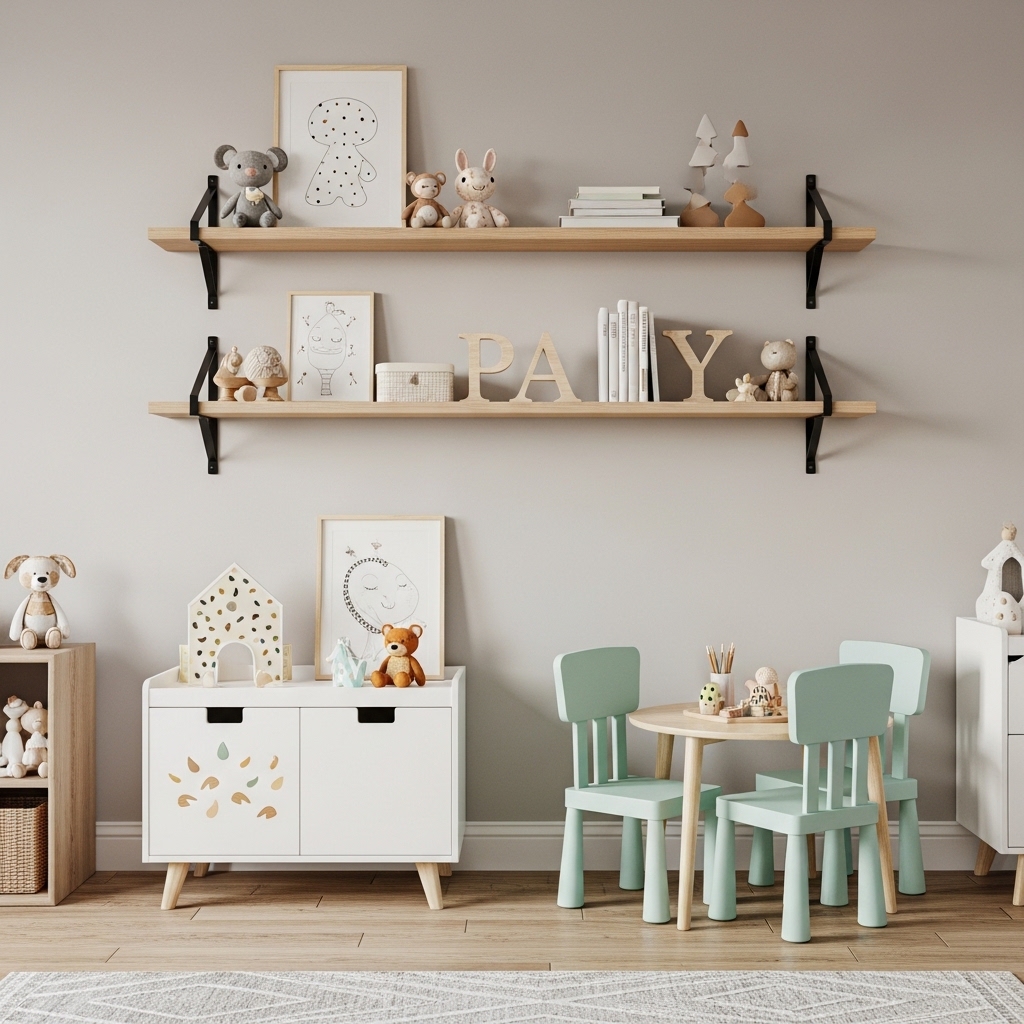
Choose this approach when your child has treasures to display and you want to keep the floor clear.
Mount two to three long floating shelves on one wall at your child’s eye level.
Display books facing forward, small toys, framed photos, and collections like seashells or rocks.
Floating shelves use vertical wall space. Your floor stays open for playing, crawling, and running.
Pro Tip: Style each shelf with a mix of heights. A tall object next to a short object next to a stack of books creates visual balance.
Mistake to Avoid: Do not overload shelves above your child’s bed. Items can fall onto your sleeping child.
6. Use a Large World Map as Wall Art
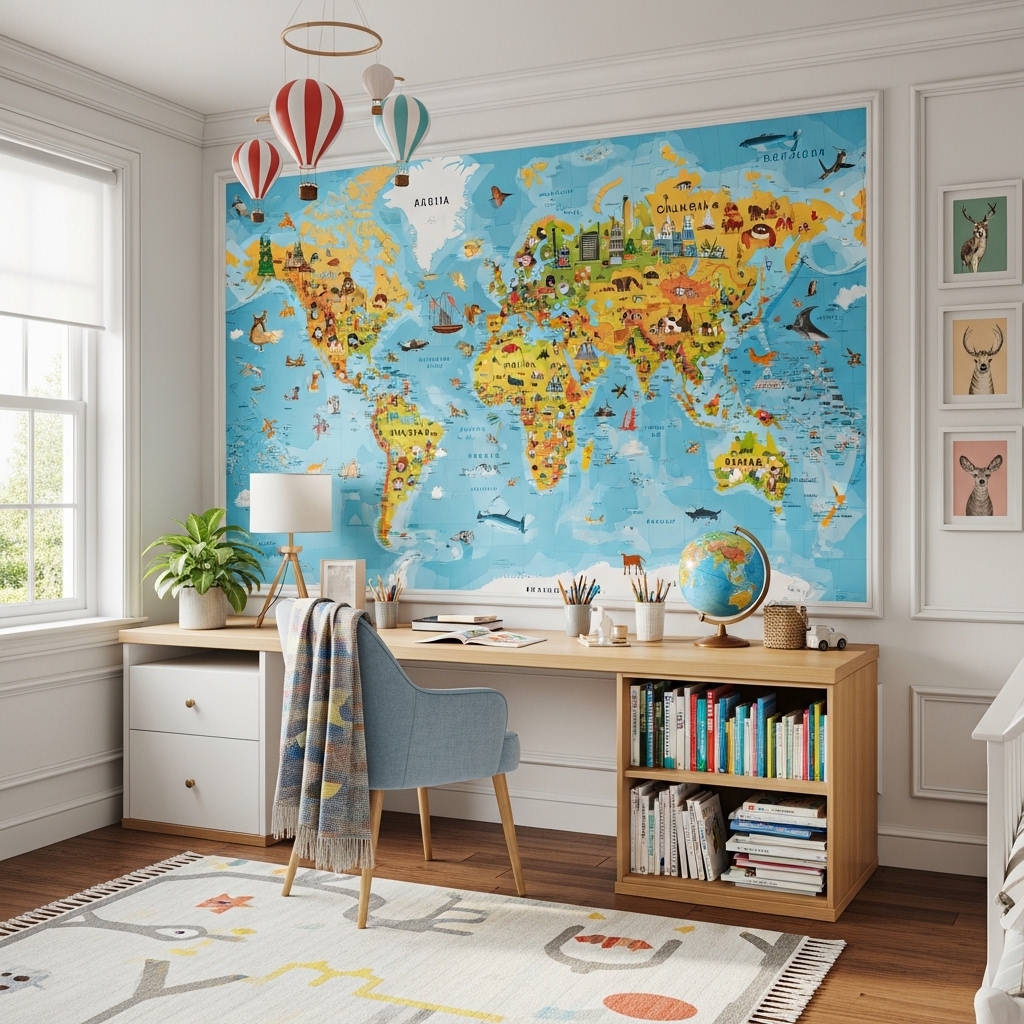
Apply this method when you want educational decor that stays relevant from preschool through high school.
Hang a large fabric or paper world map on one full wall. Choose a map with bright colors and clear continent outlines.
Your child sees countries and continents daily. You talk about where family lives and where you have traveled.
Animal decals lose appeal by age five. A world map stays interesting and useful until age eighteen.
Pro Tip: Add small push pins or stickers on places where family members live or where you have gone on vacation.
Mistake to Avoid: Do not use a political map with tiny country labels. Children need simple, clear continent shapes.
7. Paint a Growth Chart Ruler Directly on the Wall
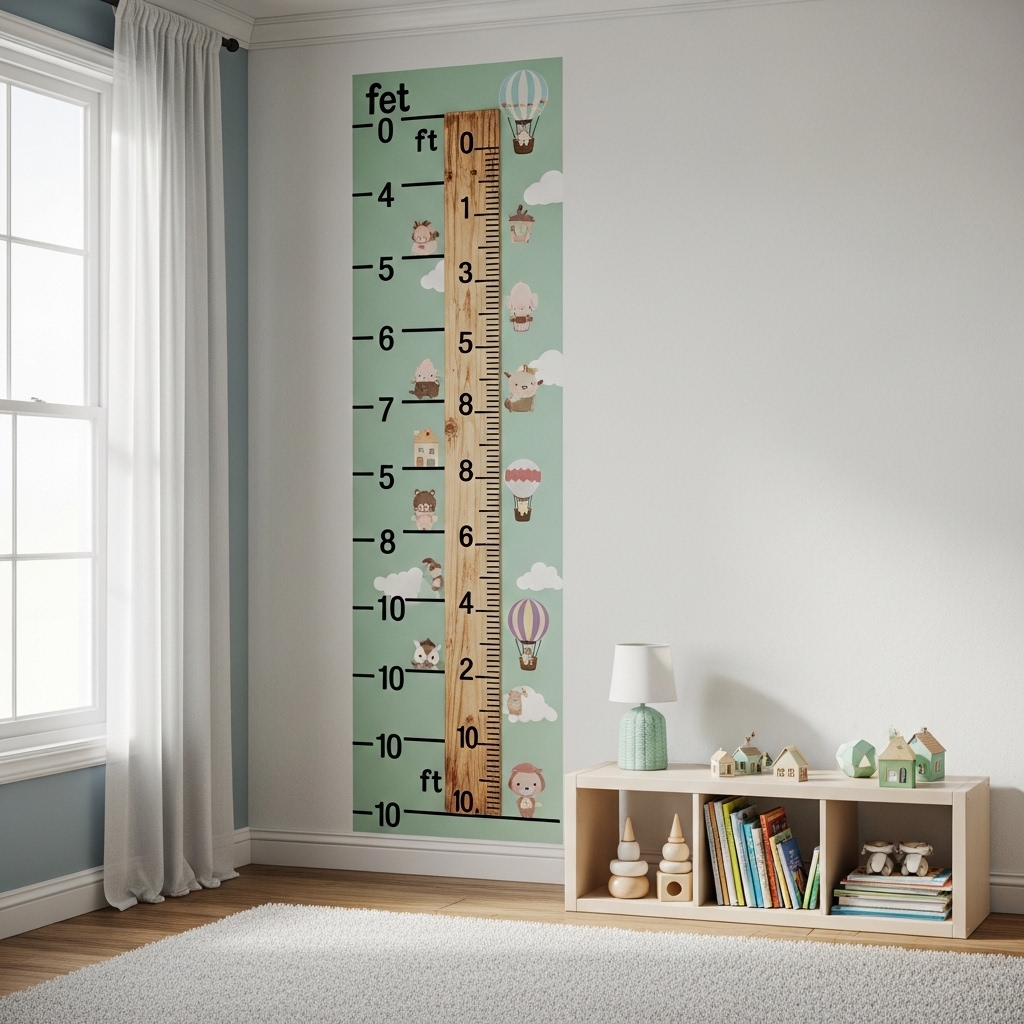
Use this idea when you want a keepsake that grows with your child for years and years.
Paint a large ruler directly on one wall. Mark inches from floor to 60 inches high.
You mark your child’s height every birthday directly on the wall. The marks become a family treasure.
Paper growth charts get lost in moves. A painted ruler stays with the house and becomes part of its history.
Pro Tip: Paint small animals or stars at each inch mark. Decorative details make measurement fun for young children.
Mistake to Avoid: Do not paint your ruler on a wall that might be removed during future renovation.
8. Hang a Collection of Vintage or Themed Flags
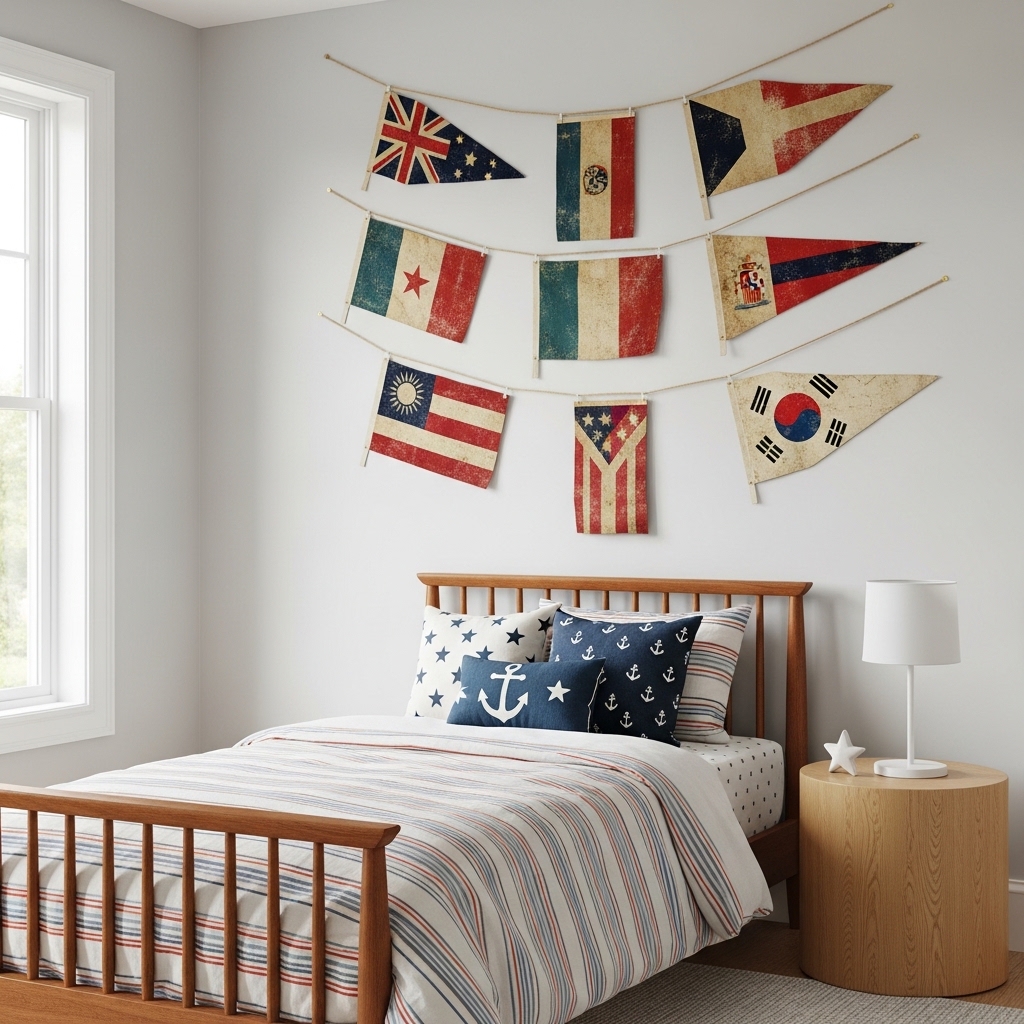
Choose this approach when your child has a specific interest like dinosaurs, space, or ocean life.
Hang a string of small fabric flags or pennants across one wall. Choose flags that match your child’s passion.
The flags add color, pattern, and a sense of celebration to your child’s room every single day.
Bare walls feel unfinished. A flag garland says “this room celebrates who you are.”
Pro Tip: Make your own flag garland from felt. Felt is soft, comes in every color, and requires no sewing.
Mistake to Avoid: Do not hang flags within reach of a toddler’s crib. Toddlers pull strings and fabric into cribs dangerously.
9. Install a Wall-Mounted Whiteboard for Daily Drawing
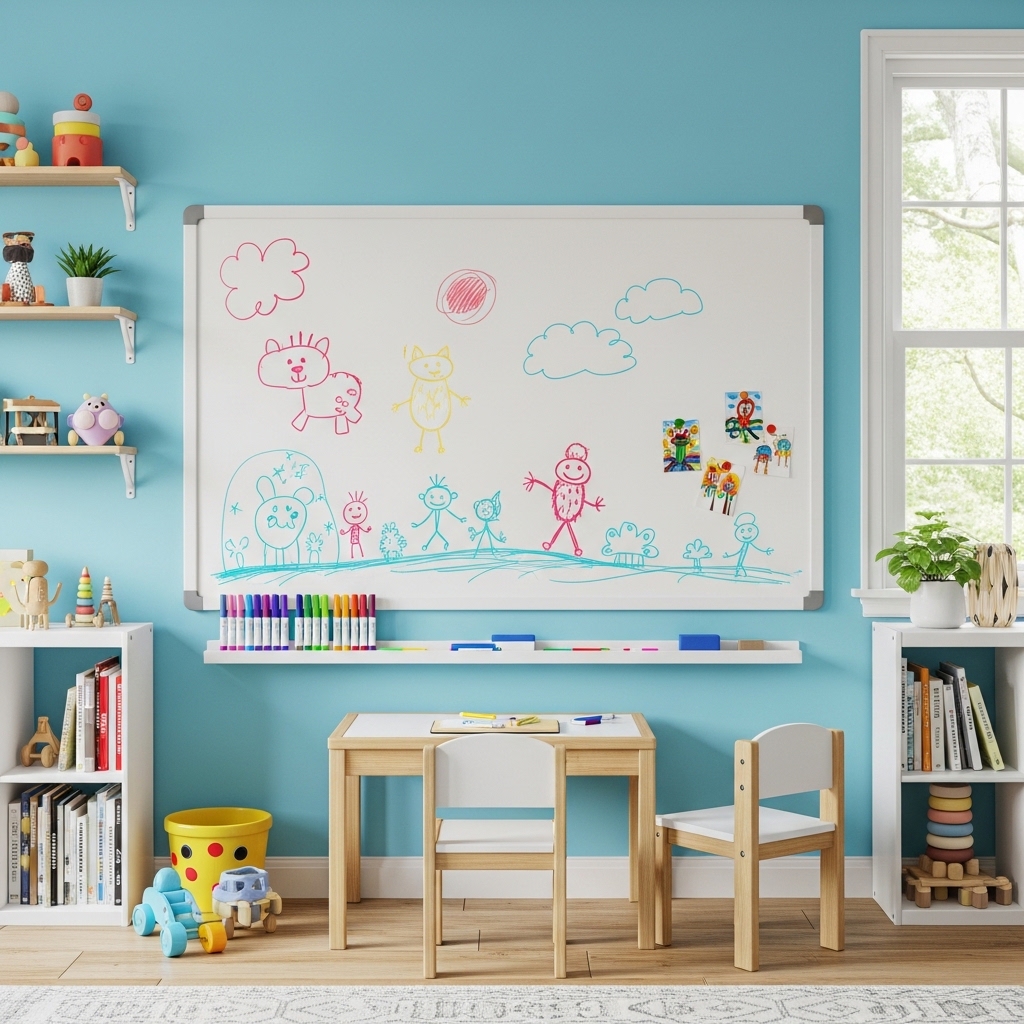
Apply this method when you want to contain drawing mess to one surface instead of all walls.
Mount a large whiteboard on a wall at your child’s height. Provide washable dry erase markers only.
Your child draws, erases, and draws again endlessly. Creativity and fine motor skills develop daily.
Paper gets used once and thrown away. A whiteboard offers infinite drawing without waste or clutter.
Pro Tip: Install a marker holder on the whiteboard frame. Markers stay organized and within your child’s reach at all times.
Mistake to Avoid: Do not use permanent markers near your whiteboard. One mistake ruins the surface permanently.
10. Use a Themed Area Rug to Anchor the Room
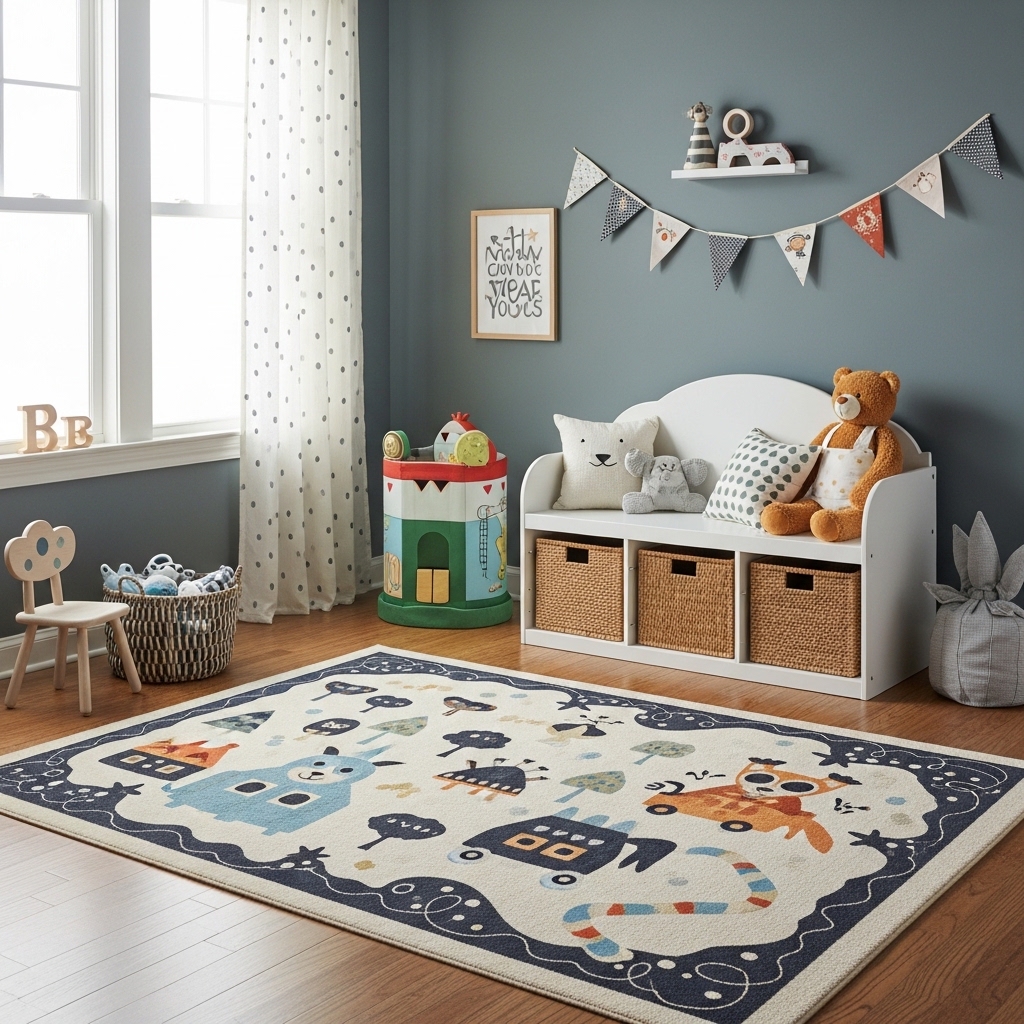
Use this strategy when your room needs a foundation that ties all the colors and patterns together.
Choose an area rug with a road map for toy cars, a galaxy print for space lovers, or a rainbow for colorful rooms.
The rug anchors your furniture arrangement and gives your child a defined play zone on the floor.
Bare floors feel cold and unfinished. A themed rug makes the room feel intentional and designed.
Pro Tip: Choose a rug with low pile or flat weave. Low pile rugs are easier to vacuum and do not trap crumbs and dust.
Mistake to Avoid: Do not buy a rug that is too small. Your rug should extend at least 18 inches beyond all sides of your child’s bed or play area.
11. Create a Photo Wall of Family and Friends
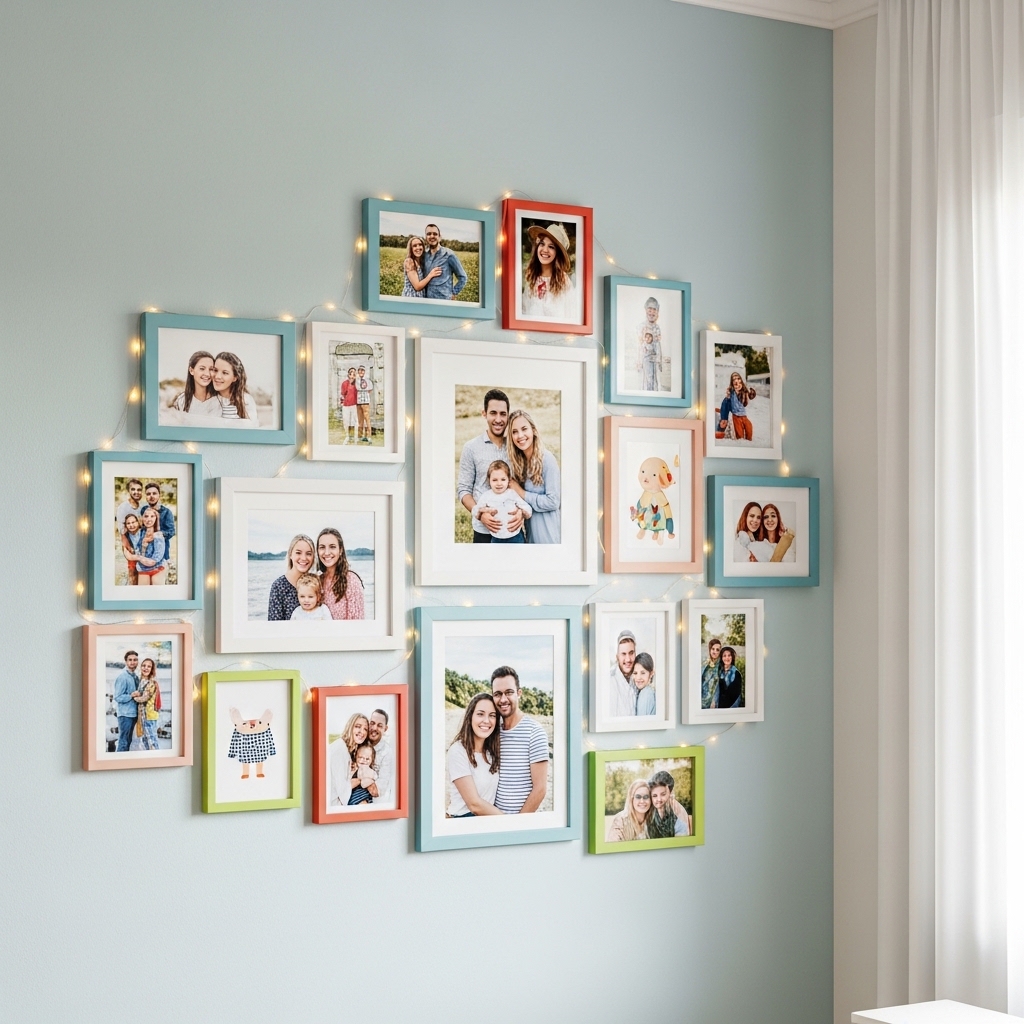
Choose this approach when you want your child to feel connected to loved ones throughout the day.
Print photos of immediate family, grandparents, cousins, and close friends. Arrange them in a cluster on one wall.
Your child sees familiar faces daily. The wall reinforces who loves them and where they belong.
Generic art is fine. A family photo wall makes your child the center of their own world.
Pro Tip: Use clipboards hanging on the wall instead of frames. Clipboards make swapping photos easy as your child grows.
Mistake to Avoid: Do not hang photos too high. Keep photos at your child’s eye level so they can see loved ones clearly.
12. Hang String Lights for Warm, Gentle Lighting
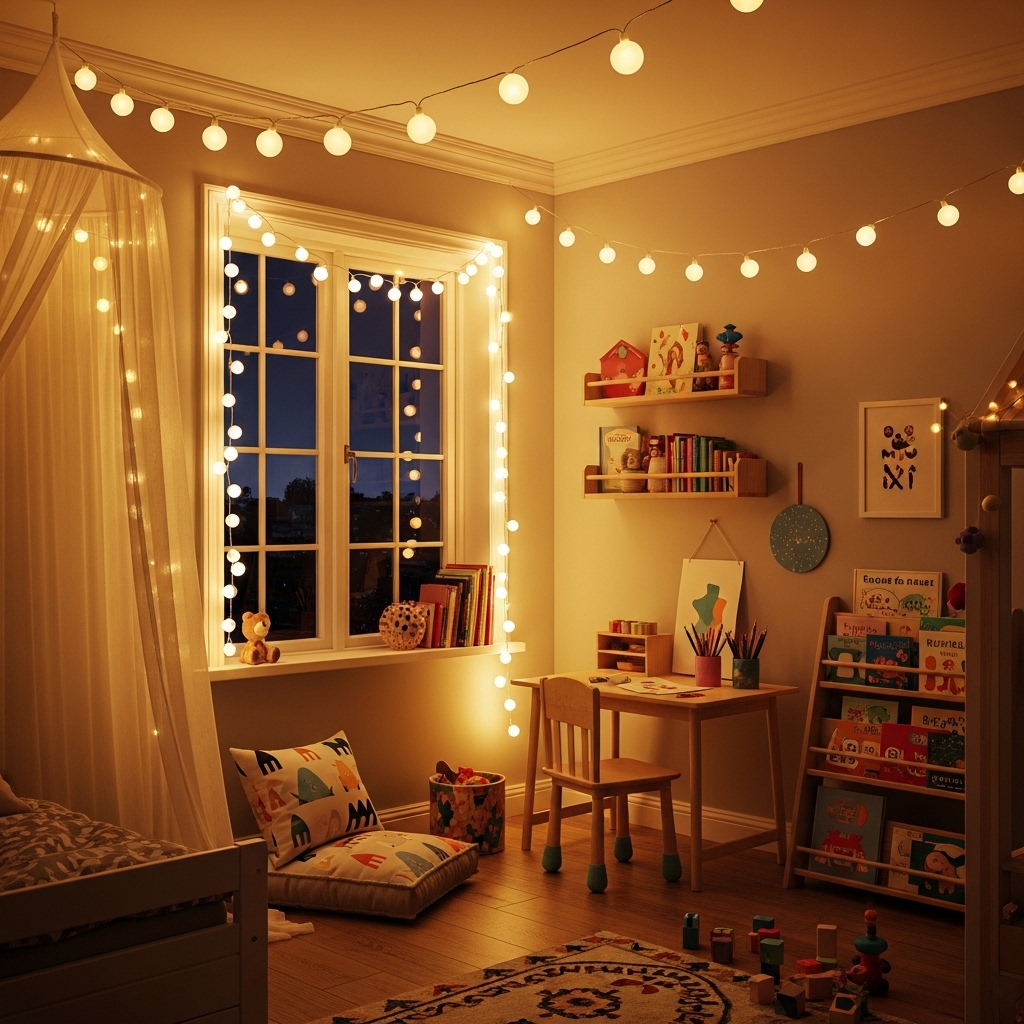
Apply this method when your child is afraid of the dark or needs a calming bedtime atmosphere.
Hang battery-operated string lights along the top of the wall, around the window, or above the bed.
The warm glow creates a cozy, magical feeling. Your child falls asleep more easily with gentle light.
Overhead lights are harsh and clinical. String lights are soft, warm, and feel like a hug.
Pro Tip: Choose lights with a remote control and timer. Set the timer for 30 minutes. The lights turn off after your child falls asleep.
Mistake to Avoid: Do not use plug-in string lights. Cords create trip hazards. Battery-operated lights only for kids’ rooms.
13. Use Colorful Storage Bins That Look Like Decor
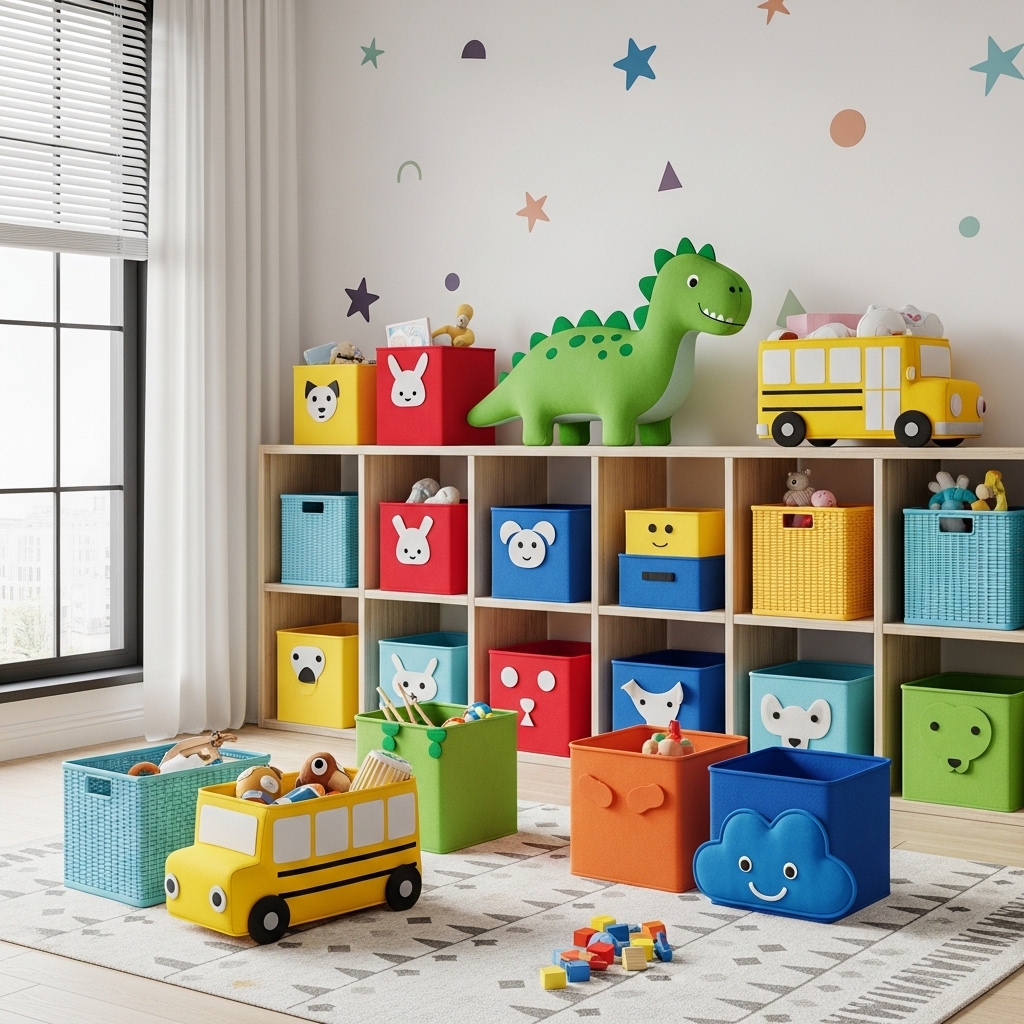
Use this idea when you need storage but want to avoid ugly plastic bins ruining your design.
Buy fabric storage bins in bright colors or fun patterns. Use them on open shelves or in cube storage units.
The bins hide clutter while adding color and texture to your child’s room. Storage becomes decor.
Clear plastic bins show every mess. Solid fabric bins hide everything and look beautiful doing it.
Pro Tip: Label each bin with a picture label. Your child learns to put things away when they know exactly where each item belongs.
Mistake to Avoid: Do not buy bins that are too large. Large bins become dumping grounds for random items. Smaller bins encourage categorization.
14. Paint a Single Large Shape Behind the Bed
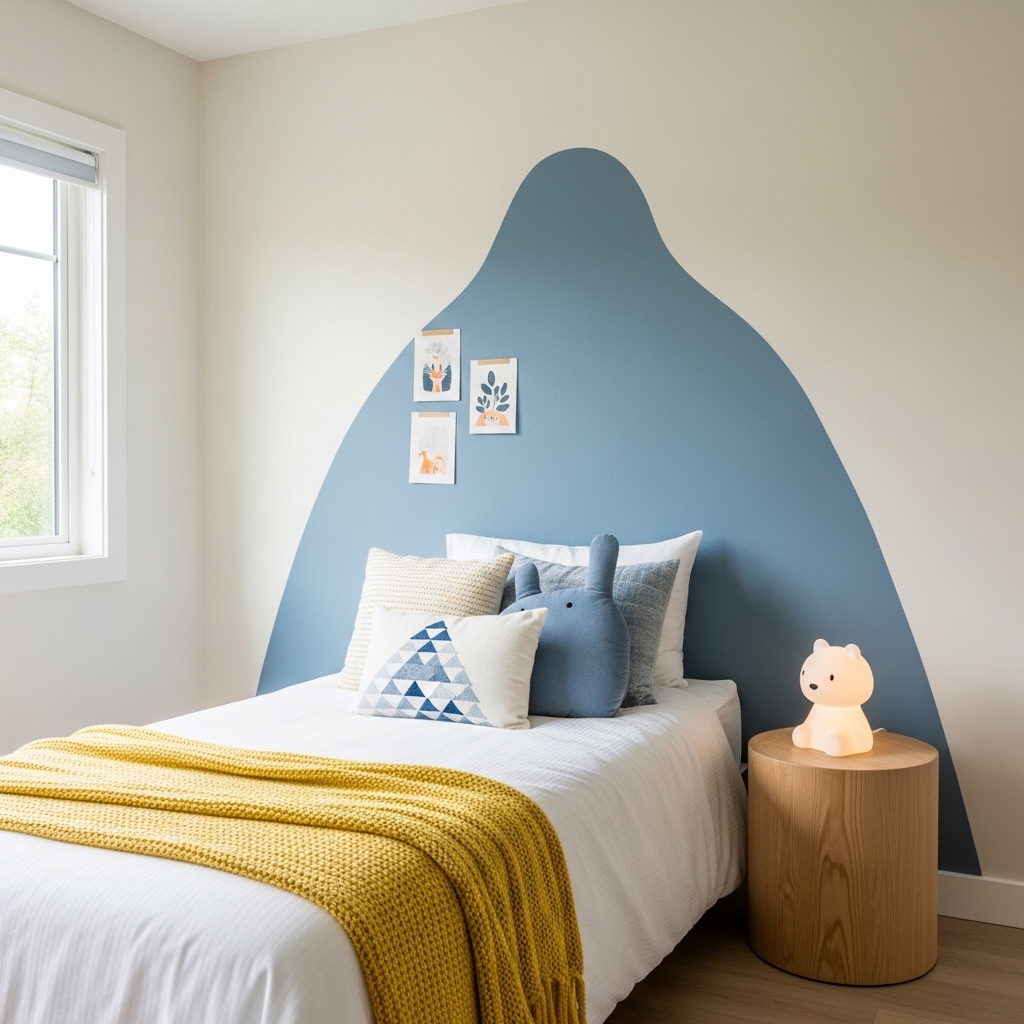
Choose this approach when you want a dramatic focal point without painting an entire accent wall.
Paint a large circle, arch, or cloud shape directly behind your child’s bed. Use a contrasting color.
The shape frames your child’s sleeping area like a piece of art. The look is modern and completely unique.
A plain wall behind the bed offers nothing special. A painted shape creates a designer look for under $20.
Pro Tip: Use a string tied to a pencil to draw your perfect circle or arch before painting.
Mistake to Avoid: Do not paint your shape too small. The shape should be at least 50 percent wider than your child’s bed.
15. Display Collections in Clear Acrylic Risers
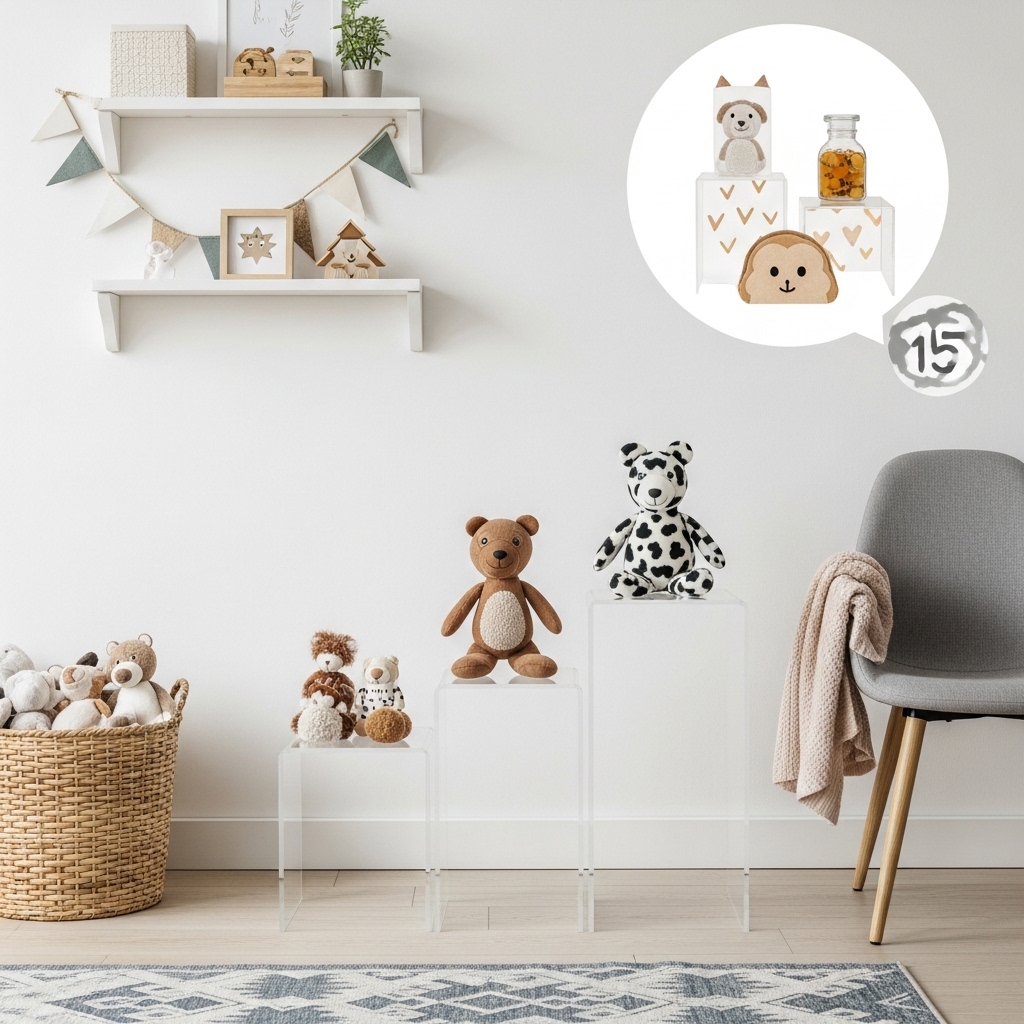
Apply this method when your child collects small treasures like rocks, seashells, or toy figures.
Arrange clear acrylic risers and display cases on a shelf or dresser. Group your child’s collection by category.
The acrylic risers keep collections organized and visible. Your child’s treasures look like museum exhibits.
Loose collections look like clutter. Collections displayed in risers look like intentional, curated decor.
Pro Tip: Use risers of different heights. Tall risers in the back, short risers in the front. Your child sees every item clearly.
Mistake to Avoid: Do not use glass risers in a young child’s room. Acrylic risers only. Glass breaks dangerously when knocked over.
Conclusion
A beautiful kids’ room does not require a complete renovation or a designer budget.
The 15 ideas above prove that playful, stylish, and growth-friendly spaces come from smart choices.
Start with removable wallpaper on one accent wall. Hang a statement canopy or teepee in the corner.
Display your child’s artwork in a gallery wall. Paint a chalkboard wall for daily creativity.
Install floating shelves for display and storage. Use a large world map as wall art.
Paint a growth chart ruler directly on the wall. Hang a collection of vintage or themed flags.
Install a wall-mounted whiteboard for daily drawing. Use a themed area rug to anchor the room.
Create a photo wall of family and friends. Hang string lights for warm, gentle lighting.
Use colorful storage bins that look like decor. Paint a single large shape behind the bed.
Display collections in clear acrylic risers so your child’s treasures look like museum exhibits.
Start with one idea that excites your child. Implement it together this weekend.
Then add another idea next month. Your child’s room should evolve as they grow.
The best kids’ rooms are never truly finished. They change as your child changes.
Take back the bedroom from boring beige starting today. Create a space your child will never want to leave.