15 Kids Bedroom Storage Ideas That Conquer Clutter & Create Calm, Organized Spaces to Love
Kids accumulate stuff faster than any other humans on the planet. Toys, books, art supplies, clothes.
The stuff multiplies when you are not looking. Birthday parties bring new stuff. Holidays bring more stuff.
A disorganized kids’ bedroom creates stress for you and overwhelm for your child.
Too many options scattered everywhere makes it impossible for your child to focus or clean up.
The right storage systems turn chaos into calm. Clutter disappears. Your child learns to put things away.
This guide delivers 15 kids bedroom storage ideas that conquer clutter and create organized spaces.
From under-bed solutions to vertical systems, each idea is tested by real parents who survived the toy explosion.
1. Install Low Open Shelving with Clear Bins
Use this idea when your child cannot see their toys and constantly asks you where everything is.
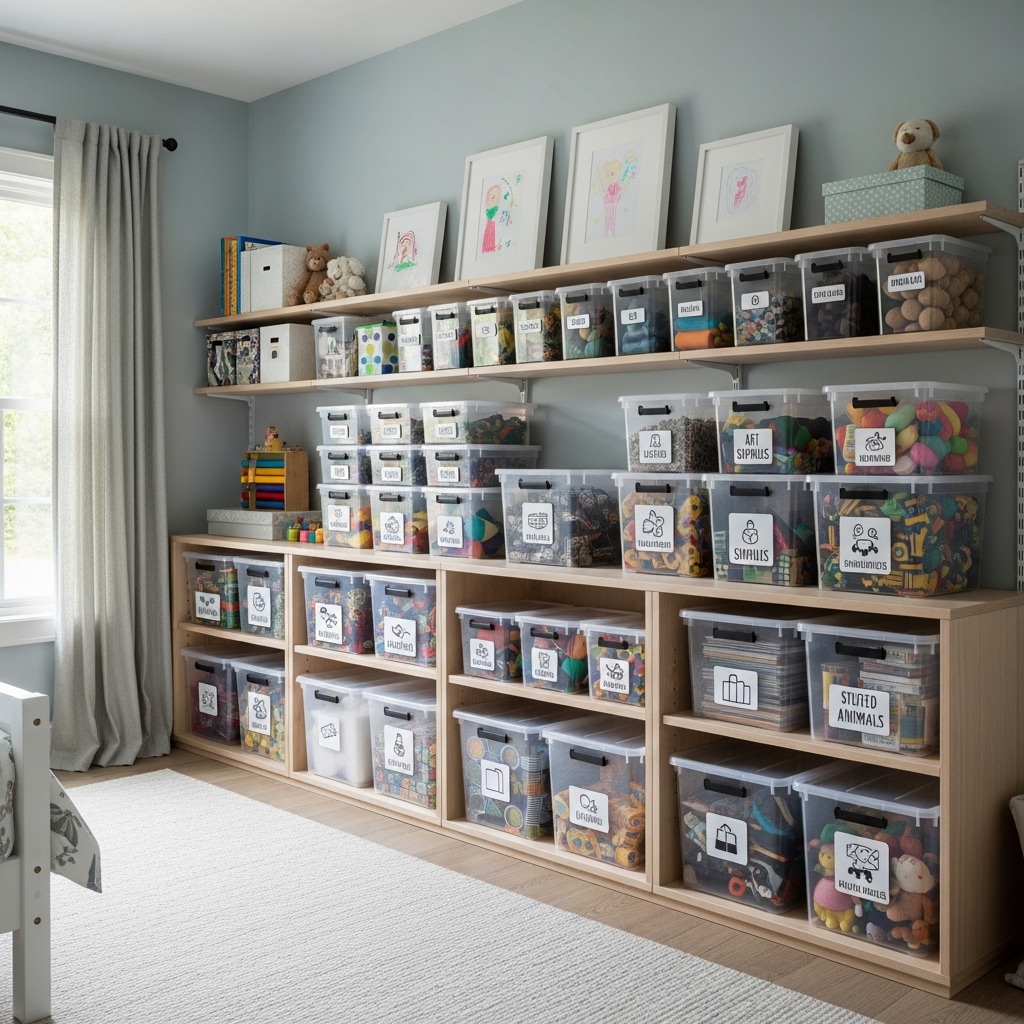
Mount open shelves no higher than 24 inches from the floor. Use clear bins without lids on the shelves.
Your child sees every toy through the clear bins. No lids means they pull the bin out and play immediately.
Solid bins hide everything. Lids frustrate small hands. Clear bins with no lids solve both problems.
Pro Tip: Take a photo of each bin’s contents. Tape the photo to the bin front. Your child matches toys to pictures during cleanup.
Mistake to Avoid: Do not overfill your bins. Each bin should hold one category of toys. Blocks in one bin. Cars in another.
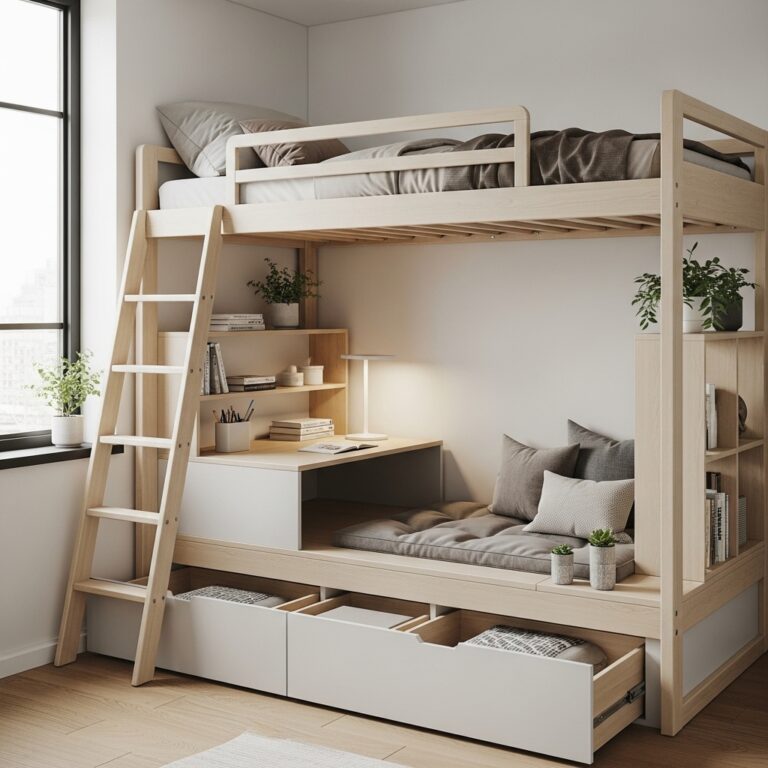
2. Use Under-Bed Storage Drawers on Wheels
Choose this approach when your child’s floor is covered with toys and you have unused space under the bed.
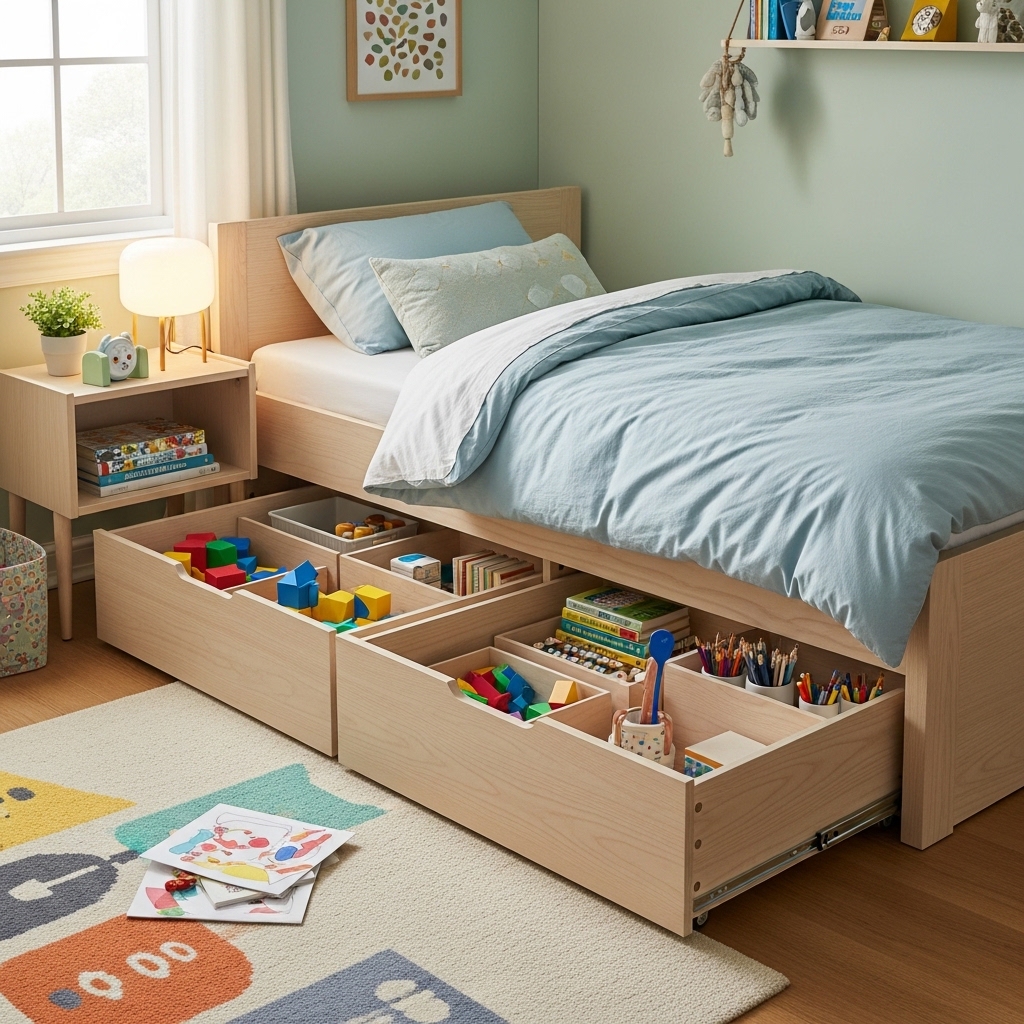
Buy low-profile storage drawers on wheels that slide under your child’s bed frame.
Store off-season clothes, extra bedding, or large toy sets in the drawers. The wheels make access easy.
The space under your bed is valuable real estate. Rolling drawers turn wasted space into prime storage.
Pro Tip: Use clear drawers or label each drawer with a picture. Your child knows exactly what is in each drawer without opening it.
Mistake to Avoid: Do not buy drawers that are taller than the space under your bed. Measure the gap before purchasing anything.
3. Hang a Wall-Mounted Pegboard for Frequently Used Toys
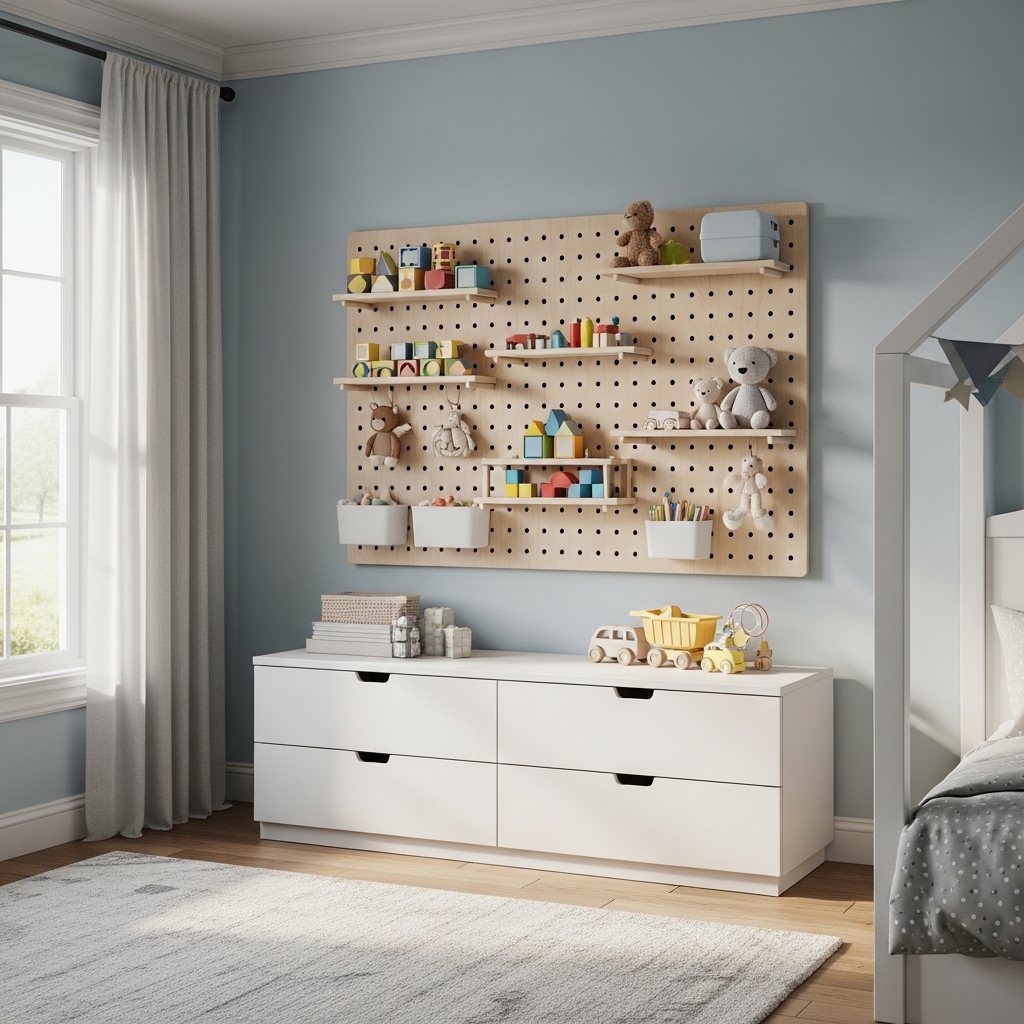
Apply this method when small toys end up scattered everywhere because they have no designated home.
Mount a large pegboard on one wall at your child’s height. Add hooks, small baskets, and shelves.
Hang frequently used toys like dress-up clothes, art smocks, and bags of building bricks.
Pegboards keep visible toys organized. Your child sees where each item belongs and puts it back.
Pro Tip: Paint your pegboard a bright color that matches your child’s room. A colorful pegboard looks like decor, not just storage.
Mistake to Avoid: Do not hang heavy toys on pegboard hooks. Use lightweight items only. Save heavy toys for floor bins.
4. Create a Toy Rotation System with Labeled Bins
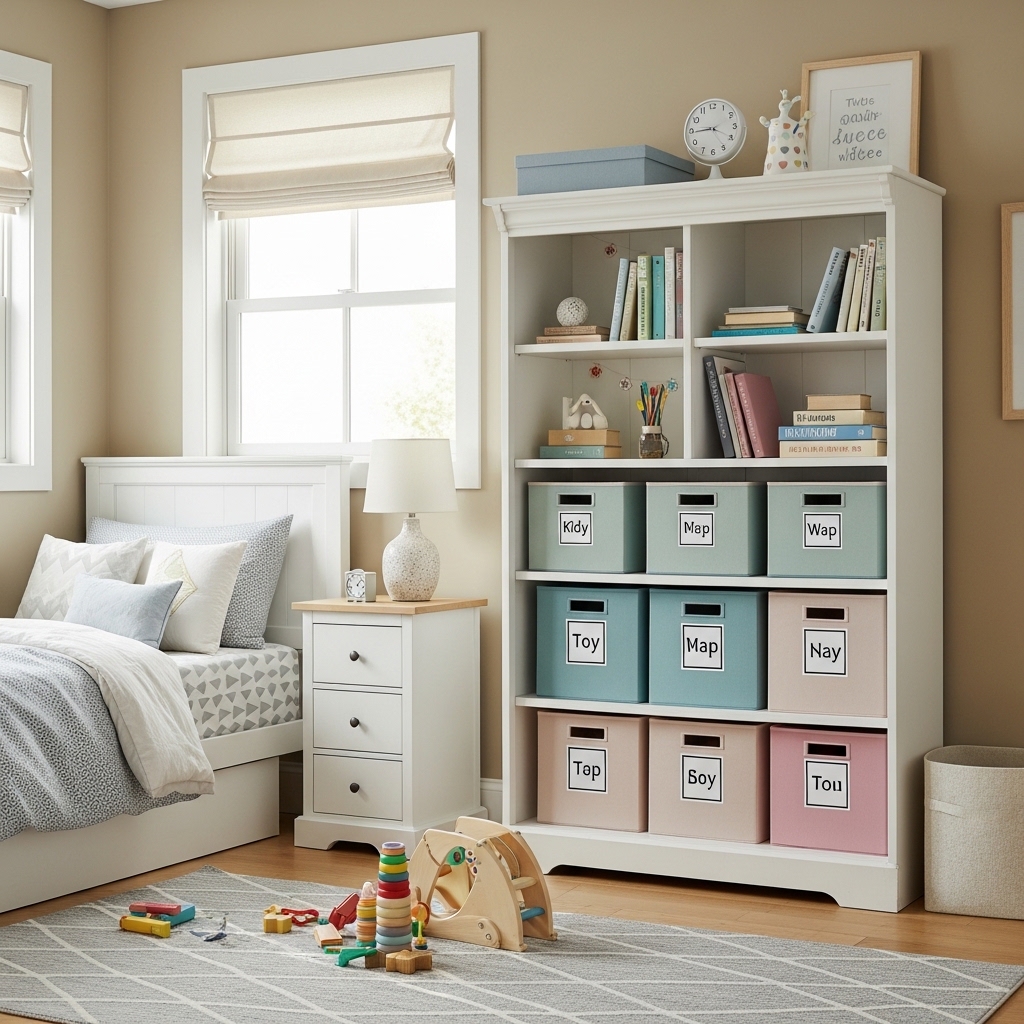
Use this strategy when your child has too many toys and plays with none of them.
Divide toys into three or four bins. Label bins “Week 1,” “Week 2,” “Week 3,” and “Week 4.”
Keep one bin accessible in the room. Store the other bins in a closet or garage.
Rotate bins every Sunday. Your child rediscovers old toys each week and stays engaged with everything.
All toys accessible at once overwhelms your child. A rotation system keeps play fresh and reduces clutter.
Pro Tip: Store rotation bins out of sight. A closet or high shelf works perfectly. Out of sight means out of mind until rotation day.
Mistake to Avoid: Do not rotate books. Keep all books accessible at all times. Reading the same book repeatedly builds language skills.
5. Install a Closet System with Adjustable Shelves
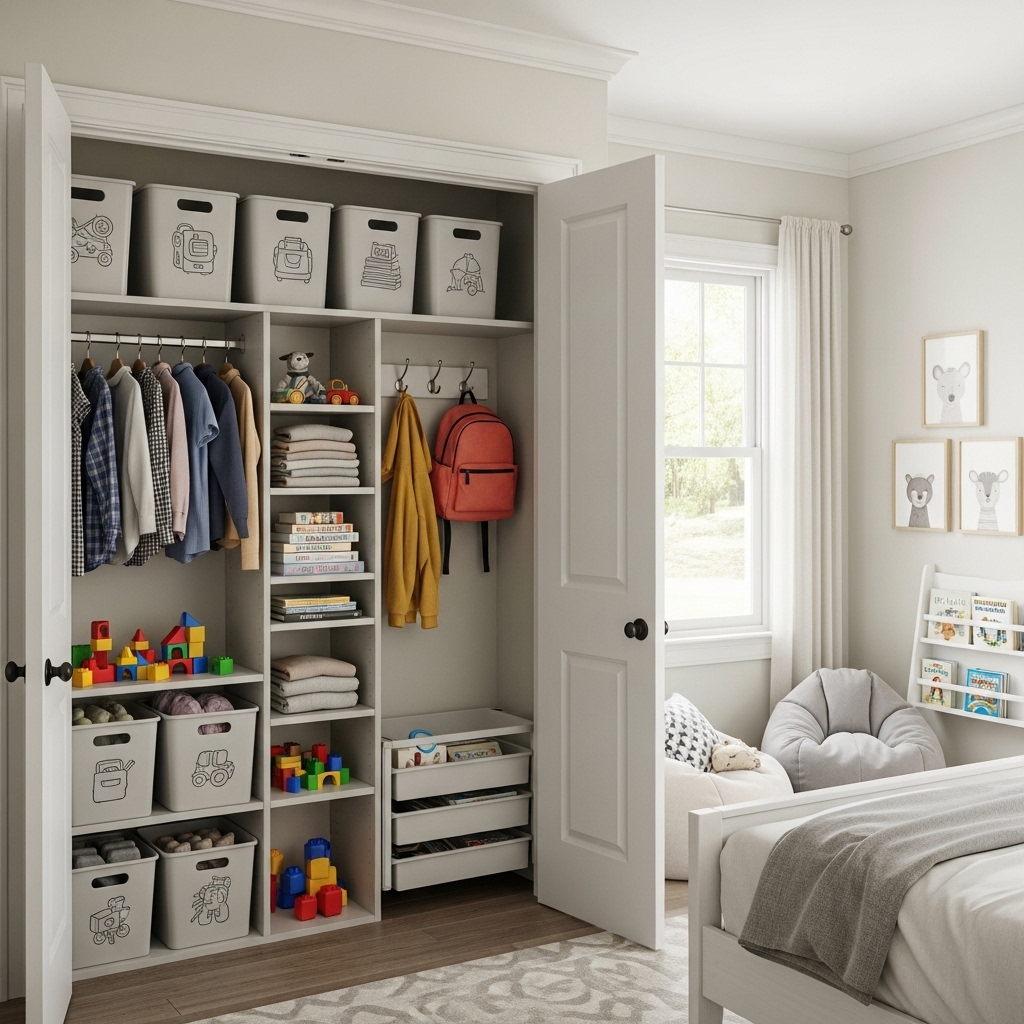
Choose this approach when your child’s closet is a black hole where nothing can be found.
Install a closet system with adjustable shelves and hanging rods at multiple heights.
Lower the top rod for hanging clothes your child wears now. Raise it as your child grows taller.
Standard closets waste vertical space. Adjustable systems grow with your child and maximize every inch.
Pro Tip: Use shelf dividers to separate stacks of shirts, pants, and pajamas on shelves. Dividers keep categories from collapsing into each other.
Mistake to Avoid: Do not fill the closet floor with bins. Keep the floor clear so your child can access hanging clothes easily.
6. Use Stackable Cube Storage with Fabric Bins
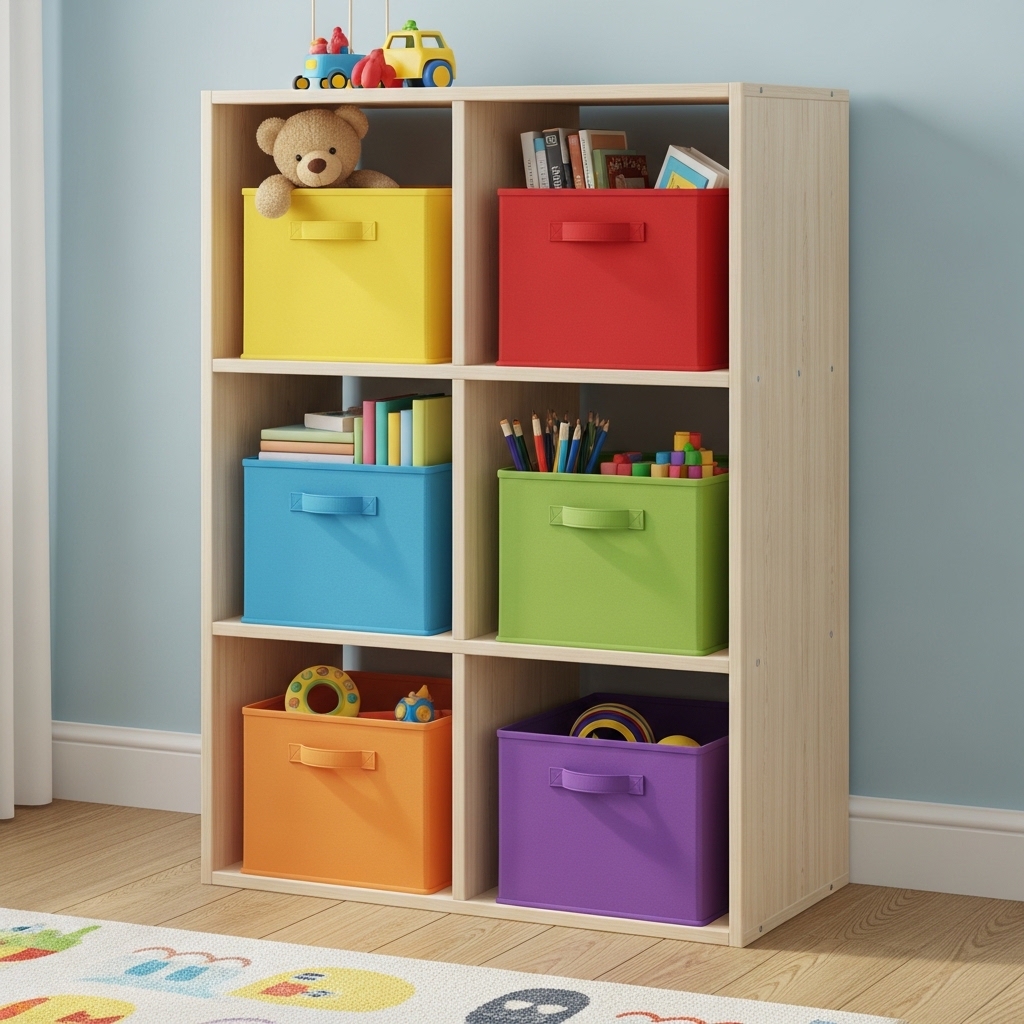
Apply this method when you need versatile storage that can be reconfigured as your child grows.
Buy stackable cube storage units in a 2×2, 2×3, or 3×3 configuration. Add fabric bins in fun colors.
Use some cubes with bins for hiding clutter. Use other cubes open for displaying books and treasures.
Cube storage grows with your child. Use it horizontally for toddlers. Stack it vertically for older kids.
Pro Tip: Choose fabric bins in different colors for different categories. Red bin for cars. Blue bin for blocks. Green bin for stuffed animals.
Mistake to Avoid: Do not anchor cube storage to the wall. Tall cube units can tip over onto young children. Secure every unit to wall studs.
7. Hang a Over-the-Door Shoe Organizer for Small Toys
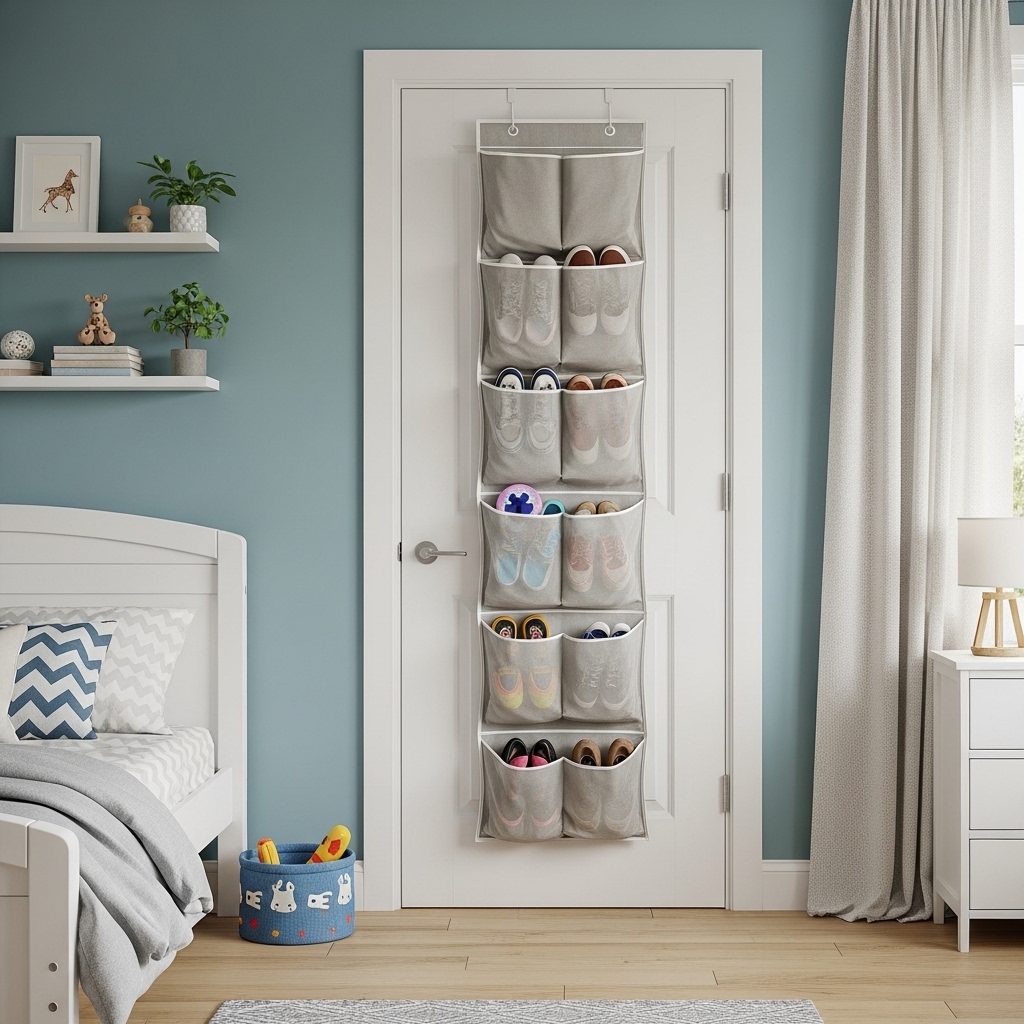
Use this idea when you have no drawer space left but your door is completely unused.
Hang a clear over-the-door shoe organizer on your child’s closet door or bedroom door.
Fill pockets with small toys, art supplies, hair accessories, or action figures.
Shoe organizers have 12 to 24 pockets. Each pocket holds a different category of small items.
Drawers hide everything. A door organizer keeps small items visible and within your child’s reach.
Pro Tip: Label each pocket with a picture label. Your child puts small toys away without asking for help.
Mistake to Avoid: Do not hang your organizer on a door that opens into a hallway. The organizer will hit the wall and items will fall out.
8. Create a Lego or Building Brick Storage Wall
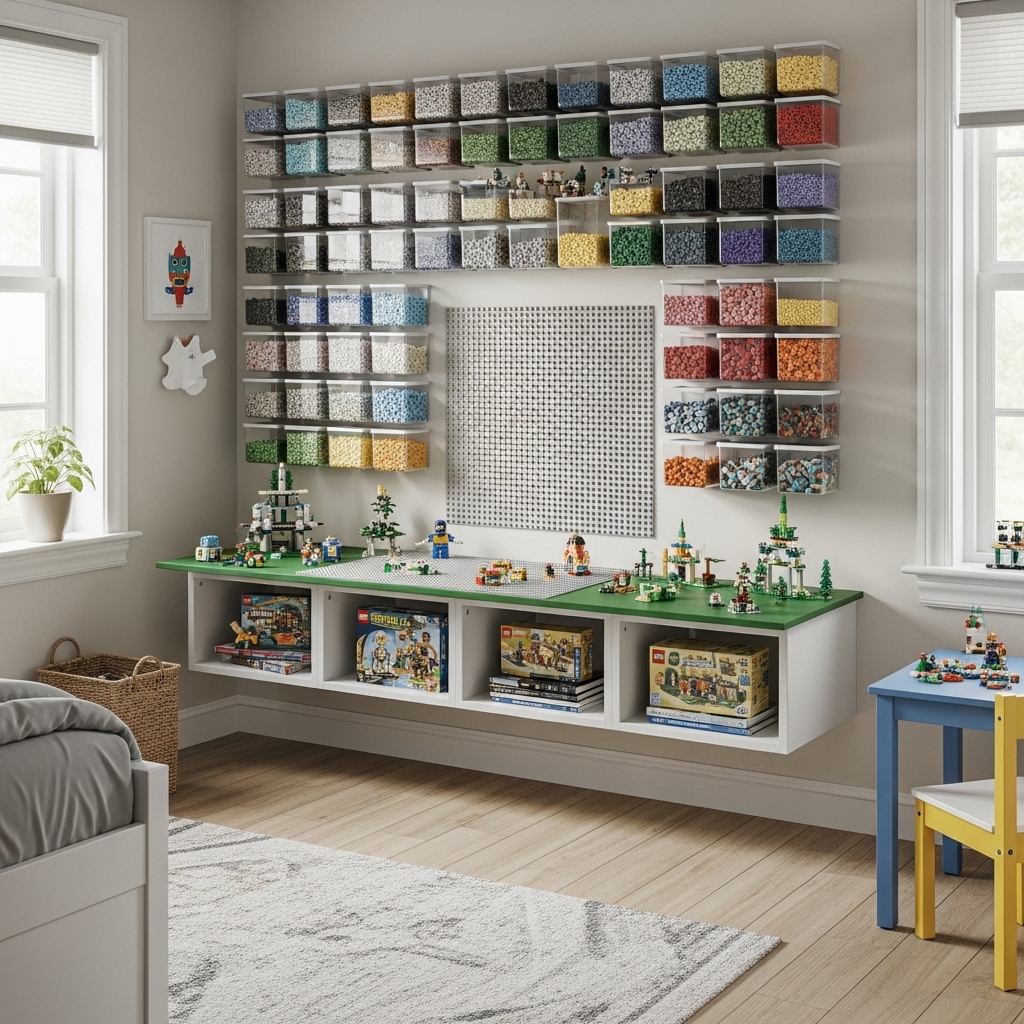
Choose this approach when your child loves Legos and you are tired of stepping on bricks.
Mount Lego baseplates directly on a lower wall section. Build a small shelf underneath for loose bricks.
Your child builds Lego creations on the wall. Loose bricks live in bins on the shelf below.
Legos on the floor get stepped on and lost. A Lego wall keeps bricks visible and organized for building.
Pro Tip: Sort bricks by color into small clear bins on your shelf. Red bin, blue bin, green bin, yellow bin. Your child finds colors instantly.
Mistake to Avoid: Do not install a Lego wall until your child is past the mouthing stage around age three. Small bricks are choking hazards.
9. Use a Rolling Cart for Art Supplies
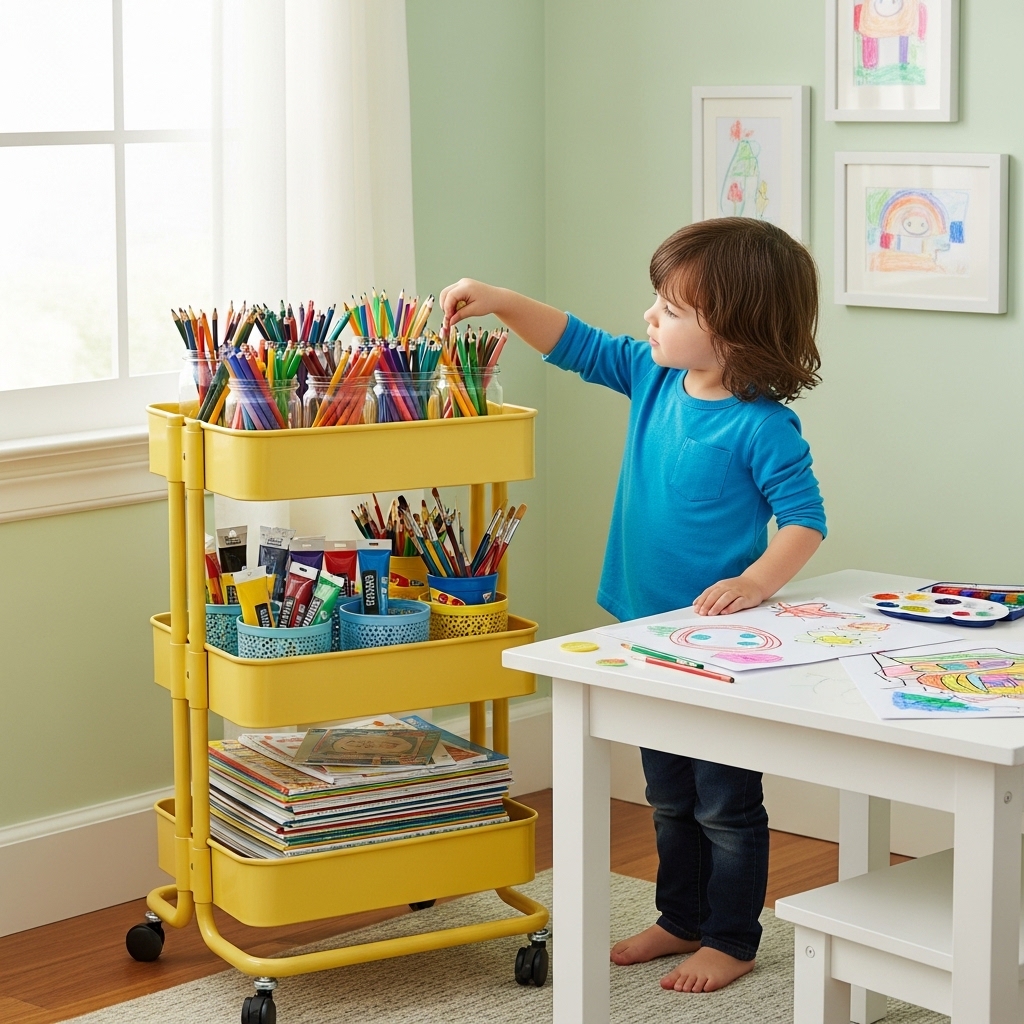
Apply this method when art supplies migrate all over the house and never return to their home.
Buy a three-tier rolling cart. Fill one tier with crayons and markers. One tier with paper and coloring books.
One tier with playdough, scissors, and glue. The cart rolls to wherever your child wants to create.
Stationary art storage stays in one place. A rolling cart empowers your child to bring art supplies anywhere.
Pro Tip: Choose a cart with locking casters. Lock the wheels during art time so the cart does not roll away from your child.
Mistake to Avoid: Do not overload the top tier. A top-heavy cart tips over when rolled across carpet or bumped into furniture.
10. Install a Wall-Mounted Paper Roll Holder
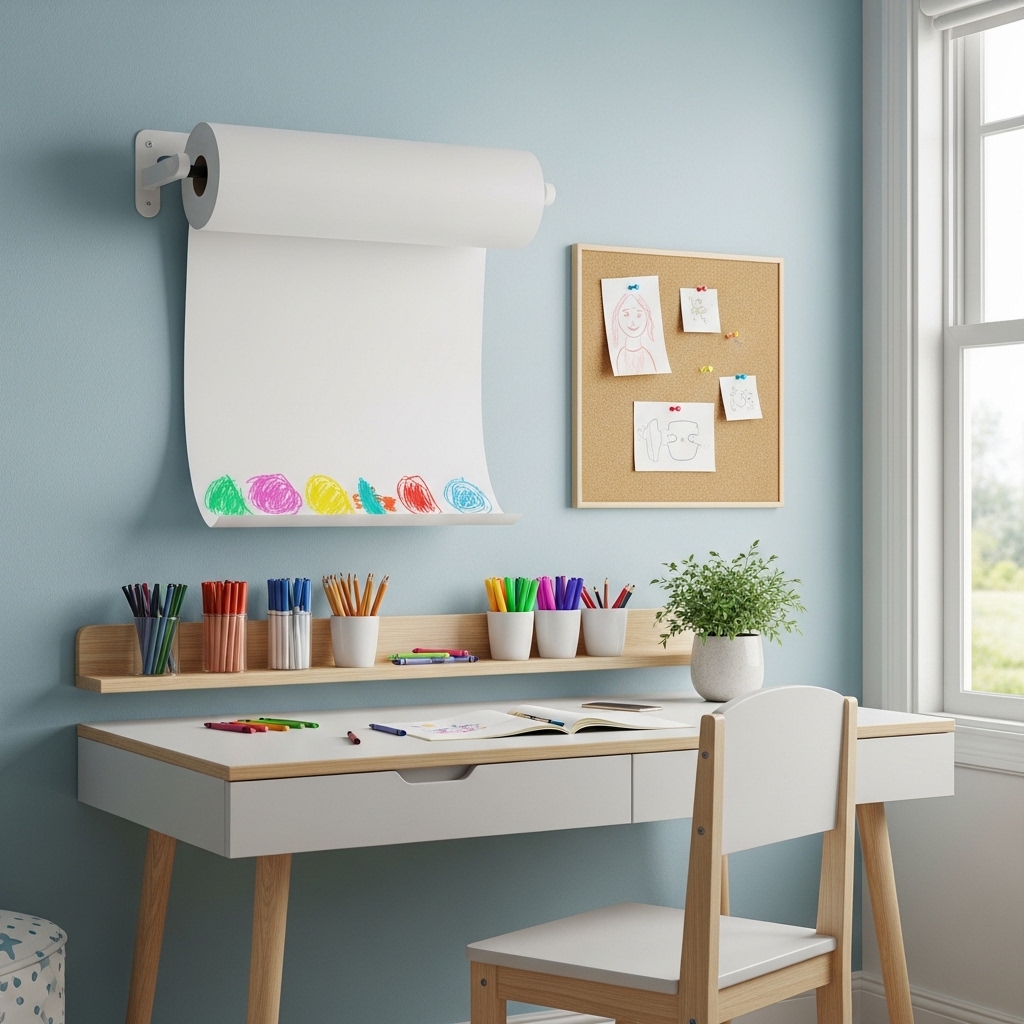
Use this strategy when your child loves to draw and you are tired of loose paper everywhere.
Mount a wall-mounted paper roll holder at your child’s height. Thread a roll of kraft paper through it.
Your child pulls down as much paper as they need. Tear it off along the built-in cutter.
Individual paper sheets get lost and crumpled. A paper roll keeps paper organized and accessible.
Pro Tip: Install a small shelf below the paper holder. The shelf holds crayons, markers, and colored pencils within your child’s reach.
Mistake to Avoid: Do not install the paper holder above your child’s bed. Your child will pull paper while half asleep and create a mess.
11. Use Vintage Suitcases as Under-Bed Storage
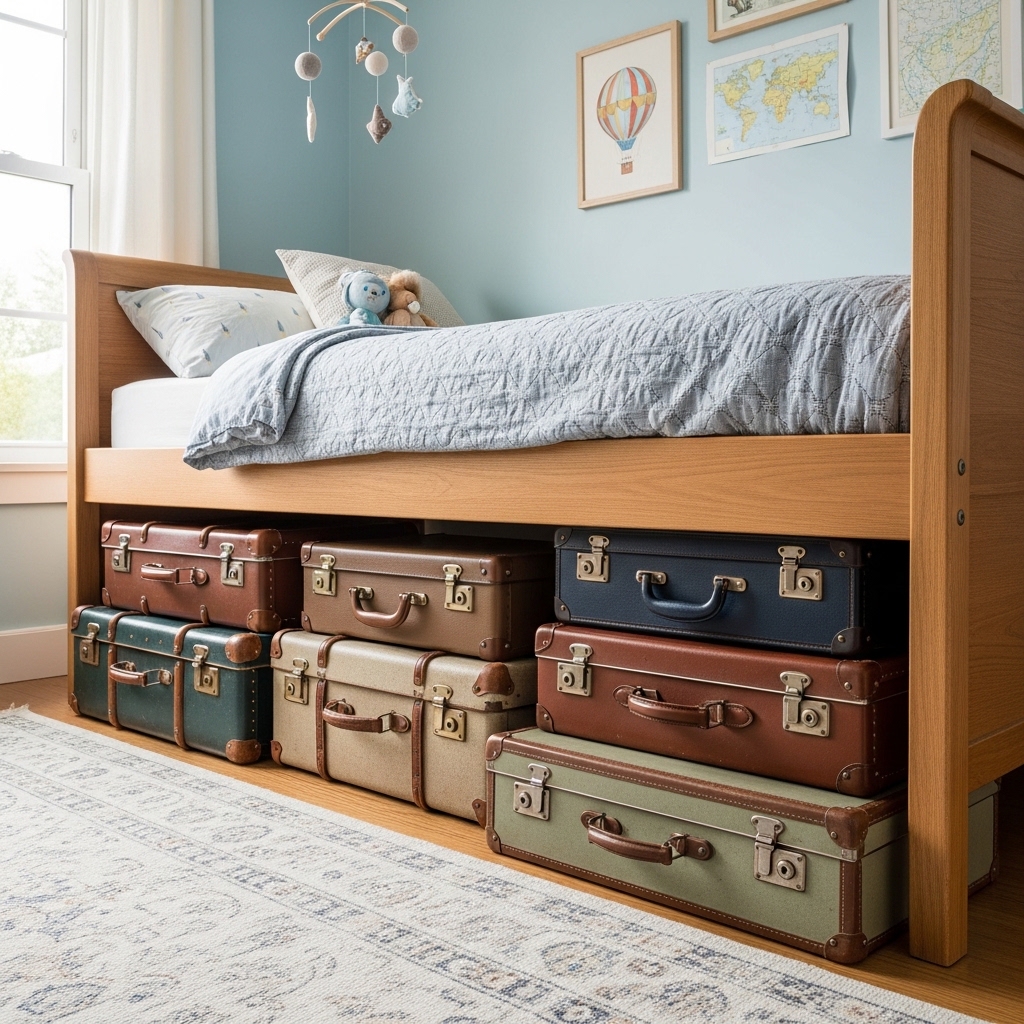
Choose this approach when you need attractive storage that slides easily under your child’s bed.
Find two to three vintage suitcases at thrift stores. Stack them under your child’s bed.
Store off-season clothes, extra bedding, or large toys inside the suitcases. The suitcases look like decor.
Plastic bins are ugly but functional. Vintage suitcases are beautiful and functional at the same time.
Pro Tip: Label each suitcase with a luggage tag. “Winter pajamas,” “Summer shorts,” “Extra blankets.”
Mistake to Avoid: Do not use suitcases with broken latches. Latches that do not close properly will pop open and spill contents.
12. Install a Wall of Pegs for Dress-Up Clothes
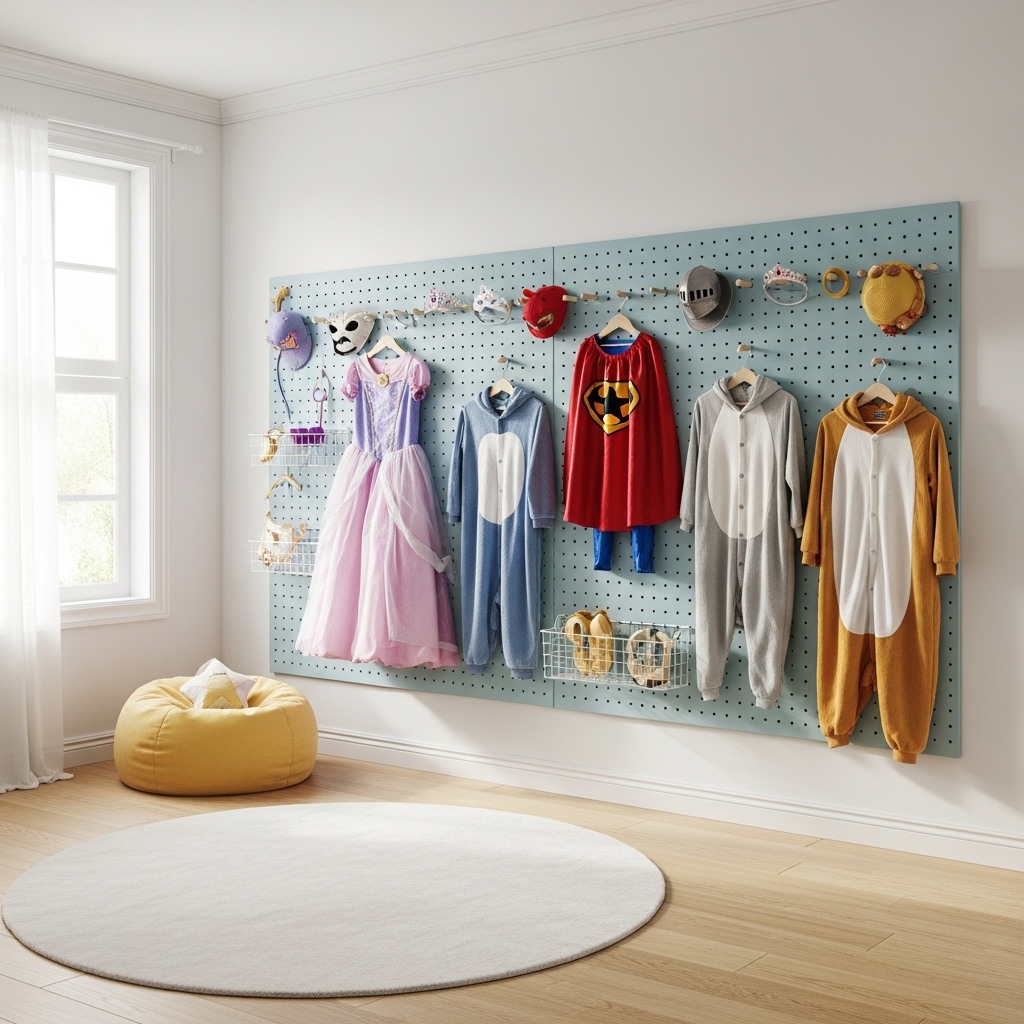
Apply this method when dress-up costumes end up in a tangled heap on the floor.
Mount a row of colorful wooden pegs on a wall at your child’s height. Hang costumes from the pegs.
Your child sees every costume option clearly. Hanging costumes do not wrinkle or tangle.
Costumes in a bin stay hidden and become a wrinkled mess. Costumes on pegs invite daily dress-up play.
Pro Tip: Paint each peg a different color. Red peg for superhero capes. Blue peg for princess dresses. Green peg for animal costumes.
Mistake to Avoid: Do not hang dress-up items with long strings or ties. Choose Velcro or snap closures only for safety.
13. Create a Book Ledges at Child Height
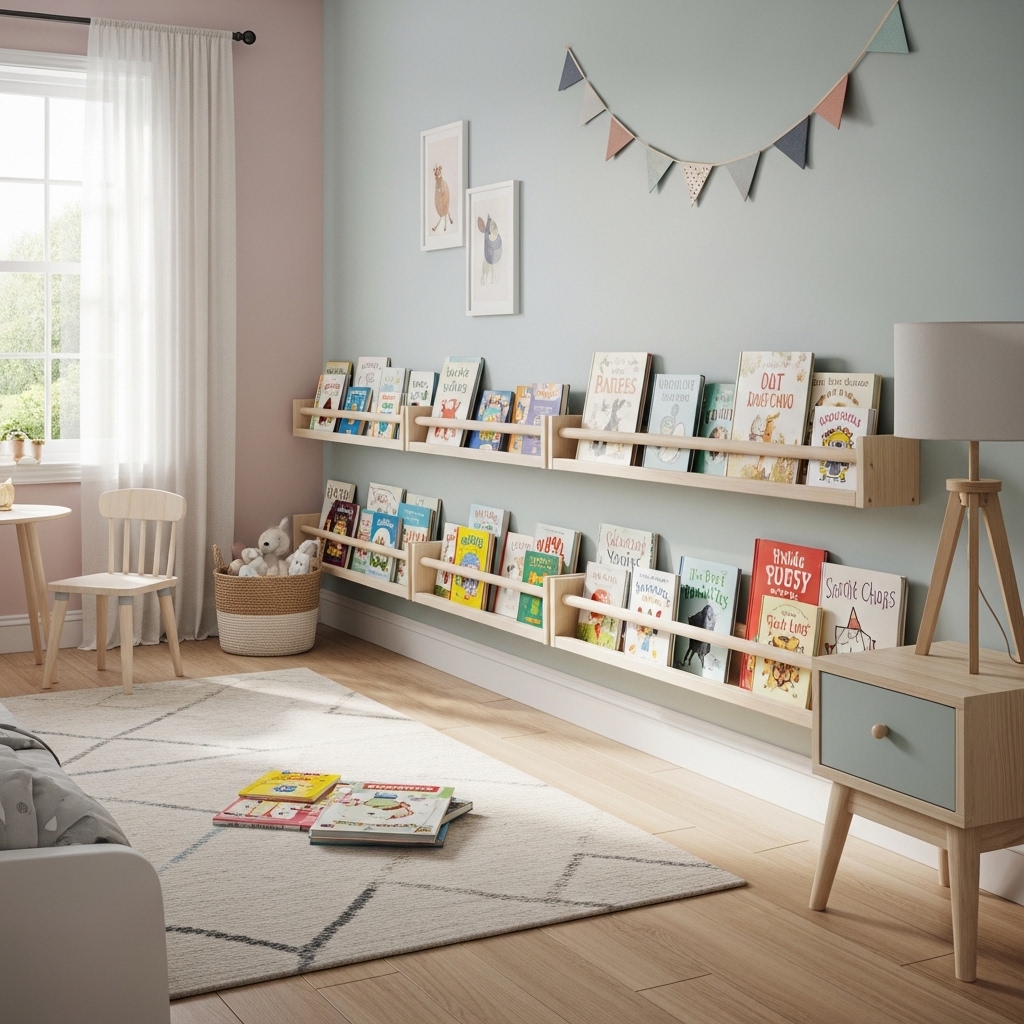
Use this idea when your child’s books are piled on the floor because traditional shelves are too tall.
Mount long, shallow book ledges on the wall at your child’s eye level, roughly 24 to 36 inches high.
Books face forward so your child sees covers instead of boring spines.
Traditional bookshelves hide books. Forward-facing ledges invite book selection without asking for help.
Pro Tip: Rotate books every two weeks. Store half your child’s books in a closet and swap them out to keep the collection feeling new.
Mistake to Avoid: Do not mount ledges above your child’s bed. Books can fall onto your child’s face during sleep.
14. Use a Storage Bench at the Foot of the Bed
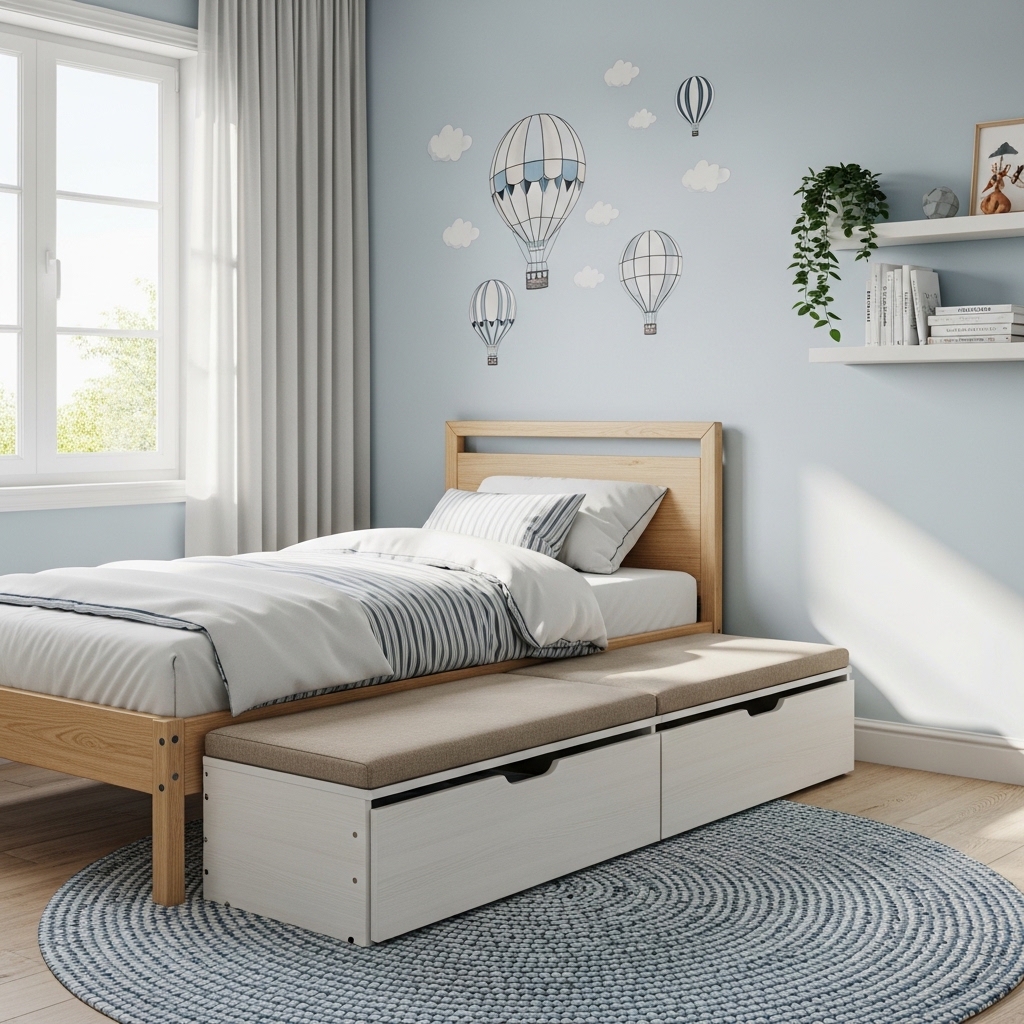
Choose this approach when you need seating and storage in the same piece of furniture.
Place a storage bench at the foot of your child’s bed. Choose a bench with a hinged lid that lifts open.
Store extra blankets, pillows, or outgrown clothes inside the bench. Your child sits on the bench to put on shoes.
The foot of the bed is often empty space. A storage bench fills that space with function and style.
Pro Tip: Choose a bench with a removable, washable cushion cover. Spills and accidents happen. Washable covers save the bench.
Mistake to Avoid: Do not buy a bench that is wider than your child’s bed. The bench should be slightly narrower than the mattress.
15. Create a Drop Zone for School Papers and Backpacks
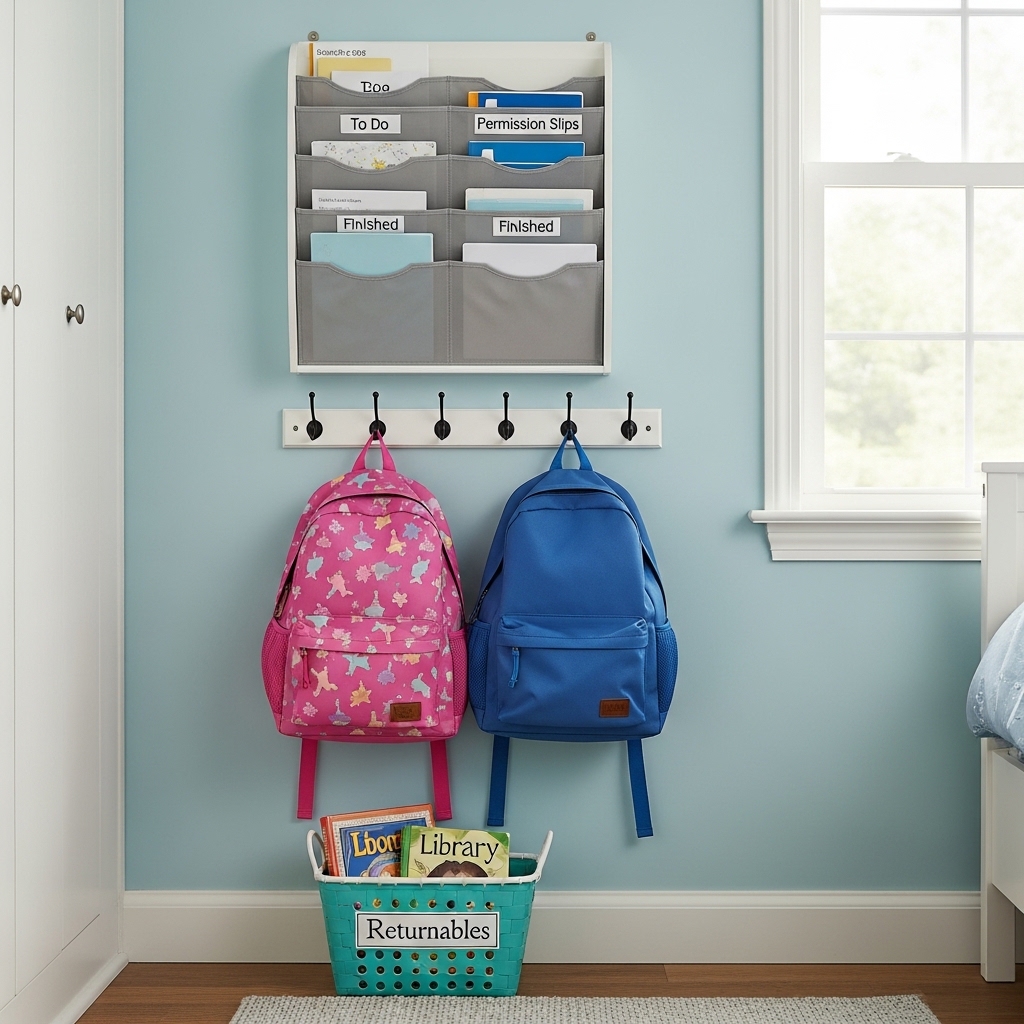
Apply this method when school papers and backpacks end up on your child’s floor every single day.
Mount a few small hooks at your child’s height near the door. Add a wall pocket or hanging file folder.
Your child hangs their backpack on a hook. School papers go into the wall pocket immediately upon entering.
Papers on the floor get lost and crumpled. A drop zone creates a habit of organization from day one.
Pro Tip: Use a hanging file folder with five pockets. Label pockets “Monday,” “Tuesday,” “Wednesday,” “Thursday,” “Friday.”
Mistake to Avoid: Do not mount hooks too high. Your child should reach the hooks without standing on tiptoes or asking for help.
Conclusion
A well-organized kids’ bedroom is not about owning less stuff. It is about having better systems for your stuff.
The 15 ideas above prove that clutter-free, calm spaces come from smart storage solutions.
Install low open shelving with clear bins so your child sees every toy at a glance.
Use under-bed storage drawers on wheels to capture that wasted space under the mattress.
Hang a wall-mounted pegboard for frequently used toys that need to be visible and accessible.
Create a toy rotation system with labeled bins so your child rediscovers old toys weekly.
Install a closet system with adjustable shelves that grows with your child for years.
Use stackable cube storage with fabric bins in fun colors that hide clutter beautifully.
Hang an over-the-door shoe organizer for small toys that would otherwise get lost.
Create a Lego or building brick storage wall to keep tiny bricks off your floor.
Use a rolling cart for art supplies that migrate all over your house constantly.
Install a wall-mounted paper roll holder so drawing paper never gets lost again.
Use vintage suitcases as under-bed storage that looks beautiful while it organizes.
Install a wall of pegs for dress-up clothes that would otherwise tangle on the floor.
Create book ledges at child height so your child chooses books by their covers.
Use a storage bench at the foot of the bed for extra blankets and seating in one piece.
Create a drop zone for school papers and backpacks near the door for daily organization.
Start with one storage solution that solves your biggest daily frustration. Implement it this weekend.
Then add another solution next month. Great organization happens one step at a time.
Your child’s room should work for your family, not against you. Take back the space starting today.