15 Small Home Office Ideas That Maximize Every Inch for Peak Productivity & Style
A small home office does not mean you have to sacrifice comfort or productivity. You can create an efficient, inspiring workspace in a closet, a corner, or on a landing.
The key is choosing the right furniture and storage solutions for your specific space constraints. Every inch matters when your office measures less than 50 square feet.
Smart design choices make small spaces feel larger, more organized, and more functional. This guide delivers 15 small home office ideas that maximize every inch for peak productivity and style.
From wall-mounted desks to vertical storage, each idea works in even the tiniest footprint.
1. Install a Wall-Mounted Fold-Down Desk
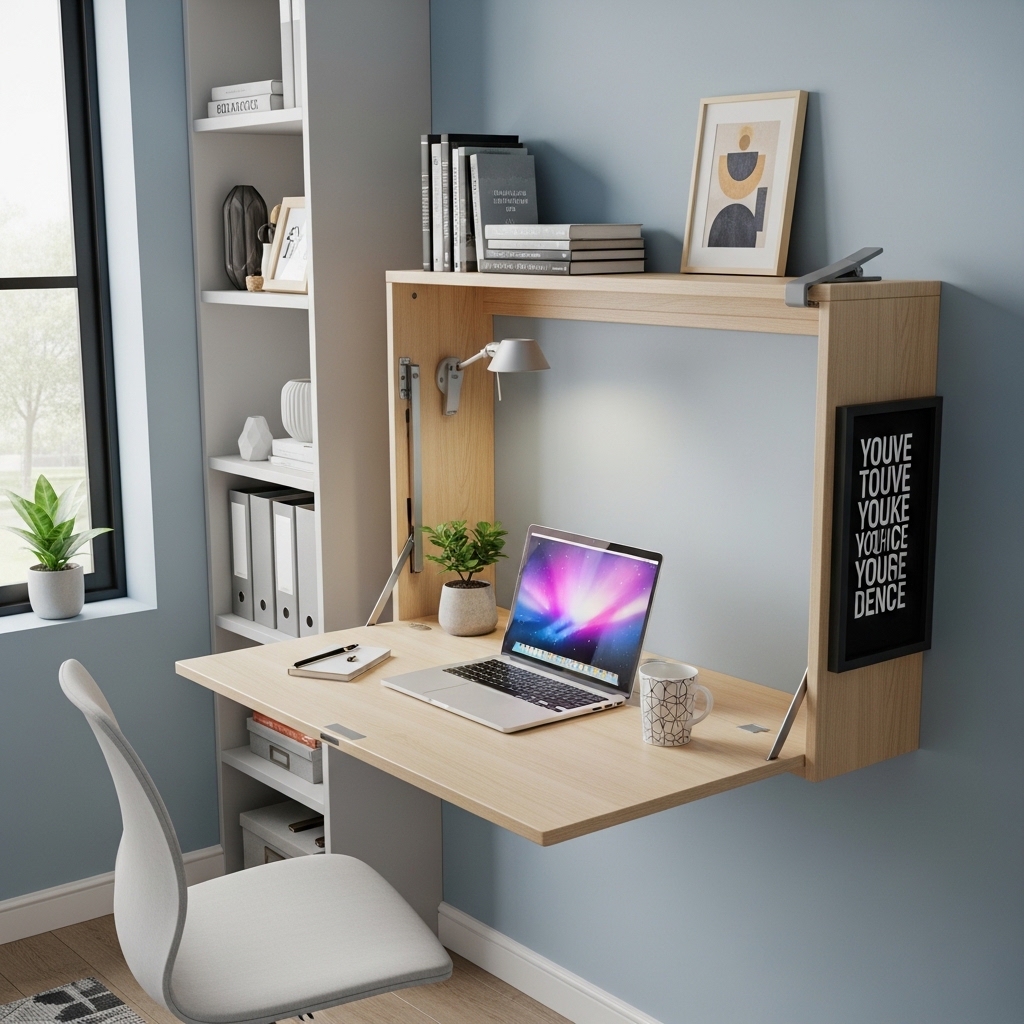
Use this idea when your office shares space with another function like a guest room or dining area.
Mount a fold-down desk on an empty wall. The desk folds flat to 4 inches deep when not in use.
You gain a full workspace without sacrificing floor space. Close the desk and the room returns to its other purpose.
A permanent desk consumes floor space 24/7. A fold-down desk gives you flexibility you never knew you needed.
Pro Tip:
Install a wall-mounted shelf above your fold-down desk. The shelf holds your monitor and stays when the desk folds up.
Mistake to Avoid:
Do not mount your fold-down desk higher than 28 inches. Standard desk height is 28 to 30 inches for comfortable typing.
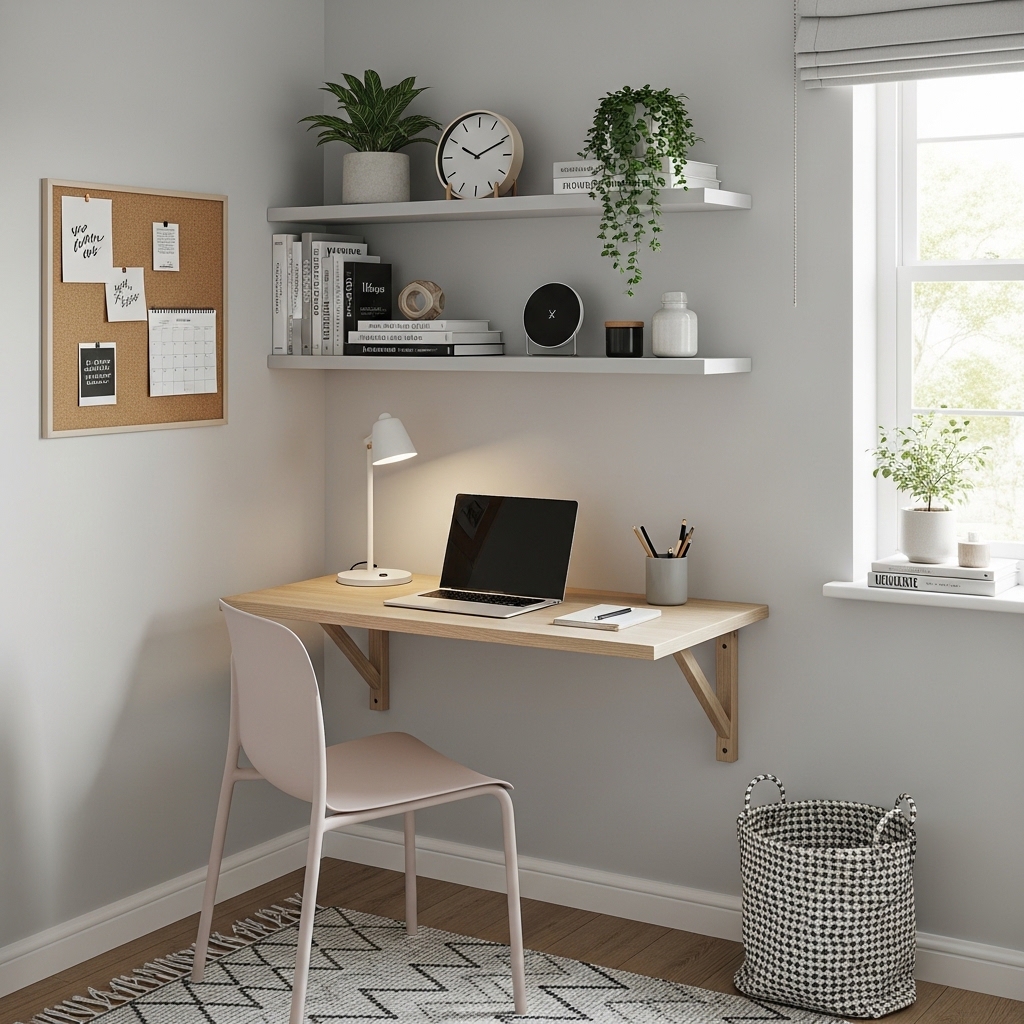
2. Use a Floating Shelf as Your Entire Desk
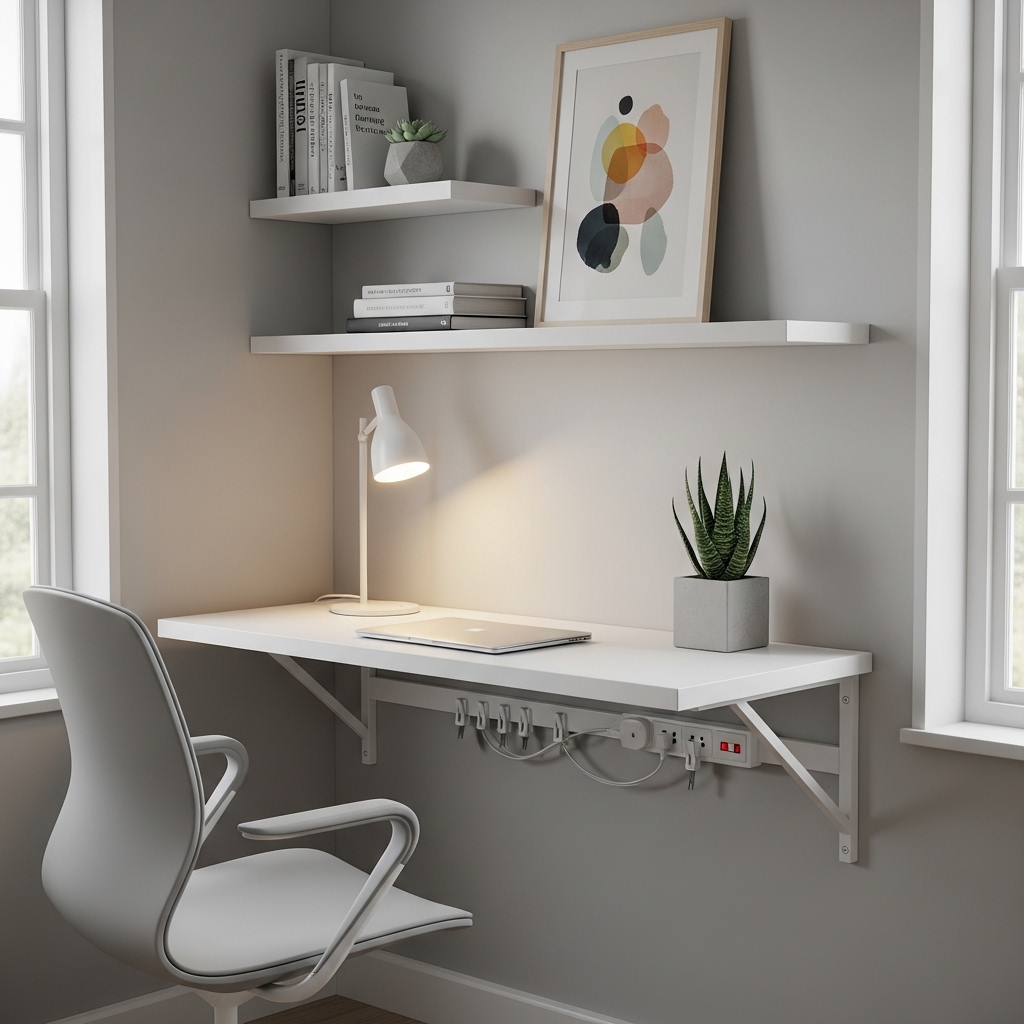
Choose this approach when you need only a laptop and a notebook to get your work done.
Mount a deep floating shelf on the wall at standard desk height. Use a 12 to 16 inch deep shelf.
Your laptop sits on the shelf. A small drawer underneath holds pens and supplies.
A traditional desk has four legs that consume floor space. A floating shelf has zero legs and zero footprint.
Pro Tip: Install a power strip on the underside of your floating shelf. Plug your laptop charger directly into the shelf.
Mistake to Avoid: Do not use a shelf deeper than 16 inches. Deep shelves put your screen too far from your eyes.
3. Convert a Closet into a Hidden Office
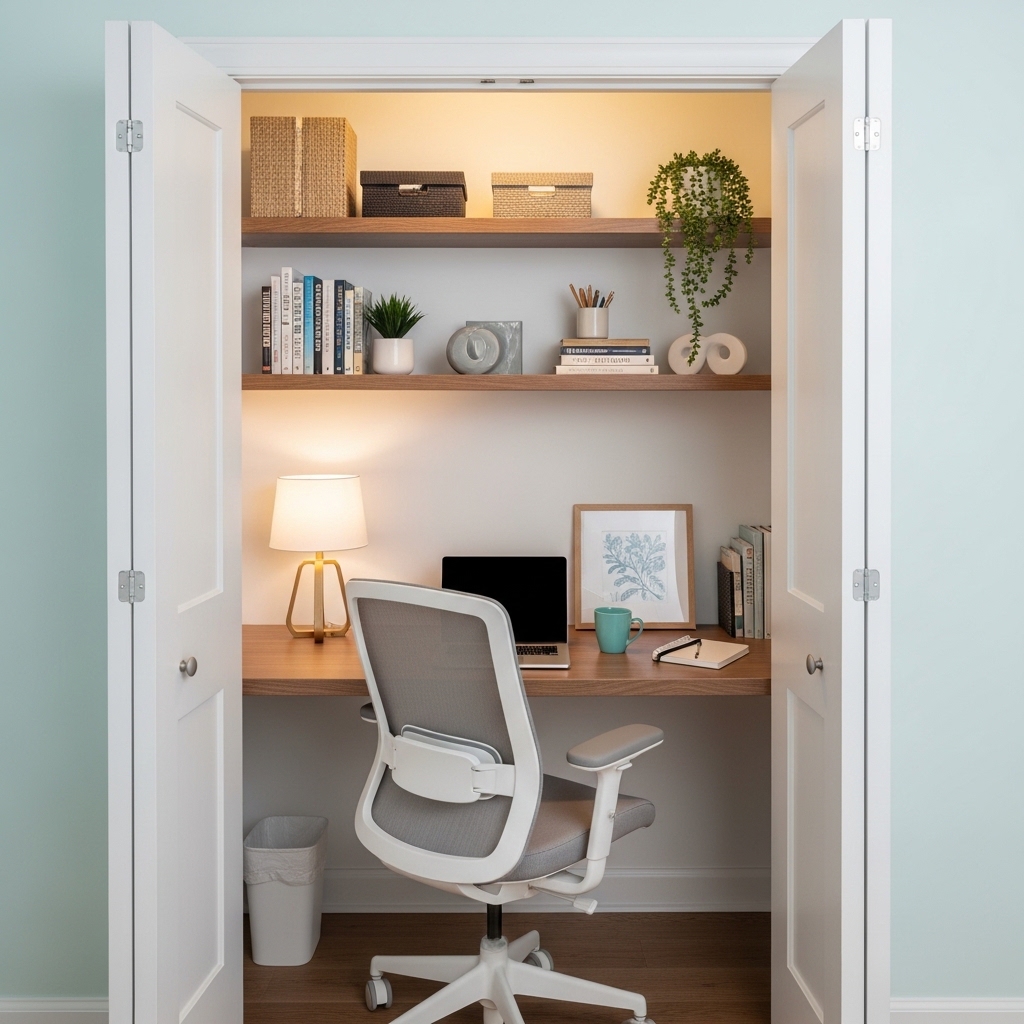
Apply this method when you have a closet you barely use and need a workspace that disappears.
Remove the closet door. Install a desk inside at standard height. Add shelves above for storage.
Close the curtain or install sliding doors when work ends. Your office vanishes into the wall.
A dedicated office room is a luxury. A closet office gives you the same function without losing a whole room.
Pro Tip: Install battery-operated puck lights on the ceiling of your closet. Good lighting is essential for a windowless workspace.
Mistake to Avoid: Do not skip ventilation. Leave the closet door open periodically to prevent stale air from accumulating.
4. Use a Corner Desk to Capture Dead Space
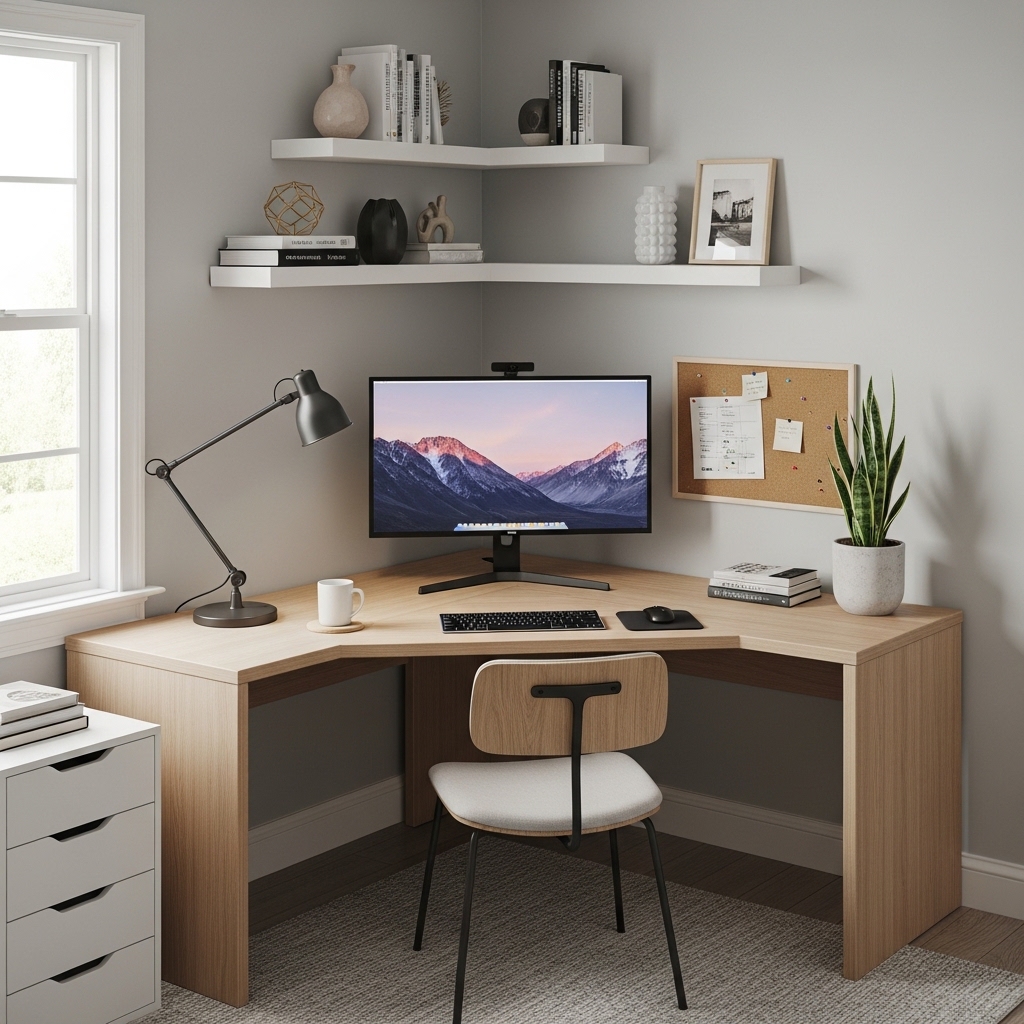
Use this strategy when your room has an empty corner that serves no purpose.
Buy or build a corner desk that fits snugly into your room’s corner. Use both walls for support.
Corner desks use space that nothing else can occupy. Your main floor area stays open for walking.
A straight desk against a wall consumes a whole wall. A corner desk leaves the rest of your wall free for other uses.
Pro Tip: Install floating shelves on both walls above your corner desk. Wraparound shelves create a cohesive, custom look.
Mistake to Avoid: Do not buy a corner desk that is too large. Measure your corner’s available wall space before purchasing.
5. Install Shelves All the Way to the Ceiling
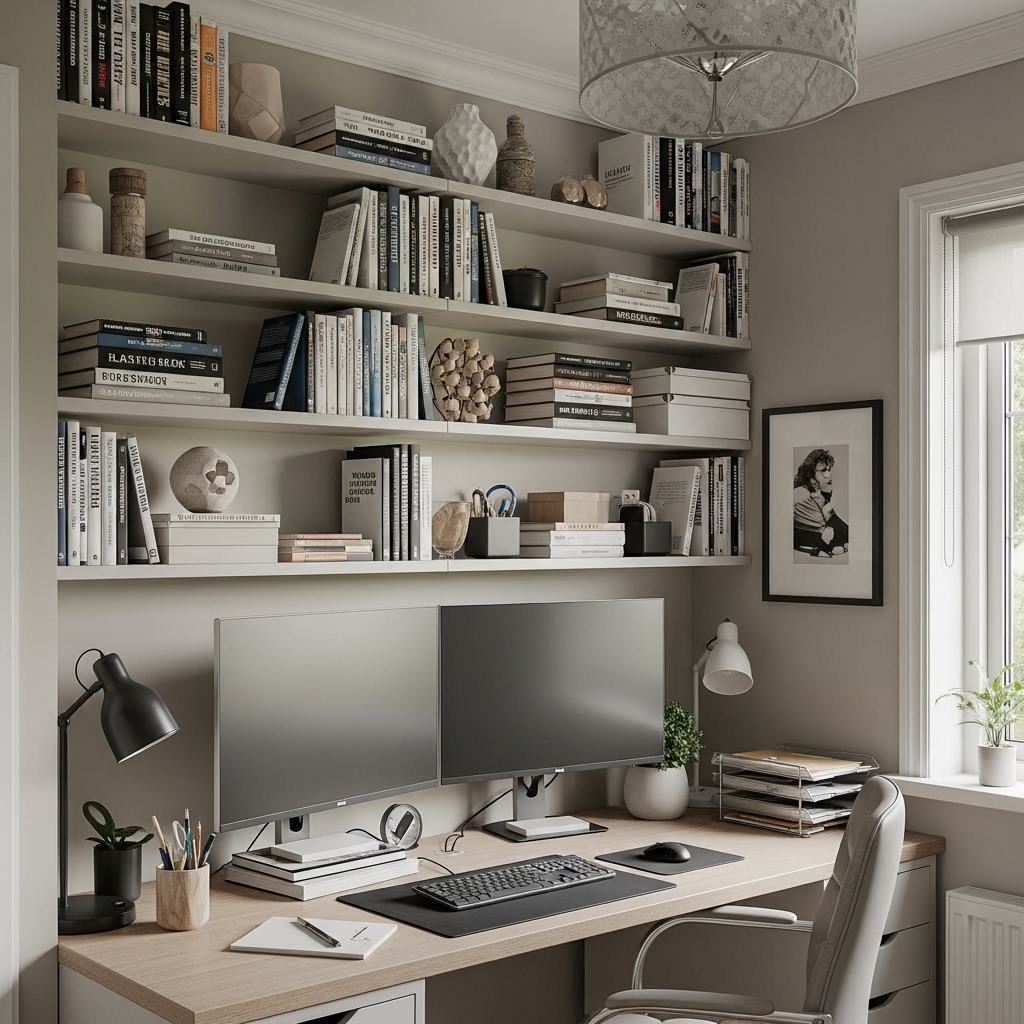
Choose this approach when you need storage but have no floor space for bookshelves or filing cabinets.
Install floor-to-ceiling shelving on one wall. Use the top shelves for rarely accessed items.
The bottom shelves hold daily supplies. Your floor stays completely clear of storage furniture.
A two-shelf bookcase uses floor space. Floor-to-ceiling shelves use wall space and store twice as much.
Pro Tip: Use a rolling library ladder if your ceiling is higher than 8 feet. The ladder gives you access to top shelves safely.
Mistake to Avoid: Do not forget to anchor your tall shelves to the wall. Tip-over accidents are a serious safety risk.
6. Use a Wall-Mounted Monitor Arm to Clear Your Desk
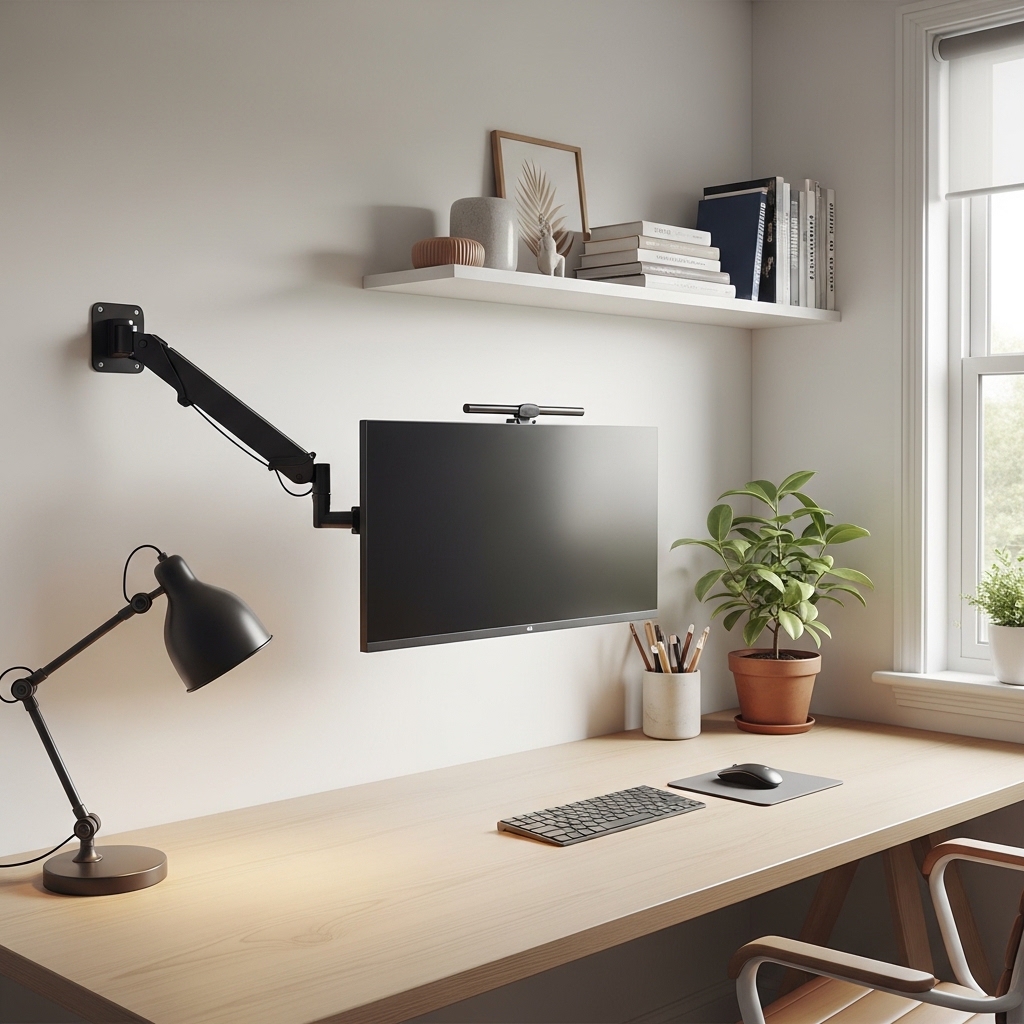
Apply this method when your desk is small and your monitor stand consumes half the surface.
Mount your monitor on a wall-mounted or desk-clamp arm. The arm holds your screen above the desk.
Your entire desk surface becomes usable. The monitor floats above, not on, your workspace.
Monitor stands waste precious desk real estate. An arm gives you that space back instantly.
Pro Tip: Choose an arm with a gas spring mechanism. Gas springs let you adjust your screen height with one finger.
Mistake to Avoid: Do not mount a heavy monitor on a cheap arm. Check the weight rating before buying.
7. Create a Desk Inside an Existing Bookshelf
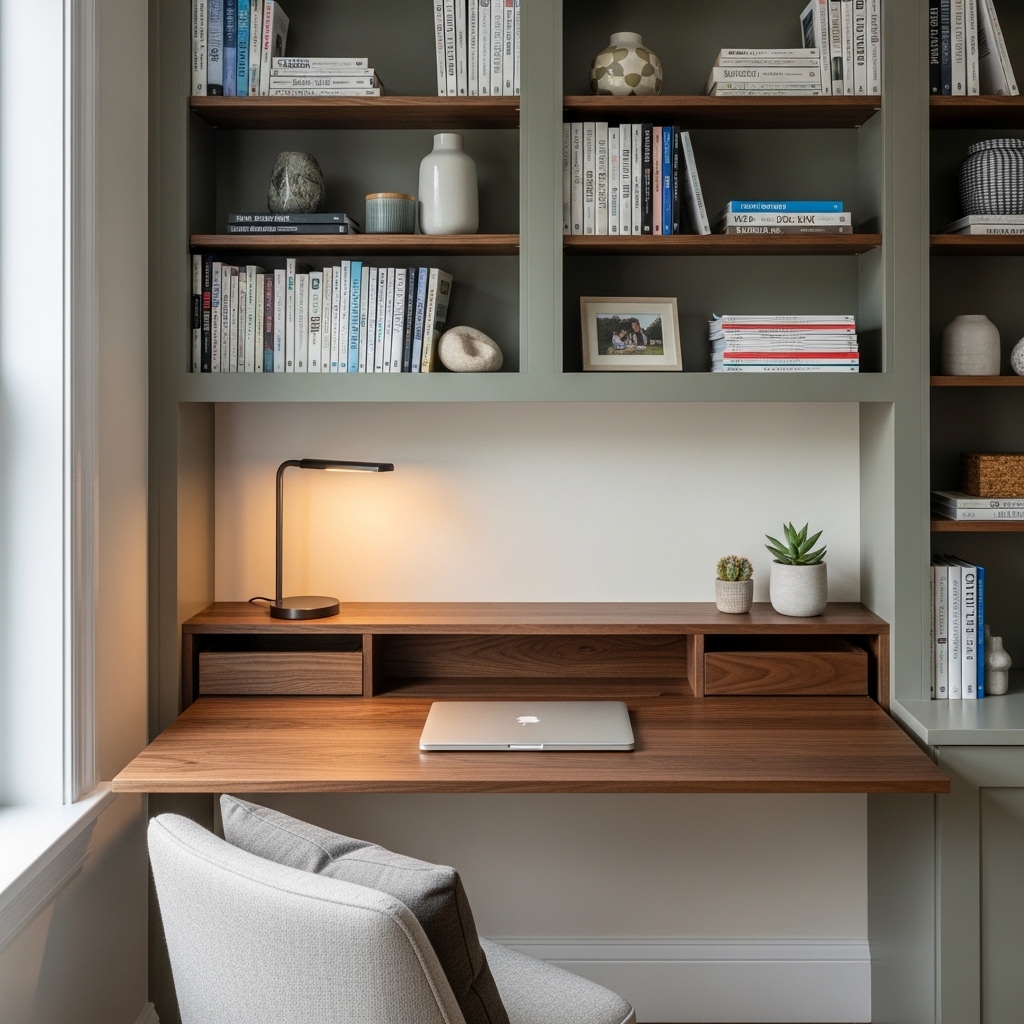
Use this idea when you have a tall bookcase and want to add a workspace without adding furniture.
Remove one shelf from your bookcase at desk height. Slide a board into the space as your desktop.
Your keyboard and mouse sit on the board. Books live on the shelves above and below.
A separate desk would add another piece of furniture. A desk inside a bookcase uses existing furniture better.
Pro Tip: Add a pull-out keyboard tray under your board. The tray gives you extra surface that slides away when not needed.
Mistake to Avoid: Do not use a board that is too thin. Your desk surface needs to be at least 3/4 inch thick to support weight without bowing.
8. Use a Rolling Cart as a Mobile Filing Cabinet
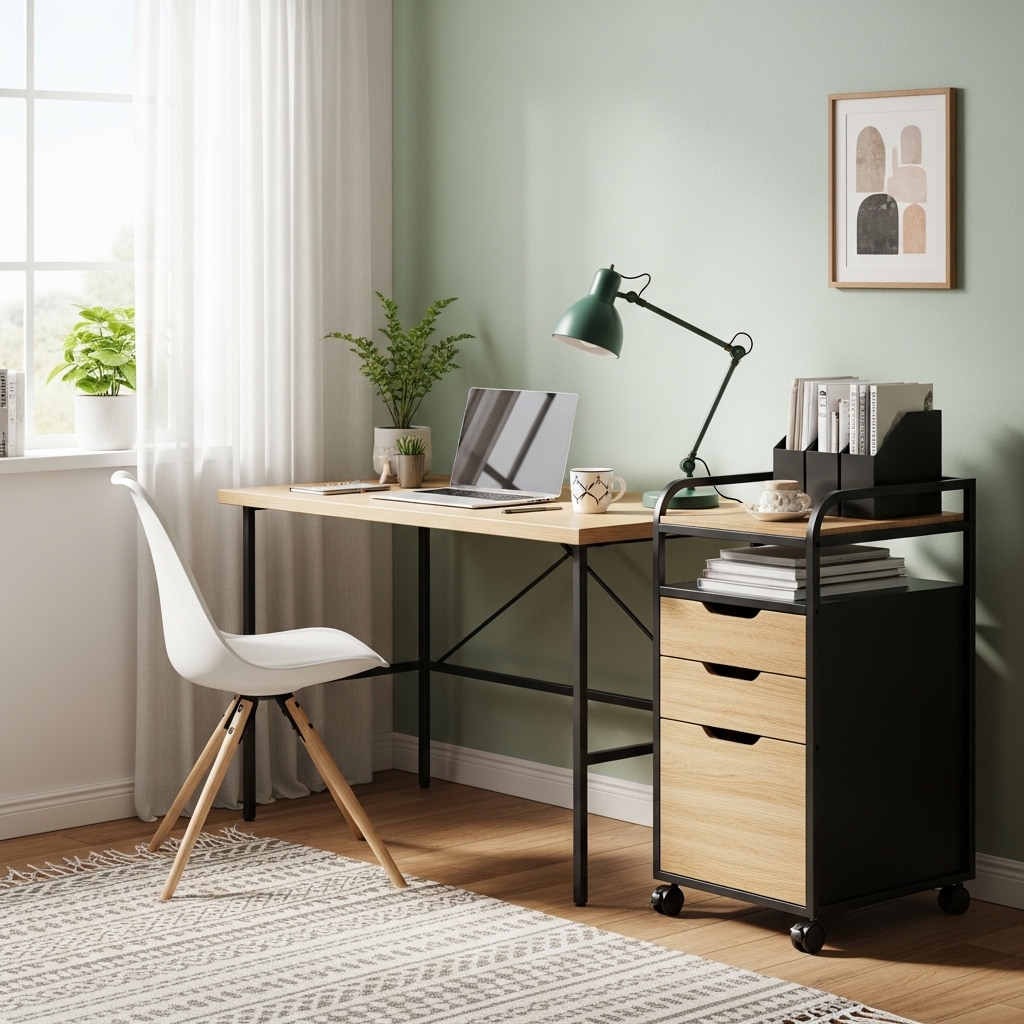
Choose this approach when you have no space for a traditional filing cabinet.
Buy a narrow three-tier rolling cart. Use file folders vertically in the tiers.
The cart rolls under your desk when not in use. Roll it out when you need to access files.
Traditional filing cabinets are wide and heavy. A rolling cart is narrow, mobile, and fits anywhere.
Pro Tip: Use hanging file folders in your cart. Hanging folders slide easily and keep papers organized.
Mistake to Avoid: Do not overload your cart. Rolling carts tip over when top-heavy. Keep heavy items in bottom tiers.
9. Install a Pegboard Wall for Vertical Supply Storage
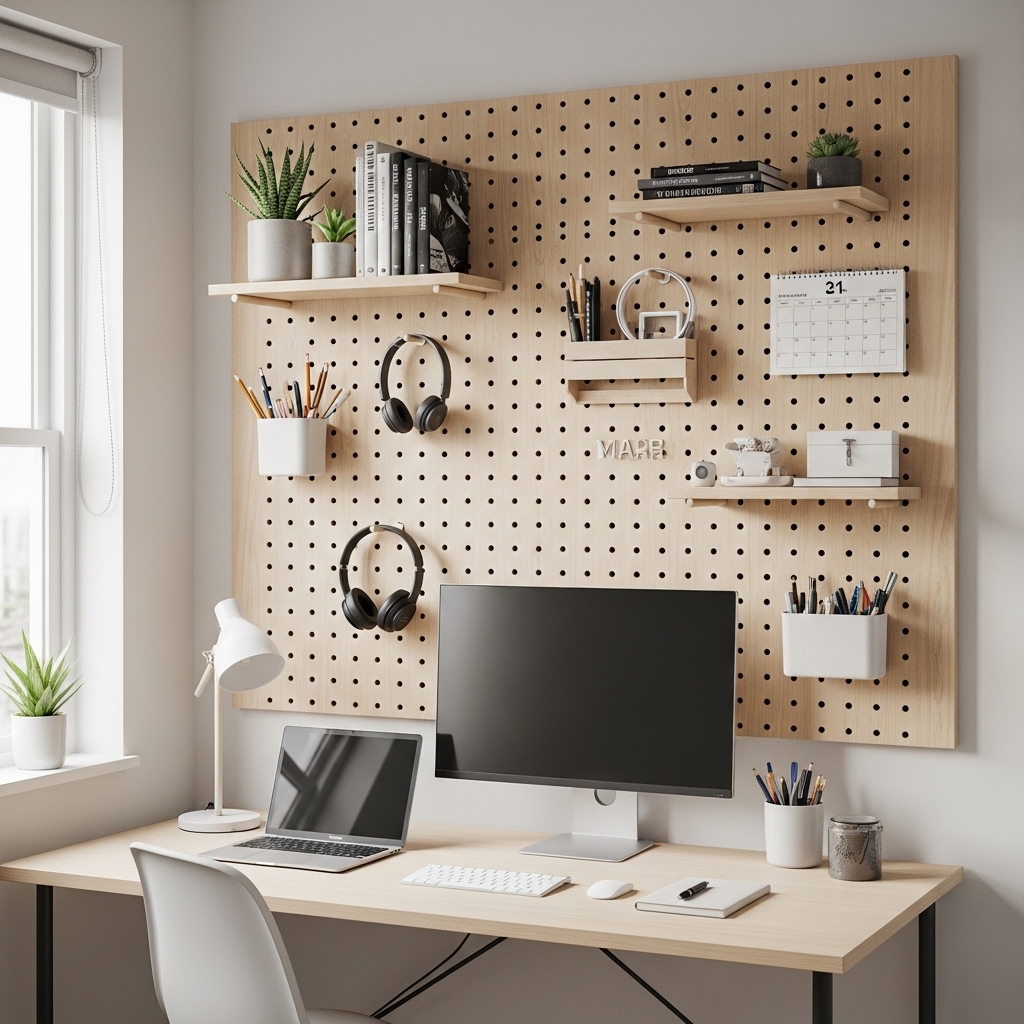
Apply this method when your desk drawers are overflowing with pens, scissors, and sticky notes.
Mount a large pegboard on the wall above or beside your desk. Add hooks, small shelves, and cups.
Your supplies hang on the wall instead of cluttering your desk. Every item has a visible home.
Desk drawers hide supplies. A pegboard displays them and keeps your desktop completely clear.
Pro Tip: Paint your pegboard a bright color. A colorful pegboard looks like decor, not just storage.
Mistake to Avoid: Do not hang heavy items on pegboard hooks. Use hooks rated for each item’s weight.
10. Use a Laptop Stand to Elevate Your Screen
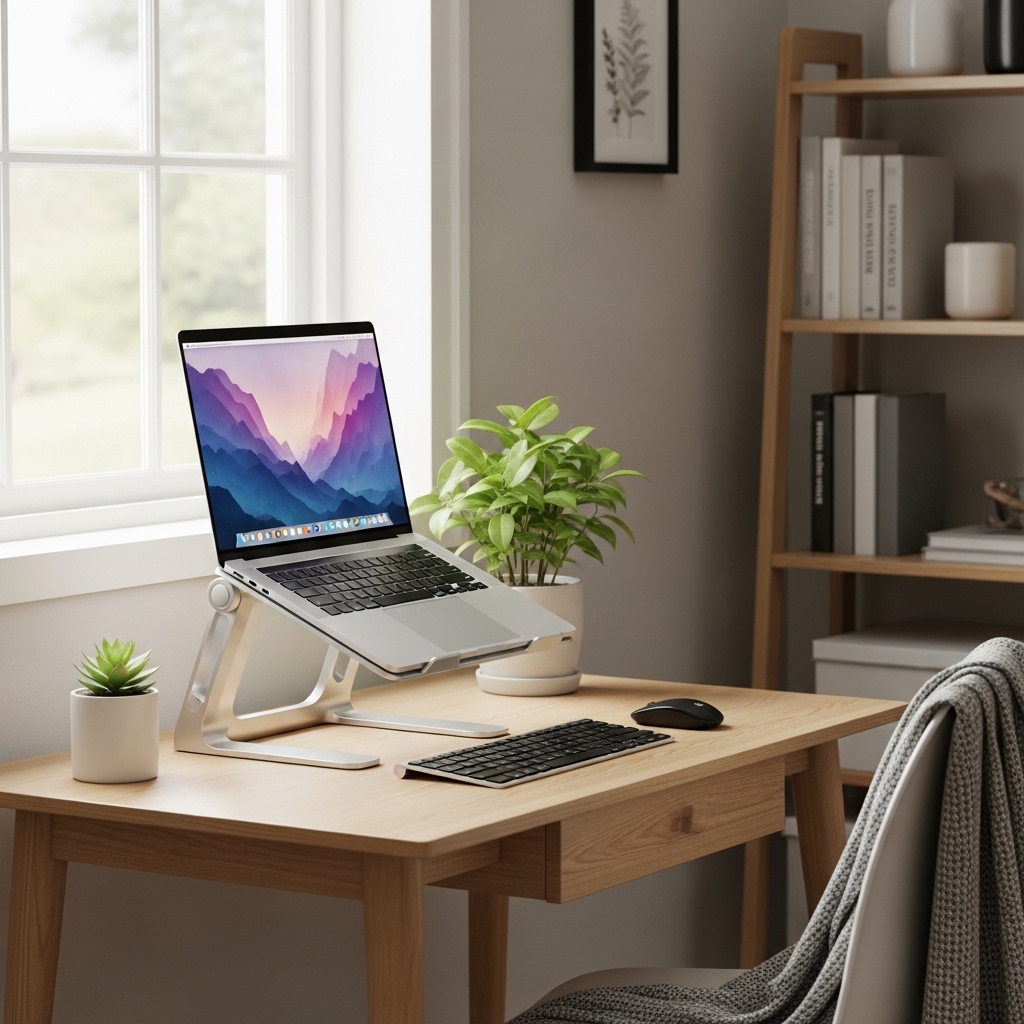
Use this strategy when you work from a laptop and your neck hurts from looking down.
Place a laptop stand on your desk. The stand elevates your screen to eye level.
Add a separate wireless keyboard and mouse. Your hands stay low. Your eyes stay level.
Looking down at a laptop screen destroys your posture. An elevated screen saves your neck.
Pro Tip: Choose a foldable laptop stand. The stand folds flat and slides into your bag when you travel.
Mistake to Avoid: Do not use a laptop stand without an external keyboard. Typing on an elevated laptop strains your wrists.
11. Use the Space Under Your Stairs
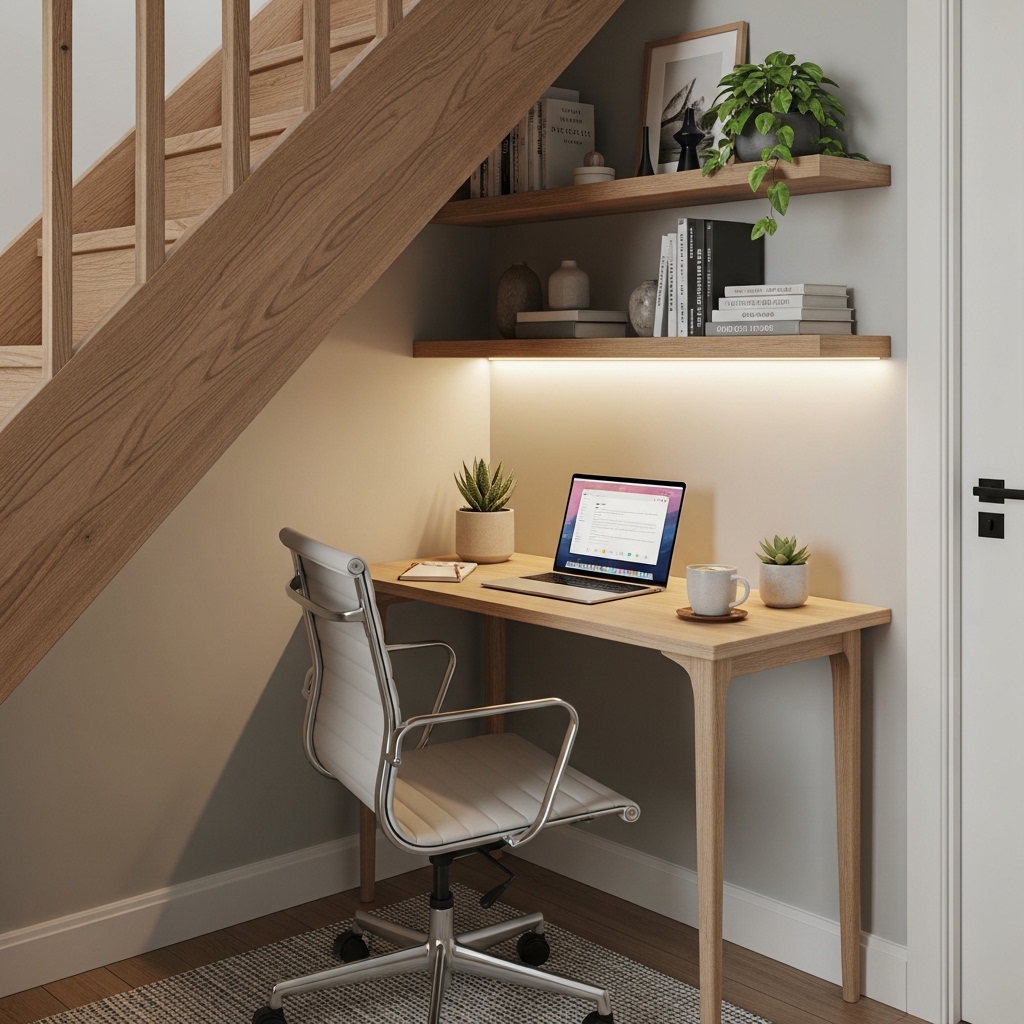
Choose this approach when you have an unused space under your staircase.
Install a desk, shelves, and lighting in the under-stair cavity. The angled ceiling becomes a cozy workspace.
Awkward spaces become charming offices. The angled walls actually help you focus by blocking distractions.
Empty under-stair spaces collect dust and boxes. A desk gives that dead space a valuable purpose.
Pro Tip: Install bright task lighting. Under-stair spaces are naturally dark and need good light.
Mistake to Avoid: Do not skip a chair with adjustable height. Standard chairs may not fit under the angled ceiling.
12. Use a Wall-Mounted Paper Tray Instead of a Desk Organizer
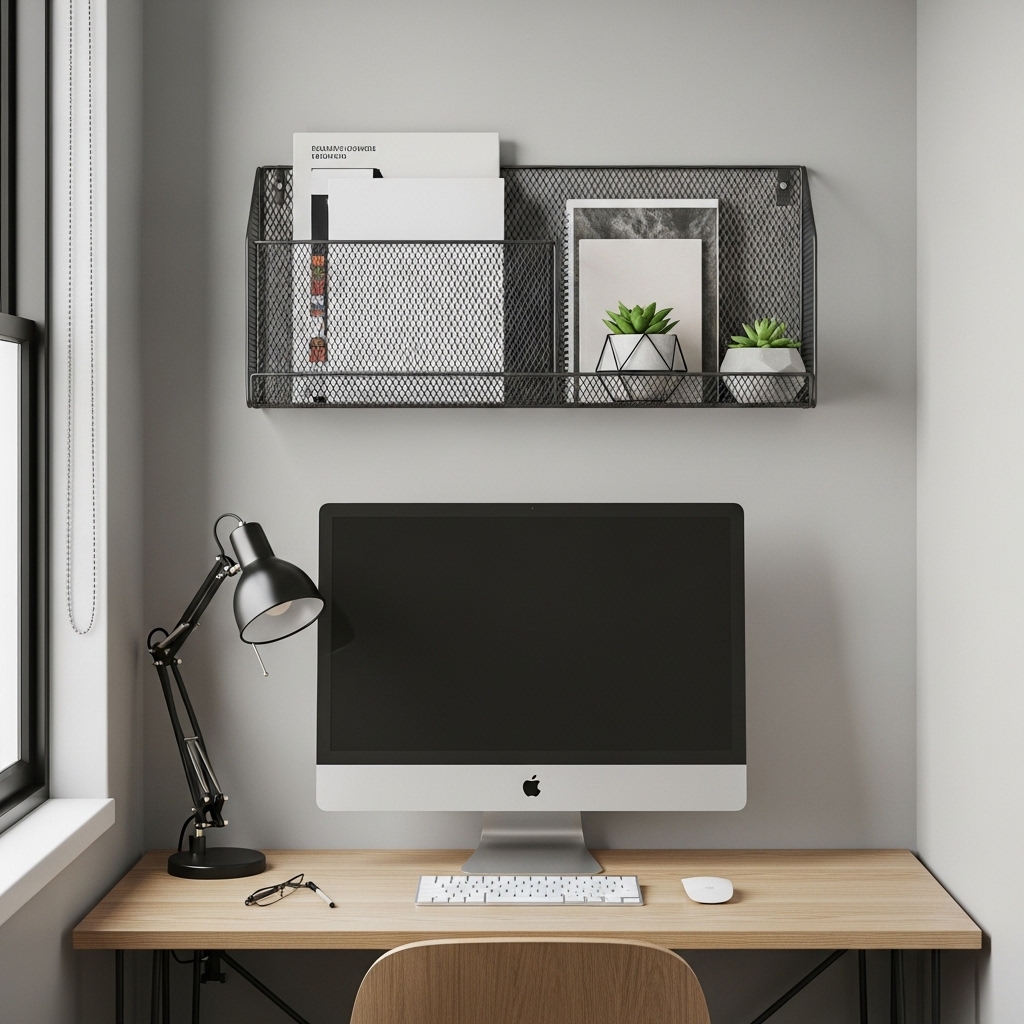
Apply this method when your desk is too small for a traditional desk organizer.
Mount a wall-mounted paper tray or wall pocket on the wall beside your desk.
Your incoming mail, to-do items, and notes live on the wall, not on your desk.
Desk organizers consume valuable work surface. Wall-mounted organizers use zero desk space.
Pro Tip: Use multiple wall pockets. One for bills. One for to-do. One for reading. One for filing.
Mistake to Avoid: Do not mount pockets above your monitor. Items may fall onto your keyboard.
13. Use a Mirrored Wall to Visually Double Your Space
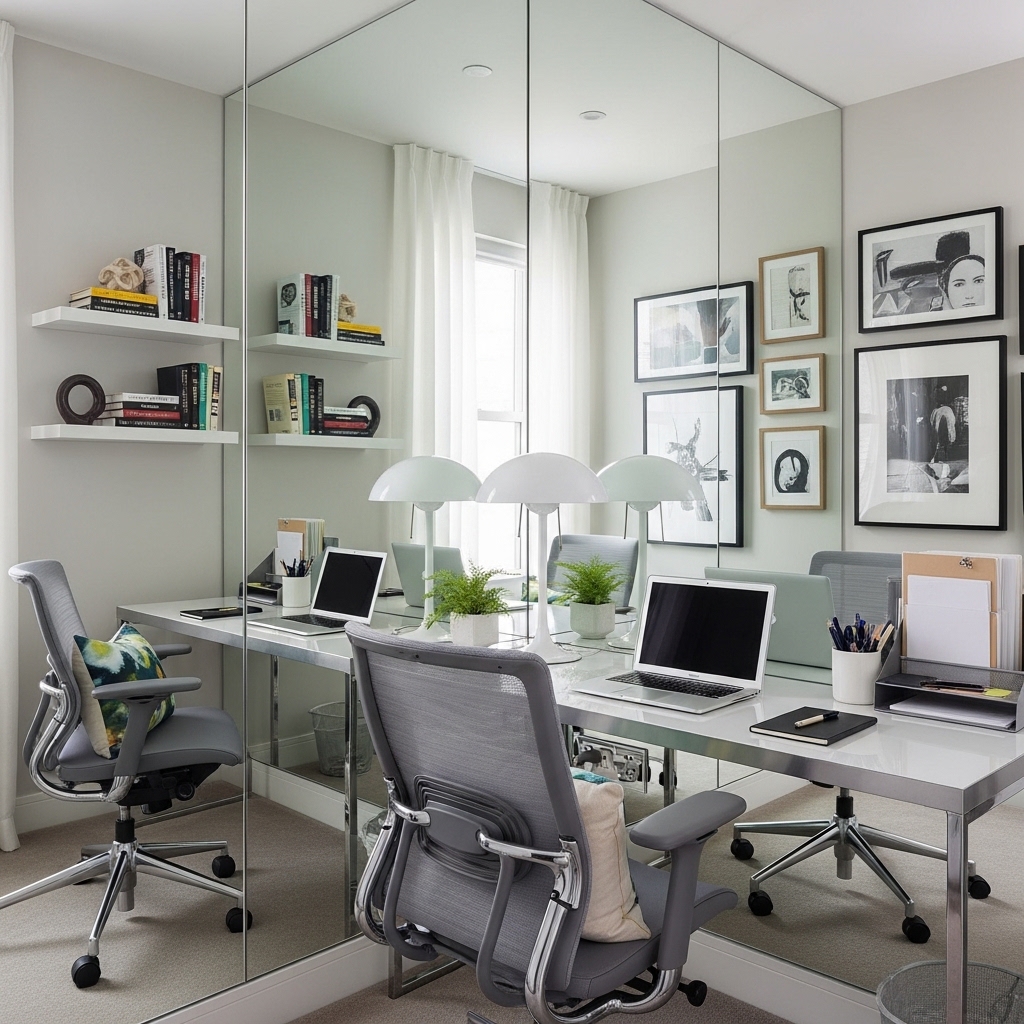
Use this idea when your small office feels cramped and closed in.
Mount a large mirror on one wall of your home office. Position it to reflect light from your window.
The mirror creates an optical illusion of double the depth. Your brain reads the reflection as more space.
Dark, closed-in spaces feel oppressive. Mirrors add light and make small rooms feel twice as large.
Pro Tip: Hang your mirror opposite a window. The mirror reflects the outdoor view and brings nature inside.
Mistake to Avoid: Do not hang a mirror directly behind your monitor. The reflection of your screen will distract you.
14. Use a Small Round Table Instead of a Rectangular Desk
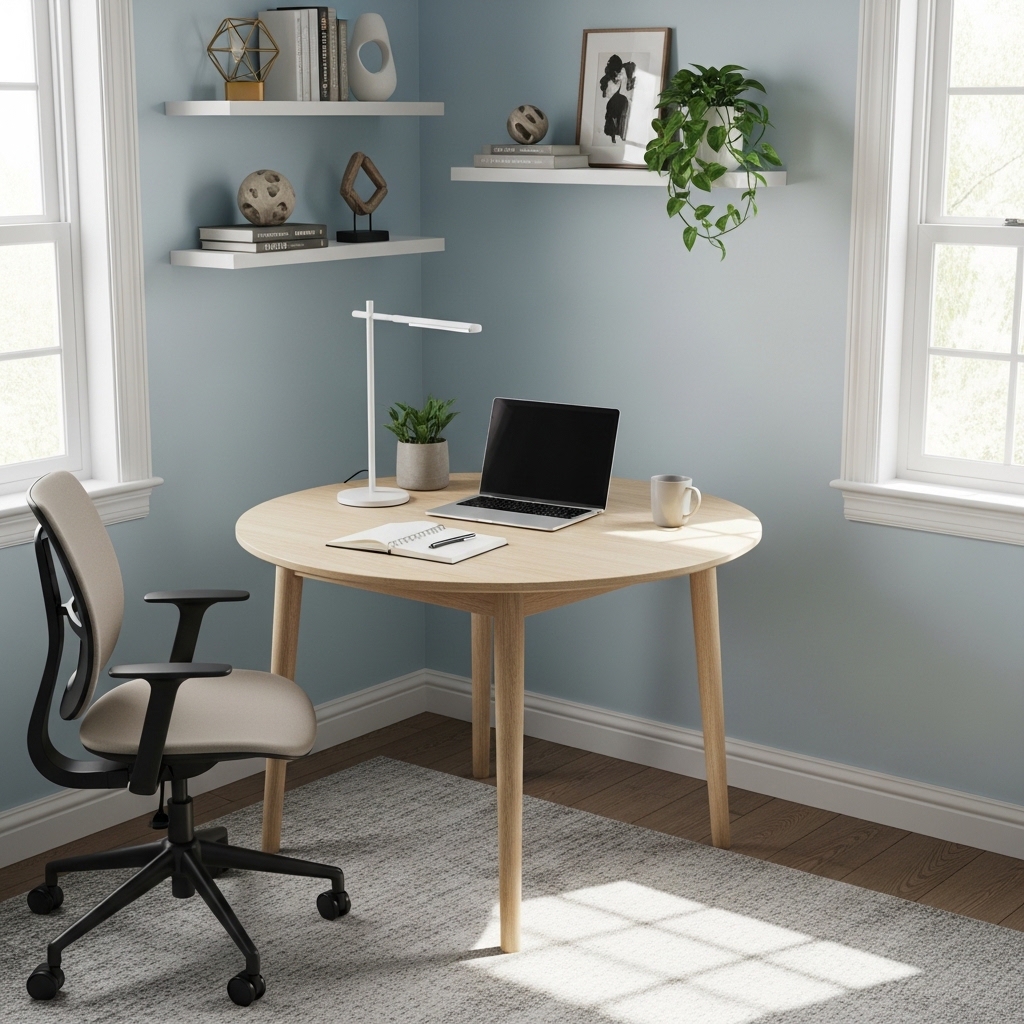
Choose this approach when a rectangular desk feels too bulky for your small space.
Place a small round table in a corner or against a wall. Use it as your desk.
A round table has no sharp corners. You can walk around it easily. It fits where rectangles cannot.
Rectangular desks need clearance on three sides. Round tables need less clearance and feel less intrusive.
Pro Tip: Choose a table with a pedestal base. Legs at the edges of a round table get in the way of your chair.
Mistake to Avoid: Do not buy a table smaller than 30 inches in diameter. Smaller tables do not have enough space for a laptop and mouse.
15. Use a Bright Color on One Wall to Create Depth
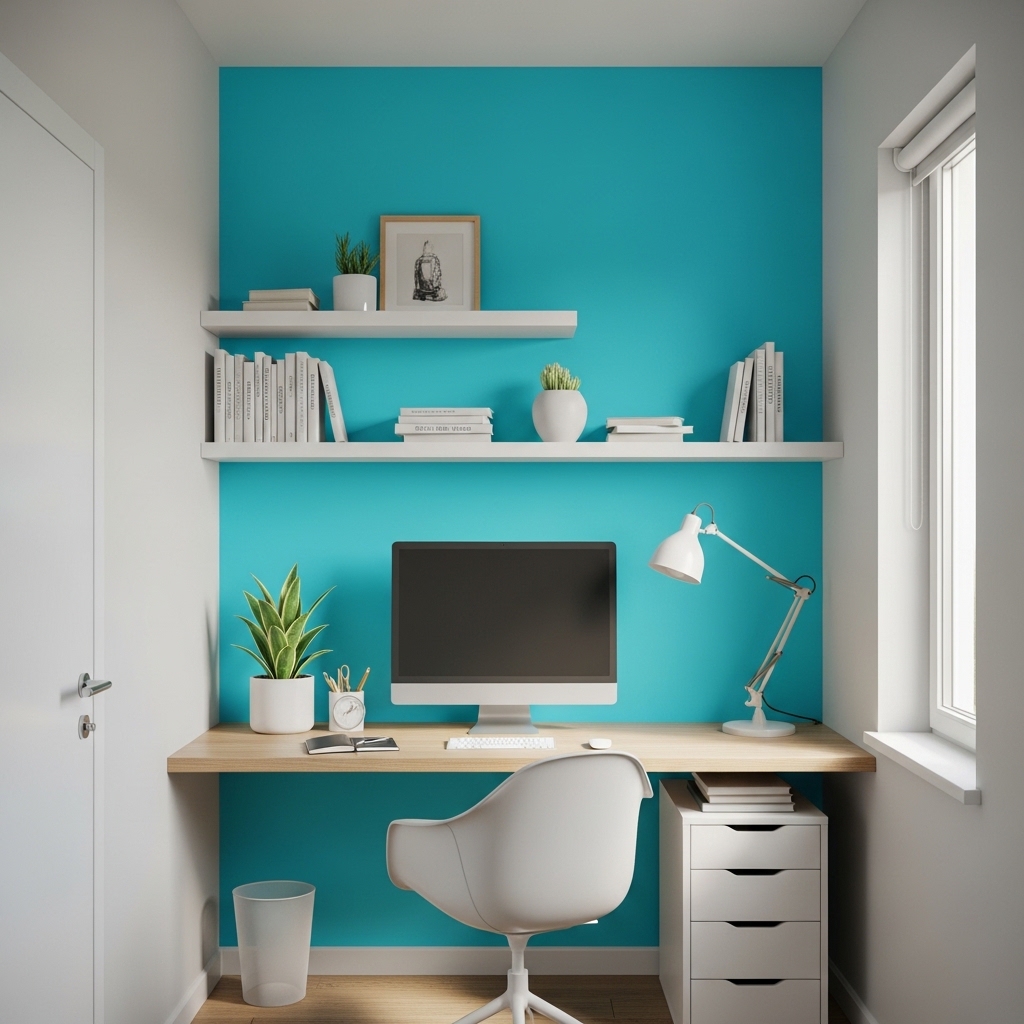
Apply this method when your small office feels flat and one-dimensional.
Paint one wall a darker or brighter color than the other three walls. Use the accent wall behind your monitor.
The contrasting wall creates visual depth. Your brain perceives the room as larger than it actually is.
All walls the same color makes small rooms feel like boxes. An accent wall adds dimension and interest.
Pro Tip: Choose a warm color like terracotta or mustard for your accent wall. Warm colors advance visually and create cozy depth.
Mistake to Avoid: Do not paint the wall behind your chair the accent color. The accent wall should be behind your monitor, not behind your head.
Conclusion
A small home office is not a limitation. It is an opportunity to design smarter.
The 15 ideas above prove that tiny spaces can be highly productive and beautifully styled.
Install a wall-mounted fold-down desk that disappears when work ends.
Use a floating shelf as your entire desk if you work from just a laptop.
Convert an unused closet into a hidden office that closes behind you.
Use a corner desk to capture dead space that nothing else fits.
Install floor-to-ceiling shelves for storage without a footprint.
Use a wall-mounted monitor arm to clear your small desk surface.
Create a desk inside an existing bookshelf to avoid adding furniture.
Use a rolling cart as a mobile filing cabinet that tucks under your desk.
Install a pegboard wall for vertical supply storage above your desk.
Use a laptop stand to elevate your screen and save your neck.
Use the space under your stairs for a cozy, character-filled office.
Use a wall-mounted paper tray instead of a desk organizer.
Use a mirrored wall to visually double the size of your space.
Use a small round table instead of a bulky rectangular desk.
Use a bright accent wall to create depth and dimension.
Start with one idea that solves your biggest space problem. Implement it this weekend.
Then add another idea next month. Your small office can become your favorite room in the house.
You do not need a large room to do great work. You need smart design.
Take back your small space starting today. Your productivity will thank you.