20 Bedroom Wall Decor Ideas That Transform Blank Walls Into Stylish, Functional Spaces
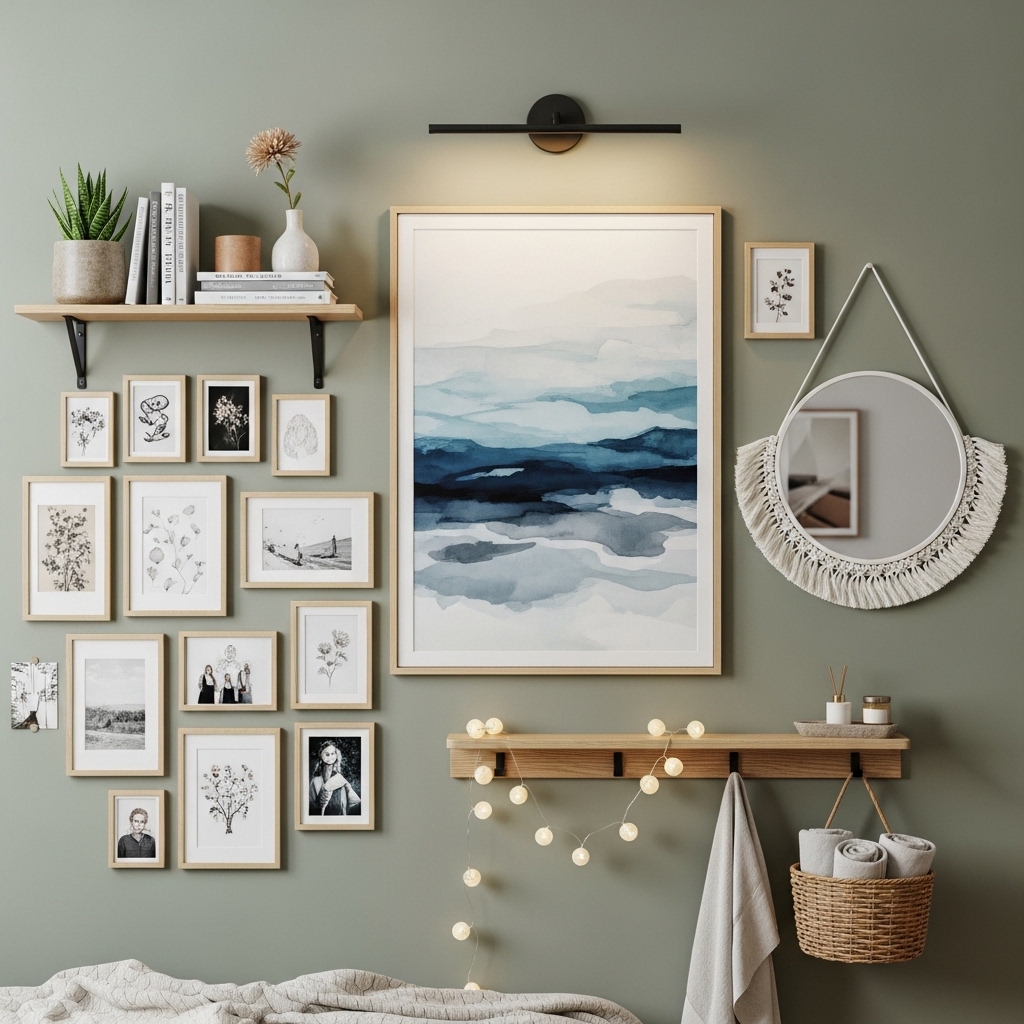
Bedroom wall decor isn’t just about filling empty space—it’s about shaping how the room feels, functions, and flows. Poorly planned walls can make even a well-furnished bedroom feel incomplete, while intentional decor can instantly elevate comfort, style, and visual balance.
The key is choosing wall decor that fits your room size, layout, lifestyle, and aesthetic goals. Whether you’re decorating a small bedroom, upgrading a modern space, or working on a budget, these ideas focus on placement strategy, scale, layering, and real usability—not just decoration.
1. Oversized Statement Art Above the Bed for Instant Impact
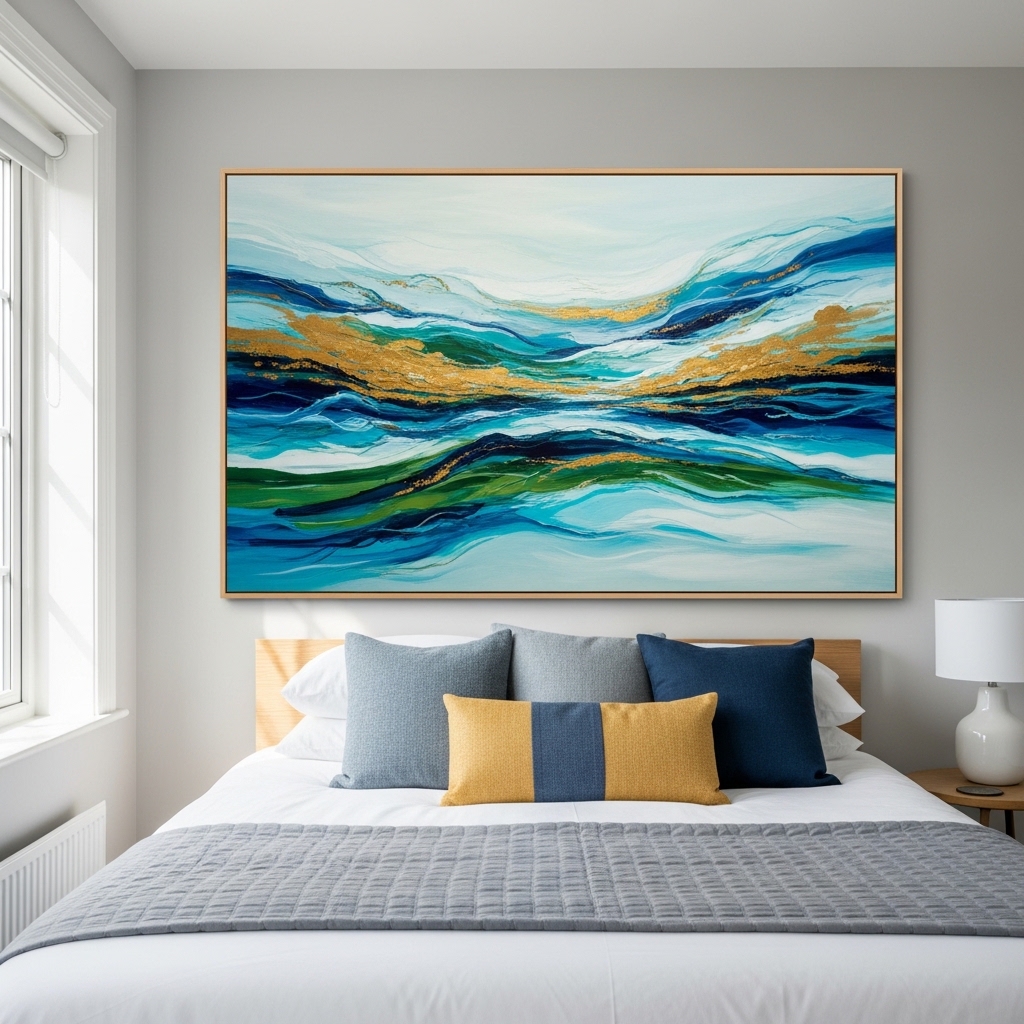
Ideal for: Bedrooms with large blank walls behind the bed needing a strong focal point.
Use one oversized artwork centered above the headboard, covering about two-thirds of the bed width. Keep the design aligned with your color palette—neutral tones for calm spaces or bold accents for contrast. Avoid adding too many surrounding elements so the piece can stand out clearly.
This works because a single large piece creates visual anchoring without cluttering the wall. It simplifies styling while making the room feel intentional and complete. Many people make the mistake of choosing art that’s too small, which breaks the scale of the wall.
Pro Tip: Hang the artwork 6–8 inches above the headboard for proper proportion.
Mistake to Avoid: Don’t place it too high—it disconnects from the bed visually.
2. Symmetrical Double Frame Layout for Balanced Bedrooms
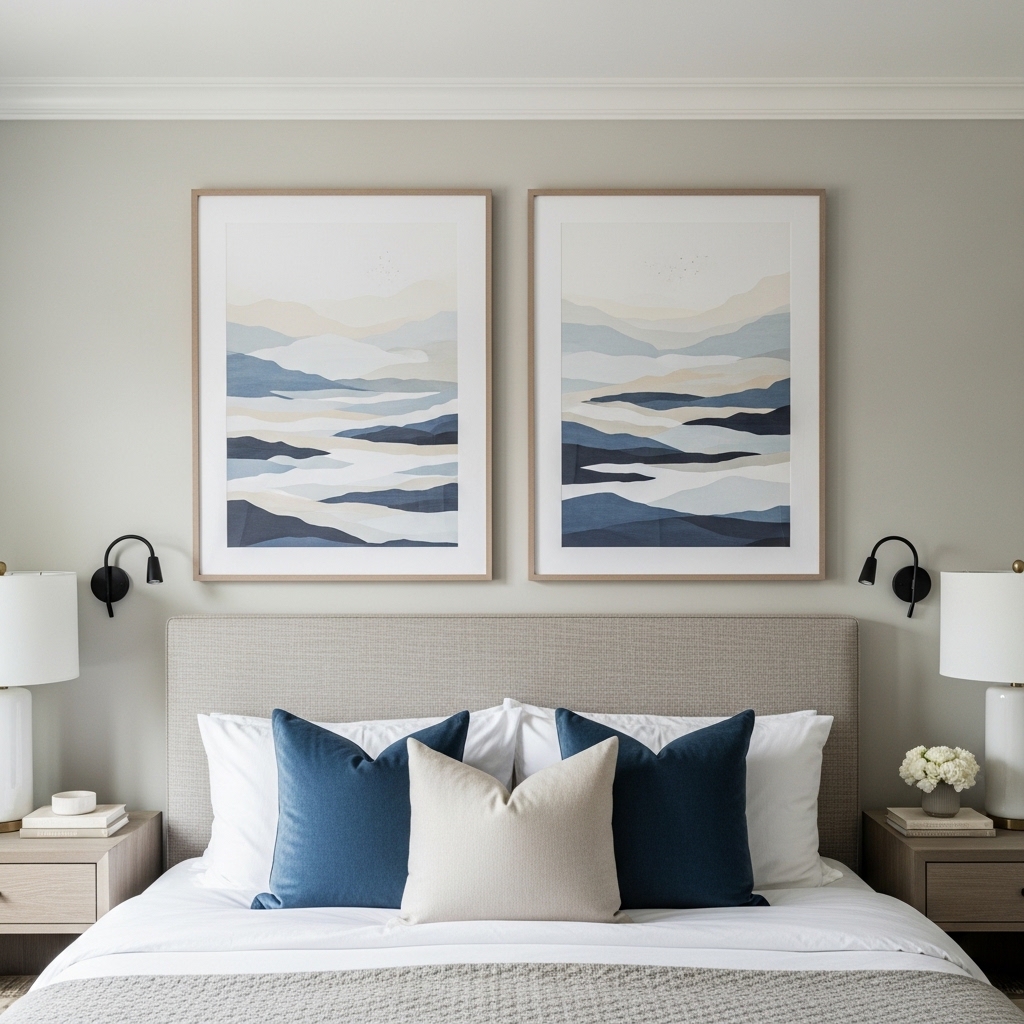
Best for: Minimal or modern bedrooms that need structure and calmness.
Hang two matching artworks side by side above the bed or dresser. Keep equal spacing and align them at the same height for a clean, symmetrical look. Choose soft tones or subtle patterns to maintain a relaxing vibe.
This works because symmetry naturally creates order and balance, which is essential in bedrooms where visual calm matters. Uneven placement or mismatched pieces disrupt that harmony.
Pro Tip: Use identical frames for a cohesive finish.
Mistake to Avoid: Don’t mix different sizes—it breaks symmetry.
3. Gallery Wall With a Soft, Cohesive Theme
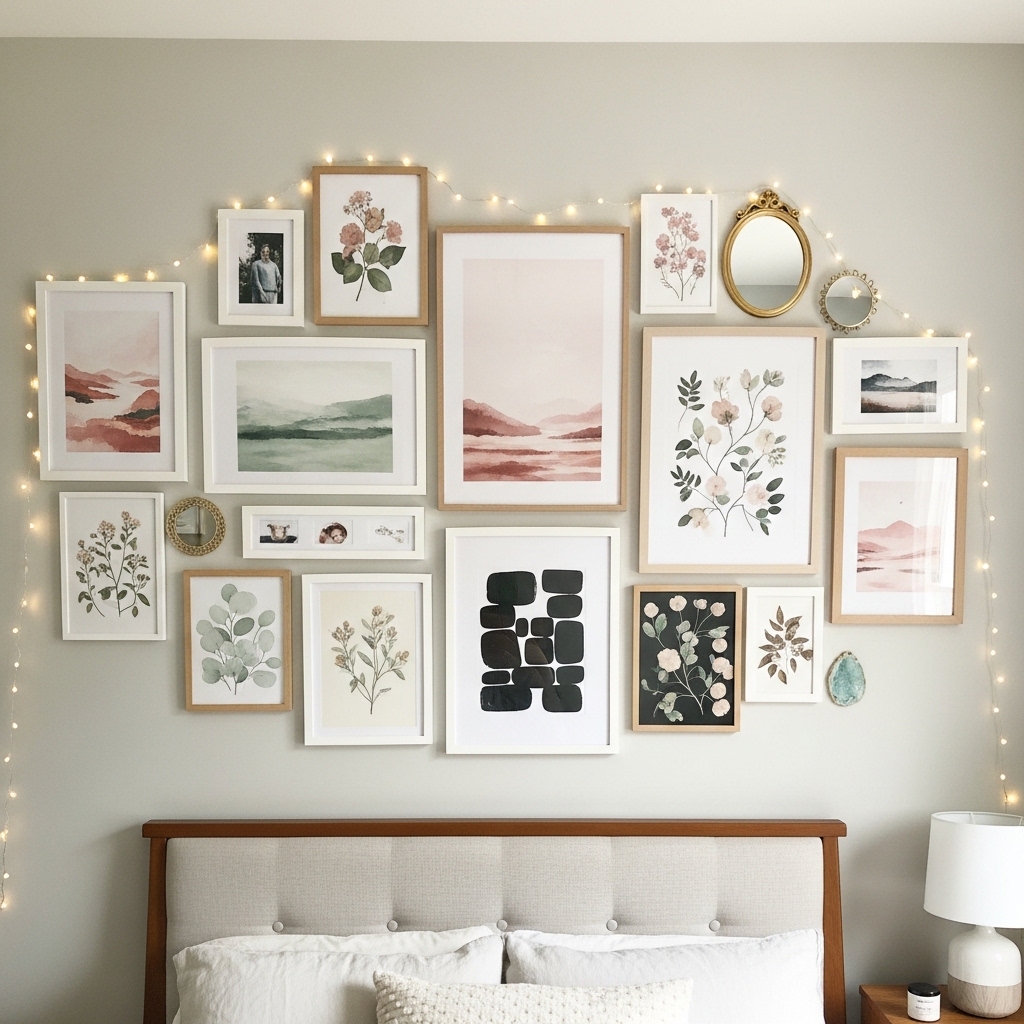
Ideal for: Personalizing bedrooms with character while maintaining style consistency.
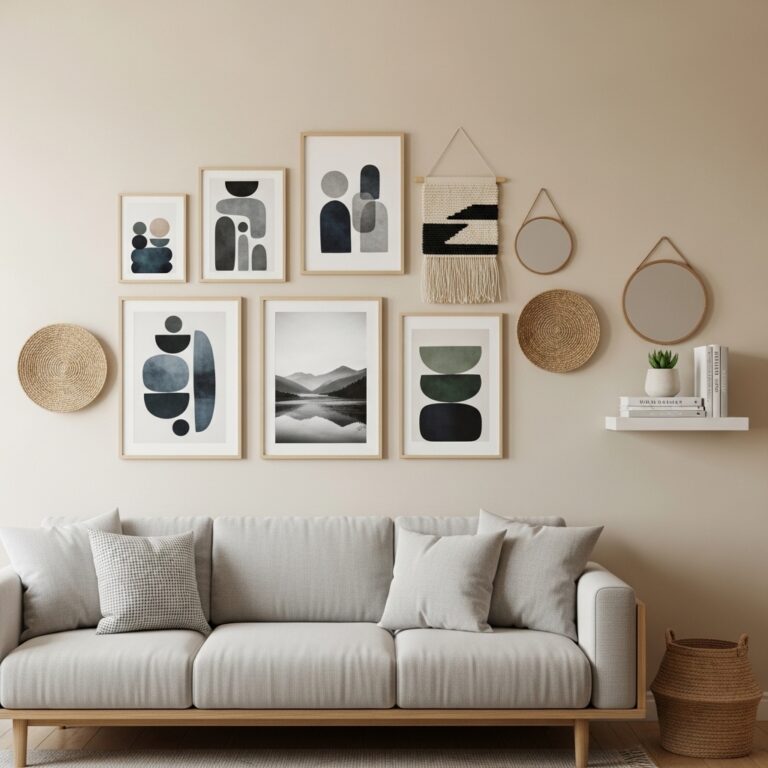
Create a gallery wall using multiple artworks, photos, or prints in a consistent color palette. Arrange them in a structured grid or an organic layout depending on your style. Keep spacing even to avoid visual clutter.
This works because repetition of color and theme ties everything together, even with different frame sizes. Without a cohesive palette, gallery walls can feel messy.
Pro Tip: Plan layout on the floor before hanging.
Mistake to Avoid: Don’t mix too many unrelated styles or colors.
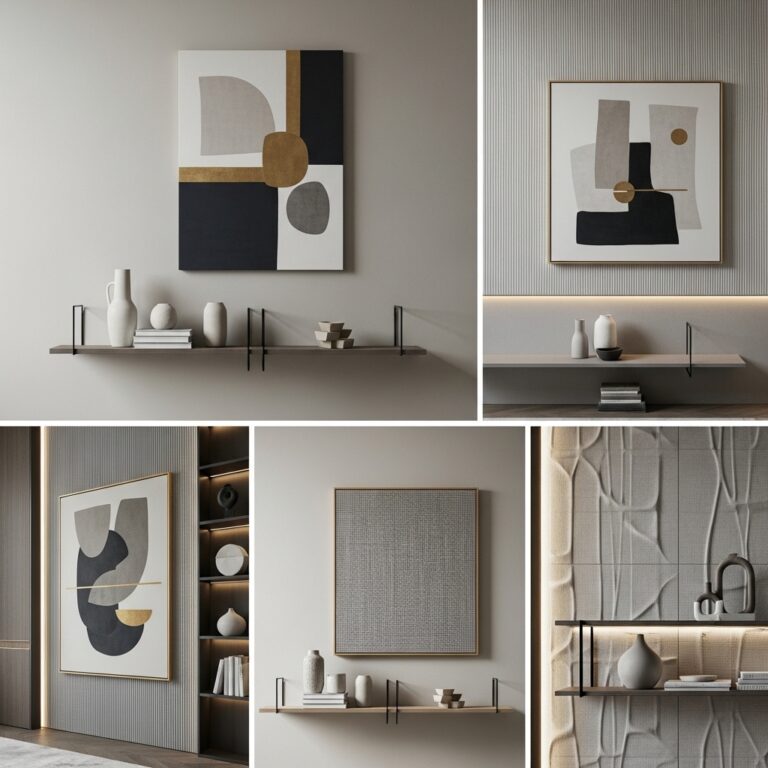
4. Floating Shelves for Layered Decor Styling
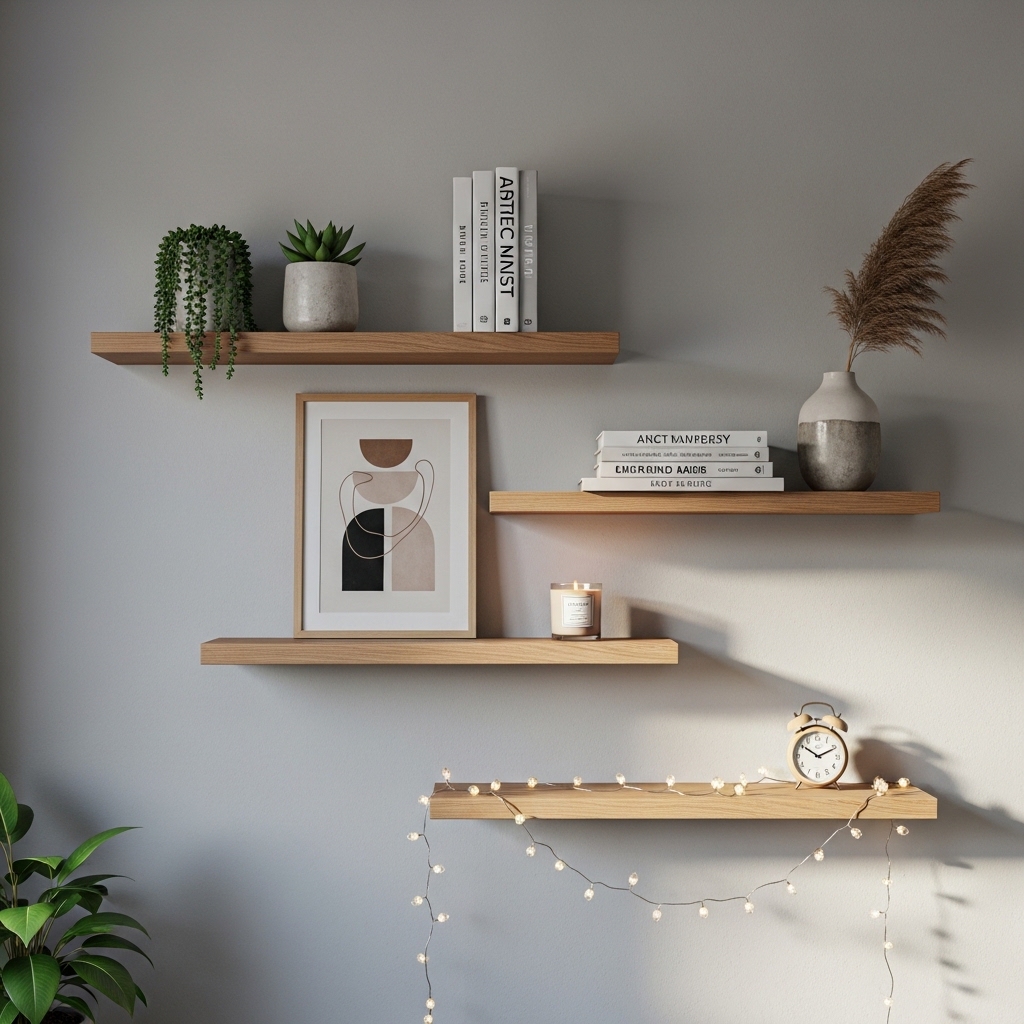
Best for: Small bedrooms or renters needing flexible wall decor.
Install floating shelves and layer artwork, books, plants, or decor pieces. Lean frames instead of hanging them for a relaxed, modern look. Keep heavier items toward the center for stability.
This works because shelves allow easy updates without committing to fixed layouts. They also add depth compared to flat wall art.
Pro Tip: Use odd-number groupings for better visual balance.
Mistake to Avoid: Don’t overcrowd shelves—it creates clutter.
5. Minimalist Line Art for Clean, Modern Spaces
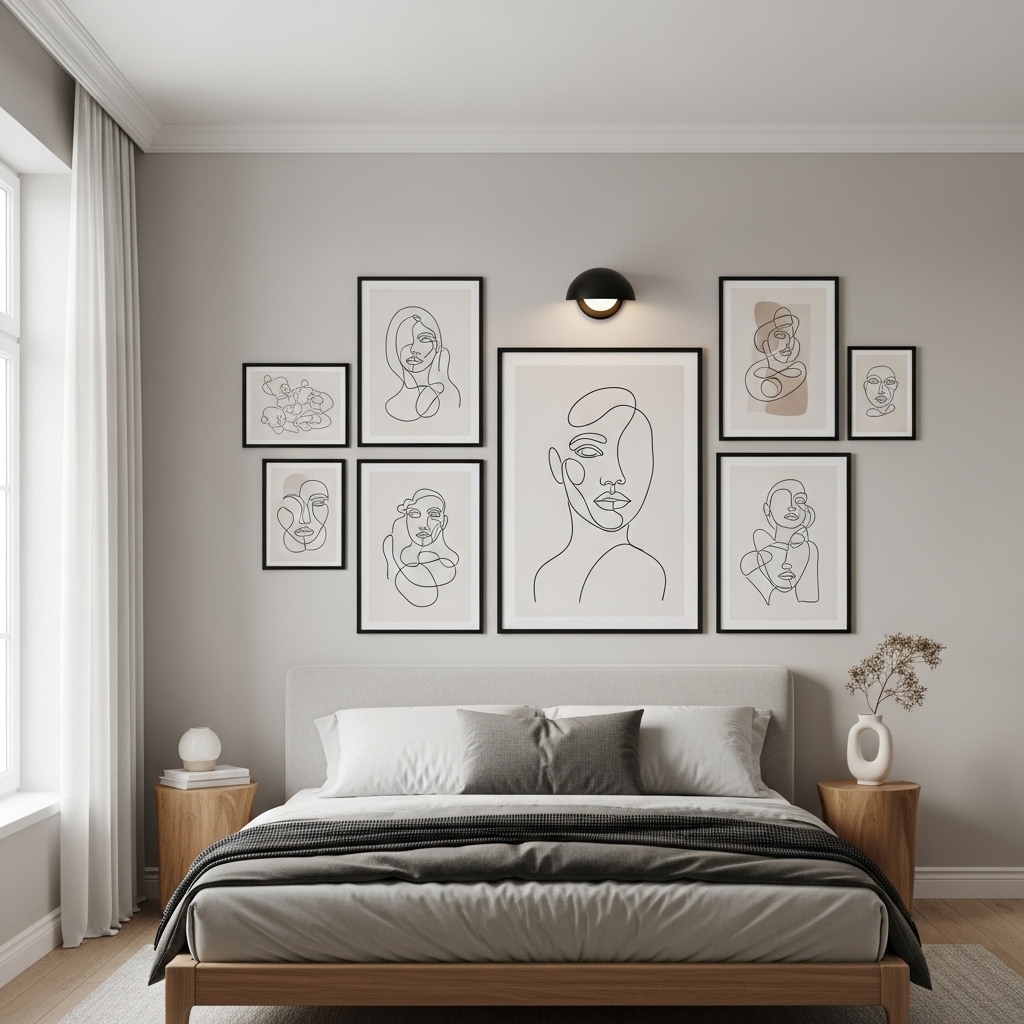
Ideal for: Small bedrooms or minimalist interiors.
Choose simple line drawings or abstract designs with plenty of negative space. Use thin frames or frameless prints to keep the look light.
This works because minimal art reduces visual noise and helps small spaces feel more open.
Pro Tip: Pair with neutral bedding for cohesion.
Mistake to Avoid: Don’t add too many small pieces together.
6. Textured Wall Panels for Depth and Warmth
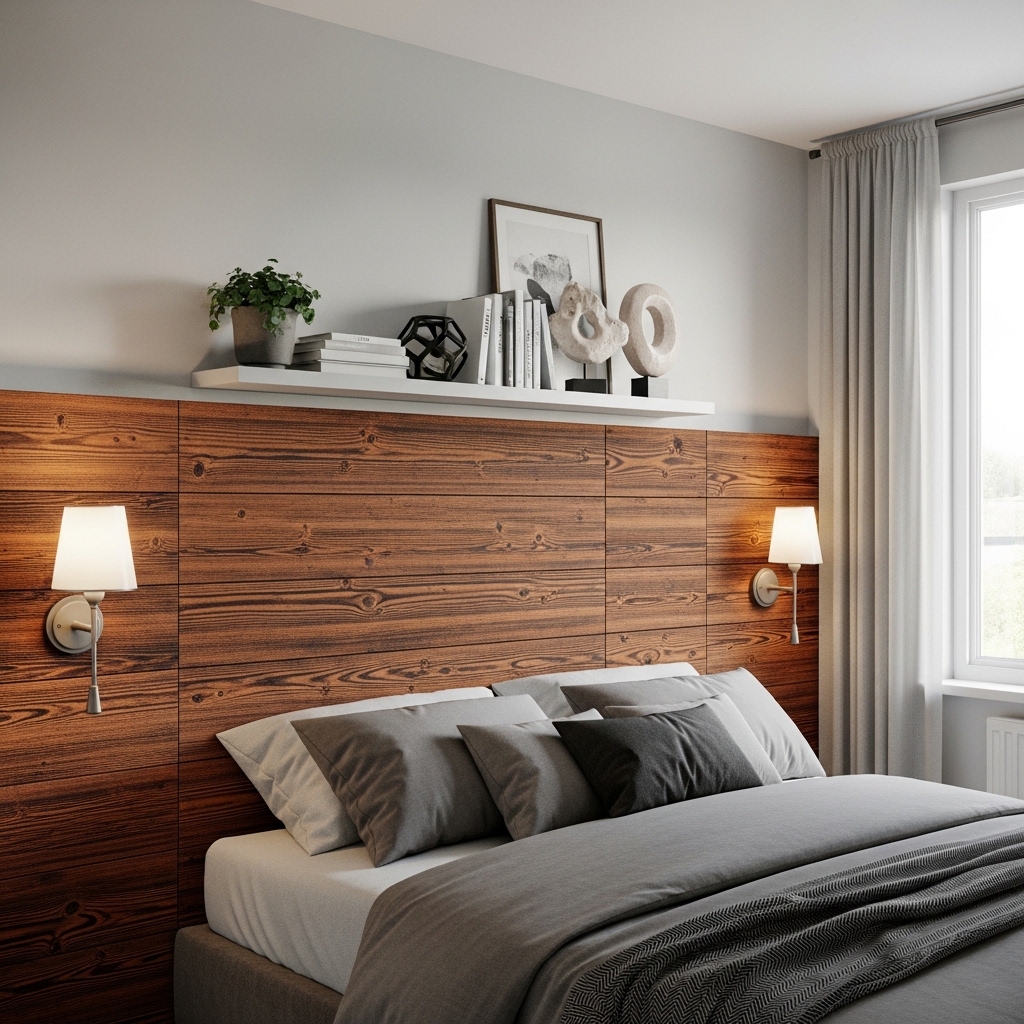
Best for: Bedrooms lacking dimension or visual interest.
Install wood panels, fabric panels, or 3D wall textures behind the bed to create depth. Keep colors neutral for versatility.
This works because texture adds richness without needing bold colors or extra decor.
Pro Tip: Use lighting to highlight texture.
Mistake to Avoid: Don’t use overly busy patterns.
7. Mirrors to Expand Space and Light
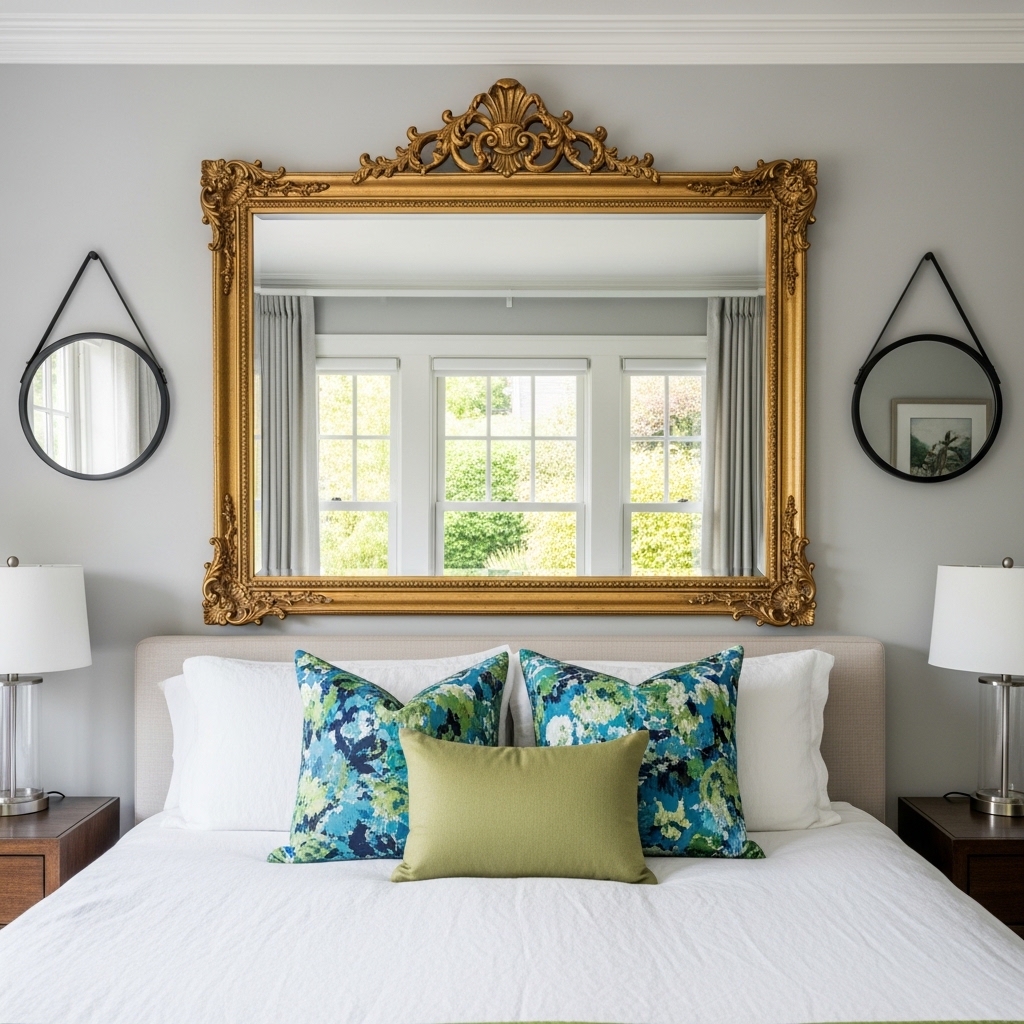
Ideal for: Small bedrooms needing brightness and openness.
Place mirrors opposite windows or near light sources to reflect light and visually expand the room. Choose simple frames for a clean look.
This works because mirrors create the illusion of more space and improve lighting.
Pro Tip: Use large mirrors instead of multiple small ones.
Mistake to Avoid: Don’t place mirrors where clutter reflects.
8. Vertical Art Layout for Narrow Walls
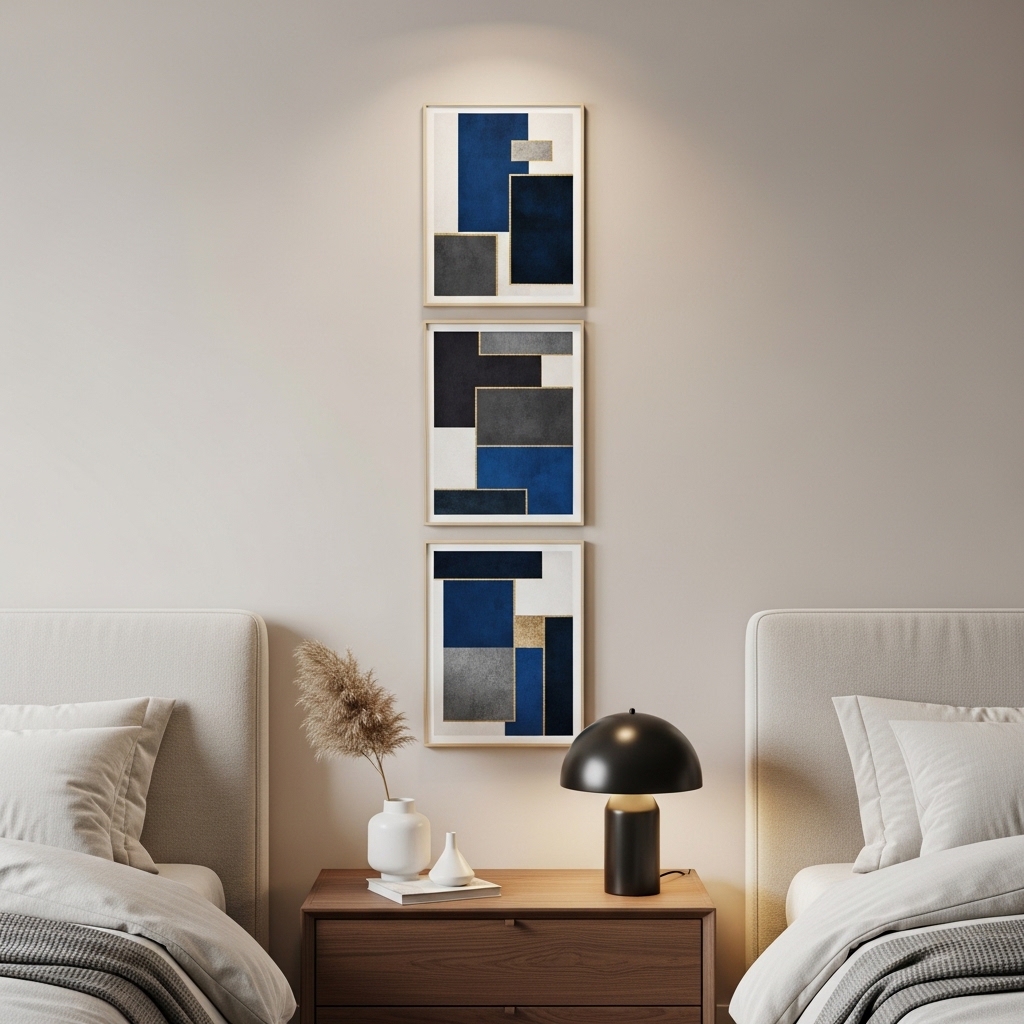
Best for: Tight spaces like beside wardrobes or windows.
Use tall, narrow artwork to fill vertical wall space without crowding the room.
This works because vertical lines make ceilings feel higher.
Pro Tip: Align with furniture edges.
Mistake to Avoid: Don’t use wide pieces in narrow areas.
9. Wall Sconces for Functional Decor
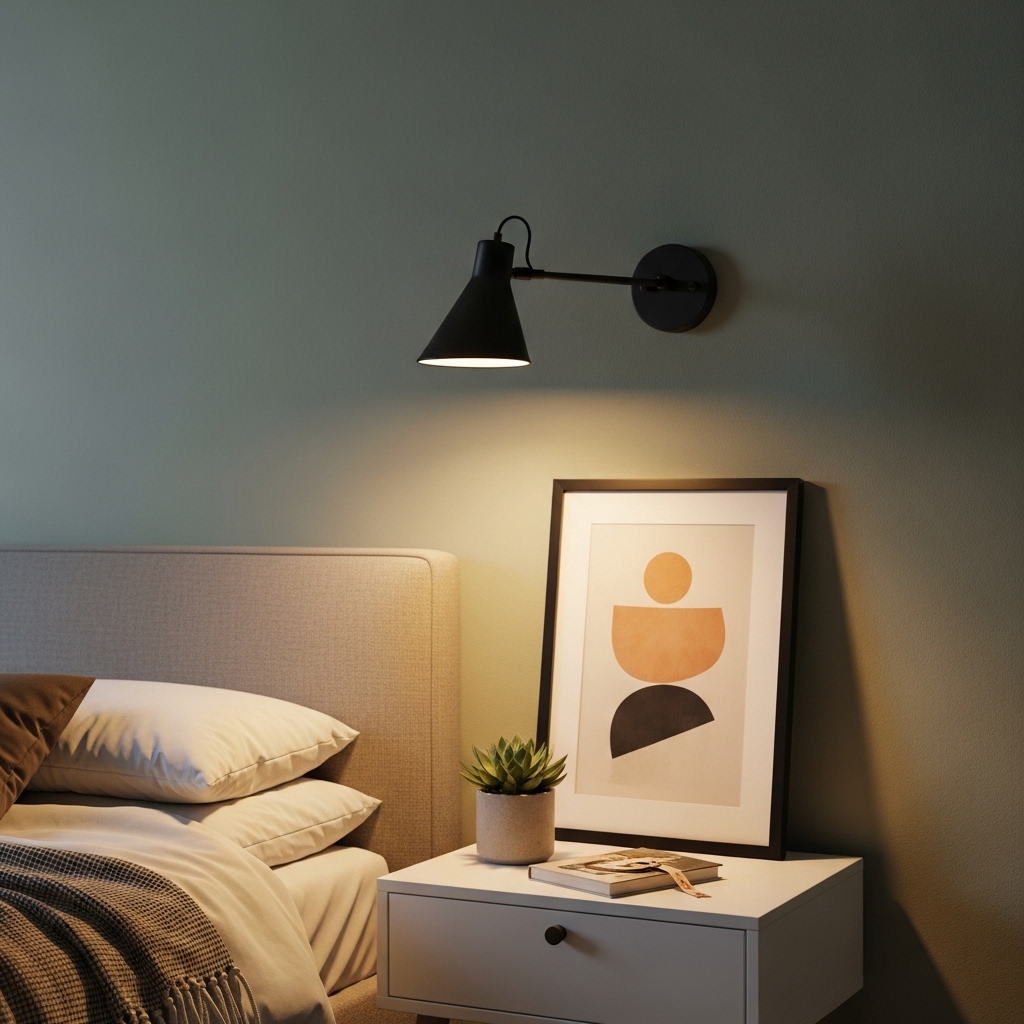
Ideal for: Bedrooms needing lighting and decor combined.
Install wall sconces on either side of the bed for reading light and symmetry.
This works because it saves space on bedside tables.
Pro Tip: Use warm lighting for comfort.
Mistake to Avoid: Don’t install too high or too low.
10. Accent Wall With Paint or Wallpaper
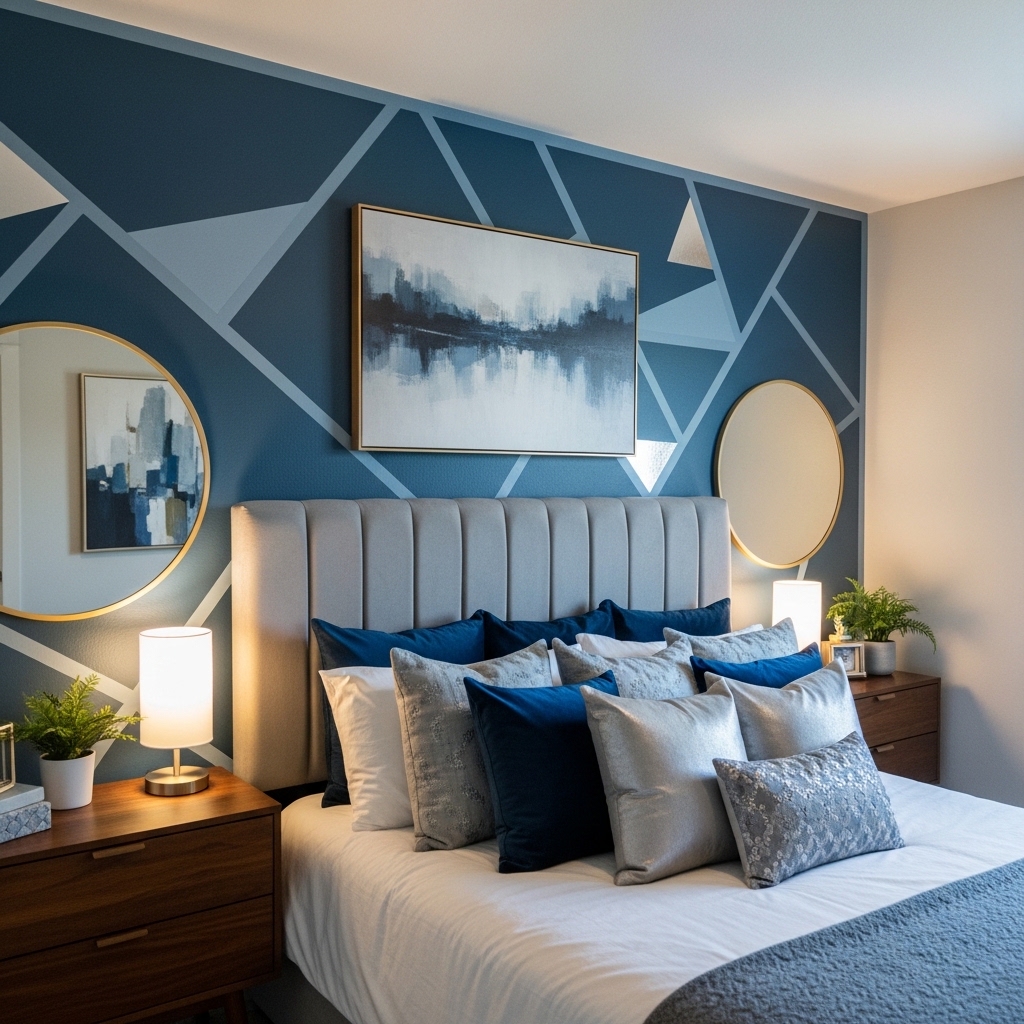
Best for: Creating a bold focal point.
Use paint or wallpaper on one wall behind the bed to define the space.
This works because it adds visual interest without clutter.
Pro Tip: Keep other walls neutral.
Mistake to Avoid: Don’t overuse patterns.
11. Framed Fabric or Textile Wall Art for Soft Texture
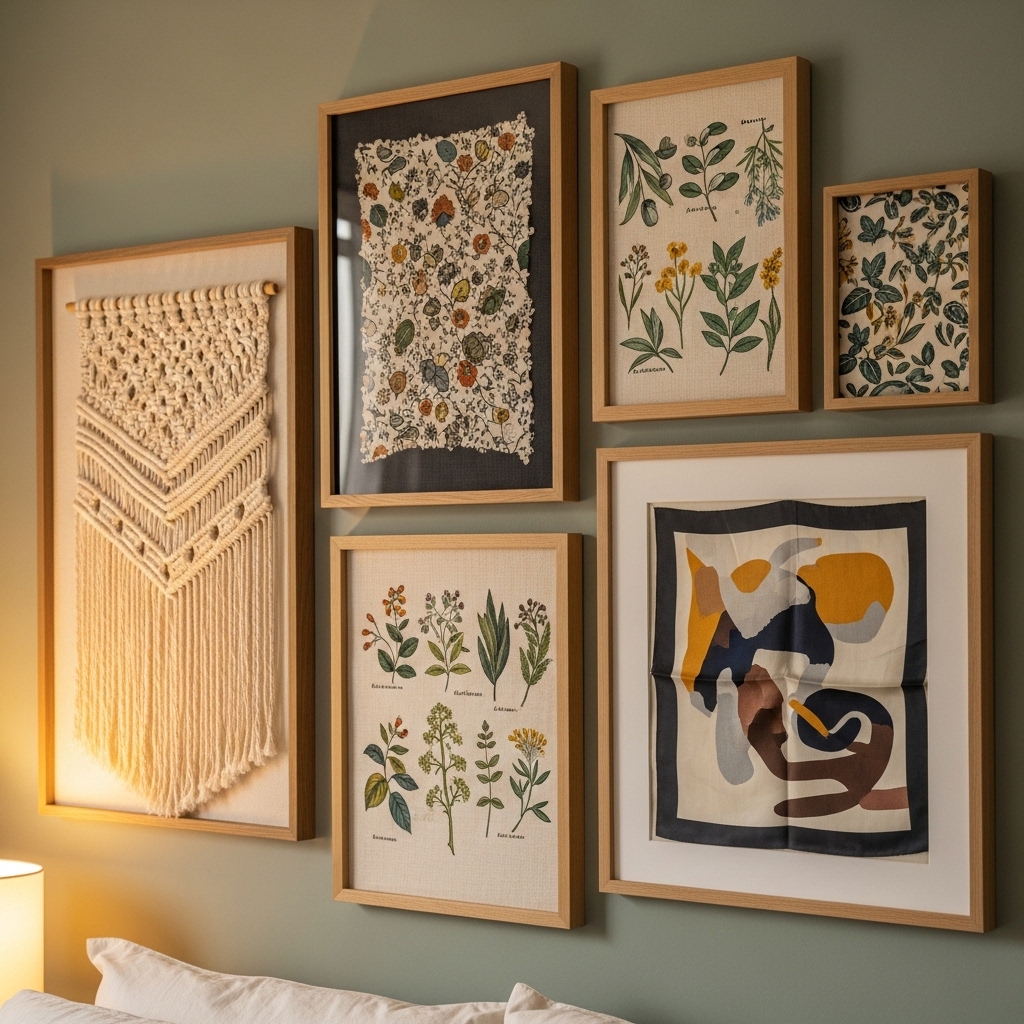
Ideal for: Cozy bedrooms that need warmth without adding bulky decor.
Frame neutral fabrics, woven textiles, or subtle patterned cloth and hang them above the bed or on side walls. Choose materials like linen, cotton, or light weaves that complement bedding and curtains. Keep frames simple so the texture remains the focus rather than the border.
This works because textiles soften the overall feel of the bedroom while adding depth that flat prints can’t achieve. It’s especially effective in spaces that feel too cold or minimal. Overly bold patterns can disrupt the calm atmosphere, so subtlety is key.
Pro Tip: Match textile tones with pillows or throws for cohesion.
Mistake to Avoid: Don’t use heavy or overly dark fabrics—they can feel overpowering.
12. Wall-Mounted Headboard Extensions for Visual Height
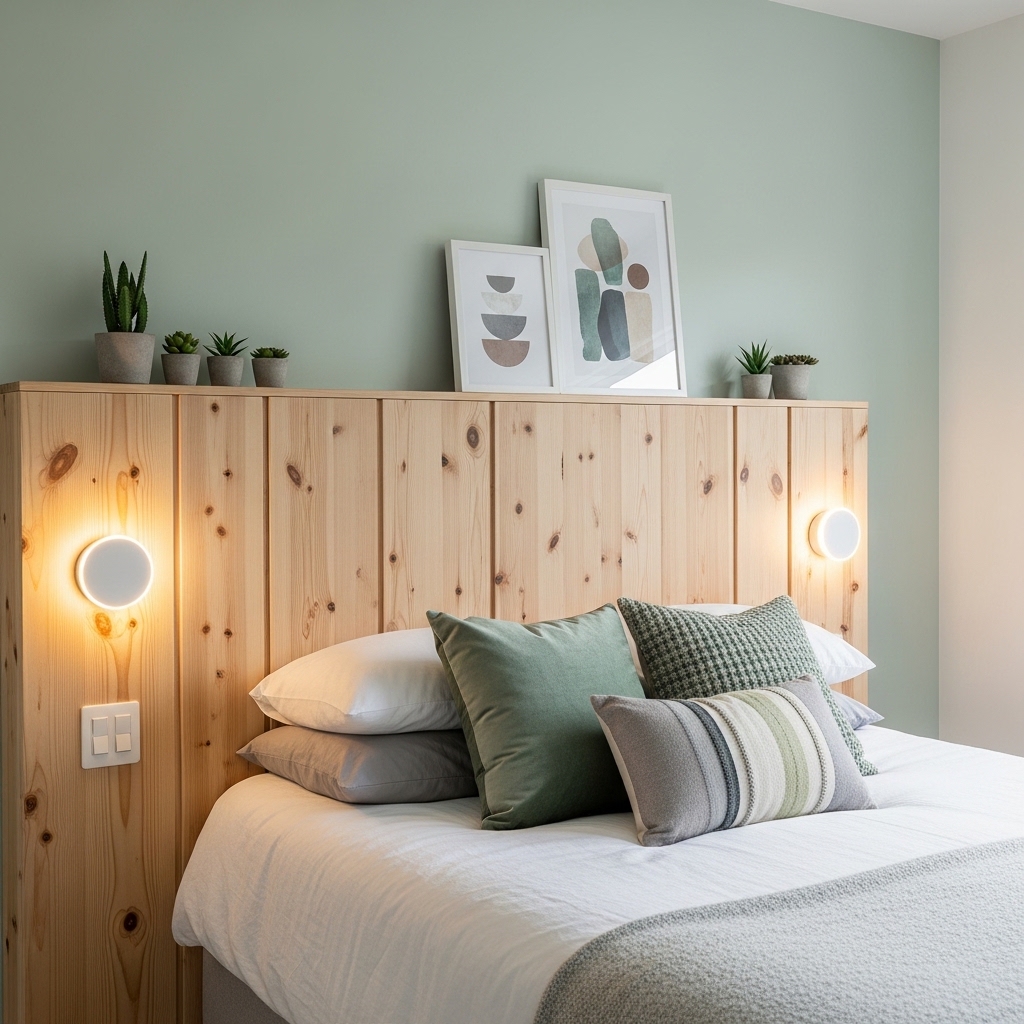
Best for: Bedrooms with low ceilings or compact layouts.
Extend your headboard visually by adding wall panels, artwork, or vertical slats above it. Keep the design aligned with the bed width to maintain proportion and balance. This approach works well with neutral tones or subtle patterns that don’t overwhelm the space.
This works because extending the headboard upward draws the eye vertically, making the room feel taller and more spacious. Many people stop decor at the headboard, leaving the upper wall empty and underutilized.
Pro Tip: Use vertical lines or panels to enhance height perception.
Mistake to Avoid: Don’t extend beyond bed width—it breaks visual alignment.
13. Corner Wall Decor for Underused Spaces
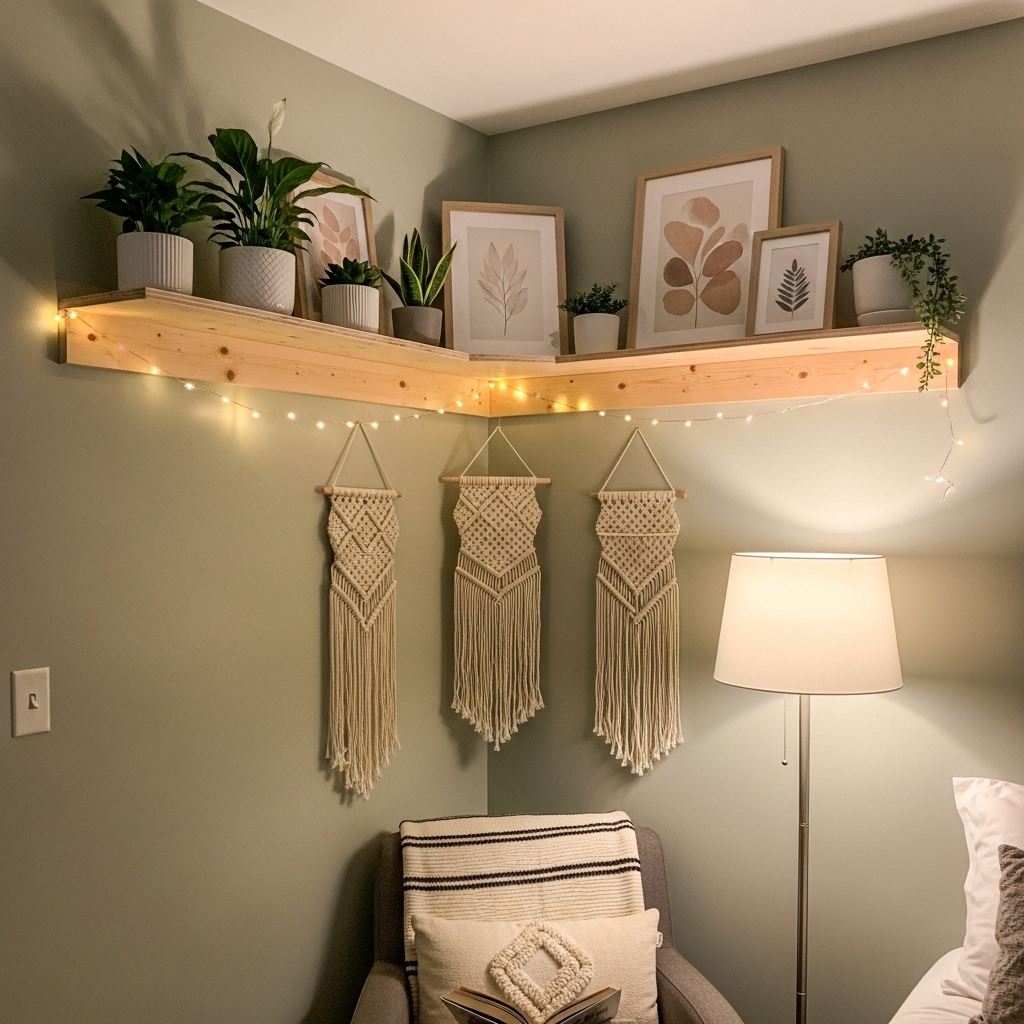
Ideal for: Bedrooms with awkward layouts or empty corners.
Use corner shelves, small art pieces, or hanging decor to activate unused wall areas. Keep the design minimal and functional, such as combining a small plant with a framed print.
This works because corners are often neglected, yet they can add depth and balance when styled correctly. Filling corners prevents the room from feeling incomplete.
Pro Tip: Keep corner decor lightweight and simple.
Mistake to Avoid: Don’t overcrowd tight corner spaces.
14. Black Frame Contrast for Definition
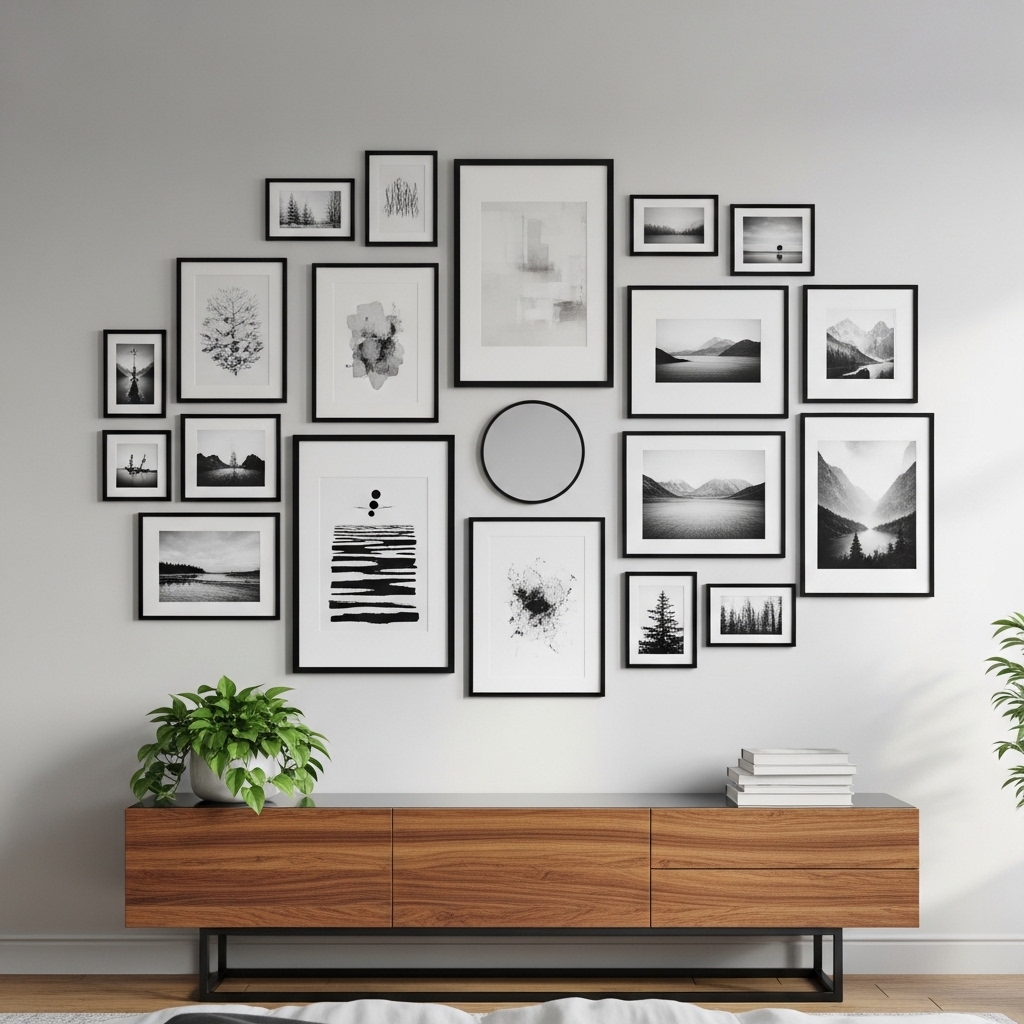
Best for: Light or neutral bedrooms needing structure.
Use black or dark frames around wall art to create contrast against white or beige walls. Arrange pieces symmetrically or in clean layouts to maintain balance.
This works because contrast adds definition and prevents neutral spaces from looking washed out. Too many contrasting elements, however, can feel harsh.
Pro Tip: Stick to one frame color across all pieces.
Mistake to Avoid: Don’t mix multiple bold frame finishes.
15. Personalized Photo Walls for Emotional Connection
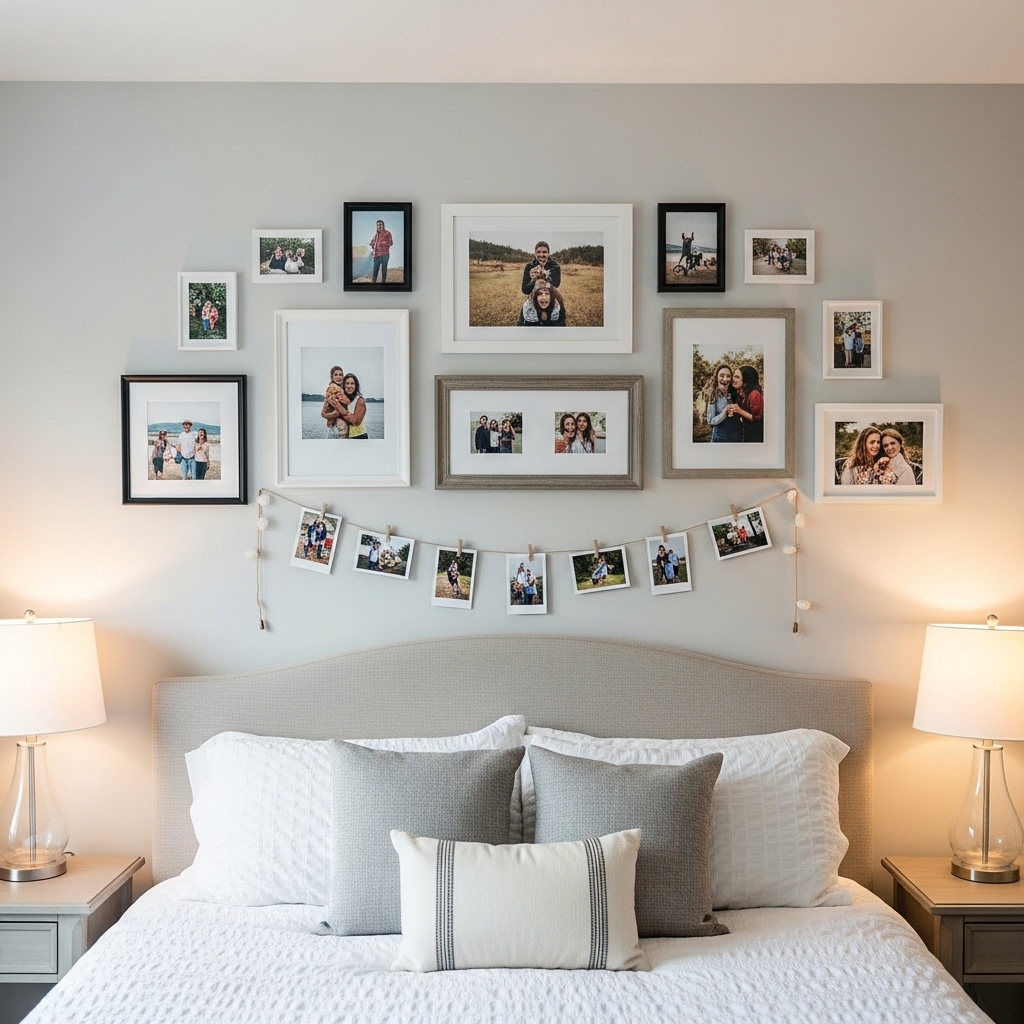
Ideal for: Adding personality without losing design consistency.
Create a curated photo wall using personal images in consistent tones or filters. Keep frames uniform and arrange them in a structured layout.
This works because it adds emotional value while maintaining a clean aesthetic. Random photo placement often looks cluttered.
Pro Tip: Use black-and-white filters for a cohesive look.
Mistake to Avoid: Don’t mix too many photo styles or sizes.
16. Abstract Art for Modern Bedroom Styling
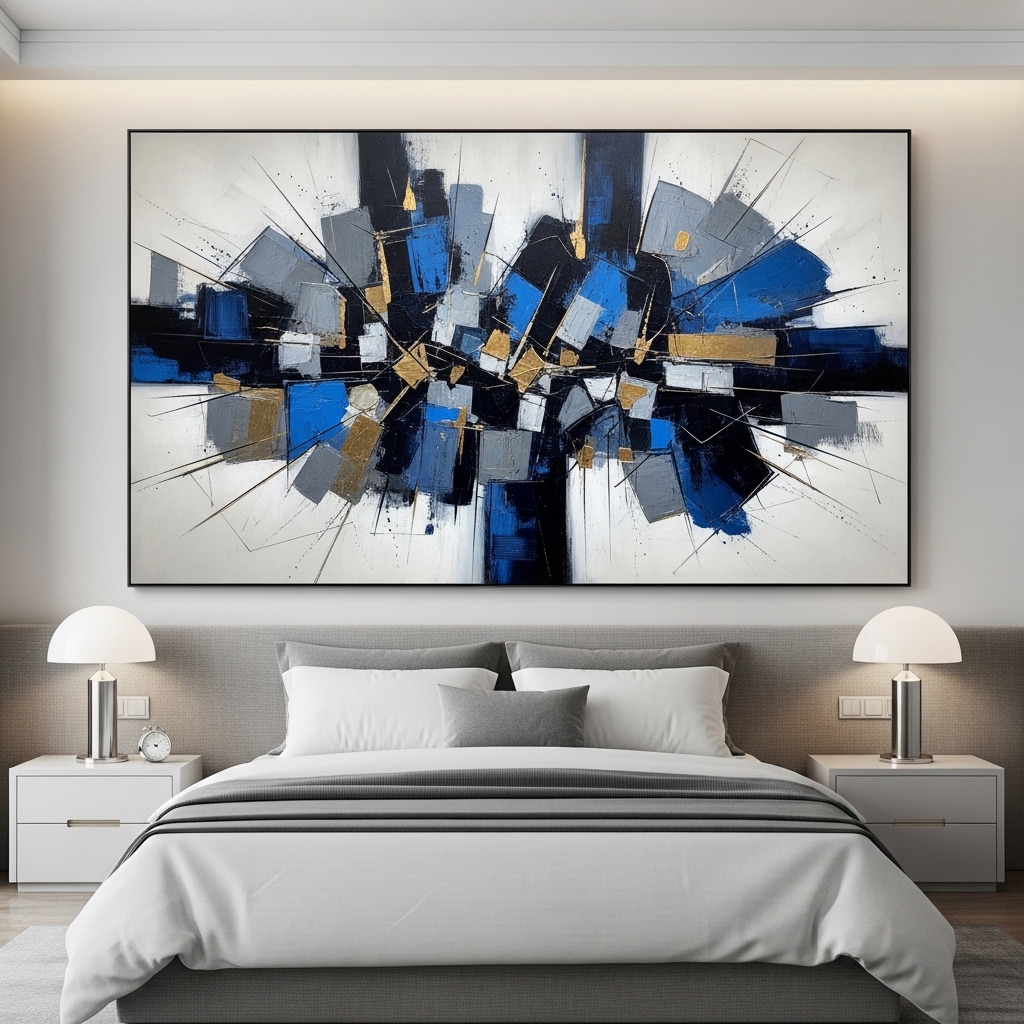
Best for: Contemporary or minimalist interiors.
Choose abstract pieces with soft or neutral color palettes. Position them as focal points or layered with other decor elements.
This works because abstract art adds visual interest without overwhelming the space.
Pro Tip: Pair with simple furniture to avoid clutter.
Mistake to Avoid: Don’t mix too many abstract styles.
17. Wall Hooks With Decorative Purpose
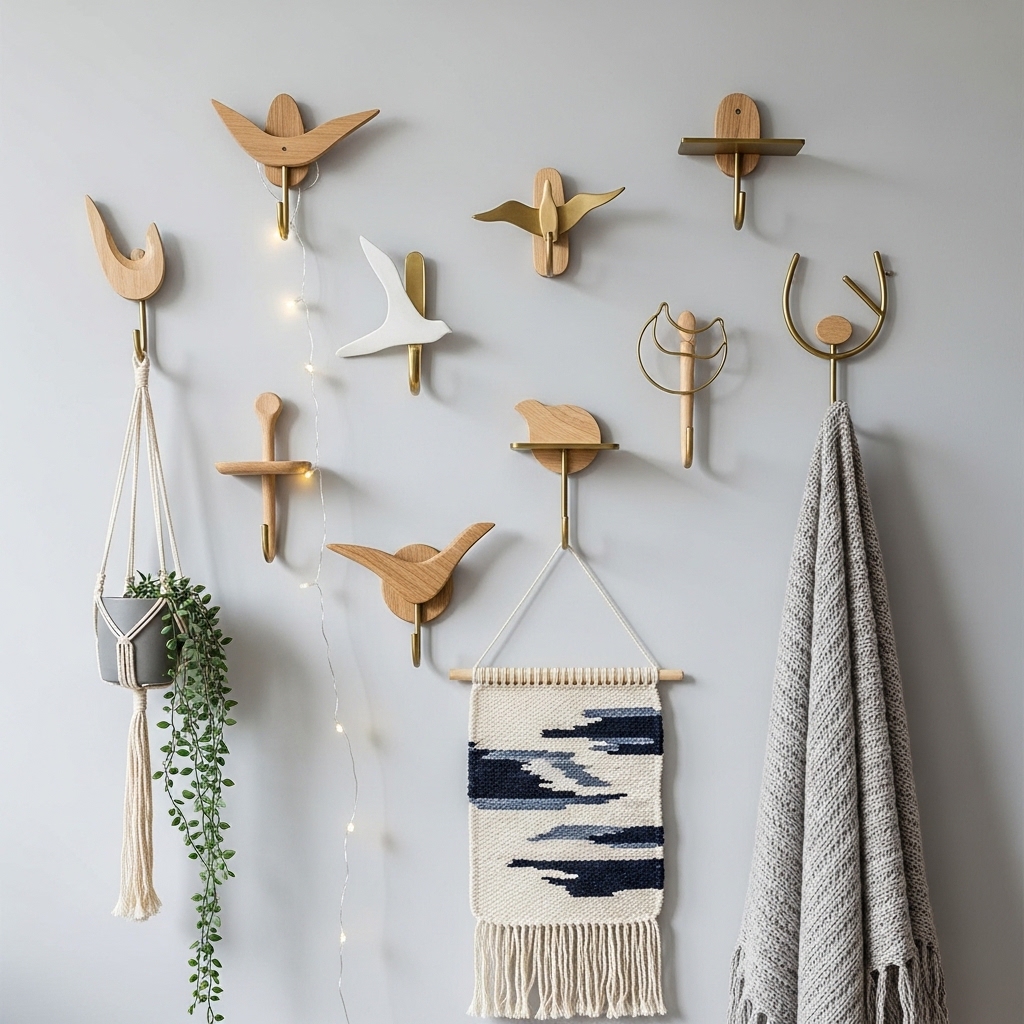
Ideal for: Small bedrooms needing both function and style.
Install stylish wall hooks to hang hats, bags, or accessories. Arrange them in a clean pattern to double as decor.
This works because it combines storage with visual interest.
Pro Tip: Use evenly spaced hooks for balance.
Mistake to Avoid: Don’t overload hooks with items.
18. Neutral Floral Wall Art for Calm Aesthetics
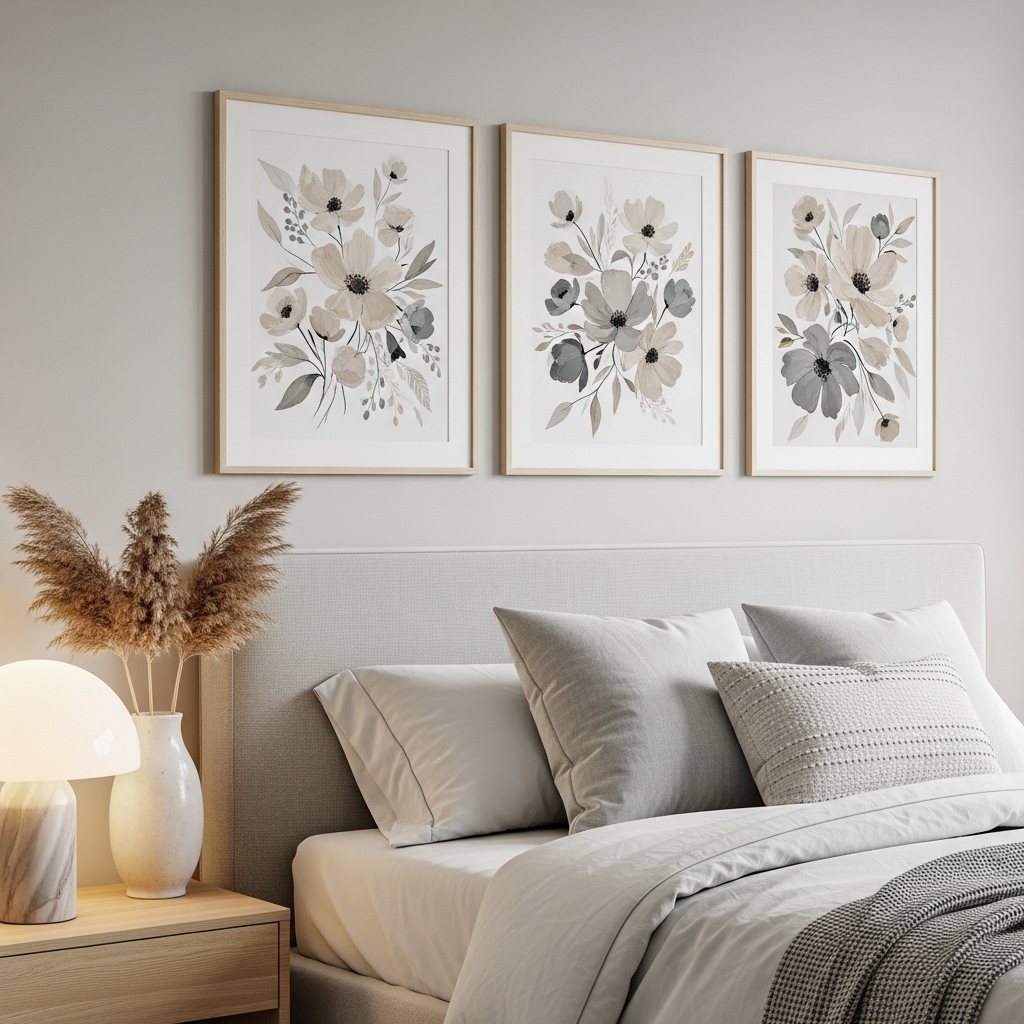
Best for: Creating a relaxing bedroom atmosphere.
Use soft-toned floral prints in beige, gray, or pastel shades. Place them above the bed or dresser for a calming focal point.
This works because gentle patterns promote relaxation and comfort.
Pro Tip: Match tones with bedding.
Mistake to Avoid: Don’t use overly bright floral designs.
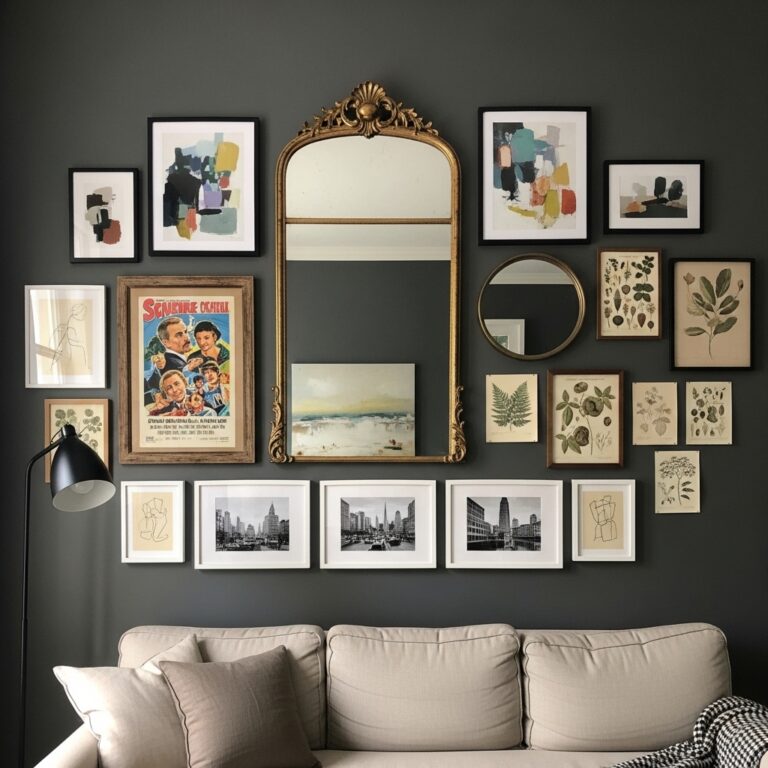
19. Layered Art With Mirrors for Depth
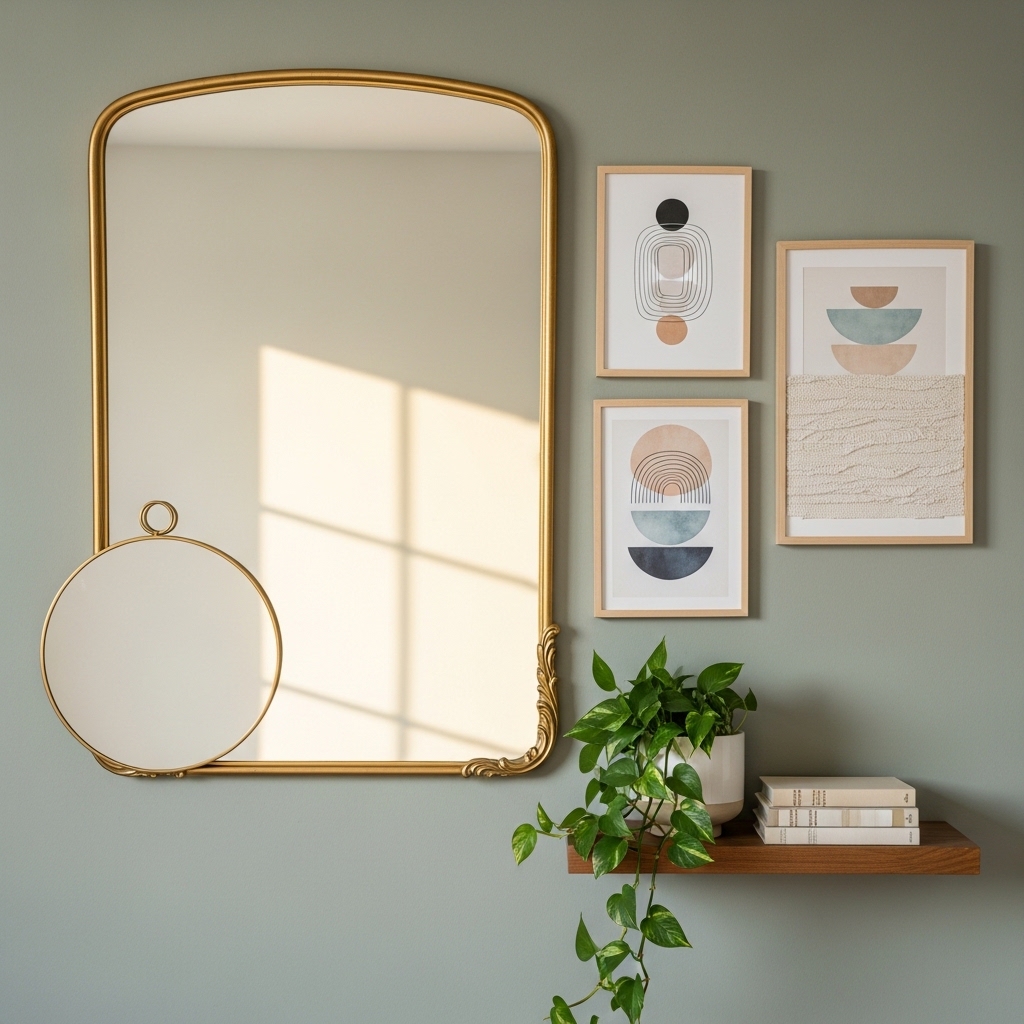
Ideal for: Small bedrooms needing dimension.
Combine wall art with mirrors to reflect light and create depth. Arrange them in a balanced layout.
This works because layering adds complexity without cluttering the space.
Pro Tip: Position near natural light sources.
Mistake to Avoid: Don’t create overlapping cluttered reflections.
20. Seasonal Wall Decor Rotation for Fresh Looks
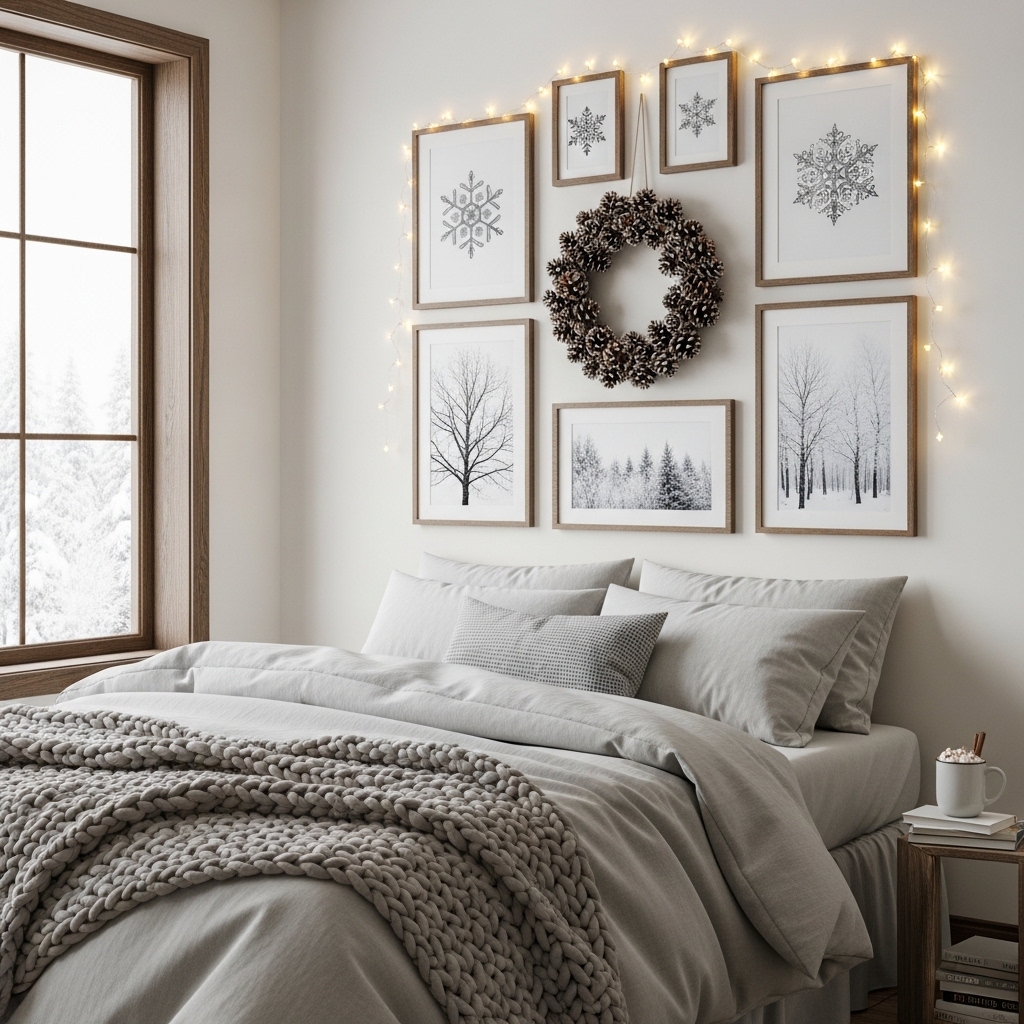
Best for: Keeping bedroom decor updated without full redesign.
Rotate artwork or small decor elements based on seasons while keeping the base style consistent. Use lighter tones in summer and warmer textures in winter.
This works because small changes refresh the space without major effort or cost.
Pro Tip: Store off-season decor safely for reuse.
Mistake to Avoid: Don’t switch to completely different themes—it breaks consistency.
Conclusion
Bedroom wall decor should never be random—it should support comfort, balance, and everyday usability. When you focus on placement, scale, and cohesion, even simple decor choices can completely transform how your bedroom feels and functions.