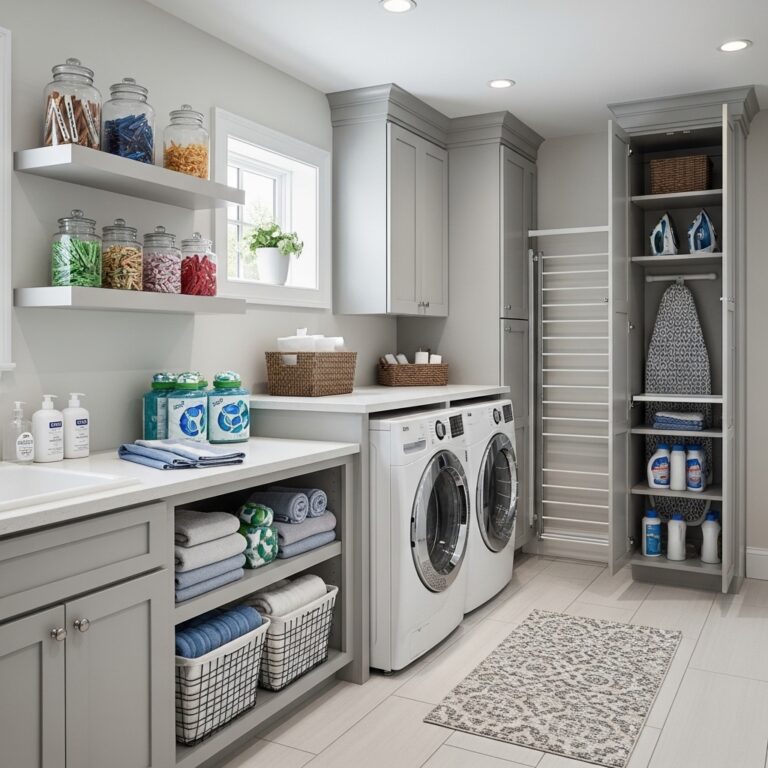
22 Laundry Room Shelves Ideas That Maximize Storage While Adding Farmhouse Charm and Function
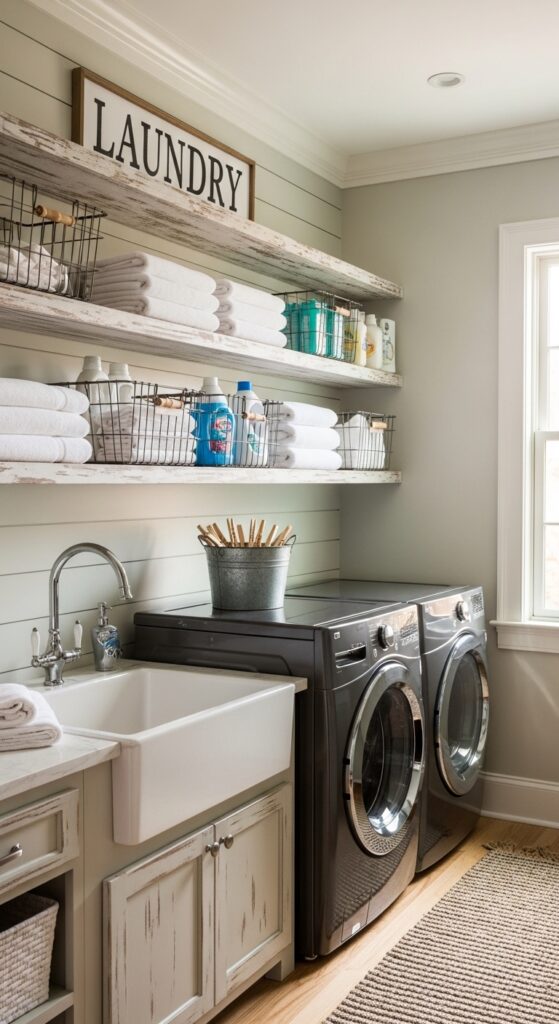
You open your laundry room cabinets. Bottles fall out. Boxes tumble down. Nothing stays in place.
Poor shelving turns laundry day into a frustrating game of stacking and restacking supplies.
The right shelves change everything. They keep items visible, accessible, and beautifully organized.
You do not need a massive renovation to upgrade your laundry room shelving.
Simple changes make a dramatic difference. A new shelf here. A different material there. Better spacing.
This guide delivers 22 laundry room shelves ideas that maximize storage while adding farmhouse charm and function.
From floating wood to wire baskets, each idea helps you store more with less frustration.
1. Install Floor-to-Ceiling Shelves on an Empty Wall
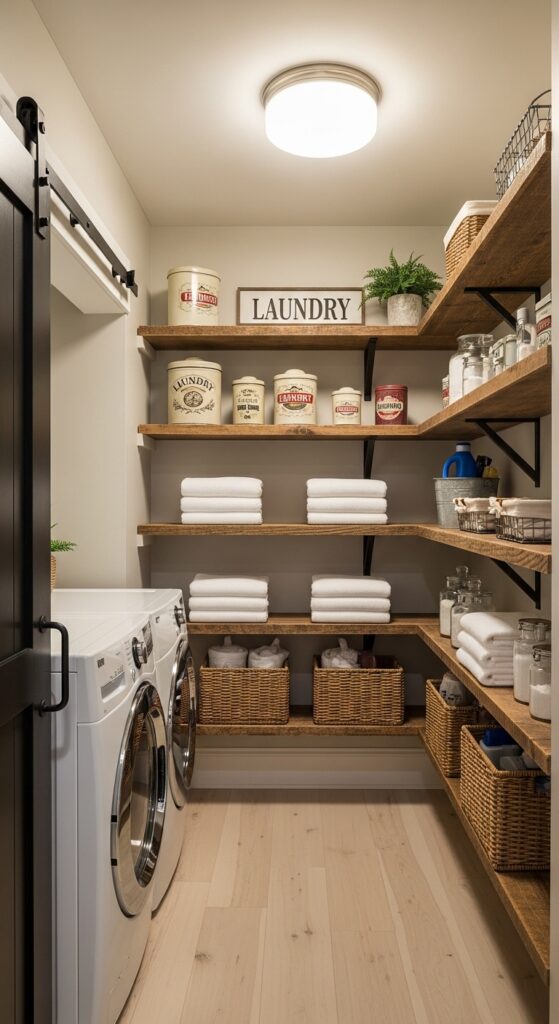
Most laundry rooms have one wall that is completely empty above waist height. That is wasted potential.
Install shelves that run from your floor all the way up to your ceiling on that empty wall.
Use lower shelves for daily items like detergent and dryer sheets. Use upper shelves for bulk extras.
Vertical storage uses wall space that nothing else can occupy. Your floor stays open and clear for walking.
Pro Tip: Adjust your shelf heights based on what you store. Tall shelves for detergent bottles. Short shelves for dryer sheet boxes.
Mistake to Avoid: Do not forget to anchor your tall shelves to wall studs. Unanchored shelves tip over and cause serious injury.
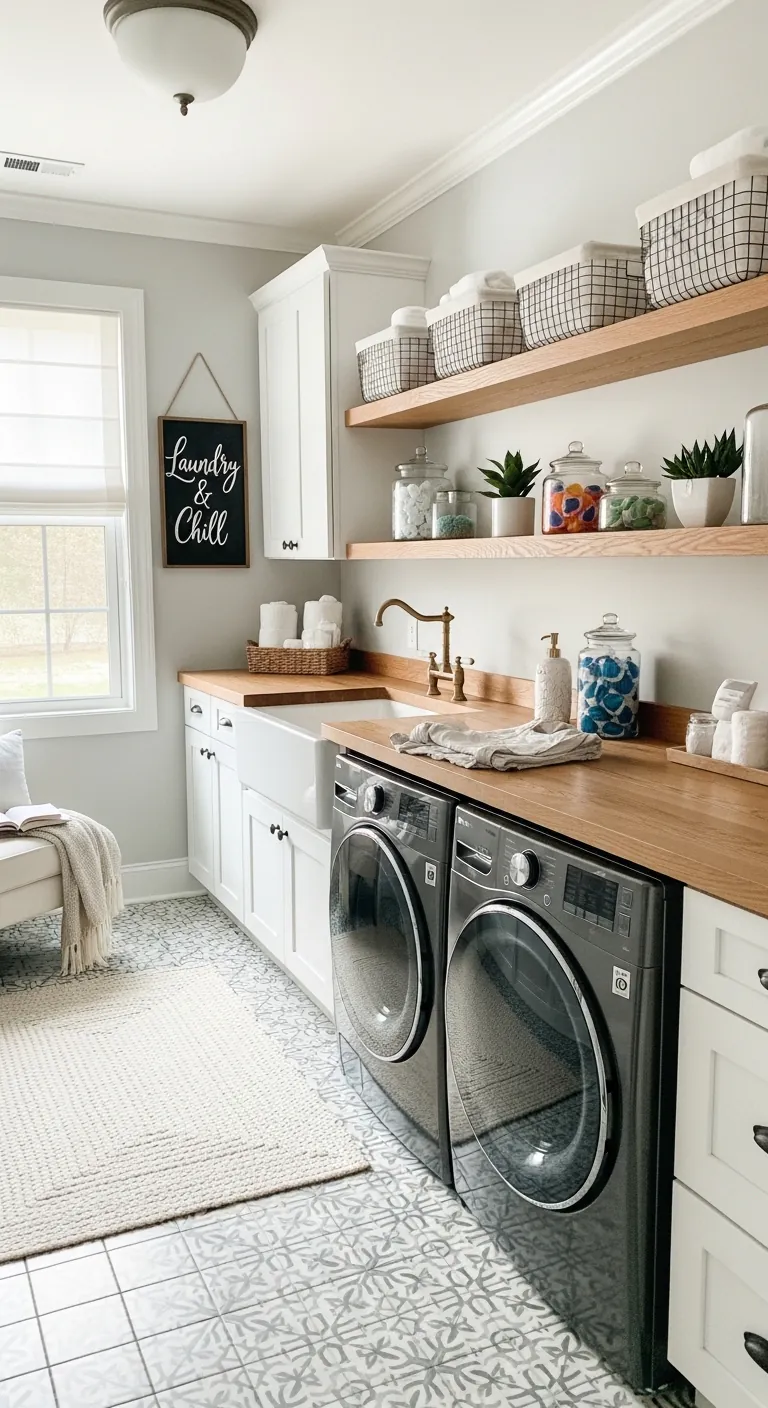
2. Use Floating Wood Shelves for a Farmhouse Look
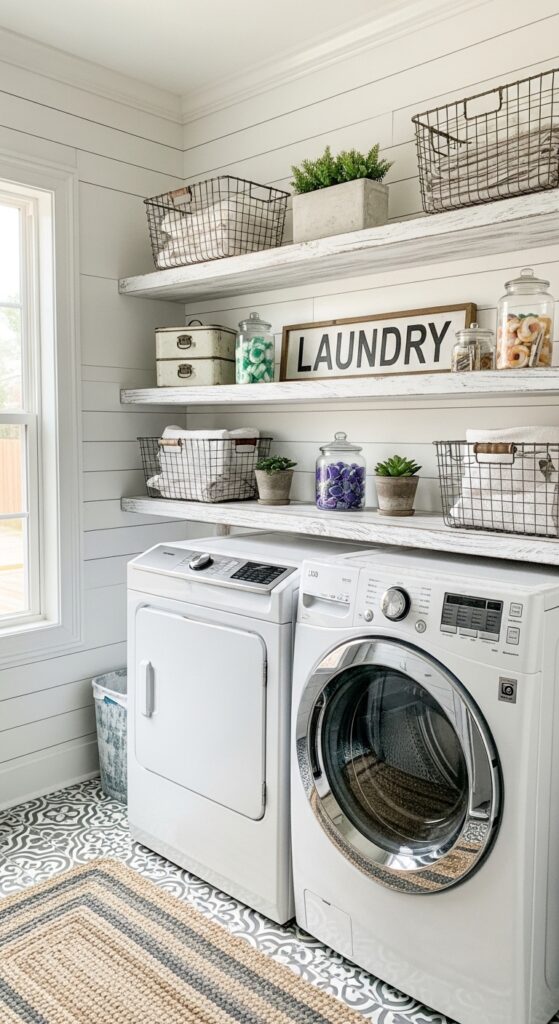
Standard brackets and metal shelves look industrial. Floating wood shelves add warmth and charm.
Mount floating shelves with hidden brackets. The brackets disappear inside the shelf itself.
Use reclaimed wood, pine, or oak for a natural farmhouse aesthetic that warms up the whole room.
Metal shelves feel cold and utilitarian. Wood shelves feel warm, inviting, and intentionally designed.
Pro Tip: Seal your wood shelves with matte polyurethane. Sealed wood resists moisture from steam and accidental detergent spills.
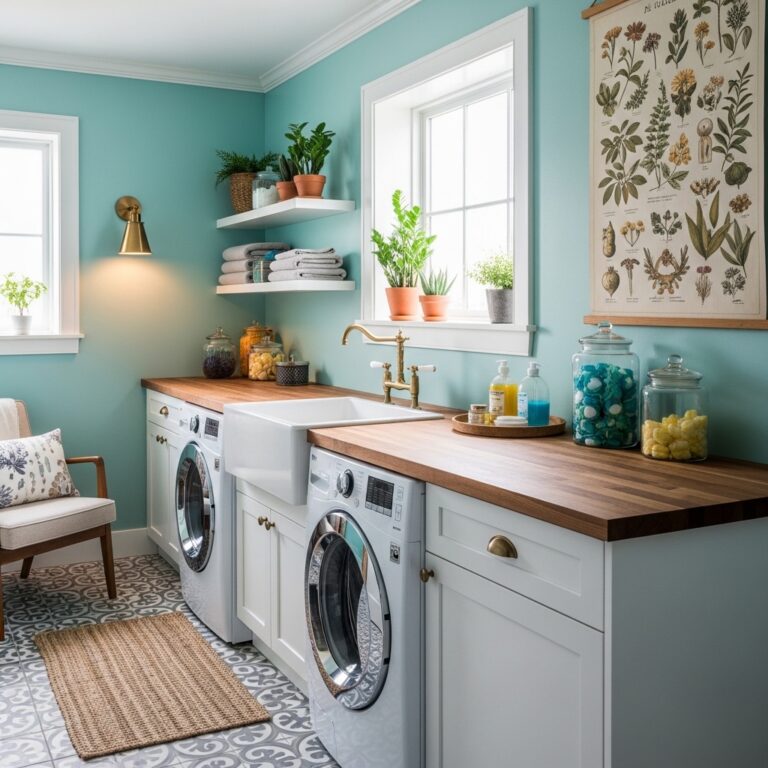
Mistake to Avoid: Do not use pine without sealing it. Pine absorbs moisture and warps within months of laundry room humidity.
3. Add a Shelf Directly Above Your Washer and Dryer
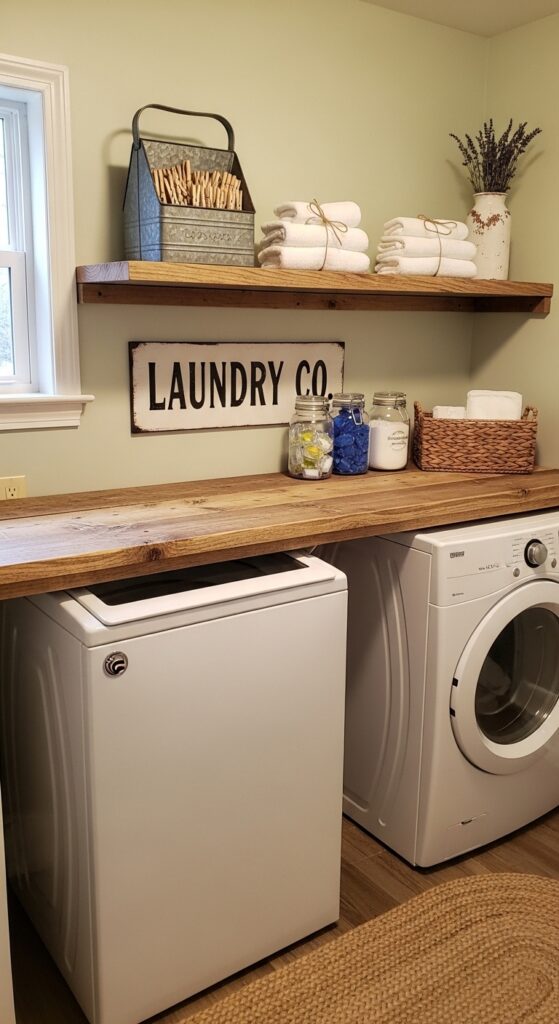
The space above your washer and dryer is often completely empty. That is prime real estate going unused.
Install a sturdy shelf directly above your stacked or side-by-side machines.
Use the shelf for detergent, dryer sheets, and baskets of supplies you reach for every week.
That empty space above your machines is waiting to be claimed. Stop letting it go to waste.
Pro Tip: Install your shelf high enough to leave room for opening machine lids or doors. Measure carefully before drilling any holes.
Mistake to Avoid: Do not store heavy items on a shelf above your head. Heavy bottles falling could cause serious injury.
4. Install Wire Shelving for Budget-Friendly Storage
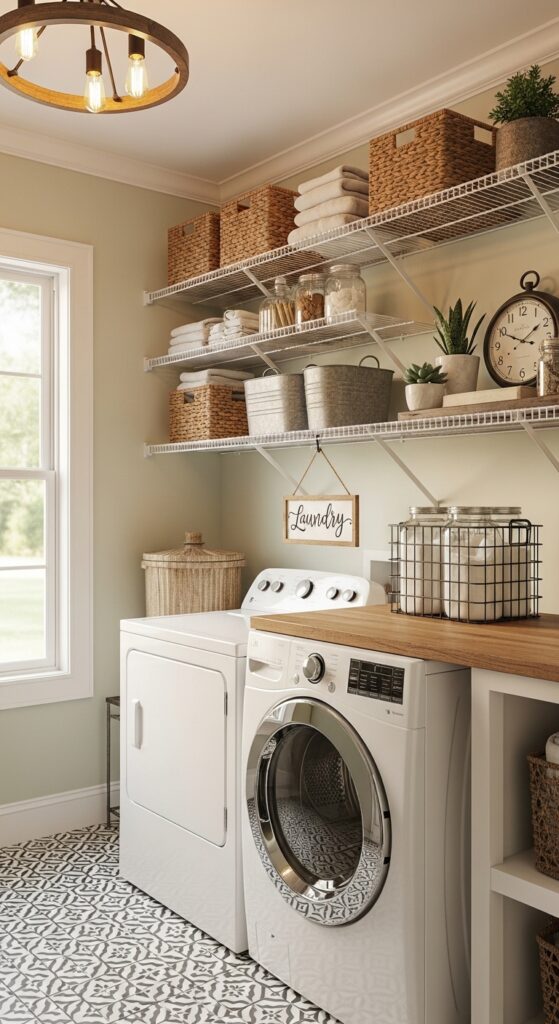
Wood shelves look beautiful. Wire shelves cost less and offer better airflow around your supplies.
Mount heavy-duty wire shelving on your walls. The open wire design prevents dust from settling.
Wire shelves are adjustable. You move shelves up or down as your storage needs change over time.
Wood is permanent once installed. Wire adapts with you as you discover what works best.
Pro Tip: Buy shelf liners for your wire shelves. Liners prevent small items like pods from falling through the gaps between wires.
Mistake to Avoid: Do not buy cheap wire shelves from discount stores. Cheap wire bends under the weight of heavy detergent bottles.
5. Use a Corner Shelf System for Dead Space
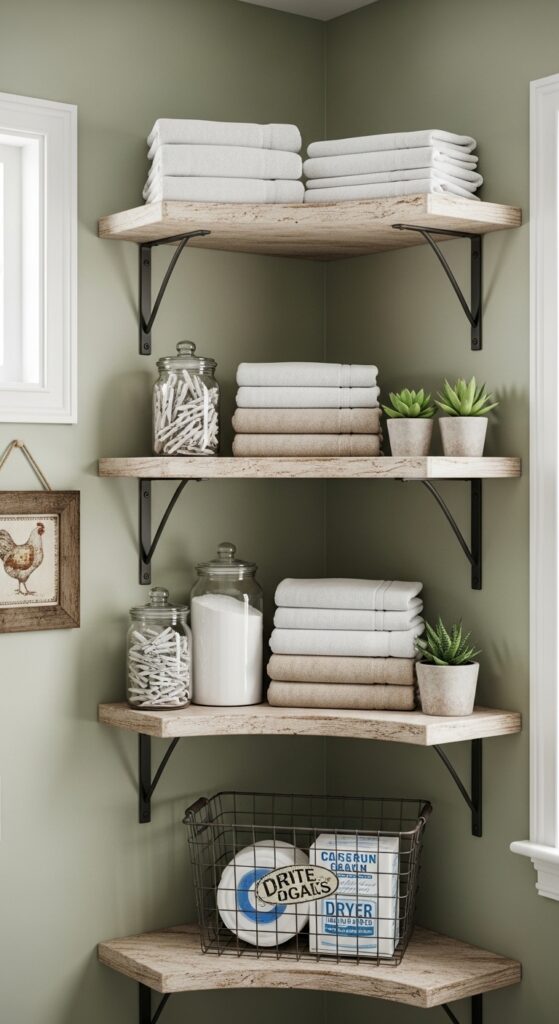
Corners are the most underutilized spaces in any laundry room. They collect dust and nothing else.
Install a corner shelf system that fits snugly into your room’s corner. Use both walls for support.
Store infrequently used items on corner shelves. Bulk detergent. Extra dryer sheets. Spare supplies.
Corner shelves use space that nothing else can occupy. Your main wall space stays free for other uses.
Pro Tip: Use rotating corner shelves for even better access. Spin the shelf to reach items in the very back of the corner.
Mistake to Avoid: Do not overload corner shelves. Corner shelves have less weight capacity than straight wall shelves.
6. Add a Drying Shelf Above Your Sink
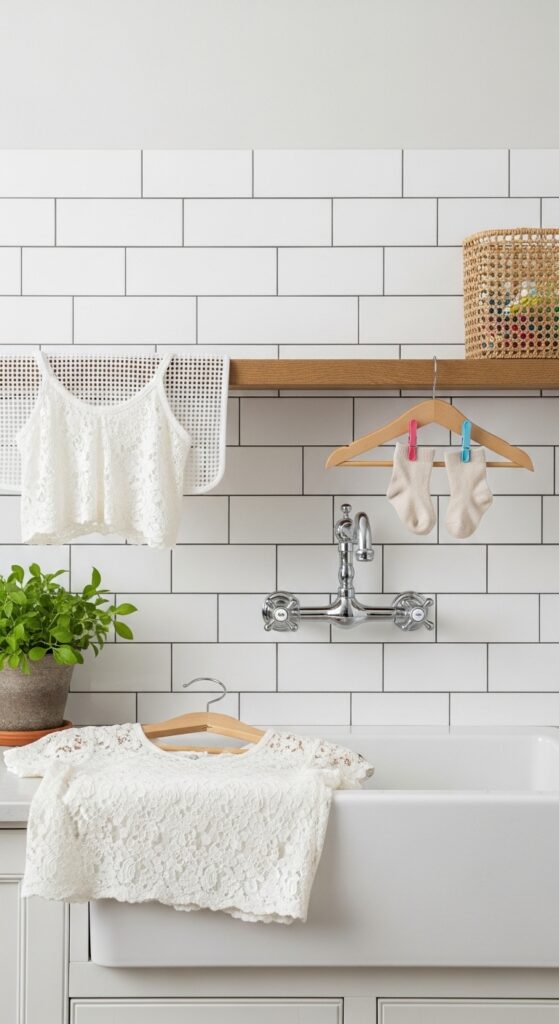
Wet items need a place to dry. Your counter gets cluttered. Your sink is already full.
Install a wire or wood drying shelf directly above your utility sink.
Place wet delicates, hand-washed items, or cloth diapers on the shelf to drip dry into the sink.
The shelf uses empty air space. Your counter stays clear. Your sink stays usable.
Pro Tip: Choose a wire shelf for your drying area. Wire allows air to circulate around wet items and speeds up drying time significantly.
Mistake to Avoid: Do not install a wood shelf above your sink. Wood absorbs moisture and warps over time. Wire is better for wet areas.
7. Use Glass Front Cabinets for Upper Shelves
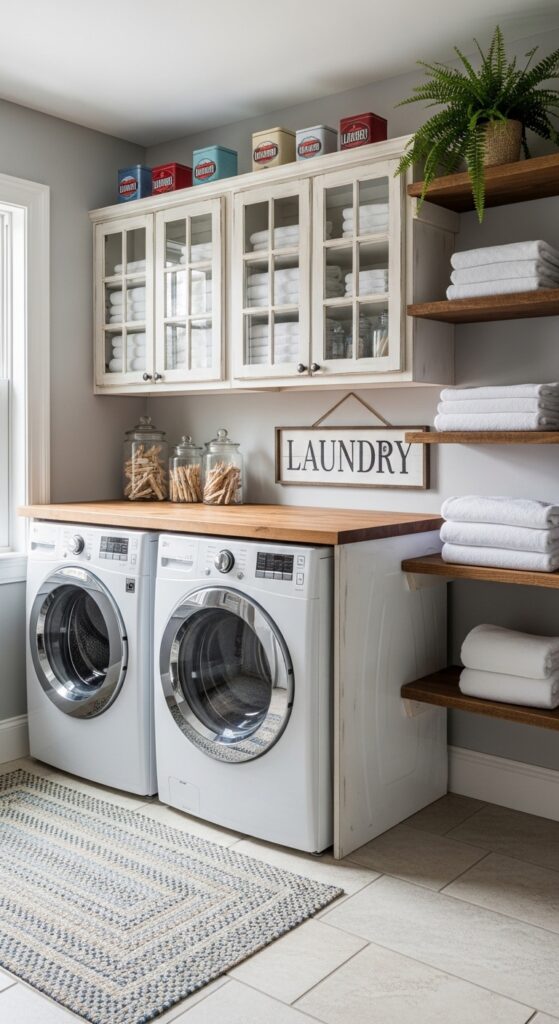
Open shelves are great. Sometimes you want to hide clutter while keeping visibility.
Install upper cabinets with glass fronts instead of solid wood doors.
You see what is inside without opening the door. Dust stays out. The room looks clean.
Solid doors hide everything. Glass doors hide nothing but protect your supplies from dust and humidity.
Pro Tip: Use frosted glass for your cabinet fronts. Frosted glass hides the visual clutter while still letting light through.
Mistake to Avoid: Do not use clear glass if your shelves are messy. Clear glass shows every disorganized stack and fallen bottle.
8. Install a Pull-Out Shelf Inside a Base Cabinet
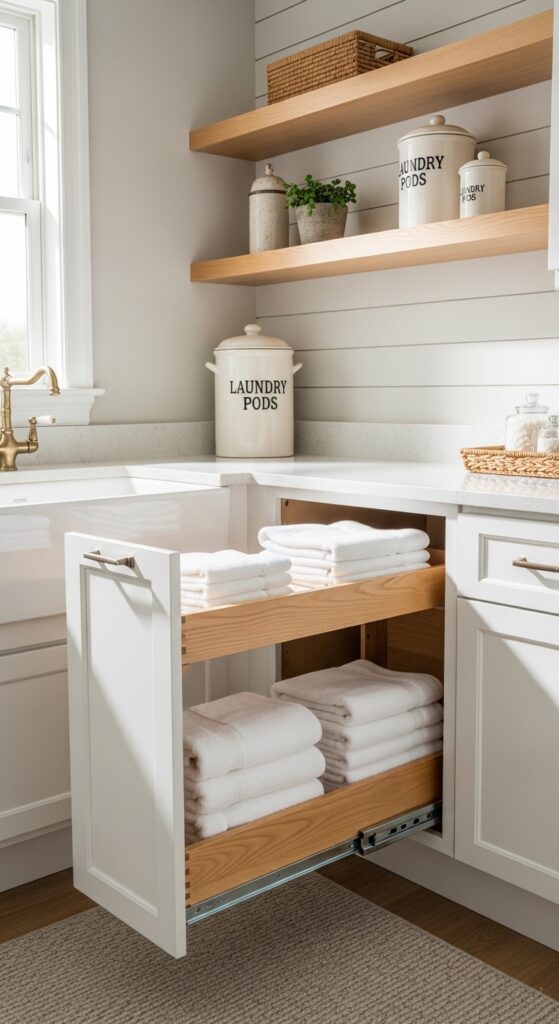
Base cabinets are deep and dark. Items in the back get lost and forgotten for months or years.
Install a pull-out shelf on slides inside your base cabinet. Pull the shelf out to access everything.
The shelf brings items in the back to you. No more kneeling and digging and knocking things over.
Standard shelves hide items in the back permanently. Pull-out shelves reveal everything at once.
Pro Tip: Install pull-out shelves at multiple heights. One for detergent bottles. One for stain sprays. One for spare supplies.
Mistake to Avoid: Do not overload your pull-out shelf. Heavy shelves are difficult to slide in and out smoothly.
9. Use Baskets on Open Shelves for Categorization
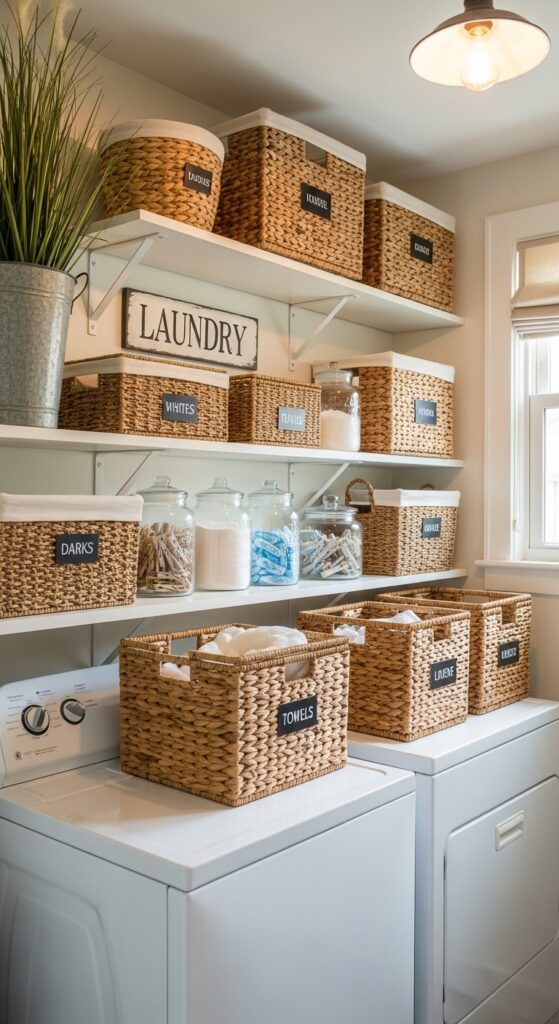
Open shelves are great. Loose items on open shelves look chaotic and messy no matter how you arrange them.
Place woven or plastic baskets on your open shelves. Use one basket for each category of supplies.
Detergent basket. Dryer sheet basket. Stain remover basket. Lint roller basket.
Baskets contain the visual clutter. Your shelves look organized and intentional instead of chaotic.
Pro Tip: Choose baskets in a uniform color. Matching baskets create a cohesive, designer look across all your open shelves.
Mistake to Avoid: Do not use baskets that are too deep. Deep baskets hide items in the bottom that you will completely forget about.
10. Add a Slim Shelf Between Your Washer and Dryer
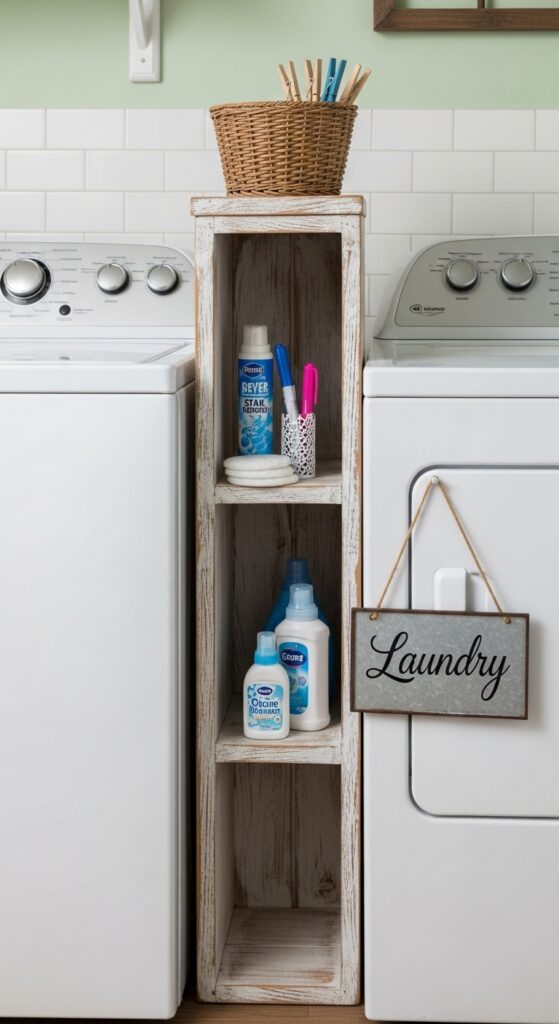
Side-by-side machines often have a gap between them. That gap is wasted space collecting lint.
Install a slim shelf that fits perfectly in the gap between your washer and dryer.
Use the shelf for dryer sheets, stain pens, and a small container of wool dryer balls.
The shelf uses space that would otherwise collect dust and lost socks. Every inch finally works for you.
Pro Tip: Measure your gap three times before buying or building your slim shelf. Gaps vary between different machine models.
Mistake to Avoid: Do not block the vents on your machines. Check your washer and dryer manuals for required clearance around each appliance.
11. Use a Spice Rack for Small Laundry Supplies
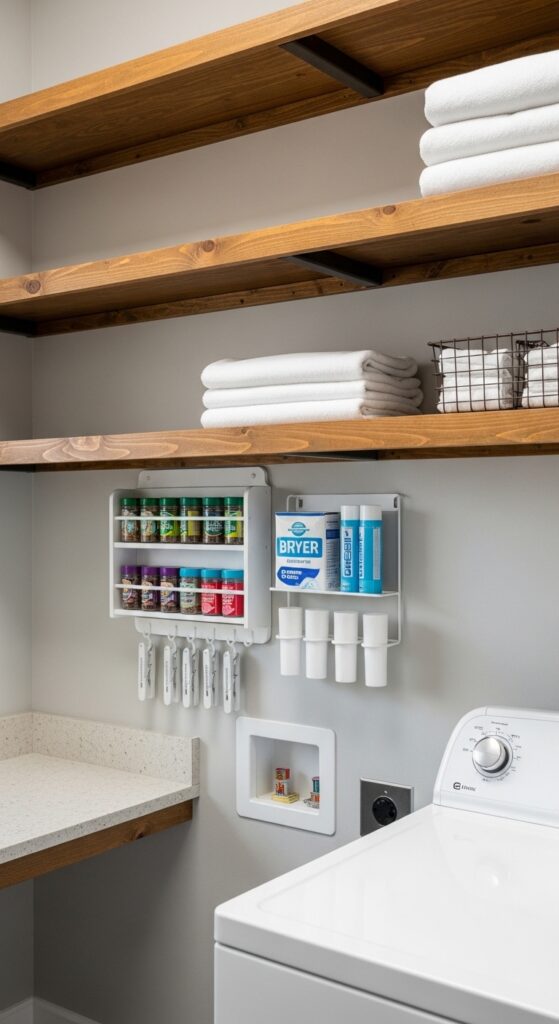
Standard shelves are too deep for small items like stain pens, lint rollers, and small scissors.
Mount a wall-mounted spice rack on your wall or inside a cabinet door.
Use the small shelves for tiny laundry supplies that get lost on deep standard shelves.
Deep shelves hide small items. A spice rack keeps them visible and within easy reach.
Pro Tip: Choose a spice rack with a rail on each shelf. The rail prevents small items from sliding off and falling to the floor.
Mistake to Avoid: Do not use a spice rack for heavy items. Spice racks are designed for lightweight spice jars, not heavy detergent bottles.
12. Install a Shelf Above Your Folding Table
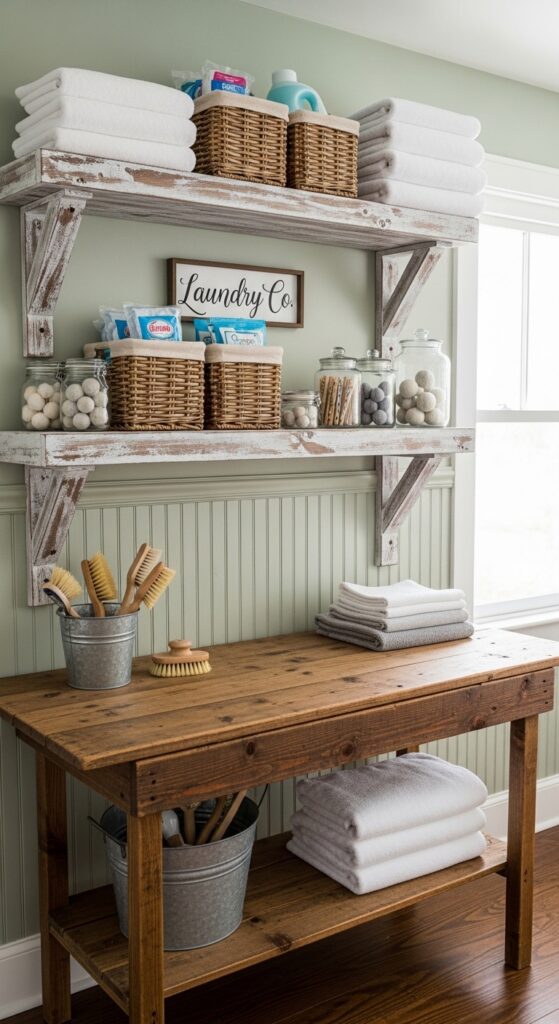
Your folding table is your primary work surface. Supplies on the table get in your way.
Install a shelf directly above your folding table at standing eye level.
Store stain sprays, dryer sheets, and a small plant on the shelf. Your table stays clear for folding.
A clear work surface makes folding faster and more enjoyable. A shelf keeps supplies close but not in the way.
Pro Tip: Install your shelf 18 to 24 inches above your folding table. This height leaves room for taller bottles while keeping items within reach.
Mistake to Avoid: Do not install your shelf so low that you hit your head on it when you lean over to fold clothes.
13. Use a Ladder Shelf for Leaning Storage
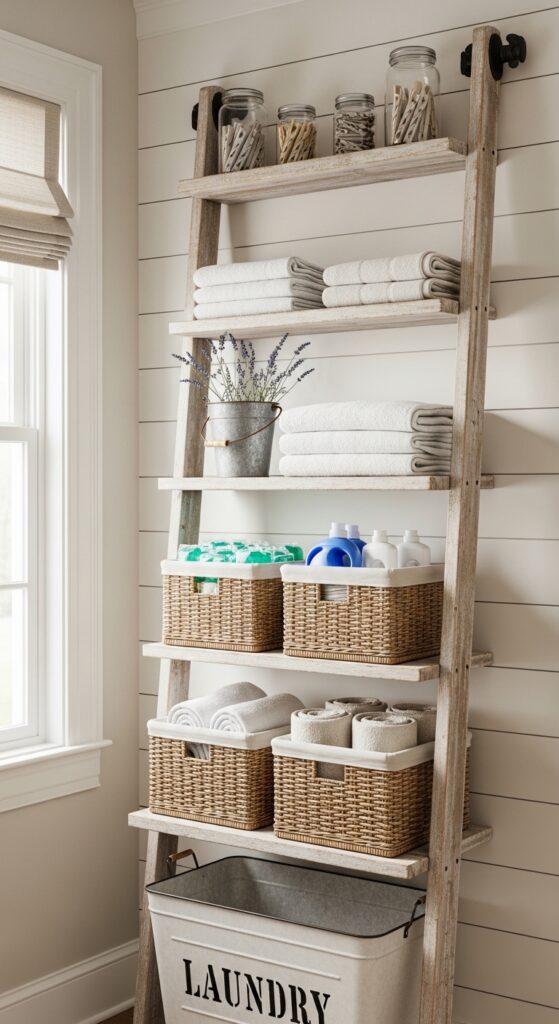
Wall-mounted shelves require drilling and permanent commitment. A ladder shelf leans against the wall.
Buy or build a wooden ladder shelf that leans against your wall. It stands on its own.
Use each rung of the ladder for different categories of supplies. Detergent on the bottom. Sheets in the middle.
A ladder shelf adds farmhouse charm without any wall damage. Perfect for renters or hesitant homeowners.
Pro Tip: Choose a ladder shelf with deep rungs. Deep rungs hold standard detergent bottles without tipping over.
Mistake to Avoid: Do not use a ladder shelf on a slippery floor. Add rubber pads to the bottom to prevent sliding.
14. Add a Shelf Inside a Closet or Nook
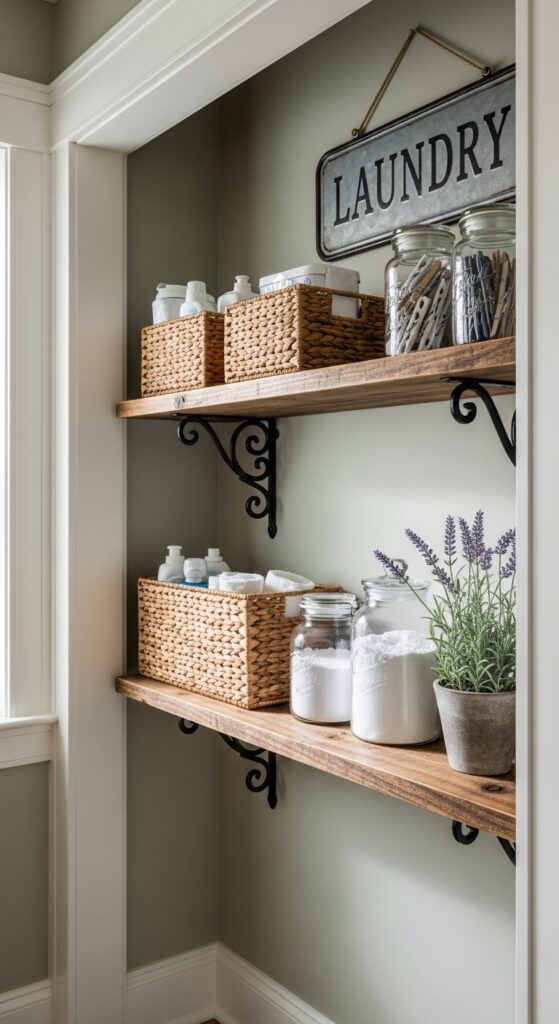
Your laundry room might have a small closet or nook that is currently underutilized.
Install shelves inside that closet or nook from floor to ceiling.
Close the door when guests come over. The clutter disappears behind closed doors.
Open shelves are beautiful but visible. Closet shelves hide the mess when you want your room to look clean.
Pro Tip: Use the top shelves in your closet for bulk supplies. Use the bottom shelves for daily items you reach for every time.
Mistake to Avoid: Do not block the closet door from opening fully. Leave enough clearance for the door to swing without hitting your shelves.
15. Use a Rolling Cart as Mobile Shelving
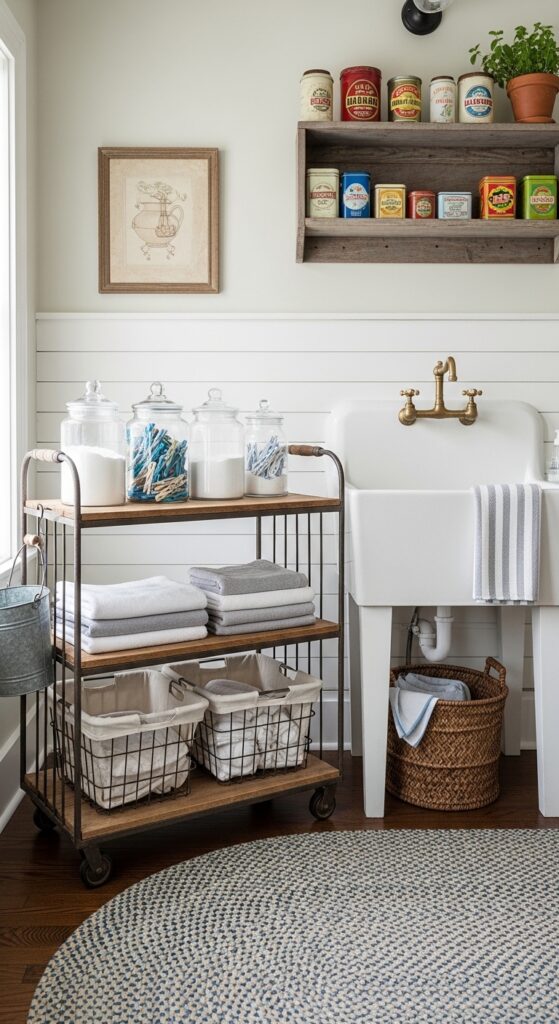
Fixed shelves are permanent. A rolling cart gives you shelves that move wherever you need them.
Buy a three-tier rolling cart. Use each tier as a mobile shelf for different categories of supplies.
Roll the cart to your washer when you load laundry. Roll it to your folding table when you sort.
Fixed shelves stay in one place. A rolling cart brings your supplies to you instead of you walking to them.
Pro Tip: Choose a cart with locking casters. Lock the wheels when you are not moving the cart so it stays where you put it.
Mistake to Avoid: Do not buy a cart with plastic wheels. Rubber wheels roll smoothly and do not scratch your floors.
16. Install Under-Cabinet Shelves for Extra Space
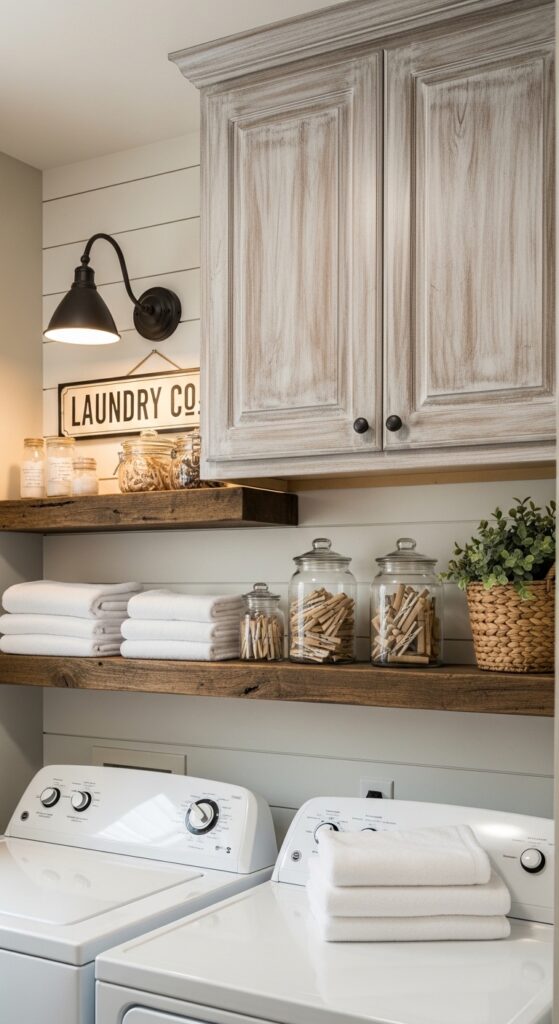
Your upper cabinets have space underneath them that is completely empty and unused.
Install small under-cabinet shelves that hang from the bottom of your existing cabinets.
Use these tiny shelves for small items like stain pens, lint rollers, and scissors.
Under-cabinet space is almost always wasted. These shelves capture that space for valuable storage.
Pro Tip: Choose shelves with a small lip on the front edge. The lip prevents small items from sliding off and falling to the floor.
Mistake to Avoid: Do not overload under-cabinet shelves. They are designed for lightweight items only, not heavy detergent bottles.
17. Use a Pegboard with Shelves Attached
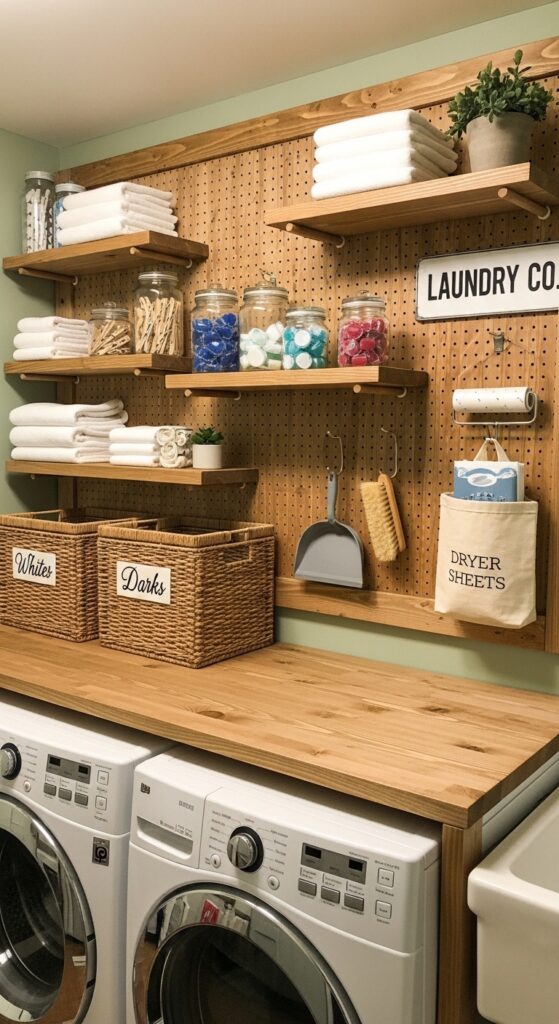
A plain pegboard is great for hanging tools. A pegboard with shelves is even better for storage.
Mount a large pegboard on your wall. Add small shelves that attach directly to the pegboard.
Use the pegboard hooks for hanging items. Use the pegboard shelves for small bins and bottles.
Pegboard shelves are infinitely adjustable. You move them whenever your storage needs change.
Pro Tip: Paint your pegboard a bright color before mounting it. A colorful pegboard looks like decor, not just utility storage.
Mistake to Avoid: Do not overload pegboard shelves. Pegboard hooks have weight limits. Heavy shelves can pull the hooks out of the board.
18. Add a Shelf Above Your Door
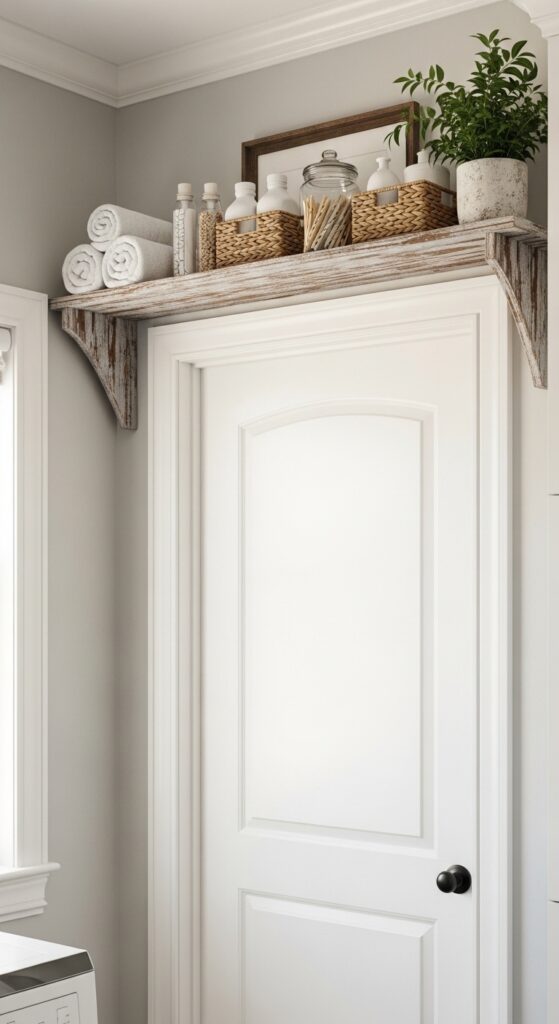
The space above your door is almost always completely empty. That is valuable real estate going unused.
Install a long, shallow shelf above your laundry room door.
Use this high shelf for bulk supplies you do not need often. Extra detergent. Spare dryer sheets.
Above-door space is perfect for storage because it is out of the way. Nothing else fits there anyway.
Pro Tip: Use a step stool to reach your above-door shelf. Never climb on furniture or countertops to reach high shelves.
Mistake to Avoid: Do not store heavy items on an above-door shelf. Heavy bottles falling from that height could cause serious injury.
19. Use a Wall-Mounted Drying Rack That Doubles as a Shelf
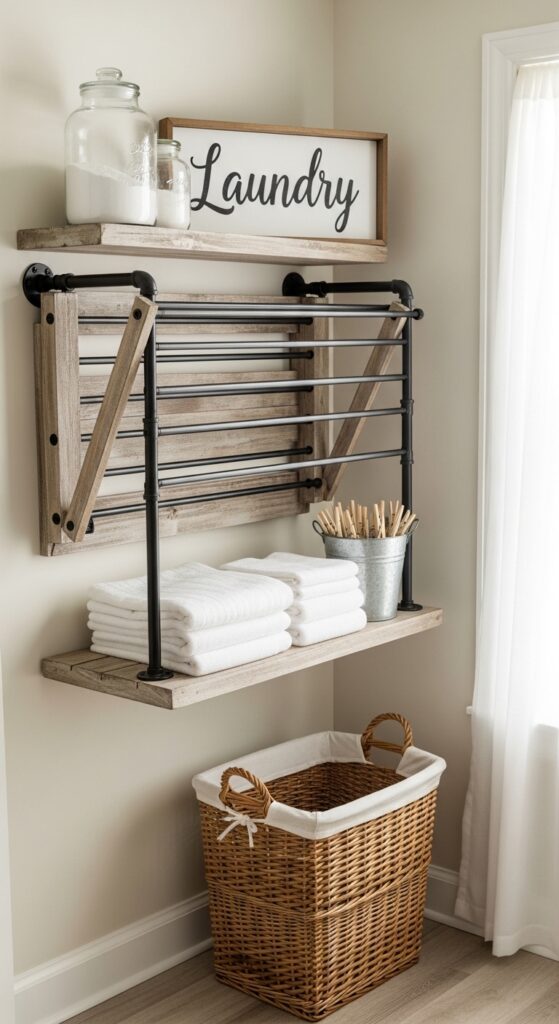
Some drying racks fold up and become flat against the wall. Others double as shelves when folded.
Install a wall-mounted drying rack with a solid top surface. When folded up, the rack becomes a shelf.
Use the shelf for lightweight items like dryer sheets or a small plant. Pull it down to dry delicates.
One piece of furniture serves two purposes. Shelf and drying rack in a single footprint.
Pro Tip: Choose a rack with a wooden top surface. Wood looks warmer than metal when the rack is in shelf mode.
Mistake to Avoid: Do not store heavy items on a drying rack shelf. The mechanism is designed for lightweight storage only.
20. Install a Shelf Inside a Repurposed Cabinet Door
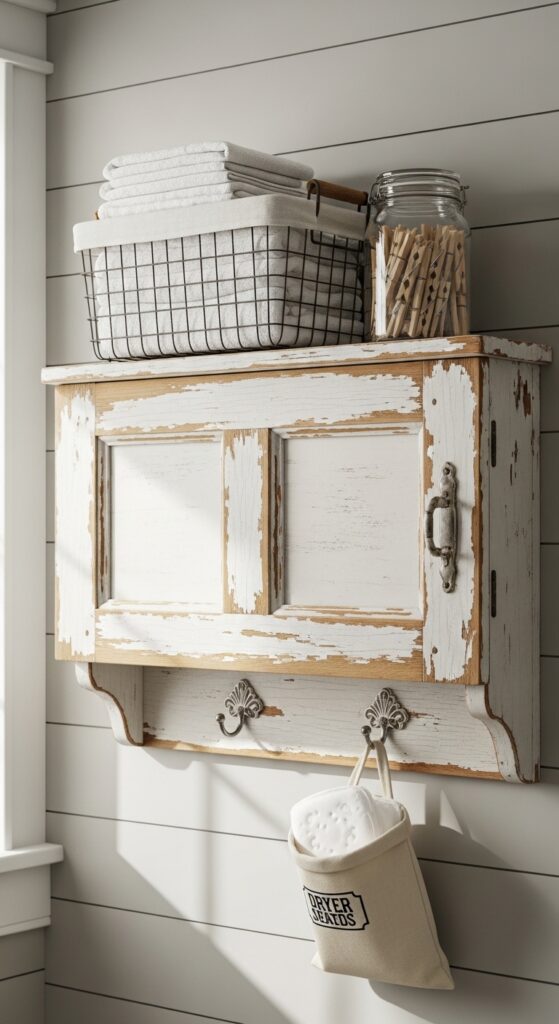
Cabinet doors are flat surfaces that do nothing but open and close. They can do more.
Mount small wire shelves or wooden brackets on the inside of your cabinet door.
Use the door shelves for lightweight items like dryer sheets, stain pens, and lint rollers.
The inside of your cabinet door is completely unused space. These shelves capture it for valuable storage.
Pro Tip: Choose shelves that are shallow, no more than three inches deep. Deep shelves on a door will hit the items inside your cabinet.
Mistake to Avoid: Do not overload door shelves. Heavy items will pull the door down and could strip the hinge screws over time.
21. Use a Window Sill as a Narrow Shelf
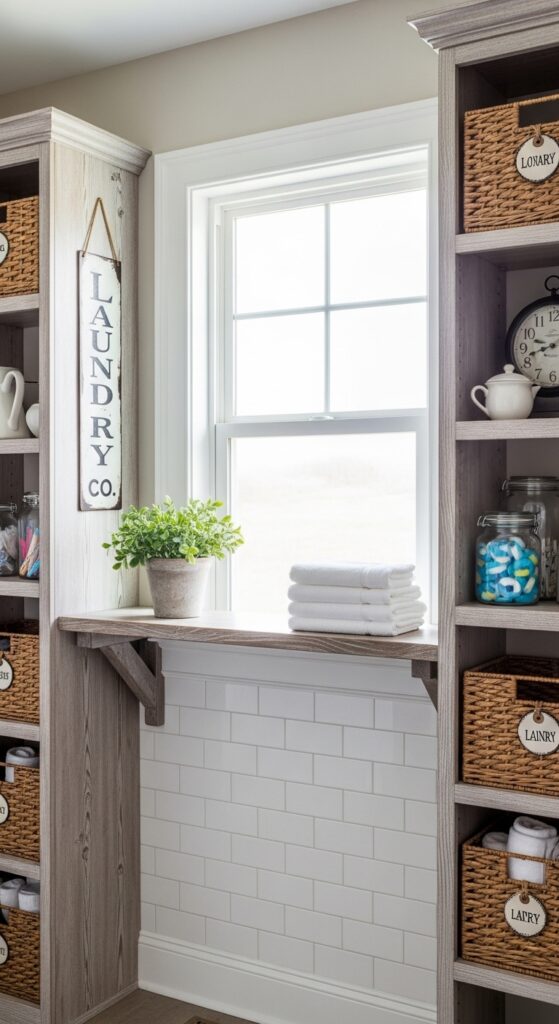
If your laundry room has a window, the sill is a ready-made shelf waiting to be used.
Place small items on your window sill. A small plant. A few dryer sheets. A lint roller.
The window sill adds storage without installing anything new. It is already there, ready for use.
Empty window sills are wasted space. A few small items make the sill useful and decorative.
Pro Tip: Use a small tray on your window sill. The tray contains items and makes the arrangement look intentional rather than scattered.
Mistake to Avoid: Do not block your window from opening. Leave enough clearance for the window to open fully without knocking items off the sill.
22. Label Every Shelf So Everyone Knows What Goes Where
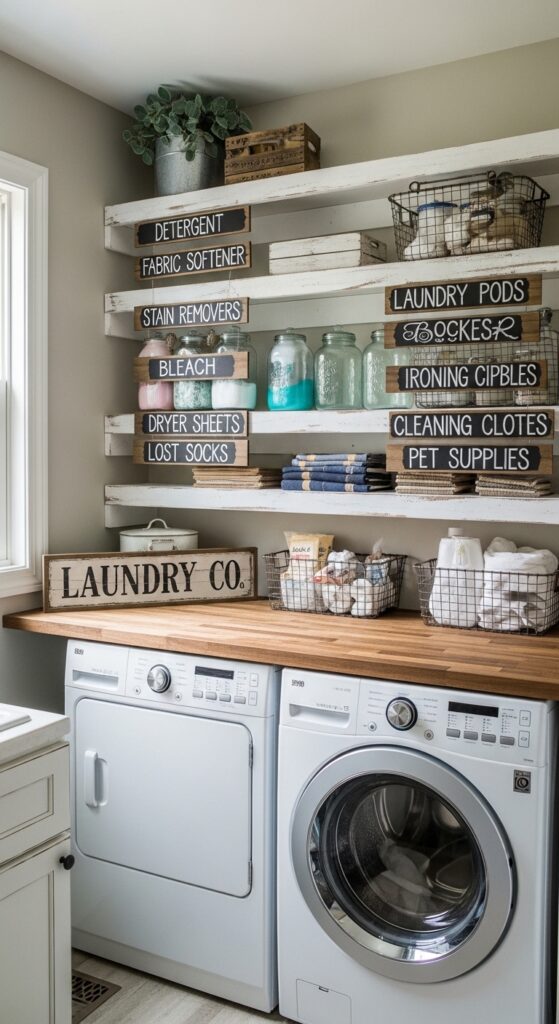
You know where everything belongs. Your partner and children do not have the same knowledge.
Use a label maker to create simple, bold labels for every shelf in your laundry room.
“Detergent.” “Dryer Sheets.” “Stain Spray.” “Lint Rollers.” “Spare Supplies.”
Labels turn your organization system into a family system. Anyone can put things away correctly.
Pro Tip: Use large, bold fonts on your labels. Small fancy fonts look nice but are very hard to read from a standing position.
Mistake to Avoid: Do not label every single item on a shelf. Label the shelf itself. That is enough for anyone to understand.
Conclusion
Great laundry room shelving is not about having the most expensive materials or the fanciest design.
The twenty-two ideas above prove that smart, functional shelving is achievable in any laundry space.
Install floor-to-ceiling shelves on an empty wall to capture every inch of vertical space.
Use floating wood shelves for a warm farmhouse look that transforms the entire feel of your room.
Add a shelf directly above your washer and dryer to claim that empty vertical real estate.
Install wire shelving for budget-friendly storage that adjusts as your needs change over time.
Use a corner shelf system for dead space that nothing else can fit into at all.
Add a drying shelf above your sink for wet items that need to drip dry without cluttering your counter.
Use glass front cabinets for upper shelves that keep dust out while letting you see your supplies.
Install a pull-out shelf inside a base cabinet so nothing ever gets lost in the dark depths again.
Use baskets on open shelves to contain visual clutter and create a cohesive, designer look.
Add a slim shelf between your washer and dryer to capture that narrow gap that usually collects lint.
Use a spice rack for small laundry supplies that get lost on deep standard shelves.
Install a shelf above your folding table to keep supplies close but not in your way while you work.
Use a ladder shelf for leaning storage that adds farmhouse charm without any wall damage at all.
Add a shelf inside a closet or nook to hide clutter behind closed doors when guests come over.
Use a rolling cart as mobile shelving that brings your supplies to you instead of you walking to them.
Install under-cabinet shelves to capture the empty space underneath your existing upper cabinets.
Use a pegboard with shelves attached for infinitely adjustable storage that changes as your needs do.
Add a shelf above your door to capture that completely empty space that nothing else fits into.
Use a wall-mounted drying rack that doubles as a shelf when folded up. Two functions in one footprint.
Install a shelf inside a repurposed cabinet door to use the flat surface that currently does nothing.
Use a window sill as a narrow shelf that is already there, waiting for you to use it.
Label every shelf so everyone in your household knows exactly what goes where.
Start with one shelving idea this weekend. Install one shelf. Add one basket. Label one area.
Then add another idea next month. Your laundry room should evolve as your storage needs change over time.
Good shelving makes laundry day feel lighter. You absolutely deserve that peace and organization.
Take back your storage space starting today. Smart shelving is finally waiting for you.