12+ Living Room Layout Ideas to Maximize Space, Comfort, and Flow
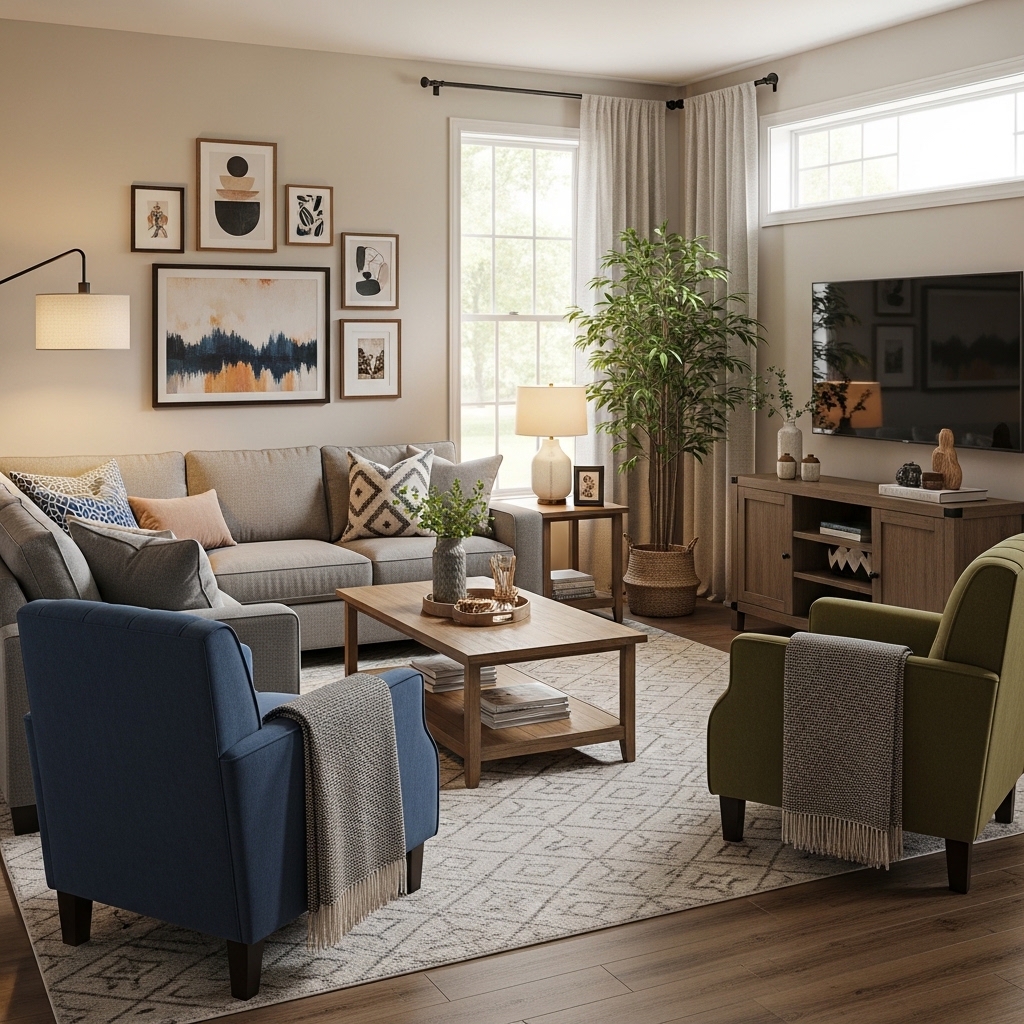
A good living room layout is what makes a living room feel comfortable and functional not just look nice. Even if you have nice furniture if it is not arranged well it can get in the way make the living room feel small or leave empty spaces that look weird.
The ideas below are about solving problems with living room layouts like living rooms in small apartments living rooms that are open to other rooms and living rooms that have to serve many purposes. Each living room setup includes tips, on where to put your furniture so that it is easy to move around the living room and use the space well.
1. Classic Sofa Facing TV Layout
Who this is for: Living rooms centered around entertainment and daily use.
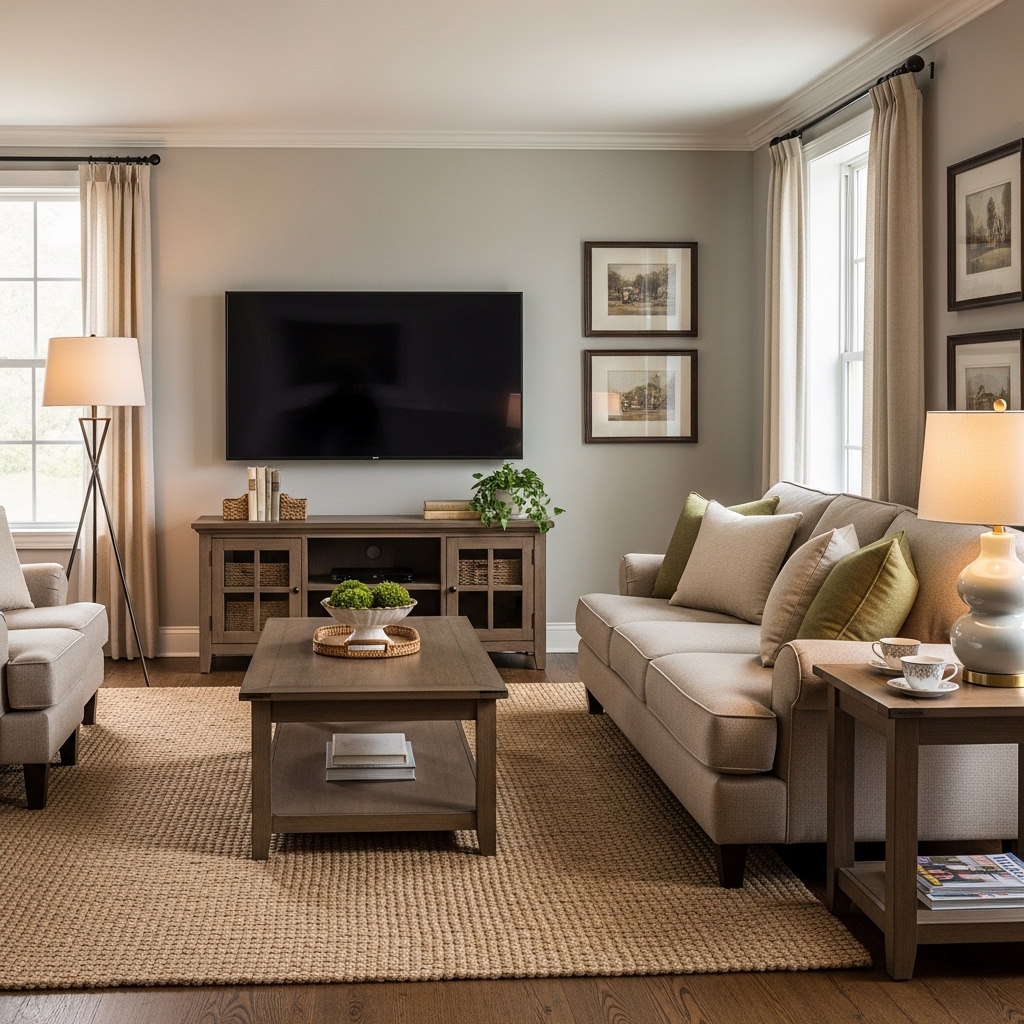
This layout keeps the seating directly aligned with the TV, making it practical for watching and relaxing. It’s one of the easiest setups to implement in most room shapes.
How to apply: Place the sofa opposite the TV with a coffee table in between. Keep at least 18 inches of space around the table for movement.
Mistake to avoid: Pushing the sofa too far back can make viewing uncomfortable.
2. Floating Furniture Layout for Open Flow
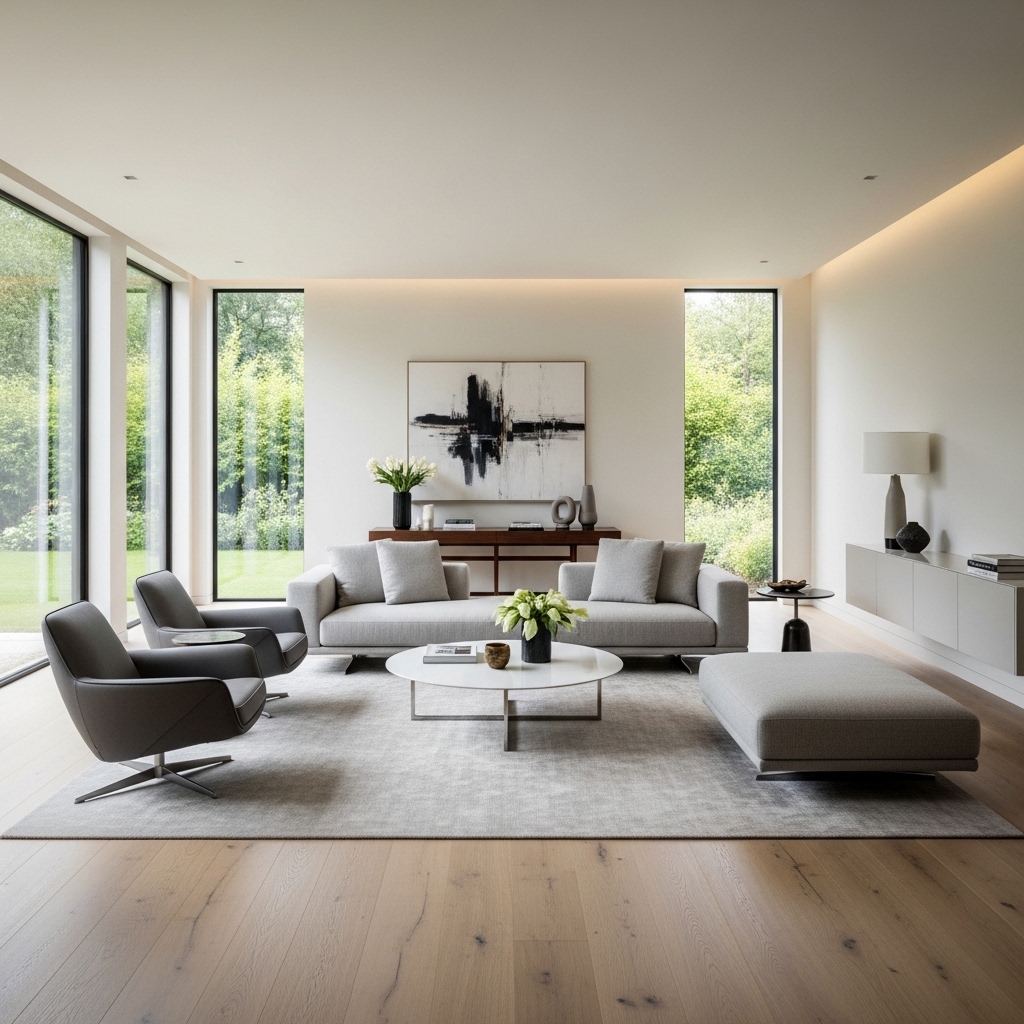
Who this is for: Open-plan living rooms or larger spaces.
Floating furniture away from walls helps define zones and creates a more intentional layout. It also improves traffic flow around the room.
How to apply: Position the sofa slightly away from walls and use a rug to anchor the seating area. Add a console behind the sofa if needed.
Mistake: Leaving too much space behind furniture makes the layout feel disconnected.
3. L-Shaped Sectional Layout for Corner Use
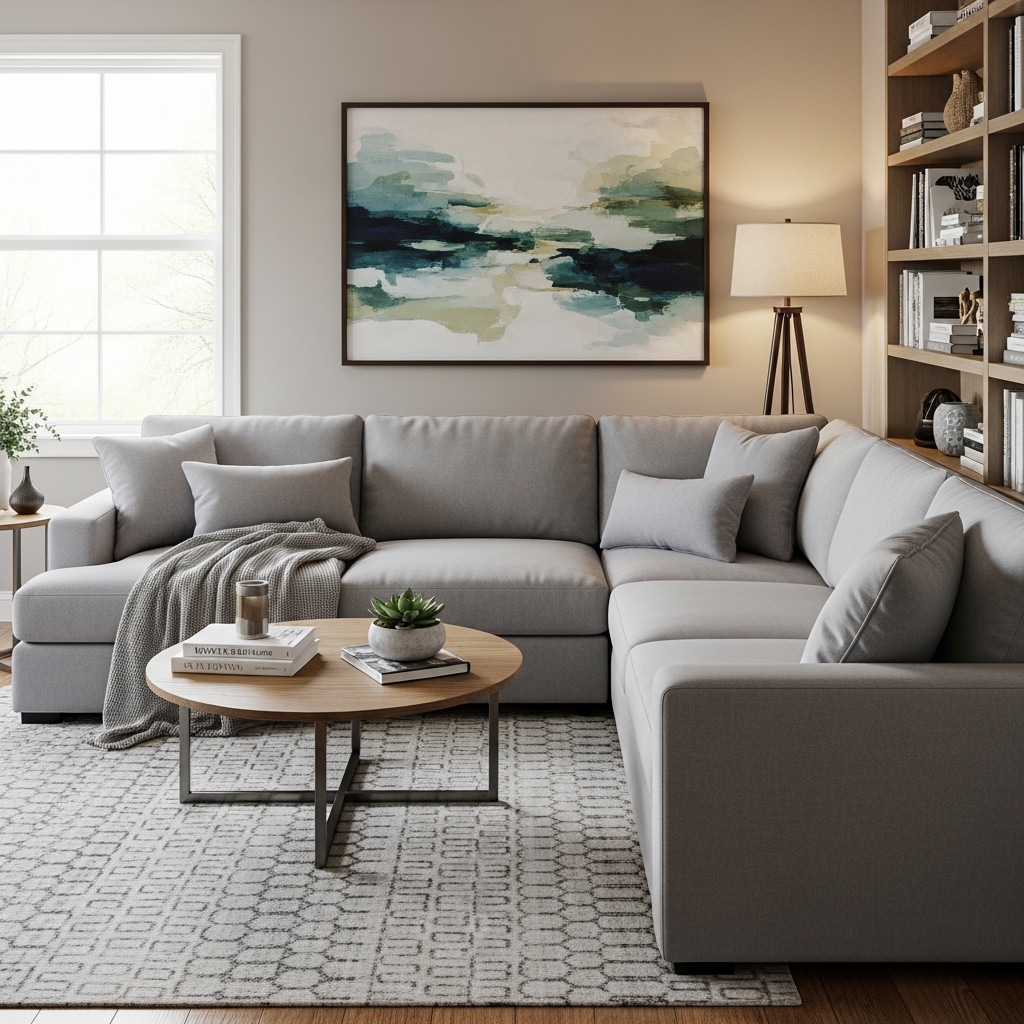
Who this is for: Families or apartments needing maximum seating.
An L-shaped sectional efficiently uses corners and keeps seating grouped together. It’s ideal for social or TV-focused setups.
How to apply: Place the sectional along two walls or float it in a corner. Keep the open side facing the main focal point.
Mistake: Oversized sectionals can overwhelm smaller rooms.
4. Symmetrical Layout for a Balanced Look
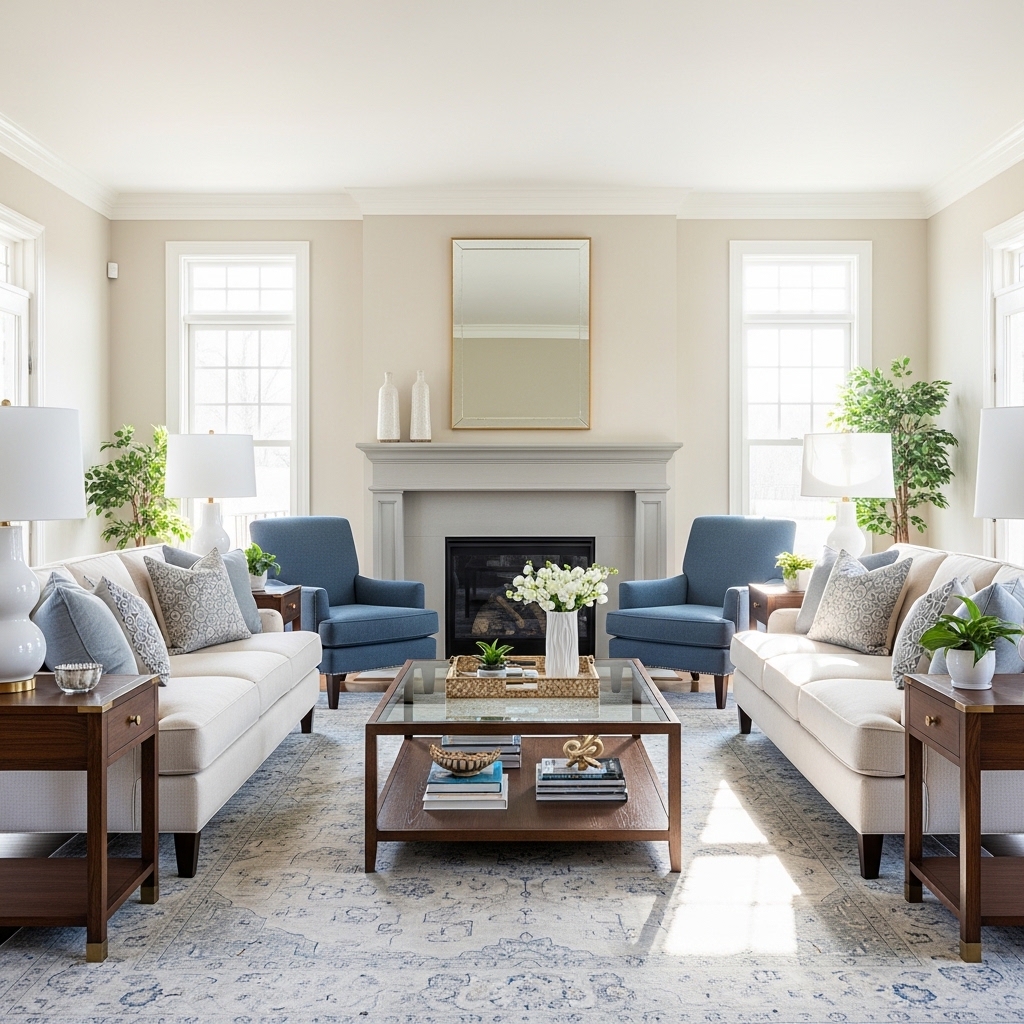
Who this is for: Formal or structured living room styles.
Symmetry creates a calm and organized appearance, making the room feel cohesive and intentional.
How to apply: Place matching sofas or chairs facing each other with a central table. Keep spacing equal on both sides.
Mistake: Too much symmetry can feel rigid in casual spaces.
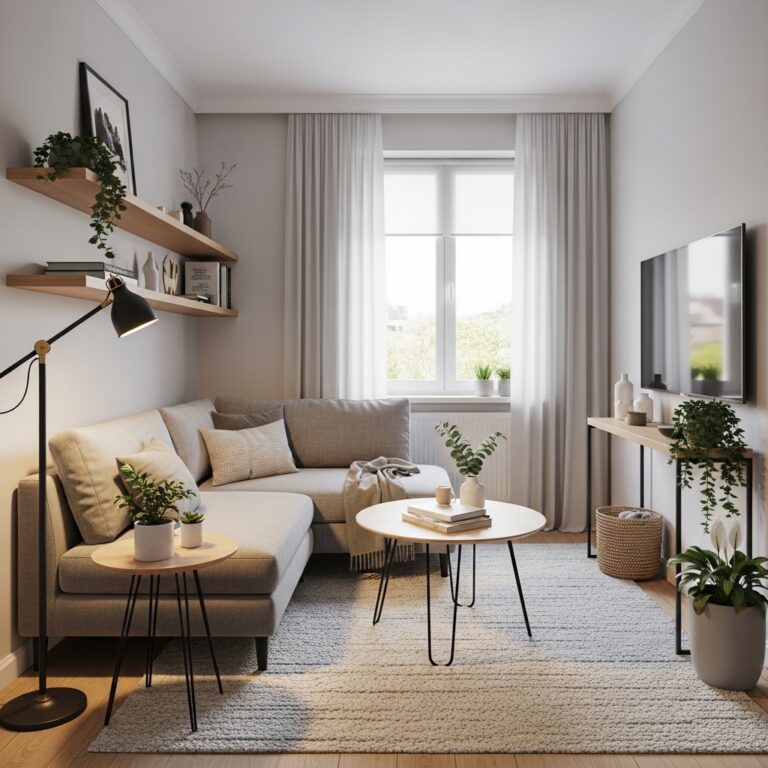
5. Small Living Room Layout with Compact Furniture
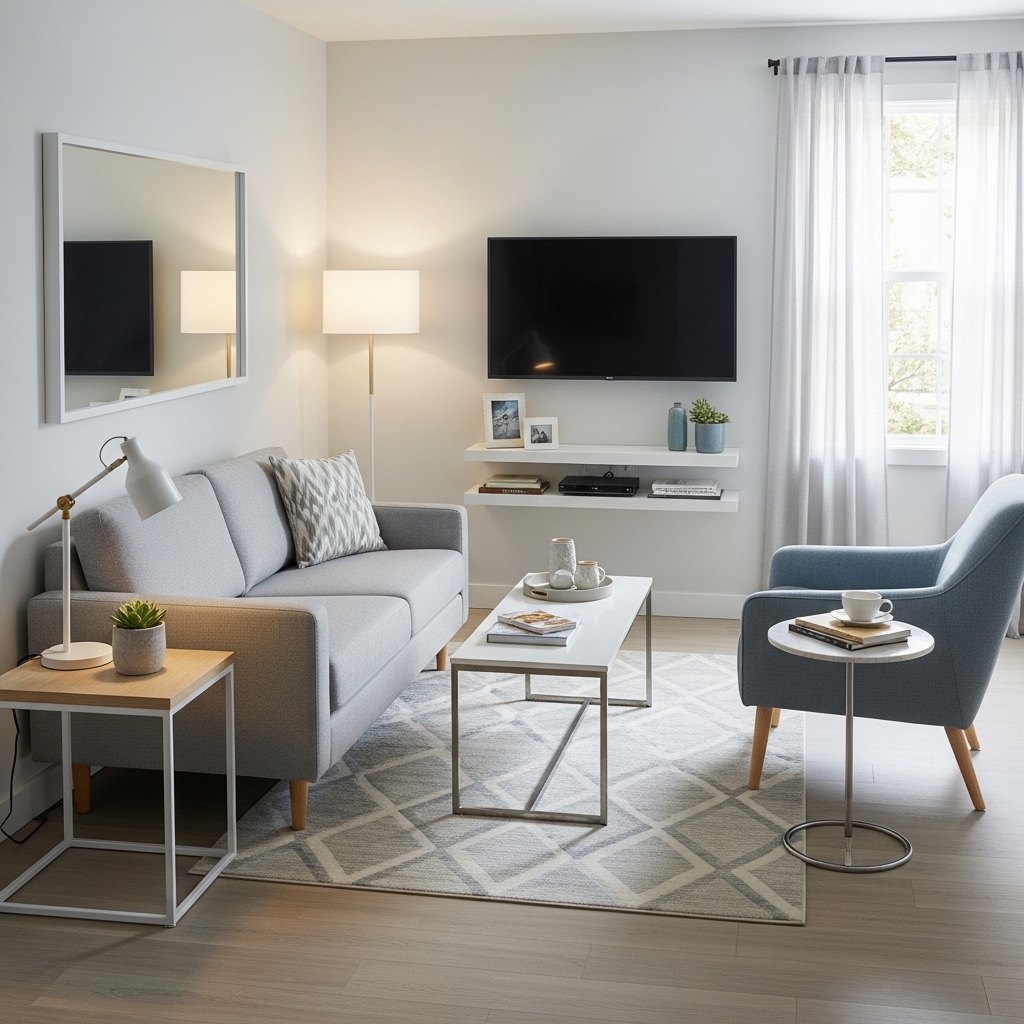
Who this is for: Apartments or tight spaces.
Using smaller furniture pieces improves movement and prevents overcrowding. It allows the room to feel open even with limited space.
How to apply: Choose slim sofas, small tables, and avoid bulky items. Keep walkways at least 2–3 feet wide.
Mistake: Overfilling the room reduces usability.
6. Open Plan Layout with Defined Zones
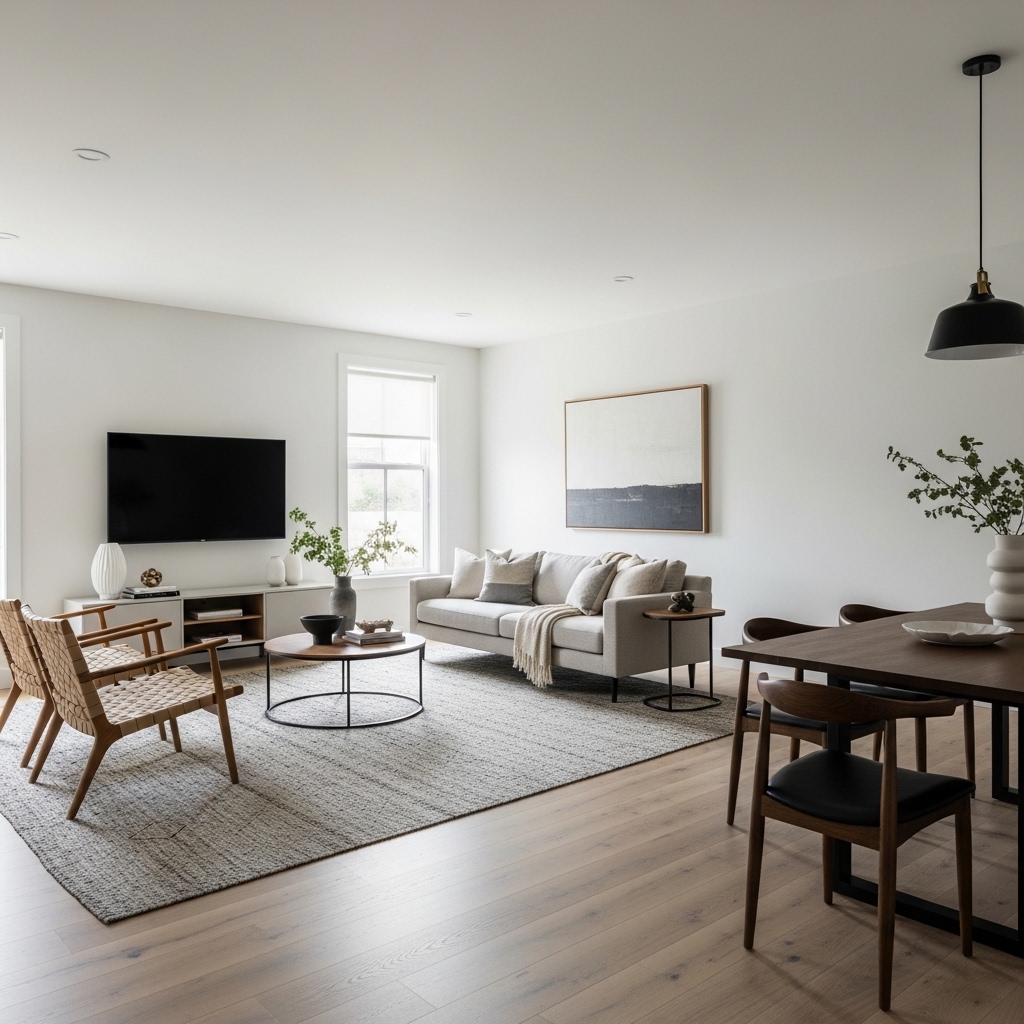
Who this is for: Living rooms connected to dining or kitchen areas.
Zoning helps separate functions without walls, making the space more organized.
How to apply: Use rugs, lighting, or furniture placement to define areas. Keep pathways clear between zones.
Mistake: Blurring zones too much creates confusion.
7. Fireplace-Centered Layout for Cozy Focus
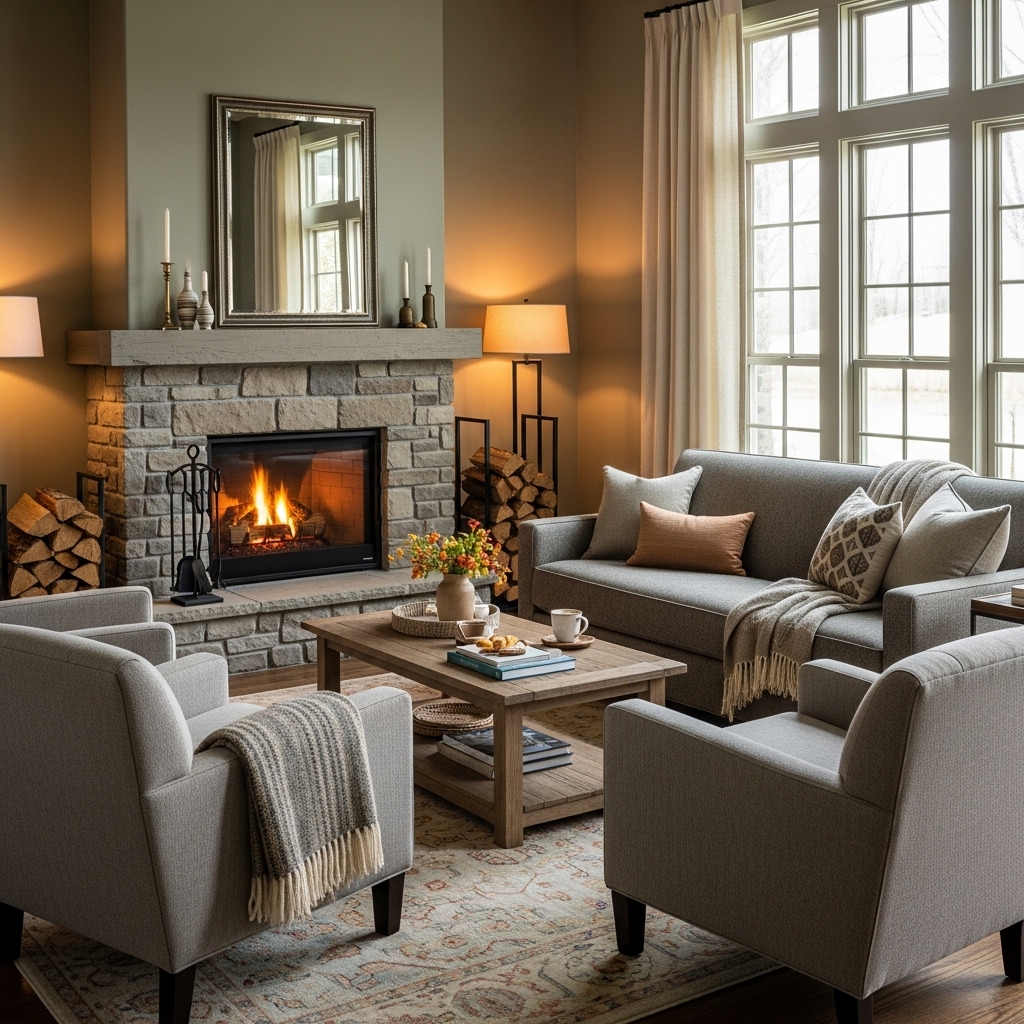
Who this is for: Living rooms with a fireplace as the main feature.
Arranging seating around the fireplace makes it the functional center of the room.
How to apply: Place sofas or chairs facing the fireplace with a central table. Maintain clear access around it.
Mistake: Blocking the fireplace reduces usability.
8. Corner TV Layout for Awkward Rooms
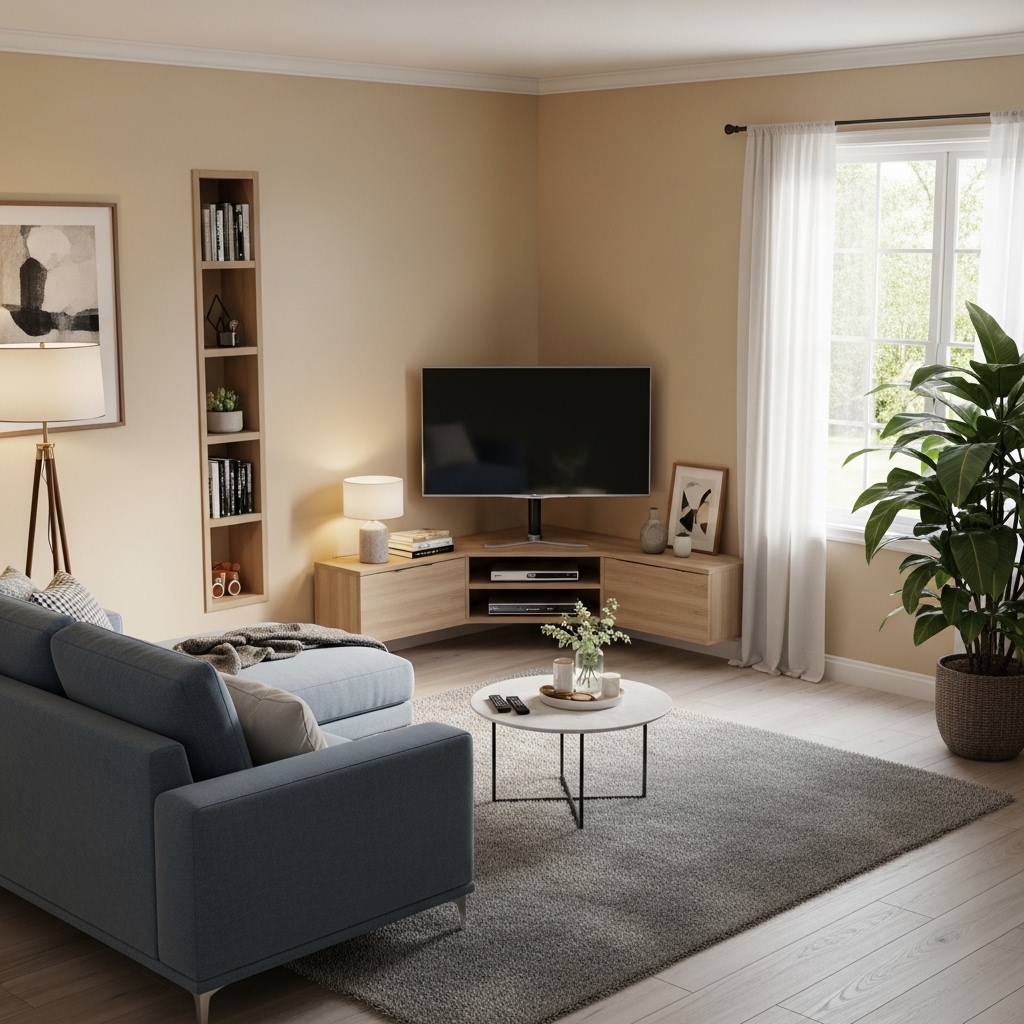
Who this is for: Irregular or small living room layouts.
Placing the TV in a corner frees up wall space and improves flow.
How to apply: Angle seating toward the corner and keep distances comfortable for viewing.
Mistake: Poor alignment can strain viewing angles.
9. Conversation Layout Without TV Focus
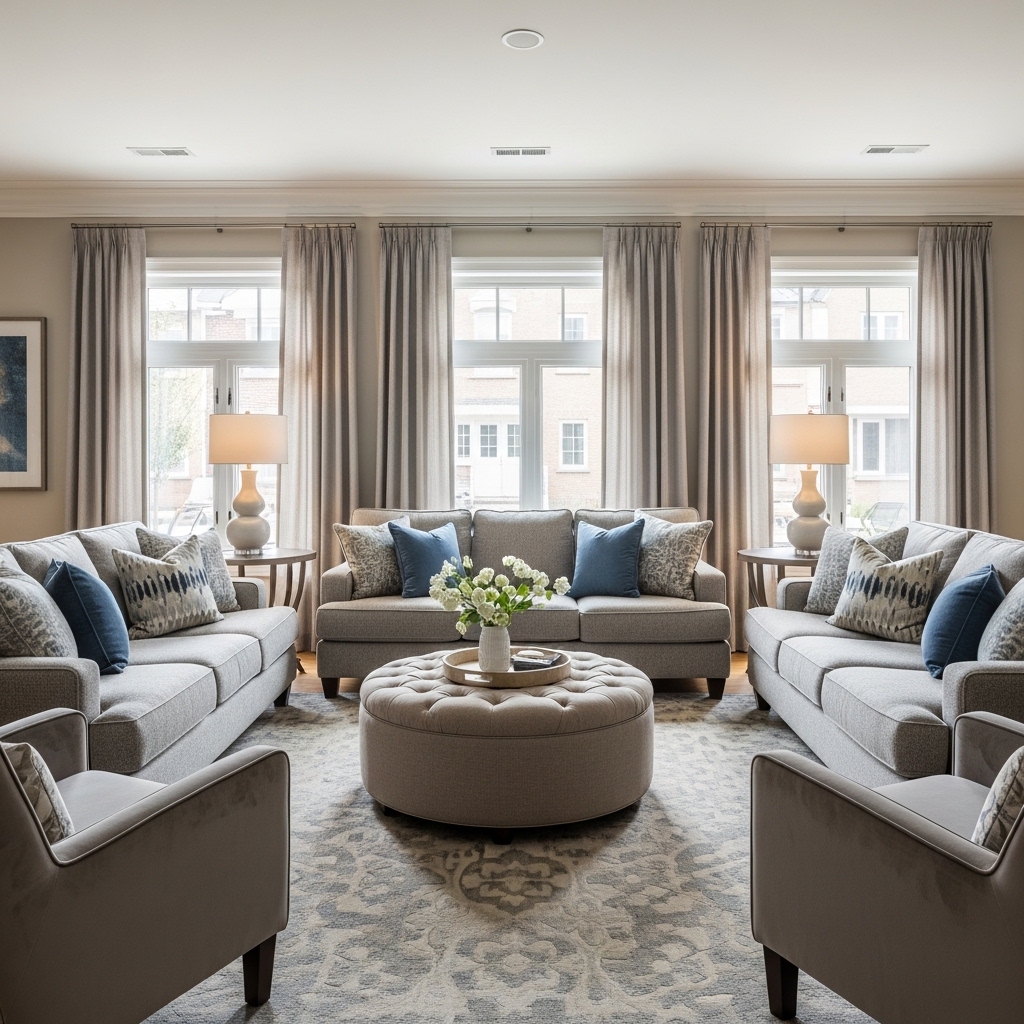
Who this is for: Social or formal living rooms.
This layout encourages interaction by arranging seating toward each other instead of a screen.
How to apply: Use chairs and sofas in a circular or square arrangement. Keep a table in the center.
Mistake: Placing seats too far apart reduces conversation comfort.
10. Narrow Living Room Linear Layout
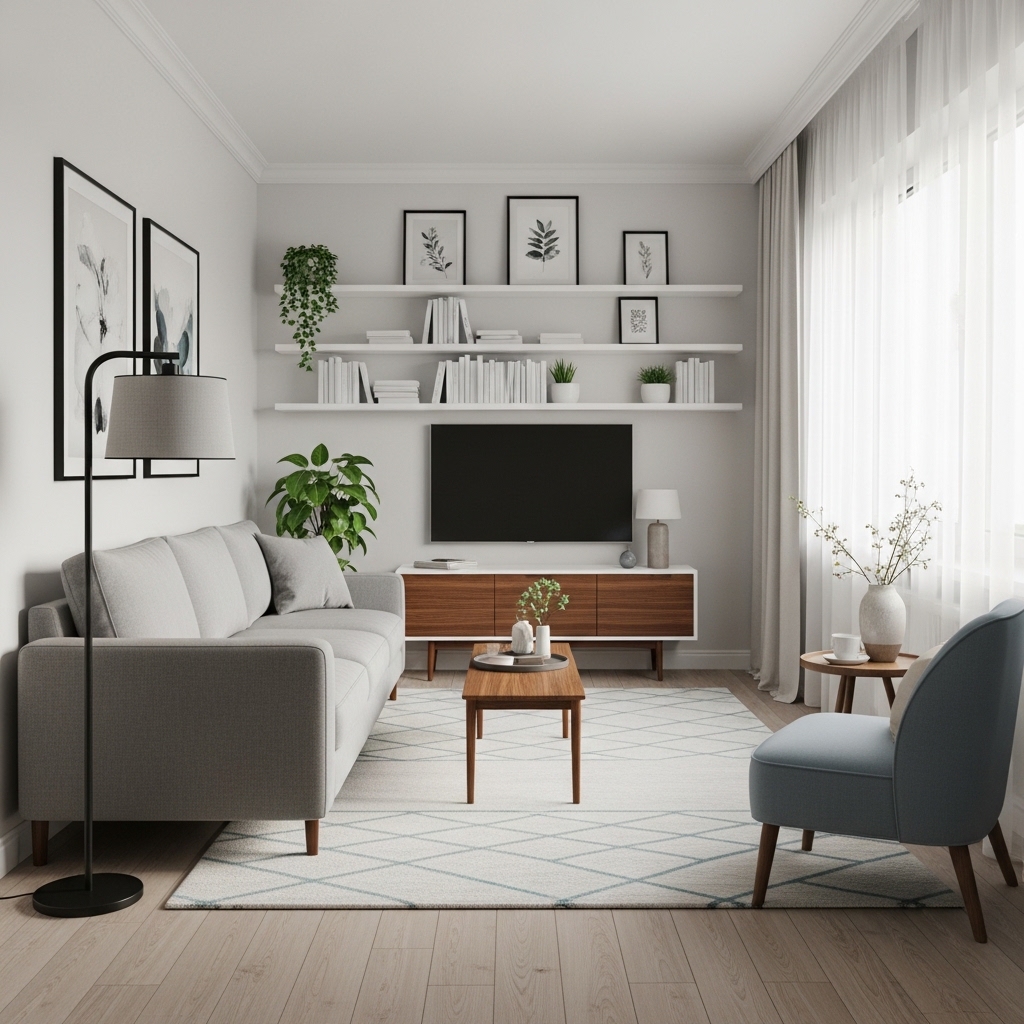
Who this is for: Long and narrow spaces.
A linear layout keeps furniture aligned along one wall, improving movement through the room.
How to apply: Place the sofa against the longer wall and keep opposite side open or minimal.
Mistake: Blocking pathways makes the room feel cramped.
11. Dual-Purpose Layout for Work and Living
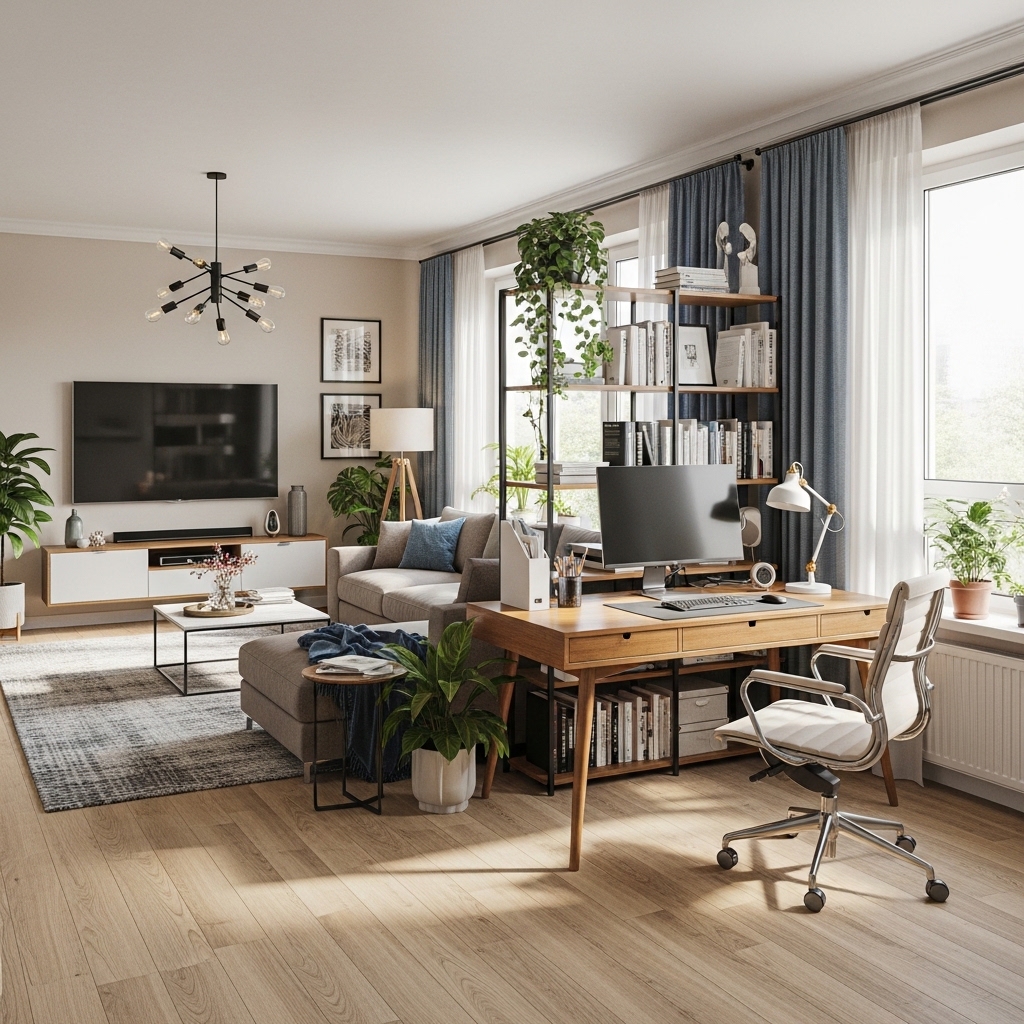
Who this is for: Apartments where the living room doubles as a workspace.
Combining functions requires clear separation to avoid clutter.
How to apply: Place a desk along a wall or corner and keep the seating area distinct. Use rugs to define zones.
Mistake: Letting work items spread into the relaxation area.
12. Minimalist Layout with Open Space
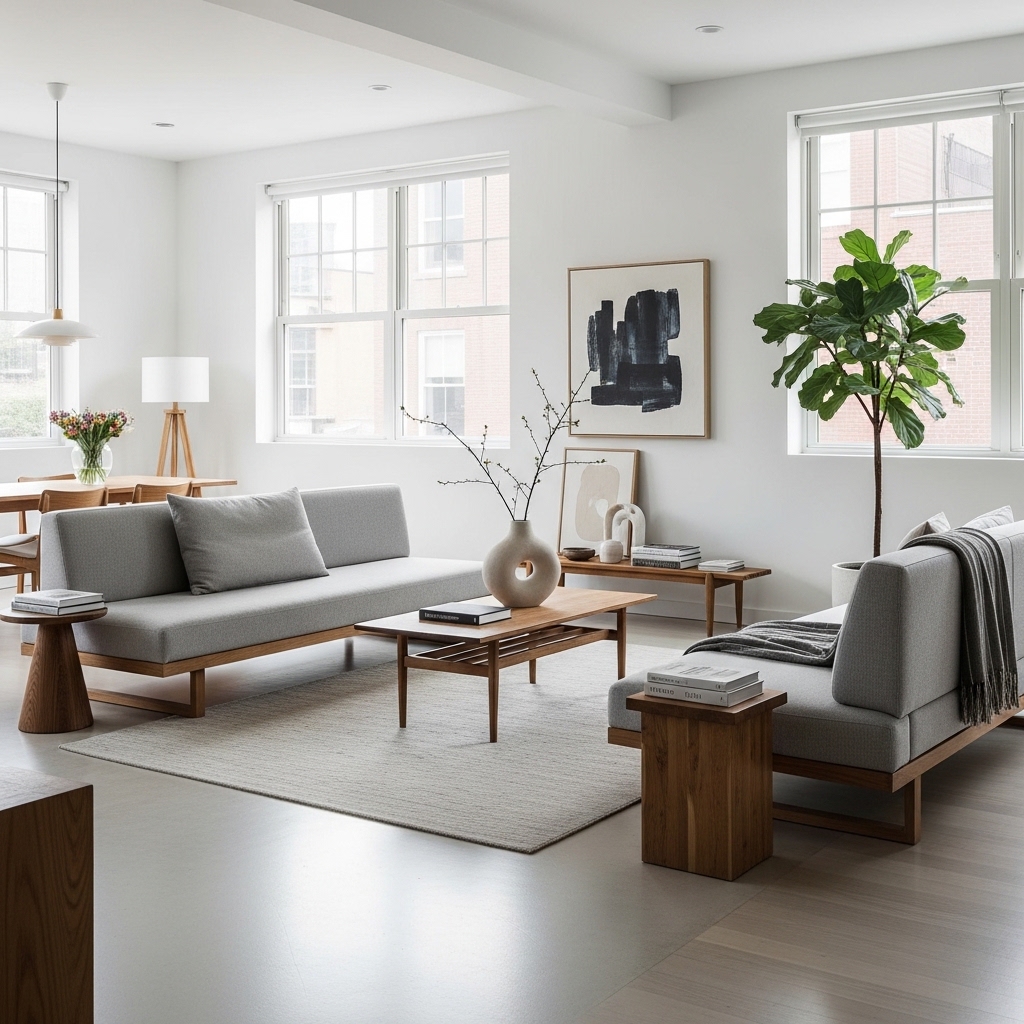
Who this is for: Small or modern living rooms.
Keeping fewer furniture pieces creates a clean and breathable layout.
How to apply: Use only essential items and leave open space intentionally. Focus on spacing and alignment.
Mistake: Adding unnecessary decor breaks the simplicity.
13. U-Shaped Layout for Maximum Seating
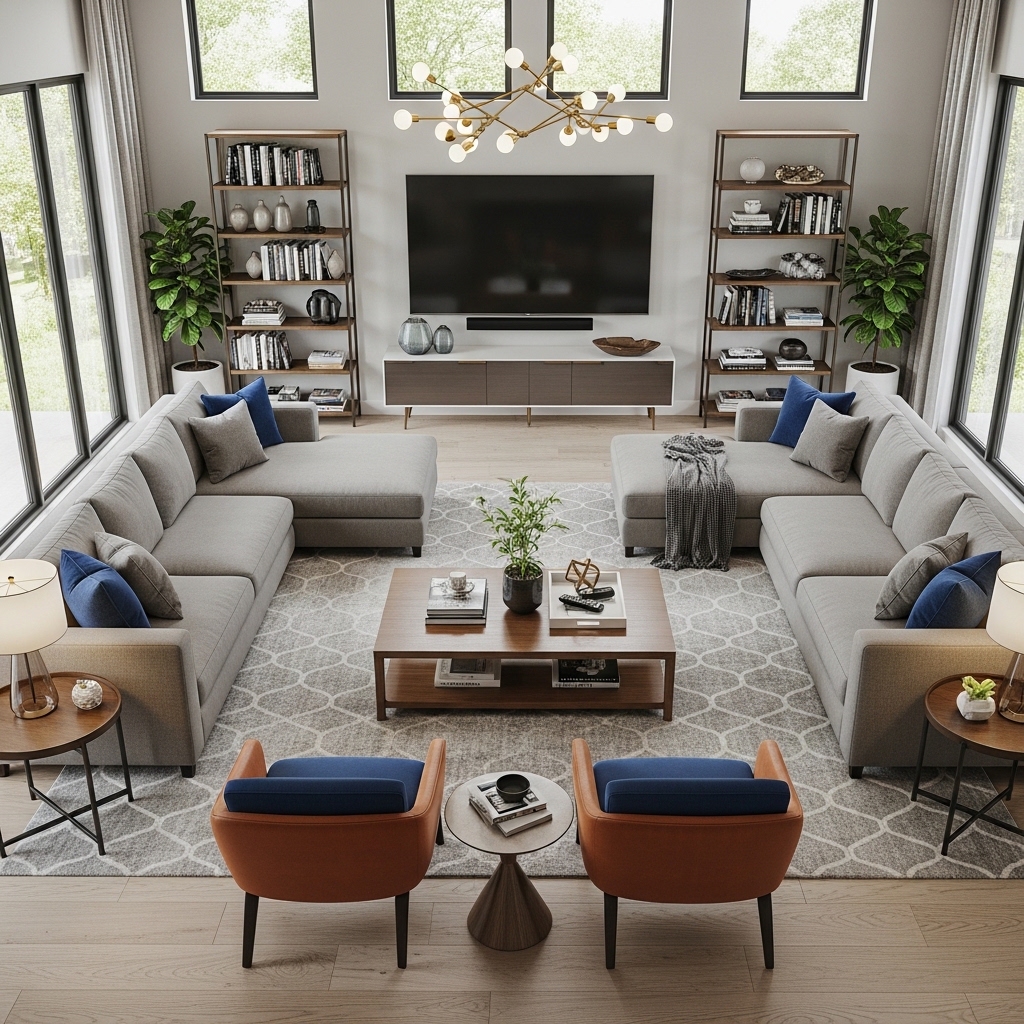
Who this is for: Larger living rooms or families.
A U-shaped setup creates a comfortable and enclosed seating area. It’s great for both socializing and watching TV.
How to apply: Arrange sofas and chairs around a central table. Keep entry points open for easy movement.
Mistake: Overcrowding the center reduces comfort.
14. Diagonal Layout for Unique Flow
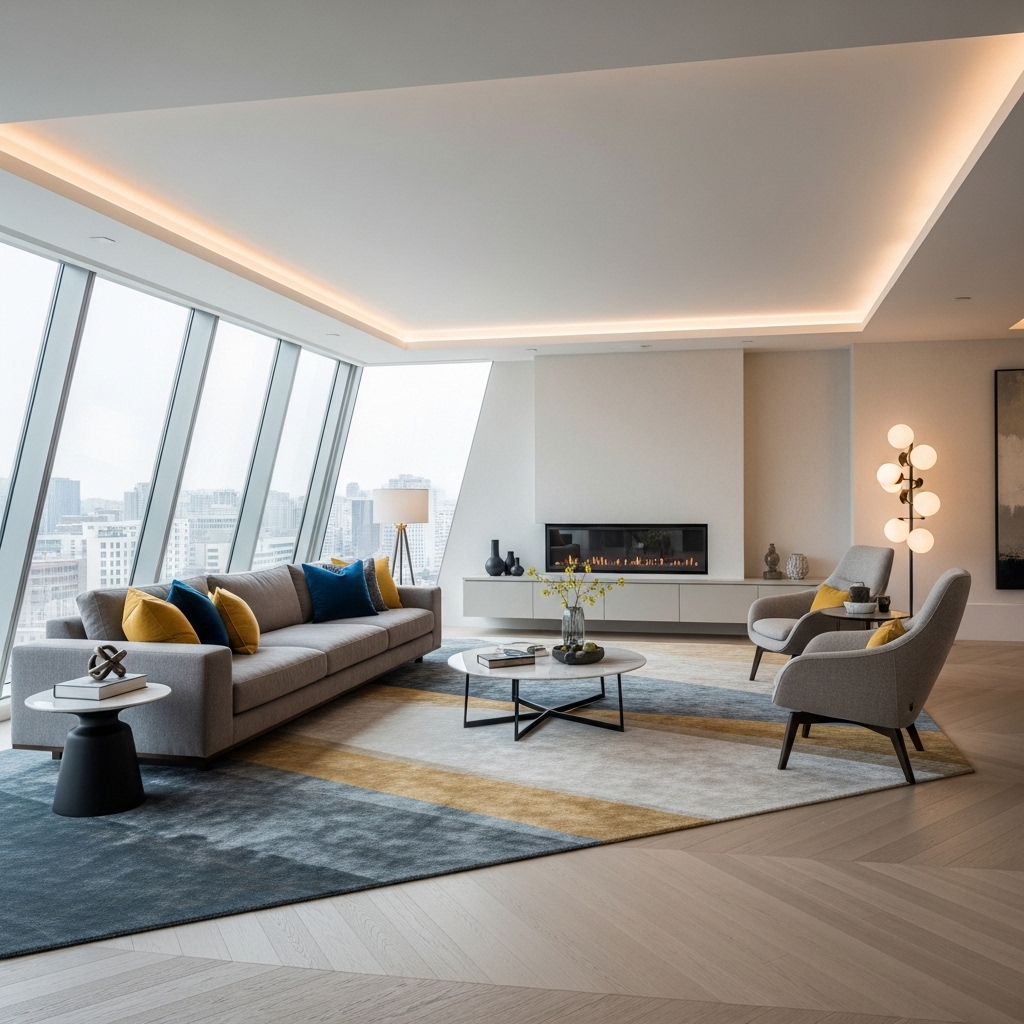
Who this is for: Rooms with awkward angles or layouts.
Placing furniture diagonally can improve movement and create a more dynamic look.
How to apply: Angle the main seating slightly instead of aligning with walls. Keep balance across the room.
Mistake: Overdoing angles can feel unstructured.
Conclusion: Build a Layout That Works for Your Space and Lifestyle
A good layout makes your living room look nice and work well every day. You should not just think about the furniture you should think about how people move the space between things and how people use the room. If you move things a bit it can make a big difference.
Start with the thing you want people to look at, like a TV or fireplace then put the seats and other furniture around it. Make sure people can walk around easily and do not put many things in one place. With these living room layout ideas you can make a room that feels nice to be, in is organized and easy to use. You can use these ideas to make your living room a space.