18 Laundry Room Makeover Ideas That Turn Your Most Boring Room into a Space You Will Actually Enjoy
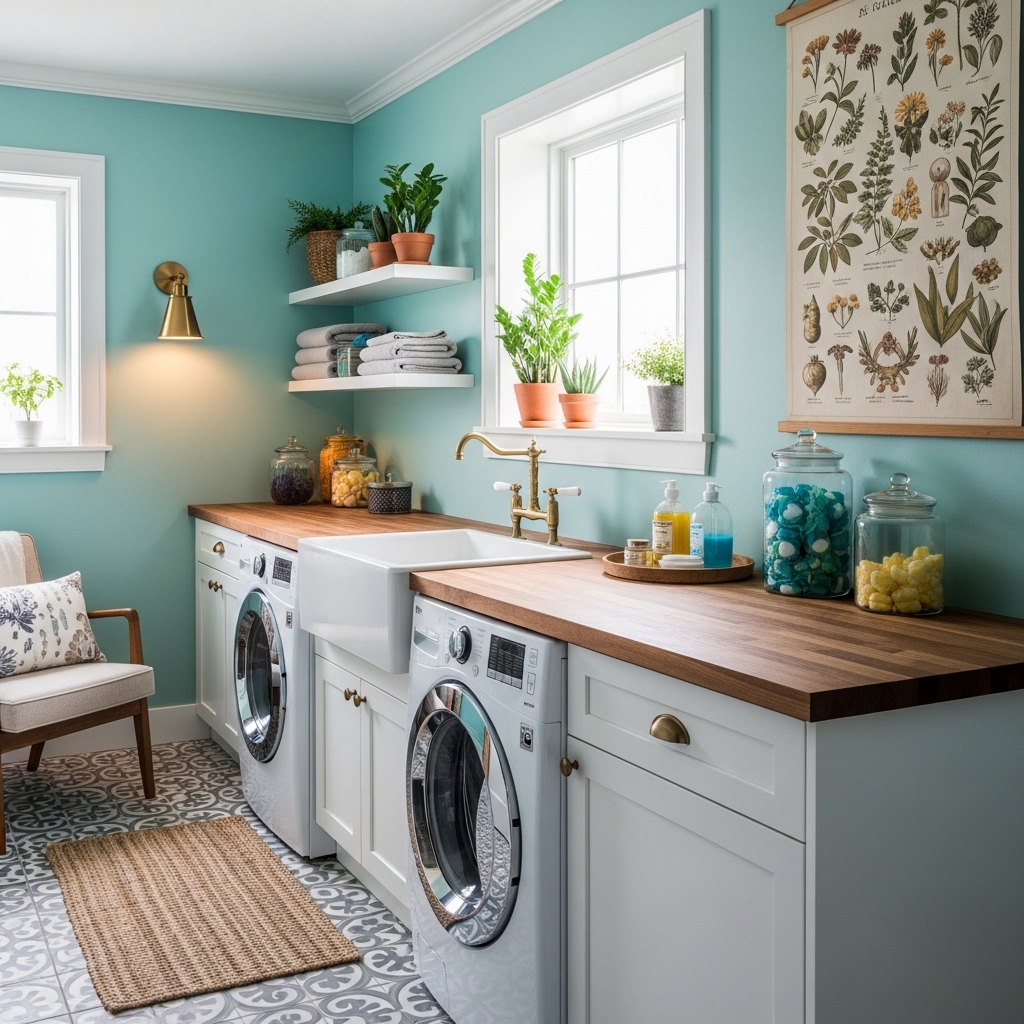
You open your laundry room door. Do you cringe or do you feel a small sense of pride?
Most laundry rooms are afterthoughts. Beige walls. Broken cabinets. A folding area that never gets used.
The room where you spend hours each week deserves better than neglect and frustration.
A makeover does not require a full renovation or a unlimited budget. Small changes add up quickly.
The difference between a room you tolerate and a room you enjoy comes down to intentional choices.
This guide delivers 18 laundry room makeover ideas that turn your most boring room into a space you will actually enjoy.
From lighting upgrades to smart storage, each idea adds function and beauty to your daily chores.
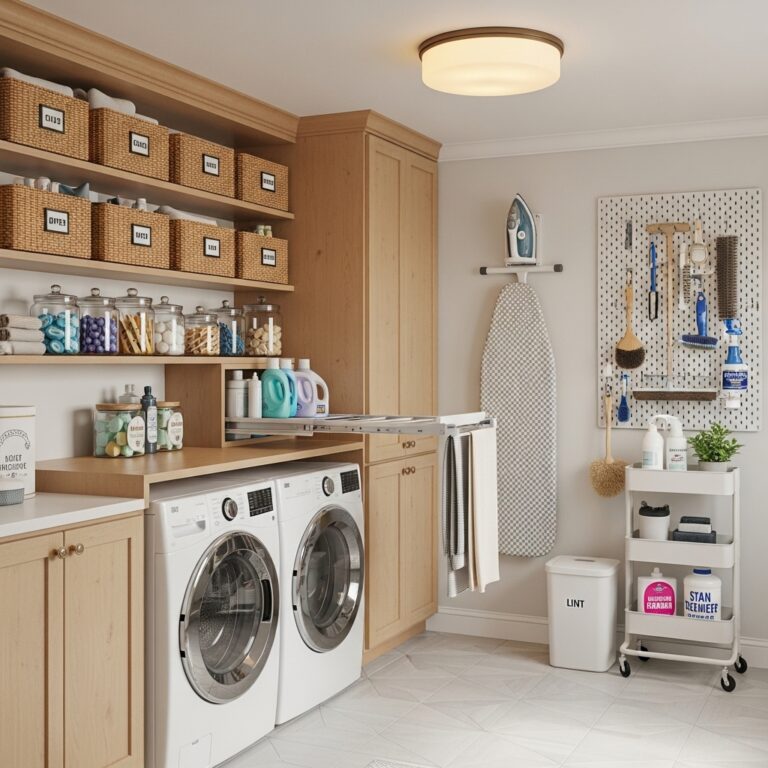
1. Start with a Fresh Coat of Paint on Every Surface
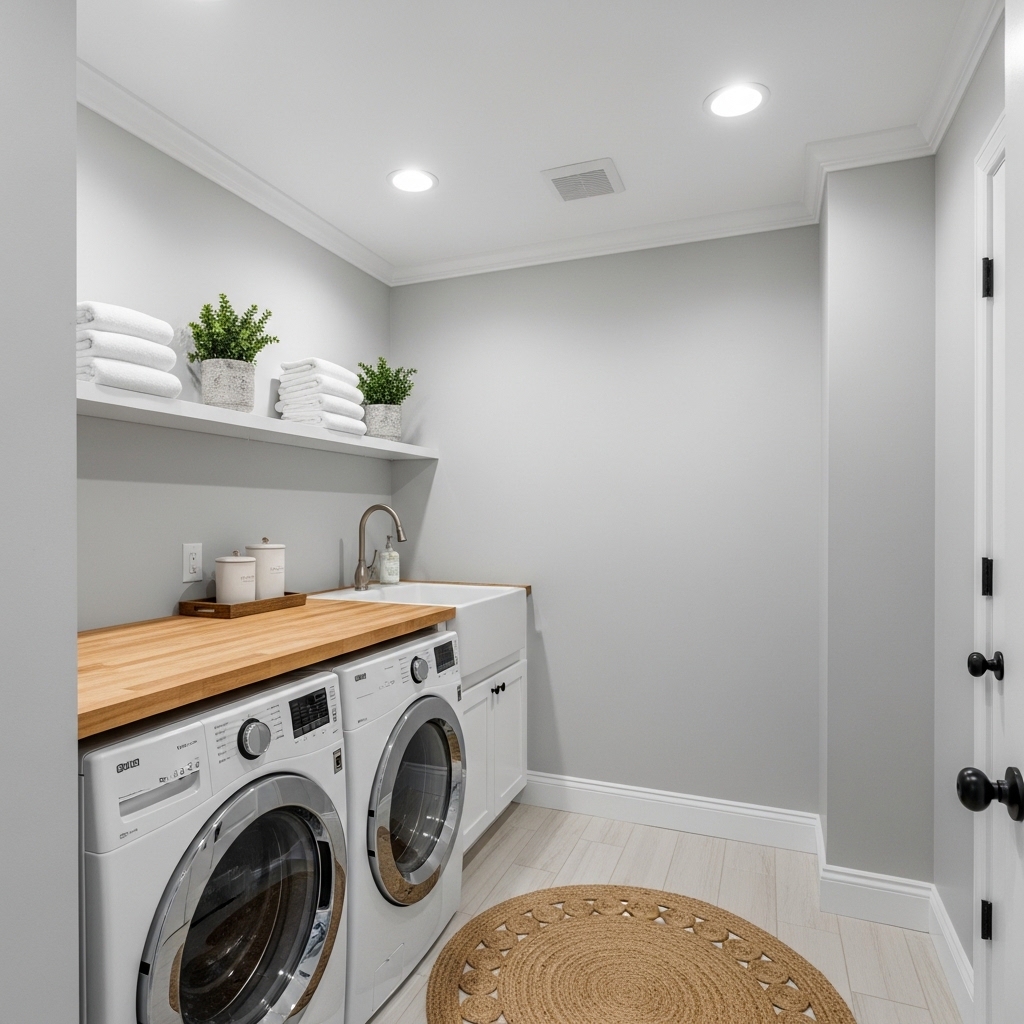
Paint is the cheapest and most dramatic change you can make to any room.
Choose a light, bright color for your walls. Soft white, pale blue, or light gray work beautifully.
Paint your cabinets too. White or cream cabinets look cleaner and make the room feel larger.
Dark walls absorb light and make small laundry rooms feel like caves. Light walls reflect light and lift your mood.
Pro Tip: Use semi-gloss paint on your walls. Semi-gloss resists moisture and wipes clean when detergent splashes.
Mistake to Avoid: Do not paint over dirty or greasy walls. Clean every surface thoroughly before you open a paint can.
2. Replace Your Overhead Light with Something Brighter
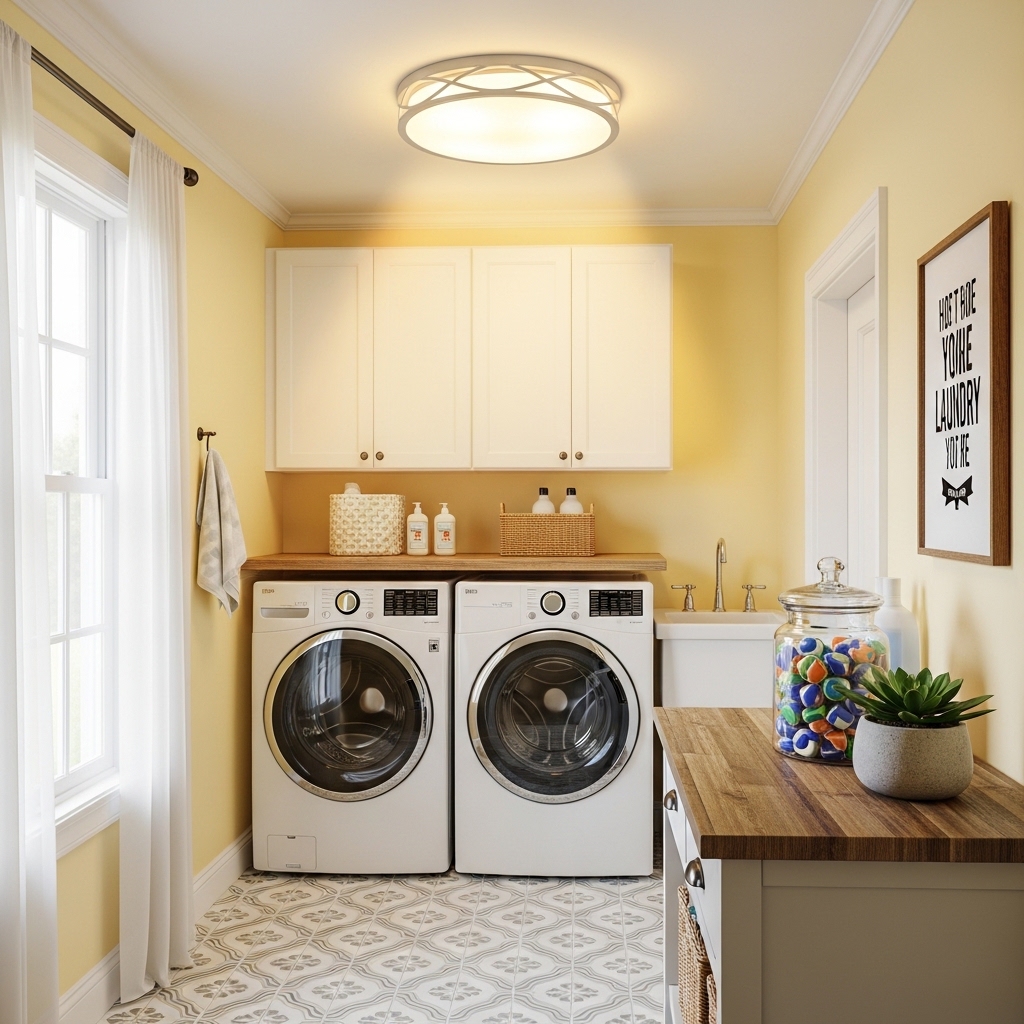
Most laundry rooms have a single bare bulb or a cheap fixture that casts harsh shadows.
Install a flush-mount LED fixture with at least 3000 lumens of brightness.
Good lighting helps you see stains, sort colors, and find lost socks behind the dryer.
Dim lighting makes chores feel harder and longer than they actually are.
Pro Tip: Choose a fixture with a color temperature of 4000K to 5000K. Cool white light is best for seeing stains and sorting clothes.
Mistake to Avoid: Do not install a fixture with exposed bulbs. Dust and lint collect on bare bulbs and reduce brightness over time.
3. Add Under-Cabinet Lighting for Task Illumination
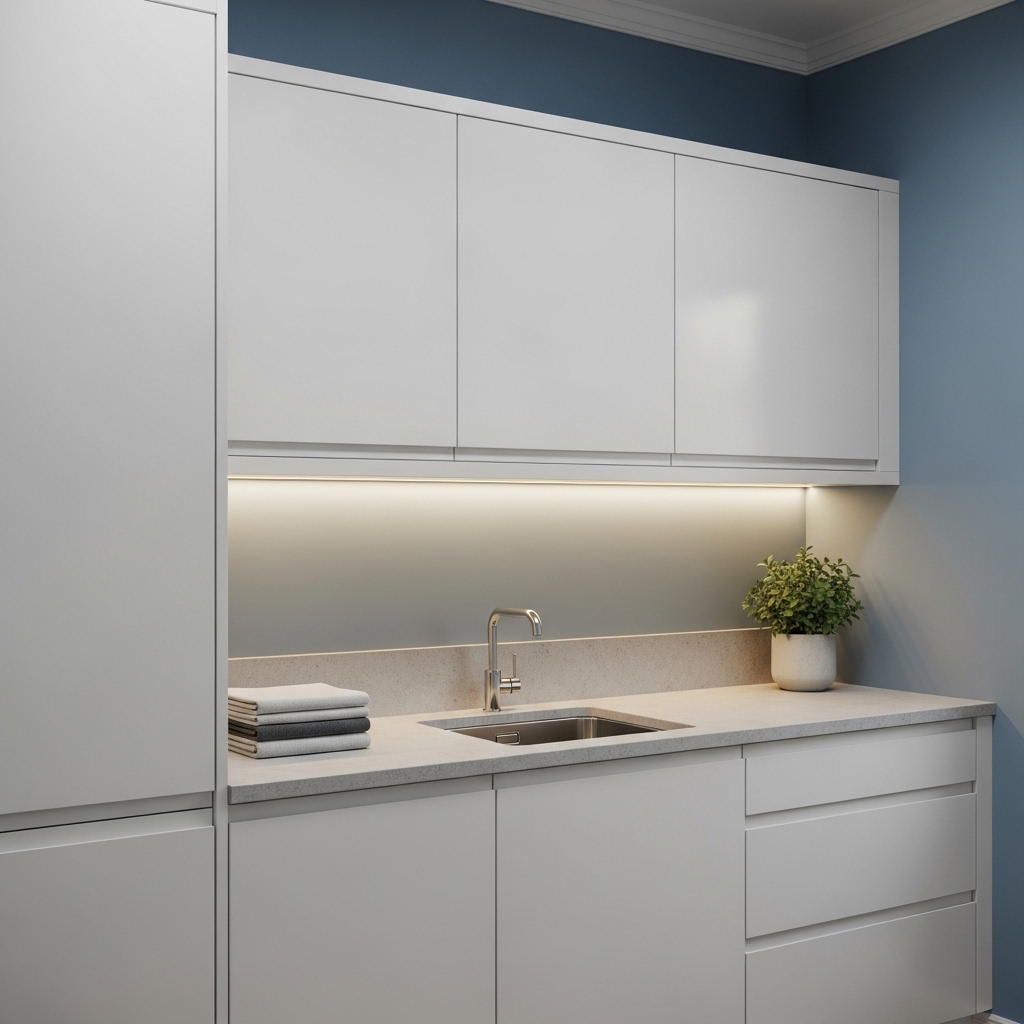
Your overhead light lights the room. Under-cabinet lights light your work surface.
Install battery-operated stick-on lights under your upper cabinets or shelves.
The lights shine directly onto your folding area. You see every wrinkle and every stain.
Task lighting makes detailed work easier. Folding, stain treating, and mending all benefit from focused light.
Pro Tip: Choose lights with motion sensors. The lights turn on automatically when you approach your folding table.
Mistake to Avoid: Do not use plug-in under-cabinet lights. Cords dangle down your backsplash and look messy.
4. Install a Deep Utility Sink If You Have Space
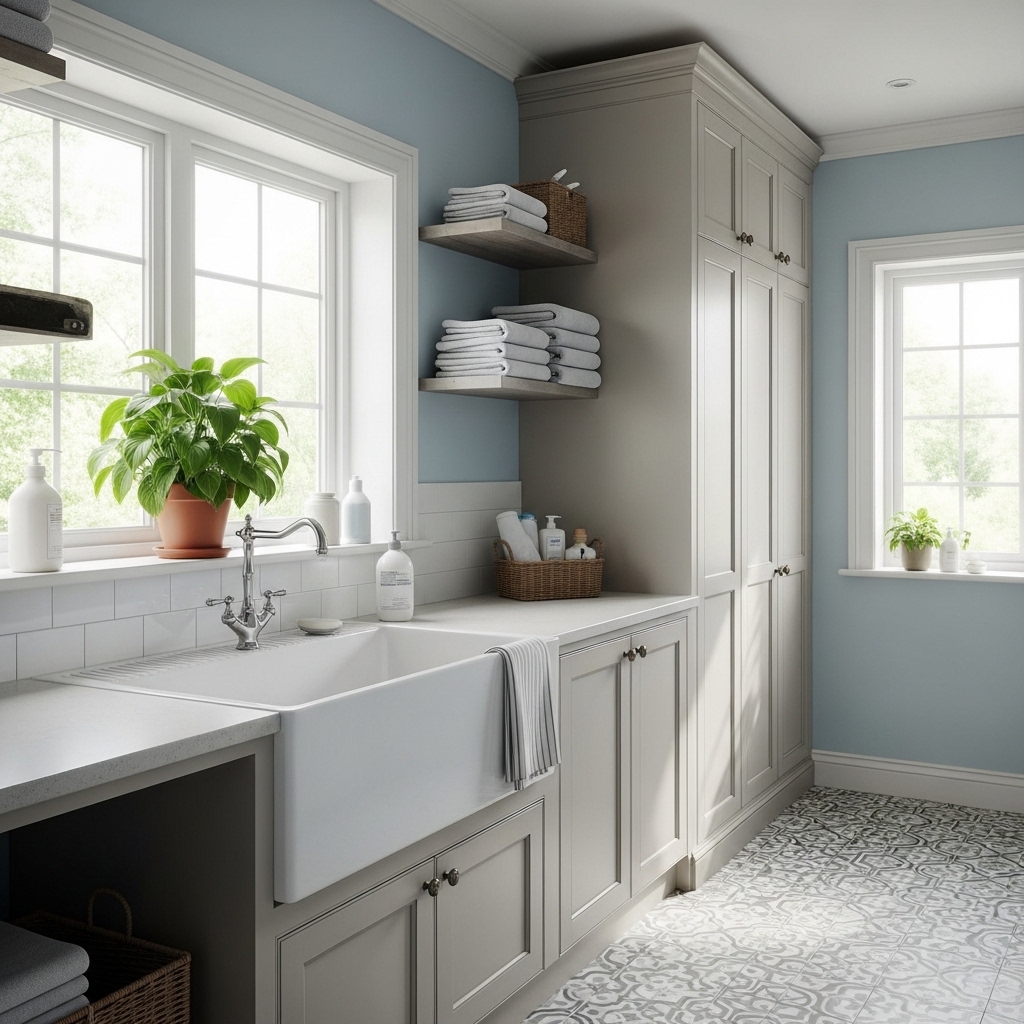
A shallow plastic laundry tub is better than nothing. A deep sink changes how you do laundry.
Install a deep stainless steel or white porcelain sink if your room has space.
Soak stained clothes. Wash muddy shoes. Rinse cloth diapers. Fill large buckets for houseplants.
The deeper the sink, the more useful it becomes. Eight inches deep is good. Twelve inches is better.
Pro Tip: Add a pull-down sprayer faucet to your deep sink. The sprayer reaches every corner of the sink and rinses clothes directly.
Mistake to Avoid: Do not install a sink that is too small for your largest pot or bucket. Measure your biggest item before buying.
5. Replace Wire Shelving with Solid Wood Shelves
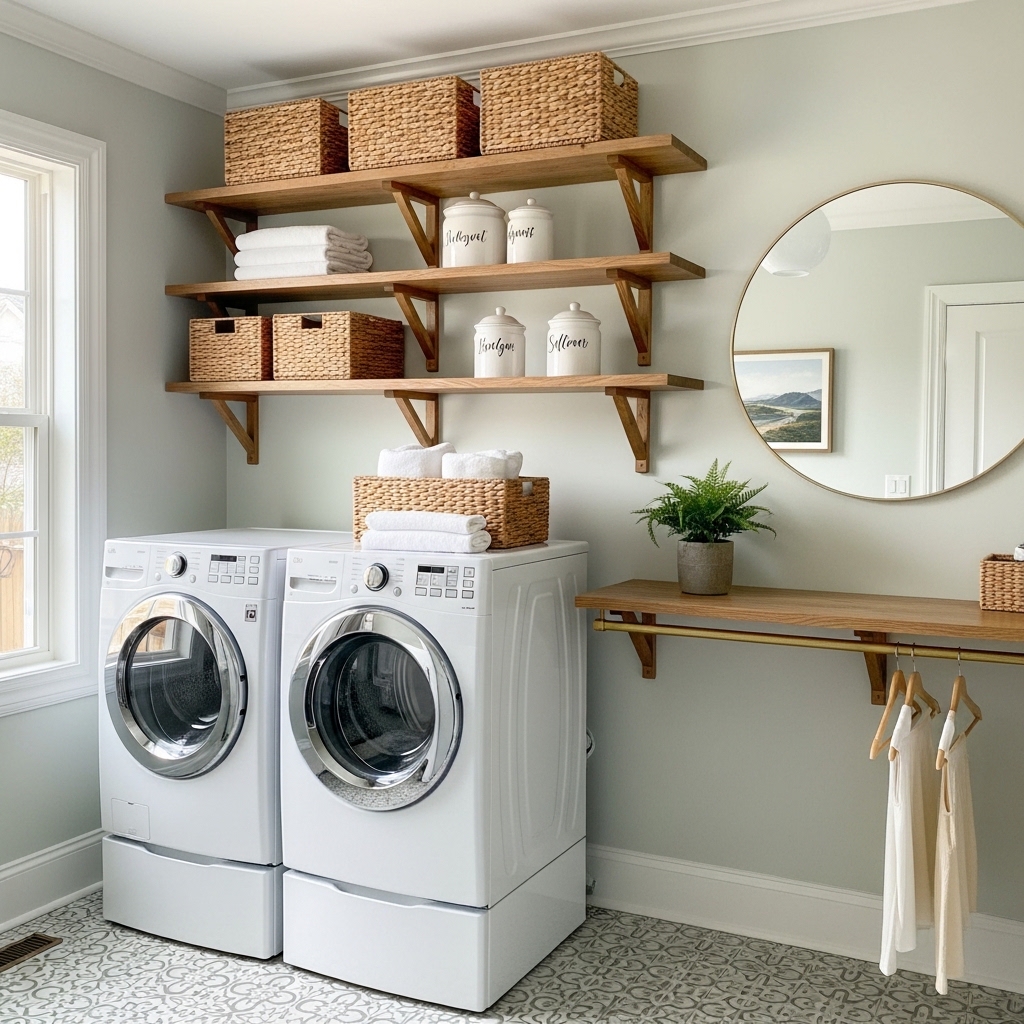
Wire shelving is functional but ugly. It belongs in a storage closet, not a room you see every day.
Remove your wire shelves. Install thick wood boards supported by metal brackets.
Wood shelves hold more weight. They look a hundred times better. They do not let small items fall through.
The upgrade costs more than wire but lasts forever and adds real value to your home.
Pro Tip: Seal your wood shelves with matte polyurethane. Sealed wood resists moisture from steam and accidental spills.
Mistake to Avoid: Do not use pine without sealing it. Pine absorbs moisture and warps within months of laundry room humidity.
6. Add a Folding Table at the Perfect Height
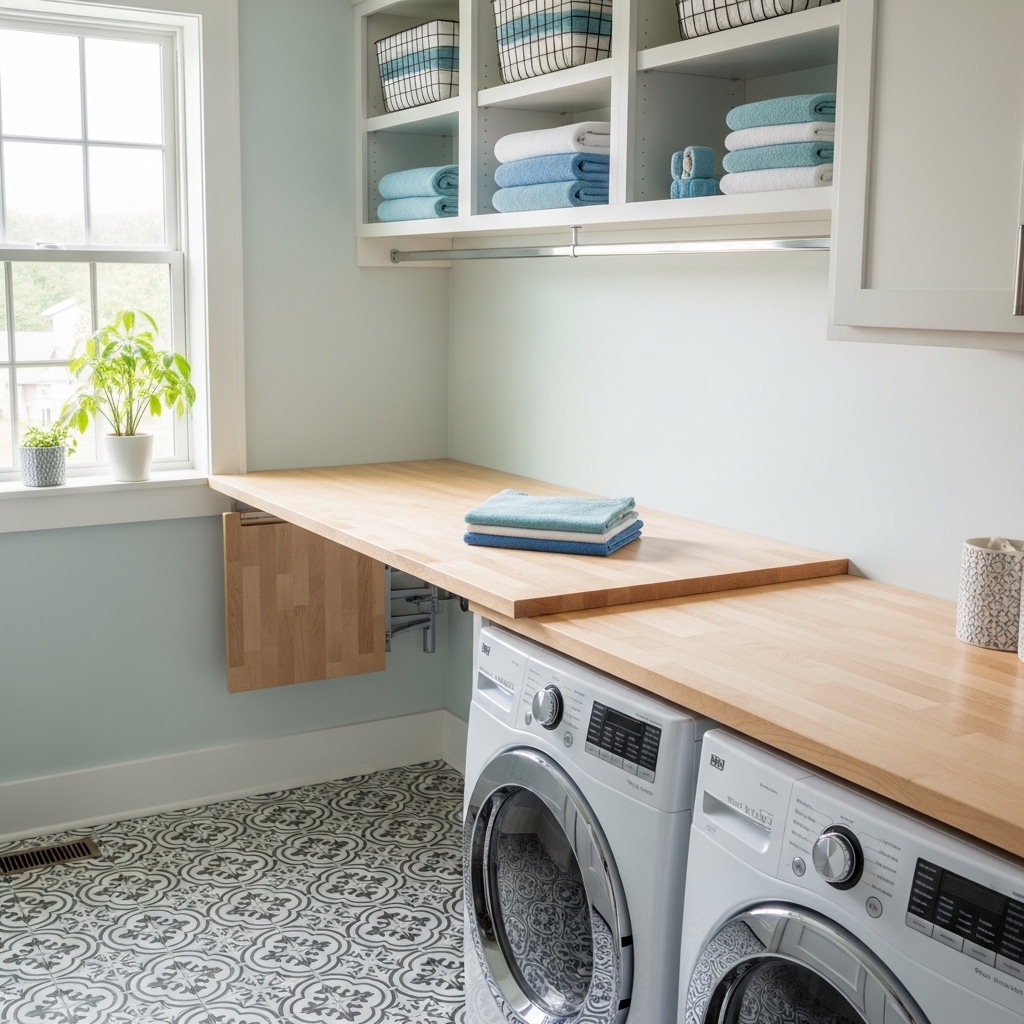
Folding laundry on top of your washer or dryer is awkward. Your back bends. Clothes slide off.
Install a folding table at standard counter height of 36 inches from the floor.
The table gives you a dedicated folding surface. Your back stays straight. Your clothes stay in place.
A folding table that drops down saves space in small rooms. A permanent table offers more stability.
Pro Tip: Add a small lip to the front edge of your folding table. The lip stops clothes and small items from sliding off onto the floor.
Mistake to Avoid: Do not make your folding table narrower than 24 inches. Narrow tables cannot hold a full load of unfolded laundry.
7. Hang a Rod for Air-Drying Delicates
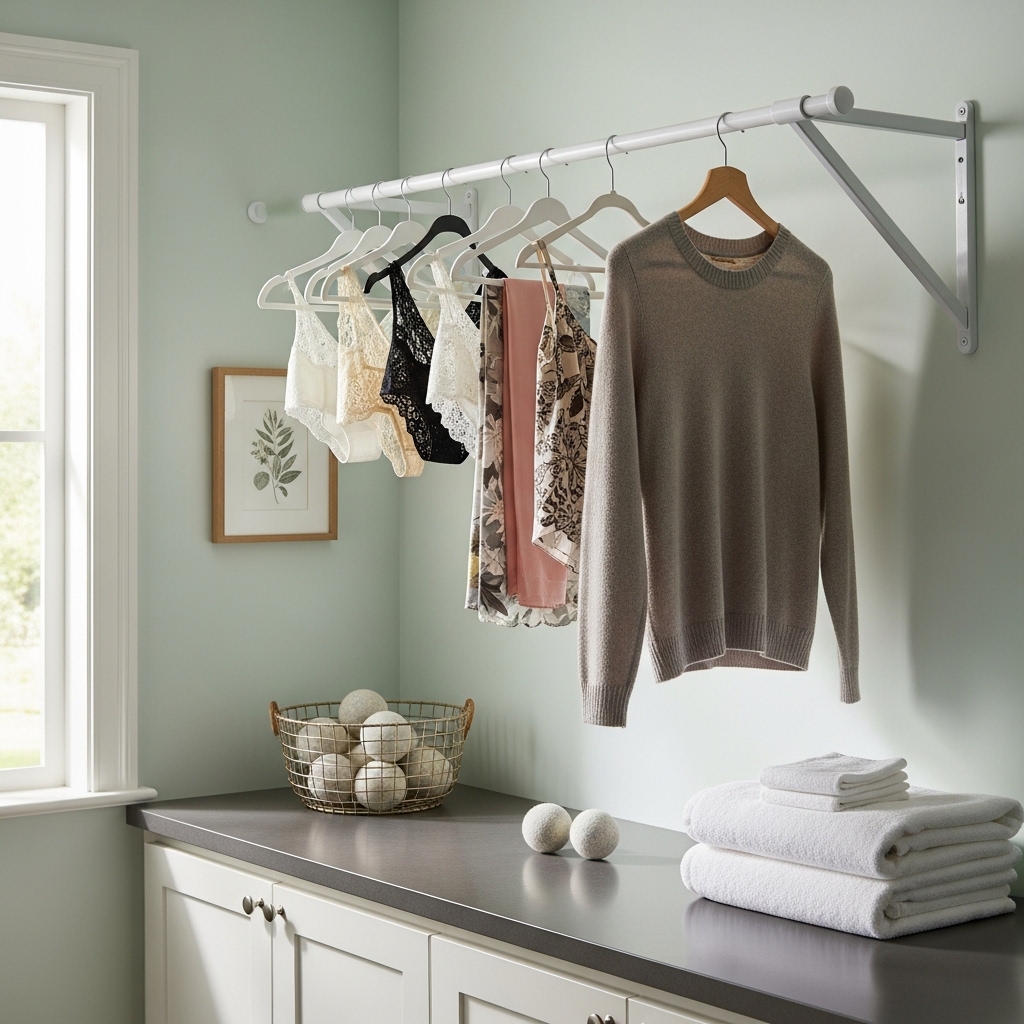
You will always have items that should not go in the dryer. A rod gives them a proper home.
Install a sturdy wooden dowel or metal rod across an empty wall or above your sink.
Hang delicates, hand-washed items, or sweaters to dry naturally without shrinking.
Draping wet clothes over the backs of chairs looks messy. A rod looks intentional and organized.
Pro Tip: Install your rod at 60 inches high. Standard hanging height works for most adults without bending or reaching up.
Mistake to Avoid: Do not use a rod that is too long without center support. Long rods sag under the weight of wet clothes.
8. Use Clear Containers for Detergent and Supplies
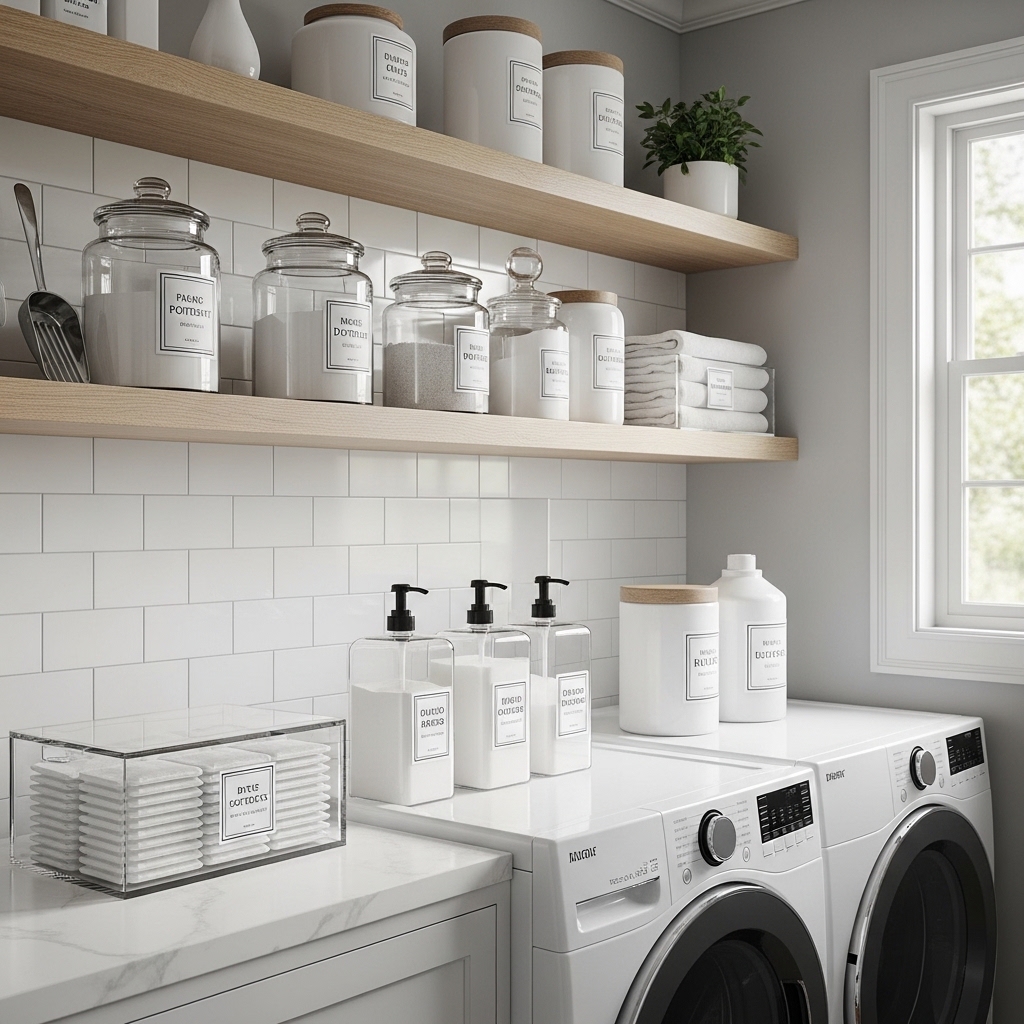
Cardboard boxes and plastic bottles are practical but ugly. They ruin the look of your open shelves.
Transfer powdered detergent, pods, and dryer sheets into clear glass or acrylic containers.
Line up three to five containers on a shelf. You see exactly how much you have left.
Functional storage becomes decor. Your supplies are accessible and beautiful at the same time.
Pro Tip: Use chalkboard labels on your containers. Write the contents in white chalk. Erase and rewrite when you refill.
Mistake to Avoid: Do not store liquid detergent in glass containers. Liquid is harder to pour. Keep liquids in their original bottles.
9. Add a Pull-Out Hamper Behind a Cabinet Door
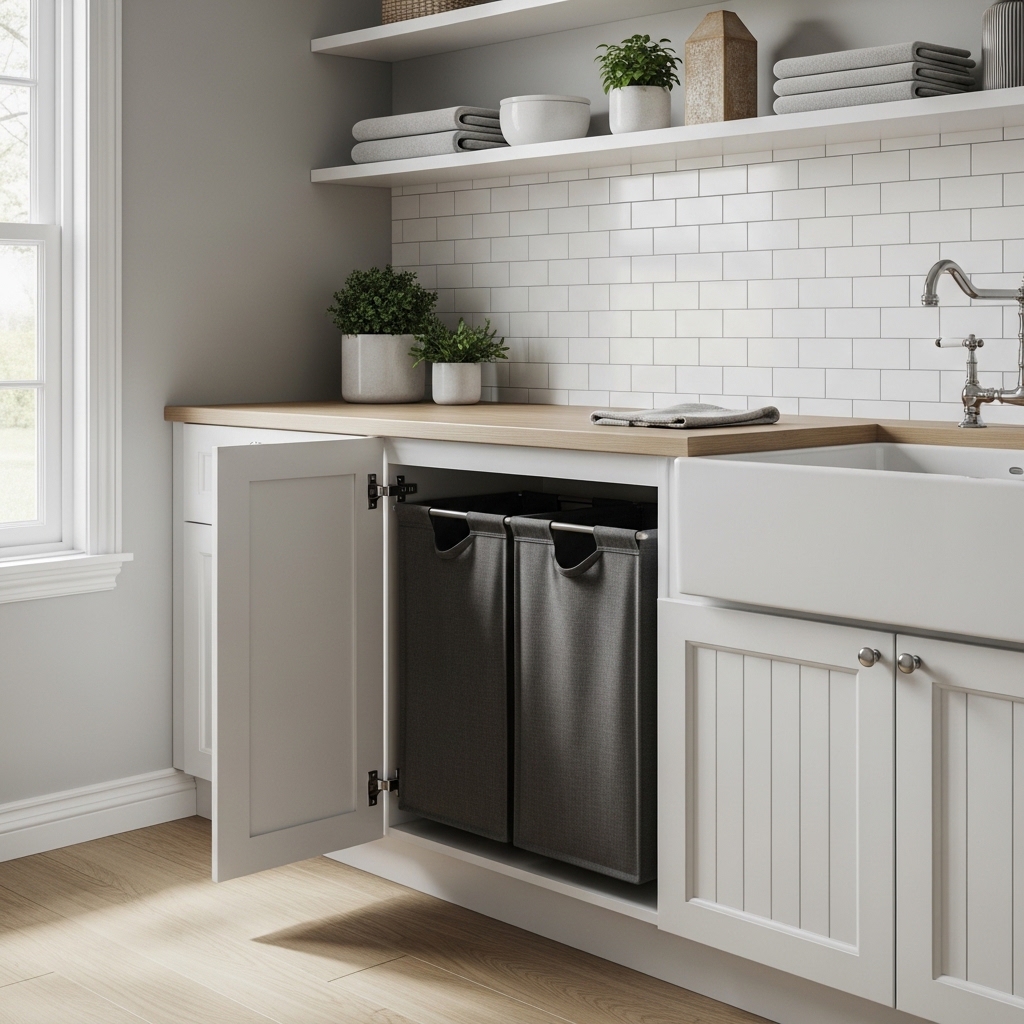
Dirty laundry sitting in open baskets looks messy. A hidden hamper keeps the mess out of sight.
Install a pull-out hamper on slides inside a lower cabinet or next to your washer.
Drop dirty clothes directly into the hamper. Close the cabinet door. The mess disappears.
Hidden storage is the secret to a clean-looking laundry room. Out of sight means out of mind.
Pro Tip: Use two pull-out hampers. One for lights. One for darks. Sorting happens as you undress, not on laundry day.
Mistake to Avoid: Do not buy a hamper without ventilation. Closed hampers trap moisture and cause mildew smells on your clothes.
10. Install a Backsplash Behind Your Sink and Counter
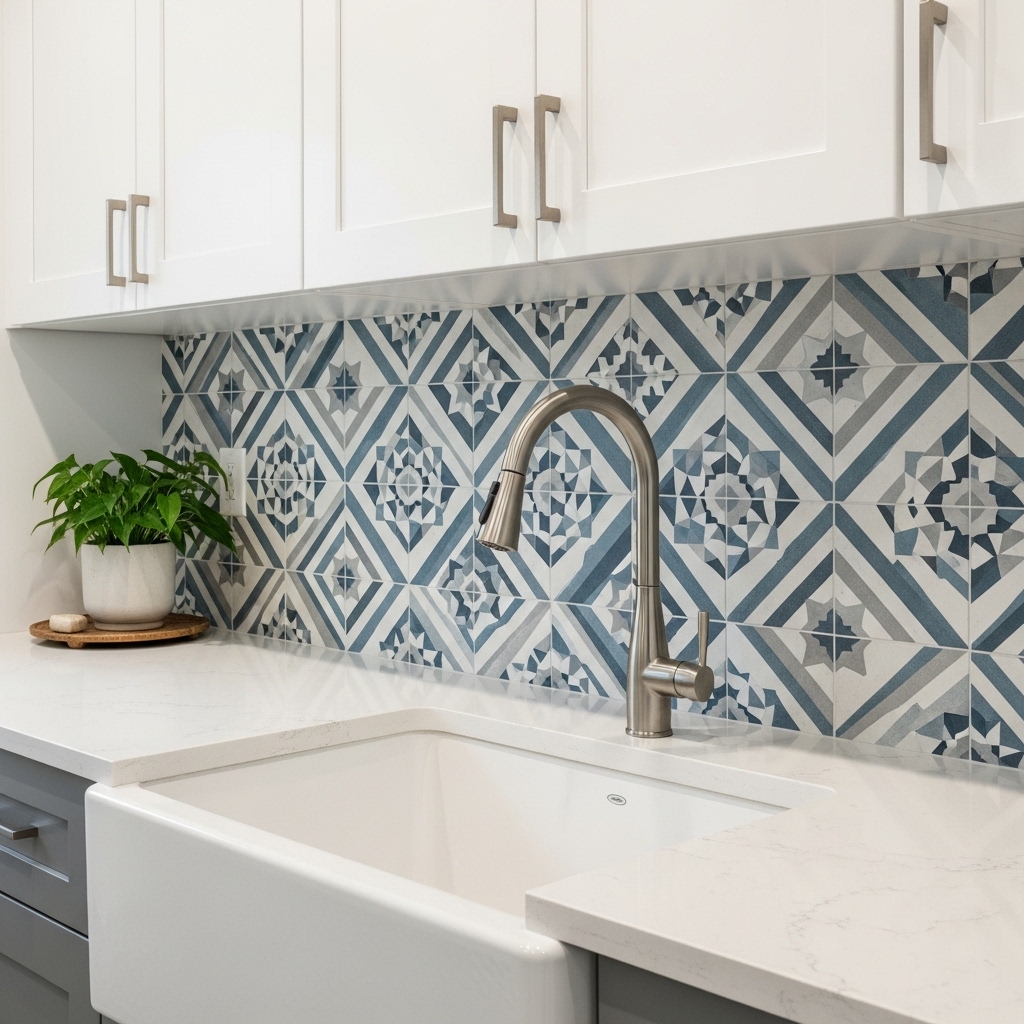
Water splashes. Detergent drips. Paint gets ruined. A backsplash protects your walls.
Install beadboard, shiplap, or subway tile behind your sink and folding area.
The backsplash adds farmhouse charm while protecting your walls from moisture damage.
A backsplash is practical and beautiful. Few upgrades offer both benefits at the same time.
Pro Tip: Choose white beadboard for a classic look. White reflects light and makes your laundry room feel larger and cleaner.
Mistake to Avoid: Do not use wallpaper as a backsplash. Wallpaper peels in humid laundry rooms within months.
11. Add a Small Rolling Cart for Extra Storage
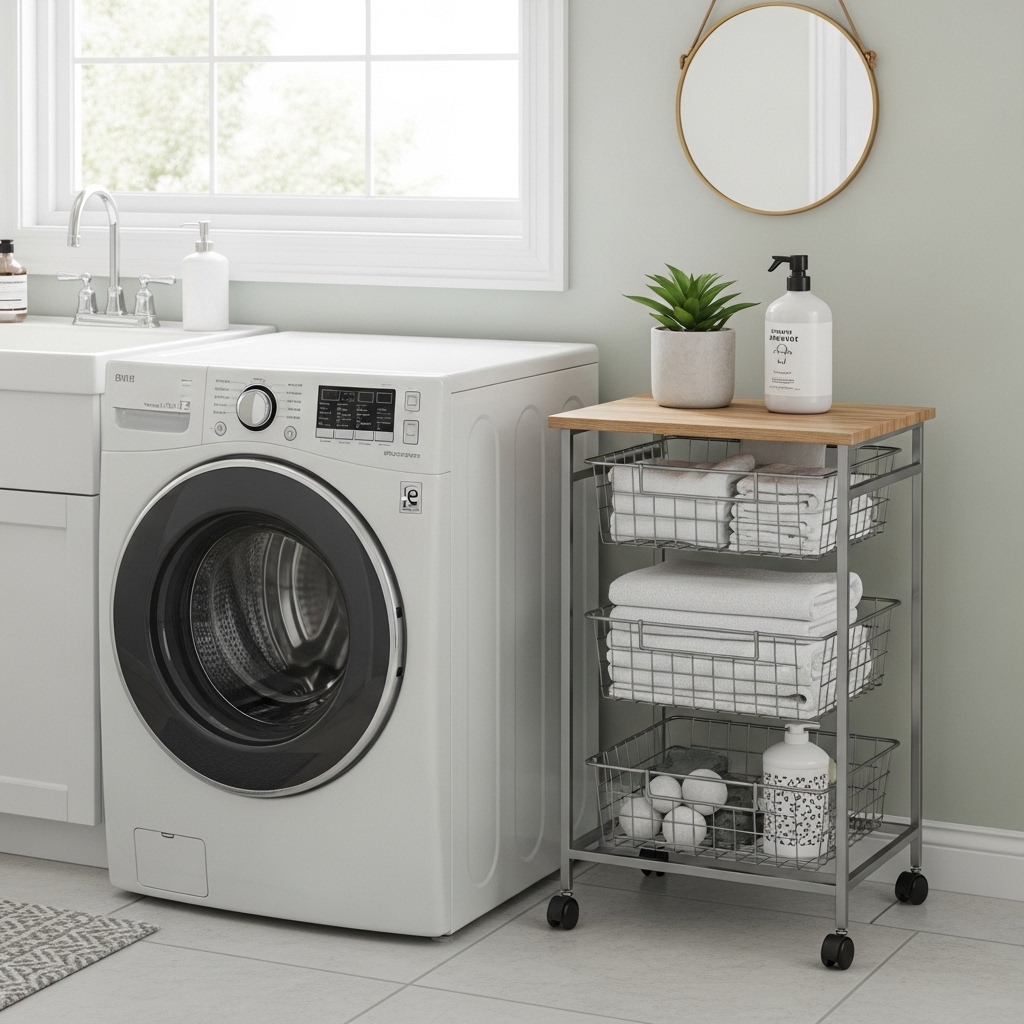
Your laundry room probably has a few inches of unused space next to the washer or dryer.
Measure that gap. Buy a narrow rolling cart that fits perfectly into that empty space.
Use the cart for detergent pods, dryer sheets, stain pens, and lint rollers.
The cart uses space that would otherwise collect dust. Every inch works harder for you.
Pro Tip: Choose a cart with a handle on top. The handle makes pulling the cart out easy, even when your hands are full.
Mistake to Avoid: Do not buy a cart with plastic wheels. Rubber wheels roll smoothly and do not scratch your floors.
12. Hang a Pegboard for Frequently Used Tools
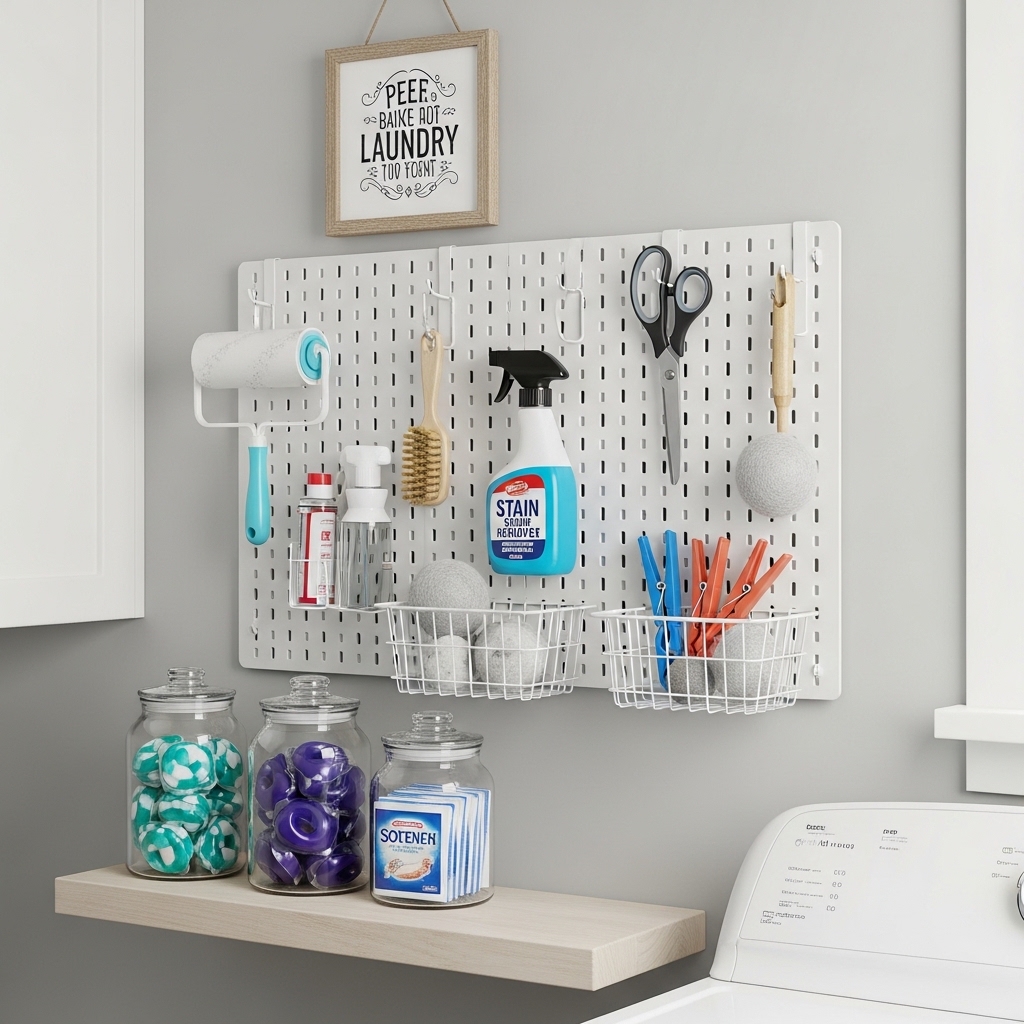
Your iron, lint roller, and stain brush end up on the counter because they have no home.
Mount a small pegboard on the wall near your folding table. Add hooks for your most-used tools.
Hang the iron. Hang the lint roller. Hang small scissors for opening detergent packages.
Pegboards keep tools visible and accessible. No more digging through drawers during laundry time.
Pro Tip: Paint your pegboard a bright color. A colorful pegboard looks like decor, not just utility storage.
Mistake to Avoid: Do not hang heavy items like an iron on small pegboard hooks. Use hooks rated for the weight of each item.
13. Add a Small Rug That Can Handle Moisture
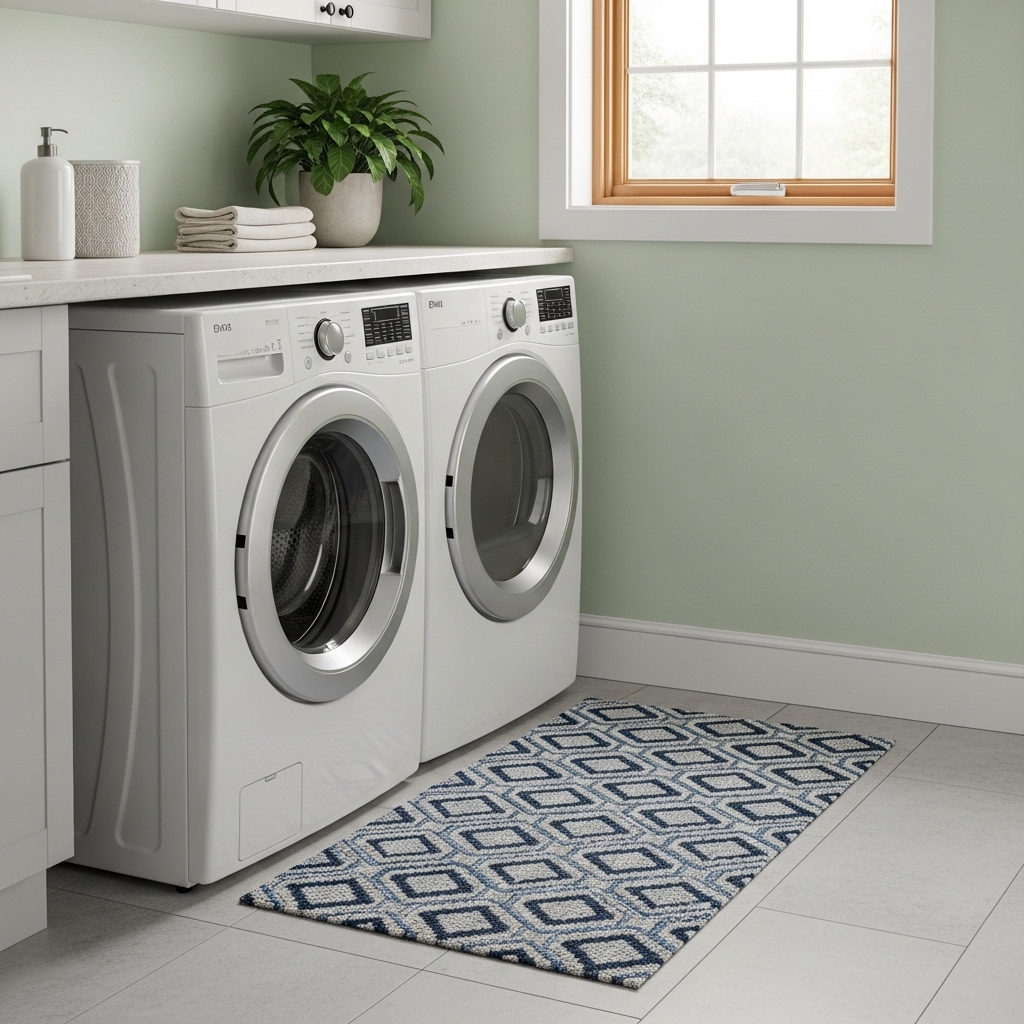
Bare floors feel cold and echo. A rug adds warmth, color, and sound absorption.
Choose a washable rug in a dark color or busy pattern. Dark colors hide lint and detergent drips.
The rug defines your standing area. It makes the room feel complete rather than forgotten.
Washable rugs are essential for laundry rooms. Spills happen. You need something you can clean.
Pro Tip: Place a nonslip rug pad underneath your rug. Nonslip pads prevent tripping and keep your rug flat.
Mistake to Avoid: Do not use a high-pile shag rug in your laundry room. Shag traps lint, dust, and spilled detergent.
14. Install a Motion-Sensor Light for Nighttime Laundry
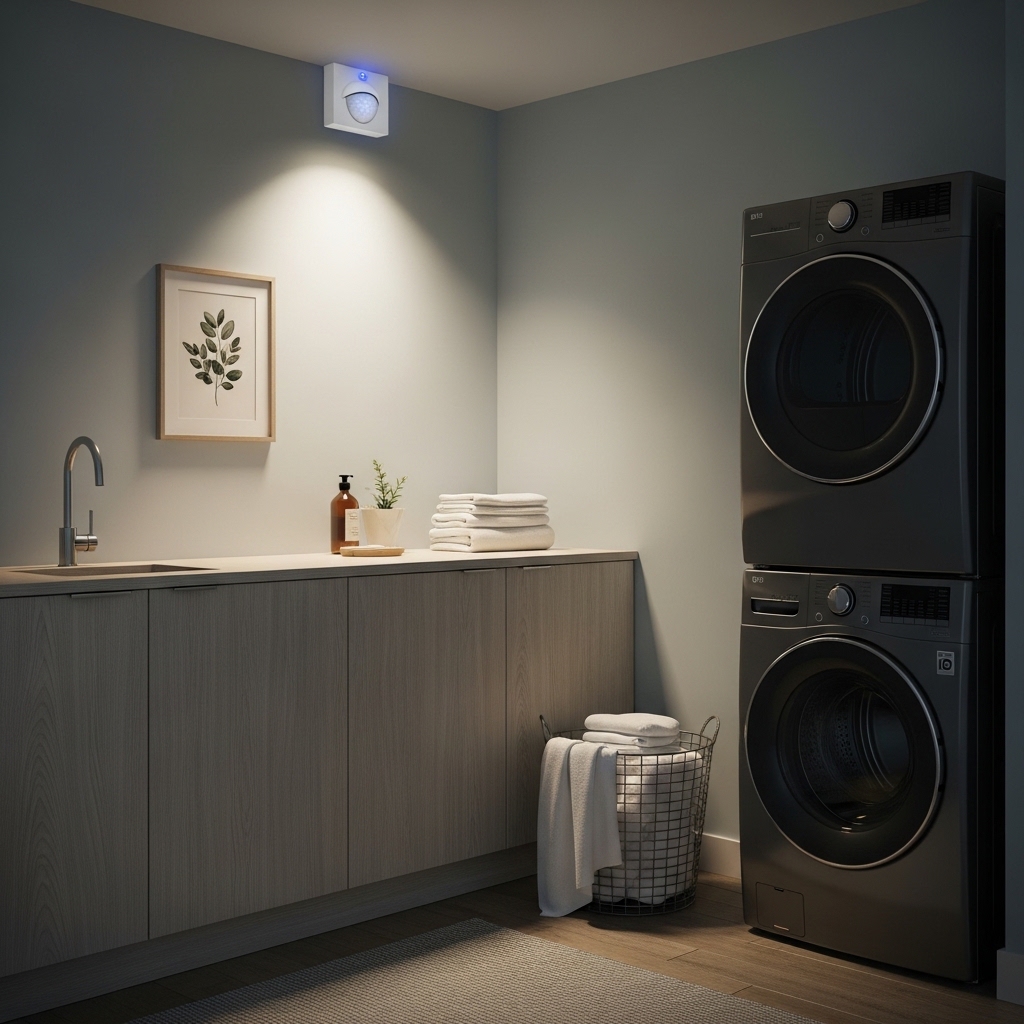
You will need to do laundry at night eventually. A crying child. An early morning meeting.
Install a motion-sensor light in your laundry room doorway or on a wall.
The light turns on automatically when you enter. No fumbling for switches with arms full of clothes.
The light turns off automatically when you leave. No wasted electricity.
Pro Tip: Choose a light with a daylight sensor. The light only turns on when the room is actually dark, not during sunny afternoons.
Mistake to Avoid: Do not install the sensor where your washer or dryer motion triggers it. Position the sensor away from moving appliances.
15. Add a Small Clock on the Wall
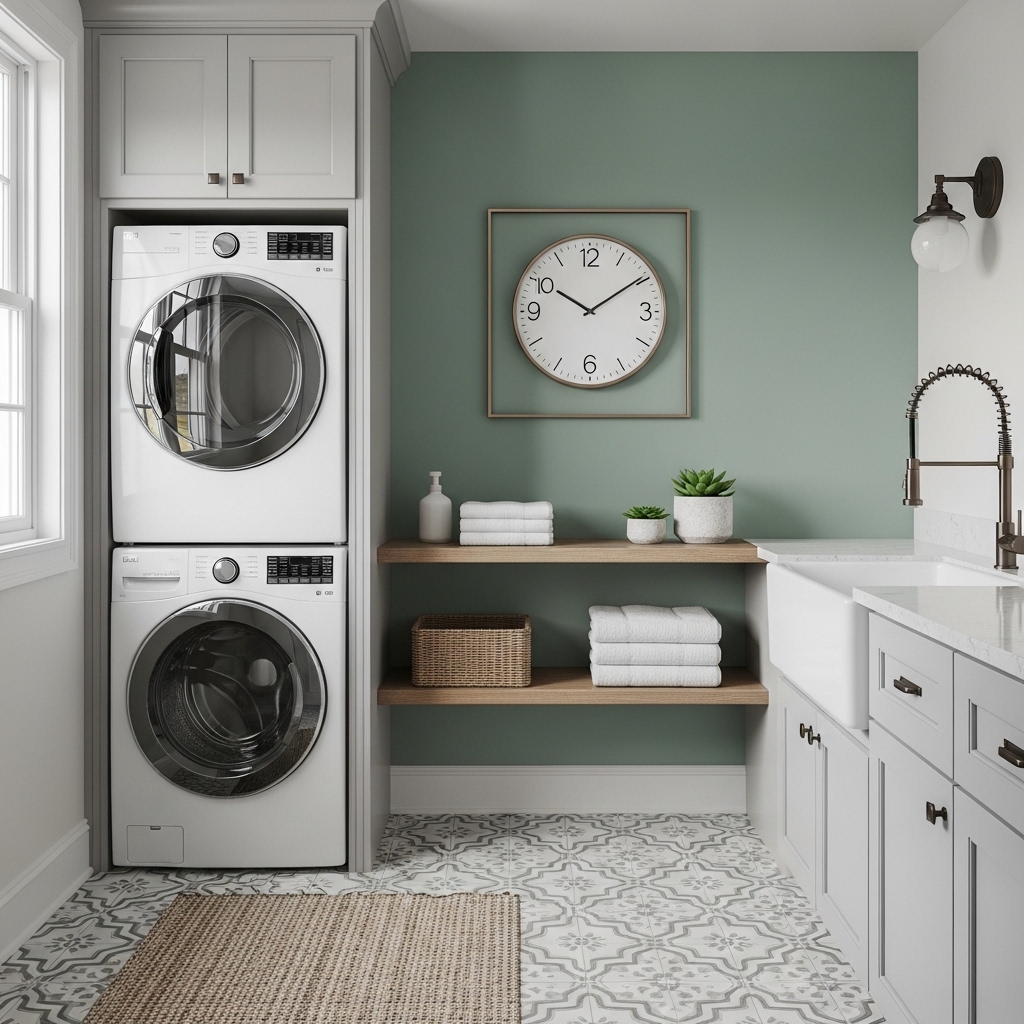
You need to know how much time is left on your dryer cycle. Your phone is not the answer.
Hang a simple analog or digital clock on the wall where you can see it from your washer and dryer.
Set a timer on the clock for your dryer cycle. Glance up instead of pulling out your phone.
Your phone contains infinite distractions. A clock is just a clock. No scrolling. No notifications.
Pro Tip: Choose a clock with a large, easy-to-read face. Small clocks are useless when you are across the room.
Mistake to Avoid: Do not choose a ticking clock for a quiet laundry room. The ticking sound will drive you crazy within hours.
16. Keep a Small Trash Can Within Arm’s Reach
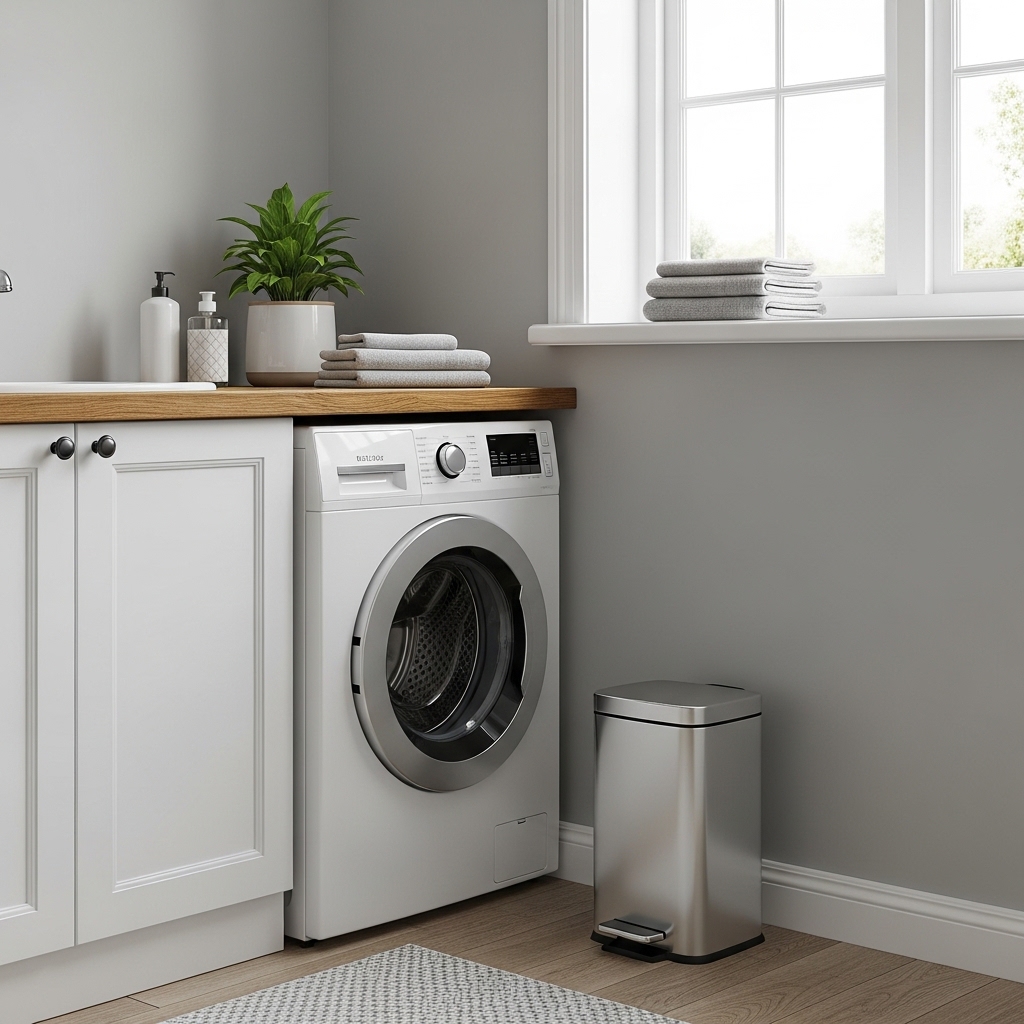
Dryer sheets, lint from the trap, and empty detergent pods need a place to go immediately.
Place a small trash can directly next to your dryer or under your folding table.
You throw away lint and sheets as you pull clothes from the dryer. No piles on your machines.
Walking to a trash can takes time and breaks your rhythm. A nearby can keeps you moving.
Pro Tip: Line your small trash can with plastic grocery bags. Free liners that fit perfectly and are easy to replace.
Mistake to Avoid: Do not use a trash can without a lid in a laundry room. Lint and dust float out of open cans and settle on your clothes.
17. Add a Small Plant That Thrives on Humidity
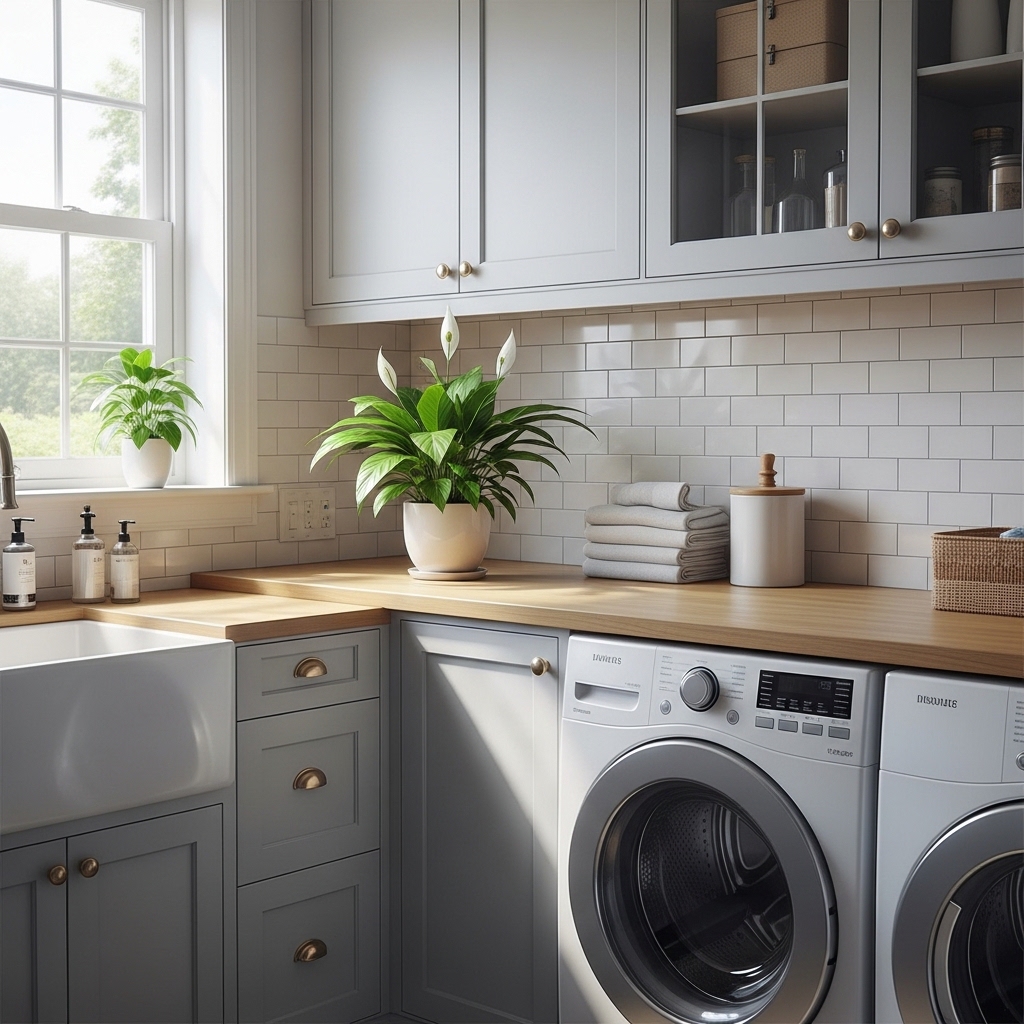
Your laundry room does not have to feel like a utility closet. A plant proves otherwise.
Place a small snake plant, pothos, or peace lily on your shelf or folding table.
The plant adds life, color, and a touch of nature to a room full of appliances.
Plants thrive on neglect in laundry rooms. Humidity from washers and dryers keeps them happy.
Pro Tip: Choose a plant in a white or cream ceramic pot. Light-colored pots blend with farmhouse aesthetics and reflect light.
Mistake to Avoid: Do not place a plant directly above your dryer. Heat rises and will cook the plant’s roots over time.
18. Label Everything So Other People Can Help
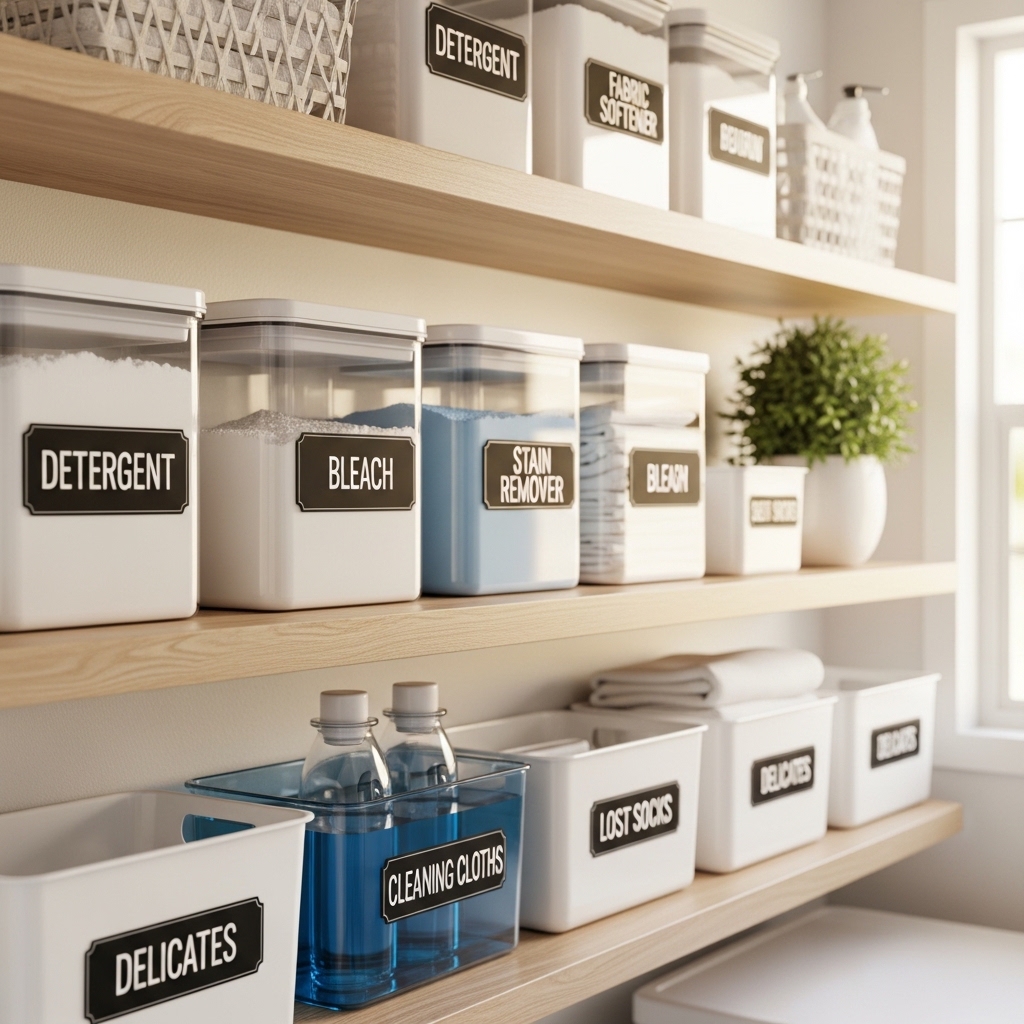
You know where everything belongs. Your partner and your children do not have the same knowledge.
Use a label maker to create simple labels for shelves, bins, and drawers.
“Detergent.” “Dryer Sheets.” “Stain Spray.” “Lint Rollers.” “Spare Buttons.”
Labels turn your organization system into a family system. Anyone can put things away correctly.
Pro Tip: Use large, bold fonts on your labels. Small fancy fonts look nice but are hard to read from a standing position.
Mistake to Avoid: Do not label every single item. Too many labels look cluttered. Label categories, not individual items.
Conclusion
Your laundry room does not have to be the worst room in your house.
The eighteen ideas above prove that a beautiful, functional laundry room is within reach.
Start with a fresh coat of paint on every surface. Replace your overhead light with something brighter.
Add under-cabinet lighting for task illumination. Install a deep utility sink if you have space.
Replace wire shelving with solid wood shelves. Add a folding table at the perfect height.
Hang a rod for air-drying delicates. Use clear containers for detergent and supplies.
Add a pull-out hamper behind a cabinet door. Install a backsplash behind your sink and counter.
Add a small rolling cart for extra storage. Hang a pegboard for frequently used tools.
Add a small rug that can handle moisture. Install a motion-sensor light for nighttime laundry.
Add a small clock on the wall. Keep a small trash can within arm’s reach.
Add a small plant that thrives on humidity. Label everything so other people can help.
Start with one idea this weekend. Paint the walls. Add a rug. Install a new light.
Then add another idea next month. Your laundry room should evolve as your needs do.
Chores feel lighter when the room feels brighter. You deserve a laundry room you actually enjoy walking into.
Take back your utility space starting today. A beautiful makeover is waiting for you.