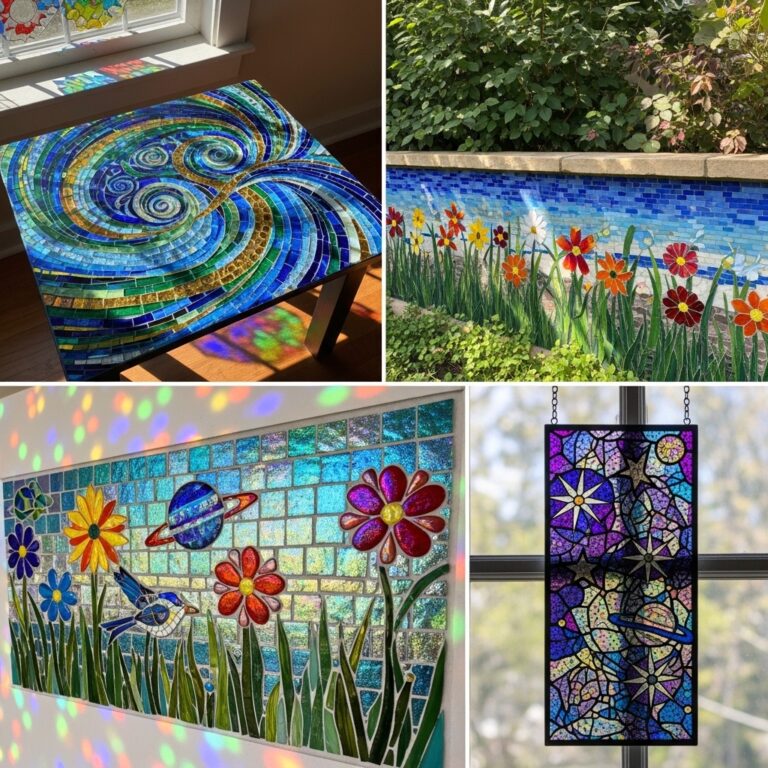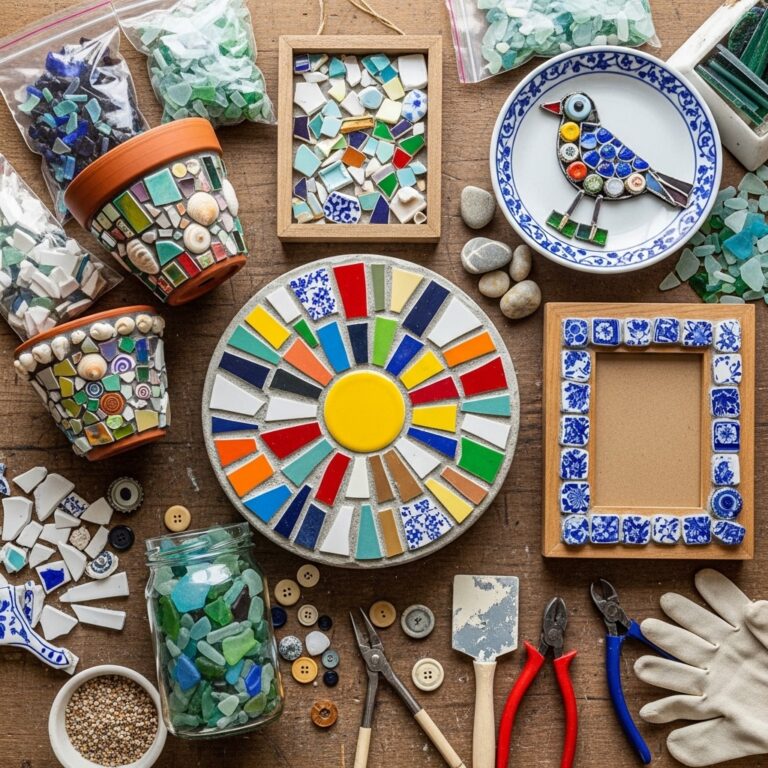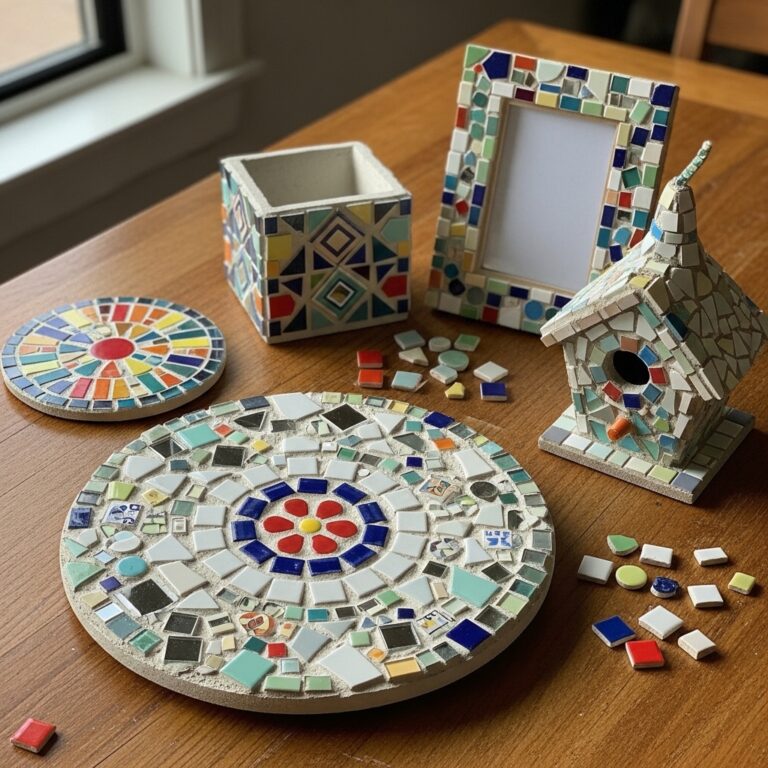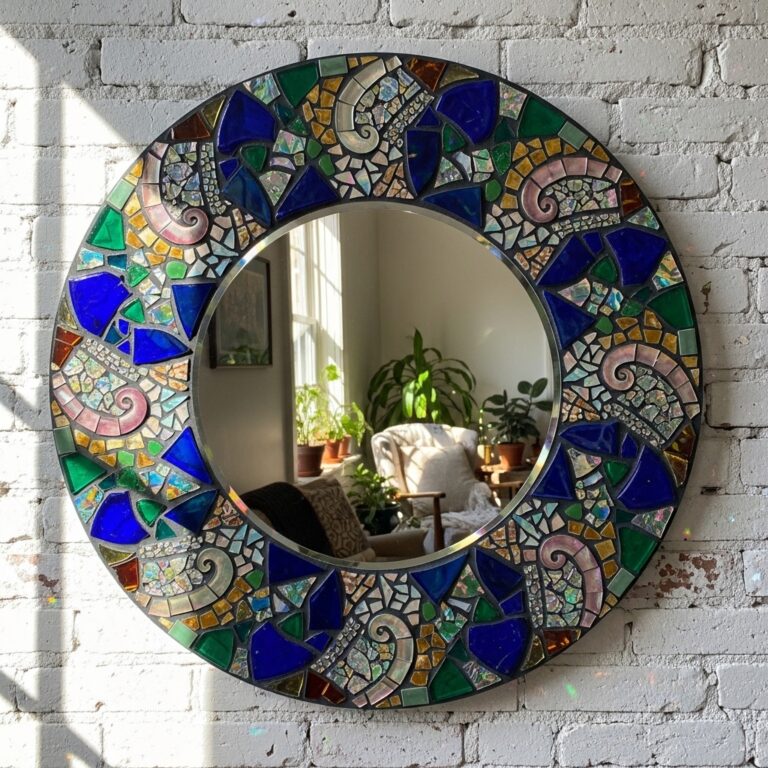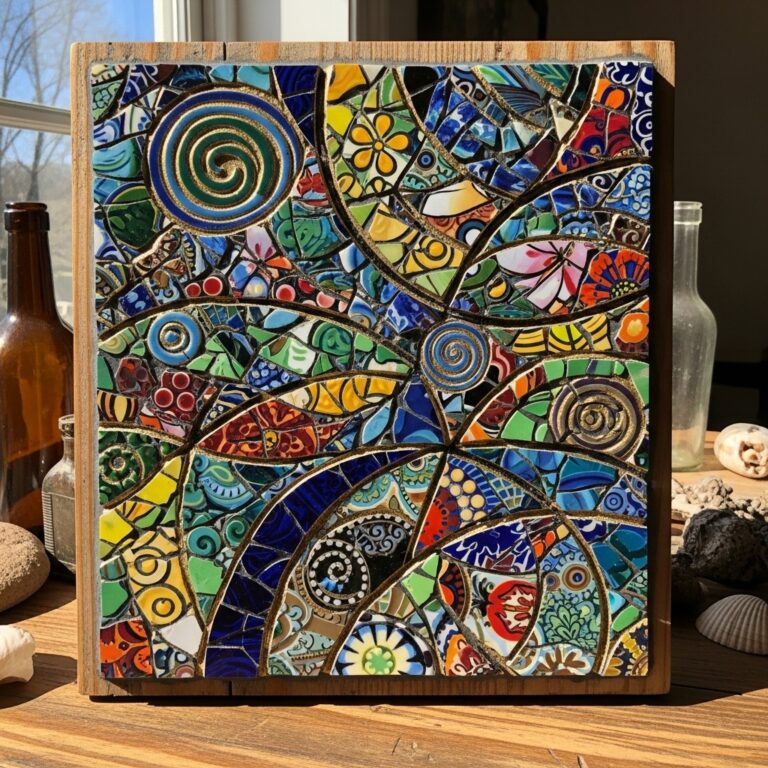
20 Garden Mosaic Decor Ideas That Bring Color, Pattern, and Whimsy to Your Outdoor Space
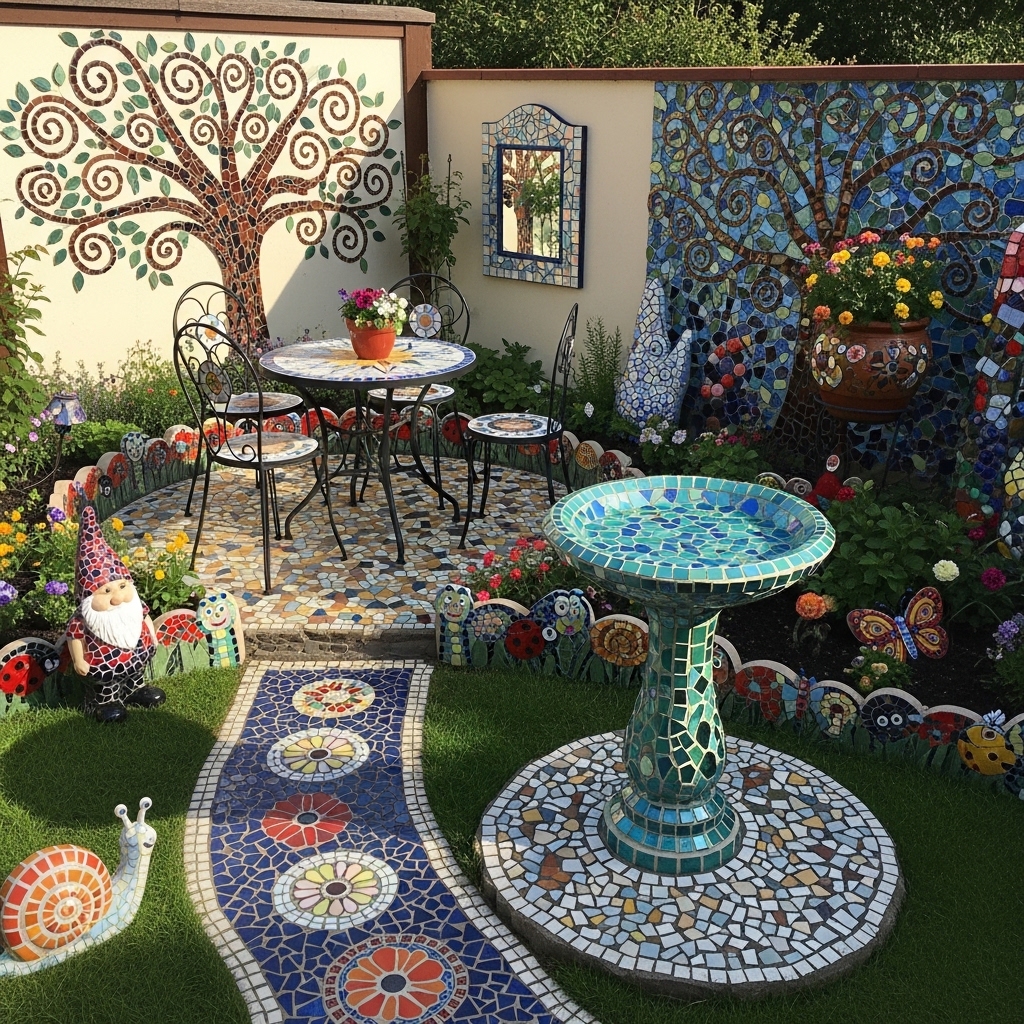
Weather-Resistant Garden Art | DIY Mosaic Projects for Yards and Patios | Upcycled Outdoor Decor
A garden without color is just plants. Green leaves. Brown branches. Dirt. The plants work hard. They deserve companions.
Mosaic decor adds permanent color. It does not wilt. It does not need watering. It stays bright through every season.
Unlike indoor mosaics, garden pieces face challenges. Rain. Frost. Heat. Sun. The designs must be durable. The materials must survive outdoors.
This guide delivers 20 garden mosaic decor ideas for every outdoor space. Each project uses weather-resistant materials. Each adds lasting color to your garden.
1. Mosaic Birdbath with Iridescent Glass
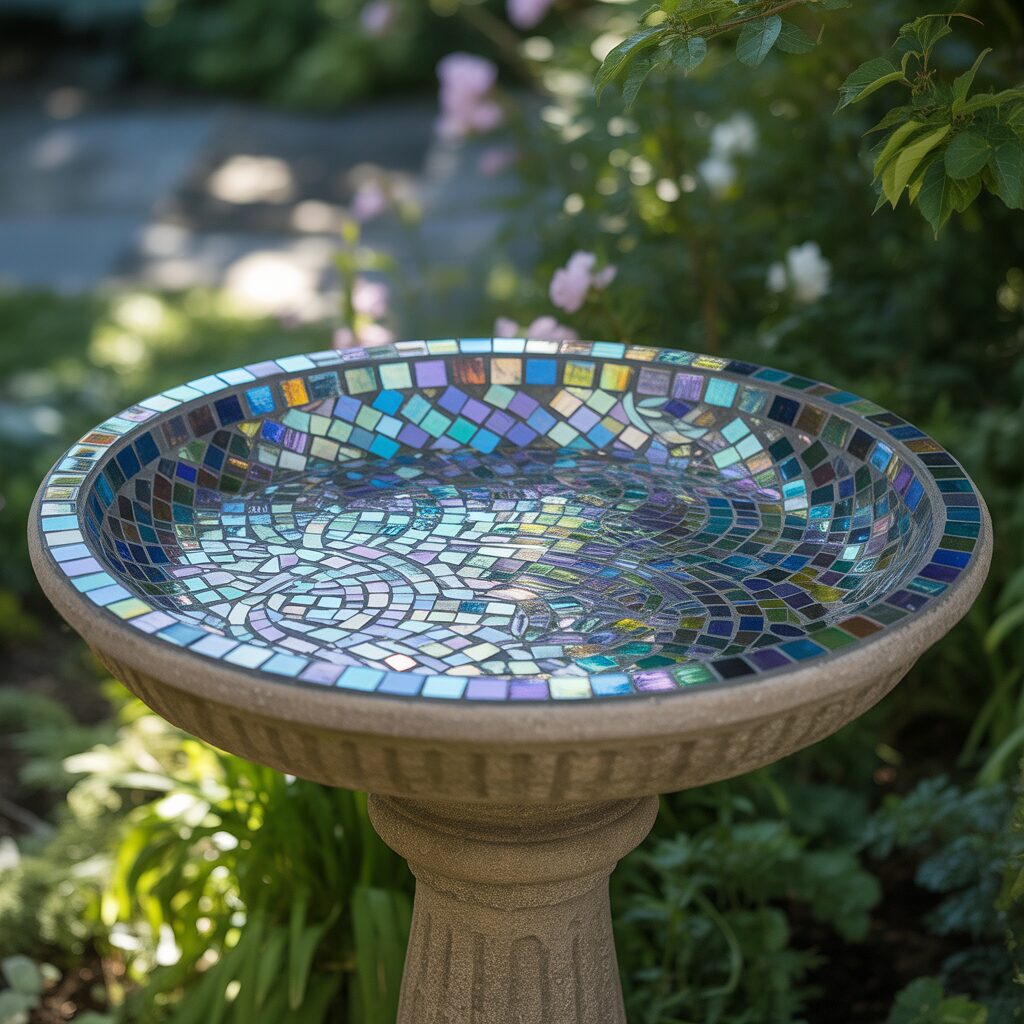
Birds need water. A plain birdbath gives them water. A mosaic birdbath gives them a spa.
Clean the birdbath bowl thoroughly. Apply outdoor adhesive. Press iridescent glass tiles into the bowl. Leave gaps for water to pool. Seal with outdoor sealant.
Pro Tip: Use blue and green tiles. The colors mimic natural water.
Mistake to Avoid: Do not tile the rim. Birds need a rough surface to grip.
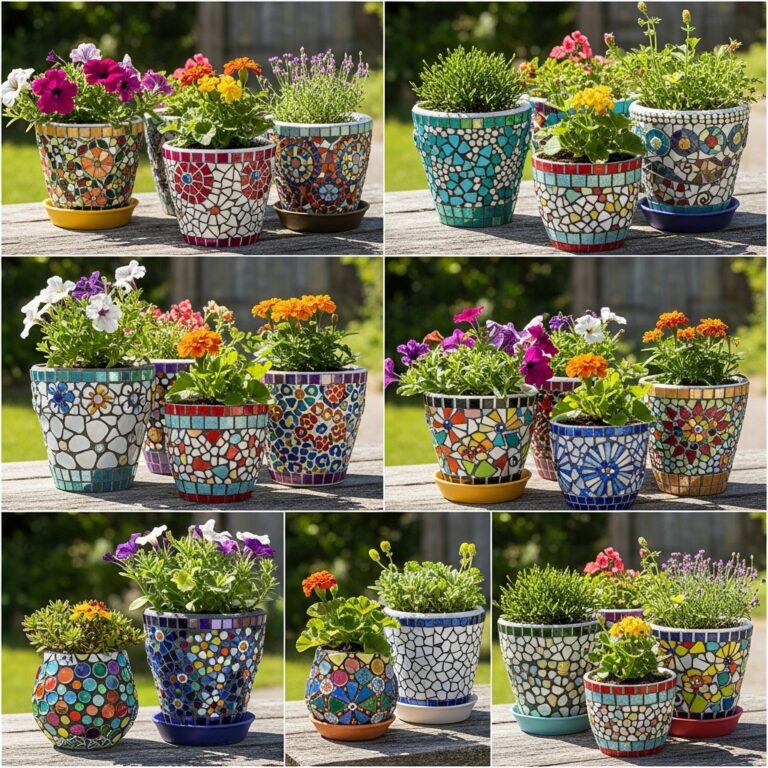
2. Mosaic Plant Pot for a Patio Succulent
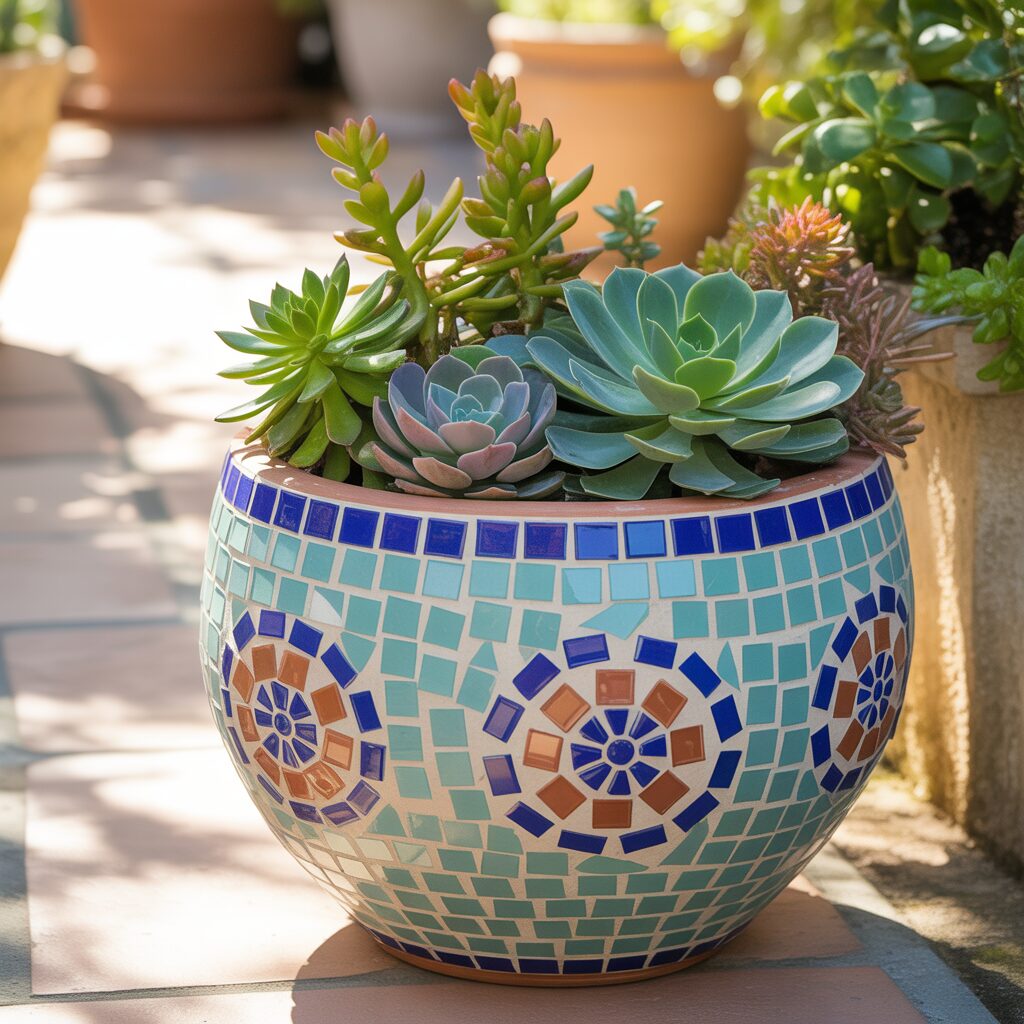
Terracotta pots are porous. Water seeps through. Glue does not stick well. Use a plastic pot instead.
Tile a plastic pot with outdoor adhesive. Use small tiles (1/2 inch or less). Leave gaps. Grout with outdoor grout. Seal. Plant a drought-tolerant succulent.
Pro Tip: Use a pot with straight sides. Curved pots are harder to tile.
Mistake to Avoid: Do not use a pot without drainage holes. Roots will rot.
3. Mosaic Stepping Stone Path
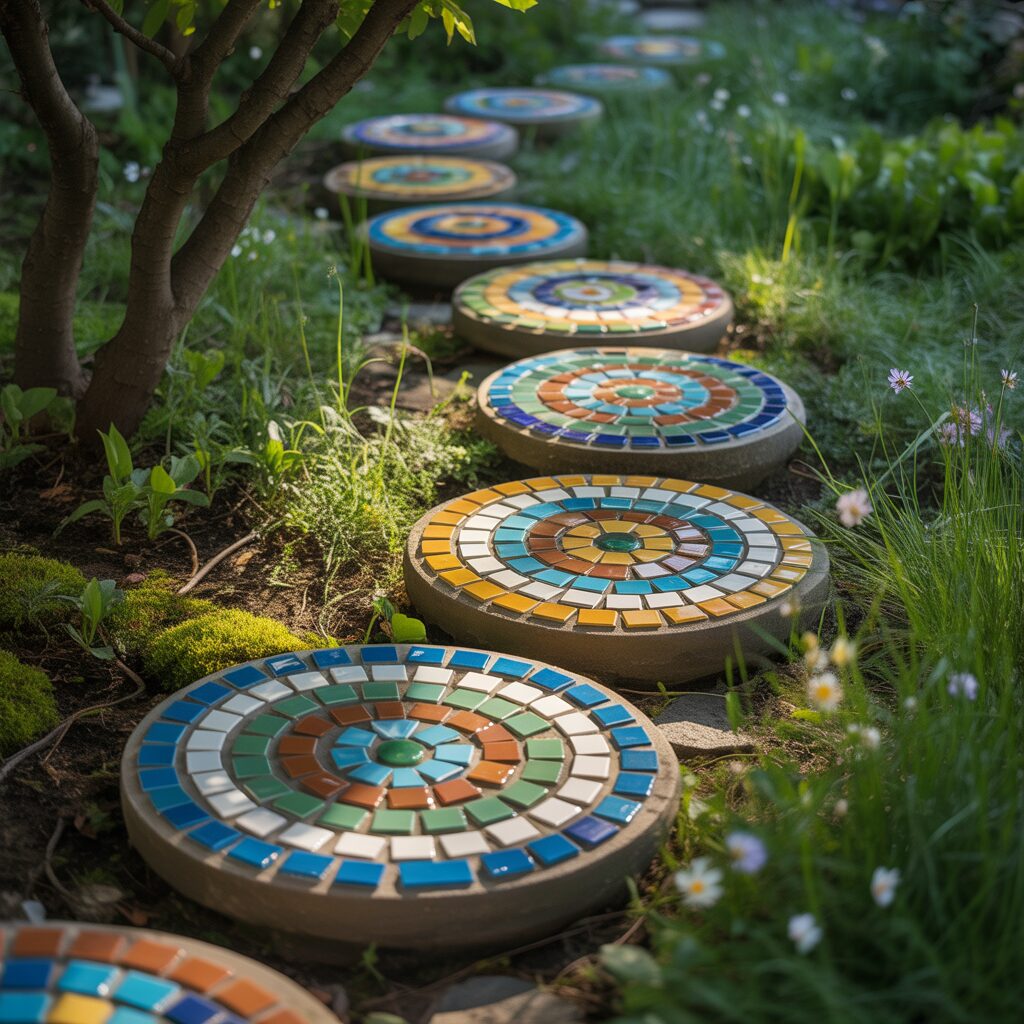
A path of plain stones is functional. A path of mosaic stones is memorable.
Create multiple stepping stones. Use different designs on each. A flower on one. A sun on another. A star on a third. Place them in a winding line.
Pro Tip: Use the same border color on all stones. The unified border ties the path together.
Mistake to Avoid: Do not space stones too far apart. The stride should feel natural.
4. Mosaic Garden Stake with a Glass Flower
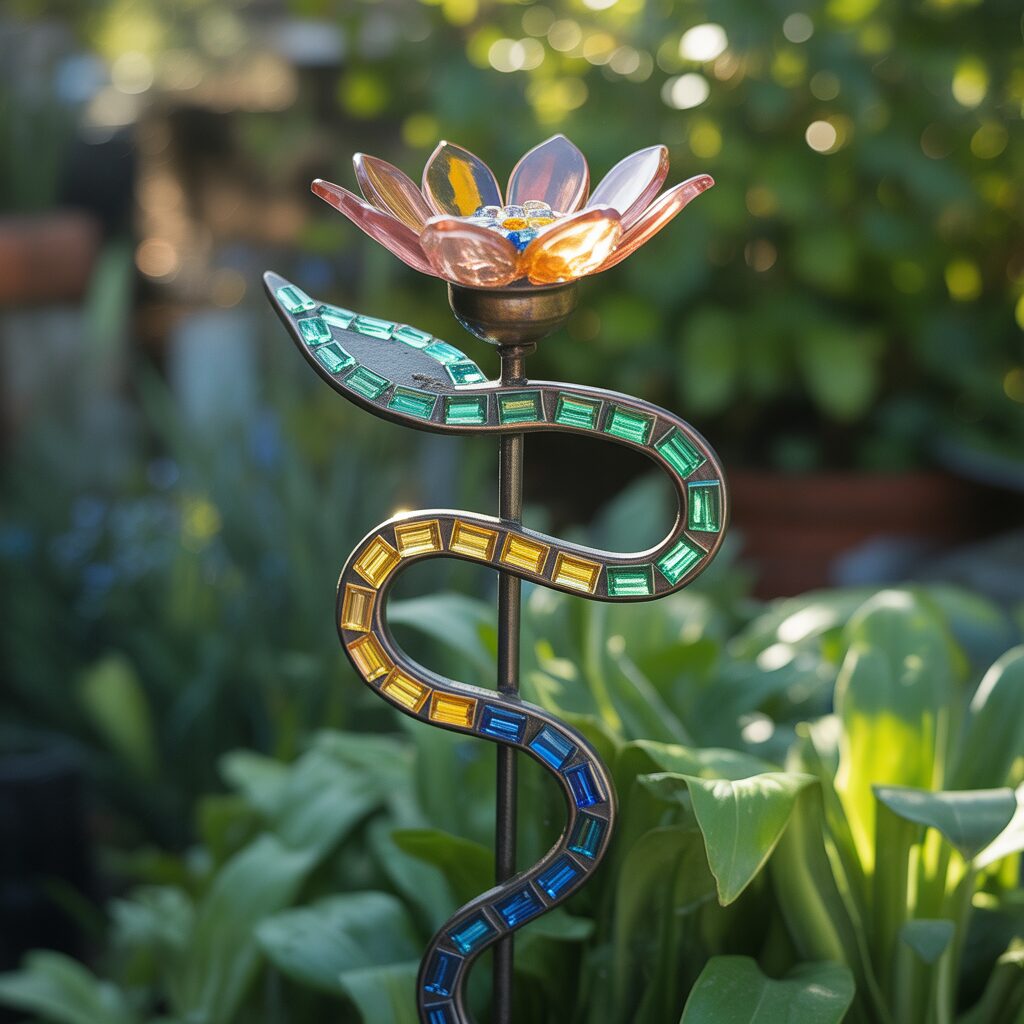
A garden stake marks a plant. A mosaic stake marks it beautifully.
Cut a flower shape from plywood. Glue mosaic tiles to the flower. Attach the flower to a metal stake. Push the stake into the ground next to a plant.
Pro Tip: Use a copper pipe for the stake. Copper does not rust.
Mistake to Avoid: Do not make the flower too heavy. The stake will lean.
5. Mosaic Birdhouse for a Tree Branch
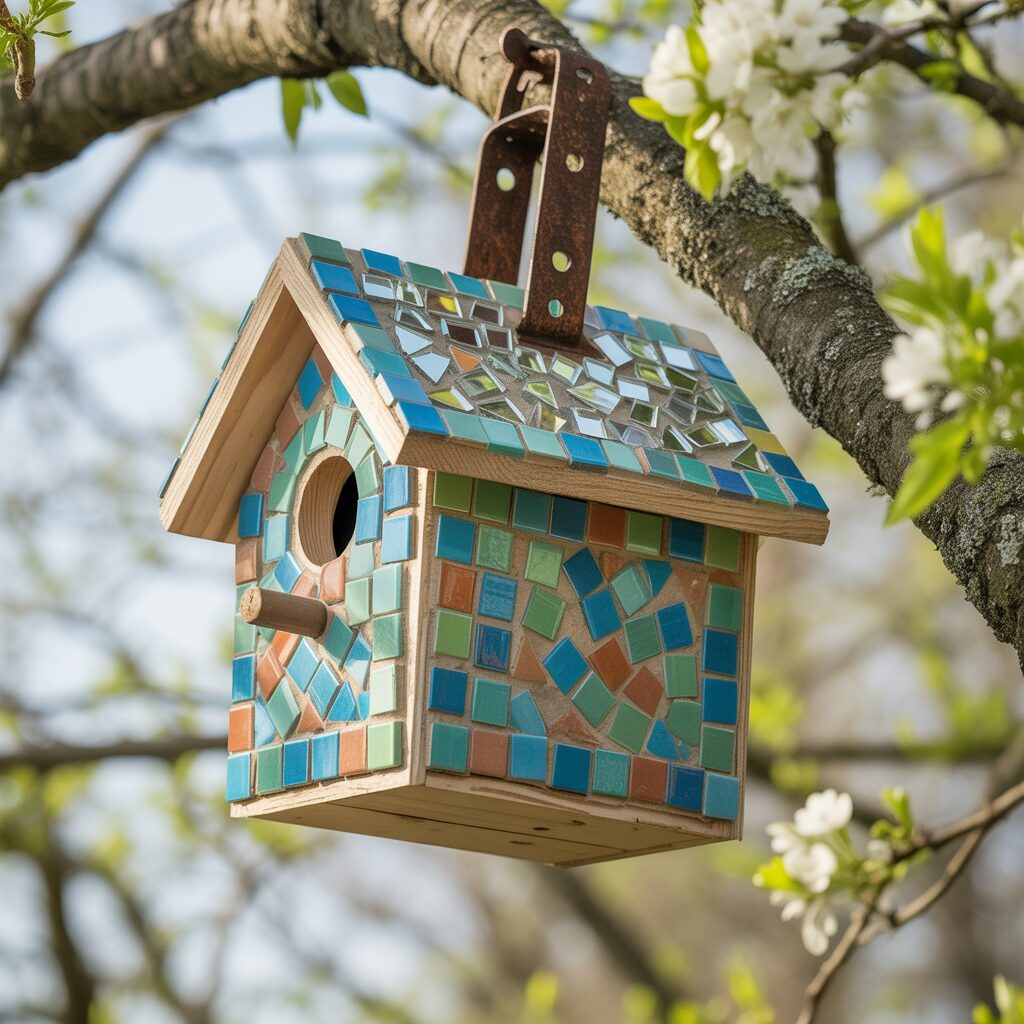
Birds do not care about aesthetics. You do. A mosaic birdhouse pleases the gardener, not the bird.
Use a pre-made wooden birdhouse. Tile the roof only. Leave the walls plain. Use bright colors. Red, yellow, blue. The birds will move in regardless.
Pro Tip: Do not tile the entrance hole. The hole must remain smooth.
Mistake to Avoid: Do not seal the interior. Birds prefer natural wood.
6. Mosaic Wind Chime with Glass Gems
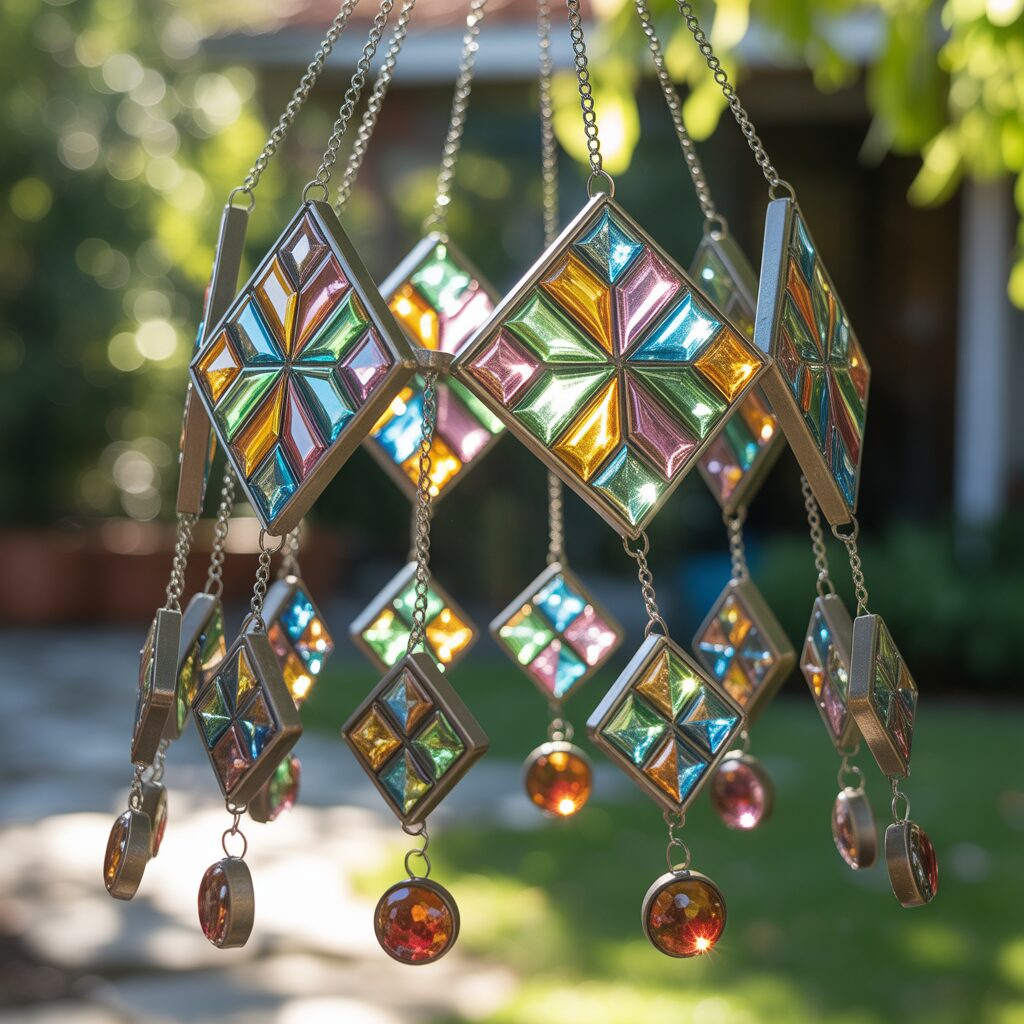
Wind chimes make sound. Glass gems make color. Together, they make music and light.
Drill holes in glass gems. String them on fishing line at different lengths. Tie the lines to a metal ring. Hang from a tree branch. The gems will catch light and click against each other.
Pro Tip: Use gems in the same color family. The unity is more pleasing.
Mistake to Avoid: Do not use heavy gems. The chime must move in the wind.
7. Mosaic Garden Globe on a Pedestal
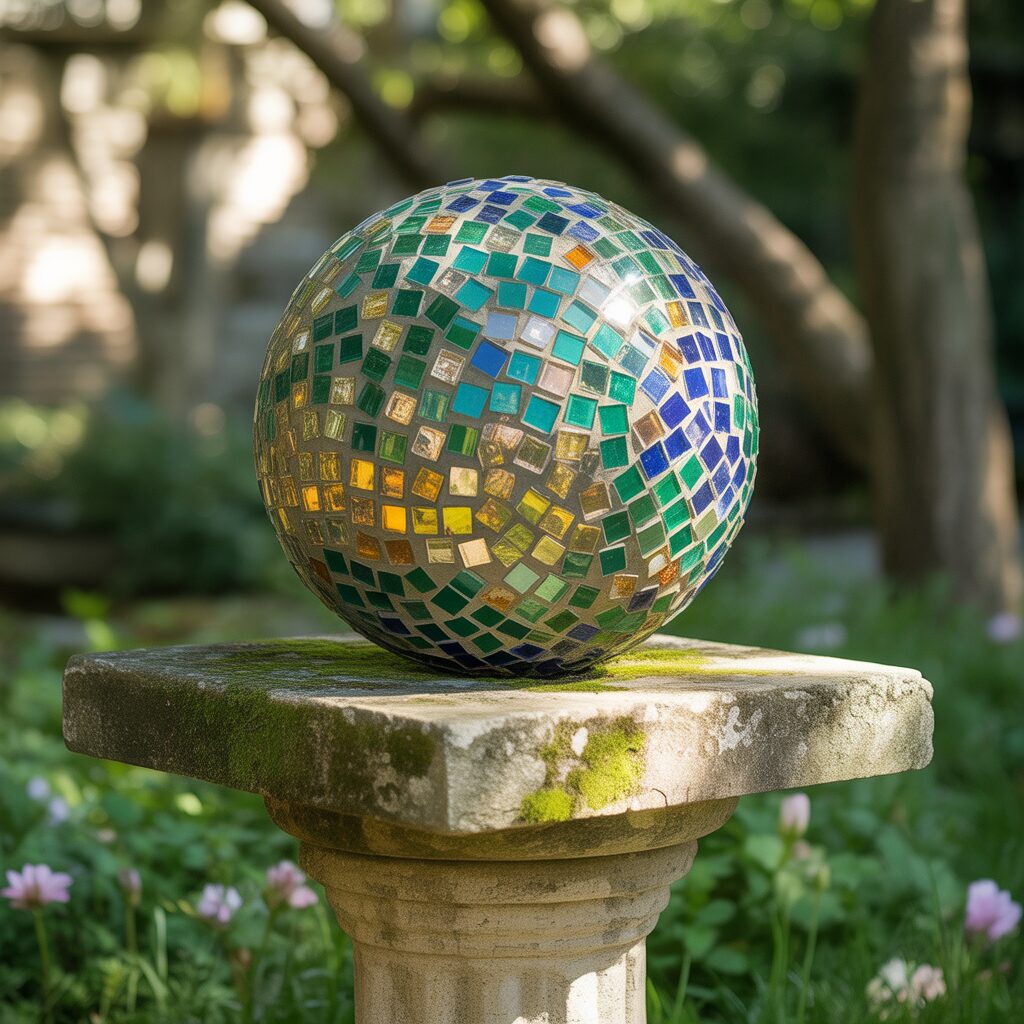
A garden globe is a sphere. A mosaic on a sphere is challenging. The curves require small tiles.
Use a foam sphere as the base. Cover it with small tiles (1/4 inch or less). No grout is needed. Mount the sphere on a metal pedestal. Place it at the center of a flower bed.
Pro Tip: Use a globe of the world map as a guide. Tile the continents in green. The oceans in blue.
Mistake to Avoid: Do not use glass tiles on a foam sphere. Glass is too heavy.
8. Mosaic House Number Plaque for the Garden Gate
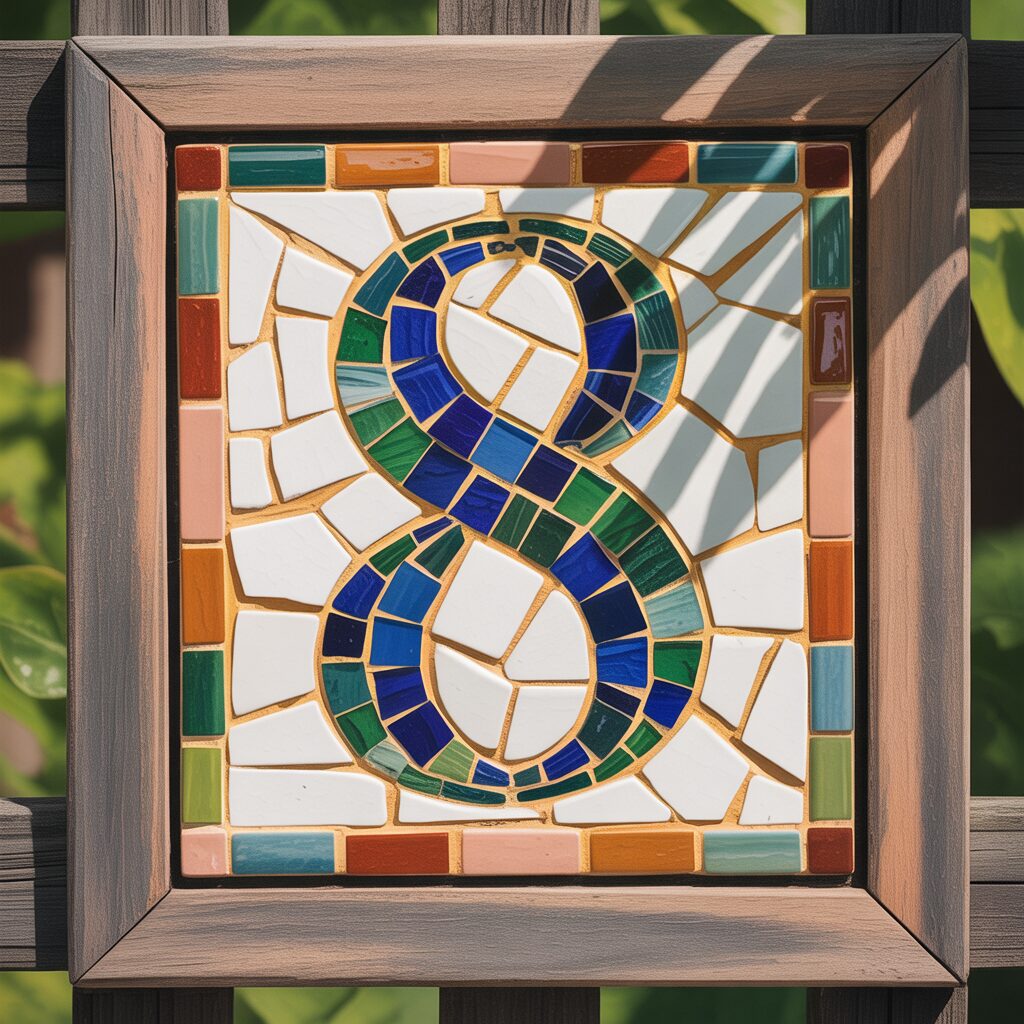
A house number should be visible from the street. A mosaic plaque is visible and beautiful.
Cut cement board to size. Arrange tiles to form your house number. Fill the background with contrasting tiles. Grout. Seal. Mount on the garden gate or fence.
Pro Tip: Use reflective tiles for the numbers. They are visible at night.
Mistake to Avoid: Do not make the numbers too small. Numbers should be readable from the sidewalk.
9. Mosaic Tabletop for a Patio Table
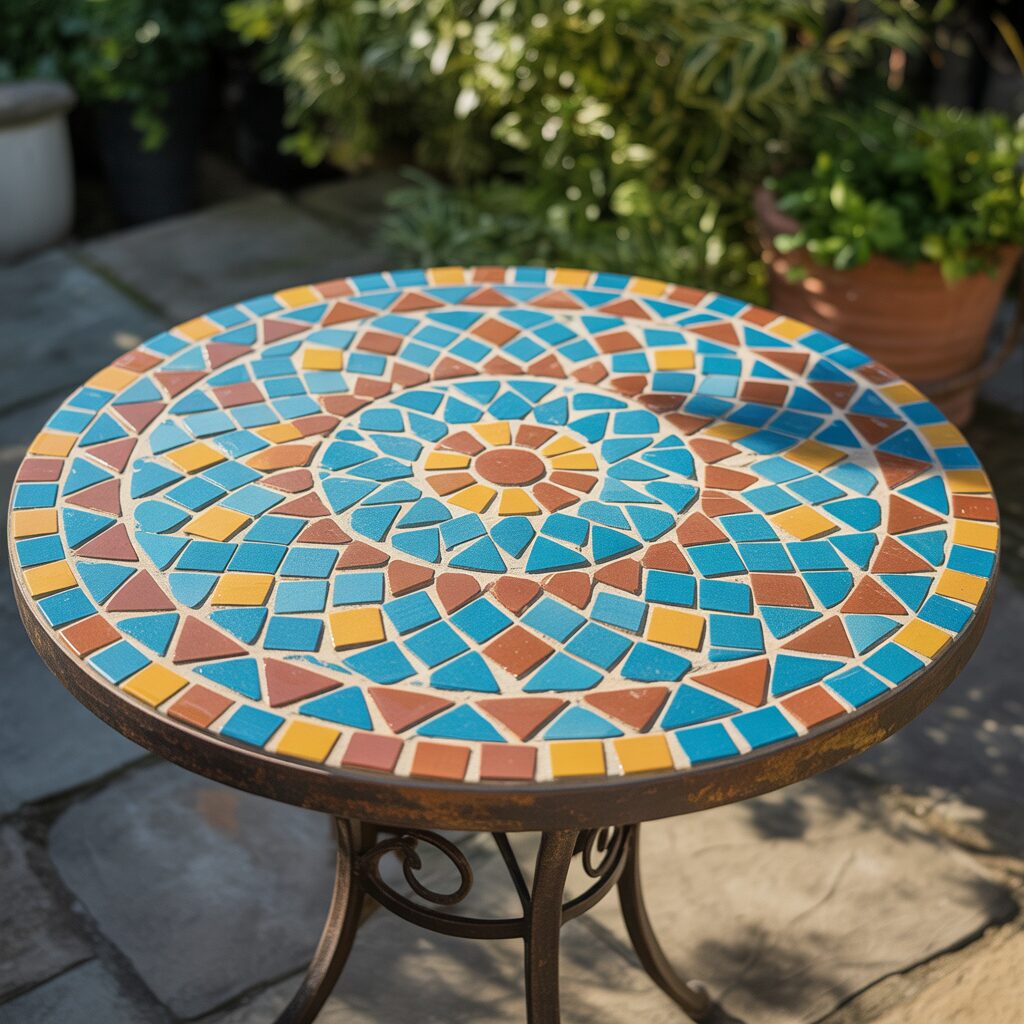
A plain patio table is boring. A mosaic tabletop is a gathering point.
Remove the old tabletop. Cut a piece of plywood to size. Tile the surface. Seal with outdoor sealant. Attach to the table base. The table is now art.
Pro Tip: Use a table with an umbrella hole. The hole provides a natural center point.
Mistake to Avoid: Do not use a table that will freeze. Water trapped in grout will crack.
10. Mosaic Fountain with a Copper Basin

Water and mosaic belong together. The tiles reflect the ripples. The sound of water masks traffic noise.
Use a copper basin as the fountain base. Tile the exterior of the basin. Do not tile the interior. Copper reacts with grout. Add a small pump. The water will cascade over the tiles.
Pro Tip: Use blue and turquoise tiles. The colors complement water.
Mistake to Avoid: Do not use a pump that is too powerful. Water will splash out.
11. Mosaic Mushroom for a Shaded Corner
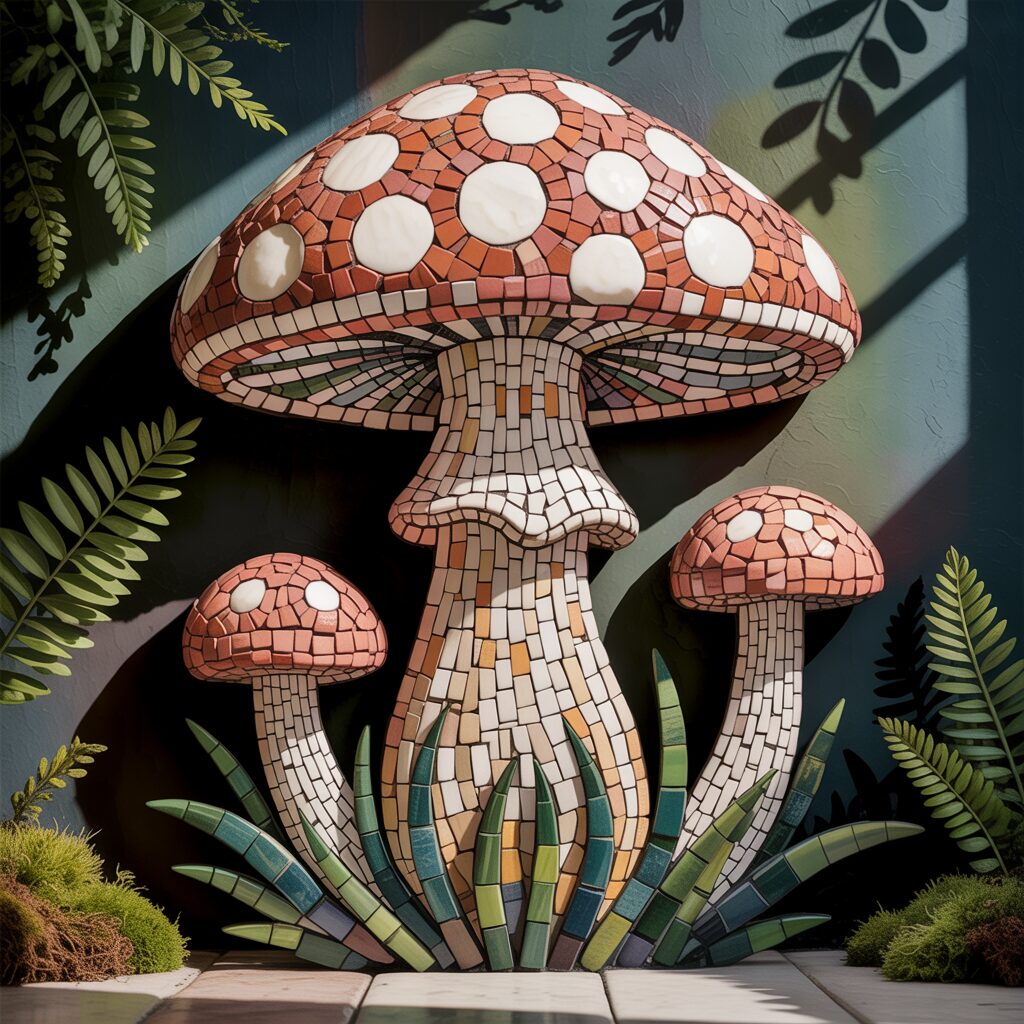
A mushroom is whimsical. A mosaic mushroom is permanent whimsy.
Carve a mushroom shape from foam. The stem is a cylinder. The cap is a dome. Cover with small tiles. Push a metal stake into the stem. Place it in a shady corner.
Pro Tip: Use red tiles for the cap. White tiles for the spots. The classic toadstool pattern.
Mistake to Avoid: Do not make the stem too thin. The mushroom will wobble.
12. Mosaic Lizard on a Warm Wall
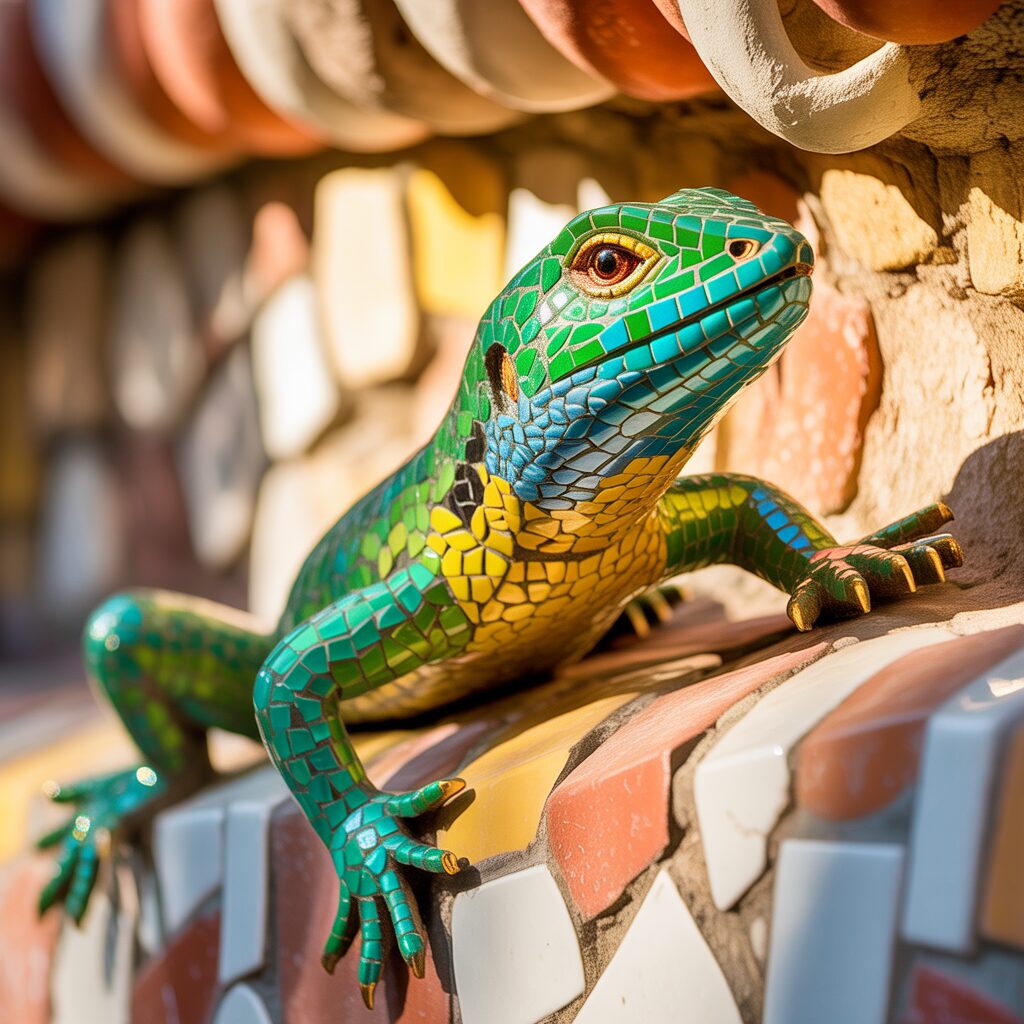
A lizard basks in the sun. A mosaic lizard basks forever.
Sketch a lizard shape on paper. Transfer the shape to a piece of cement board. Cut the board with a jigsaw. Tile the lizard. Mount it on a south-facing wall. The tiles will absorb heat.
Pro Tip: Use green and brown tiles. The colors camouflage with plants.
Mistake to Avoid: Do not make the lizard too large. A 12-inch lizard is plenty.
13. Mosaic Butterfly on a Garden Stake
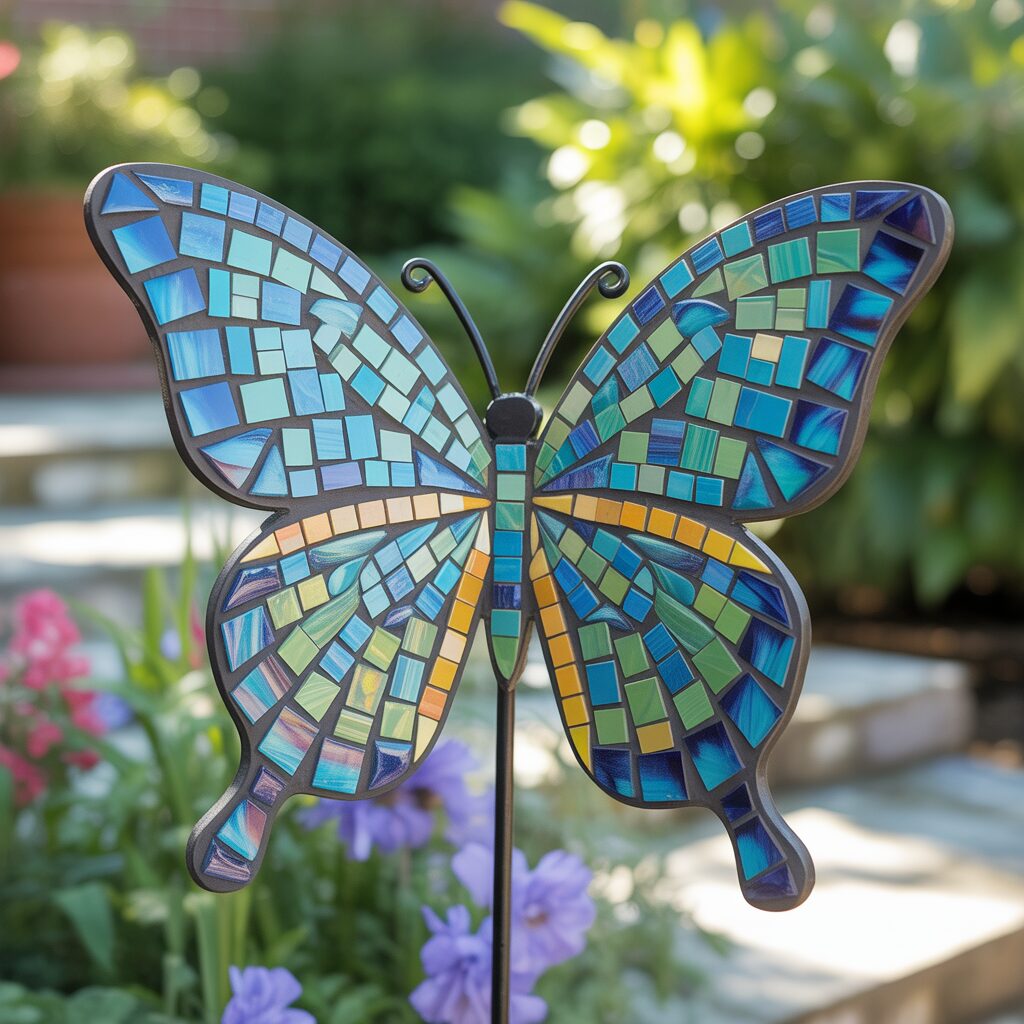
Butterflies are delicate. Mosaic butterflies are permanent.
Cut a butterfly shape from plywood. Two wings. A body. Tile the wings only. Leave the body plain. Attach to a metal stake. Place it among flowers.
Pro Tip: Use iridescent tiles for the wings. The sparkle mimics butterfly scales.
Mistake to Avoid: Do not make the wings too heavy. The stake will lean.
14. Mosaic Orb on a Pedestal for a Lawn
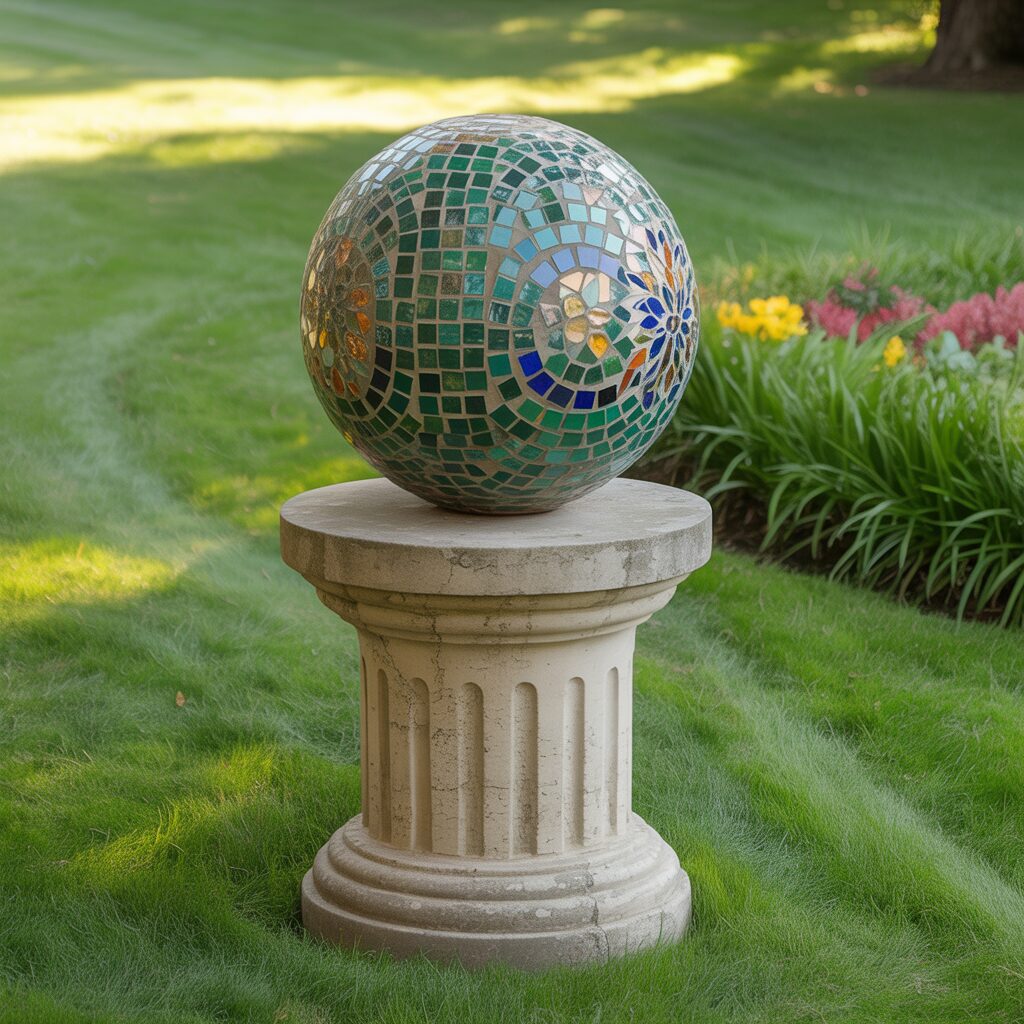
A lawn is empty. An orb fills the space. The mosaic reflects the sky.
Use a concrete garden orb as the base. Tile the entire surface. Use small tiles (1/2 inch or less). Grout. Seal. Place it on a pedestal in the center of the lawn.
Pro Tip: Use mirror tiles on one side. The reflection will change throughout the day.
Mistake to Avoid: Do not use light tiles. Light tiles get lost in the sun.
15. Mosaic Trellis with Vines
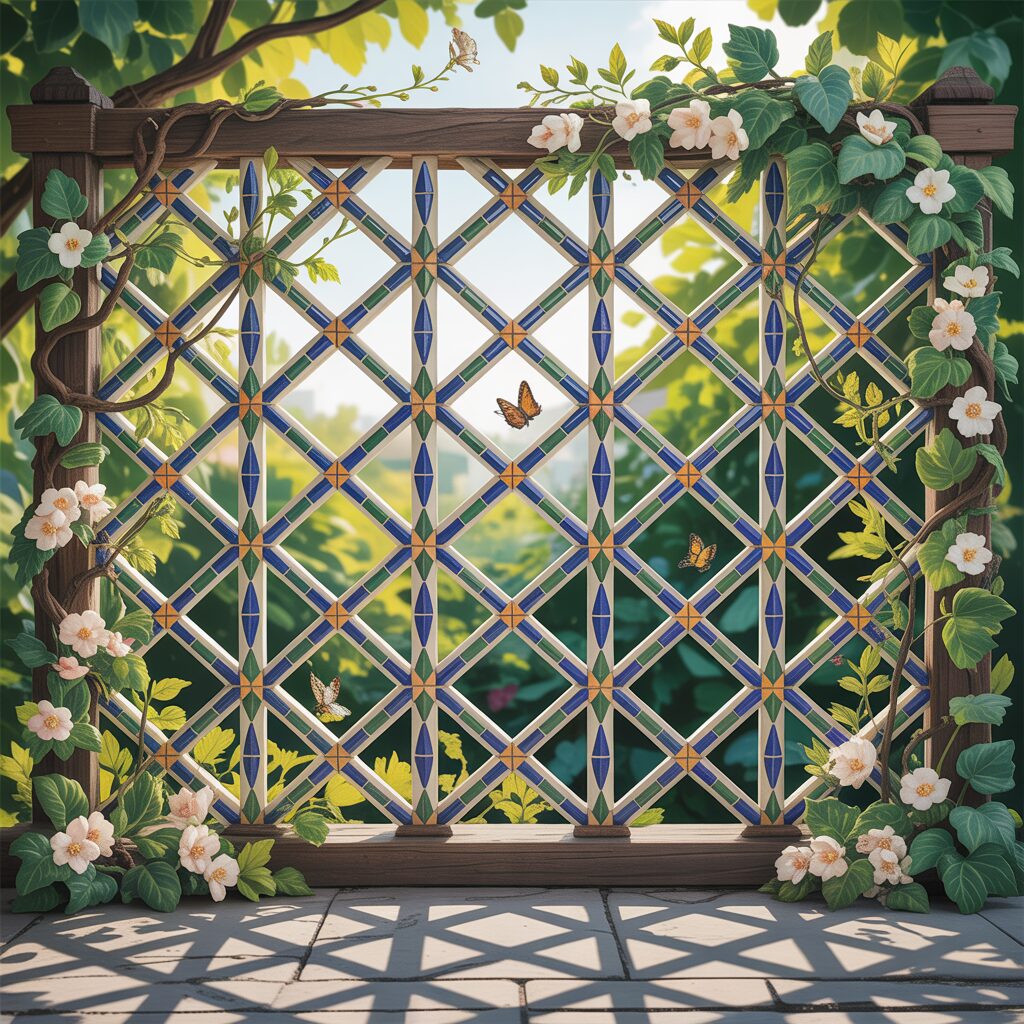
A trellis supports vines. Mosaic tiles on the trellis support the eye.
Build a wooden trellis. Tile the vertical posts only. Leave the horizontal slats bare. Use green tiles to mimic leaves. The real vines will grow through the mosaic.
Pro Tip: Use climbing roses with the trellis. The roses will cover the bare slats.
Mistake to Avoid: Do not tile the areas where vines attach. The vines need bare wood.
16. Mosaic Fountain Bowl on a Stand
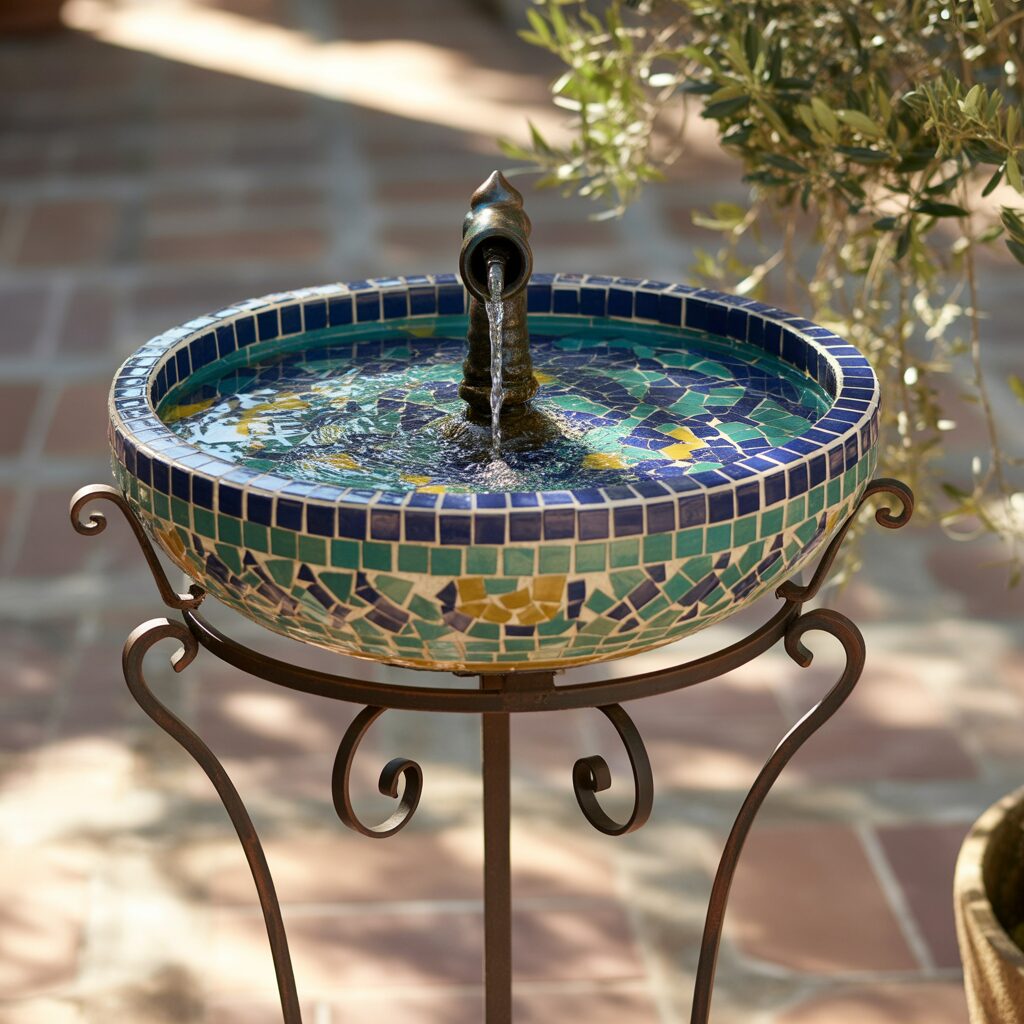
A fountain bowl is shallow. The water is visible. The tiles are visible beneath the water.
Use a ceramic bowl as the fountain basin. Tile the inside of the bowl. Use glossy tiles. The gloss will shine through the water. Add a small pump. The water will ripple over the tiles.
Pro Tip: Use fish-shaped tiles. The shapes will look like fish swimming.
Mistake to Avoid: Do not use matte tiles. Matte tiles look dull underwater.
17. Mosaic Gnome Home for the Fairy Garden
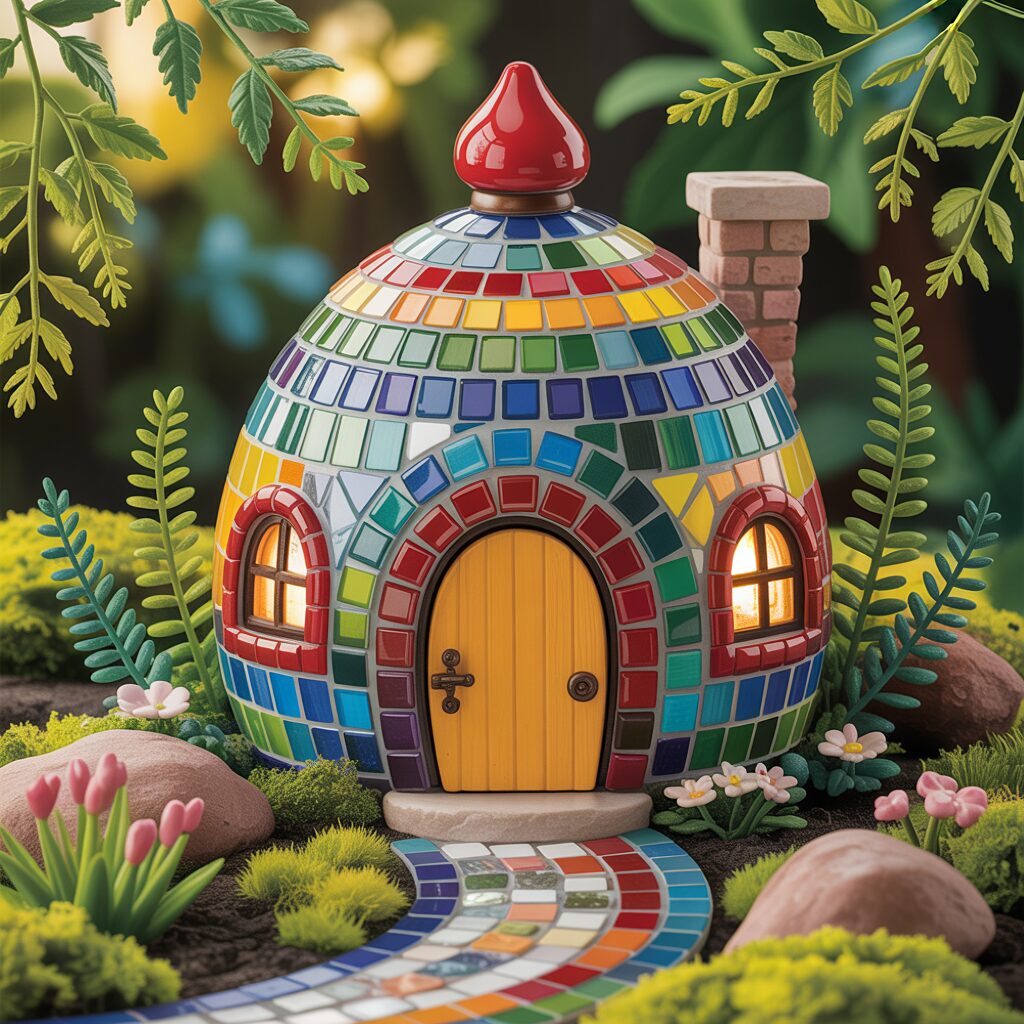
Fairy gardens are tiny. Gnome homes are tiny. Mosaic works at any scale.
Use a small terracotta pot as the base. Tile the exterior. Leave an arched opening for the door. Add a tiny chimney made of stacked tiles. Place it in the fairy garden.
Pro Tip: Use a pot with a cracked rim. The crack becomes a feature.
Mistake to Avoid: Do not make the opening too small. Fairies need to enter.
18. Mosaic Candle Holder for Outdoor Dining
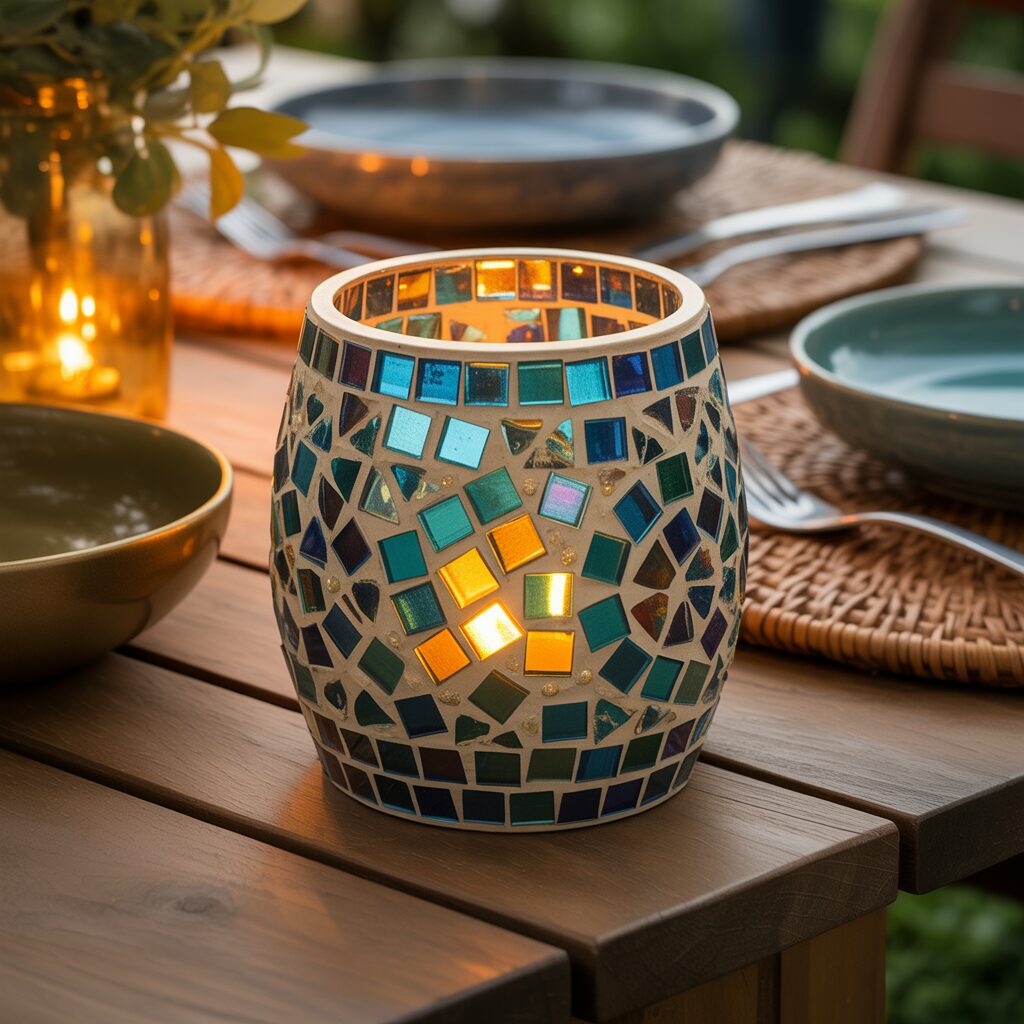
Outdoor dinners need light. A mosaic candle holder provides light and color.
Use a glass jar as the base. Tile the outside. Leave gaps for light to shine through. Place a candle inside. The light will glow through the gaps.
Pro Tip: Use a battery-operated candle. Real candles blow out in wind.
Mistake to Avoid: Do not use dark tiles. Dark tiles absorb light.
19. Mosaic Rock for a Rock Garden
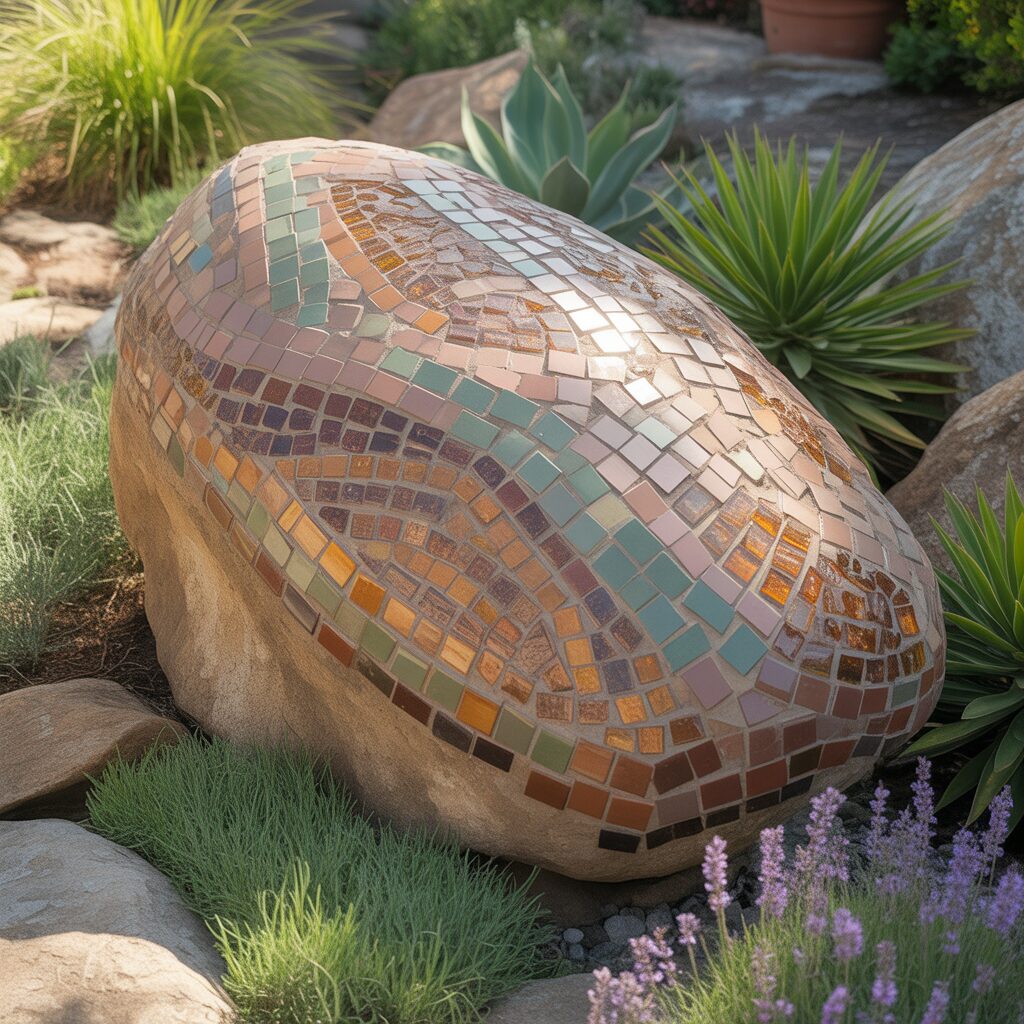
Rock gardens need rocks. A mosaic rock is a rock that pretends to be natural. The tiles give it away.
Find a large, smooth rock. Clean it thoroughly. Tile only one side of the rock. Leave the other side natural. Place it among other rocks. The deception is the delight.
Pro Tip: Use earth tones for the tiles. Brown, tan, and terra cotta blend with nature.
Mistake to Avoid: Do not tile the bottom of the rock. The rock needs to sit flat.
20. One Small Mosaic Accent in a Flower Bed
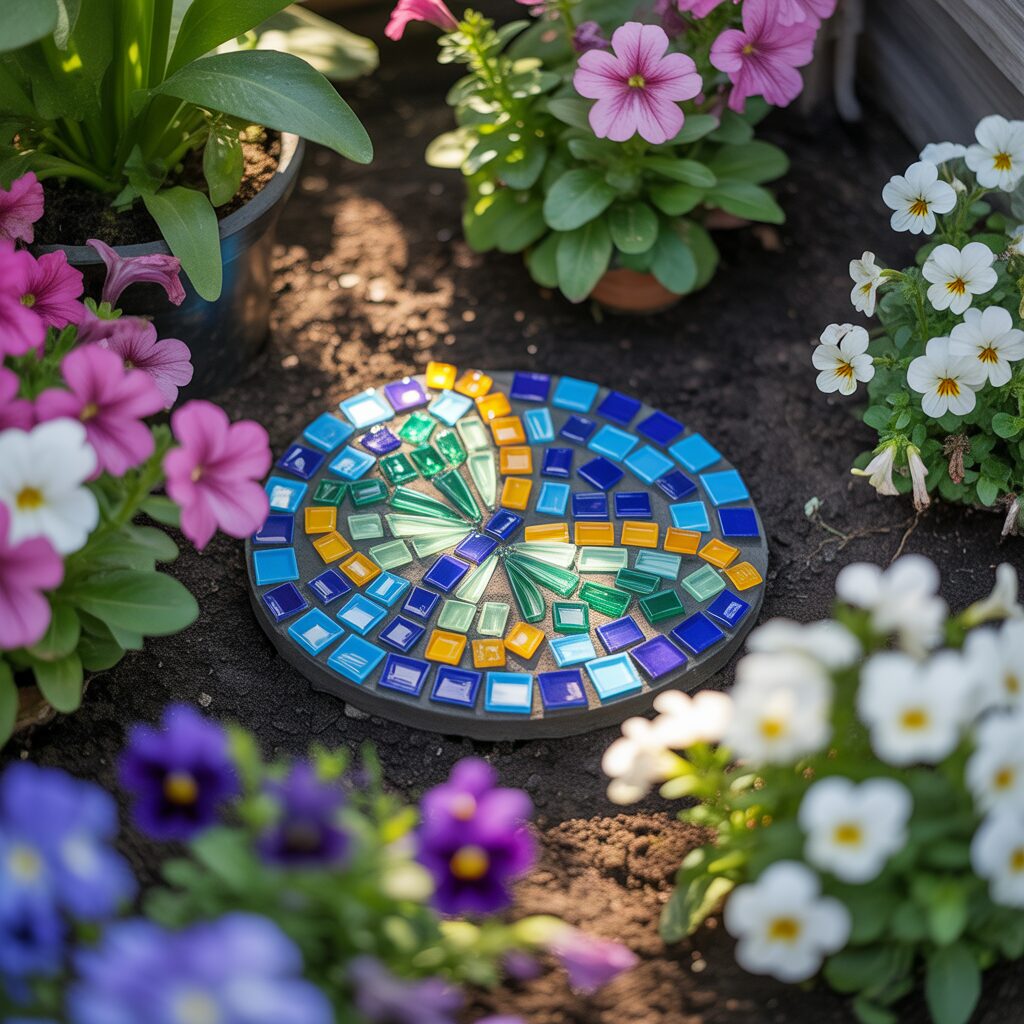
A single small mosaic hidden among flowers is a discovery. The gardener finds it. The guest is delighted.
Take a 4×4 tile. Glue a single flower or butterfly to the surface. No grout needed. Place it at the base of a rose bush. The flowers will grow around it.
Pro Tip: Use a tile that matches the flower color. The mosaic will echo the real flowers.
Mistake to Avoid: Do not place it where stepping is likely. Tiles are slippery.
Frequently Asked Questions
What materials can survive outdoors?
Porcelain tiles. Glass tiles. Stone tiles. Concrete. Outdoor grout. Outdoor sealant. Avoid ceramic tiles that are not frost-proof. Avoid wood. Avoid craft glue.
How do I protect mosaic from freezing?
Use flexible materials. Thinset mortar instead of craft glue. Sanded grout instead of unsanded. Seal the surface. Freezing water expands. Flexible materials move with the expansion.
Can I leave mosaic outside in winter?
Yes, if the base is frost-proof. Concrete is frost-proof. Ceramic pots are not. Bring ceramic pots indoors before the first freeze.
How do I clean outdoor mosaic?
Hose it down. Scrub with a soft brush. Do not use pressure washers. Pressure forces water into the grout. Grout cracks in freeze-thaw cycles.
Conclusion
A garden without color is just plants. Mosaic decor adds permanent color. A birdbath with iridescent glass. A succulent pot with small tiles. A path of mosaic stones. A garden stake with a glass flower. A birdhouse with a bright roof. A wind chime with glass gems.
A globe on a pedestal. A house number plaque by the gate. A patio table with a tiled top. A fountain with a copper basin. A mushroom in a shady corner. A lizard on a warm wall. A butterfly among flowers. An orb on a lawn. A trellis with tiles. A fountain bowl with fish.
A gnome home for fairies. A candle holder for outdoor dining. A rock that pretends to be natural. A small accent hidden in a flower bed.
Start with one project today. A stepping stone. A plant pot. A birdbath. The tiles will survive the seasons. The colors will outlast the flowers. And the garden will be beautiful even in winter.