20 Mosaic Flower Pot Ideas That Turn Ordinary Planters Into Works of Garden Art
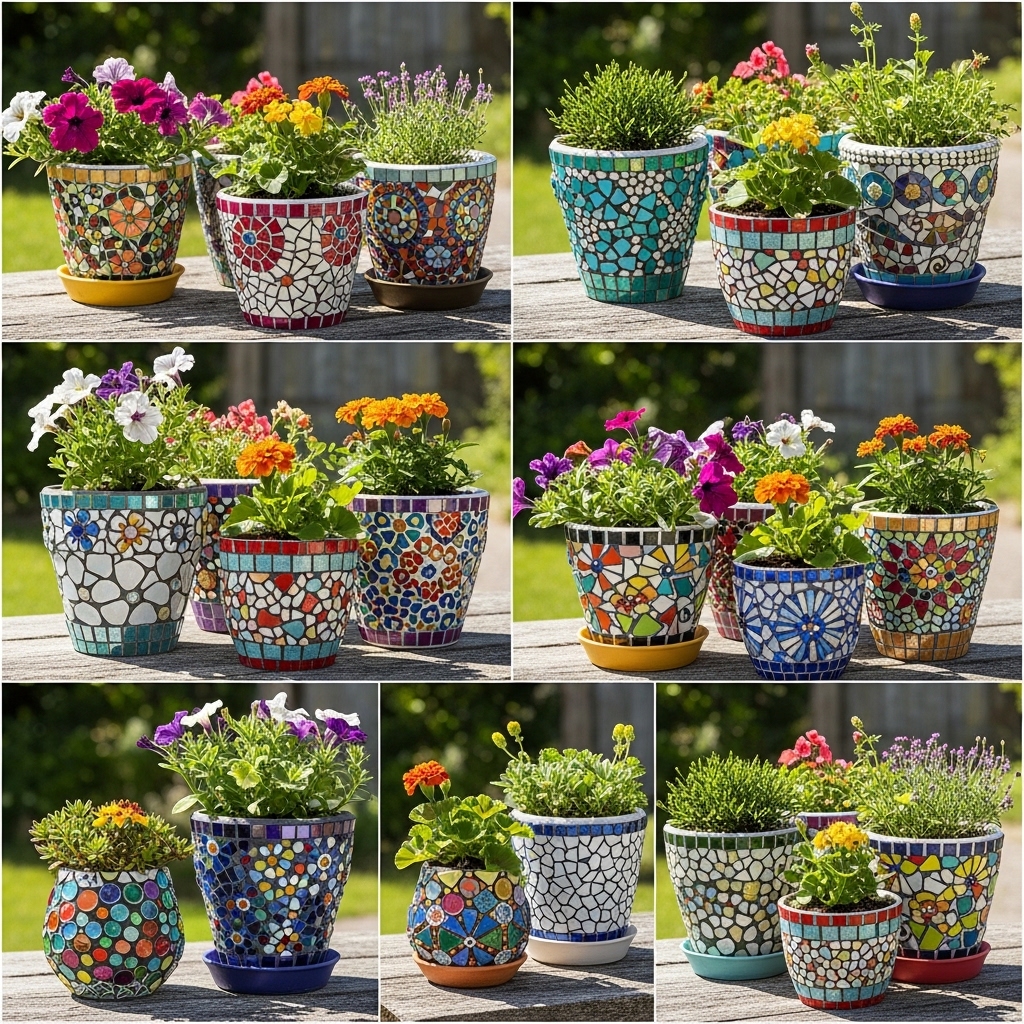
DIY Mosaic Planters | Upcycled Pot Designs | Weather-Resistant Outdoor Decor
A plain terracotta pot is functional. It holds soil. It holds roots. It blends into the background. A mosaic pot demands attention.
The tiles catch sunlight. The patterns draw the eye. The plant becomes the accent, not the main event.
Unlike indoor pots, outdoor planters face challenges. Rain. Frost. Heat. Soil moisture seeping through the walls. The designs must be durable. The materials must survive.
This guide delivers 20 mosaic flower pot ideas for every plant and every garden. Each design uses weather-resistant techniques. Each pot becomes a permanent piece of art.
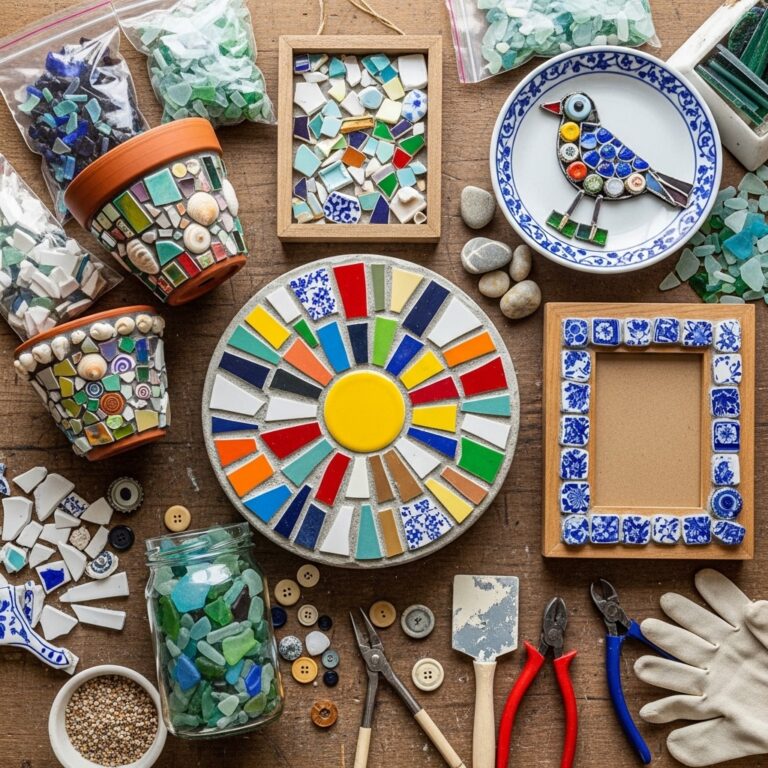
1. Mosaic Pot with Broken Blue Willow China
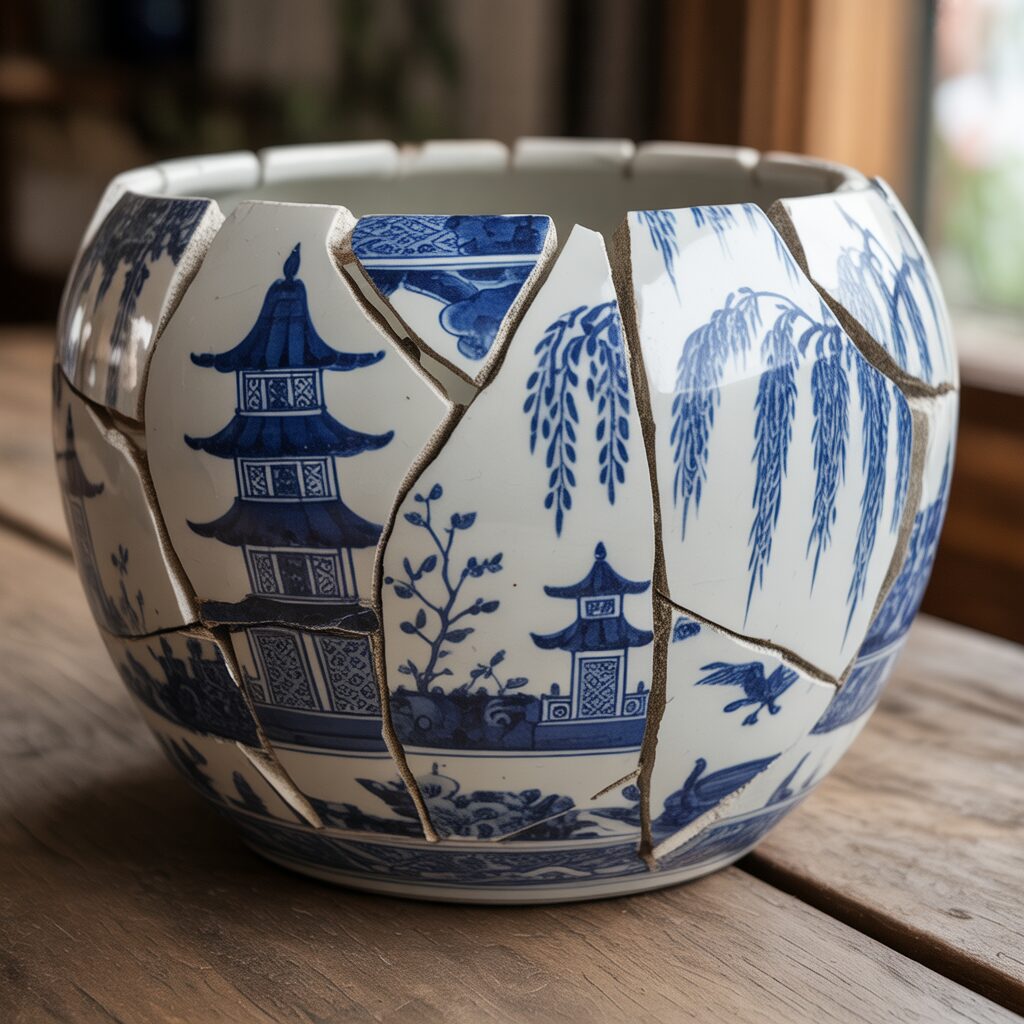
Blue Willow china has a story. Lovers. Bridges. Birds. A broken plate becomes a mosaic pot.
Break Blue Willow plates into shards. Arrange them around a terracotta pot. Do not try to reassemble the pattern. The fragmentation is the beauty. Glue with outdoor adhesive.
Pro Tip: Use a pot with a wide rim. The rim provides a natural stopping point.
Mistake to Avoid: Do not tile the inside of the pot. Soil will damage the mosaic.
2. Mosaic Pot with Sea Glass and Driftwood
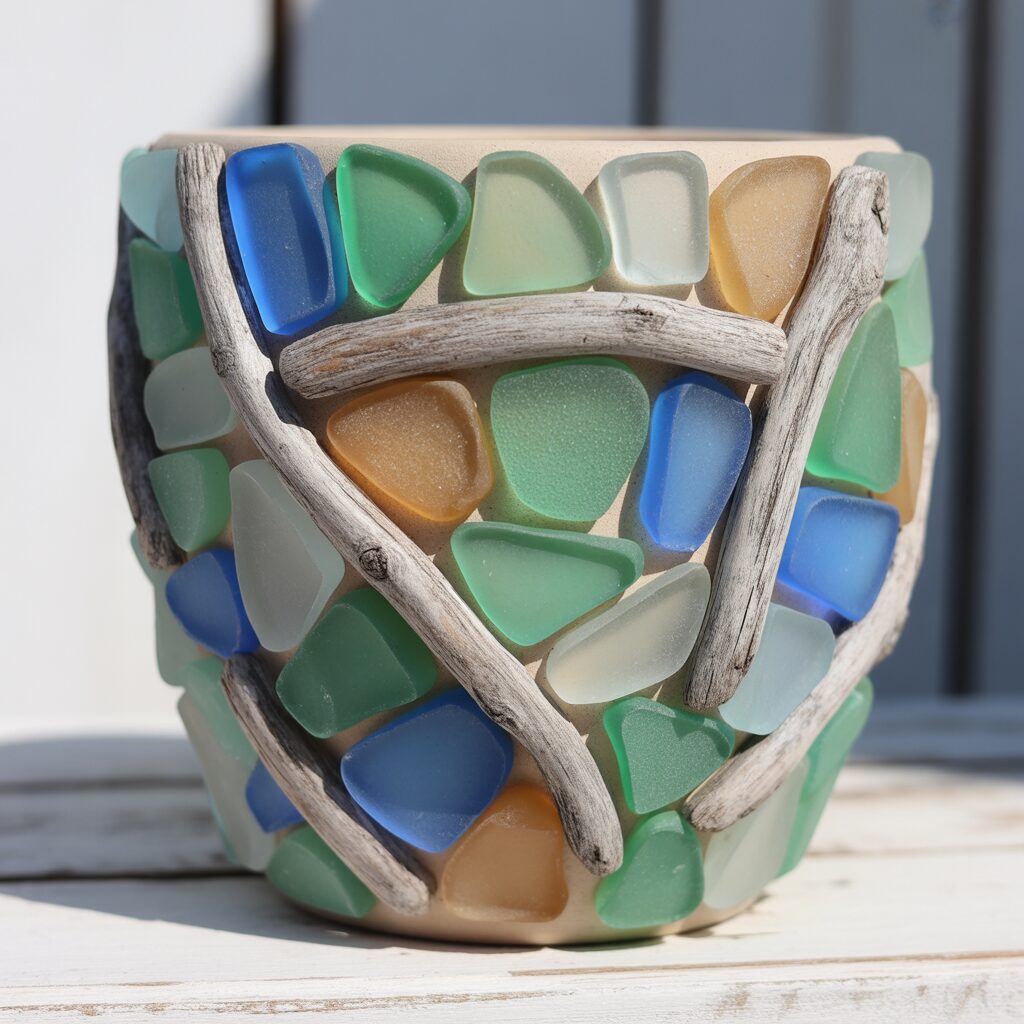
Sea glass is frosted. Driftwood is weathered. Together, they evoke the coast.
Press sea glass into a terracotta pot. Leave gaps. Glue small pieces of driftwood between the glass. The wood will contrast with the smooth glass.
Pro Tip: Use blue, green, and white glass. The colors mimic the ocean.
Mistake to Avoid: Do not use driftwood that is rotting. Rotting wood will attract insects.
3. Mosaic Pot with a Geometric Diamond Pattern
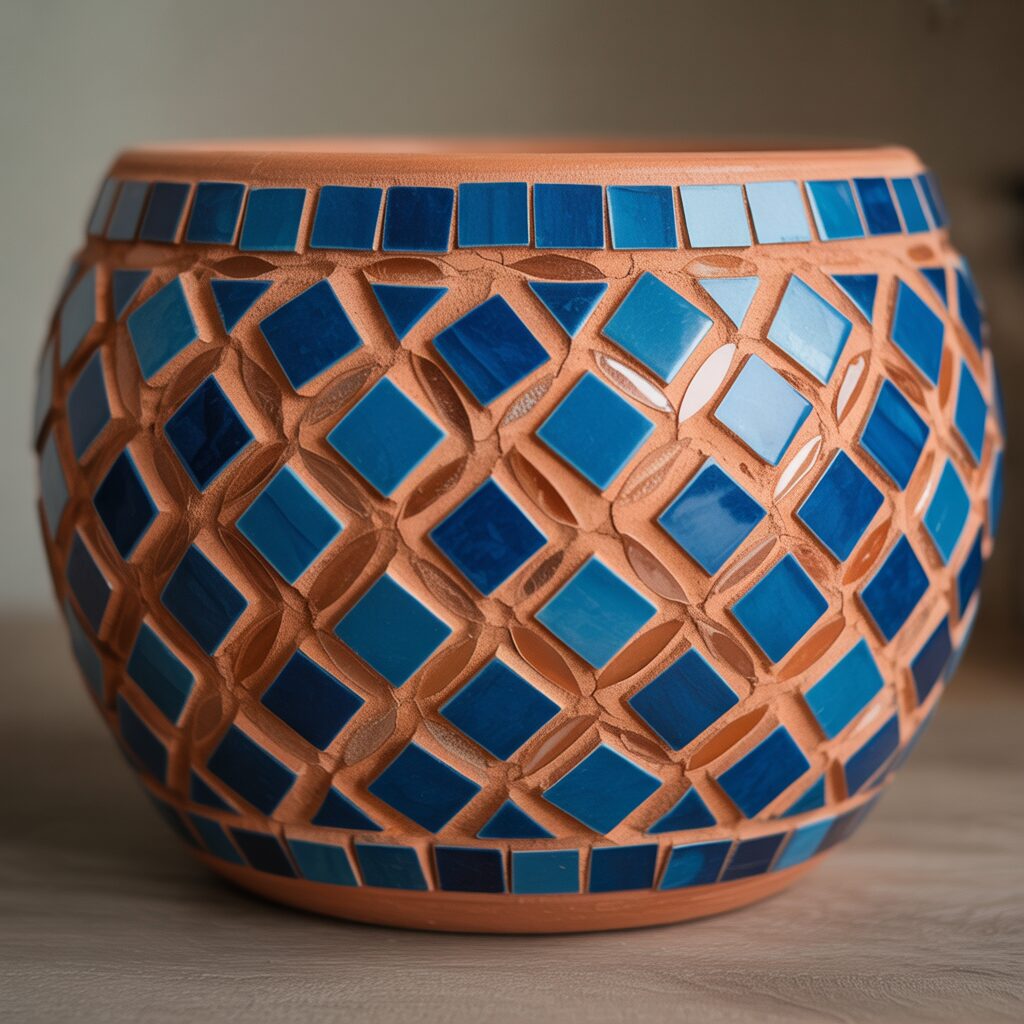
Diamonds are simple. They are also striking. Repeating diamonds around a pot create rhythm.
Mark vertical lines on the pot. Create diamond shapes between the lines. Fill each diamond with a different color. Red, yellow, blue, green. The diamonds should alternate.
Pro Tip: Use painter’s tape to mark the diamonds. The tape keeps lines straight.
Mistake to Avoid: Do not make diamonds too small. Small diamonds are hard to tile.
4. Mosaic Pot with Mosaic Flowers
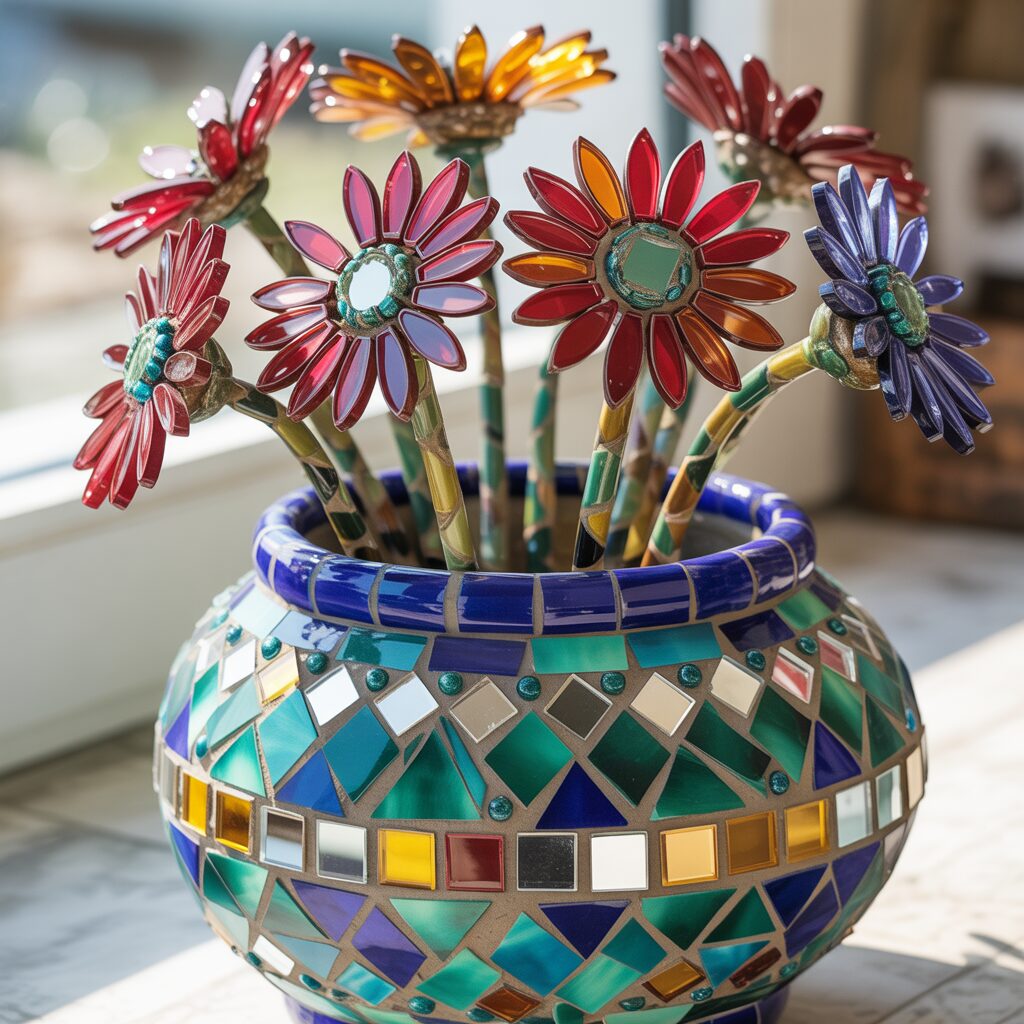
Flowers on a flower pot are meta. The pot holds flowers. The mosaic flowers are permanent.
Create flower shapes around the pot. Each flower has a center and five petals. Use yellow for the center. Use pink or purple for the petals. Space the flowers evenly.
Pro Tip: Use a cookie cutter as a flower template. Consistent shapes matter.
Mistake to Avoid: Do not overcrowd the pot. Three flowers are enough.
5. Mosaic Pot with a Single Bold Color Band
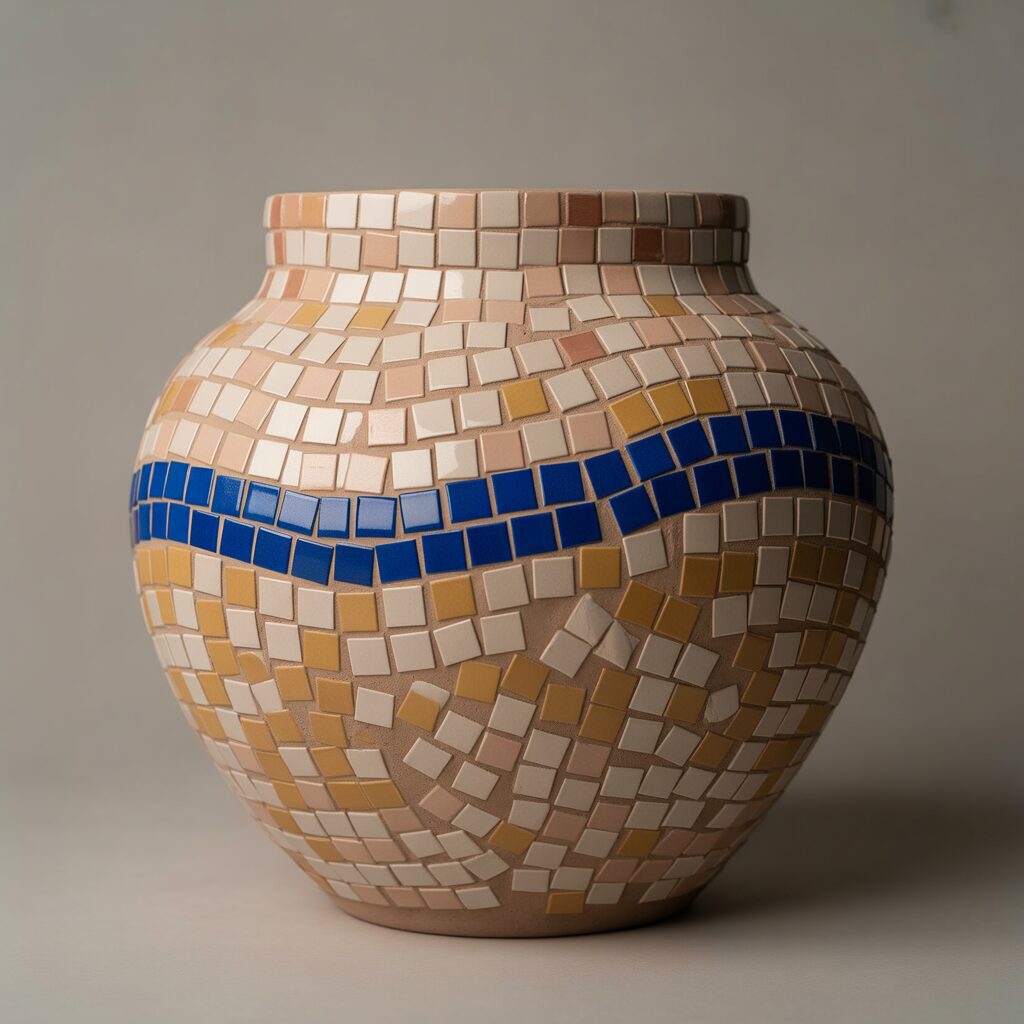
A plain pot is boring. A pot with a colored band is intentional. The band can be at the top, middle, or bottom.
Tile a single band around the pot. Use one color. Red. Blue. Yellow. The band should be 2-3 inches wide. Leave the rest of the pot bare.
Pro Tip: Use a glossy tile for the band. Gloss reflects light.
Mistake to Avoid: Do not use a dark color on a dark pot. The band will not show.
6. Mosaic Pot with Mirror Shards
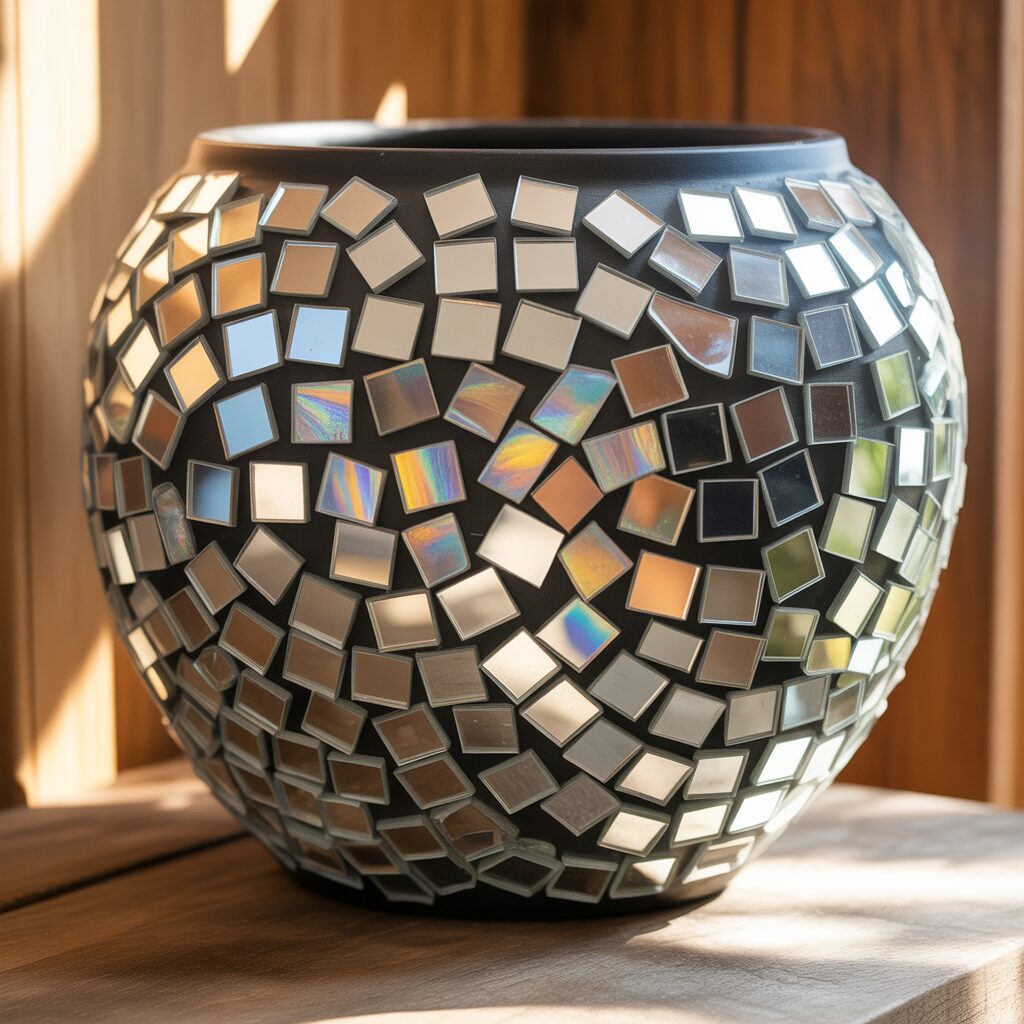
Mirror shards reflect the garden. The surrounding plants appear on the pot. The effect is camouflage.
Break an old mirror into shards. Arrange the shards around the pot. Leave gaps between shards. Do not grout. The gaps will show the terracotta underneath.
Pro Tip: Use a hammer to break the mirror. Wear safety glasses.
Mistake to Avoid: Do not use mirror on a pot that sits in full sun. The reflection will scorch nearby leaves.
7. Mosaic Pot with Mosaic Letters
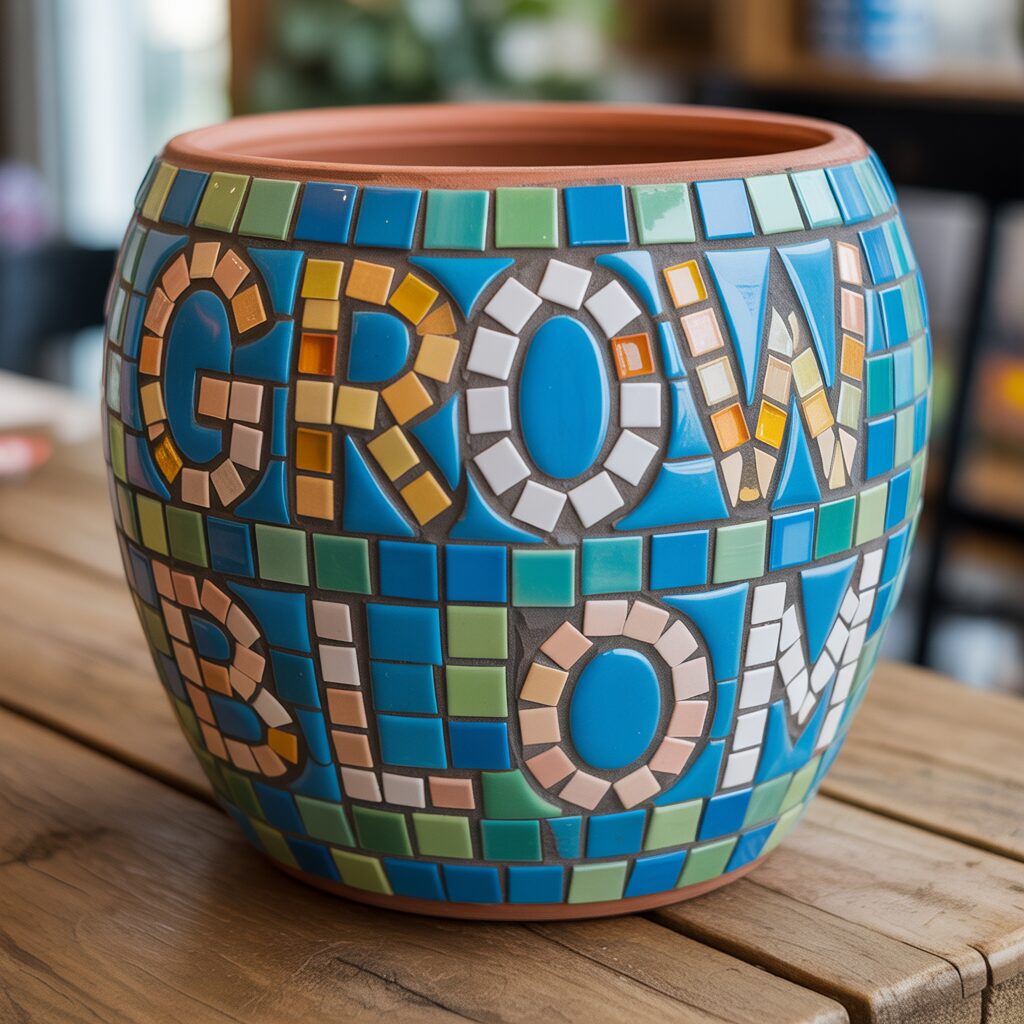
Spell a word. Spell a plant name. Spell your family name. The letters become the design.
Cut tiles into letter shapes. Arrange them around the pot. Fill the background with small tiles. Use a contrasting color for the letters.
Pro Tip: Use block letters. Fancy fonts are hard to cut from tile.
Mistake to Avoid: Do not use too many letters. Short words have more impact.
8. Mosaic Pot with a Wave Pattern
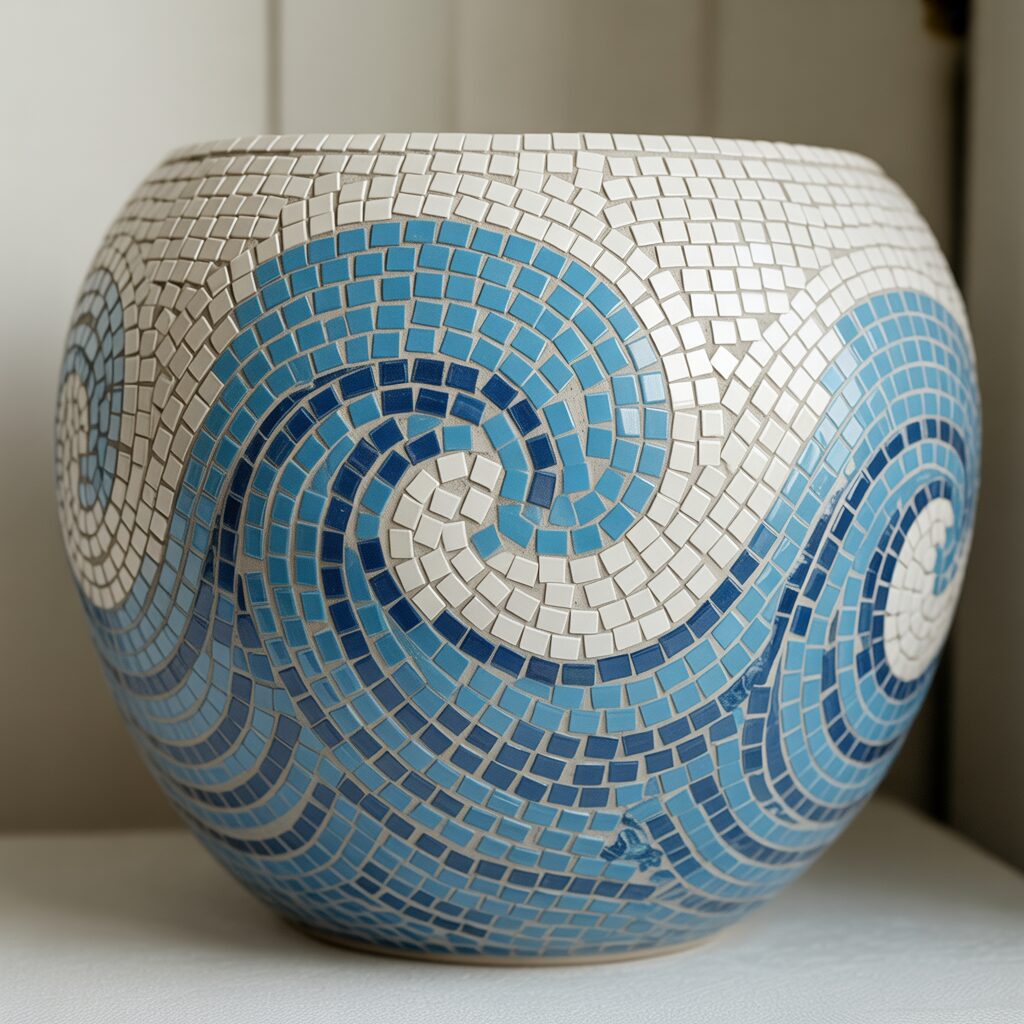
A wave pattern suggests water. A pot with waves belongs near a fountain or pond.
Cut tile into wave shapes. Arrange them in rows around the pot. Each wave should overlap the one below. Use two shades of blue. Light blue for the crest. Dark blue for the trough.
Pro Tip: Use a template for the wave shape. Consistent waves are more soothing.
Mistake to Avoid: Do not make the waves too tall. Short waves are easier to tile.
9. Mosaic Pot with Buttons and Beads
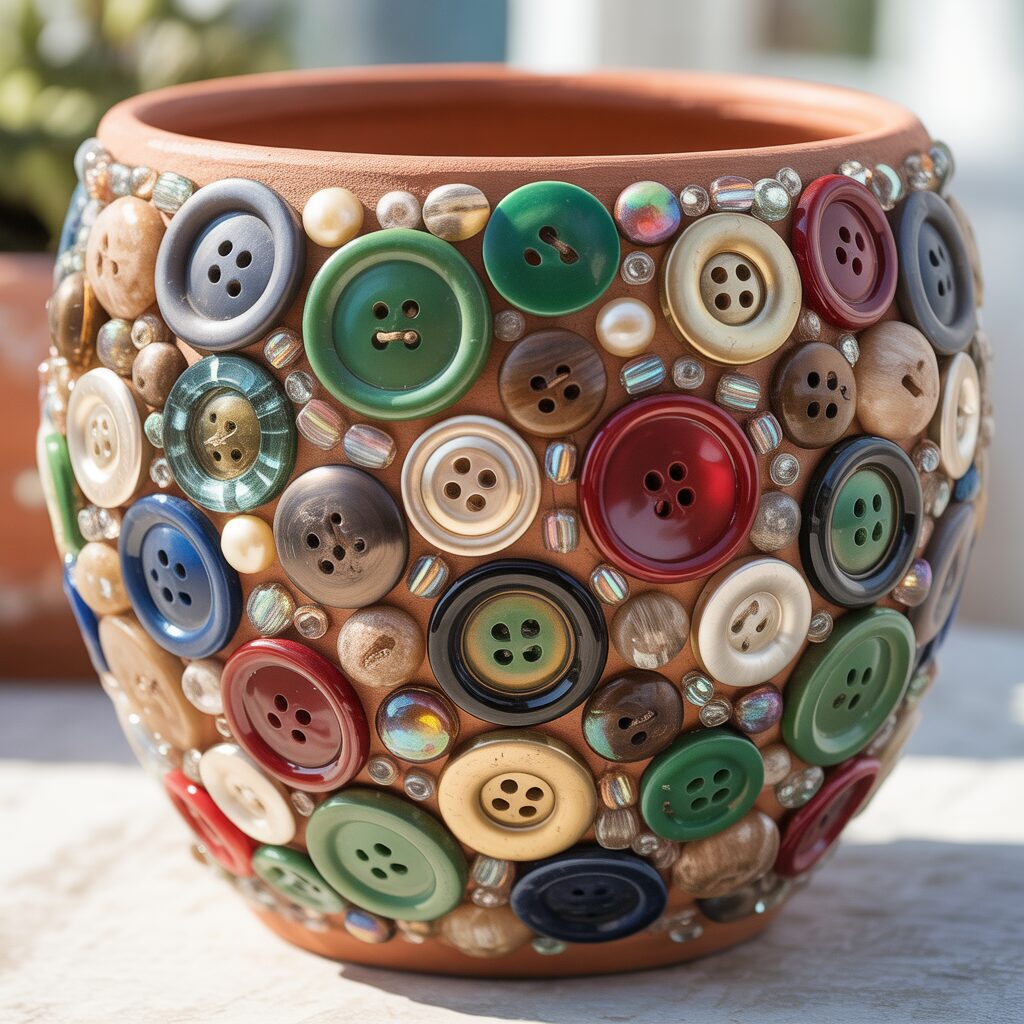
Buttons are round. Beads are round. Tiles are flat. The contrast adds texture.
Collect vintage buttons and ceramic beads. Glue them to the pot. Do not sort by color. Random is the pattern. Fill gaps with small tiles.
Pro Tip: Use buttons with shanks (the loop on the back). The shank fits into the adhesive.
Mistake to Avoid: Do not use plastic buttons. Plastic will fade in the sun.
10. Mosaic Pot with a Starry Night Theme
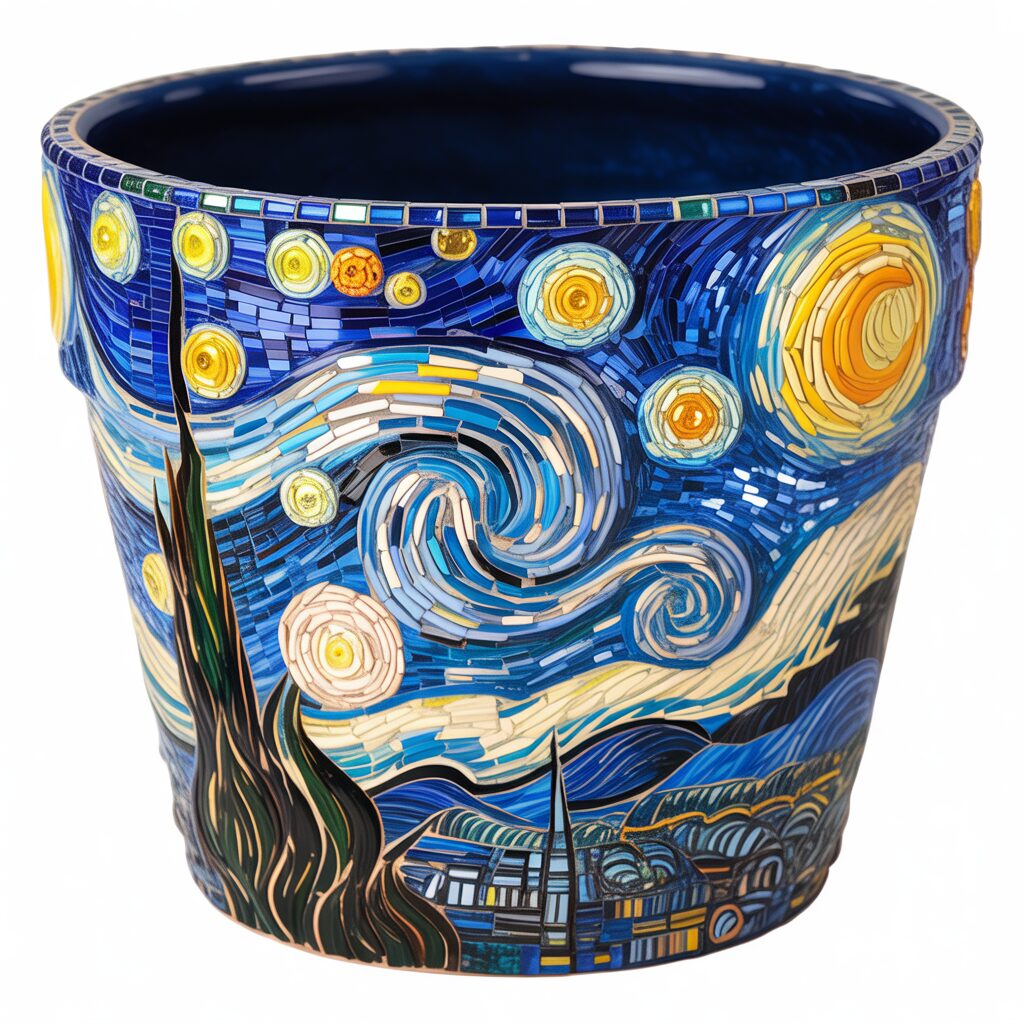
A dark pot with yellow tiles looks like the night sky. The stars are scattered randomly.
Paint the terracotta pot with black outdoor paint. Press small yellow tiles into the wet paint. Scatter them randomly. No pattern. The randomness is the beauty.
Pro Tip: Add a few larger yellow tiles. Large tiles look like planets.
Mistake to Avoid: Do not use white tiles. White tiles look like clouds.
11. Mosaic Pot with Mosaic Vines
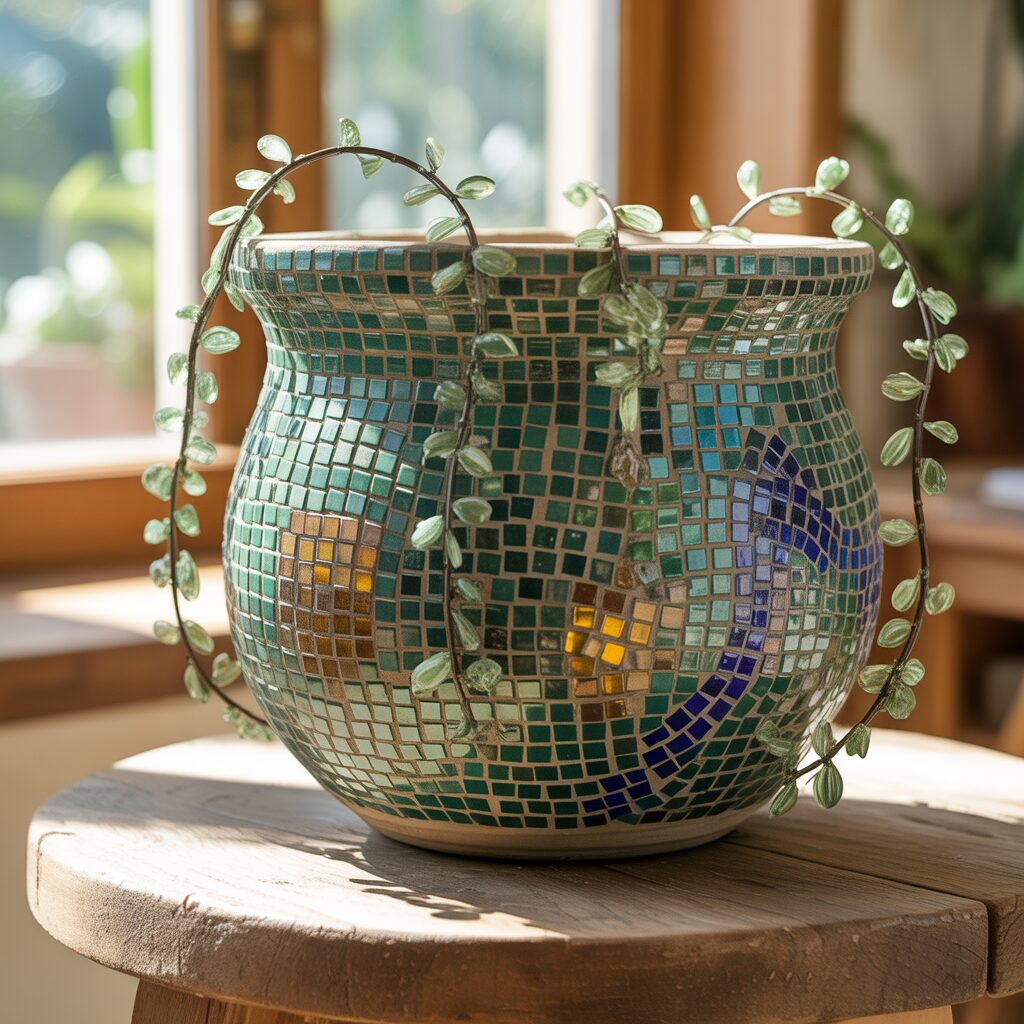
Vines climb up the pot. The leaves spiral around the terracotta.
Create a thick vine of green tiles at the base. Branch it into thinner vines as it rises. Add leaf shapes at the branch tips. The leaves should spiral around the pot.
Pro Tip: Use two shades of green. Light green for the leaves. Dark green for the vine.
Mistake to Avoid: Do not make the vine too straight. Vines are organic.
12. Mosaic Pot with African Mud Cloth Pattern
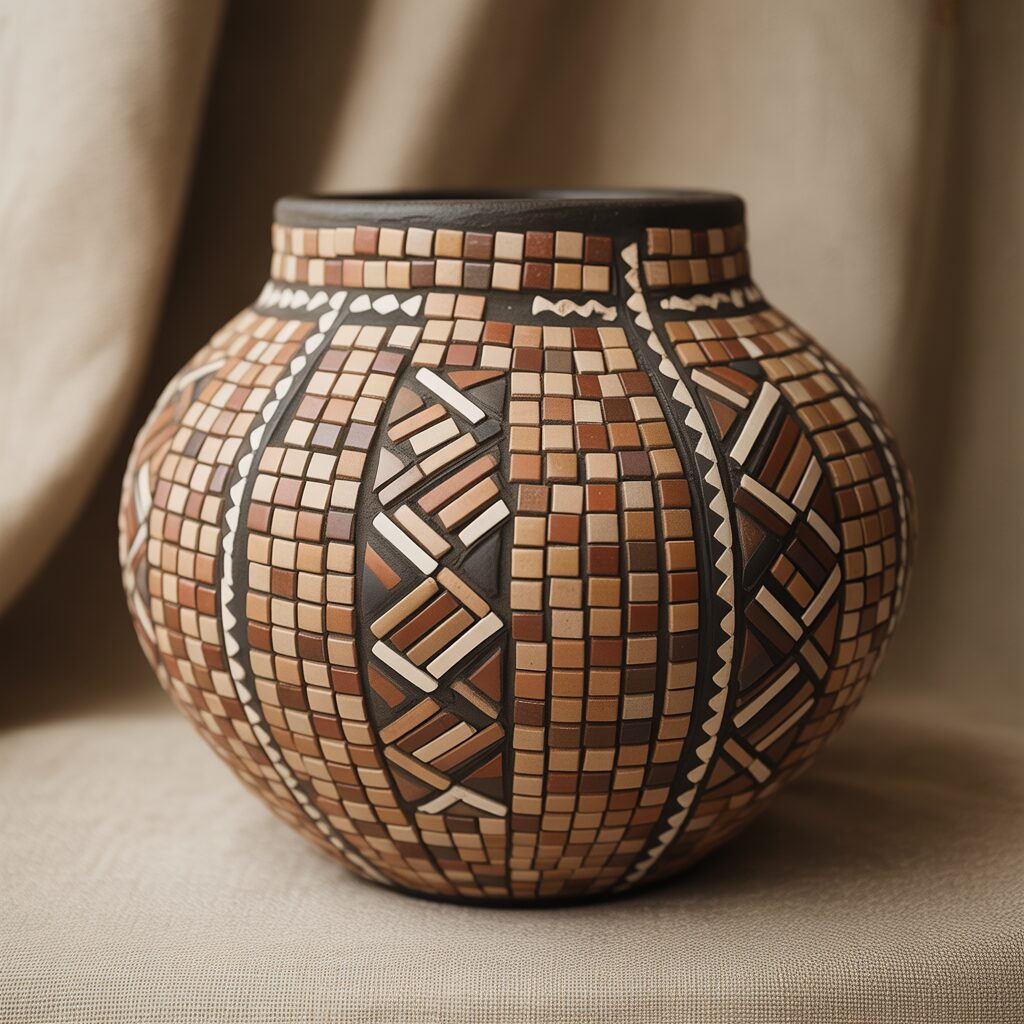
Mud cloth is geometric. It is black and white. The patterns are abstract.
Paint the pot white. Use black tiles to create geometric shapes. Zigzags. Diamonds. Crosses. The shapes should not repeat. The irregularity is the pattern.
Pro Tip: Sketch the design on paper first. Transfer to the pot.
Mistake to Avoid: Do not use color. Mud cloth is black and white.
13. Mosaic Pot with Mosaic Cacti
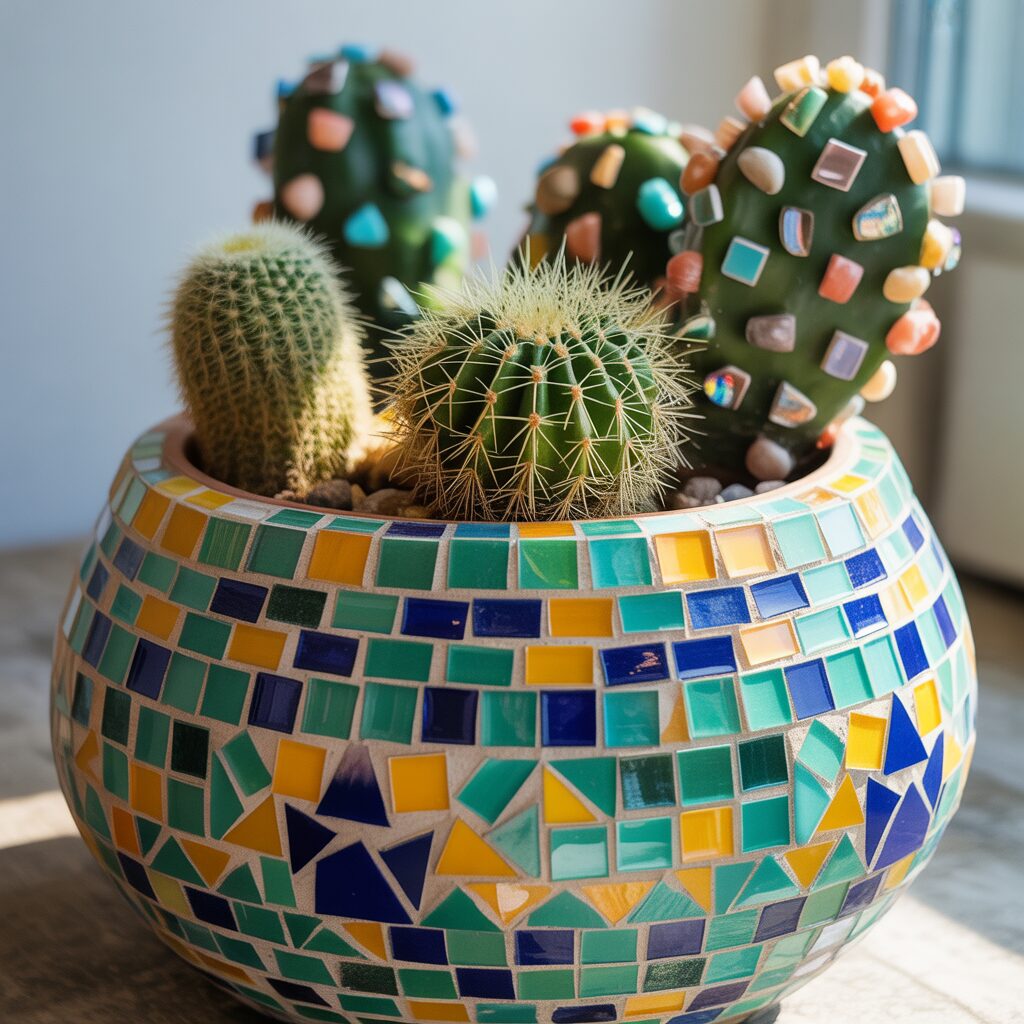
A cactus pot should have cactus mosaic. The spines are tiles. The body is tile.
Cut green tiles into cactus shapes. Saguaro. Prickly pear. Barrel. Arrange them around the pot. Add small white tiles for spines. The spines should dot the surface.
Pro Tip: Use a terracotta pot. The orange color contrasts with green.
Mistake to Avoid: Do not use real cactus spines. They will rot.
14. Mosaic Pot with a Rainbow Spiral
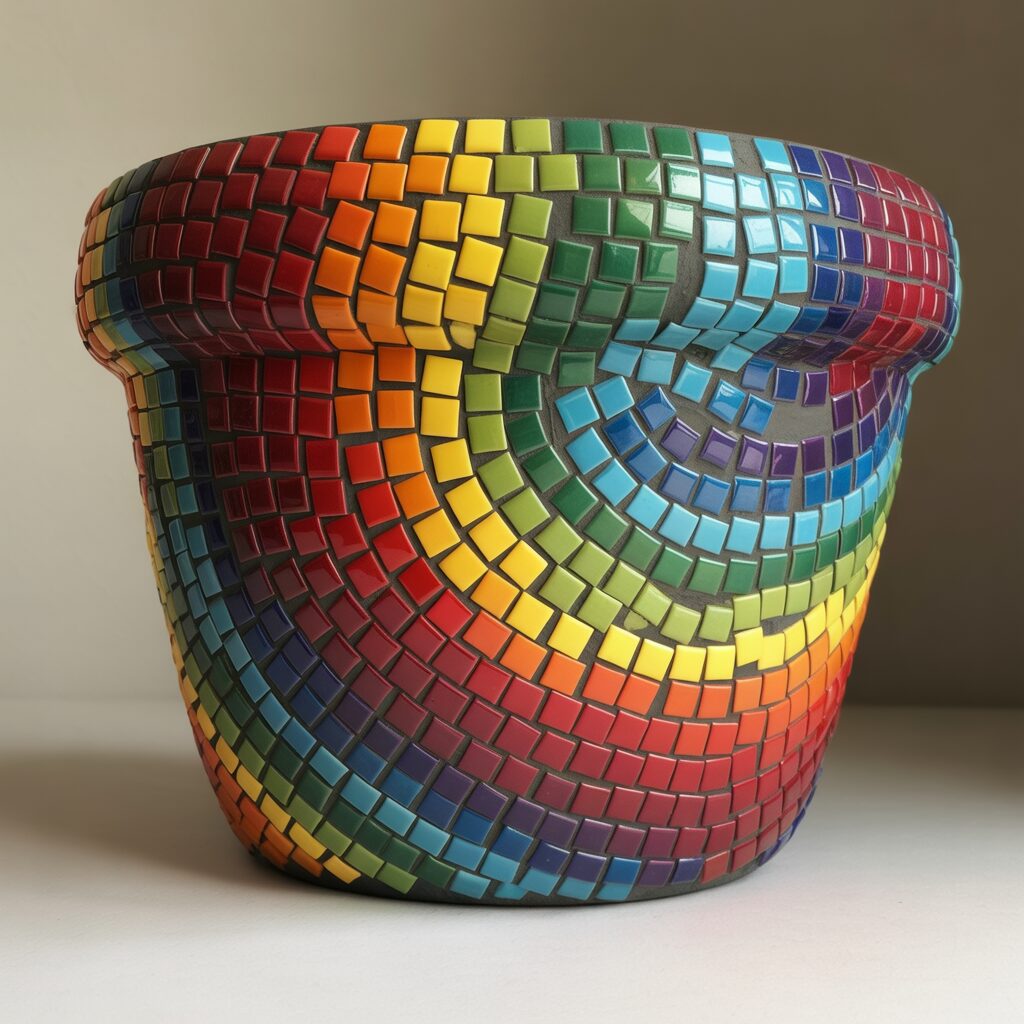
A spiral draws the eye. A rainbow adds color. Together, they create movement.
Start at the bottom of the pot. Create a spiral of tiles that winds upward. The spiral should circle the pot twice. Use a different color for each ring of the spiral.
Pro Tip: Use a chalk line to mark the spiral. The line will wash off.
Mistake to Avoid: Do not make the spiral too narrow. Wide spirals are easier to see.
15. Mosaic Pot with Mosaic Fish
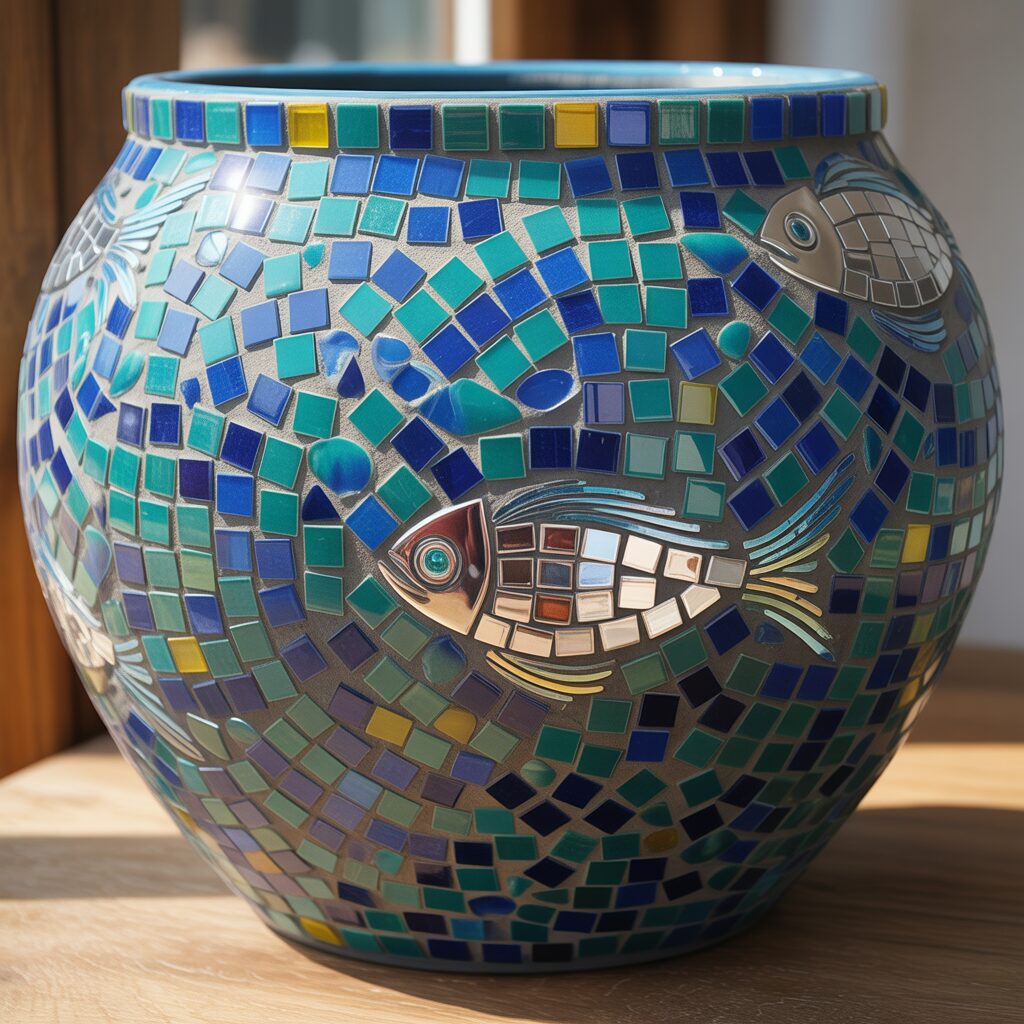
A fish pot belongs near water. The fish swim around the pot.
Cut tile into fish shapes. Each fish should face the same direction. Add a single tile for the eye. Use blue and silver tiles for the scales.
Pro Tip: Arrange the fish in a school. Three fish together have more impact than one.
Mistake to Avoid: Do not make the fish too large. Small fish are more elegant.
16. Mosaic Pot with Mosaic Hearts
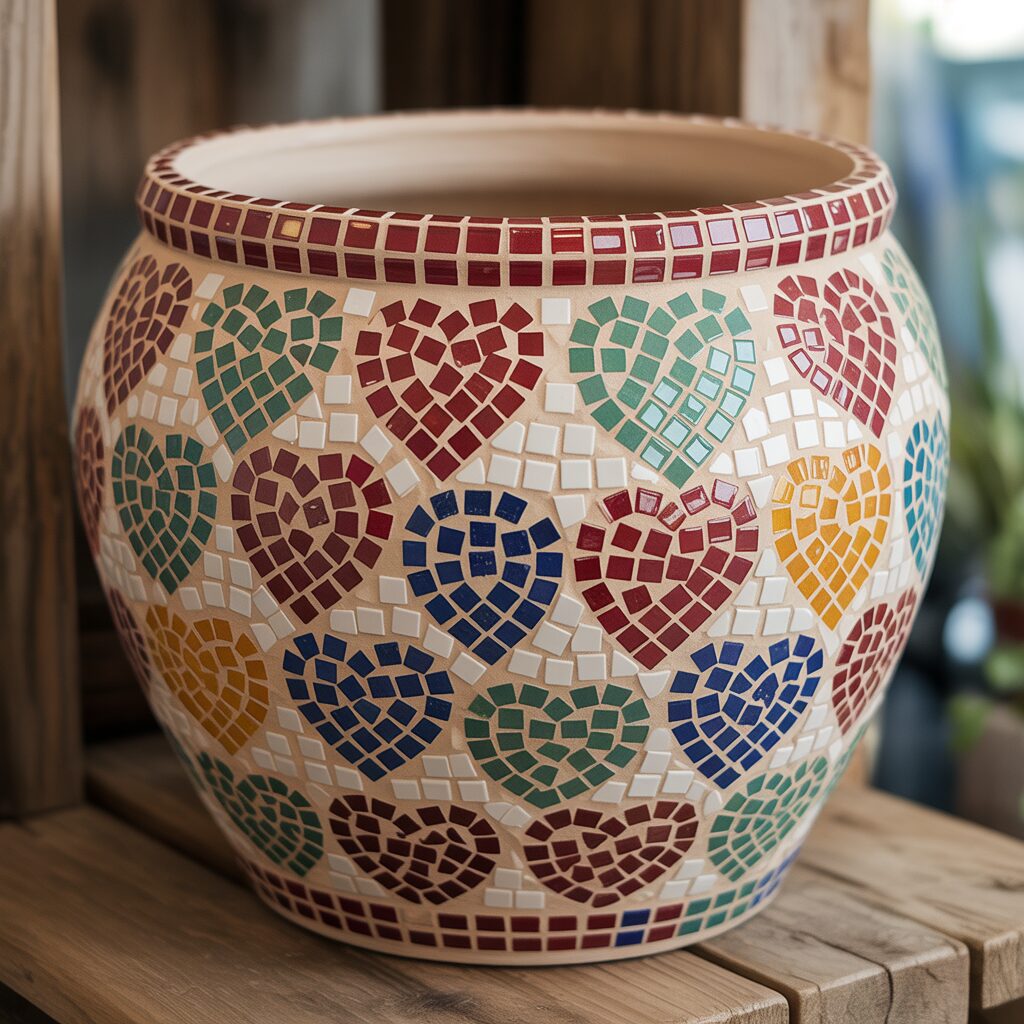
Hearts are universal. They symbolize love. A heart pot is a gift.
Create heart shapes around the pot. Use red or pink tiles. Space the hearts evenly. Fill the background with white tiles. The hearts will stand out.
Pro Tip: Use a heart-shaped cookie cutter as a template. Consistent hearts matter.
Mistake to Avoid: Do not use too many hearts. Three hearts are enough.
17. Mosaic Pot with a Mosaic Border Only
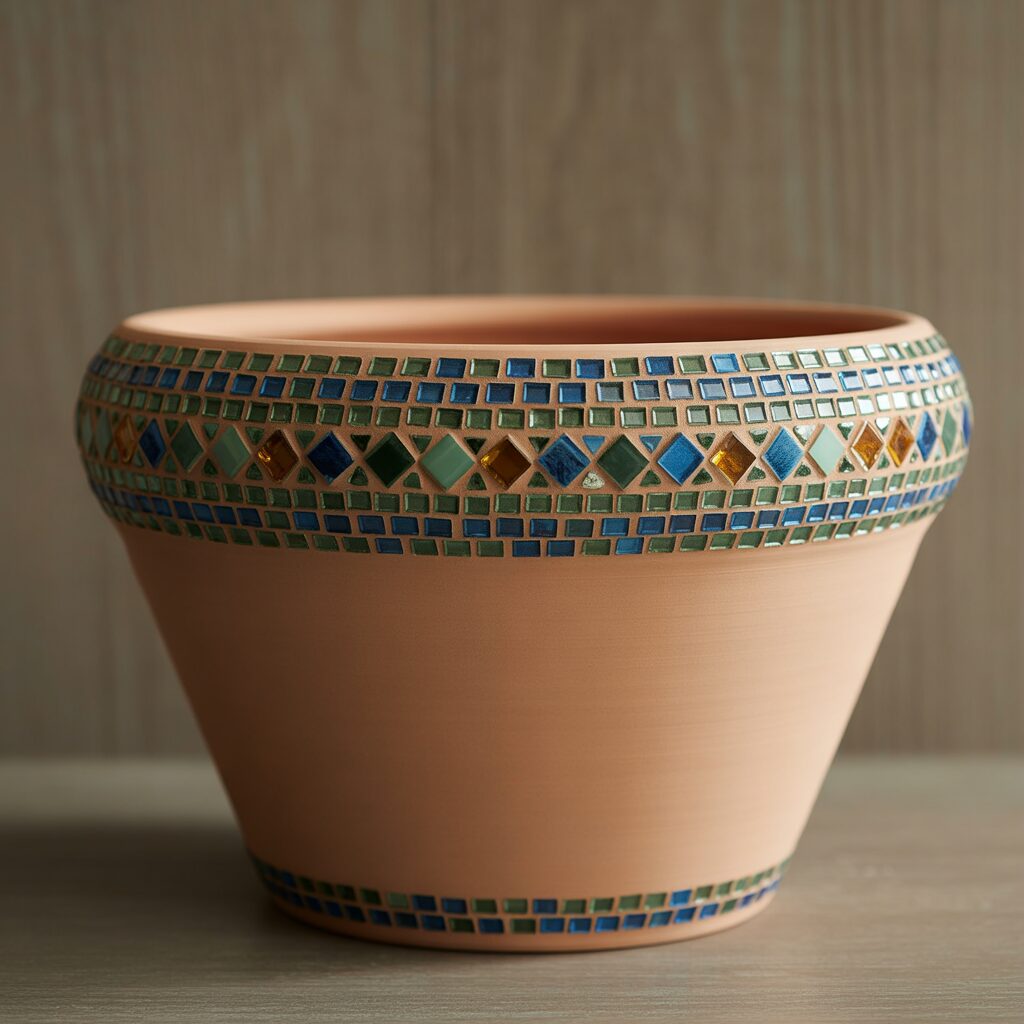
Not every pot needs full coverage. A border at the top is enough. The rest of the pot remains bare.
Tile a 2-inch border around the rim of the pot. Use a repeating pattern. Checkerboard. Zigzag. Dots. The border frames the plant.
Pro Tip: Use small tiles for borders. Small tiles fit the narrow space.
Mistake to Avoid: Do not make the border too wide. The bare pot should dominate.
18. Mosaic Pot with Mosaic Butterflies
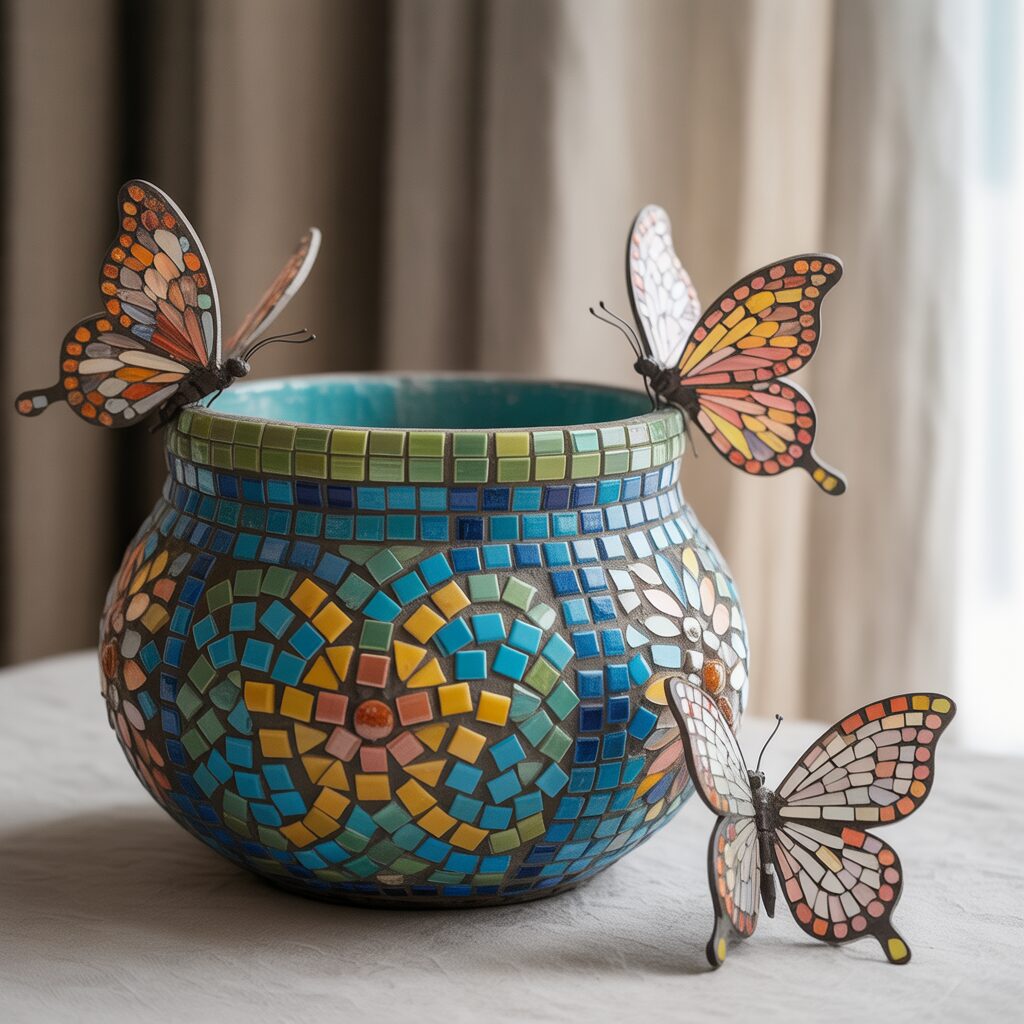
Butterflies are delicate. Mosaic butterflies are permanent. They will not fly away.
Cut tile into butterfly shapes. Four wings. A body. Attach them to the pot. The wings should angle upward. Use iridescent tiles for the wings.
Pro Tip: Place the butterflies as if they are landing. Some near the rim. Some on the side.
Mistake to Avoid: Do not make the butterflies too large. Small butterflies are more realistic.
19. Mosaic Pot with a Mosaic Sun
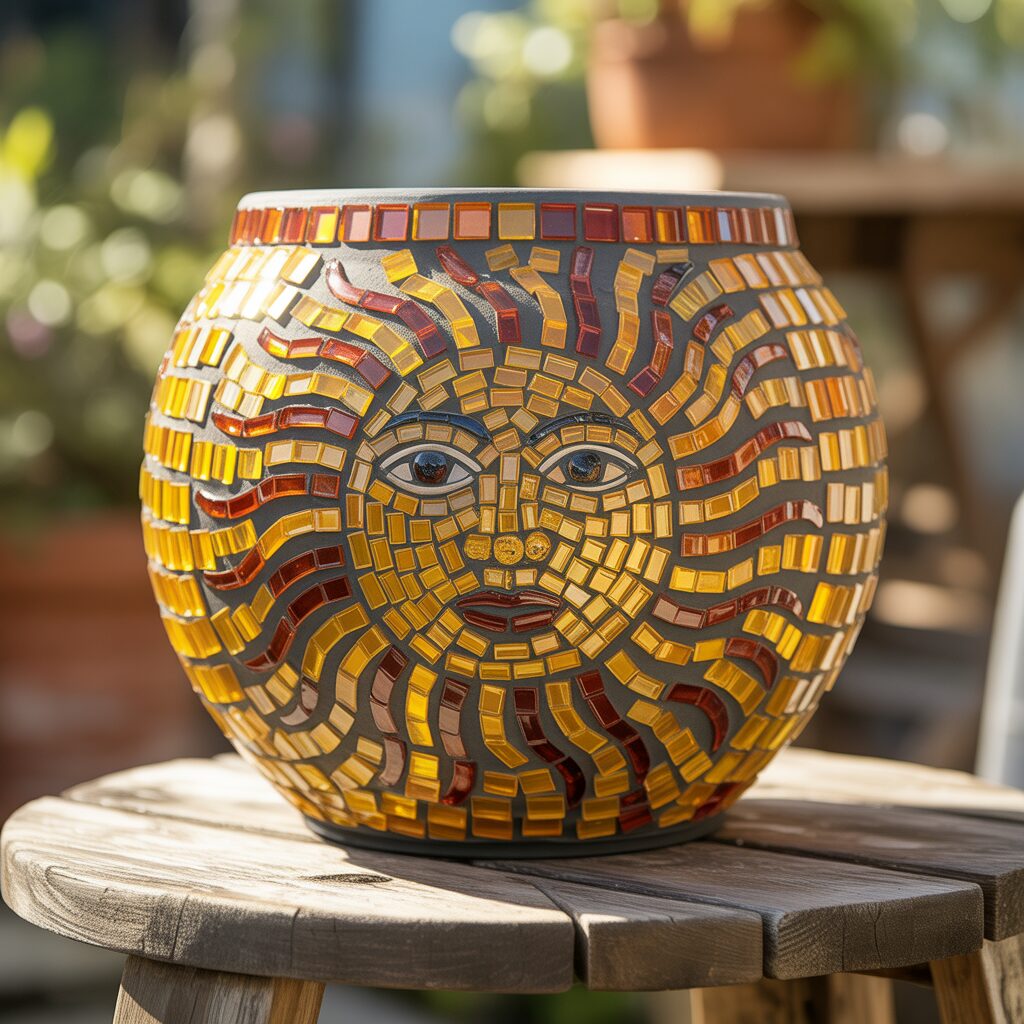
The sun is a circle. The rays are triangles. A sun pot belongs in a sunny spot.
Create a large yellow circle on the pot. Arrange orange and gold triangle rays around the circle. The rays should extend outward. The sun should face the morning light.
Pro Tip: Place the sun on the side of the pot that faces east. The morning sun will hit it directly.
Mistake to Avoid: Do not make the sun too small. The sun should be the focal point.
20. One Small Mosaic Pot for a Windowsill
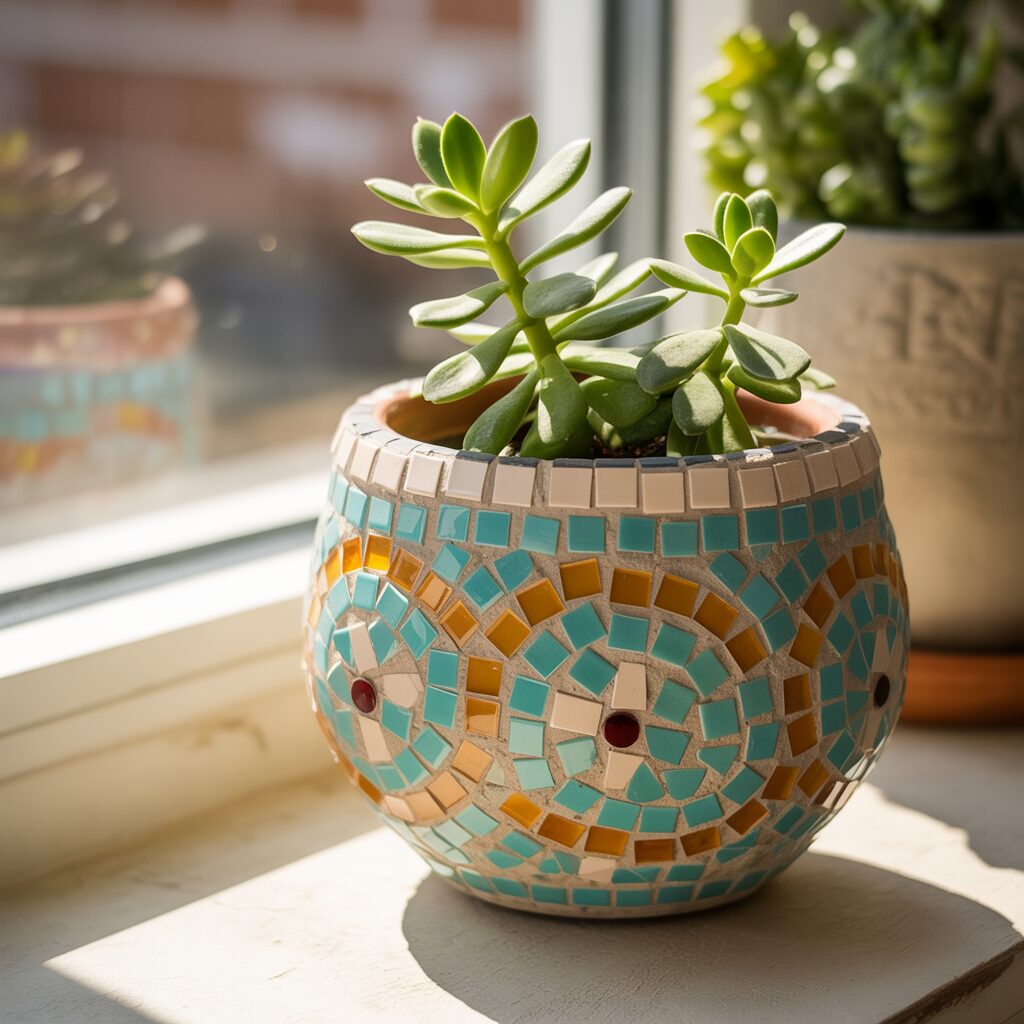
A large pot is a statement. A small pot is an accent. A small mosaic pot can go anywhere.
Use a 4-inch terracotta pot. Tile it simply. A single band. A single flower. A few scattered tiles. Place it on a windowsill. The plant inside will be the star. The pot will be the frame.
Pro Tip: Use a succulent for the plant. Succulents are small and slow-growing.
Mistake to Avoid: Do not tile a pot that is too small. Tiny pots are hard to handle.
Frequently Asked Questions
What type of pot works best for mosaic?
Terracotta is the best. It is porous. Adhesive sticks well. It is inexpensive. Plastic pots are difficult. Adhesive does not stick to plastic. Glazed pots are smooth. Adhesive may peel.
How do I prepare a terracotta pot for mosaic?
Soak the pot in water for 24 hours. The water removes air bubbles. Air bubbles cause tiles to fall off. Let the pot dry completely before gluing.
Can I leave a mosaic pot outside in winter?
Yes, if you use frost-proof materials. Porcelain tiles. Thinset mortar. Sanded grout. Seal the surface. Terracotta itself is not frost-proof. Bring terracotta pots indoors before the first freeze.
How do I clean a mosaic pot?
Wipe with a damp cloth. Do not soak the pot. Water trapped behind tiles will freeze and crack. Do not use a pressure washer.
Conclusion
A plain flower pot is functional. A mosaic flower pot is functional art. Broken Blue Willow tells a story. Sea glass and driftwood evoke the coast.
Geometric diamonds create rhythm. Mosaic flowers are meta. A single bold band adds intention. Mirror shards reflect the garden. Mosaic letters spell a name. Waves suggest water. Buttons and beads add texture. A starry night glows on dark clay.
Mosaic vines climb the pot. African mud cloth is geometric. Mosaic cacti match the plant. A rainbow spiral draws the eye. Mosaic fish swim around the pot. Mosaic hearts symbolize love. A border frames the plant. Mosaic butterflies are permanent. A mosaic sun faces the morning light. A small pot accents a windowsill.
Start with one pot today. A small pot. A simple design. A few tiles. The plant will grow. The mosaic will last. And the pot will never be plain again.