20 Mosaic Stepping Stone Ideas That Turn Your Garden Path Into a Colorful Journey
DIY Garden Mosaics | Outdoor Tile Projects | Weather-Resistant Stepping Stone Designs
A garden path should be beautiful. It should also be functional. Stepping stones keep your feet dry. Mosaic stepping stones keep your eyes engaged.
Unlike indoor mosaics, outdoor stones face challenges. Rain. Frost. Heat. Mud. The designs must be durable. The materials must withstand weather.
This guide delivers 20 mosaic stepping stone ideas for every garden. Each design uses weather-resistant materials. Each can withstand foot traffic and changing seasons.
1. Sunburst Stepping Stone with Yellow and Orange Glass
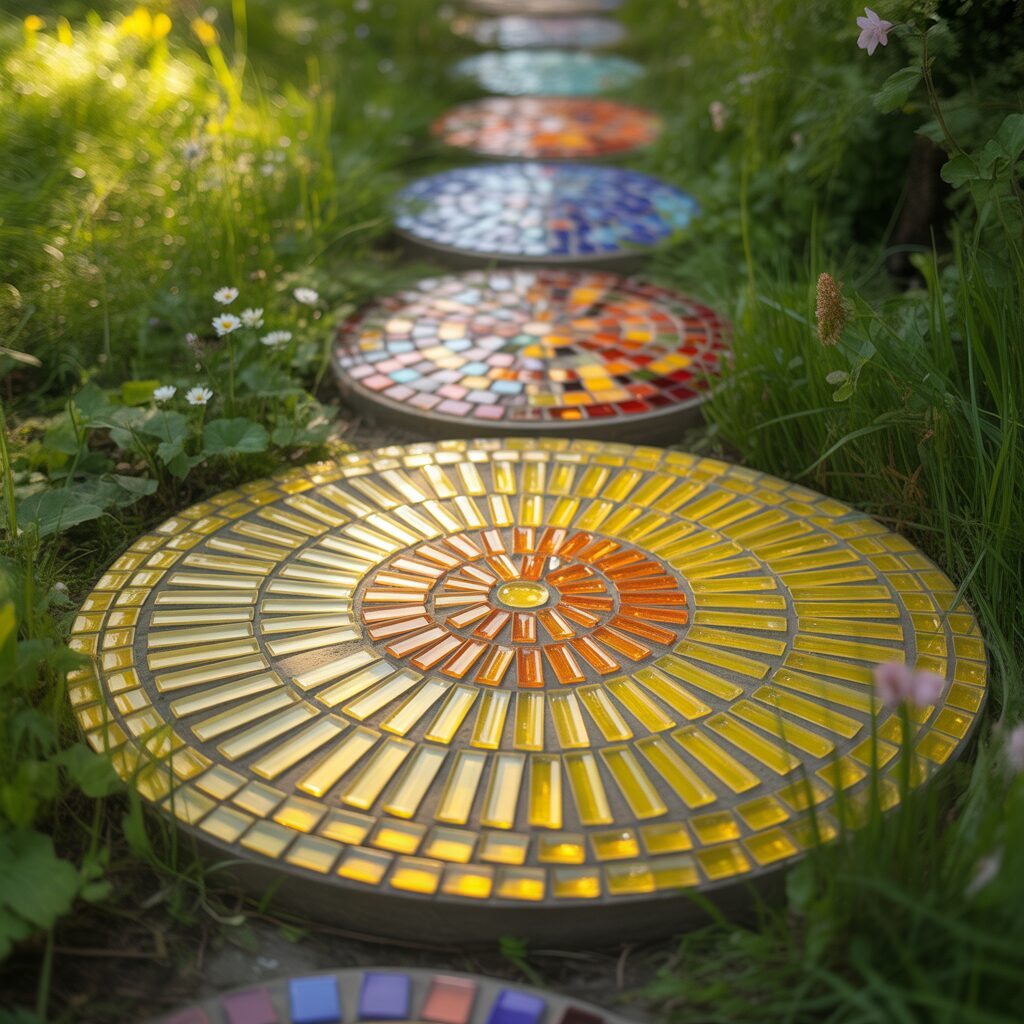
The sun is the center. The rays radiate outward. The colors are warm.
Pour concrete into a round mold. Press yellow glass gems into the center. Arrange orange and gold gems as rays. The rays should be longer than the center is wide.
Pro Tip: Use a round cake pan as a mold. The pan releases easily.
Mistake to Avoid: Do not press gems too deep. The surface should be level.
2. Mosaic Stepping Stone with Child’s Handprint
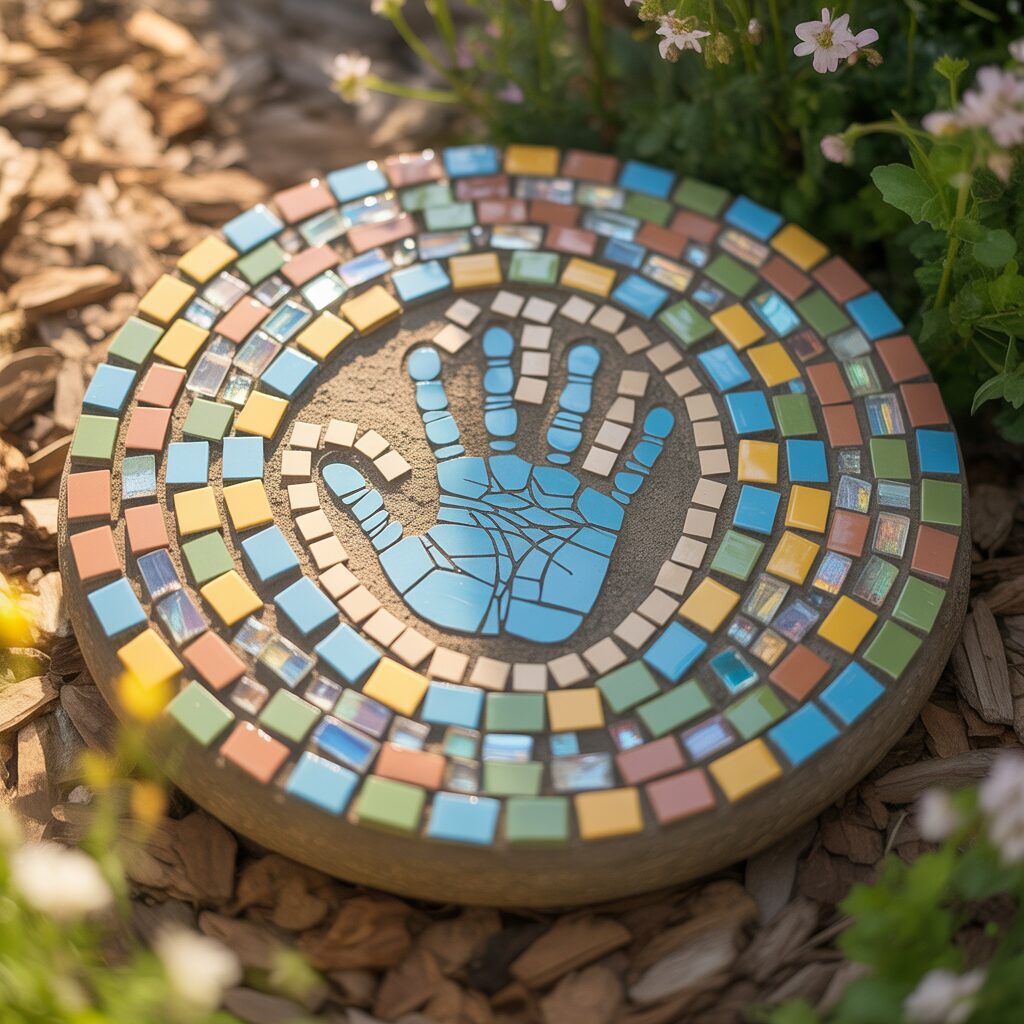
A child’s handprint captures a moment. The hand will grow. The stone will stay the same size.
Press the child’s hand into wet concrete. Remove the hand. Fill the impression with colorful glass gems. The gems will outline the handprint.
Pro Tip: Use bright colors for the handprint. Pink, blue, and yellow stand out against gray concrete.
Mistake to Avoid: Do not do this with a reluctant child. The hand must press firmly.
3. Blue and White Mosaic for a Water-Wise Garden
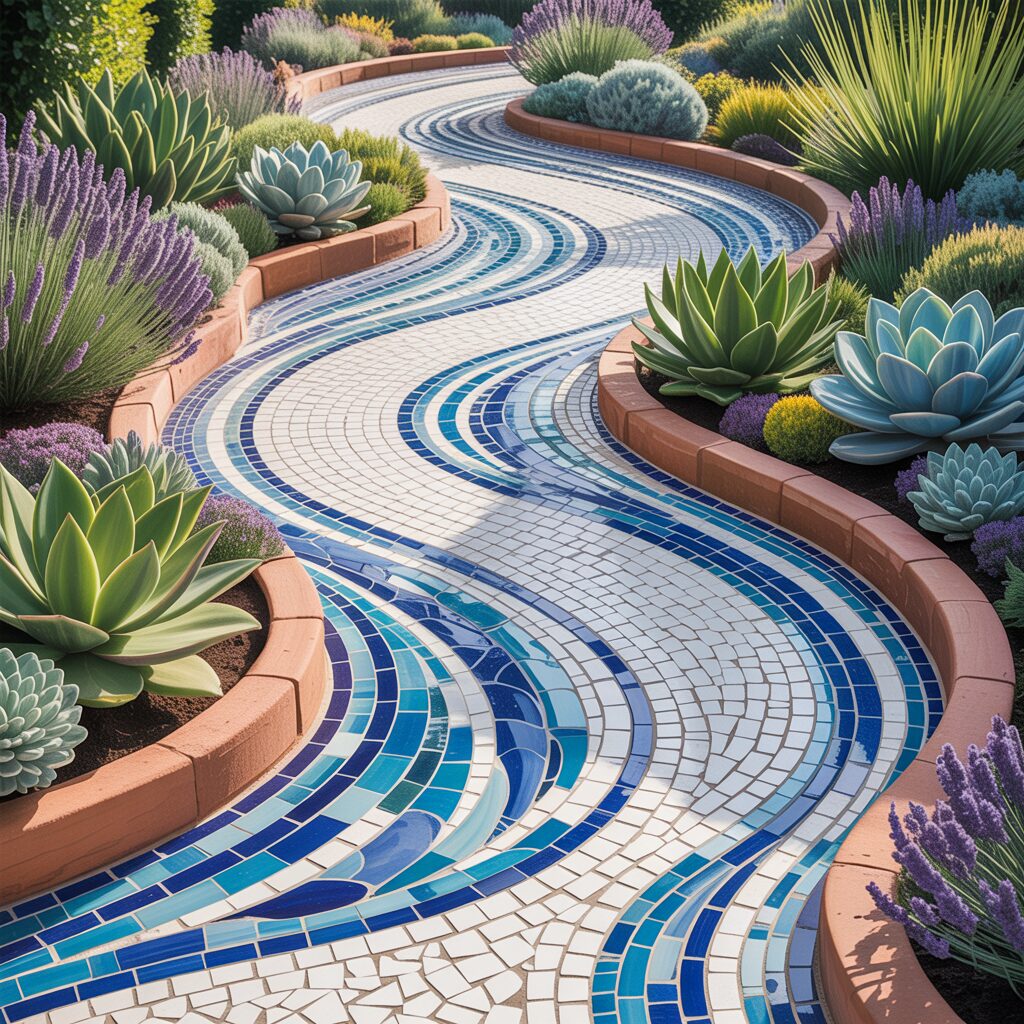
Blue and white stones suggest water. In a dry garden, they are ironic. The contrast is playful.
Use white concrete. Press blue glass tiles into the surface. Arrange them in wave patterns. The waves should flow across the stone.
Pro Tip: Use a variety of blue shades. Light blue, medium blue, navy. The variation suggests depth.
Mistake to Avoid: Do not use too many white tiles. The white concrete is already the background.
4. Mosaic Stepping Stone with Embedded Marbles
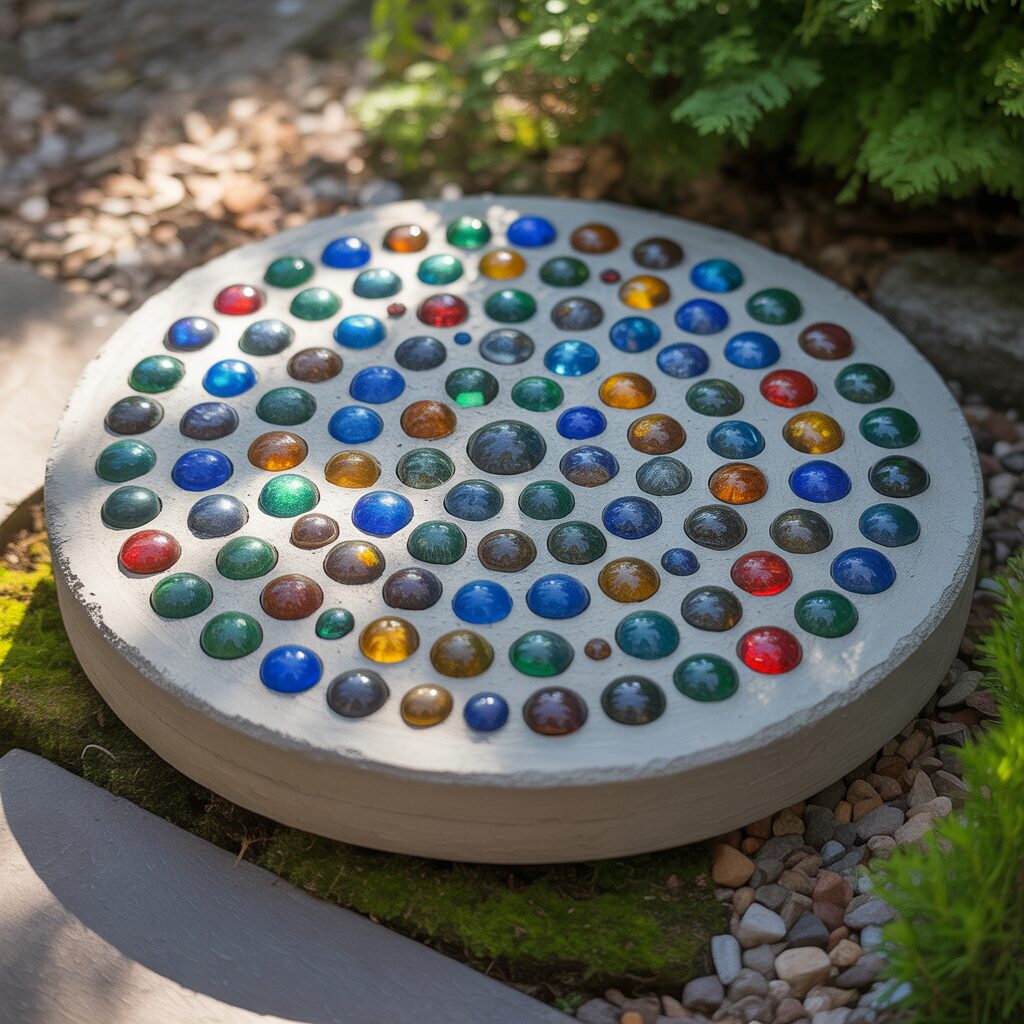
Marbles are round. They are colorful. They are nostalgic. A stone full of marbles looks like candy.
Pour concrete into a mold. Press marbles into the wet surface. Do not sort by color. The randomness is the beauty. Press them until they are half-buried.
Pro Tip: Use flat-bottomed marbles. Round marbles can pop out.
Mistake to Avoid: Do not use antique marbles. The concrete will scratch them.
5. Dragonfly Mosaic on an Oval Stone
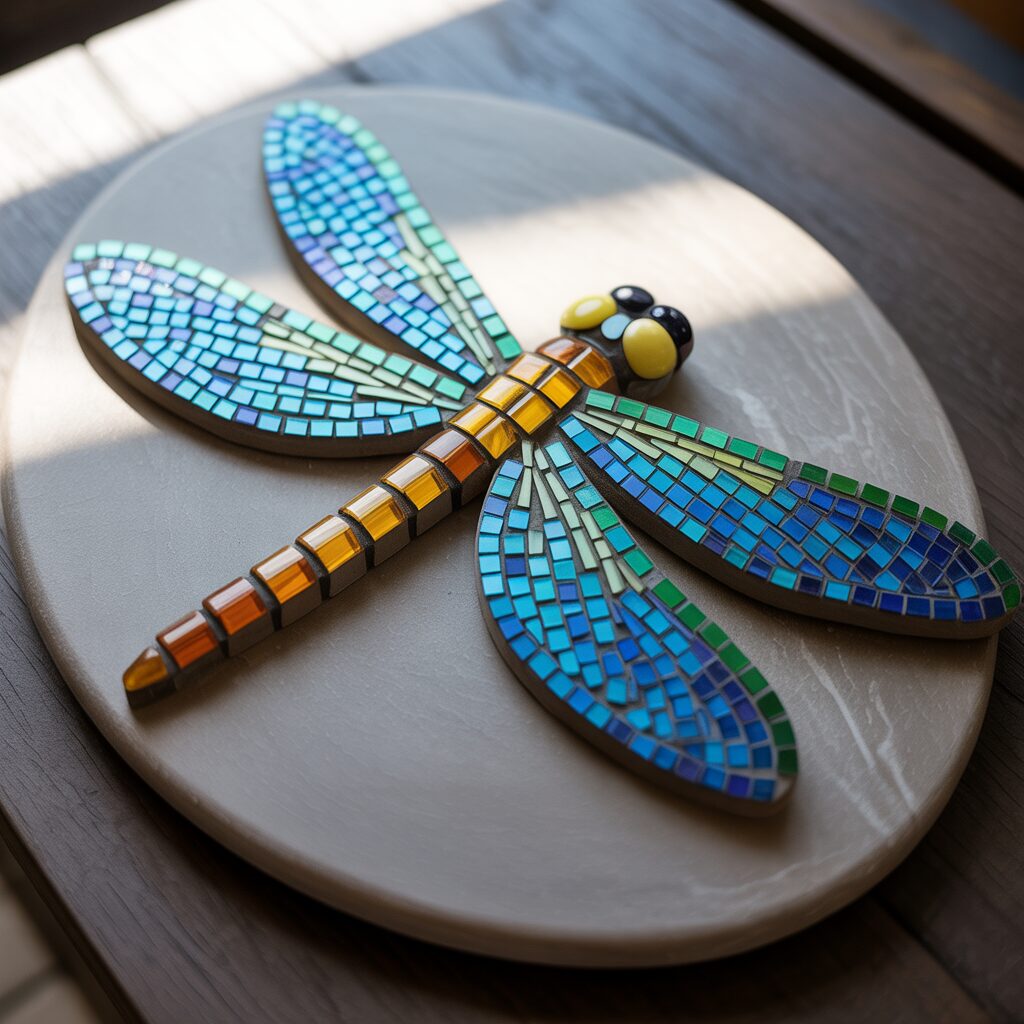
A dragonfly has four wings. The body is long. The eyes are large. The design is symmetrical.
Sketch a dragonfly on paper. Transfer the design to wet concrete. Press green tiles for the body. Press iridescent glass for the wings. The wings should angle upward.
Pro Tip: Use blue glass for the eyes. Blue contrasts with green.
Mistake to Avoid: Do not make the wings too small. Dragonfly wings are larger than the body.
6. Mosaic Stepping Stone with Family Name
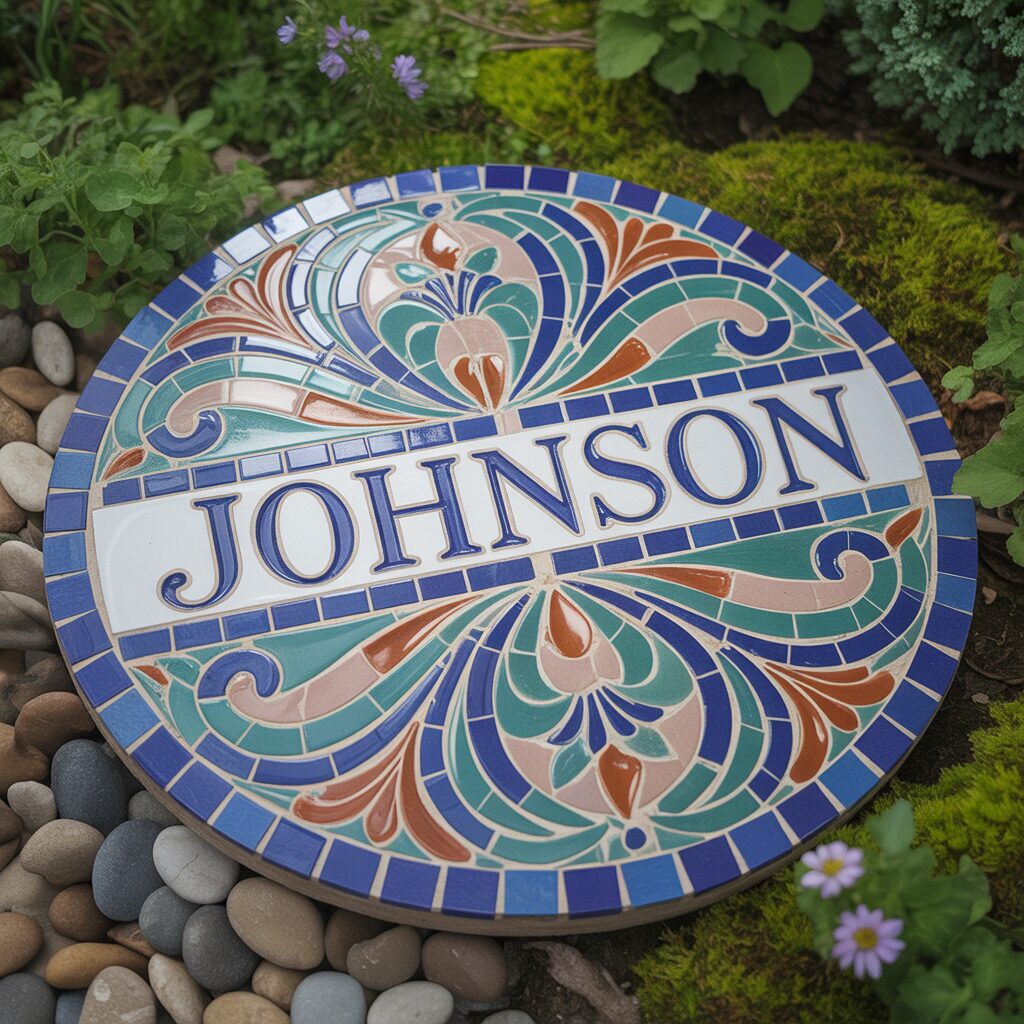
A family name on a stone marks a garden entrance. It welcomes visitors. It declares ownership.
Use letter tiles to spell your last name. Press them into wet concrete in a straight line. Fill the background with small tiles in a contrasting color.
Pro Tip: Use a level to keep the letters straight. Crooked letters look sloppy.
Mistake to Avoid: Do not use too many letters. Short names are easier to space.
7. Mosaic Stepping Stone with Flower Petals
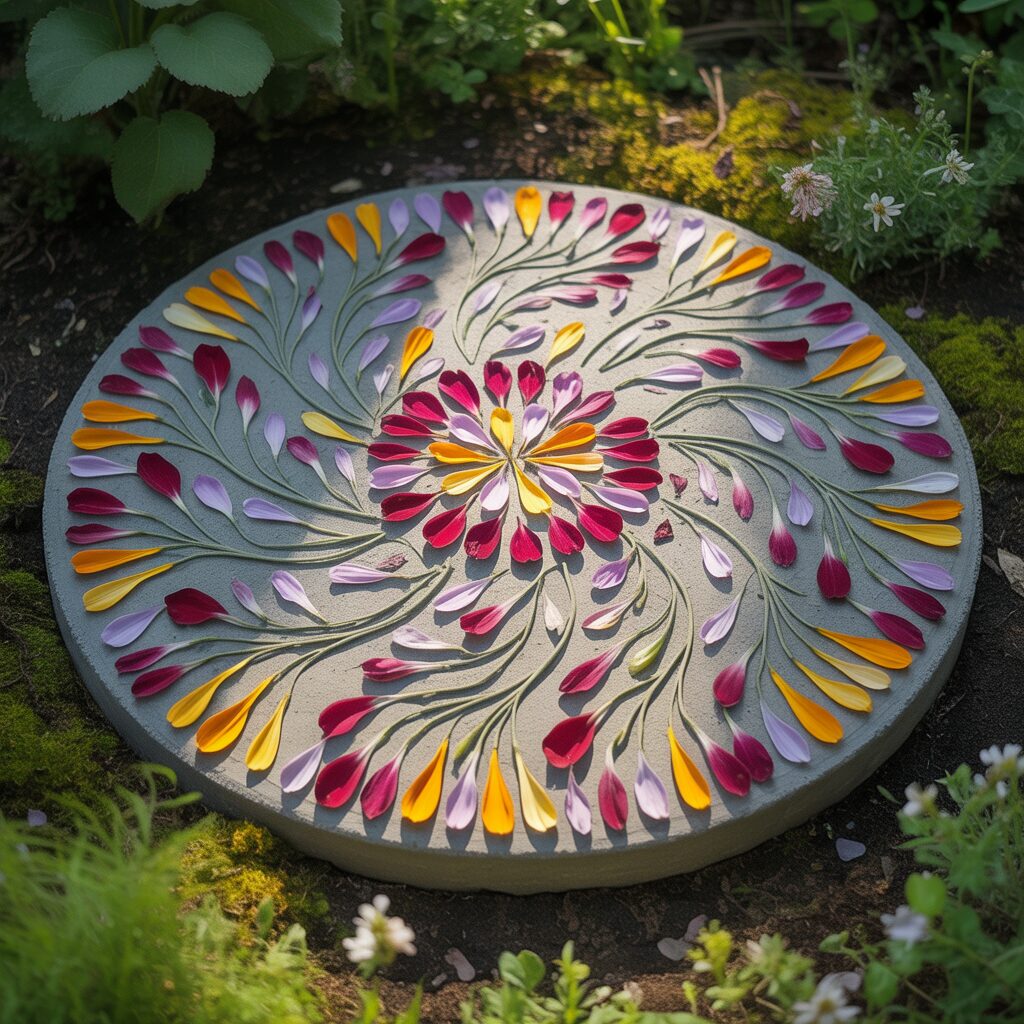
A flower has petals. The petals radiate from the center. The center is a different color.
Press a large yellow tile into the center of wet concrete. Arrange pink or purple tiles around it as petals. The petals should touch the center.
Pro Tip: Use five petals. Odd numbers look more natural than even numbers.
Mistake to Avoid: Do not make the petals too small. Small petals look like dots.
8. Mosaic Stepping Stone with Ladybug
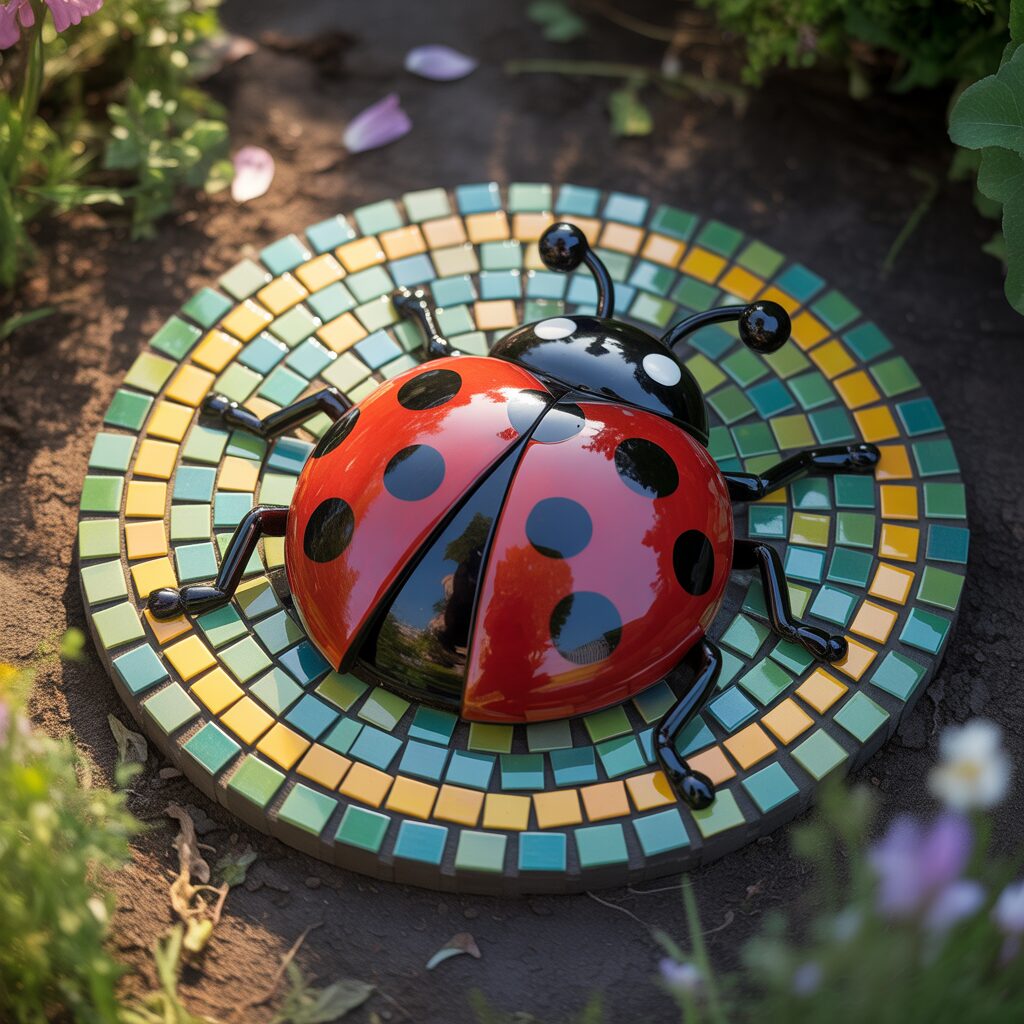
A ladybug is round. It is red with black spots. It is cheerful. It belongs in a garden.
Press a red tile into wet concrete for the body. Press small black tiles for the spots. Add a black tile for the head. The antennae can be thin glass strips.
Pro Tip: Use a round stone. The round shape matches the ladybug.
Mistake to Avoid: Do not add too many spots. Seven spots is the maximum.
9. Mosaic Stepping Stone with Celtic Knot
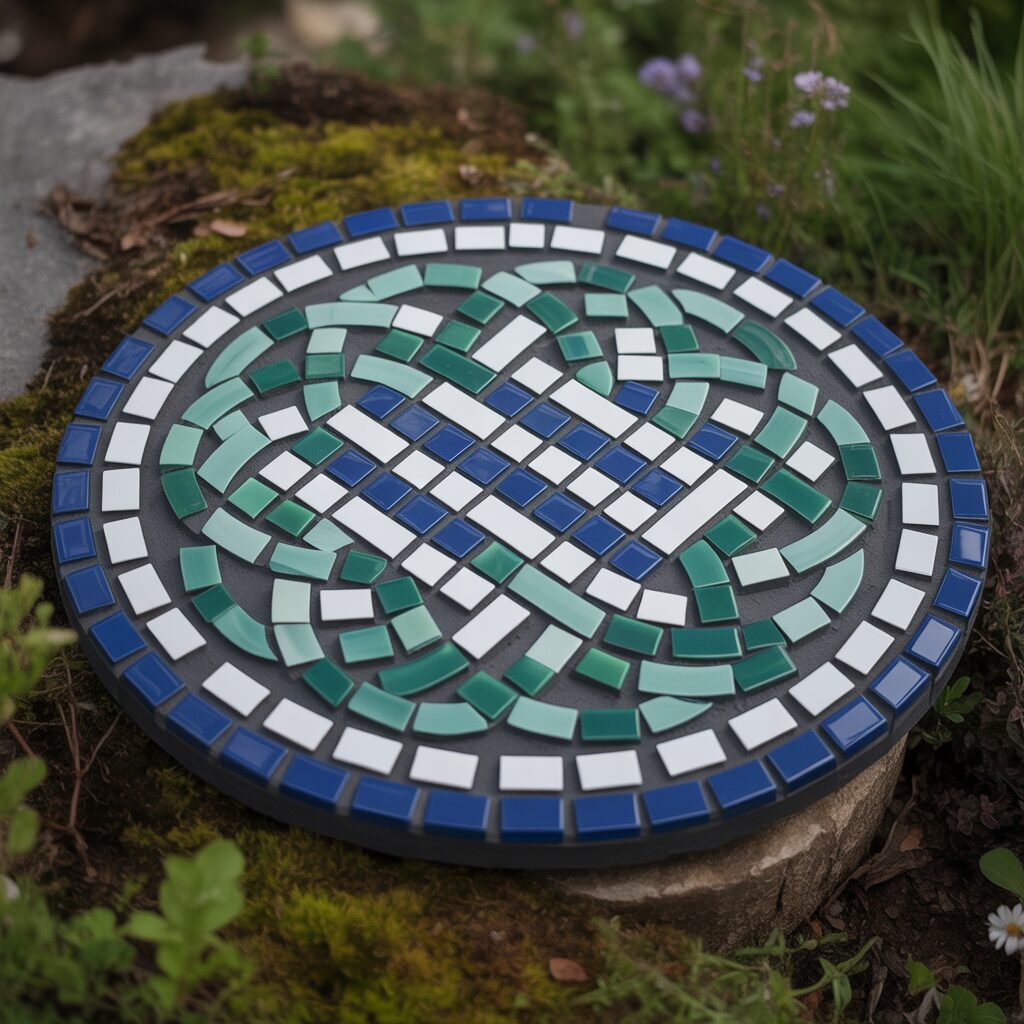
Celtic knots have no beginning. They have no end. The lines weave over and under.
Sketch a Celtic knot on paper. Transfer the design to wet concrete. Press thin glass strips along the lines. The strips should be the same width throughout.
Pro Tip: Use a single color for the knot. Contrast with a different color background.
Mistake to Avoid: Do not break the line. The knot must be continuous.
10. Mosaic Stepping Stone with Sea Turtle
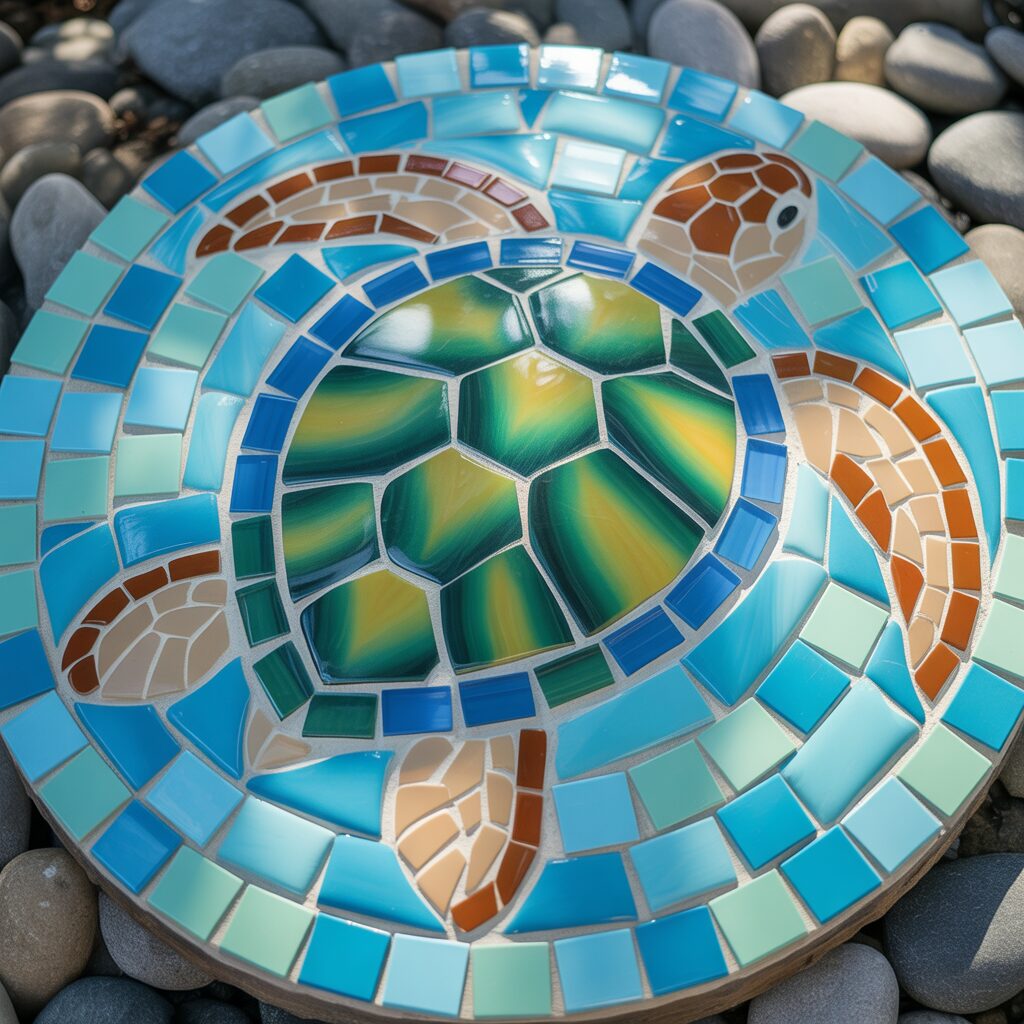
A sea turtle has a shell. The shell is patterned. The flippers extend outward.
Press green tiles into the shape of a turtle shell. Add a hexagonal pattern on the shell. Press brown tiles for the flippers and head. The turtle should face forward.
Pro Tip: Use a round stone for the shell. The round shape fits the turtle body.
Mistake to Avoid: Do not make the flippers too short. Turtles need long flippers.
11. Mosaic Stepping Stone with Puzzle Pieces
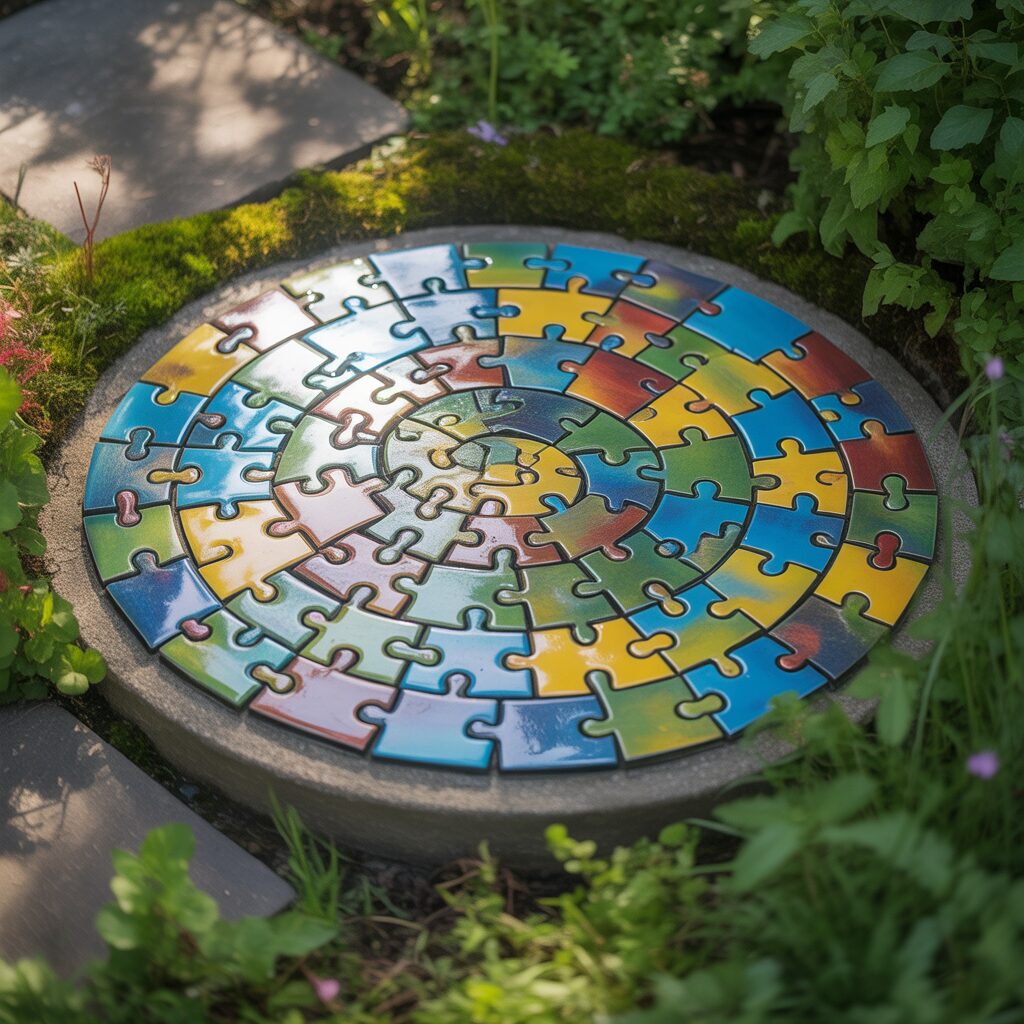
Puzzle pieces fit together. They also come apart. A stone of puzzle pieces is ironic. Concrete does not come apart.
Press ceramic puzzle pieces into wet concrete. Do not use real puzzle pieces. Cut tile into puzzle shapes. The tabs and blanks should interlock.
Pro Tip: Use a different color for each piece. The contrast emphasizes the interlocking.
Mistake to Avoid: Do not leave gaps between pieces. Puzzle pieces should touch.
12. Mosaic Stepping Stone with Starry Night
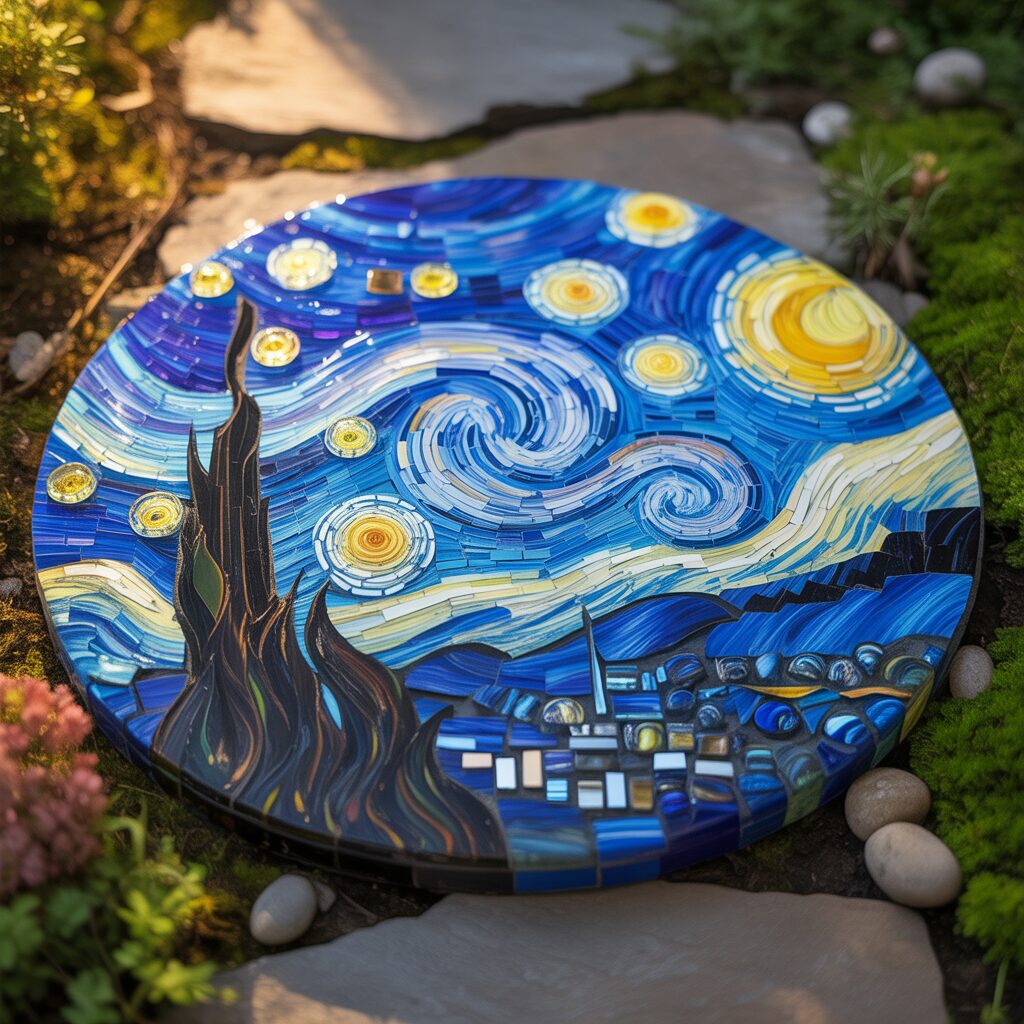
A dark stone with yellow tiles looks like the night sky. The stars are scattered randomly.
Use dark gray or black concrete. Press small yellow tiles into the surface. Scatter them randomly. No pattern. The randomness is the beauty.
Pro Tip: Add a few larger yellow tiles. Large tiles look like planets.
Mistake to Avoid: Do not use white tiles. White tiles look like stars on a sunny day.
13. Mosaic Stepping Stone with Bee
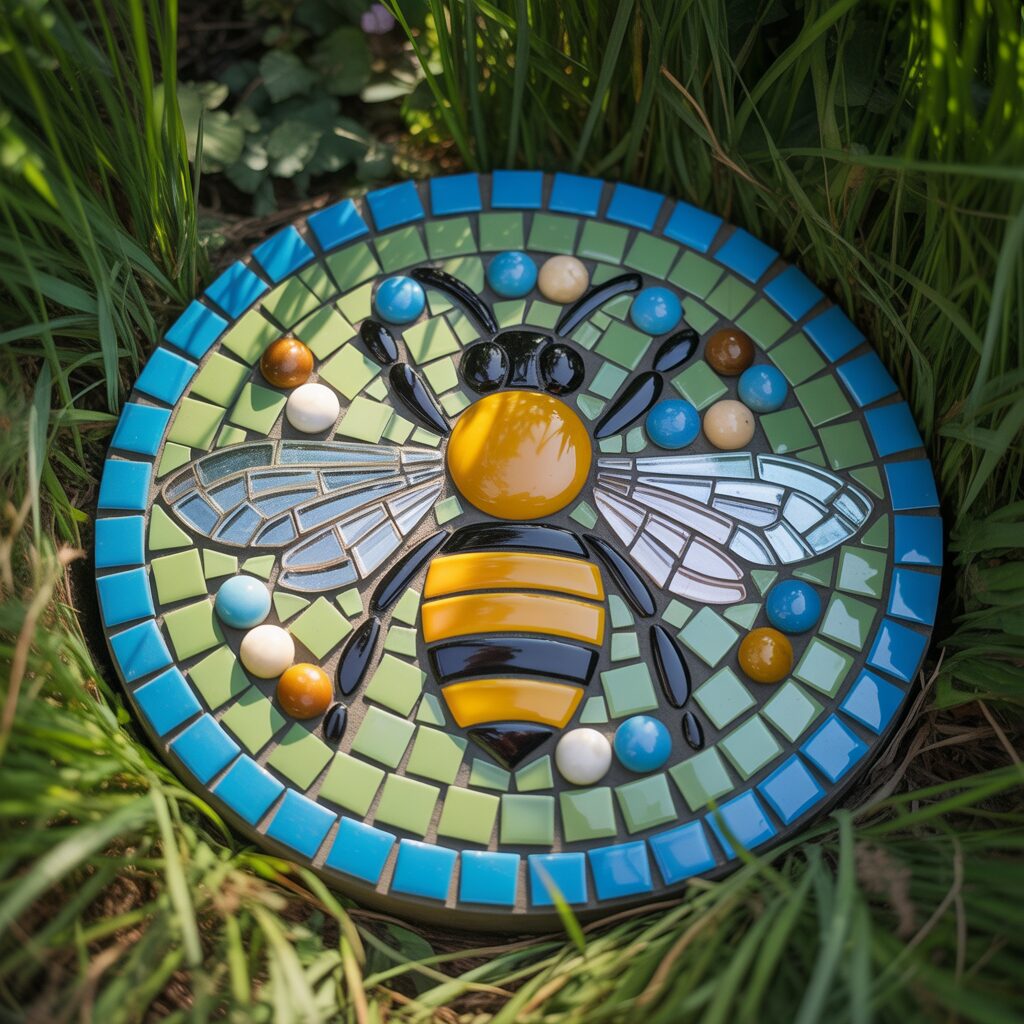
A bee is yellow and black. It has wings. It pollinates flowers. It belongs in a garden mosaic.
Press yellow tiles for the body. Press black stripes across the yellow. Add translucent blue wings. The wings should be larger than the body.
Pro Tip: Use hexagonal tiles for the honeycomb effect. Hexagons suggest a beehive.
Mistake to Avoid: Do not add a stinger. The stinger is too small for mosaic.
14. Mosaic Stepping Stone with Gingko Leaf
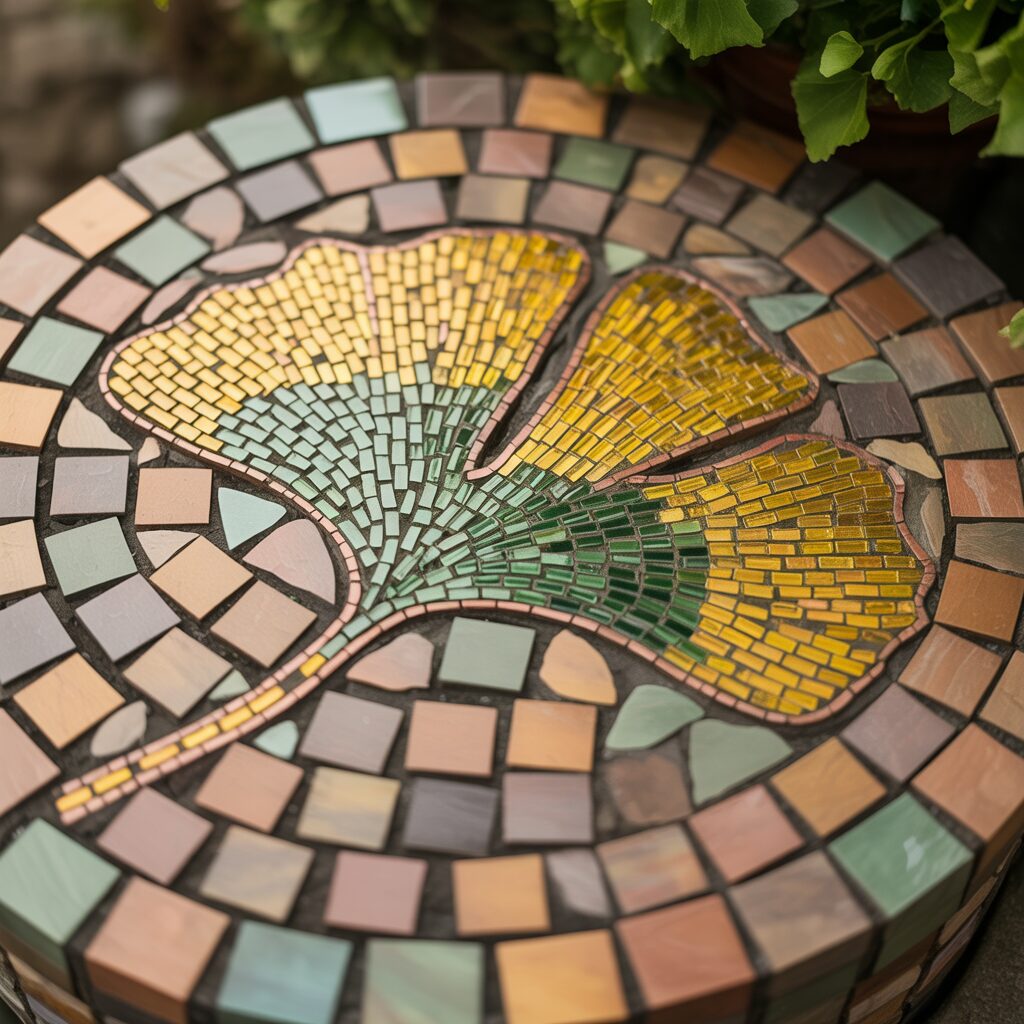
The gingko leaf is fan-shaped. It has parallel veins. It is ancient. It is distinctive.
Sketch a fan shape on paper. Transfer to wet concrete. Press green tiles along the outline. Fill the interior with lighter green. Add thin lines for veins.
Pro Tip: Use two shades of green. Light and dark create depth.
Mistake to Avoid: Do not make the stem too long. Gingko stems are short.
15. Mosaic Stepping Stone with Rainbow
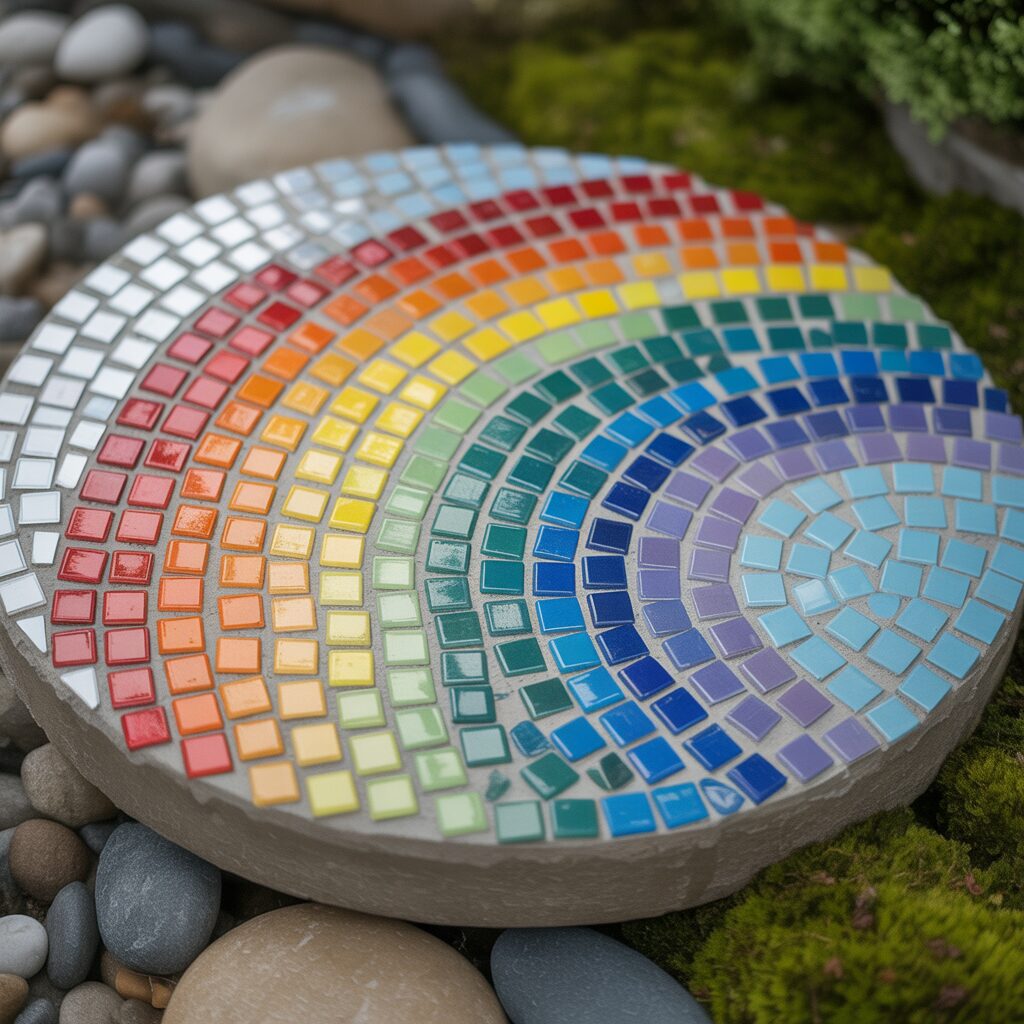
A rainbow is an arc. It has seven colors. The colors fade into each other.
Press tiles in a curved line across the stone. Red at the top. Orange next. Yellow, green, blue, indigo, violet. The arc should touch both edges of the stone.
Pro Tip: Use a protractor to mark the arc. The curve should be smooth.
Mistake to Avoid: Do not use too many tiles for each color. Three tiles per color is enough.
16. Mosaic Stepping Stone with Cactus
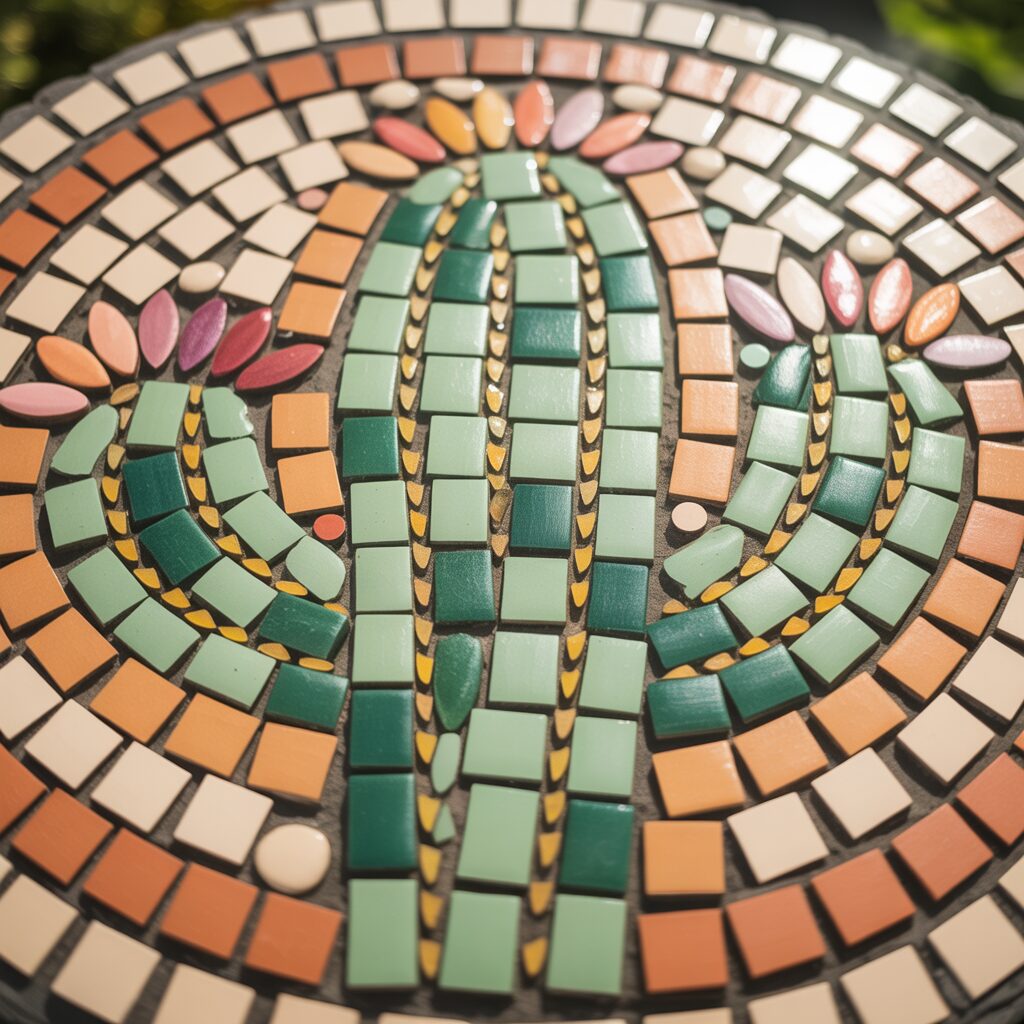
A cactus is spiky. It is also geometric. The arms reach upward.
Press green tiles into a tall central shape. Add two arms on the sides. The arms should angle upward. Add small white tiles for spines. The spines should dot the surface.
Pro Tip: Use a square stone. The square shape contrasts with the round cactus.
Mistake to Avoid: Do not make the arms too long. Cactus arms are shorter than the main trunk.
17. Mosaic Stepping Stone with Moon Phases

The moon has phases. New moon. Crescent. Quarter. Gibbous. Full. A stone can show all of them.
Create a row of circles across the stone. The first circle is empty (new moon). The second is a sliver (crescent). The last is full. Fill each circle with white tiles.
Pro Tip: Use a dark stone. The dark background contrasts with the white moons.
Mistake to Avoid: Do not make the moons too small. The phases need to be visible.
18. Mosaic Stepping Stone with Mosaic Numbers
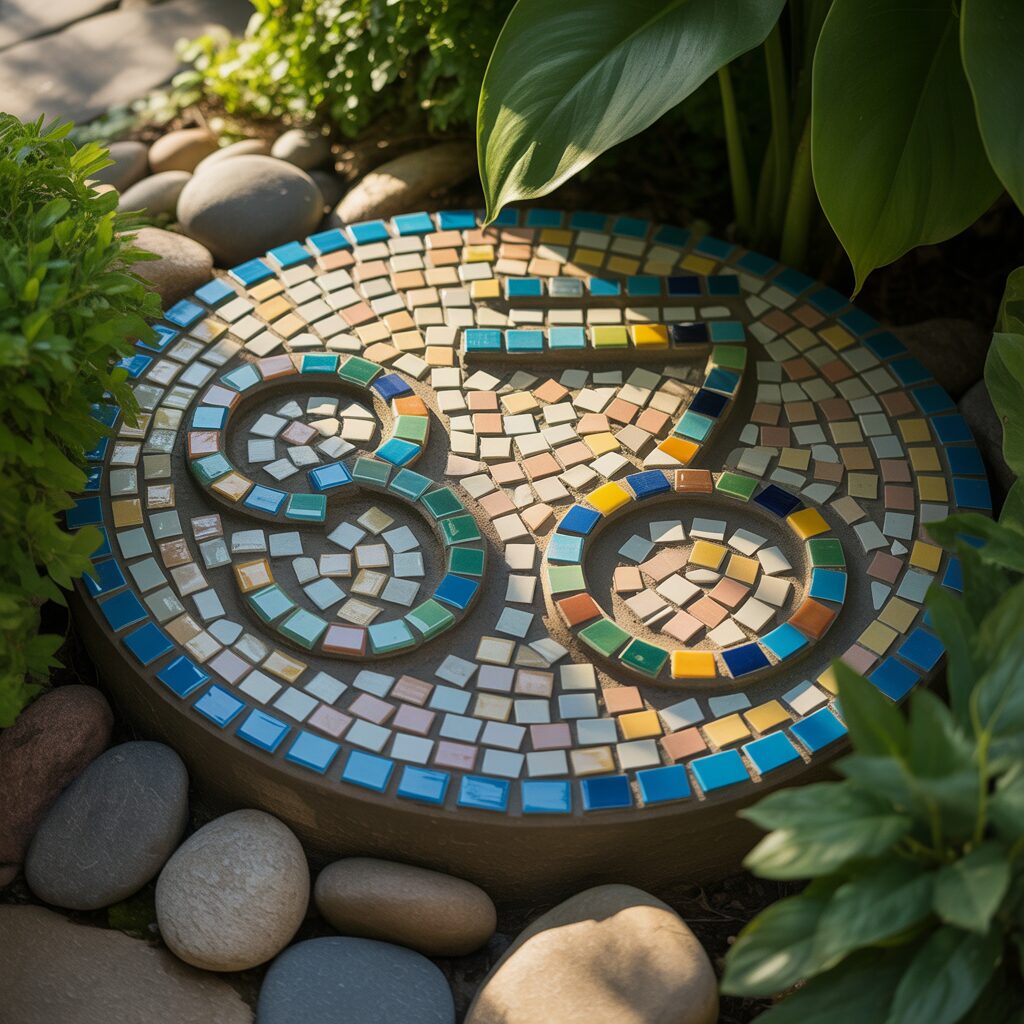
Numbers mark a path. Number one. Number two. Number three. A sequence of stones with numbers guides visitors.
Use number tiles. Press one number into each stone. One stone says “1.” The next says “2.” Place the stones in order along the path.
Pro Tip: Use large numbers. The numbers should be readable from standing height.
Mistake to Avoid: Do not use fancy fonts. Simple numbers are easier to read.
19. Mosaic Stepping Stone with Fern Frond
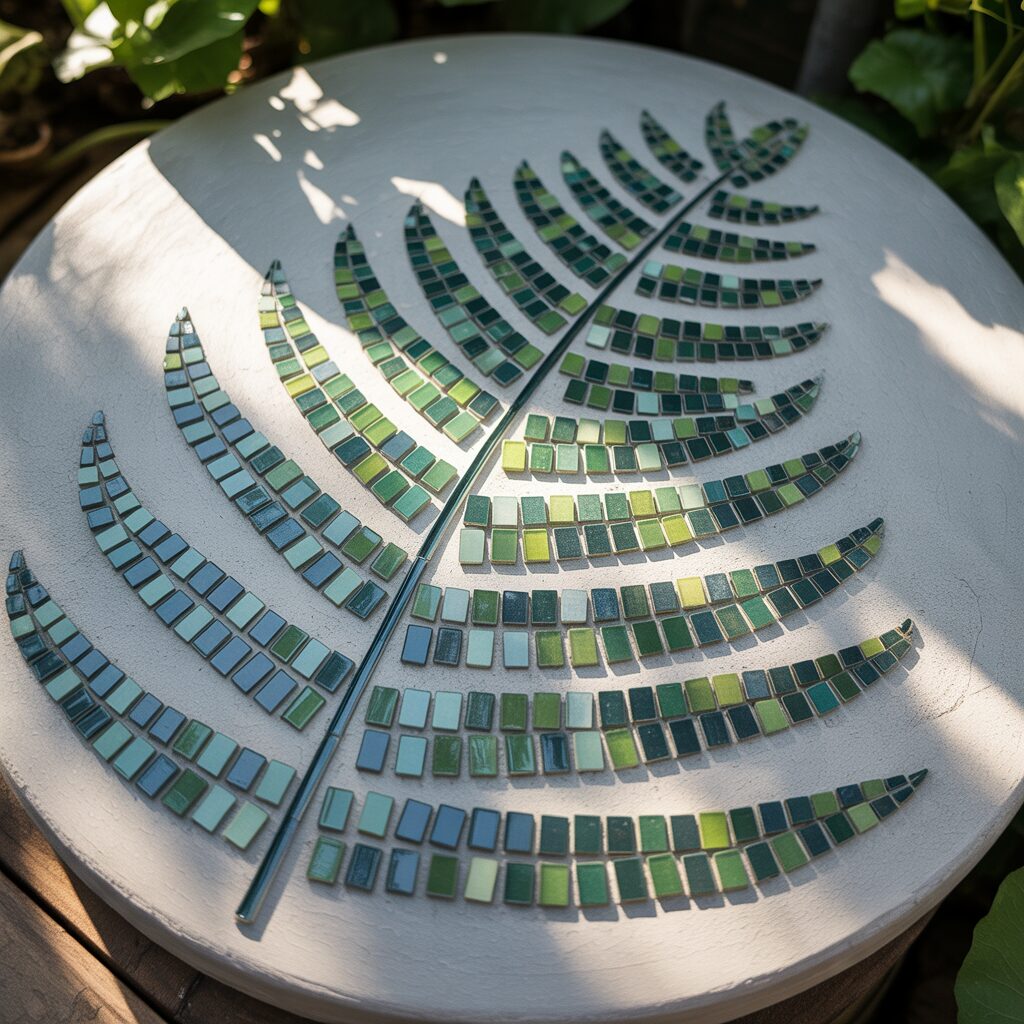
A fern frond is curved. It has small leaves along the stem. The leaves are symmetrical.
Press a curved line of green tiles for the stem. Add small leaf tiles on both sides of the stem. The leaves should get smaller toward the tip.
Pro Tip: Use a light green for the leaves. Dark green for the stem. The contrast creates depth.
Mistake to Avoid: Do not make the frond too short. Fern fronds are longer than they are wide.
20. One Large Mosaic Stone as a Focal Point
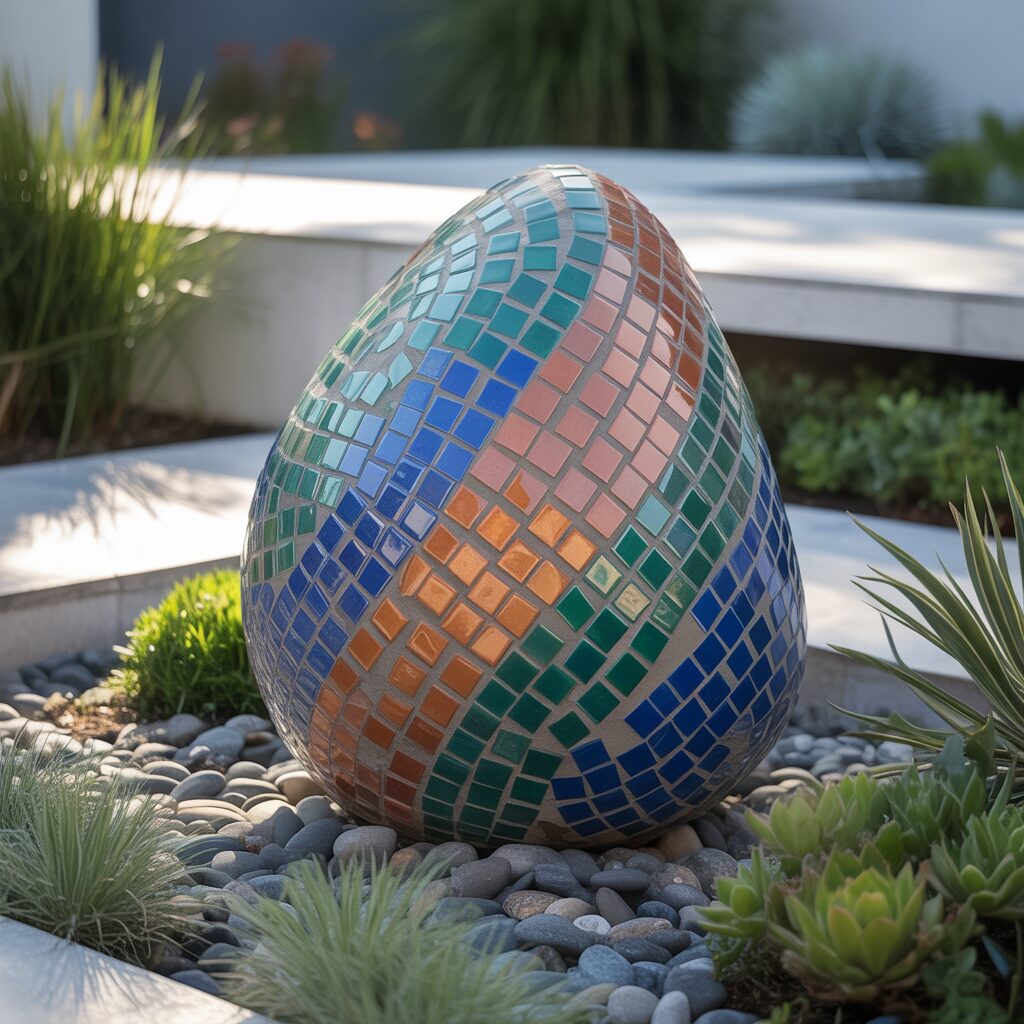
A path of small stones is functional. One large stone is a destination. A mosaic on a large stone invites pause.
Use a mold that is 24 inches wide or more. Create a complex design. A mandala. A landscape. A portrait. The scale allows detail.
Pro Tip: Use a plastic kiddie pool as a mold. Kiddie pools are large and flexible.
Mistake to Avoid: Do not make the stone too heavy to move. Large stones weigh over 50 pounds.
Frequently Asked Questions
What kind of concrete is best for stepping stones?
Quick-setting concrete. It hardens in 20 minutes. It is strong enough for foot traffic. It is available at any hardware store.
Can I use regular ceramic tiles outdoors?
Yes, if the tiles are frost-proof. Porcelain tiles are frost-proof. Some ceramic tiles are not. Check the packaging.
How do I seal a mosaic stepping stone?
Use a concrete sealer. Spray or brush it on. Apply two coats. Reapply every two years. Sealer prevents cracking.
What adhesive works for outdoor mosaic?
Thinset mortar. It is designed for outdoor tile. It handles freezing and thawing. Craft glue will fail in rain.
Conclusion
A garden path should be beautiful. Mosaic stepping stones make it beautiful. Sunburst stones in yellow and orange. Handprint stones that capture childhood. Blue and white waves for dry gardens. Marble stones that look like candy. Dragonfly stones with iridescent wings. Family name stones that mark territory. Flower stones with radiating petals. Ladybug stones that are round and red. Celtic knot stones that have no beginning. Sea turtle stones with patterned shells.
Start with one stone today. A round mold. A bag of concrete. A handful of tiles. The stone will last for years. The path will guide your feet. And the garden will have a new focal point.