20 Mosaic Wall Art Ideas That Add Color, Texture, and Personality to Any Room
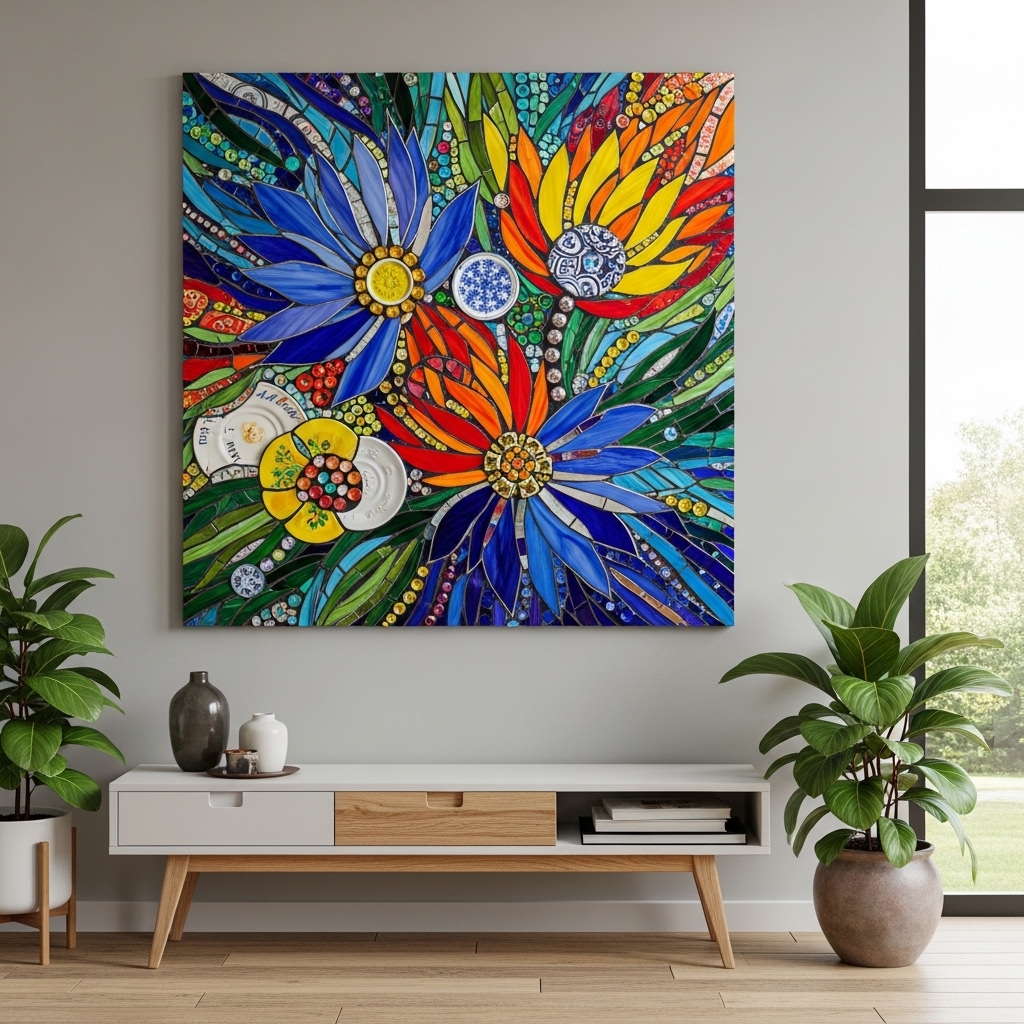
Large-Scale Wall Installations | Textured Art on a Budget | DIY Statement Pieces for Blank Walls
A blank wall is a canvas. Paint is one option. Mosaic is another. Unlike a framed print, mosaic wall art changes with the light. Morning sun hits the tiles differently than evening lamplight. The piece becomes part of the room’s rhythm.
Mosaic also offers something no other medium can match: texture. Your eyes see the colors. Your brain registers the depth. The result is a wall that feels alive.
This guide delivers 20 mosaic wall art ideas for every room. No two ideas repeat. Each offers a unique approach to filling blank walls with color and dimension.
1. Abstract Color Field on a Large Canvas
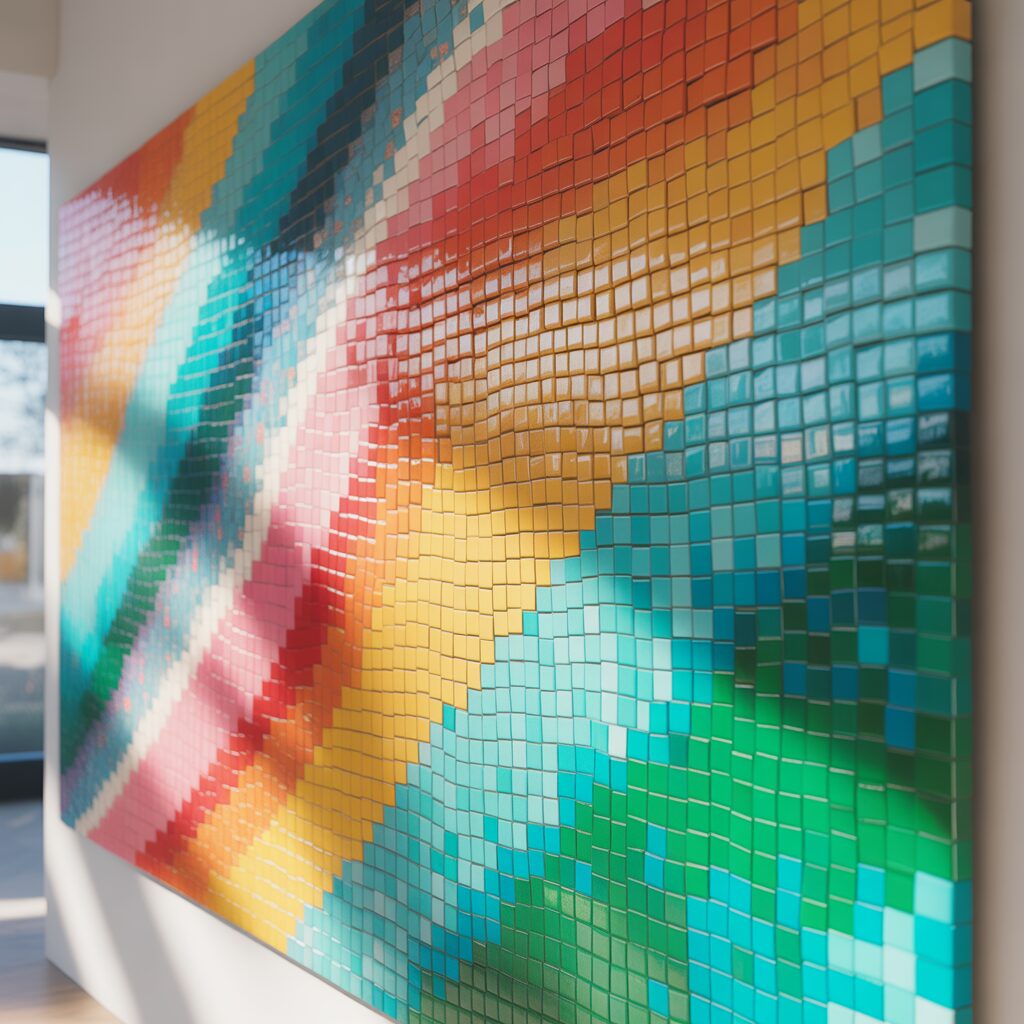
A mosaic does not need to cover the entire wall. Mount it on a large canvas. Hang the canvas like a painting. The piece becomes portable art.
Break tiles into irregular shapes. Arrange them in broad color bands. Blue at the top. Green in the middle. Gold at the bottom. The transitions between colors should be jagged, not smooth.
Pro Tip: Use a stretched artist’s canvas as the base. The wood frame supports the weight of small tiles.
Mistake to Avoid: Do not use a canvas that is too heavy. Large canvases already weigh several pounds.
2. Mosaic Arches Repeating Across the Wall
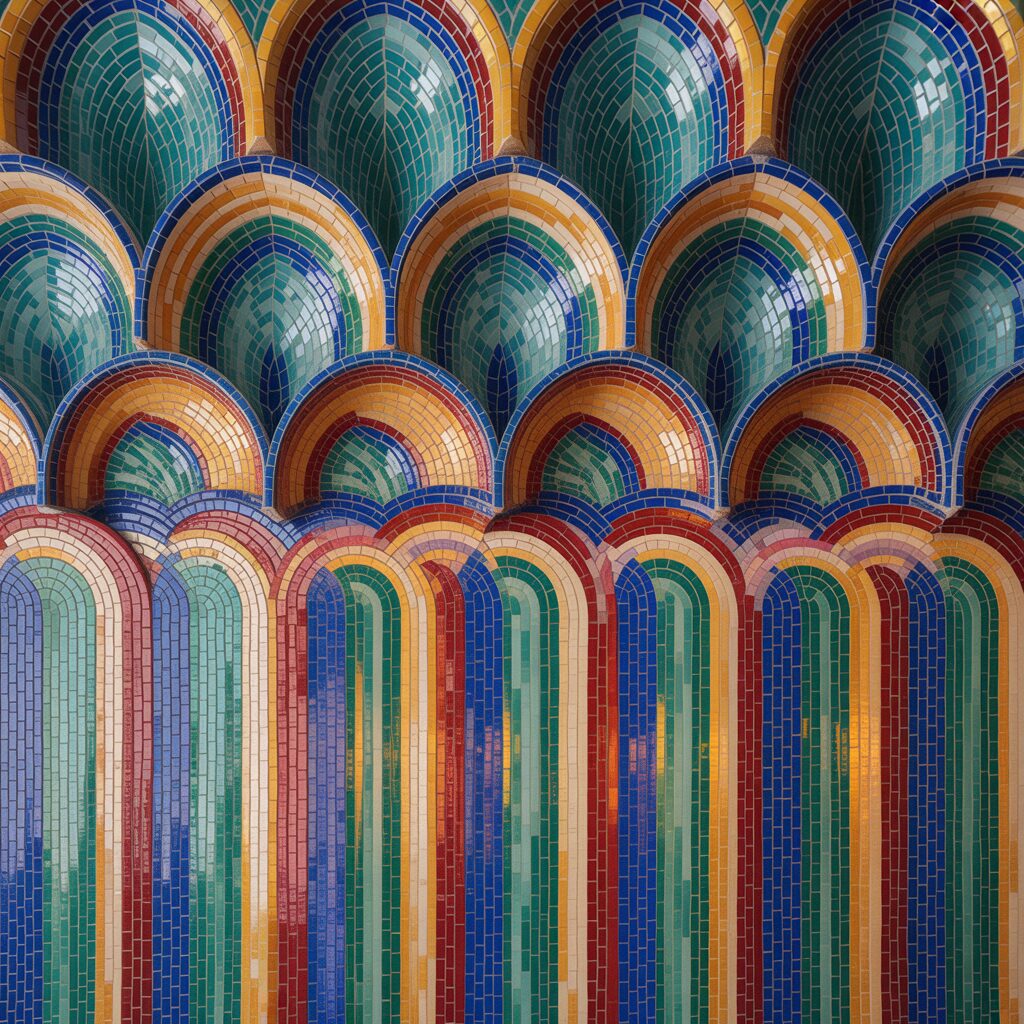
A row of arches suggests architecture. A colonnade. A courtyard. The repetition creates rhythm.
Create vertical columns of tiles spaced evenly across the wall. At the top of each column, curve the tiles into an arch shape. The arches should be identical. The repetition is the design.
Pro Tip: Use a template for the arch shape. Trace the template for every column. Consistency matters.
Mistake to Avoid: Do not use too many columns. Three arches have impact. Seven arches feel busy.
3. Spiral Starting from the Center
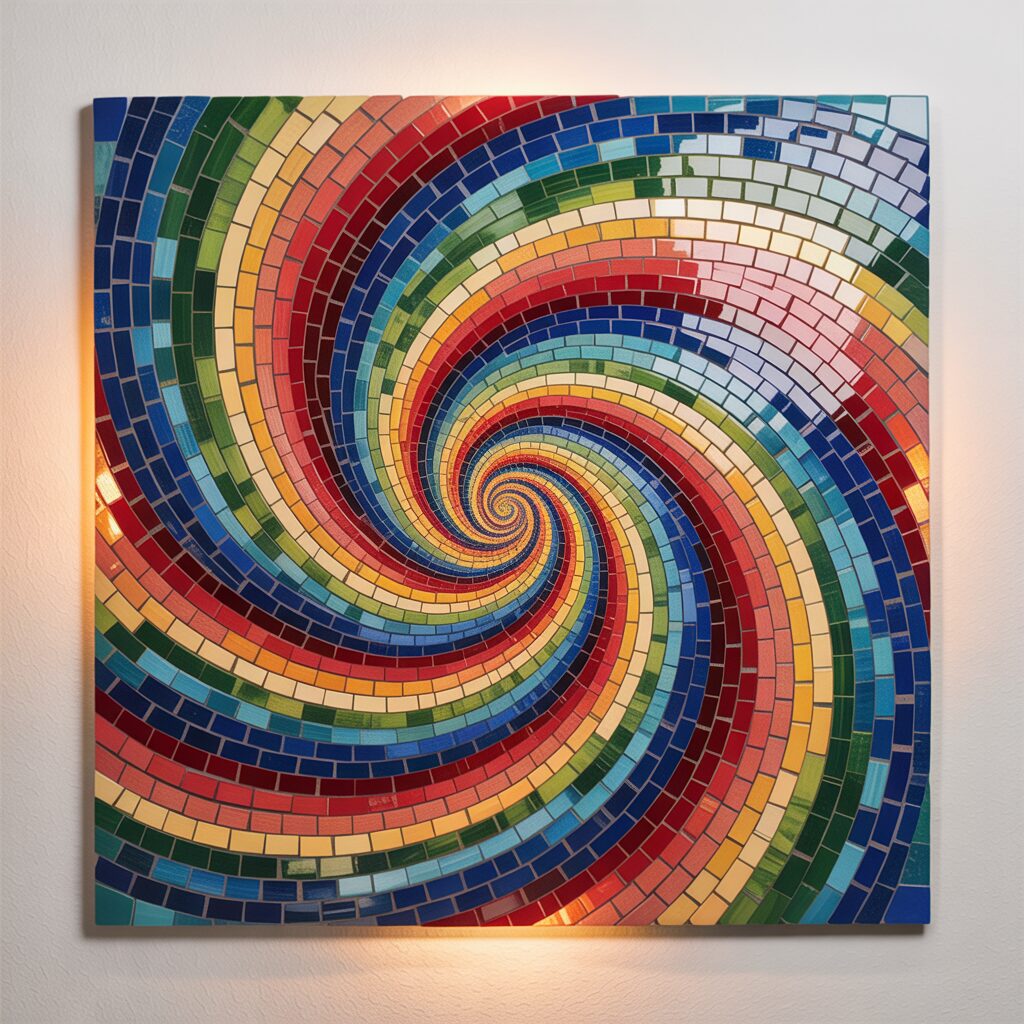
A spiral draws the eye inward. The center is the destination. The journey is the spiral itself.
Start with a single tile in the exact center of the wall. Work outward in a circular pattern. Each ring of tiles should be a slightly different shade. The color should fade as the spiral expands.
Pro Tip: Use a compass to draw the spiral path before gluing. Follow the line precisely.
Mistake to Avoid: Do not make the spiral too tight. Wide spirals are easier to read from a distance.
4. Mosaic Stripes at an Angle
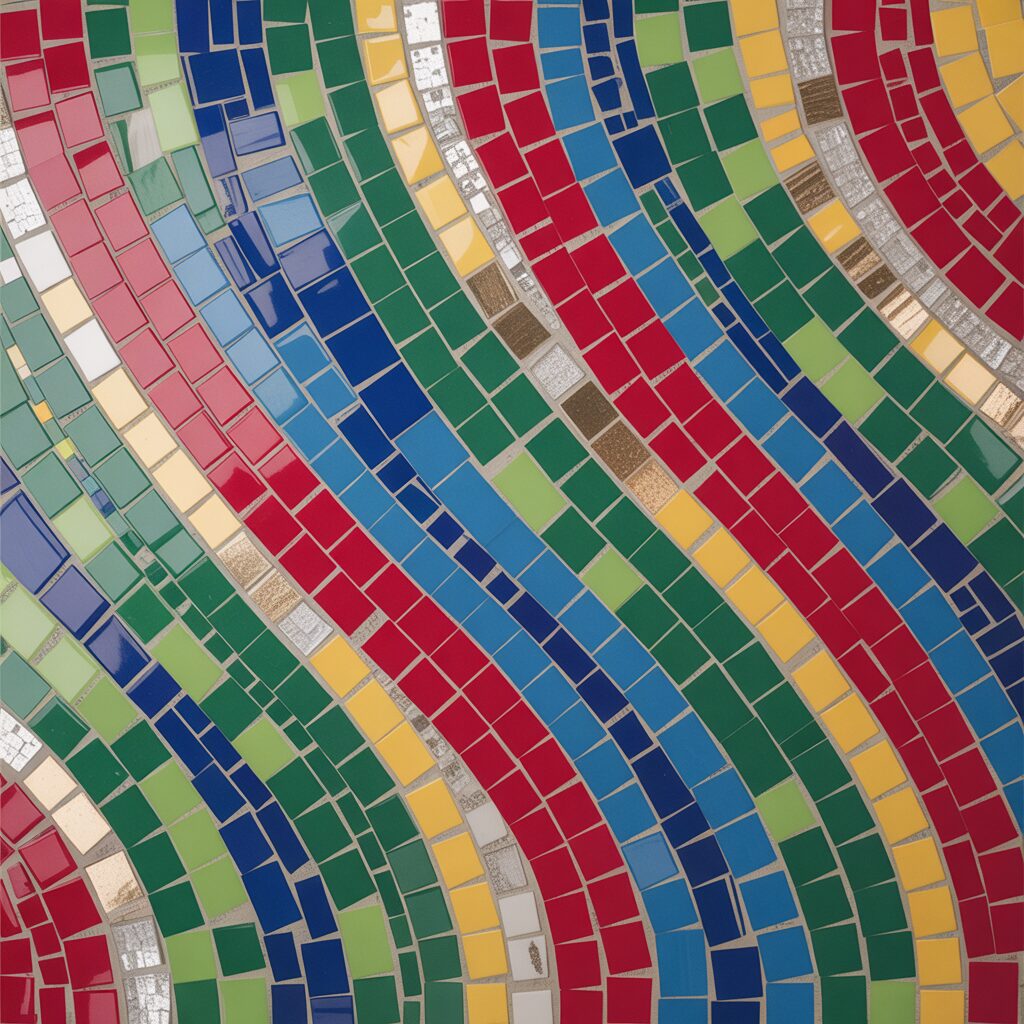
Vertical stripes are expected. Angled stripes are unexpected. The tilt adds energy.
Create stripes that run diagonally from the top left corner to the bottom right corner. Alternate between two colors. The stripes should be the same width. The angle should be consistent.
Pro Tip: Use a laser level to mark the angle. A straight line is essential.
Mistake to Avoid: Do not use more than two colors. Stripes need contrast, not variety.
5. Mosaic Cascade Falling from the Ceiling
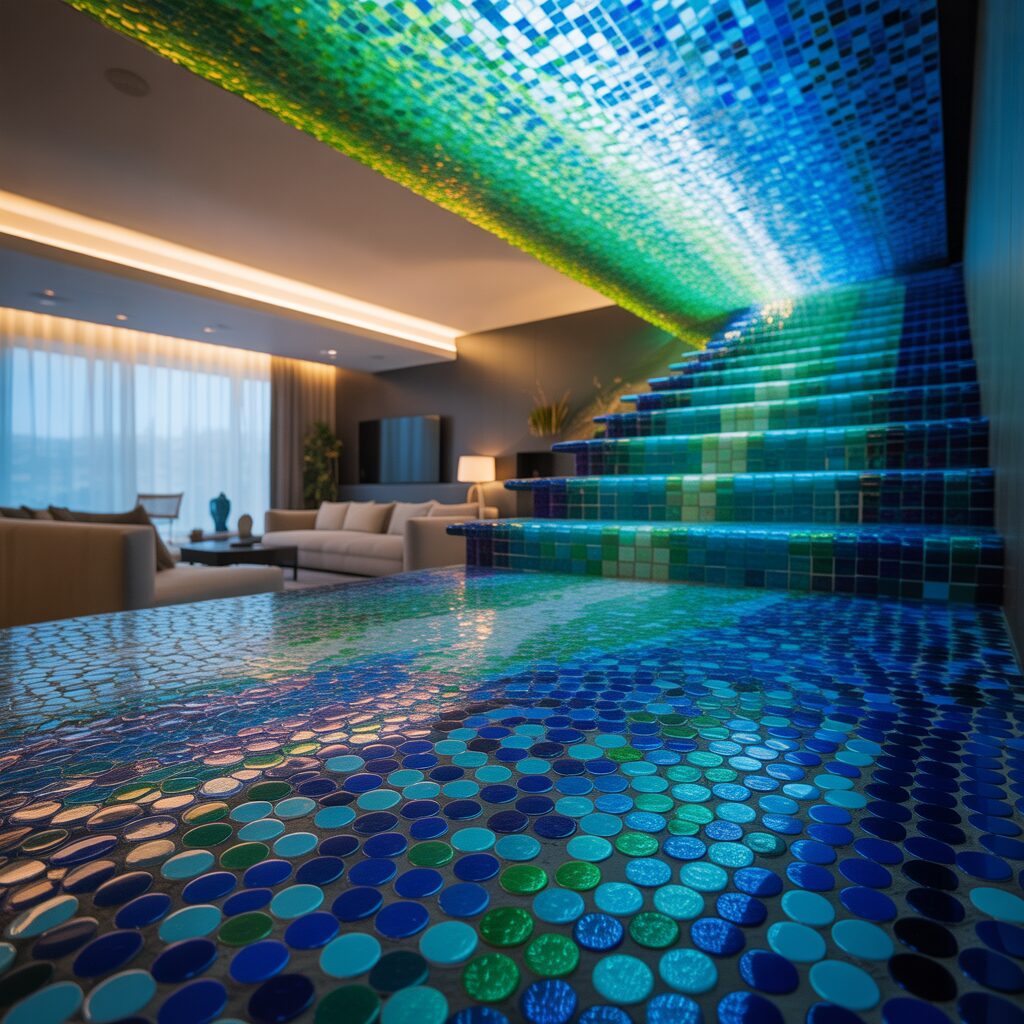
A waterfall of tiles starts at the ceiling and drips downward. The effect is gravity made visible.
Cluster tiles tightly at the ceiling. Space them further apart as they descend. End with a few isolated tiles near the floor. The density should decrease gradually.
Pro Tip: Use pale blue and white tiles for a water effect. The colors feel cool and refreshing.
Mistake to Avoid: Do not make the cascade too wide. A narrow column of tiles has more impact.
6. Mosaic Grid with Empty Cells
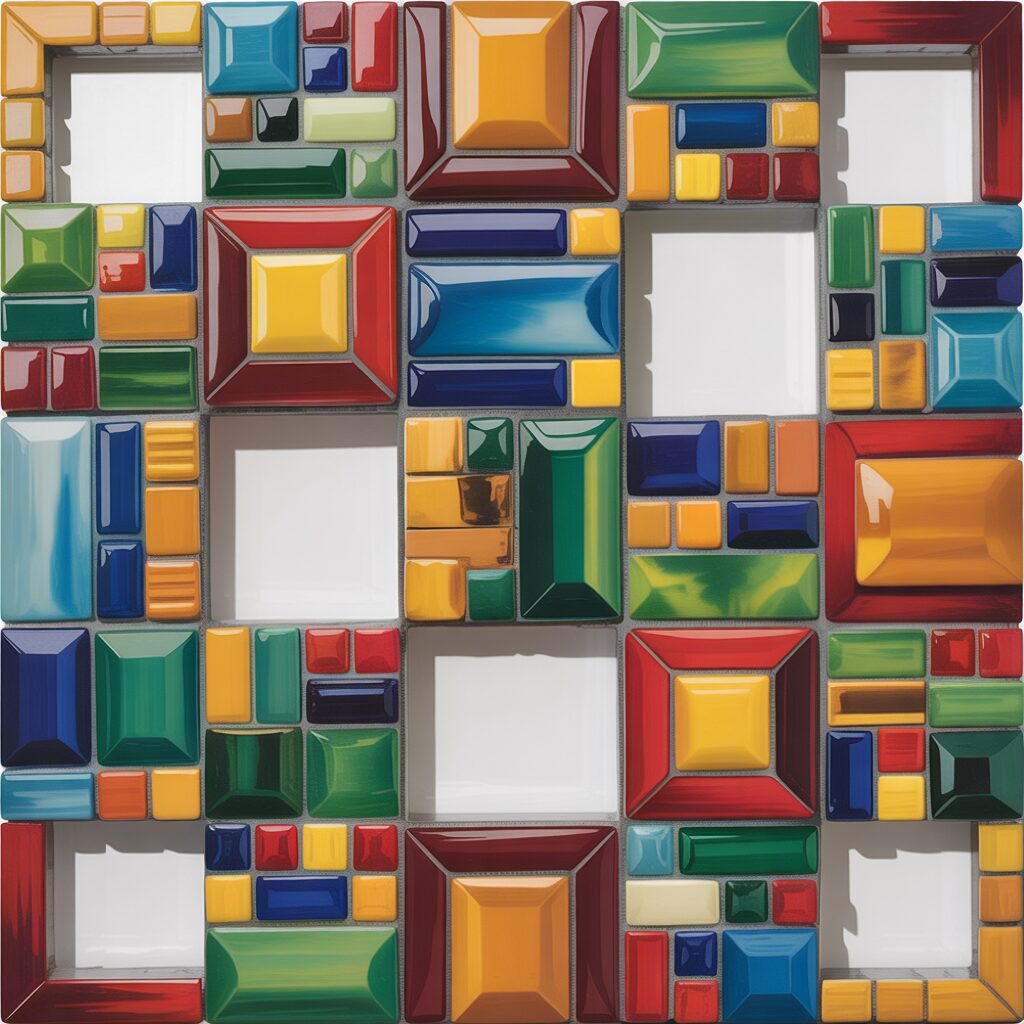
A full grid is dense. A grid with missing cells is intriguing. The empty spaces become part of the pattern.
Create a grid of squares across the wall. Fill some squares completely. Leave others empty. The pattern of filled and empty squares should be random but balanced.
Pro Tip: Use the same color for all filled squares. The empty squares will stand out more.
Mistake to Avoid: Do not fill more than half the squares. Empty space is the point of the design.
7. Mosaic Horizon Line Only
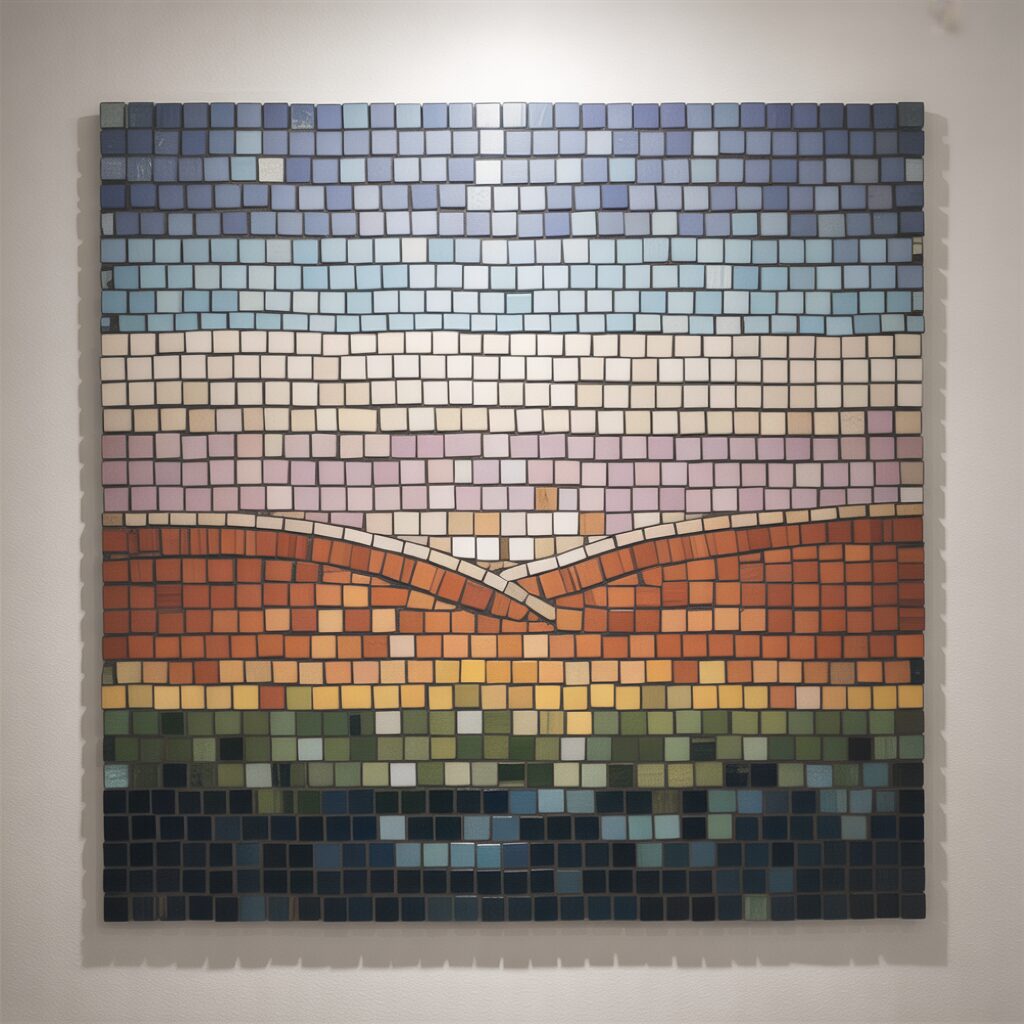
The horizon is the simplest composition. A line dividing earth from sky. Everything else is implied.
Create a single horizontal line of tiles across the wall. The line should be perfectly straight. Use earth tones below the line. Use sky tones above the line. The rest of the wall remains empty.
Pro Tip: Use a level to mark the line. A crooked horizon is distracting.
Mistake to Avoid: Do not place the horizon in the exact center. A low horizon is more dramatic.
8. Mosaic Burst from an Empty Frame
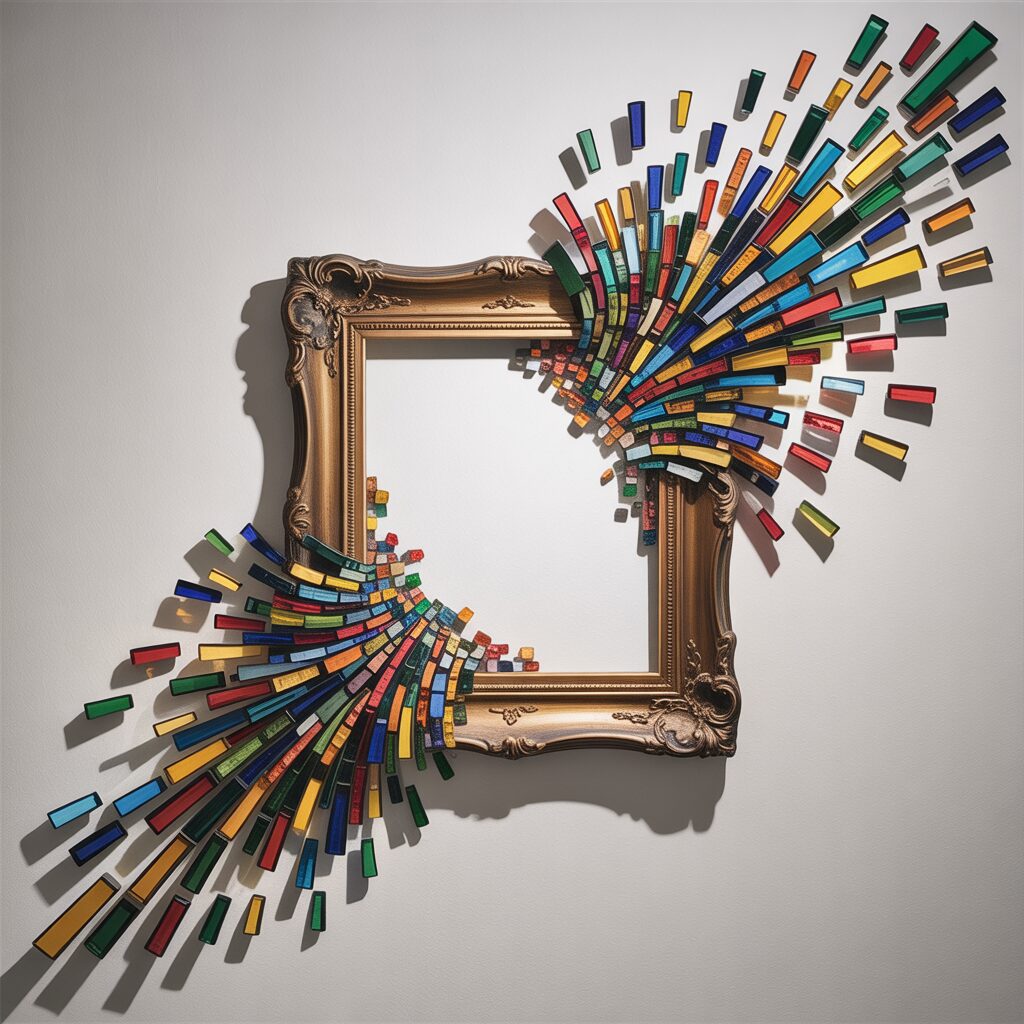
Hang an empty picture frame on the wall. The frame is the boundary. The mosaic bursts outward from inside.
Create a dense cluster of tiles inside the frame. Let the tiles spill over the frame edge. The overflow should spread outward in all directions. The frame contains the center but not the energy.
Pro Tip: Use a thrifted frame. Paint it a bold color before starting.
Mistake to Avoid: Do not glue tiles to the frame itself. The frame should remain distinct from the mosaic.
9. Mosaic Echo of Window Light
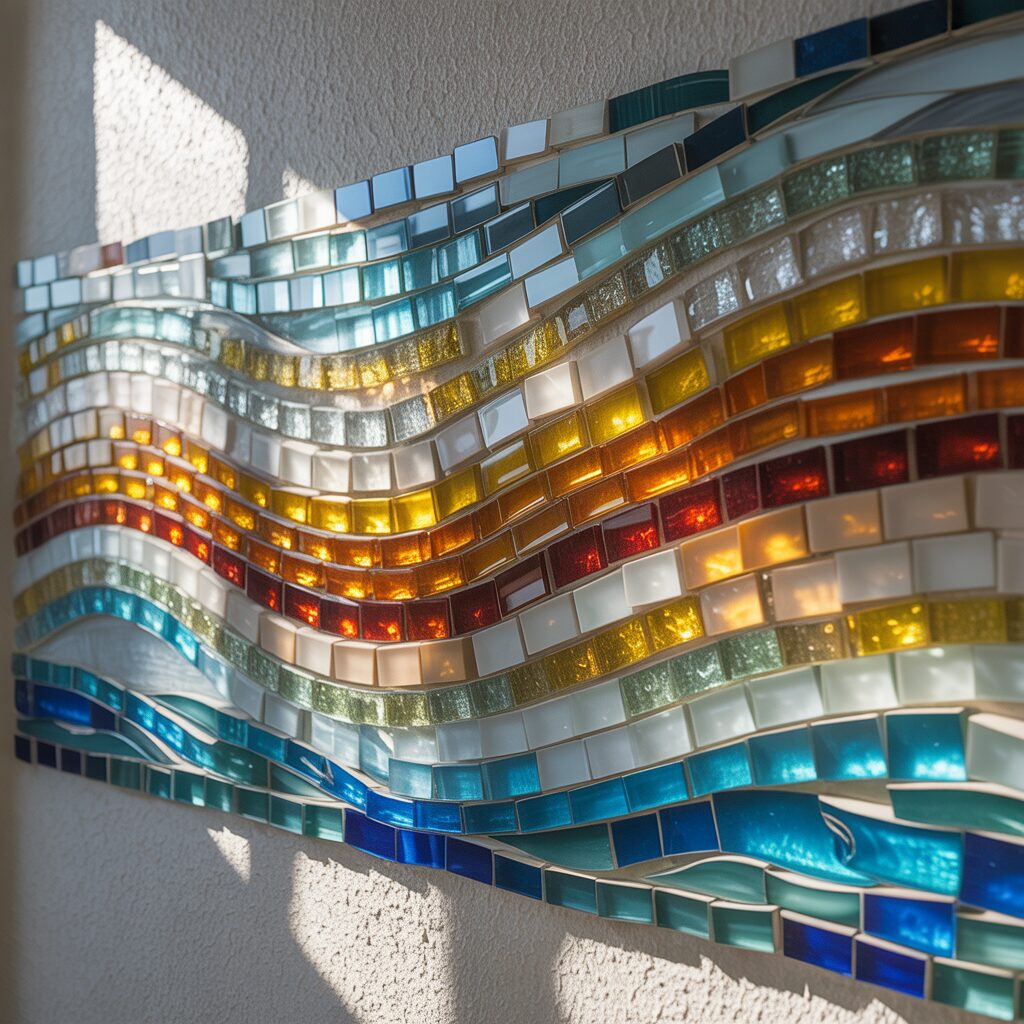
Place a mirror opposite a window. The mirror reflects light. The mosaic echoes it.
Observe where the reflected light falls on the wall. Mark that area. Create a mosaic patch in the exact shape of the light footprint. Use pale yellow and white tiles. The effect is light made solid.
Pro Tip: Photograph the light footprint at different times of day. Choose the most interesting shape.
Mistake to Avoid: Do not make the patch too large. The shape should be precise.
10. Mosaic Ripples Around a Medallion
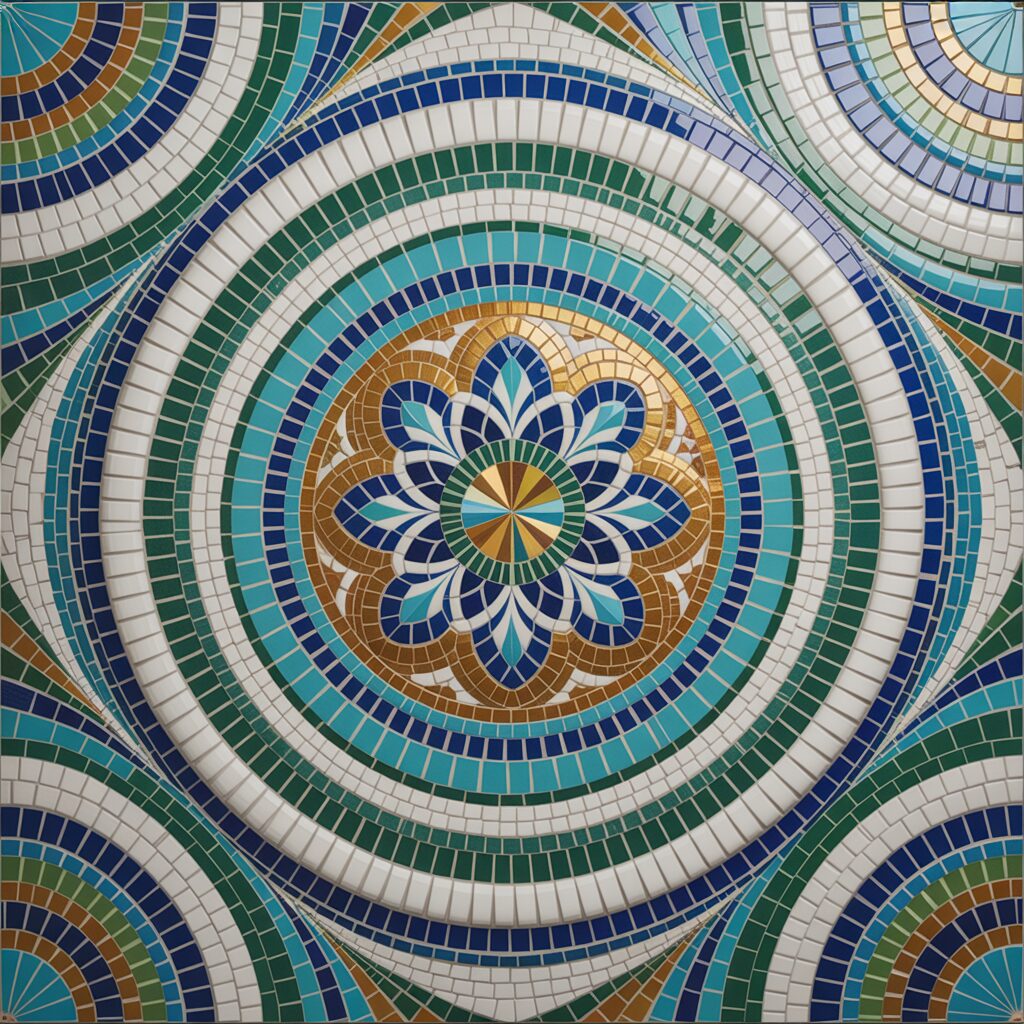
A central medallion floats on the wall. Ripples radiate outward. The effect is a stone dropped in still water.
Create a circular medallion in the center. Surround it with rings of tiles. Each ring should be a different color. The colors should be similar but distinct. Light blue, medium blue, dark blue.
Pro Tip: Use a compass to draw each ring. Precision matters.
Mistake to Avoid: Do not make the medallion too small. The center should be visible from across the room.
11. Mosaic Shadow of Furniture
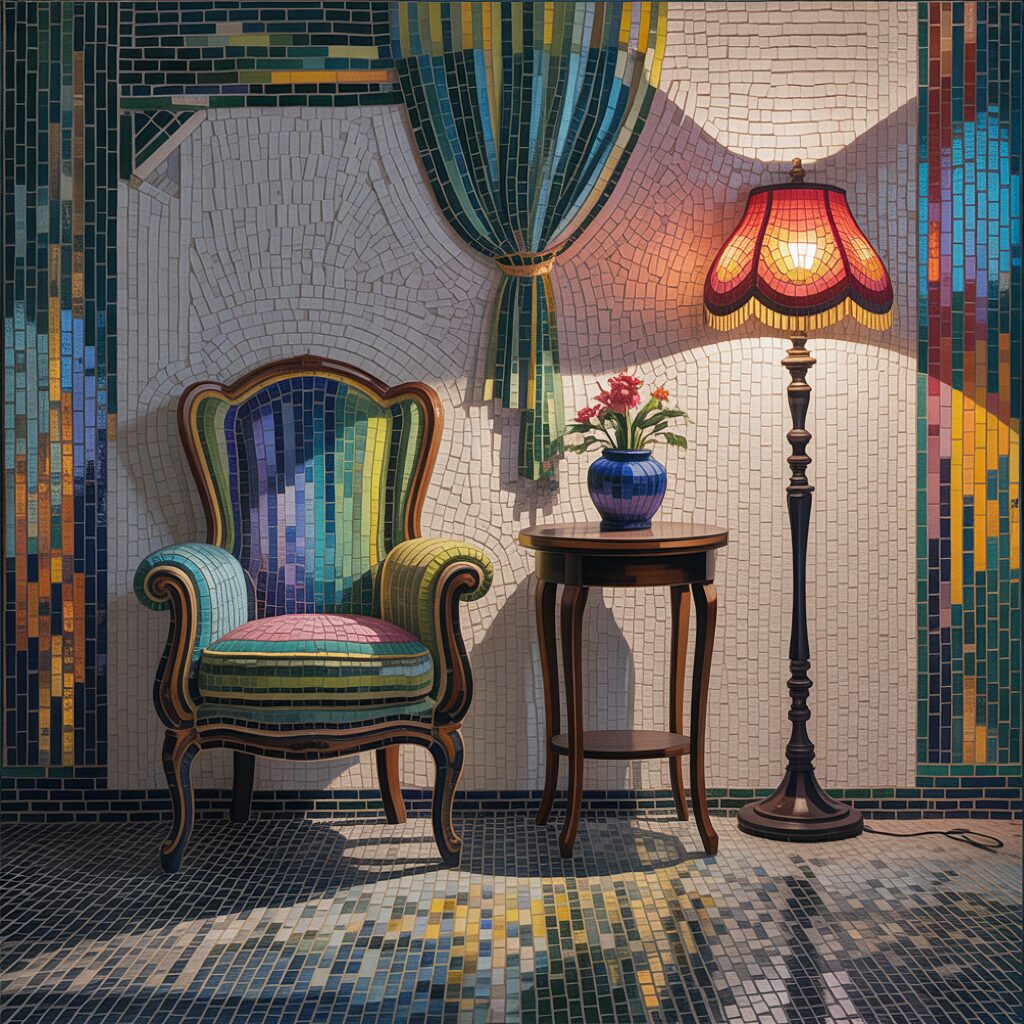
A lamp casts a shadow on the wall. A chair blocks light. These shadows are temporary. A mosaic shadow is permanent.
Observe the shadow of a piece of furniture. Trace its outline on the wall. Fill the outline with dark gray and black tiles. The rest of the wall remains light. The effect is a fossil of light.
Pro Tip: Photograph the shadow at different times. Choose the most interesting angle.
Mistake to Avoid: Do not use color for the shadow. Shadows are neutral.
12. Mosaic Fragments Floating Across a Plain
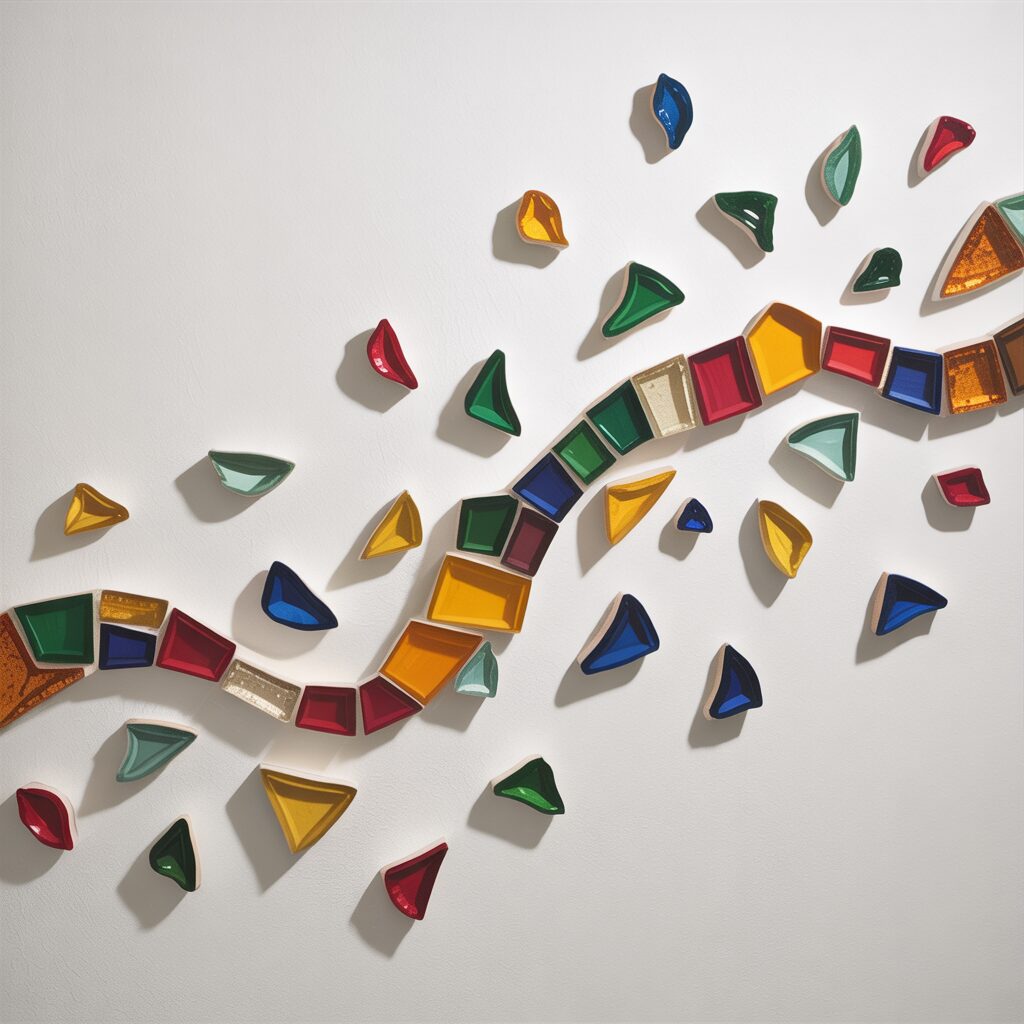
Scatter individual tiles across the wall like fallen leaves. No pattern. No grouping. Just isolated fragments.
Place single tiles at random intervals. Some high. Some low. Some near the edge. Some near the center. The spacing should be irregular. The eye should travel between them.
Pro Tip: Use large tiles (2 inches or more). Small tiles get lost on a large wall.
Mistake to Avoid: Do not use more than one color. A single color prevents chaos.
13. Mosaic Arc Above a Doorway
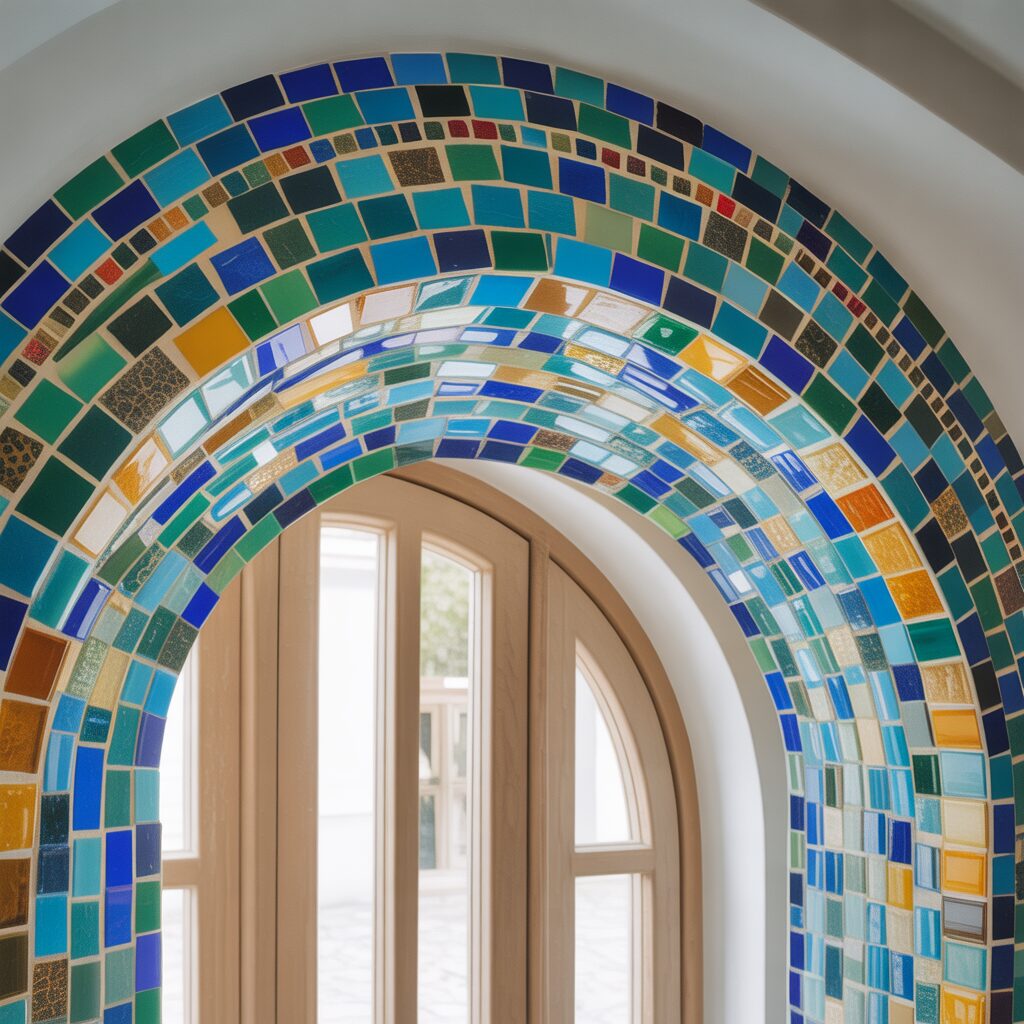
An arch above a door is architectural. A mosaic arch is decorative. The curve softens the hard lines of the door frame.
Trace the shape of the doorway onto the wall. Extend the sides upward. Cap them with a semicircle. Fill the shape with mosaic. Leave the rest of the wall empty.
Pro Tip: Use the same color as the door frame. The arch will blend at the edges but stand out in the middle.
Mistake to Avoid: Do not make the arch too tall. Proportion matters more than size.
14. Mosaic Checkerboard with Irregular Squares
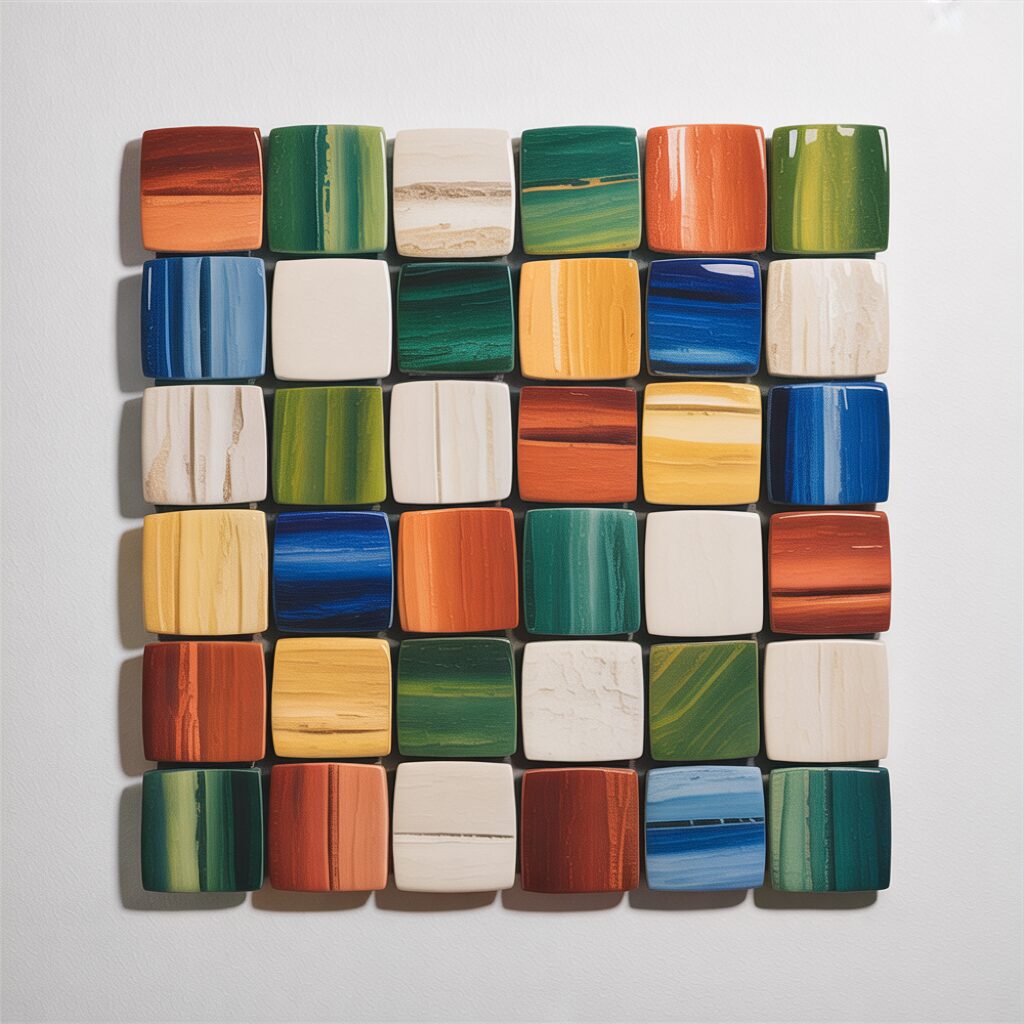
A checkerboard is predictable. An irregular checkerboard is not. The pattern is familiar. The execution is unexpected.
Create a grid of squares. Each square should be a different size. Fill alternate squares with color. Leave the others empty. The result is a pattern that almost repeats but does not.
Pro Tip: Use painter’s tape to mask each square. Paint the tiles in place. Remove the tape while wet.
Mistake to Avoid: Do not use more than two colors. Contrast is essential.
15. Mosaic Strip Wrapping Around a Corner
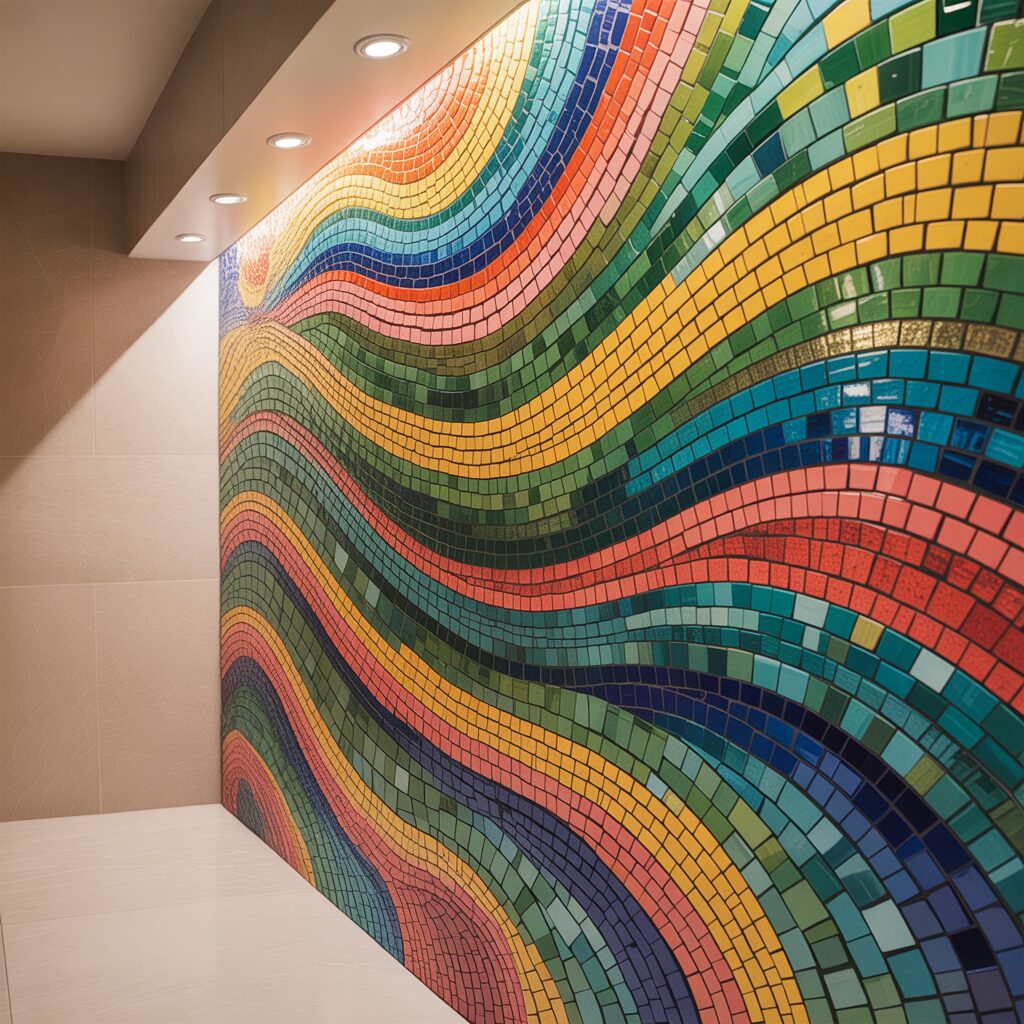
A corner is a transition. A mosaic strip that wraps around the corner connects two walls. The room feels more cohesive.
Create a vertical strip of tiles on one wall. Continue the strip around the corner onto the adjacent wall. The strip should be the same width on both walls. The color should be consistent.
Pro Tip: Use a level to ensure the strip is straight on both walls.
Mistake to Avoid: Do not make the strip too wide. Six inches is plenty.
16. Mosaic Circle Cut by a Corner
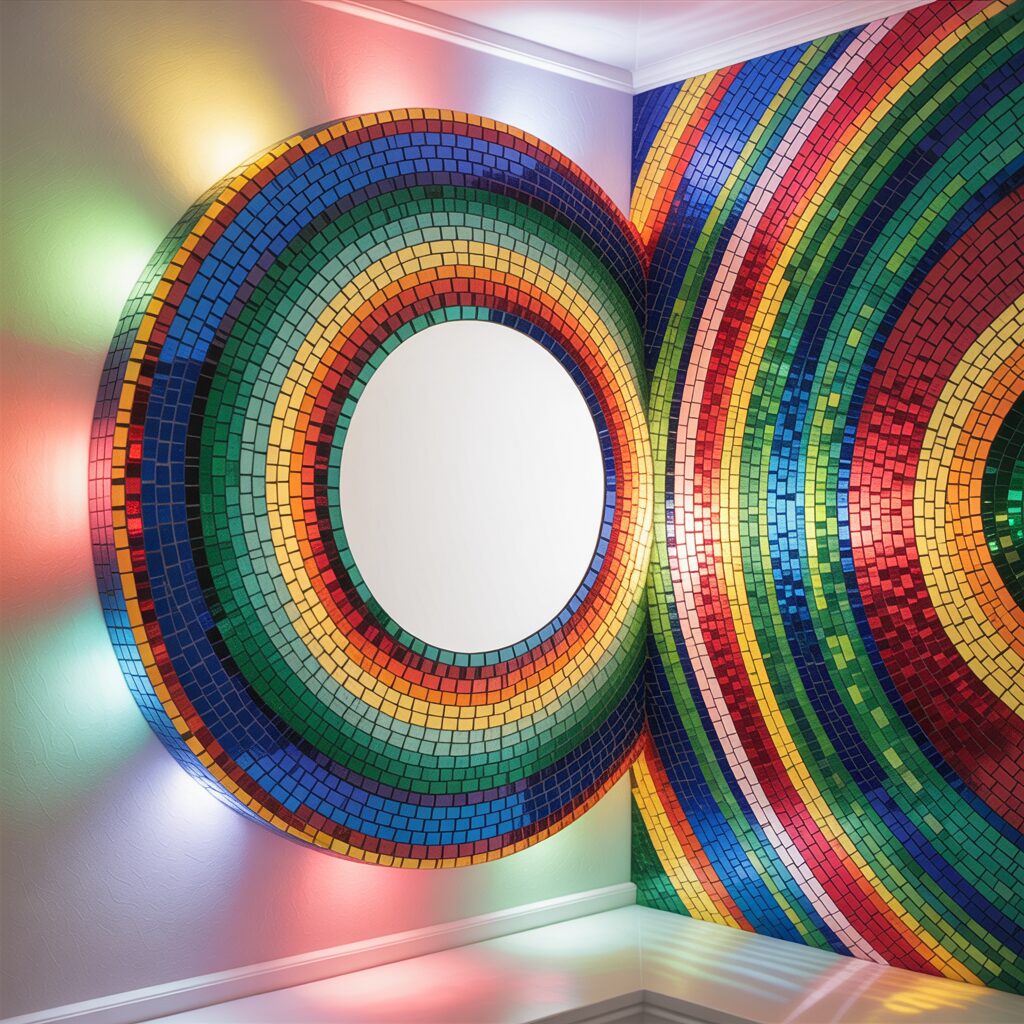
A circle that disappears behind a corner is intriguing. The viewer must imagine the missing half.
Place a large circle on the wall so that the edge is cut off by a corner. The circle should be mostly on one wall. The missing section is implied. The imagination completes the shape.
Pro Tip: Use a compass to draw the full circle. Only tile the visible portion.
Mistake to Avoid: Do not make the circle too small. The missing portion should be significant.
17. Mosaic Target with Off-Center Bullseye
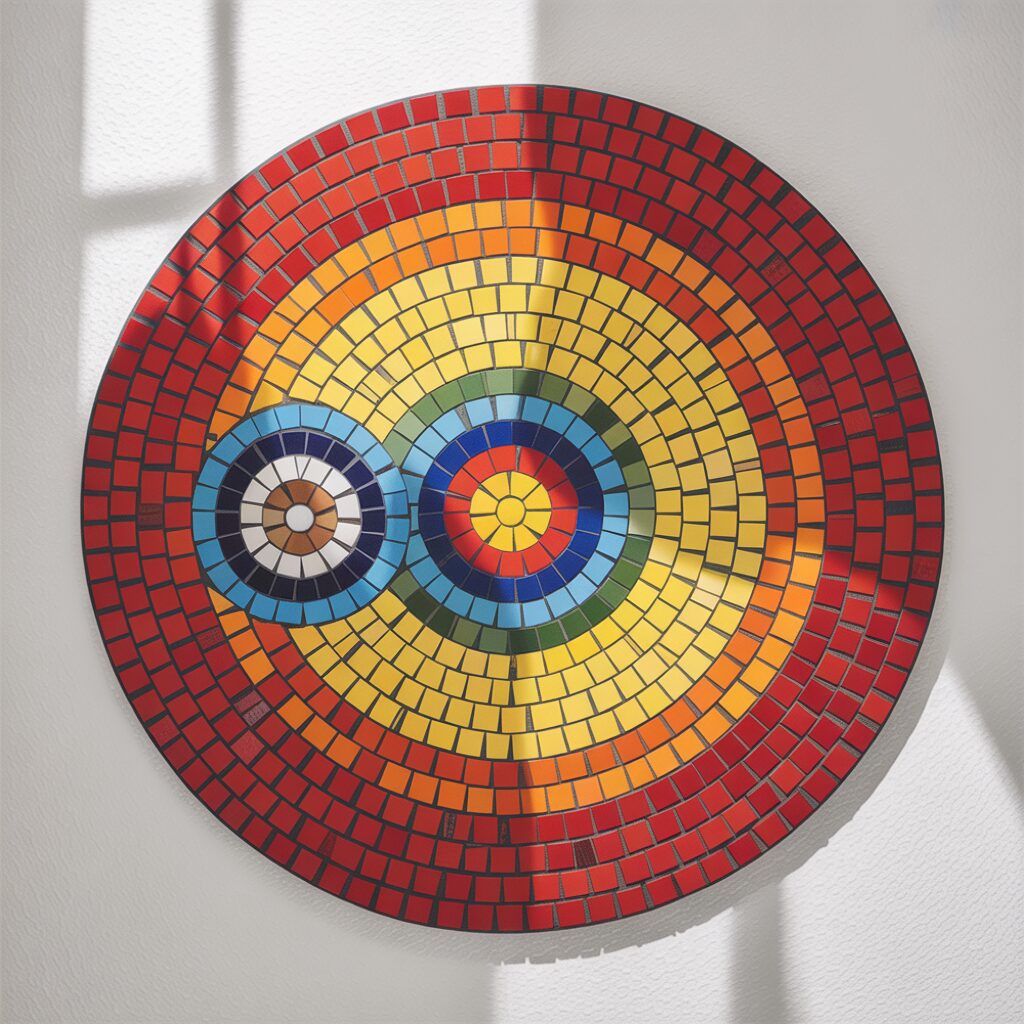
A target is concentric circles. A target with an off-center bullseye is dynamic. The imbalance creates tension.
Create a series of concentric circles. The center of the circles should not be the center of the wall. The bullseye should be near the edge. The imbalance is the point.
Pro Tip: Use contrasting colors for each ring. High contrast emphasizes the off-center effect.
Mistake to Avoid: Do not use too many rings. Three rings are enough.
18. Mosaic Lattice of Diagonal Lines
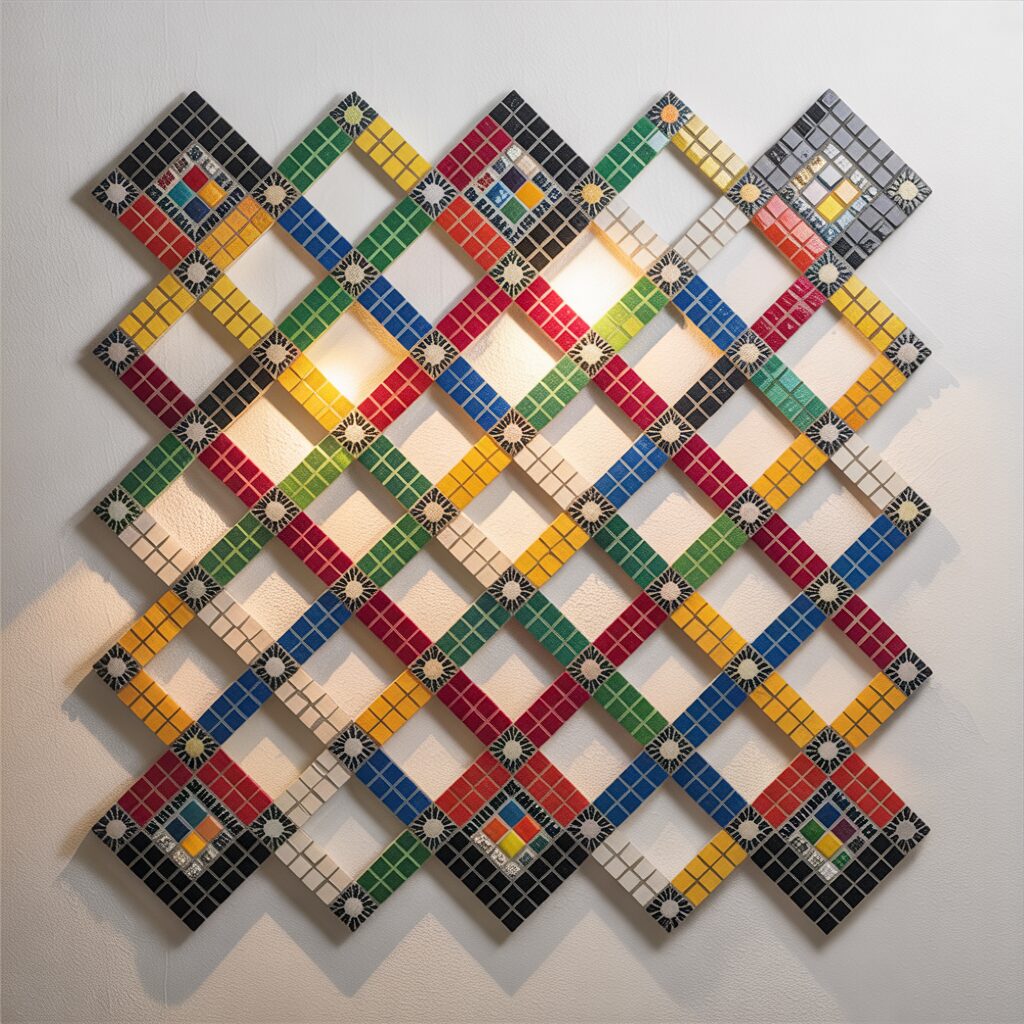
A lattice is overlapping diagonal lines. The intersections create diamonds. The pattern is both structured and organic.
Create two sets of diagonal lines. One set runs from top left to bottom right. The other from top right to bottom left. Where they cross, leave empty space. The diamonds are the design.
Pro Tip: Use a laser level to mark both sets of lines. Precision is essential.
Mistake to Avoid: Do not use tiles that are too wide. Narrow strips work best for lattice.
19. Mosaic Wave Crashing at the Edge
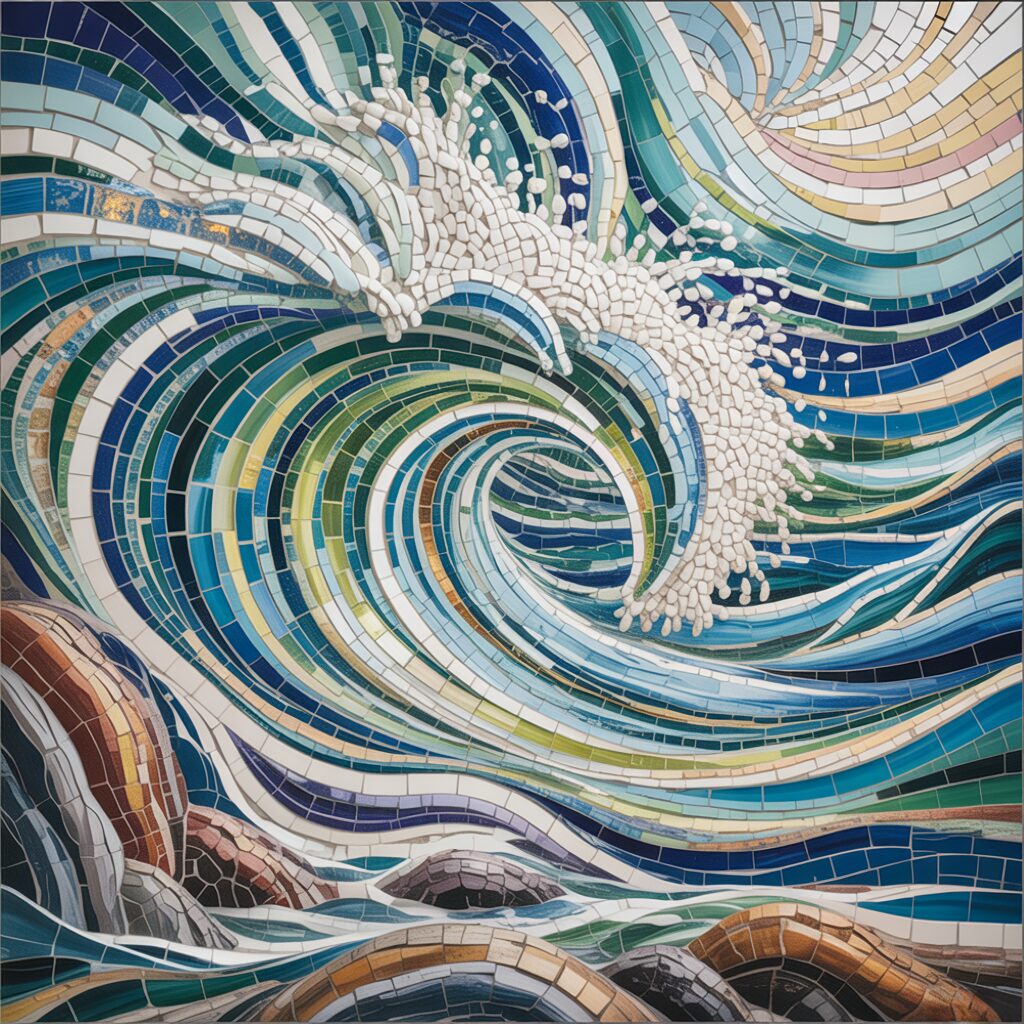
A wave that crashes at the edge of the wall suggests a larger body of water. The wall is a frame for a fragment of ocean.
Create a curling wave shape at the bottom edge of the wall. Let the foam spill over the corner. The wave should be cut off by the wall edge. The rest of the wave exists outside the room.
Pro Tip: Use white tiles for the foam. The contrast between dark water and white foam is striking.
Mistake to Avoid: Do not make the wave too small. A large wave has more drama.
20. Mosaic Constellation on a Dark Wall
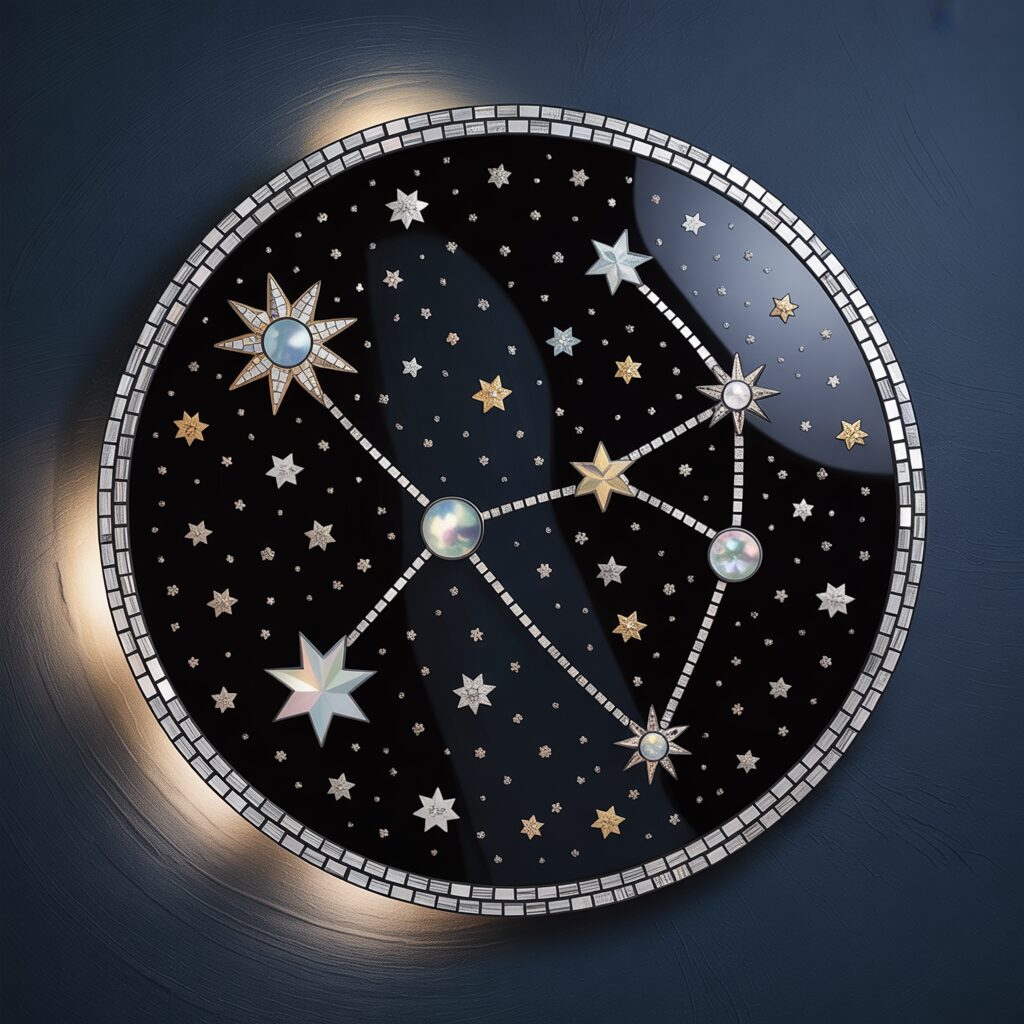
Stars in the night sky. Connect them with lines. The constellation tells a story. Orion. Cassiopeia. The Big Dipper.
Paint the wall dark blue or black. Place small gold tiles at the star points. Connect them with thin lines of tile. The pattern should be recognizable as a constellation.
Pro Tip: Research actual constellations. A real pattern is more meaningful than a random one.
Mistake to Avoid: Do not use too many stars. A constellation needs only a few points.
Frequently Asked Questions
What is the best wall for mosaic art?
Drywall works well. So does plywood. So does cement board. The key is a flat, stable surface. Texture walls are difficult. Mosaic needs a smooth base.
How do I hang heavy mosaic wall art?
Use a French cleat. A French cleat consists of two interlocking metal strips. One attaches to the art. One attaches to the wall. The weight distributes evenly.
Can I put mosaic on a rental wall?
Yes, if you mount it on a removable panel. Plywood or foam board works. Mosaic the panel. Hang the panel with command strips. Remove it when you leave.
How do I clean mosaic wall art?
Dust with a soft cloth. For deeper cleaning, use a damp sponge. Do not use acidic cleaners. Acid damages grout.
Conclusion
Mosaic wall art transforms blank walls into conversation pieces. A color field on canvas. Repeating arches. A spiraling center. Angled stripes. A cascading waterfall. A grid with missing cells. A horizon line. A burst from an empty frame. An echo of window light. Ripples around a medallion. A shadow of furniture. Fragments floating. An arc above a doorway. An irregular checkerboard. A strip wrapping a corner. A circle cut by a corner. An off-center target. A lattice of diagonals. A wave crashing at the edge. A constellation on a dark wall.
Start with one wall. Choose one idea. Gather your tiles. The pieces will come together. The gaps will become part of the design. And the wall will never be blank again.