21 Best Neutral Living Room Decor Ideas for a Calm, Timeless Space
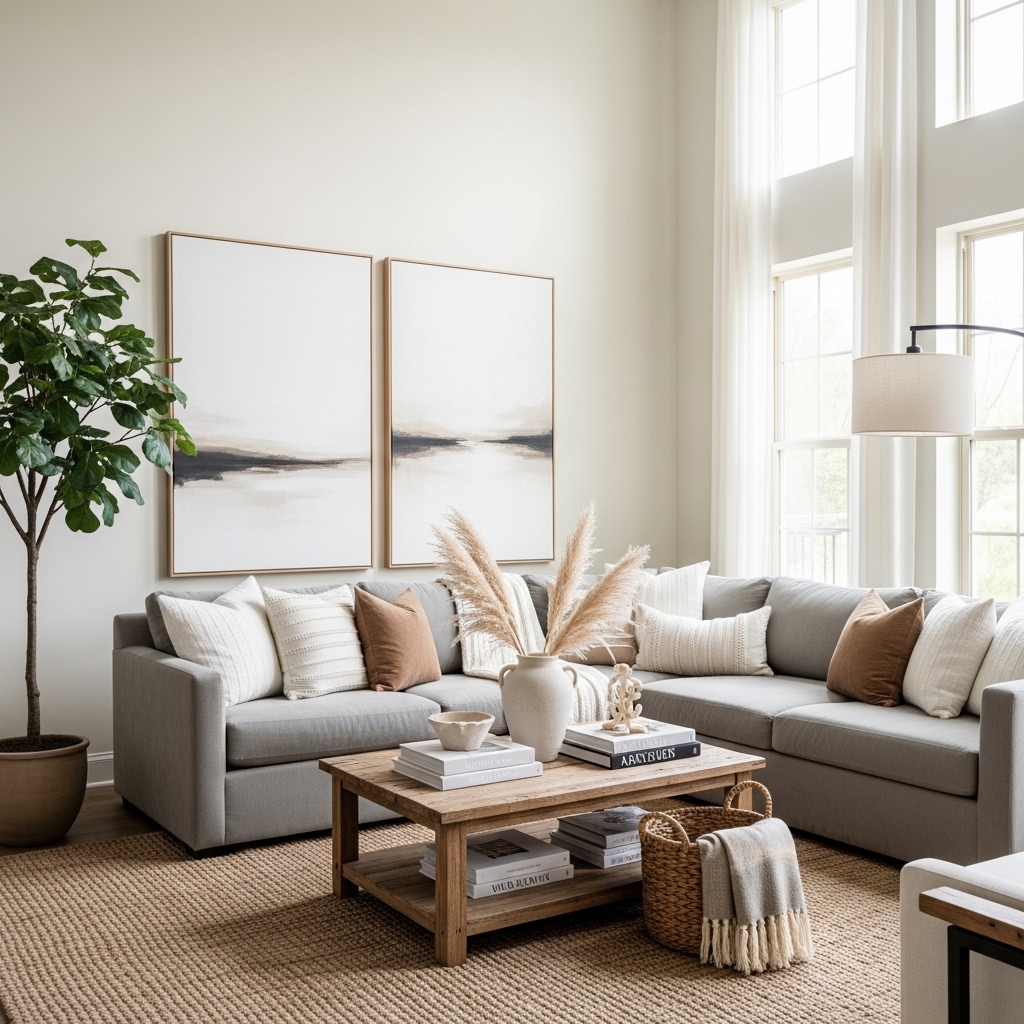
Neutral living room ideas create a serene, timeless backdrop that balances comfort with flexibility. Using soft tones like beige, cream, gray, and taupe allows you to layer textures, lighting, and accessories without overwhelming the space.
This guide is great for people who own a home people who rent a place or anyone who wants their living room to look nice and feel calm.
The living room can be small, medium or big. Each idea in this guide has tips that you can actually use things you should not do and cheaper ways to do things so you can make a living room that’s neutral and feels warm and nice to be, in.
1. Soft Beige Walls with Accent Elements
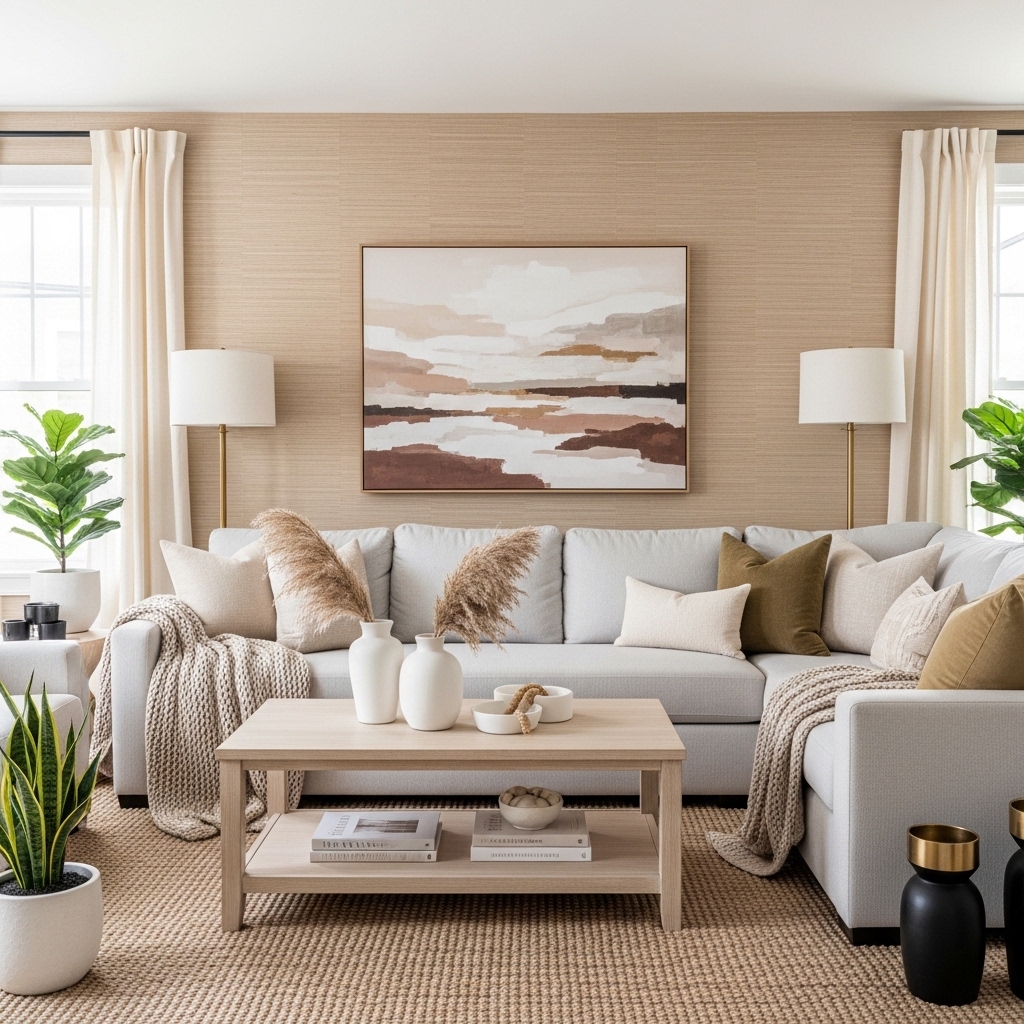
Who This Is For: Ideal for small apartments or living rooms with limited natural light that need a warm, neutral base.
What It Does / Why It Works: Soft beige walls reflect light, making rooms feel airy and cozy. They provide a versatile canvas for art, furniture, and accessories.
How to Apply: Pair beige walls with white trim or subtle taupe accents. Add wooden furniture or textured textiles to break up monotony.
Mistakes to Avoid / Pro Tips / Budget Alternatives: Avoid dark beige in tiny rooms—it can make the space feel cramped. Use peel-and-stick wallpapers for budget-friendly accent options.
2. Layered Textures with Cushions & Throws
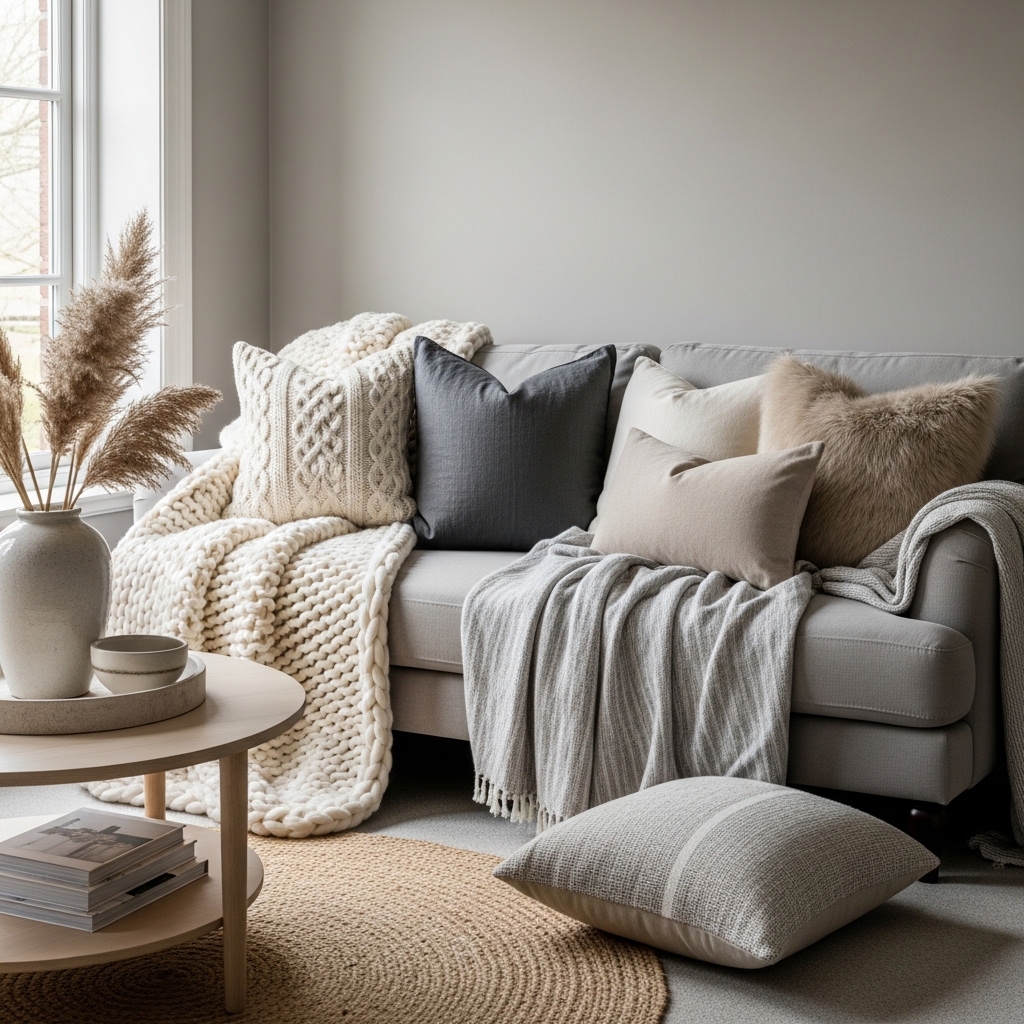
Who This Is For: Perfect for living rooms needing warmth and depth, especially in minimalist or neutral spaces.
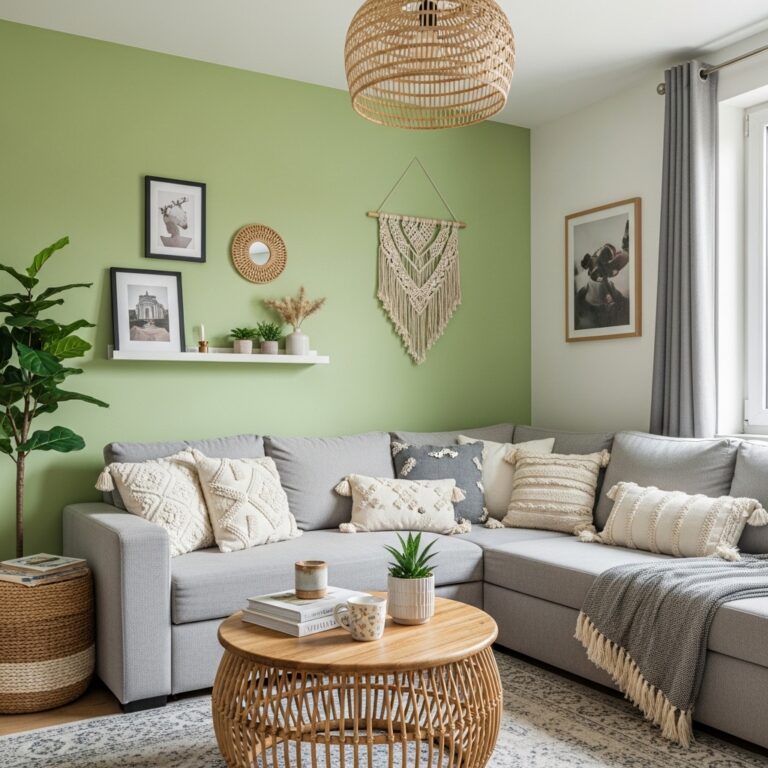
What It Does / Why It Works: Layering soft cushions, throws, and rugs prevents a neutral palette from feeling flat. It adds tactile comfort and visual interest.
How to Apply: Mix linen, wool, cotton, or faux fur. Scatter cushions of different sizes on sofas or armchairs.
Mistakes to Avoid / Pro Tips / Budget Alternatives: Avoid overloading patterns—stick to subtle textures. DIY pillow covers or thrifted throws can replicate designer looks affordably.
3. Neutral Sofa as a Room Anchor
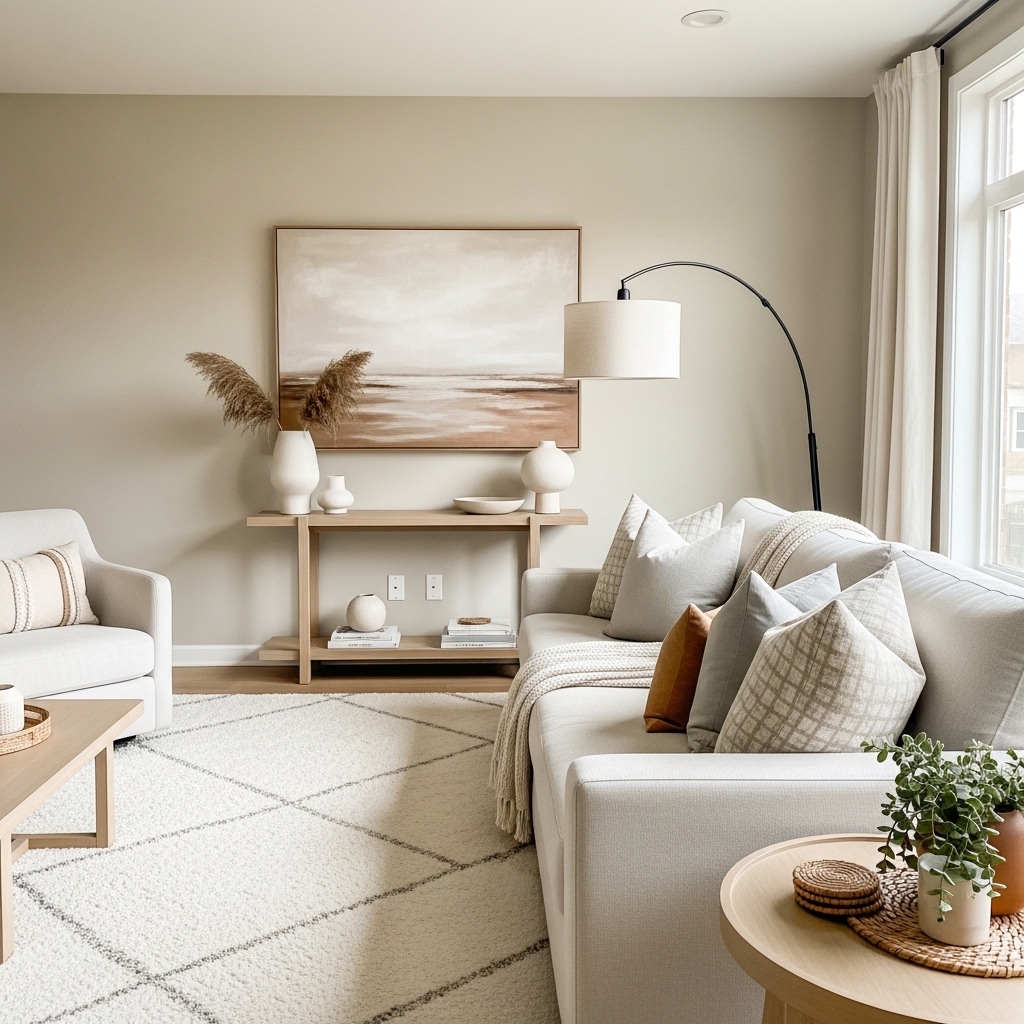
Who This Is For: Ideal for families, small apartments, or open-plan spaces needing a functional centerpiece.
What It Does / Why It Works: A neutral sofa provides a calm base for layering accessories and allows flexibility in color accents over time.
How to Apply: Place the sofa facing a focal point (fireplace, TV, or window). Use soft throws and textured cushions to enhance warmth.
Mistakes to Avoid / Pro Tips / Budget Alternatives: Avoid extremely light fabrics in high-traffic areas—they stain easily. Slipcovers offer an affordable, practical alternative.
4. Light Wood Furniture for Warmth
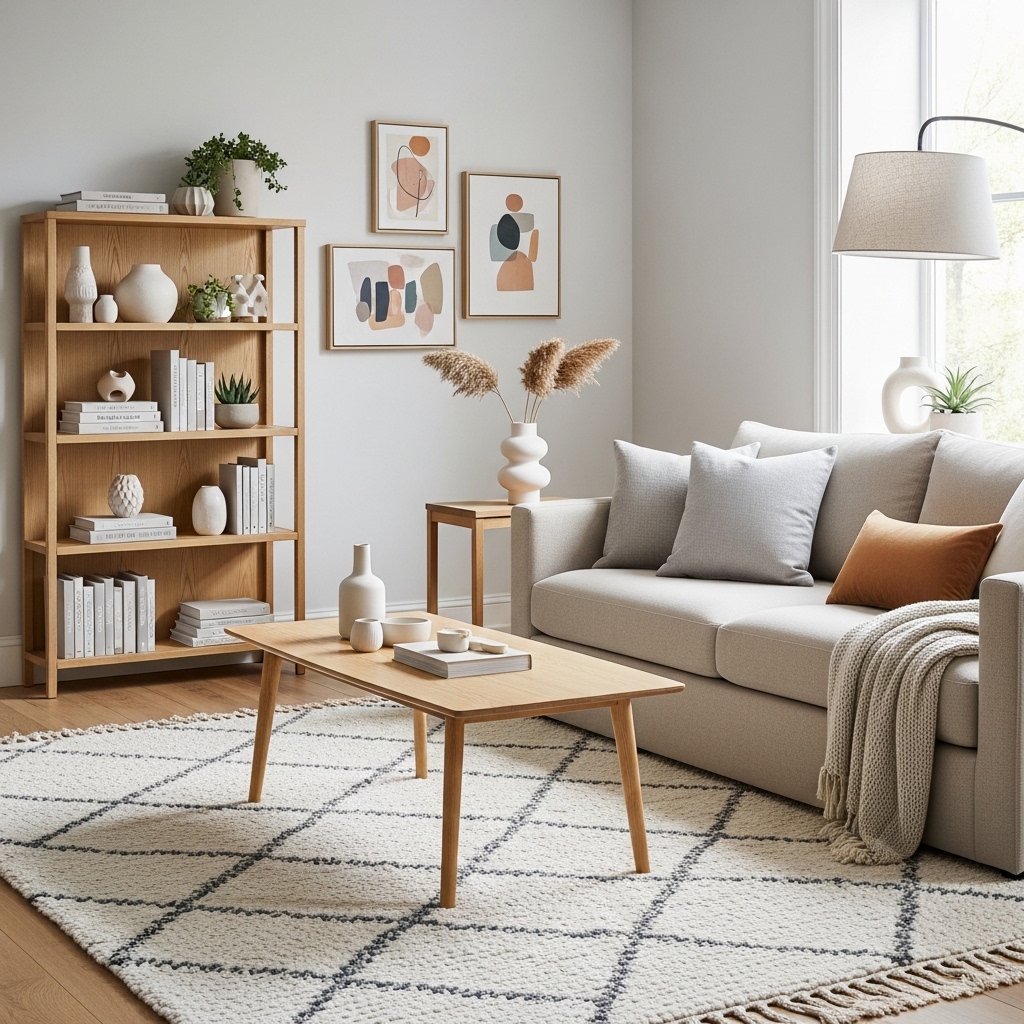
Who This Is For: Works for those seeking a Scandinavian-inspired or casual neutral aesthetic.
What It Does / Why It Works: Light wood tones add warmth without overpowering neutral palettes. They balance cool grays and whites.
How to Apply: Pair wooden coffee tables, side tables, or shelving with neutral sofas and rugs. Mix with metal accents for contrast.
Mistakes to Avoid / Pro Tips / Budget Alternatives: Avoid heavy dark woods in small rooms—they reduce perceived space. Thrifted or second-hand pieces are budget-friendly options.
5. Minimalist Wall Art
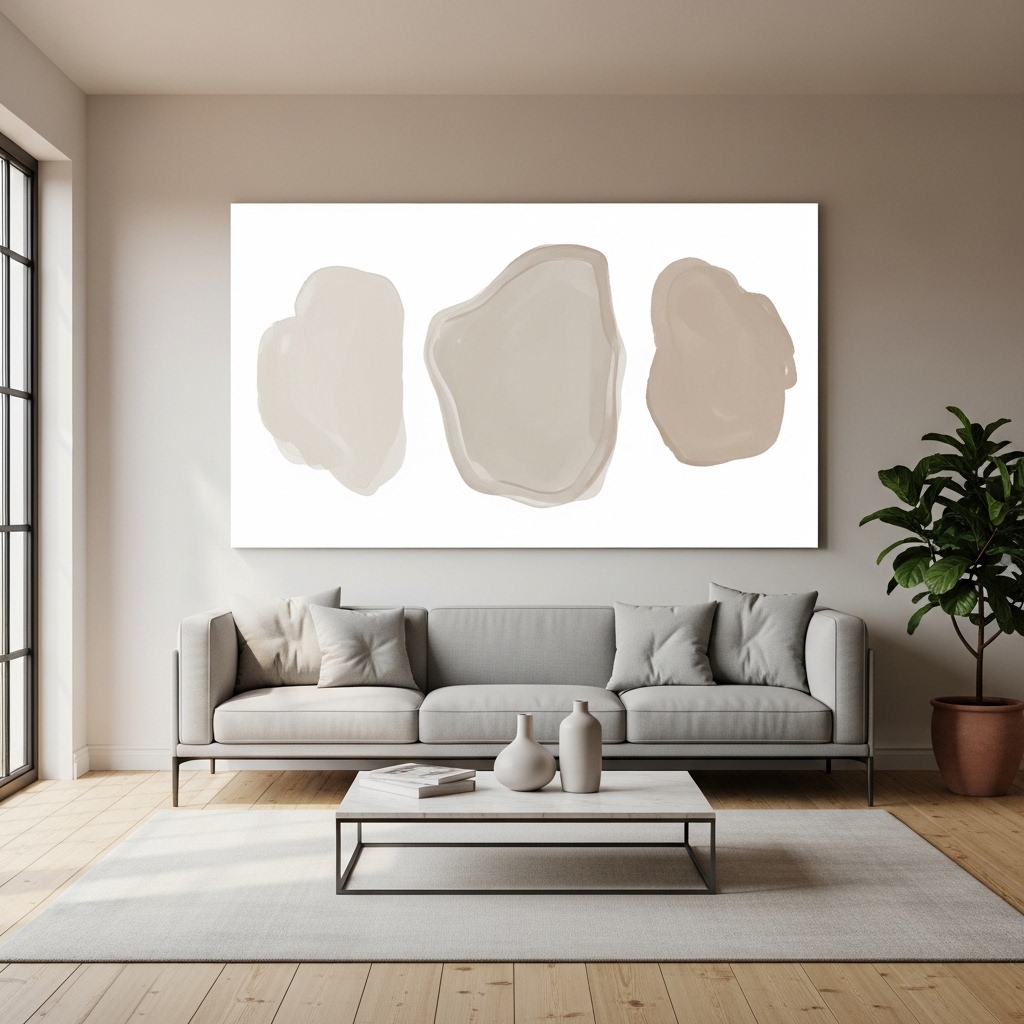
Who This Is For: Perfect for modern or neutral-themed living rooms that need subtle personality.
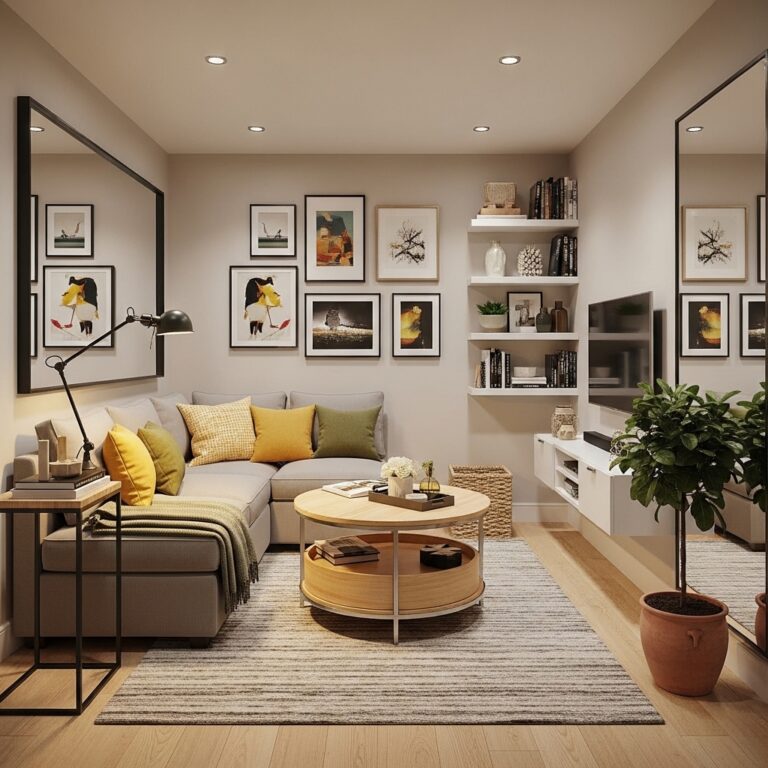
What It Does / Why It Works: Minimalist prints or black-and-white photos add visual interest without clashing with a neutral color palette.
How to Apply: Hang one large framed print above the sofa or create a small gallery with 2–3 pieces. Maintain spacing and consistent frame color.
Mistakes to Avoid / Pro Tips / Budget Alternatives: Avoid overcrowding walls. DIY or printable art can keep costs low.
6. Neutral Area Rugs with Subtle Patterns
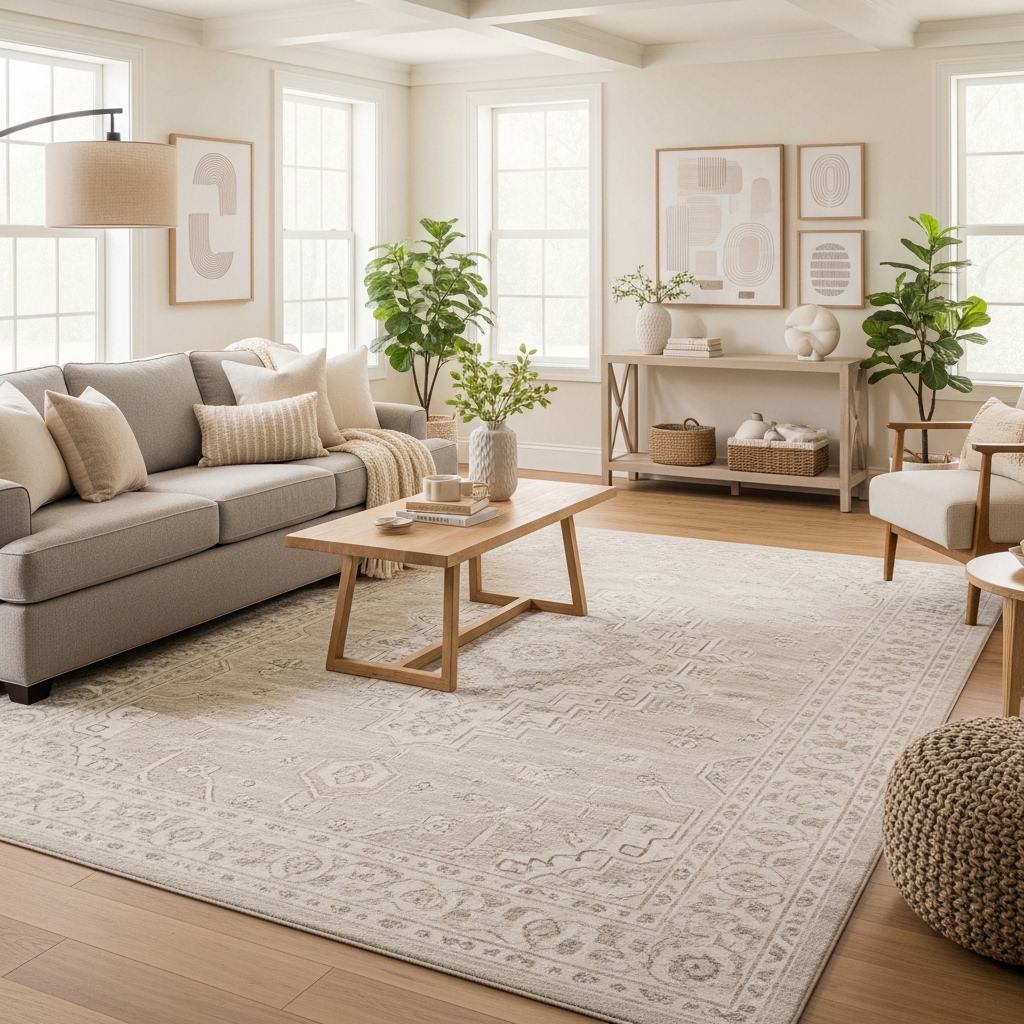
Who This Is For: Ideal for living rooms with hardwood floors or open layouts.
What It Does / Why It Works: Neutral rugs define seating areas, add warmth underfoot, and prevent a cold, flat look.
How to Apply: Use a rug slightly larger than the sofa footprint. Layer with smaller rugs for texture if desired.
Mistakes to Avoid / Pro Tips / Budget Alternatives: Avoid overly dark rugs in small rooms. Synthetic rugs mimic natural textures affordably.
7. Layered Window Treatments
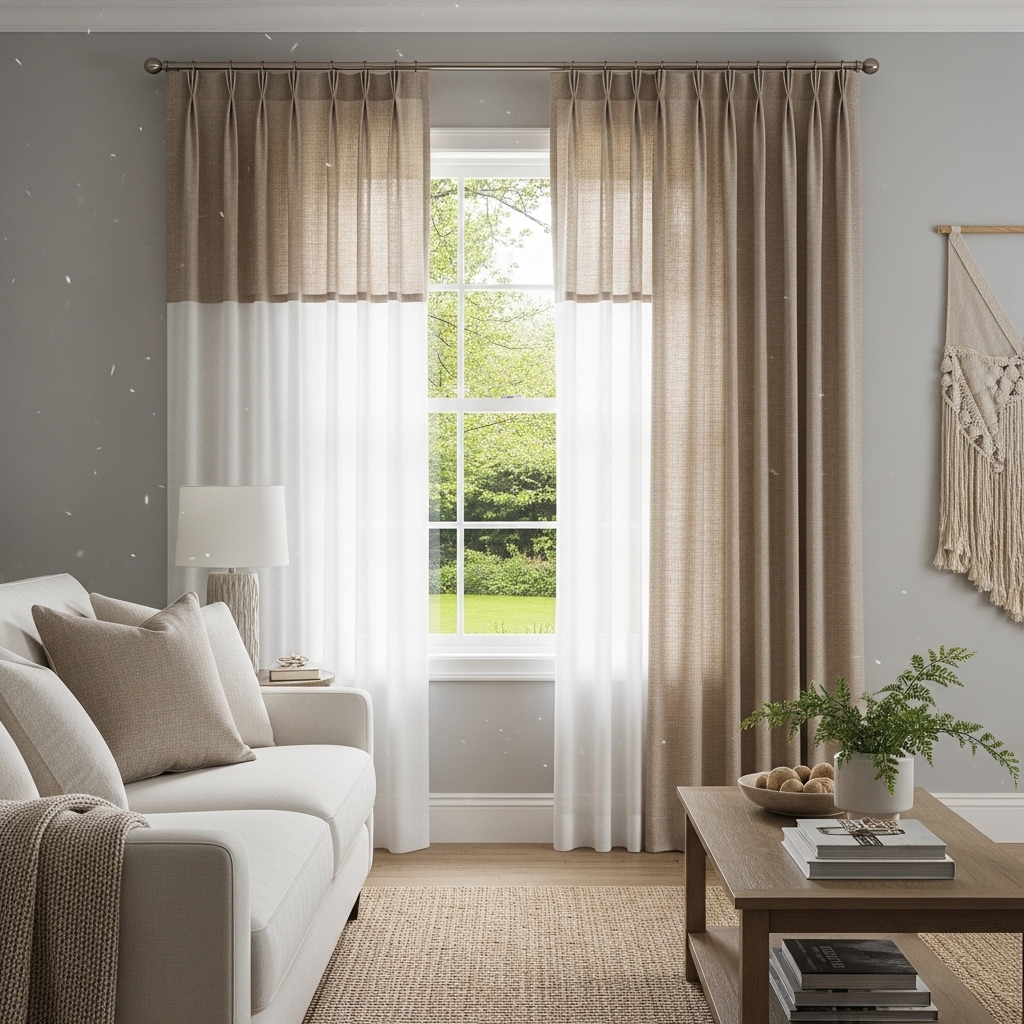
Who This Is For: Ideal for rooms with large windows needing privacy and light control.
What It Does / Why It Works: Layered curtains and sheers soften the room and add depth to neutral spaces.
How to Apply: Hang floor-length curtains above the window frame for a taller look. Mix light sheers with heavier panels.
Mistakes to Avoid / Pro Tips / Budget Alternatives: Avoid stiff or short curtains—they reduce visual warmth. Use budget-friendly fabric panels for DIY solutions.
8. Statement Neutral Accent Chair
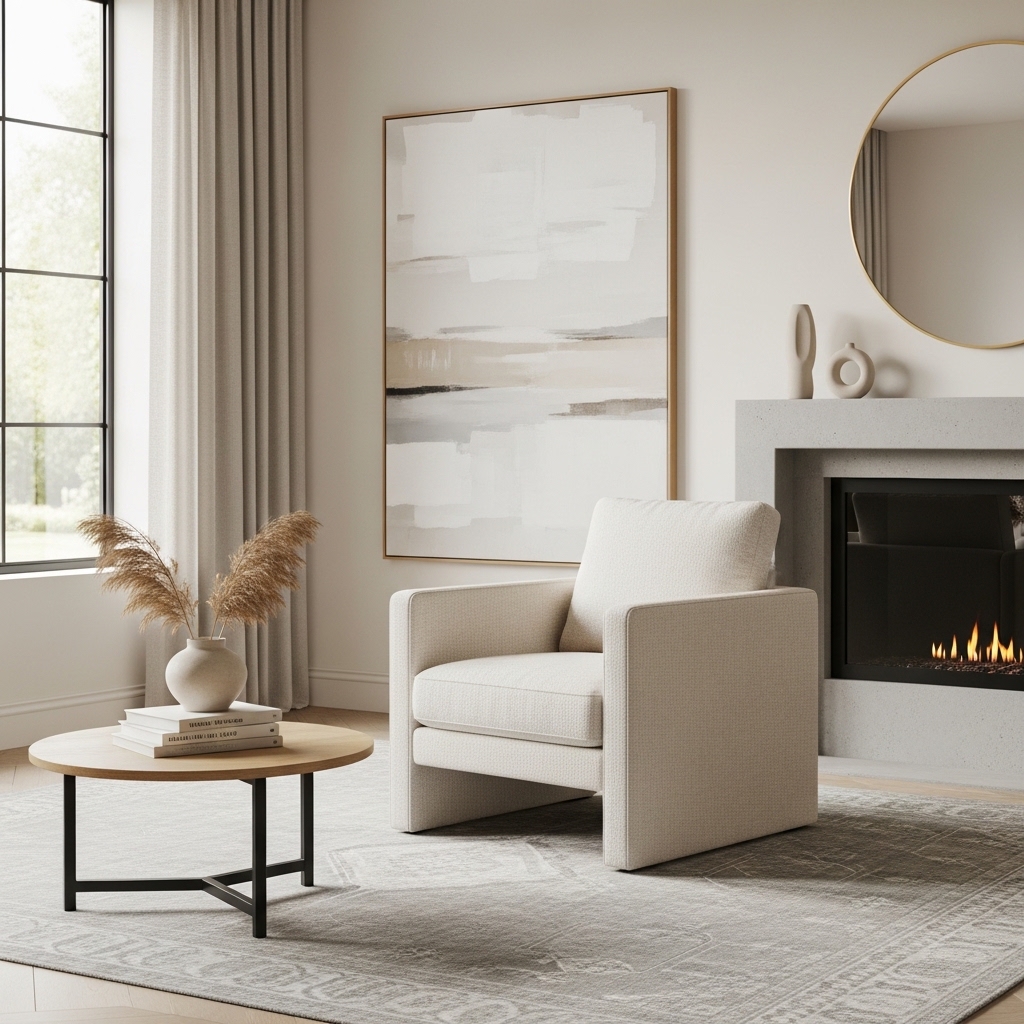
What It Does / Why It Works: Adds functional seating and a visual anchor while maintaining calm tones.
How to Apply: Place near a side table or lamp. Match upholstery with sofa tones for harmony.
Mistakes to Avoid / Pro Tips / Budget Alternatives: Avoid overly bold patterns. Second-hand chairs or slipcovers offer affordable upgrades.
9. Natural Elements: Plants & Wood Accents
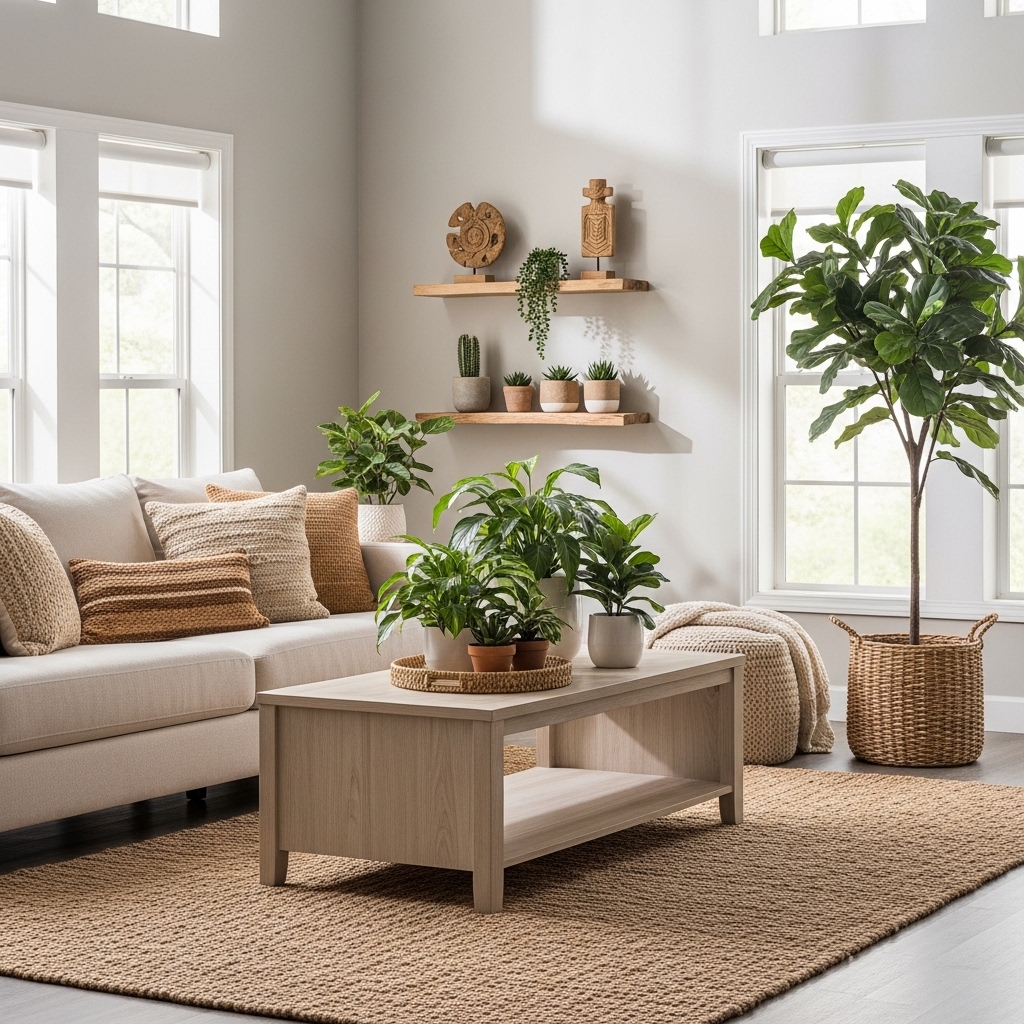
Who This Is For: This is for rooms that’re neutral and feel kind of boring or empty.
What It Does / Why It Works: You can use plants and wood to make these rooms feel more cozy and nice. The plants and wood go well with the colors, in the room.
How to Apply: Try using plants of sizes or wooden things like bowls or trays. You can also use furniture to add some style. Mix these things with fabrics to make the room look more interesting.
Mistakes to Avoid / Pro Tips / Budget Alternatives: Do not put many things in the room. Plants that are easy to take care of, like snake plants work well. You can also use plants if you do not want to deal with real ones.
10. Warm Lighting with Lamps & Fixtures
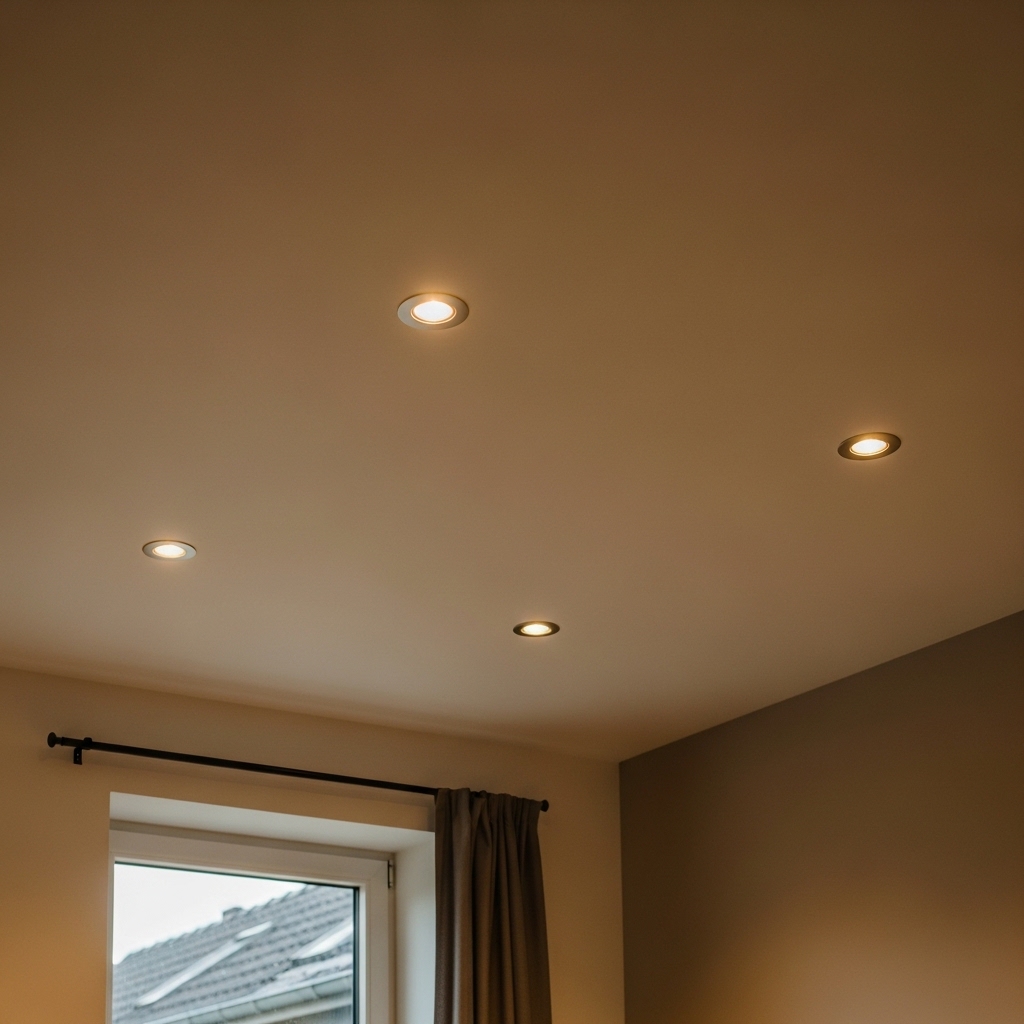
Who This Is For: Small living rooms or evening-centric spaces needing ambiance.
What It Does / Why It Works: Soft warm lighting enhances comfort and prevents neutral palettes from feeling cold.
How to Apply: Place floor or table lamps at corners, use 2700–3000K bulbs, and layer overhead lighting with dimmers.
Mistakes to Avoid / Pro Tips / Budget Alternatives: Avoid overly bright cool-white bulbs. String lights or plug-in lamps are budget-friendly options.
11. Neutral Throw Pillows
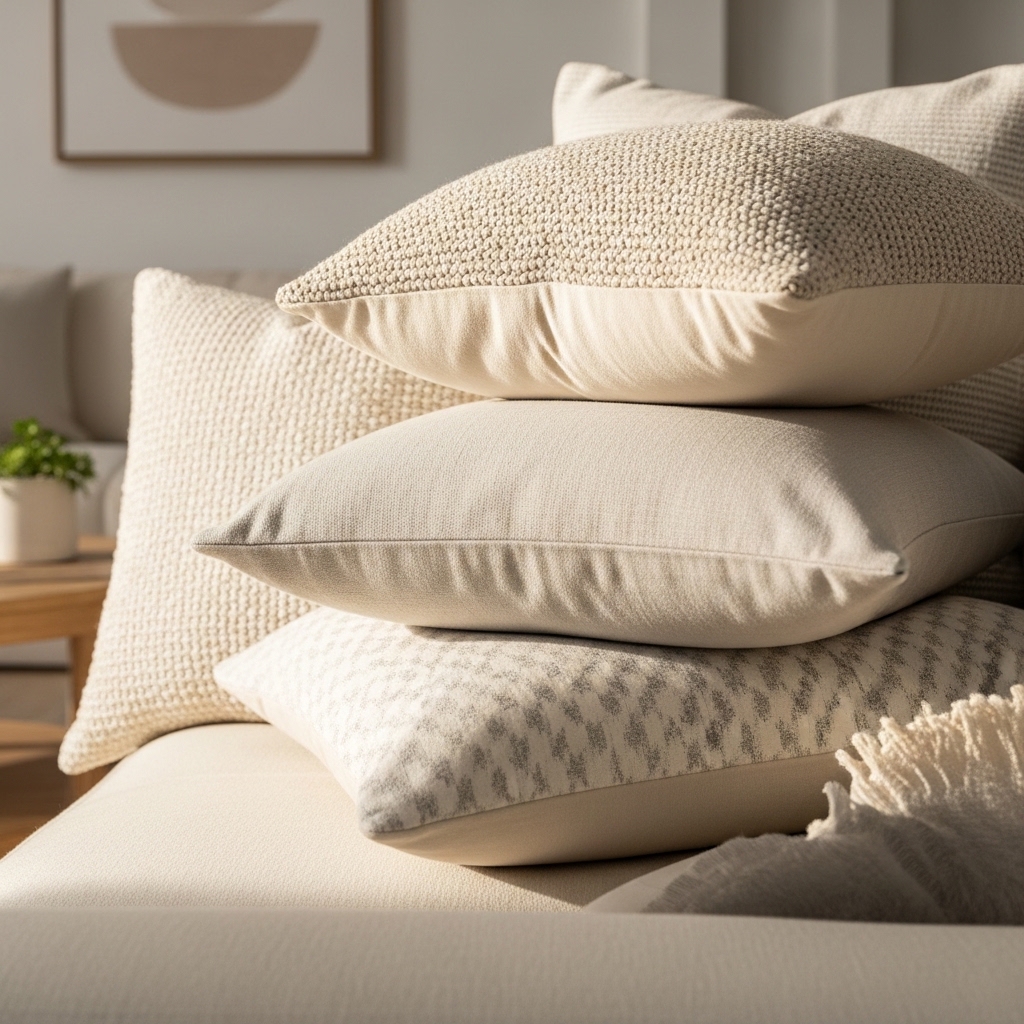
Who This Is For: Perfect for sofas or chairs needing a layered, cozy look.
What It Does / Why It Works: Adds texture, comfort, and subtle visual interest without disturbing the neutral scheme.
How to Apply: Mix sizes and textures, but stay within a similar color palette. Rotate seasonally.
Mistakes to Avoid / Pro Tips / Budget Alternatives: Avoid too many bold patterns; DIY pillow covers keep costs low.
12. Functional Coffee Table Decor
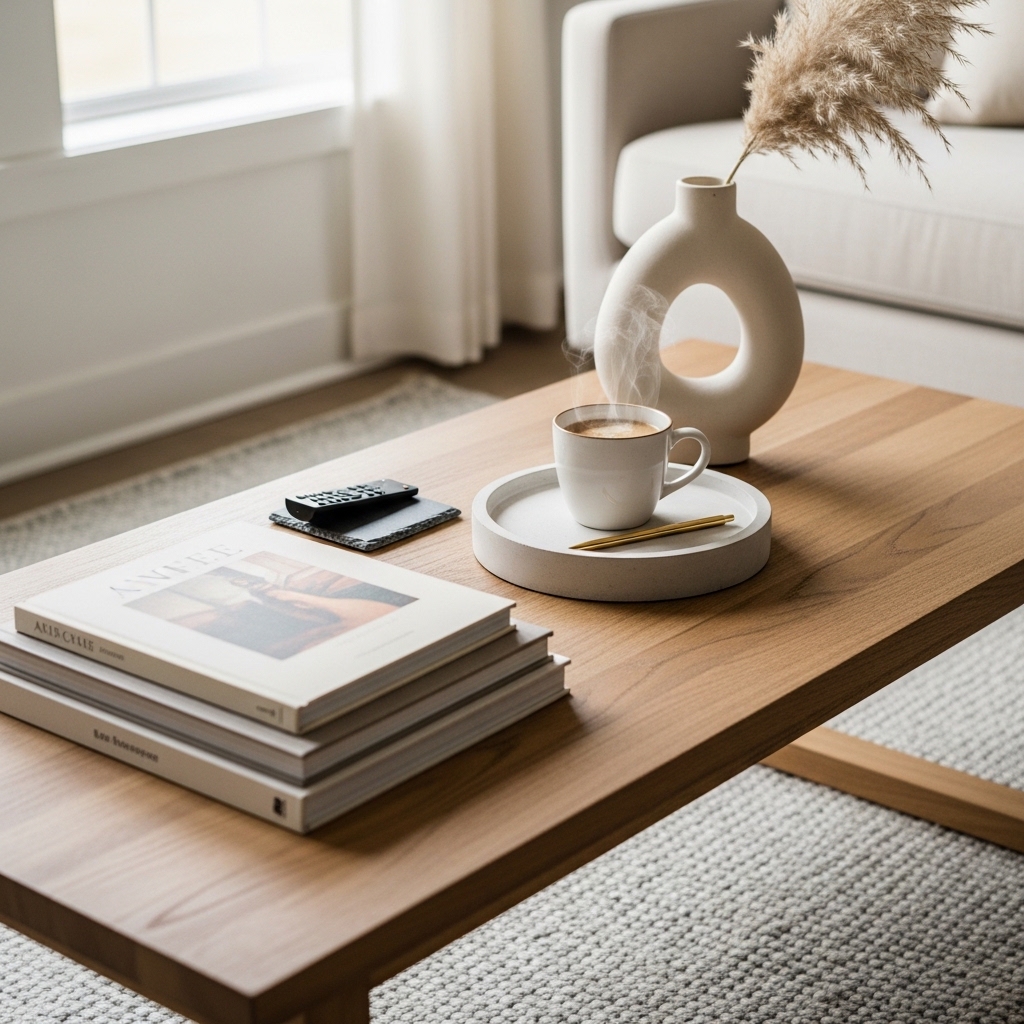
Who This Is For: Great for small or medium living rooms needing both style and storage.
What It Does / Why It Works: Decor items like trays, books, or small plants add visual interest and practical organization.
How to Apply: Use trays to group items, vary heights, and leave open space to avoid clutter.
Mistakes to Avoid / Pro Tips / Budget Alternatives: Avoid overcrowding; thrifted or DIY accessories work well.
13. Floating Shelves for Decor & Storage
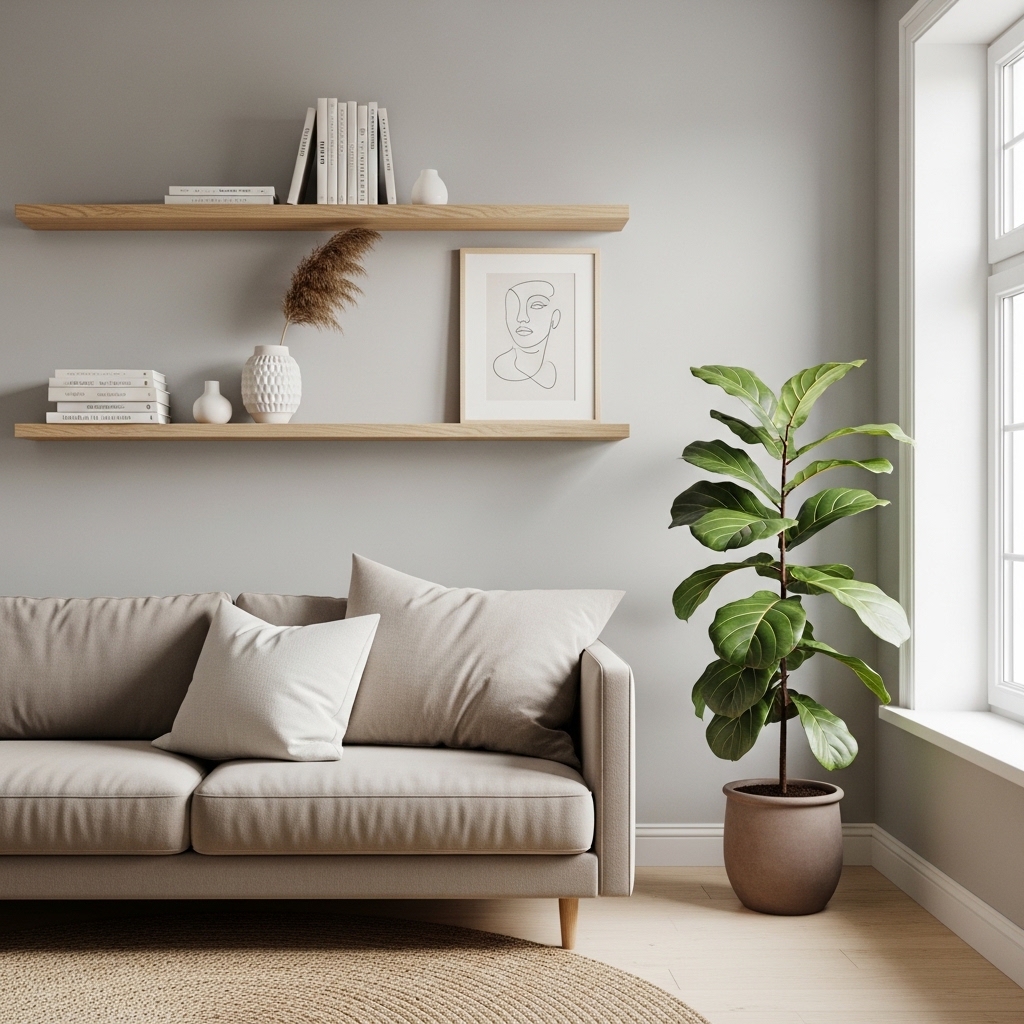
Who This Is For: Small apartments or rooms needing vertical storage without bulk.
What It Does / Why It Works: Floating shelves keep surfaces clear while displaying curated decor, books, or plants.
How to Apply: Install near seating areas or corners. Mix horizontal and vertical stacking for interest.
Mistakes to Avoid / Pro Tips / Budget Alternatives: Avoid overfilling; DIY shelving units save money.
14. Textured Walls or Panels
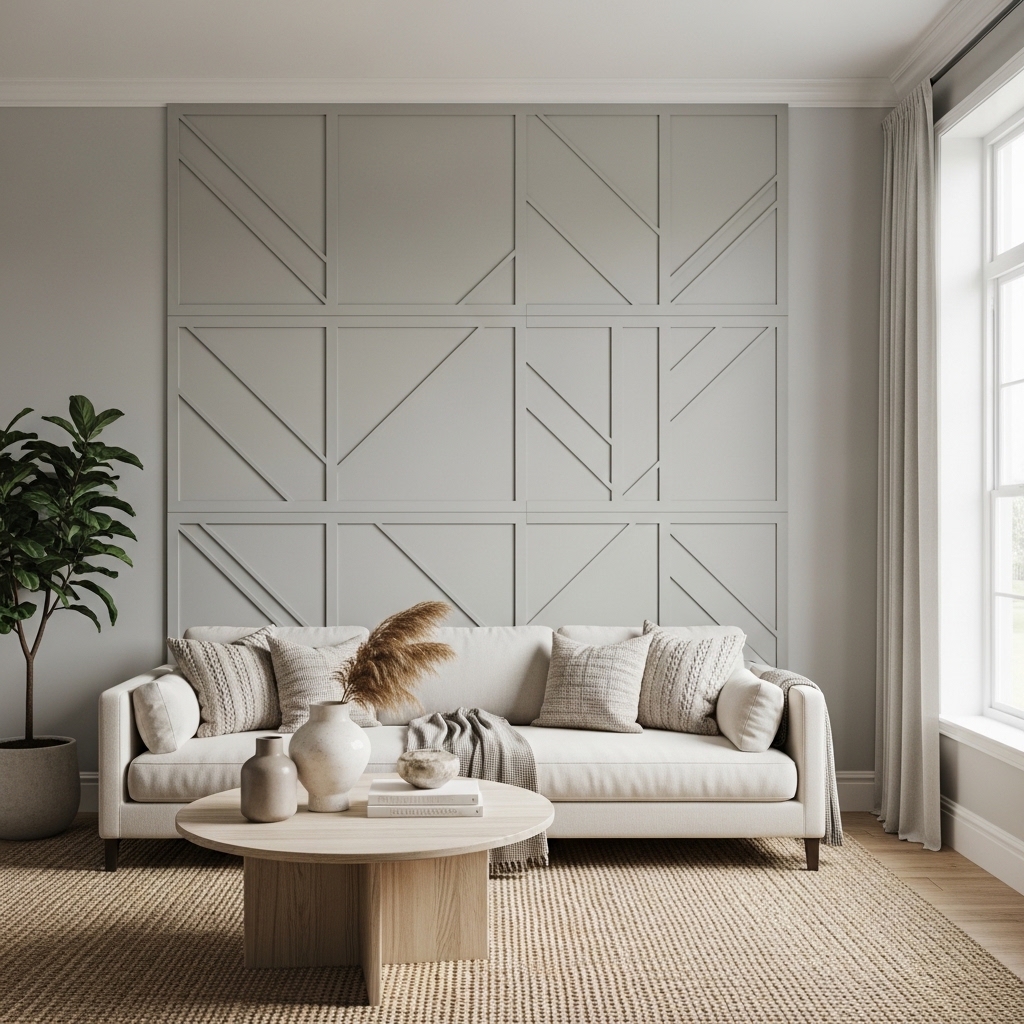
Who This Is For: Rooms with plain walls that feel too sterile.
What It Does / Why It Works: Textured walls add depth and warmth, enhancing neutral palettes.
How to Apply: Use beadboard, wainscoting, or subtle wallpaper panels behind sofas or accent areas.
Mistakes to Avoid / Pro Tips / Budget Alternatives: Avoid heavy textures in small rooms; peel-and-stick panels are affordable alternatives.
15. Cozy Reading Nook
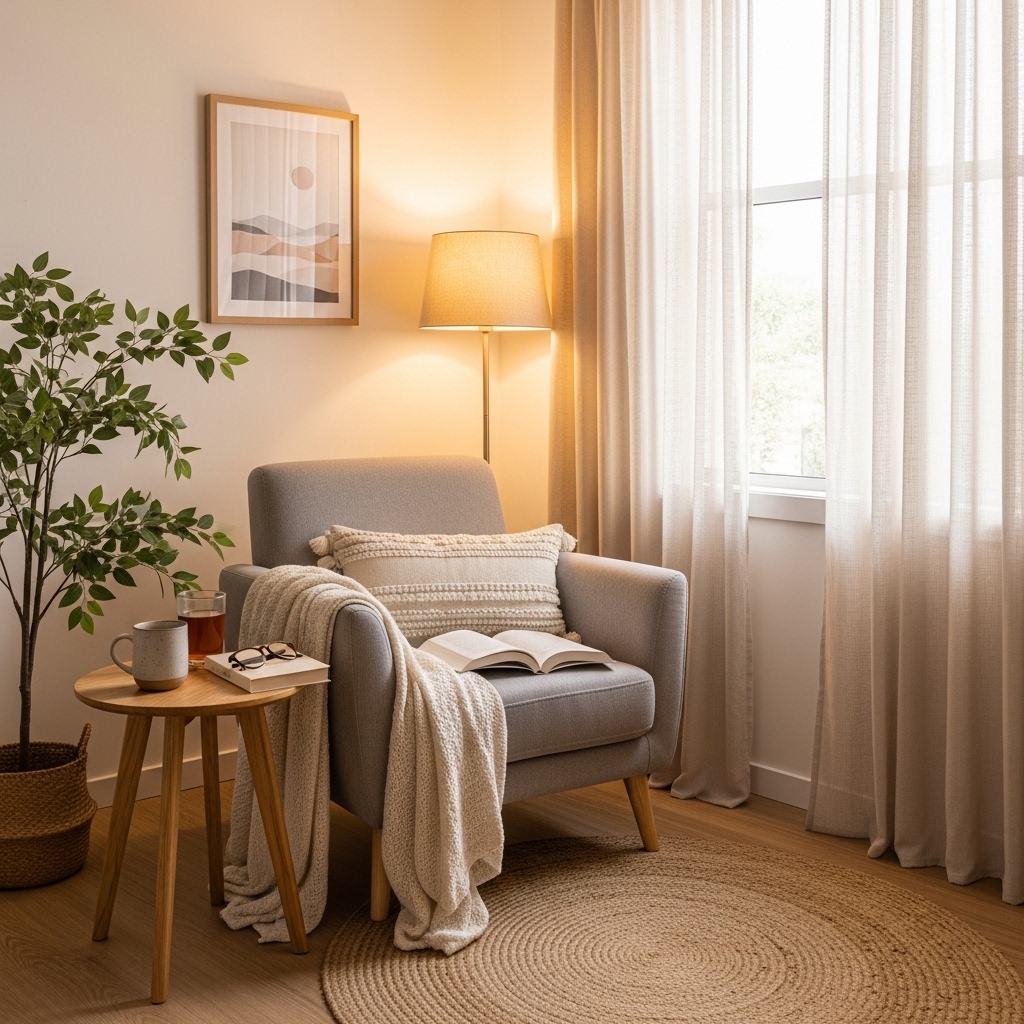
Who This Is For: Ideal for apartments or corners near windows.
What It Does / Why It Works: Provides a calm, functional space for relaxation while maintaining a neutral aesthetic.
How to Apply: Add a comfortable chair, floor lamp, and throw blanket. Include a small side table for drinks or books.
Mistakes to Avoid / Pro Tips / Budget Alternatives: Avoid cramped layouts; DIY window seats work on a budget.
16. Neutral Area Rugs with Layered Textures
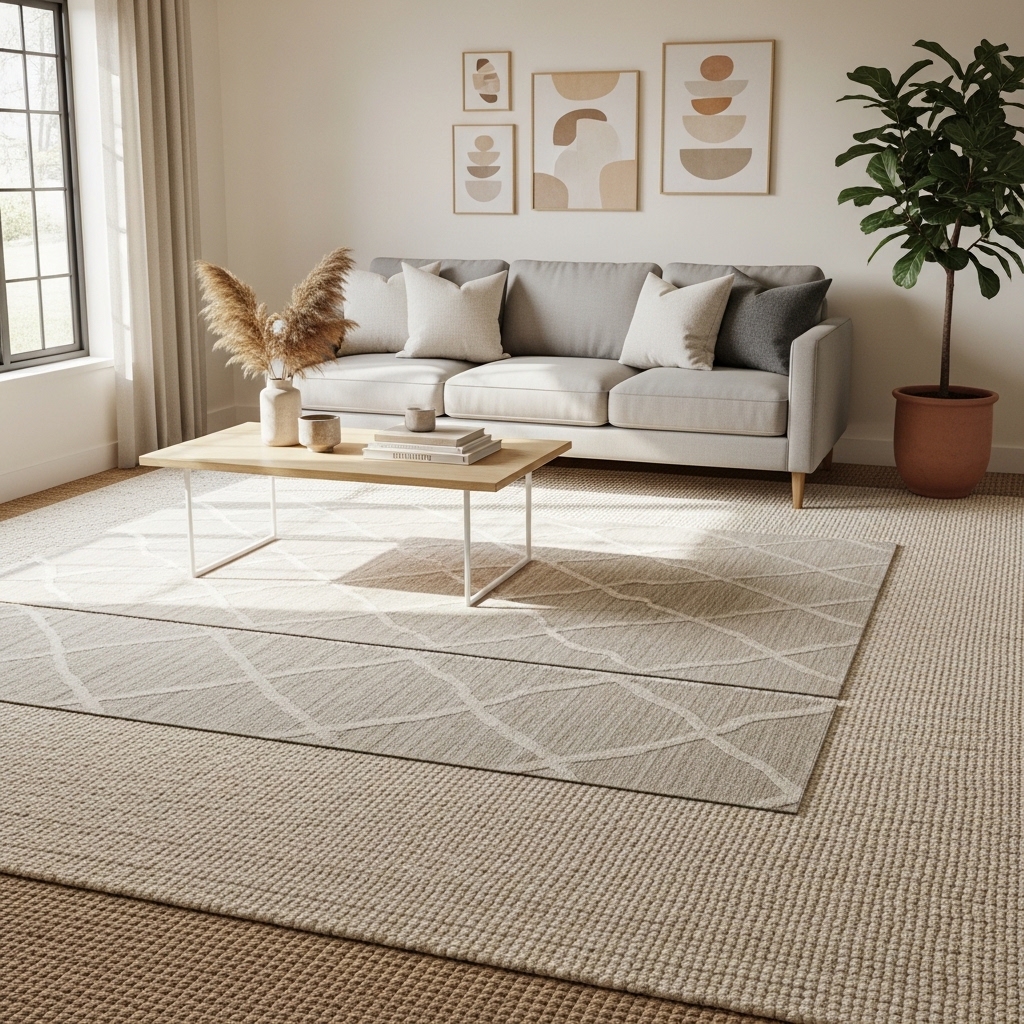
Who This Is For: Large open-plan living rooms needing zone definition.
What It Does / Why It Works: Layered rugs create visual separation and comfort without breaking the calm neutral palette.
How to Apply: Place a larger base rug under furniture, layer a smaller patterned rug on top for texture.
Mistakes to Avoid / Pro Tips / Budget Alternatives: Avoid mismatched colors; use affordable synthetic rugs for layered effects.
17. Minimalist TV Wall Setup
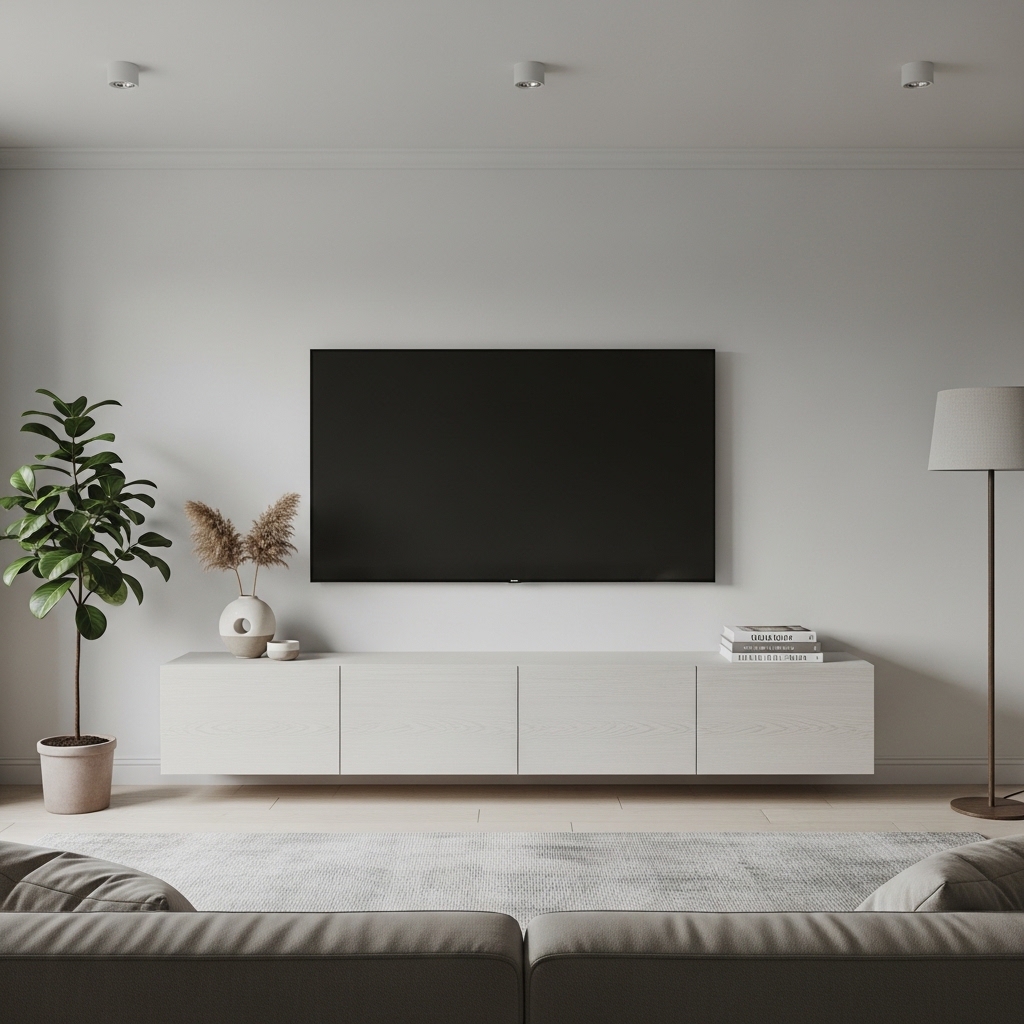
Who This Is For: Small or medium living rooms wanting a clean, neutral entertainment area.
What It Does / Why It Works: Keeps technology discreet while complementing the neutral aesthetic.
How to Apply: Mount the TV, use floating shelves or console tables, and hide cords for minimal clutter.
Mistakes to Avoid / Pro Tips / Budget Alternatives: Avoid large dark TV walls in small spaces; neutral frames or panels soften the look.
18. Warm Metal Accents
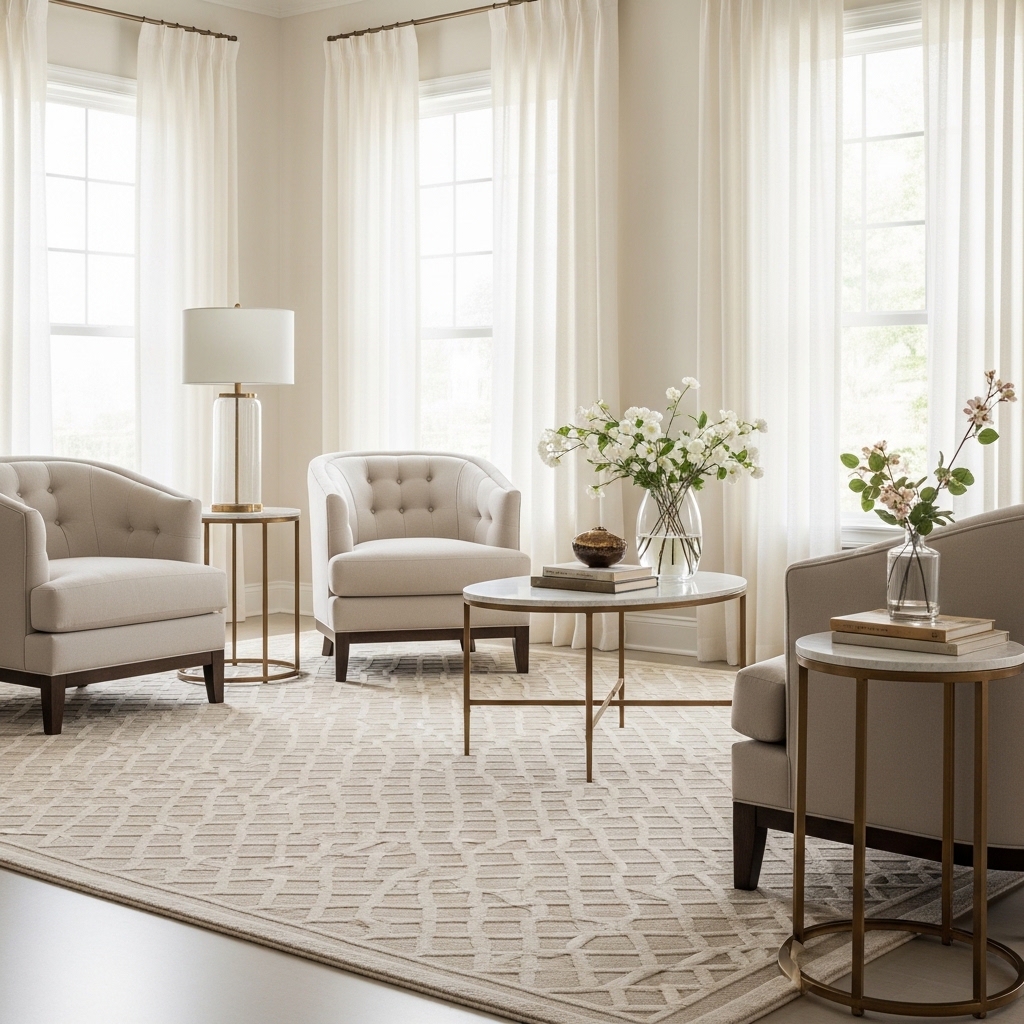
Who This Is For: Rooms needing subtle contrast without disrupting neutrality.
What It Does / Why It Works: Brass, copper, or matte gold accents add warmth and dimension to a muted palette.
How to Apply: Add accent lamps, candle holders, or frames sparingly. Pair with neutral textiles.
Mistakes to Avoid / Pro Tips / Budget Alternatives: Avoid mixing too many metals; thrifted finds or spray-painted accents work on a budget.
19. Neutral Art & Photography
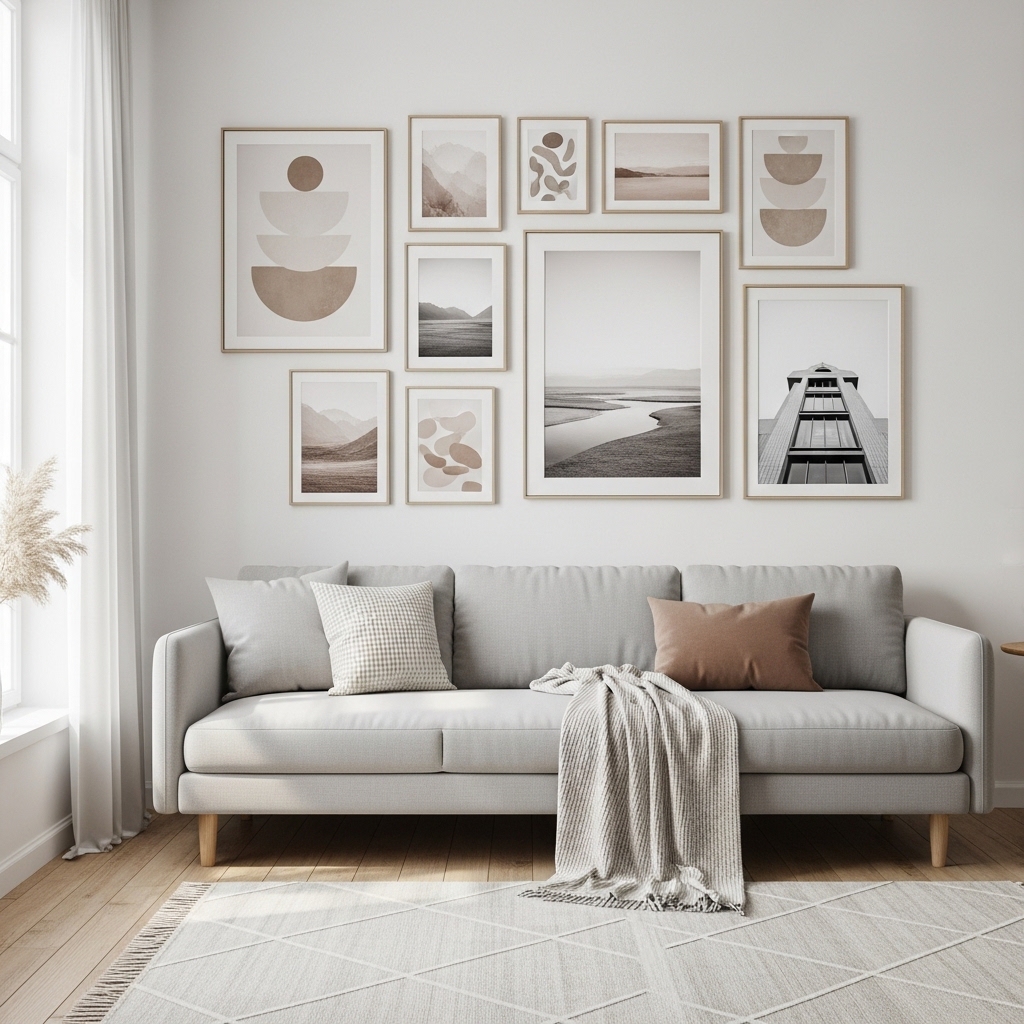
Who This Is For: Living rooms needing subtle personality and depth.
What It Does / Why It Works: Adds focal points without introducing bright colors, keeping the room serene and cohesive.
How to Apply: Use muted frames or black-and-white photography. Hang at eye level or above key furniture.
Mistakes to Avoid / Pro Tips / Budget Alternatives: Avoid overcrowding; printable art or DIY canvases are budget-friendly.
20. Layered Lighting: Overhead + Table Lamps
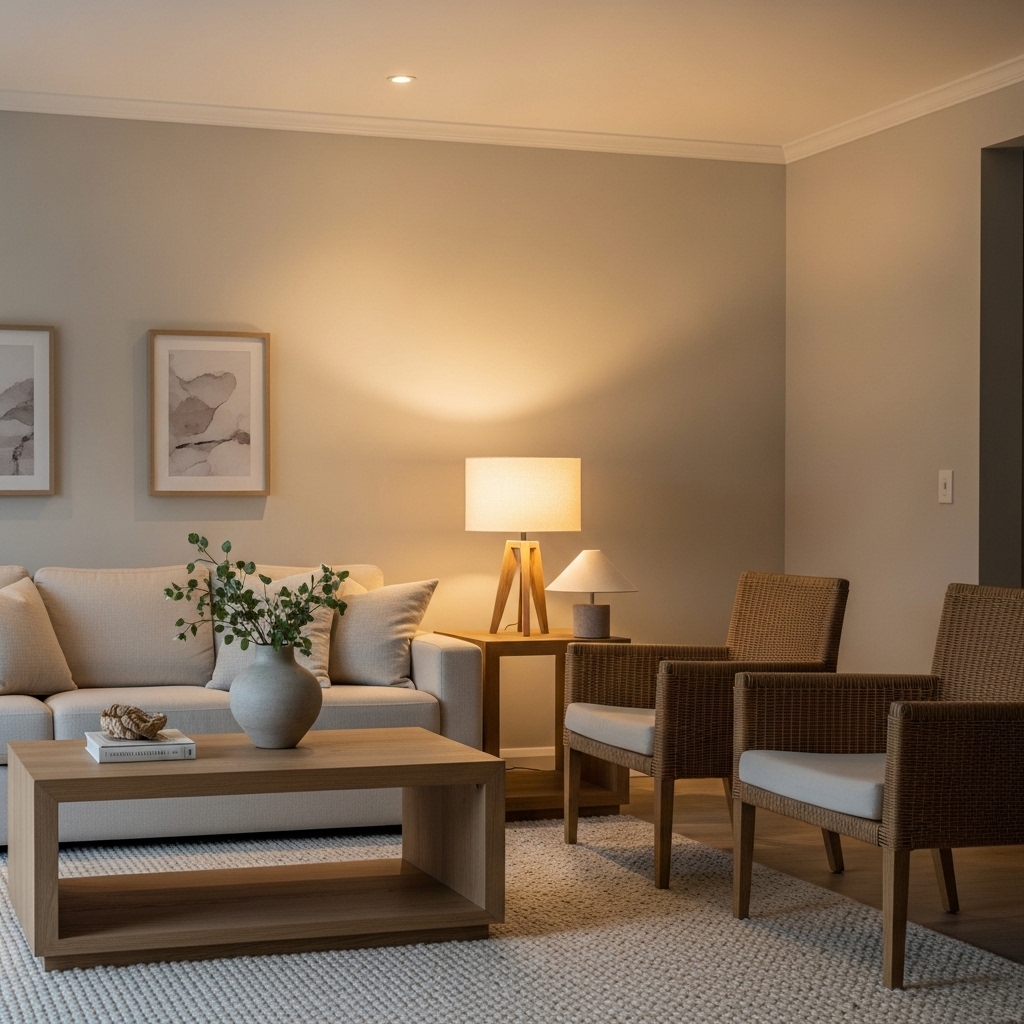
Who This Is For: Medium to large living rooms needing both task and ambient light.
What It Does / Why It Works: Creates flexibility, warmth, and functional zones for reading, relaxing, or entertaining.
How to Apply: Combine ceiling lights with floor or table lamps; dimmers allow adjustable brightness.
Mistakes to Avoid / Pro Tips / Budget Alternatives: Avoid harsh overhead lighting alone; string lights or plug-in lamps can enhance ambiance affordably.
21. Seasonal Neutral Decor
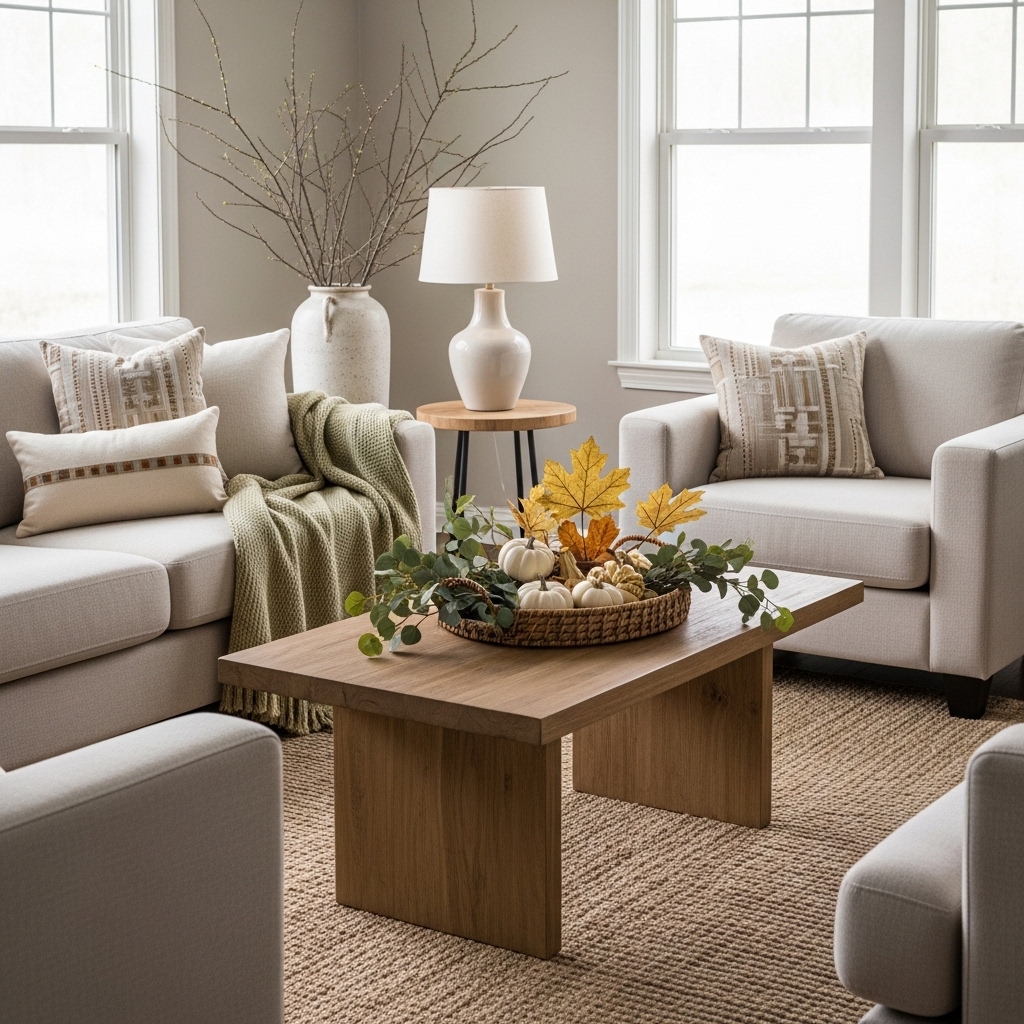
Who This Is For: Perfect for homeowners wanting a dynamic neutral palette throughout the year.
What It Does / Why It Works: Rotating throws, pillows, or accent decor keeps the living room fresh while maintaining calm aesthetics.
How to Apply: Use baskets for storage; coordinate seasonal swaps with base neutral tones.
Mistakes to Avoid / Pro Tips / Budget Alternatives: Avoid replacing everything at once; DIY or thrifted seasonal accents save money.
Conclusion: Create a Timeless, Calm Neutral Living Room
Neutral living rooms are really great because they are calm and can work for anyone. You can have a living room in a big house or a small apartment and it will still look good. To make your neutral living room feel nice and cozy you can add textures and lighting. You can also add some plants or other things that you like to make it feel like home.
One thing you can do is put lamps in spots to make the room feel warm and inviting. You can also use rugs to separate areas of the room. If you want to add some touches you can use things like plants or pictures on the wall. You do not have to spend a lot of money to make your living room look nice. You can use things you find at thrift stores or make your own decorations.
These neutral living room ideas can help you make your room feel calm and comfortable. You can start with changes and add more things over time. Neutral living rooms are great because they can help you feel relaxed and happy in your home. Neutral living rooms can be very cozy and nice to be, in.