20 Small Closet Ideas That Maximize Every Inch When You Have No Space to Waste
You open your closet door. Clothes are crammed so tight you cannot see what you actually own.
Small closets feel impossible. There is never enough room. Every season brings a new frustration.
The truth is that small closets can work beautifully. You just need the right strategies.
Big closets hide bad habits. Small closets force you to be intentional about every single item.
The difference between chaos and calm comes down to smart systems, not square footage.
This guide delivers 20 small closet ideas that maximize every inch when you have no space to waste.
From creative hanging solutions to vertical storage, each idea helps you do more with less room.
1. Edit Your Small Closet Ideas Wardrobe Seasonally Instead of Yearly
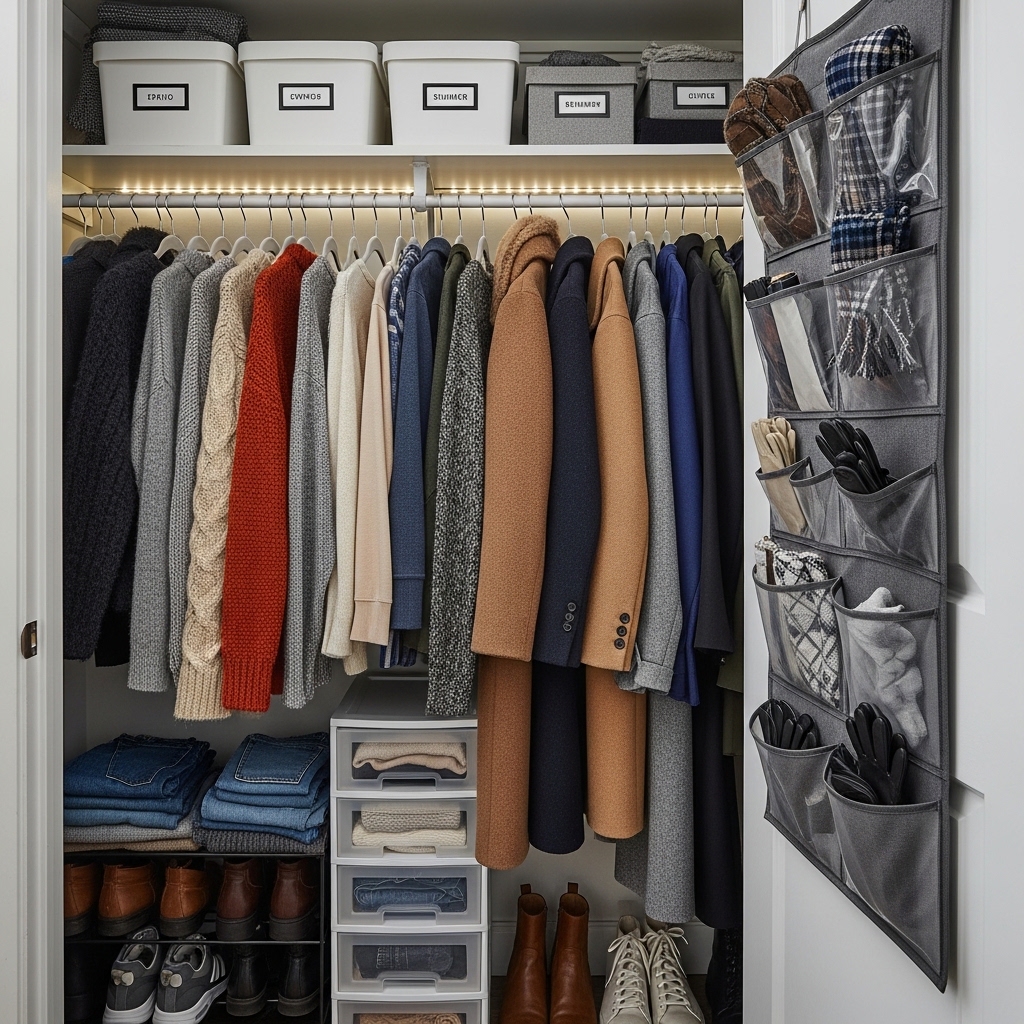
A small closet cannot hold every piece of clothing you own for all four seasons at once.
Store off-season clothes in bins under your bed or on a high shelf in another room.
Keep only the current season in your small closet. Rotate items when the weather changes.
A closet stuffed with winter coats in July is a closet that will always feel overcrowded and frustrating.
Pro Tip: Switch your wardrobe on the first day of each season. Spring on March 20. Summer on June 21.
Mistake to Avoid: Do not keep clothes you have not worn in over a year. If you skipped it last season, donate it today.
2. Use Slim Velvet Hangers to Gain Inches of Space
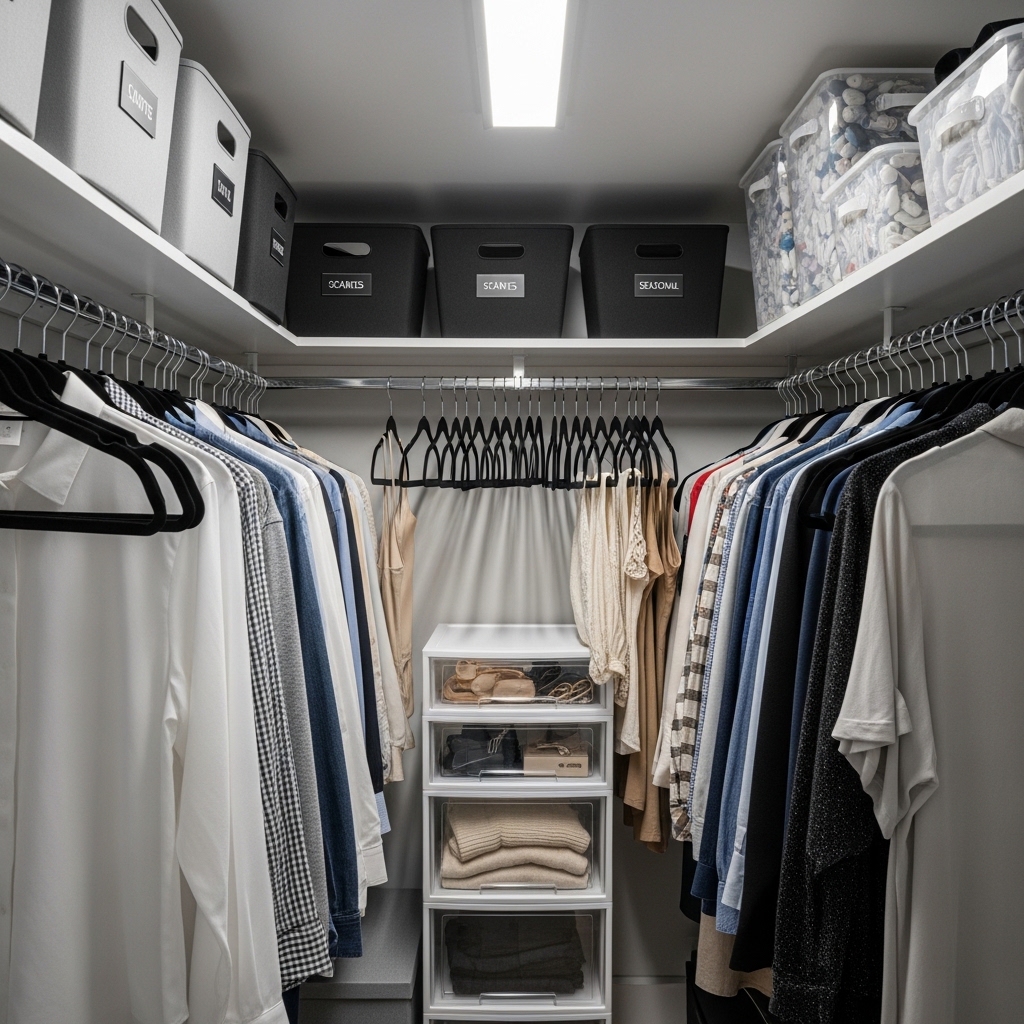
Plastic and wooden hangers are bulky. They waste valuable inches between each garment.
Replace every hanger in your closet with slim velvet hangers. They are half the thickness of plastic.
Velvet hangers also prevent clothes from slipping off onto your closet floor.
Switching hangers alone can create room for twenty to thirty more items in a small closet.
Pro Tip: Count your hanging items before buying hangers. Buy ten extra for future additions to your wardrobe.
Mistake to Avoid: Do not keep dry cleaner wire hangers. They are flimsy and waste space. Recycle them immediately.
3. Hang a Second Rod Below Your Existing Rod
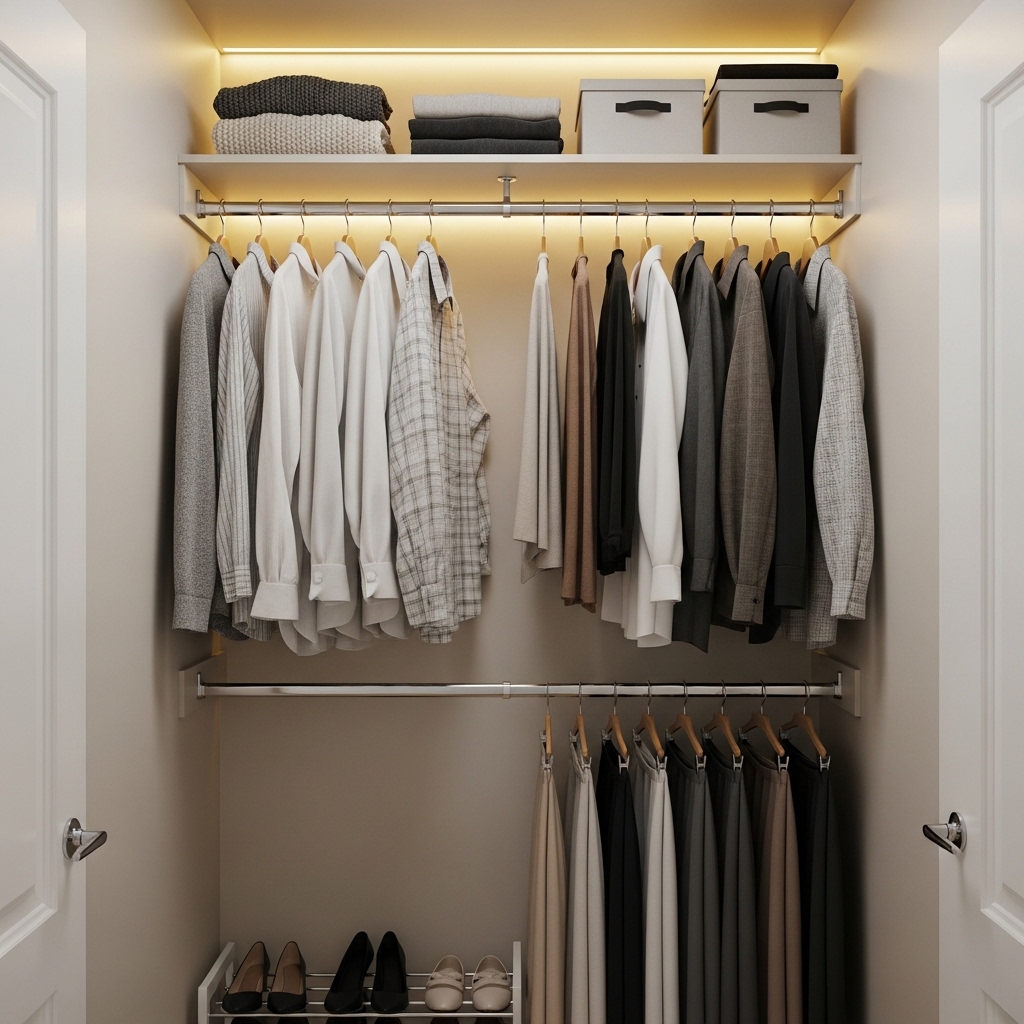
Most small closets have one rod running across the top. The space underneath is completely wasted.
Install a second rod directly below your existing rod. Hang it about three feet from the floor.
Use the top rod for shirts and blouses. Use the bottom rod for pants, skirts, and shorts.
Double rods double your hanging capacity without adding any new wall space at all.
Pro Tip: Use the bottom rod for items that are shorter than 32 inches. Pants and shorts fit perfectly.
Mistake to Avoid: Do not install a second rod if you have long dresses or coats. Those need full vertical length.
4. Hang a Shoe Organizer on the Back of Your Door
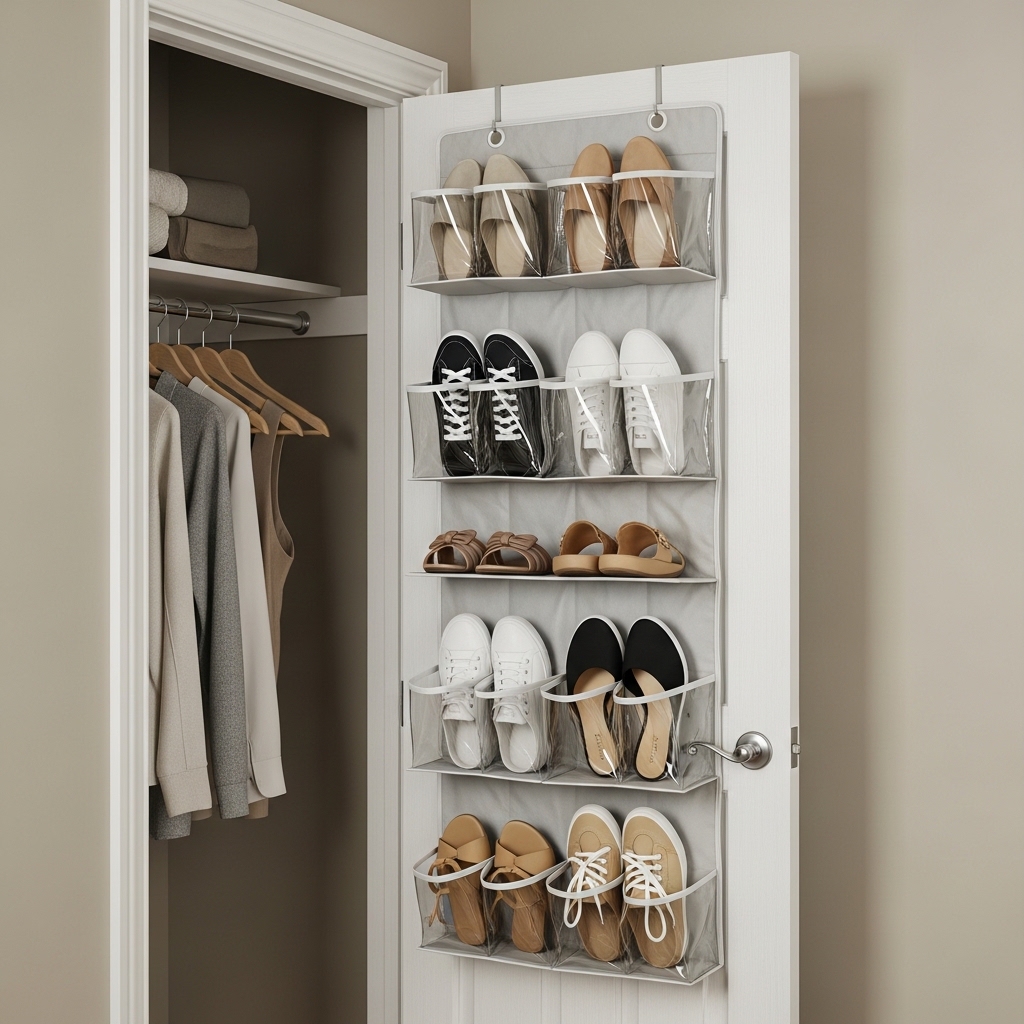
Your closet floor is precious real estate. Shoes piled there make the space feel cramped and messy.
Install an over-the-door shoe organizer with clear plastic pockets on the back of your closet door.
Store each pair of shoes in its own pocket. You see every pair at a single glance.
Shoes on the floor get kicked around and lost. Shoes on the door stay organized and accessible.
Pro Tip: Use the bottom pockets for heavy shoes like boots. Use top pockets for lightweight sandals and flats.
Mistake to Avoid: Do not overload your door organizer. Too many shoes can pull the door off its hinges over time.
5. Use Vertical Space with Stackable Storage Cubes
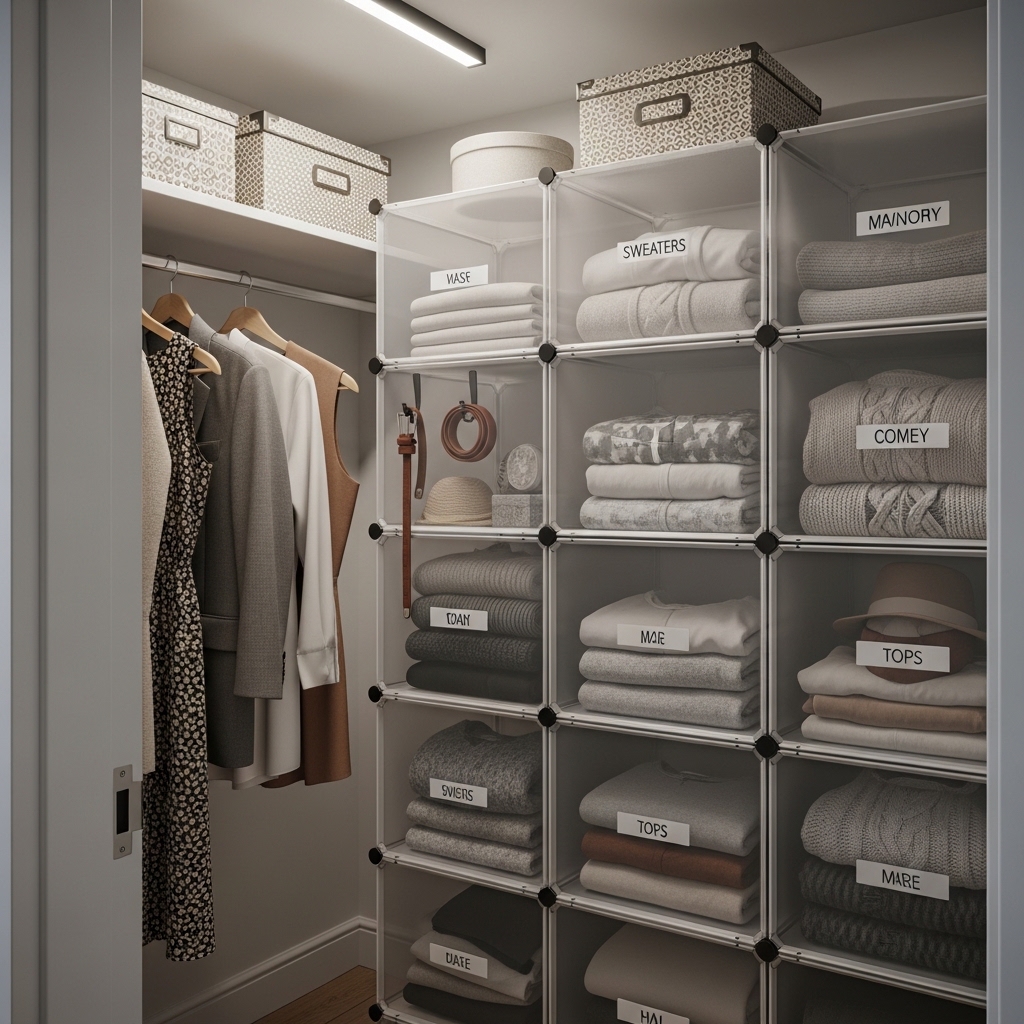
Horizontal space is limited in small closets. Vertical space is almost always available.
Buy stackable fabric storage cubes that lock together securely. Stack them from floor to ceiling.
Use one cube for t-shirts. One for sweaters. One for jeans. One for workout clothes.
Stacking doubles your storage capacity without increasing your footprint on the floor at all.
Pro Tip: Choose cubes in a light color like white or gray. Light colors reflect what little light you have in a small closet.
Mistake to Avoid: Do not stack cubes higher than you can comfortably reach. Use a small step stool for top cubes.
6. Install a Hook on the Side Wall of Your Closet
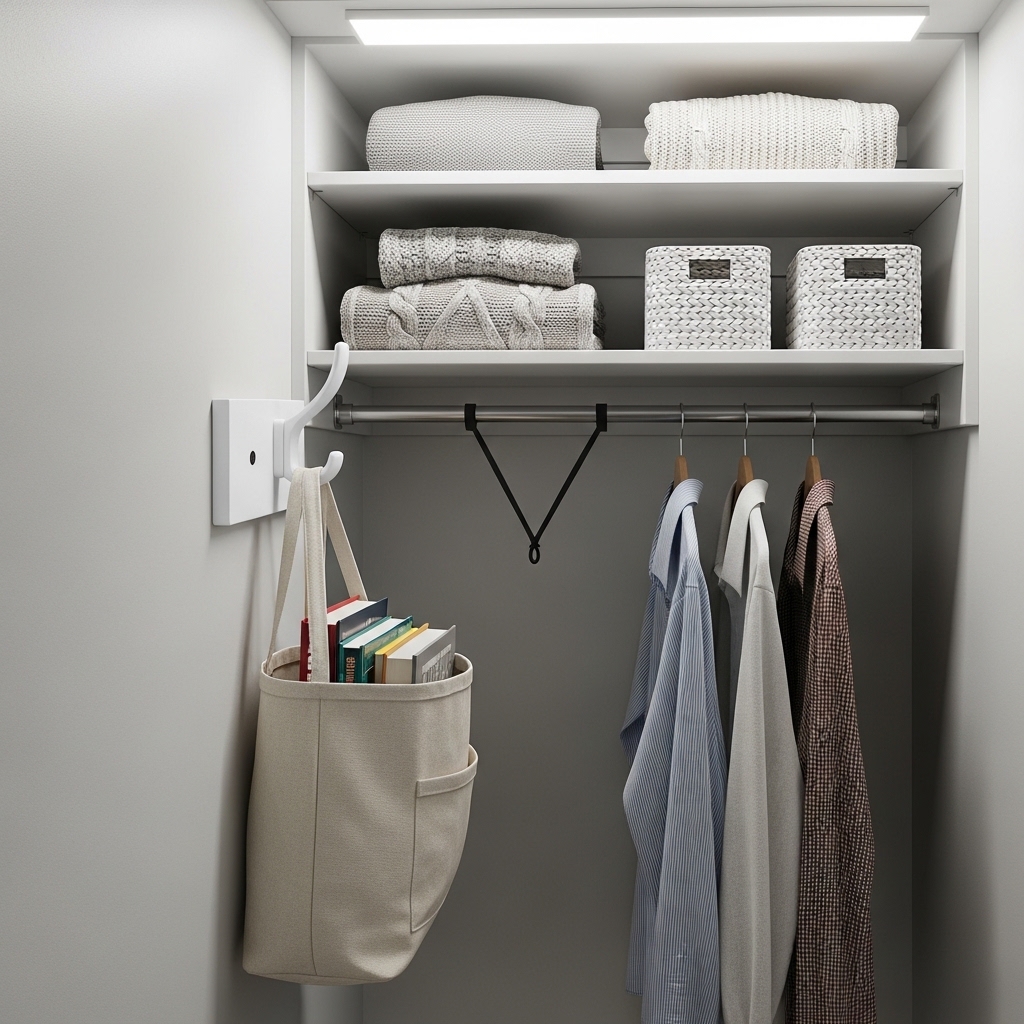
The side wall inside your closet is often completely empty. That is wasted storage space.
Install a single sturdy hook or a small hook rack on the side wall near the entrance.
Hang your robe, your bag, or tomorrow’s outfit on the hook. Items stay accessible but off the main rod.
Side walls are prime real estate in small closets. A hook captures that space for daily use.
Pro Tip: Install multiple hooks at different heights. Low hooks for kids. High hooks for adults.
Mistake to Avoid: Do not hang heavy winter coats on a side wall hook. Heavy items can pull the hook out of the wall.
7. Use Cascade Hangers to Hang Multiple Items Vertically
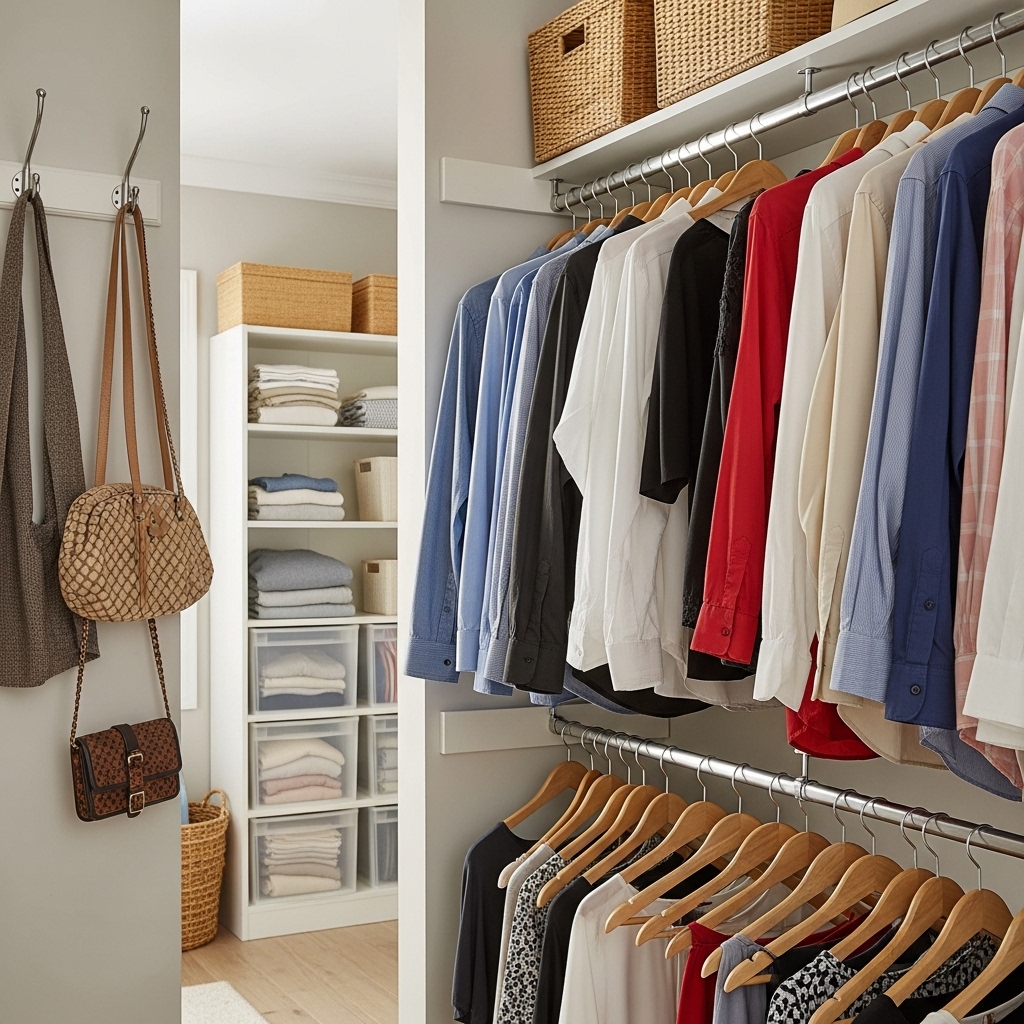
One hanger holds one shirt. A cascade hanger holds five shirts in the same rod space.
Buy cascade hangers that clip together vertically. Hang them from your main rod.
Each cascade hanger holds four to five items stacked downward. You save massive amounts of rod space.
Cascade hangers are perfect for tanks, camisoles, scarves, and lightweight tops.
Pro Tip: Use cascade hangers for items you wear together as outfits. Hang the whole outfit on one cascade.
Mistake to Avoid: Do not use cascade hangers for heavy items like sweaters or jeans. The weight will pull the hanger apart.
8. Store Out-of-Season Shoes in Clear Boxes on Top Shelf
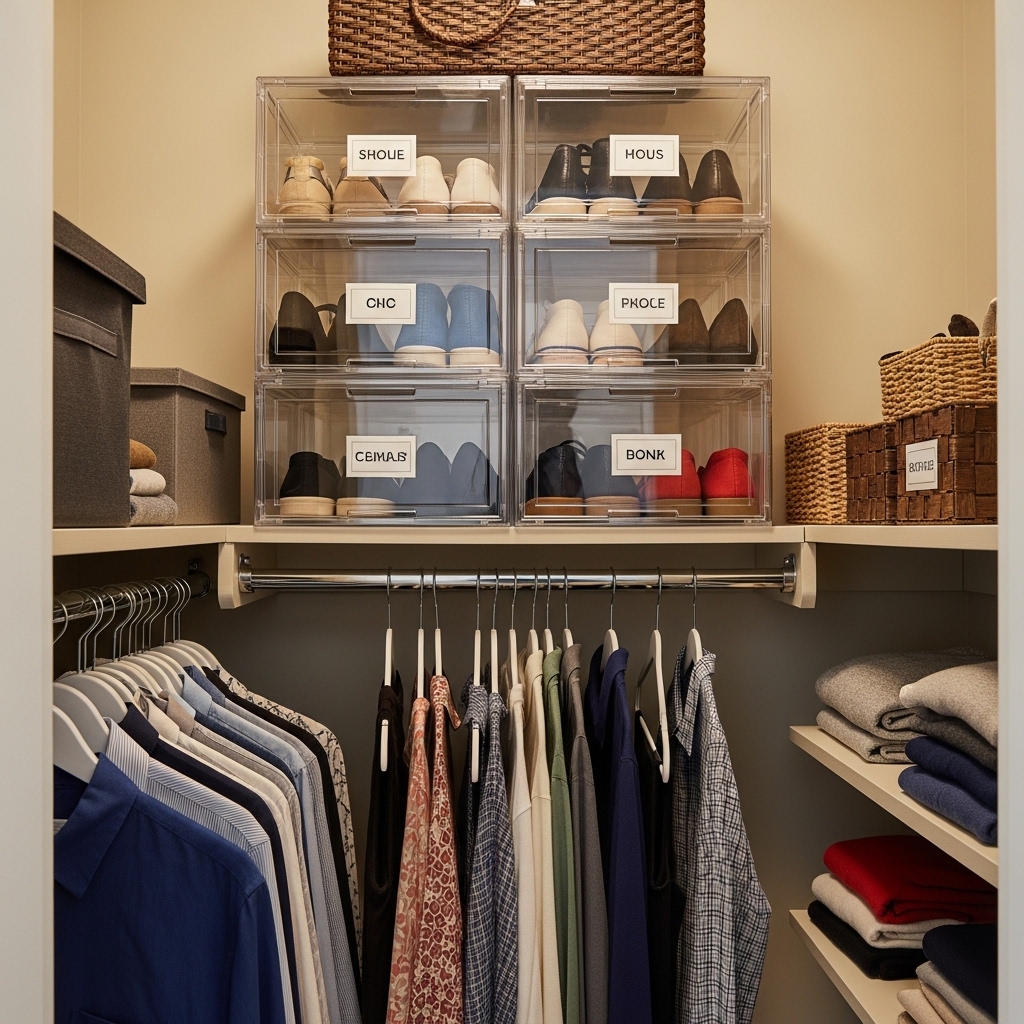
Your top shelf is hard to reach. Put the items you need least often up there.
Move off-season shoes into clear plastic shoe boxes with lids. Stack the boxes on your top shelf.
You see exactly what is inside through the clear plastic. No guessing. No opening every box.
Seasonal shoes rotate. Summer sandals go up in winter. Winter boots go up in summer.
Pro Tip: Label each box with a small sticker. “Summer Sandals.” “Winter Boots.” “Spring Flats.”
Mistake to Avoid: Do not use cardboard shoe boxes. Cardboard absorbs moisture and you cannot see inside. Clear plastic is better.
9. Install a Tension Rod for Scarves and Belts
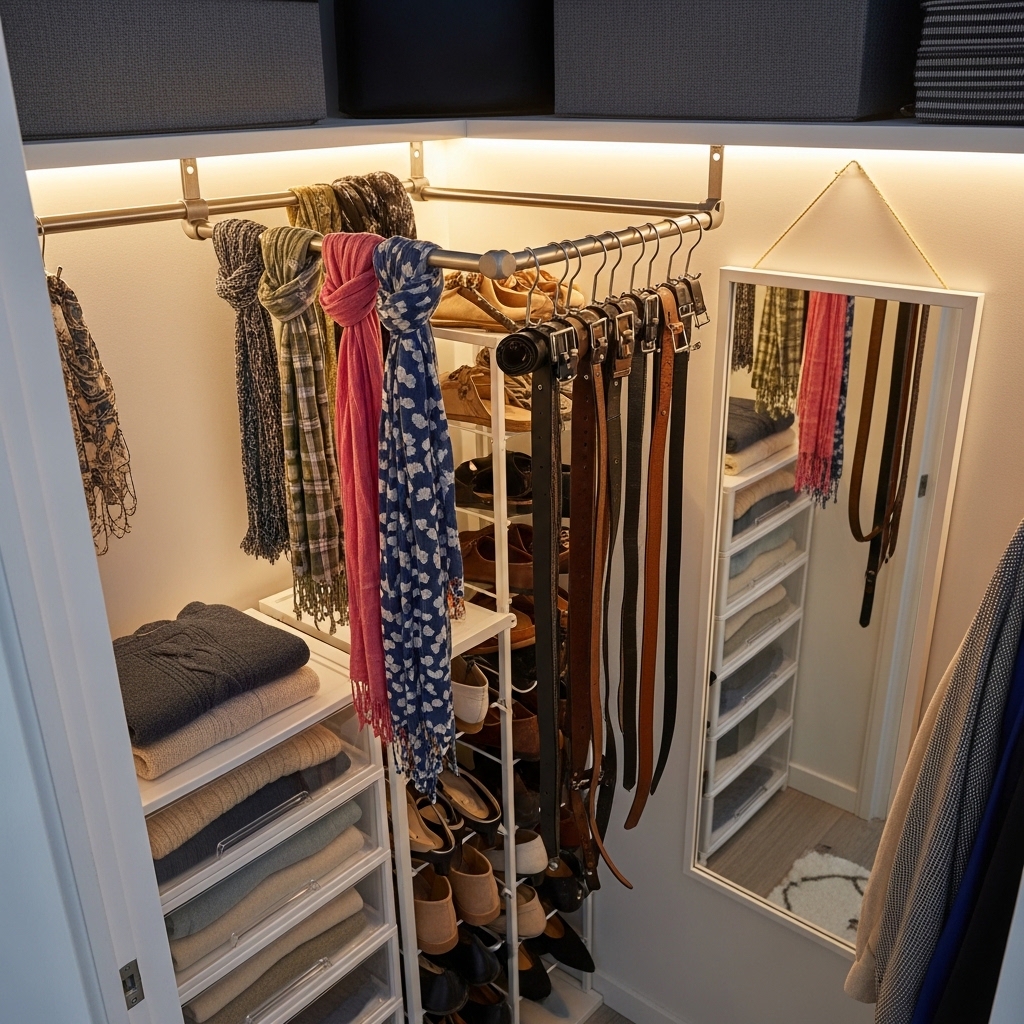
Scarves and belts draped over hangers look messy and fall off constantly.
Install a small tension rod in an empty section of your closet. Hang it at waist height.
Fold scarves over the rod. Loop belts over the rod. They stay organized and visible.
A tension rod requires no tools and no permanent installation. Perfect for renters.
Pro Tip: Use two tension rods stacked vertically. Top rod for scarves. Bottom rod for belts.
Mistake to Avoid: Do not overload your tension rod. Too much weight will cause the rod to fall from the walls.
10. Use Drawer Dividers Inside Every Drawer
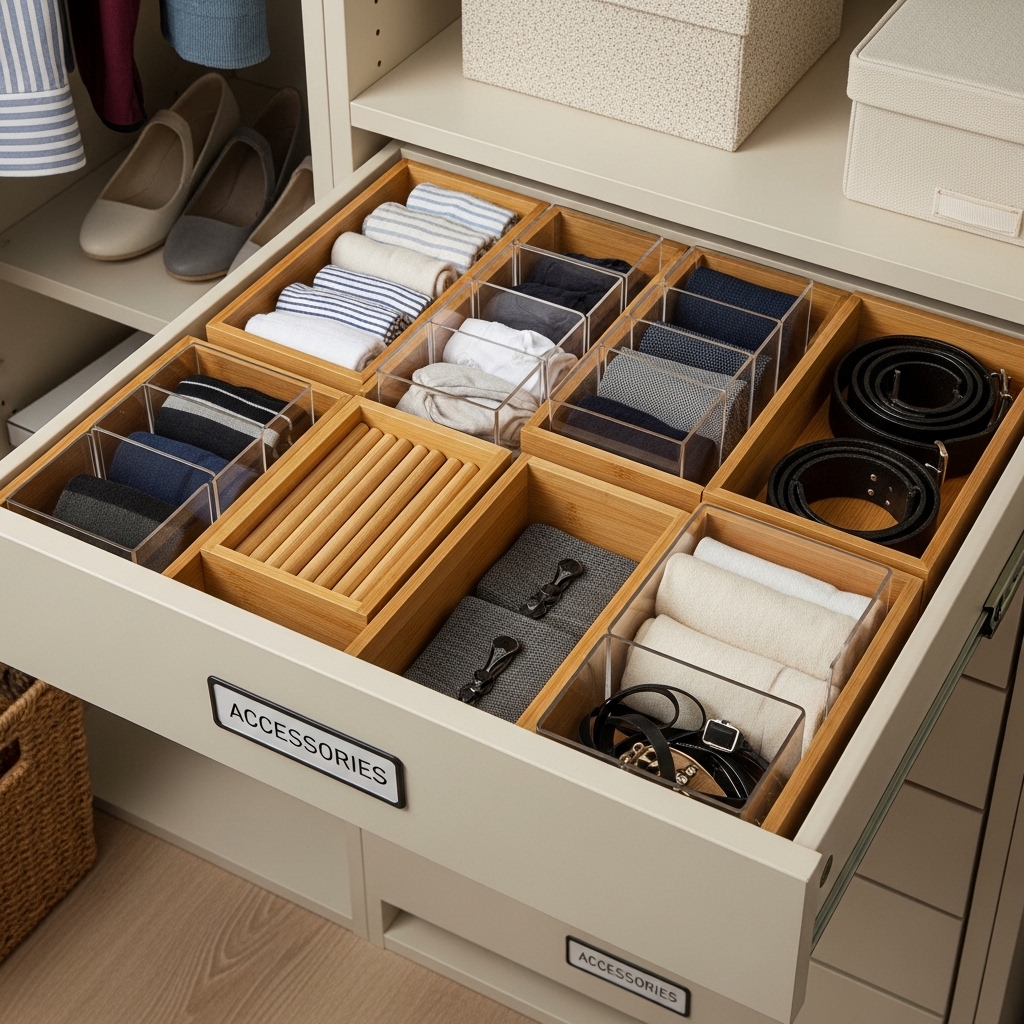
Drawers become chaos zones when socks, underwear, and accessories all mix together.
Insert expandable drawer dividers into every drawer in your small closet.
Socks in one section. Underwear in another. Bras in another. Belts in another.
Dividers keep categories separate. You grab what you need without destroying the entire drawer.
Pro Tip: Roll socks and underwear instead of folding them flat. Rolled items stand upright in dividers for better visibility.
Mistake to Avoid: Do not use permanent dividers in a drawer. Your storage needs will change. Use adjustable dividers instead.
11. Hang a Pocket Organizer on the Inside of Your Door
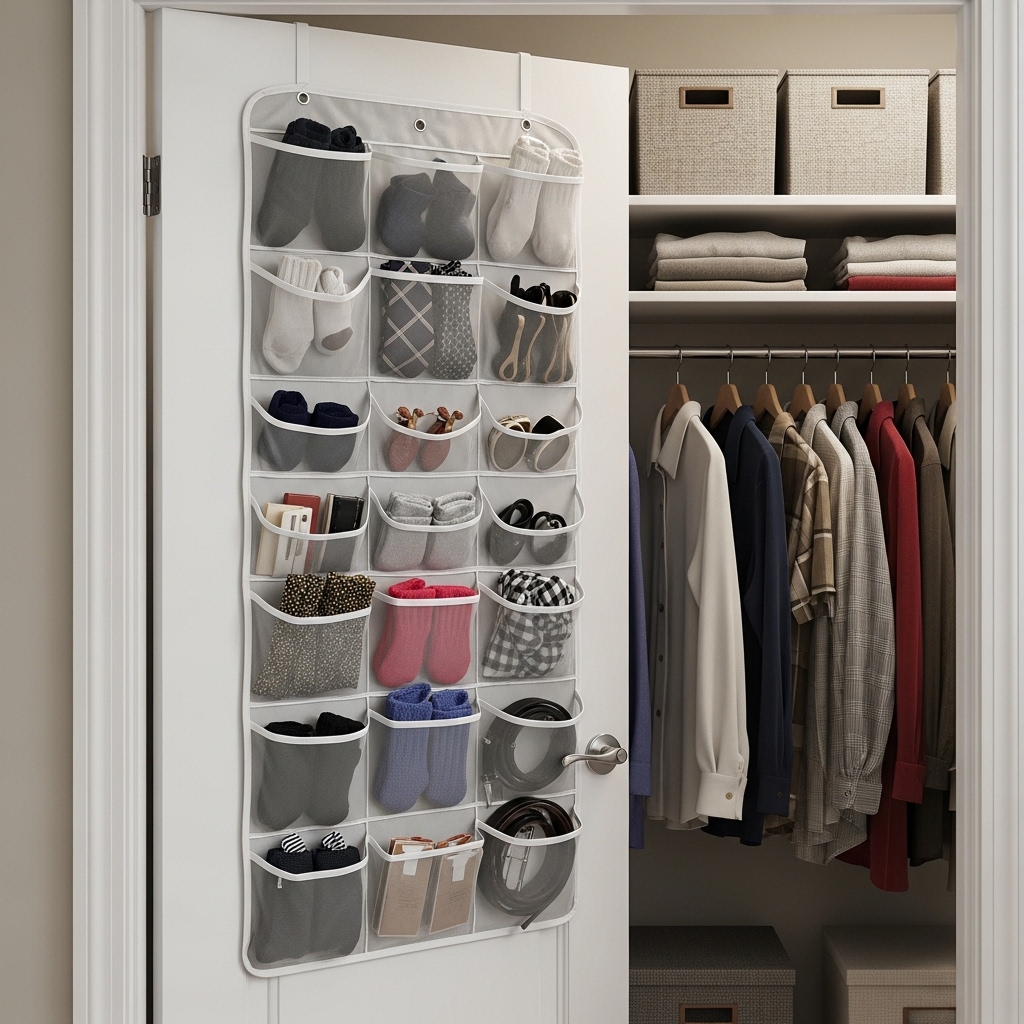
Small accessories like jewelry, watches, and sunglasses disappear into drawers and shelves.
Hang a clear pocket organizer on the inside of your closet door. Use the pockets for small items.
Each pocket holds a different category. Earrings here. Watches there. Sunglasses in another.
Pocket organizers take zero shelf space. They use door space that would otherwise be empty.
Pro Tip: Choose an organizer with zippered pockets for valuable items. Zippers keep your jewelry secure.
Mistake to Avoid: Do not use a pocket organizer for heavy items. The weight will pull the organizer off the door.
12. Use a Lazy Susan for Small Bottles and Jars
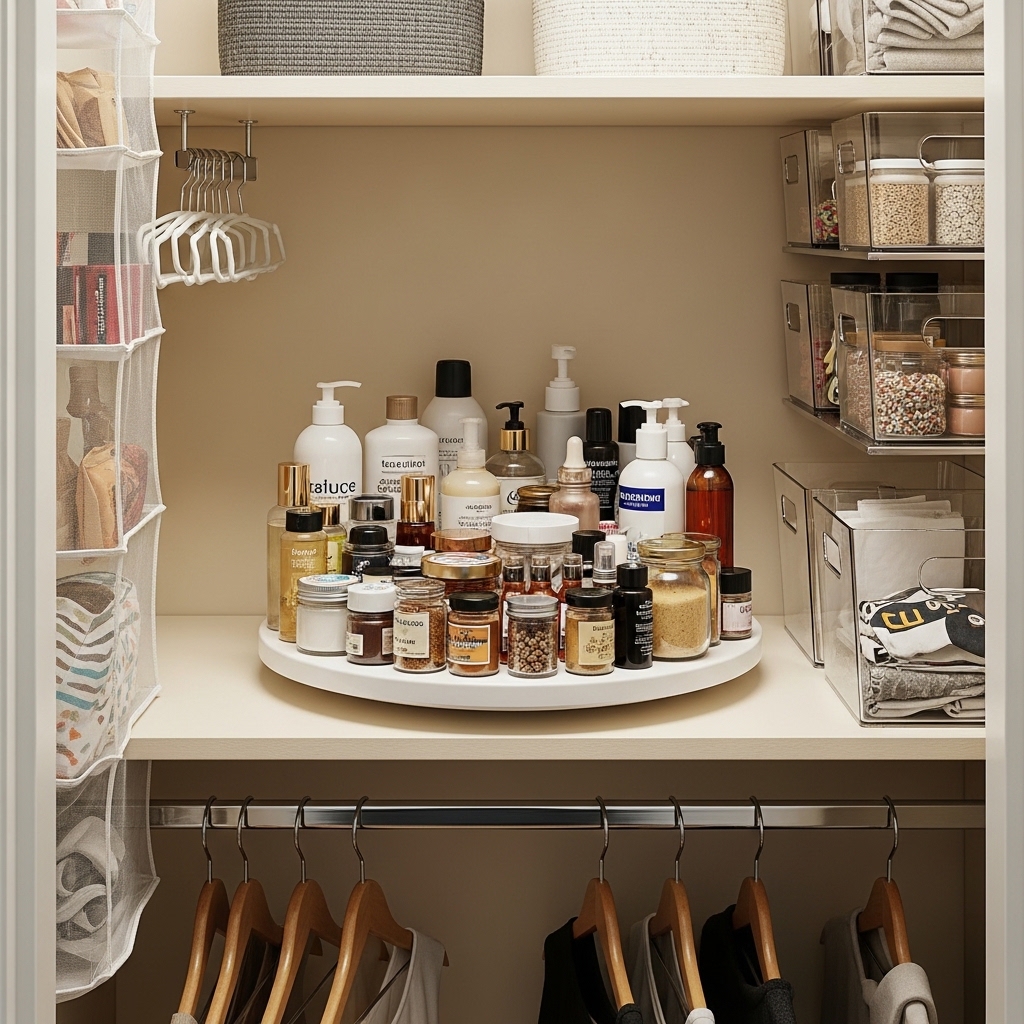
Perfume bottles, cologne, and lotion disappear into the dark corners of your shelves.
Place a small Lazy Susan turntable on a shelf inside your closet. Store bottles on it.
Spin the turntable to access items in the back. No more digging and knocking things over.
A Lazy Susan is perfect for the corner shelves that are hardest to reach.
Pro Tip: Use a two-tier Lazy Susan for even more storage. The top tier spins independently from the bottom tier.
Mistake to Avoid: Do not overload your Lazy Susan. Too much weight makes the turntable difficult to spin smoothly.
13. Store Folding Items Vertically Like Files
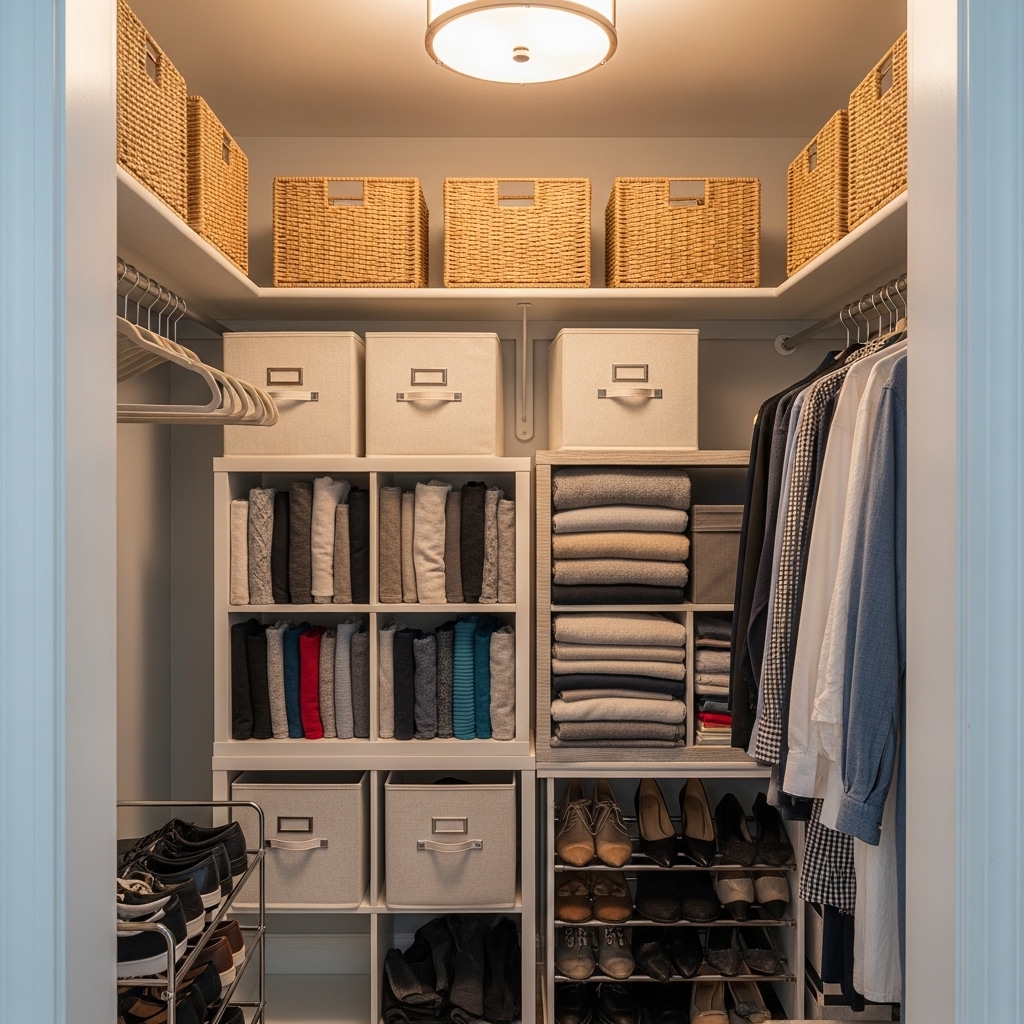
Traditional folding stacks items flat. You cannot see what is underneath without disturbing the whole pile.
Fold clothes into small rectangles that stand upright on their edges. Place them side by side.
You see every item at a single glance. No more digging through stacks to find the shirt on the bottom.
Vertical folding is a game changer for small closets with deep shelves.
Pro Tip: Use shelf dividers to keep each vertical row separate. Dividers prevent rows from falling into each other.
Mistake to Avoid: Do not overfill your shelf. Each upright row needs a little space between items so you can pull one out easily.
14. Add a Small Step Stool That Folds Flat
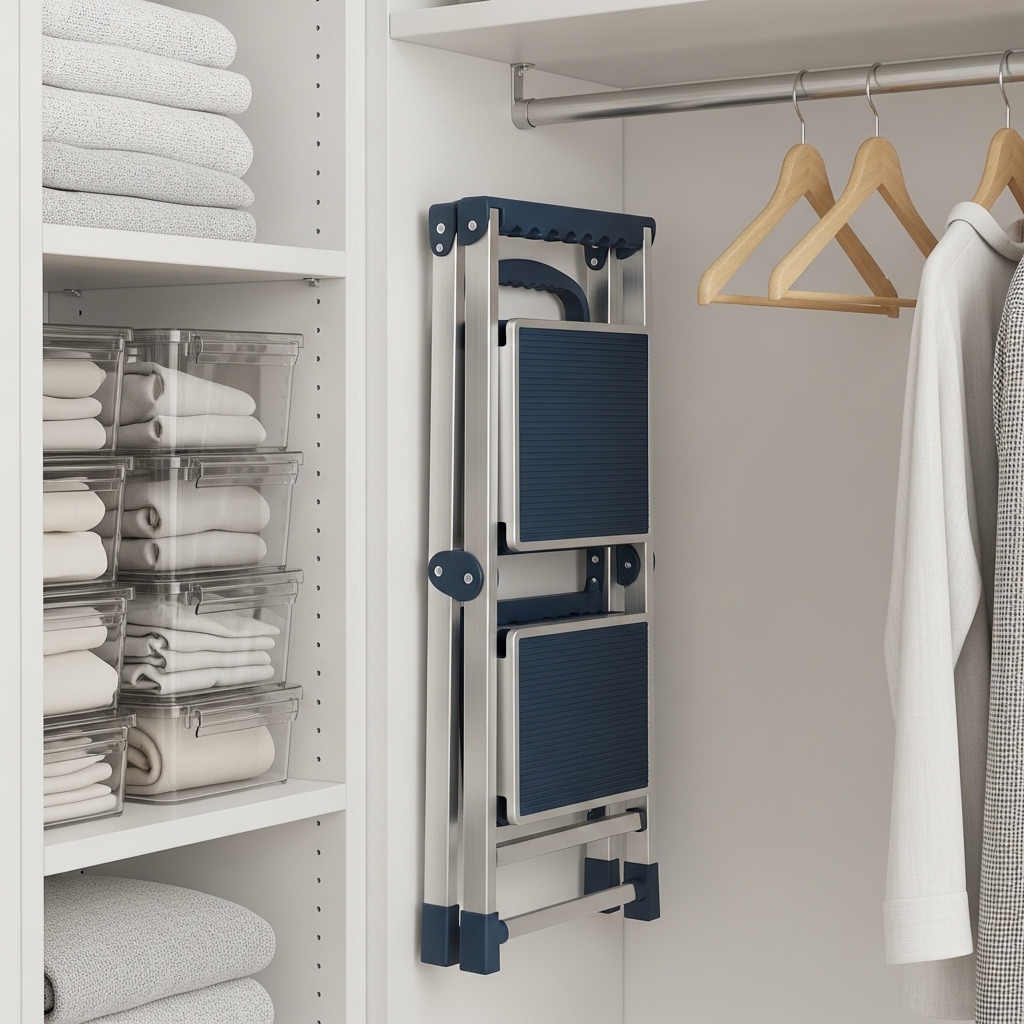
Top shelves are useless if you cannot reach them. A step stool changes everything.
Keep a small folding step stool in the corner of your closet or under your hanging clothes.
You reach top shelves safely. You access off-season bins without climbing on furniture.
A step stool takes almost no space when folded flat. The utility it provides every week is enormous.
Pro Tip: Choose a step stool with a nonslip platform and rubber feet. Nonslip surfaces prevent dangerous falls on closet floors.
Mistake to Avoid: Do not use a chair or stack of books as a step stool. Chairs tip over. Book stacks collapse. Use a proper step stool.
15. Use a Hanging Shelf Organizer for Folded Items
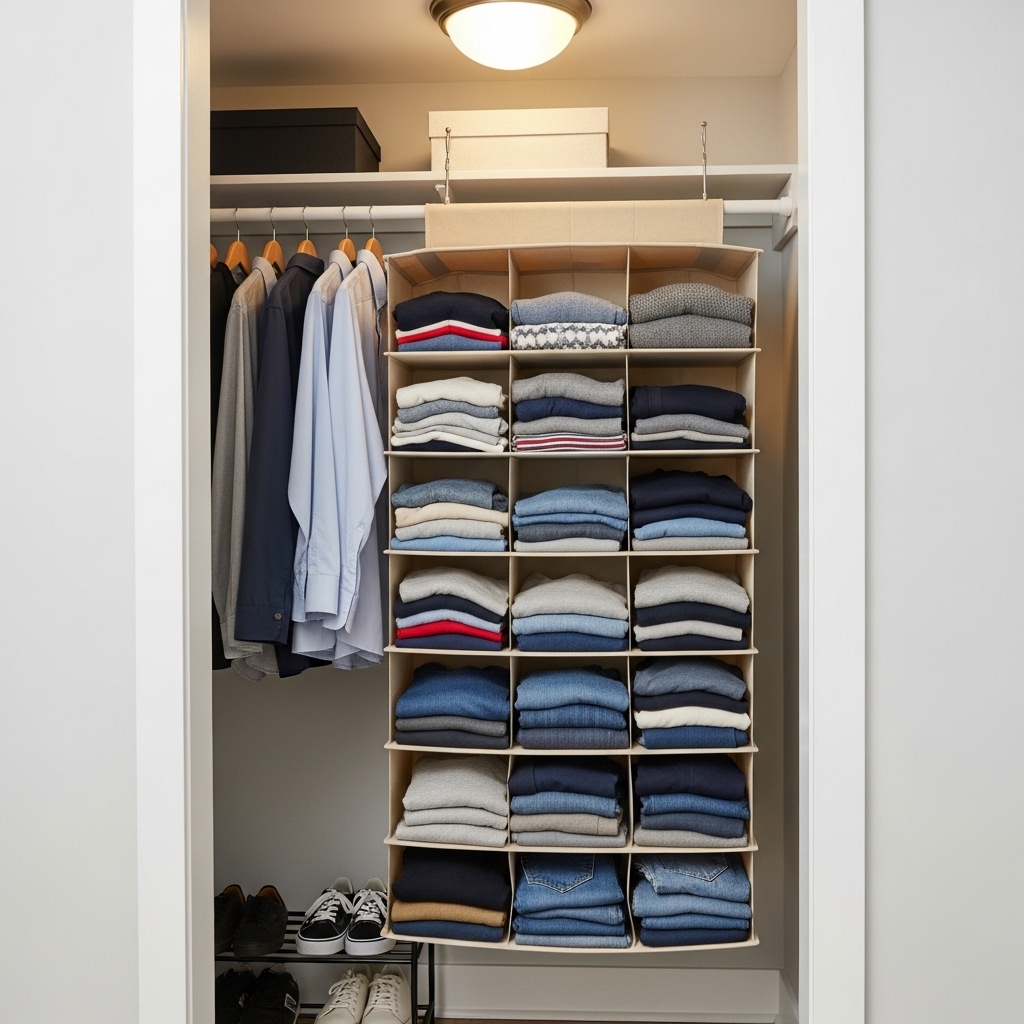
Standard shelves are fixed. A hanging shelf organizer hangs from your rod and creates new shelves.
Buy a fabric hanging shelf organizer with three to five tiers. Hang it from your existing rod.
Use each tier for different categories of folded items. T-shirts. Sweaters. Jeans.
A hanging organizer adds shelf space without any installation. It hangs from what you already have.
Pro Tip: Choose an organizer with reinforced fabric at the tiers. Reinforced tiers hold heavier items like jeans without sagging.
Mistake to Avoid: Do not overload the bottom tier. Heavy bottom tiers pull the entire organizer down over time.
16. Install a Full-Length Mirror on the Back of Your Door
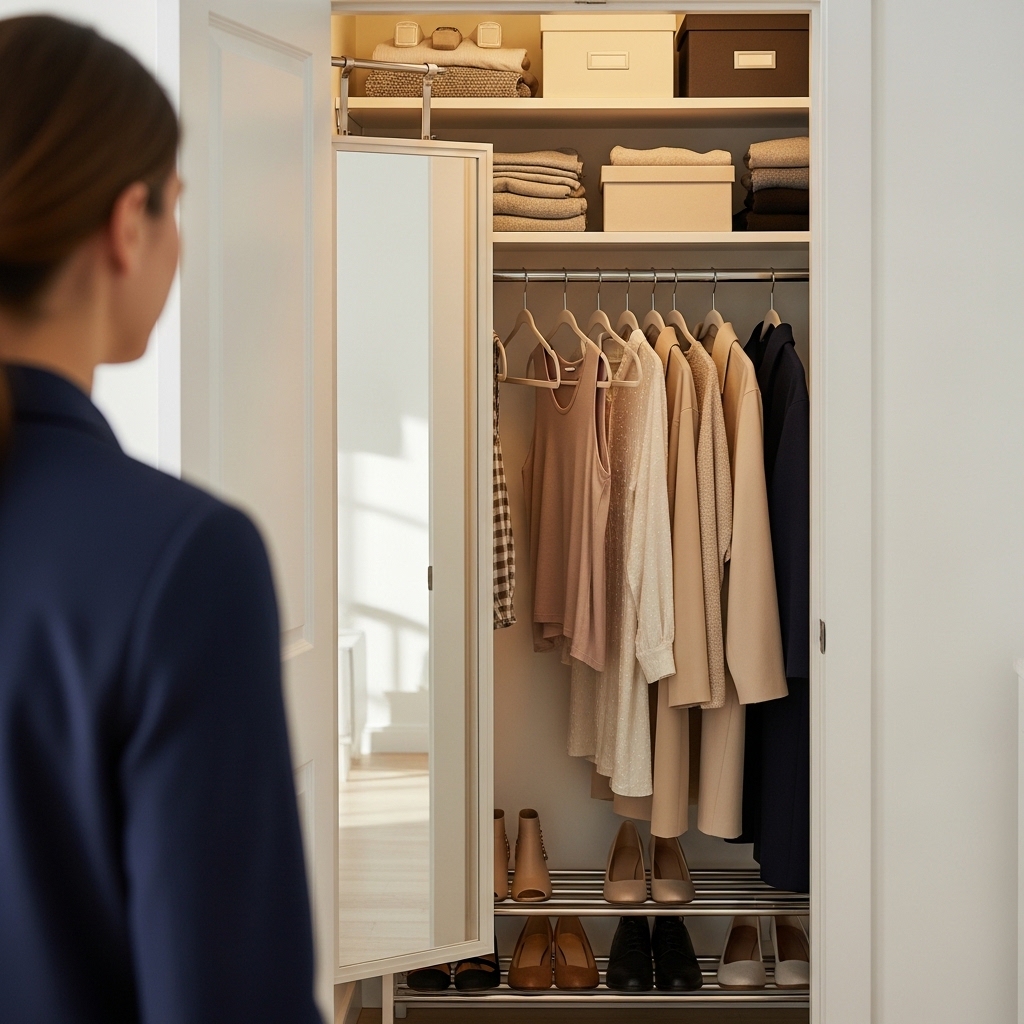
You need to check your outfit. Walking to another room takes time and breaks your routine.
Mount a full-length mirror on the back of your closet door or on an empty wall.
Check your entire outfit before you leave the closet. No more running to the bathroom mirror.
A mirror inside your closet saves time and keeps you in the dressing zone.
Pro Tip: Choose an acrylic mirror instead of glass. Acrylic mirrors are shatterproof and lighter for hanging on doors.
Mistake to Avoid: Do not place a mirror facing your hanging clothes directly. You want to see yourself, not your shirts.
17. Store Purses Inside Larger Purses
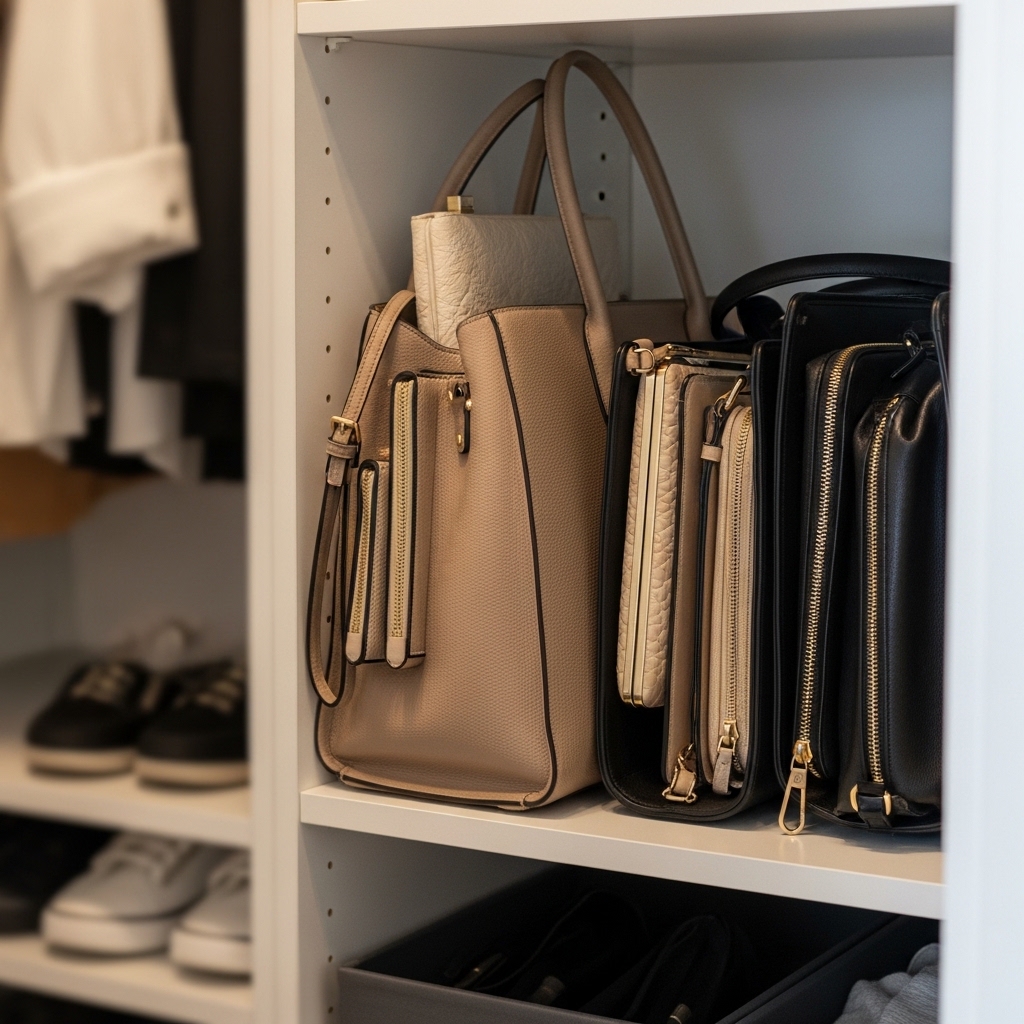
Handbags take up massive amounts of shelf space. You probably have empty space inside your larger bags.
Place smaller purses inside larger purses. Nest them like Russian dolls.
One large purse can hold two or three smaller bags. You free up shelf space instantly.
Nested purses take half the space of purses stored separately side by side.
Pro Tip: Stuff smaller purses with tissue paper before nesting. The tissue helps them keep their shape inside the larger bag.
Mistake to Avoid: Do not nest leather bags inside each other without a dust bag between them. Leather can transfer dye and stick together.
18. Use a Belt Hanger with Multiple Loops
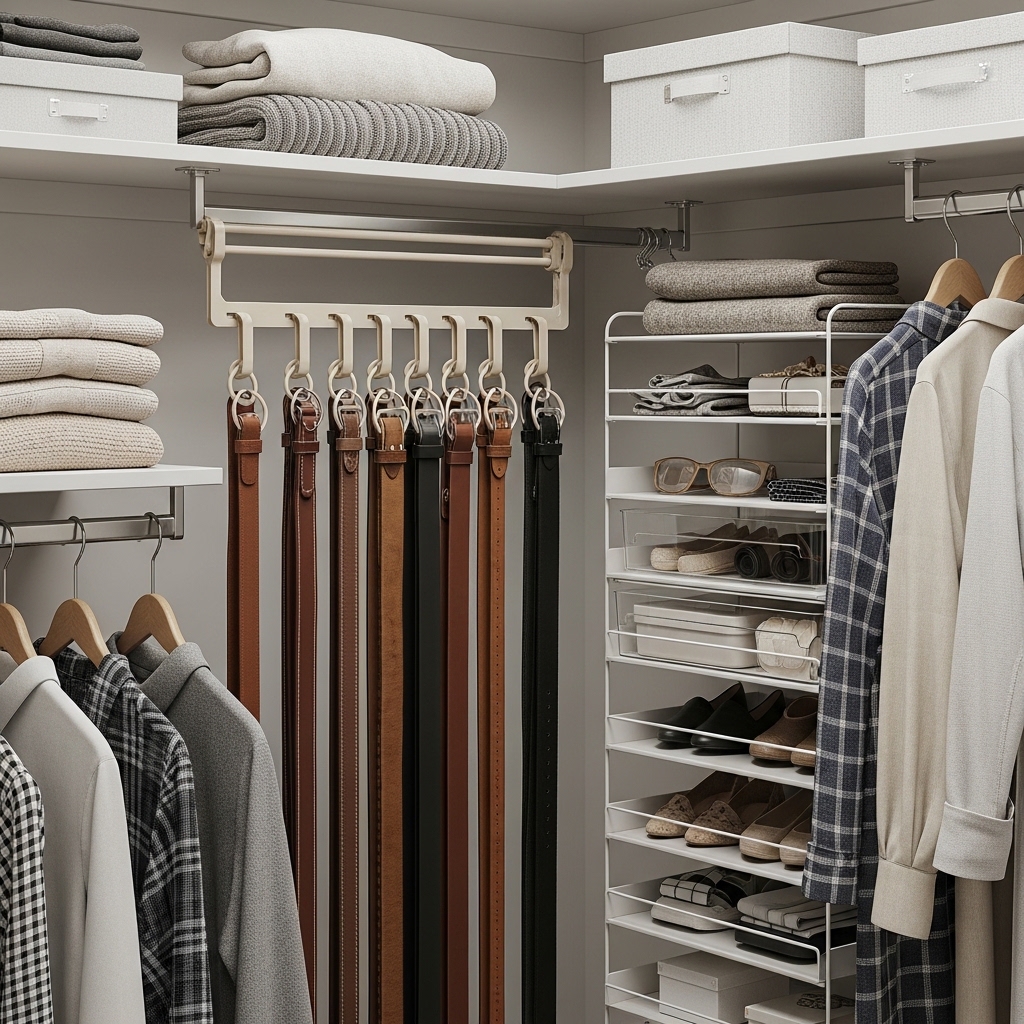
Belts draped over hangers fall off. Belts rolled up in drawers become wrinkled.
Buy a belt hanger with multiple loops. Hang it from your main rod.
Slide each belt through its own loop. You see every belt at a single glance.
A belt hanger takes the same rod space as one shirt but holds ten to fifteen belts.
Pro Tip: Choose a hanger with plastic or metal loops. Fabric loops stretch over time and belts fall through.
Mistake to Avoid: Do not hang heavy leather belts on a cheap belt hanger. The weight will snap the hanger.
19. Add Battery-Operated Lights to Dark Corners
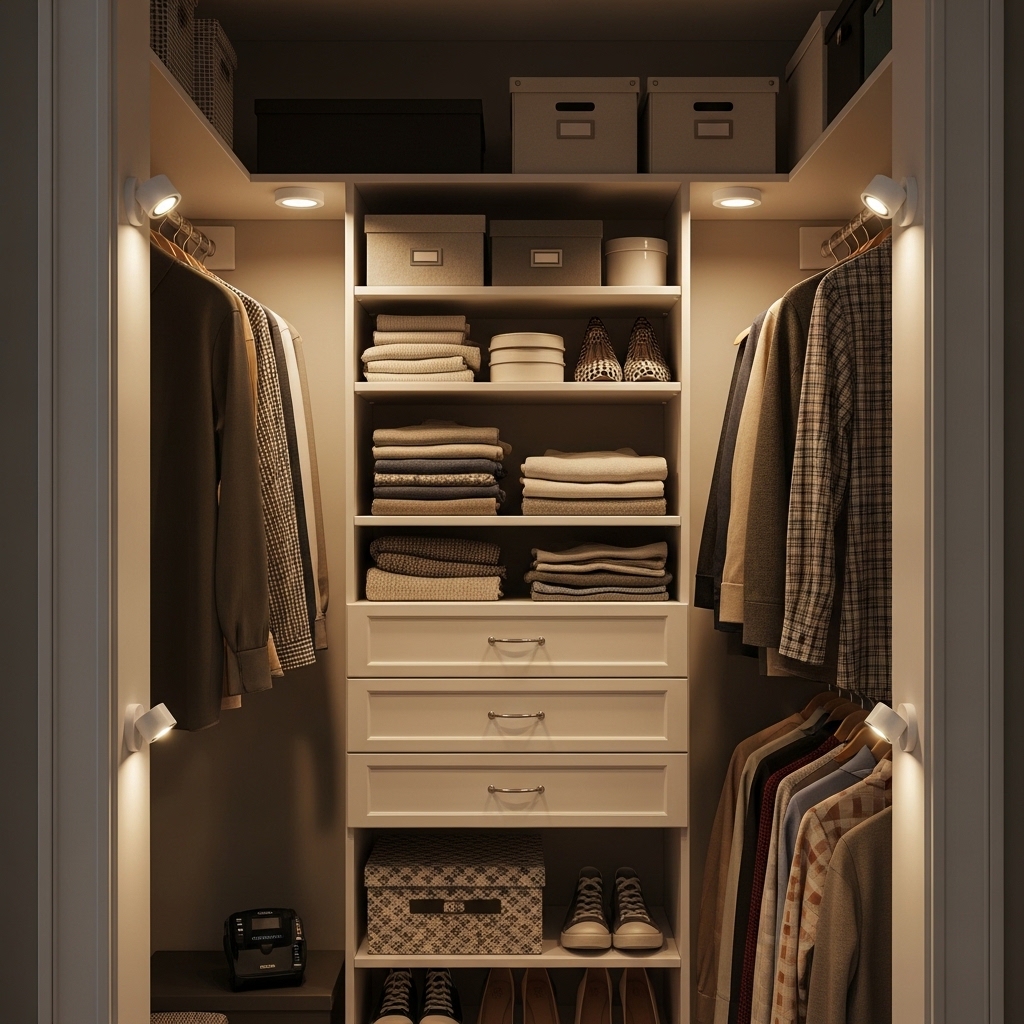
Small closets often have terrible lighting. One bulb in the ceiling does not reach the corners.
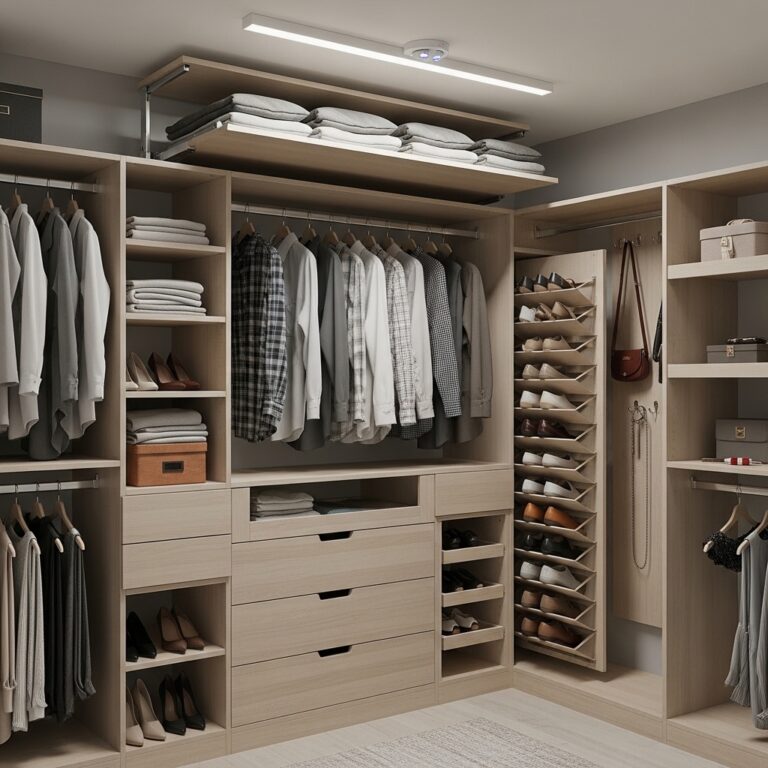
Install stick-on battery-operated lights on the ceiling, walls, or inside your shelves.
Good lighting reveals your clothes. You see colors accurately. You find items instantly.
Dark corners become dead zones where items go to be forgotten. Light changes that completely.
Pro Tip: Choose lights with motion sensors. The lights turn on automatically when you open the door and turn off when you leave.
Mistake to Avoid: Do not use plug-in lights in a closet. Cords create fire hazards and take up space. Battery-operated lights only.
20. Do a Ten-Minute Reset Every Single Week
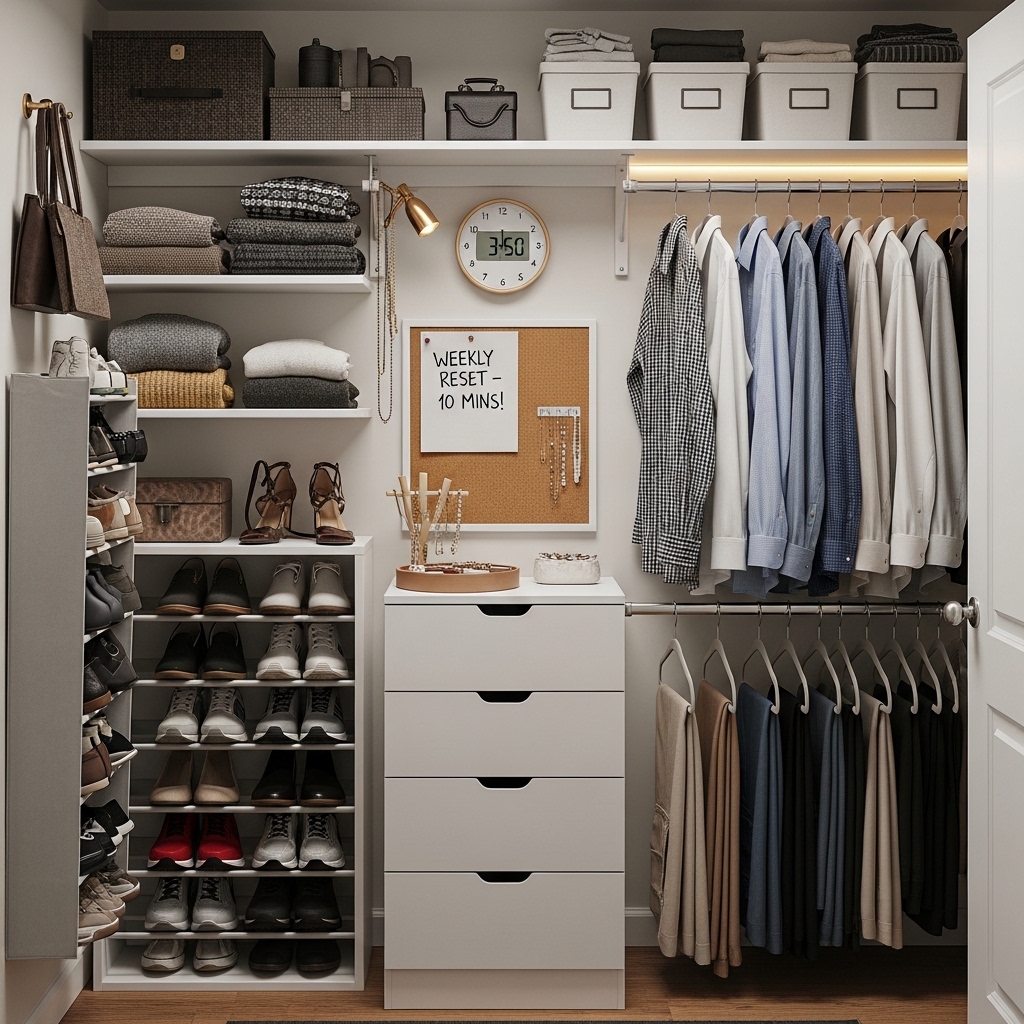
Small closets get messy faster than large closets. There is no extra space for mistakes.
Set aside ten minutes every Sunday to reset your small closet.
Return shoes to their spots. Rehang clothes that fell. Refold stacks that tipped over.
A small weekly effort prevents the slow slide back into chaos. Consistency beats intensity every time.
Pro Tip: Set a recurring alarm on your phone for Sunday at 7 PM. The alarm reminds you to reset before the new week begins.
Mistake to Avoid: Do not skip your reset for two weeks in a row. Two weeks of neglect turns into a month. A month turns into chaos again.
Conclusion
A small closet is not a limitation. It is an opportunity to be intentional about what you own.
The twenty ideas above prove that small closets can work beautifully with the right strategies.
Edit your wardrobe seasonally instead of yearly. Store off-season items outside your closet.
Use slim velvet hangers to gain inches of space between each garment.
Hang a second rod below your existing rod to double your hanging capacity.
Hang a shoe organizer on the back of your door. Shoes off the floor change everything.
Use vertical space with stackable storage cubes that go from floor to ceiling.
Install a hook on the side wall of your closet for robes, bags, or tomorrow’s outfit.
Use cascade hangers to hang multiple lightweight items vertically from one rod space.
Store off-season shoes in clear boxes on your top shelf. Rotate them when seasons change.
Install a tension rod for scarves and belts. No tools required. Perfect for renters.
Use drawer dividers inside every drawer. Socks and underwear stay separate and visible.
Hang a pocket organizer on the inside of your door for small accessories.
Use a Lazy Susan for small bottles and jars on hard-to-reach corner shelves.
Store folded items vertically like files. You see every item at a single glance.
Add a small step stool that folds flat. Reach top shelves safely without climbing.
Use a hanging shelf organizer for folded items. Adds shelf space without installation.
Install a full-length mirror on the back of your door. Check your outfit before leaving.
Store purses inside larger purses. Nest them like Russian dolls to save shelf space.
Use a belt hanger with multiple loops. One hanger holds fifteen belts.
Add battery-operated lights to dark corners. Light reveals what darkness hides.
Do a ten-minute reset every single week. Small closets need consistent maintenance.
Start with one idea this weekend. Switch to velvet hangers. Add a second rod.
Then add another idea next month. Your small closet should evolve as your wardrobe does.
A small closet can feel spacious and calm. You just need to make every inch count.
Take back your small closet starting today. Smart organization is finally waiting for you.