20 Wardrobe Organization Ideas That Turn Morning Madness into Effortless Dressing
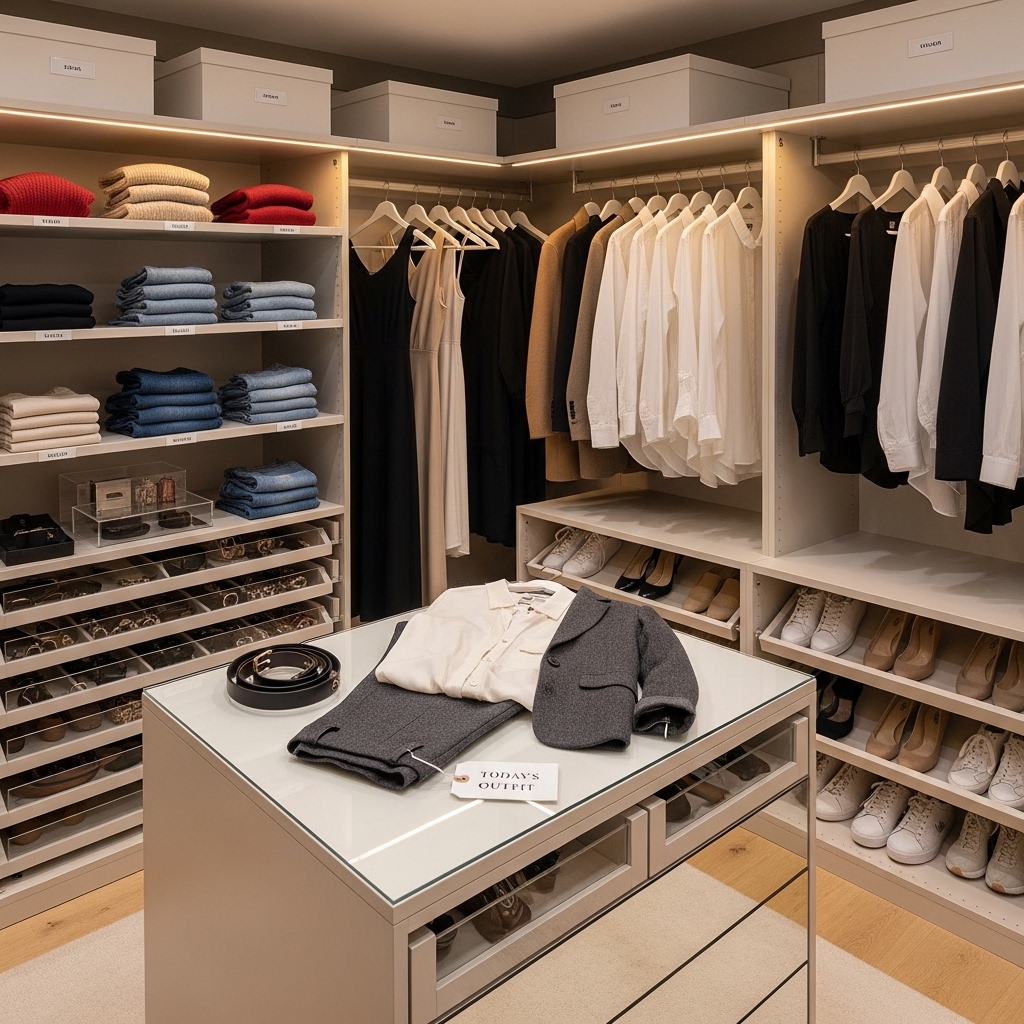
You open your wardrobe. Nothing fits right. Nothing matches. You are already late. The problem is not your clothes. The problem is how you store them.
A disorganized wardrobe hides your best pieces. You wear the same five items on repeat. The solution is not a bigger wardrobe. The solution is a smarter system.
Small changes create massive results. Better folding. Smarter hanging. Clearer visibility. This guide delivers 20 wardrobe organization ideas that turn morning madness into effortless dressing.
Each idea stands alone. Each idea works in any space. Each idea moves you toward calm.
1. Flip All Your Hangers Wardrobe Organization Ideas Backward to Spot Unworn Clothes
You have clothes you never wear. They take up space. You need to find them.
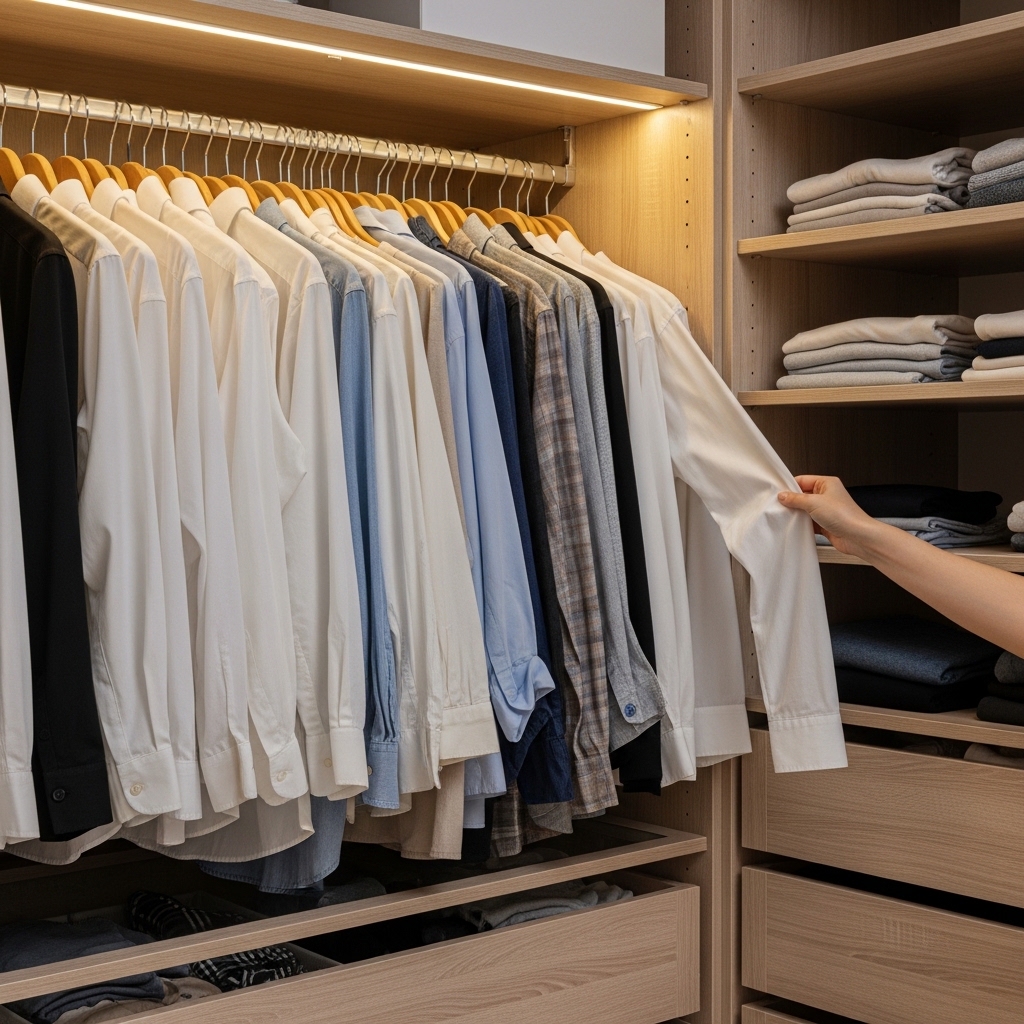
Flip every hanger so the hook faces you. When you wear an item, hang it back normally.
After three months, any hanger still facing backward belongs to a shirt you never reach for.
This method does not lie. The hangers tell the truth about what you actually wear.
Pro Tip: Do this experiment twice per year. Spring and fall. Your wardrobe stays lean forever.
Mistake to Avoid: Do not cheat by wearing something just to flip the hanger. Be honest with yourself.
2. Create a Capsule Wardrobe Within Your Main Wardrobe
You wear twenty percent of your clothes eighty percent of the time. That is a fact.
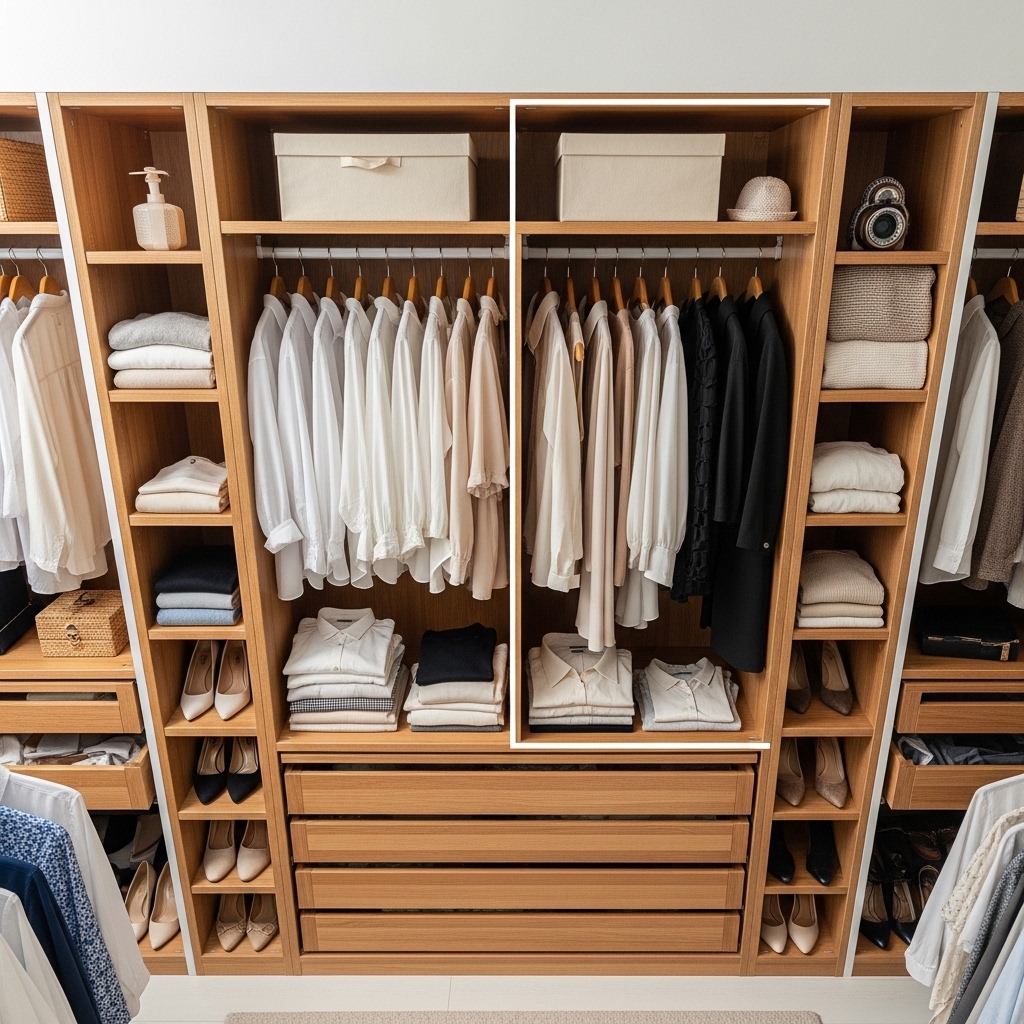
Pull those twenty percent of items into one dedicated section of your wardrobe.
Call this your capsule zone. These are your go-to pieces. Your uniform. Your reliable favorites.
The rest of your wardrobe becomes secondary. Less pressure. Less decision fatigue.
Pro Tip: Change your capsule zone every season. Swap in warmer pieces for winter. Lighter pieces for summer.
Mistake to Avoid: Do not put special occasion clothes in your capsule zone. Keep everyday wear front and center.
3. Store Matching Outfits Together on the Same Hanger
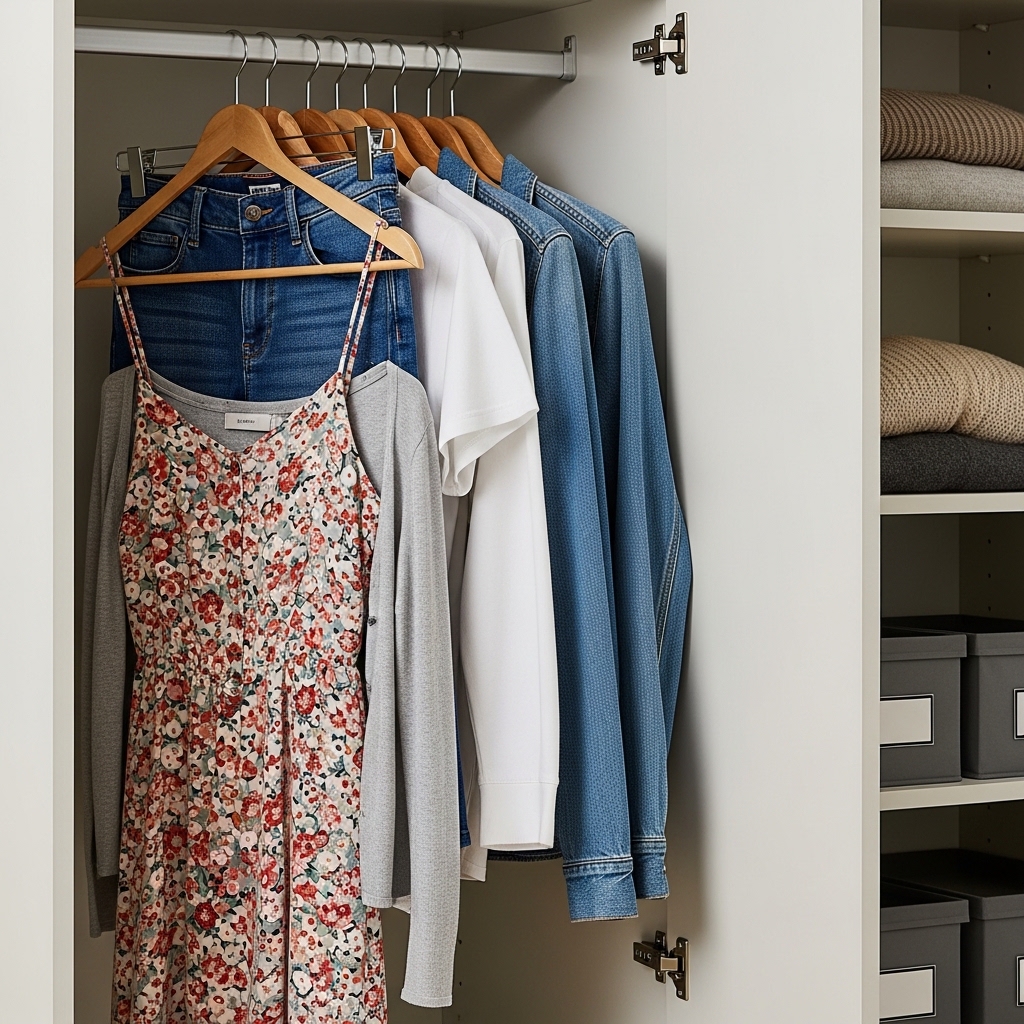
You have outfits you always wear together. Black pants with a specific blouse. A dress with a belt.
Put both items on the same hanger. Drape the blouse over the pants. Loop the belt through the hanger hook.
When you grab that hanger, your entire outfit is ready. No searching. No matching stress.
Outfit hangers eliminate the what-goes-with-what question every single morning.
Pro Tip: Use cascading hangers for multi-piece outfits. Top hook holds the whole look from blouse to scarf to jacket.
Mistake to Avoid: Do not put more than three items on one hanger. Heavy hangers stretch your clothes and fall off the rod.
4. Install a Pegboard on the Back Wall of Your Wardrobe
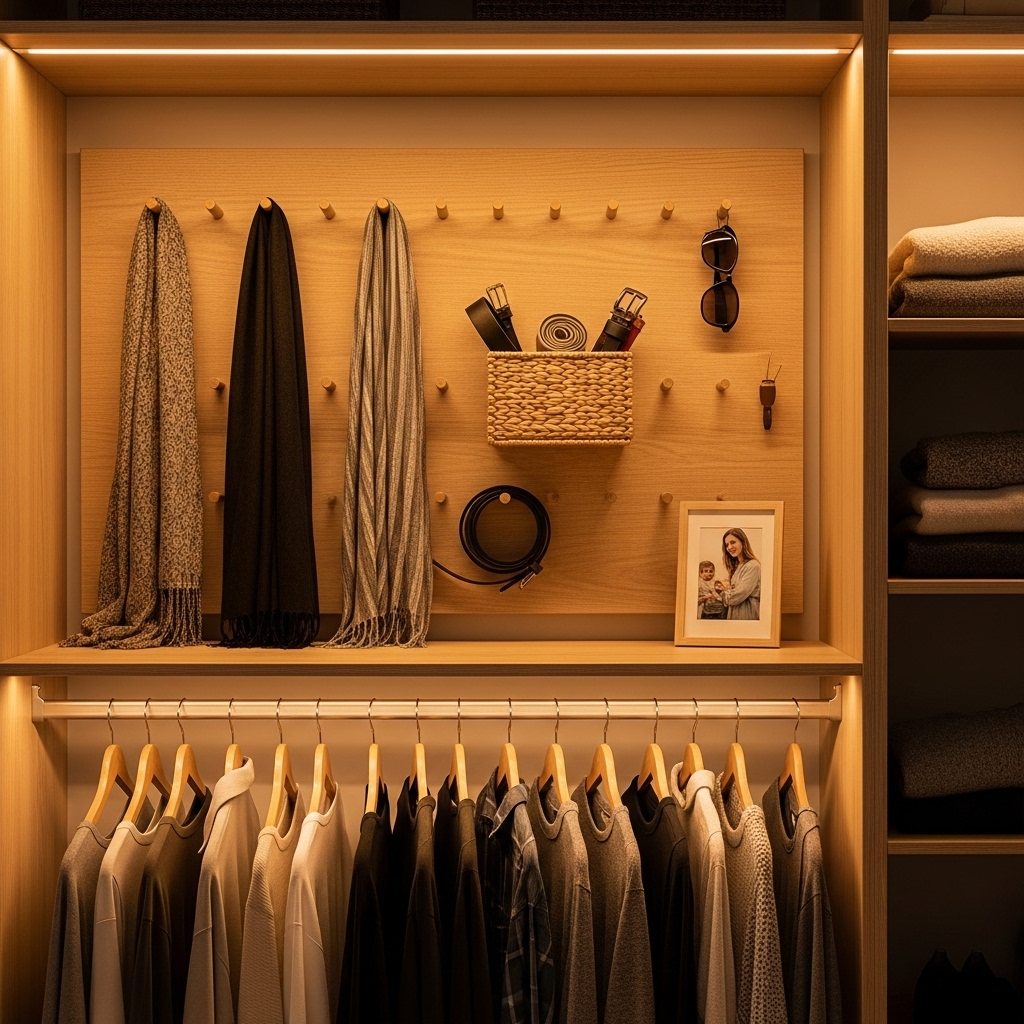
The back wall of your wardrobe is empty. You ignore it every single day.
Mount a small pegboard on that back wall. Add hooks, small shelves, and wire baskets.
Hang scarves, bags, belts, and hats on the hooks. Store jewelry in the baskets.
That empty wall becomes prime storage. You added space without adding furniture.
Pro Tip: Paint your pegboard the same color as your wardrobe interior. It blends in and disappears visually.
Mistake to Avoid: Do not hang heavy winter coats on pegboard hooks. Use pegboard for lightweight accessories only.
5. Roll Your Activewear Instead of Folding It
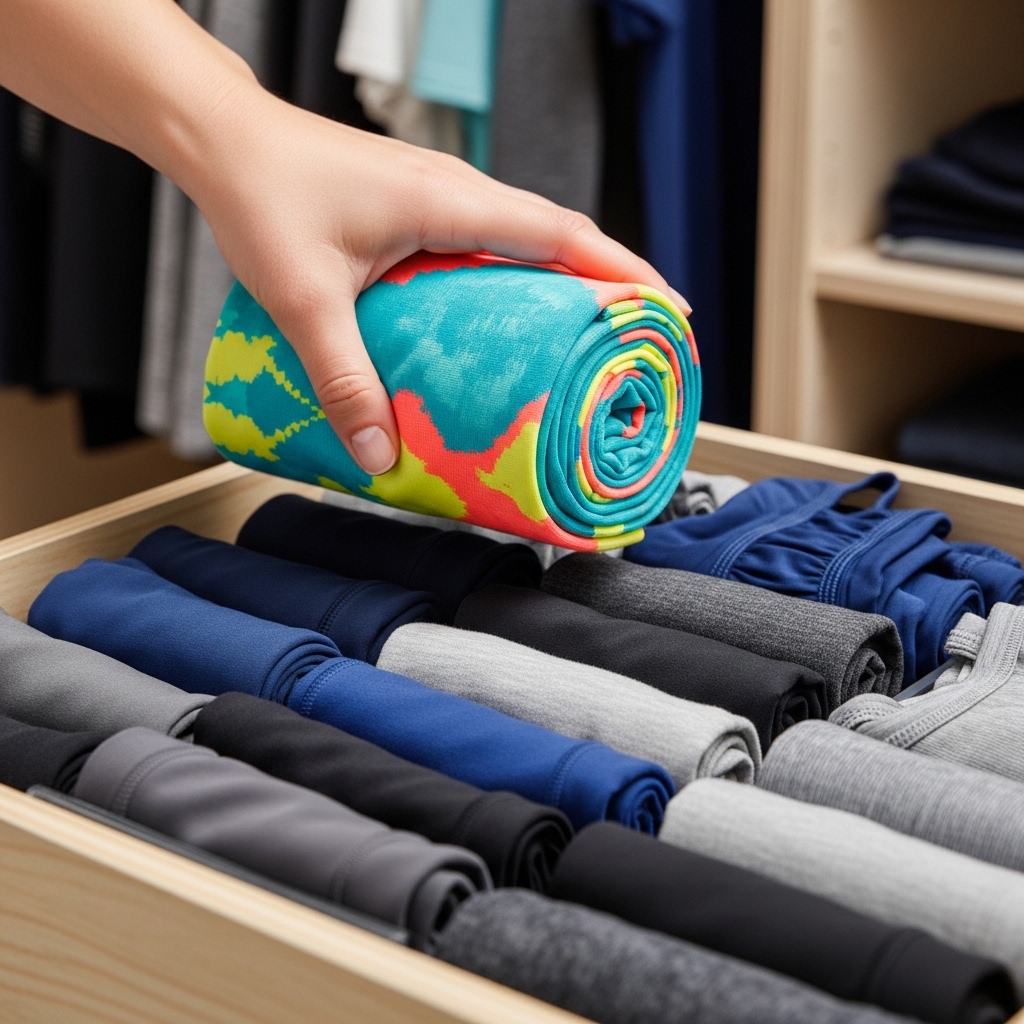
Activewear is stretchy. Stretchy clothes do not hold folds well. They flop over constantly.
Roll your leggings, sports bras, and workout tops into tight cylinders.
Stand the rolls upright in a drawer or bin. You see every piece at a single glance.
Rolling also prevents wrinkles. Folding stretchy fabric creates creases that never fall out.
Pro Tip: Sort rolled activewear by activity. Yoga clothes together. Running clothes together. Gym clothes together.
Mistake to Avoid: Do not roll delicate activewear with zippers or hooks. The hardware damages other items in the roll.
6. Hang a Second Rod at Half Height for Kids or Short Items
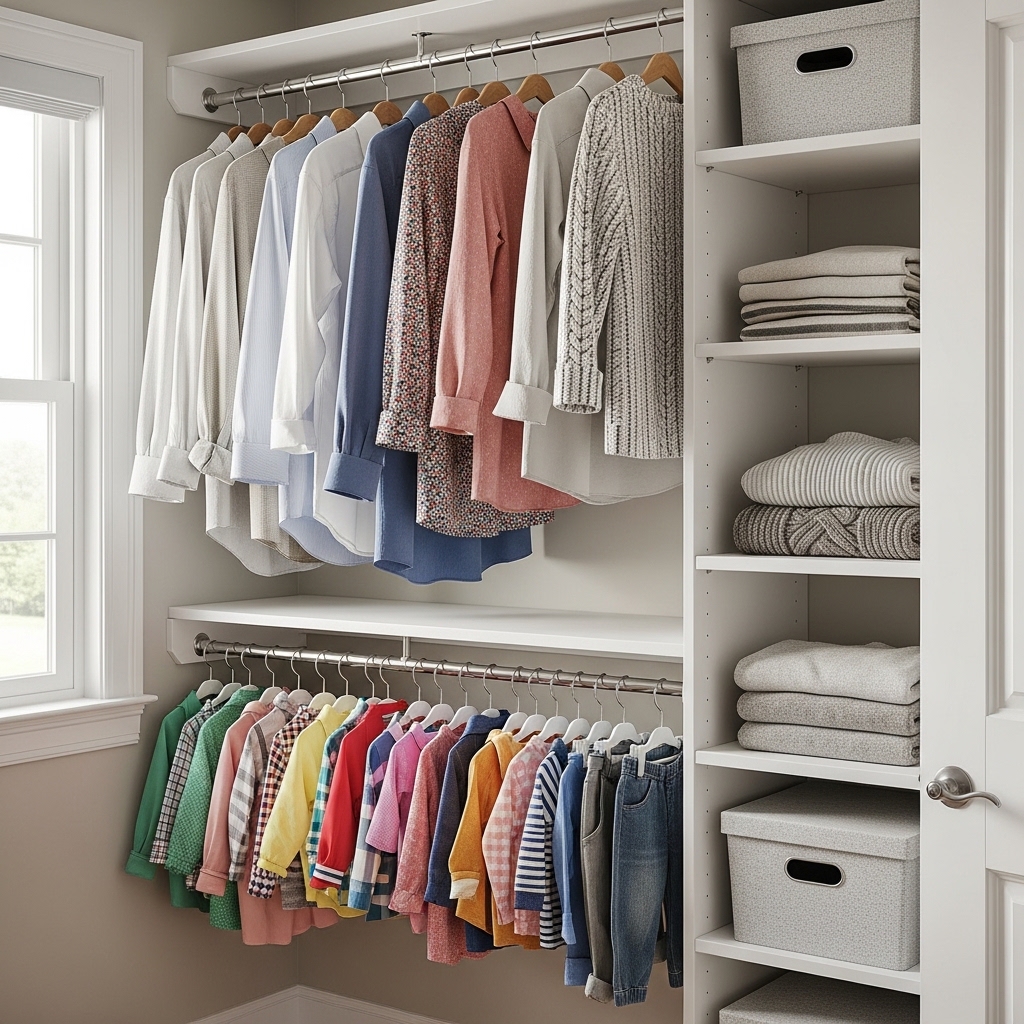
You have a tall wardrobe. The bottom half of that vertical space is completely empty.
Install a second rod halfway down your wardrobe. Hang it at 36 inches from the floor.
Use the bottom rod for your child’s clothes, your shorts, or your folded pants.
You just doubled your hanging space without adding a single new piece of furniture.
Pro Tip: Use the bottom rod for items your child can reach independently. They learn to dress themselves.
Mistake to Avoid: Do not hang long dresses or coats on a half-height rod. They will drag on the floor.
7. Slide a Skinny Drawer Unit Under Your Short Hanging Items
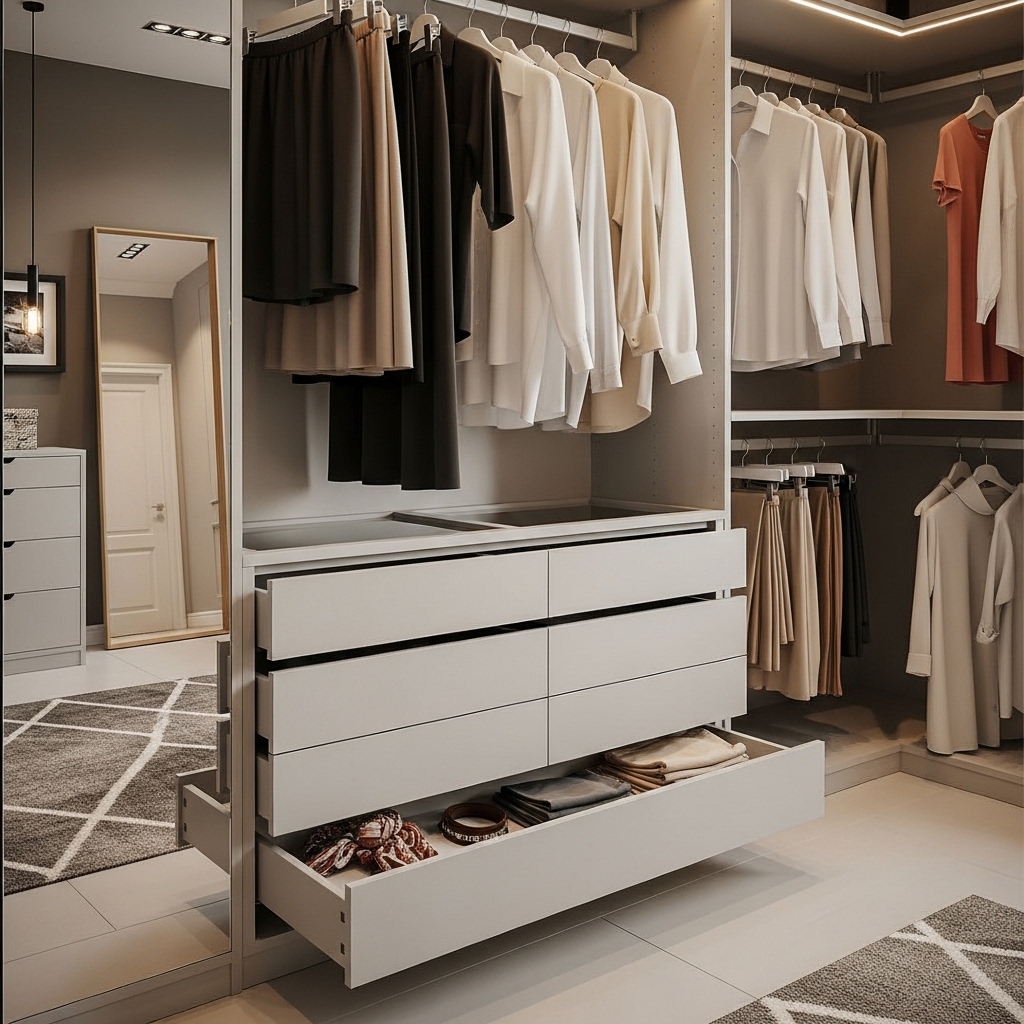
Look at the floor under your shortest hanging clothes. That is empty cubic feet.
Measure that vertical space. Buy a narrow drawer unit that fits perfectly underneath.
Use the drawers for socks, underwear, pajamas, or workout gear.
The space under your clothes is free real estate. Drawer units capture it completely.
Pro Tip: Choose a unit on locking casters. Roll it out when you need access. Roll it back under when done.
Mistake to Avoid: Do not buy a drawer unit taller than your clearance. Measure from floor to bottom of hanging clothes first.
8. Store Purses Inside Shoe Boxes on Top Shelves
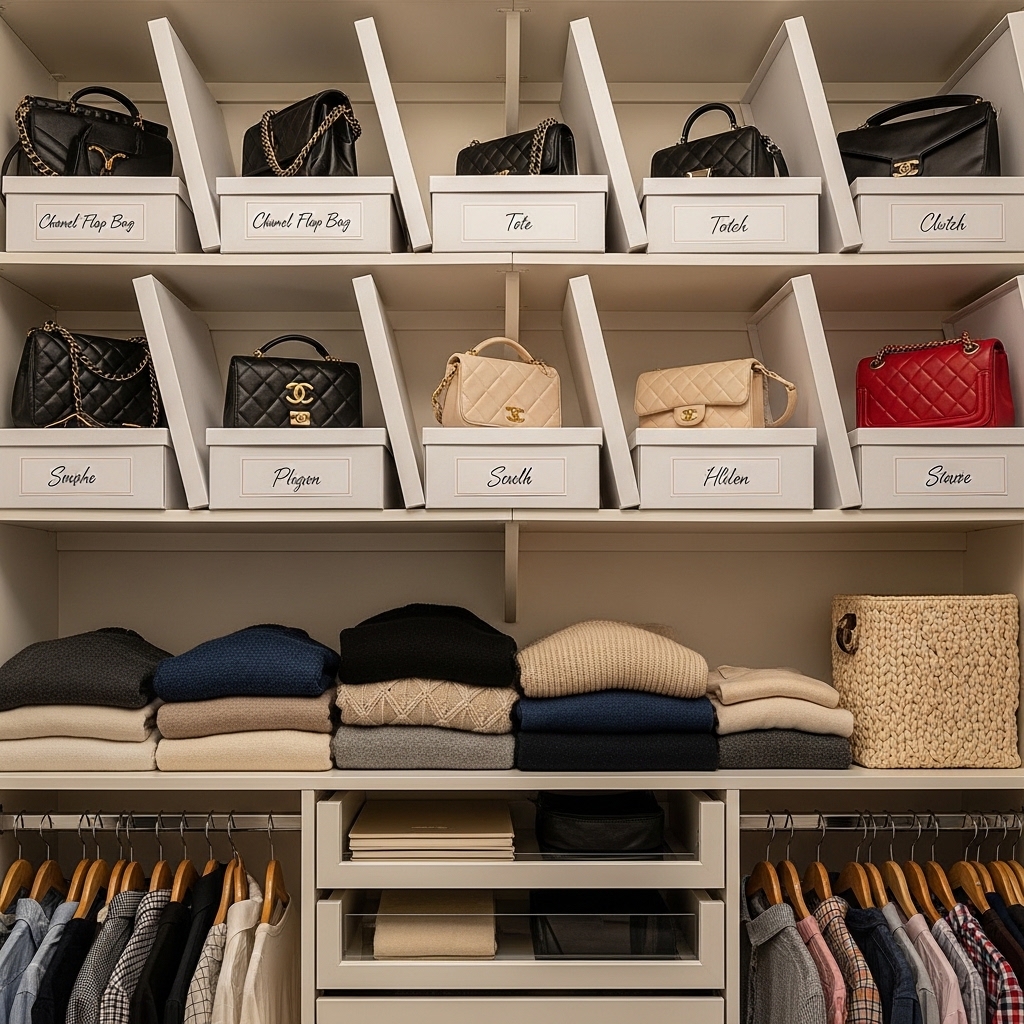
Handbags collect dust. Dust ruins leather and fabric. Your top shelf is dusty.
Place each handbag inside a clear shoe box. Stack the boxes on your top shelf.
The boxes protect your bags from dust. Clear plastic lets you see which bag is inside.
Stacking boxes doubles your shelf capacity. Bags no longer crush each other.
Pro Tip: Stuff each bag with tissue paper before boxing. The tissue helps the bag keep its shape on the shelf.
Mistake to Avoid: Do not use cardboard shoe boxes. Cardboard absorbs moisture and you cannot see inside. Clear plastic only.
9. Hang a Tension Rod Vertically for Flat Items
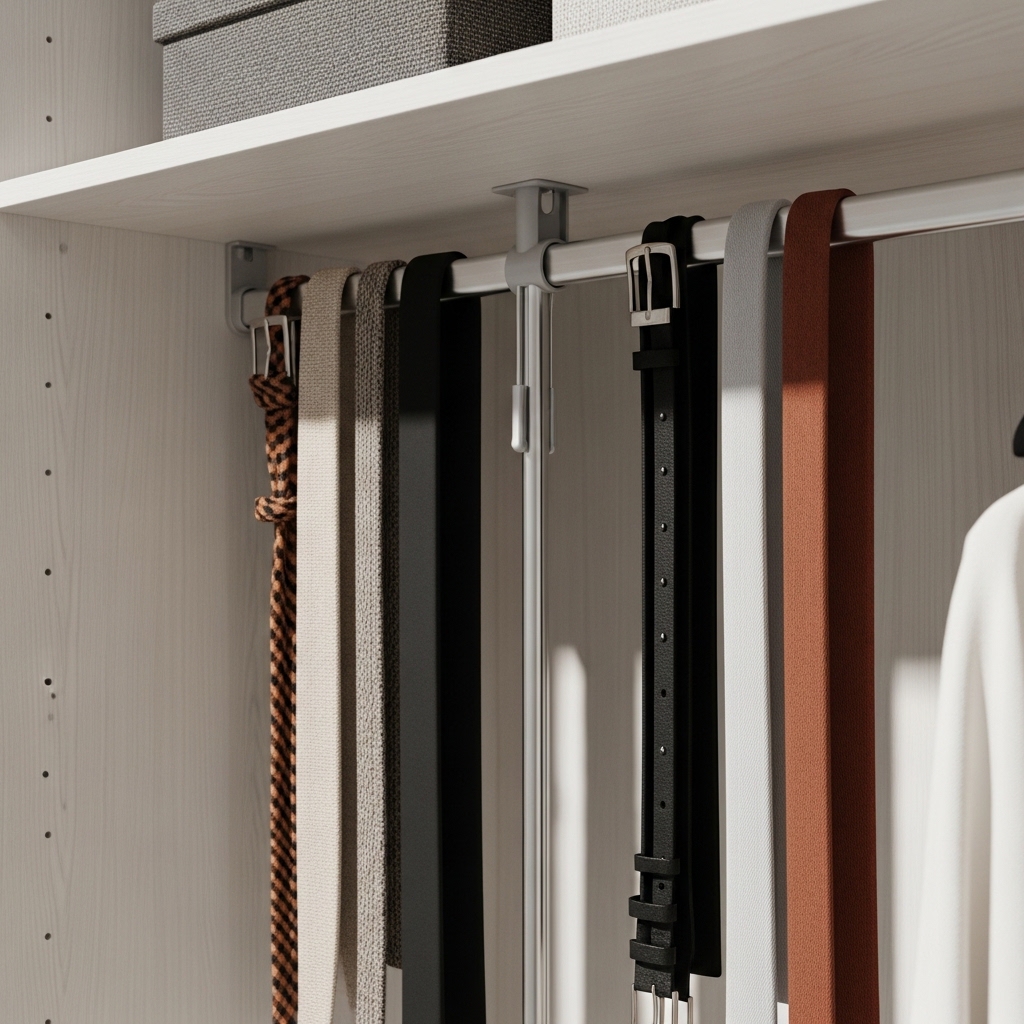
Tension rods are for curtains. They are also for storing flat items like cutting boards and wrapping paper.
Install a tension rod vertically in a corner of your wardrobe. Place it from shelf to shelf.
Slide flat items like clutches, small trays, or magazine holders between the rod and the wall.
The rod keeps flat items upright. They do not fall over. They do not slide around.
Pro Tip: Use two vertical tension rods for wider flat items. The items stay sandwiched between both rods.
Mistake to Avoid: Do not use this method for heavy items. Tension rods cannot hold significant weight.
10. Add a Jewelry Tray Inside a Shallow Drawer
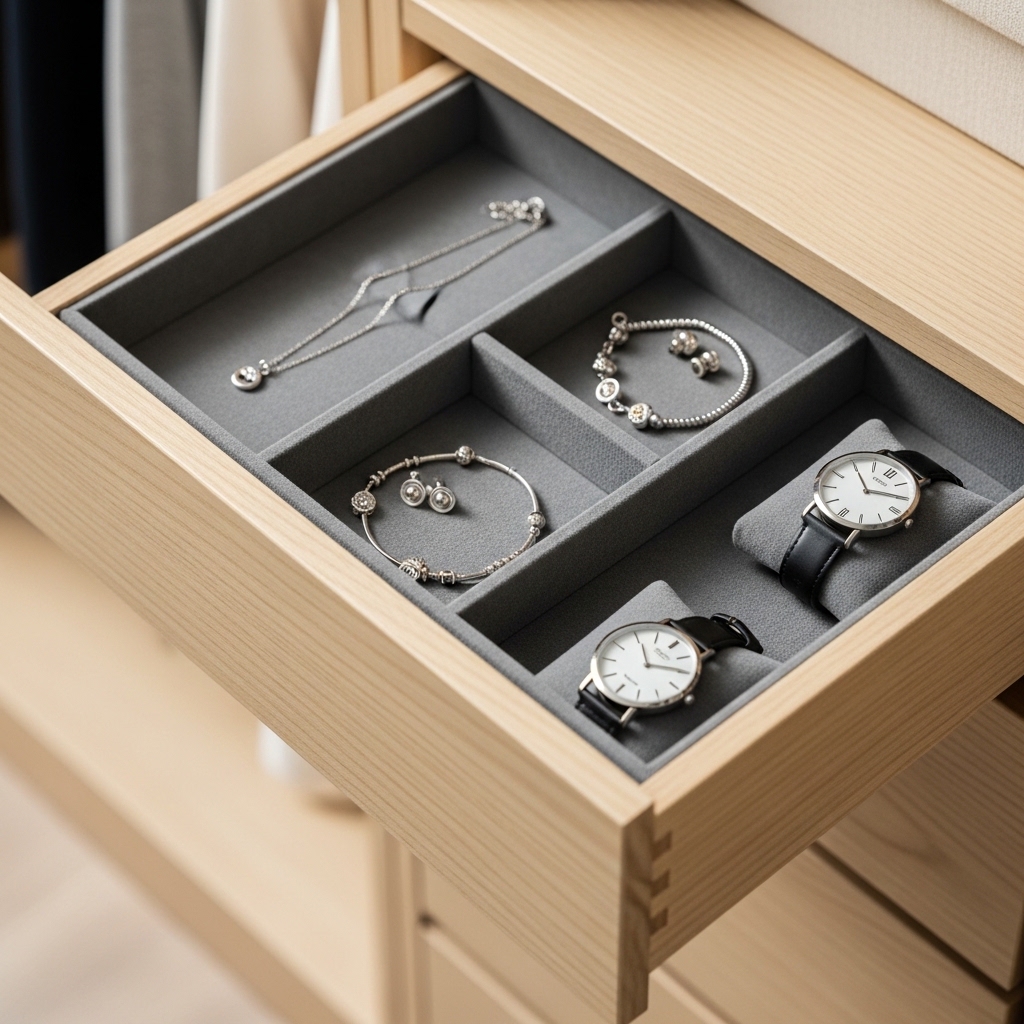
Deep drawers hide jewelry. You forget what you own. You buy duplicates.
Place a velvet jewelry tray inside a shallow drawer. Use one tray for each category.
Rings in ring slots. Necklaces laid flat. Earrings in pairs. Bracelets in long compartments.
A shallow tray shows you everything at once. No digging. No tangling. No forgetting.
Pro Tip: Choose a tray with a glass lid. The lid protects your jewelry from dust while keeping it visible.
Mistake to Avoid: Do not stack jewelry trays on top of each other. Stacked trays hide what is underneath.
11. Attach Adhesive Hooks to the Inside of Your Wardrobe Door
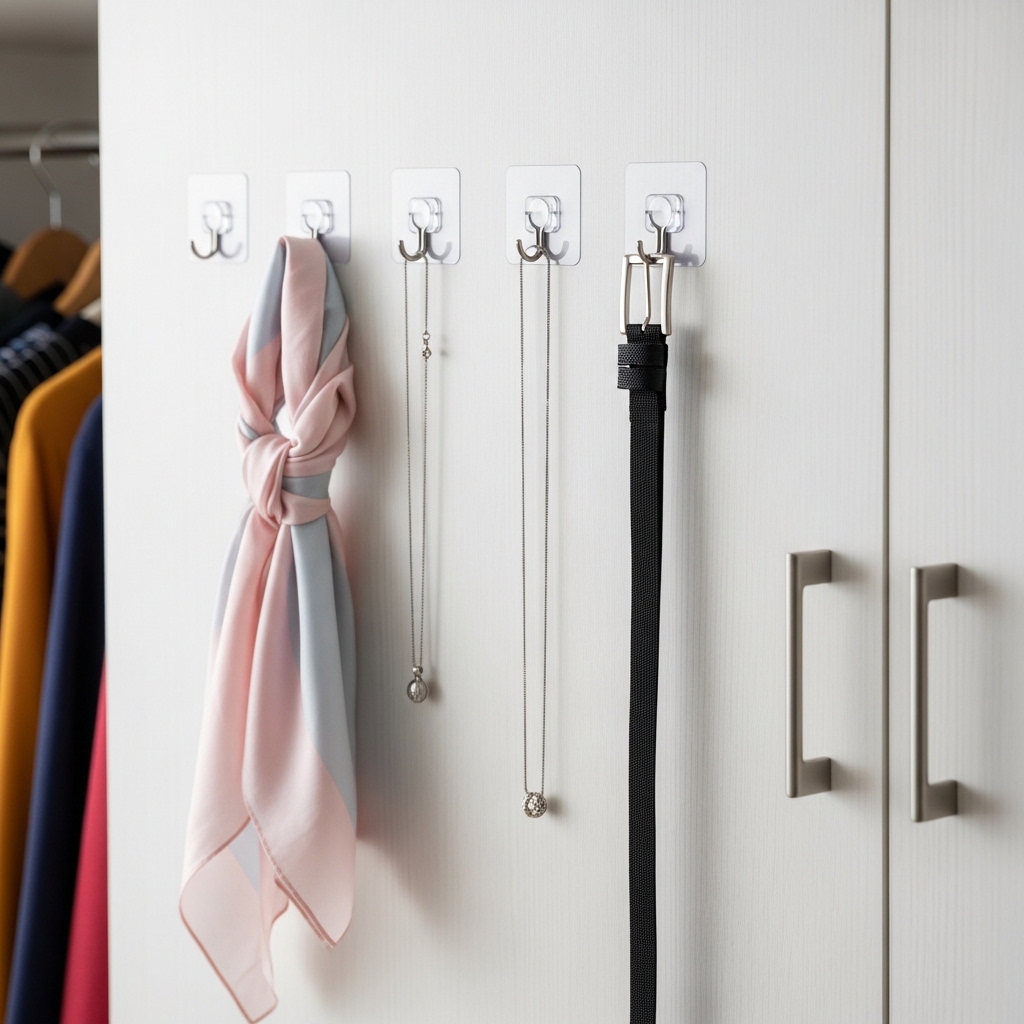
Your wardrobe door is a vertical storage panel. You walk past it every day.
Stick heavy-duty adhesive hooks on the inside of your door. No tools required.
Hang robes, bags, hats, scarves, or tomorrow’s outfit on the hooks.
Door space is completely free. It costs no floor space and no shelf space to use it.
Pro Tip: Wait one hour after sticking hooks before hanging items. The adhesive needs time to bond fully.
Mistake to Avoid: Do not hang heavy winter coats on adhesive hooks. Use screw-in hooks for heavy items.
12. Use a Shoe Rack with Angled Shelves
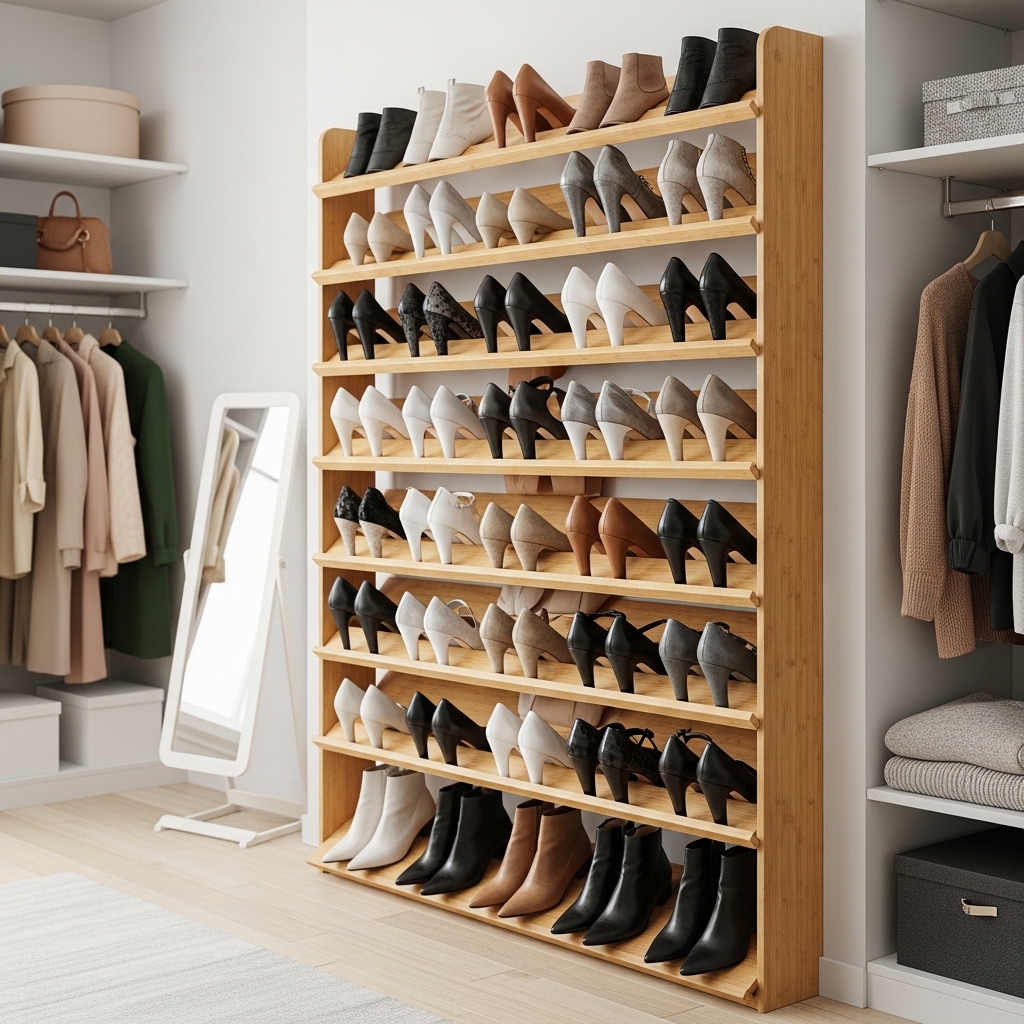
Flat shoe shelves hide the front of your shoes. You cannot see what you own.
Choose a shoe rack with angled shelves. Each pair faces slightly upward and outward.
You see the toe of every shoe at a single glance. No bending down. No pulling boxes out.
Angled shelves also make grabbing shoes easier. Your hand slides right in.
Pro Tip: Place your most worn shoes on the middle angled shelves. Eye level is easiest to reach.
Mistake to Avoid: Do not use angled shelves for tall boots. Boots need full vertical clearance.
13. Fold Bulky Sweaters Using the Bundle Method
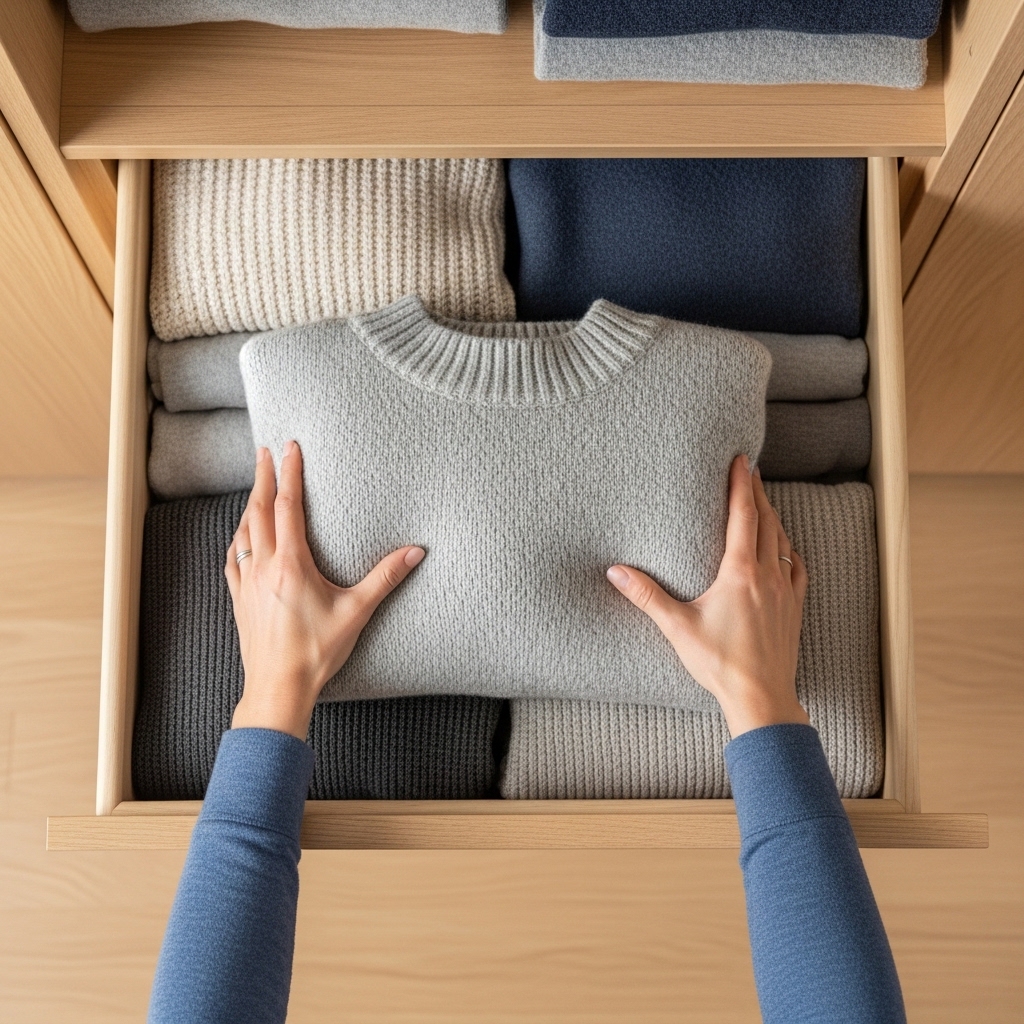
Thick sweaters take up massive space when folded flat. They create tall, unstable stacks.
Lay your sweater flat. Fold the sleeves across the chest. Roll the entire sweater into a tight bundle.
Bundle rolls stand upright on your shelf. They take half the space of flat folded sweaters.
Bundled sweaters also do not stretch out. Flat folding stretches the shoulders over time.
Pro Tip: Store bundled sweaters in a deep drawer standing on their ends like soda cans.
Mistake to Avoid: Do not bundle cashmere or wool sweaters tightly. Looser rolls protect delicate fibers.
14. Install a Pull-Out Laundry Hamper Inside Your Wardrobe
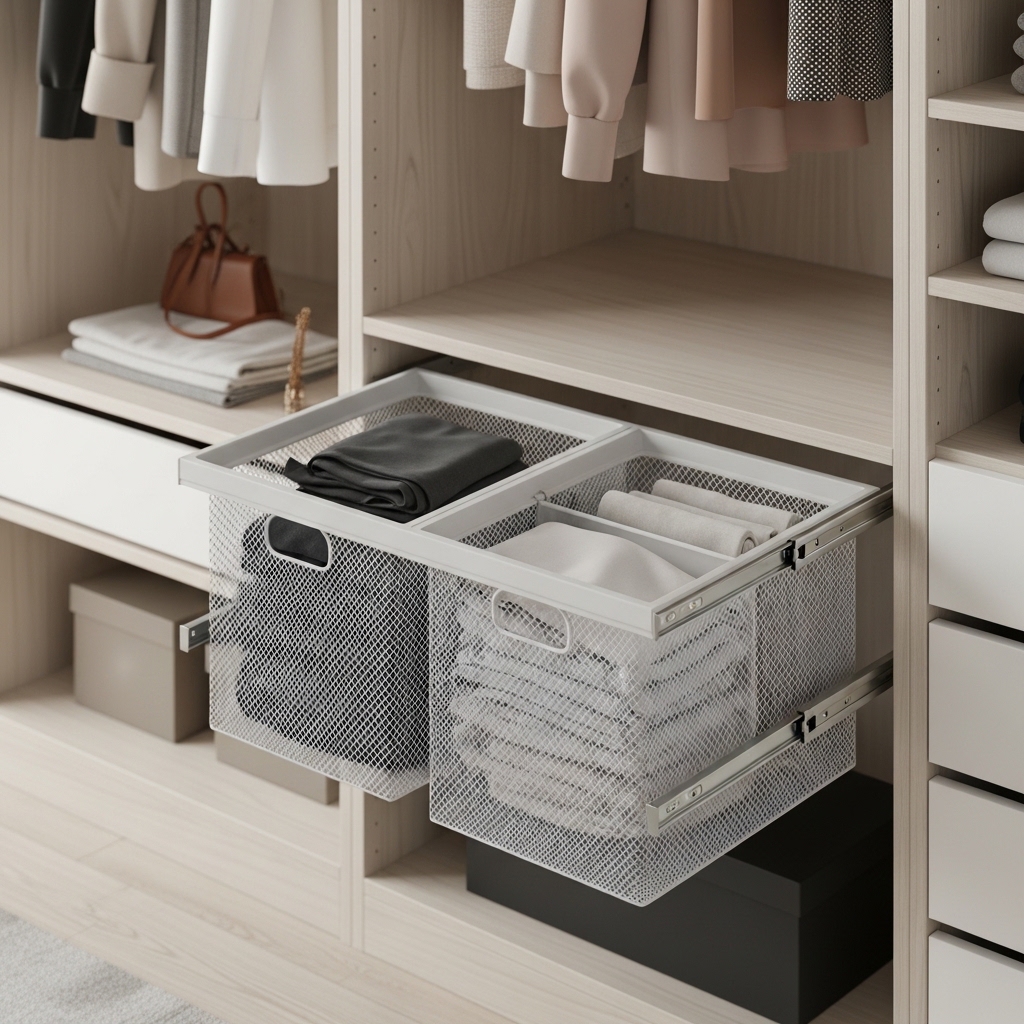
Dirty clothes belong somewhere. The floor of your wardrobe is not that place.
Install a pull-out hamper on slides inside your wardrobe. Pull it out when you undress.
Drop dirty clothes directly into the hamper. Push it back in. The mess disappears.
A hidden hamper keeps your wardrobe looking clean. No piles of worn clothes on the floor.
Pro Tip: Use a two-bin pull-out hamper. One side for lights. One side for darks. Sorting happens as you undress.
Mistake to Avoid: Do not use a hamper without ventilation. Closed hampers trap moisture and cause mildew smells.
15. Hang a Sock and Underwear Organizer from Your Rod
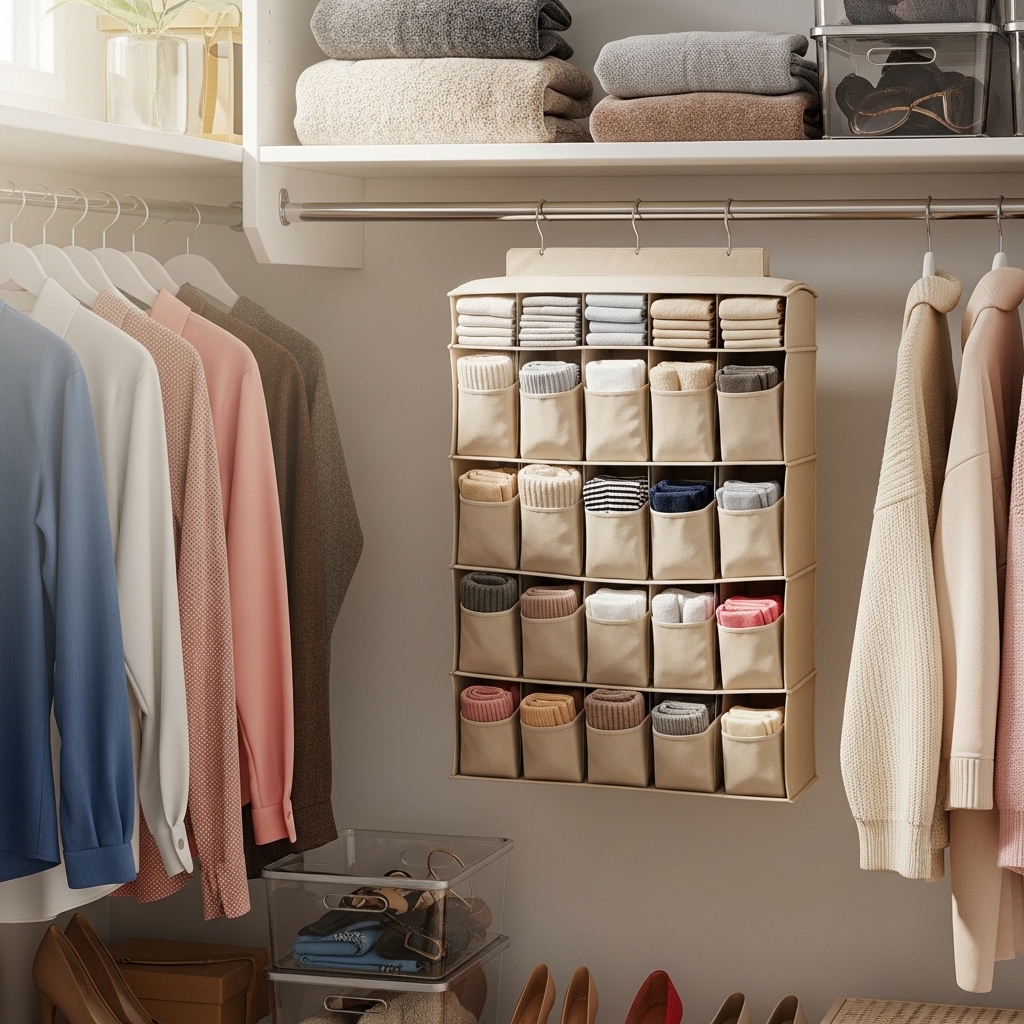
Socks and underwear take up drawer space. Drawer space is valuable for other items.
Buy a hanging fabric organizer with small compartments. Hang it from your main rod.
Each compartment holds one pair of socks or one folded underwear. You see every pair.
Your drawers become free for sweaters, jeans, and other folded items.
Pro Tip: Use one organizer for socks and a second organizer for underwear. Keep categories completely separate.
Mistake to Avoid: Do not overload compartments. Stuffed compartments bulge and items fall out when you open the organizer.
16. Place a Lazy Susan on a Deep Corner Shelf
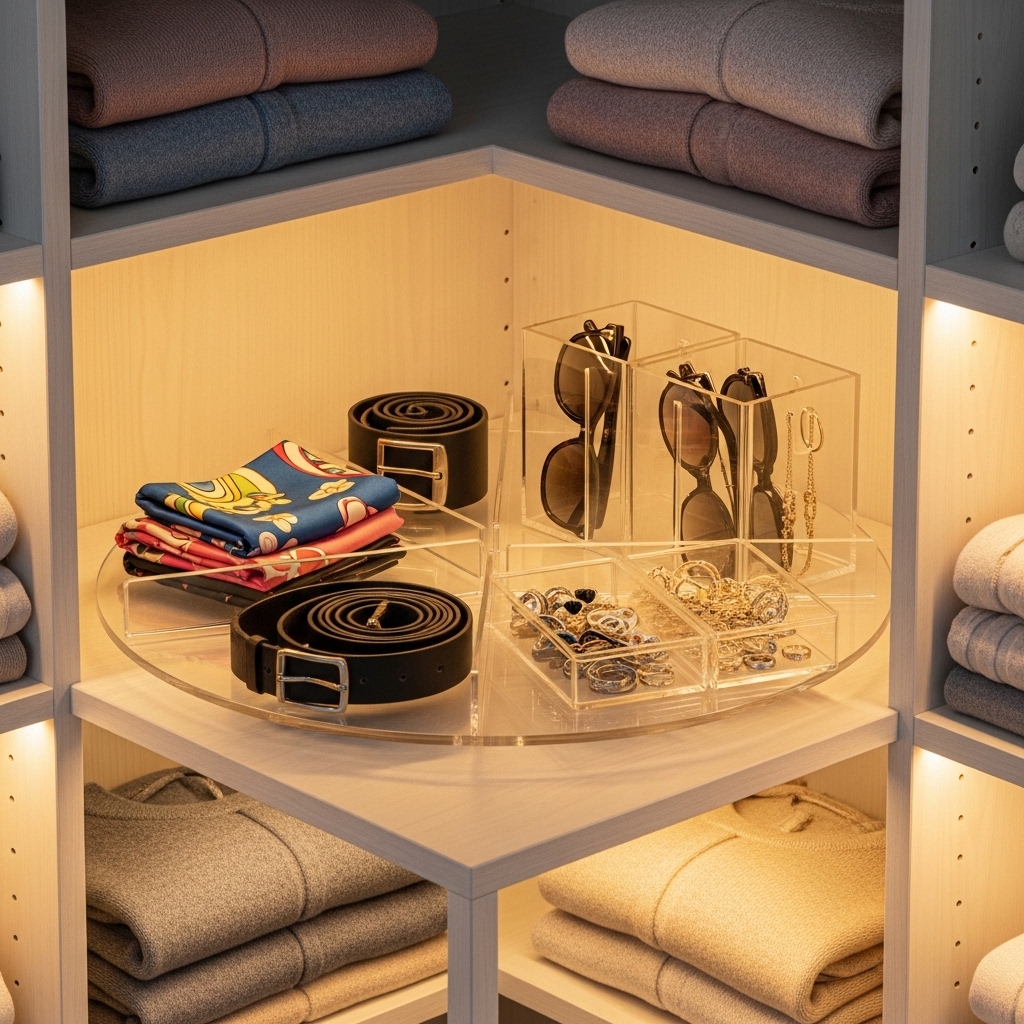
Deep corner shelves are black holes. Items in the back disappear for months or years.
Place a Lazy Susan turntable on your deep corner shelf. Store belts, wallets, or small accessories on it.
Spin the turntable to reach items in the very back. No more digging. No more knocking things over.
A Lazy Susan turns dead corner space into accessible, usable storage instantly.
Pro Tip: Use a two-tier Lazy Susan for tall corner shelves. The top tier spins independently from the bottom tier.
Mistake to Avoid: Do not overload your Lazy Susan. Too much weight makes the turntable difficult to spin.
17. Store Scarves in Hanging Shoe Organizer Pockets
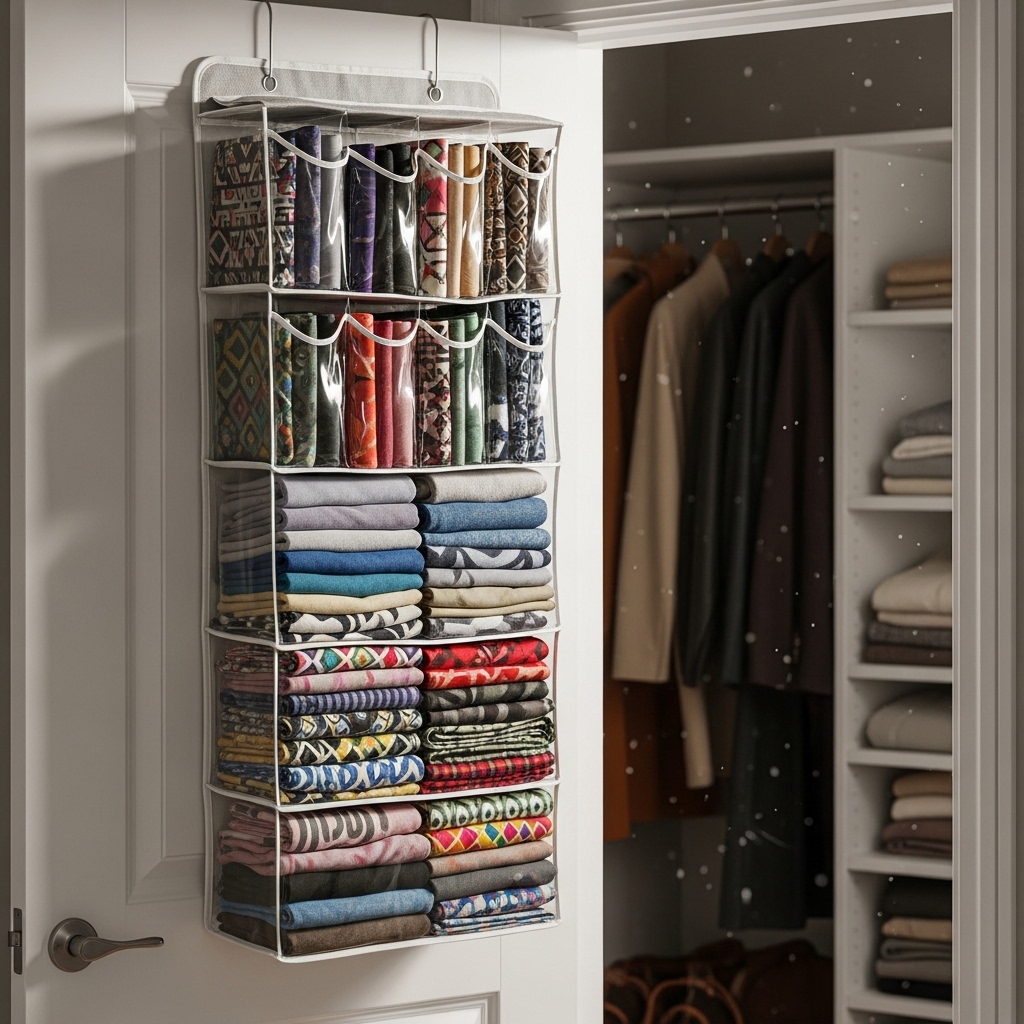
Scarves are long and narrow. They tangle easily. They fall off hangers constantly.
Hang a clear over-the-door shoe organizer on your wardrobe door or wall.
Slide one scarf into each pocket. The scarf stays flat. The scarf does not tangle.
You see every scarf at a single glance. No more digging through a drawer of knotted fabric.
Pro Tip: Fold scarves in half lengthwise before sliding into pockets. The fold creates a clean edge at the pocket opening.
Mistake to Avoid: Do not stuff multiple scarves into one pocket. One scarf per pocket keeps everything visible.
18. Add a Motion-Sensor Light Strip Under Your Top Shelf
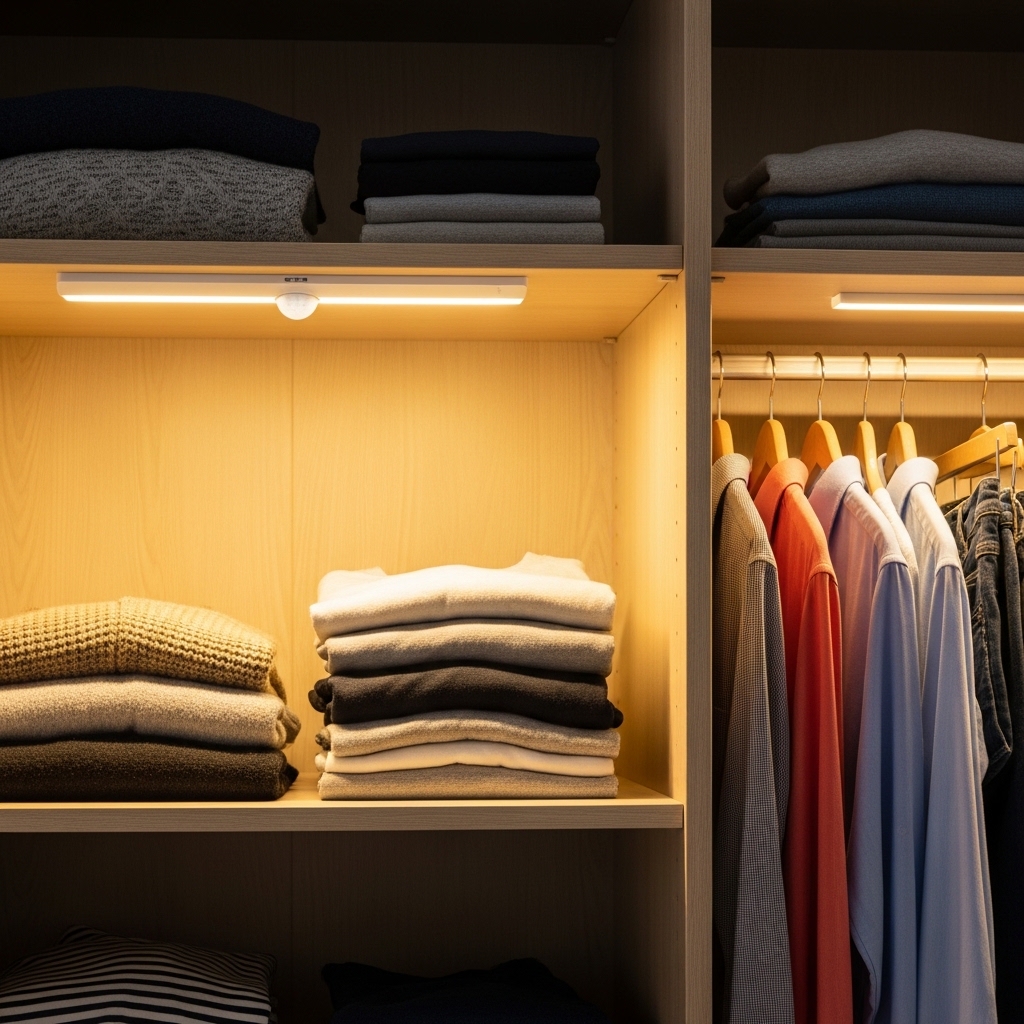
Top shelves are dark. You cannot see what is up there. You forget what you own.
Stick a battery-operated motion-sensor light strip under your top shelf.
The light turns on when you open your wardrobe. It shines down onto your lower shelves.
Dark shelves become bright. You see every item. Nothing hides in shadows.
Pro Tip: Place one light strip under each shelf for even illumination. No dark corners anywhere in your wardrobe.
Mistake to Avoid: Do not use plug-in light strips. Cords create fire hazards and take up space. Battery-operated only.
19. Use Cascade Hangers for Pants and Skirts Only
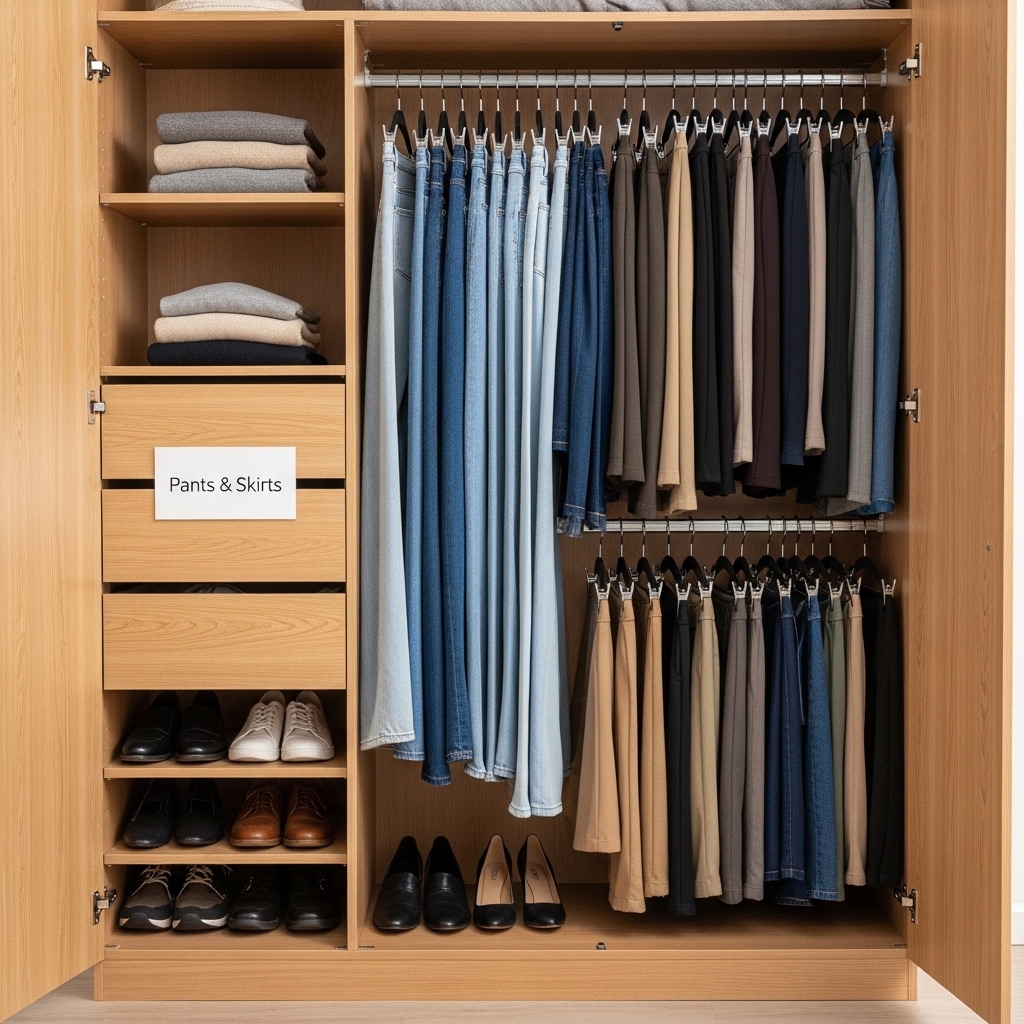
Cascade hangers work well for lightweight items. They fail for heavy items like jeans.
Use cascade hangers exclusively for dress pants, lightweight skirts, and dress shorts.
Hang five pairs of lightweight pants on one cascade hook. Save massive rod space.
Save your main rod for heavy items that need individual hangers.
Pro Tip: Clip pants by the cuffs, not the waistband. Clipping at the cuffs prevents crease marks at the knee.
Mistake to Avoid: Do not hang wet pants on cascade hangers. The weight of wet fabric stretches the clips.
20. Rotate Your Wardrobe by Season Using the One-Touch Rule
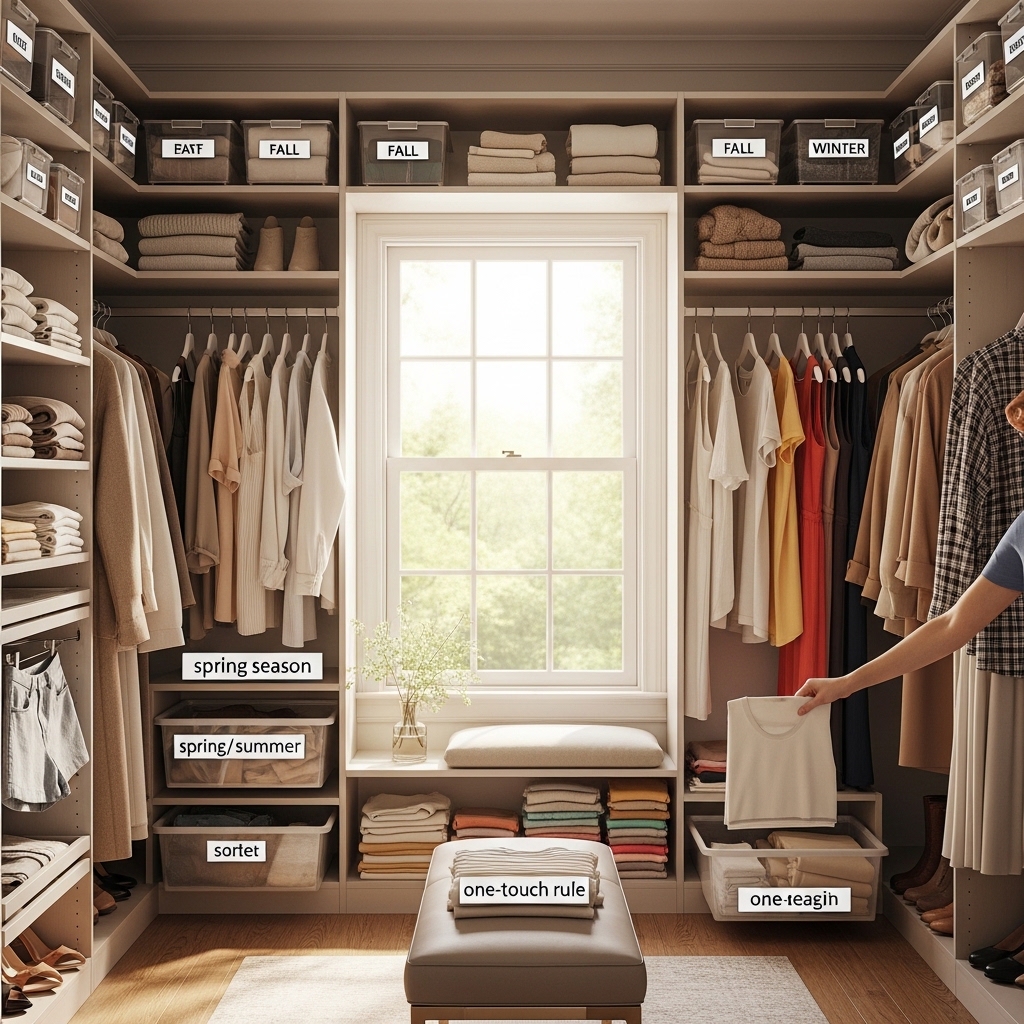
Seasonal rotation is essential. The one-touch rule makes it painless.
When the season changes, touch every item once. Decide instantly. Keep. Store. Donate. Trash.
No maybe pile. No I will think about it later. One touch. One decision. Move on.
A full wardrobe rotation takes thirty minutes twice per year. That is one hour annually.
Pro Tip: Schedule your rotation on the first day of each season. March 20. June 21. September 22. December 21.
Mistake to Avoid: Do not rotate without purging first. Removing unwanted items makes seasonal rotation faster.
Conclusion
Your wardrobe is not the problem. Your systems are the problem. Systems can change.
The twenty ideas above give you completely fresh approaches to wardrobe organization.
Flip all your hangers backward to spot unworn clothes. The hangers tell the truth.
Create a capsule wardrobe within your main wardrobe. Your twenty percent wears eighty percent of the time.
Store matching outfits together on the same hanger. Grab one hanger. Your outfit is ready.
Install a pegboard on the back wall of your wardrobe. That empty wall becomes prime storage.
Roll your activewear instead of folding it. Rolls stand upright. Rolls prevent wrinkles.
Hang a second rod at half height for kids or short items. Double your hanging space instantly.
Slide a skinny drawer unit under your short hanging items. Capture that empty floor space.
Store purses inside shoe boxes on top shelves. Boxes protect from dust. Stacking saves space.
Hang a tension rod vertically for flat items. Flat items stay upright. They do not fall over.
Add a jewelry tray inside a shallow drawer. See everything at once. No more tangling.
Attach adhesive hooks to the inside of your wardrobe door. Door space is free real estate.
Use a shoe rack with angled shelves. See the toe of every shoe at a glance.
Fold bulky sweaters using the bundle method. Bundled sweaters take half the space.
Install a pull-out laundry hamper inside your wardrobe. Dirty clothes disappear from sight.
Hang a sock and underwear organizer from your rod. Free up your drawers for other items.
Place a Lazy Susan on a deep corner shelf. Dead corners become accessible storage.
Store scarves in hanging shoe organizer pockets. One scarf per pocket. No more tangles.
Add a motion-sensor light strip under your top shelf. Dark shelves become bright.
Use cascade hangers for pants and skirts only. Lightweight items only. Save rod space.
Rotate your wardrobe by season using the one-touch rule. Thirty minutes twice per year.
Start with one idea this weekend. Flip your hangers. Install a second rod. Add a Lazy Susan.
Then add another idea next month. Your wardrobe should evolve as your habits change.
Morning madness ends when your wardrobe works with you instead of against you.
Take back your mornings starting today. Effortless dressing is finally within reach.