60 Unique Nursery Room Ideas That Go Beyond Gray and Pink for a Space Your Baby Will Love
Designing a nursery feels overwhelming when every website shows the same beige, gray, or pastel pink rooms.
You want something unique. Something your baby will grow into. Something that reflects your family’s personality.
This guide delivers 60 nursery room ideas that break the boring mold. From celestial ceilings to vintage vibes.
Each idea prioritizes safety, function, and long-term use. Your baby will love this space from day one through toddler years.
1. Paint a Nursery Room Ideas Celestial Night Sky on Your Ceiling
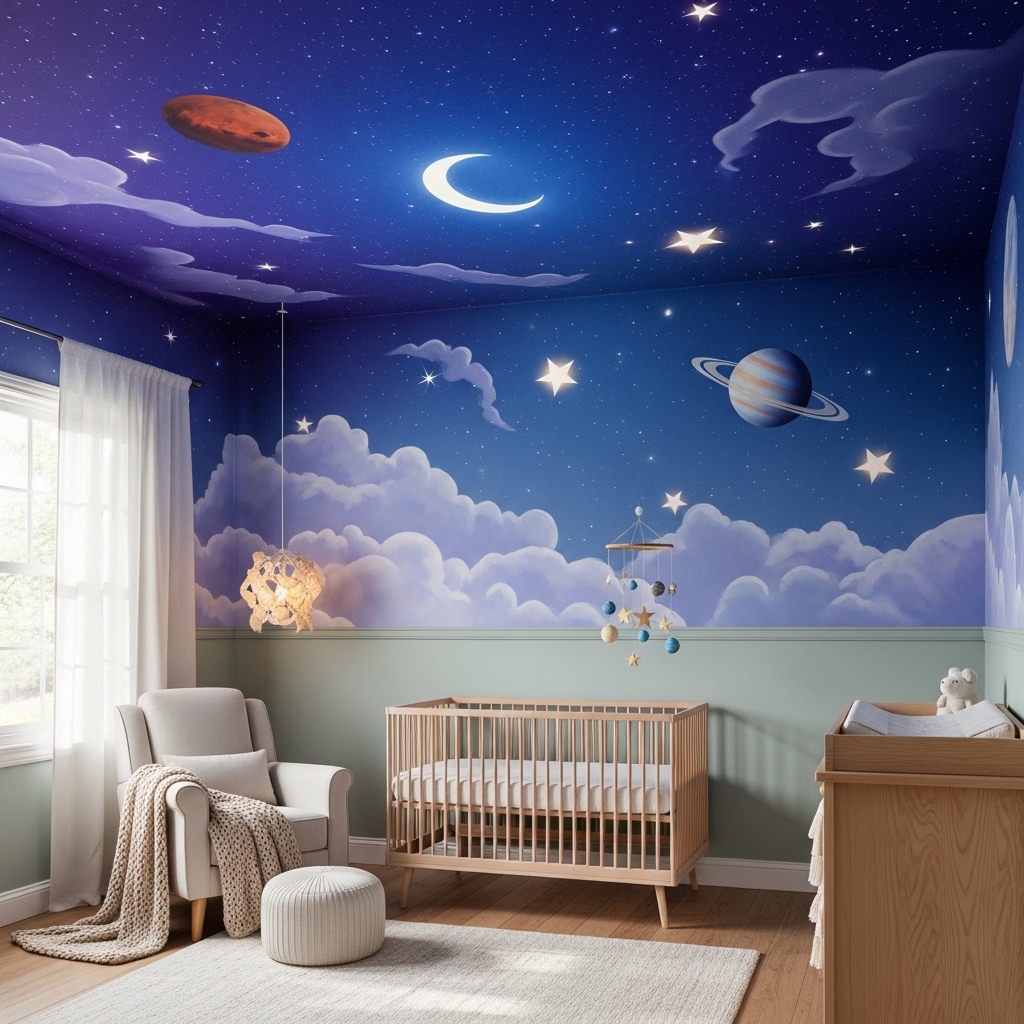
Use this idea when you want a room that soothes your baby during bedtime and nap time.
Paint your ceiling dark navy blue. Add hand-painted gold or white stars, moons, and clouds across the surface.
A celestial ceiling gives your baby something beautiful to stare at while falling asleep each night.
Plain white ceilings offer zero visual interest. Your baby will look at the same blank surface for years.
Pro Tip: Use glow-in-the-dark paint for stars so the ceiling glows softly after lights turn off.
Mistake to Avoid: Do not paint the ceiling too dark in a room with small windows. The space will feel like a cave.
2. Install a Wall of Floor-to-Ceiling Bookshelves
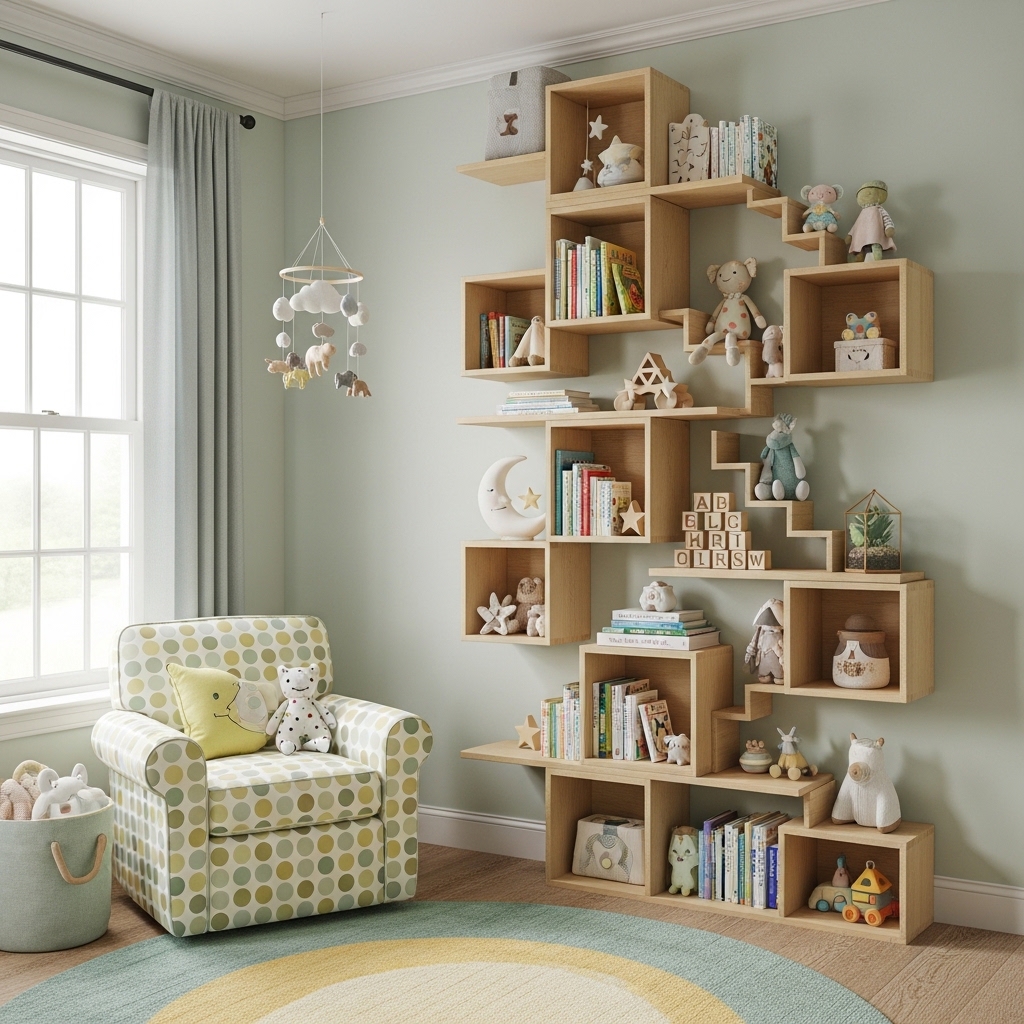
Choose this approach when you want to raise a reader from the very first months of life.
Build or buy floor-to-ceiling bookshelves on one entire wall. Fill every shelf with colorful board books and picture books.
Books become part of your nursery decor. Your baby sees books everywhere and develops early literacy naturally.
A single small bookshelf limits you to 20 books. A full wall holds 200 books and grows with your child.
Pro Tip: Install shelves at varying heights so your baby can reach books independently when learning to stand.
Mistake to Avoid: Do not forget to anchor your bookshelves to the wall. Tip-over accidents are a serious safety risk.
3. Create a Rainbow Color Palette Across All Walls
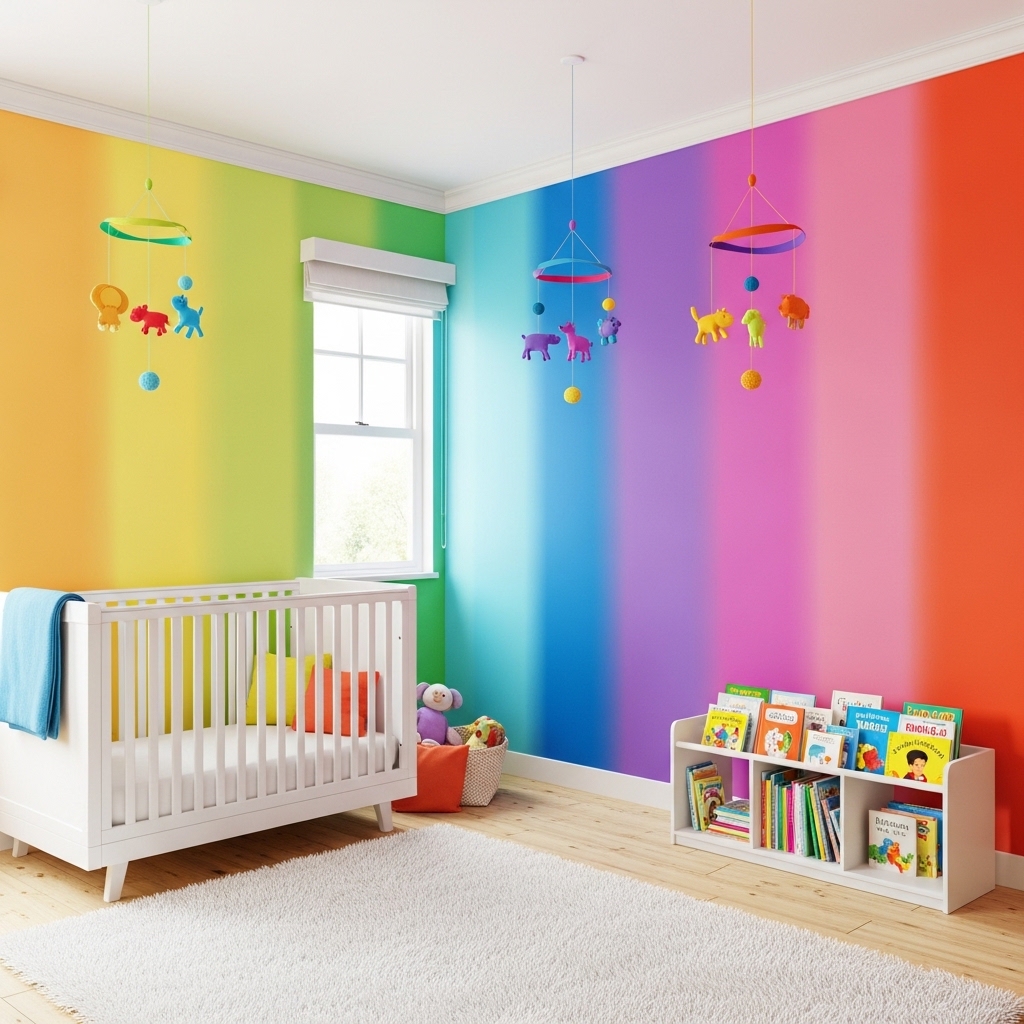
Apply this method when you cannot choose just one color and want a vibrant, happy nursery.
Paint each wall a different color of the rainbow. Red on one wall, orange on the next, yellow, green, blue, indigo.
A rainbow nursery stimulates your baby’s developing vision and creates a joyful, energetic atmosphere.
One boring beige wall after another puts your baby to sleep when you want alert, engaged wake time.
Pro Tip: Choose pastel versions of rainbow colors instead of bright neons. Pastels are softer on developing eyes.
Mistake to Avoid: Do not use all six rainbow colors in a very small nursery. Three or four colors work better in tight spaces.
4. Hang a Canopy of Real or Faux Greenery from the Ceiling
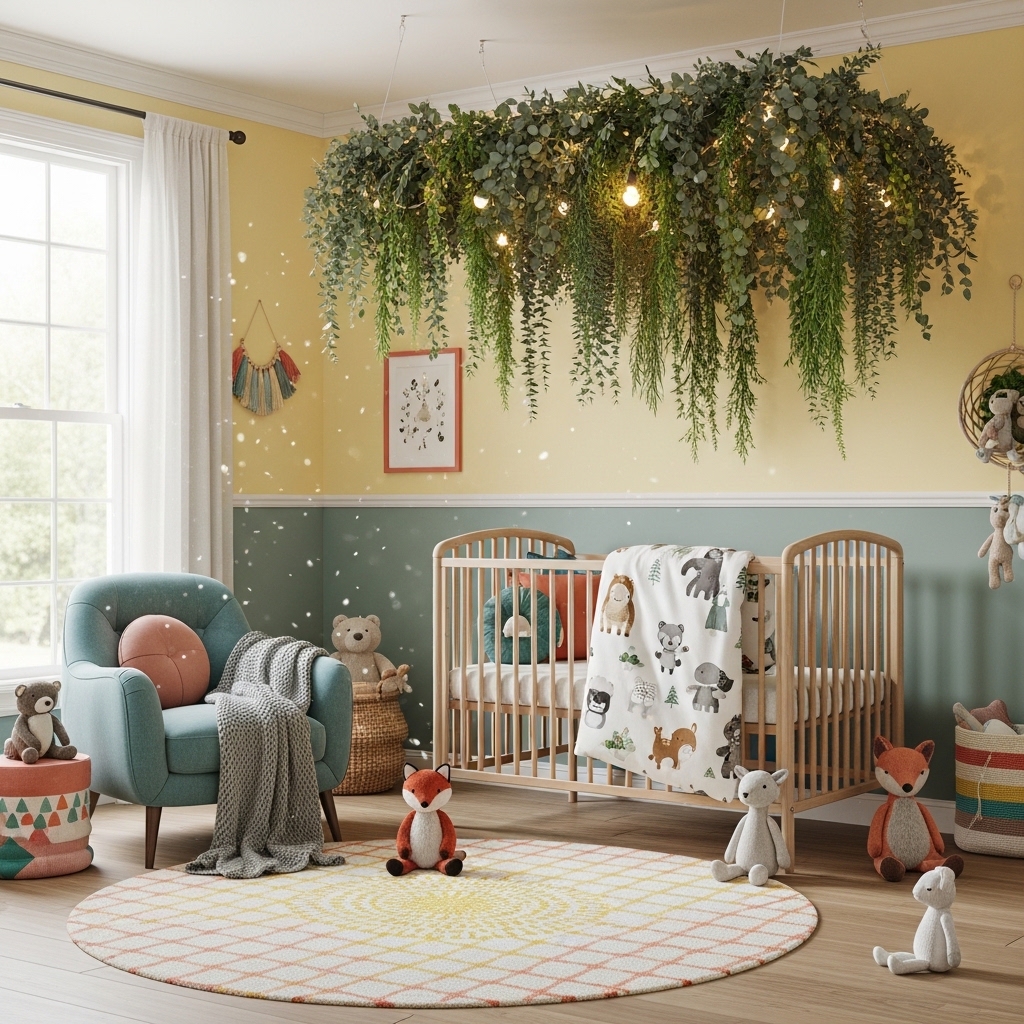
Use this strategy when you want a nature-inspired nursery without committing to a full jungle theme.
Install ceiling hooks. Hang trailing faux or preserved eucalyptus, ivy, or ferns from the hooks above your changing table.
A greenery canopy brings the outdoors inside. Your baby stares up at leaves instead of a blank ceiling.
Plastic mobiles look cheap and break quickly. A greenery canopy looks organic and stays beautiful for years.
Pro Tip: Use preserved eucalyptus that stays green for years without watering or wilting.
Mistake to Avoid: Do not hang real plants above your baby’s crib. Soil can fall and water can drip onto your sleeping baby.
5. Design a Vintage Floral Wallpaper Accent Wall
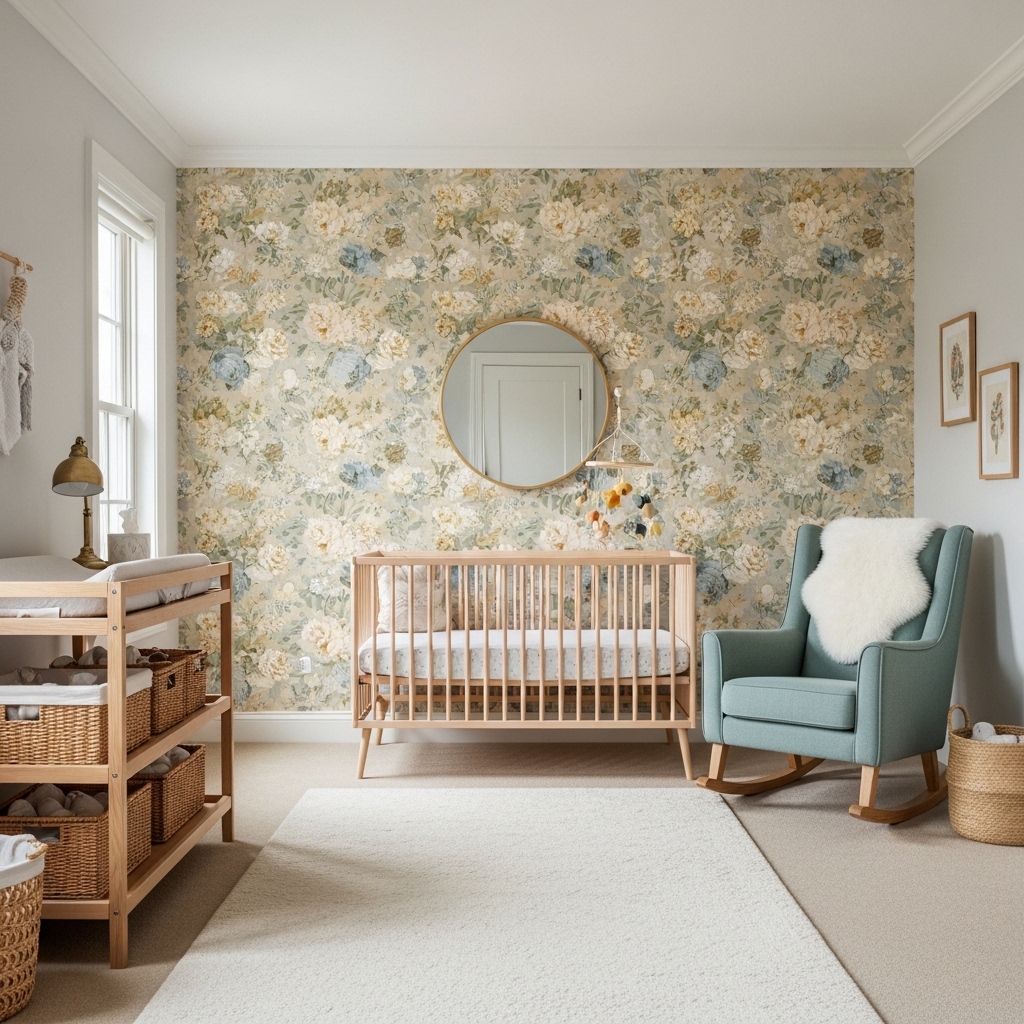
Choose this approach when you love grandmother-chic style and want a nursery with timeless appeal.
Select a vintage floral wallpaper with muted roses, peonies, or wildflowers. Apply it to one accent wall only.
Vintage floral wallpaper adds instant character and warmth. Your nursery looks collected, not purchased from a catalog.
Modern geometric wallpaper feels cold and trendy. Vintage florals stay beautiful for years and never look dated.
Pro Tip: Choose removable peel-and-stick wallpaper if you rent or plan to redecorate in a few years.
Mistake to Avoid: Do not paper all four walls with busy floral patterns. One accent wall is plenty.
6. Install a Climbing Wall on One Lower Wall Section
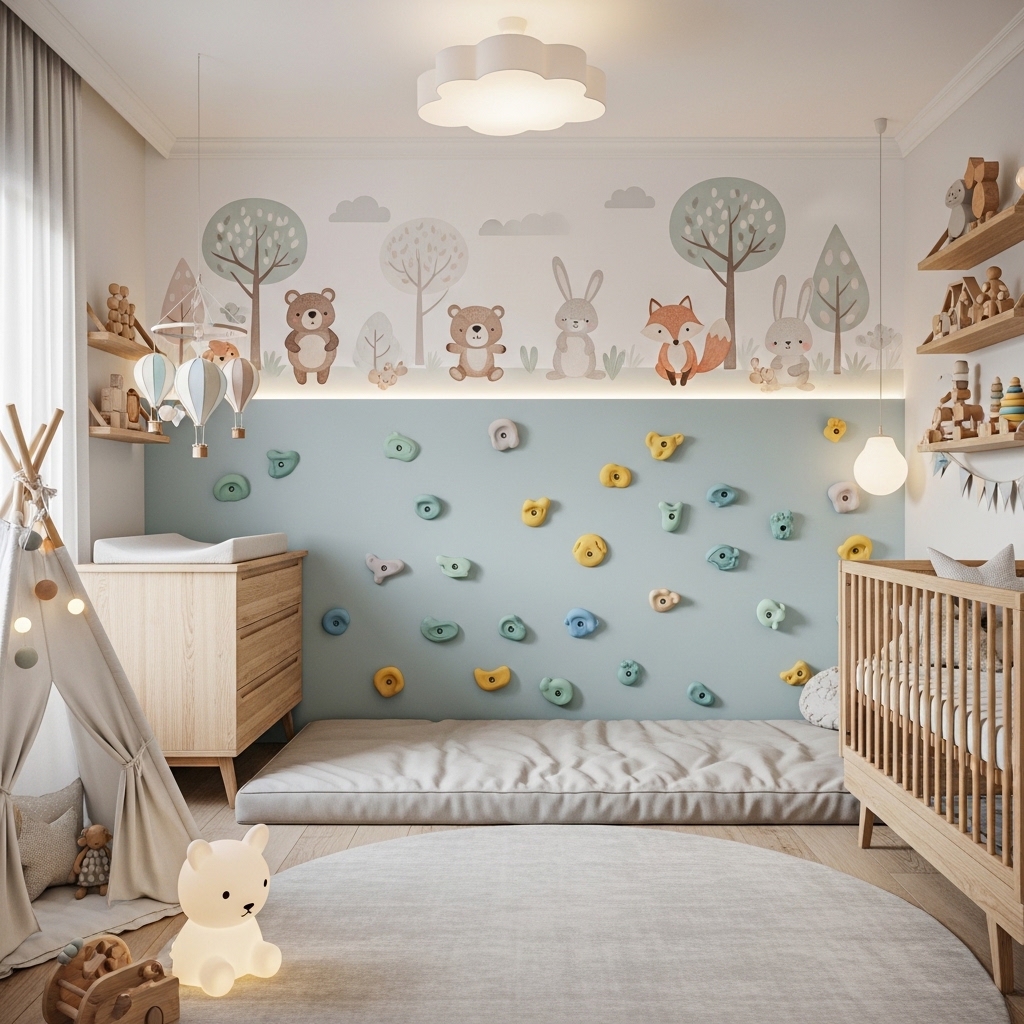
Use this idea when you want a nursery that grows with your baby into toddler and preschool years.
Mount small colorful climbing holds on a lower section of one wall, just above baseboard height.
Your baby learns to pull up, stand, and eventually climb on safe, padded floor below the holds.
Standard flat walls offer zero gross motor development opportunities. A climbing wall builds strength and confidence.
Pro Tip: Install a thick crash mat underneath the climbing wall for safe landings during toddler climbing sessions.
Mistake to Avoid: Do not install climbing holds above a hard floor. Carpet or foam mats are essential for safety.
7. Paint a Large Blackboard Wall for Drawing
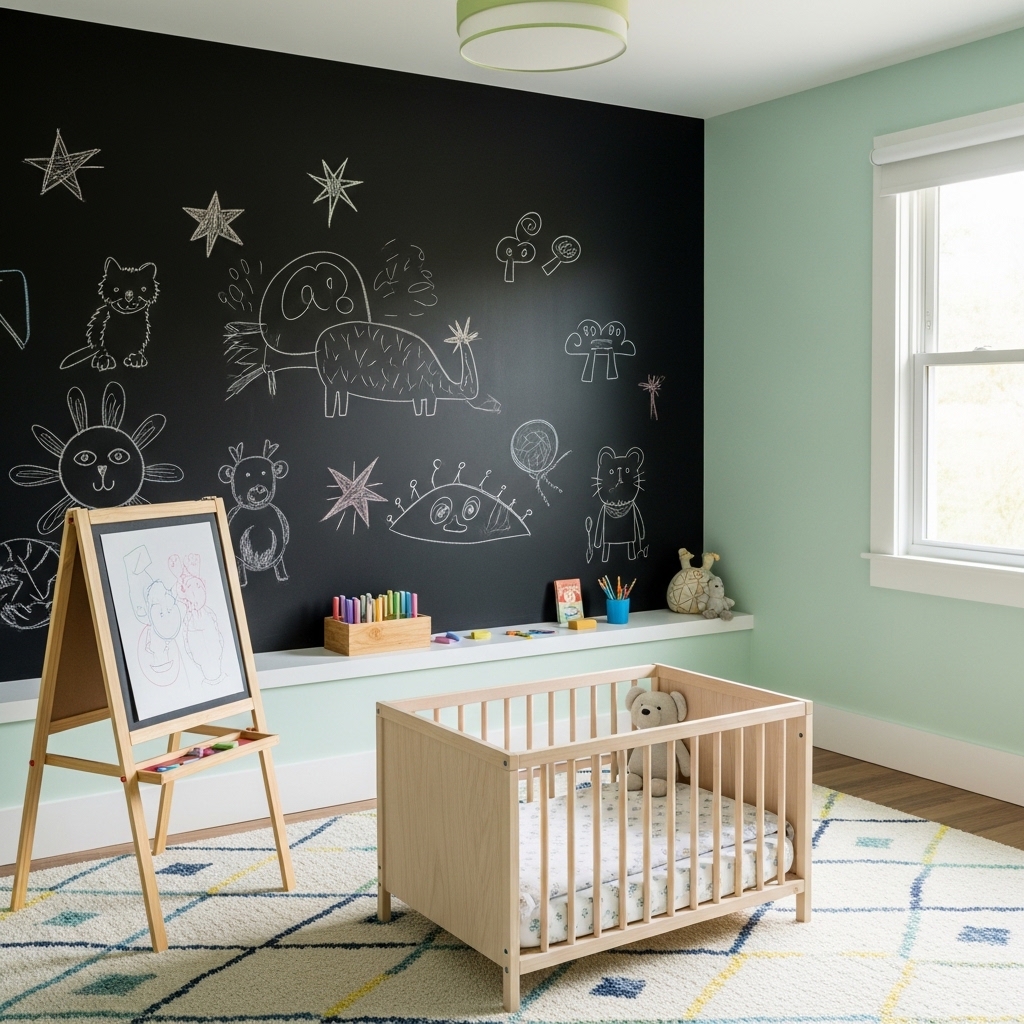
Apply this method when you want a nursery that transitions seamlessly from baby to preschool years.
Paint one entire wall with blackboard paint. Add a small chalk ledge at floor level for holding chalk.
Your baby scribbles on the wall during toddler years. Your preschooler draws full scenes during playtime.
White walls offer nothing but a blank canvas for permanent marker disasters. A blackboard wall contains the mess.
Pro Tip: Use dustless chalk to keep chalk dust off your floors, furniture, and baby’s hands.
Mistake to Avoid: Do not paint the blackboard wall near your changing table. Chalk dust floats onto changing surfaces.
8. Hang a Collection of Framed Animal Illustrations
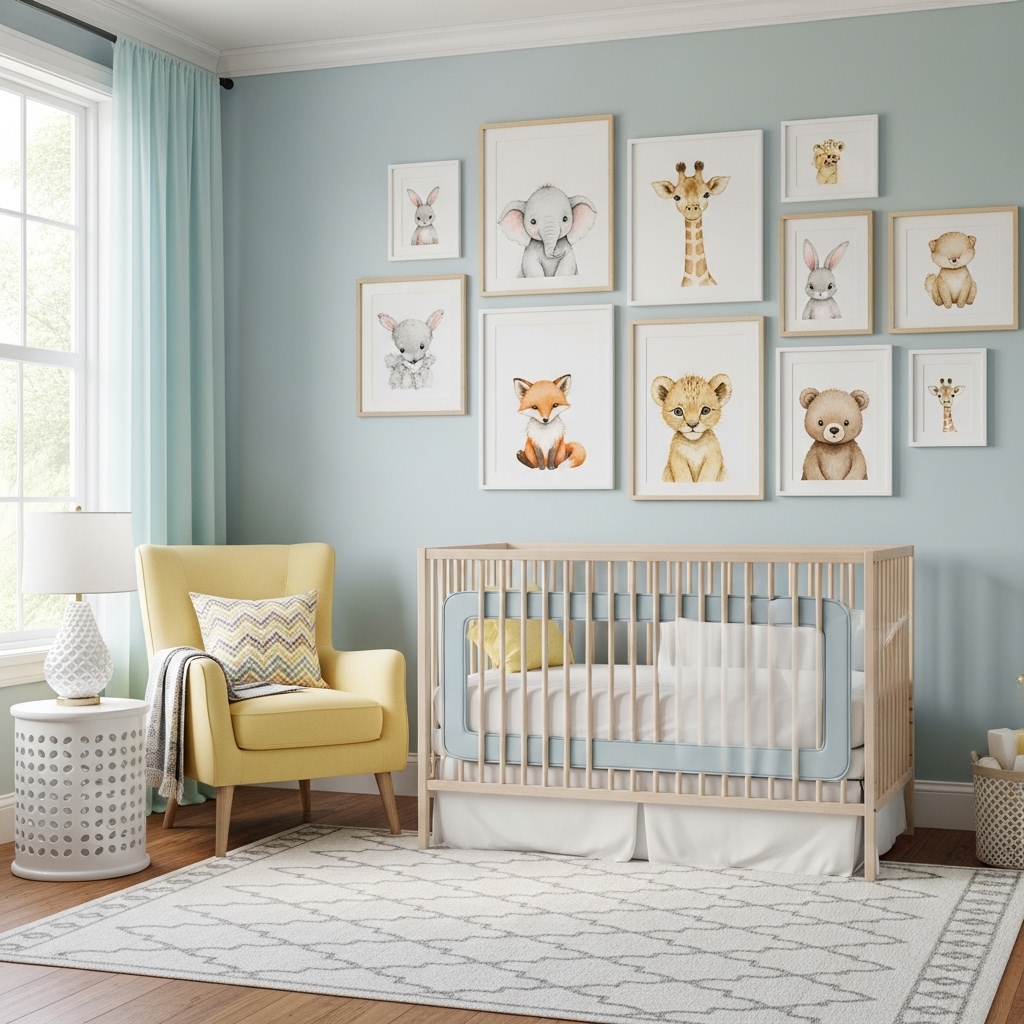
Choose this approach when you want educational decor that teaches your baby about the natural world.
Collect vintage or new framed animal illustrations. Hang them in a grid pattern on one accent wall.
Your baby learns animal names, sounds, and appearances just by looking at the wall during diaper changes.
Generic cartoon animal decals offer no educational value. Realistic illustrations teach accurate animal recognition.
Pro Tip: Choose illustrations from a single artist or series for a cohesive, curated gallery wall look.
Mistake to Avoid: Do not hang heavy glass frames above your baby’s crib. Use acrylic or lightweight frames for safety.
9. Install a Window Seat with Hidden Storage
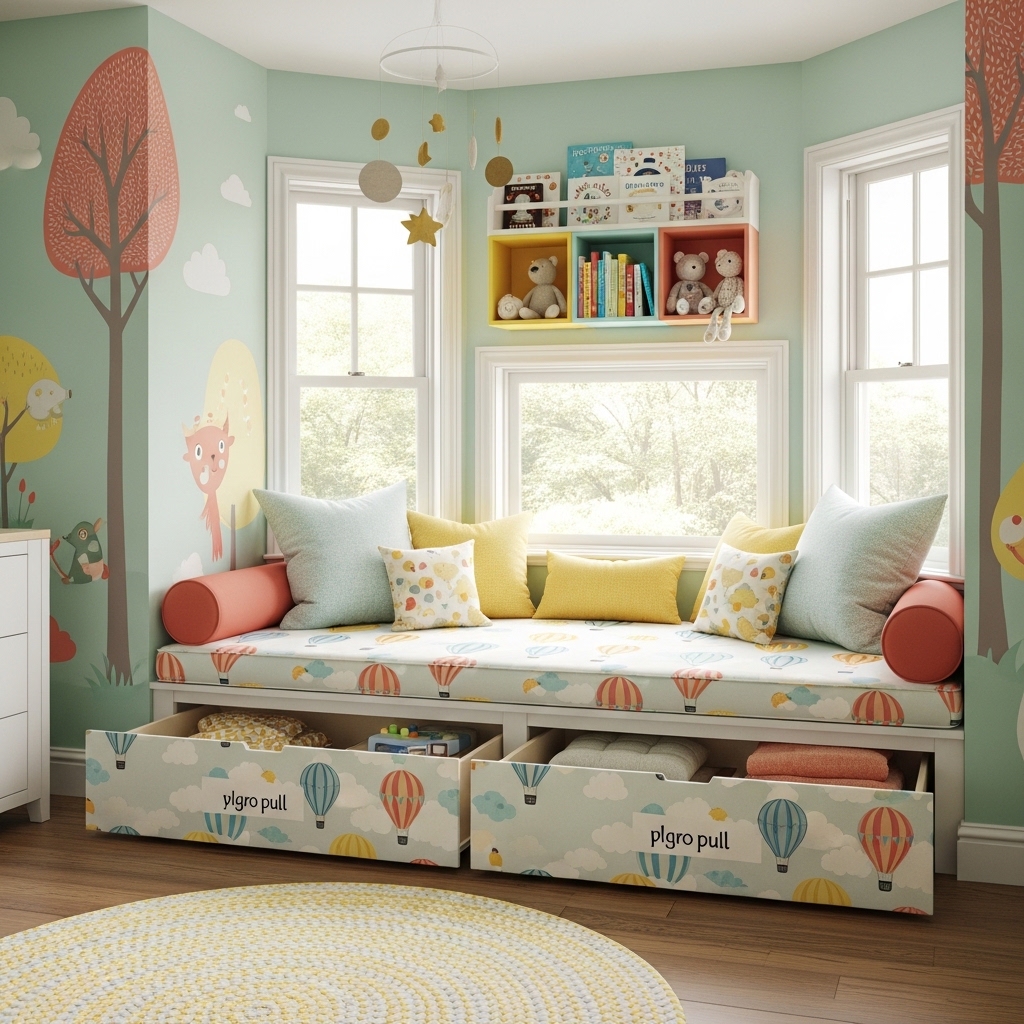
Use this strategy when your nursery has a window and you need extra storage for blankets and toys.
Build or buy a window seat that fits perfectly under your window. Add a hinged top for storage access.
Your baby sits on the window seat watching birds and cars. You store extra bedding and outgrown clothes inside.
A plain window area offers zero function. A window seat gives you seating, storage, and a cozy reading nook.
Pro Tip: Add a thick cushion on top and removable, washable covers for easy cleaning after spills.
Mistake to Avoid: Do not build your window seat deeper than 18 inches. Deep seats become unusable for small children.
10. Paint a Forest Mural with Hidden Animals
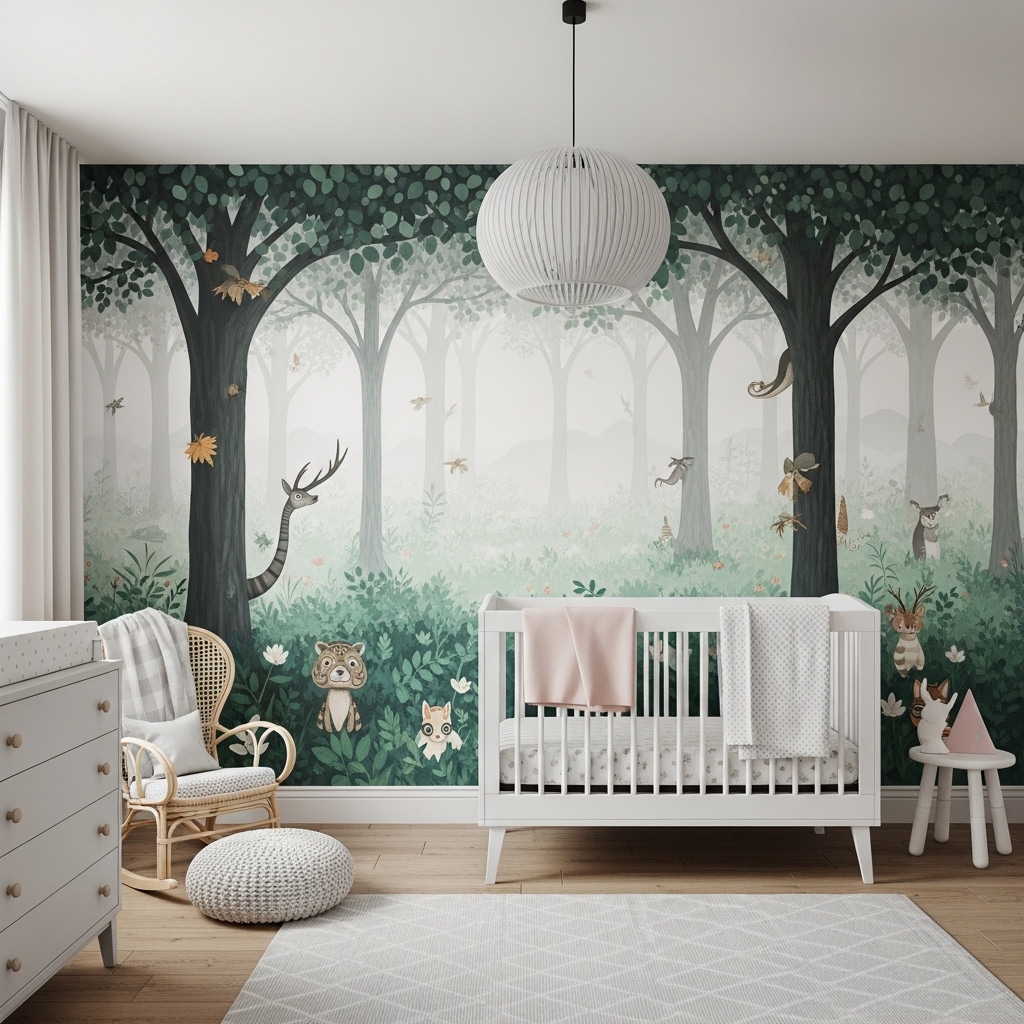
Apply this method when you want a whimsical nursery that rewards close looking and discovery.
Paint a forest scene across one wall. Hide small animals like rabbits, foxes, owls, and squirrels among the trees.
Your baby spots new hidden animals each month as vision develops. The wall stays interesting for years.
A plain painted wall offers nothing new after day one. A hidden animal mural reveals surprises for months.
Pro Tip: Paint three to five hidden animals per square yard. Too few and discovery ends quickly.
Mistake to Avoid: Do not use dark brown and green only. Add bright pops of color for visual contrast.
11. Create a Tent or Teepee Reading Nook
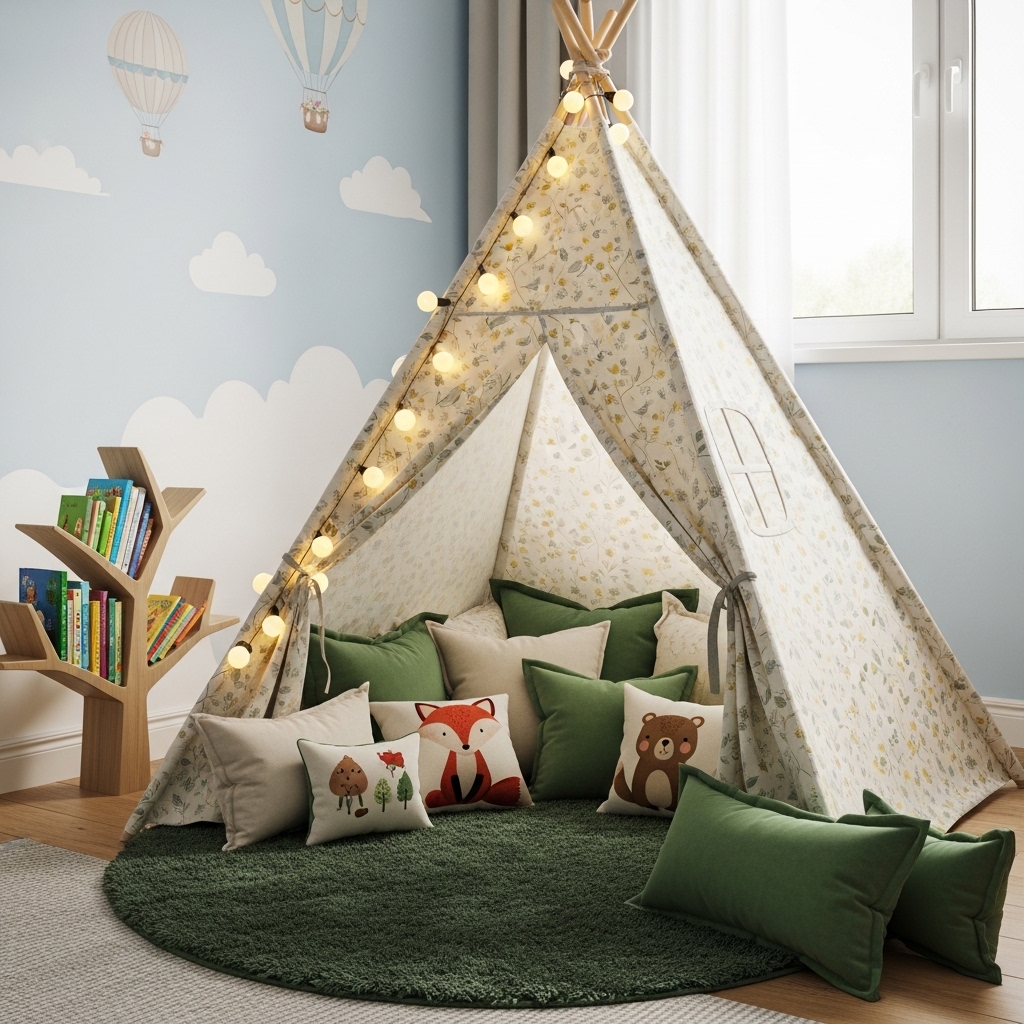
Use this idea when you want to encourage independent play and quiet reading time from an early age.
Set up a small canvas teepee or tent in the corner of your nursery. Fill it with pillows and board books.
Your toddler retreats to the teepee for quiet time. The space feels special because it is theirs alone.
An open corner offers no invitation for play. A teepee says “come inside and stay awhile” to your child.
Pro Tip: Choose a teepee made from machine-washable canvas. Spills and marker stains happen often.
Mistake to Avoid: Do not use a teepee with long tie strings. Babies can wrap strings around their necks accidentally.
12. Install a Gallery Wall of Family Photos
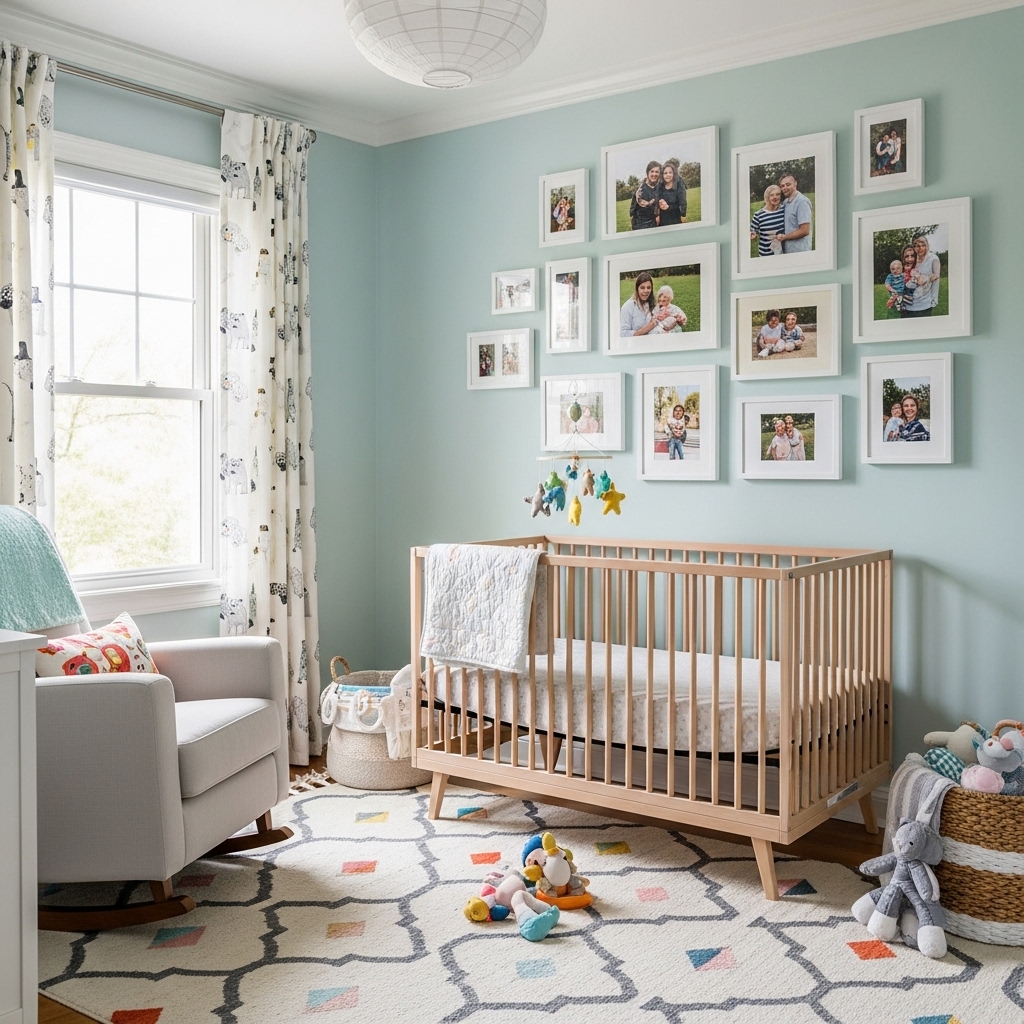
Choose this approach when you want your baby to recognize grandparents, cousins, and extended family.
Frame 10 to 20 family photos in matching frames. Arrange them in a salon-style gallery wall.
Your baby points at faces and learns names. Family members feel connected to your baby from far away.
No family photos in your nursery means your baby misses early face recognition practice with loved ones.
Pro Tip: Use shatterproof acrylic frames instead of glass. Glass breaks dangerously when frames fall off walls.
Mistake to Avoid: Do not hang photos above your changing table. Babies kick and can knock frames off walls.
13. Paint a World Map Wall for Future Learning
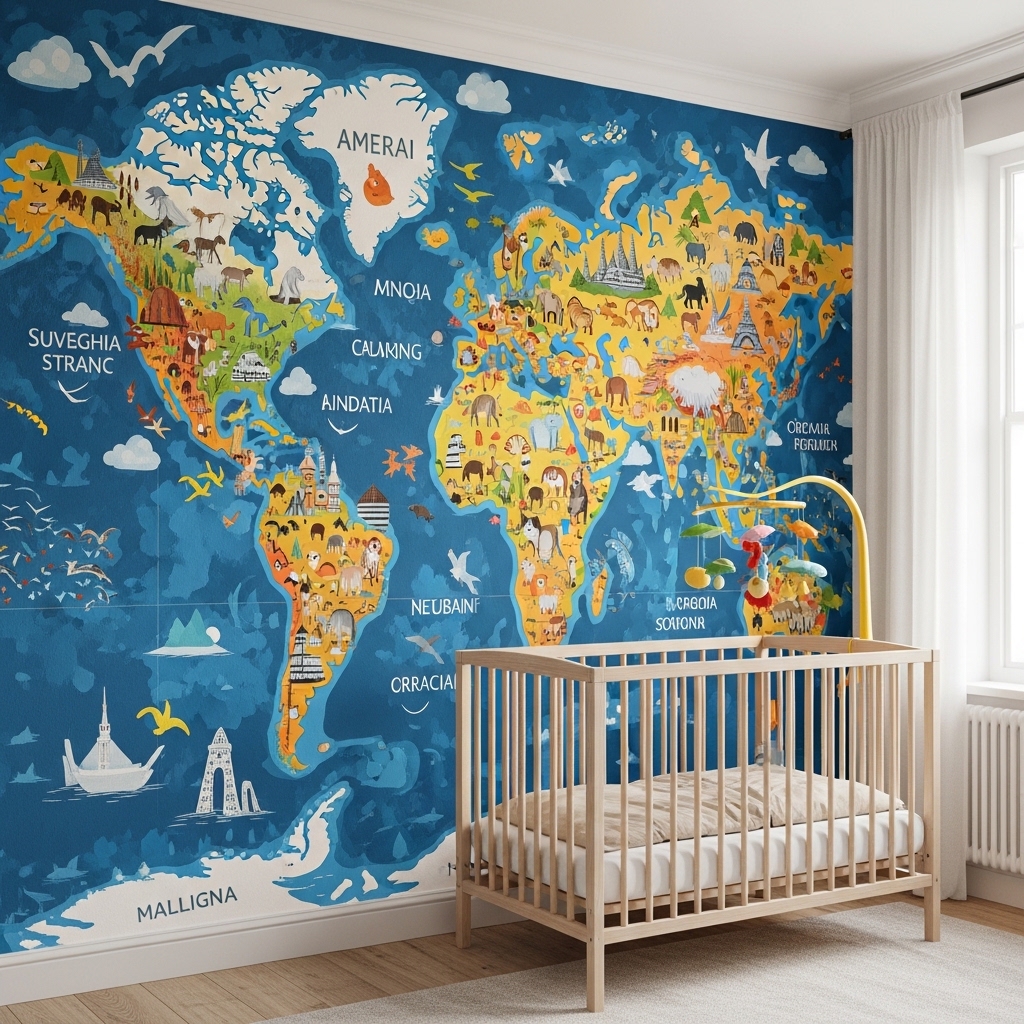
Apply this method when you want educational decor that stays relevant from infancy through elementary school.
Paint or use a large removable wall decal of a world map on one full wall of your nursery.
Your baby sees continents and oceans daily. You teach geography naturally during diaper changes and playtime.
Animal decals lose appeal by age three. A world map stays interesting and useful until age ten.
Pro Tip: Add small stickers on places where family members live. Your baby learns geography through personal connection.
Mistake to Avoid: Do not use a political map with tiny country labels. Babies need simple, clear continent shapes.
14. Hang a Macrame Wall Hanging for Texture
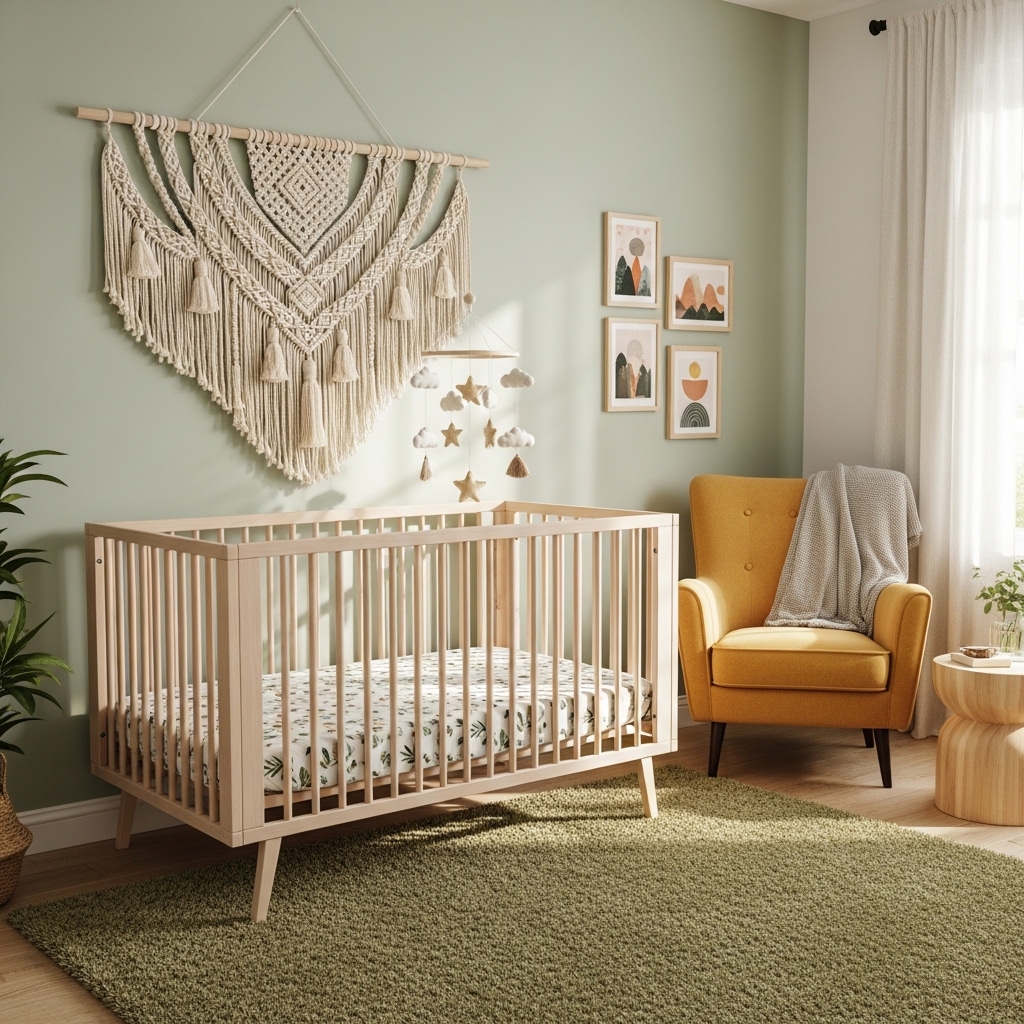
Use this strategy when you want boho style without committing to a full themed nursery.
Hang a large macrame wall hanging above your changing table or glider. Choose natural cotton or dyed rope.
Macrame adds soft texture and visual warmth to your nursery. The neutral tones match any future decor changes.
Canvas wall art feels flat and one-dimensional. Macrame adds depth and shadows that change with daylight.
Pro Tip: Choose a macrame piece with wooden beads or rings for added visual interest and texture variety.
Mistake to Avoid: Do not hang macrame within reach of your baby’s crib. Babies pull on hanging ropes dangerously.
15. Install a Pegboard Wall for Rotating Toy Display
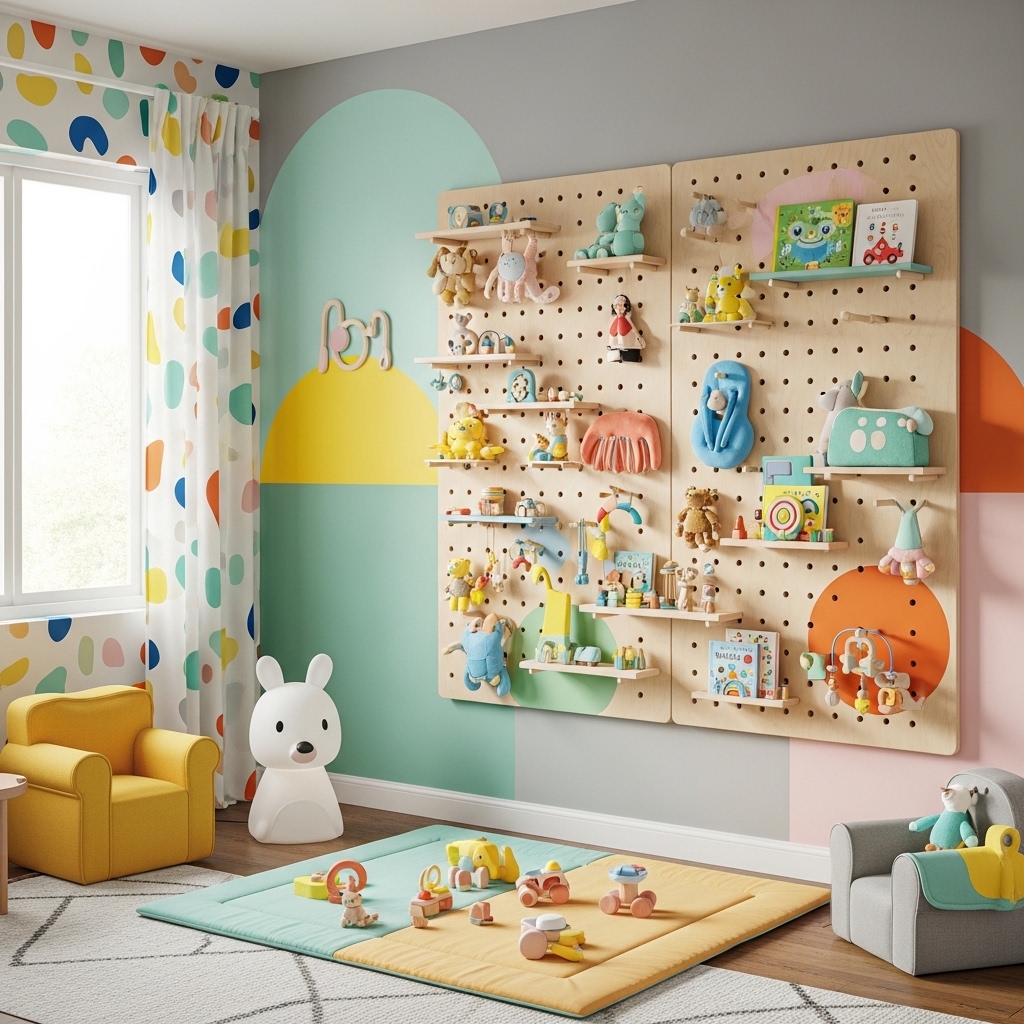
Choose this approach when you want to rotate toys regularly and keep your nursery organized.
Mount a large pegboard on one wall. Add hooks, small shelves, and baskets for displaying current favorite toys.
You rotate toys every two weeks. Old toys go into storage. New toys appear on the pegboard.
Toy bins hide everything from view. A pegboard displays toys like art, encouraging your baby to engage.
Pro Tip: Paint your pegboard a bright color like coral or mustard so it becomes decor, not just storage.
Mistake to Avoid: Do not hang heavy wooden toys on pegboard hooks. Use lightweight plastic or fabric toys only.
16. Paint a Chalkboard Wall Calendar
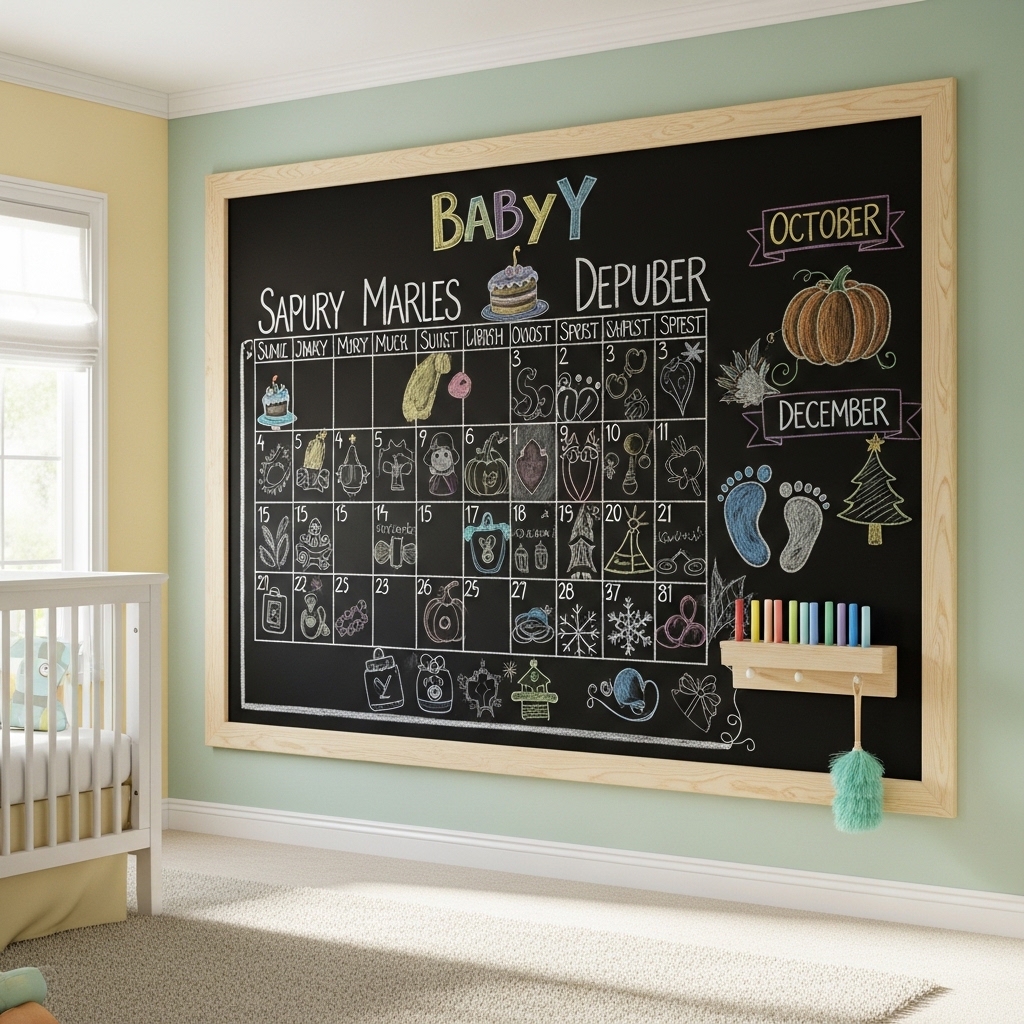
Apply this method when you want to track feeding, sleep, and diaper schedules in a visible, changeable way.
Paint a large rectangle of chalkboard paint on one wall. Draw a weekly or monthly calendar grid.
You write feeding times, nap schedules, and medication doses. Both parents see the same information instantly.
Phone apps require unlocking and scrolling. A wall calendar shows everything at a single glance for both parents.
Pro Tip: Use colored chalk to code different categories. Blue for sleep, green for feeding, red for medication.
Mistake to Avoid: Do not paint your chalkboard wall near the crib. Chalk dust irritates baby airways.
17. Create a Canopy Bed Effect with Ceiling Fabric
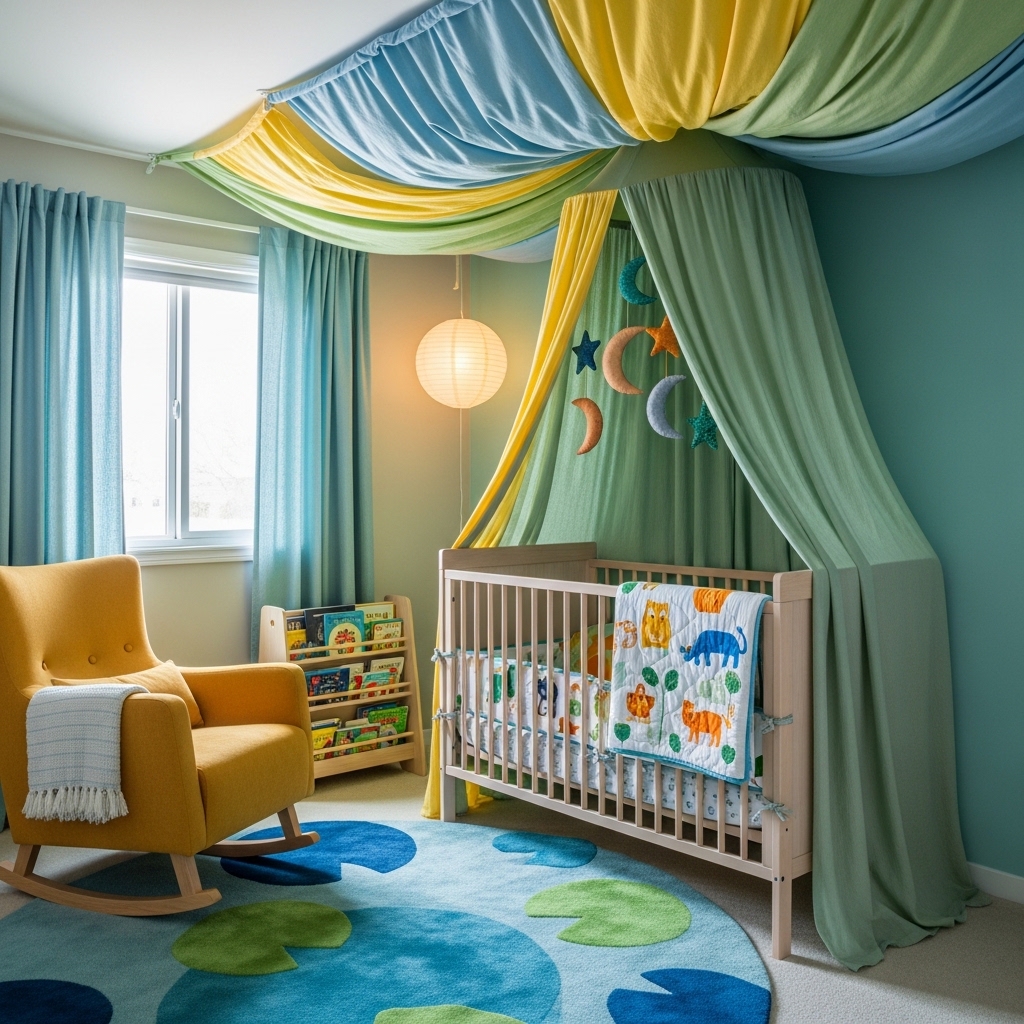
Use this idea when you want a dreamy, romantic nursery without buying a canopy bed frame.
Install ceiling hooks above your crib or glider. Drape sheer white or blush fabric from hooks to floor.
Fabric softens the entire room acoustically. Your baby sleeps better with less echo and ambient noise.
Bare ceilings and walls create harsh echoes that startle sleeping babies. Fabric absorbs sound naturally.
Pro Tip: Use flame-retardant fabric treated for nursery safety. Regular fabric can ignite near heat sources.
Mistake to Avoid: Do not drape fabric within reach of your crib. Babies pull fabric through crib rails dangerously.
18. Install a Rolling Library Ladder on Tall Shelves
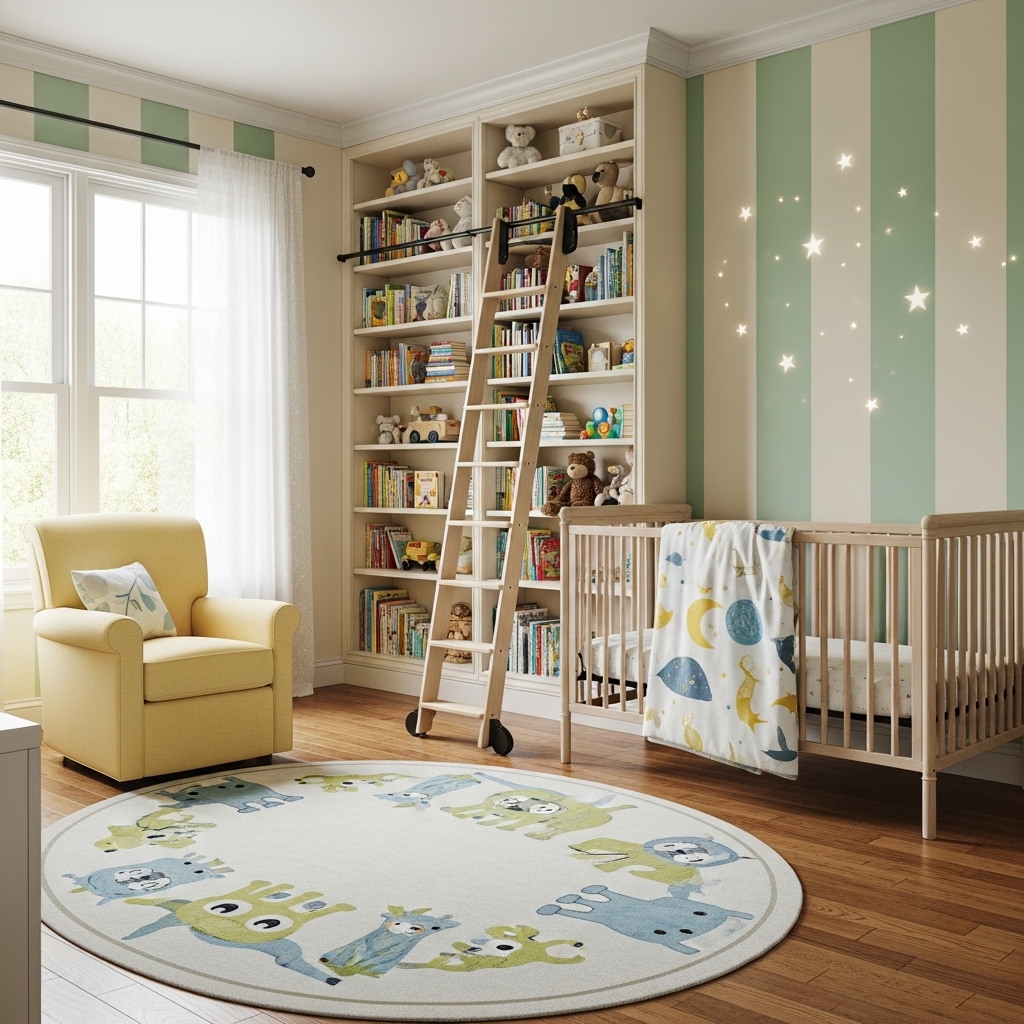
Choose this approach when you have floor-to-ceiling bookshelves and want a dramatic, functional element.
Mount a rolling library ladder on a ceiling track in front of your tall bookshelves.
You reach top shelves easily. Your child grows up feeling like a character in a beauty and the beast library.
Step stools tip over and feel temporary. A rolling ladder feels permanent, magical, and completely functional.
Pro Tip: Choose a ladder with locking casters that engage automatically when someone stands on it.
Mistake to Avoid: Do not install a ladder in a nursery under age two. Wait until your child is walking steadily.
19. Paint a Rainbow Stripe Wall
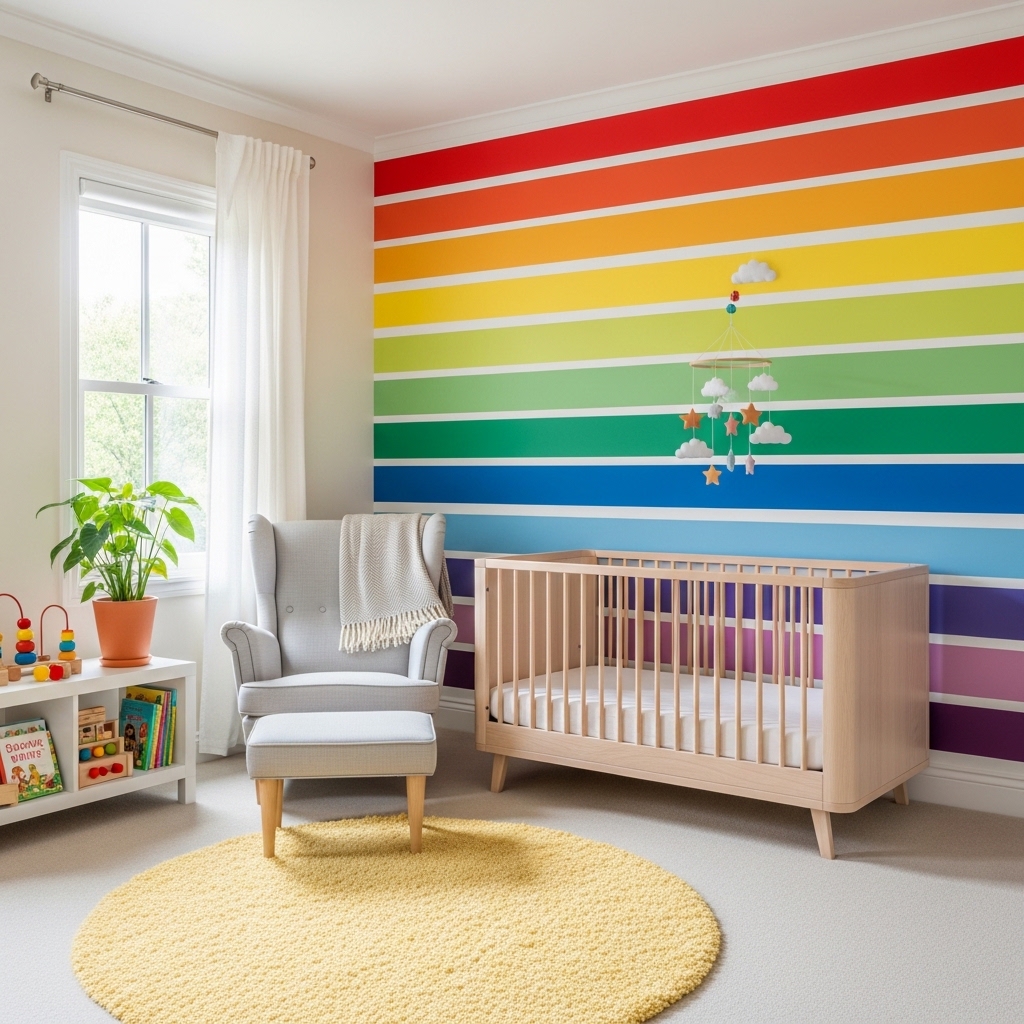
Apply this method when you want color and energy without painting each wall a different color.
Paint wide horizontal or vertical stripes in rainbow order on a single accent wall. Use painter’s tape for clean lines.
Rainbow stripes add massive visual impact with minimal paint and effort. One weekend completes the whole project.
Solid color walls look fine but never excite. Rainbow stripes make your nursery memorable and joyful.
Pro Tip: Use pastel rainbow colors instead of bright primaries for a softer, sleep-friendly palette.
Mistake to Avoid: Do not paint vertical stripes in a room with low ceilings. Vertical stripes make ceilings feel lower.
20. Hang a Collection of Baby Mobiles from the Ceiling
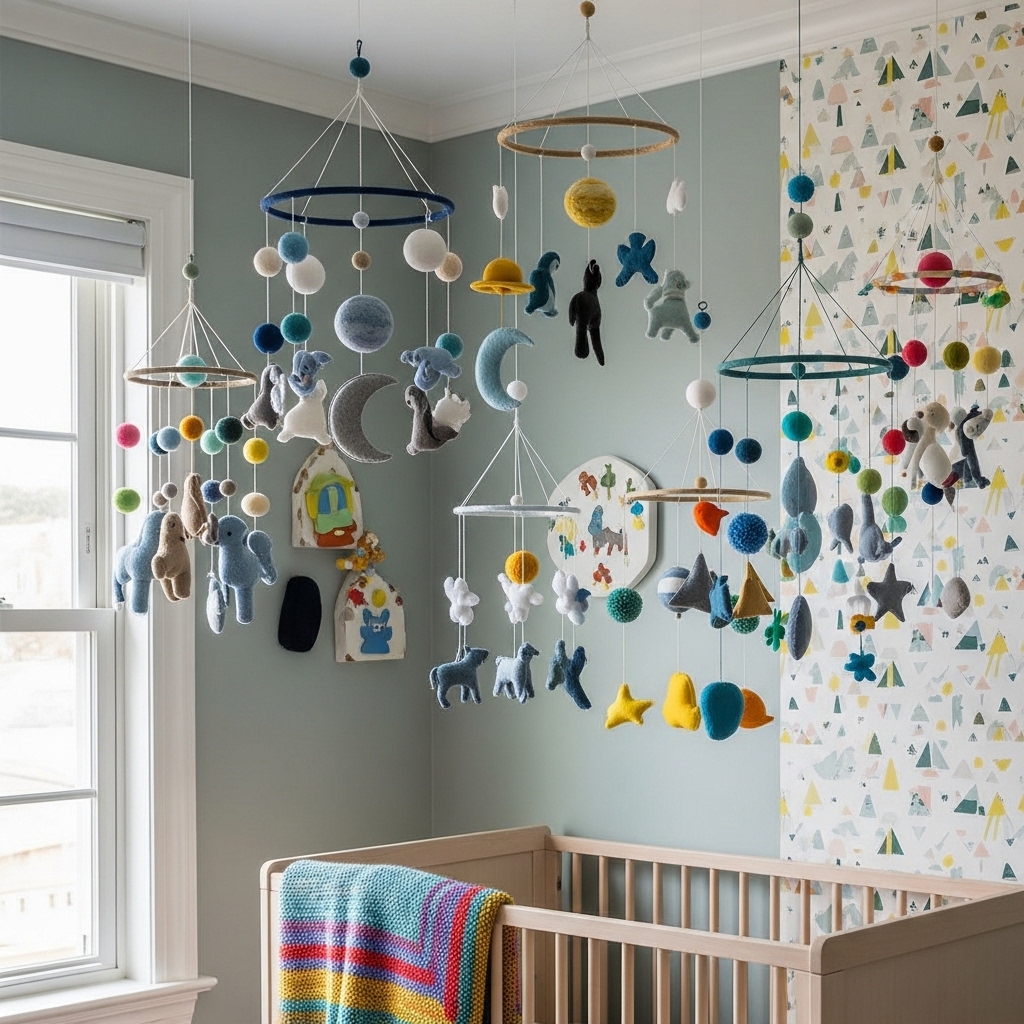
Use this strategy when you want visual interest at different heights throughout your nursery.
Hang three to five different mobiles from your ceiling at varying heights. Space them across the room.
Your baby sees mobiles from the crib, changing table, and floor play mat. Visual interest everywhere.
A single mobile above the crib offers limited benefit. Multiple mobiles engage your baby in every corner.
Pro Tip: Hang mobiles at different heights between 18 and 48 inches from the floor for varied viewing.
Mistake to Avoid: Do not hang mobiles directly above the crib. Hang them off to the side for safe viewing.
21. Install a Wall-Mounted Bookshelf with Front-Facing Covers
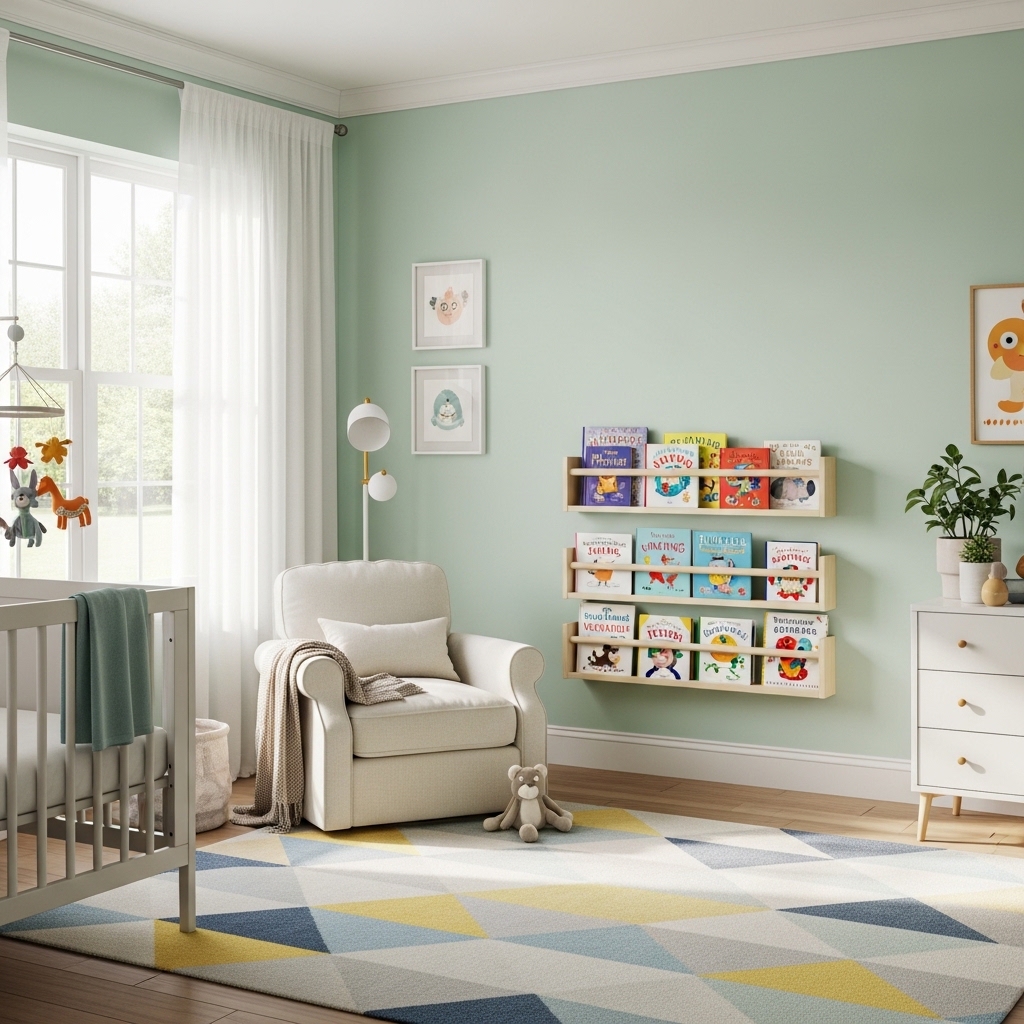
Choose this approach when you want your baby to choose books independently based on cover images.
Mount a wall-mounted bookshelf with a lip that holds books facing forward, spines hidden.
Your baby sees book covers instead of boring spines. Cover images attract attention and encourage book selection.
Traditional bookshelves show only spines. Babies cannot read titles. Front-facing covers change everything.
Pro Tip: Rotate books every week. Hide five books and display five new ones to maintain novelty and interest.
Mistake to Avoid: Do not mount your bookshelf higher than 24 inches from the floor. Your baby cannot reach it.
22. Paint a Mountain Landscape Across Three Walls
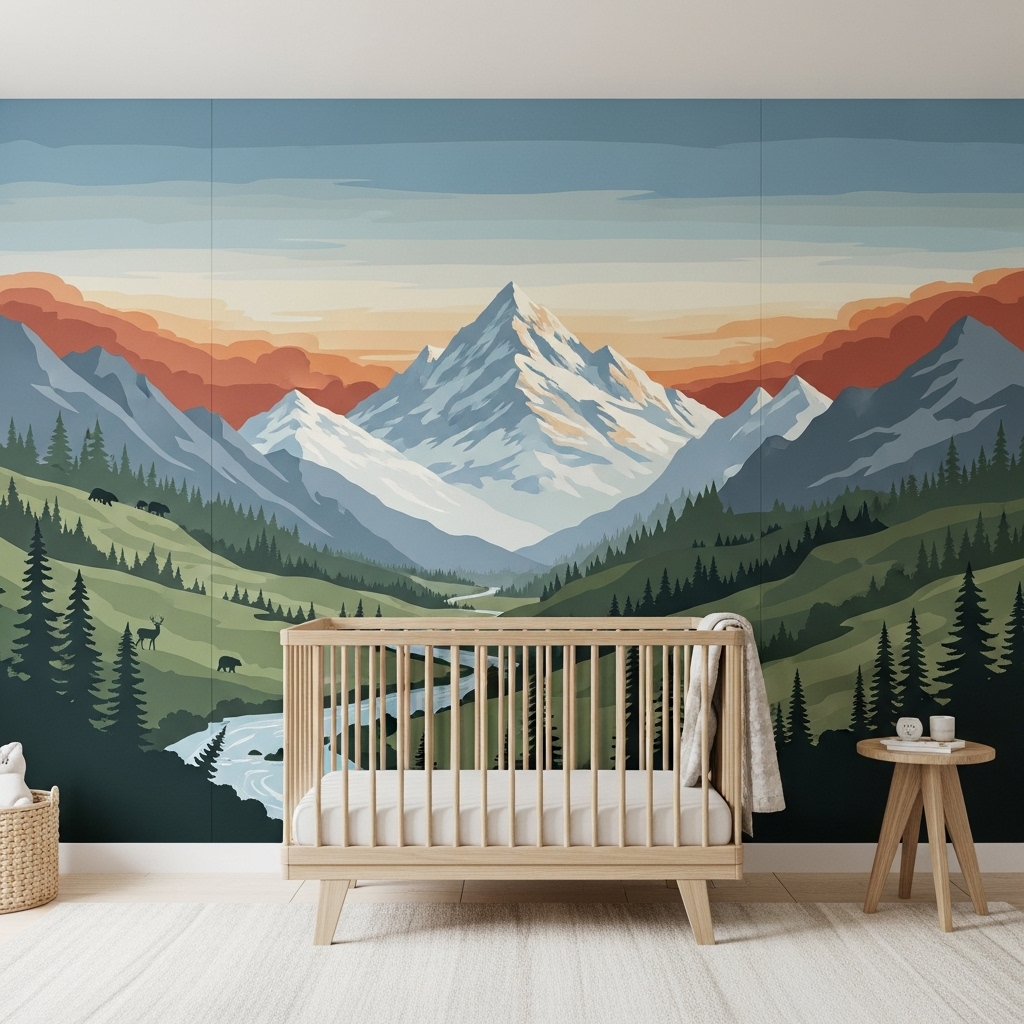
Apply this method when you want a dramatic, nature-inspired nursery that feels expansive and open.
Paint overlapping mountain silhouettes in graduated gray, blue, and purple shades across three connected walls.
The mural wraps around your room. Your baby feels surrounded by peaceful mountains instead of drywall.
A single accent wall looks chopped and incomplete. A three-wall mural feels immersive and fully designed.
Pro Tip: Use a sponge painting technique for soft, foggy mountain effects instead of hard painted lines.
Mistake to Avoid: Do not paint your mountain mural too dark. Use light grays and soft blues for a daytime feel.
23. Create a Sensory Wall with Different Textures
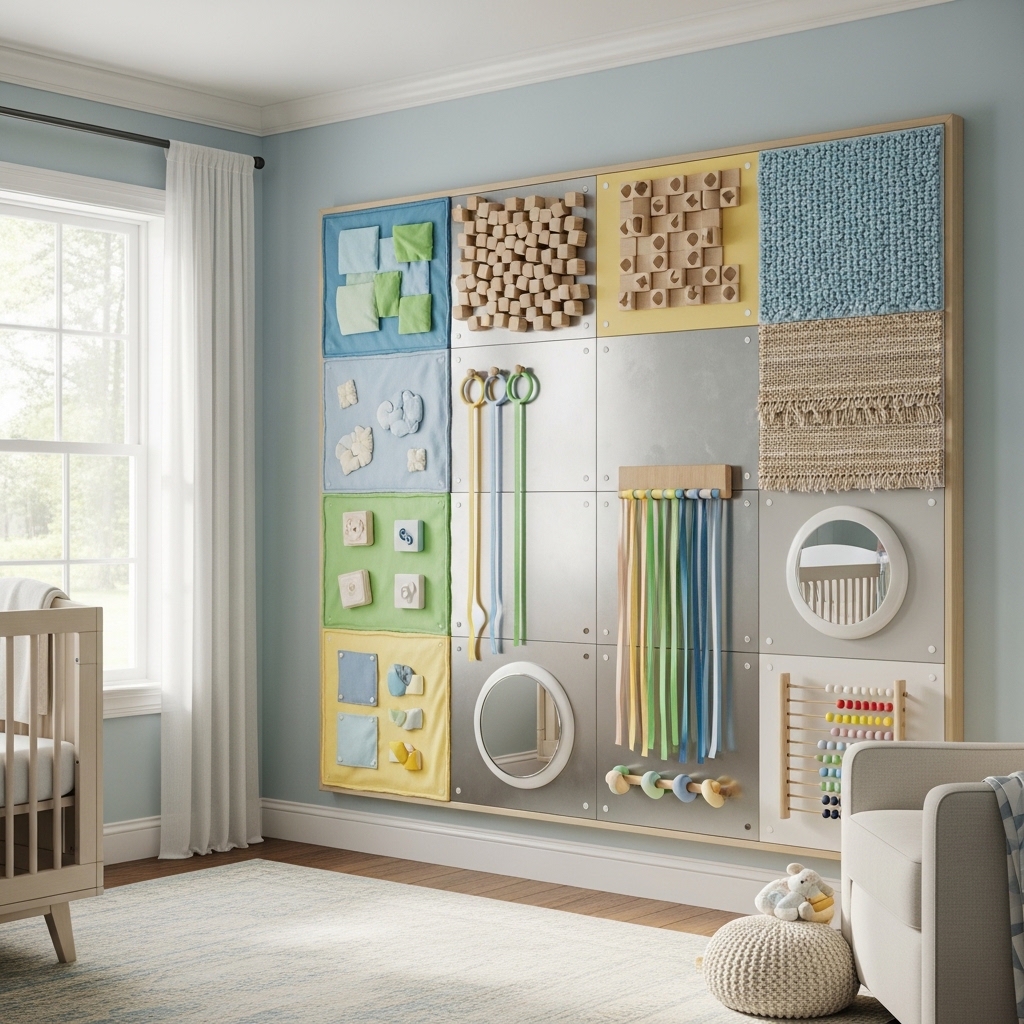
Use this idea when you want to support your baby’s tactile development during floor play time.
Mount different textured materials on a lower wall section. Faux fur, sandpaper, bubble wrap, felt, and corduroy.
Your baby touches each texture during tummy time. Tactile exploration builds neural connections and fine motor skills.
Smooth painted walls offer zero tactile learning. A sensory wall teaches texture vocabulary naturally.
Pro Tip: Label each texture with a written word card. “Soft” on fur, “rough” on sandpaper, “bumpy” on bubble wrap.
Mistake to Avoid: Do not use small detachable pieces on your sensory wall. Babies pull them off and choke.
24. Install a Swing or Hammock Chair in the Corner
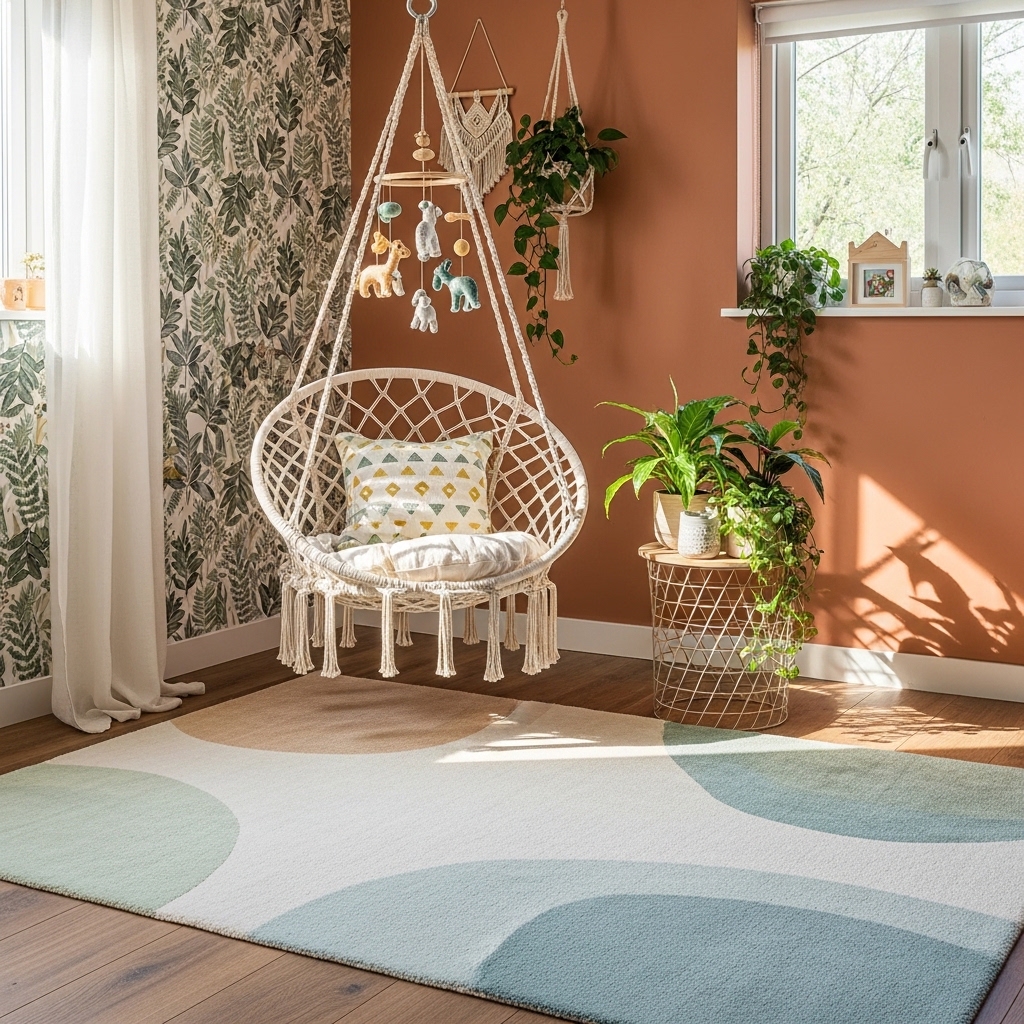
Choose this approach when you have ceiling space and want a calming, vestibular-stimulating element.
Mount a fabric swing or hammock chair from a ceiling hook rated for 200 pounds in a quiet corner.
You swing with your baby to calm fussiness. Your toddler swings independently for regulation and fun.
Rocking chairs offer linear motion only. Swings offer circular, side-to-side, and back-and-forth movement variety.
Pro Tip: Choose a bucket-style fabric swing that fully supports your baby’s back and head during swinging.
Mistake to Avoid: Do not install your swing near windows or glass doors. Swinging bodies can break glass panels.
25. Paint a Underwater Ocean Scene
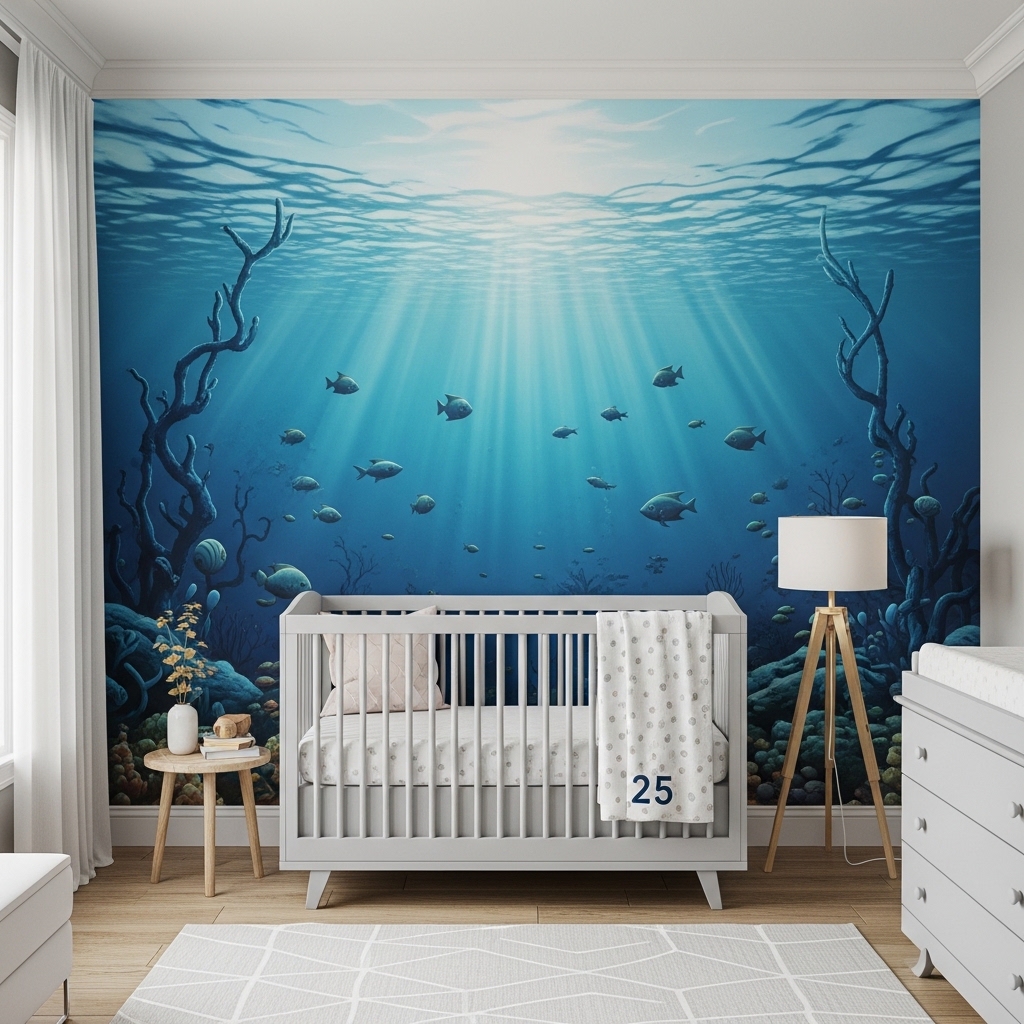
Apply this method when your baby loves bath time and you want to extend that joy into the nursery.
Paint an underwater scene with fish, turtles, jellyfish, coral, and bubbles across one or two walls.
Your baby points at fish during diaper changes. You name sea creatures and make bubble sounds together.
Generic animal decals lack storytelling potential. An ocean scene creates daily opportunities for language development.
Pro Tip: Add a few glow-in-the-dark jellyfish to your ocean scene for magical bedtime visual interest.
Mistake to Avoid: Do not paint your ocean scene too dark blue. Use bright turquoise and teal for daytime visibility.
26. Create a Wall of Mirrors at Baby Height
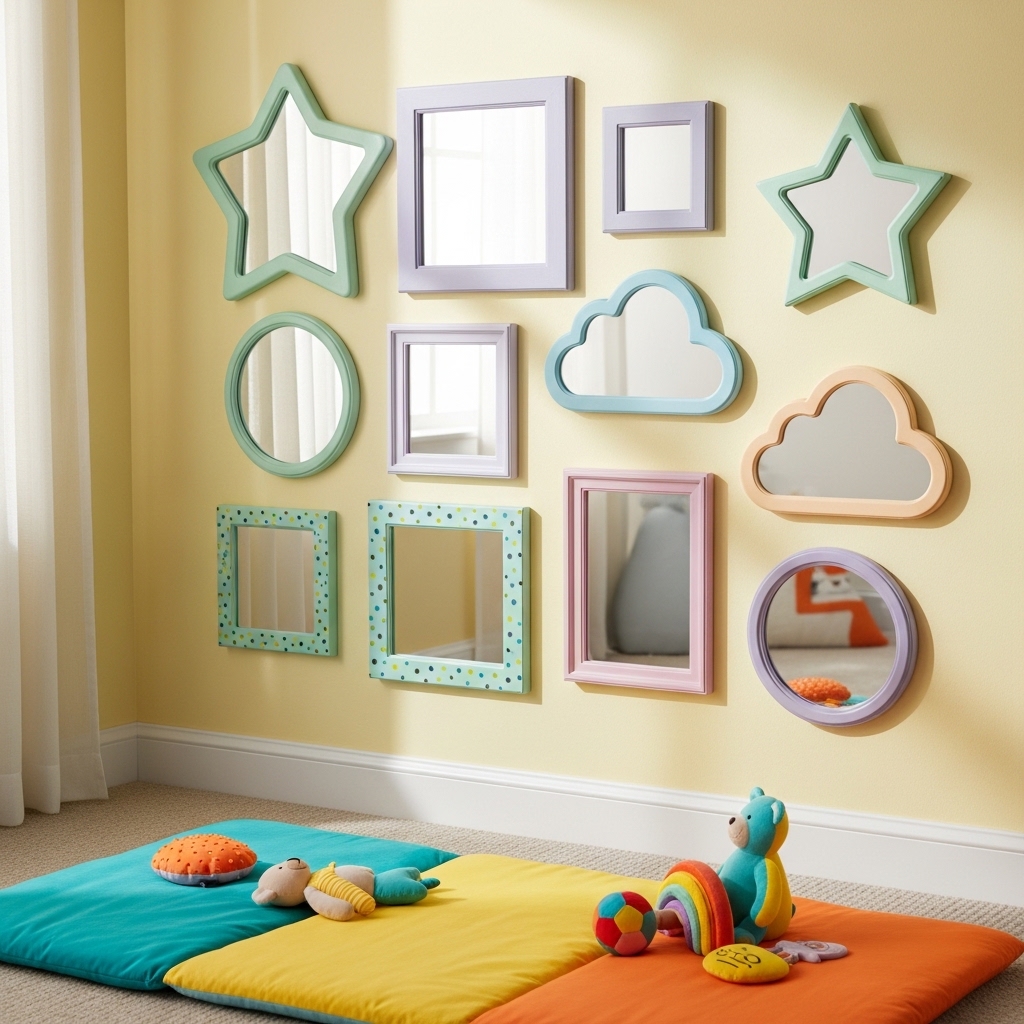
Use this strategy when you want to support self-recognition and visual tracking development.
Mount shatterproof acrylic mirrors on a wall at floor level, covering a 4-foot wide section.
Your baby sees their own reflection during tummy time. Self-recognition develops between 6 and 18 months.
No mirrors at baby height means missed opportunities for self-awareness and visual engagement practice.
Pro Tip: Frame your mirrors with colorful painted wood so the mirror section looks intentional, not accidental.
Mistake to Avoid: Do not use glass mirrors in your nursery. Acrylic mirrors only for baby safety.
27. Install a Pull-Down Projector Screen for Movie Nights
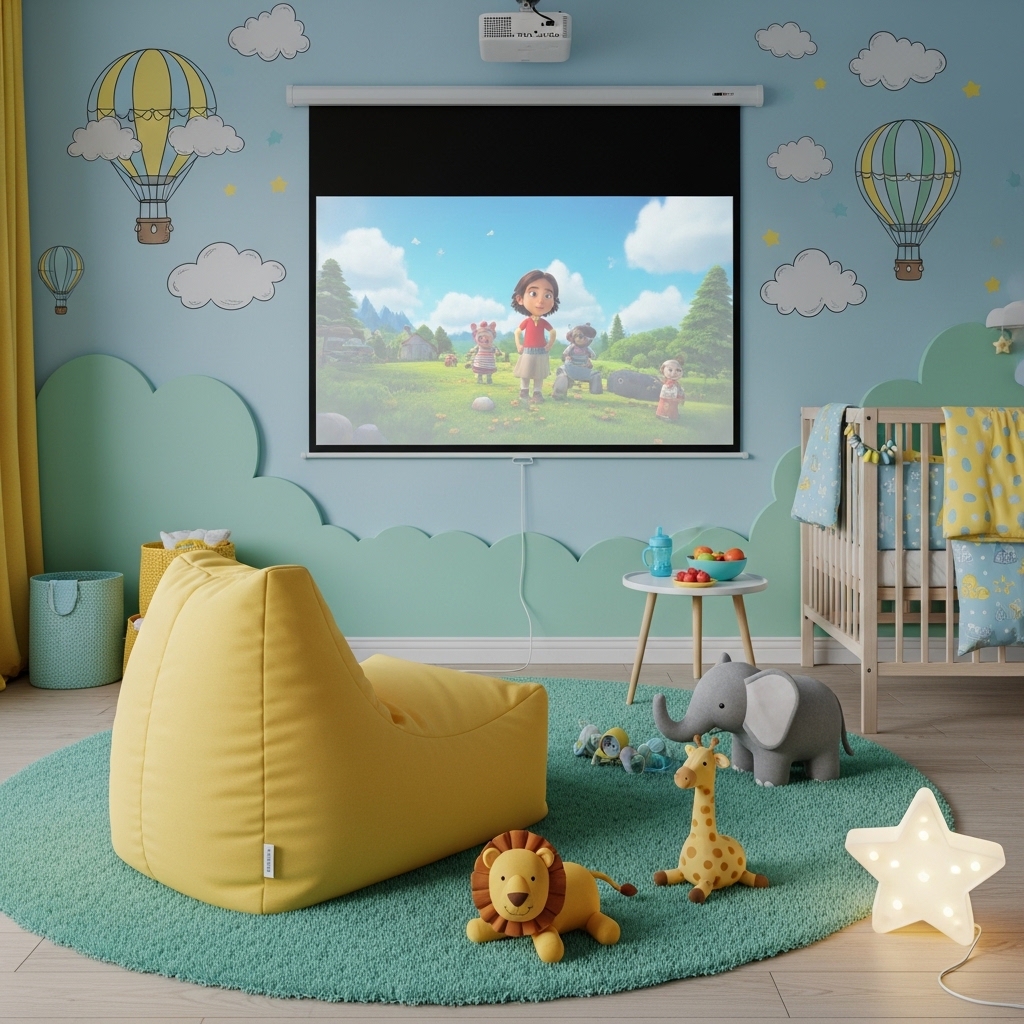
Choose this approach when you want a nursery that transitions to a family movie room later.
Mount a retractable pull-down projector screen on your ceiling. Add a small portable projector on a shelf.
You watch baby sensory videos during tummy time. Movie nights become family tradition as your child grows.
Televisions take up wall space permanently. A pull-down screen disappears when you want a screen-free room.
Pro Tip: Choose a screen with a slow-retract mechanism to prevent loud snapping noises during nap time.
Mistake to Avoid: Do not mount your screen above the crib. Projectors and screens fall dangerously.
28. Paint a Space Shuttle and Planet Wall
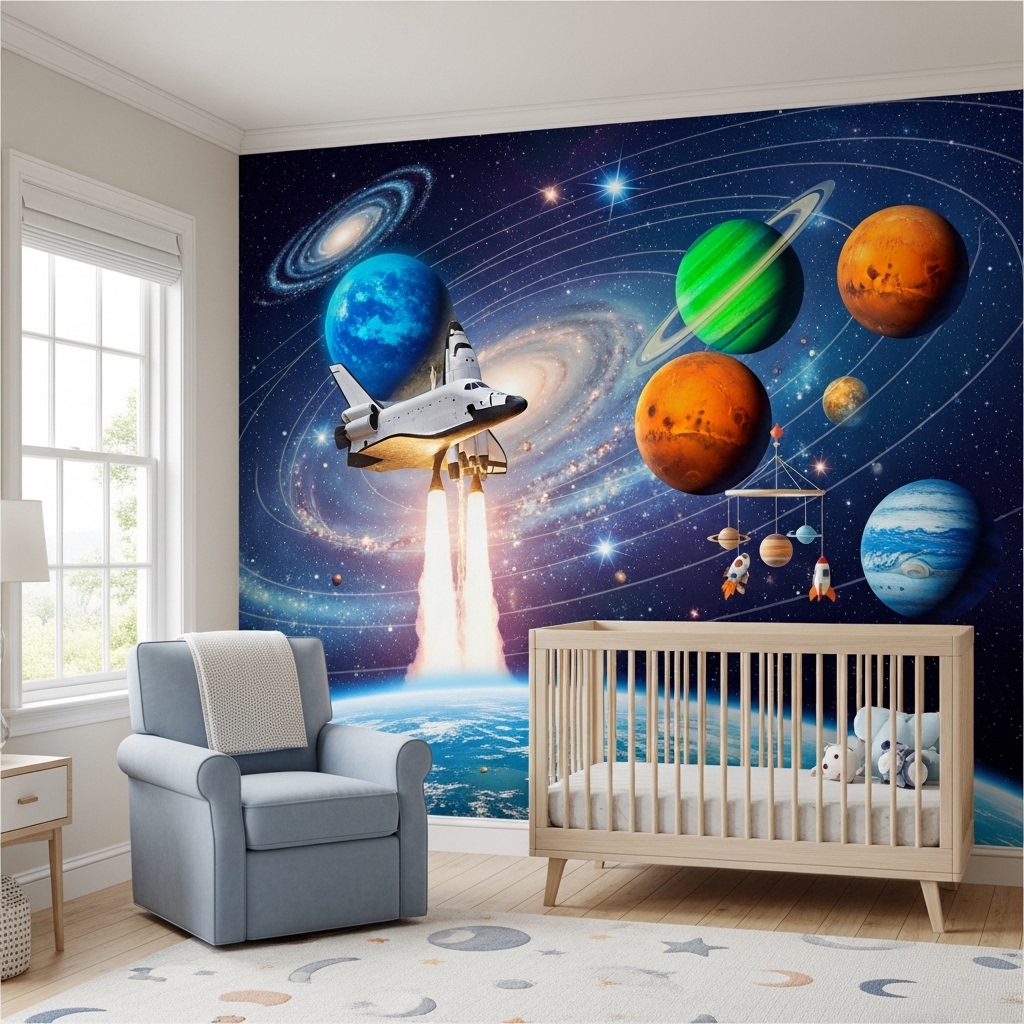
Apply this method when you want to inspire future interest in science, astronomy, and exploration.
Paint a space scene with a shuttle, planets, stars, and an astronaut floating on a tether.
Your baby learns planet names and orders. You point at the moon and say “someday people will walk there.”
Rainbows and animals are lovely. Space exploration inspires bigger thinking about what is possible.
Pro Tip: Paint planets to relative scale. Jupiter much larger than Mercury teaches real astronomy concepts.
Mistake to Avoid: Do not paint your space scene too dark. Use dark navy with bright white stars for contrast.
29. Hang a Collection of Musical Instruments on the Wall
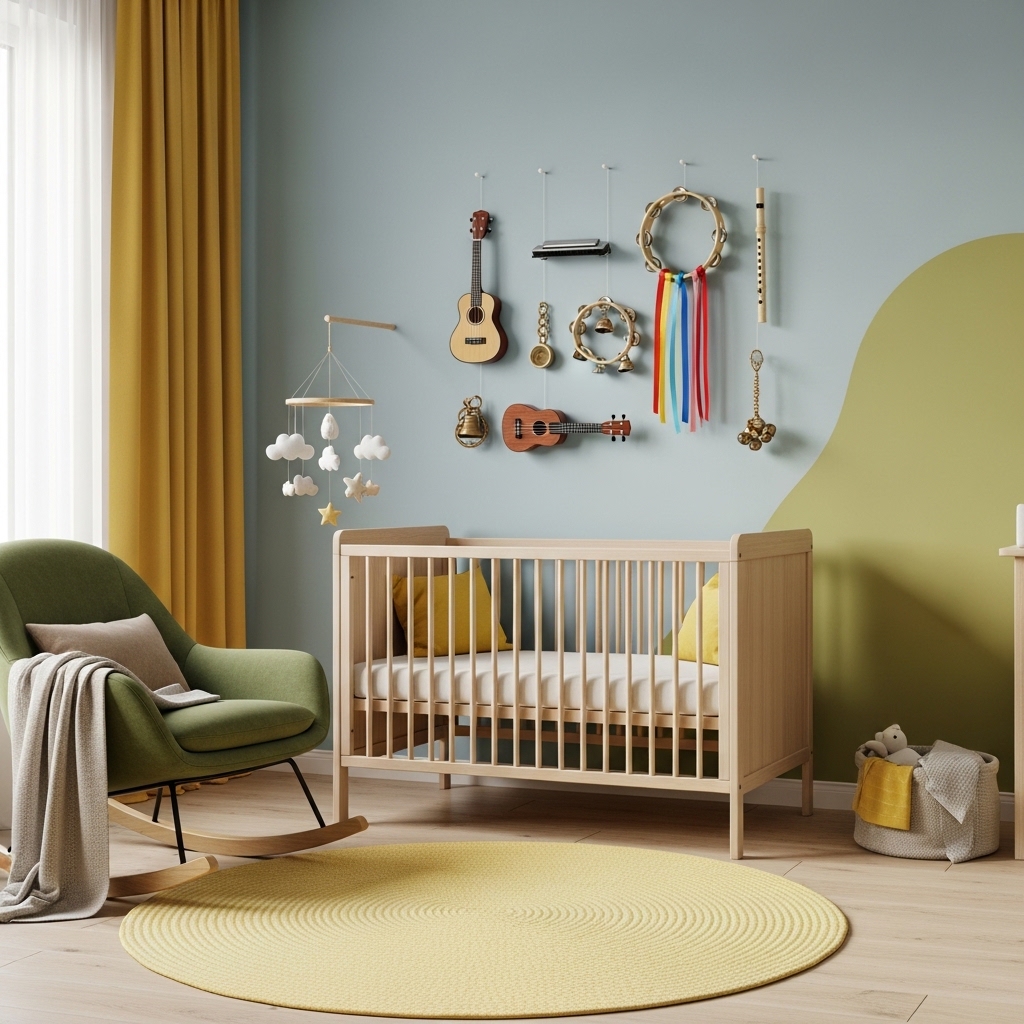
Use this idea when you want to raise a musically inclined child from the earliest months.
Mount small, lightweight instruments on wall hooks. Maracas, tambourines, egg shakers, and wood blocks.
You grab an instrument during fussy moments. Music calms your baby and builds neural auditory pathways.
Instruments hidden in a bin stay out of sight. Instruments on walls invite daily musical play naturally.
Pro Tip: Hang instruments at adult height. You do not want your toddler grabbing tambourines at 3 AM.
Mistake to Avoid: Do not hang instruments with small detachable parts. Beads and bells become choking hazards.
30. Install a Wall-Mounted Activity Gym
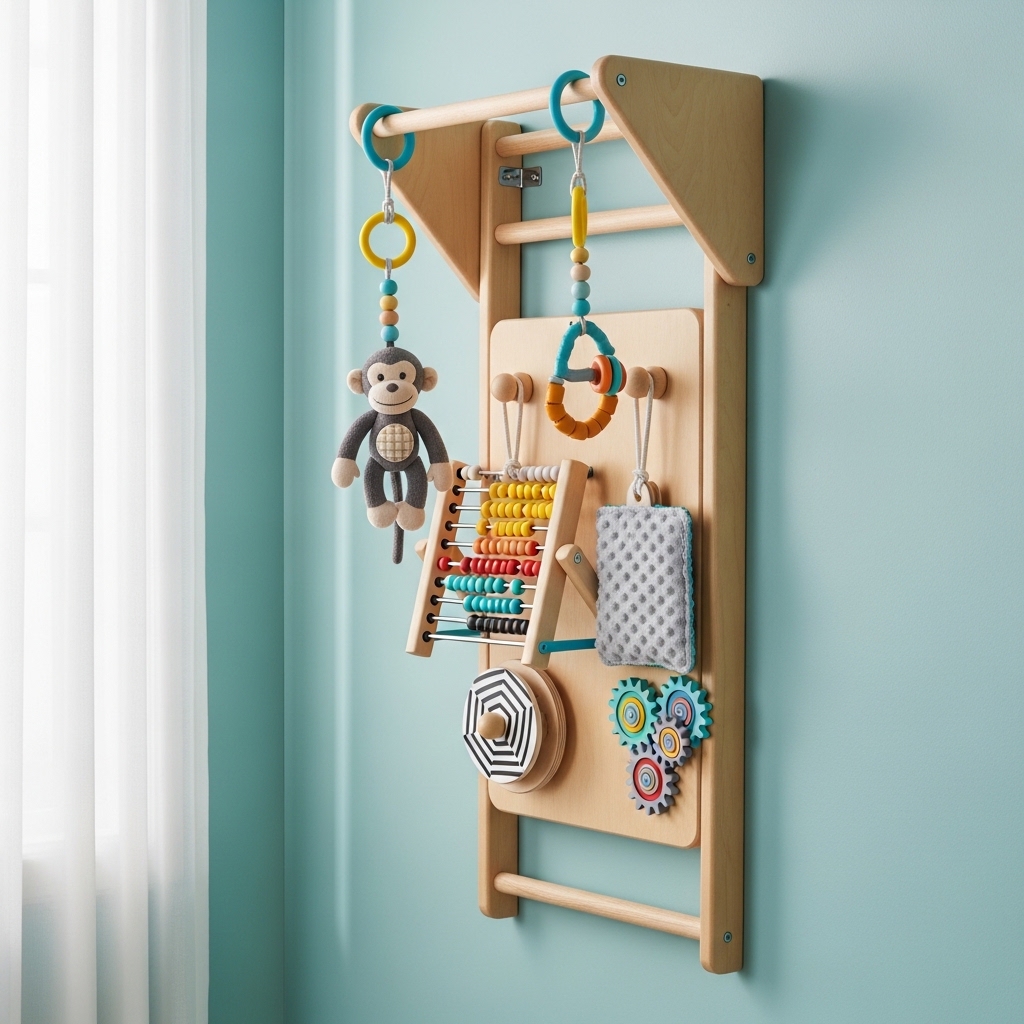
Choose this approach when you want tummy time toys available without floor clutter.
Mount a wall-mounted wooden bar with hanging rings, teethers, and small mirrors at floor level.
Your baby reaches for hanging toys during tummy time. Floor space stays clear for rolling and crawling.
Floor activity gyms take up 9 square feet of floor space. Wall-mounted gyms use zero floor space.
Pro Tip: Choose a bar with interchangeable hanging toys. Swap toys weekly to maintain baby interest.
Mistake to Avoid: Do not mount your activity gym above hard flooring. Use a foam mat underneath for safety.
31. Paint a Hot Air Balloon Scene with Baskets
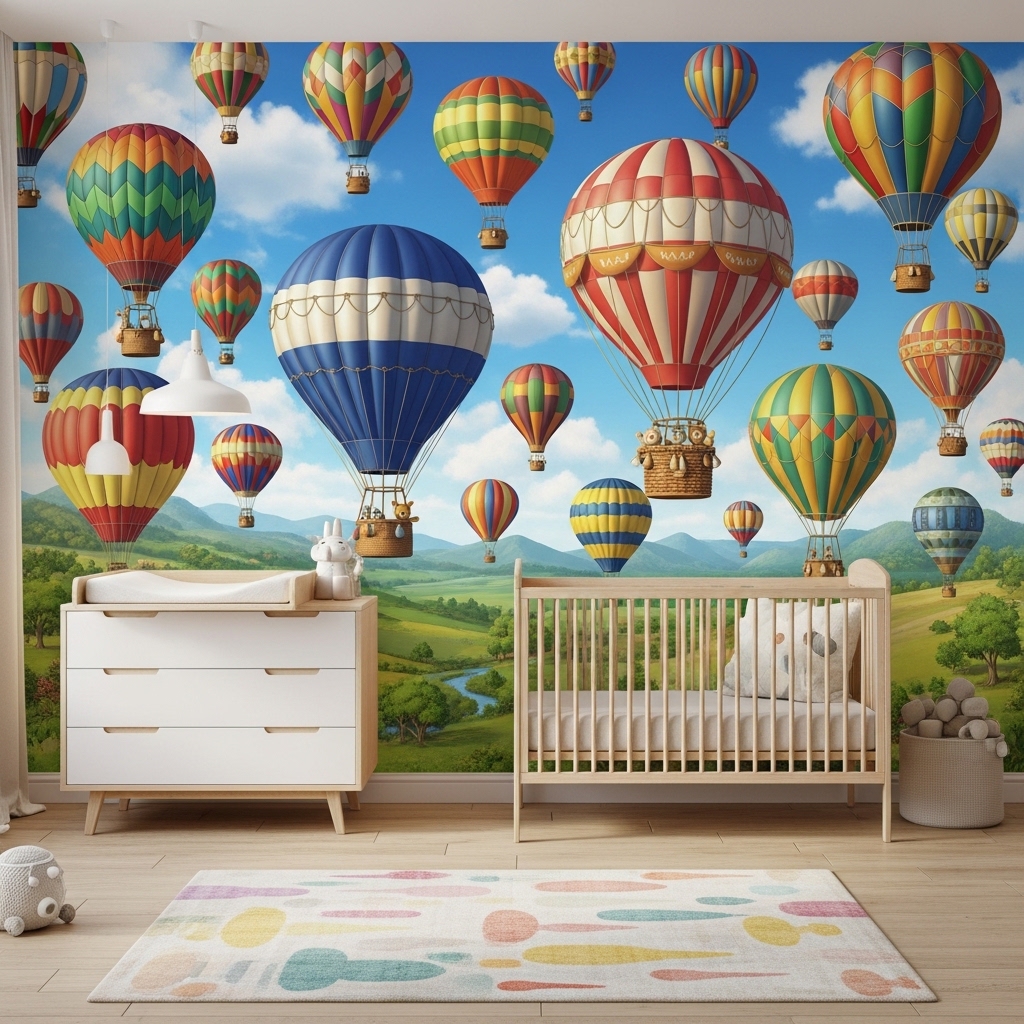
Apply this method when you want a whimsical, adventure-themed nursery without gender-specific colors.
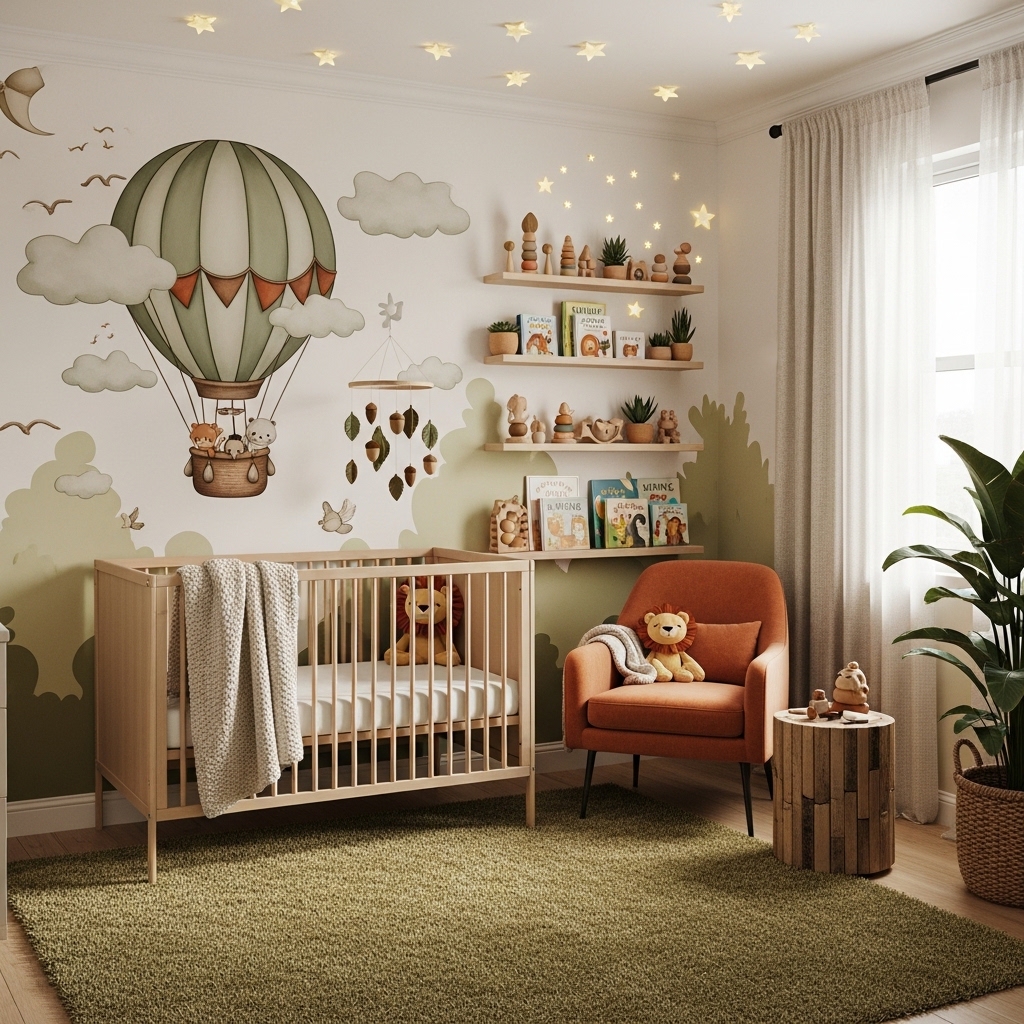
Paint colorful hot air balloons floating across a pale blue sky. Add tiny baskets hanging below each balloon.
Your baby counts balloons. You invent stories about where each balloon travels. Imagination grows daily.
Generic clouds offer no storytelling. Hot air balloons with baskets create characters and narrative possibilities.
Pro Tip: Paint one balloon significantly larger than others to create depth and perspective in your scene.
Mistake to Avoid: Do not paint balloons directly above the crib. Use a different wall for the main scene.
32. Create a Lego Wall for Toddler Building
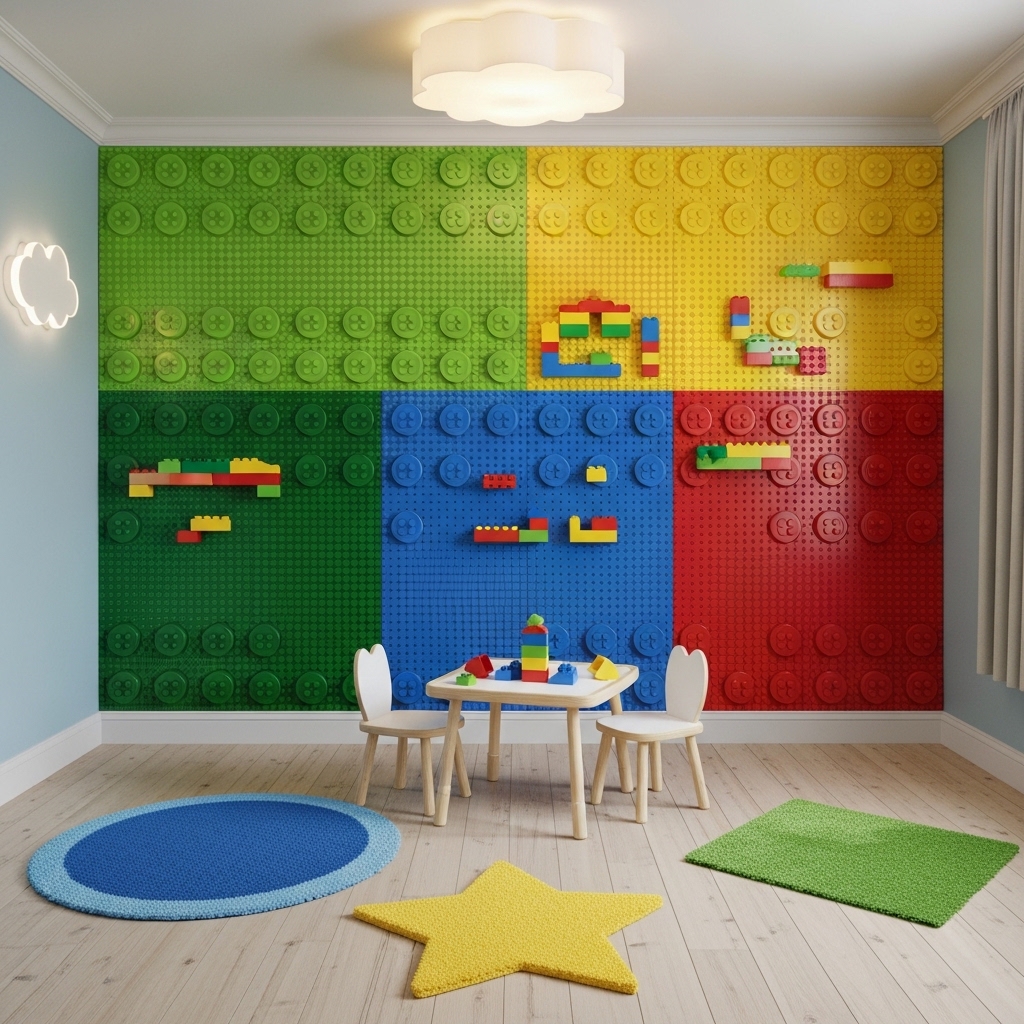
Use this strategy when you want a nursery that transitions to big kid room without redecorating.
Mount large green baseplates on a lower wall section. Your toddler builds Lego creations directly on the wall.
Floor Lego tables take up space and get kicked over. Wall Legos stay put and use zero floor footprint.
Lego storage bins get dumped everywhere. A Lego wall keeps bricks organized and visible for play.
Pro Tip: Install a shallow lip at the bottom of your Lego wall to catch falling bricks during building.
Mistake to Avoid: Do not install a Lego wall until your child is past the mouthing stage around age two.
33. Paint a Farm Scene with Barn and Animals
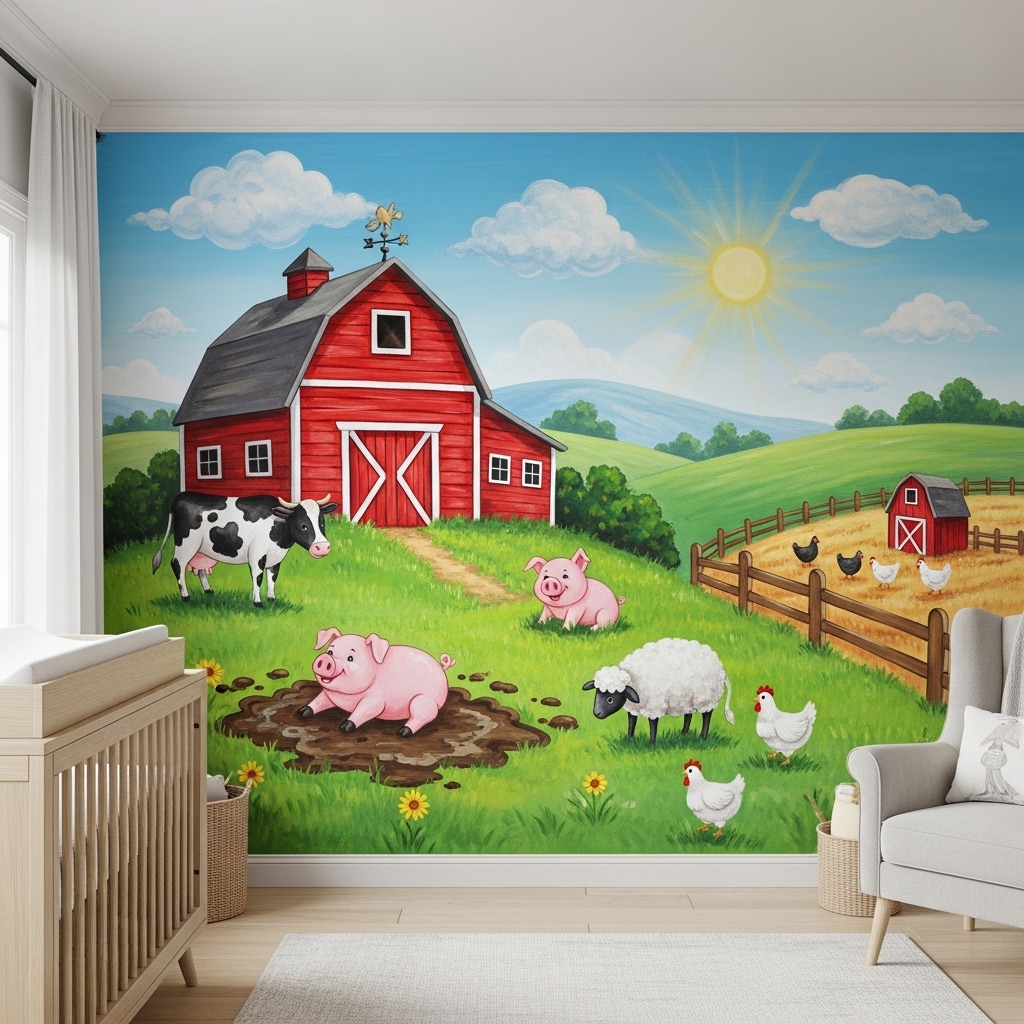
Choose this approach when your baby loves animal sounds and you want to practice language daily.
Paint a red barn, fence, and farm animals across one wall. Cow, horse, pig, sheep, chicken, and duck.
Your baby points at the cow and says “moo.” You name each animal and practice sounds together daily.
Generic animal posters fade and tear. A hand-painted farm scene stays beautiful and becomes a family memory.
Pro Tip: Paint a few animals partially hidden behind the barn. Discovery adds surprise and extended interest.
Mistake to Avoid: Do not paint your farm scene too cartoonish. Realistic animals teach accurate recognition.
34. Install a Wall-Mounted Changing Table That Folds
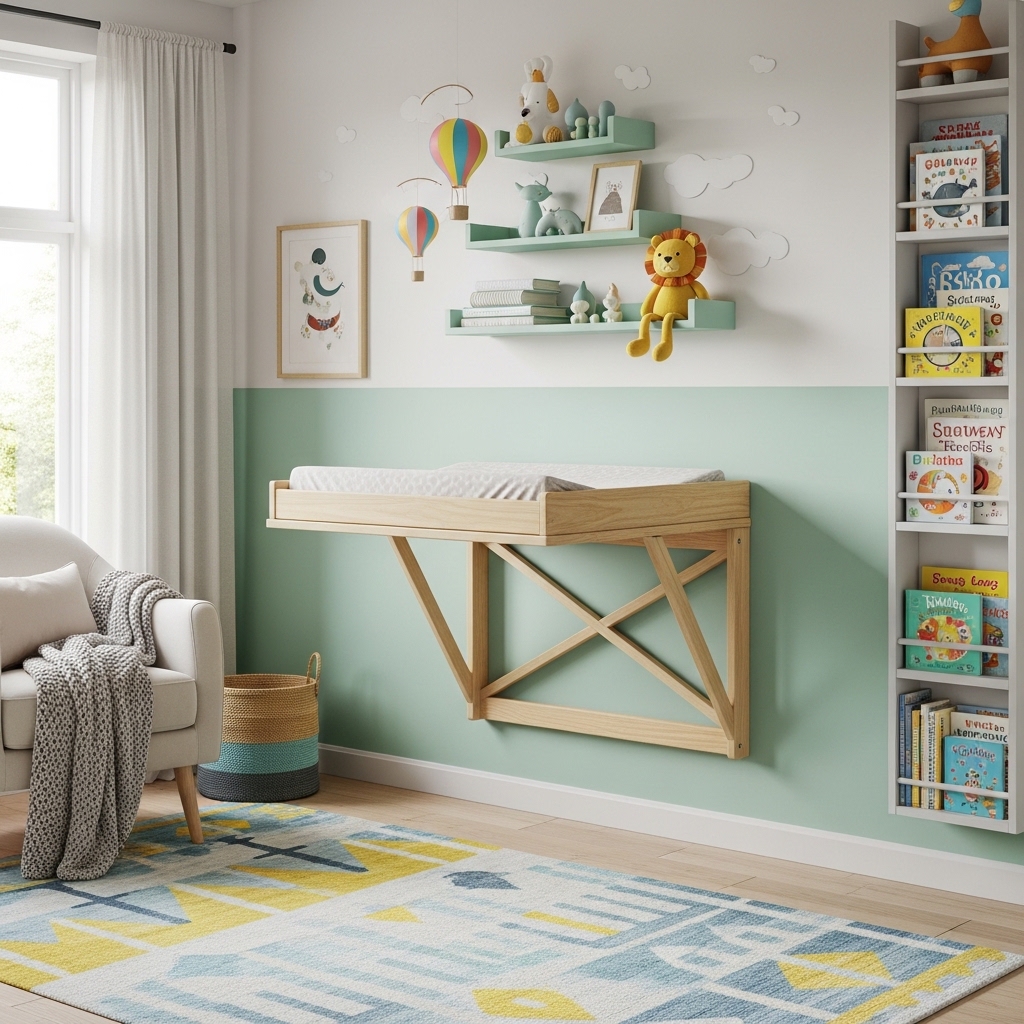
Apply this method when your nursery is very small and every square inch of floor space matters.
Mount a wall-mounted folding changing table with safety straps and a removable changing pad.
The table folds flat against the wall when not in use. Your floor stays open for play and crawling.
Standard changing tables consume 6 square feet of floor space permanently. A folding table gives that space back.
Pro Tip: Install a wall shelf above your folding table for diapers, wipes, and cream within arm’s reach.
Mistake to Avoid: Do not forget to anchor your folding table to wall studs. Babies wiggle and tip unsecured furniture.
35. Paint a Dinosaur World with Volcanoes
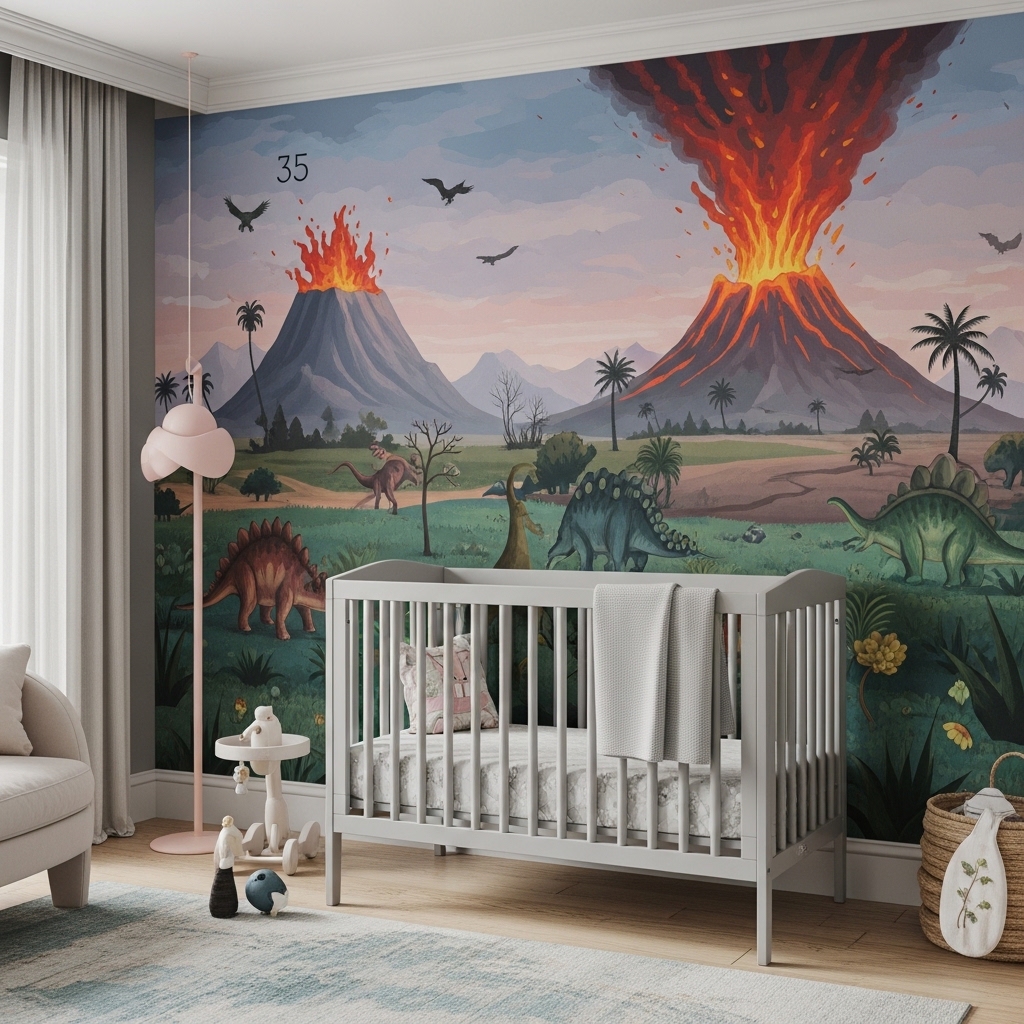
Use this idea when you want a nursery that appeals to dinosaur-loving toddlers and preschoolers.
Paint a prehistoric scene with dinosaurs, volcanoes, ferns, and a pterodactyl flying overhead.
Your baby learns dinosaur names like triceratops and stegosaurus. Vocabulary grows beyond cat and dog.
Jungle animals are common. Dinosaurs feel special and exciting to young children discovering fossils.
Pro Tip: Paint a size guide showing each dinosaur compared to a human. Teaches scale and comparison skills.
Mistake to Avoid: Do not paint scary dinosaurs with sharp teeth. Friendly, smiling dinosaurs work better for nursery age.
36. Create a Gallery Wall of Baby Artwork
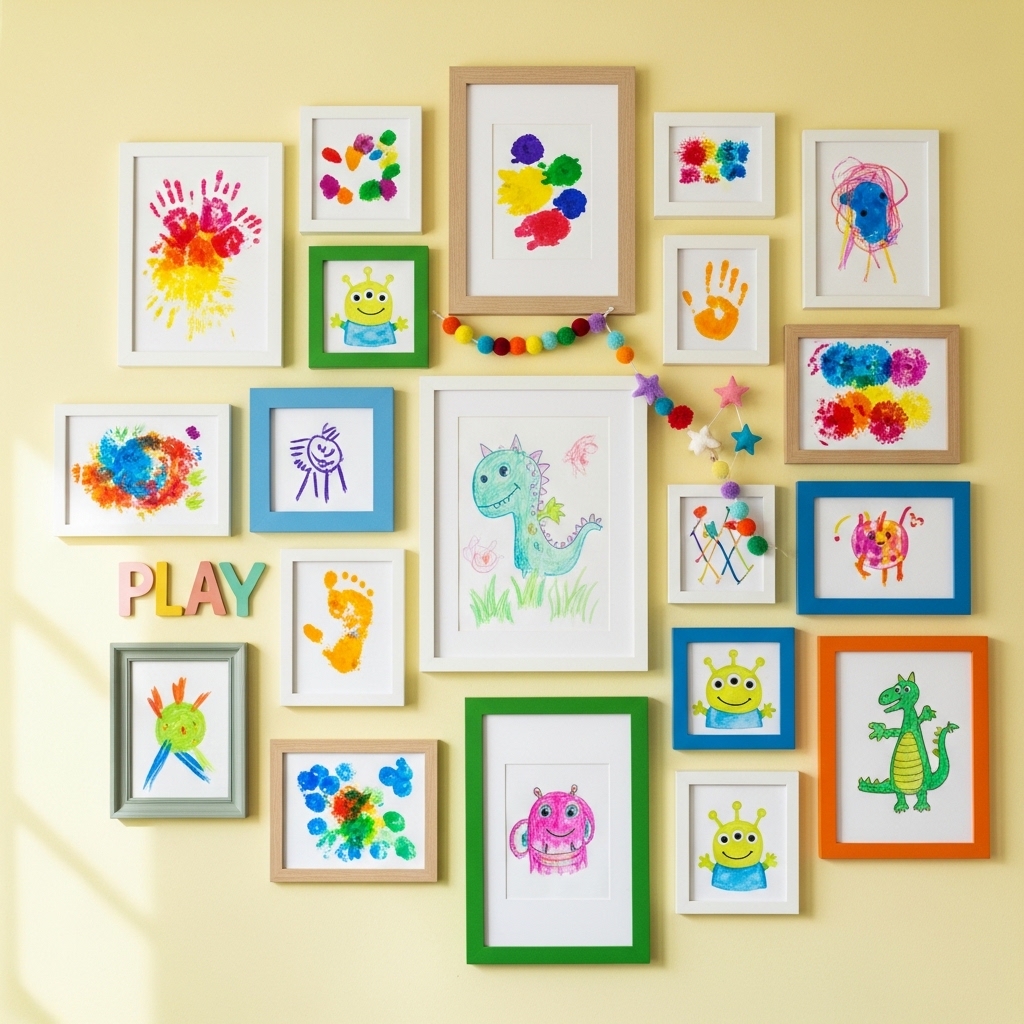
Choose this approach when you want to display and celebrate your baby’s early creations.
Frame your baby’s finger paintings, footprint art, and scribbles in matching frames on one wall.
Your baby sees their work treated like fine art. Confidence and creativity grow through this validation.
Unframed artwork gets crumpled and lost. Framed artwork says “what you make matters” to your child.
Pro Tip: Rotate new artwork in monthly. Store old pieces in a portfolio box for their high school graduation.
Mistake to Avoid: Do not use glass frames for baby artwork. Acrylic frames only near curious toddler hands.
37. Paint a Fairytale Castle with Towers
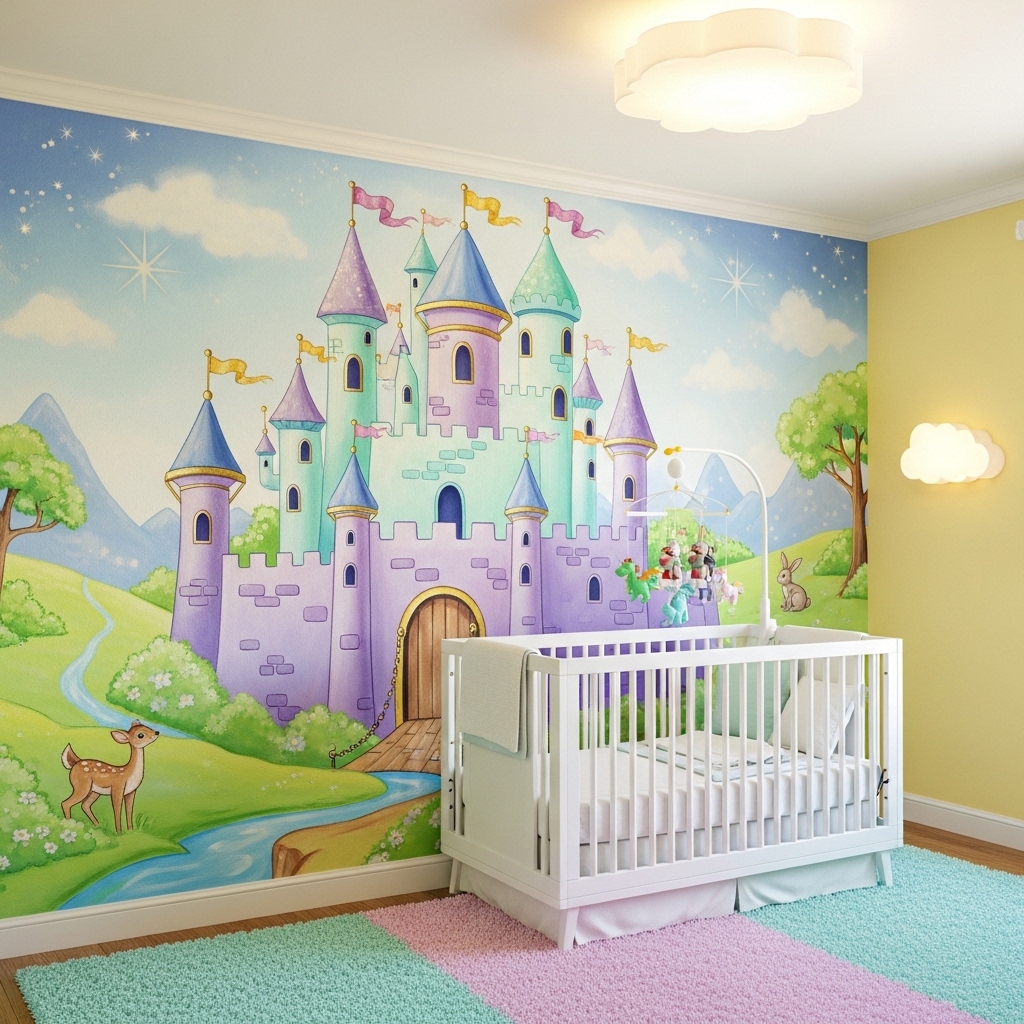
Apply this method when you want a nursery that feels magical and storybook-inspired.
Paint a castle with turrets, flags, drawbridge, and a dragon sleeping nearby on one accent wall.
Your baby imagines stories about who lives in the castle. Fairytale vocabulary develops naturally.
Generic houses offer limited imagination. A castle with towers invites princess, knight, and dragon play.
Pro Tip: Paint a small hidden window in the castle with a tiny face looking out. Discovery adds delight.
Mistake to Avoid: Do not paint your castle scene too dark. Use pastel pinks, purples, and blues for a friendly feel.
38. Install a Rope Swing with Knots
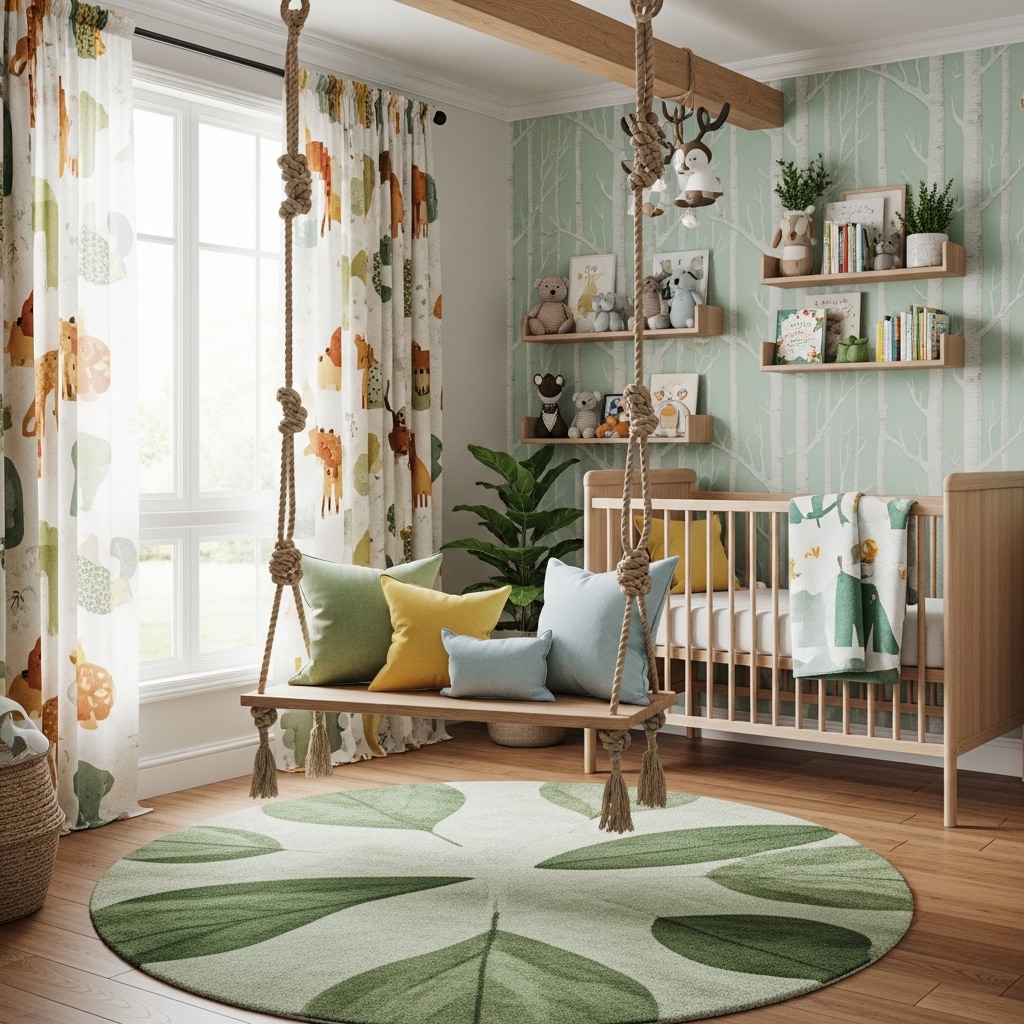
Use this strategy when you have a sturdy ceiling beam and want gross motor development support.
Mount a thick rope swing with knots tied at various heights from a ceiling hook rated for 300 pounds.
Your baby grips knots and swings gently with your support. Grip strength and upper body develop naturally.
Standard baby swings offer passive seating. A rope swing requires active gripping and builds real strength.
Pro Tip: Wrap the rope with soft fabric where your baby’s hands grip to prevent rope burn.
Mistake to Avoid: Do not install a rope swing above hard flooring. Thick foam mats underneath are essential.
39. Paint a Garden Scene with Butterflies and Bees
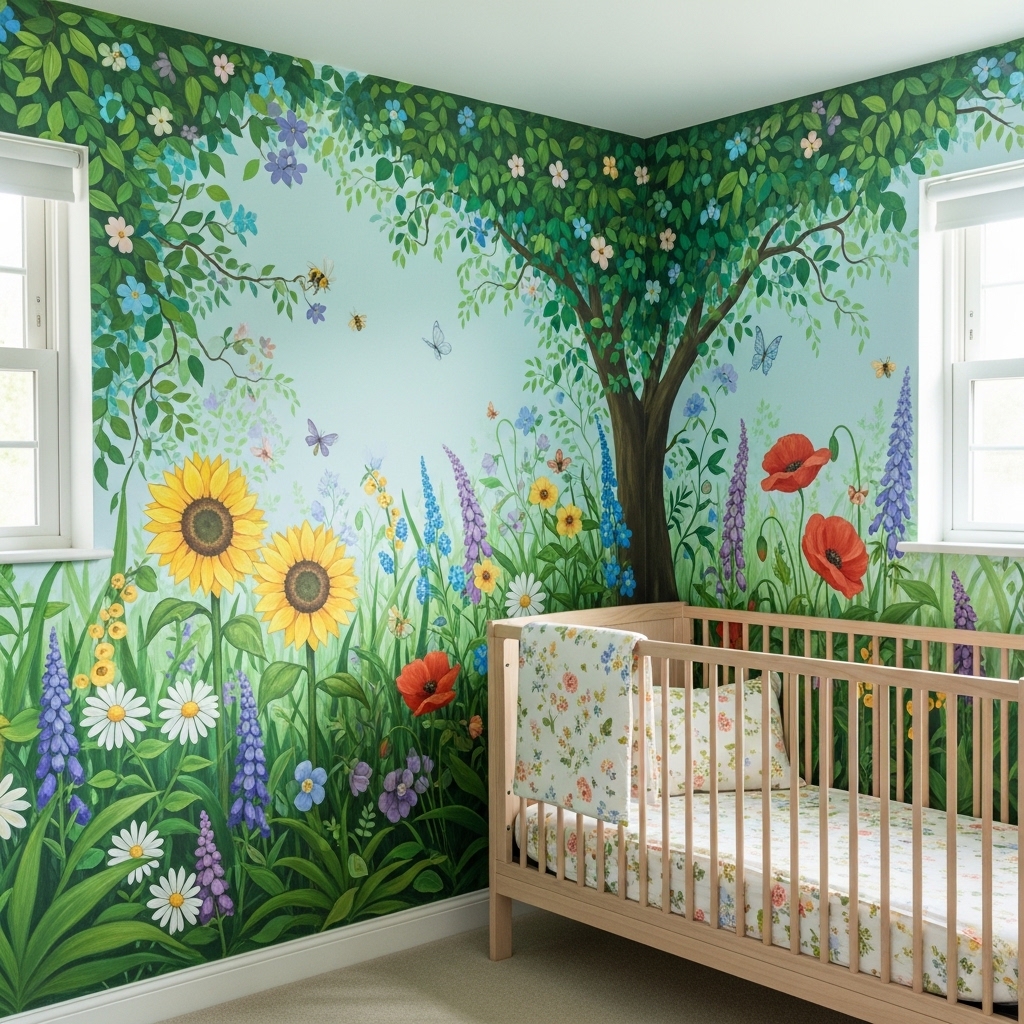
Choose this approach when you want to teach early biology and pollinator awareness naturally.
Paint a flower garden with butterflies, bees, ladybugs, and a hummingbird across one wall.
Your baby learns that bees help flowers grow. Environmental awareness starts in the nursery.
Generic flowers without insects miss a teaching opportunity. A garden scene needs pollinators to be complete.
Pro Tip: Paint a few caterpillars on leaves and butterflies in the air to teach metamorphosis visually.
Mistake to Avoid: Do not paint bees too large. Realistic scale teaches accurate size relationships.
40. Create a Wall of Pegs for Dress-Up Clothes
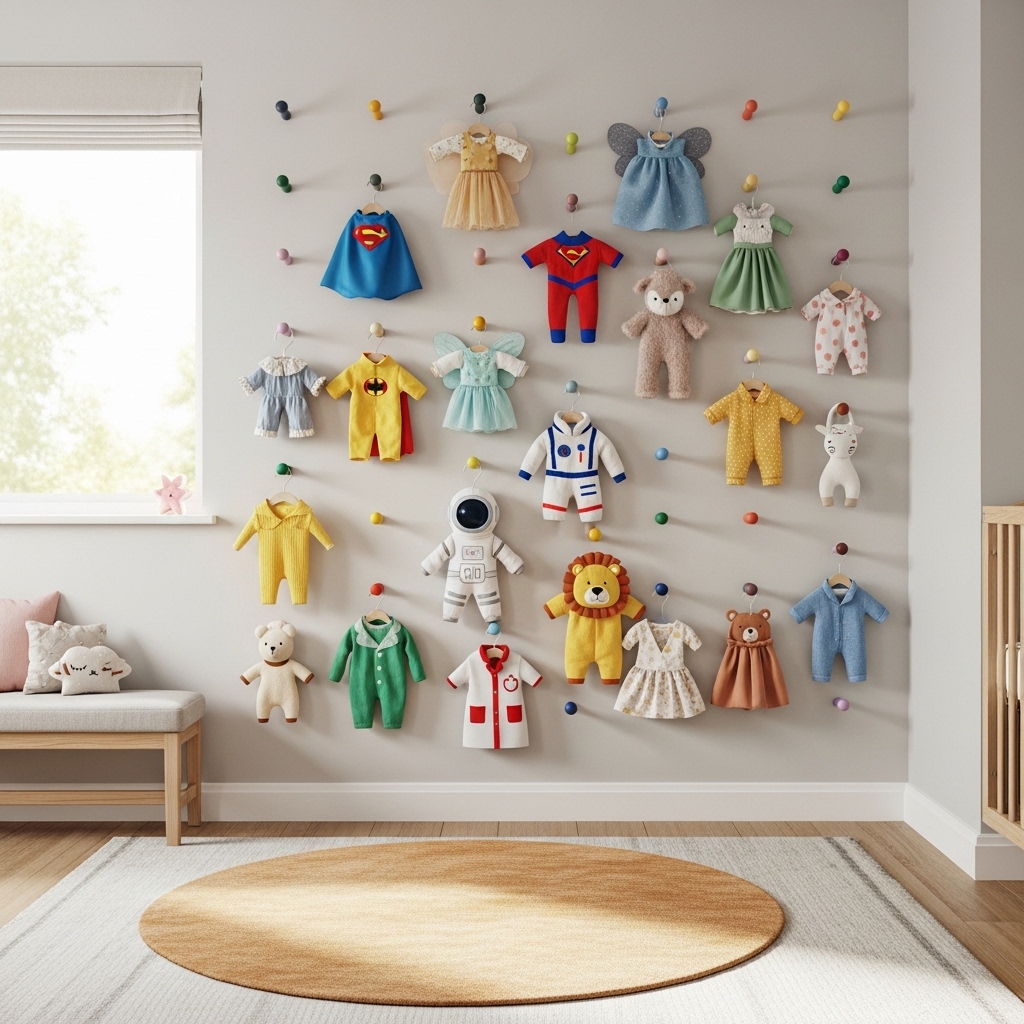
Apply this method when you want to encourage independent dressing and imaginative play.
Mount a row of colorful wooden pegs on a wall at toddler height. Hang dress-up hats, capes, and bags.
Your toddler chooses dress-up items independently. Executive function and decision making develop through play.
Dress-up clothes in a bin stay hidden. Clothes on pegs invite daily costume changes and creativity.
Pro Tip: Paint each peg a different color. Your toddler learns colors while choosing which peg to use.
Mistake to Avoid: Do not hang dress-up items with long strings or ties. Strangulation hazard for young toddlers.
41. Paint a Night Sky with Constellations
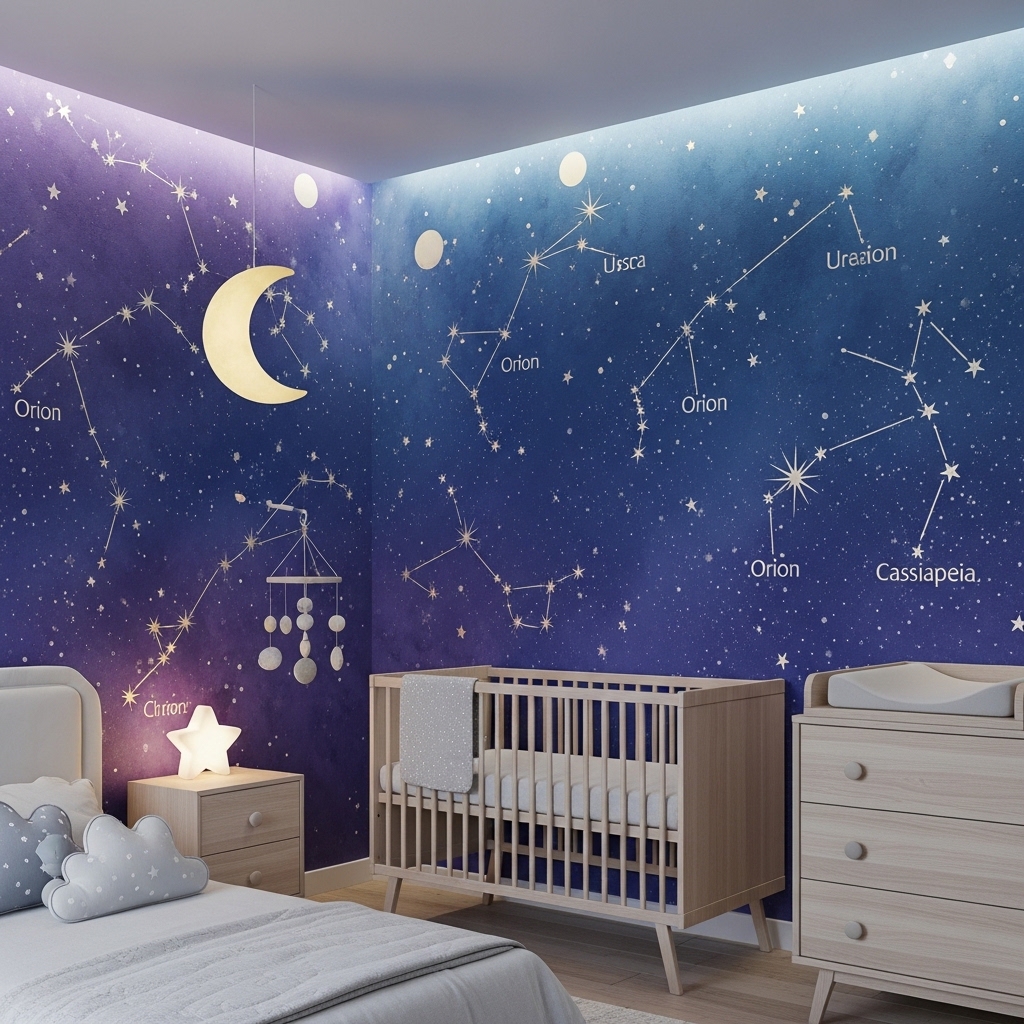
Use this idea when you want to introduce astronomy concepts from the earliest months.
Paint a dark navy ceiling with connected star constellations like Big Dipper, Orion, and Cassiopeia.
You name constellations during bedtime. Your baby falls asleep looking at the same stars as ancient explorers.
Random stars look pretty but teach nothing. Connected constellations tell stories and teach navigation concepts.
Pro Tip: Paint constellation lines in silver or gold so stars connect visibly for easy constellation recognition.
Mistake to Avoid: Do not paint your night sky too dark in a room with small windows. Balance with lighter walls.
42. Install a Wall-Mounted Toy Train Track
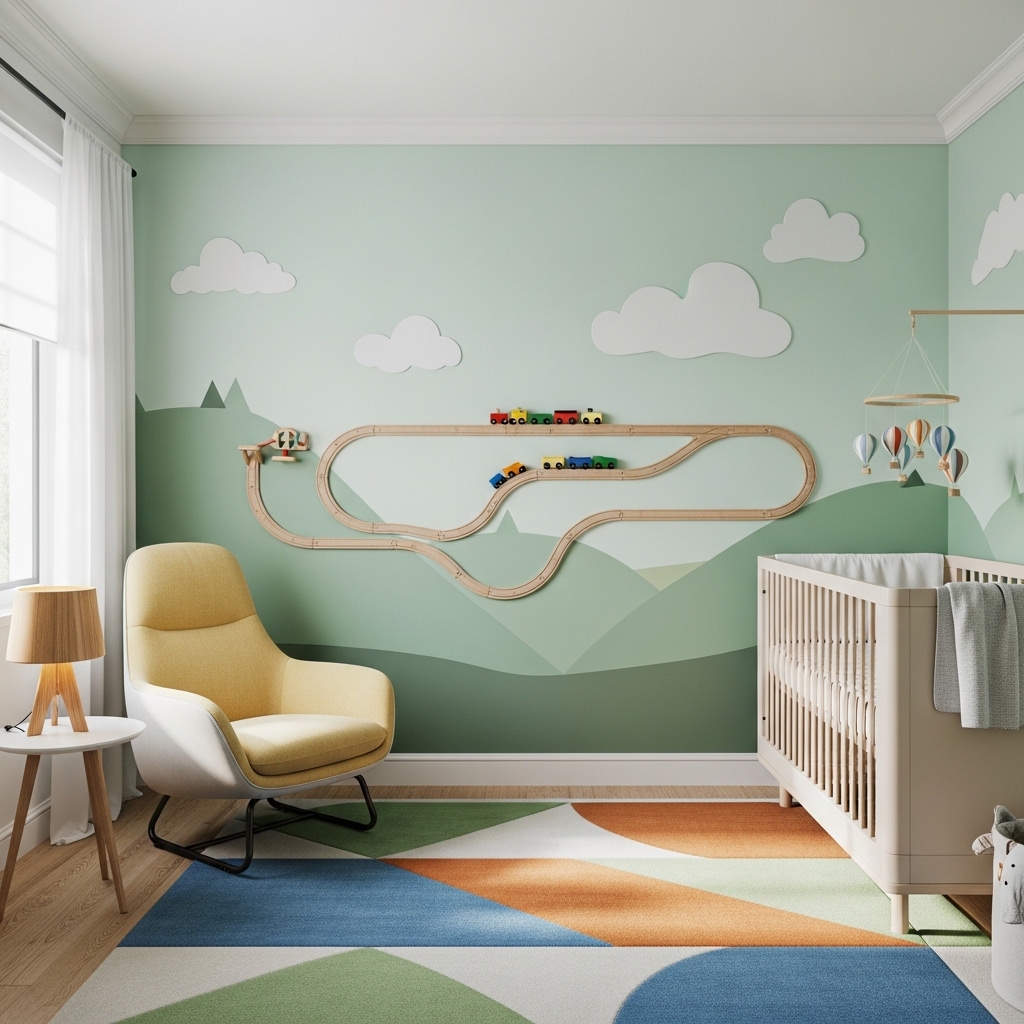
Choose this approach when you want to contain train track mess to the wall instead of the floor.
Mount wooden train track pieces directly to a lower wall section. Add magnetic or suction trains.
Trains run on the wall, not the floor. Your floor stays clear for other toys and walking.
Floor train tracks get stepped on, kicked apart, and scattered everywhere. Wall tracks stay intact permanently.
Pro Tip: Install your wall track at two heights. Lower track for crawling babies, higher track for standing toddlers.
Mistake to Avoid: Do not glue tracks permanently to the wall. Use removable adhesive for track reconfiguration.
43. Paint a Jungle Canopy with Hanging Vines
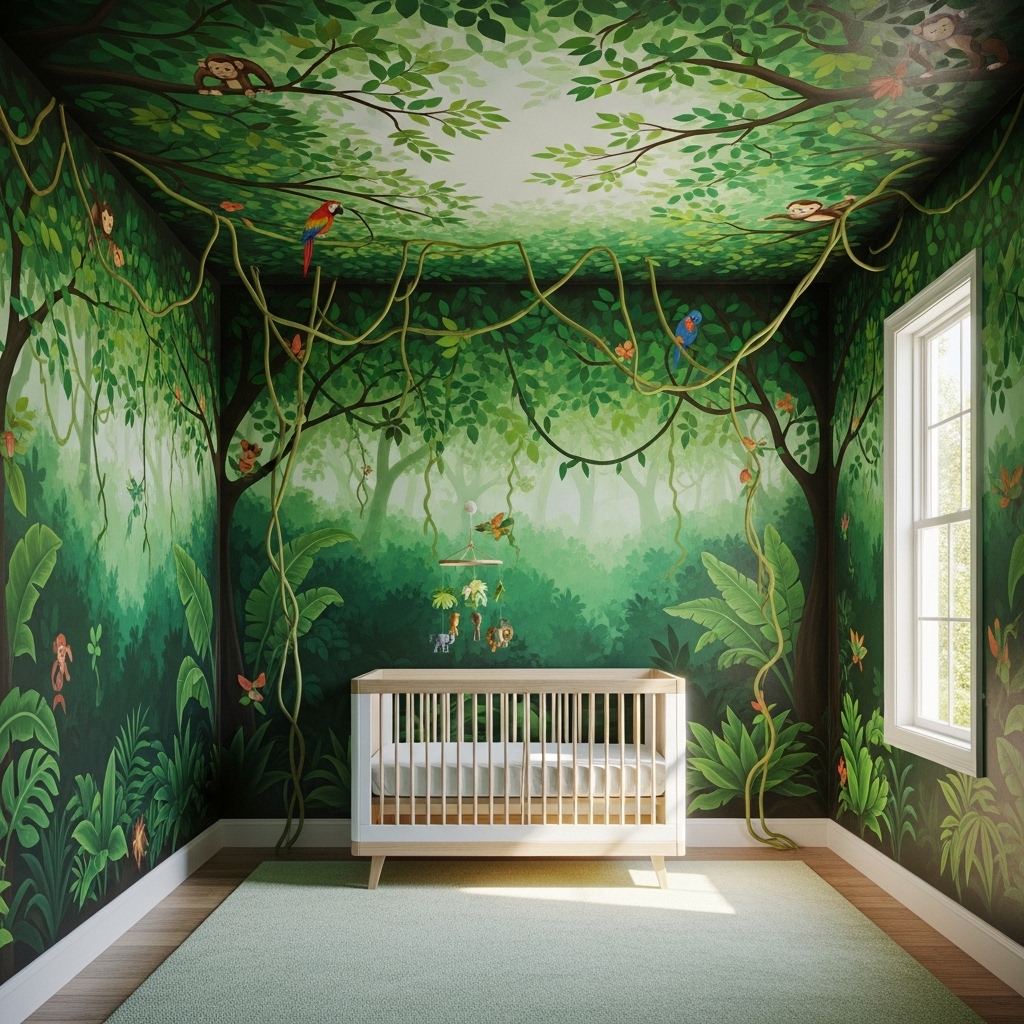
Apply this method when you want a lush, immersive nature theme without dark, scary undertones.
Paint a jungle canopy with large green leaves, hanging vines, monkeys, toucans, and sloths.
Your baby searches for hidden animals among the leaves. Visual scanning and attention develop through play.
A few animal decals lack depth. A full jungle canopy feels immersive and transports your baby to another world.
Pro Tip: Paint a few leaves extending onto adjacent walls. Wrapping the corner makes the jungle feel continuous.
Mistake to Avoid: Do not paint your jungle too dark green. Use bright lime and olive greens for a daytime feel.
44. Create a Sensory Light Panel on the Wall
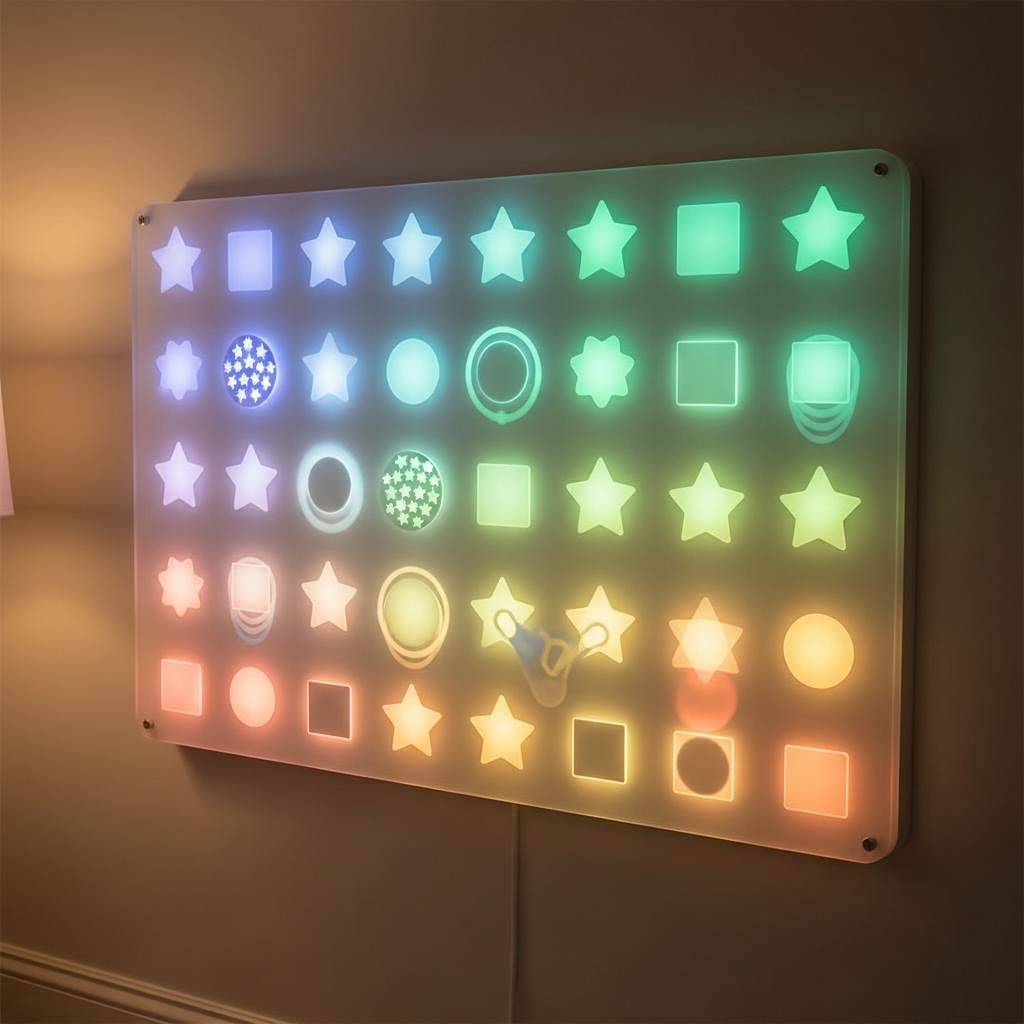
Use this strategy when you want to support visual development and calm fussy babies.
Mount a wall-mounted LED light panel with adjustable brightness and color settings.
Your baby watches color changes during tummy time. Low light calms before sleep. Bright light engages during play.
Tabletop light panels take up floor space and tip over. Wall-mounted panels stay safe and visible.
Pro Tip: Choose a panel with a remote control. You adjust colors without disturbing a settling baby.
Mistake to Avoid: Do not use a panel without a dimmer. Bright lights overstimulate babies before sleep.
45. Paint a Arctic Scene with Polar Bears and Penguins
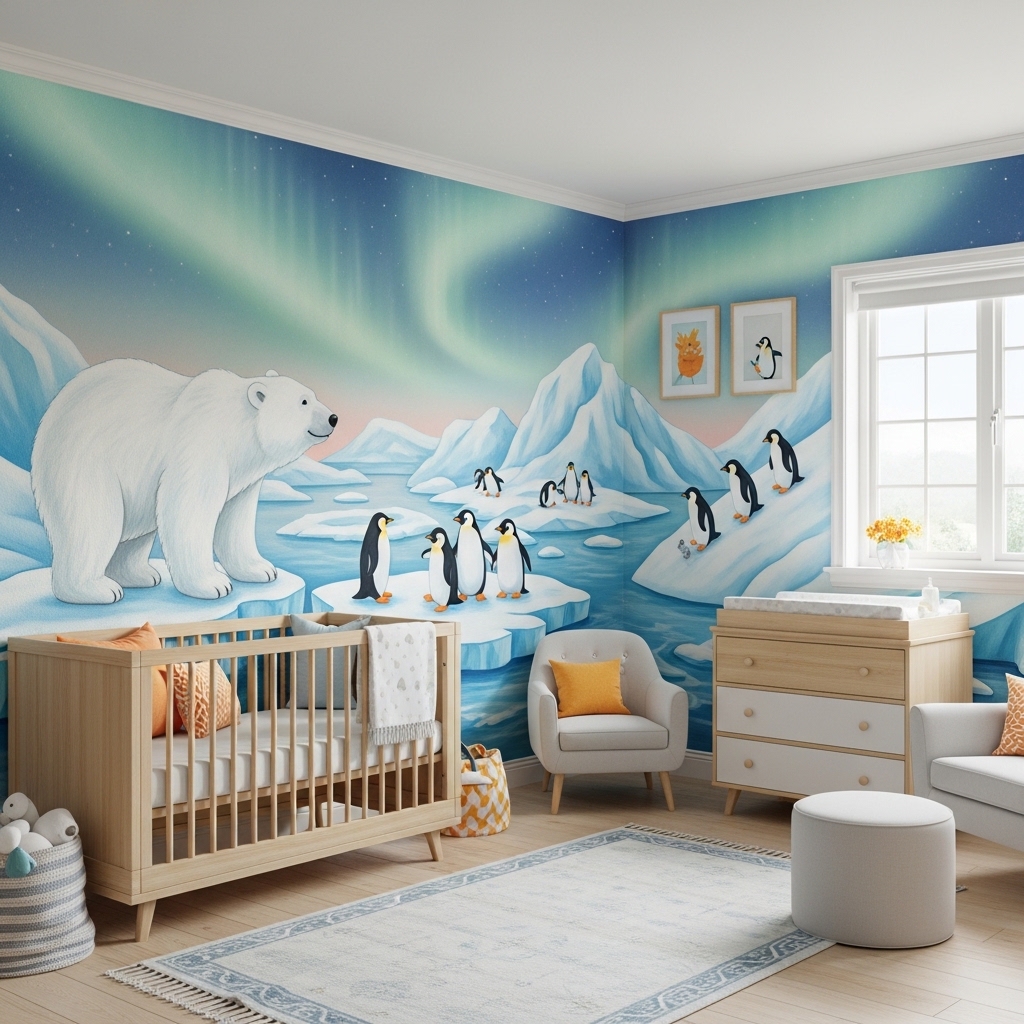
Choose this approach when you want to teach that polar bears and penguins live on opposite poles.
Paint an arctic scene with icebergs, polar bears, seals, penguins, and a walrus on one wall.
Your baby learns that penguins live in the south, polar bears in the north. Geography lesson built into decor.
Mixed arctic and antarctic animals confuse children. Separate them clearly on different parts of your wall.
Pro Tip: Paint a small world map showing where each animal lives. Reinforces geography with visual reference.
Mistake to Avoid: Do not paint your arctic scene all white. Use light blues and grays for icebergs and water.
46. Install a Rock Climbing Board with Small Holds
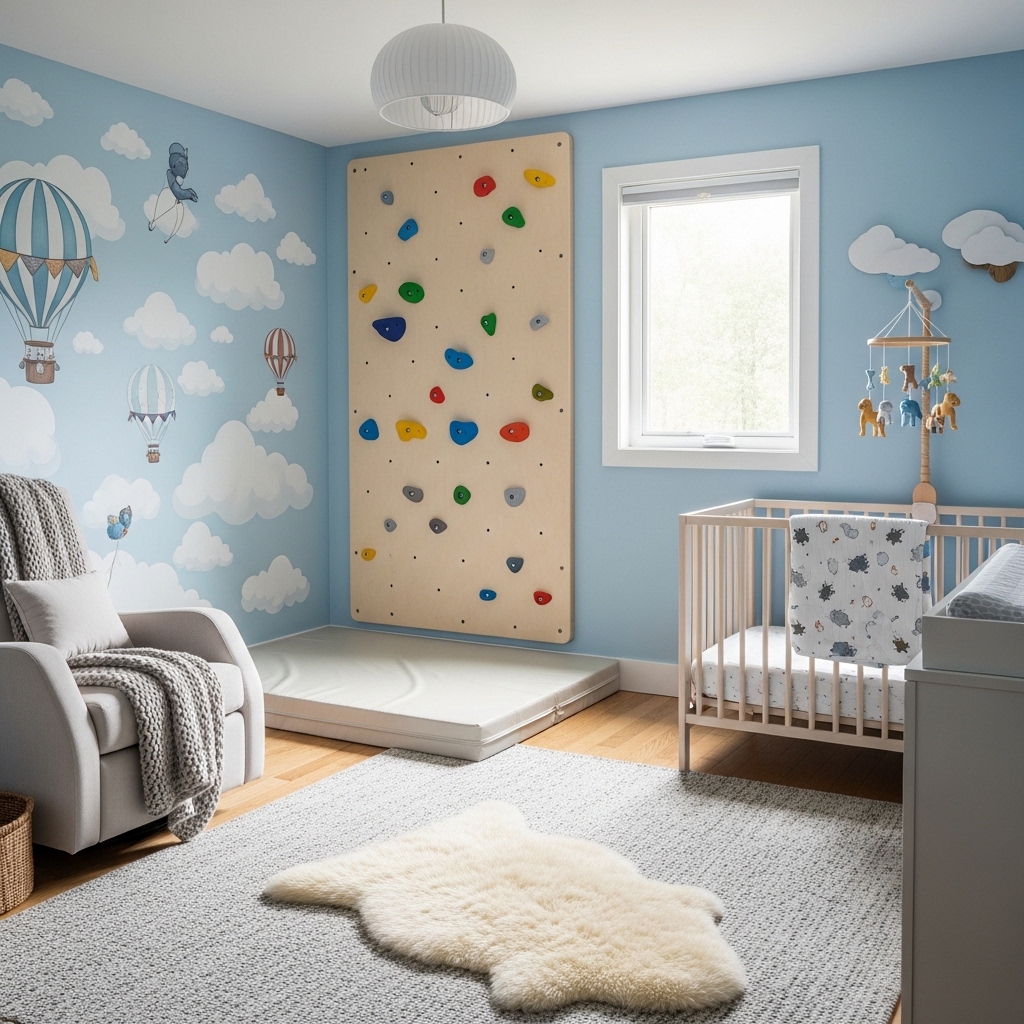
Apply this method when you have a toddler who climbs everything and needs a safe outlet.
Mount a slanted climbing board on a lower wall section. Add small climbing holds spaced for toddler hands.
Your toddler climbs safely on padded flooring. Gross motor skills, strength, and confidence develop rapidly.
Toddlers climb furniture dangerously when no safe climbing outlet exists. A climbing board redirects that energy.
Pro Tip: Install your climbing board at a 20-degree angle. Flat walls are too easy. Steep angles are too hard.
Mistake to Avoid: Do not install climbing holds above hard floors. Thick crash mats underneath are absolutely essential.
47. Paint a Transportation Scene with Cars and Trains
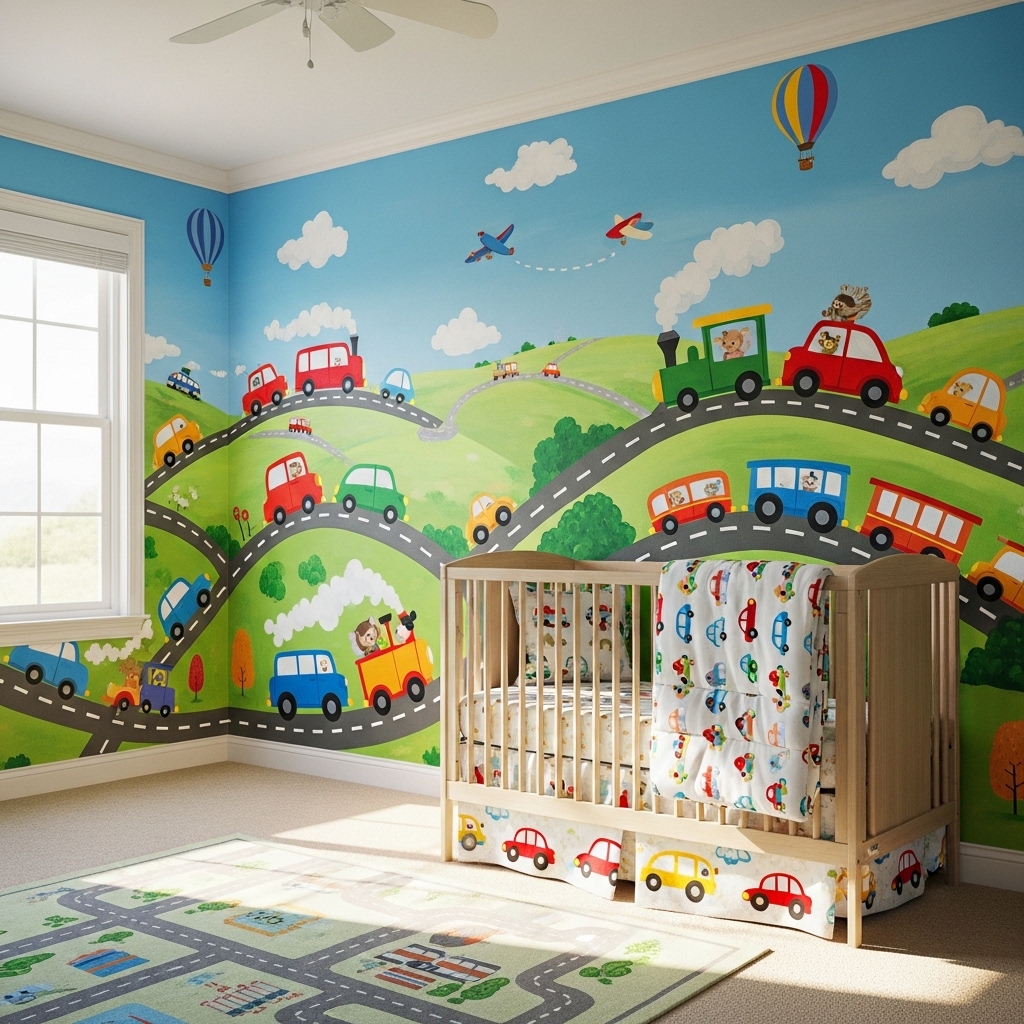
Use this idea when your baby loves watching cars pass by the window during walks.
Paint a transportation scene with cars, trains, airplanes, hot air balloons, and boats on one wall.
Your baby names each vehicle. You make the sounds together. Vocabulary and sound play develop naturally.
Animals are lovely. Vehicles appeal specifically to children who love motion and mechanical things.
Pro Tip: Paint a road winding across the wall with small cars driving on it. Adds movement and direction.
Mistake to Avoid: Do not paint emergency vehicles only. Fire trucks and ambulances can scare sensitive children.
48. Create a Wall of Cardboard Box Creations
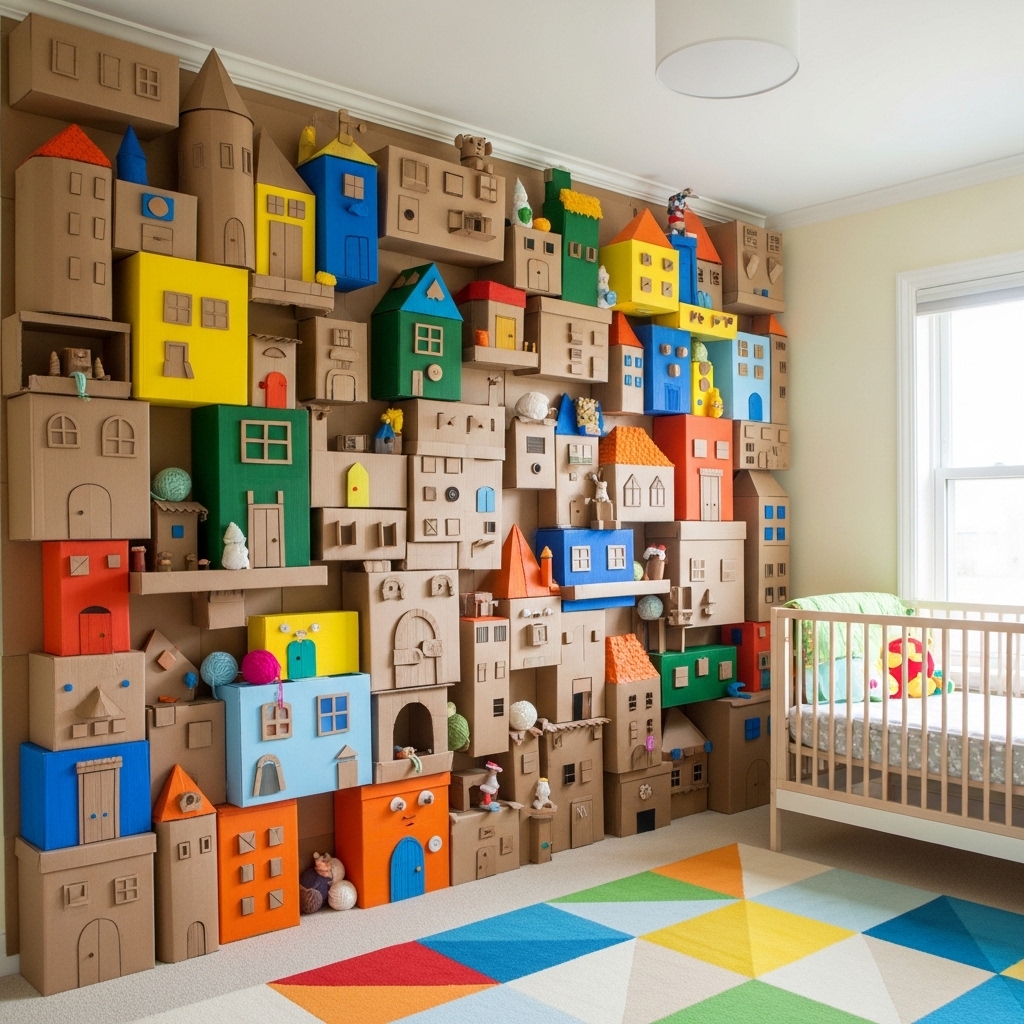
Choose this approach when you want zero-waste, budget-friendly decor that changes with your child.
Save cardboard boxes of all sizes. Paint them and attach to the wall as 3D houses, robots, or animals.
Your toddler helps paint boxes. The wall changes constantly as you add new creations together.
Store-bought decor stays static and boring. Cardboard creations evolve with your child’s interests weekly.
Pro Tip: Use removable adhesive putty to attach boxes. You rearrange and add new boxes without wall damage.
Mistake to Avoid: Do not leave box flaps accessible. Toddlers pull flaps off and put small cardboard pieces in mouths.
49. Paint a Unicorn and Rainbow Scene
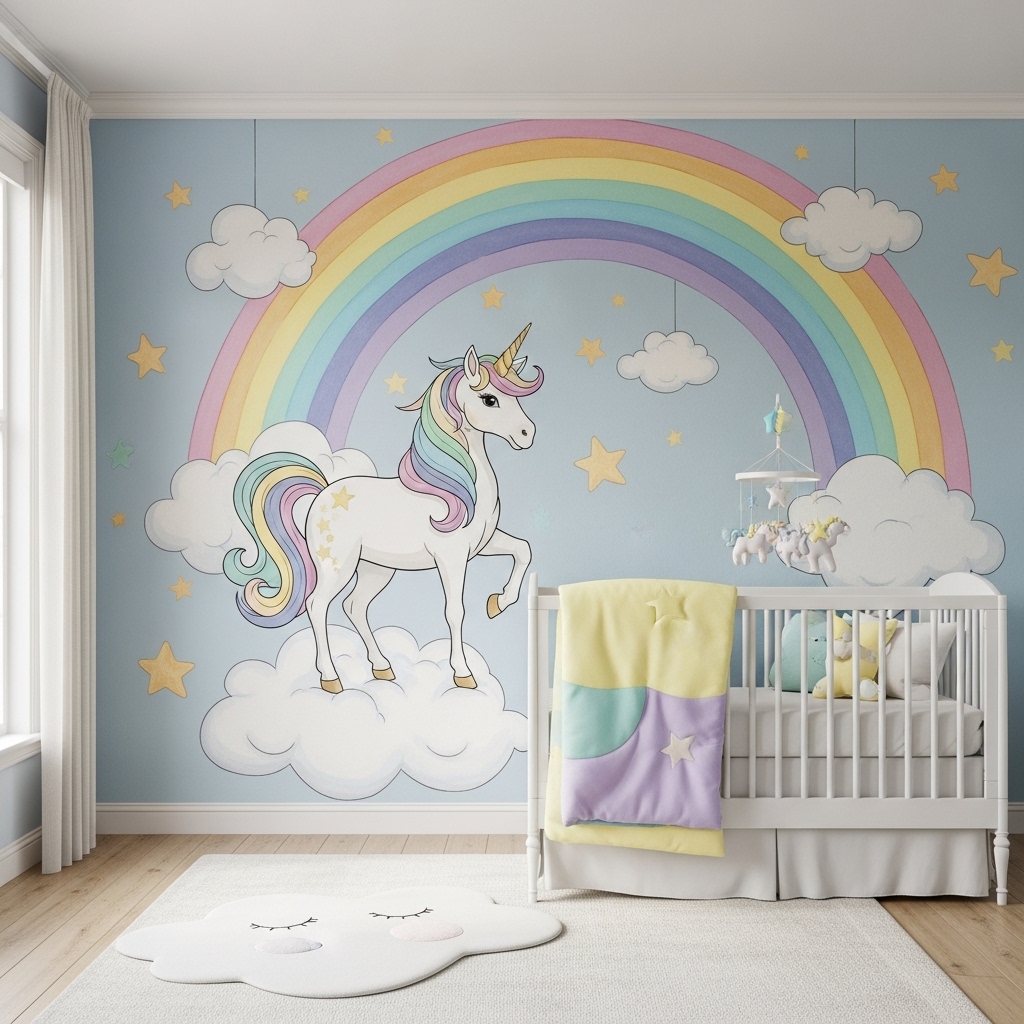
Apply this method when your child requests magical creatures and you want a colorful, joyful wall.
Paint a unicorn with a rainbow mane, rainbow arching across the wall, and sparkles throughout.
Your baby points at rainbow colors. You name each color. Color recognition develops through daily viewing.
Generic unicorn decals peel and fade. A hand-painted unicorn becomes a treasured feature of childhood memories.
Pro Tip: Paint your unicorn with washable paint. Toddler requests for design changes happen often.
Mistake to Avoid: Do not paint your unicorn with a sad or scary expression. Friendly, smiling unicorns only.
50. Install a Wall-Mounted Basketball Hoop at Low Height
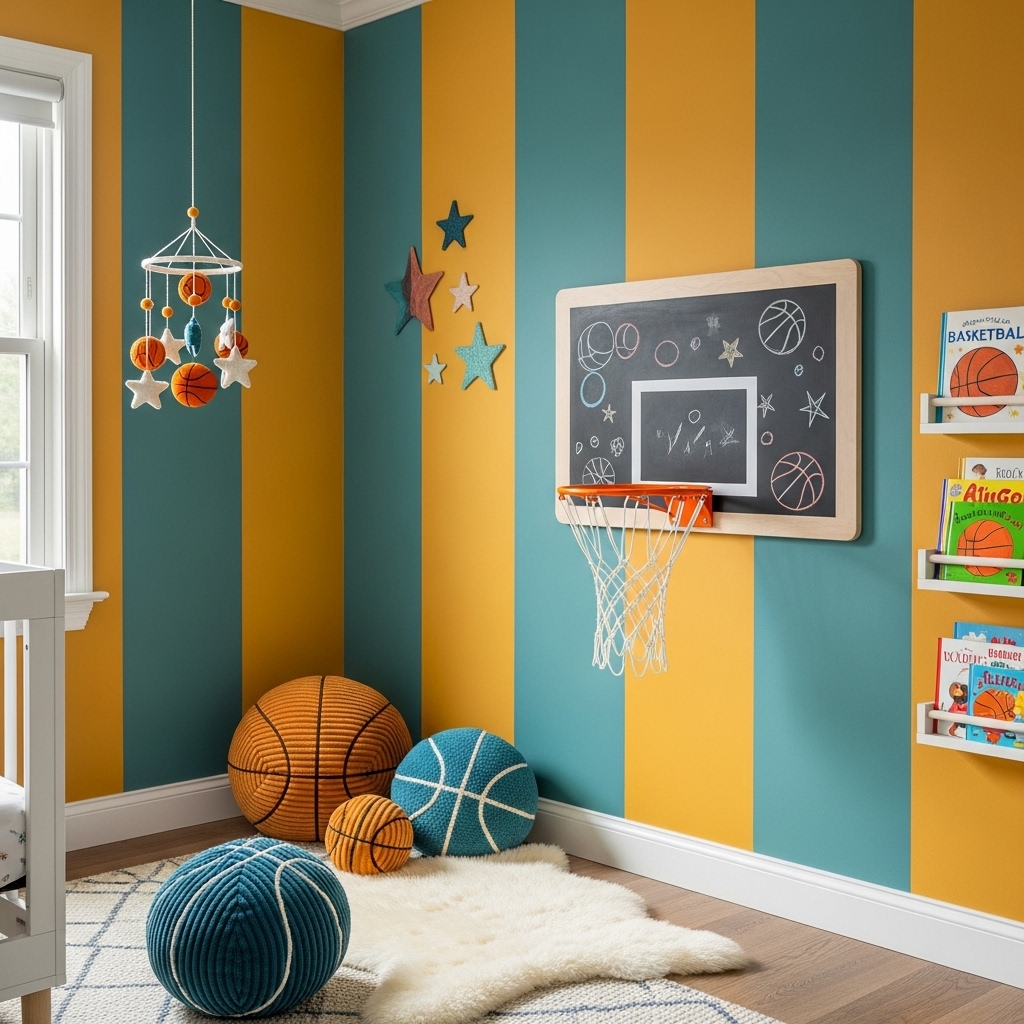
Use this strategy when you want to develop hand-eye coordination from the earliest walking months.
Mount an adjustable basketball hoop on the wall at 24 inches high. Use soft foam balls only.
Your toddler practices throwing at a low hoop. Hand-eye coordination, aiming, and gross motor skills develop.
Ball throwing indoors breaks things without a hoop. A hoop contains the activity and gives a clear target.
Pro Tip: Place a foam play mat underneath your hoop to catch missed shots and protect your floor.
Mistake to Avoid: Do not use real basketballs indoors. Soft foam balls only for nursery hoop play.
51. Paint a Superhero City Skyline
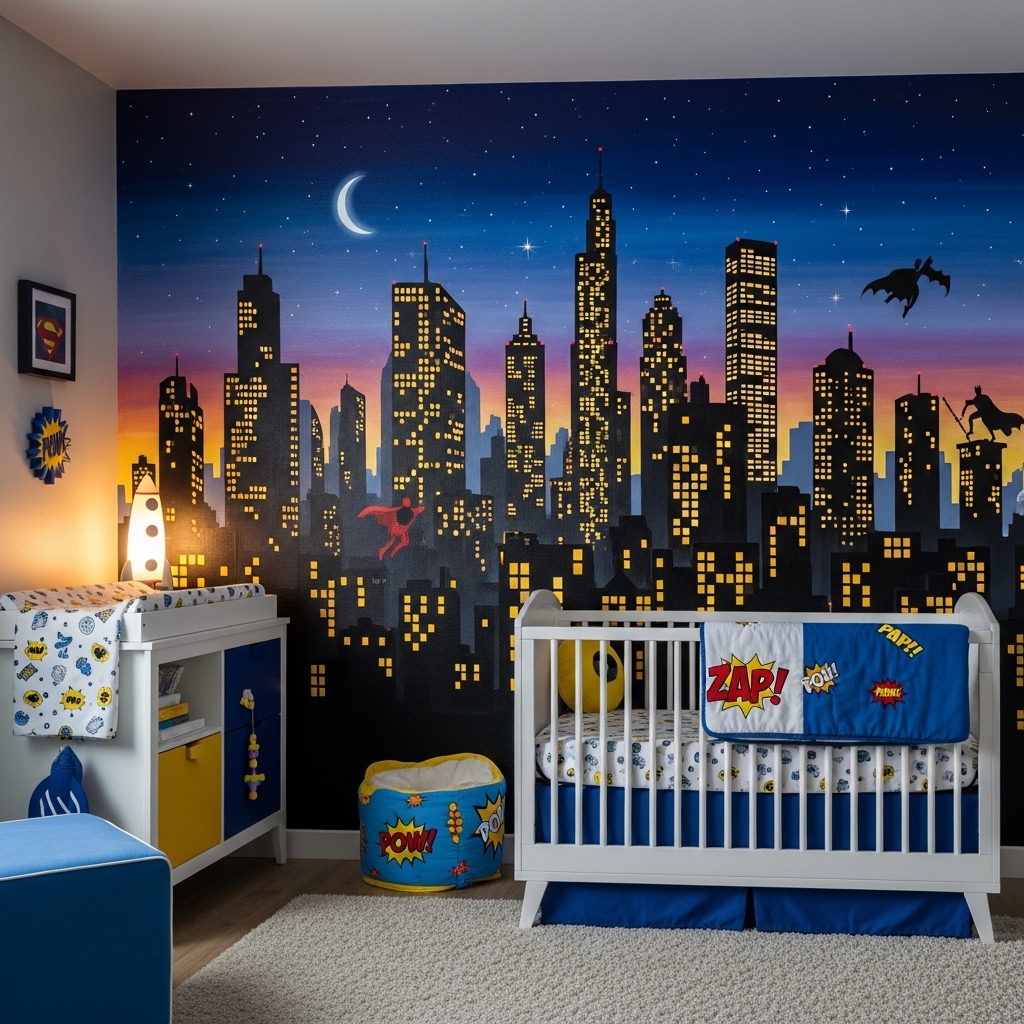
Choose this approach when you want to inspire heroism, courage, and imaginative rescue play.
Paint a city skyline with skyscrapers, bridges, and a moon. Leave space for a superhero flying above.
Your baby names superheroes. You invent rescue stories. Narrative language and imagination develop through play.
Plain walls offer no play invitation. A superhero skyline says “adventures happen here” to your child.
Pro Tip: Paint a small hidden villain peeking from behind a building. Adds conflict and storytelling potential.
Mistake to Avoid: Do not paint scary villains with weapons. Friendly, silly villains work better for nursery age.
52. Create a Wall of Fabric Scraps for Texture Exploration
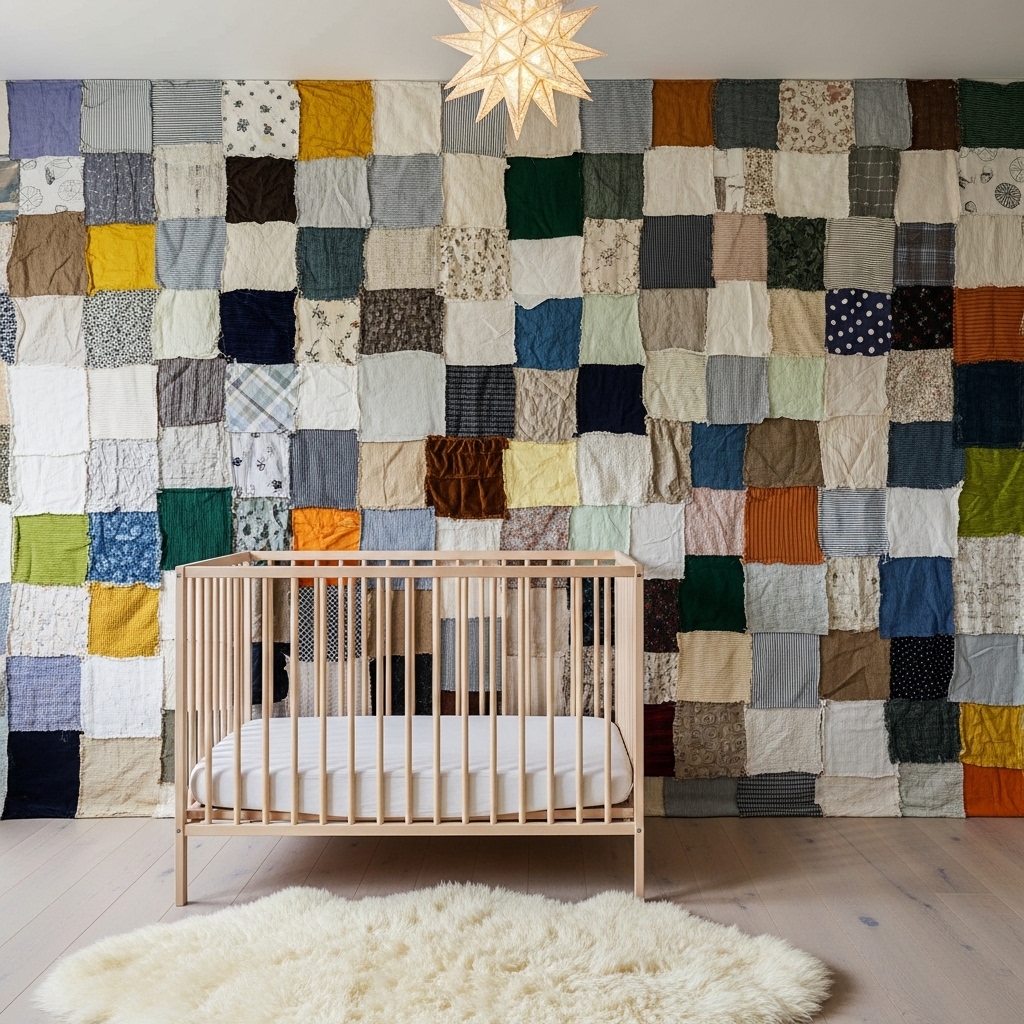
Apply this method when you want to support sensory development without permanent paint commitment.
Stretch different fabric textures across canvas frames. Velvet, burlap, silk, wool, corduroy, and fleece.
Your baby touches each fabric during floor time. Tactile vocabulary develops as you name each texture.
Paint offers visual input only. Fabric frames offer tactile, visual, and auditory input when crinkled.
Pro Tip: Attach a small bell or crinkle paper behind one fabric for surprise sound discovery.
Mistake to Avoid: Do not use fabrics with loose threads or beads. Babies pull them off and choke.
53. Paint a Beehive and Honeycomb Wall
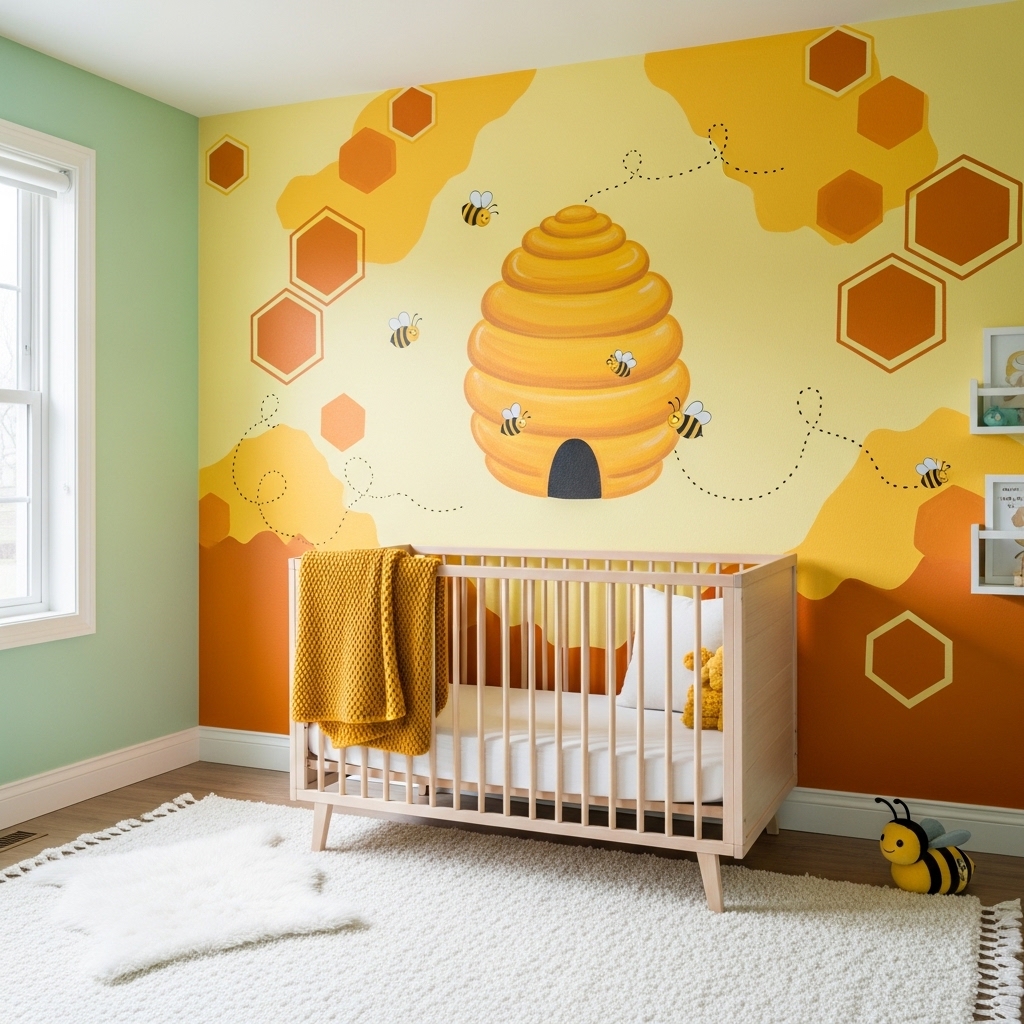
Use this idea when you want to teach teamwork, pollination, and environmental concepts naturally.
Paint a large beehive with hexagonal honeycomb cells. Add fuzzy bees flying in and out.
Your baby learns that bees work together. Early social-emotional learning about teamwork and community develops.
Random flowers without bees miss a teaching moment. A beehive wall teaches the full pollination story.
Pro Tip: Paint each honeycomb cell a slightly different golden shade for depth and visual interest.
Mistake to Avoid: Do not paint bees too realistically. Friendly cartoon bees are less frightening for young children.
54. Install a Wall-Mounted Whiteboard for Daily Drawing
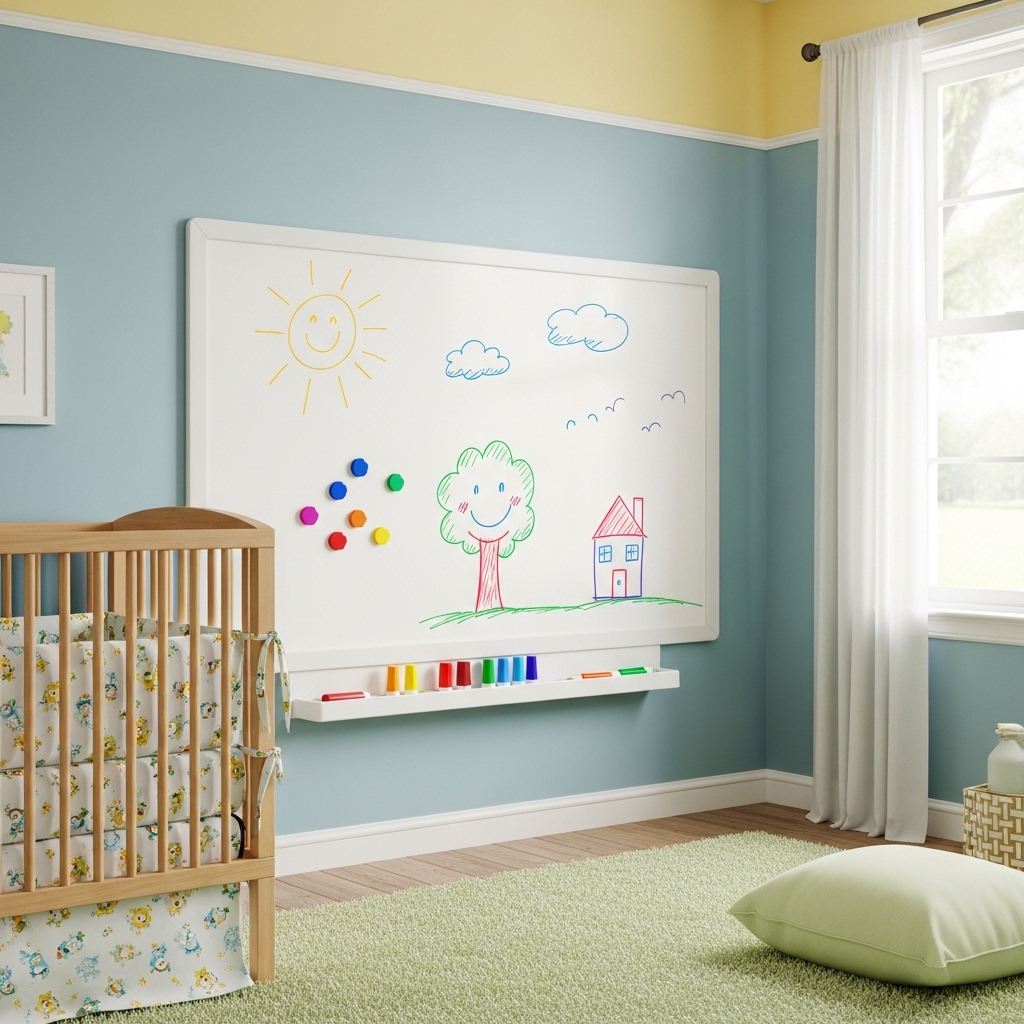
Choose this approach when you want to contain drawing mess to one surface instead of all walls.
Mount a large whiteboard on a wall at toddler height. Provide washable dry erase markers only.
Your toddler draws, erases, and draws again endlessly. Creativity and fine motor skills develop daily.
Paper gets used once and thrown away. A whiteboard offers infinite drawing without waste or clutter.
Pro Tip: Install a marker holder on the whiteboard frame. Markers stay organized and within toddler reach.
Mistake to Avoid: Do not use permanent markers near your whiteboard. One mistake ruins the surface permanently.
55. Paint a Winter Wonderland with Snowflakes
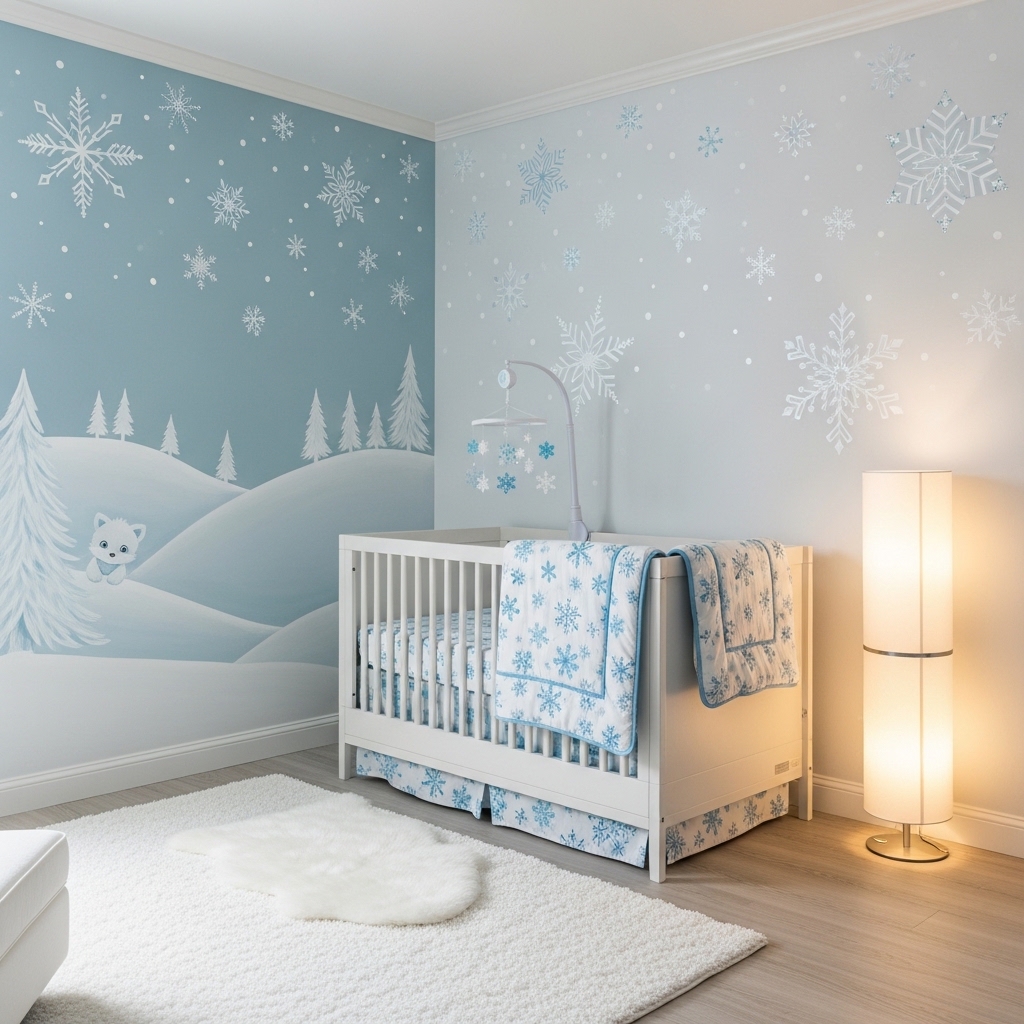
Apply this method when you live in a warm climate and want to experience snow year-round.
Paint a winter scene with snow-covered trees, snowflakes falling, a snowman, and animal tracks.
Your baby names winter animals like deer, rabbit, and fox. Seasonal vocabulary develops naturally.
Your warm climate baby may never see real snow. A painted winter wonderland brings snow into their world.
Pro Tip: Use a toothbrush spatter technique for realistic falling snow effects across your entire wall.
Mistake to Avoid: Do not paint your winter scene too dark blue. Use pale icy blues for a daytime feel.
56. Create a Wall of Hanging Stuffed Animal Storage
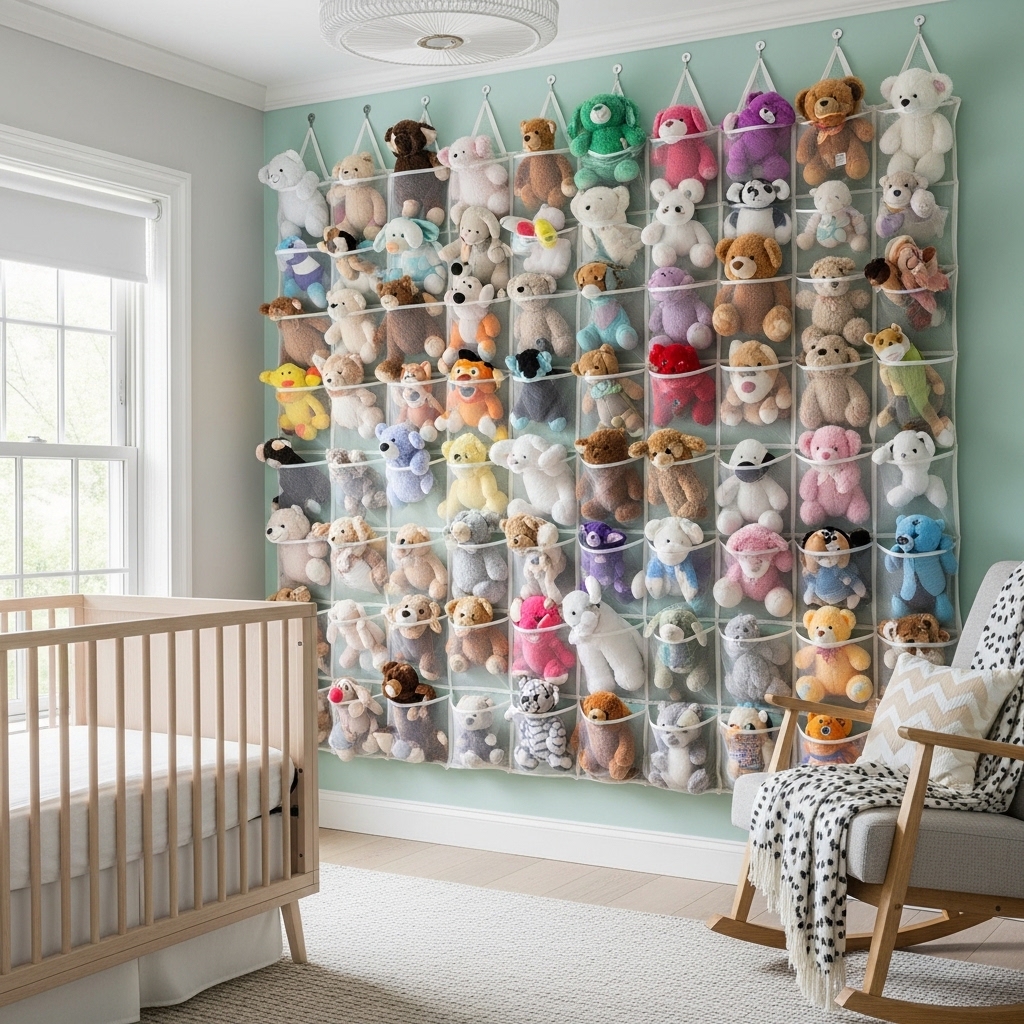
Use this strategy when stuffed animals overflow bins and take over your nursery floor.
Install a wall-mounted stuffed animal hammock or hanging net in a corner of your nursery.
Stuffies live on the wall instead of the floor. Your floor stays clear for play and walking.
Toy bins get dumped everywhere. A hanging net keeps stuffies visible, organized, and accessible for play.
Pro Tip: Choose a net with small enough holes that small stuffies do not fall through to the floor.
Mistake to Avoid: Do not mount your net higher than 36 inches. Your toddler cannot reach favorite stuffies.
57. Paint a Sailing Boat Ocean Scene
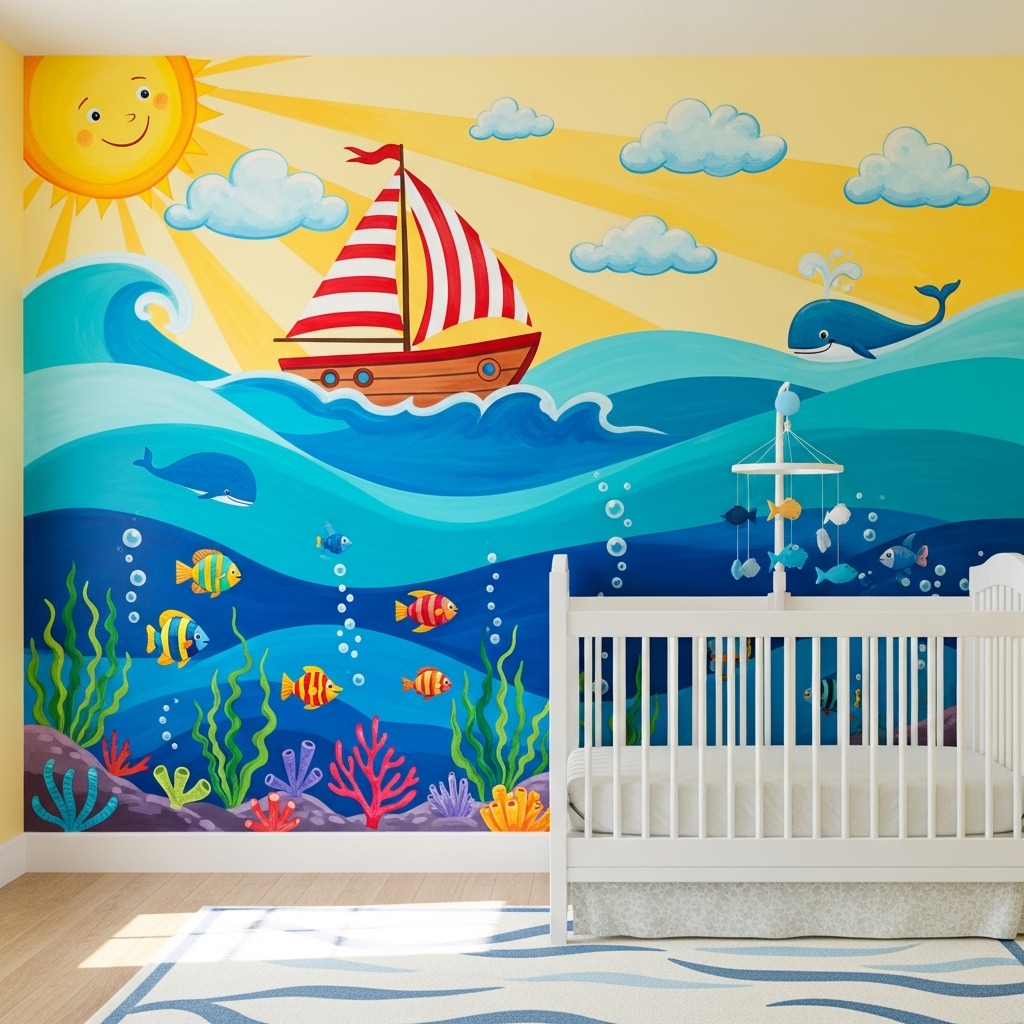
Choose this approach when you want a calm, peaceful nursery theme that soothes before sleep.
Paint a deep blue ocean with sailing boats, whales, dolphins, seashells, and gentle waves.
Your baby watches boats bob on waves. The scene’s horizontal lines and blue tones promote calm and sleep.
Jungle and farm scenes are busy. An ocean scene with boats feels peaceful and restful for bedtime.
Pro Tip: Paint a few seashells on the wall near the floor. Your baby discovers them during floor play.
Mistake to Avoid: Do not paint your ocean scene too dark. Use bright turquoise and teal for daytime cheer.
58. Install a Wall-Mounted Play Kitchen
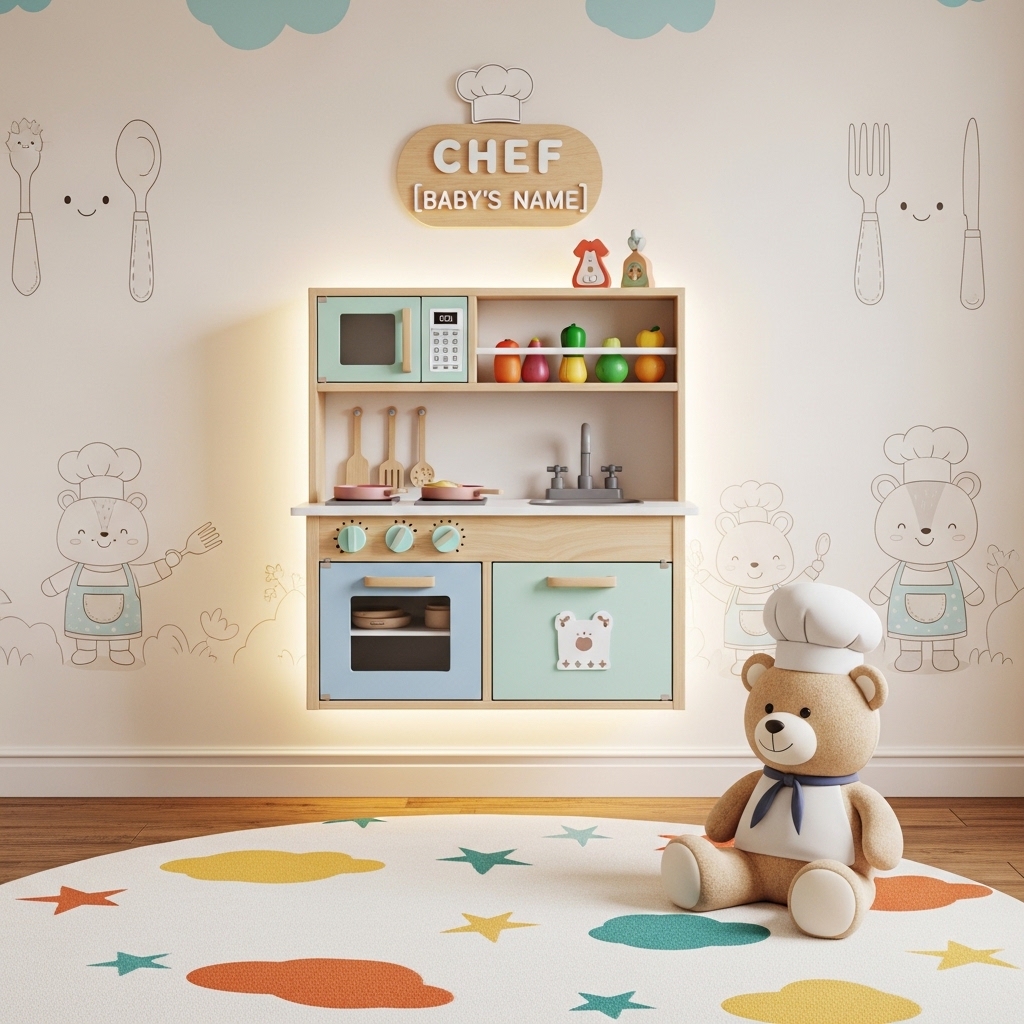
Apply this method when you want dramatic play without a bulky play kitchen taking floor space.
Mount a wall-mounted play kitchen with burners, oven, sink, and knobs on a lower wall section.
Your toddler cooks pretend meals on the wall kitchen. Floor space stays clear for other toys and walking.
Standalone play kitchens consume 12 square feet of floor space. A wall kitchen uses zero floor space.
Pro Tip: Add small hooks for hanging pretend pots, pans, and utensils within toddler reach.
Mistake to Avoid: Do not install your play kitchen near real appliances. Toddlers get confused about what is real.
59. Paint a Robot and Space Station Scene
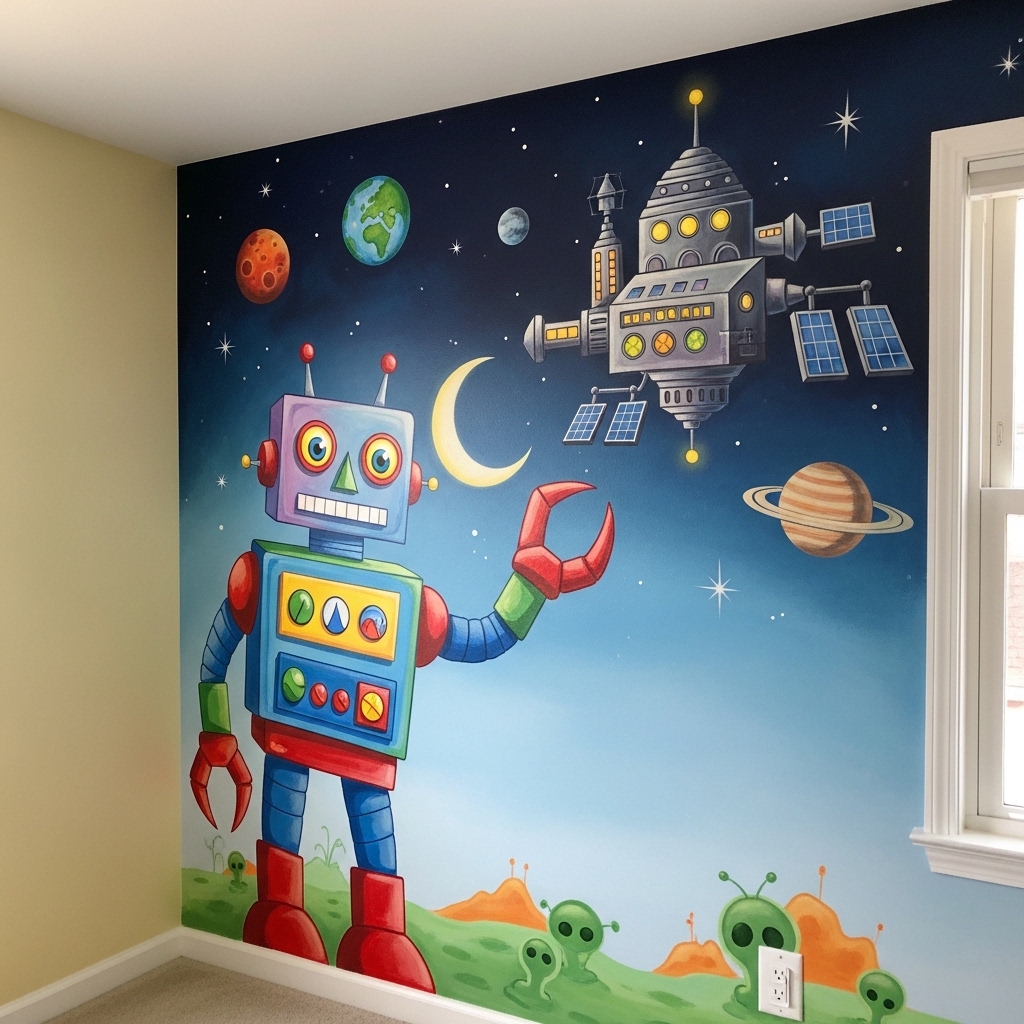
Use this idea when you want to inspire interest in technology, engineering, and science fiction.
Paint friendly robots, a space station, satellites, and a rocket launching across one wall.
Your baby names robot parts. You invent stories about what each robot does. STEM interest develops early.
Animals are everywhere. Robots feel unique and exciting to children who love how things work.
Pro Tip: Paint one robot with removable magnet parts. Your toddler changes the robot’s face and arms daily.
Mistake to Avoid: Do not paint robots with sharp angles or scary expressions. Round, friendly robots only.
60. Create a Wall of Family Handprints and Growth Marks
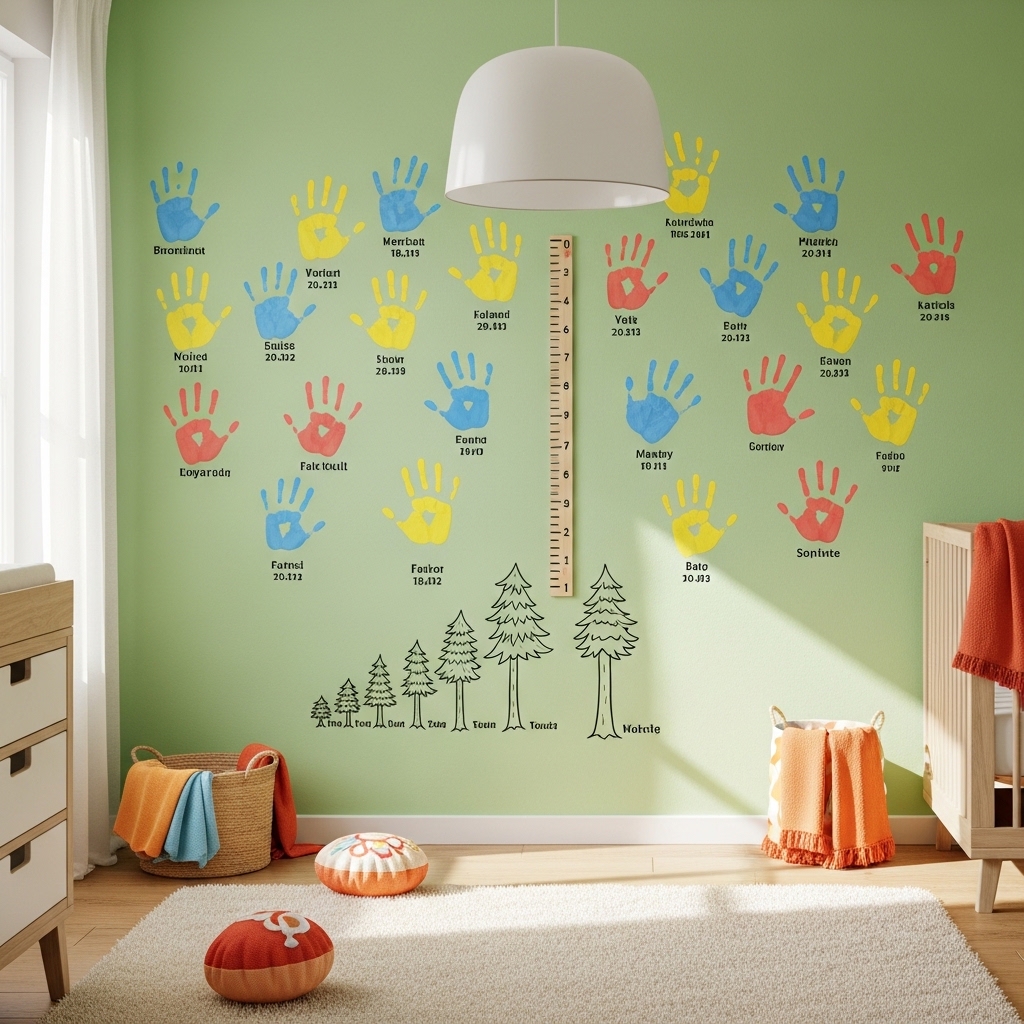
Choose this approach when you want a living wall that grows with your child over the years.
Paint a tree with bare branches on one wall. Add handprints as leaves for each family member.
Add your baby’s handprint at birth. Add a new handprint each birthday. The tree fills with family history.
Growth charts get lost when you move. A painted tree stays with the house and becomes a family heirloom.
Pro Tip: Use washable paint for handprints. You repaint over old prints and add new ones each birthday.
Mistake to Avoid: Do not paint your tree too high. Keep branches low so your toddler adds their own handprints.
Conclusion
Your nursery does not need to look like every other nursery on social media with gray walls and a faux fur rug.
The 60 ideas above prove that unique, creative, and personal nurseries are within your reach regardless of budget.
Paint a celestial ceiling. Install a wall of books. Create a sensory wall. Build a climbing board. Hang a swing.
Start with one idea that excites you. A rainbow stripe wall. A forest mural. A family handprint tree.
Then add a second idea next month. A teepee reading nook. A wall-mounted play kitchen. A Lego wall.
Your baby will grow up surrounded by creativity, color, and intention. That is the greatest gift you can give.
Take back the nursery from boring beige. Start your unique nursery project this weekend. Your baby is waiting.