How to Style Open Shelves Without Clutter | Designer Shelf Styling Secrets | Organized Display Techniques
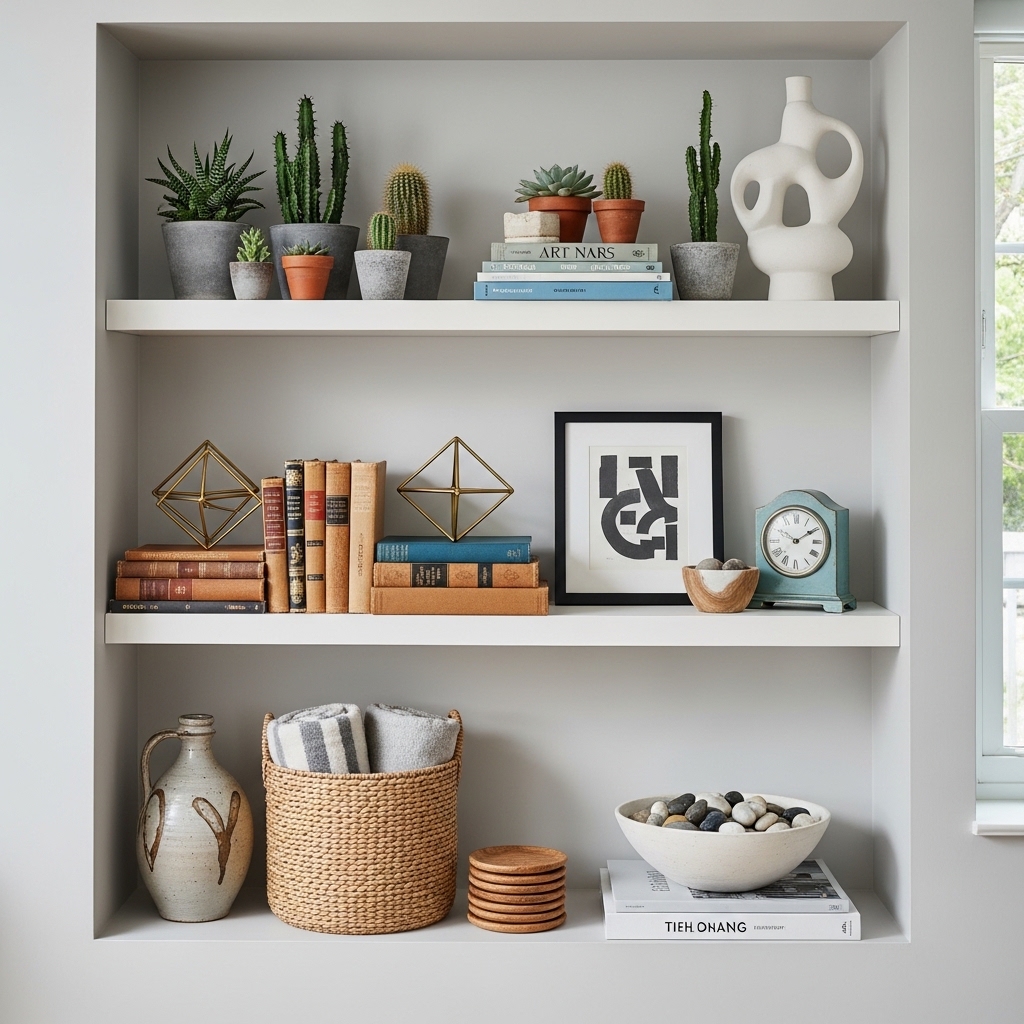
Open shelves are beautiful. They are also challenging. Without doors to hide the contents, everything is on display. Every item is visible. Every imperfection is visible.
The result is often chaos. Too many items. No organization. No visual balance. The shelves look like storage, not display.
But open shelves can be stunning. The key is intentional styling. Every item earns its place. Empty space is as important as filled space.
This article explains how to style open shelves without clutter. Designer secrets for beautiful, organized displays.
Why Open Shelves Look Cluttered
Open shelves fail for predictable reasons. Too many items. All items the same size. No empty space. No visual rhythm.
The Three Problems with Open Shelves
| Problem | Why It Happens | How to Fix |
|---|---|---|
| Too many items | Fear of empty space | Remove 30% of items |
| All items same height | Bought matching sets | Vary heights |
| No empty space | Filled every inch | Leave 30% of shelf empty |
The Open Shelf Mindset
Open shelves are not for storage. They are for display. Storage belongs behind closed doors. Display belongs on open shelves.
Pro Tip: Take a photo of your shelves. Photos reveal clutter that your eyes have learned to ignore.
Mistake to Avoid: Do not use open shelves for everyday items that have no visual appeal. Store those in cabinets or drawers.
The 70/30 Rule for Open Shelves
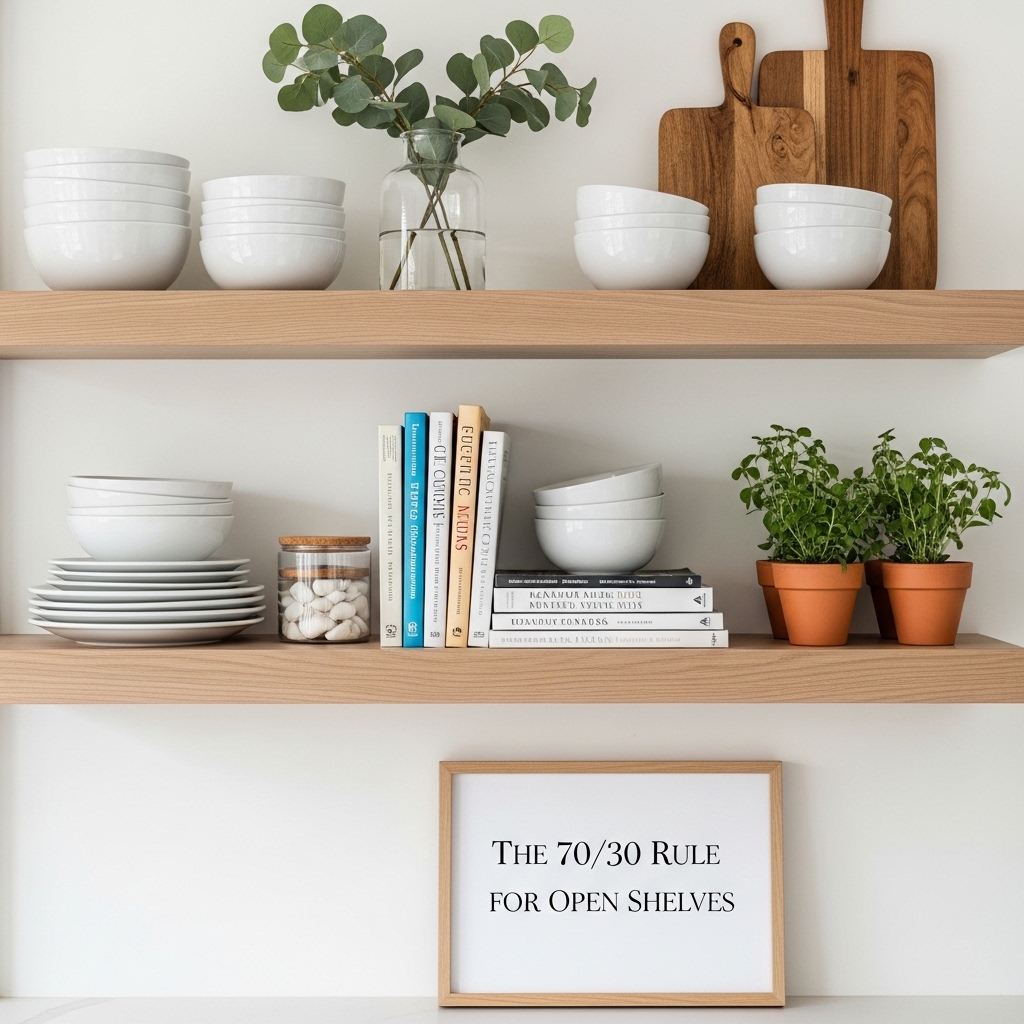
The most important rule for open shelves is the 70/30 rule. Seventy percent of the shelf should be filled. Thirty percent should be empty.
How to Apply the 70/30 Rule
| Shelf Height | Filled Percentage | Empty Percentage |
|---|---|---|
| Eye level | 70% | 30% |
| Below eye level | 80% | 20% |
| Above eye level | 60% | 40% |
Why Empty Space Matters
Empty space gives the eye a place to rest. A shelf that is completely full feels chaotic. A shelf with empty space feels intentional. The empty space highlights the items that remain.
Pro Tip: Start with an empty shelf. Add items one at a time. Stop when the shelf looks balanced. Then remove one more item.
Mistake to Avoid: Do not fill every inch of shelf space. Empty space is not wasted space.
The Rule of Three for Shelf Styling
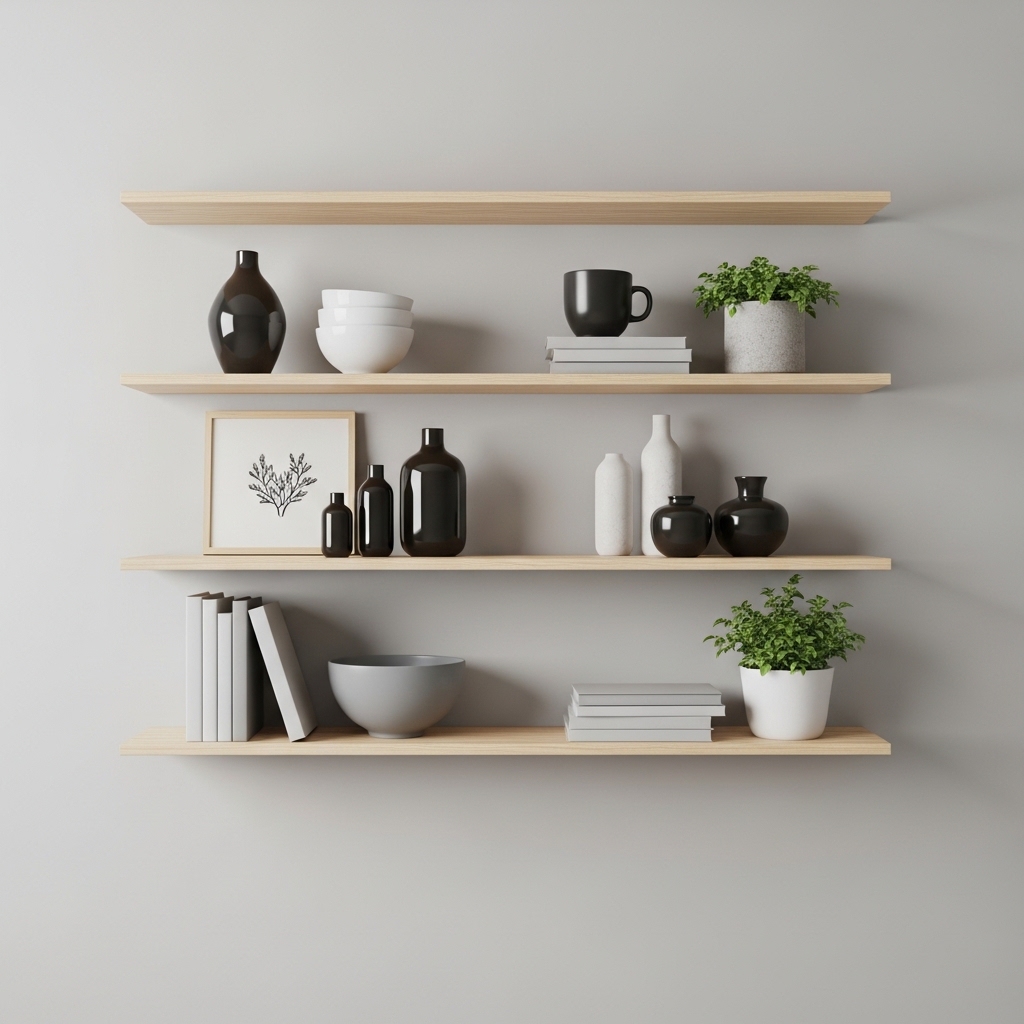
Groups of three are visually pleasing. The eye moves between the three items and perceives the arrangement as designed.
How to Group Items in Threes
| Item Type | Example | Placement |
|---|---|---|
| Tall item | Vase, candle, plant | Back or center |
| Medium item | Stack of books, small bowl | In front of tall item |
| Low item | Small sculpture, coaster | Front or side |
Variations on the Rule of Three
| Number of Items | Effect | Best For |
|---|---|---|
| 1 item | Minimal, intentional | Very small shelves |
| 2 items | Balanced, symmetrical | Matching lamps or objects |
| 3 items | Dynamic, interesting | Most shelves |
| 5 items | Collected, abundant | Large shelves |
Pro Tip: Use the triangle method. Place items so their tops form an imaginary triangle. The eye follows the triangle.
Mistake to Avoid: Do not line up items in a straight row. Straight lines look stiff. Asymmetry looks natural.
Varying Heights for Visual Interest
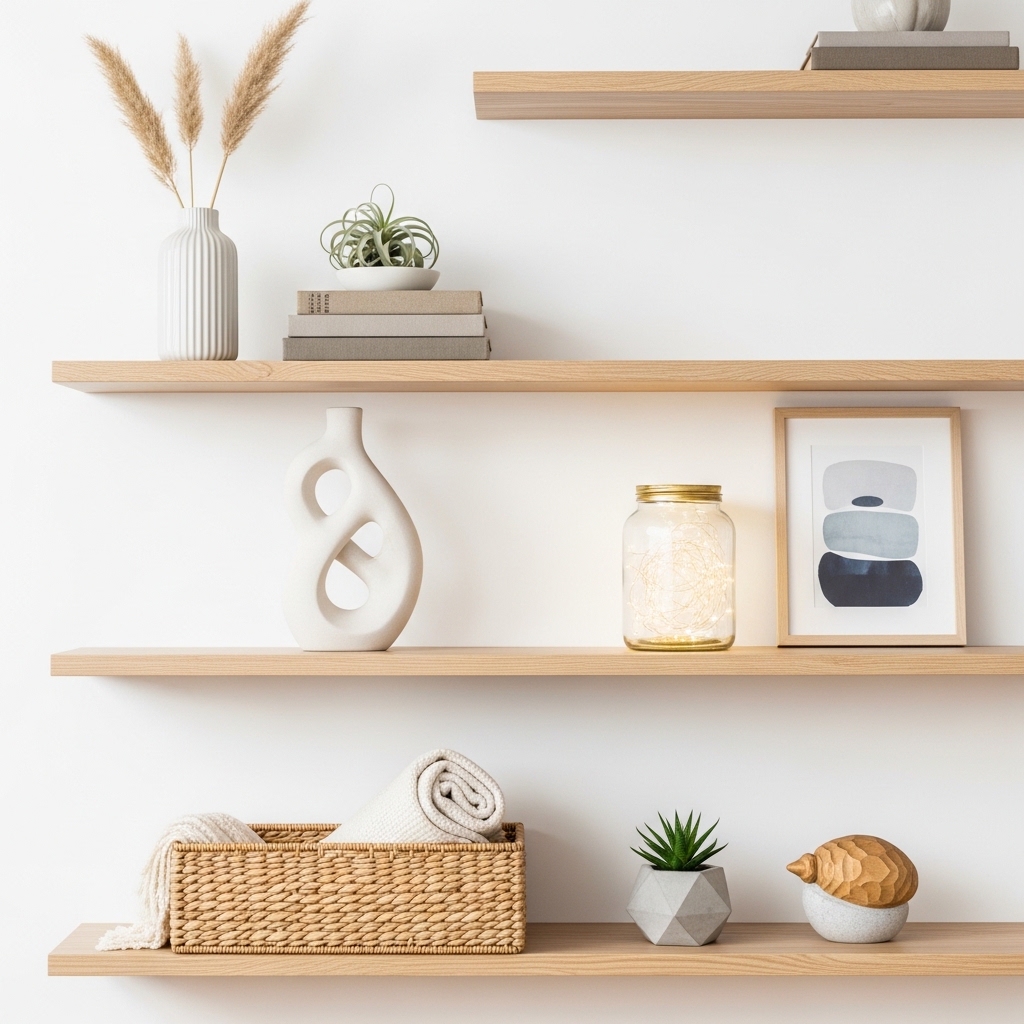
Items at the same height look flat. Varying heights creates visual interest. The eye moves up and down across the shelf.
How to Vary Heights
| Height Level | Inches | Example Items |
|---|---|---|
| Low | 1-4 inches | Small bowl, coaster, small book |
| Medium | 5-8 inches | Stack of books, medium vase |
| Tall | 9-12 inches | Large vase, tall candle, plant |
The Stacking Technique
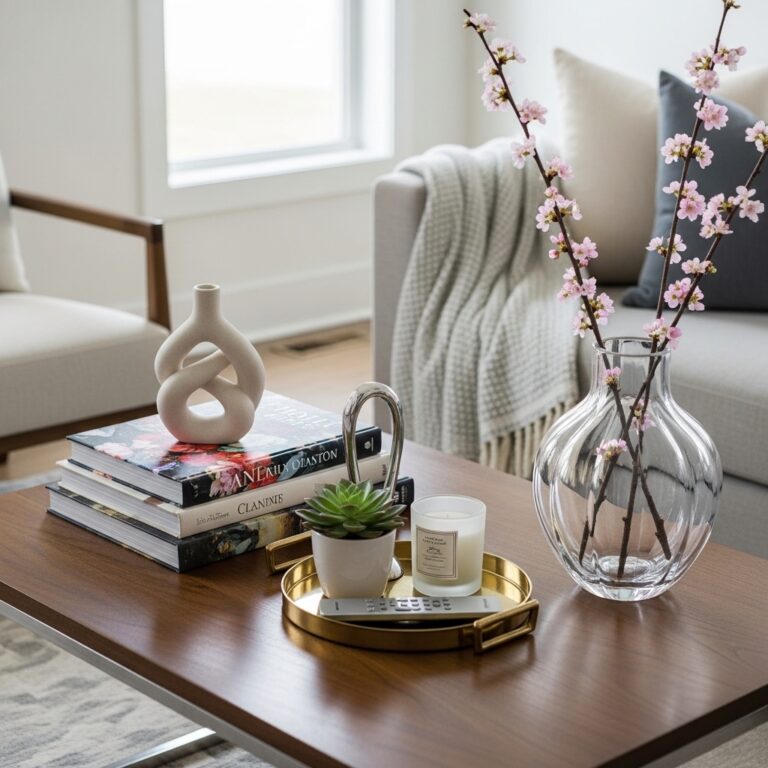
Stack books horizontally. Place a small object on top of the stack. The stack adds height. The object adds interest.
Stack two or three books of different sizes. Largest on bottom. Smallest on top. The stack becomes a pedestal for another item.
Pro Tip: Use book stacks to elevate smaller items. A small vase on a stack of books is more visible than a small vase alone.
Mistake to Avoid: Do not use all tall items or all short items. Mix heights for maximum visual interest.
Color Coordination for Cohesive Shelves
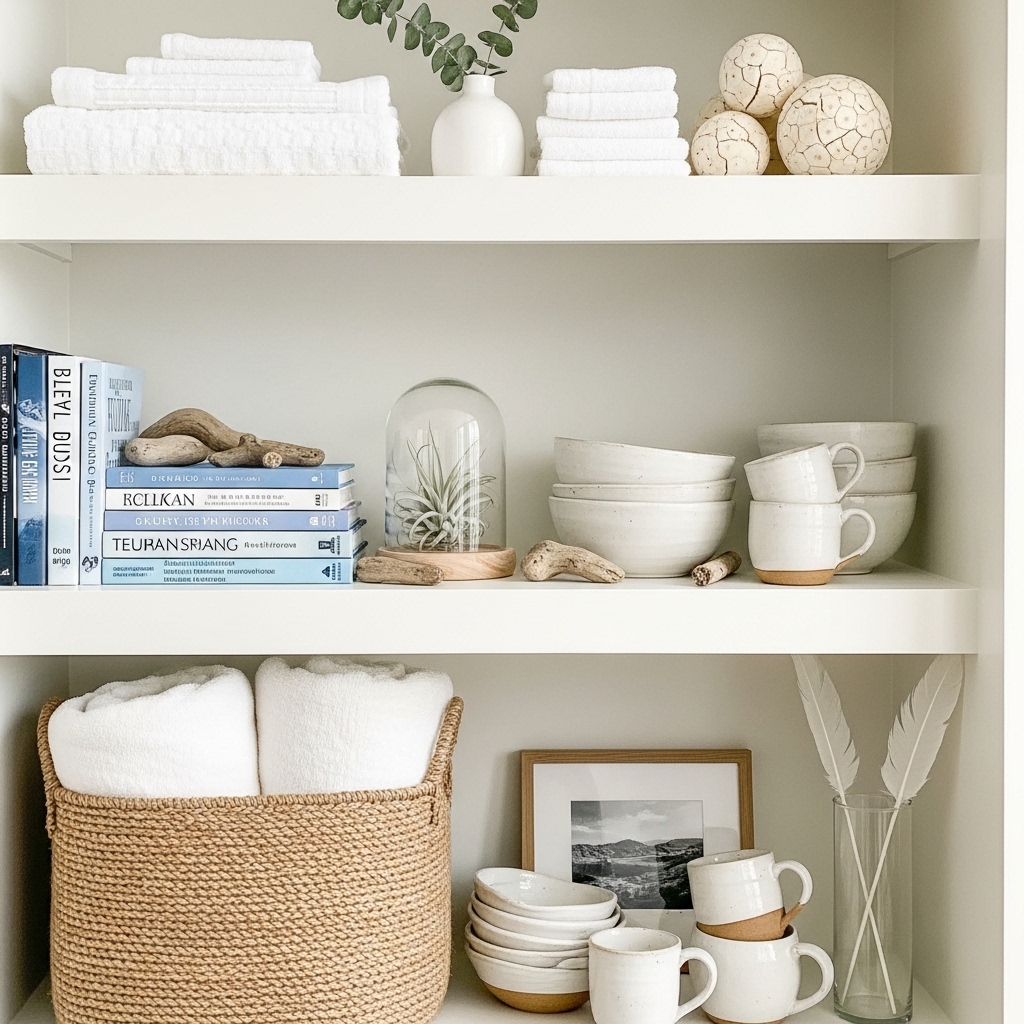
Color can unify a shelf or make it feel chaotic. The key is repetition and restraint.
The Color Repetition Rule
Repeat a color three times on a shelf. Three blue items. Three white items. Three wood-toned items. The repetition creates cohesion.
| Color | Where to Repeat |
|---|---|
| Blue | Vase, book cover, small bowl |
| White | Candle, book, ceramic object |
| Wood | Picture frame, bowl, bookends |
The Color Restraint Rule
Use no more than three colors on a shelf. Too many colors look chaotic. Fewer colors look intentional.
Pro Tip: Group books by color. All white books together. All blue books together. The color block creates visual order.
Mistake to Avoid: Do not scatter small colorful items randomly. Group them together for impact.
Mixing Textures on Shelves
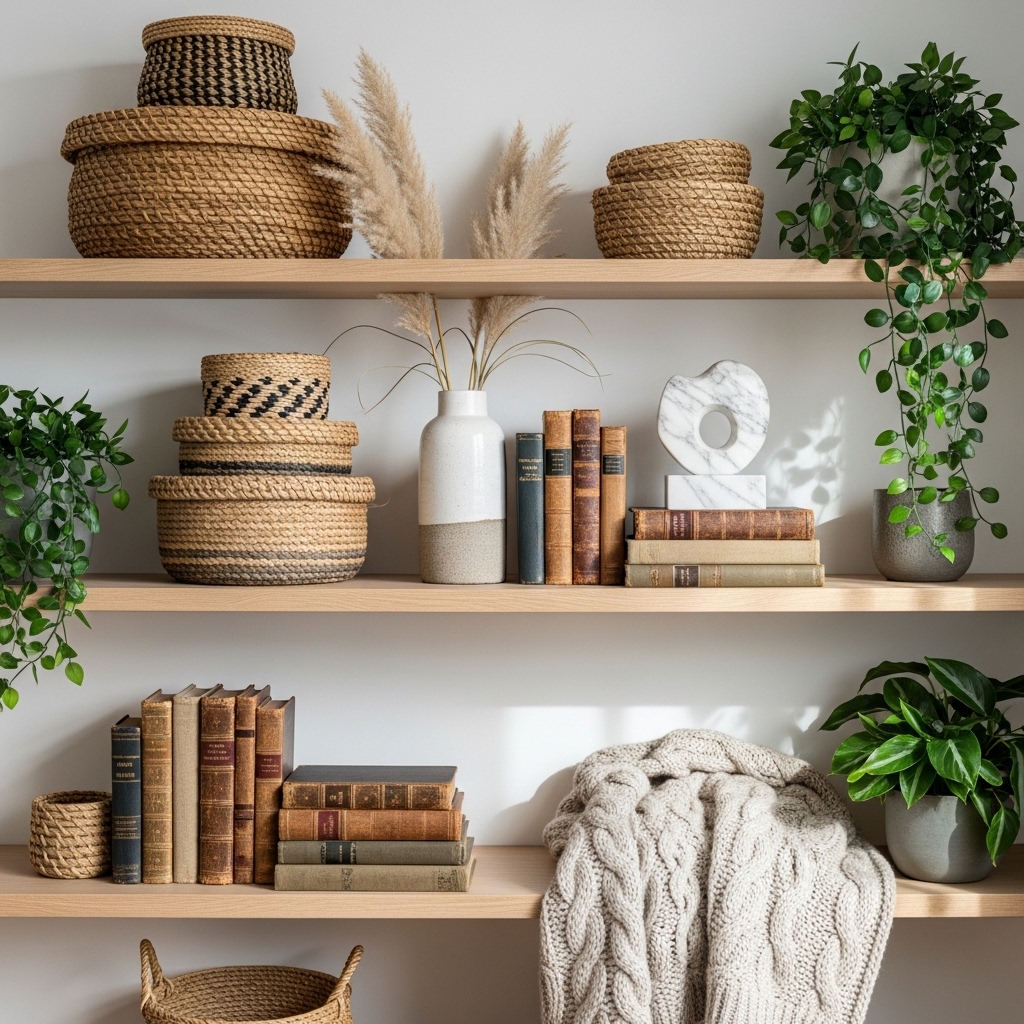
Texture adds depth to open shelves. A shelf with all smooth surfaces looks flat. A shelf with mixed textures looks rich.
Textures to Mix
| Texture | Examples |
|---|---|
| Smooth | Glass vase, ceramic bowl, glossy book cover |
| Textured | Woven basket, linen book cover, wood frame |
| Soft | Faux fur, velvet, felt (small items only) |
| Natural | Wood, stone, dried flowers, plant |
The Texture Mixing Formula
Aim for at least three different textures on each shelf. A glass vase (smooth), a stack of linen-bound books (textured), and a small plant (natural) create visual depth.
Pro Tip: Use woven baskets to hide ugly items. A basket on a shelf hides cords, remotes, or small clutter.
Mistake to Avoid: Do not use all smooth textures. A shelf of glass and ceramic looks cold.
The Back-to-Front Layering Technique
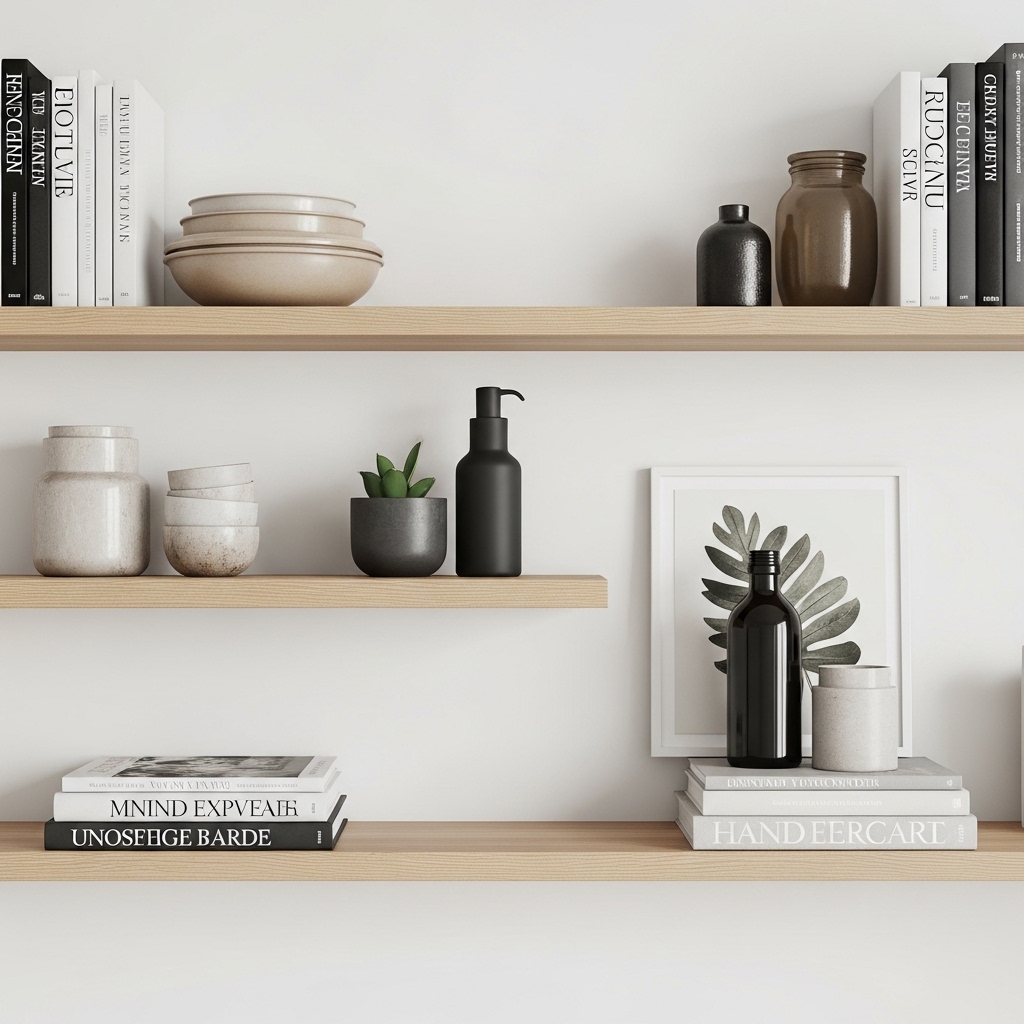
Items placed in a straight line look flat. Layering items back to front creates depth.
How to Layer Items
| Layer | Placement | Examples |
|---|---|---|
| Back | Against the wall | Large vase, tall candle, picture frame |
| Middle | In front of back items | Stack of books, medium bowl |
| Front | Edge of shelf | Small object, coaster, small plant |
The Depth Illusion
When items are layered, the eye perceives depth. The shelf looks fuller without being more crowded. The arrangement looks intentional.
Pro Tip: Place the tallest items at the back. Place the shortest items at the front. The height gradation creates depth.
Mistake to Avoid: Do not place all items in a single row. Single rows look flat and one-dimensional.
What to Put on Open Shelves
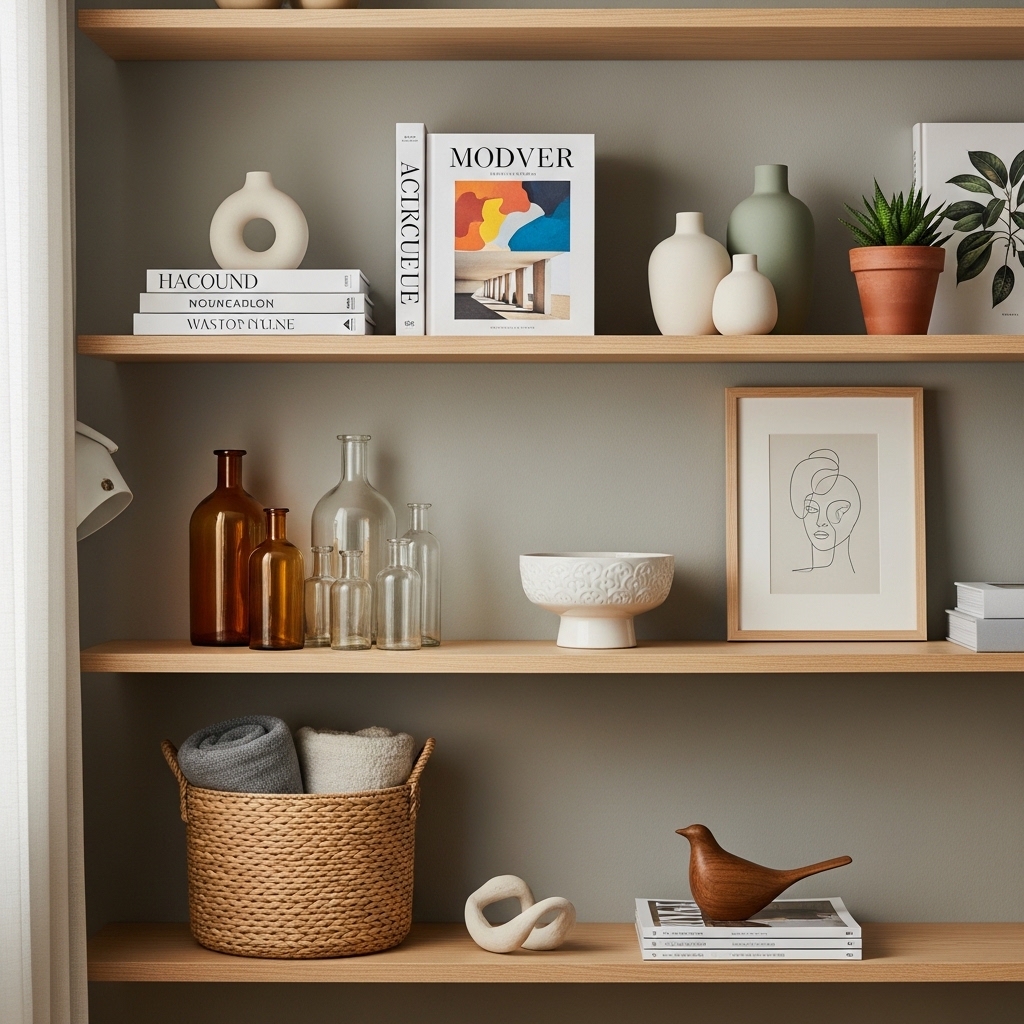
Not every item belongs on open shelves. Some items are for display. Others are for hidden storage.
Good Items for Open Shelves
| Category | Examples |
|---|---|
| Books | Hardcover, beautiful covers, coffee table books |
| Plants | Small potted plants, trailing plants |
| Art | Small framed prints, sculptures, ceramics |
| Glassware | Colored glass, vintage pieces, matching sets |
| Baskets | Woven, uniform size, hide clutter |
Items to Avoid on Open Shelves
| Category | Why to Avoid |
|---|---|
| Plastic containers | Look cheap, no visual appeal |
| Mismatched items | Create visual chaos |
| Everyday clutter | Keys, mail, remotes, cords |
| Too many small items | Look like dust collectors |
Pro Tip: Use matching baskets on lower shelves. Baskets hide clutter. They also add texture and uniformity.
Mistake to Avoid: Do not put everyday clutter on open shelves. Store it in drawers or cabinets.
Shelf Styling by Room
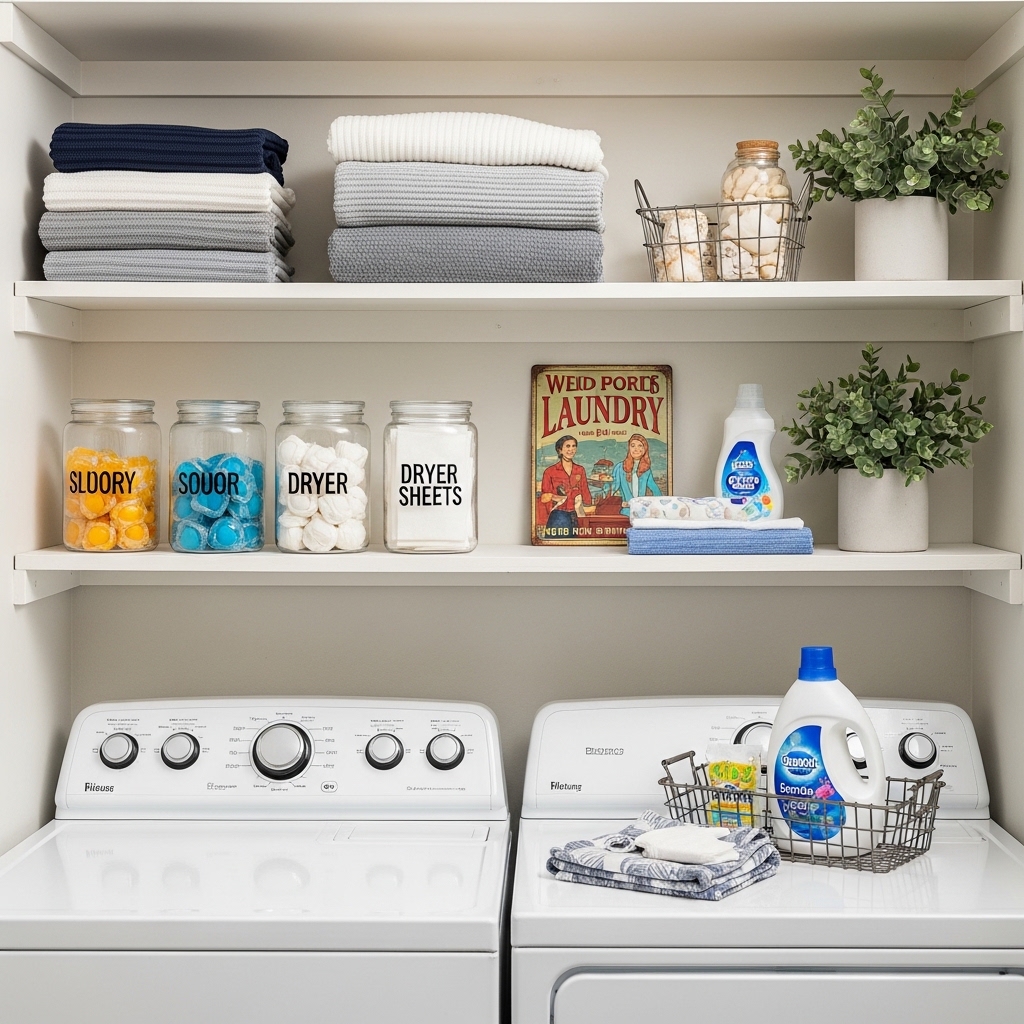
Different rooms have different needs for open shelves. What works in a living room may not work in a kitchen.
Living Room Shelves
| Shelf | Items to Display |
|---|---|
| Top | Art, tall vase, plant |
| Middle | Books, framed photos, small sculpture |
| Bottom | Baskets (hide extra items), large books |
Kitchen Shelves
| Shelf | Items to Display |
|---|---|
| Top | Matching plates, bowls, serving dishes |
| Middle | Glasses, mugs (arranged by color or size) |
| Bottom | Cookbooks, canisters, plants |
Bathroom Shelves
| Shelf | Items to Display |
|---|---|
| Top | Extra towels (rolled or folded neatly) |
| Middle | Glass jars with cotton balls, bath salts |
| Bottom | Small plant, candle, extra toilet paper (in basket) |
Pro Tip: In the kitchen, store everyday dishes on lower shelves. Store special occasion dishes on higher shelves.
Mistake to Avoid: Do not store heavy items on high shelves. Heavy items are dangerous to lift down.
Frequently Asked Questions
How many items should be on a shelf?
There is no magic number. The 70/30 rule is more important than a specific count. Fill 70% of the shelf. Leave 30% empty.
Should books be vertical or horizontal?
Both. Mix vertical and horizontal stacks. Vertical books create height. Horizontal stacks create platforms for other items.
How do I style shelves in a rental?
Use command strips to hang art. Use removable wallpaper on the back of the shelf for color. Use book stacks to add height without drilling.
What if I have no decorative objects?
Books are decorative. A stack of books is beautiful. Add a plant (real or fake). Add a candle. These three items alone can style a shelf.
Conclusion
Open shelves can be beautiful and clutter-free. The key is intentional styling. Remove 30% of items. Leave empty space. Group items in threes. Vary heights. Repeat colors. Mix textures. Layer back to front.
Start with one shelf today. Remove half the items. Add a stack of books. Add a plant. Leave empty space. Small changes produce dramatic results. The open shelves become a focal point, not an eyesore.