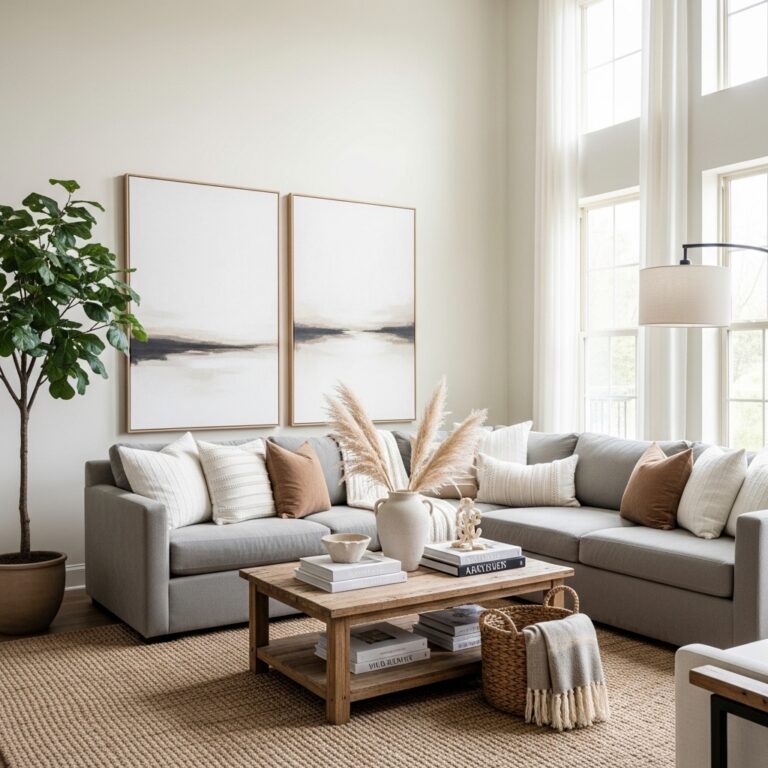
21 Home Decor Ideas For Living Room That Transform Your Space Instantly
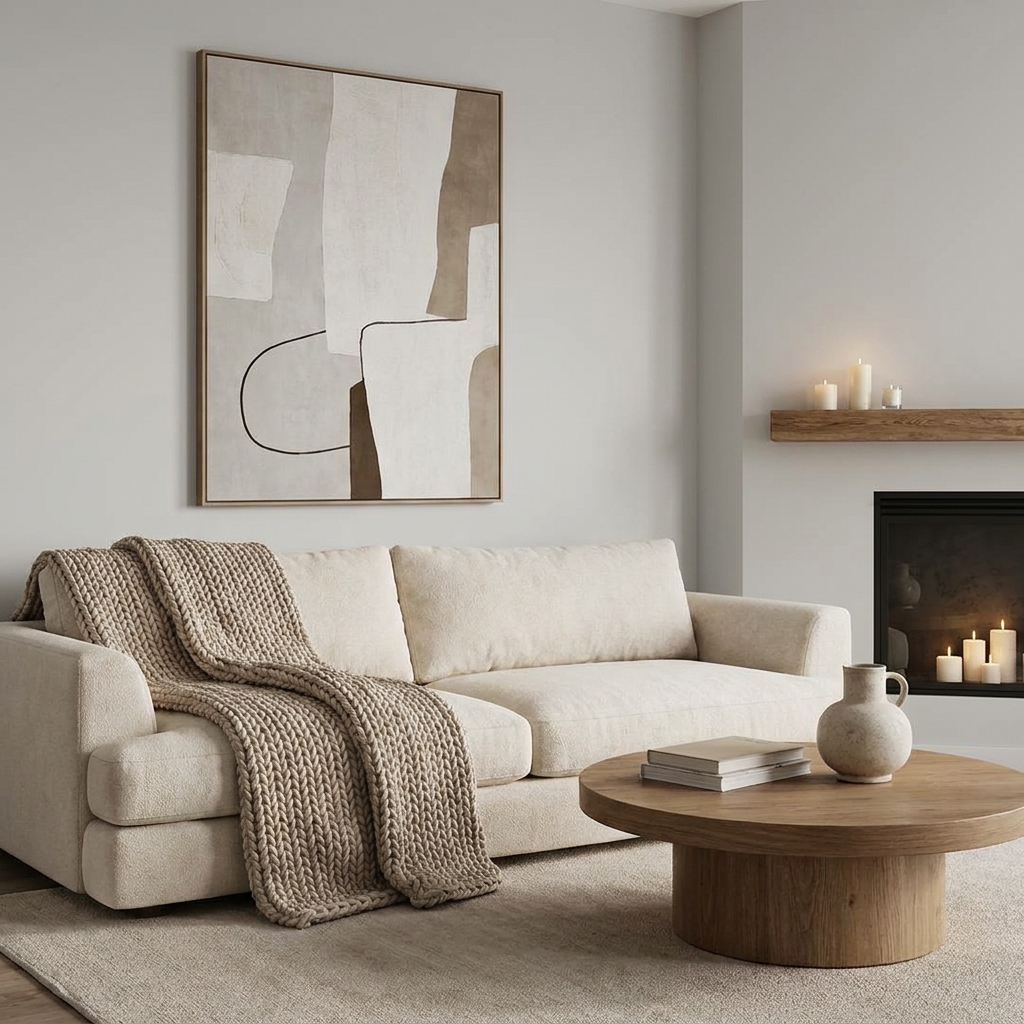
Your living room is the heart of your home. It is where family gathers, guests are entertained, and memories are made.
Yet many people struggle to make this important space feel cohesive, inviting, and reflective of their personal style. The problem is not lack of effort but lack of a clear decorating strategy.
The best living room ideas for home start with a plan. You do not need expensive furniture or a complete renovation to transform your space.
Small, intentional changes in layout, lighting, color, and accessories can create a dramatic difference. This guide delivers 21 actionable home decor ideas for living room that work for any budget and any style.
Whether you are looking for home decor ideas with living area that maximize small spaces or want to create a cozy family gathering spot, these tips will help. From furniture placement to accent walls, each idea is designed to be implemented in a weekend or less. Let us transform your living room into the space you have always wanted.
Furniture Layout & Seating Arrangements – Home Decor ideas For Living Room
The way you arrange your furniture determines how the room functions. Poor layout makes even the most beautiful furniture feel awkward. Smart layout makes a small room feel spacious and a large room feel intimate.
1. Float Your Sofa Away from the Wall
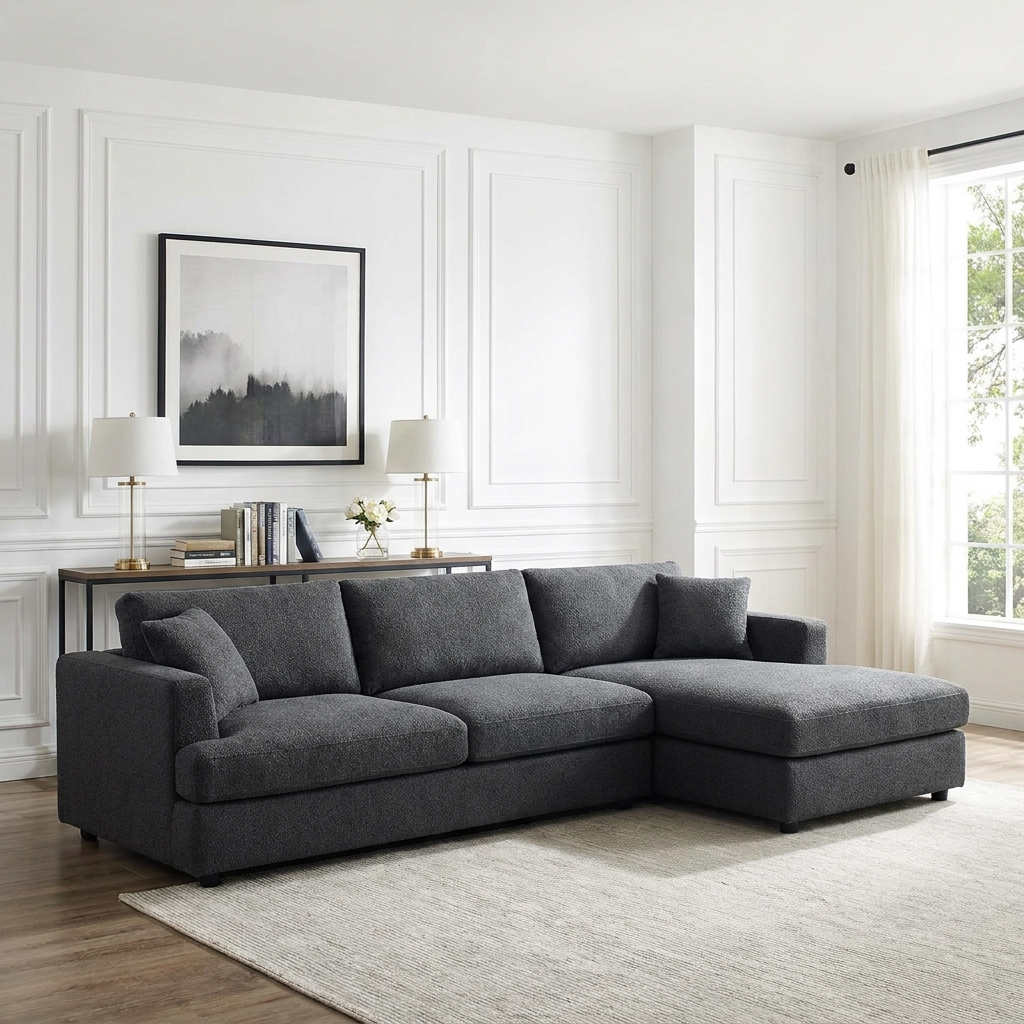
Most people push their sofa against the wall. This is the most common mistake in living room ideas for home. A floating sofa creates visual depth and makes the room feel larger. The gap behind the sofa also allows you to place a narrow console table.
Pull your sofa 6-12 inches away from the wall. The space behind it will create an illusion of depth. Use that gap for a sofa table, floor lamp, or tall plant. This simple change costs nothing but transforms the entire feel of the room.
Pro Tip: Place a narrow console table behind the floating sofa. Use it for lamps, books, or decor. The table hides the gap and adds function.
Mistake to Avoid: Do not float the sofa too far from the wall. Leave enough space to walk behind it comfortably (minimum 24 inches).
2. Create a Conversation Circle
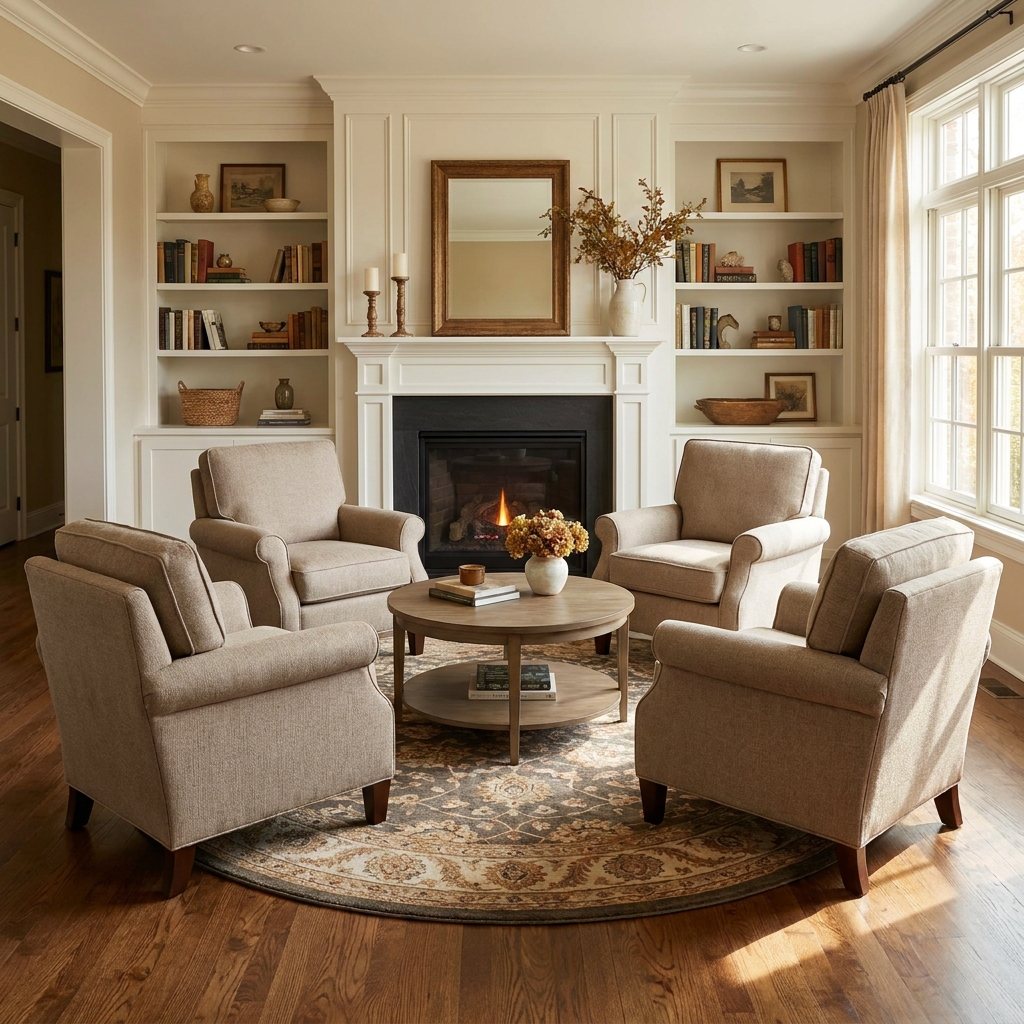
Furniture arranged in straight lines discourages conversation. A circular arrangement invites people to talk. This is one of the most effective home decor ideas with living area for entertaining.
Arrange chairs and sofas so they face each other rather than all facing the television. Place two chairs opposite the sofa. Angle them slightly inward. The coffee table should be accessible from all seats.
Pro Tip: Use a round coffee table for circular seating arrangements. Round tables have no corners and promote better flow.
Mistake to Avoid: Do not place seating too far apart. The ideal distance for conversation is 4-6 feet between seats.
3. Define Zones with Area Rugs
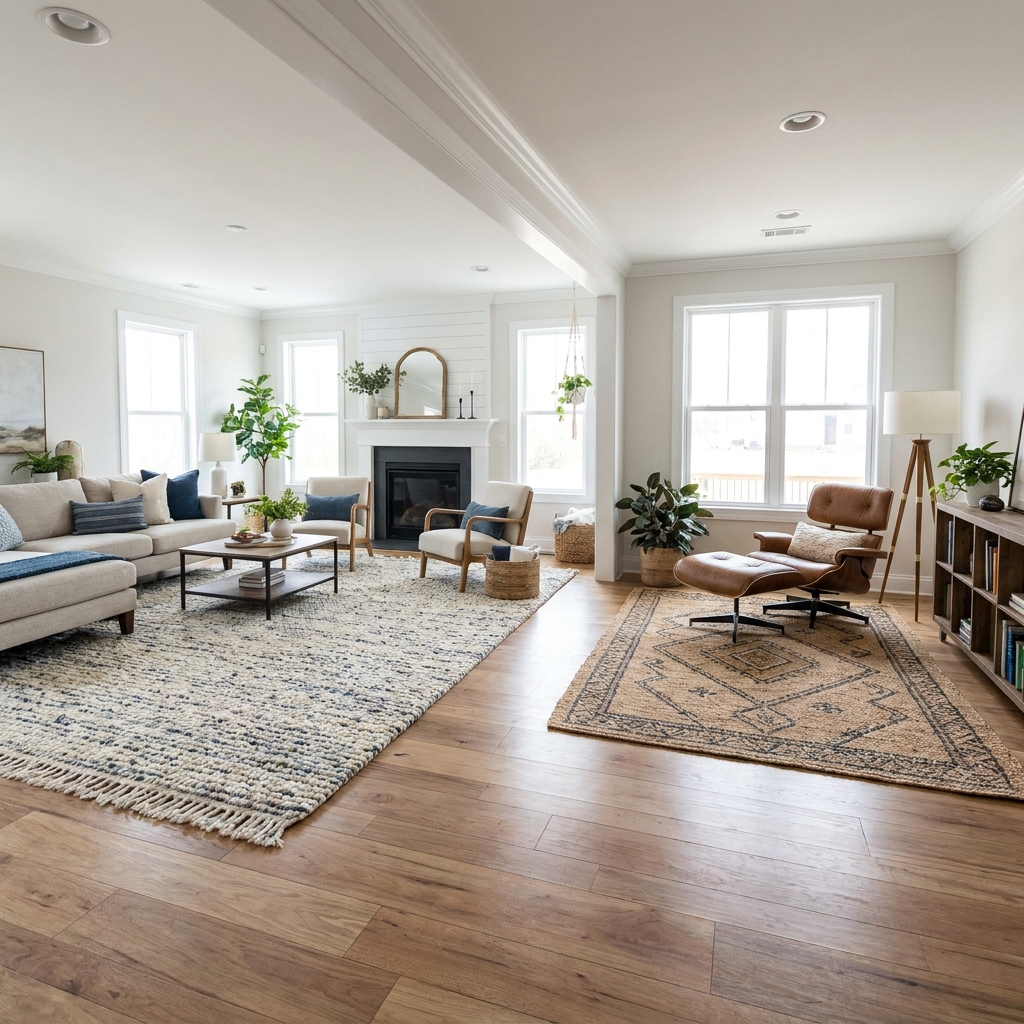
One large room can serve multiple purposes. An area rug defines each zone visually. The rug anchors the furniture and tells the eye where one area ends and another begins.
Place a large rug under the main seating area. The front legs of all furniture should sit on the rug. Use a smaller rug to define a reading nook or play area. The repetition of rugs creates structure.
Pro Tip: Choose rugs with different patterns but similar color palettes. The colors will tie the zones together while the patterns separate them.
Mistake to Avoid: Do not use rugs that are too small. A small rug floating in the middle of the room looks awkward and unanchored.
4. Add a Pair of Swivel Chairs
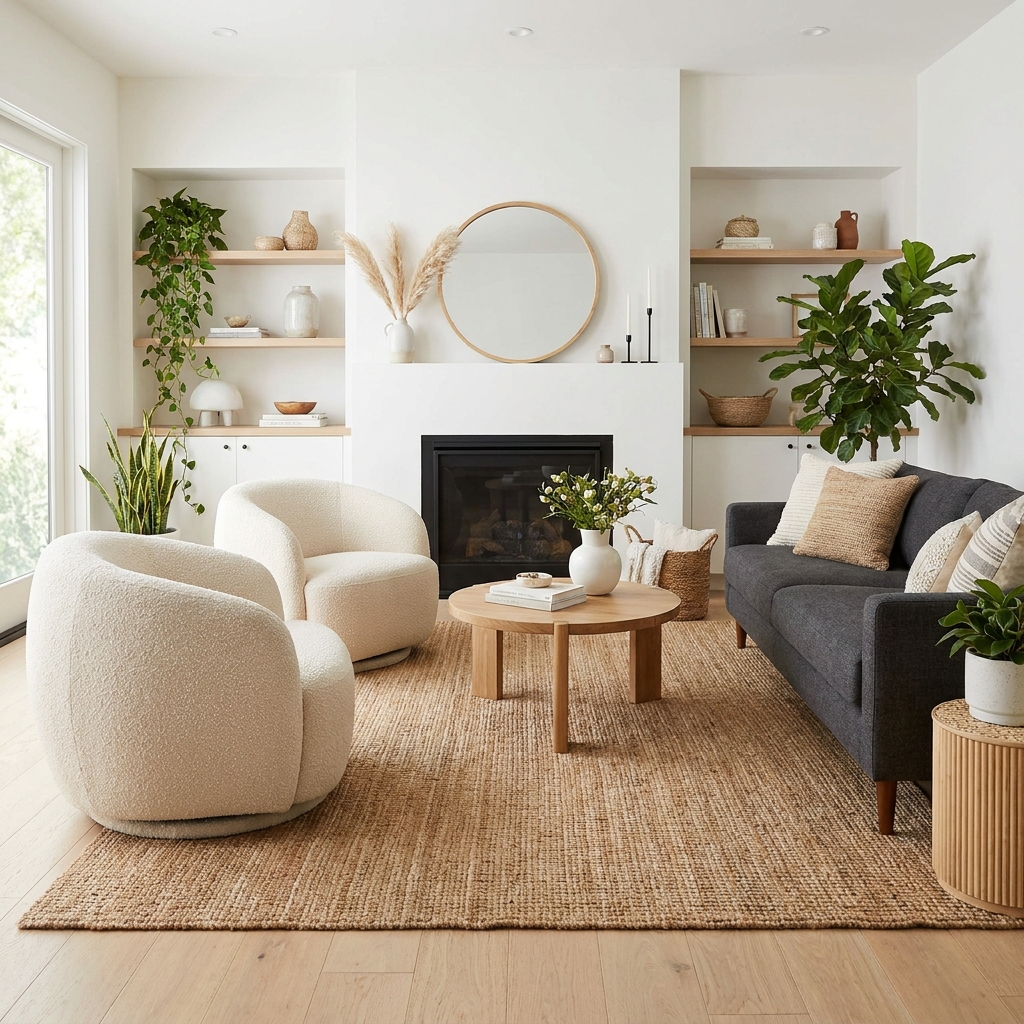
Swivel chairs are the unsung heroes of living room ideas for home. They allow people to turn toward conversation or toward the television as needed. The flexibility makes them perfect for multi-functional spaces.
Place two swivel chairs opposite your sofa. Choose chairs with a low back so they do not block light. The swivel mechanism adds almost no cost but significantly increases functionality.
Pro Tip: Choose swivel chairs with a wide seat. A 26-30 inch width is comfortable for most adults.
Mistake to Avoid: Do not place swivel chairs too close to walls. They need room to turn without hitting anything.
5. Use a Bench for Flexible Seating
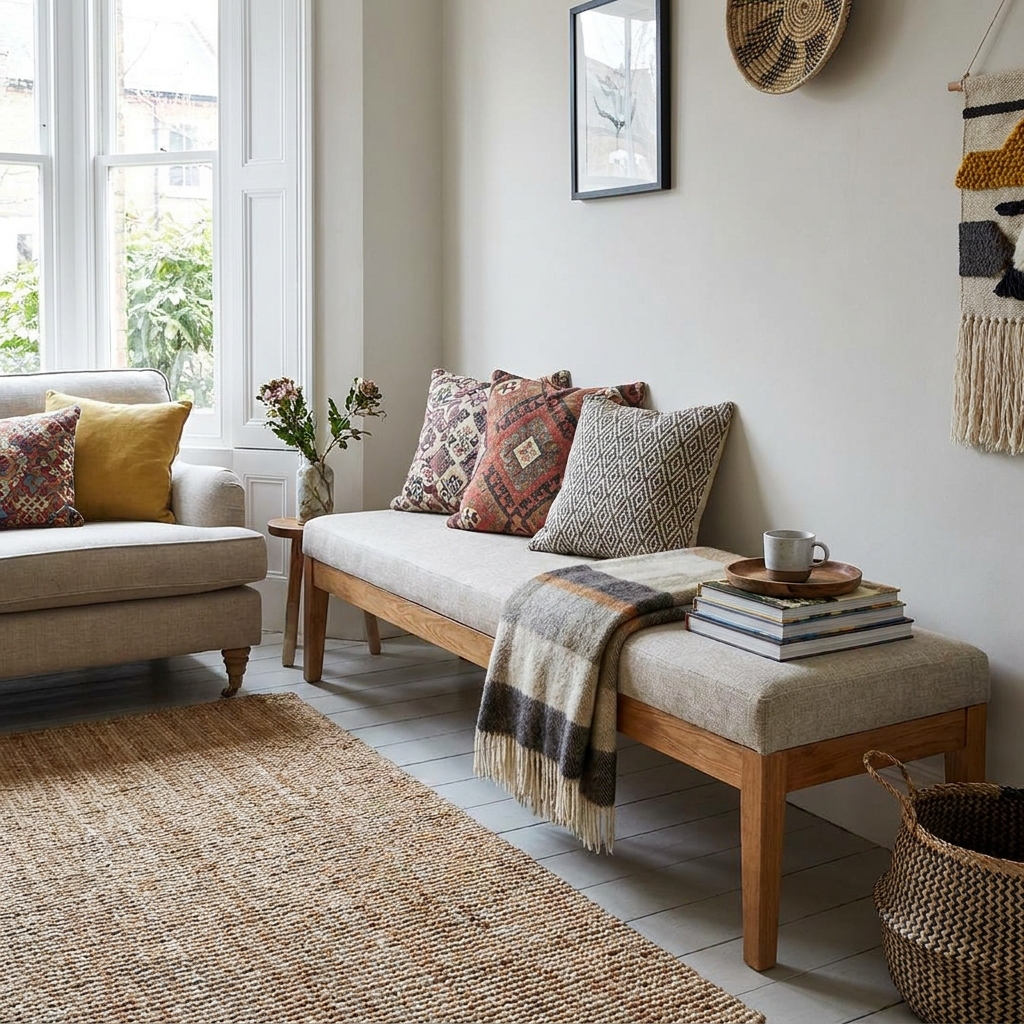
A bench is not just for dining tables. Place a upholstered bench under a window or against a wall. It provides extra seating without the bulk of additional chairs.
Use the bench as a landing zone for bags or a place to put on shoes. For home decor ideas with living area that double as storage, choose a bench with a lift-up seat for hidden storage inside.
Pro Tip: Add a few throw pillows to the bench. The pillows make it look like intentional seating rather than an afterthought.
Mistake to Avoid: Do not use a bench without a back for long-term seating. It is best for occasional use.
Wall Colors & Paint Techniques
Color sets the mood of your living room. The right shade makes the space feel warm and inviting. The wrong shade can make it feel cold and unwelcoming.
6. Paint an Accent Wall Behind the Sofa
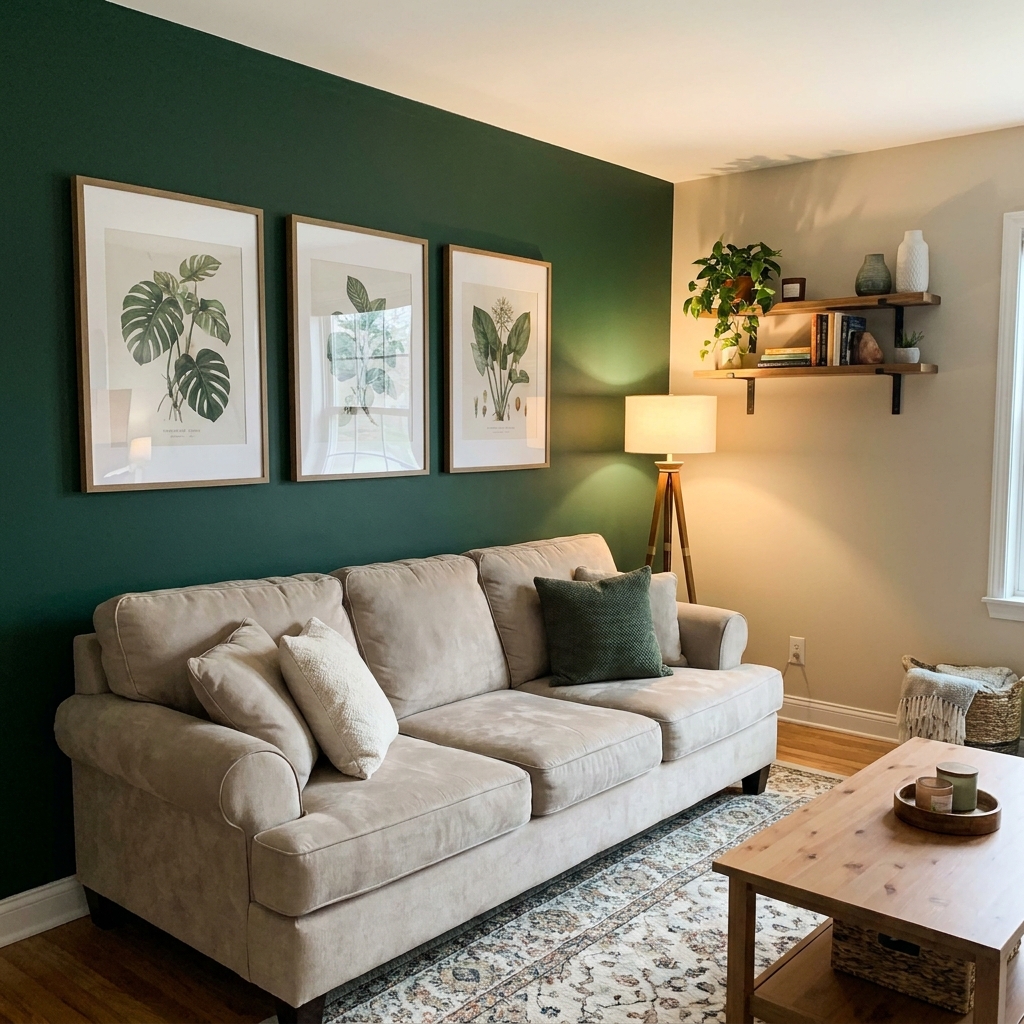
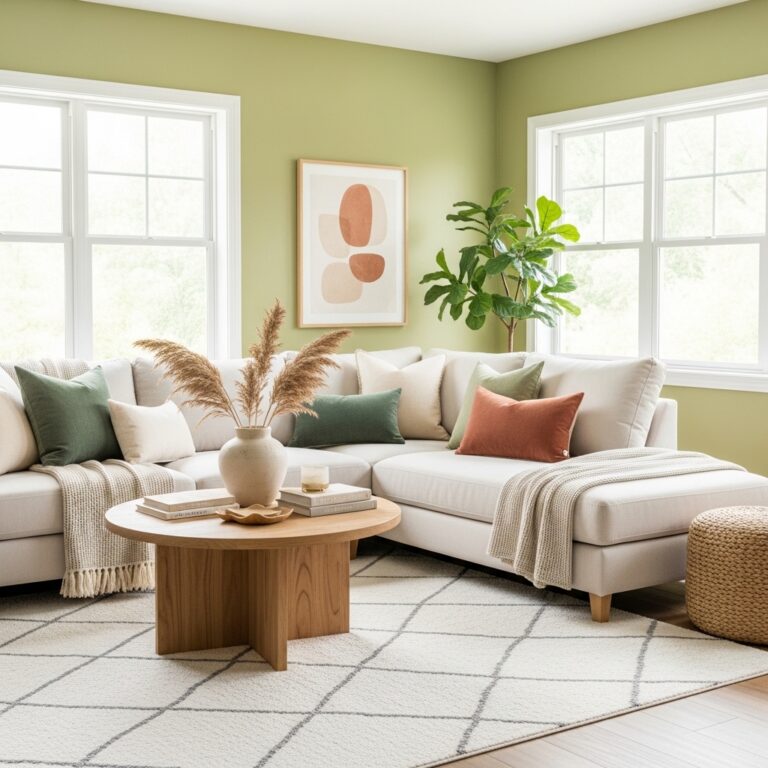
The wall behind your sofa is the natural focal point of the room. Painting it a different color draws the eye and adds depth without overwhelming the space.
Choose a color that complements your existing palette. Deep navy, charcoal, or sage green are popular choices. Keep the other three walls neutral to avoid a cave-like feeling.
Pro Tip: Extend the accent color to the ceiling in a narrow strip. This creates a canopy effect that makes the ceiling feel higher.
Mistake to Avoid: Do not paint the smallest wall as your accent wall. The wall behind the sofa or fireplace is best.
7. Use a Monochromatic Color Scheme
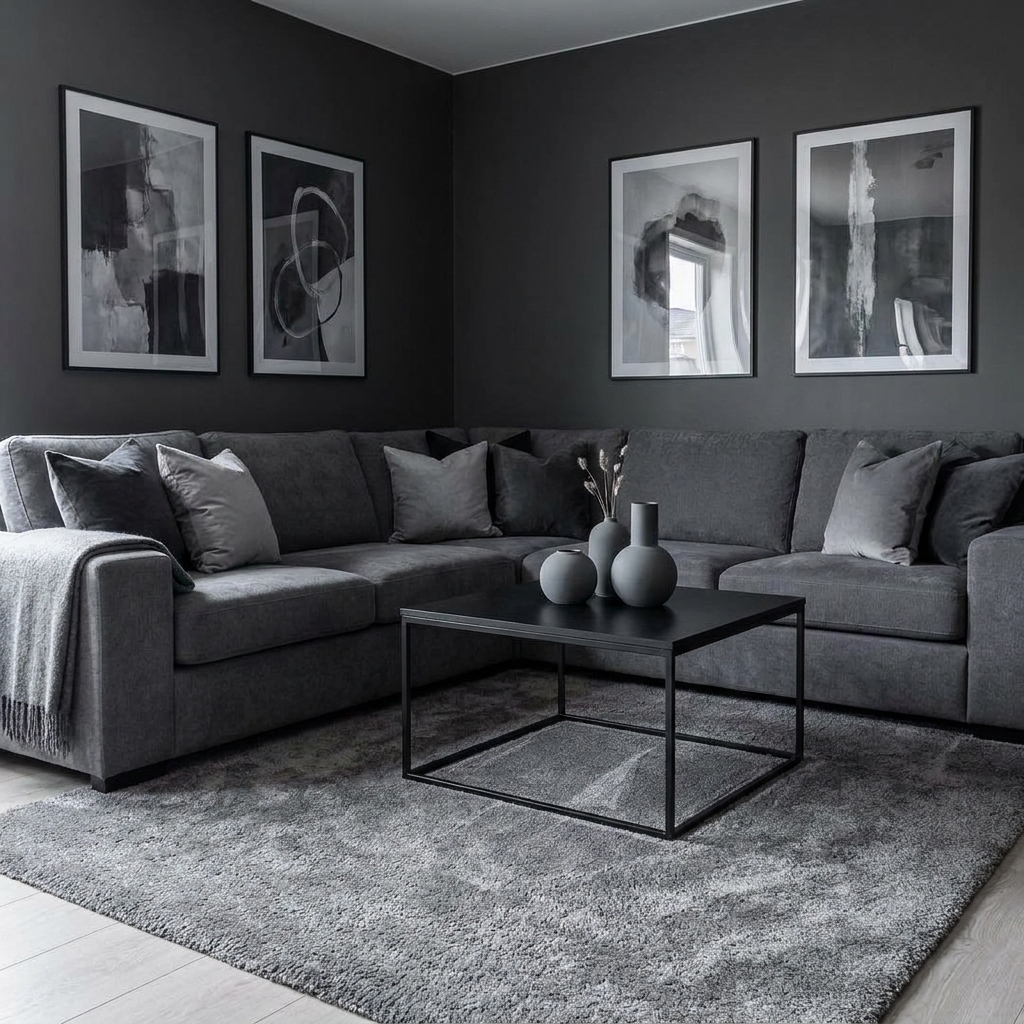
A monochromatic scheme uses different shades of the same color. It is sophisticated, calming, and easy to execute. This approach works especially well for small living room ideas for home.
Choose a base color like beige, gray, or blue. Use the lightest shade on walls, a medium shade on furniture, and the darkest shade on accessories. The lack of contrast creates a serene atmosphere.
Pro Tip: Add texture to prevent a monochromatic room from feeling flat. Use velvet, linen, wool, and wood in the same color family.
Mistake to Avoid: Do not use the exact same color everywhere. Variation in shade and texture is essential.
8. Add a Painted Stripe or Pattern
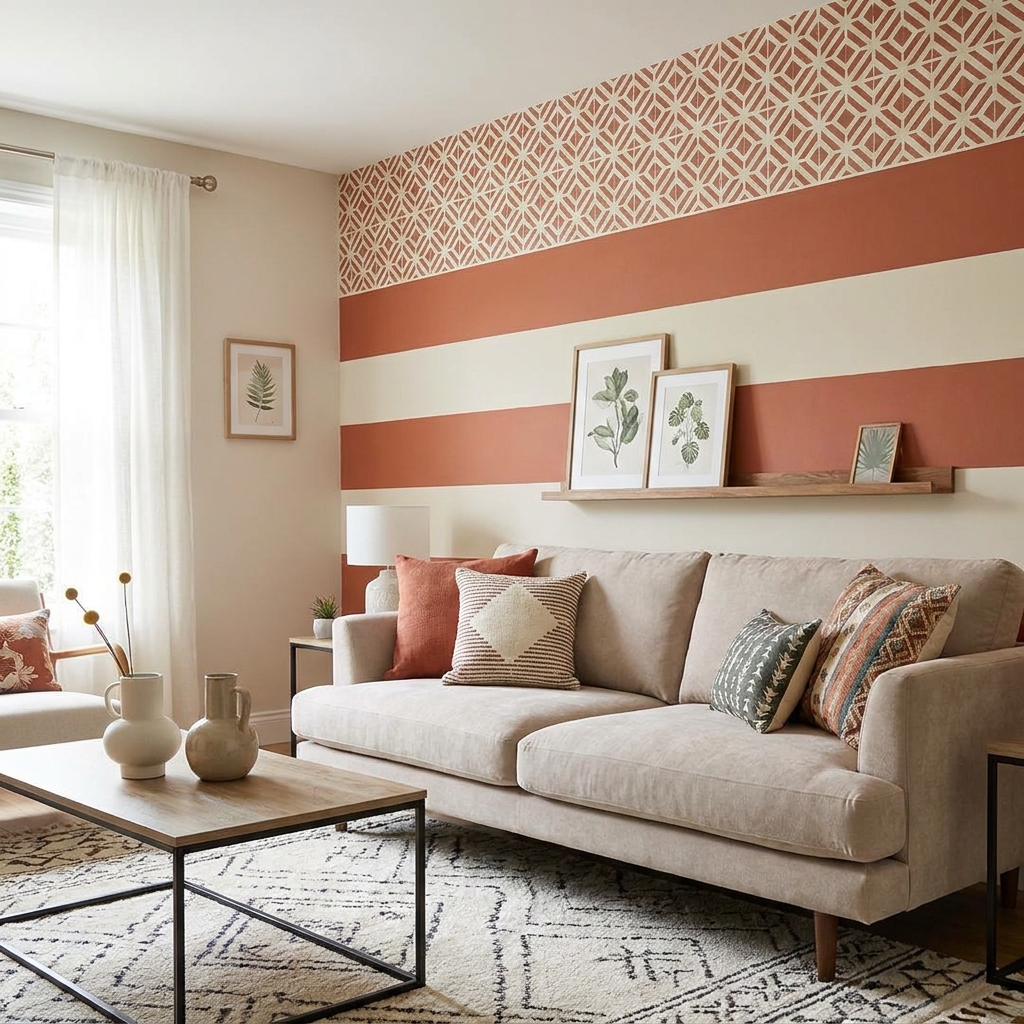
Paint does not have to be solid. A painted stripe or geometric pattern adds architectural interest without the commitment of wallpaper. This is one of the more bold home decor ideas with living area for renters.
Use painter’s tape to create horizontal stripes, vertical stripes, or a chevron pattern. Choose two shades of the same color for a subtle look or contrasting colors for drama.
Pro Tip: Use a level to ensure your stripes are perfectly straight. Crooked stripes look amateur.
Mistake to Avoid: Do not use more than two colors in your pattern. Too many colors look chaotic.
9. Paint the Ceiling a Lighter Shade
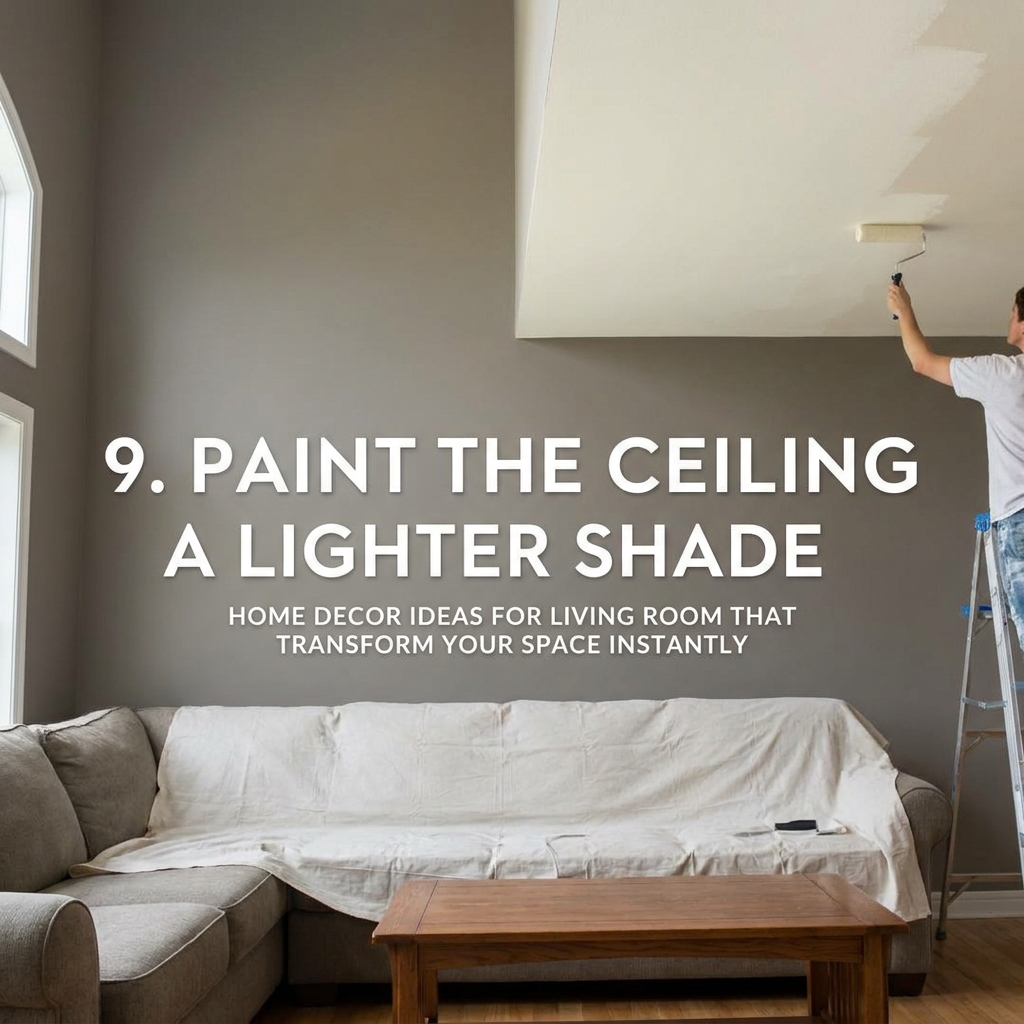
White ceilings are standard. They are not always the best choice. Painting the ceiling a lighter version of your wall color creates a seamless, enveloping look that makes the room feel larger.
Use a 50% strength version of your wall color for the ceiling. The slight contrast will draw the eye upward without creating a harsh line. This technique works especially well in rooms with high ceilings.
Pro Tip: Use flat paint on the ceiling. Flat paint hides imperfections and does not reflect glare.
Mistake to Avoid: Do not paint the ceiling a darker color in a room with low ceilings. Dark colors lower the ceiling visually.
10. Create a Board and Batten Accent Wall
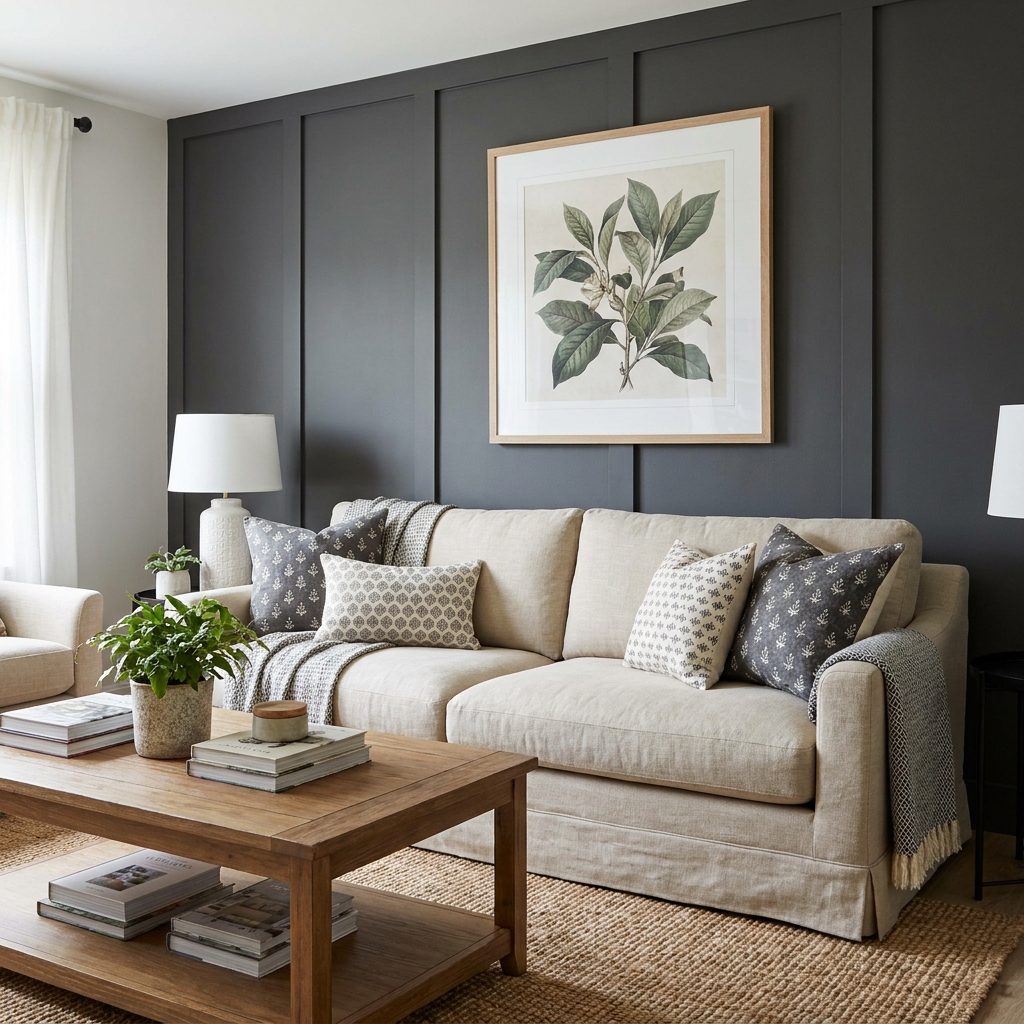
Board and batten adds texture and architectural interest. It is easier to install than you think and works on any budget. This is one of the most impactful living room ideas for home for DIYers.
Install vertical battens over a painted wall. Space them 12-18 inches apart. Paint the battens the same color as the wall for a subtle look or a contrasting color for drama.
Pro Tip: Use MDF boards for the battens. MDF is inexpensive, smooth, and easy to paint.
Mistake to Avoid: Do not space the battens too far apart. Wide spacing looks cheap and unfinished.
Lighting & Ambiance
Lighting is the most underrated element of home decor. The right lighting can make an ugly room look beautiful. The wrong lighting can make a beautiful room look ugly.
11. Layer Three Types of Lighting
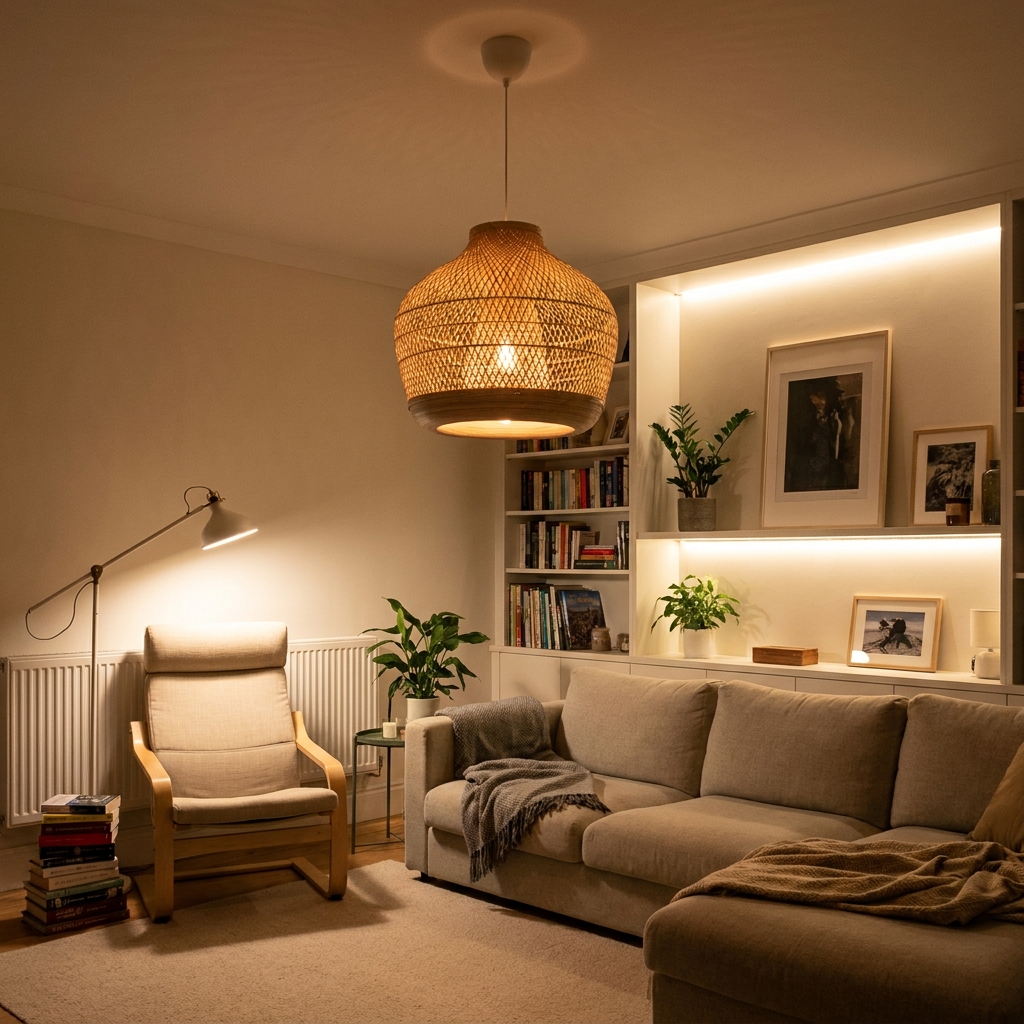
Every room needs three layers of light. Ambient lighting is general illumination from overhead fixtures. Task lighting is focused light for reading or activities. Accent lighting highlights art or architectural features.
Use a dimmer on your overhead light. Add table lamps on end tables for task lighting. Place a floor lamp in a dark corner for accent lighting. The layers will create depth and warmth.
Pro Tip: Use the same color temperature (2700K) for all bulbs in the room. Mixed temperatures look chaotic.
Mistake to Avoid: Do not rely on overhead lighting alone. A room without lamps feels cold and institutional.
12. Add Wall Sconces for Ambient Glow
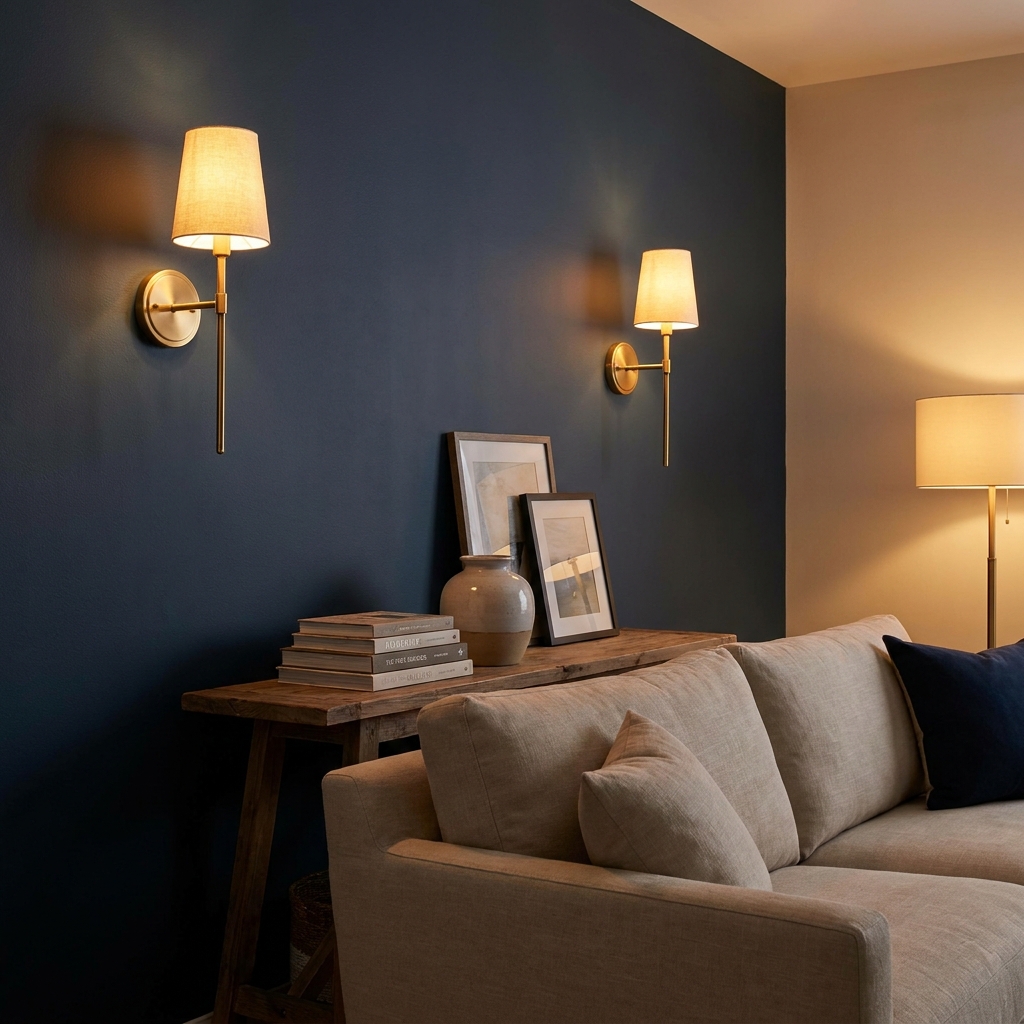
Wall sconces free up floor and table space. They provide soft, indirect light that flatters everyone. This is one of the best home decor ideas with living area for small spaces.
Install sconces on either side of a mirror or piece of art. Use plug-in sconces if you cannot hardwire. Place them at 60-66 inches from the floor for optimal light distribution.
Pro Tip: Choose sconces with shades that direct light upward. Upward light bounces off the ceiling and fills the room evenly.
Mistake to Avoid: Do not install sconces too high. The light should hit the wall, not the ceiling.
13. Use a Floor Lamp in a Dark Corner
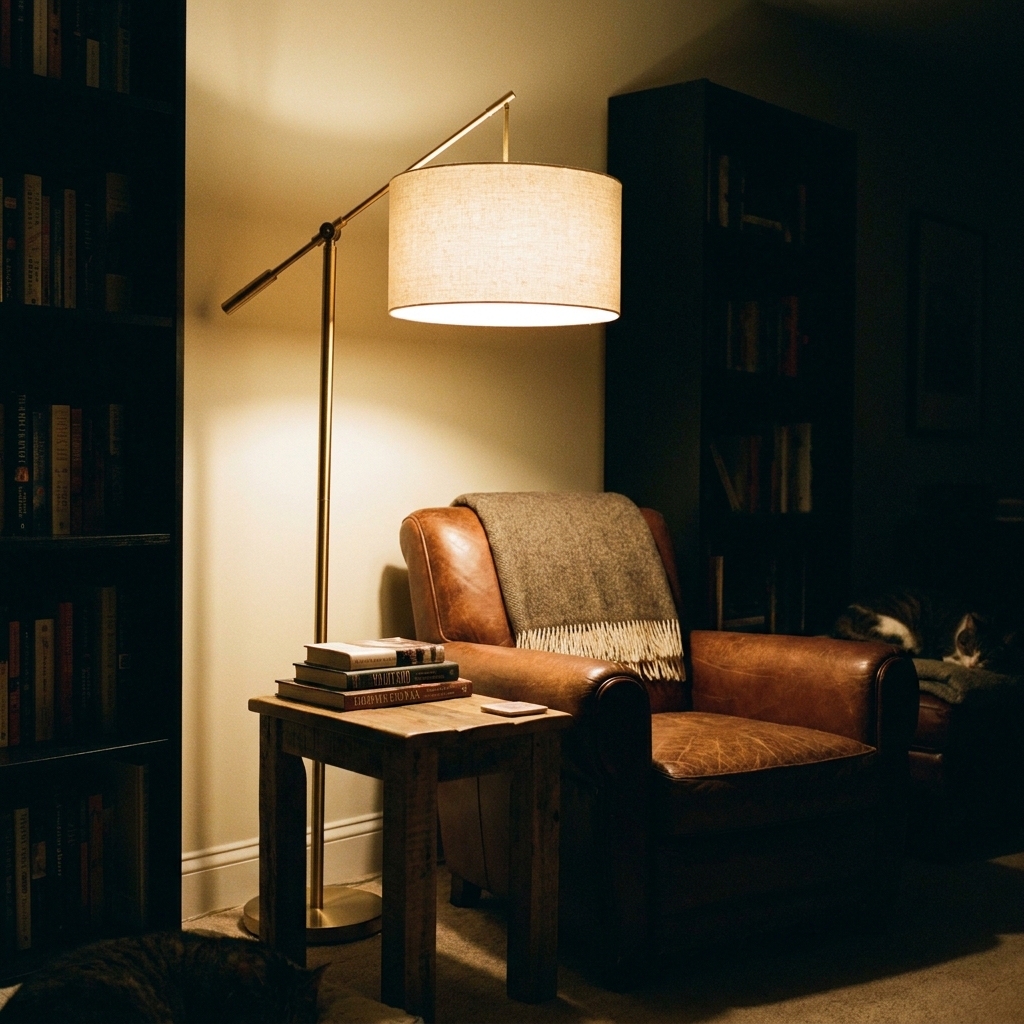
Every living room has a corner that collects shadows. A floor lamp eliminates that dead zone and balances the light distribution. The lamp itself also adds vertical interest.
Place the floor lamp in the corner diagonally opposite your brightest window. Choose a lamp with a shade that directs light upward. Use a dimmer switch for adjustable brightness.
Pro Tip: Use a floor lamp with a weighted base. It will not tip over if bumped.
Mistake to Avoid: Do not place a floor lamp in a walking path. It will be knocked over.
14. Install Dimmer Switches Everywhere
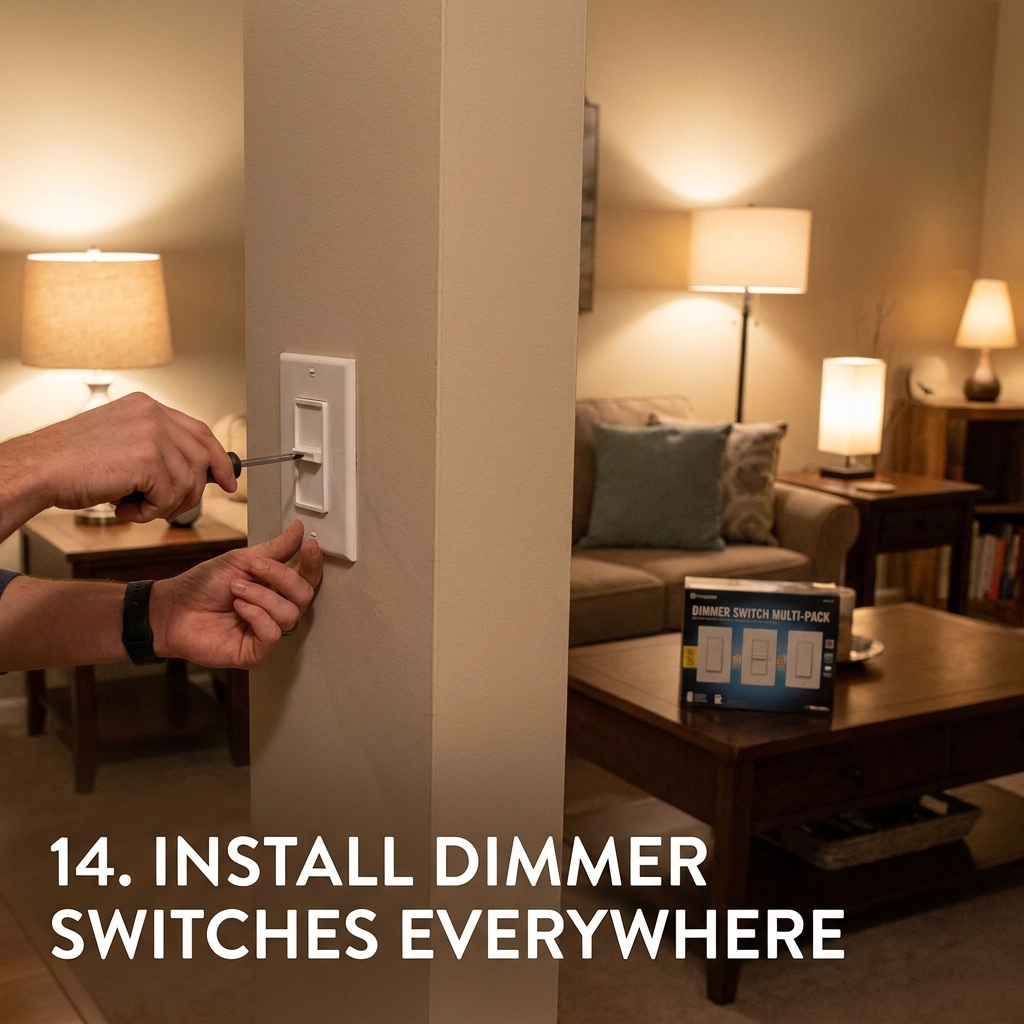
Dimmer switches are inexpensive and easy to install. They allow you to change the mood of the room instantly. Bright light for cleaning and dim light for relaxing.
Replace standard switches with dimmers in your living room. Use LED-compatible dimmers for modern bulbs. The cost is under $30 per switch and the installation takes 15 minutes.
Pro Tip: Choose a dimmer with a preset button. One tap returns to your favorite brightness level every time.
Mistake to Avoid: Do not use a standard dimmer with LED bulbs. Check that your dimmer is LED-compatible.
15. Add Candles for Warmth and Ambiance
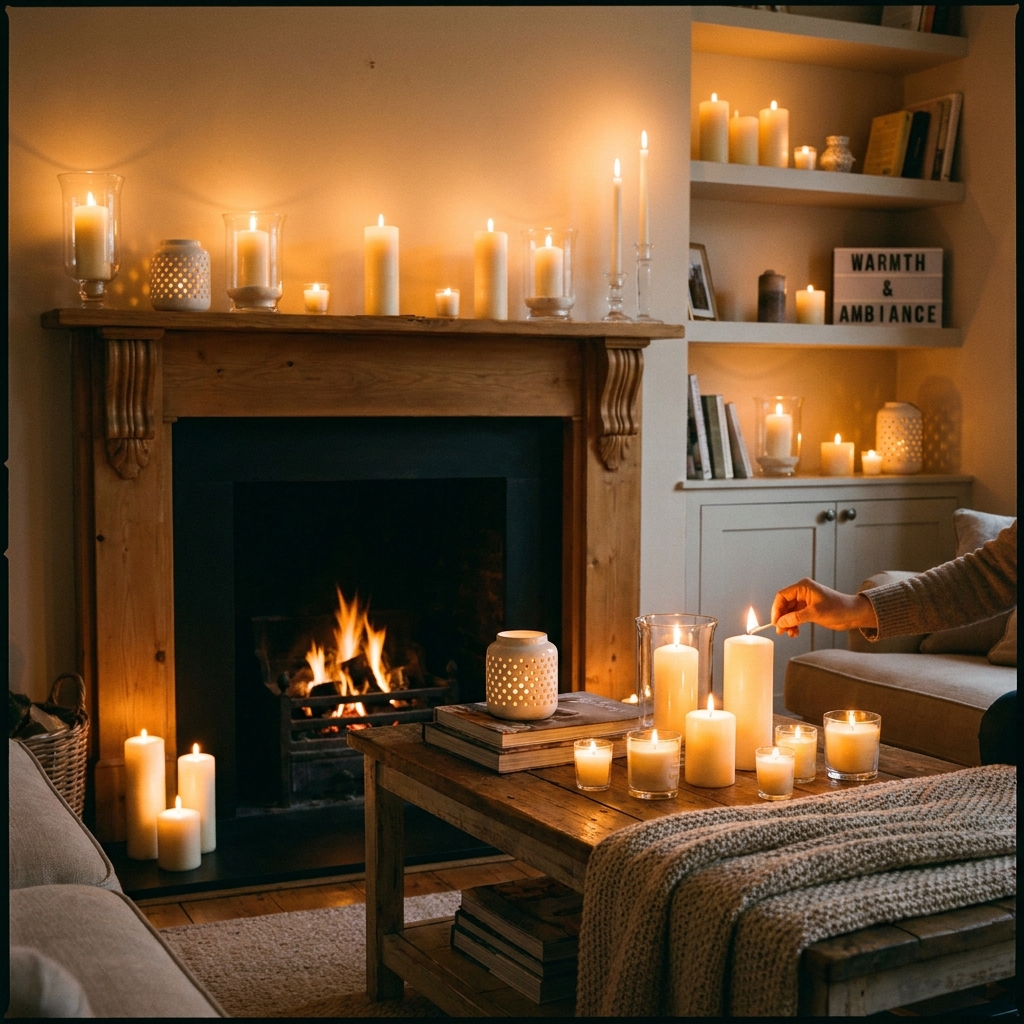
Candles are the original mood lighting. They add warmth, scent, and a flickering glow that electric lights cannot replicate. Use them on coffee tables, mantels, and side tables.
Group candles in odd numbers for visual appeal. Use unscented candles if you are sensitive to fragrance. For safety, consider flameless LED candles that flicker realistically.
Pro Tip: Place candles on a tray with a glass of water. The water reflects the flame and adds an extra layer of beauty.
Mistake to Avoid: Do not leave burning candles unattended. Extinguish them before leaving the room.
Wall Art & Decor
Blank walls make a room feel unfinished. The right art and decor add personality, color, and a sense of completion.
16. Hang One Large Piece Instead of Many Small Ones
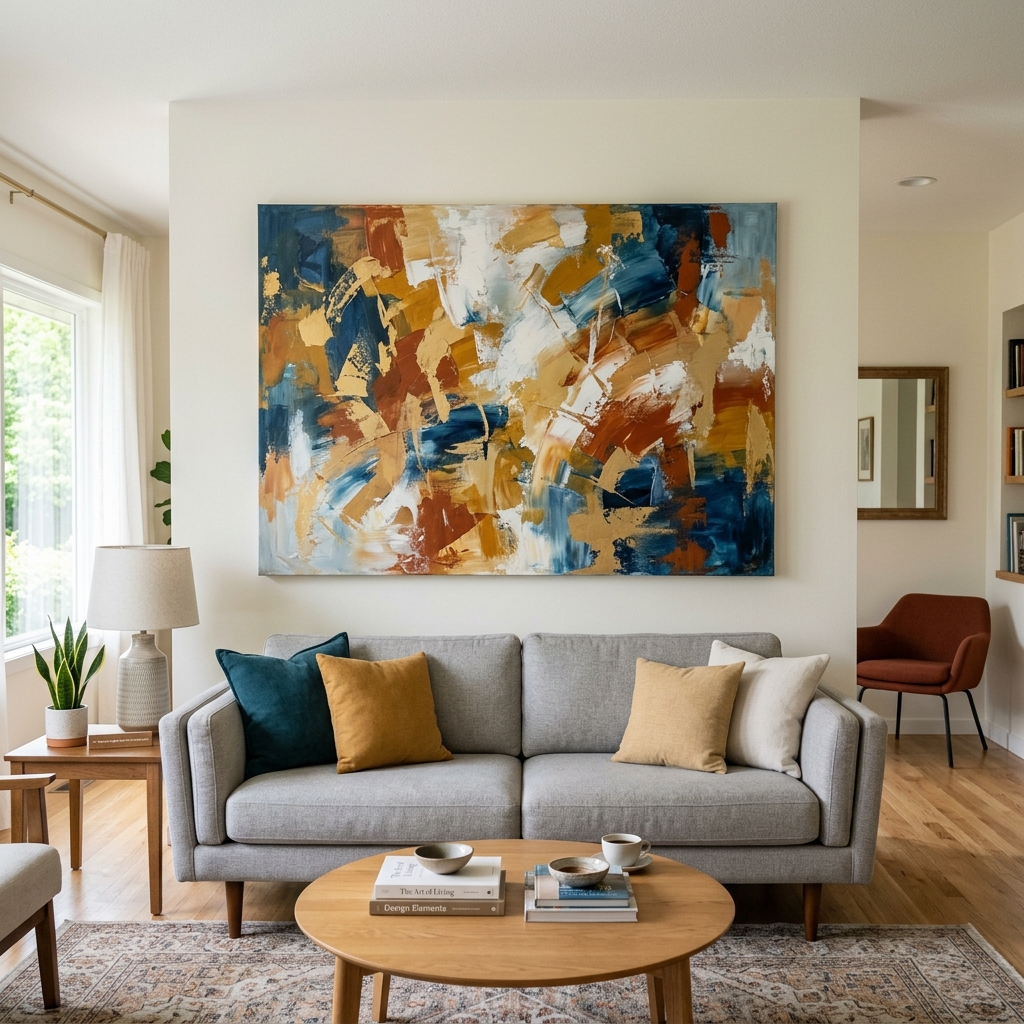
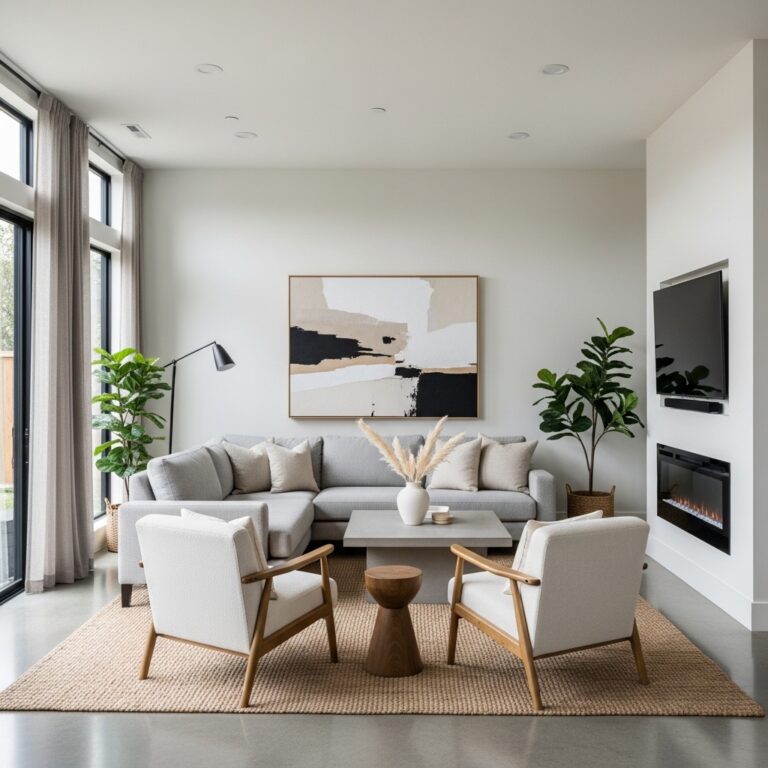
One large piece of art has more impact than a gallery wall of small pieces. It creates a focal point and simplifies the space. This is one of the most effective living room ideas for home for modern spaces.
Choose a piece that is two-thirds the width of the furniture below it. Hang it so the center is 57-60 inches from the floor. The art should relate to the sofa or console below it.
Pro Tip: Commission a local artist for a unique piece. The cost is often comparable to mass-produced art.
Mistake to Avoid: Do not hang art too high. It should connect with the furniture below it.
17. Create a Gallery Wall of Black and White Photos
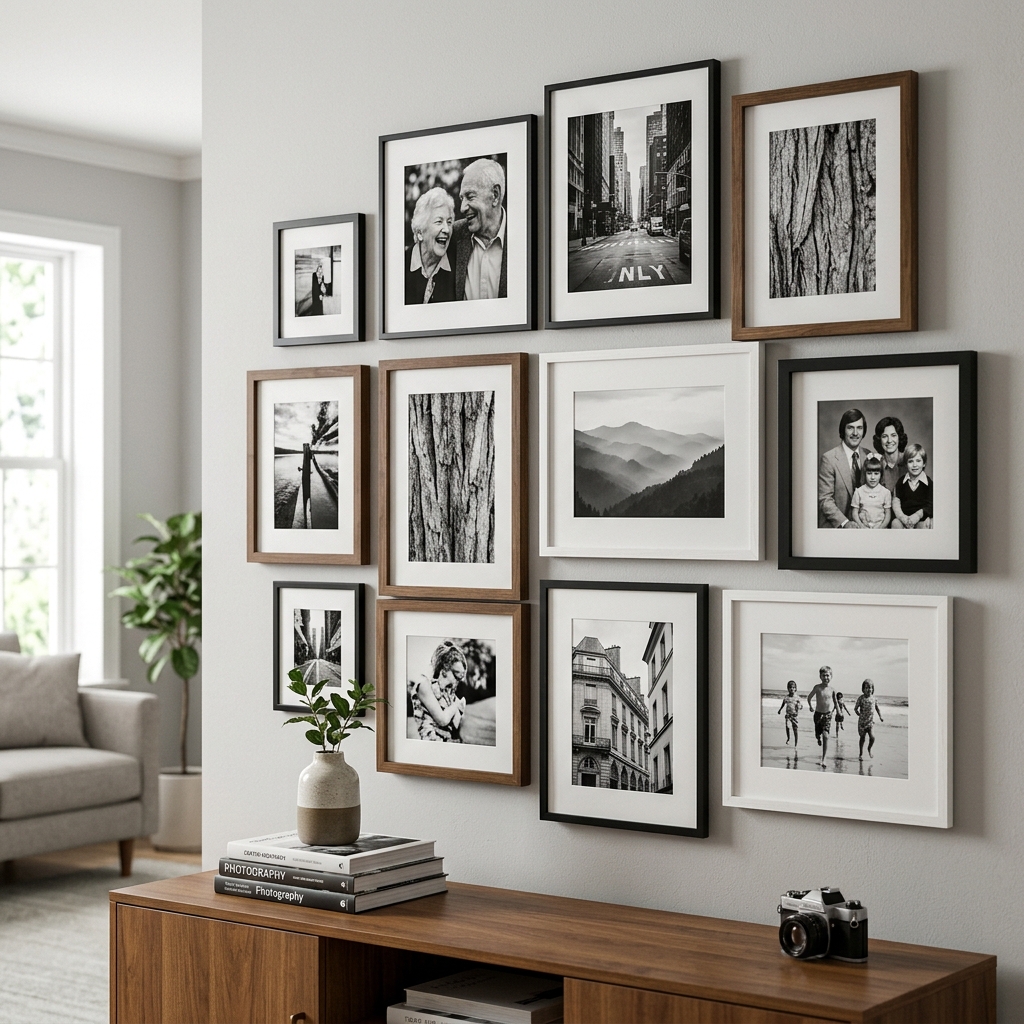
Color photos can look chaotic when grouped. Black and white photos are cohesive. The lack of color unifies different subjects and frame styles.
Convert family photos to black and white before printing. Use matching frames for a clean look or mismatched frames for an eclectic feel. Arrange the frames on the floor before hanging.
Pro Tip: Use the same mat color for all frames. White or cream mats create consistency.
Mistake to Avoid: Do not mix black and white photos with color photos in the same gallery wall.
18. Add a Large Mirror to Reflect Light
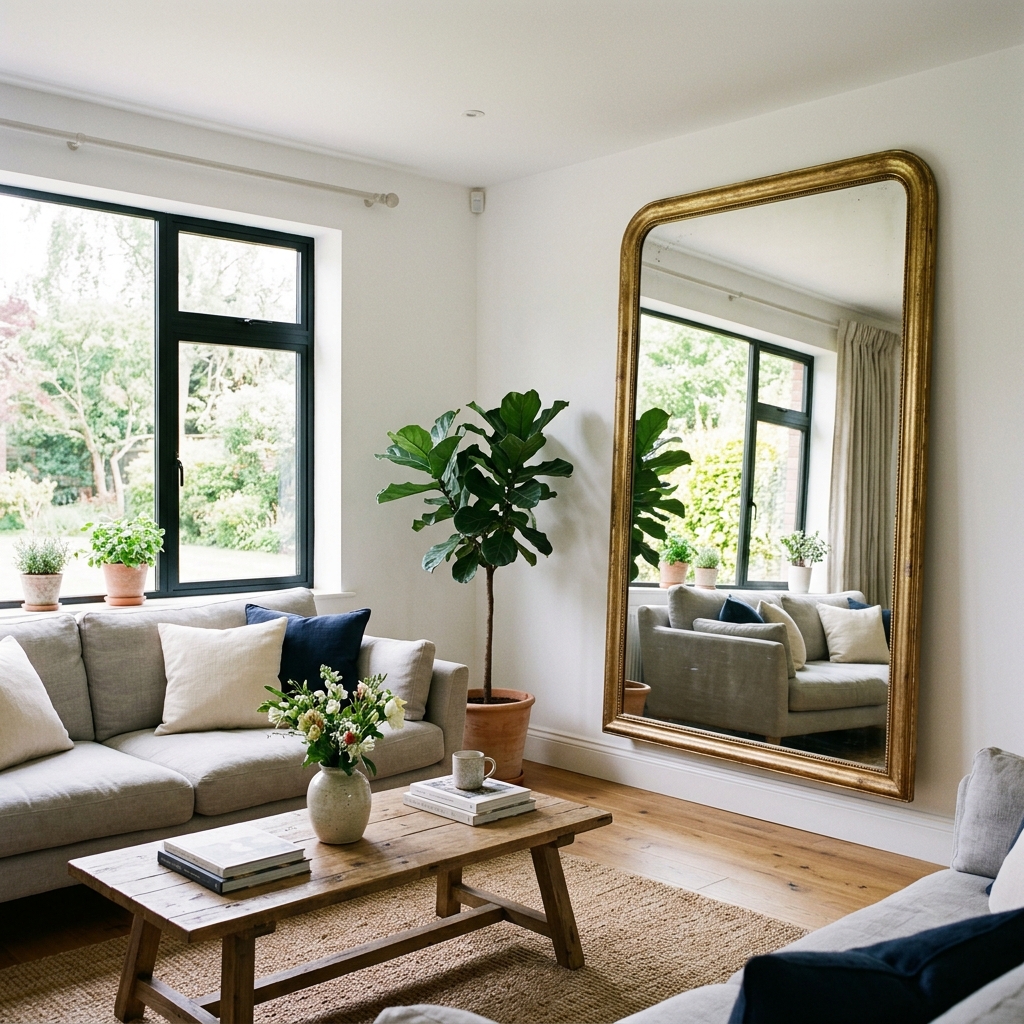
A mirror reflects light and makes the room feel larger. Place it opposite a window to double the natural light. The frame itself can be a decorative element.
Choose a mirror that is at least half the width of the furniture below it. Hang it so the center is 57-60 inches from the floor. Lean a large mirror against the wall for a casual look.
Pro Tip: Use a mirror with an arched top. The arch adds architectural interest and draws the eye upward.
Mistake to Avoid: Do not place a mirror directly facing a cluttered area. It will reflect and double the clutter.
19. Use Floating Shelves for Display
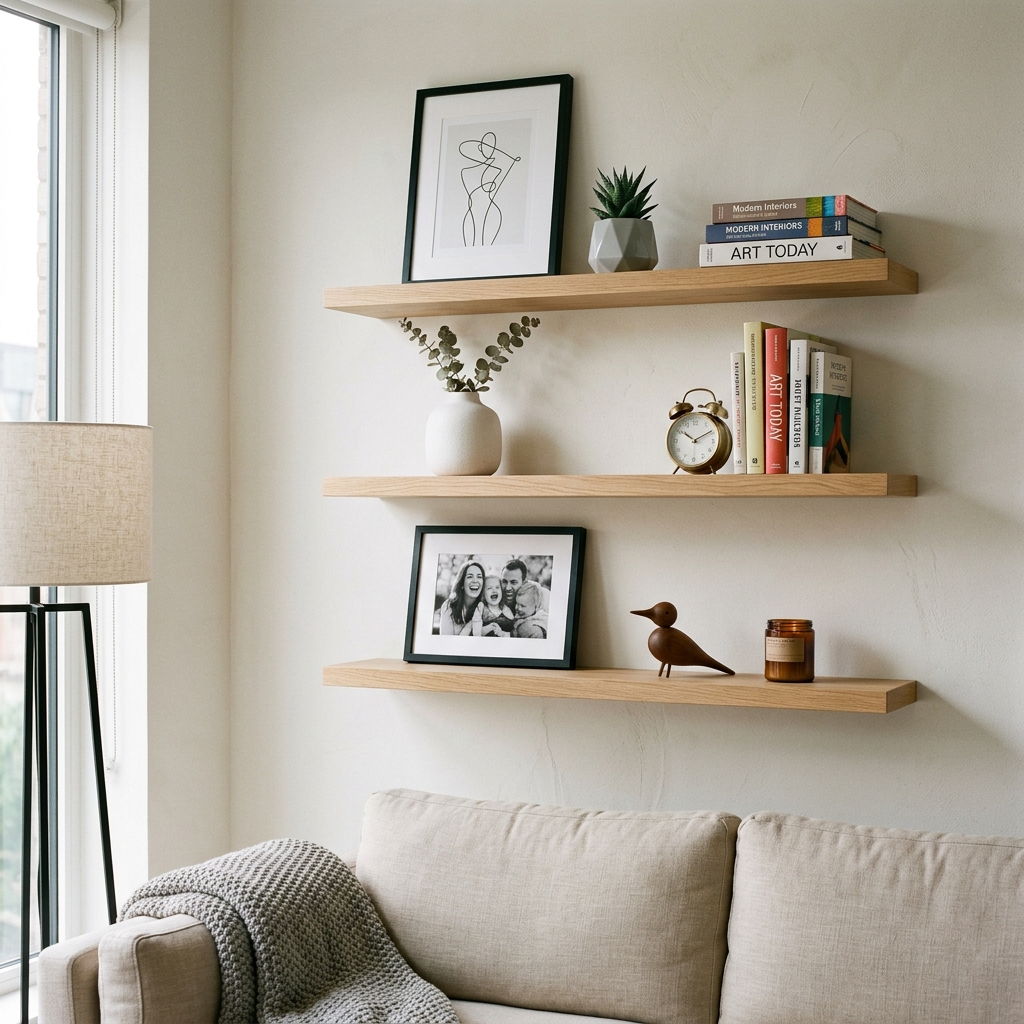
Floating shelves add storage and display space without taking floor space. Use them for books, plants, and small decor items. The shelves themselves disappear visually.
Mount shelves at different heights for visual interest. Use the 70/30 rule: fill 70% of the shelf, leave 30% empty. Group items in odd numbers for best effect.
Pro Tip: Use shelves with a hidden bracket system. The brackets are invisible, making the shelves appear to float.
Mistake to Avoid: Do not overload floating shelves. Each shelf has a weight limit.
20. Add a Sculptural Object to the Coffee Table
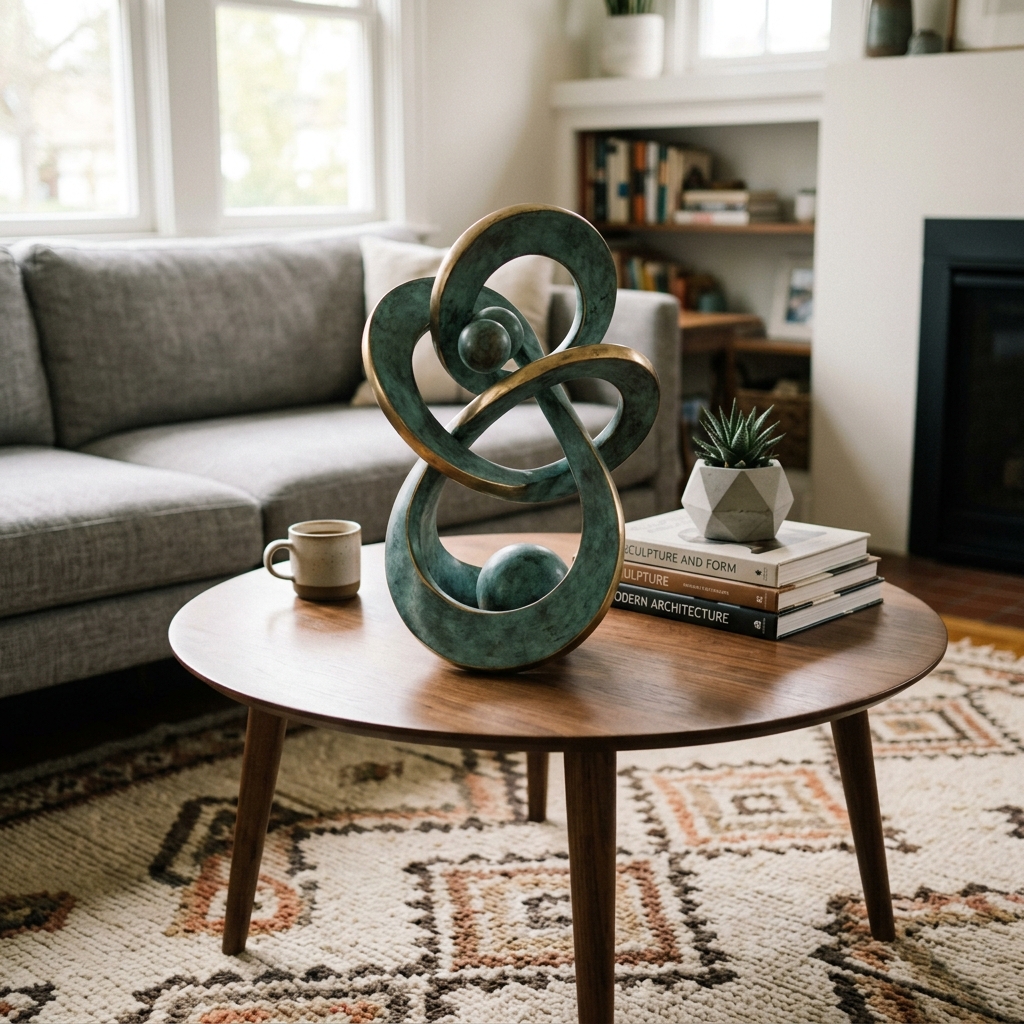
A coffee table needs a focal point. A sculptural object is more interesting than a flat arrangement. Choose something with height, texture, and personality.
Use a ceramic vase, a wooden bowl, or a stack of coffee table books. Keep the arrangement simple. One strong object is better than several weak ones.
Pro Tip: Use a tray to corral small items. The tray keeps the arrangement contained and intentional.
Mistake to Avoid: Do not use objects that are too small. A coffee table needs items with presence.
21. Incorporate Natural Elements like Wood and Stone
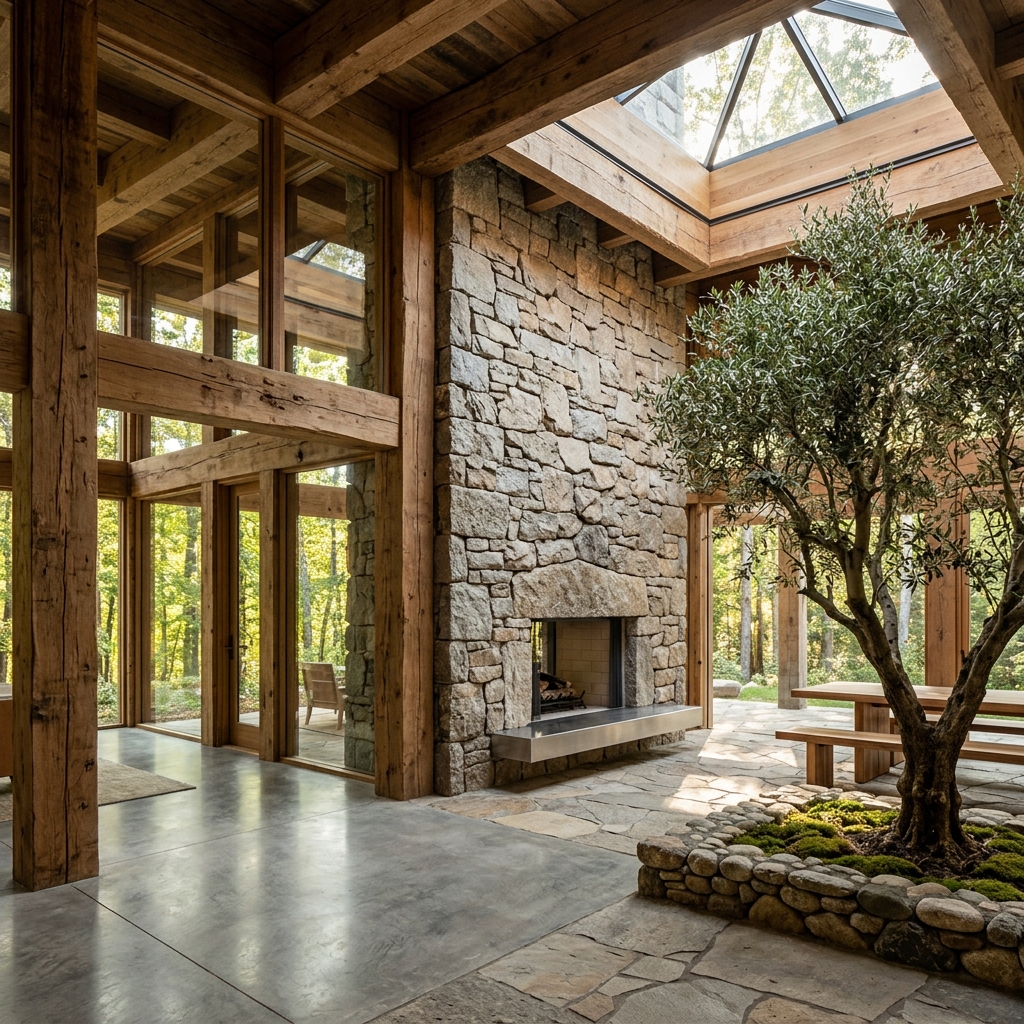
Natural materials add warmth and texture. Wood, stone, and plants bring the outdoors in. They also make a room feel more grounded and less manufactured.
Use a wood coffee table, stone coasters, and ceramic planters. Add a large potted plant in a corner. The natural elements will soften the hard lines of furniture.
Pro Tip: Mix different wood tones. Matching wood tones can feel flat. Walnut with oak adds depth.
Mistake to Avoid: Do not use synthetic materials that mimic natural ones. Real wood and stone age better and look more authentic.
Conclusion
Your living room should be the most comfortable room in your home. These living room ideas for home prove that you do not need a complete renovation to transform your space. Small changes in furniture placement, wall color, lighting, and decor create a dramatic difference.
The best home decor ideas with living area start with understanding how you use the space. Float your sofa away from the wall to create depth. Add swivel chairs for flexible seating. Layer your lighting for warmth and ambiance. Hang art at the correct height. Use natural materials for texture and comfort.
Start with one idea today. Paint an accent wall. Add a floor lamp. Rearrange your furniture. Each small change will bring you closer to the living room of your dreams. The space will feel more inviting, more functional, and more like you. Your family and guests will notice the difference, and you will enjoy spending time there even more.