20 Garage Storage Ideas That Maximize Space, Organization, and Everyday Efficiency
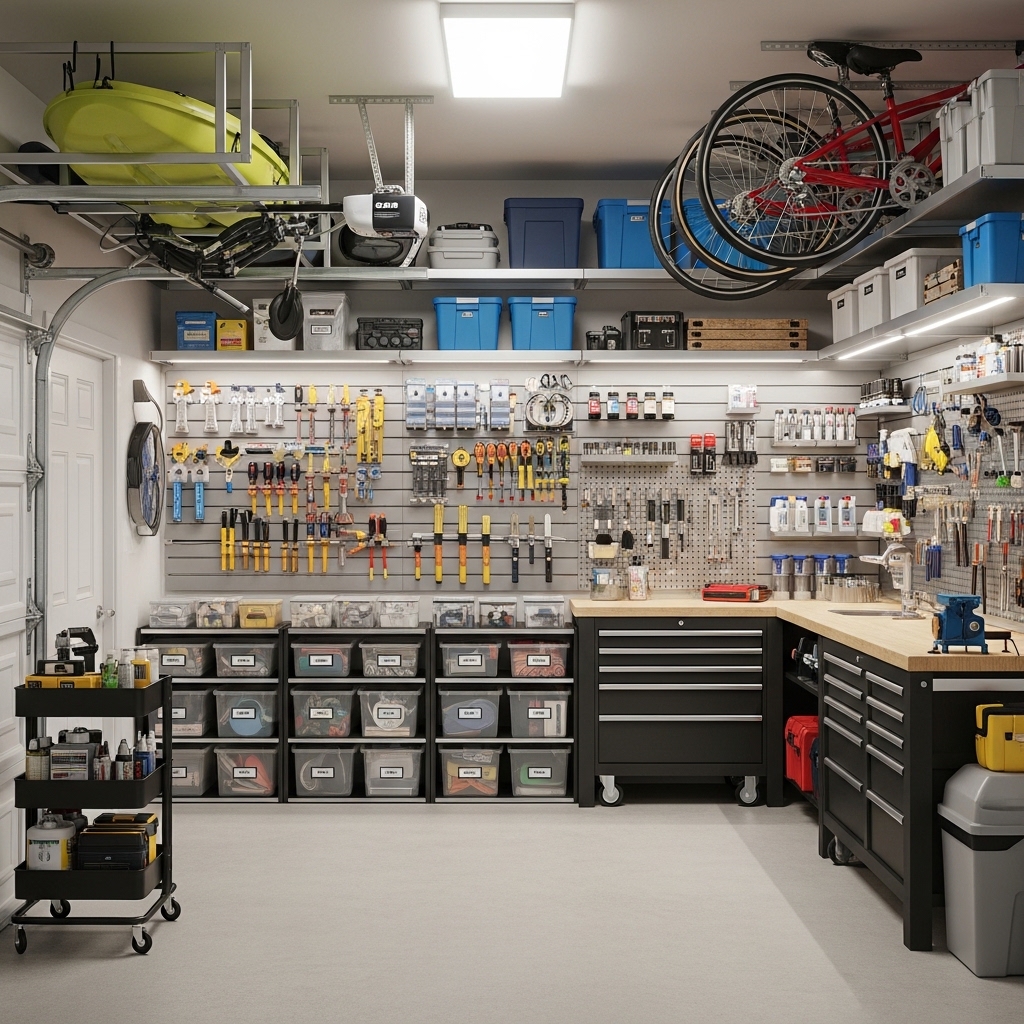
Garage storage fails when items are stacked randomly without a system for access, visibility, and long-term organization. Most homeowners underestimate how quickly clutter builds when storage isn’t designed around daily use and space limitations.
This guide focuses on practical garage storage ideas that improve layout efficiency, reduce clutter, and make everything easy to find. Each idea is built for real-life garages—small spaces, multi-use setups, and budget-friendly organization systems that actually work long-term.
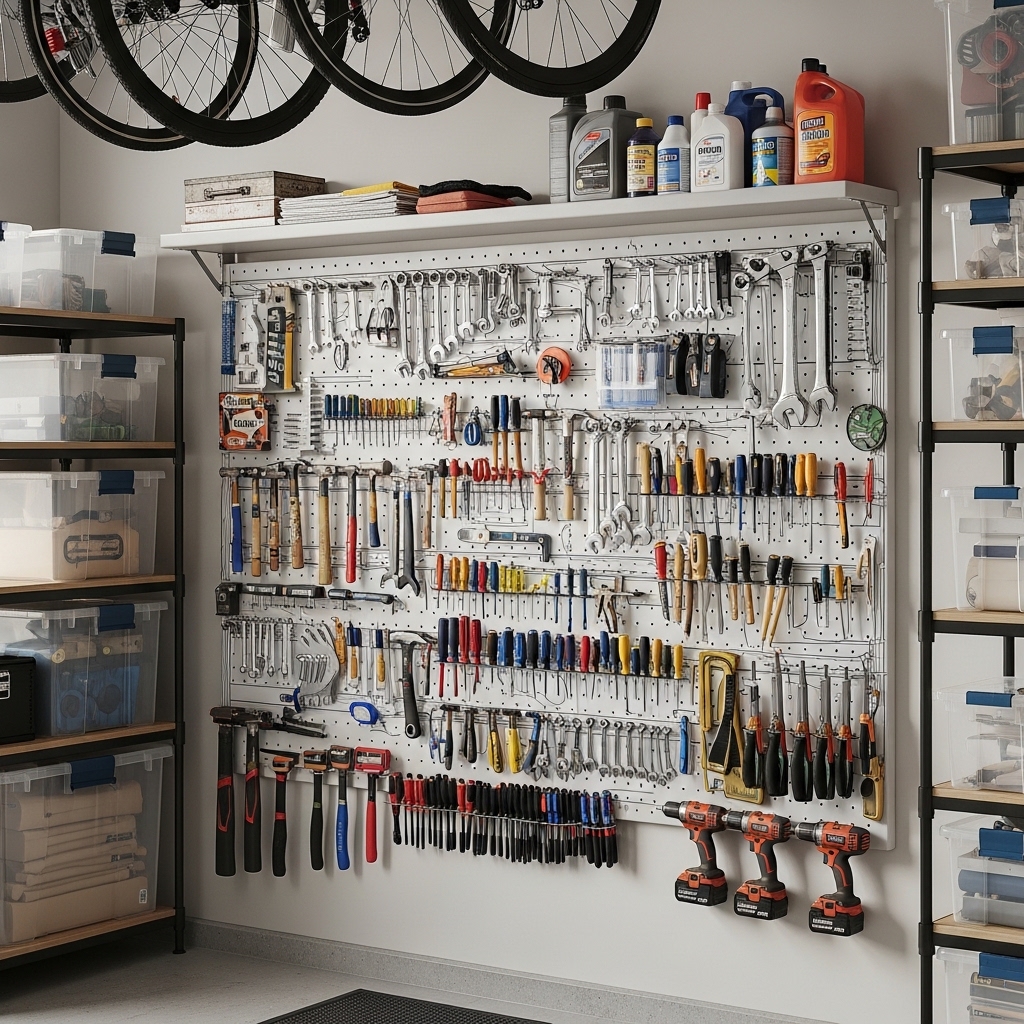
1. Wall-Mounted Tool Boards for Daily Access
Ideal for: Homeowners who frequently use tools and need quick access.
Install a pegboard or slotted wall system to hang tools vertically. Arrange items by frequency of use, keeping essential tools at eye level and less-used ones higher or lower. This setup keeps everything visible and prevents tools from getting lost in drawers.
This works because vertical storage reduces clutter on work surfaces and improves efficiency. When tools are easy to see and grab, tasks become faster and more organized. A common mistake is overcrowding the board, making it hard to locate specific tools.
Pro Tip: Outline tool shapes on the board to maintain organization.
Mistake to Avoid: Don’t hang overly heavy tools without proper anchors.
2. Ceiling Storage Racks for Seasonal Items
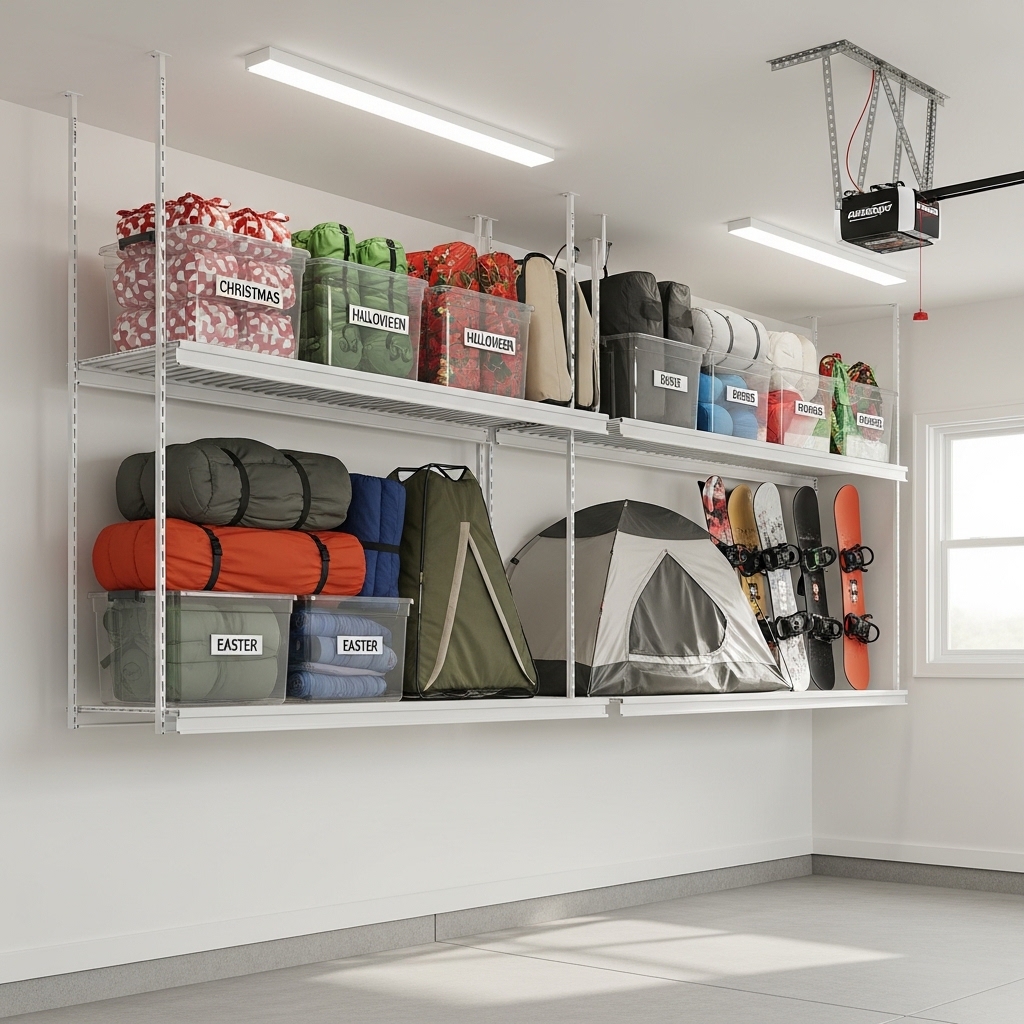
Best for: Storing items used only a few times a year.
Install overhead racks to store bins, holiday decorations, or camping gear. Keep heavier items closer to the walls and lighter items toward the center for safety. Use labeled containers for easy identification.
This works because it utilizes unused ceiling space while freeing up floor area. It’s especially effective in smaller garages where floor space is limited. Many people overload ceiling racks, creating safety risks.
Pro Tip: Use clear bins to quickly identify contents.
Mistake to Avoid: Don’t store frequently used items overhead.
3. Modular Shelving Systems for Flexible Storage
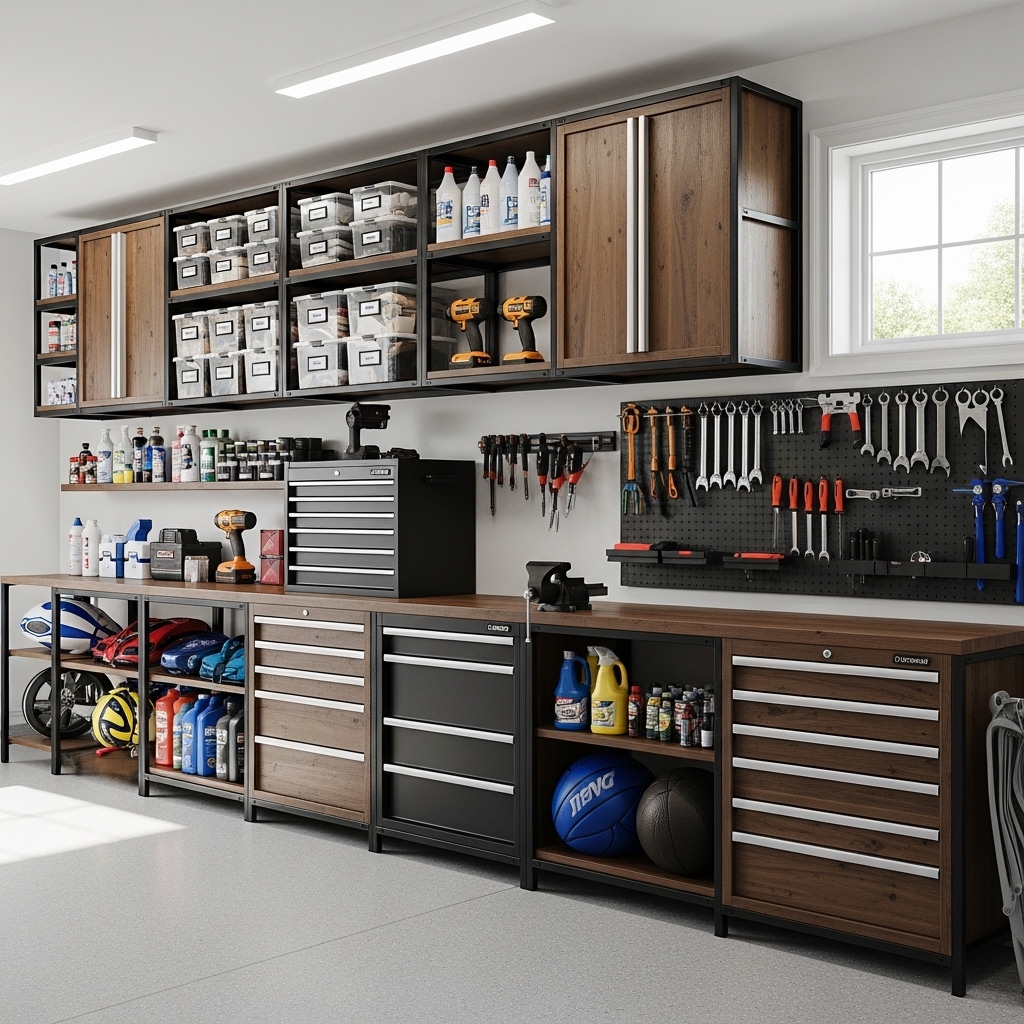
Ideal for: Growing households with changing storage needs.
Install adjustable shelving units that can be reconfigured as needed. Store items by category and keep heavier items on lower shelves for stability.
This works because modular systems adapt to your needs over time, preventing the need for constant redesign. Fixed shelves often become inefficient as storage needs change.
Pro Tip: Leave space between shelves for future adjustments.
Mistake to Avoid: Don’t overload upper shelves with heavy items.
4. Rolling Storage Carts for Multi-Use Garages
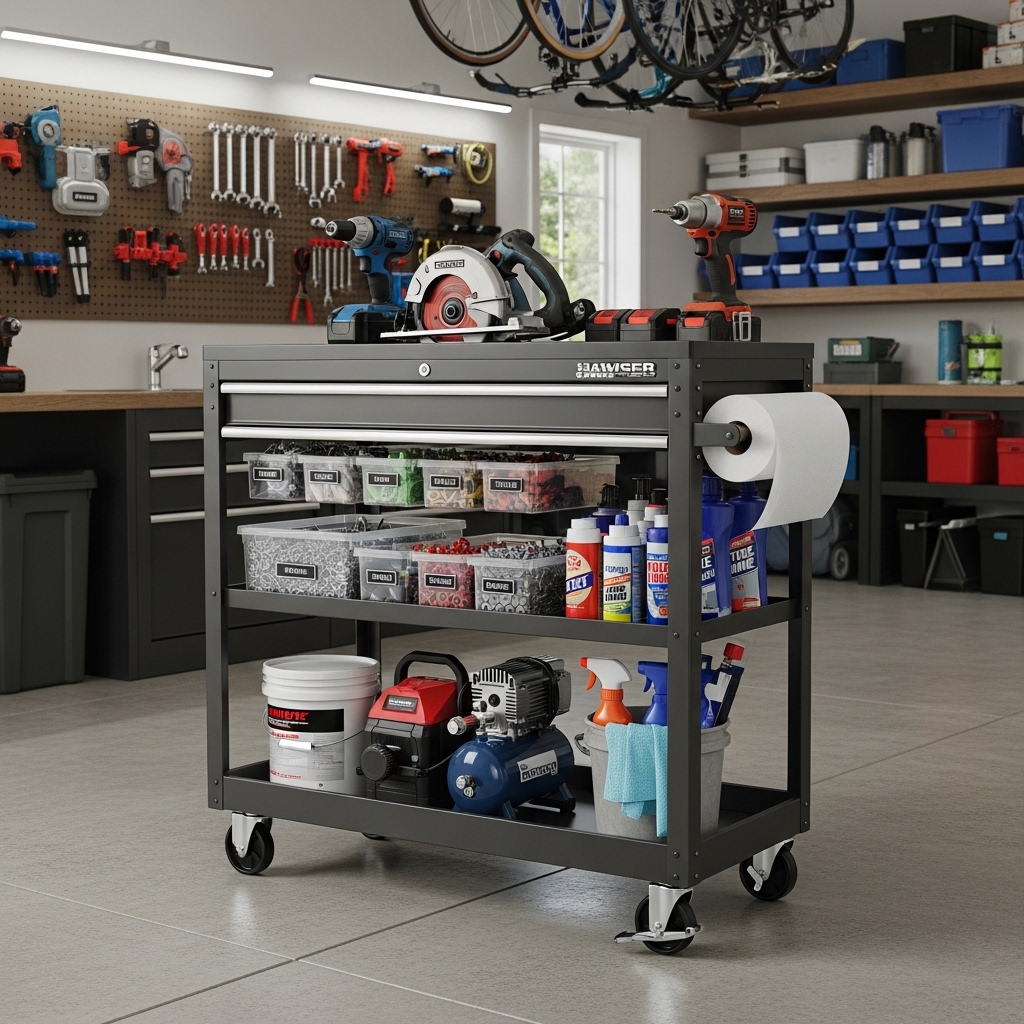
Best for: Garages used for both storage and workspace.
Use wheeled carts to store tools, cleaning supplies, or hobby materials. Move them around as needed to create temporary work zones.
This works because mobility adds flexibility, especially in garages that serve multiple purposes. Fixed storage limits adaptability.
Pro Tip: Choose carts with locking wheels for stability.
Mistake to Avoid: Don’t overcrowd carts—they should remain easy to move.
5. Clear Storage Bins for Easy Identification
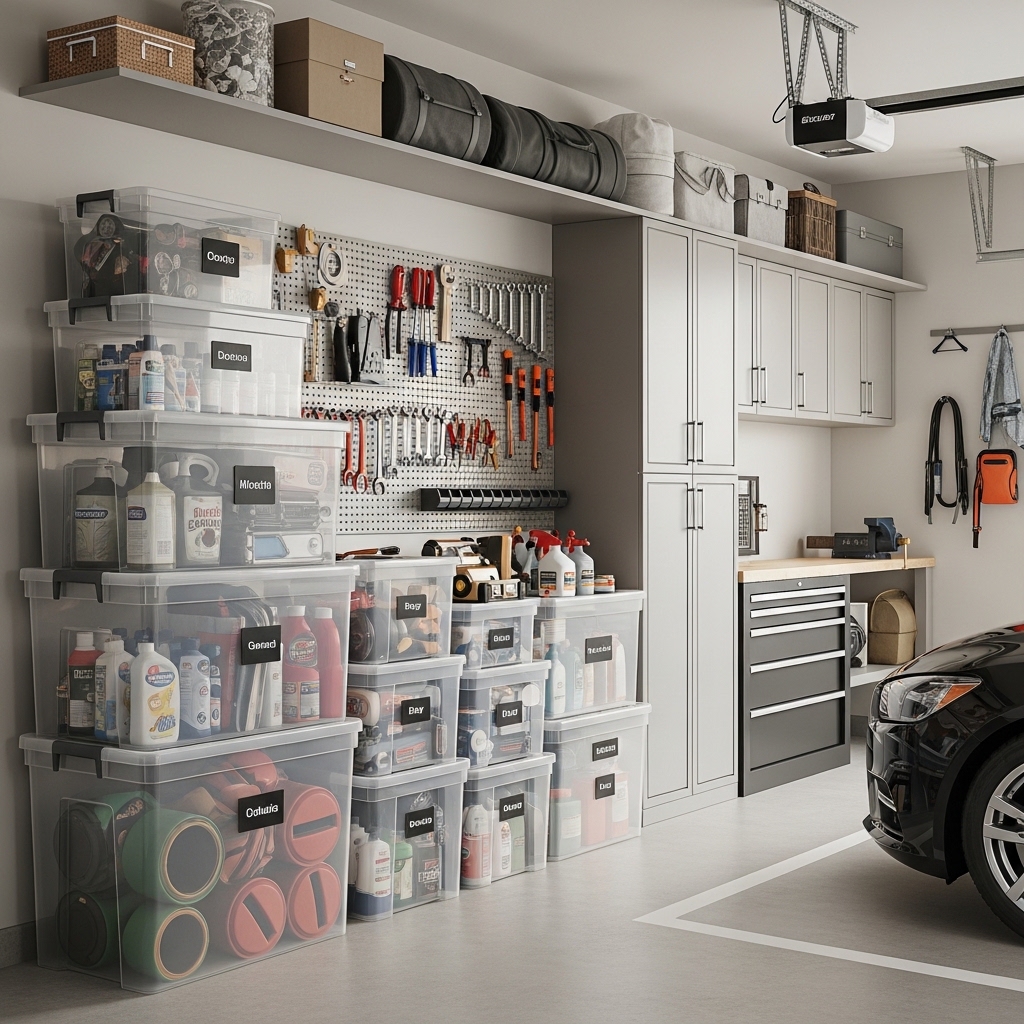
Ideal for: Organizing small items and preventing clutter buildup.
Use transparent bins to store hardware, accessories, or seasonal items. Label each bin clearly and group similar items together.
This works because visibility reduces the time spent searching for items. Opaque bins often lead to forgotten or duplicated purchases.
Pro Tip: Use stackable bins to maximize vertical space.
Mistake to Avoid: Don’t mix unrelated items in one bin.
6. Slatwall Panels for Heavy-Duty Organization
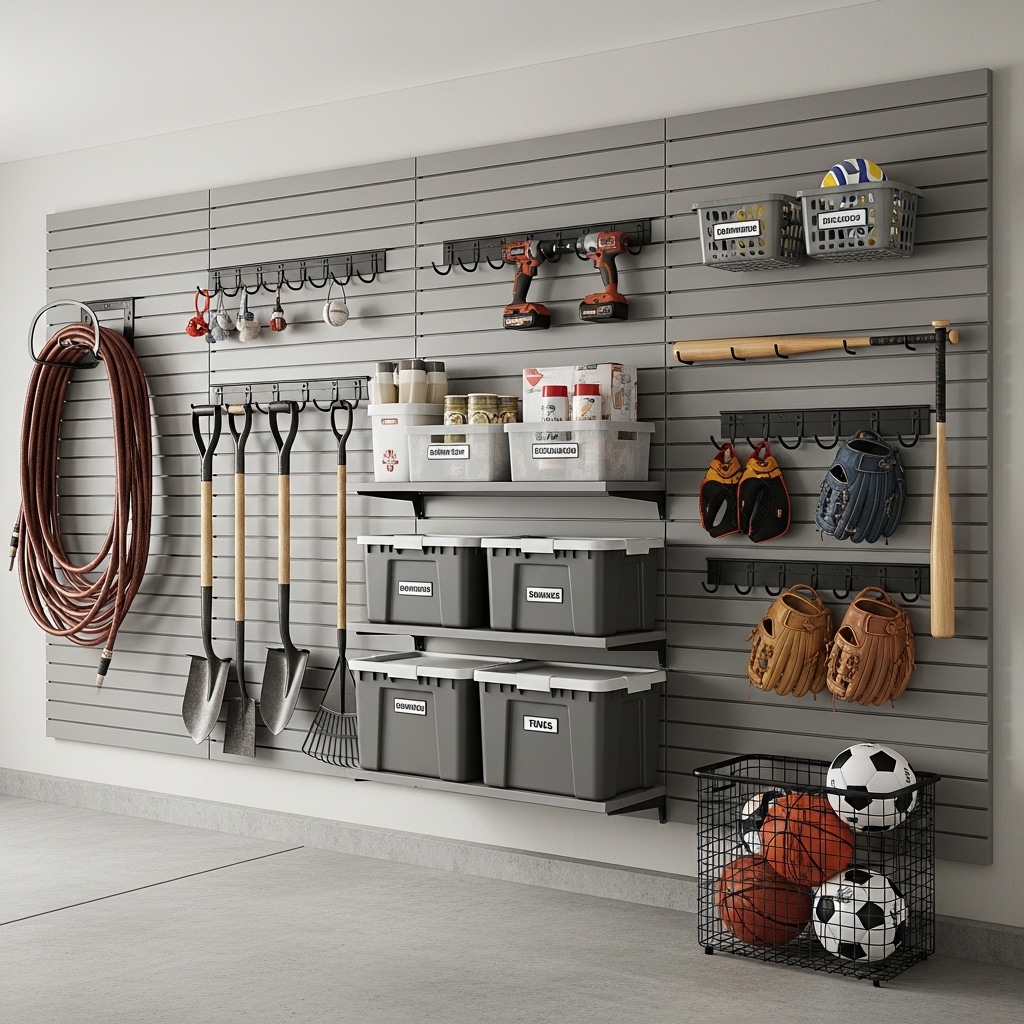
Best for: Storing bulky tools and equipment.
Install slatwall panels to hold hooks, baskets, and shelves. Customize the layout based on your storage needs and adjust as required.
This works because it provides a strong, flexible system for organizing large items without cluttering the floor.
Pro Tip: Use metal hooks for added durability.
Mistake to Avoid: Don’t exceed weight limits per panel section.
7. Over-the-Door Storage for Hidden Space
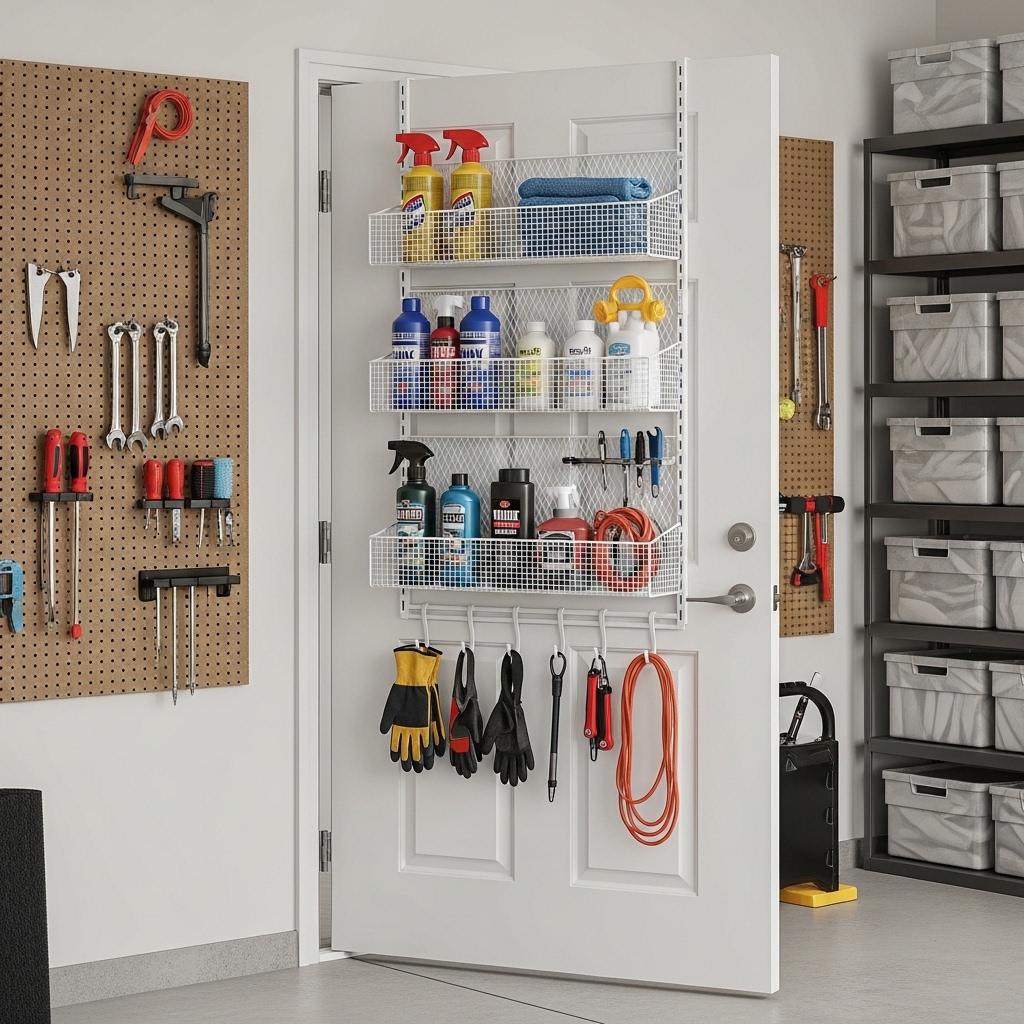
Ideal for: Small garages needing extra storage.
Use the back of garage doors for lightweight storage like cleaning supplies or small tools. Install racks or hanging organizers securely.
This works because it utilizes often-overlooked space without affecting main storage areas.
Pro Tip: Use slim organizers to avoid door interference.
Mistake to Avoid: Don’t store heavy items on doors.
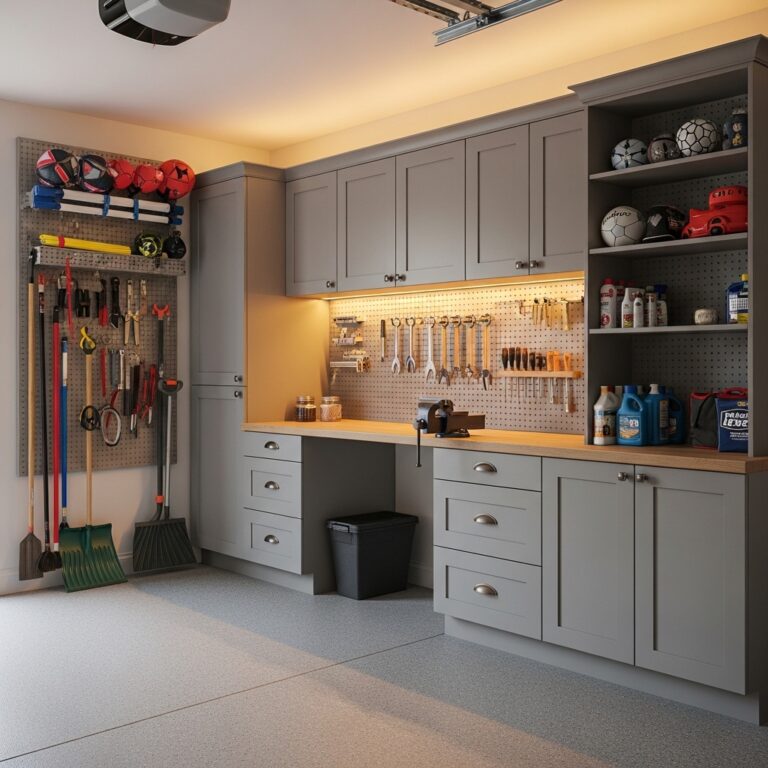
8. Dedicated Sports Equipment Zones
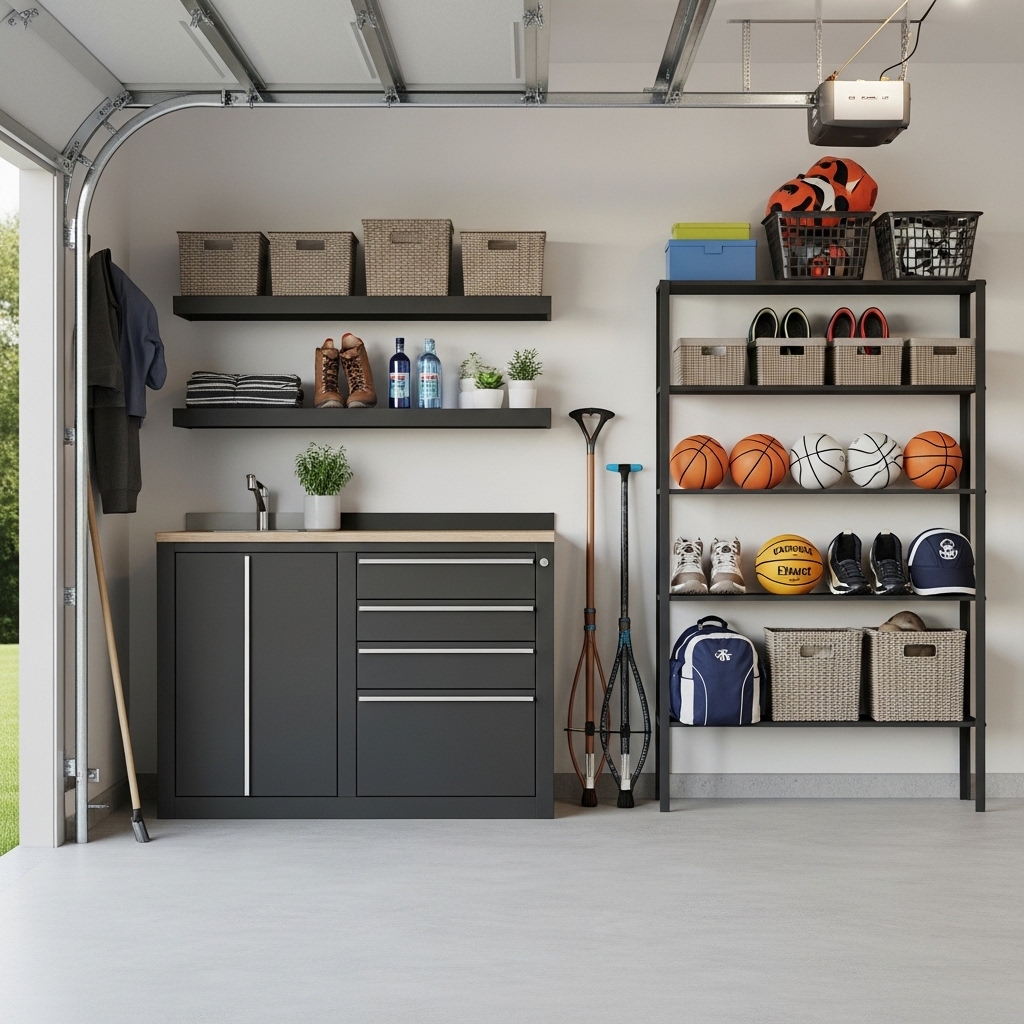
Best for: Families with active lifestyles.
Create a specific area for sports gear using racks, bins, or hooks. Keep frequently used items within easy reach.
This works because grouping items by activity reduces clutter and improves accessibility.
Pro Tip: Use labeled bins for each sport.
Mistake to Avoid: Don’t mix sports gear with general storage.
9. Corner Shelving Units for Dead Space
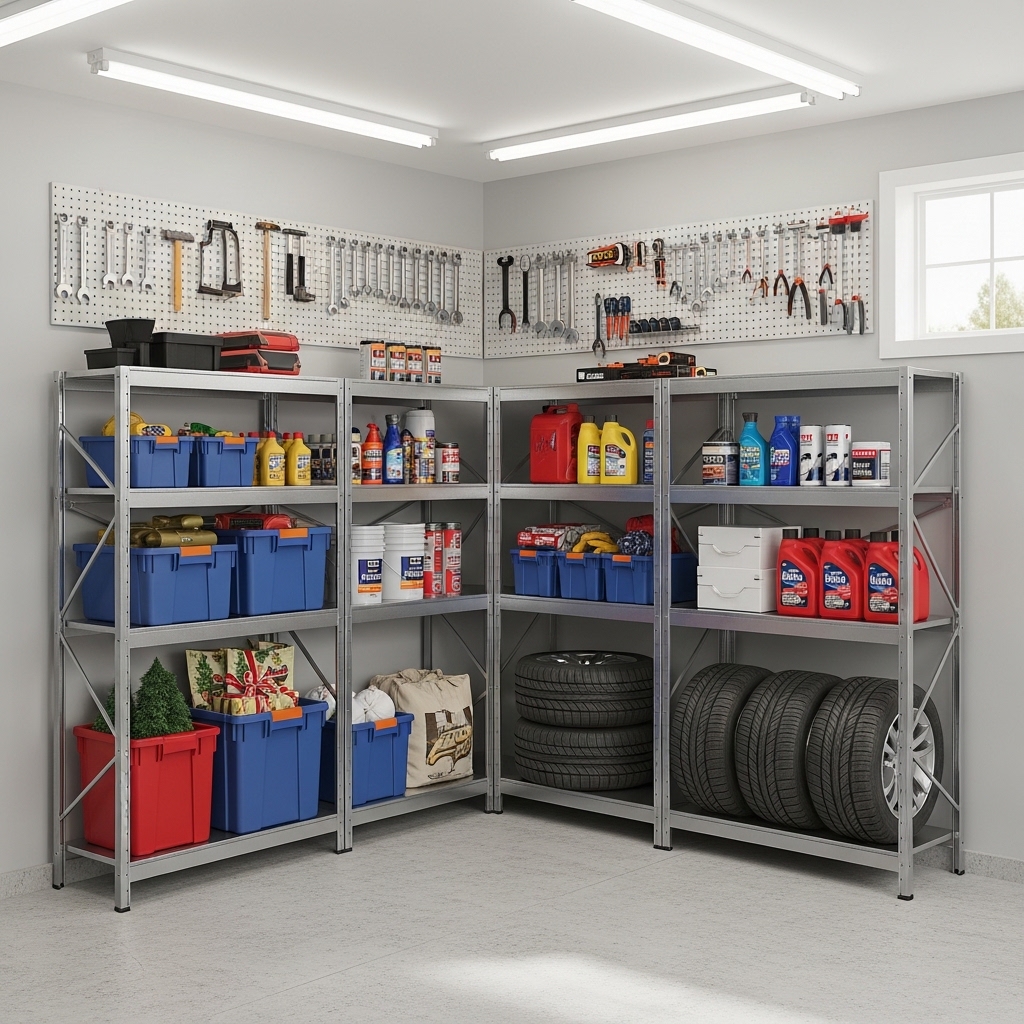
Ideal for: Maximizing unused garage corners.
Install corner shelves to store items that don’t fit well on standard shelves. Keep them organized and accessible.
This works because corners are often wasted space that can hold significant storage when used correctly.
Pro Tip: Use triangular shelves for better fit.
Mistake to Avoid: Don’t overcrowd corners with random items.
10. Magnetic Strips for Small Metal Tools
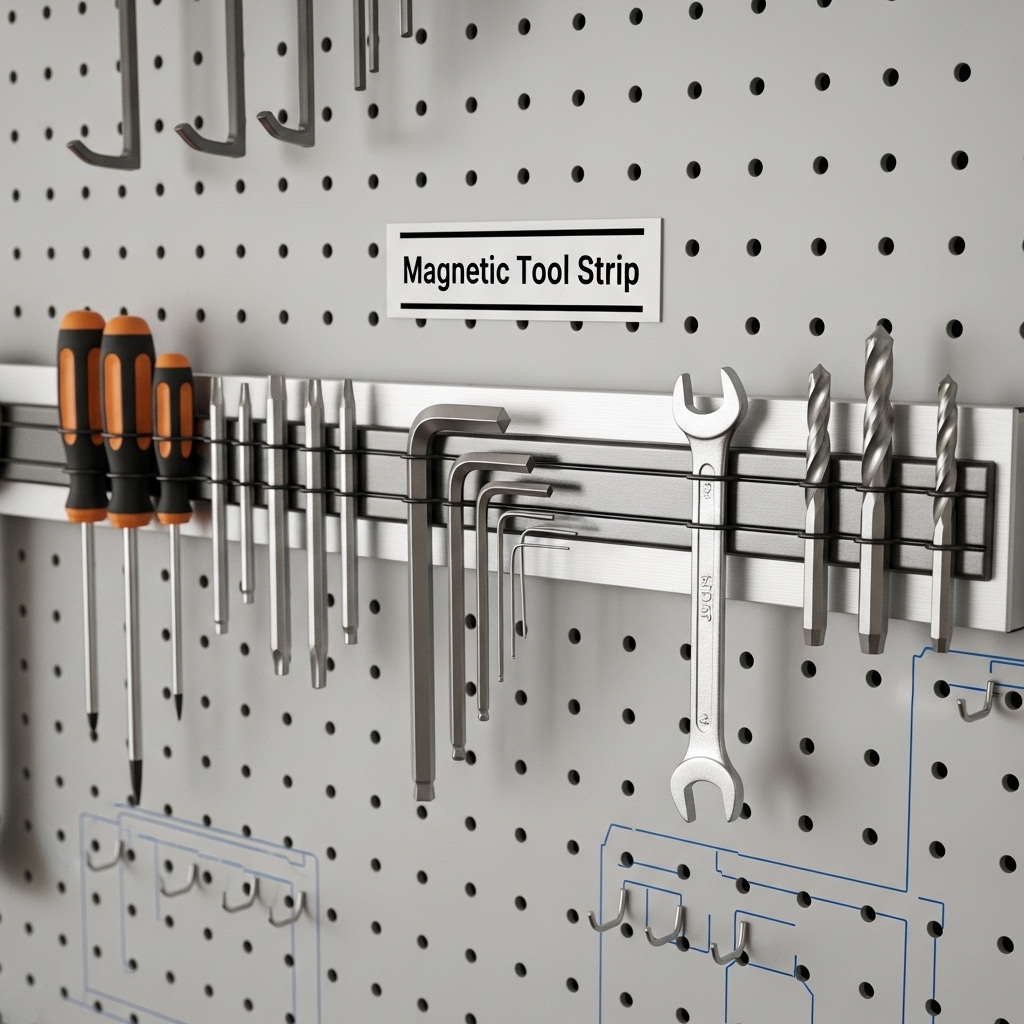
Best for: Organizing screws, wrenches, and small tools.
Mount magnetic strips on walls to hold metal items securely. Arrange tools by size or function.
This works because it keeps small items visible and prevents them from getting lost.
Pro Tip: Place strips near workbenches for convenience.
Mistake to Avoid: Don’t rely on magnets for heavy tools.
11. Workbench With Built-In Storage
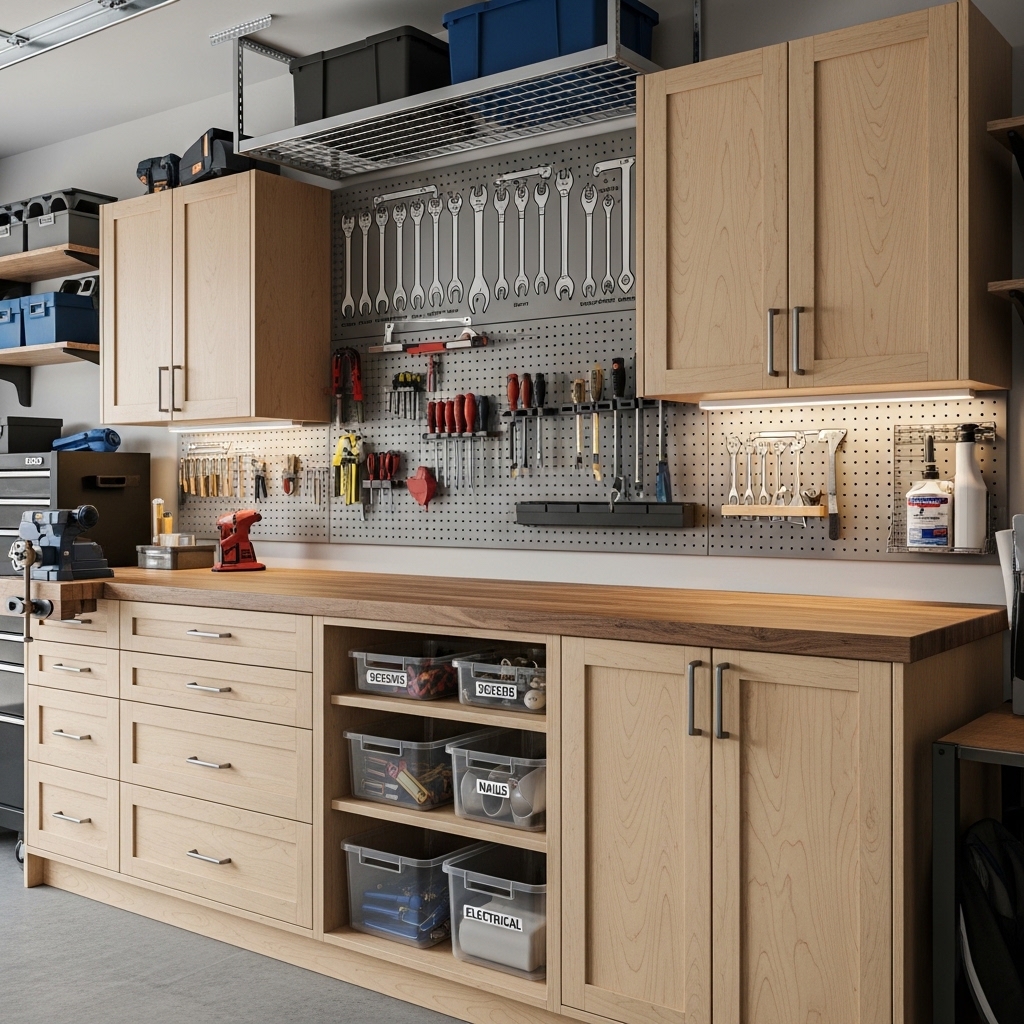
Ideal for: DIY enthusiasts and hobbyists.
Choose a workbench that includes drawers or shelves for storing tools and materials. Keep frequently used items within arm’s reach.
This works because it combines workspace and storage, improving efficiency.
Pro Tip: Use drawer dividers for better organization.
Mistake to Avoid: Don’t clutter the work surface.
12. Bike Wall Mounts for Floor Space
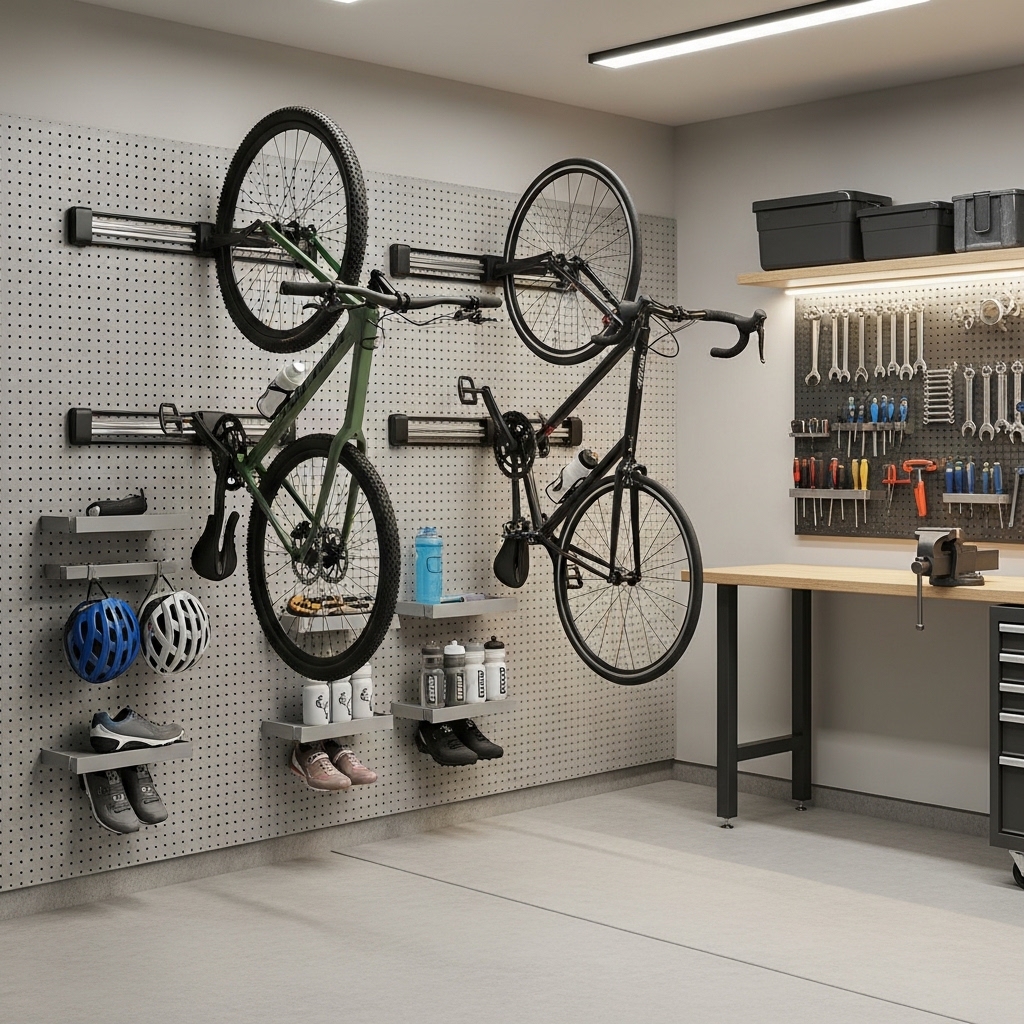
Best for: Households with bicycles.
Hang bikes vertically or horizontally on wall mounts to free up floor space.
This works because bikes take up significant room when stored on the ground.
Pro Tip: Use padded hooks to prevent damage.
Mistake to Avoid: Don’t install mounts without proper support.
13. Labeling Systems for Long-Term Organization
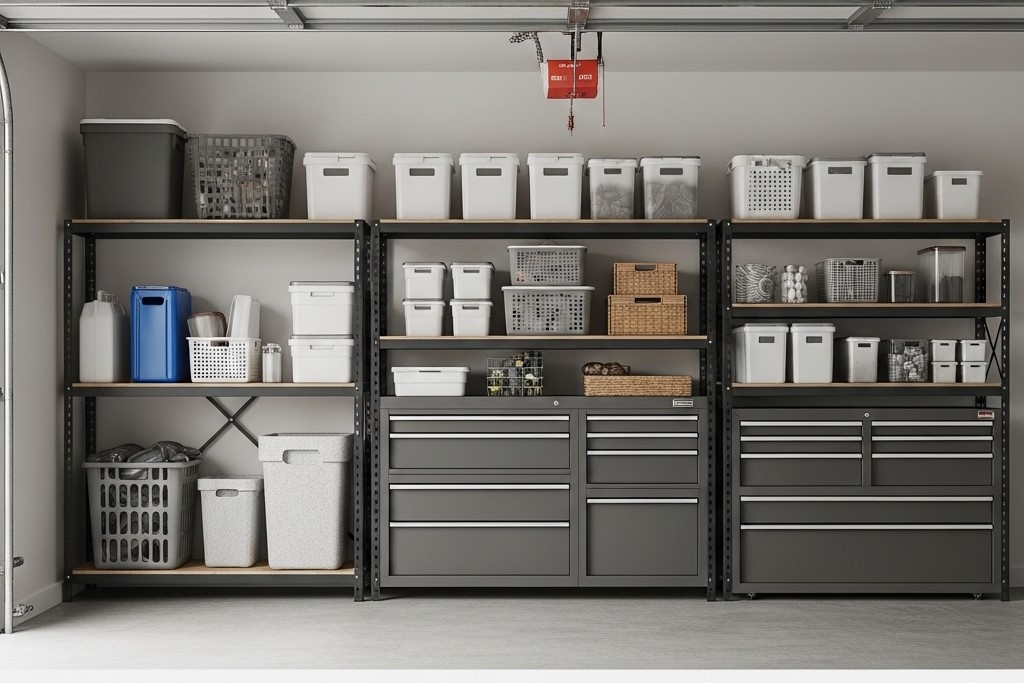
Ideal for: Keeping storage systems consistent.
Label shelves, bins, and zones clearly to maintain order over time.
This works because it creates a system that everyone in the household can follow.
Pro Tip: Use waterproof labels.
Mistake to Avoid: Don’t skip labeling—it leads to clutter.
14. Stackable Storage Crates for Bulk Items
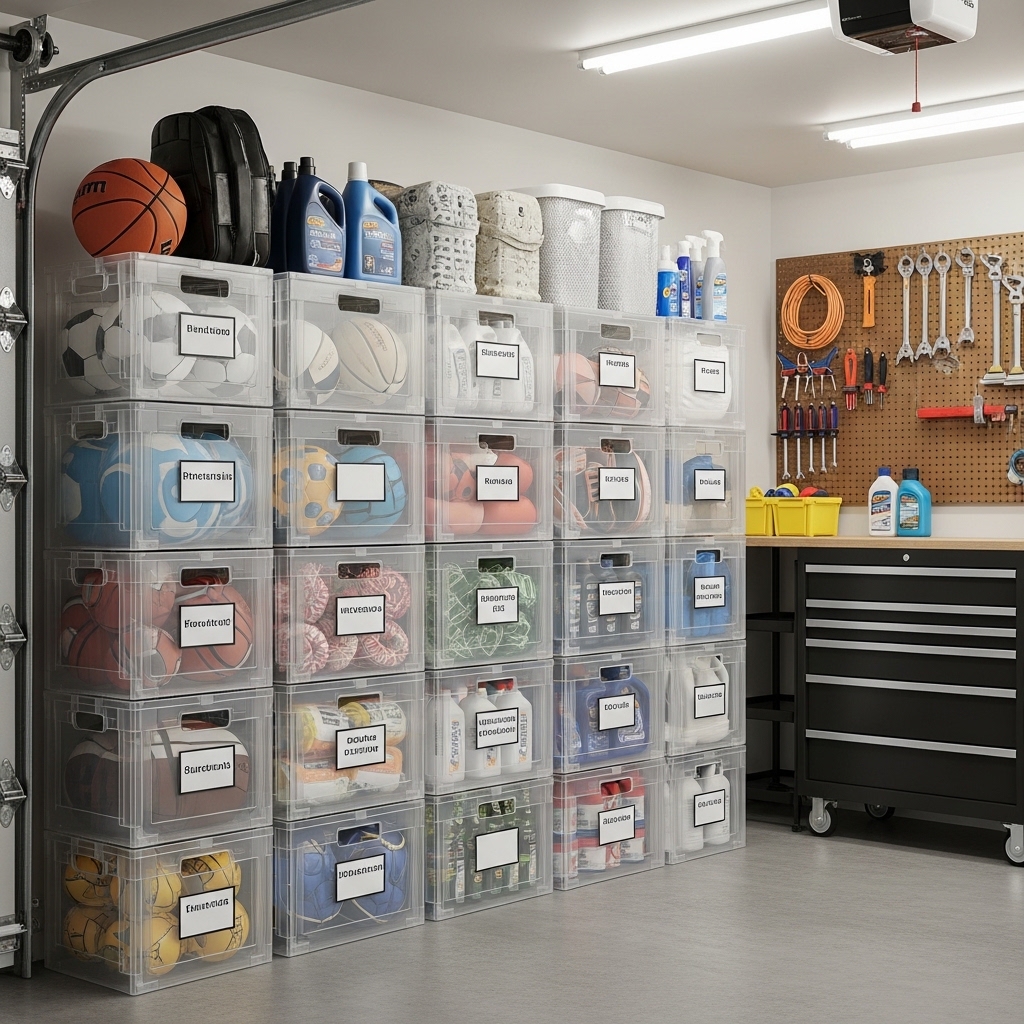
Best for: Storing tools, supplies, or seasonal items.
Use durable crates that can be stacked safely without collapsing.
This works because it maximizes vertical storage without requiring permanent fixtures.
Pro Tip: Keep heavier crates at the bottom.
Mistake to Avoid: Don’t stack unstable containers.
15. Tool Drawer Organizers for Efficiency
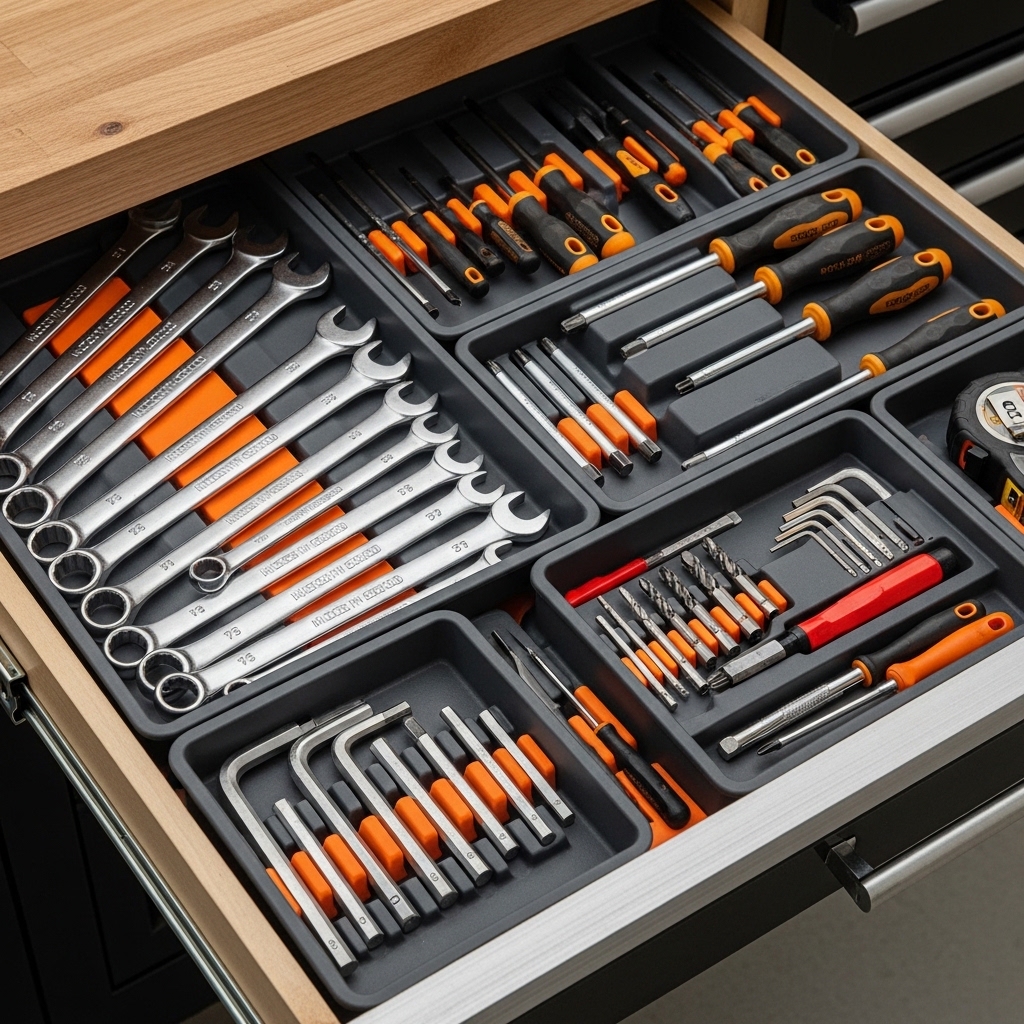
Ideal for: Keeping small tools sorted.
Use dividers to separate tools in drawers for easy access.
This works because it prevents clutter and saves time.
Pro Tip: Customize layouts based on usage.
Mistake to Avoid: Don’t overcrowd drawers.
16. Ladder Hooks for Vertical Storage
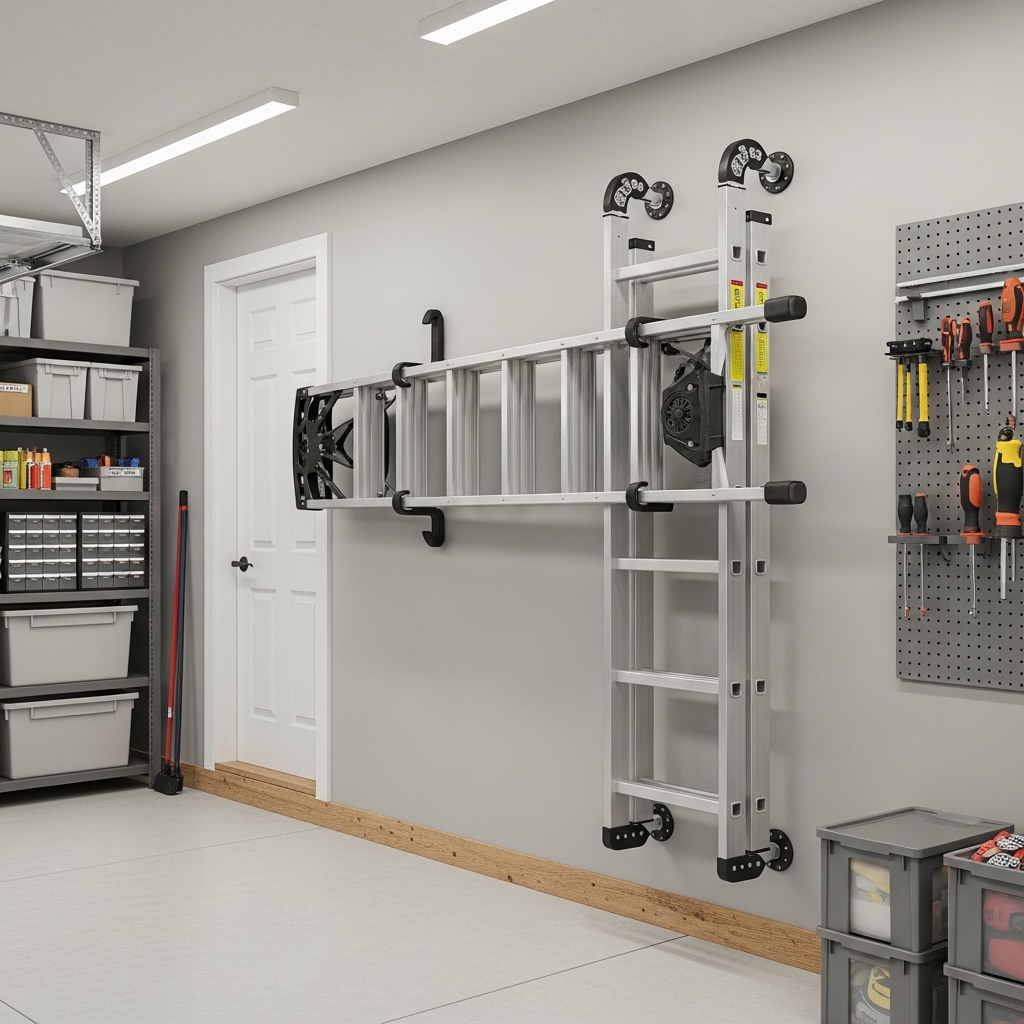
Best for: Storing large, awkward items.
Hang ladders on wall hooks to free up floor space.
This works because vertical storage keeps bulky items out of the way.
Pro Tip: Install hooks at multiple heights.
Mistake to Avoid: Don’t leave ladders leaning unsecured.
17. Utility Cabinets for Clean Storage
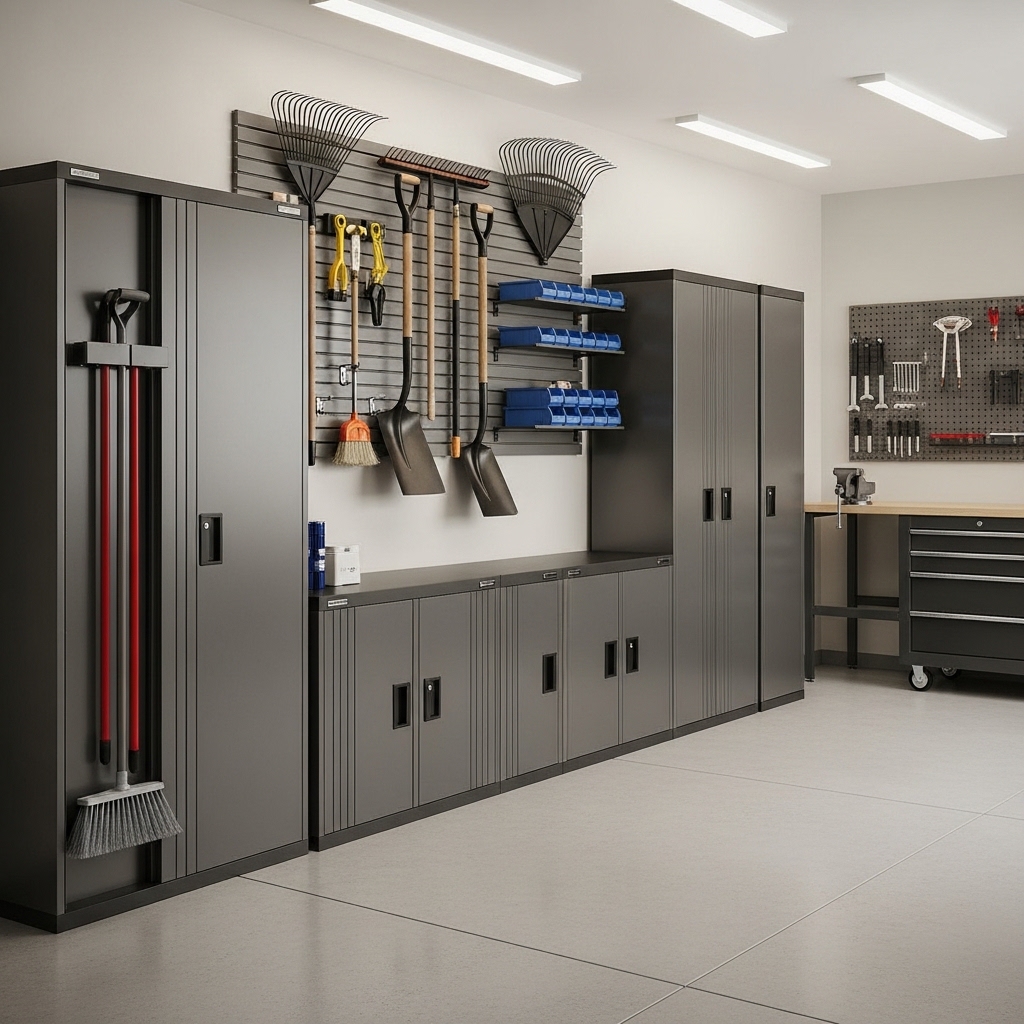
Ideal for: Keeping items hidden and dust-free.
Use cabinets to store chemicals, tools, or supplies neatly.
This works because closed storage reduces visual clutter.
Pro Tip: Lock cabinets if storing hazardous items.
Mistake to Avoid: Don’t overload cabinet shelves.
18. Seasonal Rotation Storage Zones
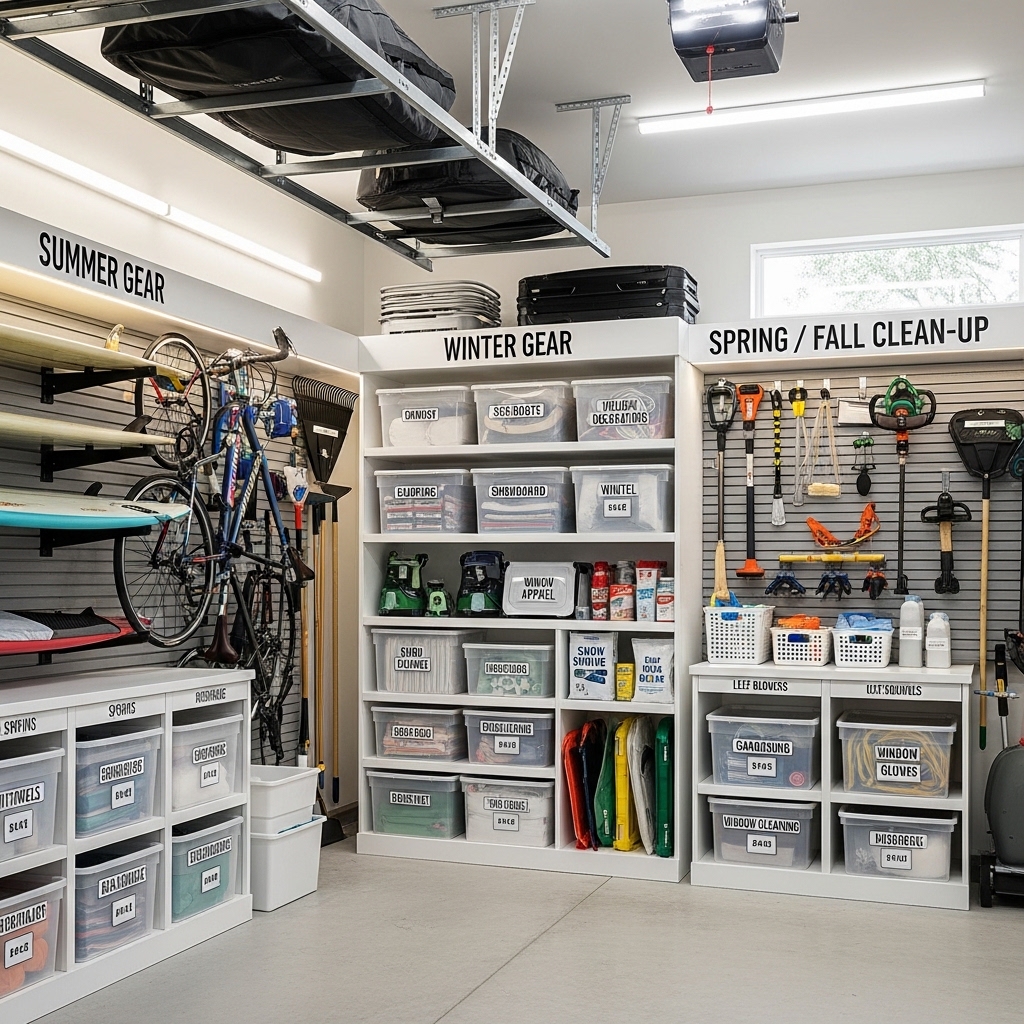
Best for: Managing items used at different times of year.
Rotate items based on season, keeping current-use items accessible.
This works because it keeps the garage organized year-round.
Pro Tip: Store off-season items overhead.
Mistake to Avoid: Don’t mix seasonal items together.
19. Folding Work Tables for Space Saving
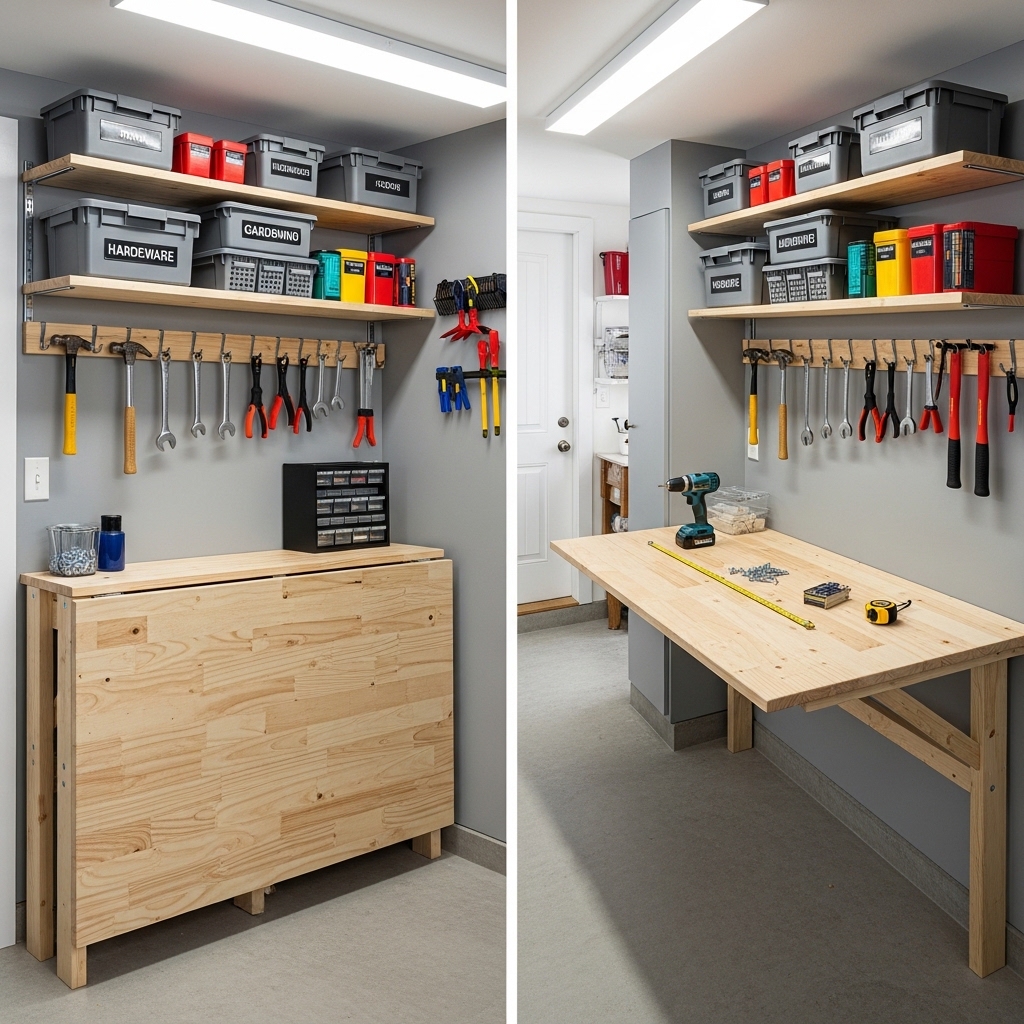
Ideal for: Small garages with limited workspace.
Install foldable tables that can be tucked away when not in use.
This works because it provides workspace without permanent space usage.
Pro Tip: Mount at comfortable working height.
Mistake to Avoid: Don’t block folding mechanisms.
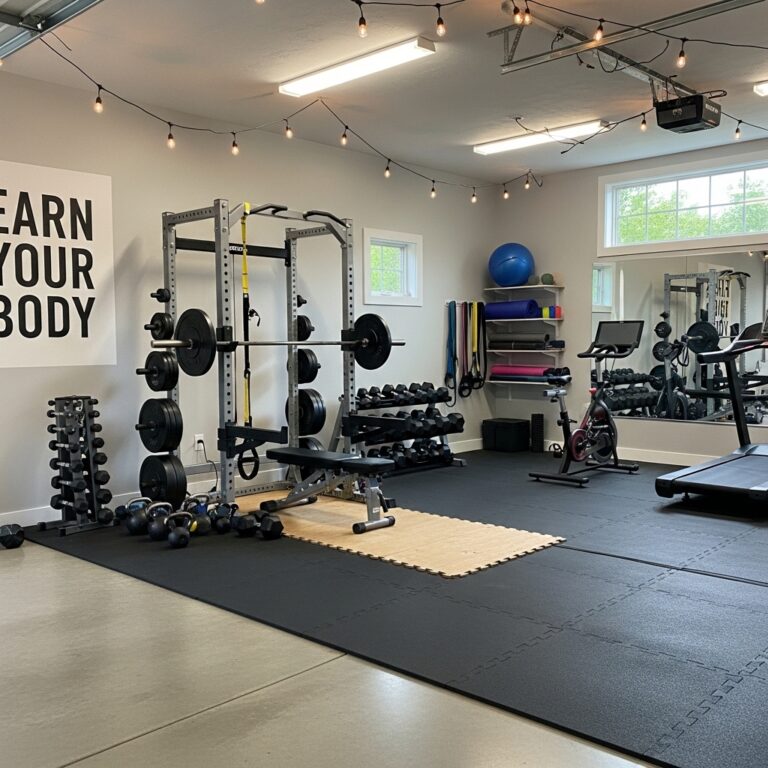
20. Zoned Garage Layout for Maximum Efficiency
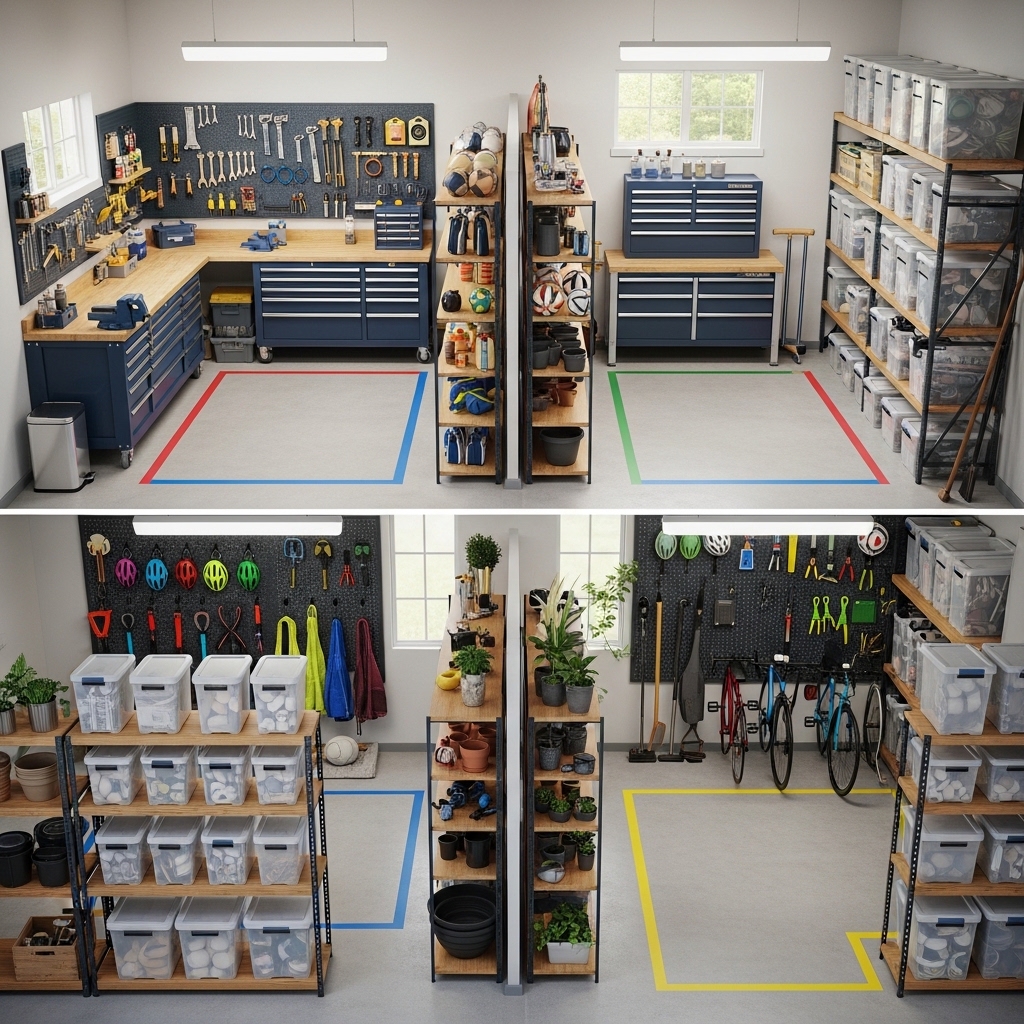
Best for: Fully organized garages.
Divide the garage into zones—tools, storage, sports, and workspace. Keep each category separate and clearly defined.
This works because structured layouts reduce clutter and improve efficiency.
Pro Tip: Map out zones before installing storage.
Mistake to Avoid: Don’t mix unrelated items across zones.
Conclusion
An organized garage isn’t about adding more storage—it’s about creating a system that matches how you actually use the space. When storage is structured, accessible, and flexible, clutter becomes easier to control.
By applying these 20 garage storage ideas, you can build a space that stays organized, efficient, and functional long-term.