20 Garage Interior Design Ideas That Turn Cluttered Spaces Into Organized, High-Function Areas
Most garages fail because they are treated as storage dumps instead of intentionally designed spaces. Without a clear interior strategy, even large garages become unusable, cluttered, and inefficient. The problem isn’t lack of space—it’s lack of structure, poor layout planning, and no defined purpose.
A well-designed garage interior focuses on workflow, zoning, lighting, vertical space, and long-term usability. Whether you want a clean storage system, a workspace, or a multi-purpose area, these ideas are built for real-world use—small garages, budget upgrades, and daily functionality.
1. Zoning Your Garage Into Functional Sections
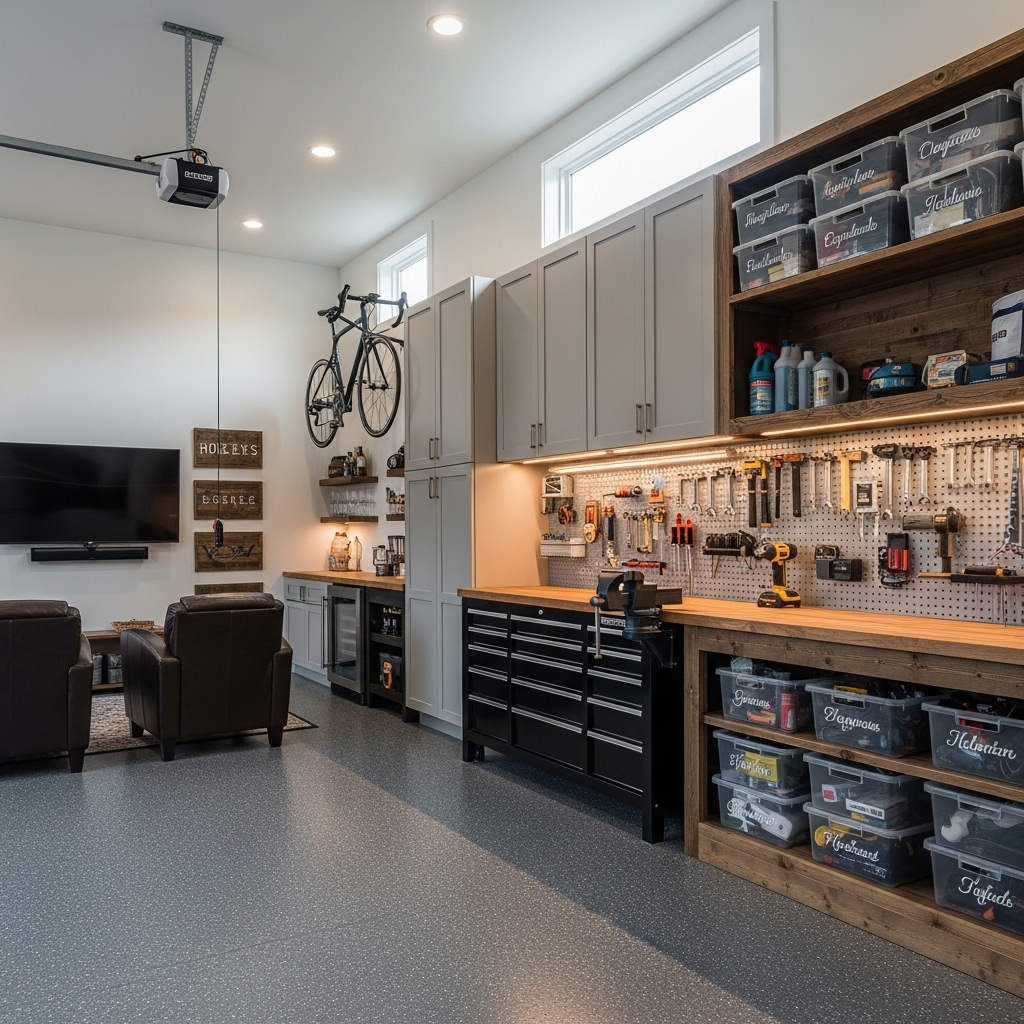
Ideal for: Multi-use garages where storage, work, and parking compete for space.
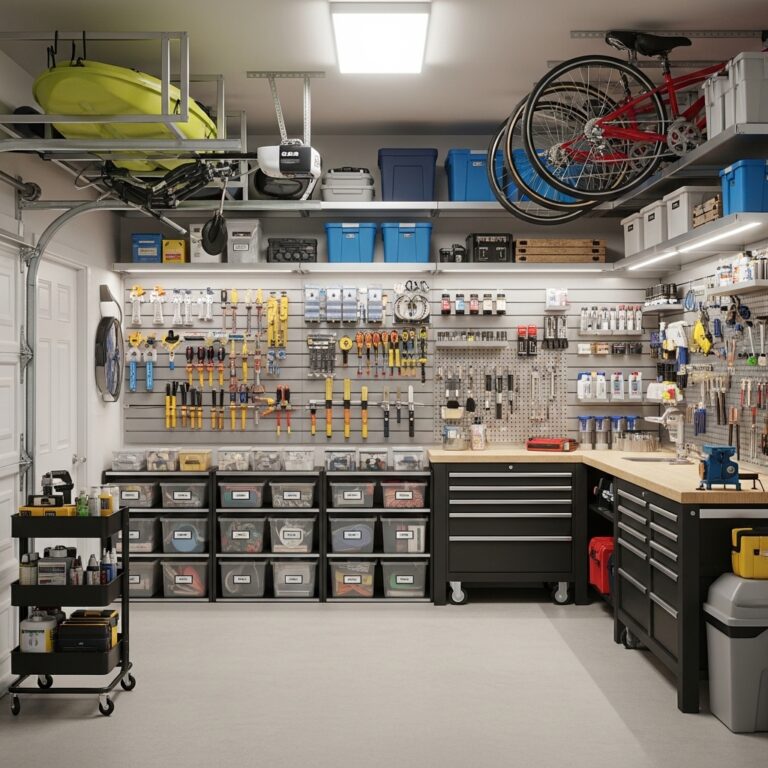
Start by dividing your garage into clearly defined zones such as tool storage, workspace, seasonal storage, and parking. Use shelving units, floor markings, or lighting differences to visually separate each area without building walls. Place high-frequency zones like tools near the entrance and low-use storage toward the back or overhead.
This works because zoning creates a system where everything has a designated place, reducing clutter buildup over time. When items are randomly placed, they quickly spread across the entire garage, making it difficult to maintain organization. A structured layout improves efficiency and makes daily use easier.
Pro Tip: Map your garage zones on paper before installing anything to avoid layout mistakes.
Mistake to Avoid: Don’t mix unrelated categories like sports gear and tools in the same zone.
2. Bright Layered Lighting for Full Visibility
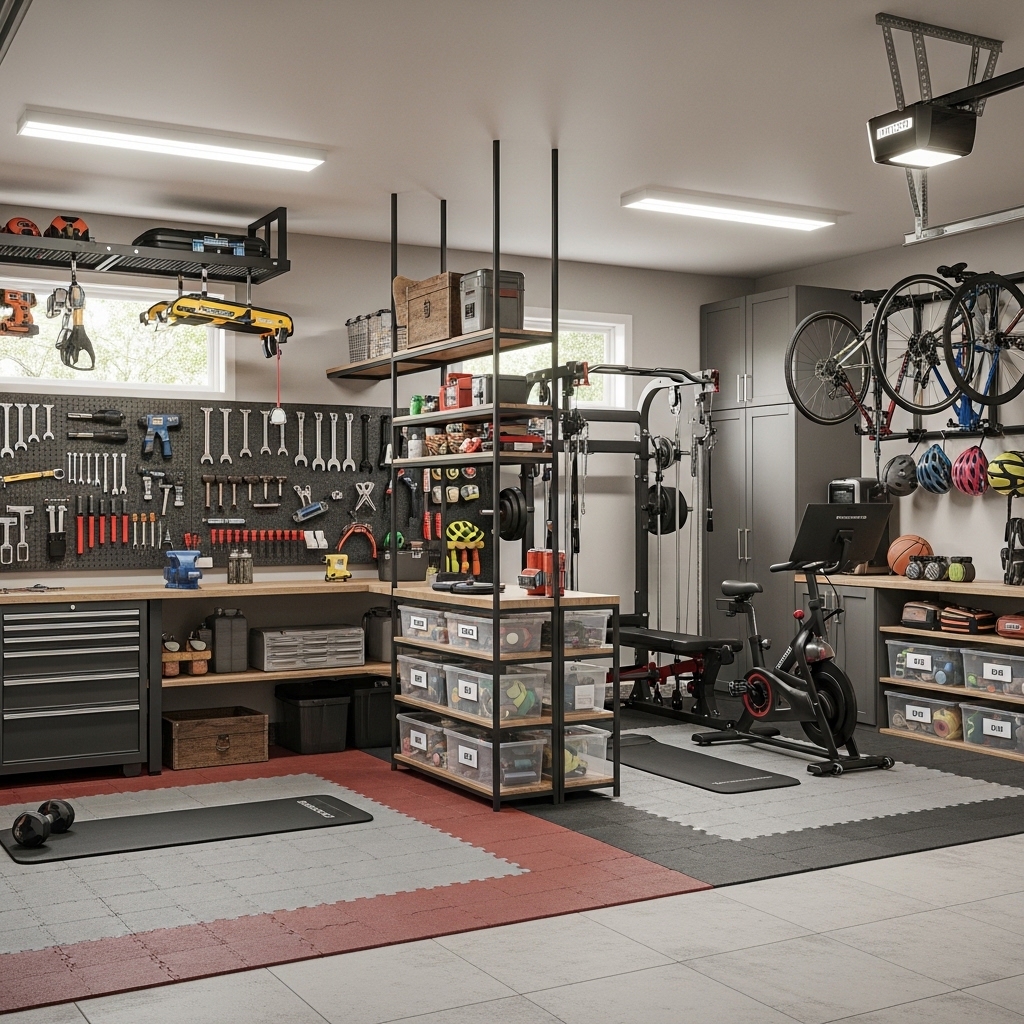
Best for: Garages that feel dark, cramped, or difficult to work in.
Install a layered lighting system that includes overhead LED panels for general lighting and focused task lighting above workbenches or key areas. Space lights evenly across the ceiling to eliminate shadows, especially in corners and along walls where storage is located.
This works because proper lighting transforms how the garage feels and functions. Bright, evenly distributed light improves safety, productivity, and overall usability. A common mistake is relying on one central light source, which leaves corners dark and limits visibility.
Pro Tip: Use daylight-balanced LEDs (around 5000K) for clarity and accuracy.
Mistake to Avoid: Don’t position lights only in the center—edges need equal coverage.
3. Full Wall Storage Systems for Maximum Efficiency
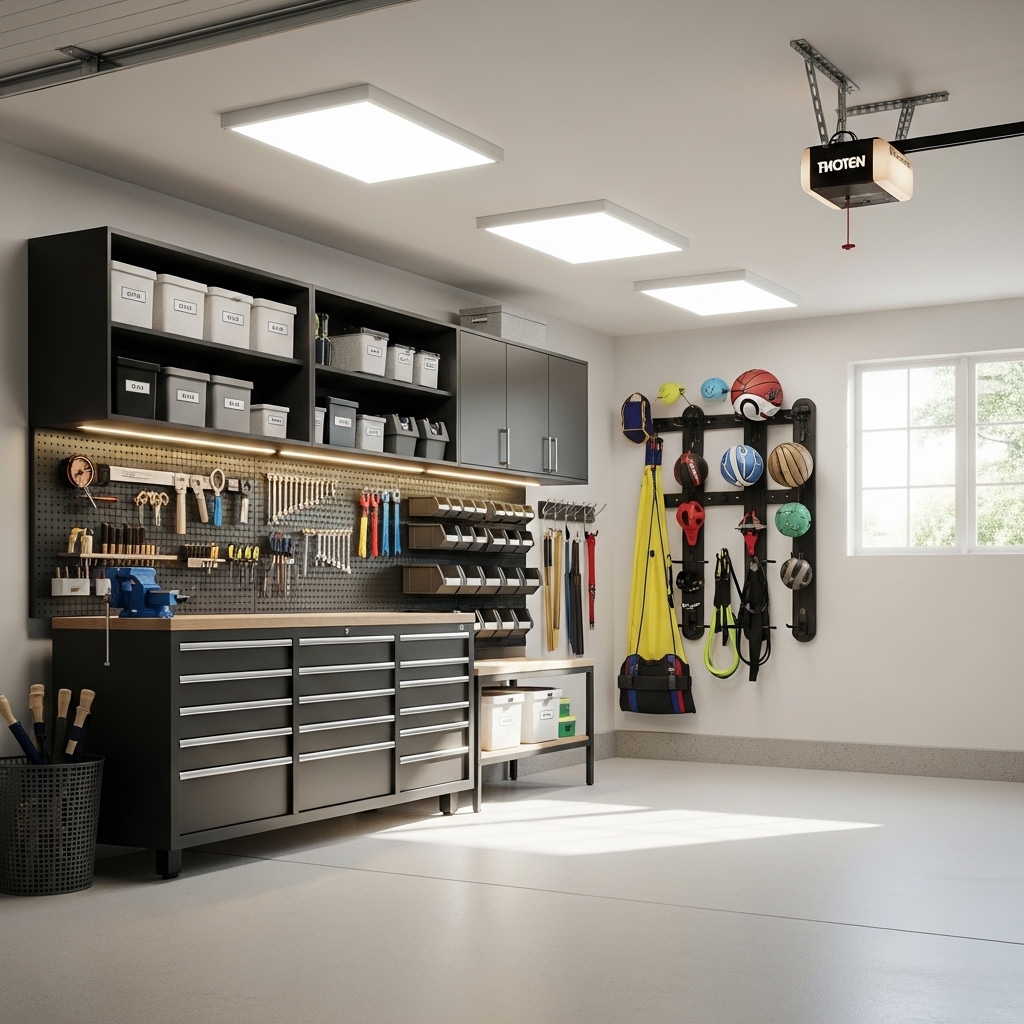
Ideal for: Homeowners wanting a clean, professional garage look.
Install full wall systems like slatwalls or track panels to store tools, bins, and accessories vertically. Arrange items based on frequency of use, keeping everyday tools within easy reach and less-used items higher up.
This works because wall systems free up floor space while keeping everything visible and accessible. It eliminates the need for bulky floor storage and prevents clutter from spreading. Many people fail by overcrowding the system, making it harder to locate items quickly.
Pro Tip: Keep spacing between hooks and shelves for easy adjustments later.
Mistake to Avoid: Don’t overload sections beyond weight limits—it reduces durability.
4. Upgrading Flooring for Durability and Cleanliness
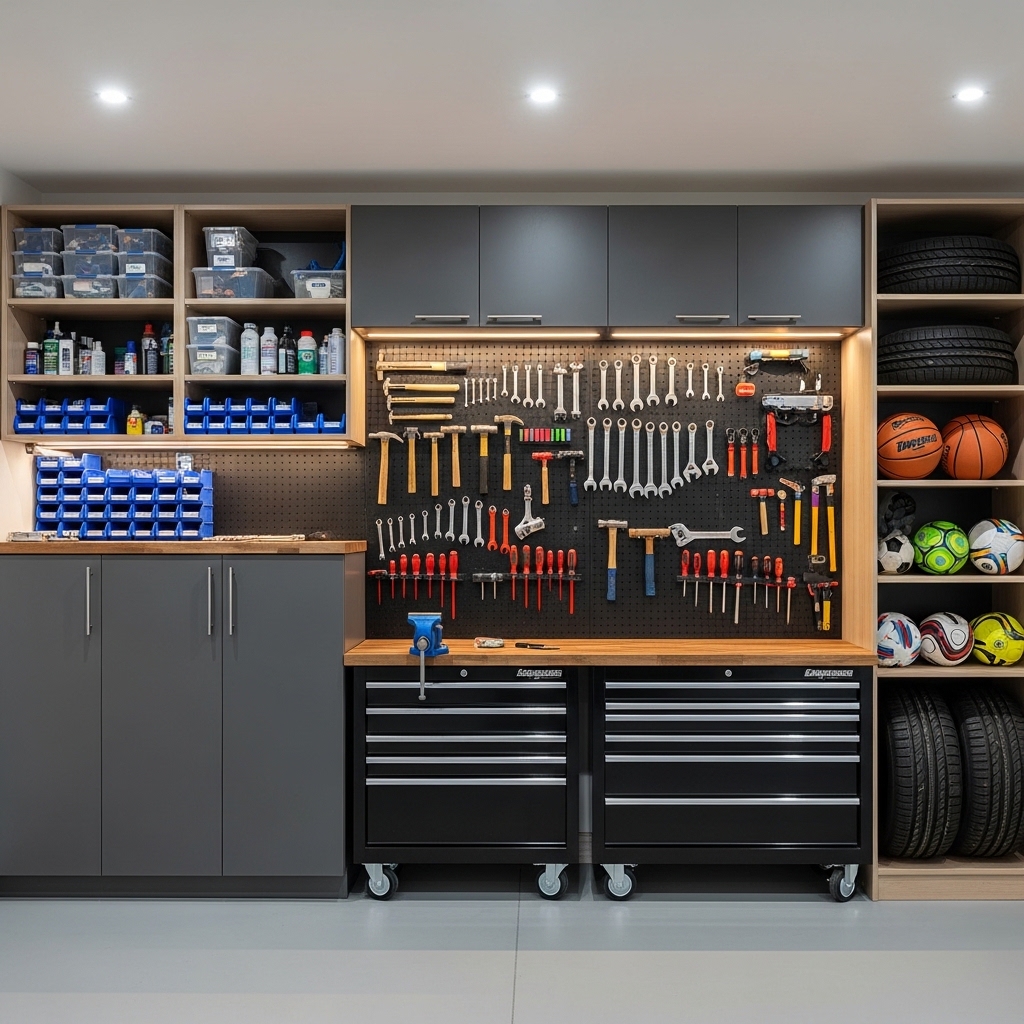
Best for: Garages with dusty, stained, or cracked concrete floors.
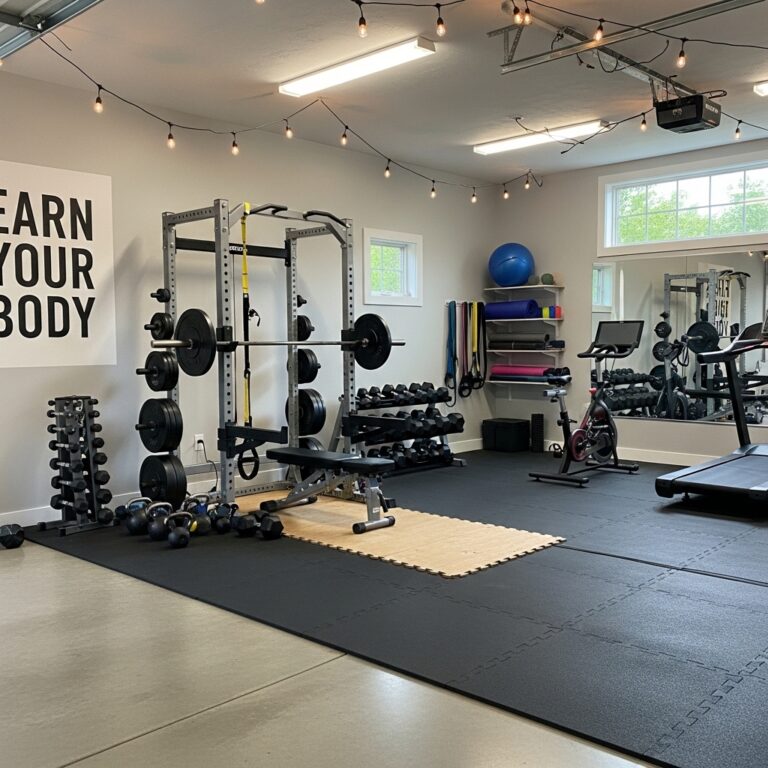
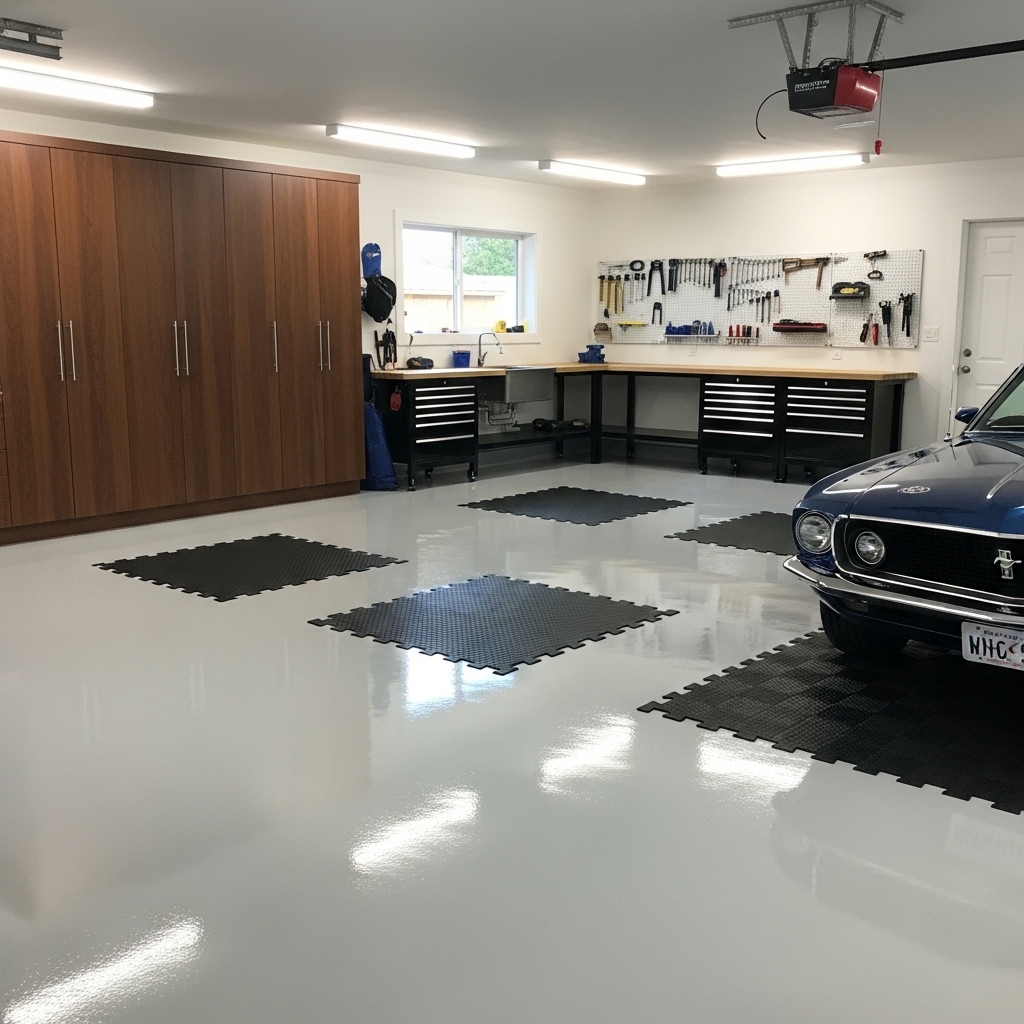
Apply epoxy coatings, rubber flooring, or interlocking tiles to create a durable and easy-to-clean surface. Choose materials that resist oil stains, moisture, and wear from heavy use.
This works because upgraded flooring reduces dust, improves safety, and makes the garage feel like an extension of the home. Bare concrete often absorbs stains and creates a rough, unfinished look.
Pro Tip: Use non-slip finishes for added safety, especially in wet conditions.
Mistake to Avoid: Don’t skip proper surface preparation before applying coatings.
5. Ceiling Storage for Seasonal and Bulk Items
Ideal for: Small garages needing extra storage without sacrificing floor space.
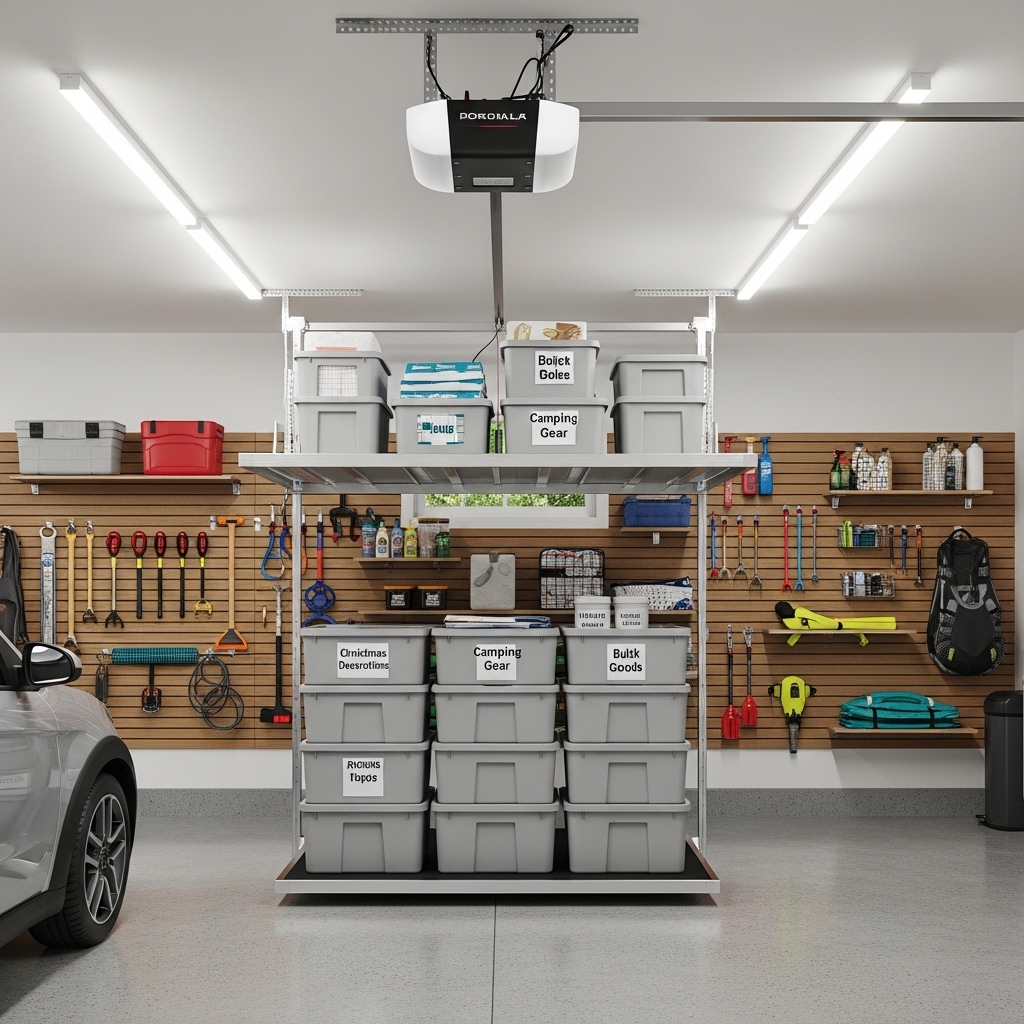
Install overhead racks to store items like holiday decorations, camping gear, or rarely used equipment. Keep heavier items near walls and lighter bins toward the center for balance.
This works because ceiling storage uses otherwise wasted space, allowing you to keep the floor clear for daily activities. It’s especially useful in garages where every square foot matters.
Pro Tip: Use clear labeled bins for easy identification from below.
Mistake to Avoid: Don’t store frequently used items overhead—they become inconvenient.
6. Workbench With Integrated Storage Design
Best for: DIY enthusiasts or anyone using the garage as a workspace.
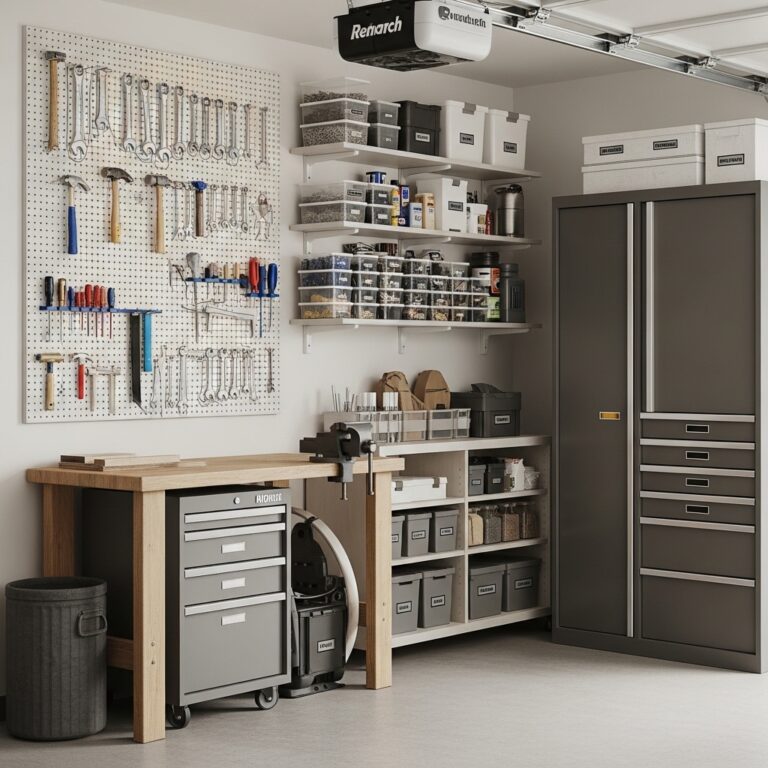
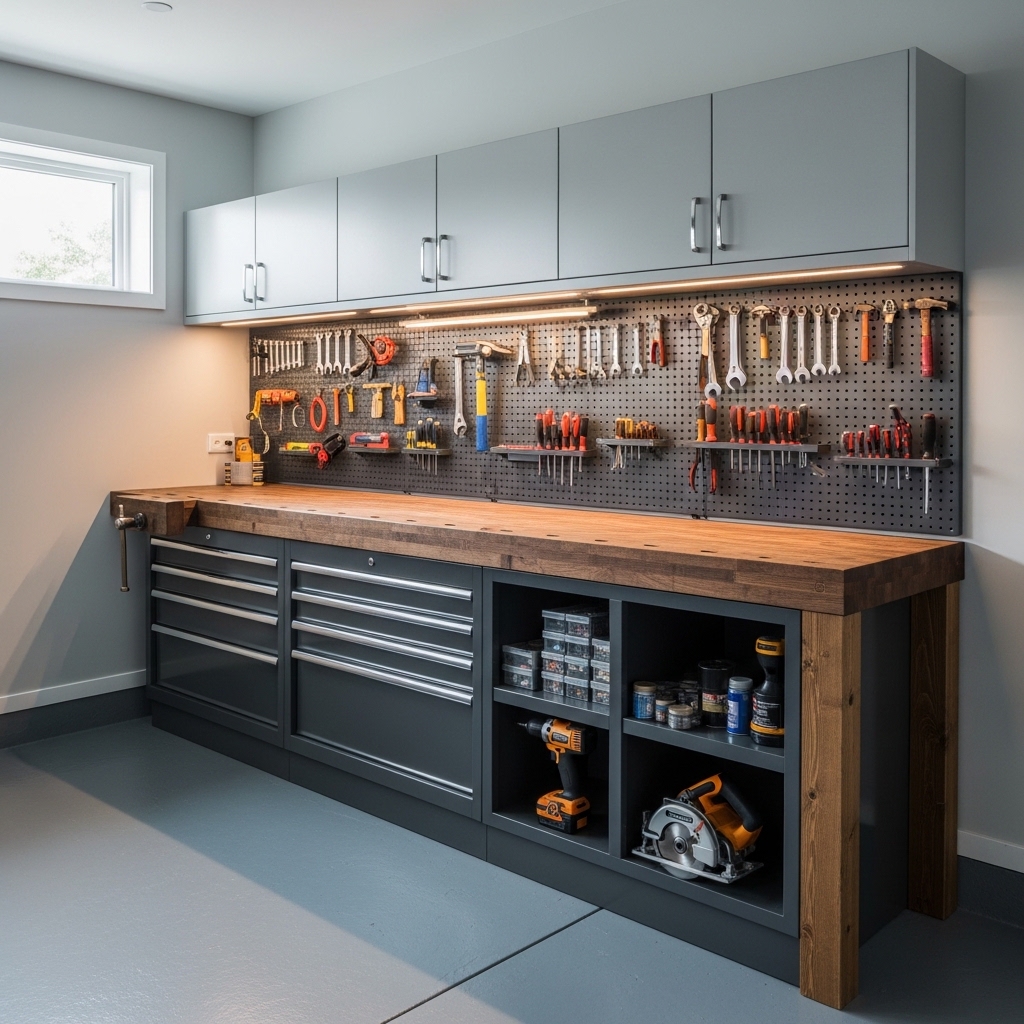
Build or install a workbench with built-in drawers, shelves, or cabinets underneath. Keep essential tools within arm’s reach and use vertical storage above the bench for frequently used items.
This works because combining workspace and storage reduces unnecessary movement and keeps tools organized. A cluttered workbench slows down productivity and creates frustration.
Pro Tip: Use drawer dividers to keep small tools sorted.
Mistake to Avoid: Don’t let the work surface become a dumping zone.
7. Neutral Color Schemes for a Clean Look
Ideal for: Modern garage interiors aiming for a polished appearance.
Stick to neutral tones like white, grey, or black for walls, cabinets, and flooring. Use subtle contrast through textures rather than bold colors.
This works because neutral palettes reflect light and create a visually clean environment. Bright or mismatched colors can make the space feel chaotic.
Pro Tip: Add texture through finishes instead of adding more colors.
Mistake to Avoid: Don’t combine too many color tones—it breaks visual flow.
8. Vertical Tool Storage for Accessibility
Best for: Small garages where floor space is limited.
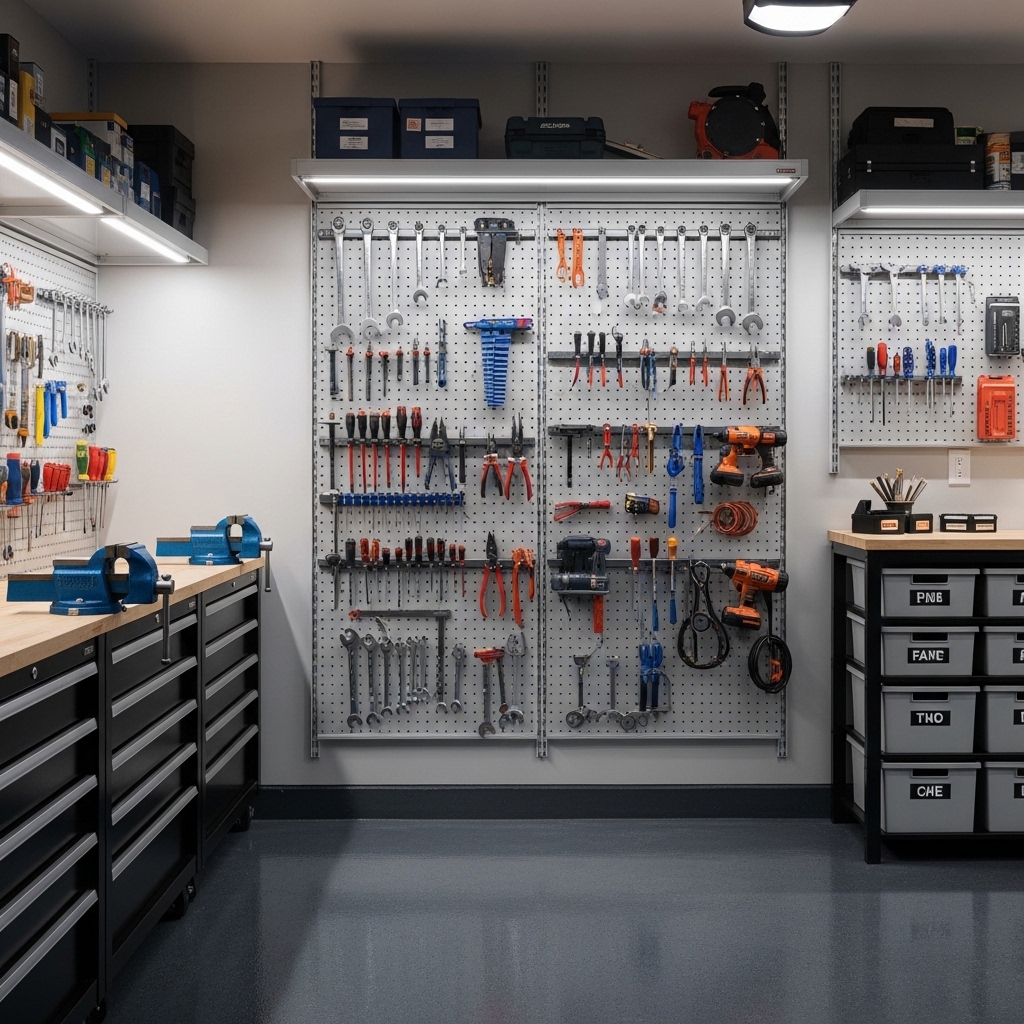
Install pegboards or vertical racks to store tools based on size and usage. Keep frequently used tools at eye level for easy access.
This works because vertical organization keeps tools visible and prevents clutter buildup. Tools stored in drawers often get lost or duplicated.
Pro Tip: Outline tool shapes on boards to maintain order.
Mistake to Avoid: Don’t overcrowd the board—it reduces usability.
9. Cabinet Systems for Hidden Organization
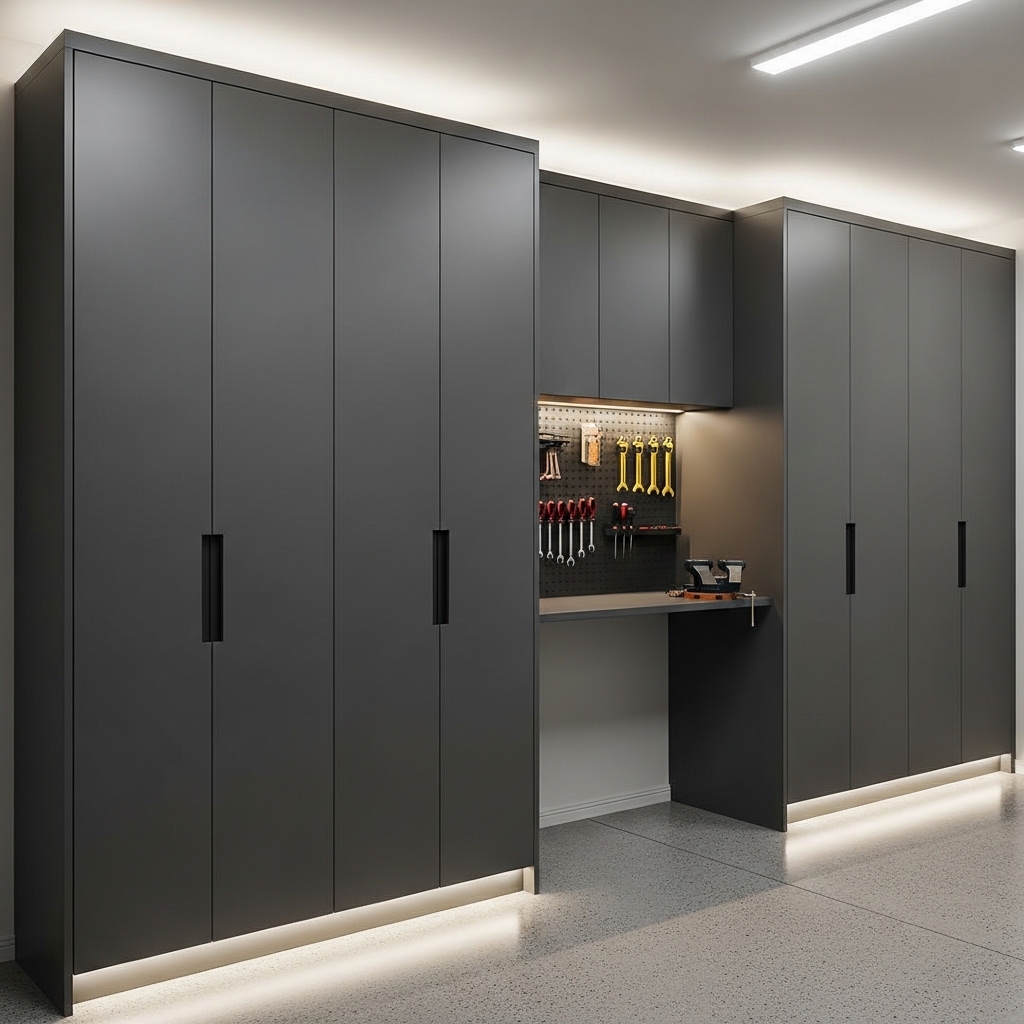
Ideal for: Keeping the garage visually clean and organized.
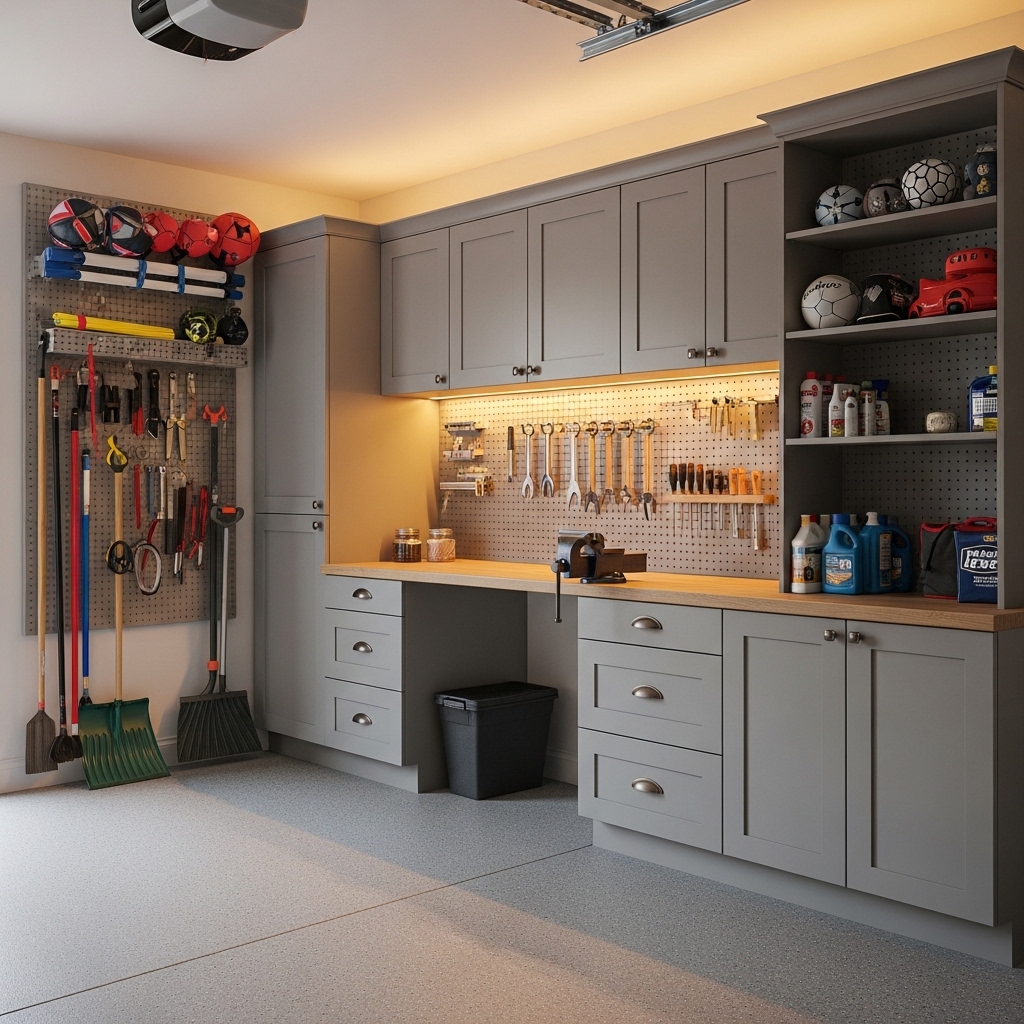
Install cabinets to store items out of sight while maintaining easy access. Use labeled compartments to keep categories separate.
This works because hidden storage reduces visual clutter and creates a streamlined look. Open storage often becomes messy over time.
Pro Tip: Choose adjustable shelves for flexibility.
Mistake to Avoid: Don’t overload cabinets beyond capacity.
10. Multi-Use Furniture for Flexible Layouts
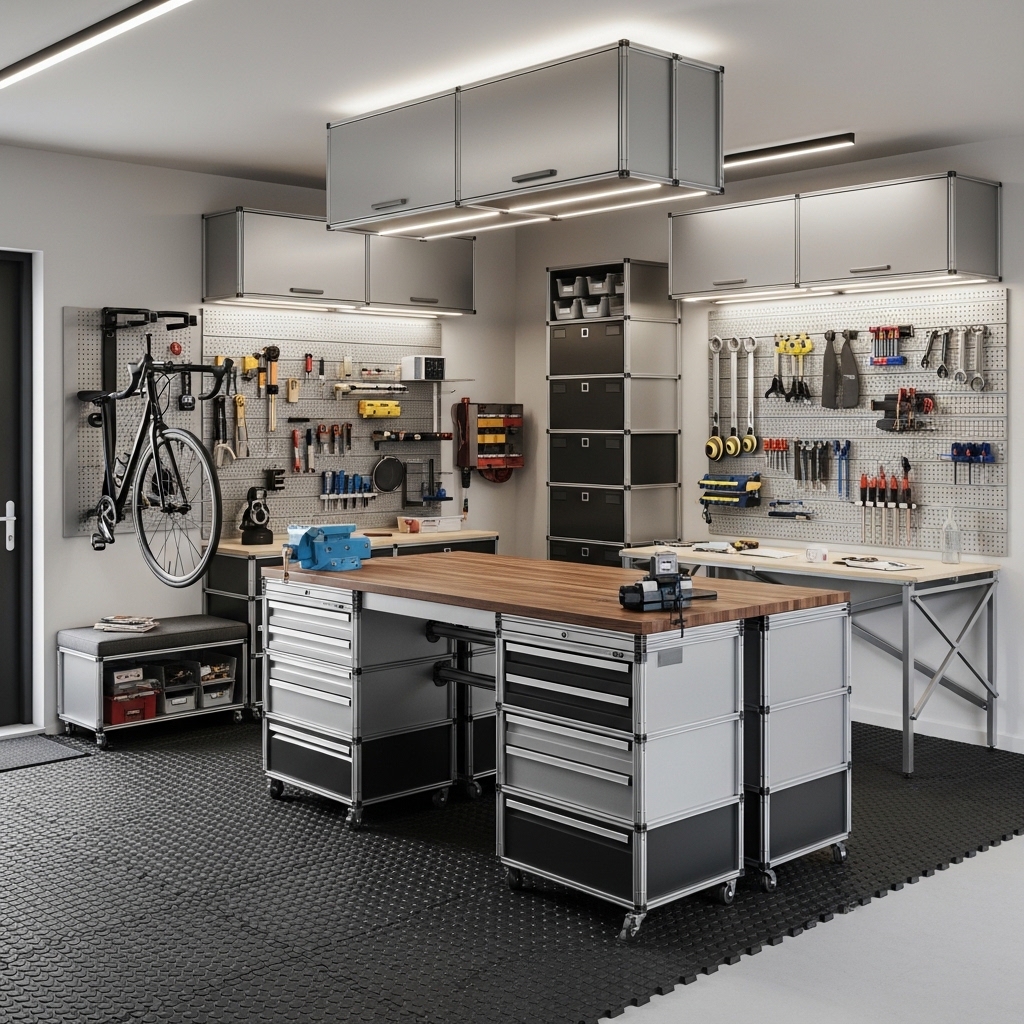
Best for: Garages used for multiple purposes.
Use foldable tables, mobile carts, and modular seating that can be rearranged easily. Keep pathways clear for movement.
This works because flexibility allows the garage to adapt to different uses without major changes.
Pro Tip: Use lightweight furniture for easy adjustments.
Mistake to Avoid: Don’t block access paths with furniture.
11. Dedicated Bike Storage Systems for Space Efficiency
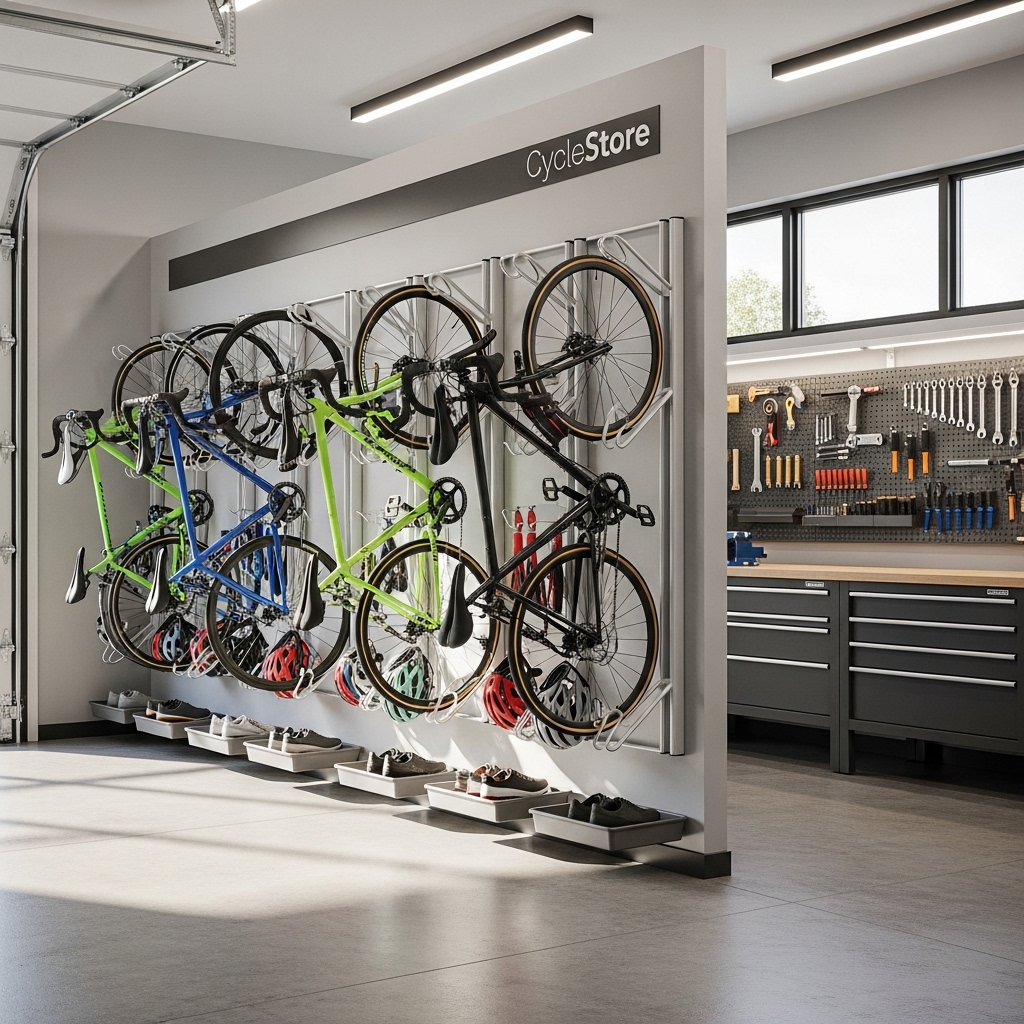
Ideal for: Households with multiple bicycles and limited floor space.
Install wall-mounted or ceiling-mounted bike racks to store bicycles vertically or horizontally depending on your garage layout. Position racks along walls that are less frequently accessed to avoid blocking main pathways. Use staggered heights if storing multiple bikes to prevent handlebar interference.
This works because bikes are one of the biggest space-consuming items in garages when left on the floor. By lifting them vertically, you free up significant usable space for movement or additional storage. Many homeowners underestimate how much floor area bikes consume until they reorganize properly.
Pro Tip: Use padded hooks or mounts to prevent frame damage and scratches.
Mistake to Avoid: Don’t install racks without anchoring them into studs—this creates safety risks.
12. Smart Labeling Systems for Long-Term Organization
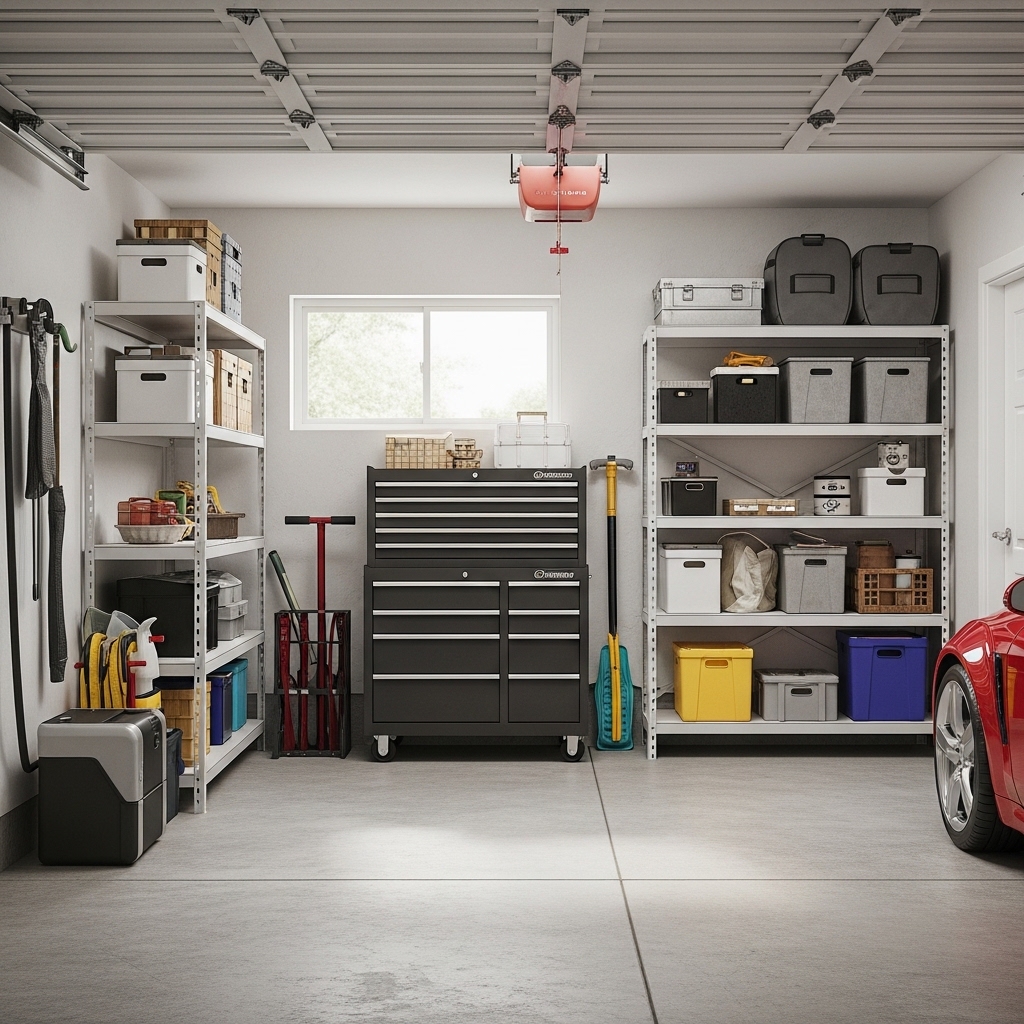
Best for: Maintaining organization across shared household use.
Label every bin, shelf, and storage zone clearly using durable, easy-to-read labels. Keep naming consistent and simple so every family member can follow the system without confusion. Use color coding for different categories if needed.
This works because labeling removes guesswork and helps maintain order over time. Without labels, even well-organized systems break down as items are returned to the wrong places. Organization isn’t just about setup—it’s about sustainability.
Pro Tip: Use waterproof or laminated labels to prevent wear over time.
Mistake to Avoid: Don’t use vague labels like “miscellaneous”—they create clutter.
13. Ventilation Design for Comfort and Air Quality
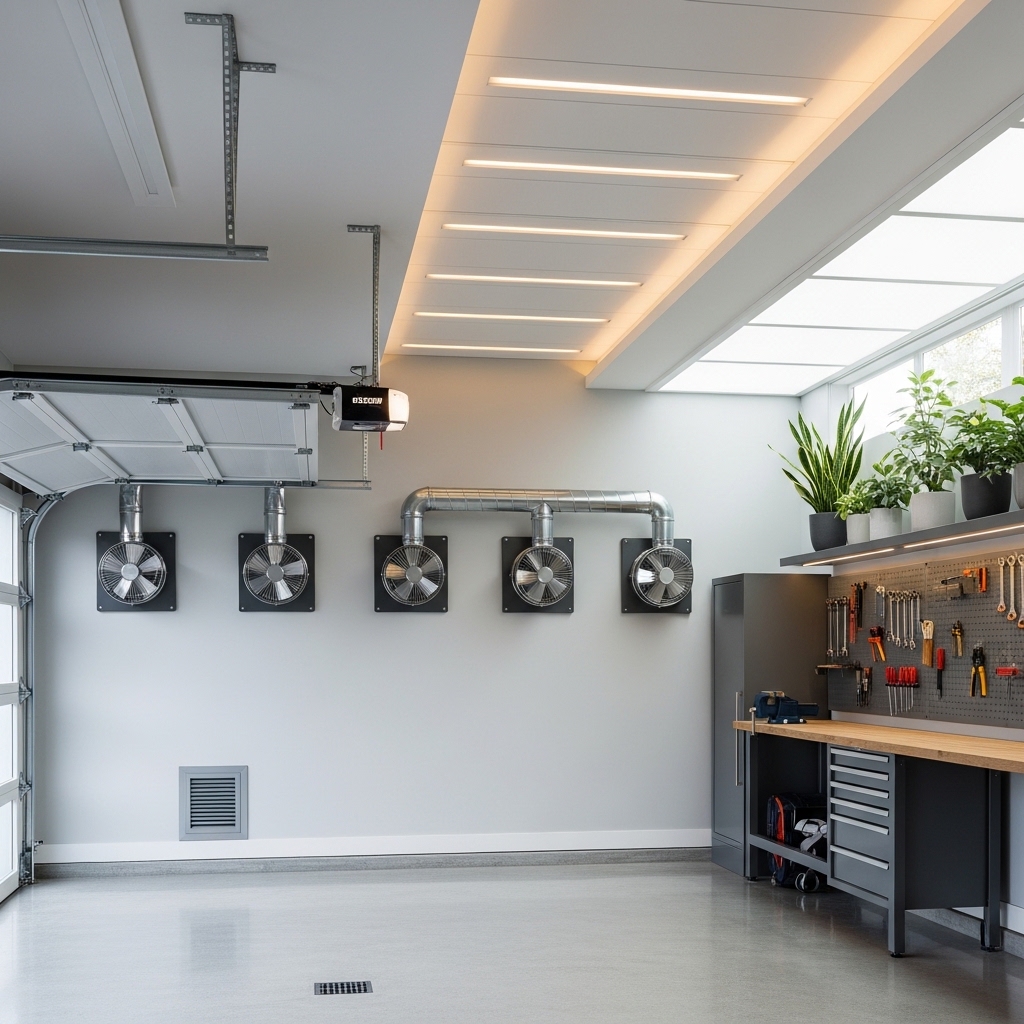
Ideal for: Garages used for work, storage, or extended time use.
Improve airflow by adding vents, exhaust fans, or windows if possible. Position ventilation near work areas or zones where heat and moisture build up.
This works because garages can trap heat, fumes, and humidity, making them uncomfortable and even damaging stored items. Proper airflow improves usability and protects materials.
Pro Tip: Combine natural and mechanical ventilation for best results.
Mistake to Avoid: Don’t ignore humidity—moisture leads to mold and damage.
14. Organized Sports Equipment Storage Zones
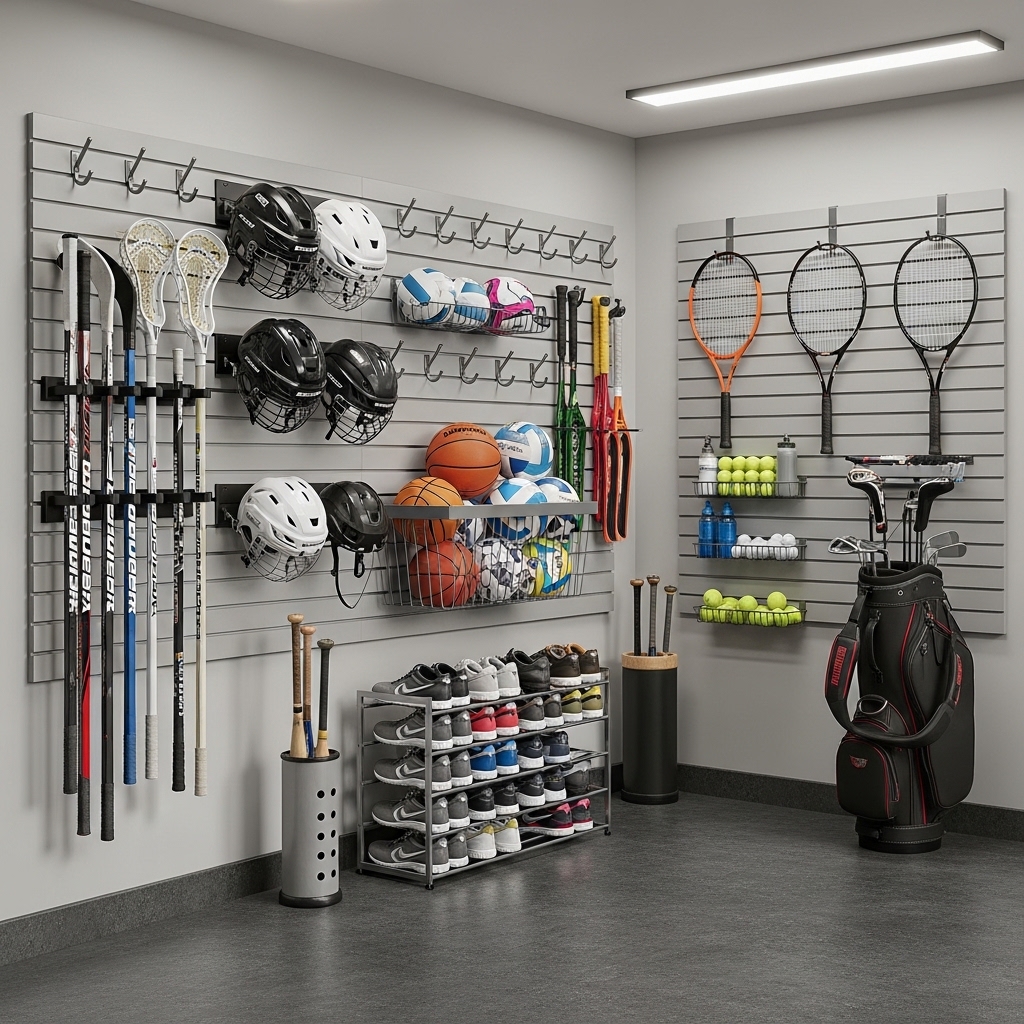
Best for: Active households with multiple gear types.
Create a dedicated section for sports equipment using racks, bins, and hooks. Separate items by activity for easy access.
This works because grouping items reduces clutter and makes it easier to find what you need quickly.
Pro Tip: Assign each sport its own bin or rack.
Mistake to Avoid: Don’t mix sports gear with tools or random storage.
15. Foldable Workspaces for Compact Garages
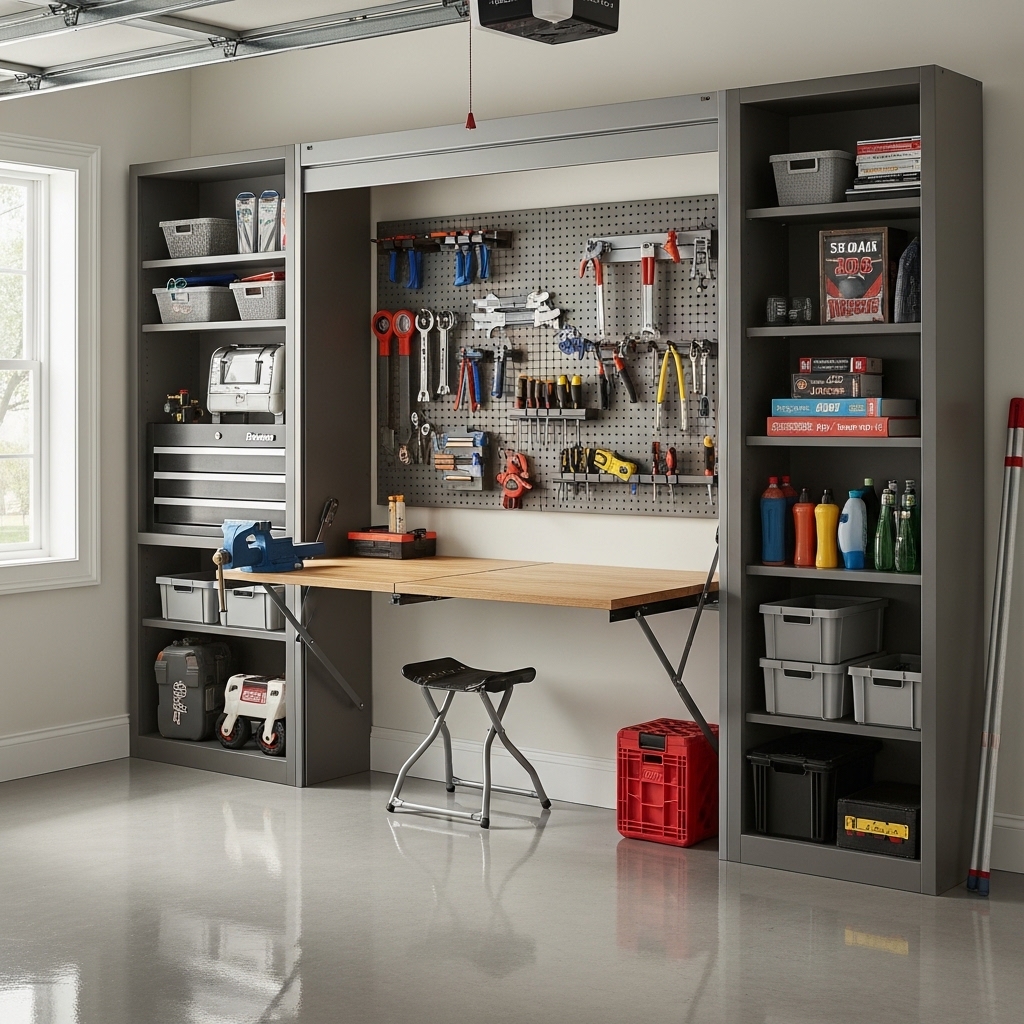
Ideal for: Small garages needing occasional work areas.
Install fold-down tables that can be tucked away when not in use. Keep tools nearby for quick setup.
This works because it provides functionality without permanent space usage.
Pro Tip: Mount tables at a comfortable working height.
Mistake to Avoid: Don’t block folding mechanisms with storage.
16. Magnetic Storage for Small Metal Items
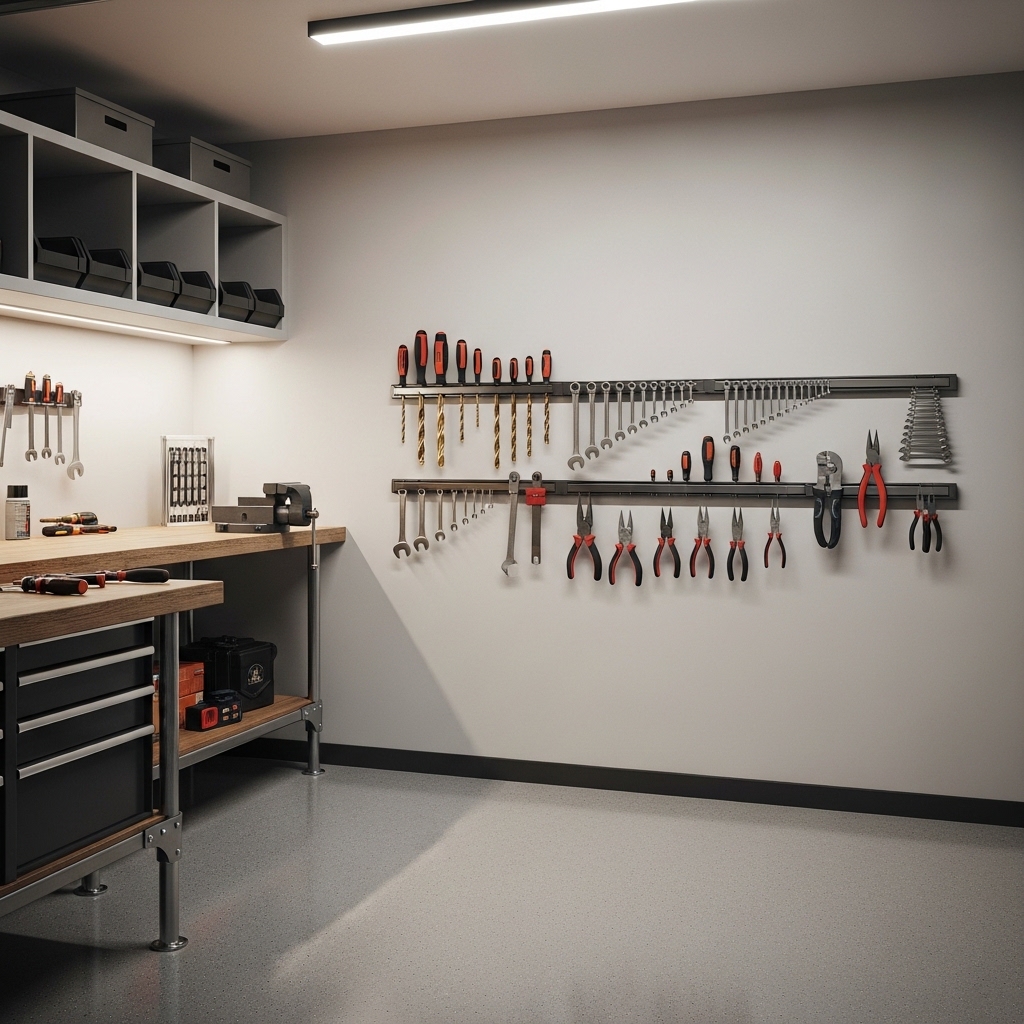
Best for: Organizing screws, bolts, and small tools.
Use magnetic strips or trays to keep metal items visible and accessible.
This works because small items are easily lost in drawers or bins.
Pro Tip: Place near work areas for efficiency.
Mistake to Avoid: Don’t use for heavy tools.
17. Rolling Storage Units for Mobility
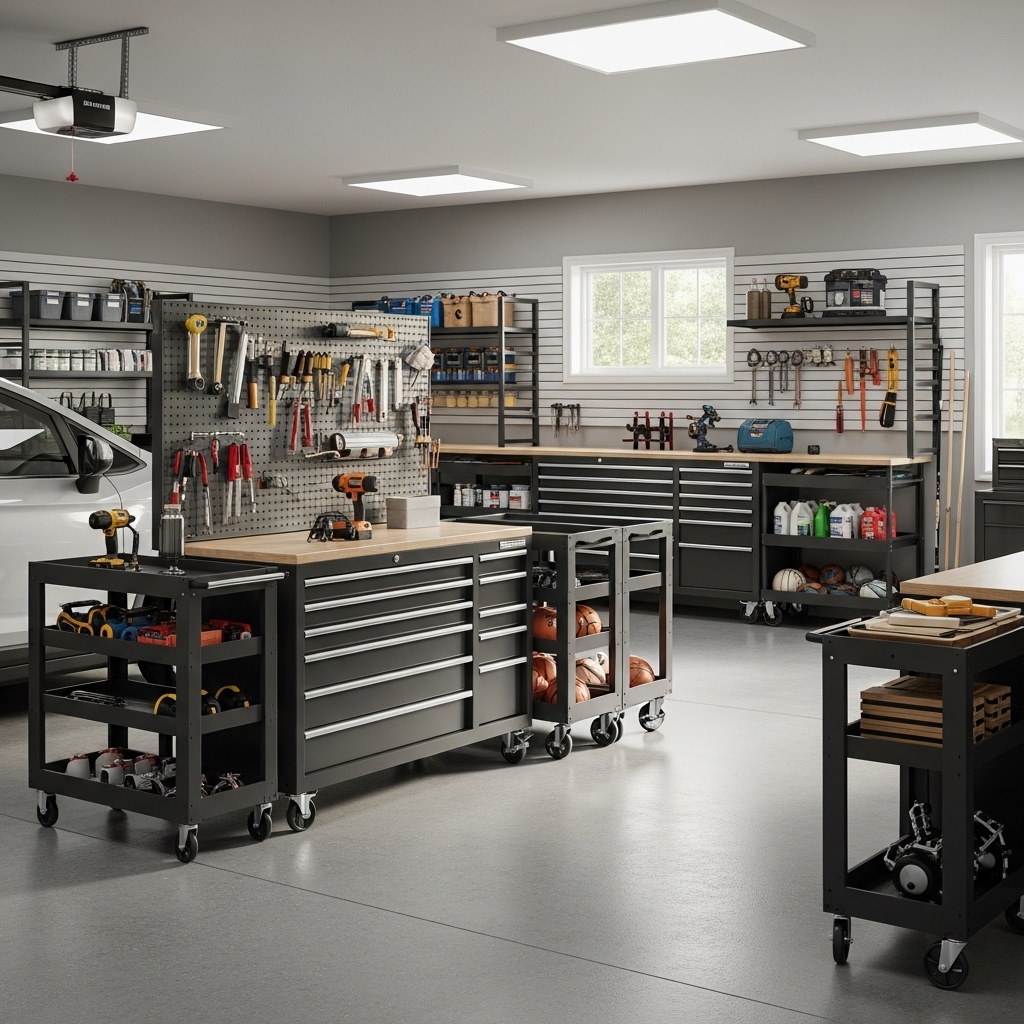
Ideal for: Garages requiring flexible layouts.
Use wheeled storage units that can be moved as needed for different tasks.
This works because mobility allows the space to adapt easily.
Pro Tip: Use locking wheels for stability.
Mistake to Avoid: Don’t overload units beyond capacity.
18. Minimal Decorative Elements for Motivation
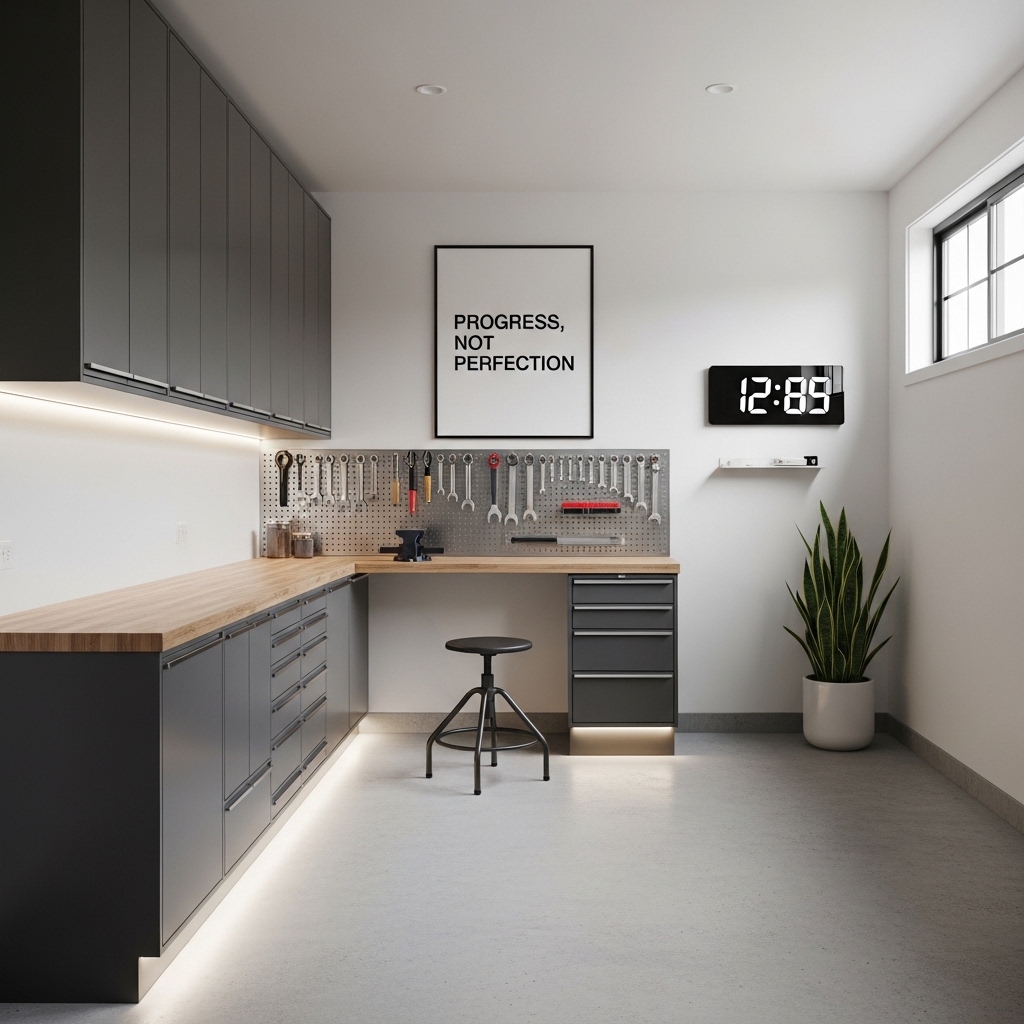
Best for: Creating a clean, enjoyable workspace.
Add minimal decor like framed prints or accent lighting without cluttering the space.
This works because a well-designed space encourages consistent use.
Pro Tip: Keep decor functional where possible.
Mistake to Avoid: Don’t overdecorate small spaces.
19. Seasonal Rotation Storage Strategy
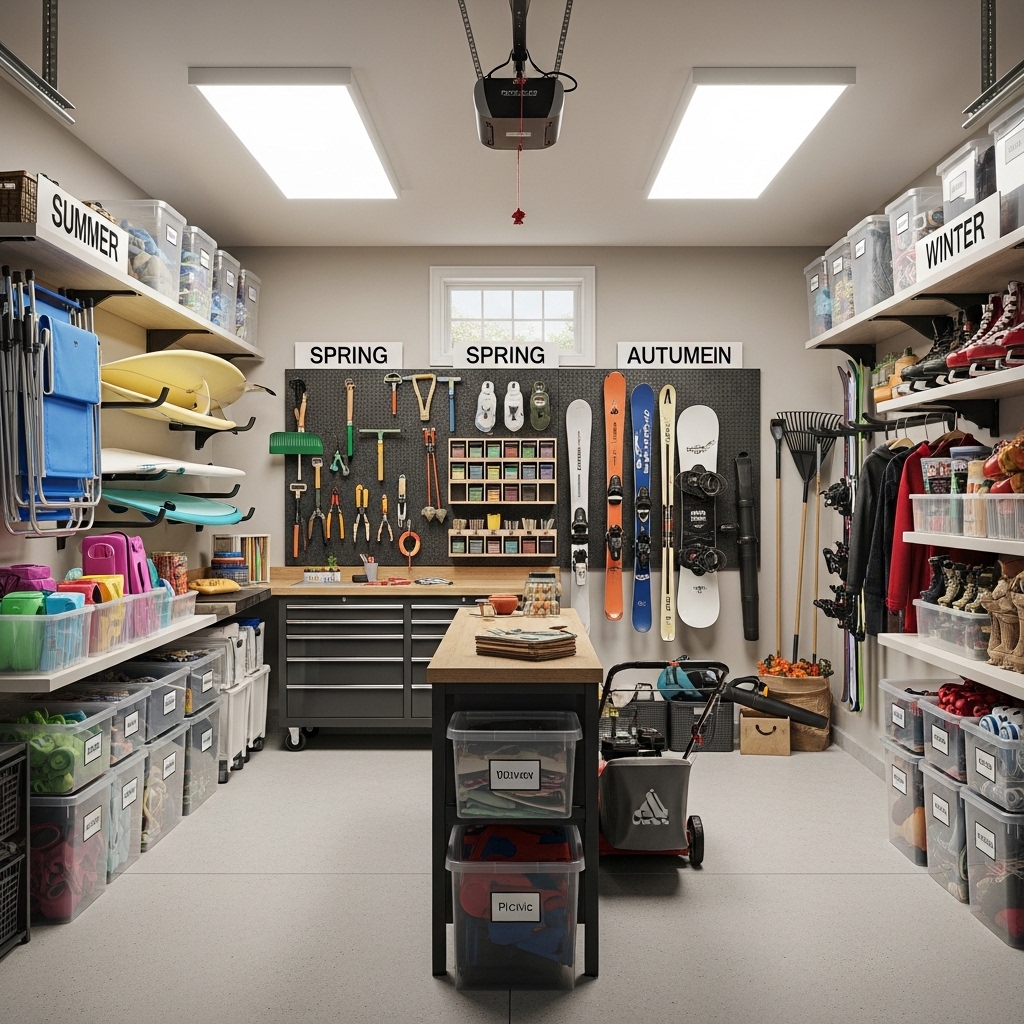
Ideal for: Keeping the garage organized year-round.
Store off-season items in less accessible areas and rotate them as needed.
This works because it keeps frequently used items easy to access.
Pro Tip: Use overhead storage for off-season items.
Mistake to Avoid: Don’t mix seasonal items together.
20. Flexible Future-Proof Layout Planning
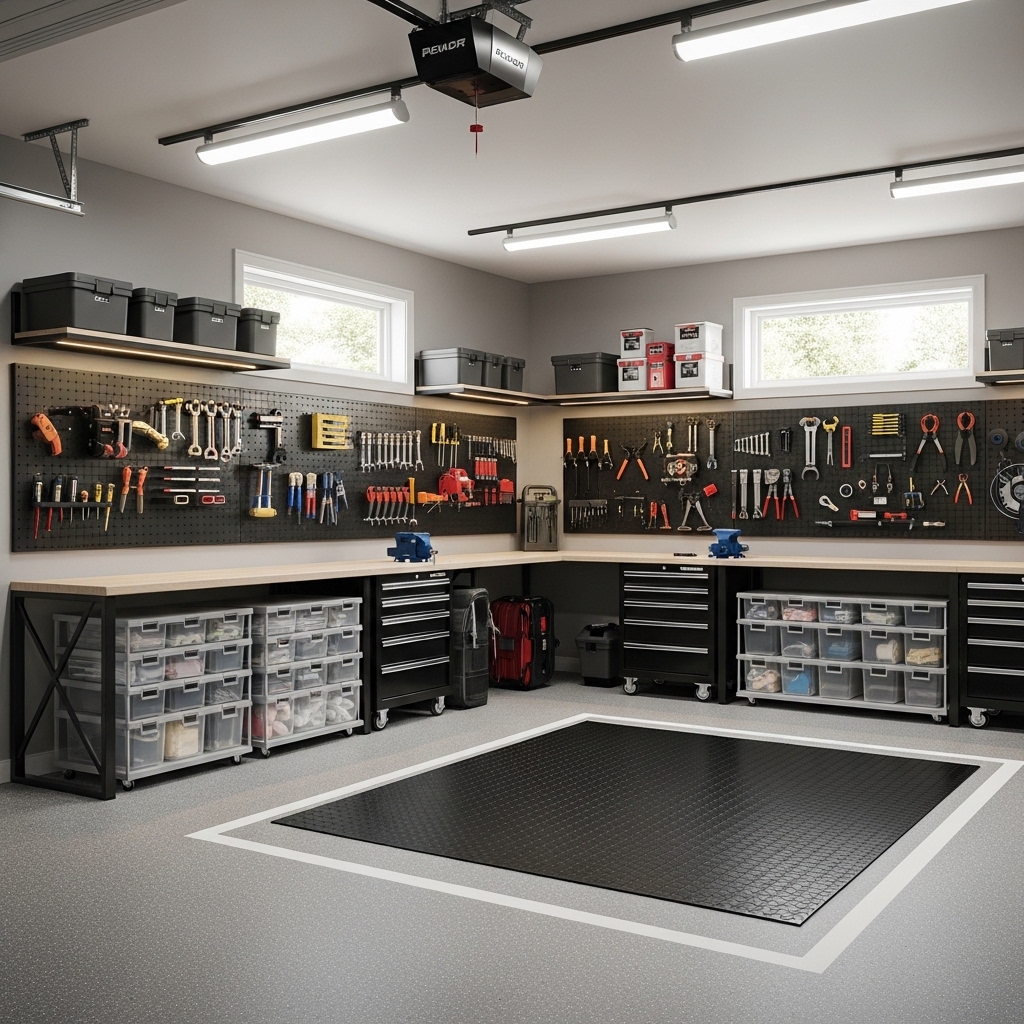
Best for: Long-term usability and evolving needs.
Design your garage with modular systems that can be adjusted over time. Leave space for future additions or changes.
This works because your storage needs will change, and a flexible layout prevents costly redesigns.
Pro Tip: Choose adjustable shelving and modular systems.
Mistake to Avoid: Don’t design for only one fixed use.
Conclusion
A garage interior that’s thoughtfully designed becomes more than just storage—it becomes a high-function, efficient extension of your home. The key is not adding more items, but creating a system that supports daily use and long-term organization.