33 Moody Bedroom Ideas That Transform Your Space Into a Dramatic, Cozy Sanctuary
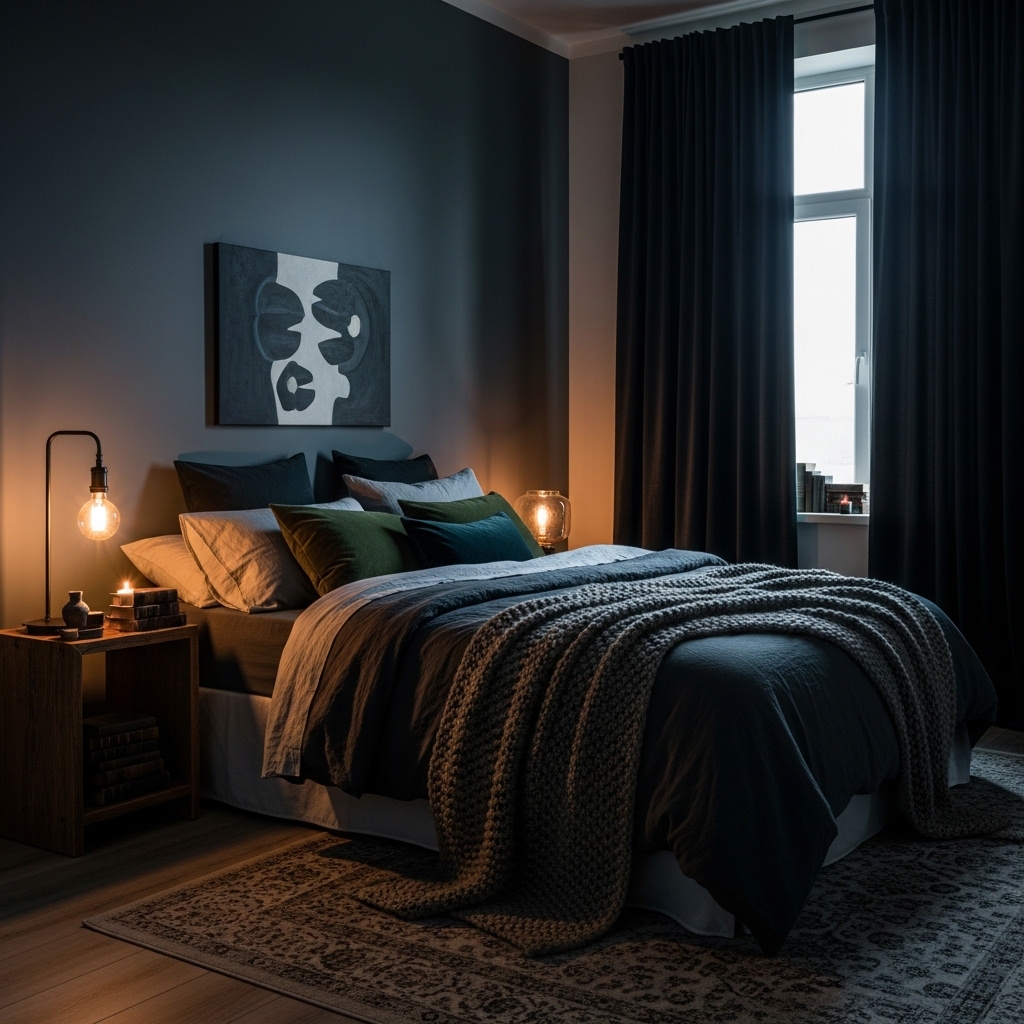
dark bedroom decor | moody interior design | cozy sleep sanctuary ideas | dramatic wall colors | intimate bedroom styling
A moody bedroom is not about darkness. It is about depth. It is about creating a space that feels like a warm embrace at the end of a long day. Unlike bright, airy rooms that energize, a moody bedroom soothes. It wraps you in rich colors, soft textures, and layered lighting that shifts with the time of day.
The secret to successful moody design is balance. Too much dark without contrast feels oppressive. Too little light makes the space feel smaller than it is. The right approach uses deep wall colors as a canvas, then adds texture, warmth, and strategic illumination to create a cocoon-like retreat.
This guide delivers 33 moody bedroom ideas that actually work. Each idea is actionable, budget-conscious, and designed to make your bedroom the most inviting room in your home.
Part 1: Moody Bedroom Ideas Color Palettes That Set the Foundation (Ideas 1-7)
Before adding texture or lighting, establish your color foundation. The right dark hue creates intimacy without feeling like a cave.
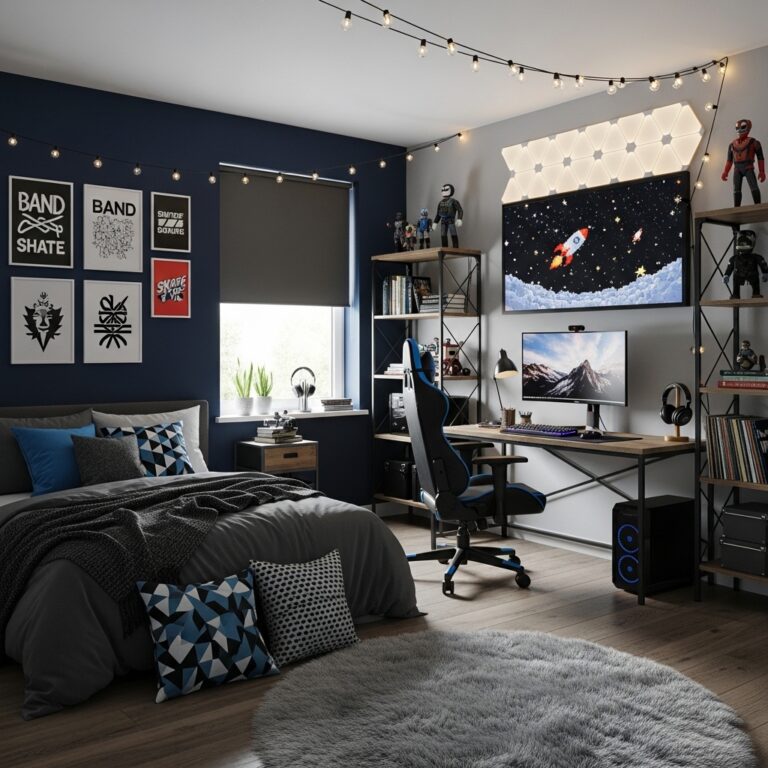
1. Embrace Deep Navy Blue Walls for Instant Drama
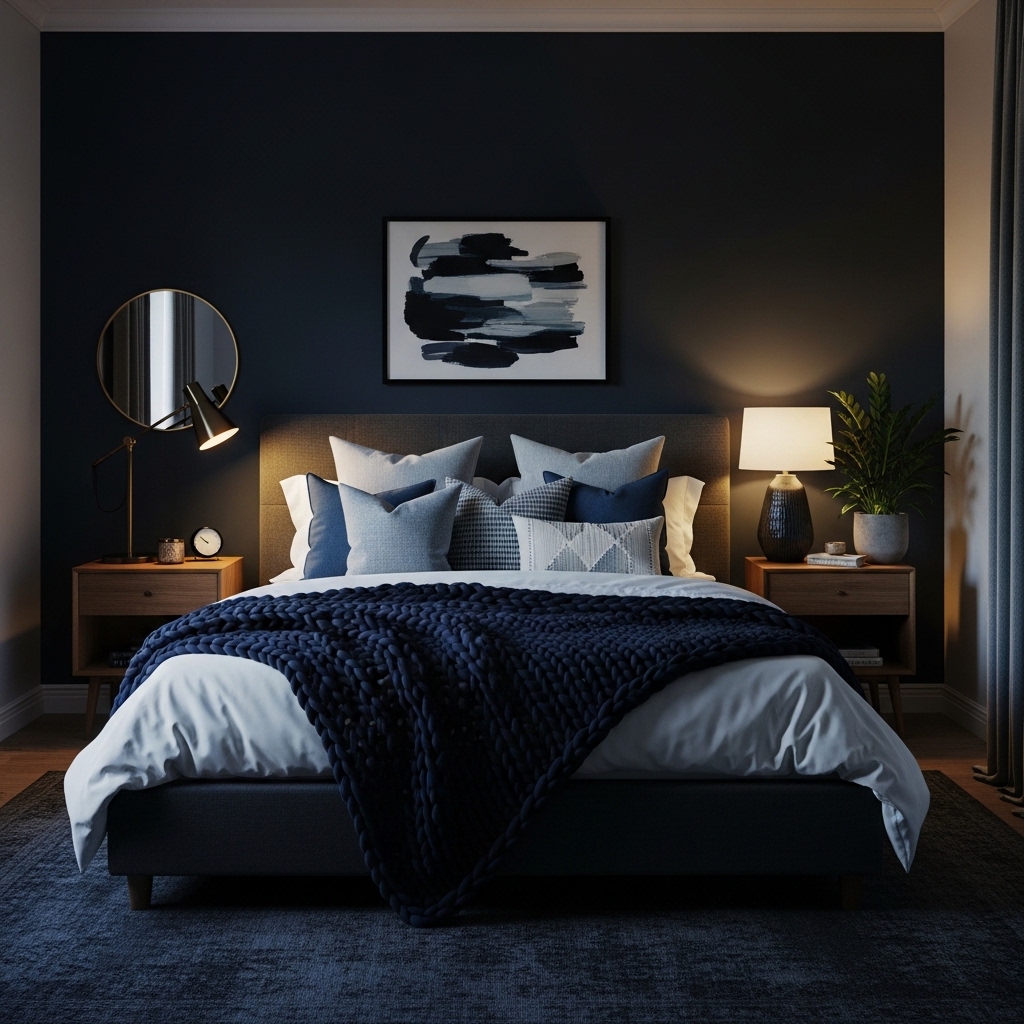
Navy blue is the most forgiving dark color for beginners. It reads as neutral but carries enough depth to create a true moody atmosphere without overwhelming a small room.
Paint all four walls in a deep navy with warm undertones. Avoid cool navies that lean purple or gray. Sherwin-Williams Naval or Benjamin Moore Hale Navy are excellent choices. The warm undertones prevent the room from feeling cold or institutional.
Pro Tip: Test navy paint samples on your walls at different times of day. Navy can shift dramatically from morning to evening light.
Mistake to Avoid: Do not pair navy with cool grays or stark white. Use warm creams, beiges, and brass accents instead.
2. Choose Charcoal Gray for a Modern, Sophisticated Look
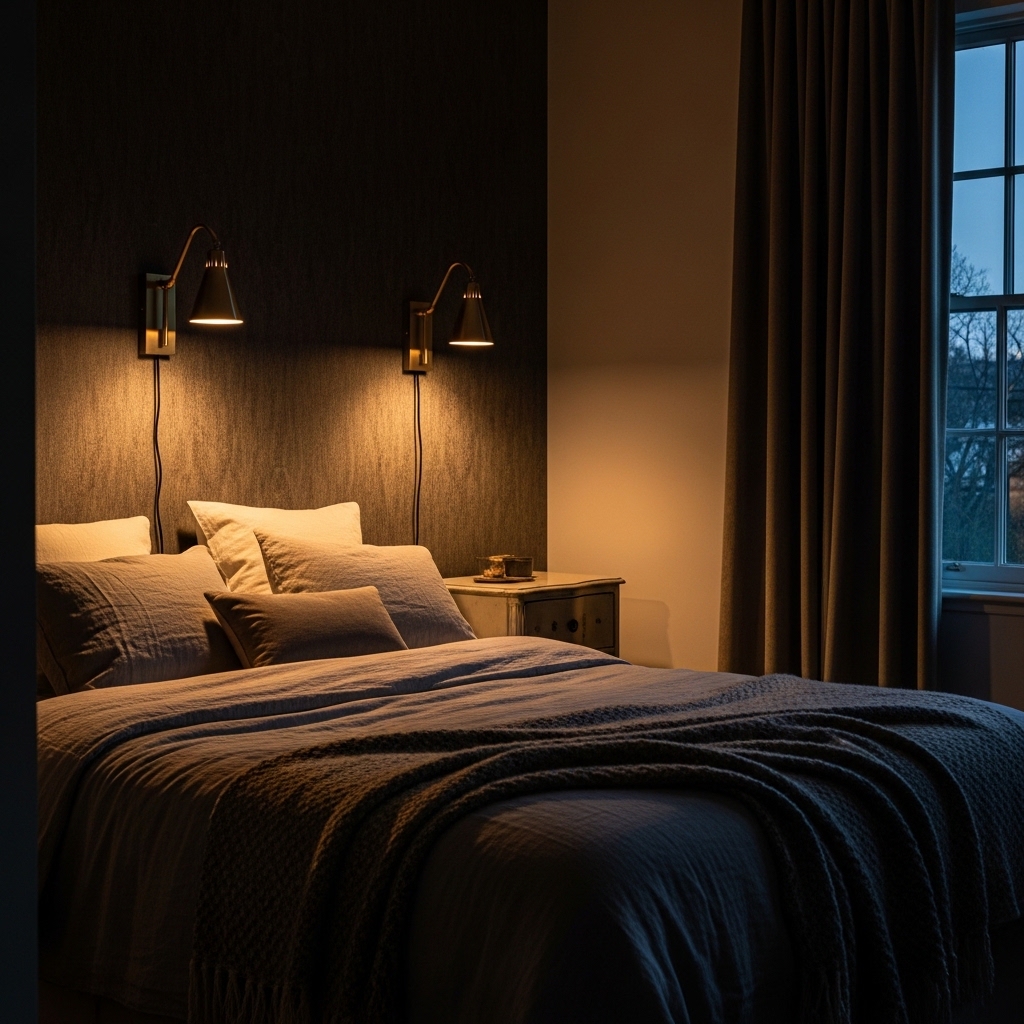
Charcoal gray is the chameleon of moody colors. It works in modern, traditional, and industrial spaces. It hides imperfections better than any other dark shade.
Select a charcoal with warm undertones like Benjamin Moore Wrought Iron or Sherwin-Williams Iron Ore. Paint the ceiling the same color for a true cocoon effect. The unified color field makes the room feel larger, not smaller.
Pro Tip: Use matte finish on walls and satin on trim. The slight sheen contrast adds visual interest without breaking the mood.
Mistake to Avoid: Do not use cool-toned charcoal. It reads as flat and institutional. Warm undertones are essential for coziness.
3. Paint Walls and Ceiling the Same Dark Color
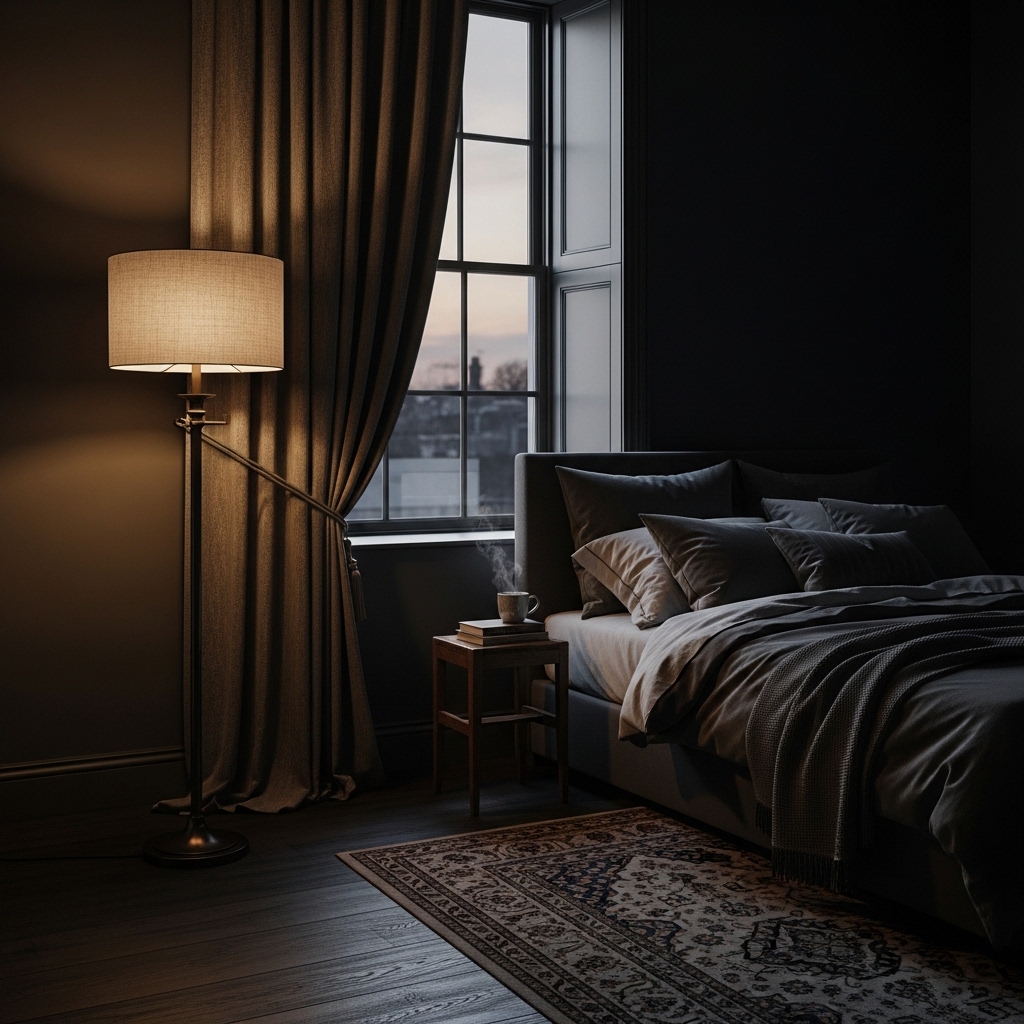
The most dramatic moody bedrooms extend the dark color to the ceiling. This technique removes visual boundaries and creates a seamless, enveloping atmosphere.
Choose a deep, warm-leaning dark shade like charcoal, navy, or forest green. Paint the walls, ceiling, and trim the same color in the same finish. The lack of contrast tricks the eye into perceiving more space.
Pro Tip: Test this technique in a room with at least one window. Natural light prevents the space from feeling like a cave.
Mistake to Avoid: Do not use this technique in a room with zero natural light. You need some daylight to balance the dark.
4. Use Deep Forest Green for a Natural, Earthy Mood
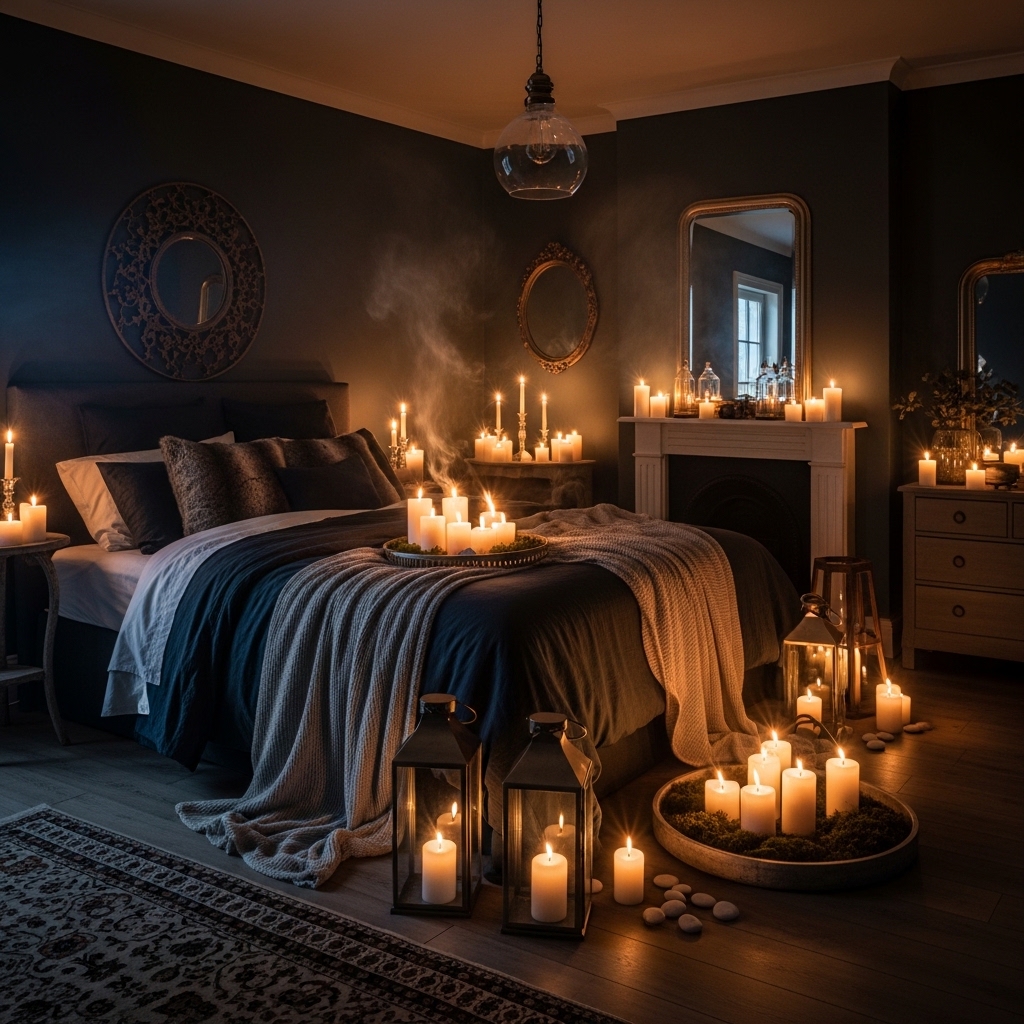
Forest green brings the outside in. It pairs beautifully with wood tones, leather, and natural fibers. The color feels grounding and restorative.
Paint walls in a deep, muted green like Sherwin-Williams Isle of Pines or Benjamin Moore Black Forest Green. Pair with cream bedding, leather accents, and lots of natural wood. The combination feels organic and calm.
Pro Tip: Add brass or gold accents to forest green. The warm metal tones complement the green beautifully.
Mistake to Avoid: Do not pair forest green with bright white. Cream or off-white is much more harmonious.
5. Embrace Burgundy and Wine Tones for Romantic Drama
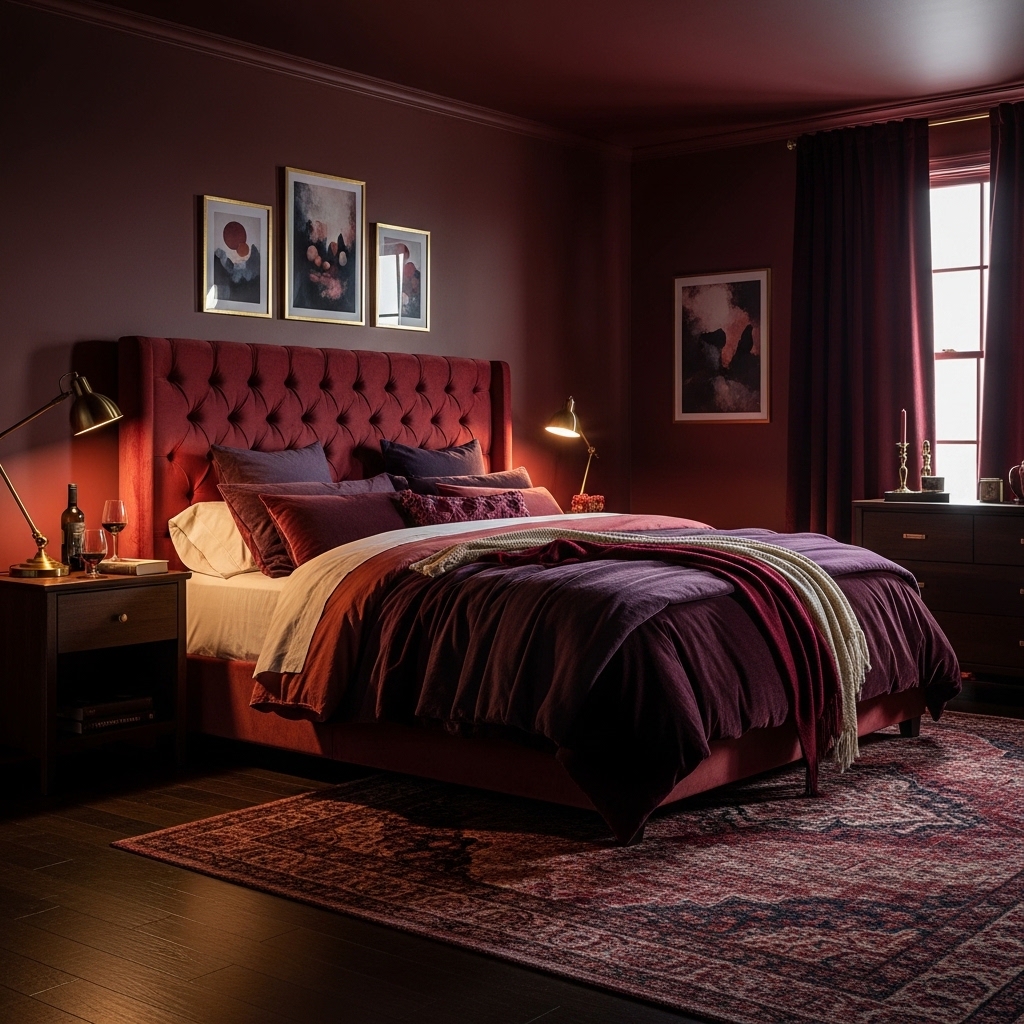
Burgundy is bold. It is not for everyone. But when done right, it creates the most romantic, intimate bedroom imaginable.
Use burgundy on an accent wall or on bedding and curtains. Pair with cream, blush, or gold. The deep red tones evoke warmth and passion without being aggressive.
Pro Tip: Use velvet in burgundy tones. The texture amplifies the richness of the color.
Mistake to Avoid: Do not use burgundy in a room with poor lighting. It will read as brown or black.
6. Create Contrast with Black and White Bedding
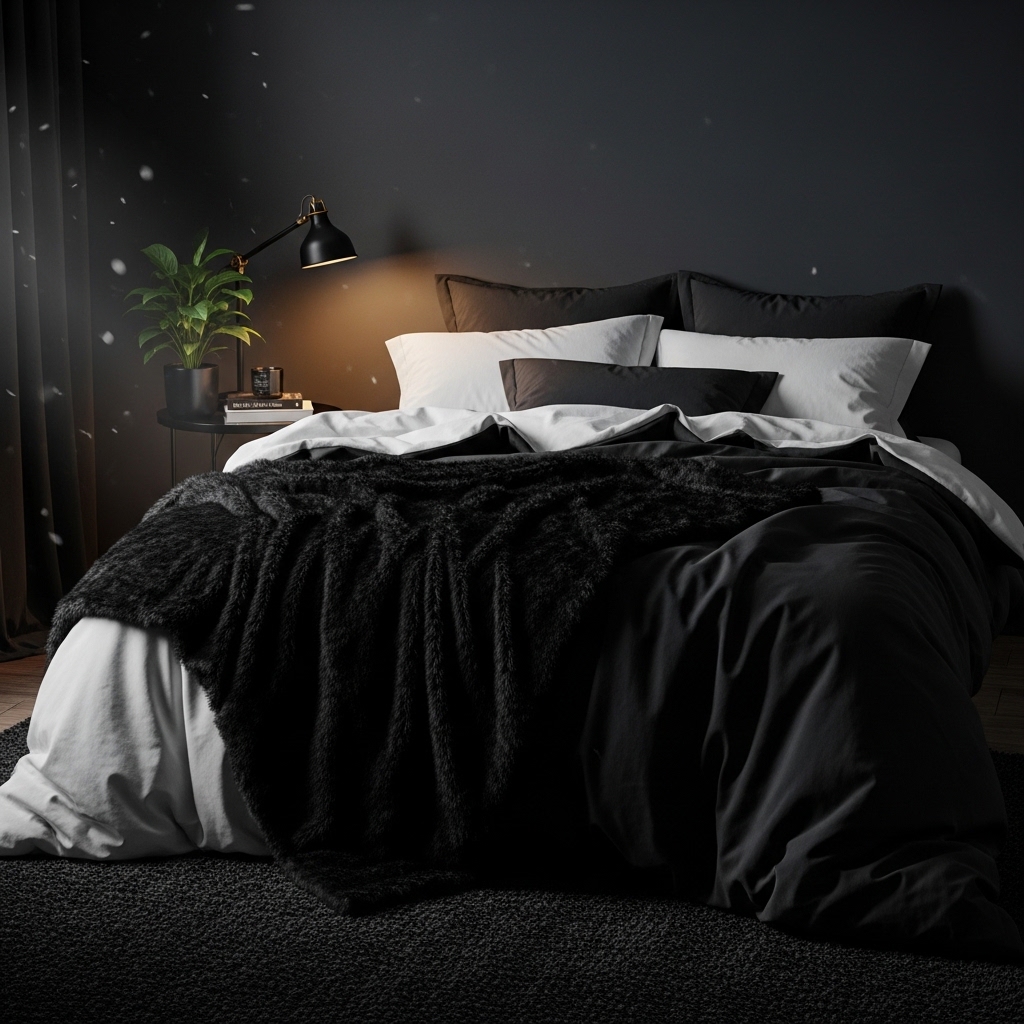
Dark walls need contrast. The most effective way to provide it is with high-contrast bedding. Crisp white sheets against a black or charcoal wall create striking visual tension.
Use white or cream duvets and sheets. Add black or charcoal pillows and throws. The contrast keeps the room from feeling monochromatic and flat.
Pro Tip: Layer different shades of white and cream. Ivory, linen, and snow white together add depth without introducing color.
Mistake to Avoid: Do not use stark white against navy. Cream or off-white is much more forgiving and warmer.
7. Add a Dark Limewashed or Textured Wall Finish
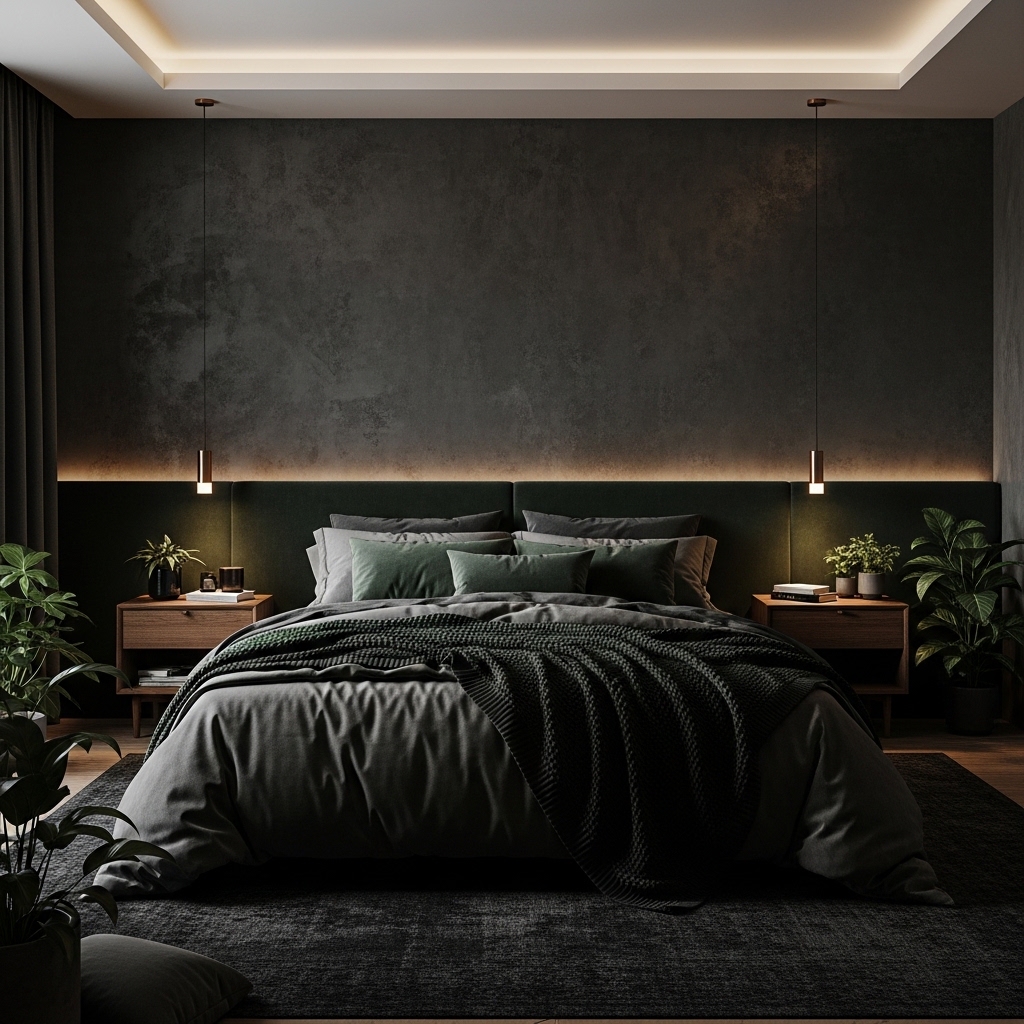
Flat paint is standard. Textured walls are extraordinary. Limewash, Roman clay, or Venetian plaster add depth that flat paint cannot achieve.
Apply limewash in a dark charcoal or brown tone. The variation in the finish creates shadows that shift throughout the day. The texture itself becomes the focal point.
Pro Tip: Limewash is DIY-friendly and more forgiving than traditional paint. Mistakes become part of the texture.
Mistake to Avoid: Do not use limewash in a bathroom. The moisture will damage the finish over time.
Part 2: Moody Lighting That Creates Warmth and Depth (Ideas 8-14)
Lighting makes or breaks a moody bedroom. Harsh overhead lights destroy the atmosphere. Layered, warm lighting creates it.
8. Eliminate Overhead Lighting Entirely
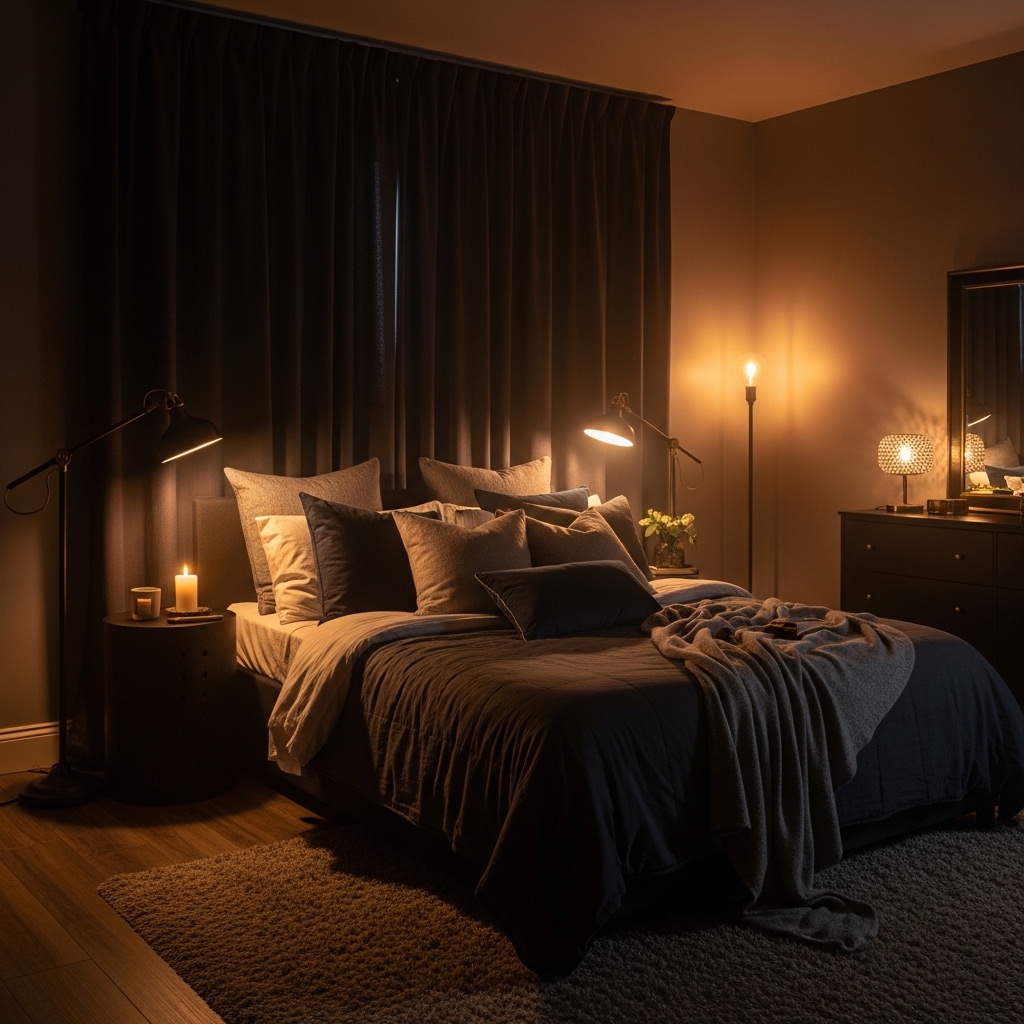
The single biggest mistake in moody bedrooms is relying on a ceiling fixture. Overhead light casts unflattering shadows and kills intimacy.
Remove the ceiling fixture entirely or keep it on a dimmer set to its lowest level. Use table lamps, floor lamps, and sconces as your primary light sources.
Pro Tip: If you must have overhead light, use a dimmer and keep the bulb wattage under 40 watts.
Mistake to Avoid: Do not use recessed can lights. They create harsh pools of light that ruin the mood.
9. Use Warm White Bulbs at 2700K Everywhere
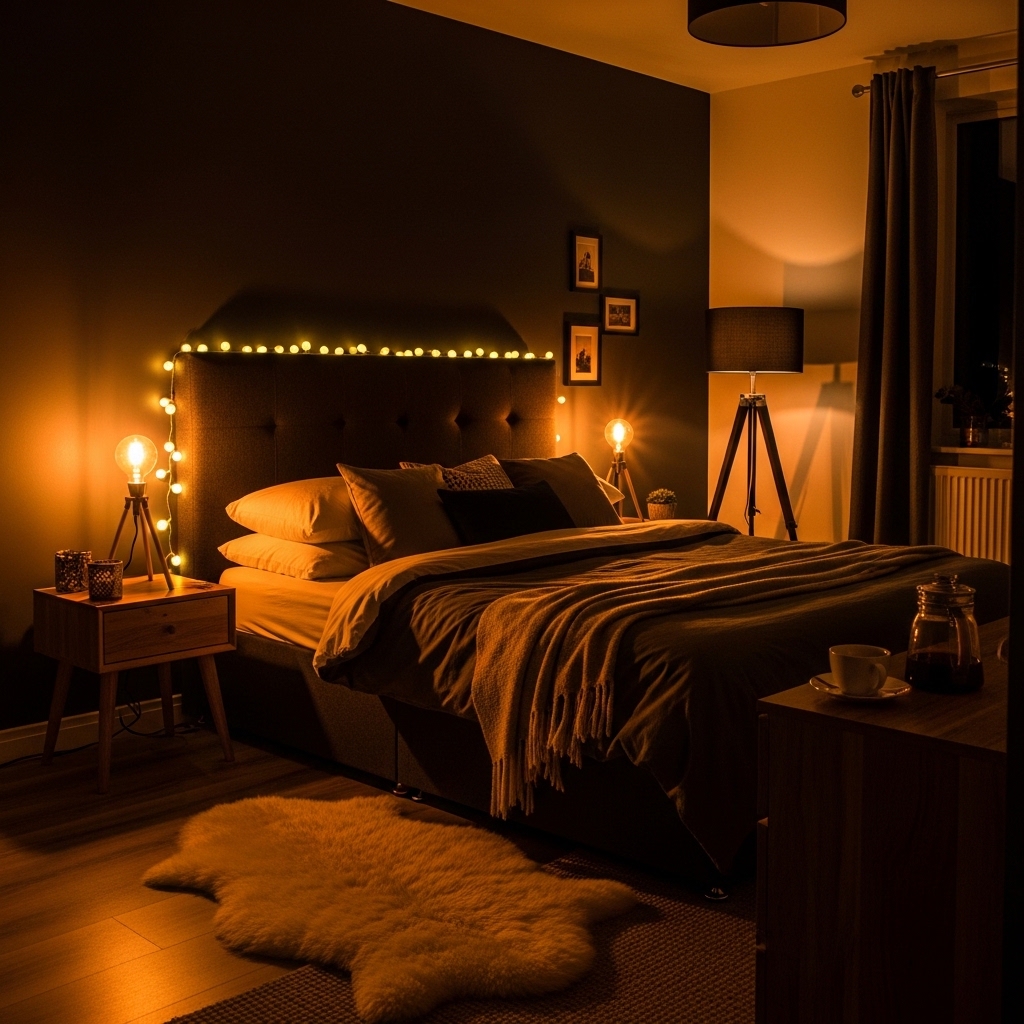
Bulb temperature is critical. Cool white light (4000K or higher) makes dark walls look flat and uninviting. Warm light (2700K) makes them glow.
Replace every bulb in your bedroom with 2700K LEDs. Use the same temperature throughout the room for consistency.
Pro Tip: Buy all bulbs at once from the same batch. Even slight temperature variations between brands are noticeable.
Mistake to Avoid: Do not mix 2700K and 3000K bulbs in the same room. The difference will be visible.
10. Install Wall Sconces on Either Side of the Bed
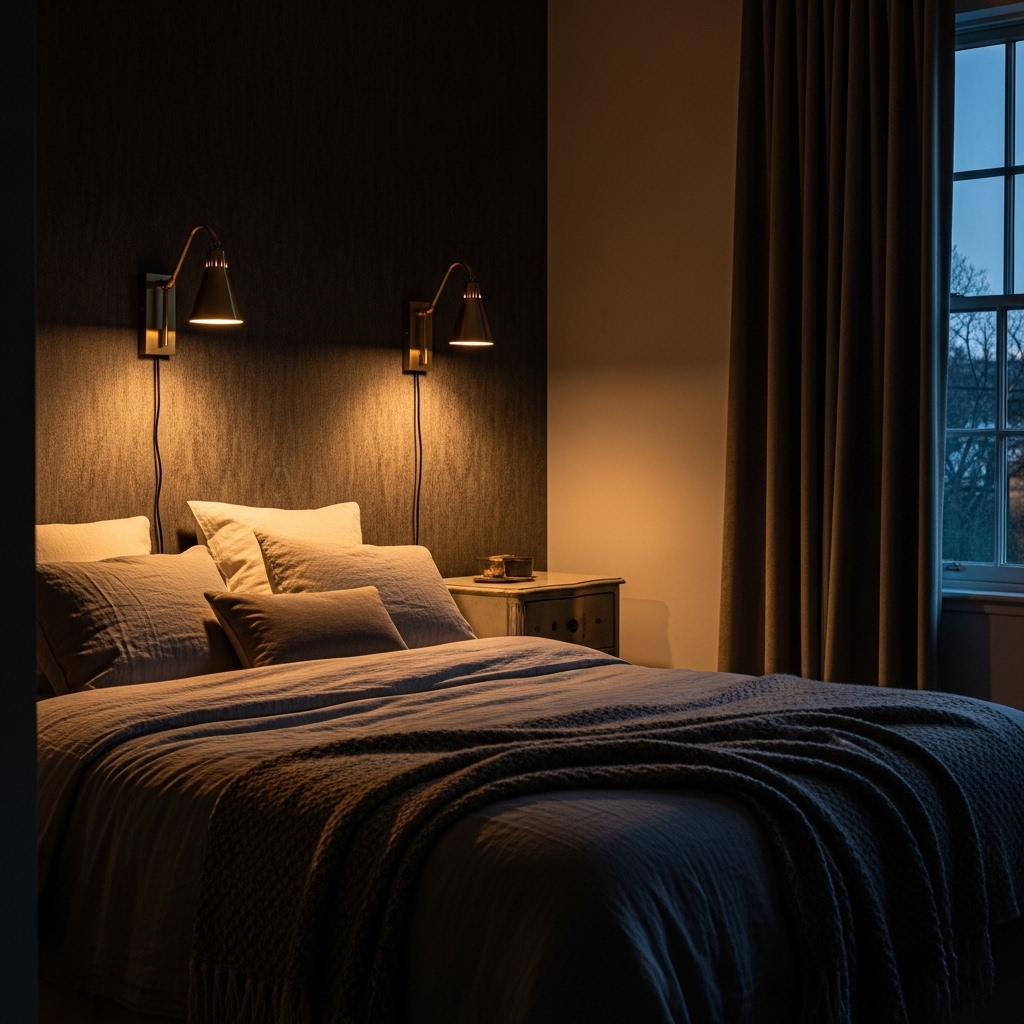
Sconces free up nightstand space and provide focused reading light. They also add architectural interest to the wall.
Choose sconces with shades that direct light downward. Install them 28-32 inches above the floor or at seated eye level. Hardwire them or use plug-in versions with cord covers.
Pro Tip: Choose sconces in brass or unlacquered brass. The warm metal tone complements dark walls perfectly.
Mistake to Avoid: Do not install sconces too high. The light should hit your book, not the ceiling.
11. Add a Floor Lamp in the Darkest Corner
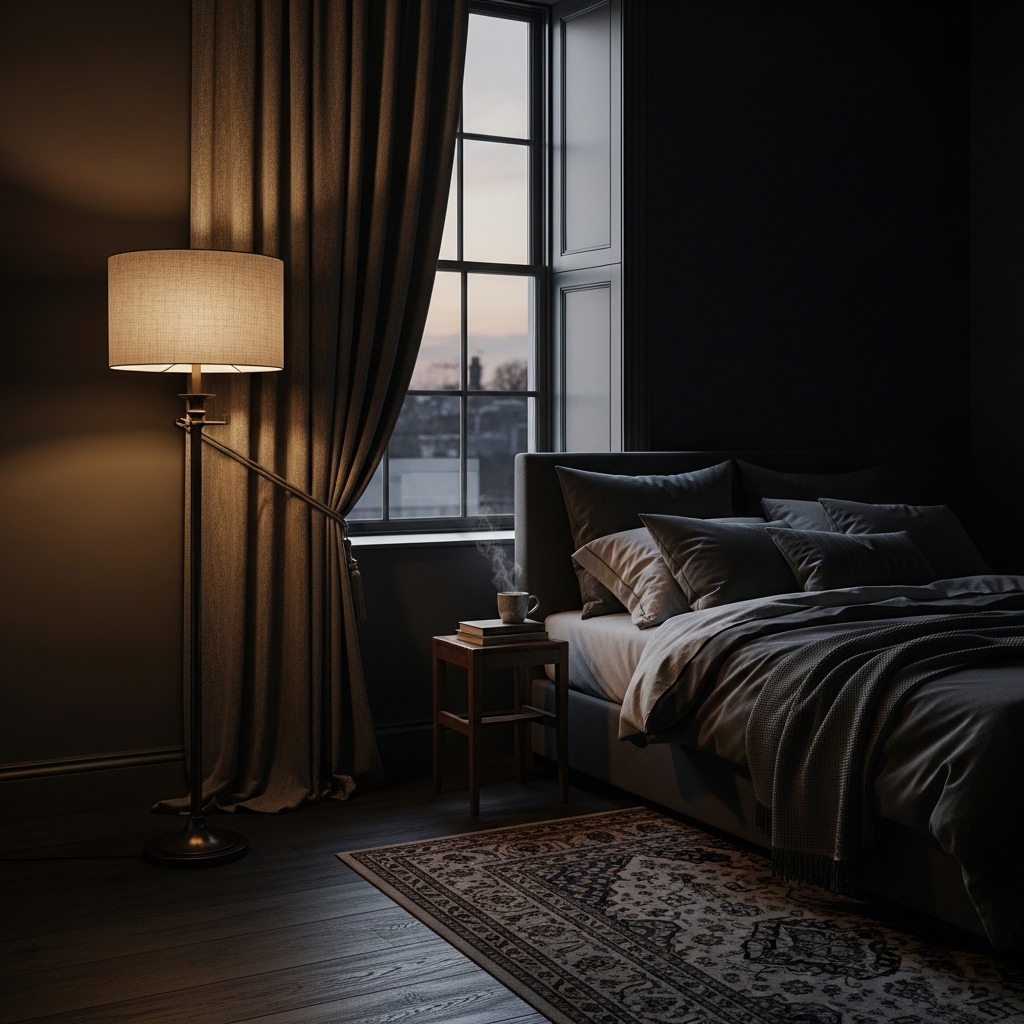
Every room has a corner that collects shadow. A floor lamp eliminates that dead zone and balances the light distribution.
Place a floor lamp in the corner diagonally opposite your bed. Choose a lamp with a shade that directs light upward to bounce off the ceiling.
Pro Tip: Use a floor lamp with a dimmer switch. You can adjust the light level from bright to barely there.
Mistake to Avoid: Do not place the floor lamp next to the bed. It competes with your sconces.
12. Use Candles for Flickering, Organic Light
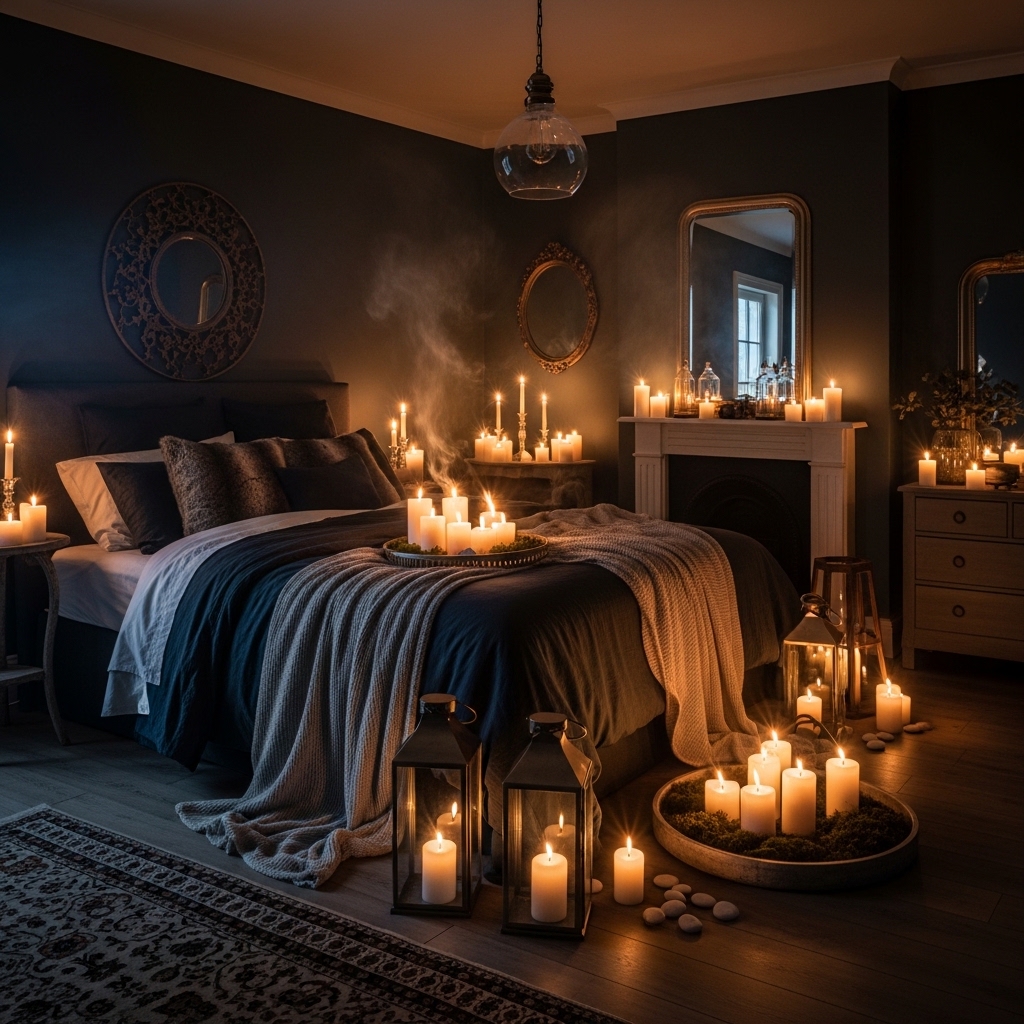
Candles are the ultimate moody bedroom accessory. The flickering flame creates movement and warmth that electric lights cannot replicate.
Cluster pillar candles on a tray on your dresser. Use taper candles in brass holders on your nightstand. For safety, consider flameless LED candles that flicker realistically.
Pro Tip: Use unscented candles in bedrooms. Strong scents can be overwhelming in a small, dark space.
Mistake to Avoid: Do not leave burning candles unattended. Always extinguish them before sleeping.
13. Install Perimeter Cove Lighting
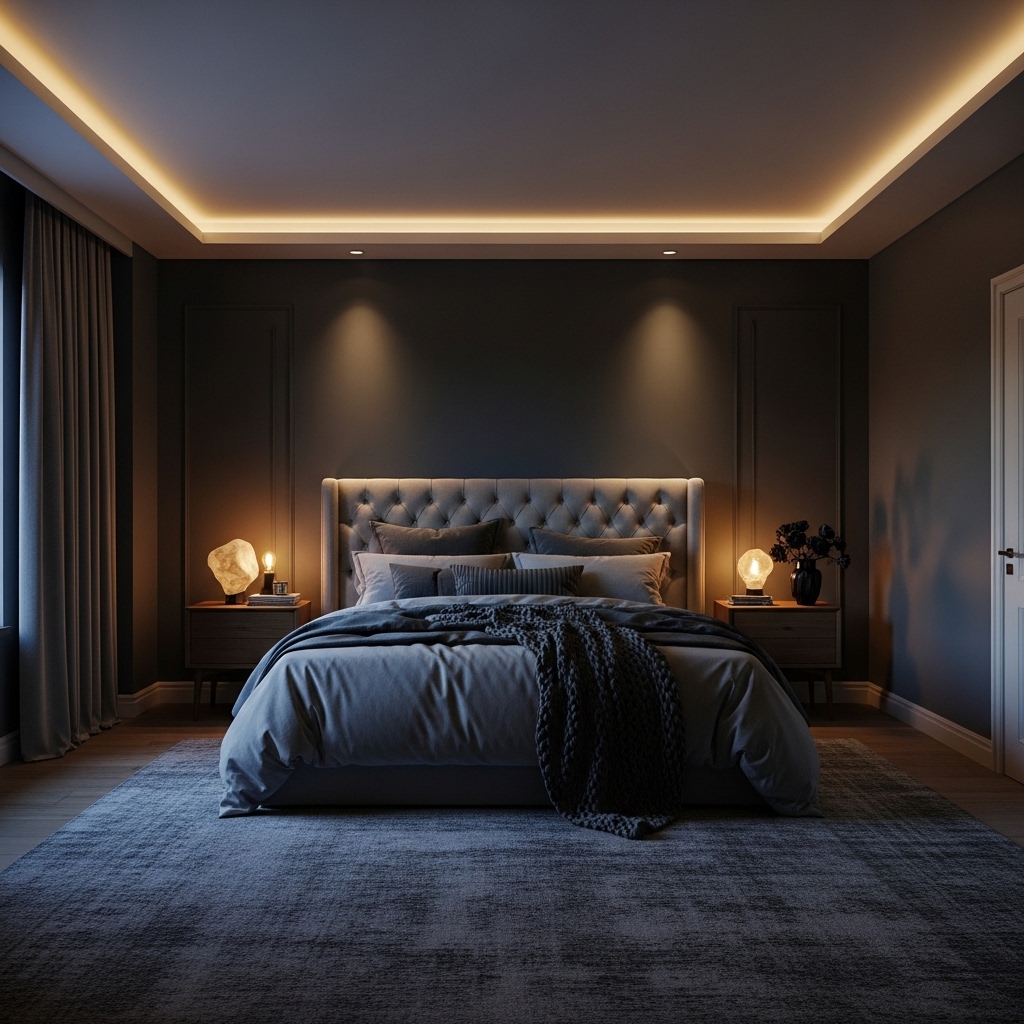
Cove lighting hides LED strips in a recessed channel near the ceiling. The light bounces off the ceiling, creating a soft, indirect glow.
Run LED tape around the perimeter of the room, hidden behind a small wooden or drywall lip. Use 2700K tape for warm light. Install a dimmer for adjustable brightness.
Pro Tip: Cove lighting is easiest to install during renovation, but plug-in versions are available for existing rooms.
Mistake to Avoid: Do not use cool white LED tape. It will ruin the entire mood.
14. Add a Single Statement Pendant Light
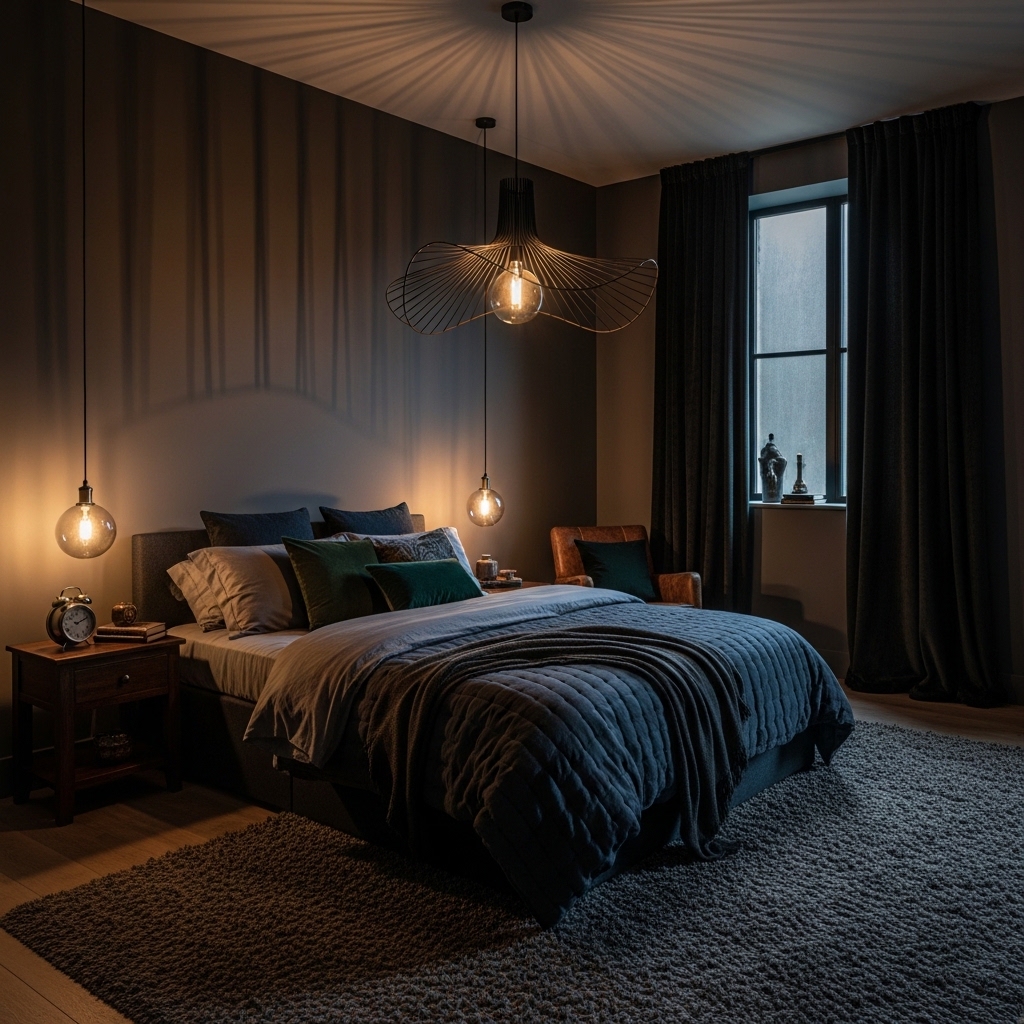
One well-placed pendant light can serve as both art and illumination. Choose a sculptural fixture in brass, black metal, or woven rattan.
Hang the pendant over a reading chair or in a corner. Keep the bulb warm and dim. The fixture itself should be beautiful even when unlit.
Pro Tip: Use a pendant on a dimmer and keep it low. The low light creates a focal point without overpowering the room.
Mistake to Avoid: Do not center the pendant over the bed. Over-bed lighting is rarely flattering.
Part 3: Moody Textures That Add Warmth and Comfort (Ideas 15-21)
Dark colors alone can feel cold. Texture is what makes a moody bedroom feel cozy and inviting.
15. Layer Velvet Pillows on the Bed
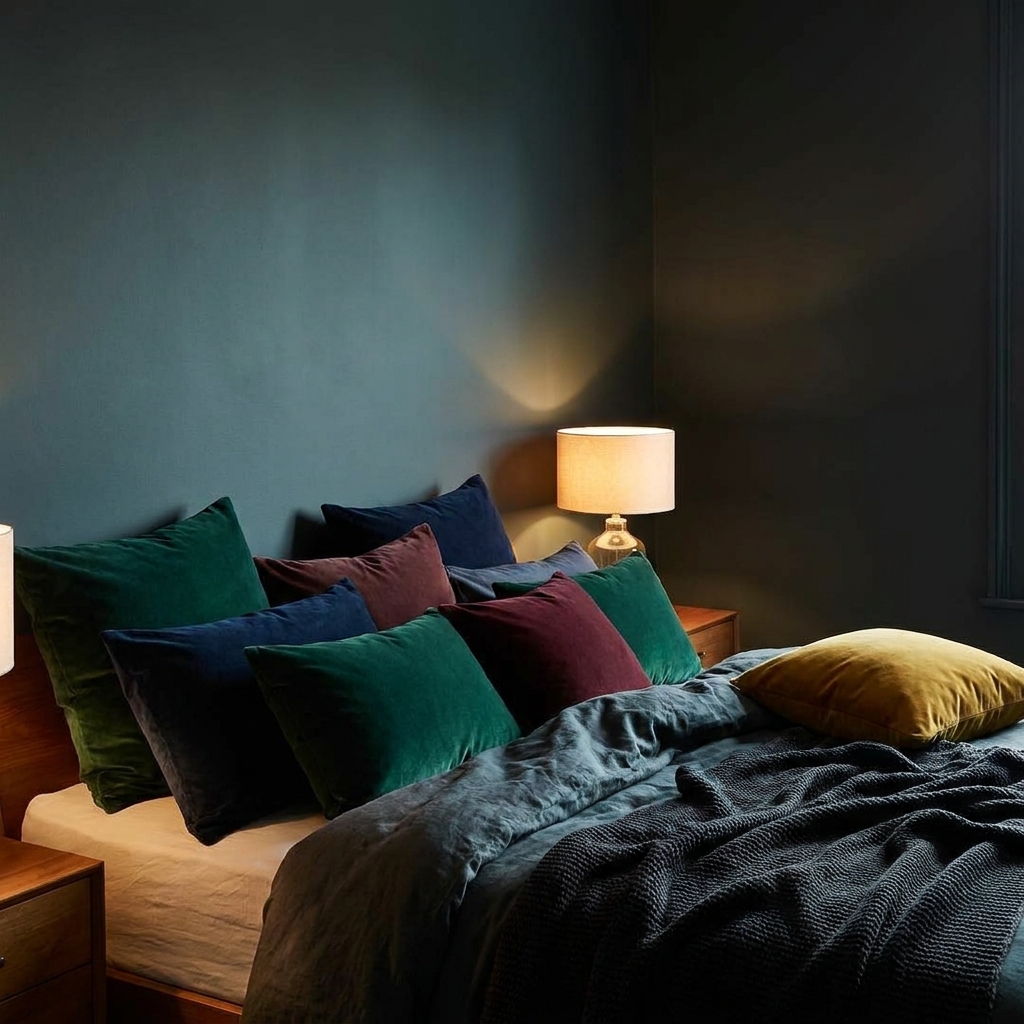
Velvet is the ultimate moody fabric. It is soft. It is luxurious. It catches light in ways that flat cotton cannot.
Add two or three velvet pillows in deep jewel tones. Burgundy, emerald, sapphire, or charcoal. Place them in front of your sleeping pillows.
Pro Tip: Buy velvet pillow covers with zippers so you can remove and clean them.
Mistake to Avoid: Do not use velvet in high-friction areas like the center of the bed. It will flatten and mat.
16. Drape a Chunky Knit Throw Over the Foot of the Bed
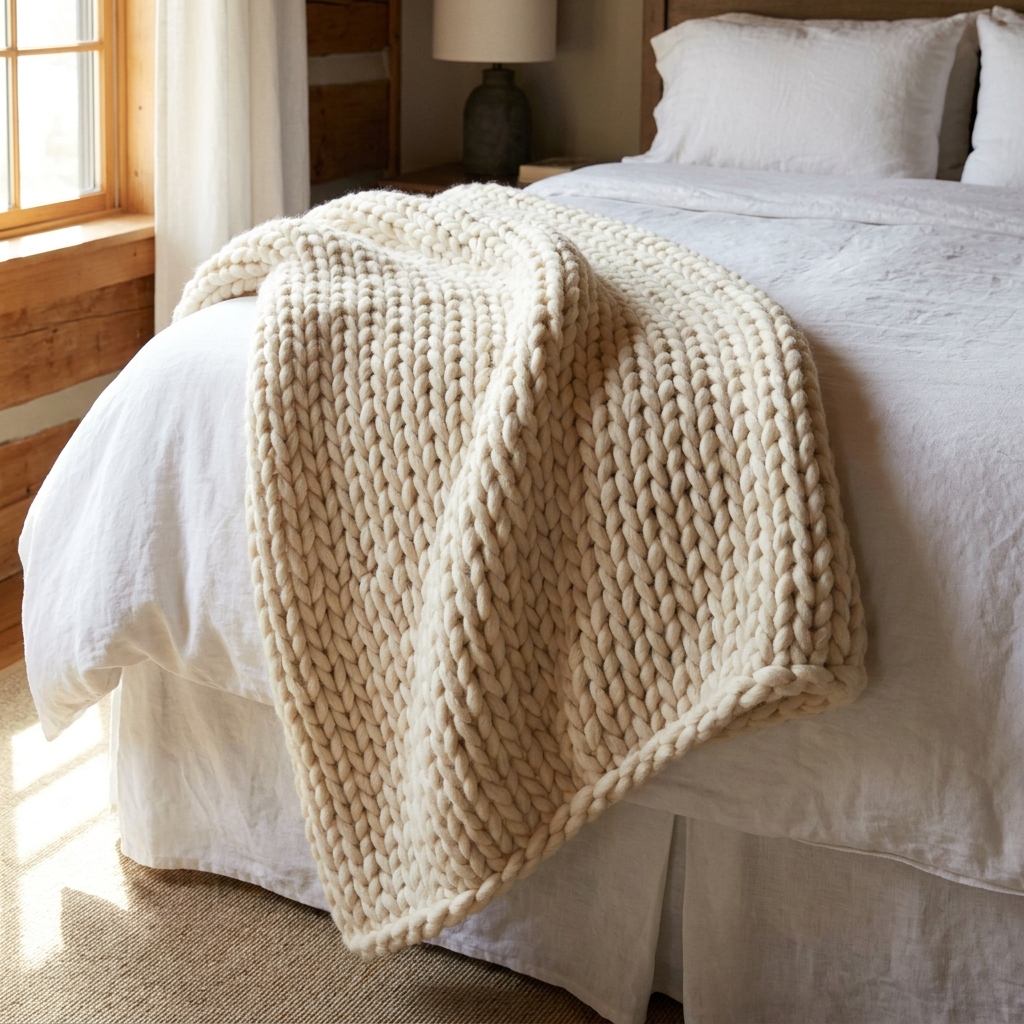
A chunky knit throw adds texture and weight. It invites touch. It also adds an extra layer of warmth on cold nights.
Choose a throw in cream, oatmeal, or charcoal. Drape it casually over the foot of the bed, not folded neatly. The casual drape is the look.
Pro Tip: Hand wash chunky knits. Machine washing can felt the wool and ruin the texture.
Mistake to Avoid: Do not use a thin, flat blanket. The chunky texture is essential to the look.
17. Use Heavy Blackout Curtains from Ceiling to Floor
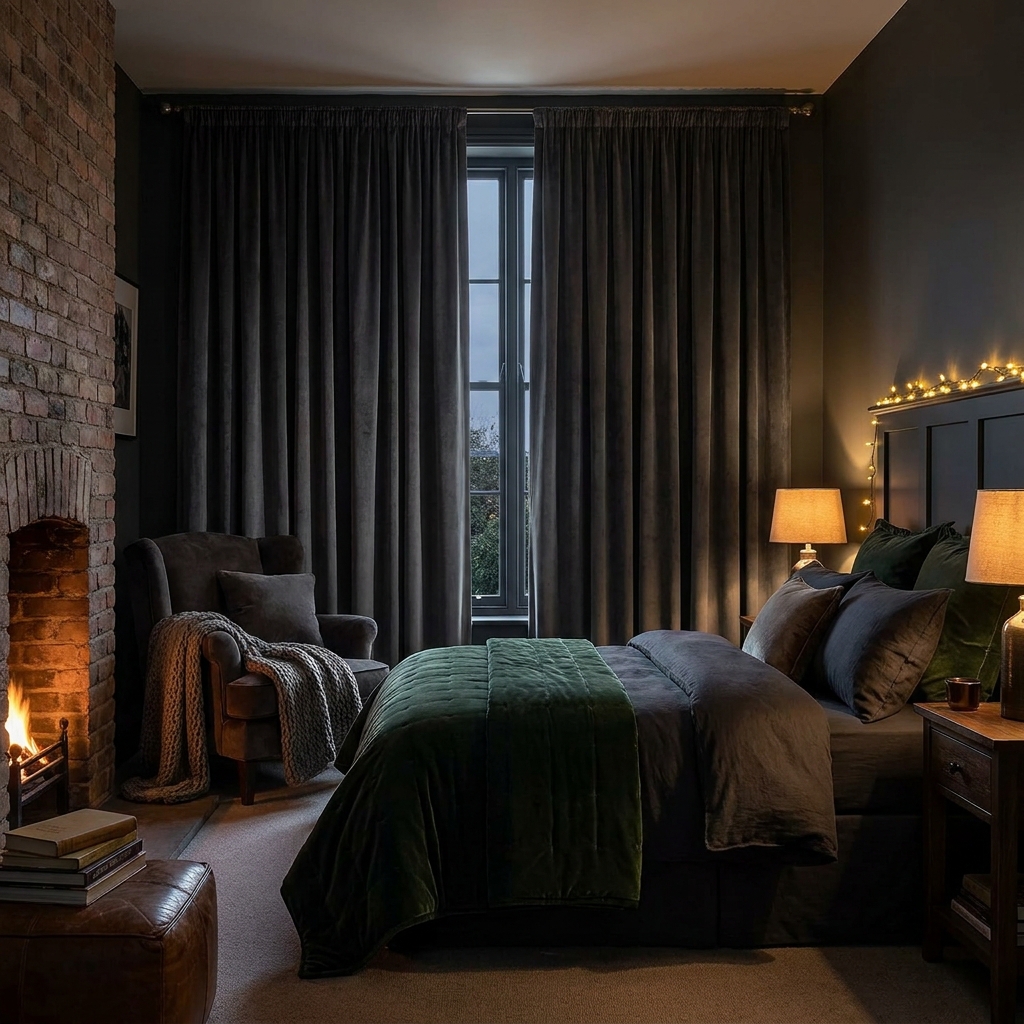
Blackout curtains serve two purposes: they block light and add softness to the walls. Floor-to-ceiling installation makes the ceiling feel higher.
Choose curtains in a heavy fabric like velvet or thick cotton. Mount the rod at the ceiling line, not above the window. The curtains should kiss the floor.
Pro Tip: Use a double rod. Hang sheers underneath for daytime privacy and blackout curtains for sleep.
Mistake to Avoid: Do not use grommet-top curtains. Back tab or ring clip styles look more tailored.
18. Add a High-Pile Area Rug Underfoot
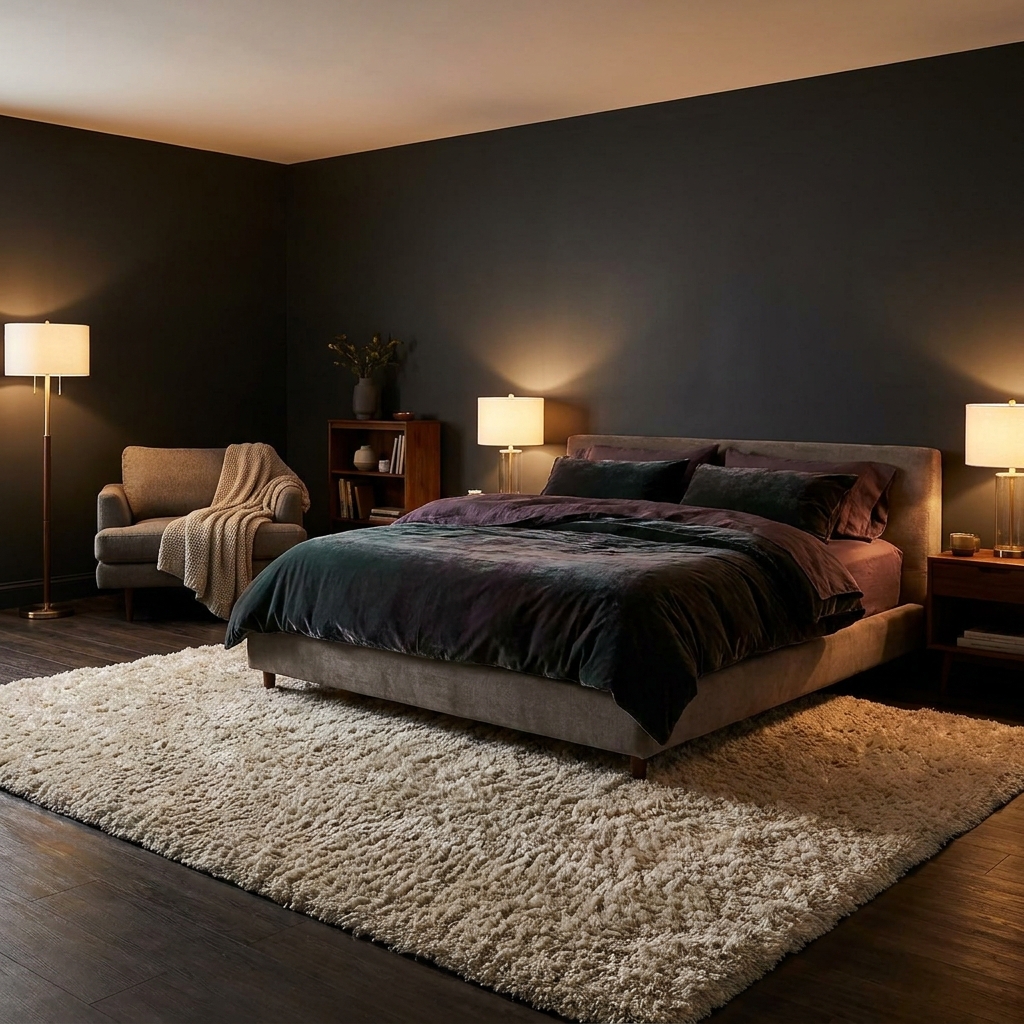
Bare floors feel cold. A high-pile rug adds warmth and softness. It also absorbs sound, making the room feel quieter.
Choose a rug in a solid dark color or a faded traditional pattern. Place it under the bed, extending at least 18 inches beyond the sides and foot.
Pro Tip: Use a rug pad underneath. The pad adds cushion and prevents slipping.
Mistake to Avoid: Do not use a light-colored rug. It will stand out too much against dark walls.
19. Mix Linen, Cotton, and Wool Bedding
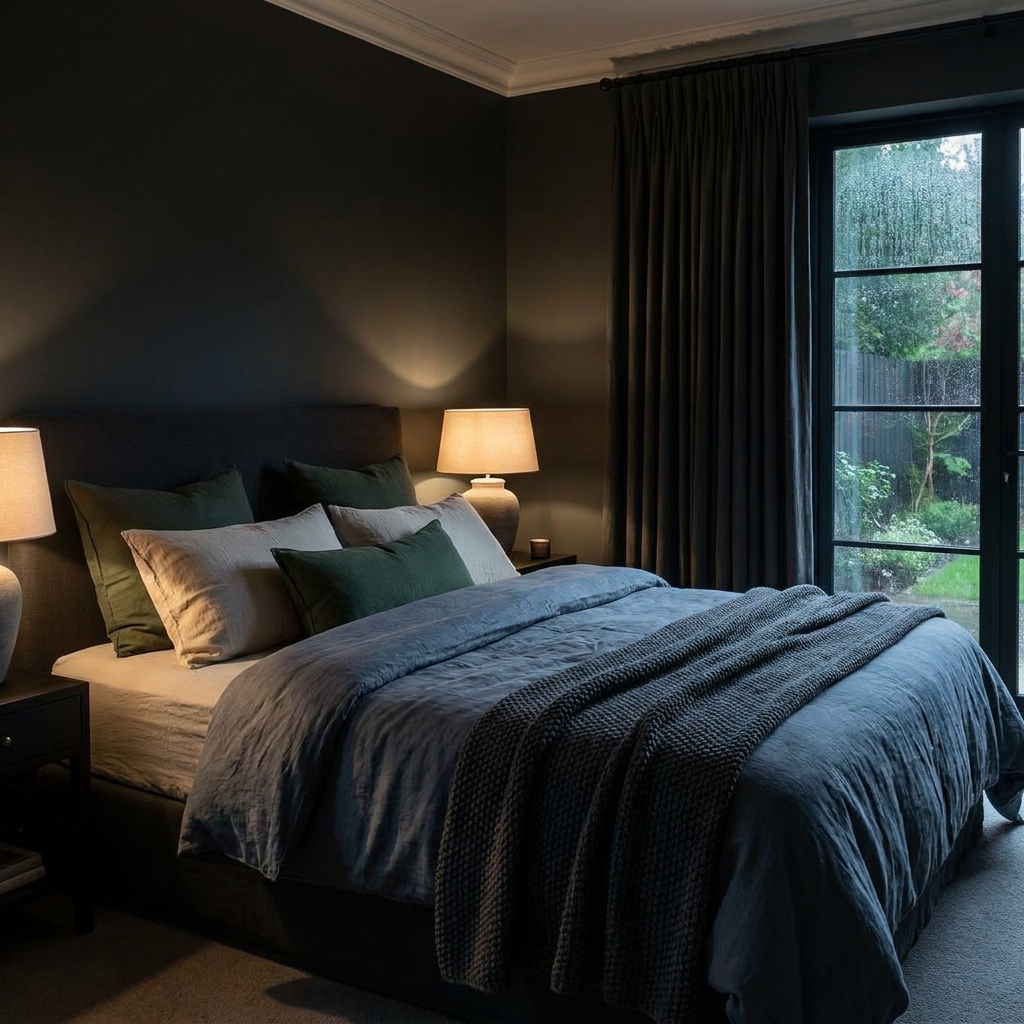
Different textures at different scales create visual interest. Linen is nubby. Cotton is smooth. Wool is soft.
Layer a linen duvet cover over cotton sheets. Add a wool blanket at the foot. The mix of textures adds depth without adding color.
Pro Tip: Choose bedding in the same color family (cream, beige, charcoal) for cohesion.
Mistake to Avoid: Do not use all synthetic fabrics. Polyester does not breathe and can feel clammy.
20. Add a Felt or Upholstered Headboard
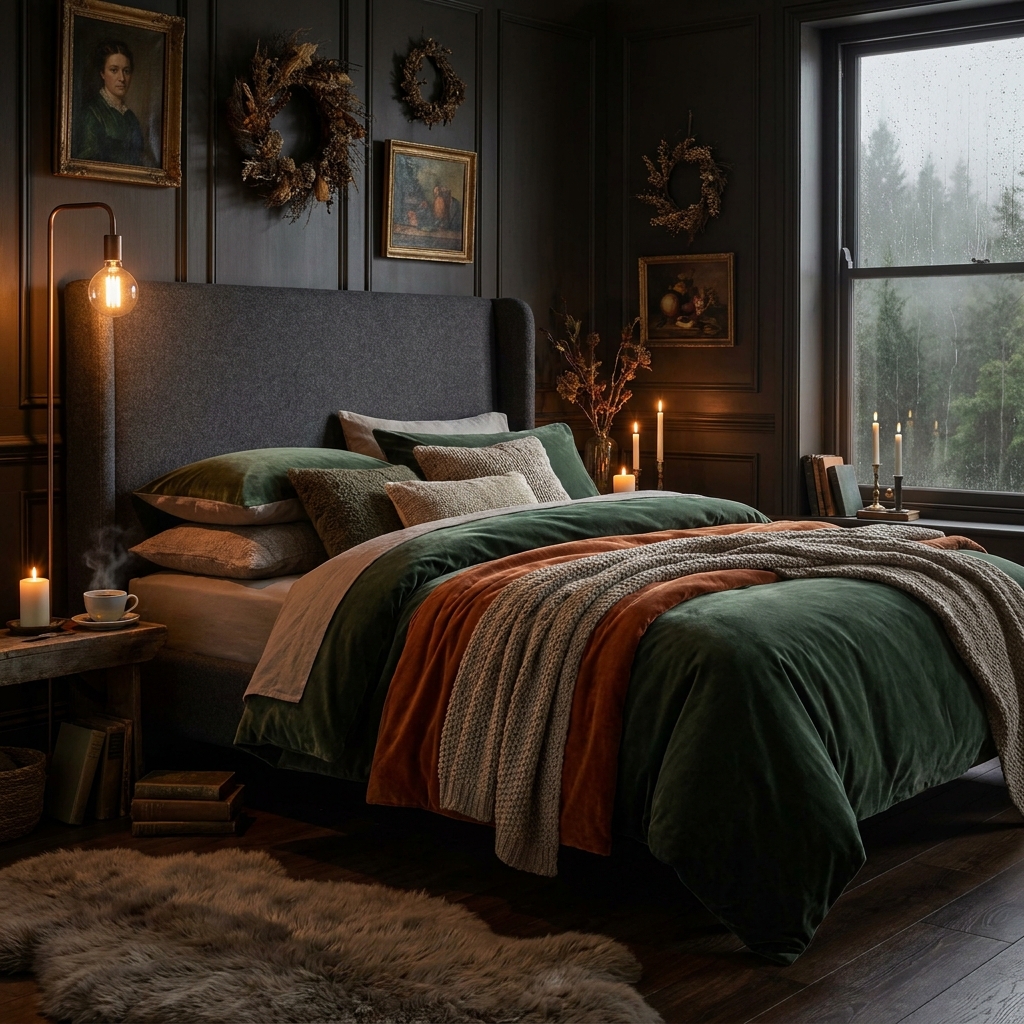
A fabric headboard absorbs sound and adds softness to the wall behind your bed. It also provides a comfortable backrest for reading.
Choose a headboard upholstered in velvet, felt, or linen in a dark tone. Make it wider than your bed for a grander look.
Pro Tip: Add tufting to the headboard. The buttons create shadow lines that add visual interest.
Mistake to Avoid: Do not choose a headboard that is too short. It should be at least 48 inches tall.
21. Incorporate Woven and Natural Textures
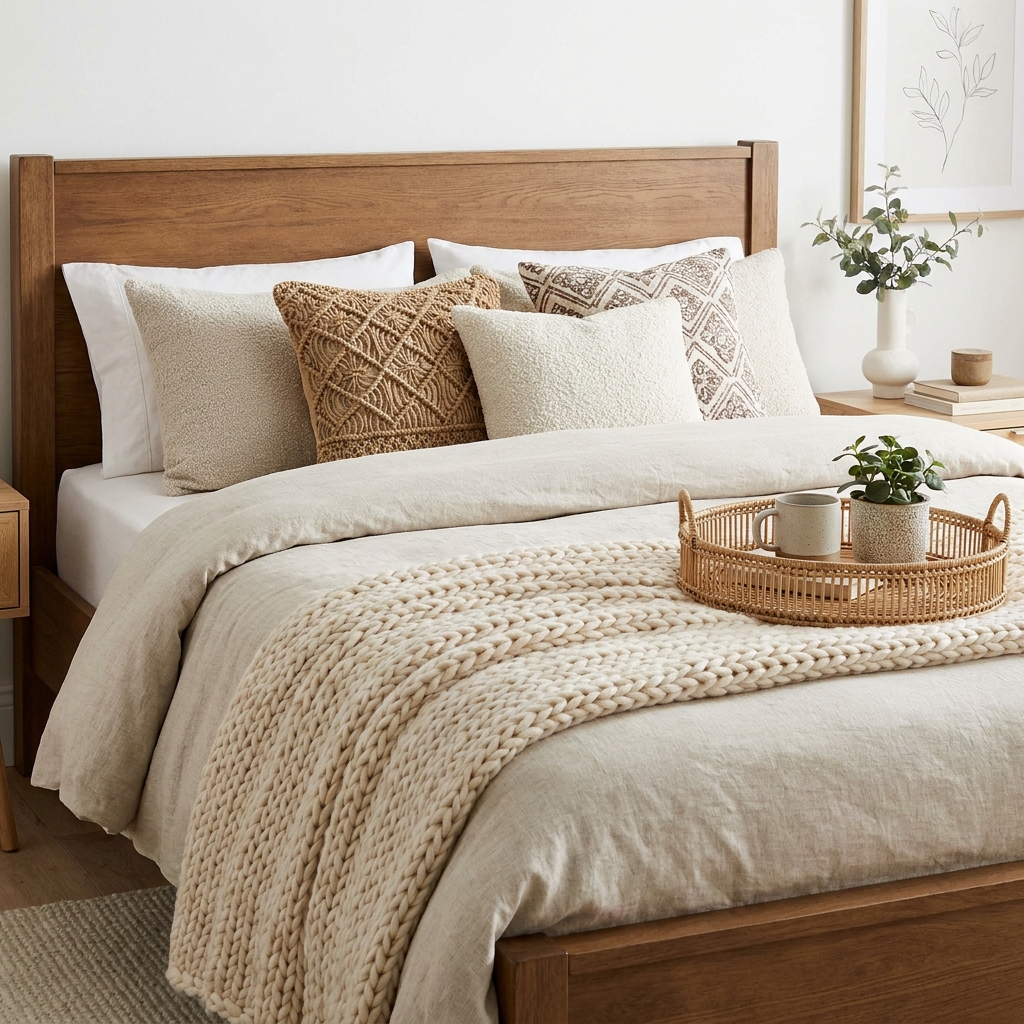
Dark rooms need organic elements. Woven baskets, rattan furniture, and jute rugs add warmth and prevent the space from feeling too polished.
Add a woven basket for blanket storage. Use a rattan pendant light. Layer a jute rug under your main rug.
Pro Tip: Mix two or three natural textures. Rattan, jute, and wood together create a layered, collected look.
Mistake to Avoid: Do not use plastic or synthetic natural look-alikes. Real materials age better.
Part 4: Moody Furniture & Statement Pieces (Ideas 22-27)
The right furniture anchors a moody bedroom. Choose pieces with presence and purpose.
22. Choose a Low Platform Bed with Integrated Lighting
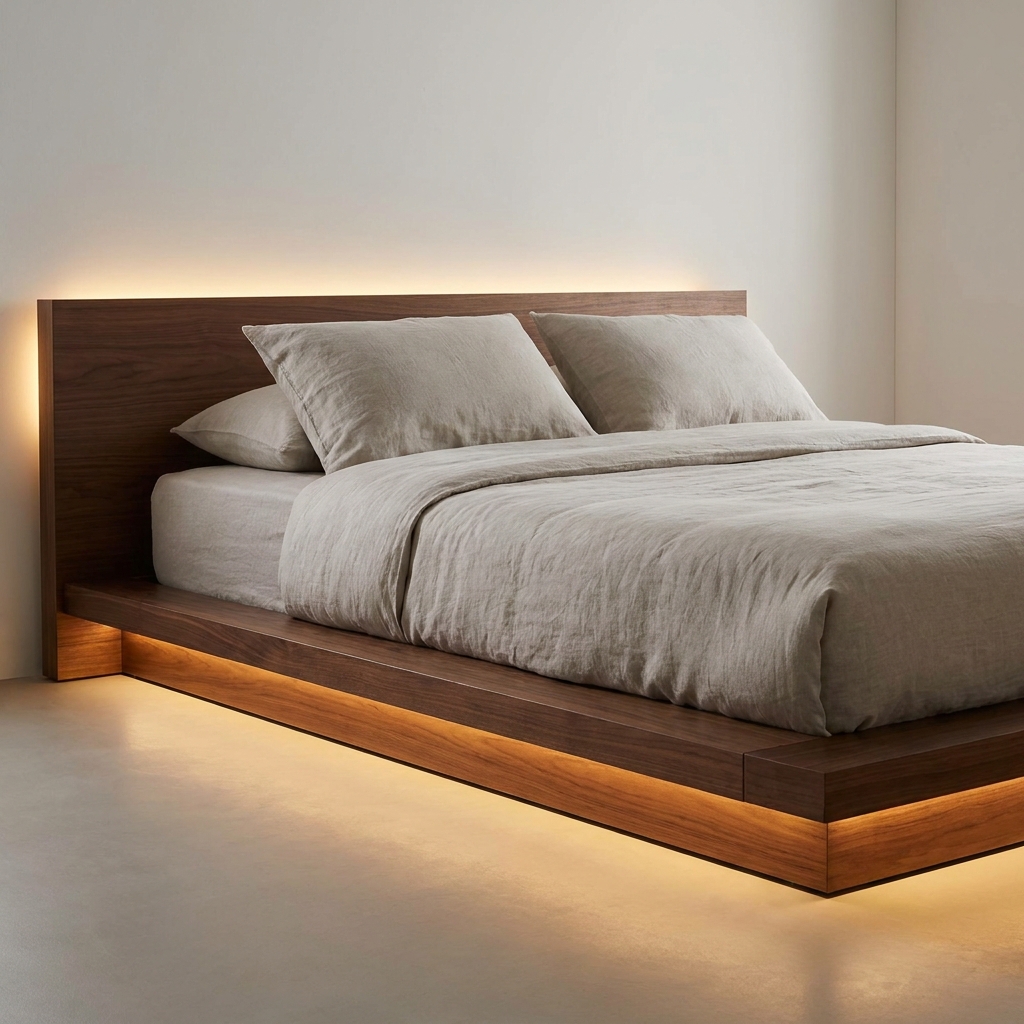
A low bed (14-16 inches tall) keeps the ceiling feeling high. Add LED strips under the base for a floating effect.
Choose a bed in blackened wood or matte metal. Install warm LED tape along the underside of the frame. The glow will make the bed appear to float.
Pro Tip: Use a dimmer on the under-bed lighting. Bright under-bed light ruins the mood.
Mistake to Avoid: Do not use cool white LEDs. Warm white only.
23. Add a Velvet or Leather Armchair
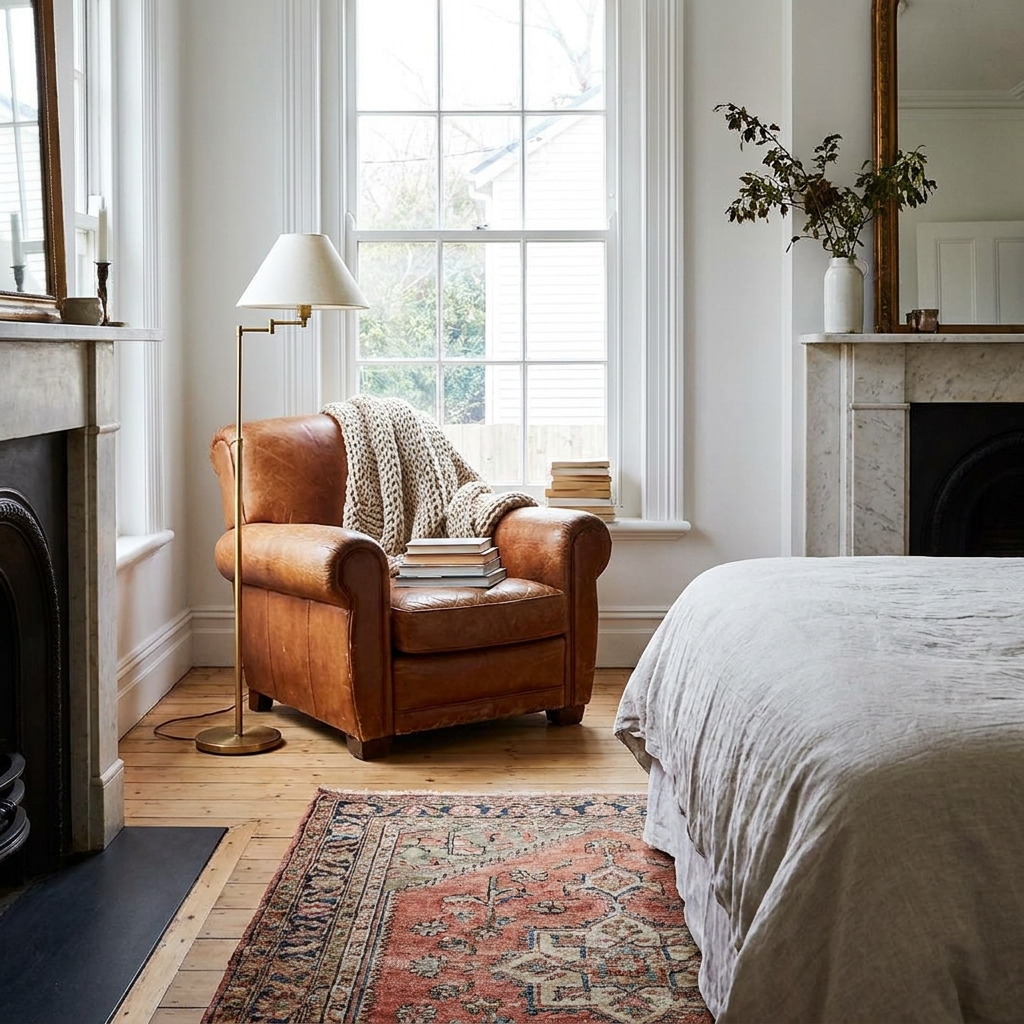
A single armchair turns a corner into a reading nook. Velvet or leather adds texture and invites lingering.
Choose a chair in a deep jewel tone or rich brown. Place it near a window or lamp. Add a small side table and a throw blanket.
Pro Tip: Choose a swivel chair. Swiveling allows you to face the bed or the window as desired.
Mistake to Avoid: Do not choose a chair that is too large. A single seat is sufficient.
24. Use Dark Wood or Black Metal Furniture
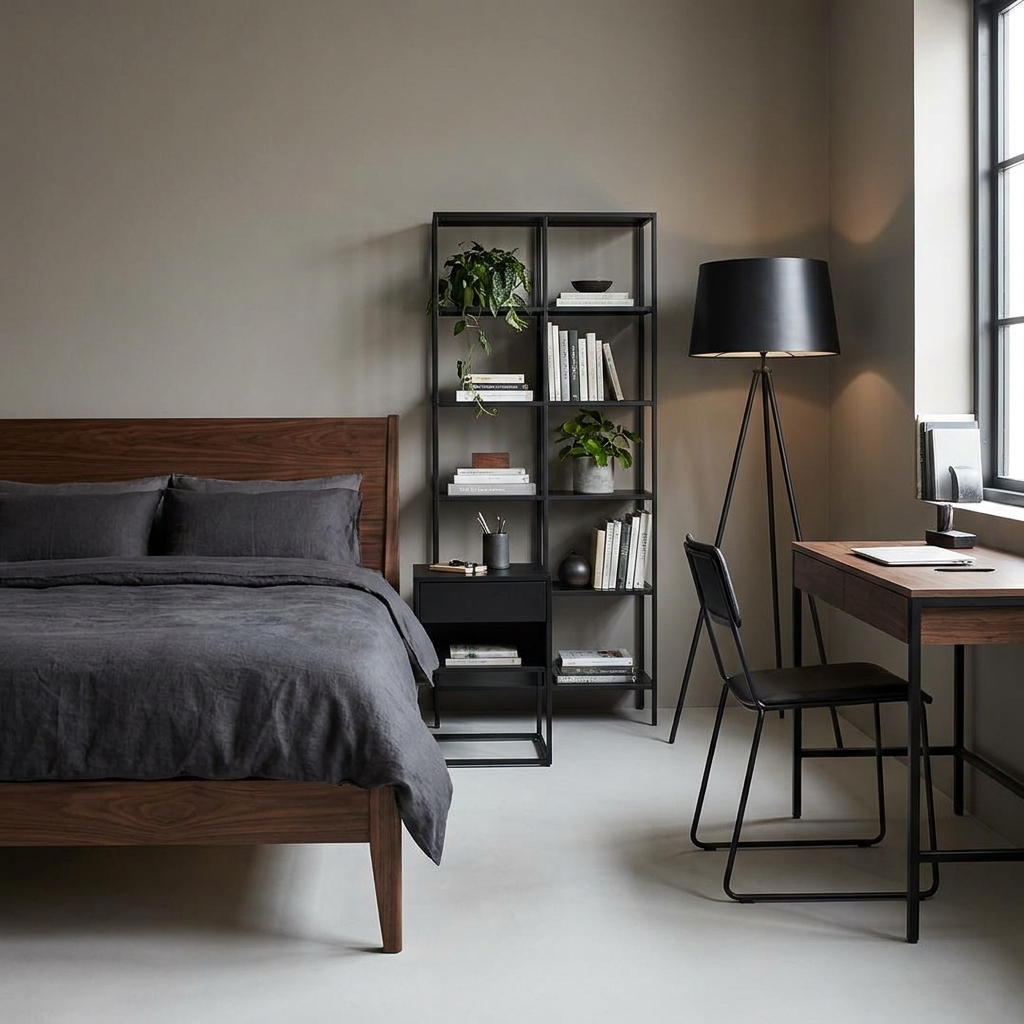
Dark walls need furniture with presence. Light oak or white furniture will look out of place. Dark wood or black metal anchors the room.
Choose a bed frame, dresser, or nightstand in walnut, ebony, or matte black. The dark tones will blend with the walls rather than contrast harshly.
Pro Tip: Mix wood tones. Walnut and ebony together add depth. Matching wood tones can feel flat.
Mistake to Avoid: Do not use glass furniture. It will disappear against dark walls and look unfinished.
25. Install Flush Closet Doors with No Handles
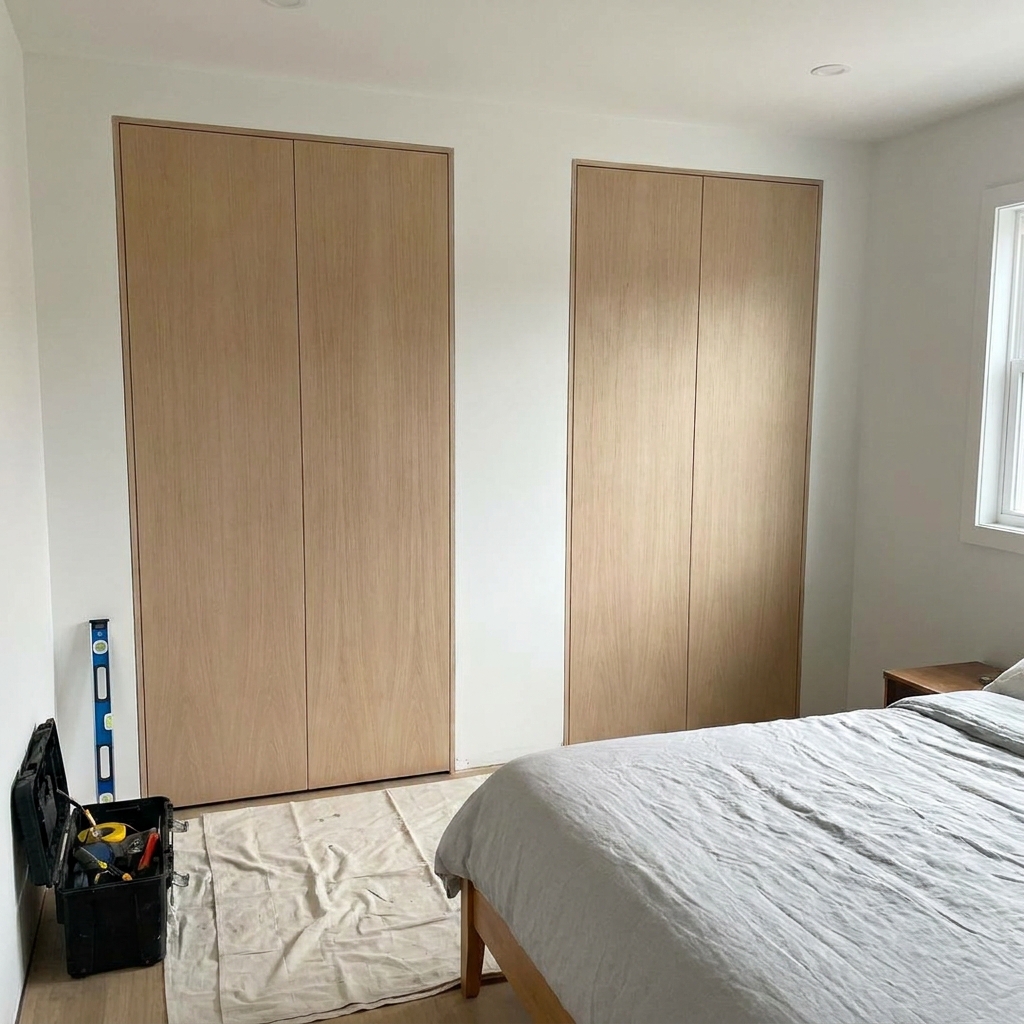
Closet doors are often an afterthought. In a moody bedroom, they should disappear. Flush doors with push latches create a seamless wall.
Paint the doors the same color as the walls. Use push-to-open hardware so there are no visible handles. The closet will vanish into the wall.
Pro Tip: Add motion-sensor LED strips inside the closet. The light turns on automatically when you open the door.
Mistake to Avoid: Do not use mirrored closet doors. The reflection will double the room in an unflattering way.
26. Add a Single Large Abstract Art Piece
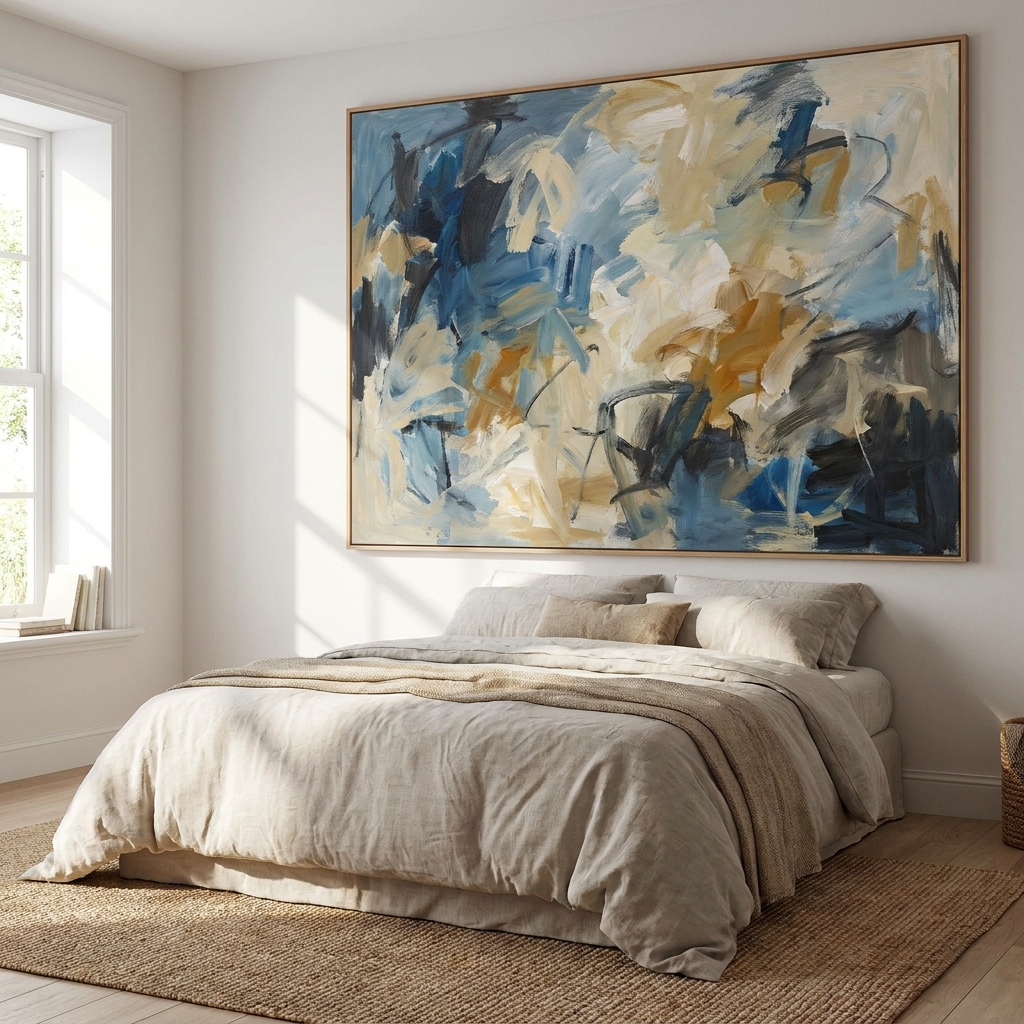
Art is essential in a moody bedroom. One large piece has more impact than several small ones. Choose art with muted, earthy tones.
Hang the art above the bed or on an empty wall. The piece should be two-thirds the width of the furniture below it. Frame it in thin black or float-mount it with no frame.
Pro Tip: Commission art from a local artist. The piece will be unique and meaningful.
Mistake to Avoid: Do not hang art too high. The bottom of the frame should be 6-12 inches above the headboard.
27. Use a Vintage Persian or Turkish Rug
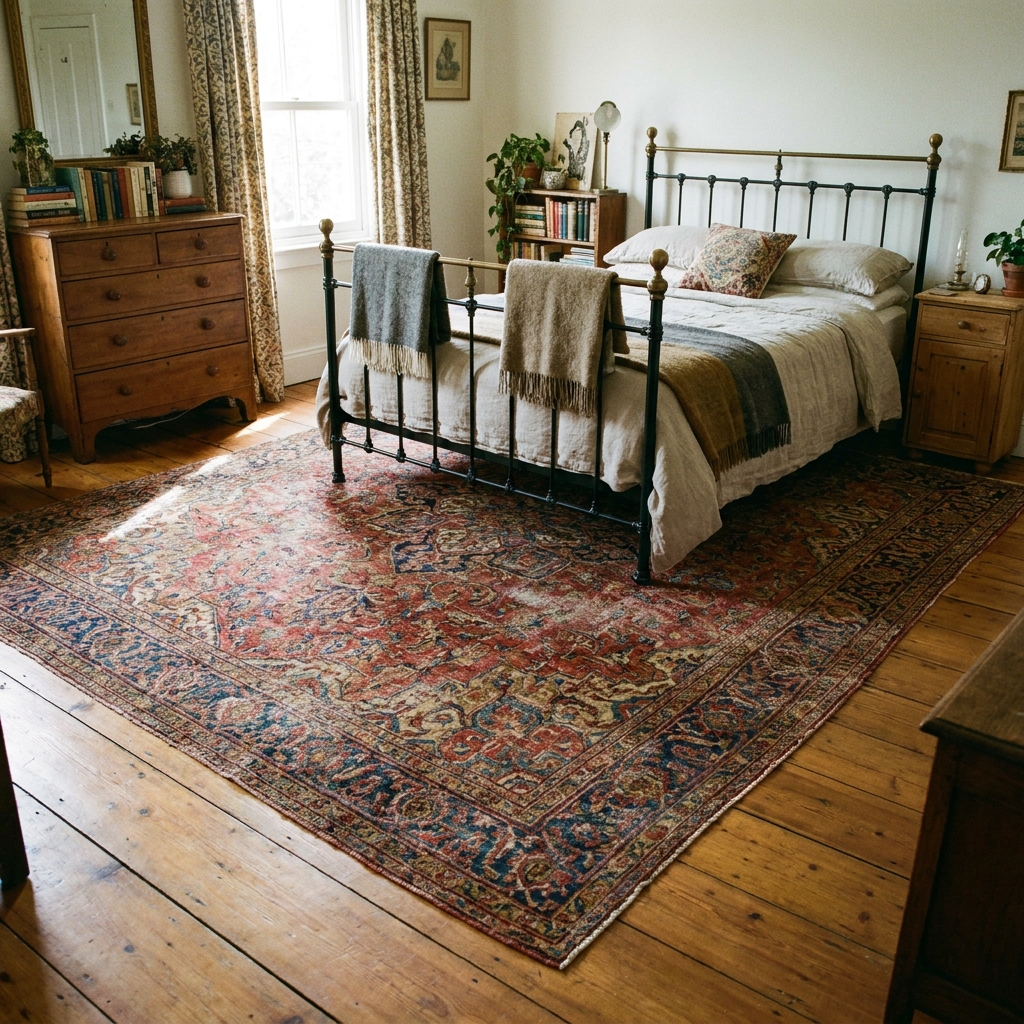
A faded traditional rug adds pattern without competition. The worn pile and muted colors fit perfectly in a moody bedroom.
Layer the rug under the bed or place it at an angle. The irregular placement feels more collected than centered.
Pro Tip: Look for used rugs on Facebook Marketplace. Vintage rugs are often less expensive than new synthetic ones.
Mistake to Avoid: Do not use a bright, new Persian rug. The colors will compete with your dark walls.
Part 5: Moody Wall Treatments & Patterns (Ideas 28-33)
Walls do not have to be painted a solid color. Pattern and texture add another layer of depth.
28. Install Dark Floral or Botanical Wallpaper
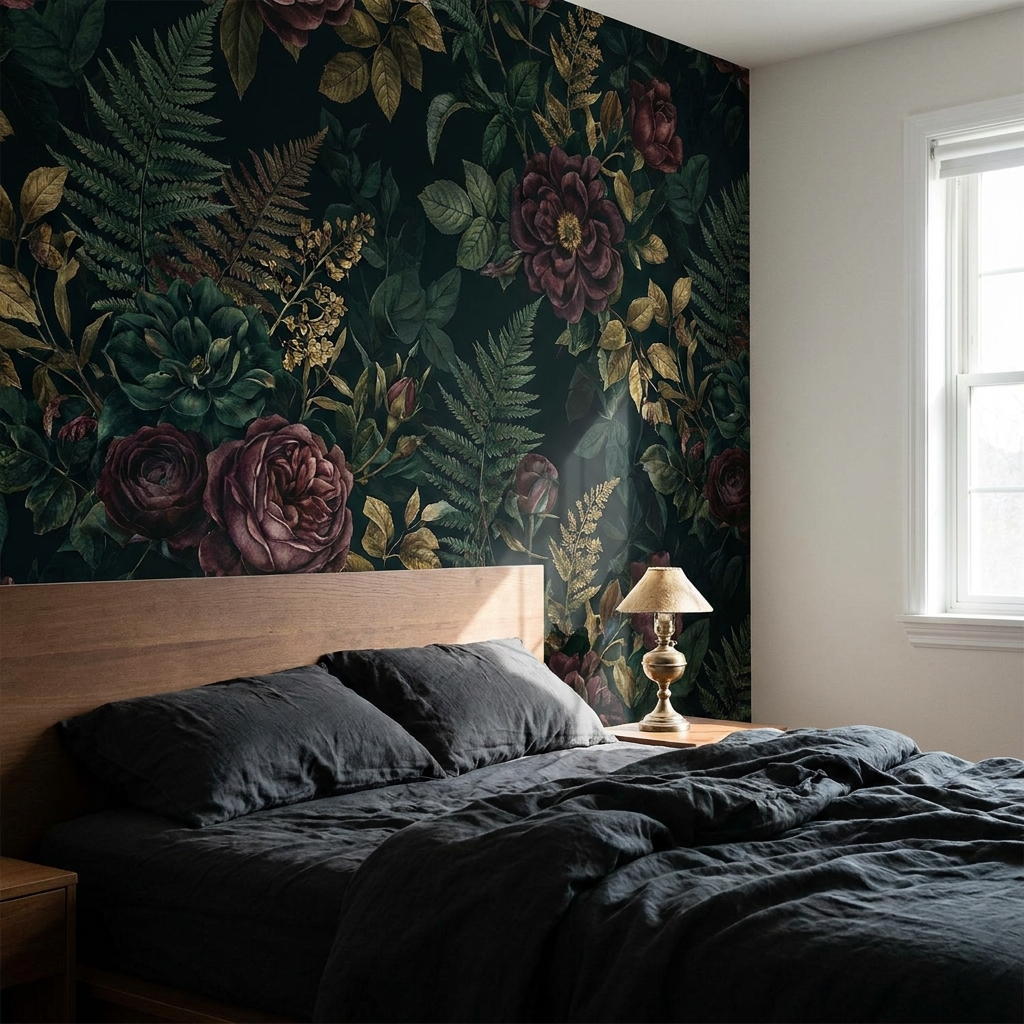
Wallpaper adds pattern without clutter. Dark floral or botanical prints are especially effective in moody bedrooms.
Choose wallpaper in deep navy, charcoal, or forest green with a tonal floral pattern. Use it on one accent wall or all four walls for maximum drama.
Pro Tip: Use peel-and-stick wallpaper for a temporary, rental-friendly option.
Mistake to Avoid: Do not use small, busy patterns. Large-scale florals read better from a distance.
29. Add Wood Paneling or Shiplap
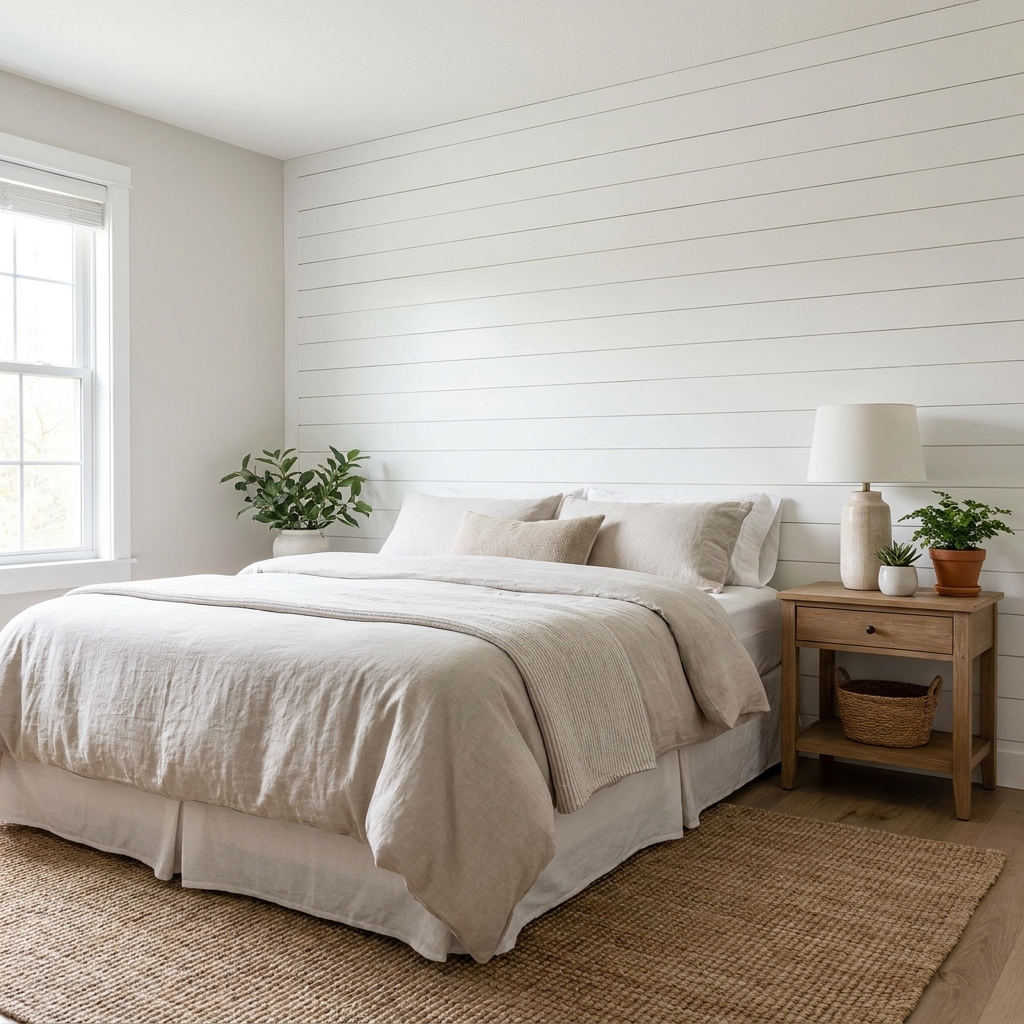
Wood paneling adds architectural interest and texture. Paint it the same color as the walls for a seamless look or a contrasting shade for emphasis.
Install vertical shiplap or board and batten on the wall behind your bed. Paint it a deep charcoal or navy. The vertical lines draw the eye upward.
Pro Tip: Use MDF for a less expensive alternative to solid wood. Paint it before installation for easier coverage.
Mistake to Avoid: Do not use natural wood without paint. The wood tone will clash with dark wall colors.
30. Create a Wall Mural for Maximum Drama
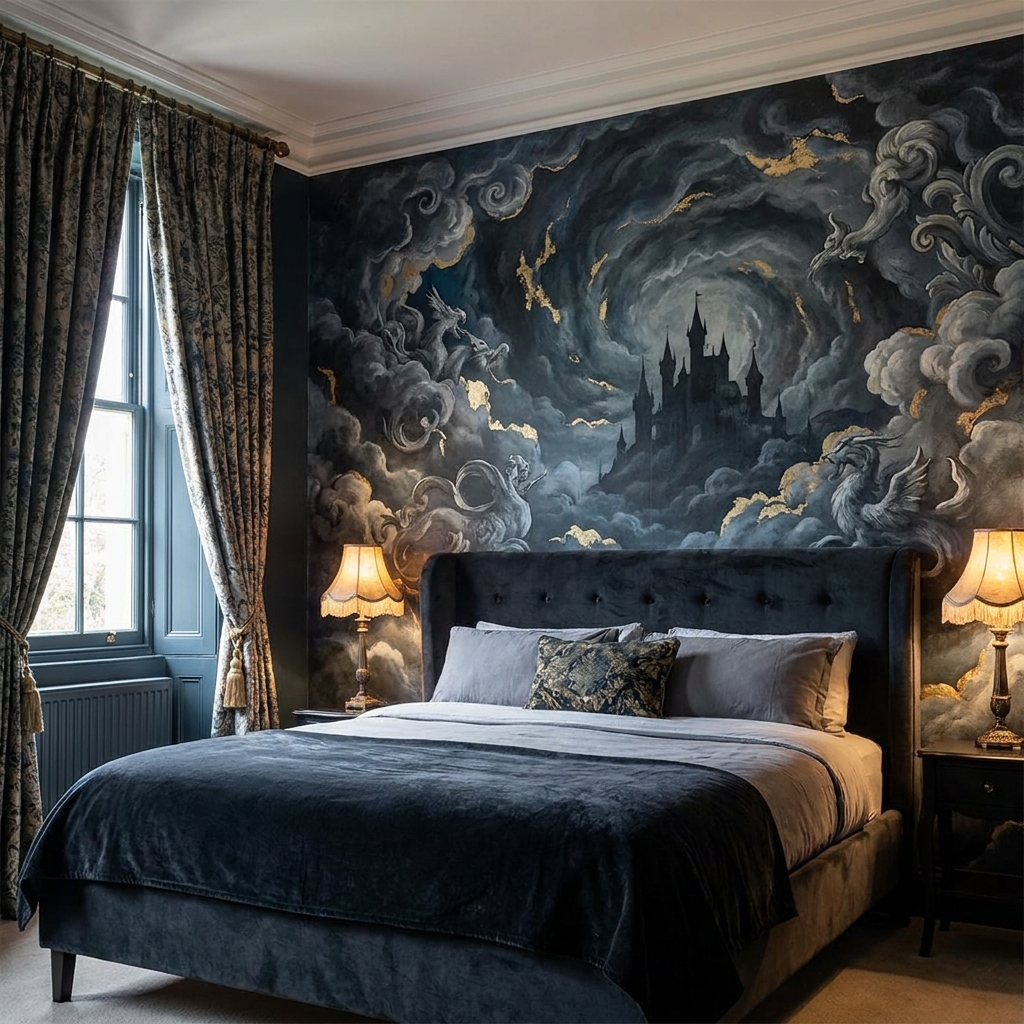
A mural is the ultimate statement wall. Choose a scene that evokes calm—a forest, a night sky, or abstract shapes in muted tones.
Hire an artist or use removable mural wallpaper. The mural becomes the focal point of the entire room, so keep other decor minimal.
Pro Tip: Position the mural behind the bed. The bed will anchor the scene without competing with it.
Mistake to Avoid: Do not choose a mural with bright colors. They will overwhelm the moody palette.
31. Use Wainscoting in a Dark, Glossy Finish
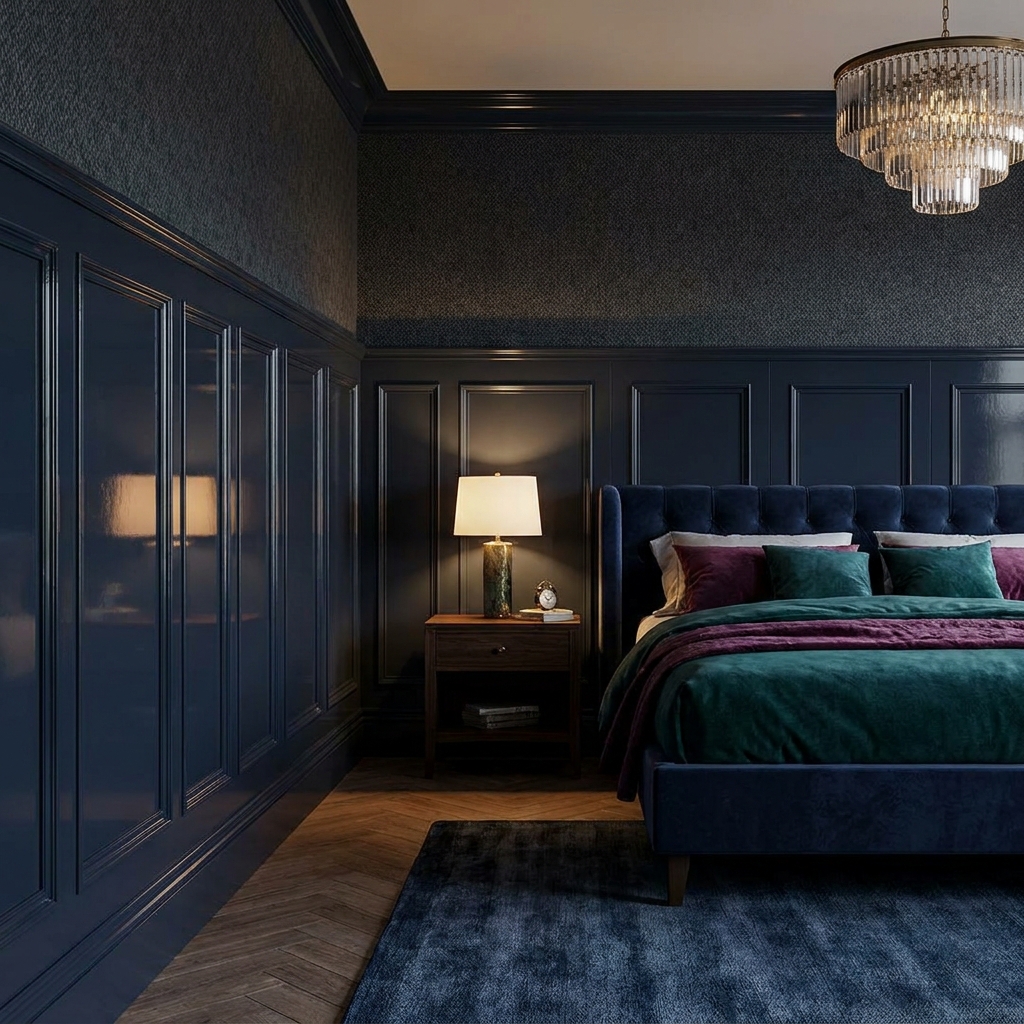
Wainscoting adds traditional charm. A dark, glossy finish adds drama. The contrast between matte walls and glossy wainscoting is striking.
Install wainscoting on the lower third of the wall. Paint it a dark, high-gloss color. Paint the upper walls in a matching matte shade.
Pro Tip: Use beadboard wainscoting for a cottage feel or flat panel for a modern look.
Mistake to Avoid: Do not paint wainscoting a light color. The contrast will be too harsh.
32. Add Crown Molding in a Dark Finish
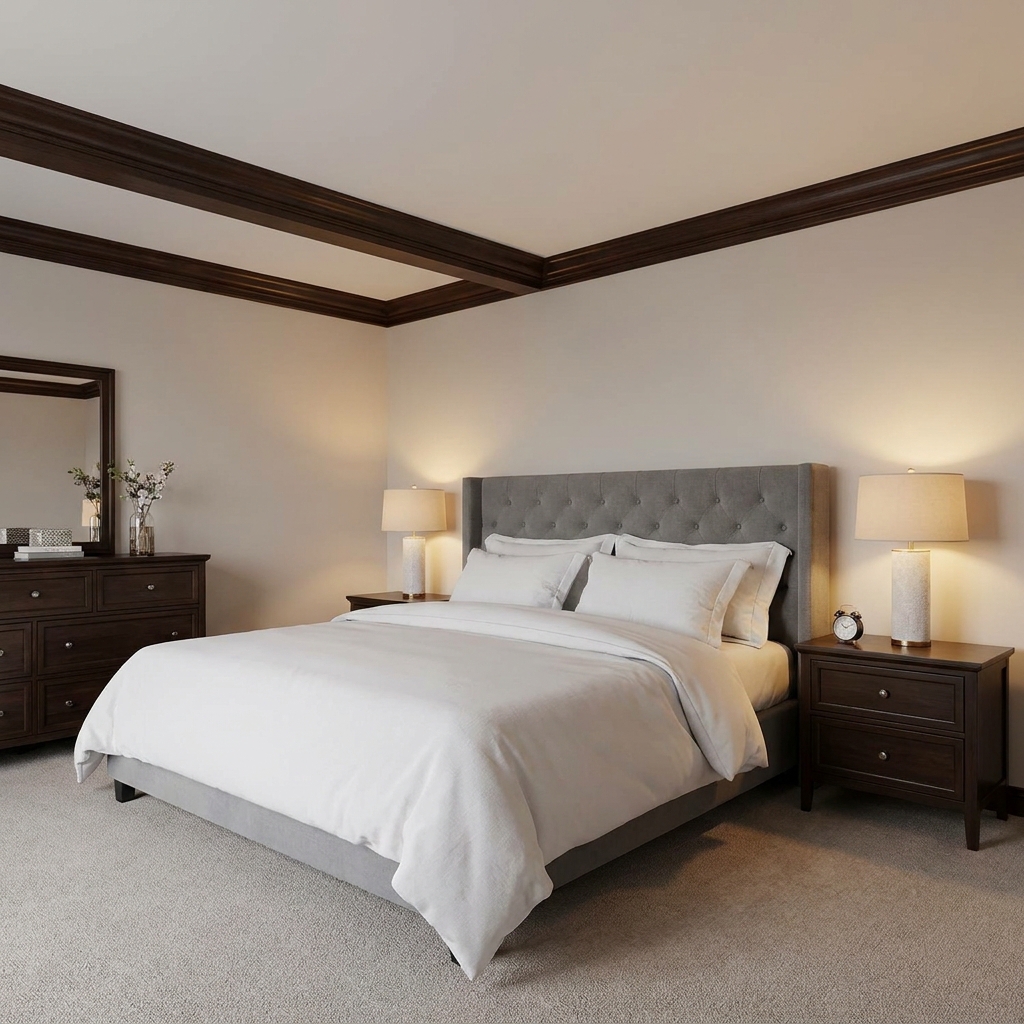
Crown molding is often white. Dark crown molding is unexpected and anchors the room.
Install crown molding at the ceiling line. Paint it the same dark color as the walls. The molding will disappear into the ceiling, making the room feel taller.
Pro Tip: Use polyurethane molding for a less expensive, lightweight option.
Mistake to Avoid: Do not use white crown molding. It will break the visual line of the dark walls.
33. Keep One Wall Light or Reflective
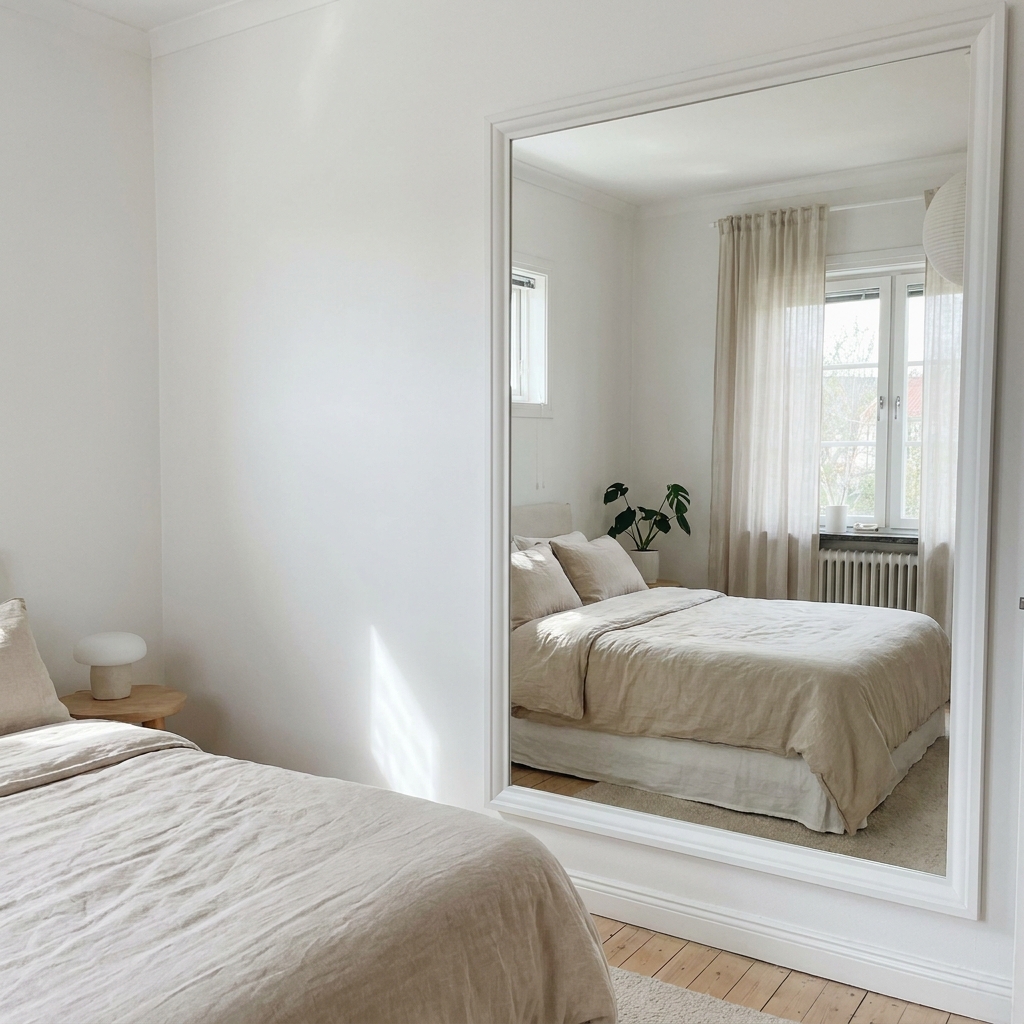
Not every wall needs to be dark. One light or reflective wall can balance the room and prevent it from feeling too heavy.
Paint one wall a warm cream or install a large mirror on a dark wall. The lighter surface will reflect light and add visual relief.
Pro Tip: Place the light wall opposite a window. It will catch natural light and brighten the entire room.
Mistake to Avoid: Do not paint the ceiling a light color while walls are dark. The contrast will lower the ceiling visually.
Conclusion
A moody bedroom is not about darkness. It is about depth, warmth, and intention. Deep navy walls create drama. Layered lighting adds warmth. Velvet, linen, and wool provide texture. Dark wood furniture anchors the space. Wallpaper, paneling, and murals add personality.
Start with one element today. Paint an accent wall. Add a velvet pillow. Install a dimmer switch. The room will feel more like a sanctuary, and you will sleep better for it.