20 Balcony Decor Ideas That Transform Small Spaces Into Functional Retreats
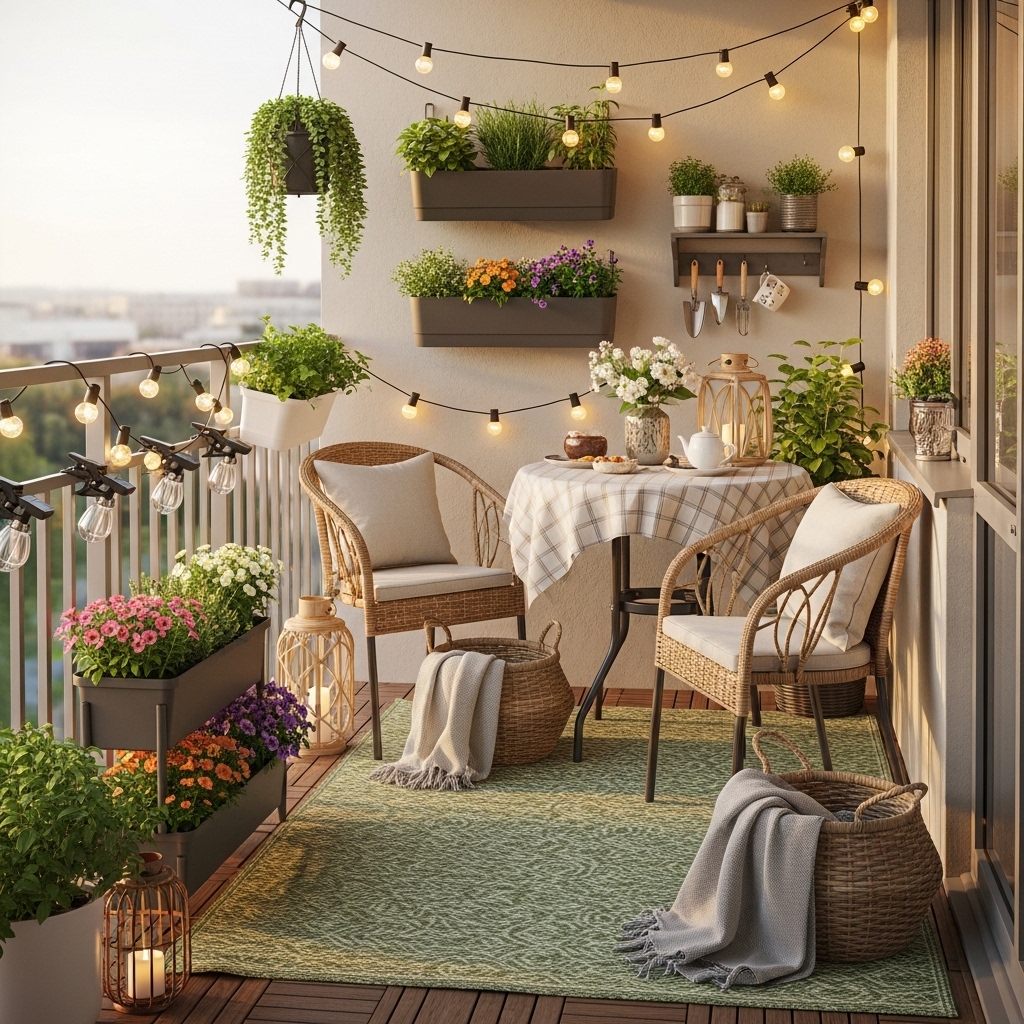
Balconies are often underused because people treat them as storage areas instead of intentional living spaces. The biggest mistake is adding random decor without thinking about layout, sunlight, and daily use.
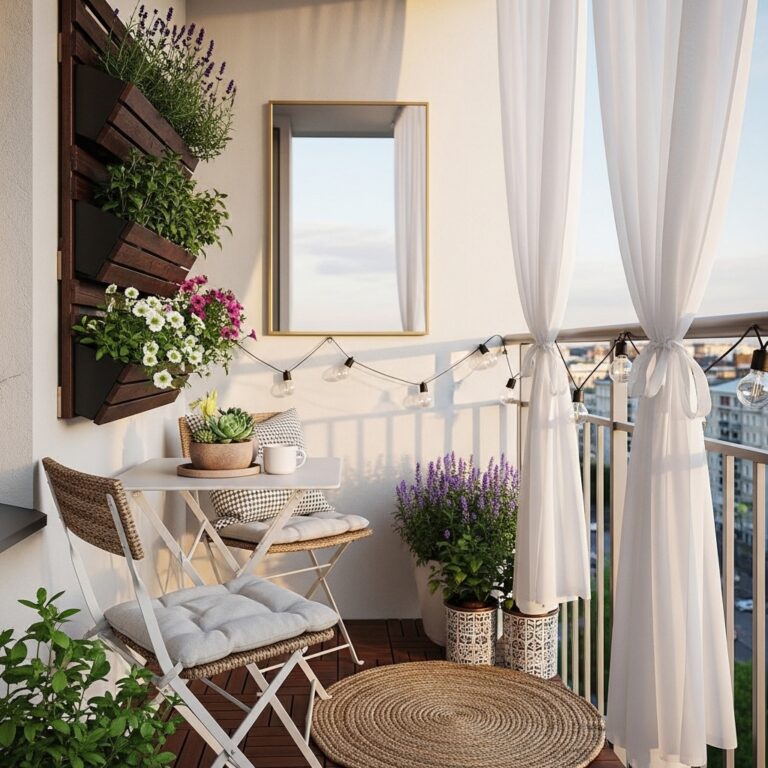
This guide focuses on practical balcony decor ideas that maximize space, improve comfort, and create a visually cohesive setup. Each idea is designed for real-life use—small apartments, rentals, and budget-friendly upgrades that actually work.
1. Create a Compact Seating Nook for Daily Relaxation
Ideal for: Small balconies where space is limited but seating is essential.
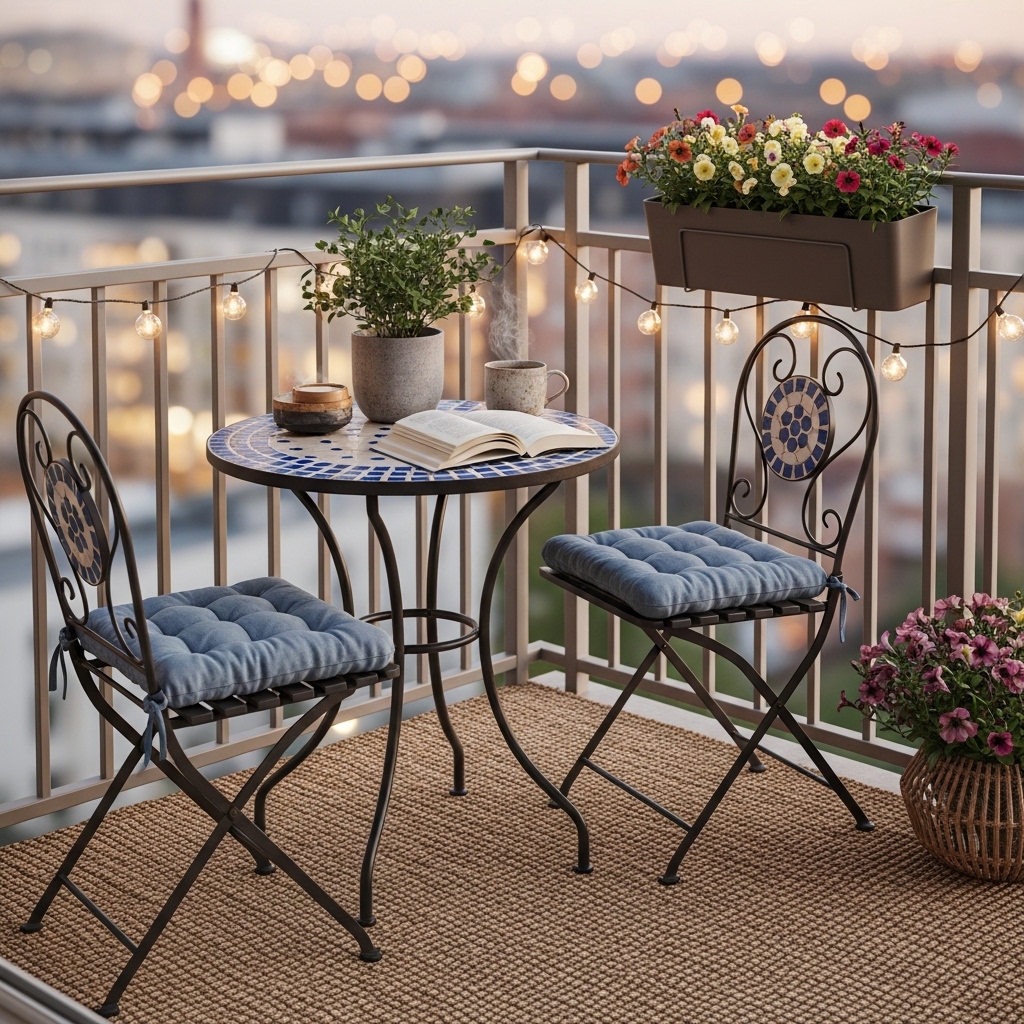
Start by placing a slim bench, foldable chair, or floor cushions against one side of the balcony. Keep the layout open by avoiding bulky furniture and leaving walking space clear. Add a small side table or crate for drinks or books.
This works because it defines a clear function for the balcony—relaxation—without overcrowding it. When seating is intentional and well-placed, the space feels usable instead of cluttered. A common mistake is adding oversized furniture that blocks movement and makes the balcony feel cramped.
Pro Tip: Use foldable or stackable seating for flexibility.
Mistake to Avoid: Don’t push furniture into every corner—leave breathing space.
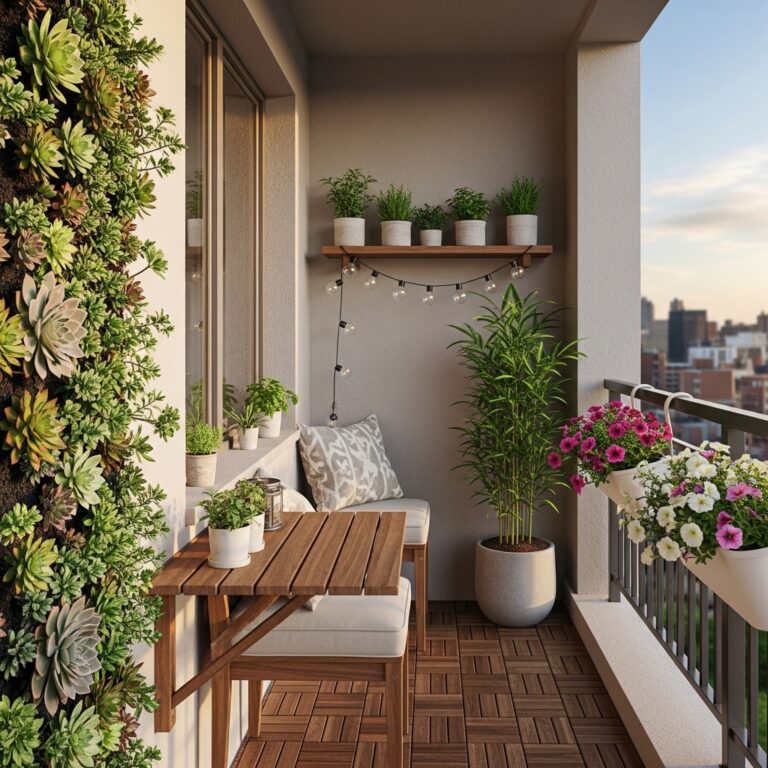
2. Use Vertical Planters to Free Up Floor Space
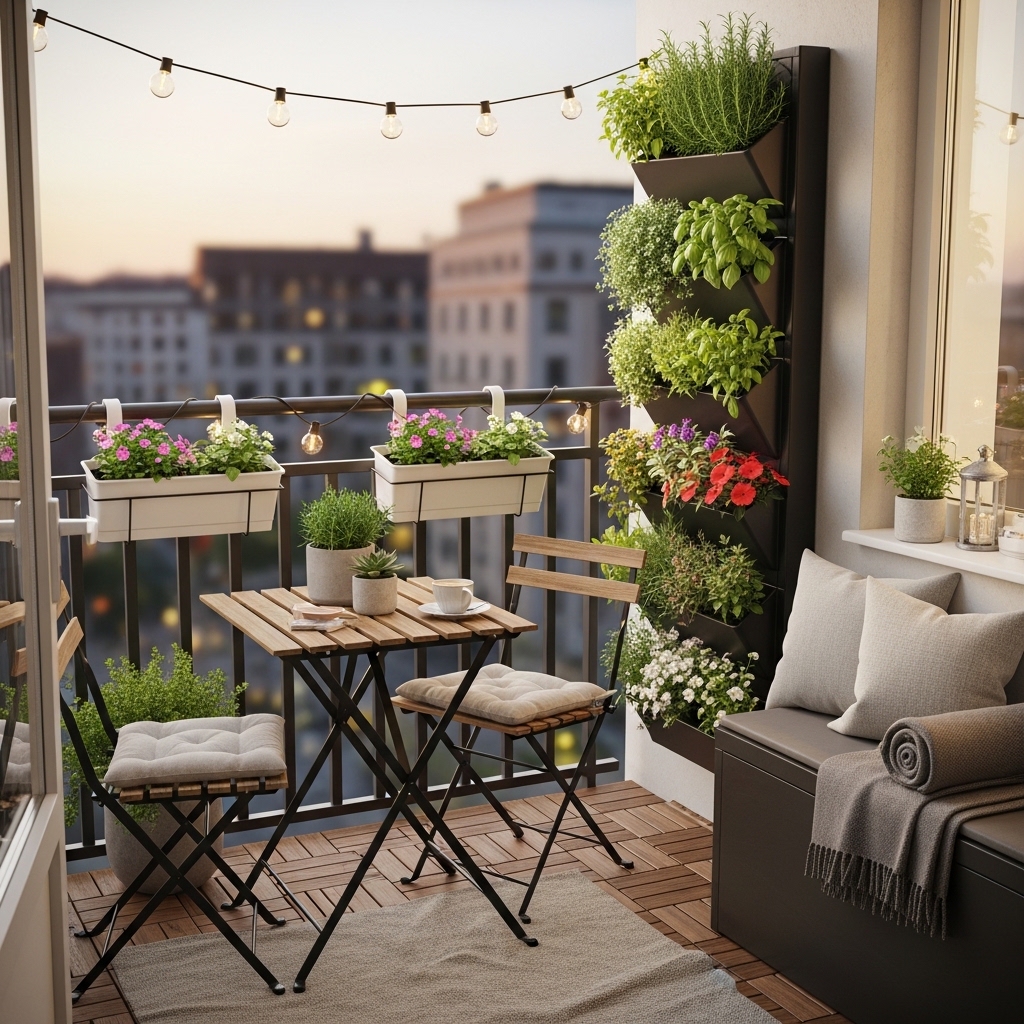
Best for: Plant lovers with limited balcony area.
Install wall-mounted planters, hanging pots, or railing planters to grow greenery without using the floor. Arrange plants based on sunlight exposure and watering needs.
This works because vertical layering keeps the floor open while still adding greenery and texture. It also improves airflow and prevents overcrowding. Many people place too many pots on the floor, reducing usable space.
Pro Tip: Keep frequently watered plants at reachable heights.
Mistake to Avoid: Don’t overload railings with heavy planters.
3. Add Outdoor Rugs to Define the Space
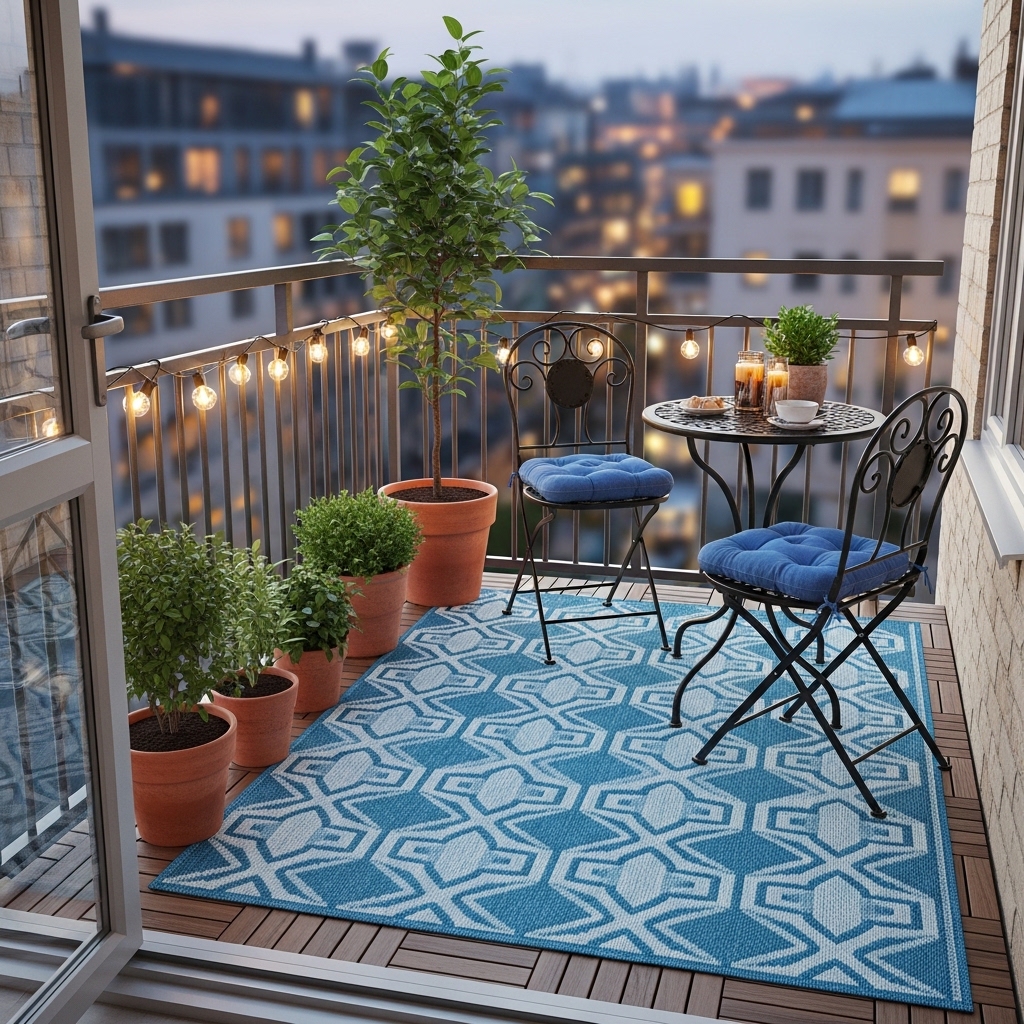
Ideal for: Turning a bare balcony into a cozy living area.
Lay down a weather-resistant rug that fits your seating layout without covering the entire floor. Choose patterns or neutral tones that match your decor style.
This works because rugs visually anchor furniture and make the balcony feel like an extension of your indoor space. Without it, the area can feel unfinished. A common mistake is using indoor rugs that get damaged quickly outdoors.
Pro Tip: Choose washable, UV-resistant rugs for durability.
Mistake to Avoid: Don’t use oversized rugs that make the space look smaller.
4. Install Soft Lighting for Evening Ambience
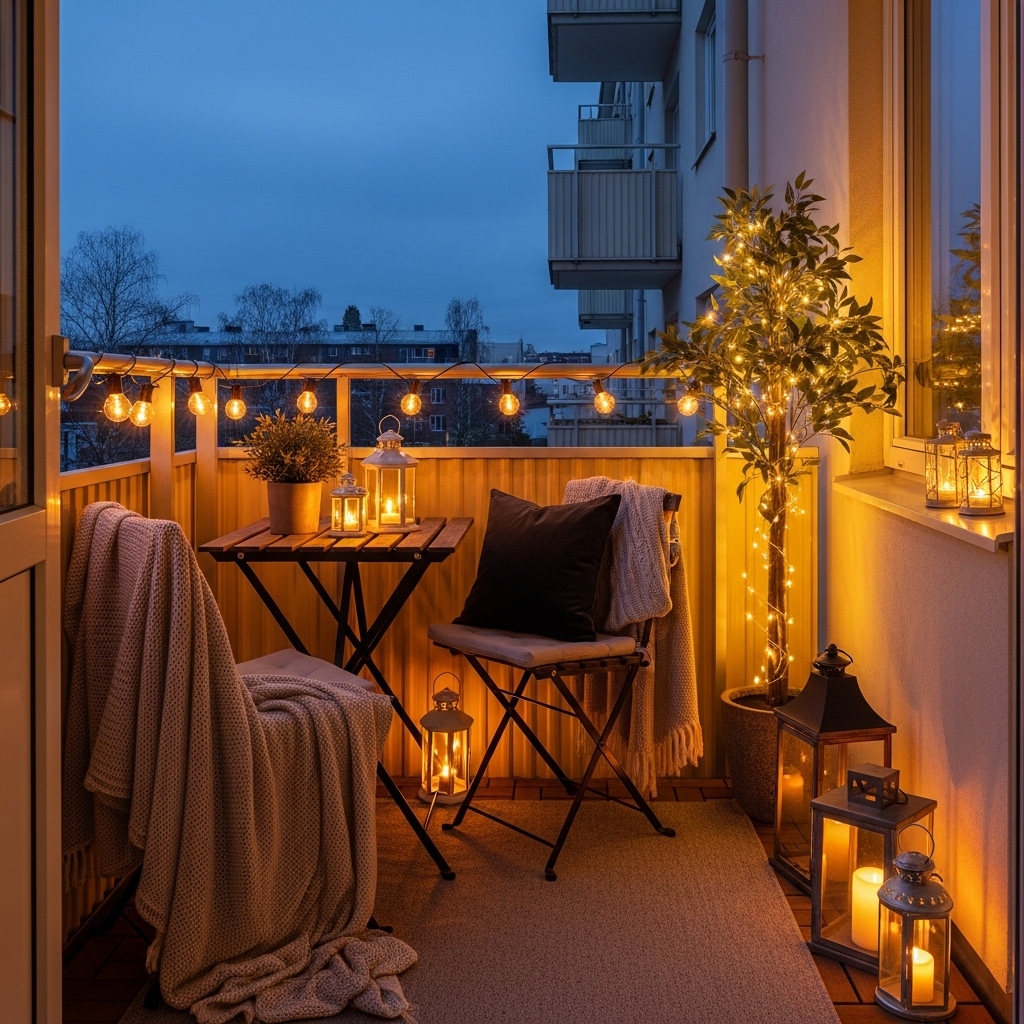
Best for: Cozy night setups and relaxing environments.
Use string lights, lanterns, or battery-powered lamps to create layered lighting. Place lights around railings or near seating areas for soft illumination.
This works because lighting transforms the balcony into a usable evening space, adding warmth and depth. Harsh overhead lighting often ruins the mood. Many setups fail because lighting is either too bright or poorly positioned.
Pro Tip: Use warm white bulbs (2700K) for a cozy feel.
Mistake to Avoid: Don’t rely on a single light source.
5. Use Foldable Furniture for Flexible Layouts
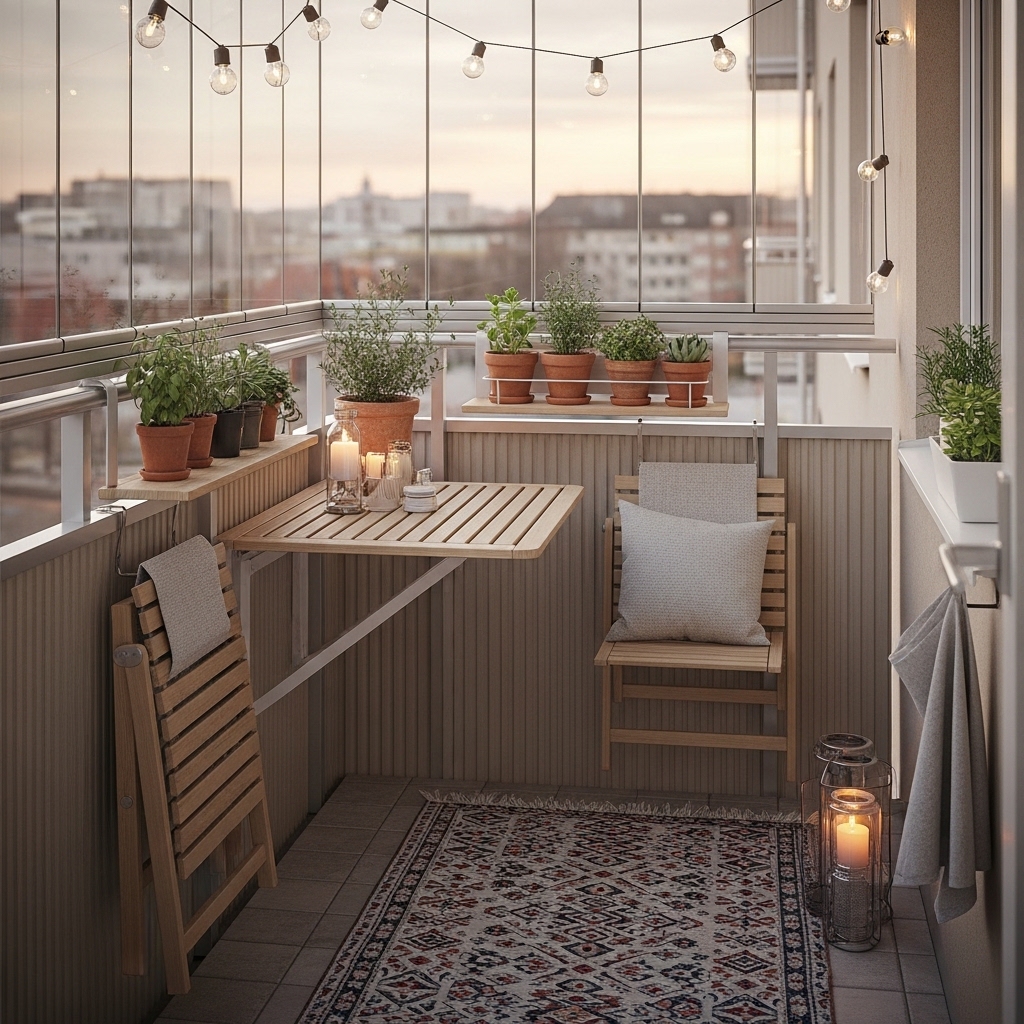
Ideal for: Renters or very small balconies.
Choose foldable chairs and tables that can be stored when not in use. This allows you to switch between open space and seating quickly.
This works because flexibility is key in small areas. You can adapt the space based on time of day or activity. A common mistake is using fixed furniture that limits movement.
Pro Tip: Store foldable furniture vertically to save space.
Mistake to Avoid: Don’t choose heavy foldable items—they defeat the purpose.
6. Create a Green Privacy Screen With Plants
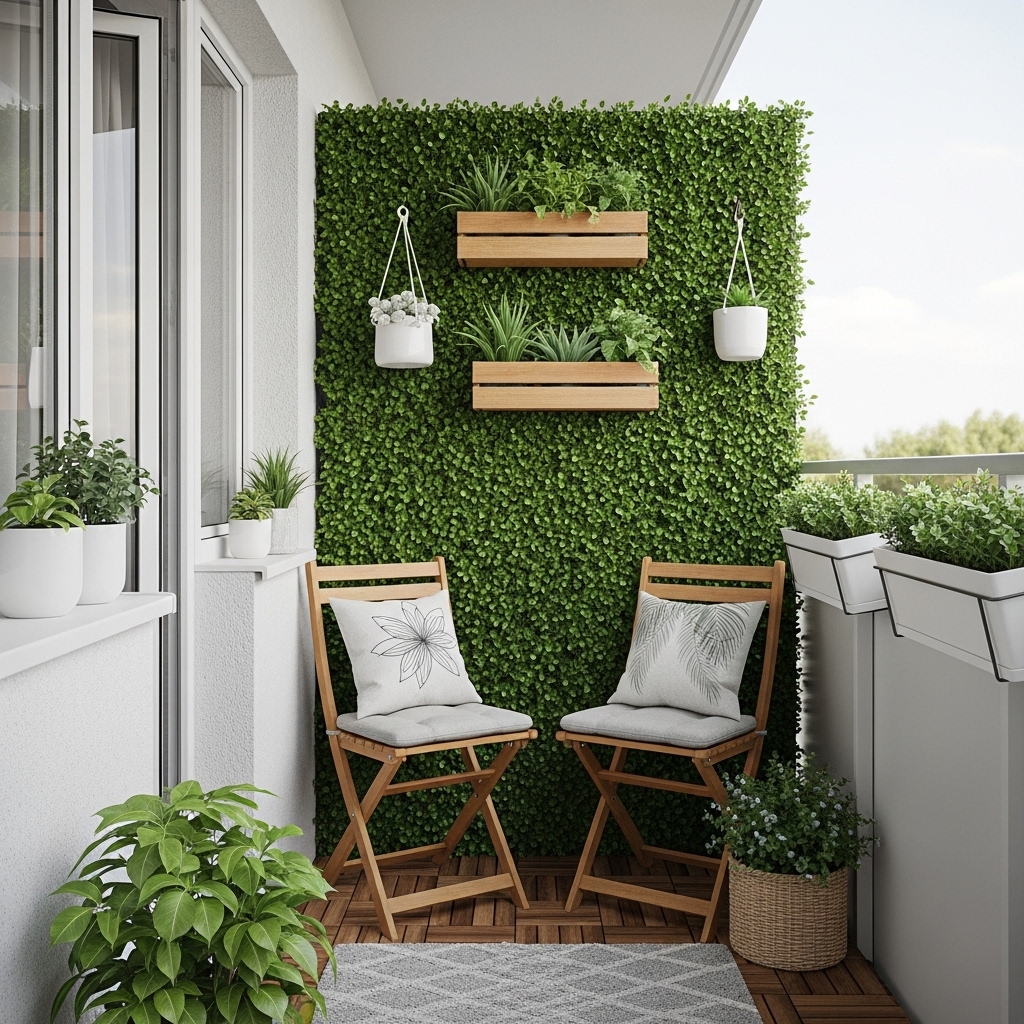
Best for: Balconies facing neighbors or busy streets.
Use tall plants, bamboo screens, or climbing vines to create a natural barrier. Position them strategically without blocking airflow.
This works because it improves privacy while adding greenery and visual softness. It also reduces noise slightly. Many people install solid barriers that make balconies feel closed off.
Pro Tip: Use lightweight planters for easy rearrangement.
Mistake to Avoid: Don’t block all sunlight with dense plants.
7. Add a Small Coffee Table for Functionality
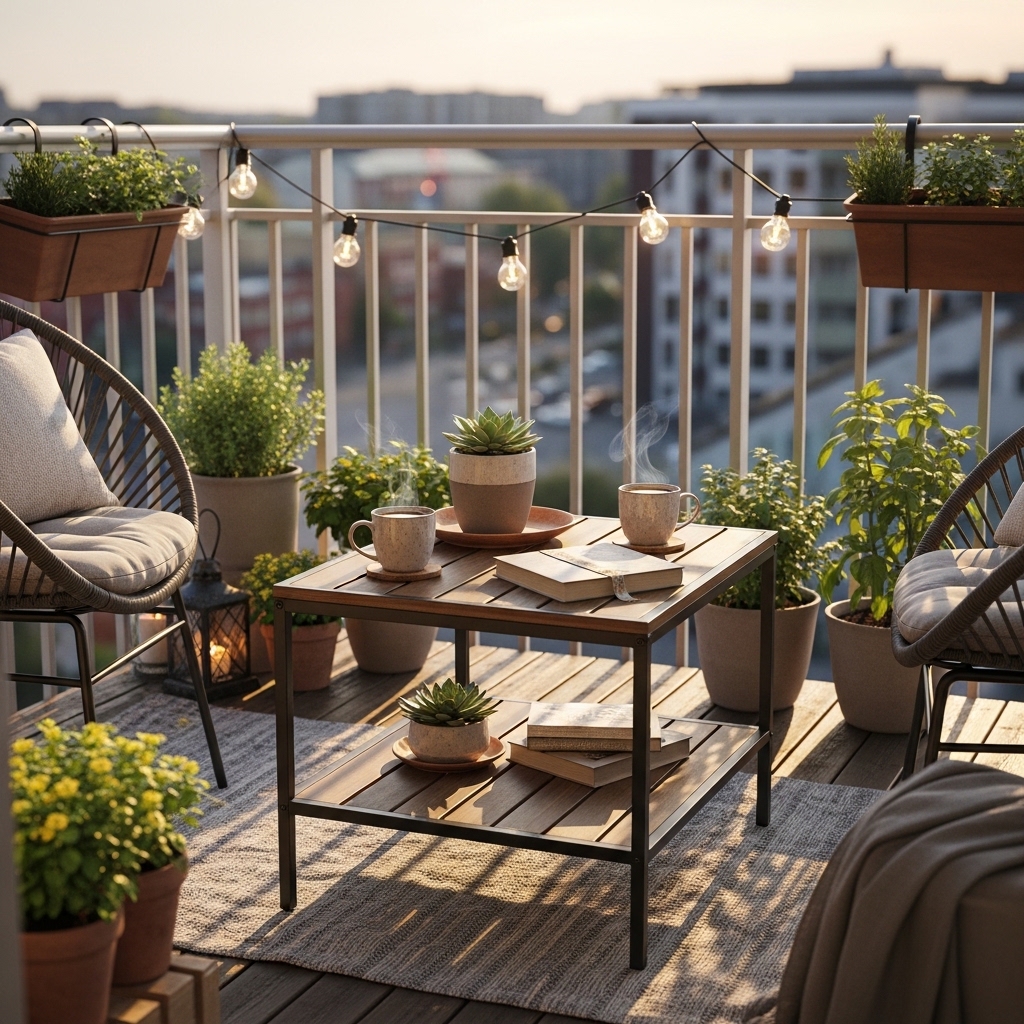
Ideal for: Balconies used for relaxing or working.
Place a compact table between seating for drinks, books, or decor. Choose narrow or round tables to save space.
This works because it makes the balcony practical for daily use, not just decoration. Without a surface, the space becomes less functional. A mistake is choosing tables that are too large or bulky.
Pro Tip: Use multi-purpose tables with storage inside.
Mistake to Avoid: Don’t block pathways with table placement.
8. Use Wall Decor to Add Personality
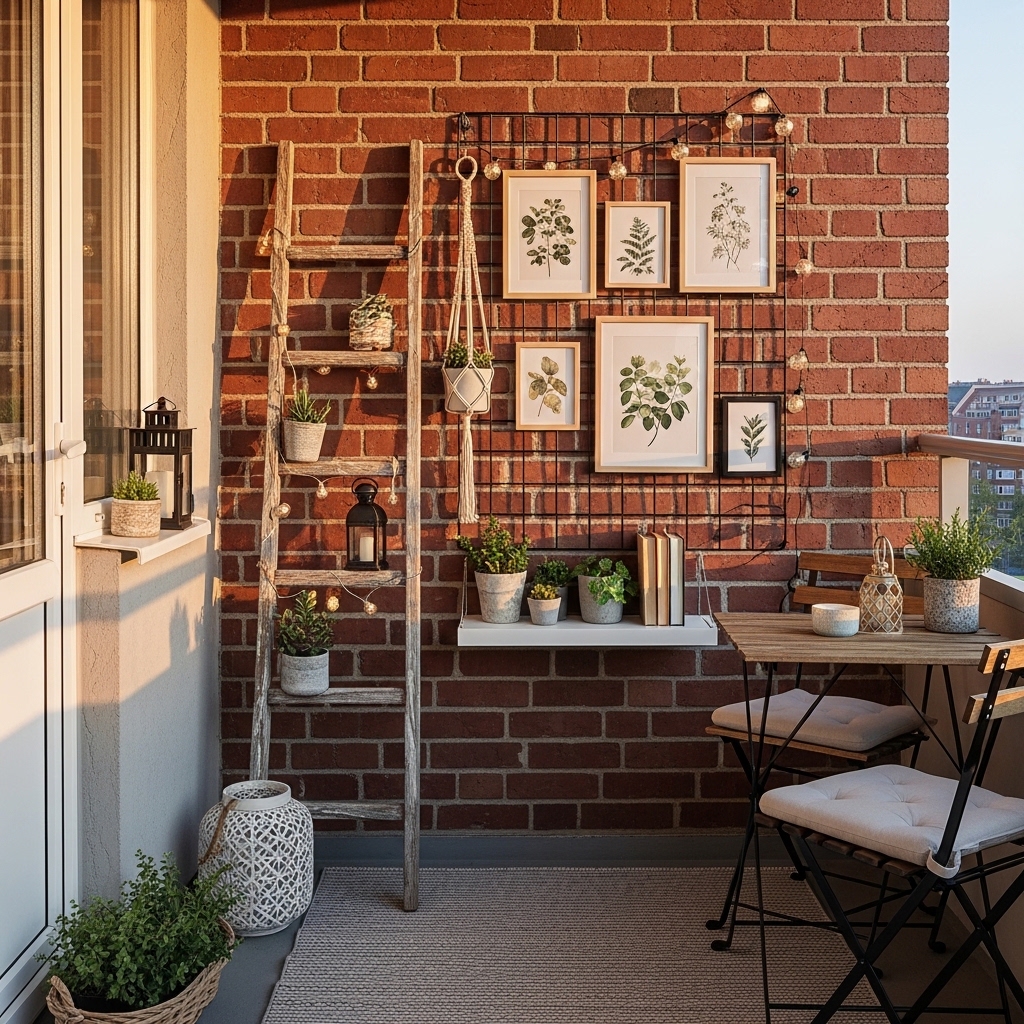
Best for: Plain balconies needing visual interest.
Hang weather-resistant art, mirrors, or decorative panels on walls. Keep designs simple to avoid clutter.
This works because vertical decor adds character without taking up space. Mirrors can also reflect light, making the balcony feel larger. A common mistake is over-decorating walls, creating visual noise.
Pro Tip: Stick to one theme for a cohesive look.
Mistake to Avoid: Don’t hang items that can’t handle outdoor conditions.
9. Incorporate Floor Cushions for Casual Seating
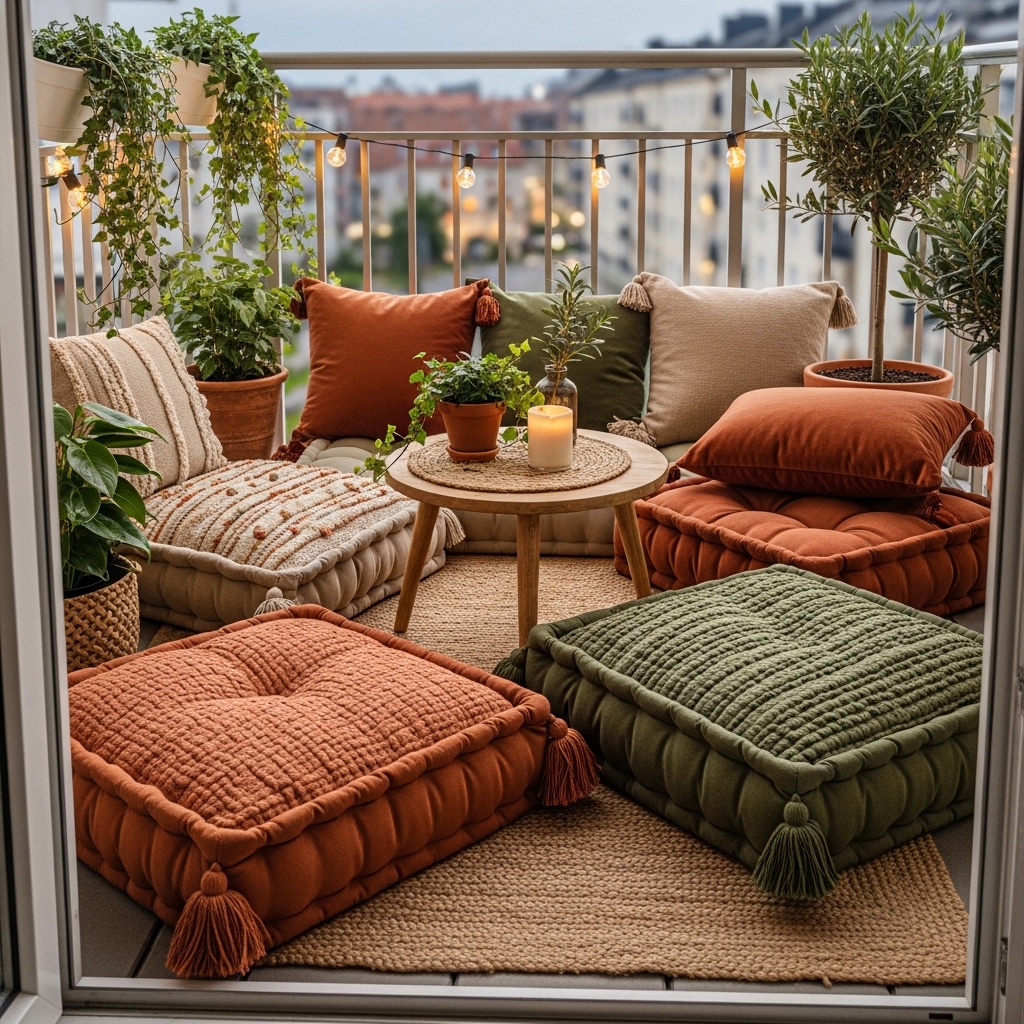
Ideal for: Cozy, low-budget setups.
Use thick cushions or poufs for flexible seating arrangements. Stack or store them when not in use.
This works because floor seating saves space and creates a relaxed vibe. It’s perfect for small balconies where furniture may feel too bulky. Many people use thin cushions that become uncomfortable quickly.
Pro Tip: Choose washable covers for easy maintenance.
Mistake to Avoid: Don’t leave cushions outside during rain.
10. Install Railing Shelves for Extra Storage
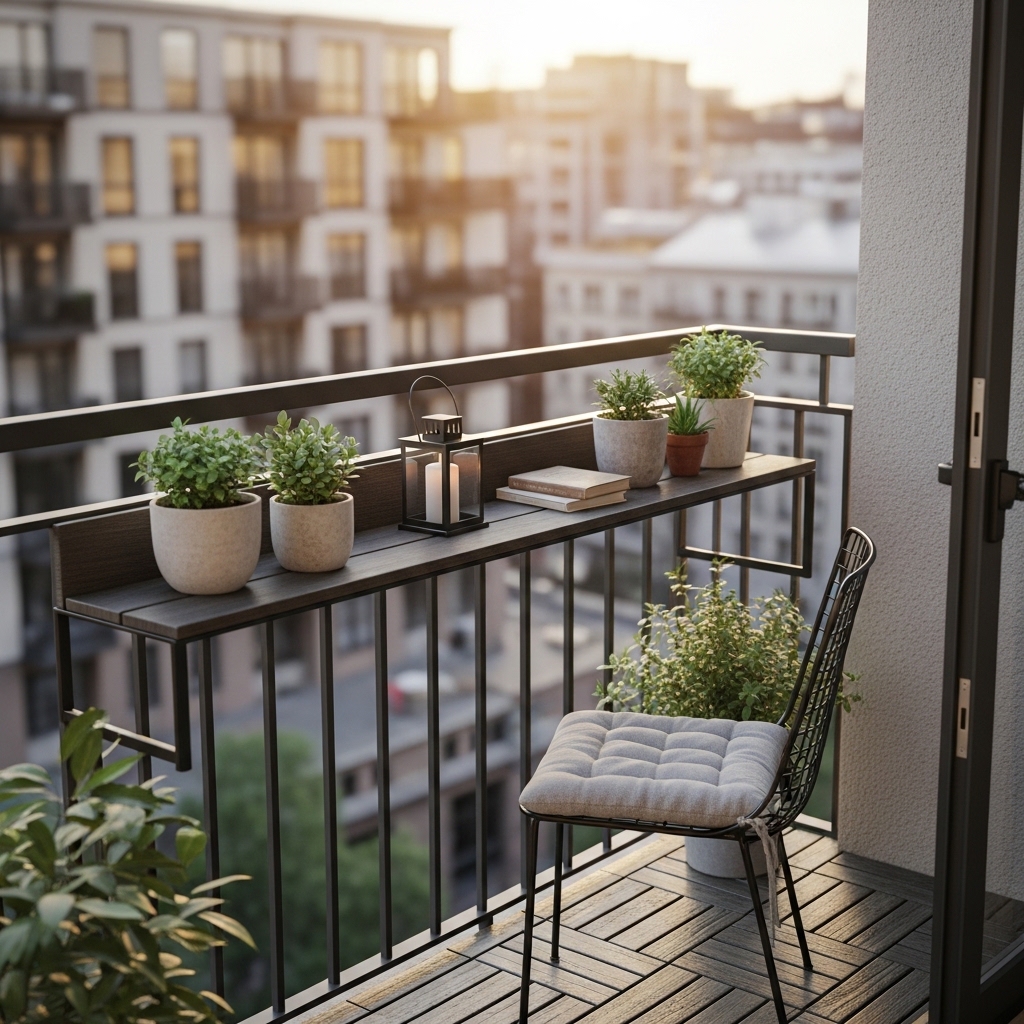
Best for: Small balconies lacking surface space.
Attach slim shelves to balcony railings to hold plants, decor, or essentials. Keep weight evenly distributed.
This works because it uses unused railing space without affecting movement. It’s especially useful for compact layouts. A common mistake is overloading shelves, causing instability.
Pro Tip: Use adjustable brackets for better flexibility.
Mistake to Avoid: Don’t install shelves on weak railings.
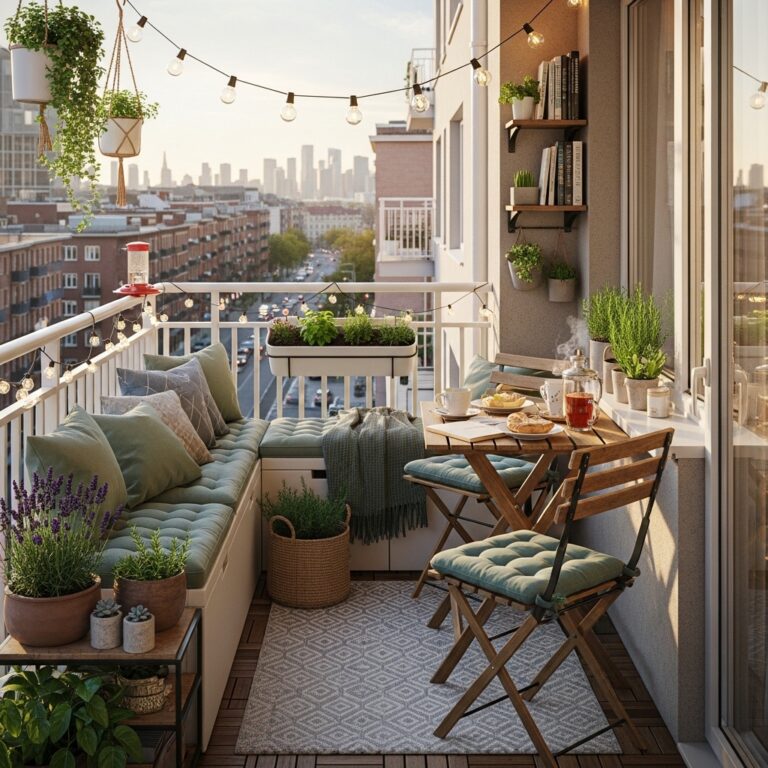
11. Create a Mini Dining Setup
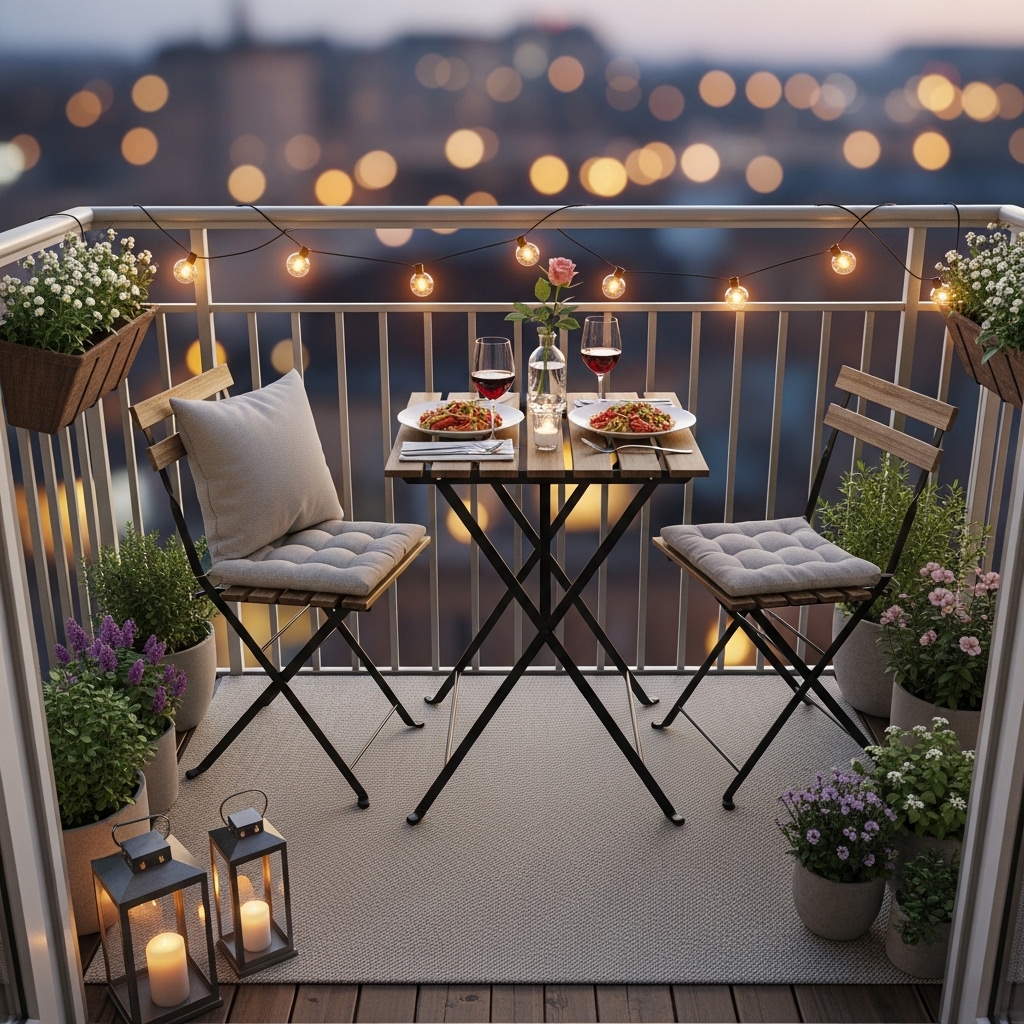
Ideal for: Couples or small-space dining.
Use a foldable table and two chairs to create a simple dining corner. Position it near the railing for views.
This works because it transforms the balcony into a functional dining area without requiring much space. Many people skip this due to size concerns, but compact setups work well.
Pro Tip: Choose stackable chairs for easy storage.
Mistake to Avoid: Don’t overcrowd the area with large dining sets.
12. Use Neutral Colors for a Spacious Look
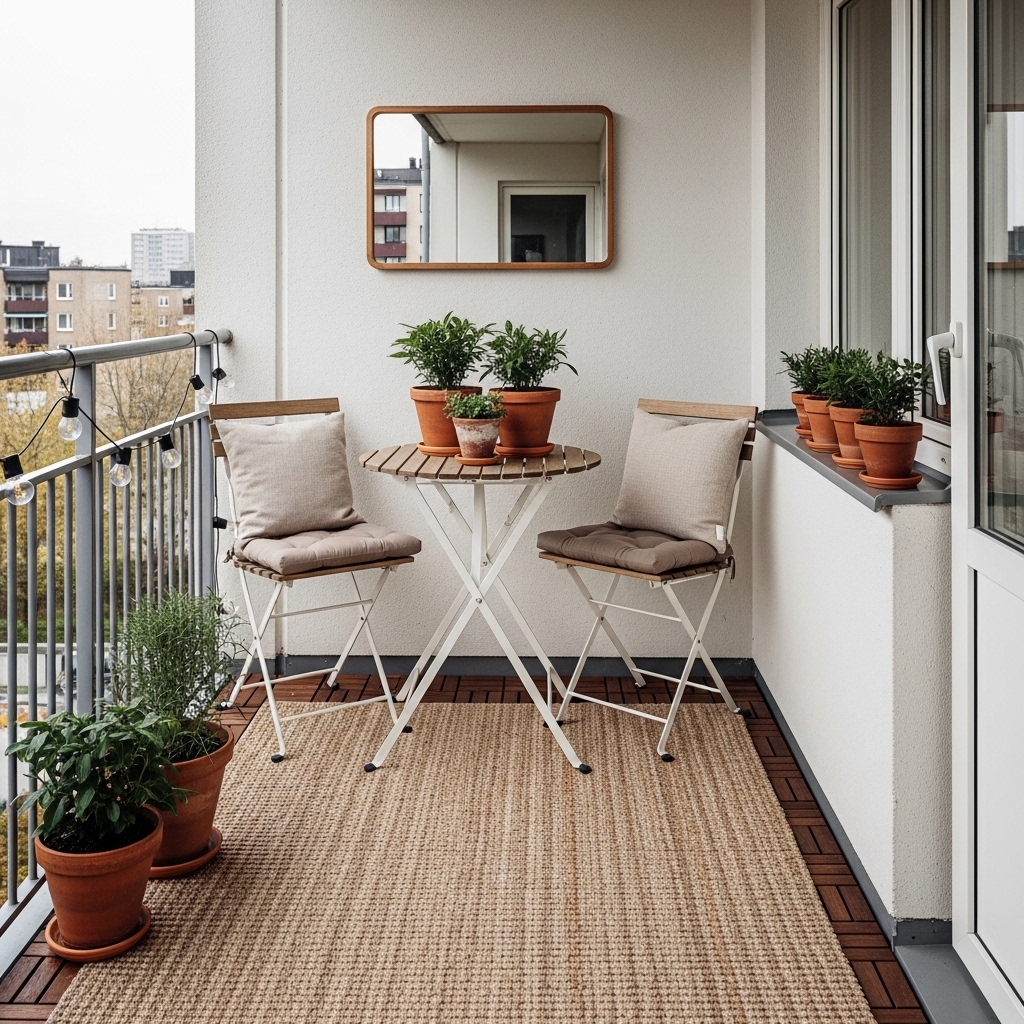
Best for: Making small balconies feel bigger.
Stick to neutral tones like beige, white, or soft grey for furniture and decor. Add subtle color through plants or accessories.
This works because light colors reflect light and create an open, airy feel. Dark tones can make small spaces feel cramped. A mistake is mixing too many colors, which creates visual clutter.
Pro Tip: Add texture instead of more colors for depth.
Mistake to Avoid: Don’t use too many bold patterns together.
13. Add a Compact Storage Bench
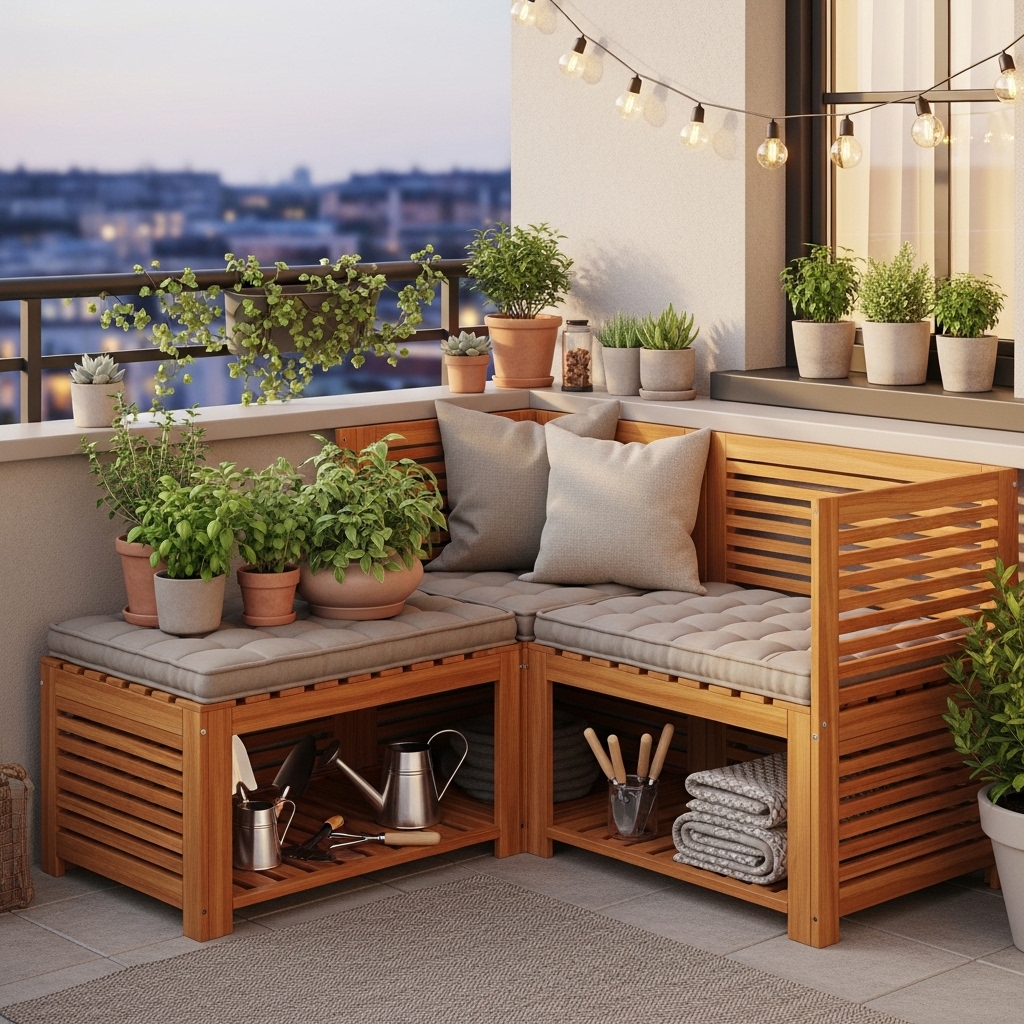
Ideal for: Small balconies needing hidden storage.
Use a bench with built-in storage for cushions, tools, or accessories. Place it against a wall to save space.
This works because it combines seating and storage, reducing clutter while maintaining function. Many setups fail due to lack of storage, leading to messy balconies.
Pro Tip: Choose waterproof storage benches.
Mistake to Avoid: Don’t overfill storage—it becomes hard to use.
14. Introduce Hanging Lanterns for Style
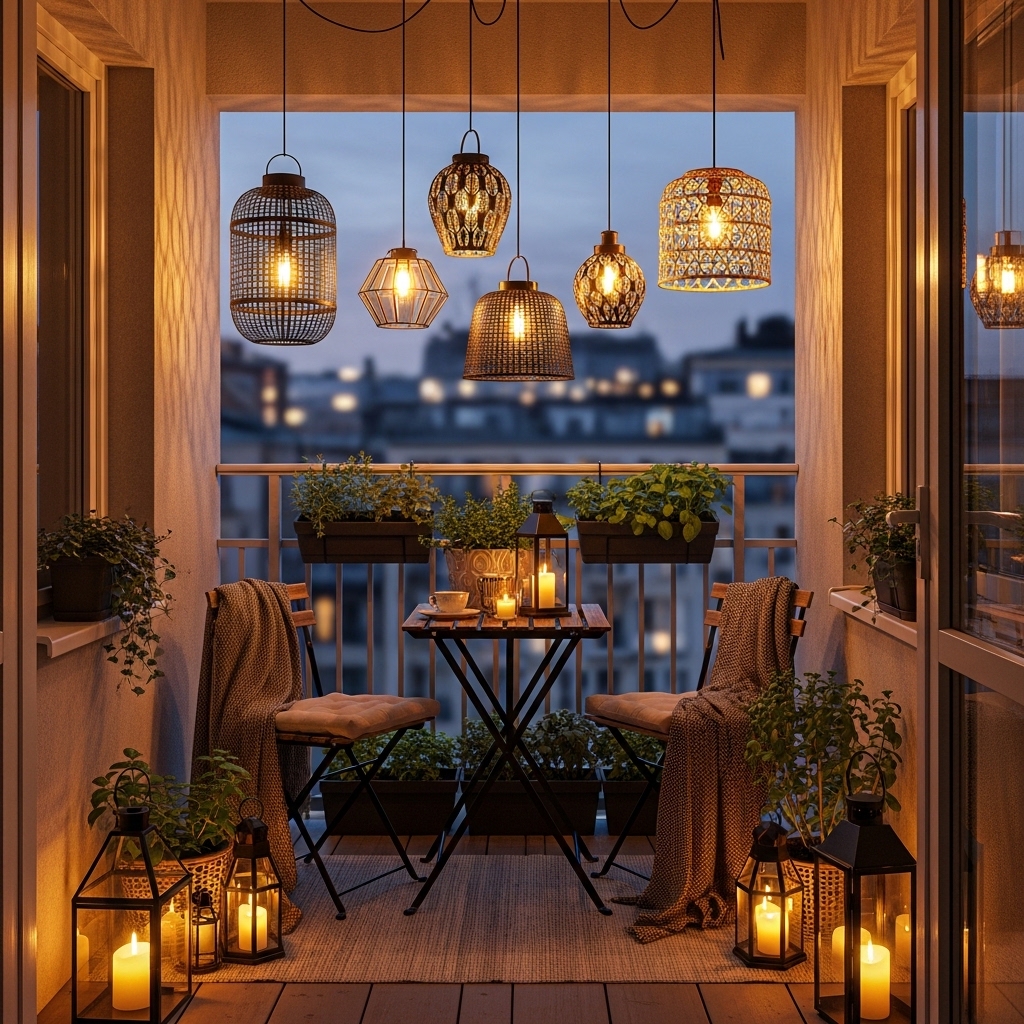
Best for: Decorative and ambient lighting.
Hang lanterns at varying heights to create visual interest and layered lighting. Use battery-powered options for convenience.
This works because varied lighting adds depth and makes the balcony feel designed rather than basic. A mistake is placing all lights at the same level.
Pro Tip: Mix sizes for a more dynamic look.
Mistake to Avoid: Don’t overcrowd the ceiling with too many lanterns.
15. Create a Reading Corner Setup
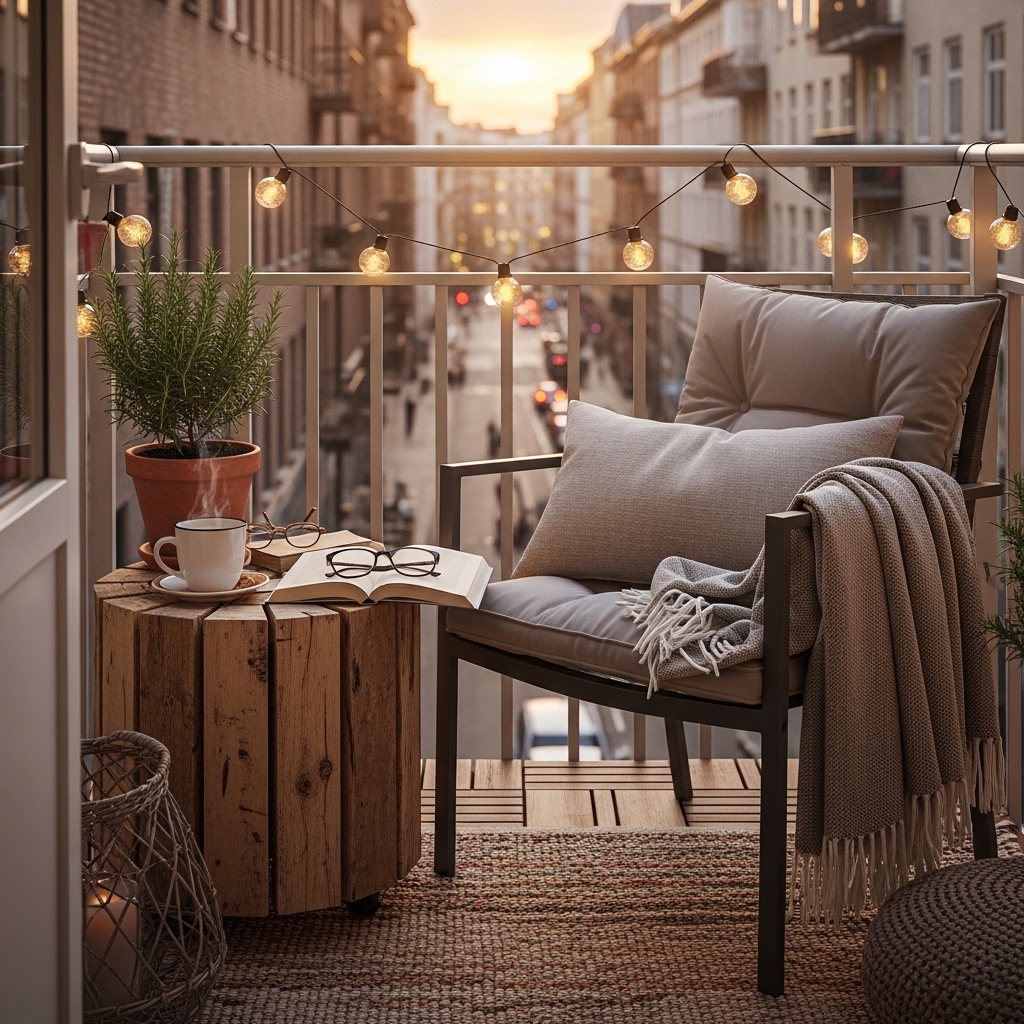
Ideal for: Quiet, personal relaxation space.
Add a comfortable chair, small table, and soft lighting to create a dedicated reading spot. Position it where natural light is best during the day.
This works because defining a purpose makes the balcony more usable and inviting. Without a clear function, spaces often go unused.
Pro Tip: Use a side pocket organizer for books.
Mistake to Avoid: Don’t place reading setups in windy areas.
16. Use Artificial Grass for a Garden Feel
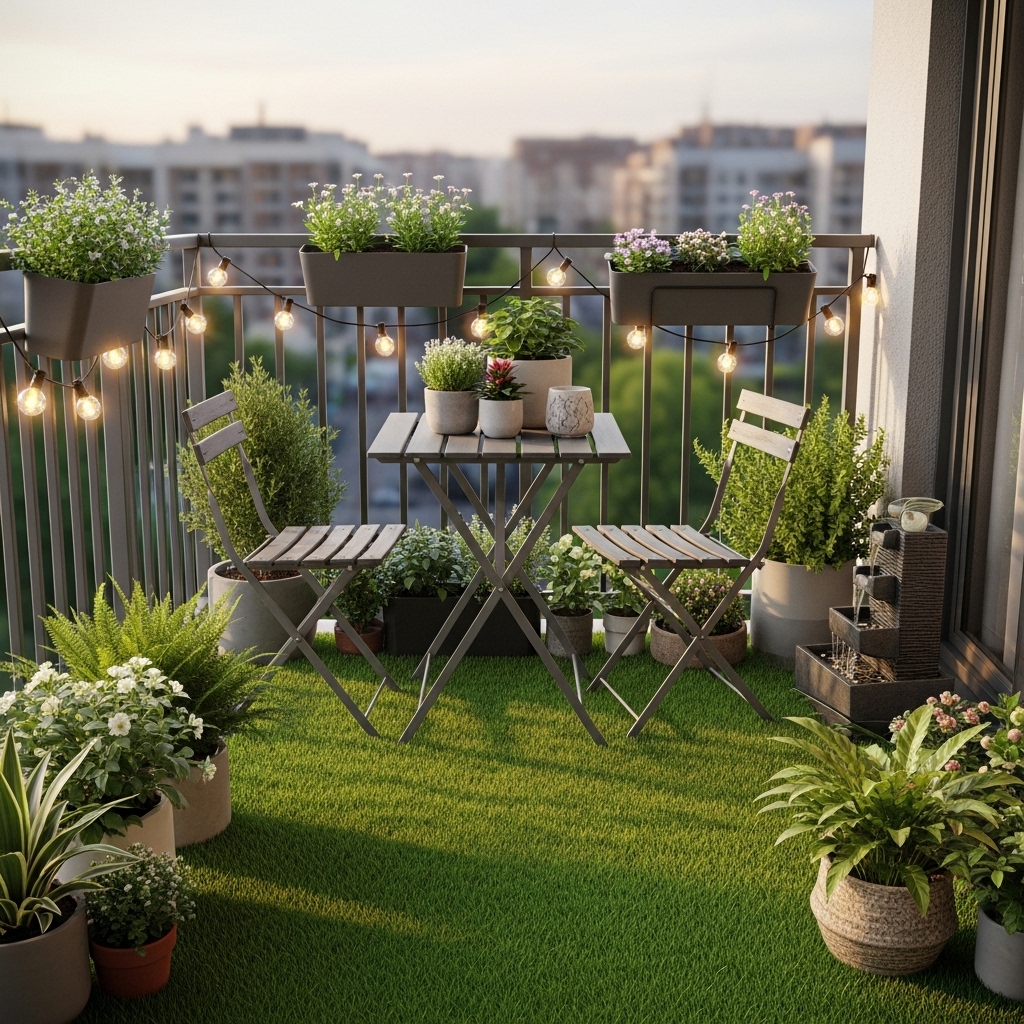
Best for: Urban balconies lacking greenery.
Install artificial turf to mimic a garden floor. Combine with plants and seating for a natural vibe.
This works because it softens hard surfaces and creates a relaxing outdoor feel. Many people skip flooring, making the balcony feel cold.
Pro Tip: Choose UV-resistant grass for durability.
Mistake to Avoid: Don’t install without proper drainage underneath.
17. Add Compact Plant Stands for Organization
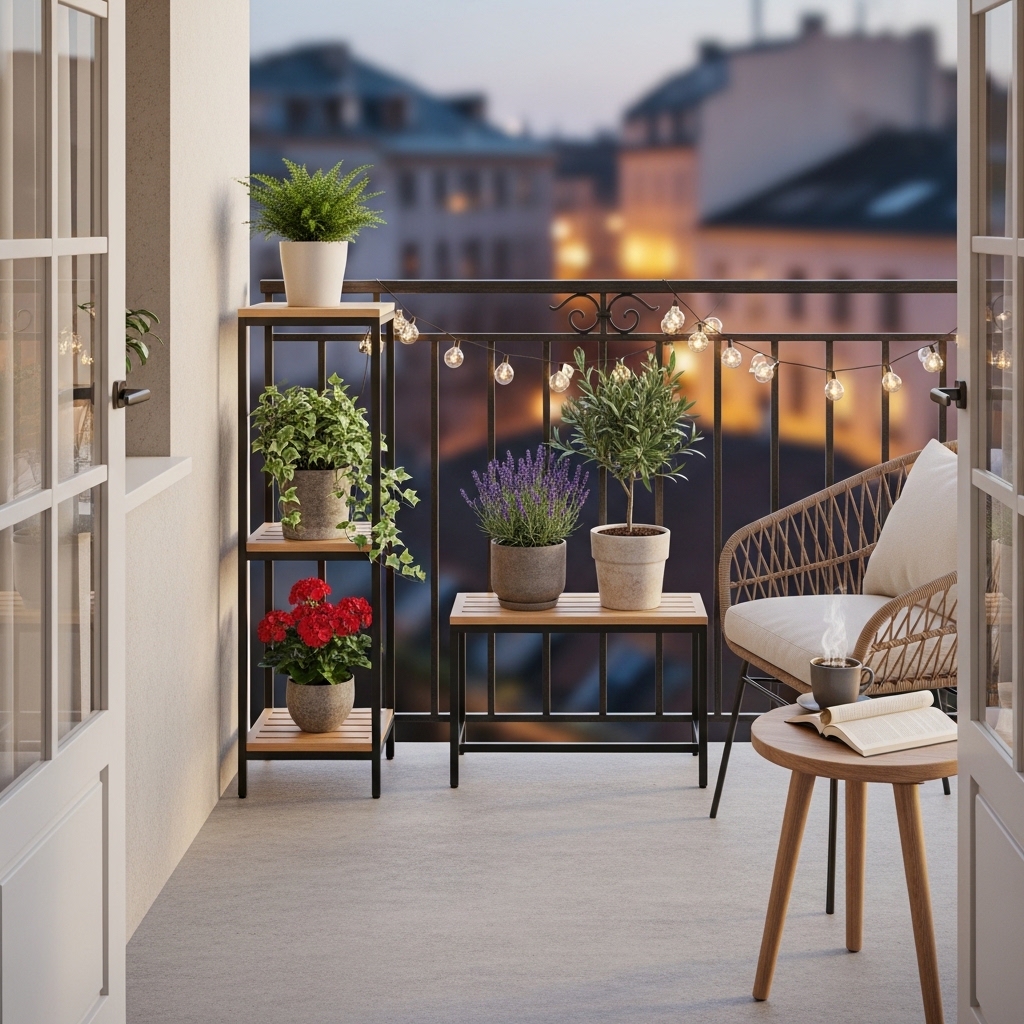
Ideal for: Keeping plants neat and accessible.
Use tiered stands to organize pots without cluttering the floor. Place them near walls or corners.
This works because it keeps plants visible and easy to maintain. It also prevents overcrowding.
Pro Tip: Group plants by sunlight needs.
Mistake to Avoid: Don’t overcrowd stands with too many pots.
18. Install a Shade Solution for Comfort
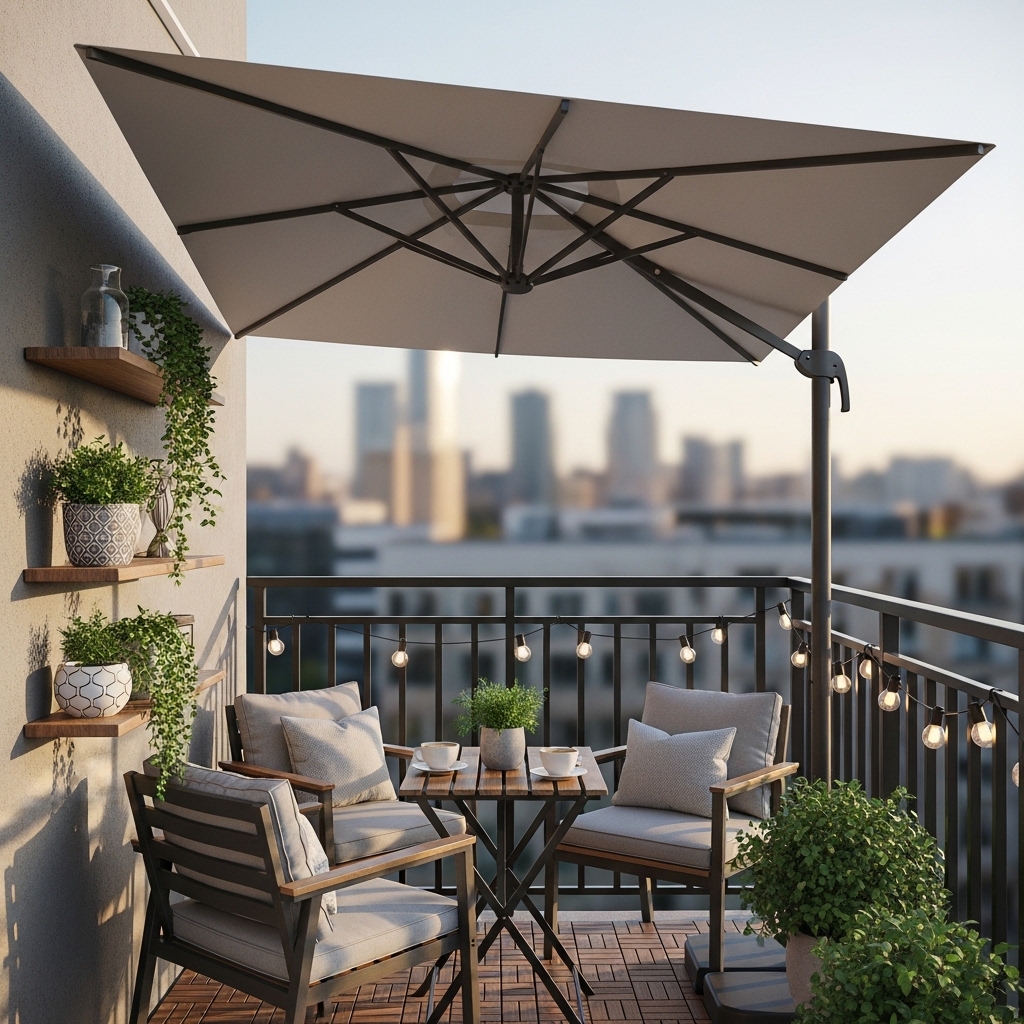
Best for: Hot or sunny balconies.
Use umbrellas, shades, or curtains to block harsh sunlight and make the space usable during the day.
This works because excessive sun can make balconies uncomfortable and damage furniture. A common mistake is ignoring shade completely.
Pro Tip: Use adjustable shades for flexibility.
Mistake to Avoid: Don’t block all light—balance is key.
19. Add Minimal Decor for a Clean Look
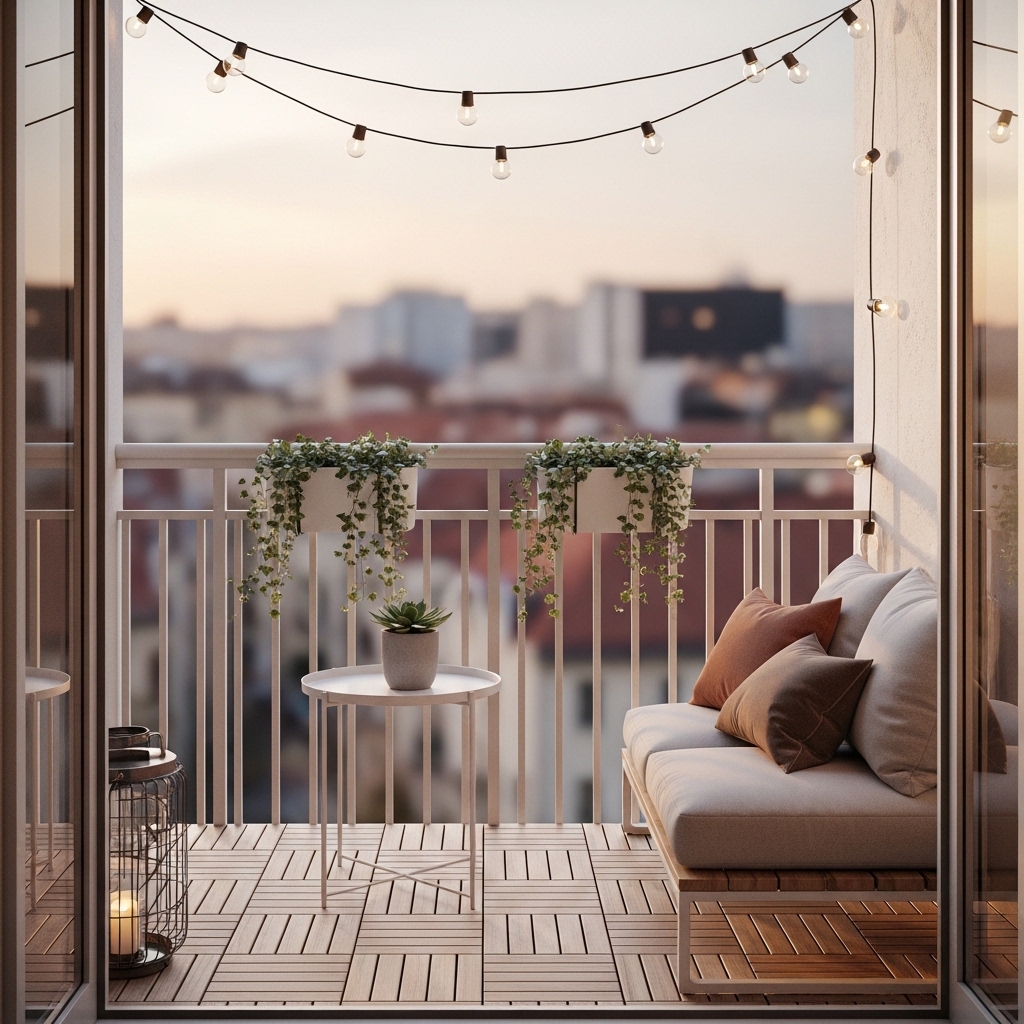
Ideal for: Modern, clutter-free balconies.
Stick to a few well-chosen decor items instead of overcrowding the space. Focus on functionality and simplicity.
This works because minimalism enhances space perception and reduces maintenance. Many people overdecorate, making small balconies feel chaotic.
Pro Tip: Choose multi-functional decor pieces.
Mistake to Avoid: Don’t add decor without purpose.
20. Adjust Layout Seasonally for Better Use
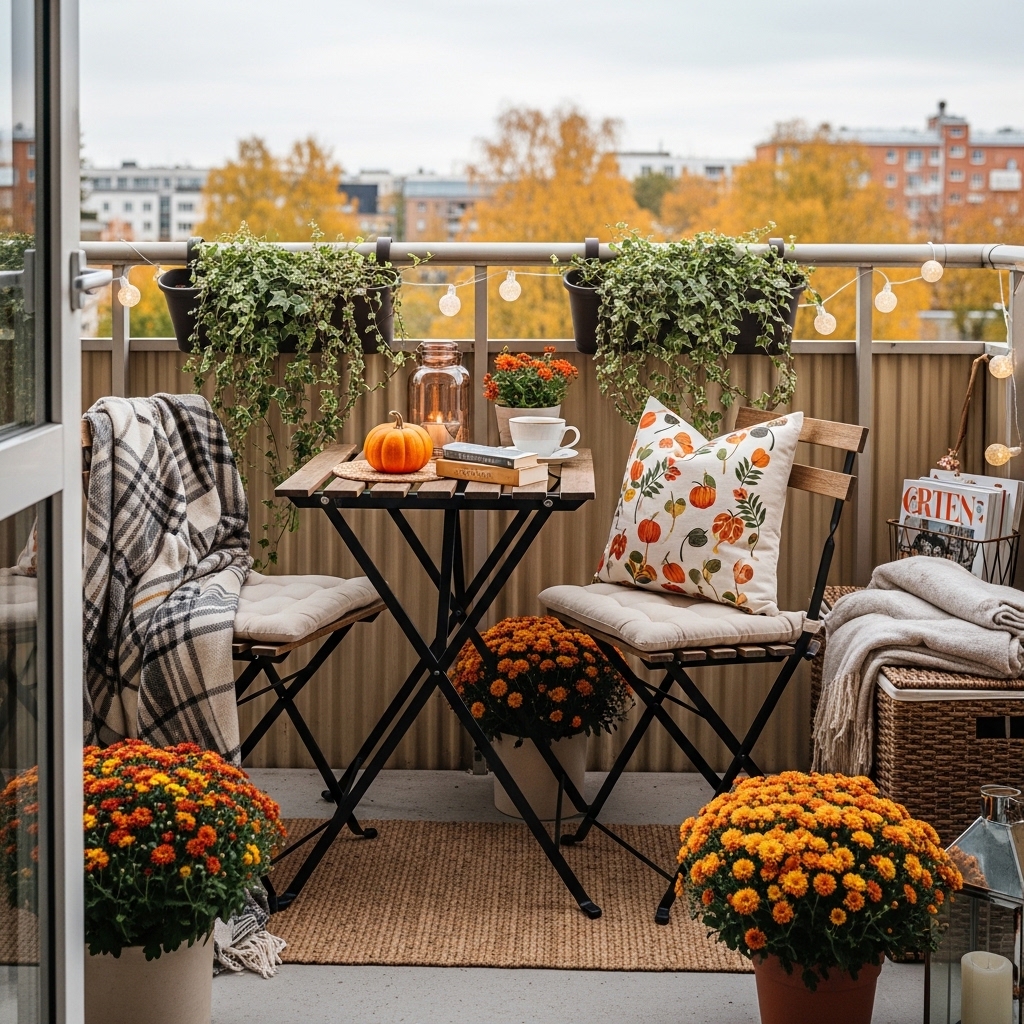
Best for: Long-term usability and flexibility.
Rearrange furniture and decor based on weather and usage patterns. Move plants, seating, or shade elements as needed.
This works because balconies change with seasons, and adapting keeps them functional year-round. Many people keep one fixed layout that stops working over time.
Pro Tip: Review your setup every 2–3 months.
Mistake to Avoid: Don’t ignore changing sunlight patterns.
Conclusion
A well-designed balcony isn’t about size—it’s about smart layout, functionality, and intentional decor choices. By focusing on space-saving solutions, lighting, and flexible furniture, you can turn even the smallest balcony into a comfortable and stylish retreat.