20 Closet Shelving Ideas That Turn Empty Walls into Storage Powerhouses
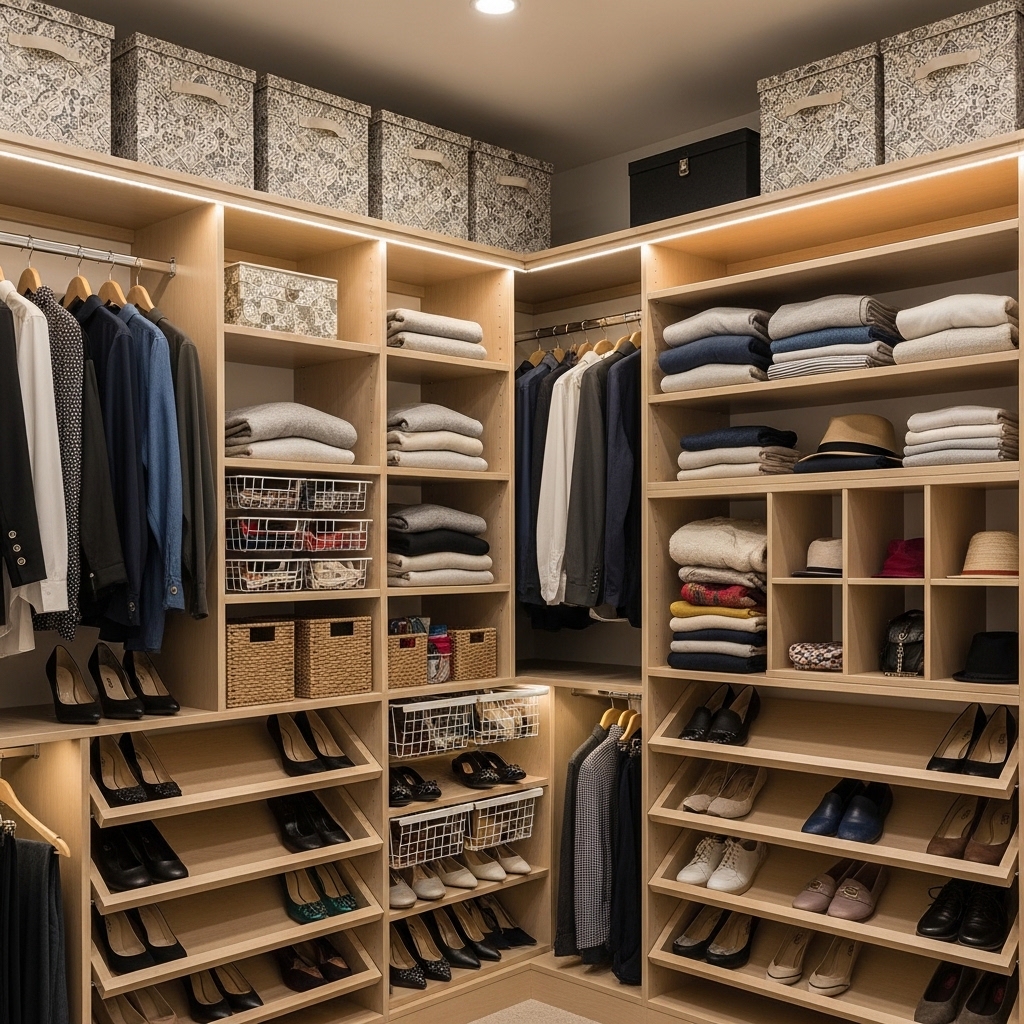
You look at your closet shelves. They are overflowing. Nothing stays organized. Everything topples over.
The problem is not how much you own. The problem is the shelves themselves.
Standard closet shelves are designed for nobody. Too deep. Too far apart. Wrong heights.
Customizing your shelving changes everything. You stop adapting to your shelves. Your shelves adapt to you.
The right shelf configuration doubles your storage capacity without adding a single square foot.
This guide delivers 20 closet shelving ideas that turn empty walls into storage powerhouses.
From adjustable systems to corner solutions, each idea makes your shelves work harder for you.
1. Install Adjustable Closet Shelving Ideas Track Shelving for Infinite Flexibility
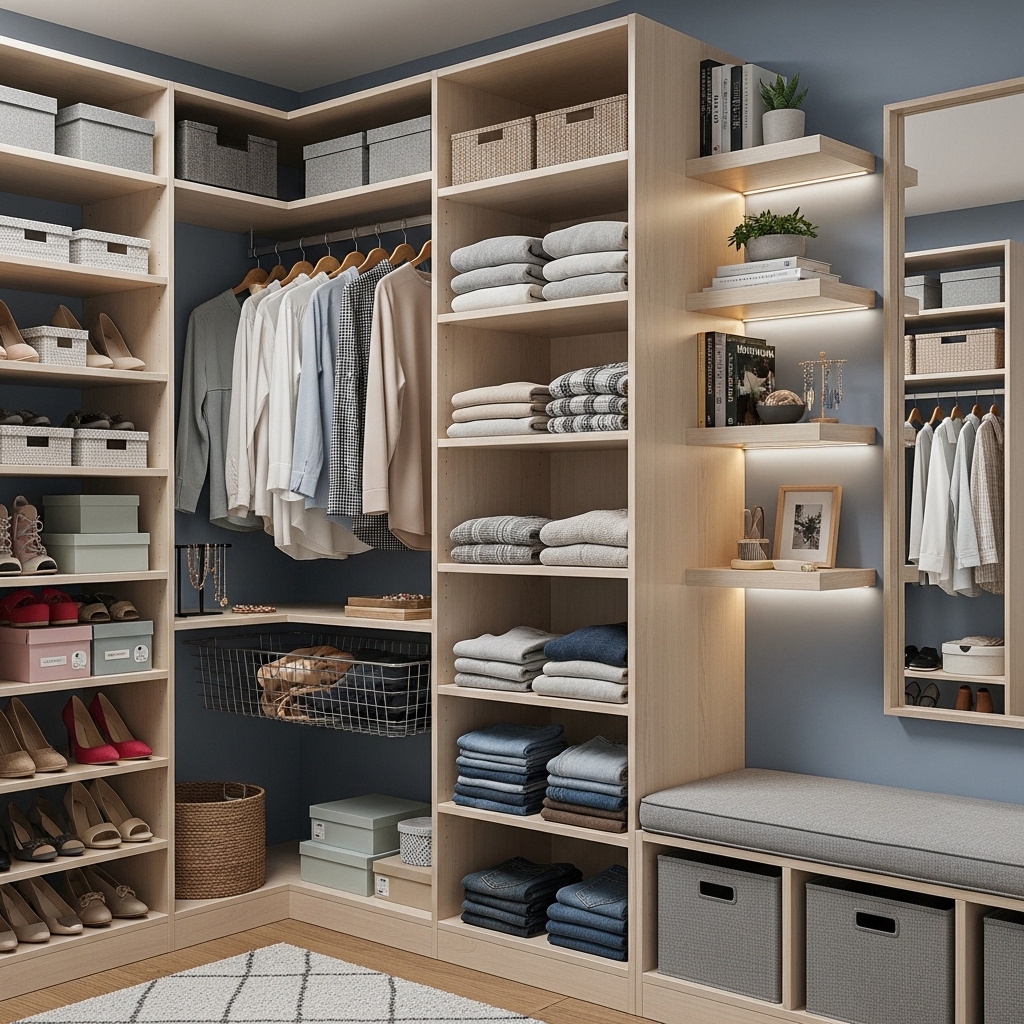
Fixed shelves lock you into one configuration forever. Your needs change. Your shelves do not.
Mount vertical tracks on your closet wall. Attach shelf brackets that move up and down freely.
Reconfigure your shelves whenever you want. New shoes? Lower a shelf. New handbags? Raise another.
Adjustable shelving grows with you. Fixed shelves trap you in yesterday’s storage needs.
Pro Tip: Buy extra brackets and shelves upfront. You will reconfigure more often than you expect.
Mistake to Avoid: Do not install tracks without a stud finder. Shelves must anchor into wall studs for weight support.
2. Create a Shoe Ledge That Angles Downward
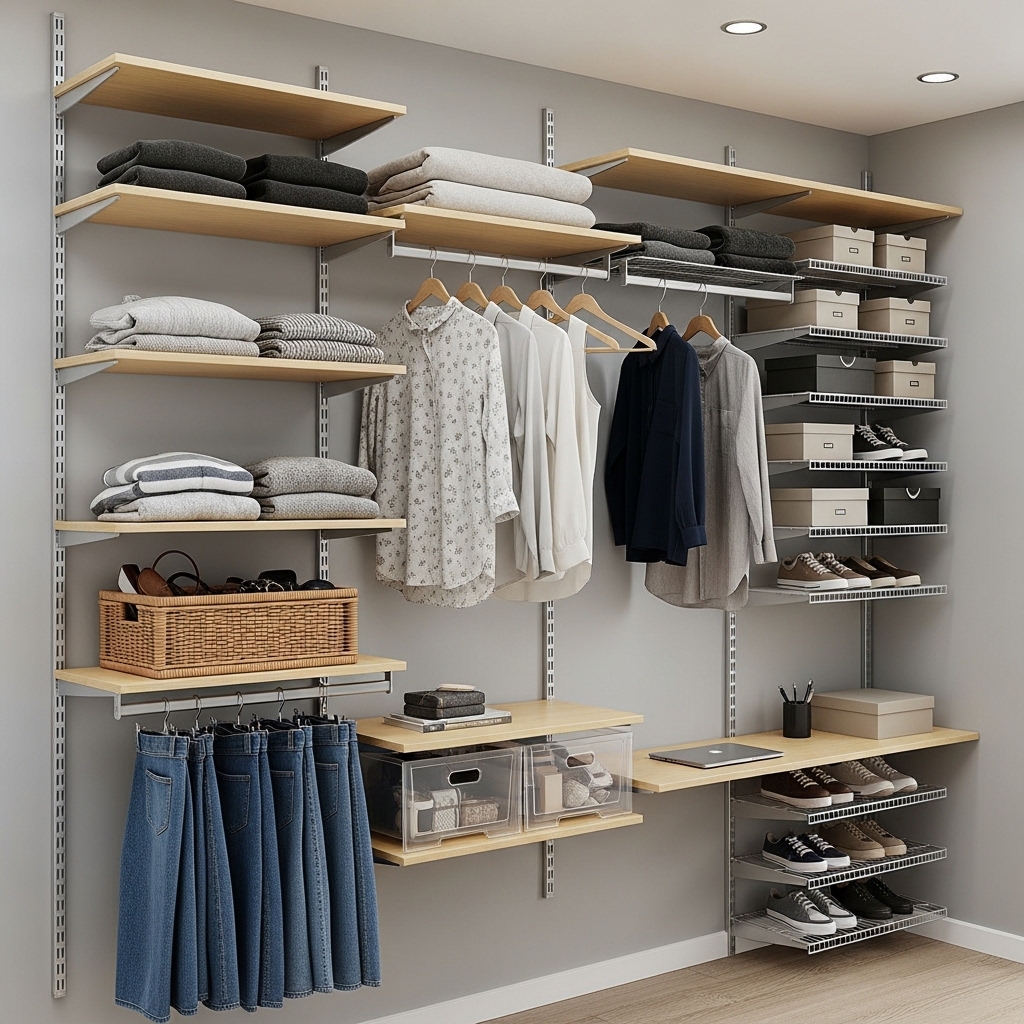
Flat shoe shelves hide the front of your shoes. You cannot see what you own without bending down.
Build a shallow ledge that angles downward at 15 degrees. Shoes face slightly upward and outward.
You see the toe of every shoe at a single glance. No crouching. No pulling boxes out.
Angled ledges also prevent shoes from tipping forward. Gravity holds them in place.
Pro Tip: Add a small lip at the bottom edge of your angled ledge. The lip catches shoes before they slide off completely.
Mistake to Avoid: Do not use an angle steeper than 20 degrees. Shoes will slide off. Shallower is safer.
3. Stack Two Short Shelves Instead of One Tall Shelf
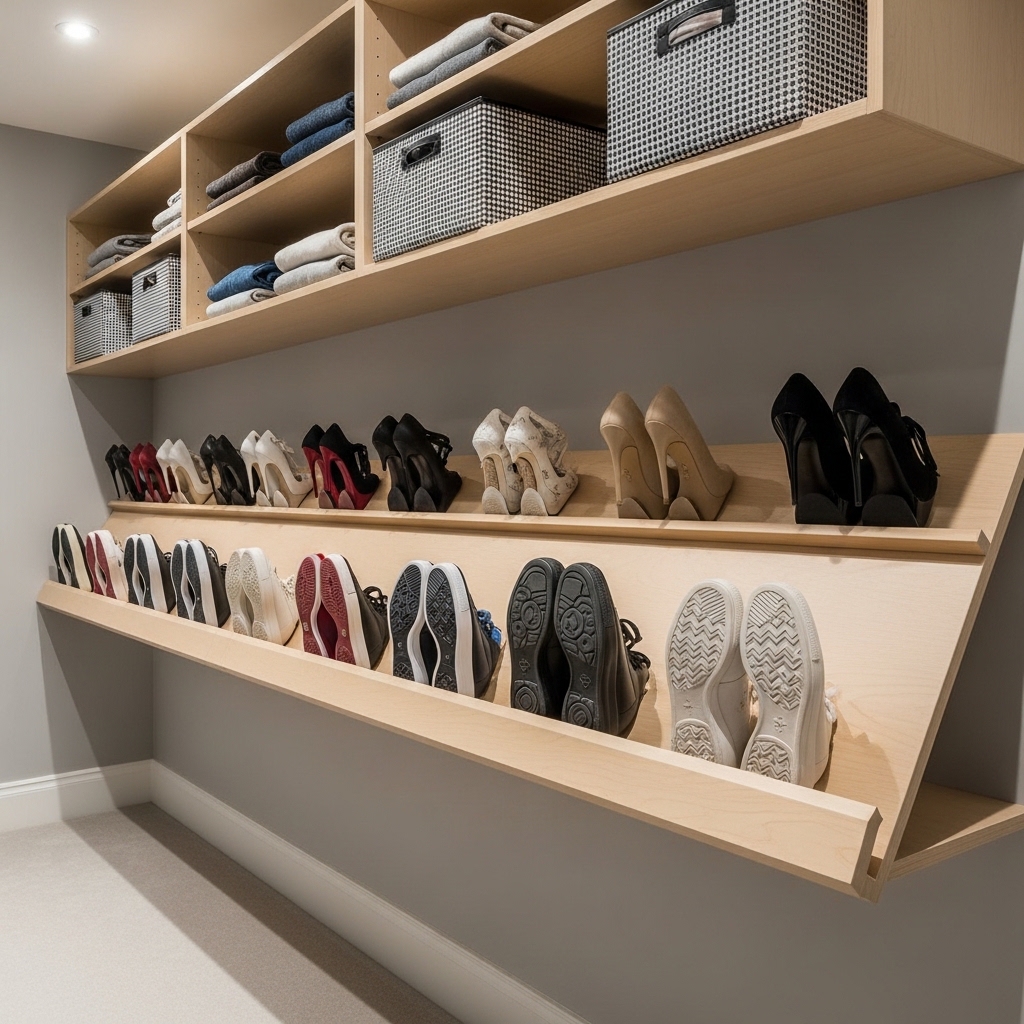
Tall shelves force you to stack items in tall piles. The bottom items disappear forever.
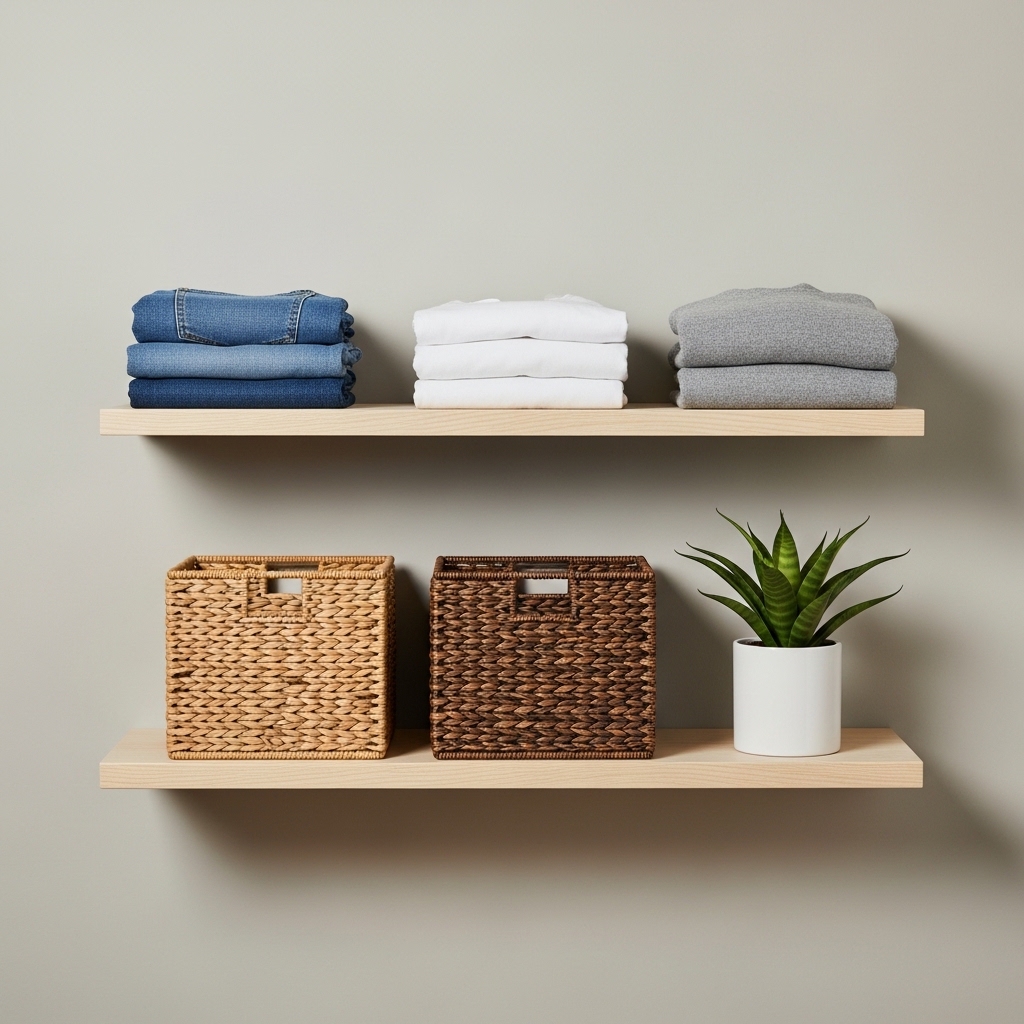
Divide your vertical space into two shorter shelves. Half the height. Double the accessibility.
Short shelves hold one or two layers of items. Nothing gets buried at the bottom.
Stacked short shelves also prevent toppling. Short stacks are stable. Tall stacks are not.
Pro Tip: Leave four inches of vertical clearance above each folded stack. You grab items without disturbing the pile.
Mistake to Avoid: Do not make short shelves too shallow. Each shelf needs at least 12 inches of depth for folded clothes.
4. Install a Pull-Out Wire Basket Shelf for Dirty Laundry
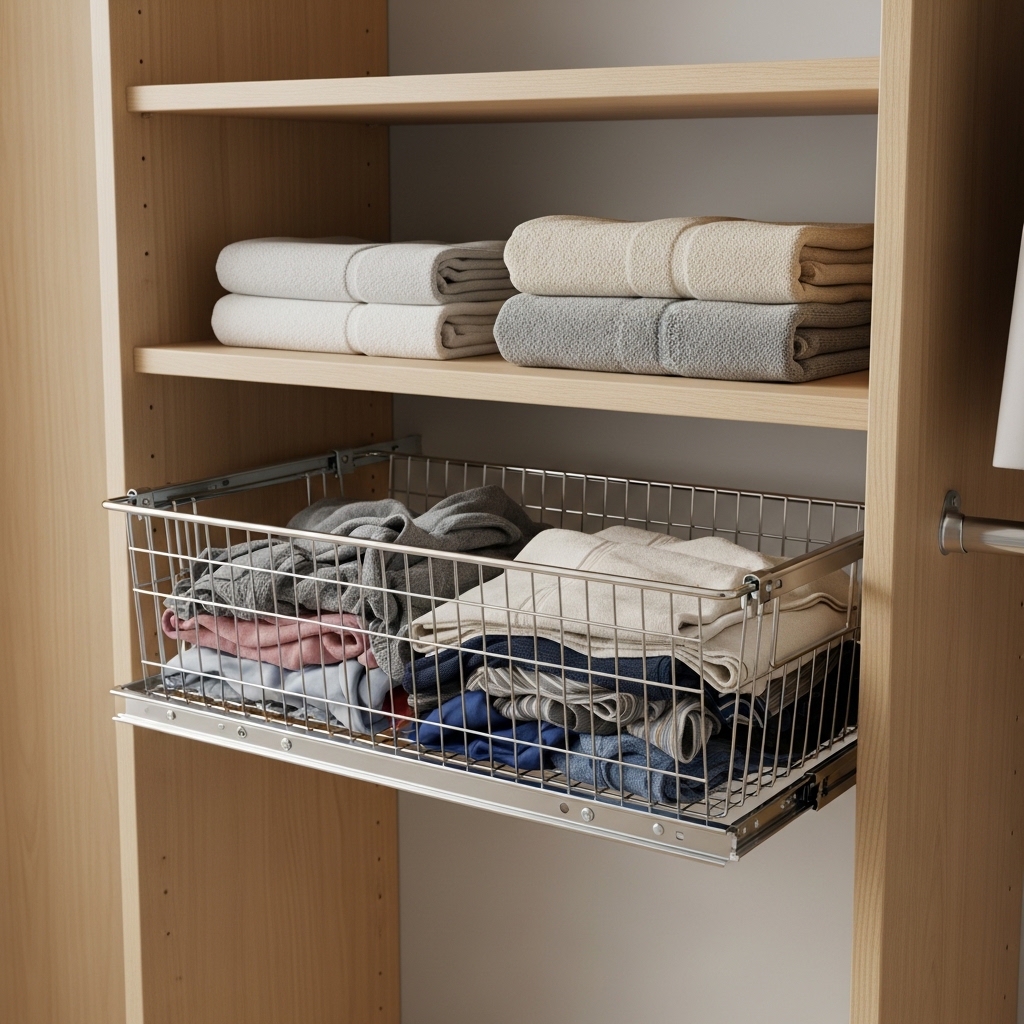
Dirty clothes belong somewhere. The floor is not that place. A hamper takes up floor space.
Install a pull-out wire basket on slides inside a lower shelf bay.
Pull the basket out when you need it. Push it back in. The laundry disappears from sight.
Wire baskets provide ventilation. No mildew smells. No trapped moisture.
Pro Tip: Use two pull-out baskets. One for lights. One for darks. Sorting happens as you undress.
Mistake to Avoid: Do not overload your pull-out basket. Heavy baskets strain the slides and become difficult to open.
5. Add a Narrow Shelf Between Your Wall and Your Rod
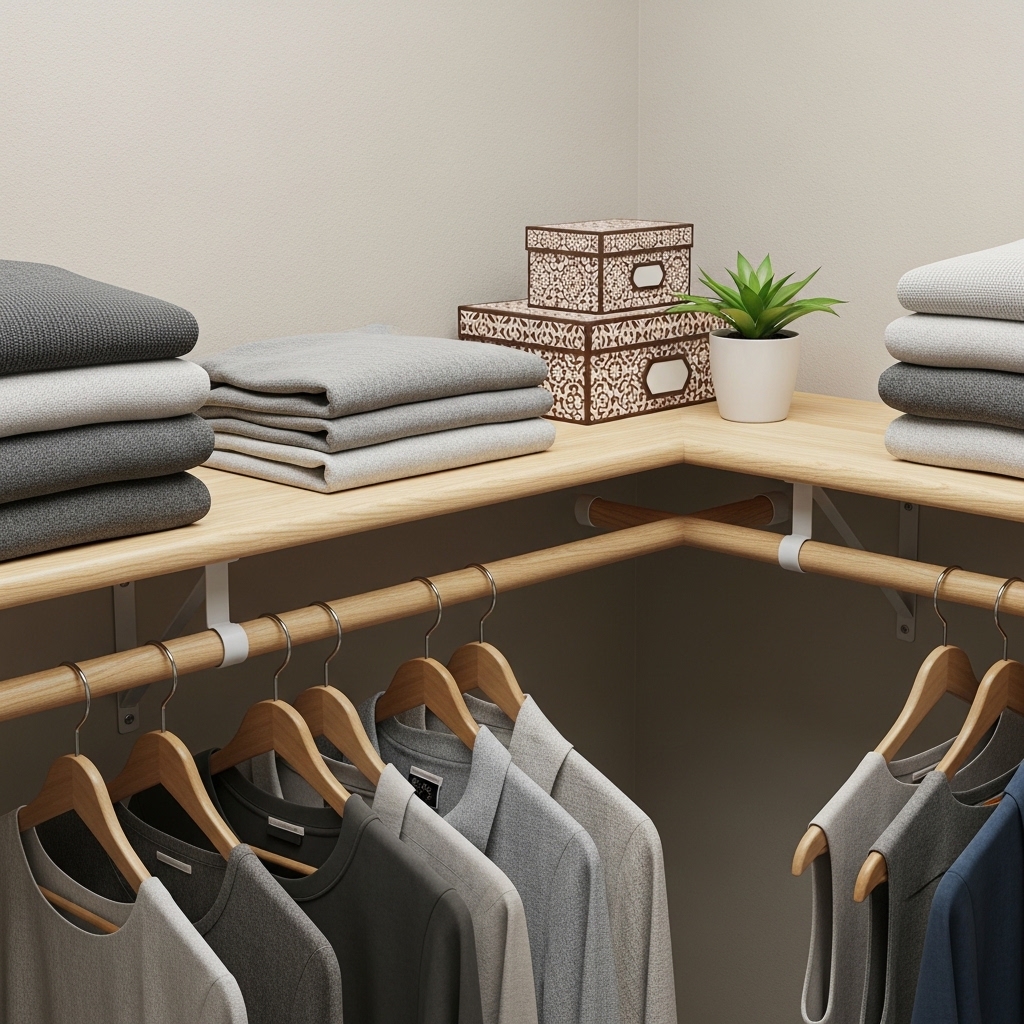
There is empty space between your hanging clothes and the side wall of your closet.
Install a narrow shelf that fits perfectly in that vertical gap. Make it six inches deep.
Use the shelf for small items. Belts. Scarves. Small handbags. Clutch purses.
That gap collects dust and nothing else. A narrow shelf captures it for valuable storage.
Pro Tip: Install this shelf at eye level. Small items need visibility more than any other category.
Mistake to Avoid: Do not make your narrow shelf deeper than six inches. Deeper shelves will hit your hanging clothes.
6. Use Wire Shelving for Better Air Circulation
Wood shelves look nice. Wood shelves also trap moisture and collect dust.
Replace solid wood shelves with wire shelving. Air flows freely through the gaps.
Wire shelves prevent mildew on folded items. Shoes dry faster. Linen breathes better.
Dust falls through wire gaps instead of settling on the shelf surface.
Pro Tip: Buy shelf liners for wire shelves if you store small items. Liners prevent items from falling through the gaps.
Mistake to Avoid: Do not use wire shelves for heavy boots. The wire can bend under concentrated weight over time.
7. Install a Shelf Above Your Closet Door
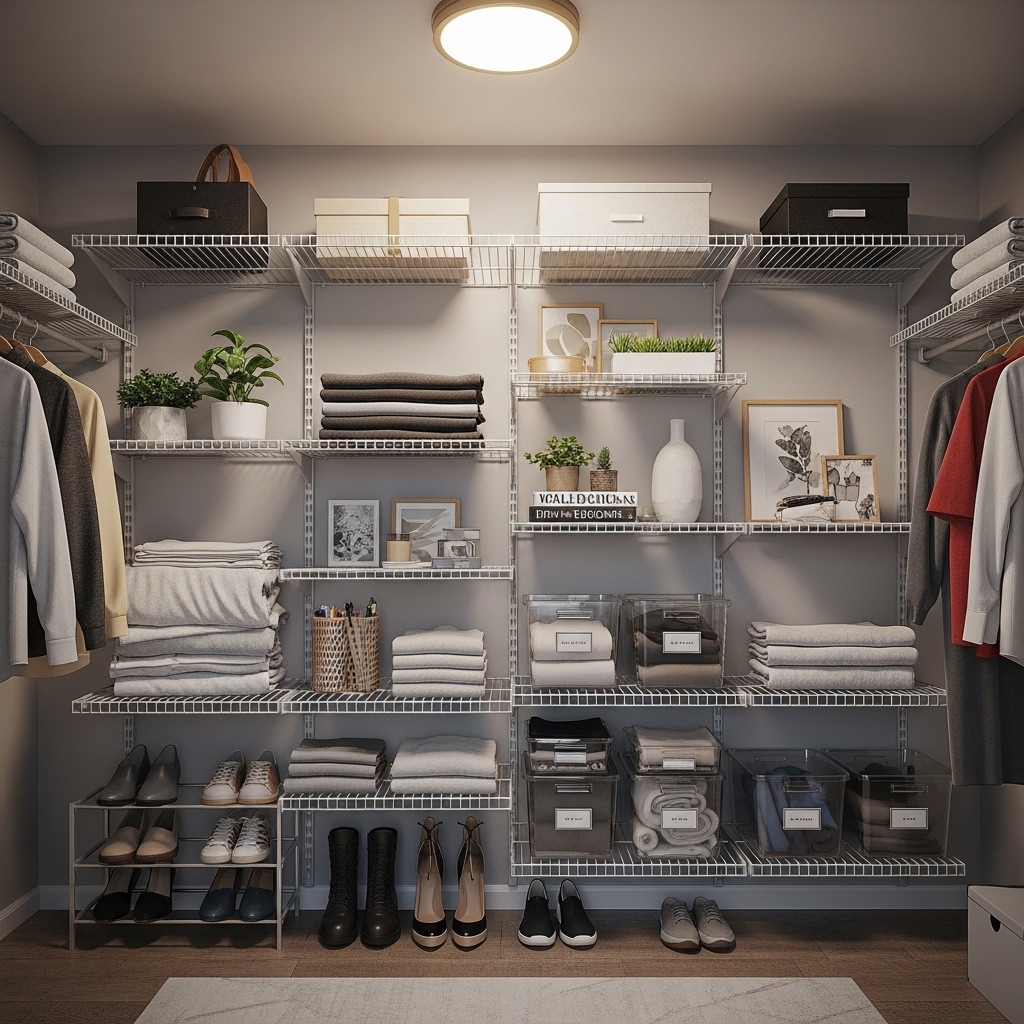
Look up at the space above your closet door. That is completely empty. You ignore it daily.
Install a long, shallow shelf above your door frame. Extend it across the entire width.
Store off-season items up there. Winter hats. Summer bags. Extra bedding.
Above-door space fits nothing else. Shelves capture that dead air for seasonal storage.
Pro Tip: Use uniform clear bins on your above-door shelf. Matching bins look intentional. Clear sides show contents.
Mistake to Avoid: Do not store heavy items above your door. Heavy bins falling from that height could cause serious injury.
8. Create a Folding Shelf That Flips Down from the Wall
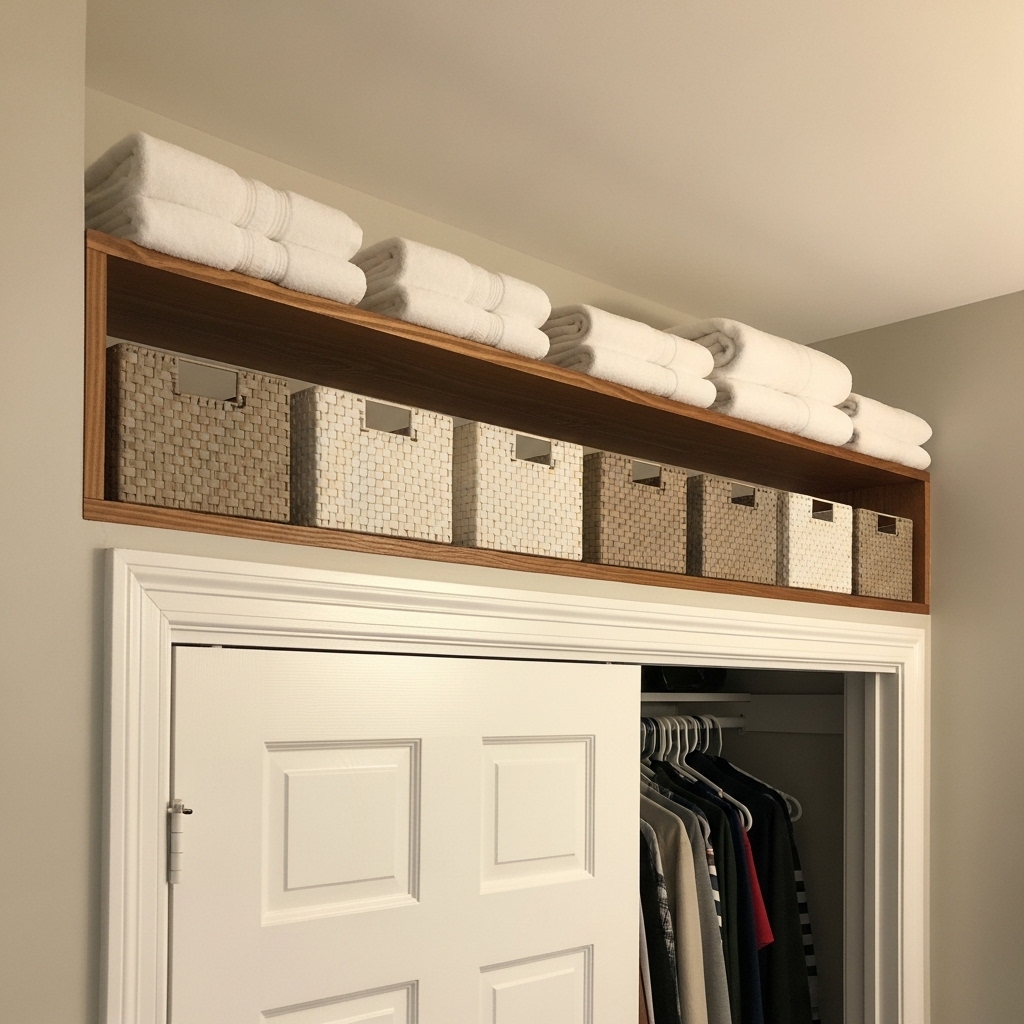
You need a surface for folding laundry. You have no permanent space for a table.
Mount a flip-down shelf on your closet wall at waist height.
Flip the shelf up when you need to fold. Flip it flat against the wall when you are done.
The shelf takes almost no space when folded. It gives you a full folding surface when open.
Pro Tip: Choose a shelf with a magnetic latch. The latch holds the shelf securely against the wall when not in use.
Mistake to Avoid: Do not mount your flip-down shelf above a heat vent. Hot air blows your laundry off the shelf.
9. Add a Valet Rod Shelf with Built-In Hanging Hook
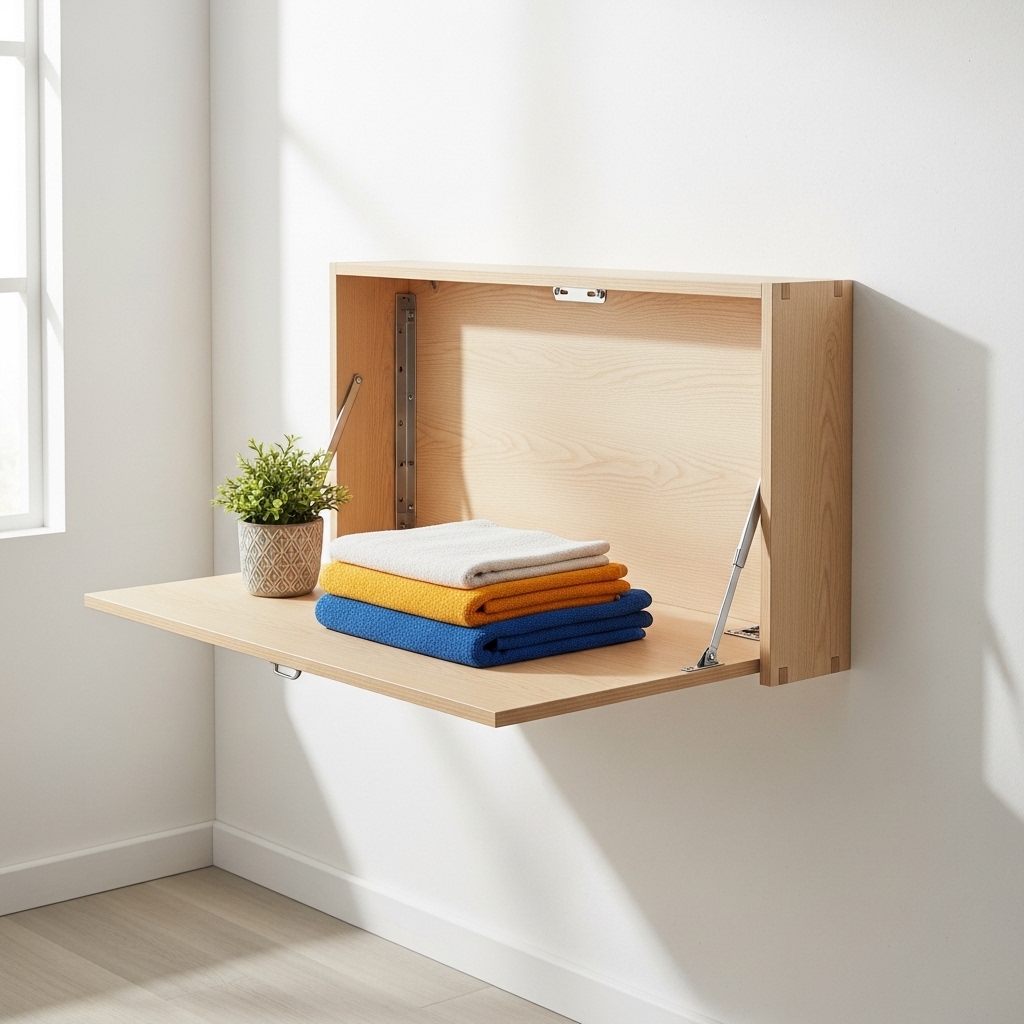
You plan tomorrow’s outfit tonight. Where do you hang it without mixing with your main closet?
Install a shelf that has a small pull-out rod hidden underneath.
Pull the rod out for tomorrow’s clothes. Push it back in when you leave. The shelf stays clear.
This is a shelf and a valet rod in one piece of storage. Two functions. One footprint.
Pro Tip: Install this shelf near your mirror. Outfit planning happens in one convenient zone.
Mistake to Avoid: Do not use the valet rod for permanent storage. It is for temporary outfit planning only.
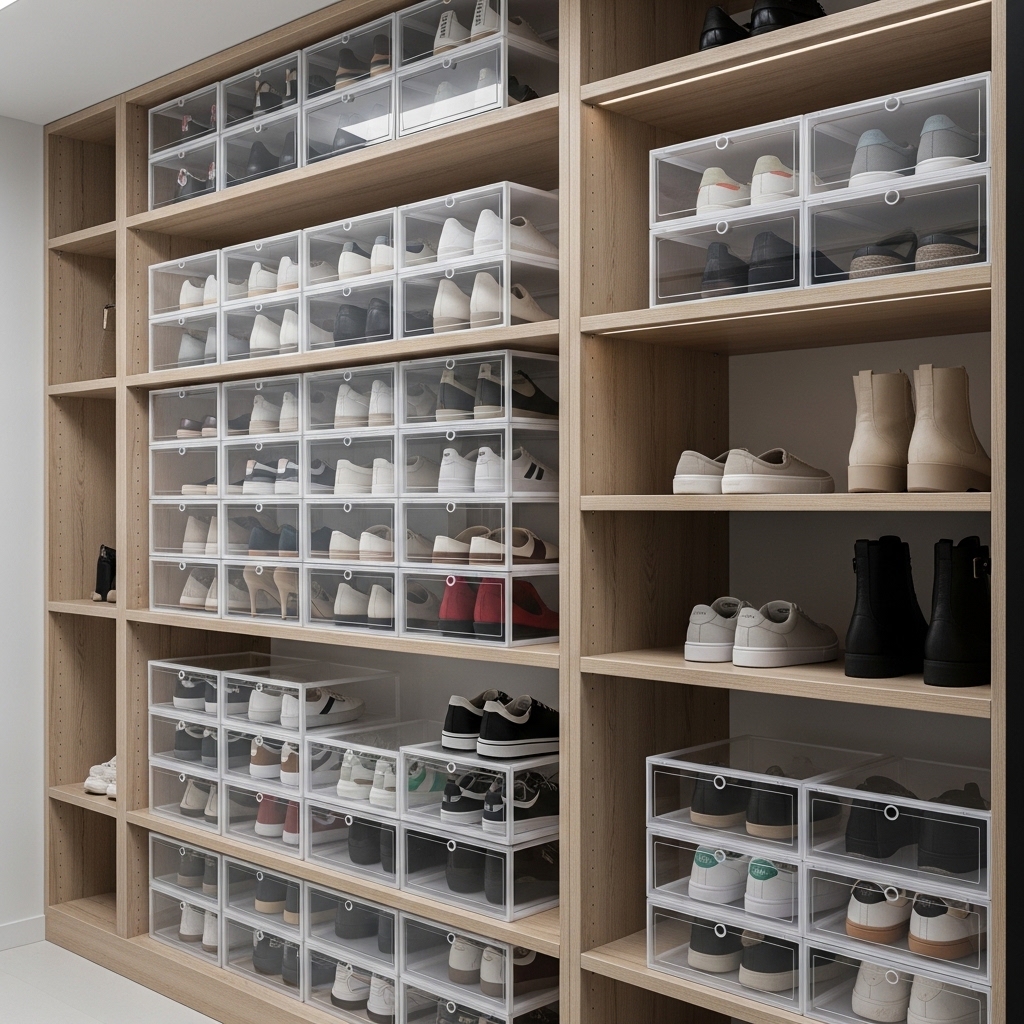
10. Stack Clear Shoe Boxes on Deep Shelves
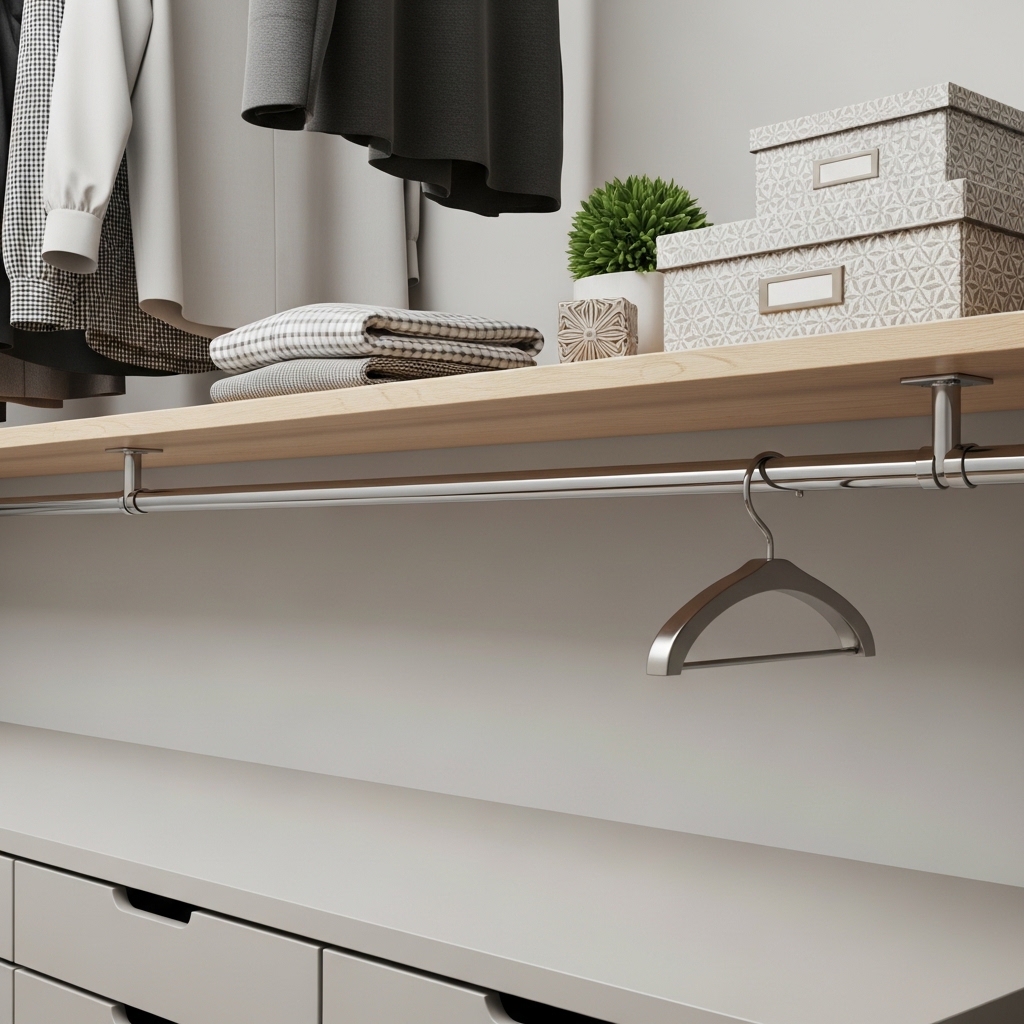
Deep shelves are problematic. Items in the back get lost and forgotten for months.
Place clear shoe boxes on your deep shelves. Stack them two or three high.
Each box holds one pair of shoes. Clear sides show you what is inside without pulling boxes down.
Stacking doubles or triples your shelf capacity. Deep shelves finally work for you.
Pro Tip: Label each box end with a small sticker. “Black Heels.” “Brown Boots.” “White Sneakers.”
Mistake to Avoid: Do not use cardboard shoe boxes. Cardboard absorbs moisture and you cannot see inside. Clear plastic only.
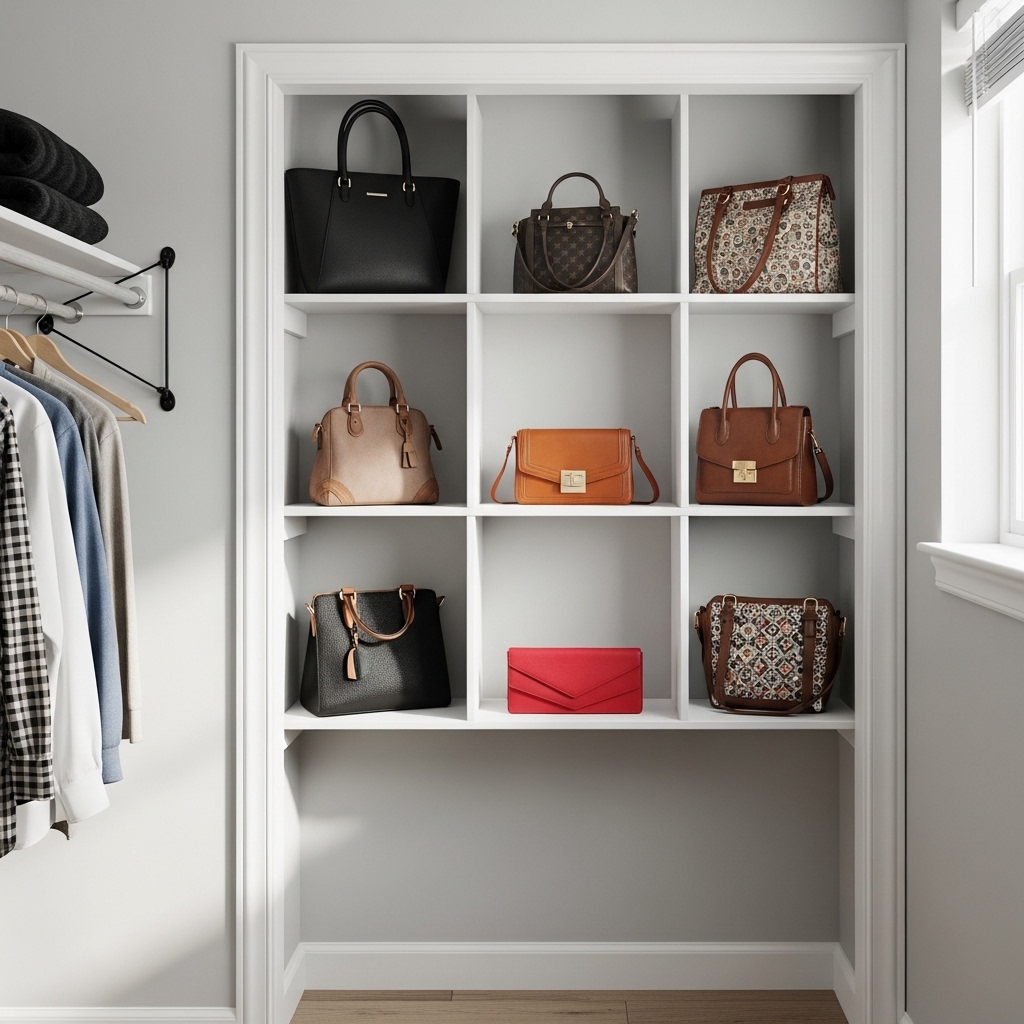
11. Install a Divided Shelf for Handbags
Handbags stored flat on shelves crush each other. The bag at the bottom loses its shape.
Build or buy a shelf with vertical dividers spaced every six to eight inches.
Stand each handbag upright in its own divided cubby. Bags do not touch each other.
Divided shelving keeps your handbags looking new. No crushing. No sagging. No lost shapes.
Pro Tip: Stuff each handbag with tissue paper before placing it in its cubby. Tissue helps the bag maintain its structure.
Mistake to Avoid: Do not make cubbies wider than eight inches. Wide cubbies allow bags to tip over sideways.
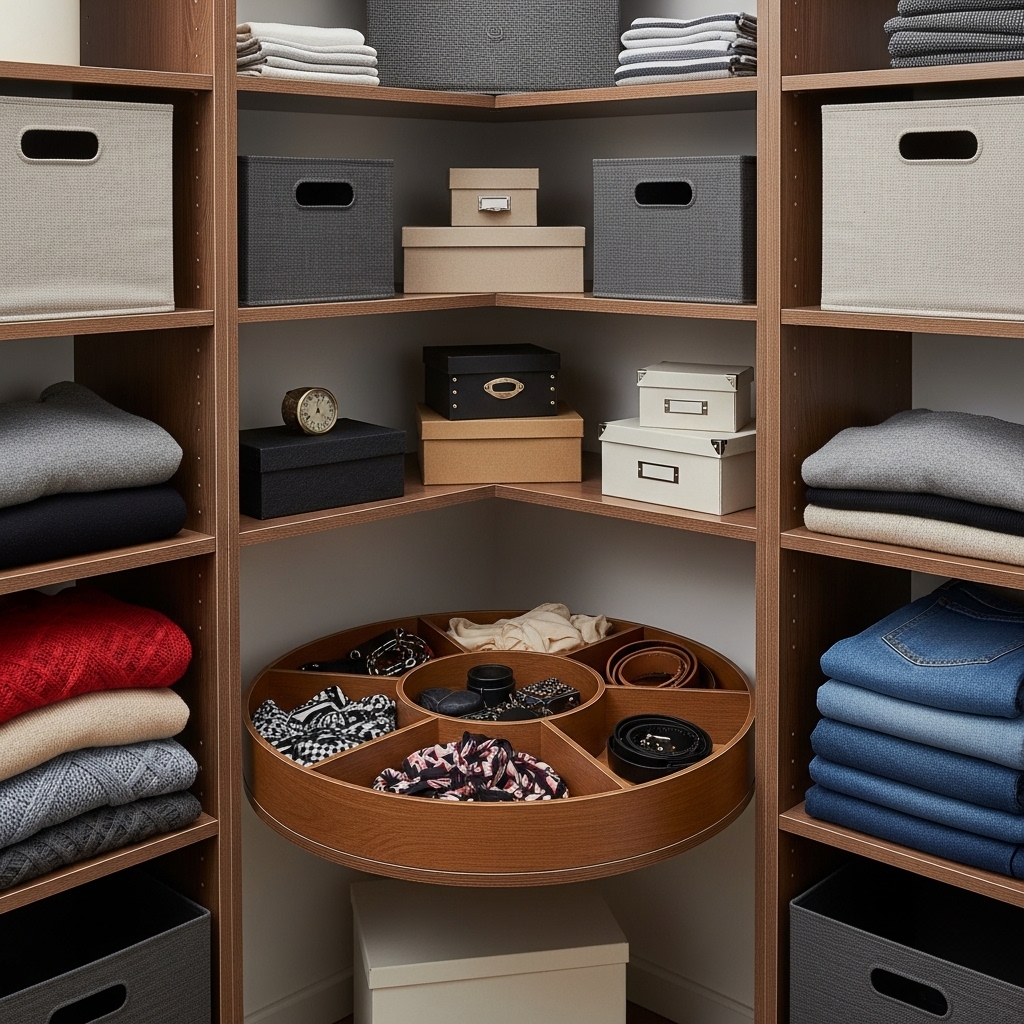
12. Use a Lazy Susan on a Corner Shelf
Corner shelves are dead zones. Items in the back disappear. You forget they exist.
Place a Lazy Susan turntable on your corner shelf. Store belts, wallets, or small accessories on it.
Spin the turntable to reach items in the very back. No more digging. No more knocking things over.
A Lazy Susan turns dead corner space into accessible, usable storage instantly.
Pro Tip: Use a two-tier Lazy Susan for tall corner shelves. The top tier spins independently from the bottom tier.
Mistake to Avoid: Do not overload your Lazy Susan. Too much weight makes the turntable difficult to spin.
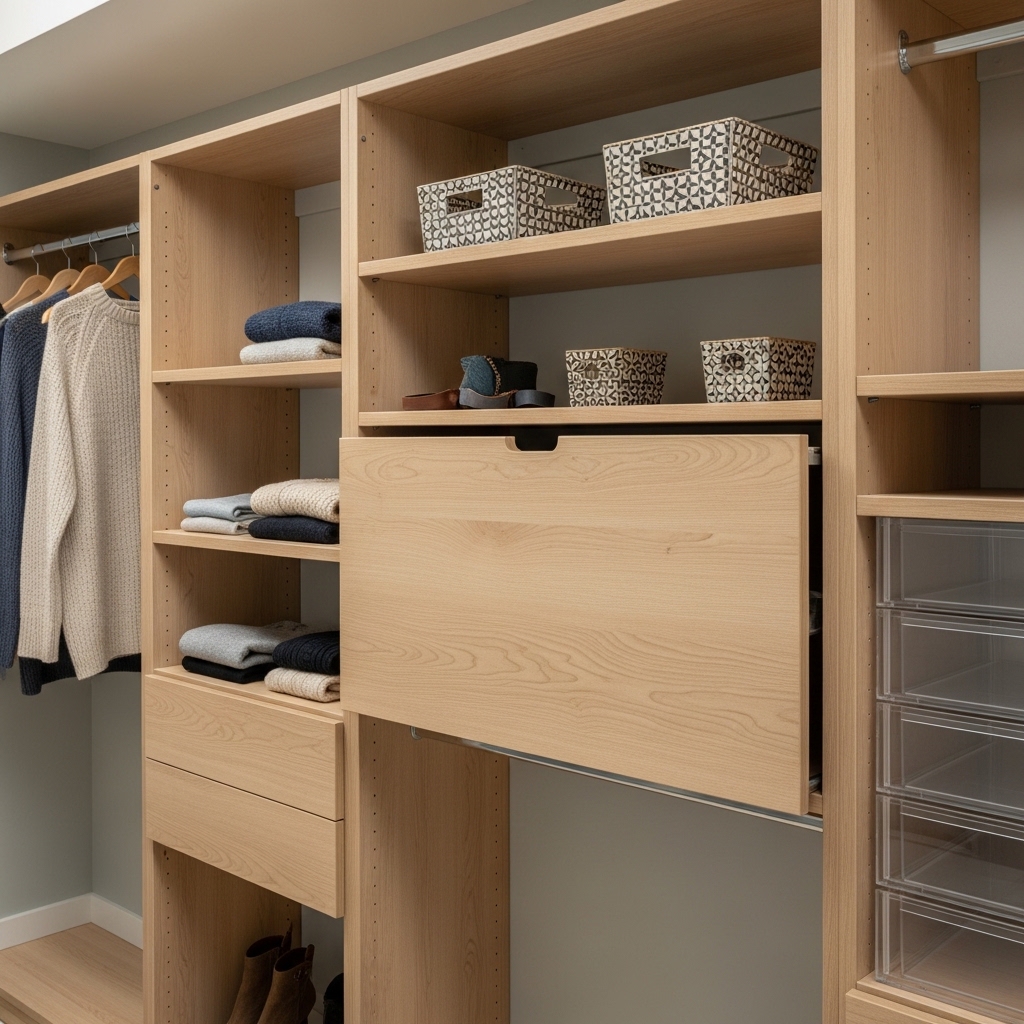
13. Add a Drop-Front Shelf for Small Accessories
Small accessories get lost on deep shelves. They slide to the back. You never see them again.
Install a drop-front shelf that tilts forward when you pull it.
The tilted front brings small items to you. No reaching into dark corners. No lost accessories.
Drop-front shelves are perfect for jewelry boxes, sunglasses, and small clutches.
Pro Tip: Use drop-front shelves at chest height. Eye level is ideal for small, valuable items.
Mistake to Avoid: Do not store heavy items on drop-front shelves. The tilting mechanism is designed for lightweight accessories only.
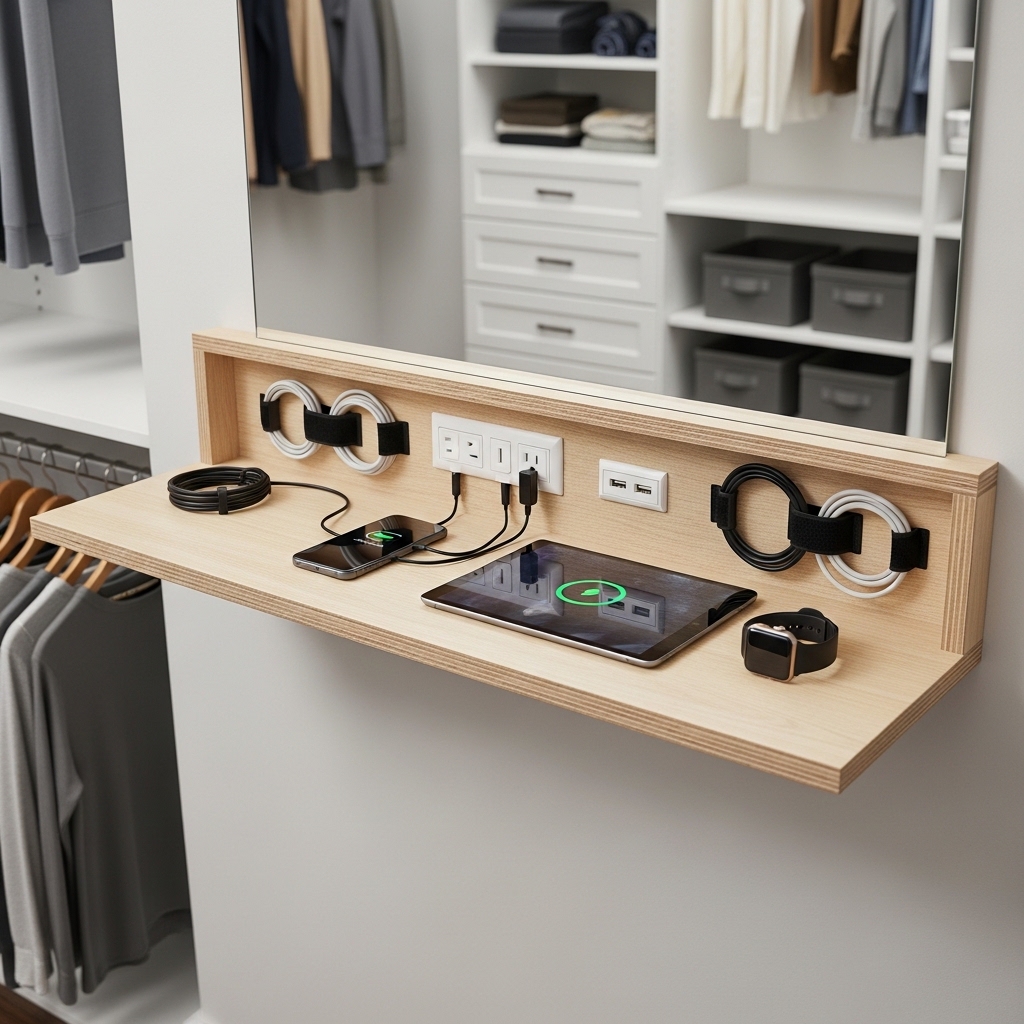
14. Install a Charging Shelf for Electronics
Your closet can charge your devices. Your nightstand should not be your only charging station.
Install a shelf with a built-in power strip or a small cutout for charging cords.
Store your tablet, e-reader, or backup phone on the shelf while they charge.
A charging shelf keeps devices off your nightstand and out of sight while they power up.
Pro Tip: Use a shelf with a lip on the front edge. The lip prevents devices from sliding off when you pull cords.
Mistake to Avoid: Do not install a charging shelf near hanging clothes. Heat from charging devices can damage fabrics over time.
15. Use a Hanging Shelf Organizer from Your Rod
You need more shelves. You cannot install permanent shelves in a rental closet.
Buy a fabric hanging shelf organizer with three to five tiers. Hang it from your existing rod.
Each tier becomes a shelf for folded items. T-shirts. Sweaters. Jeans. Pajamas.
A hanging organizer adds shelf space without any installation. Perfect for renters.
Pro Tip: Choose an organizer with reinforced fabric at the tiers. Reinforced tiers hold heavier items without sagging.
Mistake to Avoid: Do not overload the bottom tier. Heavy bottom tiers pull the entire organizer downward over time.
16. Add a Pull-Out Shelf Inside a Deep Cabinet
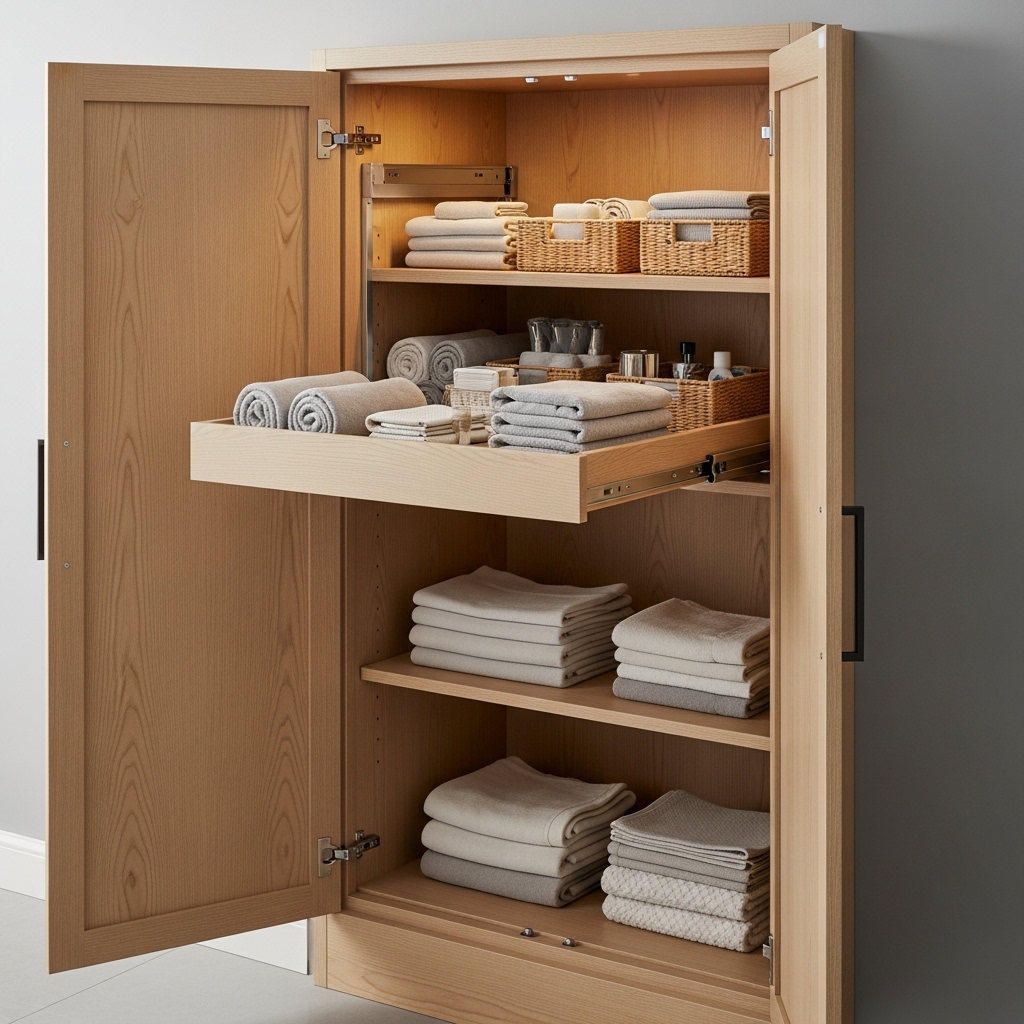
Deep cabinets are useless. Items in the back are gone forever. You buy duplicates.
Install a pull-out shelf on slides inside your deep cabinet or closet bay.
Pull the shelf out to access everything. The shelf brings items in the back to you.
Pull-out shelves turn dead deep space into usable storage. No more lost items.
Pro Tip: Install pull-out shelves at multiple heights. One for shoes. One for bags. One for folded items.
Mistake to Avoid: Do not overload your pull-out shelf. Heavy shelves are difficult to slide and strain the hardware.
17. Install a Shelf Below Your Short Hanging Clothes
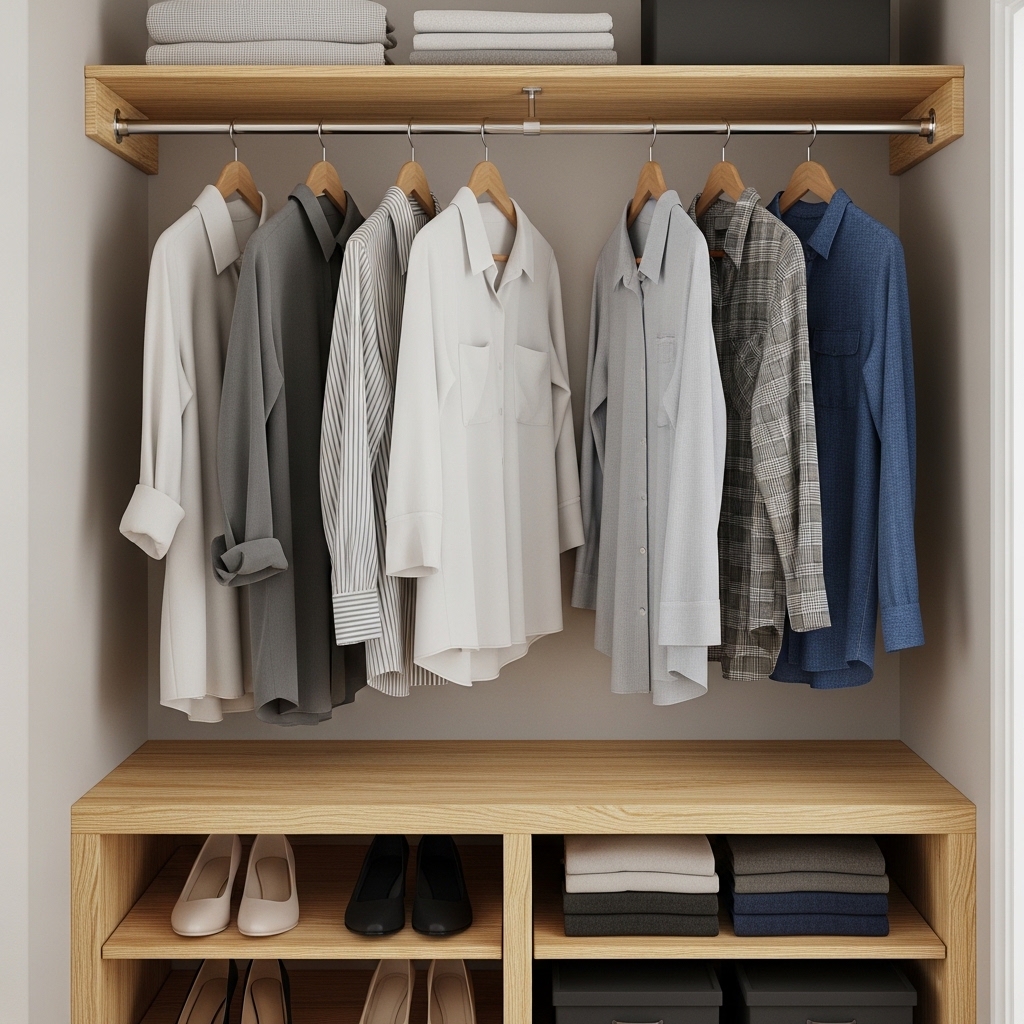
Look at the space between your short hanging clothes and the floor. That is empty.
Measure that vertical space. Install a shelf directly below your short hanging items.
Use the shelf for shoes, bins, or folded items. The shelf sits exactly where empty air used to be.
You added a shelf without losing any hanging space. That is a pure storage gain.
Pro Tip: Leave 12 inches of clearance between your bottom rod and this new shelf. Pants need room to hang freely.
Mistake to Avoid: Do not install this shelf so high that it touches your hanging clothes. Clothes need air circulation.
18. Use a Spice Rack as a Narrow Shelf on Your Wall
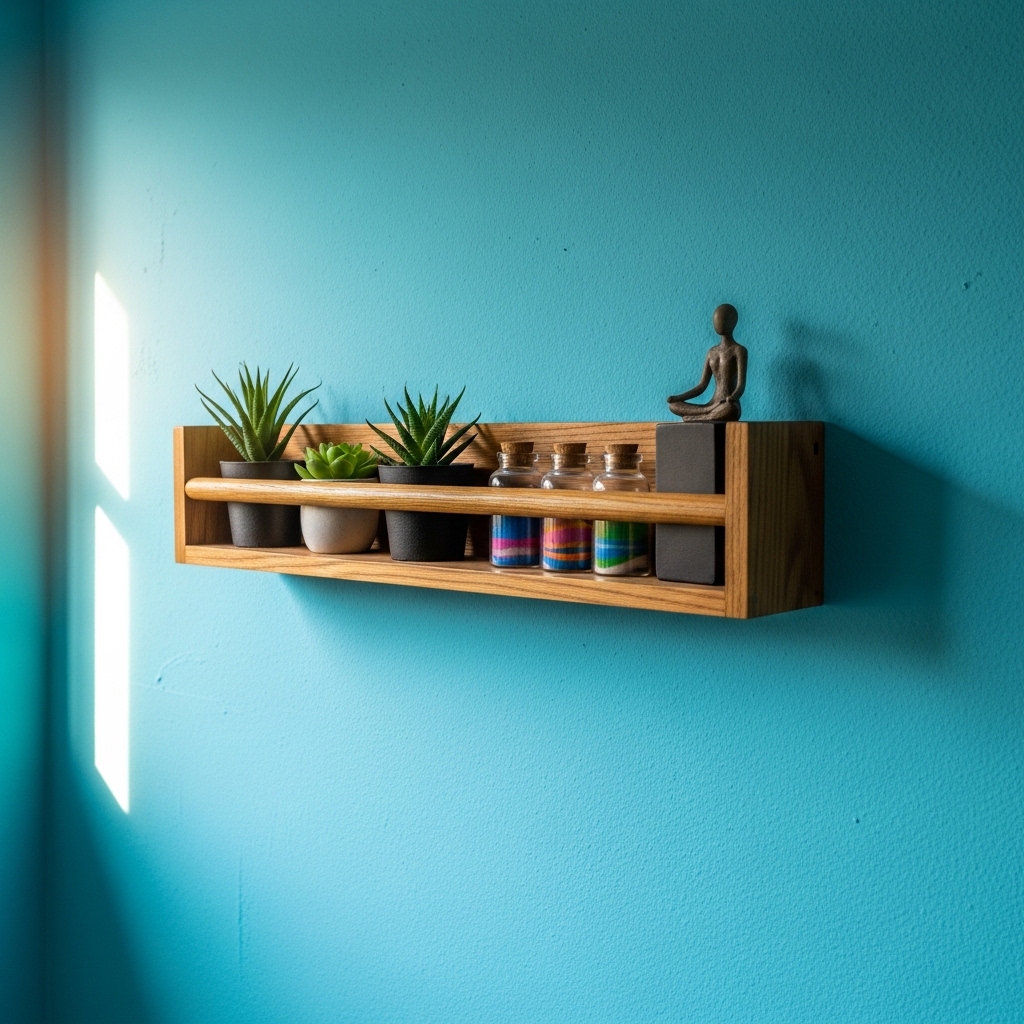
Standard shelves are too deep for small items like nail polish, lotion, or perfume bottles.
Mount a wall-mounted spice rack on your closet wall. Spice racks are only three inches deep.
Use the small shelves for tiny items that get lost on deep standard shelves.
A spice rack turns a narrow wall strip into usable shelf space.
Pro Tip: Paint your spice rack the same color as your wall. It blends in and disappears visually.
Mistake to Avoid: Do not use a spice rack for heavy items. Spice racks are designed for lightweight jars only.
19. Install a Tilt-Out Shelf for Laundry Supplies
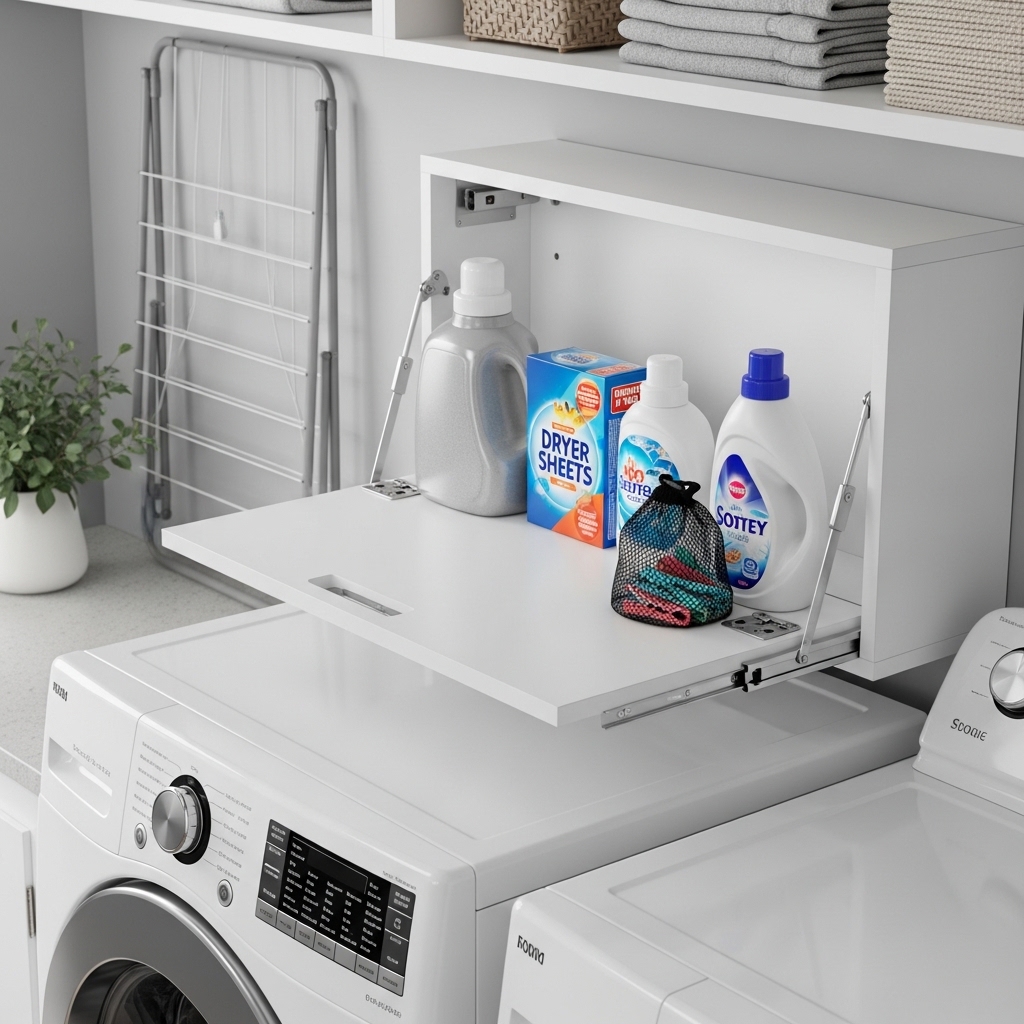
Laundry supplies are bulky. They take up prime shelf space. They look messy.
Install a tilt-out shelf inside a shallow cabinet or on a wall.
The shelf tilts forward when you pull it. Your detergent and supplies come to you.
Push the shelf back in. The supplies disappear. Your closet looks clean.
Pro Tip: Use a tilt-out shelf for daily supplies. Detergent. Dryer sheets. Stain spray. Keep them accessible but hidden.
Mistake to Avoid: Do not store heavy gallon jugs on a tilt-out shelf. The tilting mechanism cannot support that weight.
20. Label Every Shelf Edge for Family Accountability
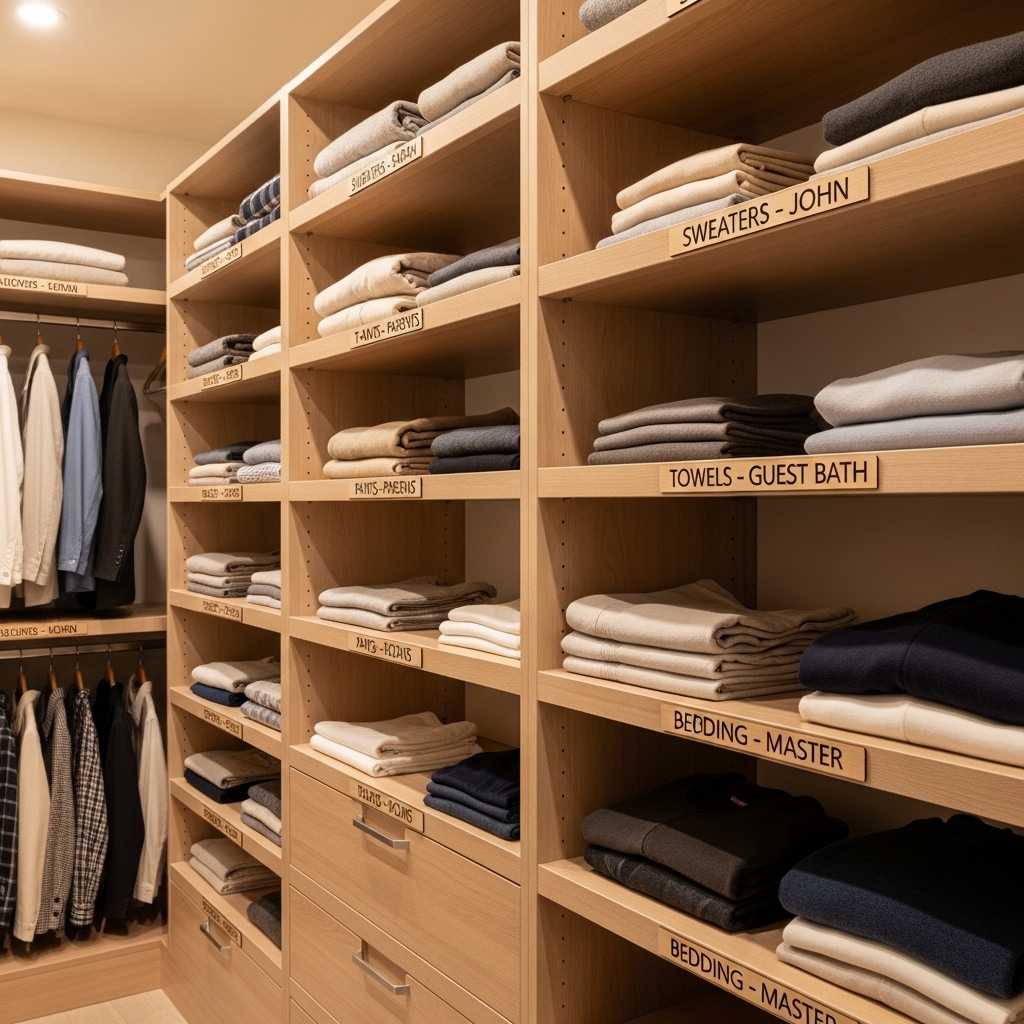
You know where things belong. Your partner and children do not have that same knowledge.
Use a label maker to create simple, bold labels on the front edge of each shelf.
“T-shirts.” “Sweaters.” “Jeans.” “Handbags.” “Shoes.” “Off-Season.”
Labels turn your organization system into a family system. Anyone can put things away correctly.
Pro Tip: Use large, bold fonts on your labels. Small fancy fonts look nice but are hard to read from a standing position.
Mistake to Avoid: Do not label every single item on a shelf. Label the shelf itself. That is enough for anyone to understand.
Conclusion
Your closet shelves are not the problem. How you use them is the problem. That can change.
The twenty ideas above give you completely fresh approaches to closet shelving.
Install adjustable track shelving for infinite flexibility. Your shelves adapt to you, not the other way.
Create a shoe ledge that angles downward. See the toe of every shoe at a single glance.
Stack two short shelves instead of one tall shelf. Short stacks are stable. Tall stacks are not.
Install a pull-out wire basket shelf for dirty laundry. Dirty clothes disappear from sight.
Add a narrow shelf between your wall and your rod. Capture that gap for small items.
Use wire shelving for better air circulation. Wire prevents mildew. Dust falls through.
Install a shelf above your closet door. That empty space is free real estate.
Create a folding shelf that flips down from the wall. Fold when you need it. Hide it when you do not.
Add a valet rod shelf with built-in hanging hook. Plan tomorrow’s outfit without cluttering your main rod.
Stack clear shoe boxes on deep shelves. Deep shelves finally work for you.
Install a divided shelf for handbags. Each bag in its own cubby. No crushing.
Use a Lazy Susan on a corner shelf. Dead corners become accessible storage.
Add a drop-front shelf for small accessories. Small items come to you instead of hiding in back.
Install a charging shelf for electronics. Charge your devices inside your closet.
Use a hanging shelf organizer from your rod. Add shelf space without any installation.
Add a pull-out shelf inside a deep cabinet. Pull-out shelves bring back row items to you.
Install a shelf below your short hanging clothes. Capture that empty air for storage.
Use a spice rack as a narrow shelf on your wall. Tiny items finally have a home.
Install a tilt-out shelf for laundry supplies. Supplies disappear when not in use.
Label every shelf edge for family accountability. Labels turn your system into a family system.
Start with one shelving idea this weekend. Install adjustable tracks. Add a pull-out basket.
Then add another idea next month. Your closet should evolve as your storage needs change.
Empty walls are wasted walls. Every inch of vertical space can become valuable shelving.
Take back your closet starting today. Smart shelving is finally waiting for you.