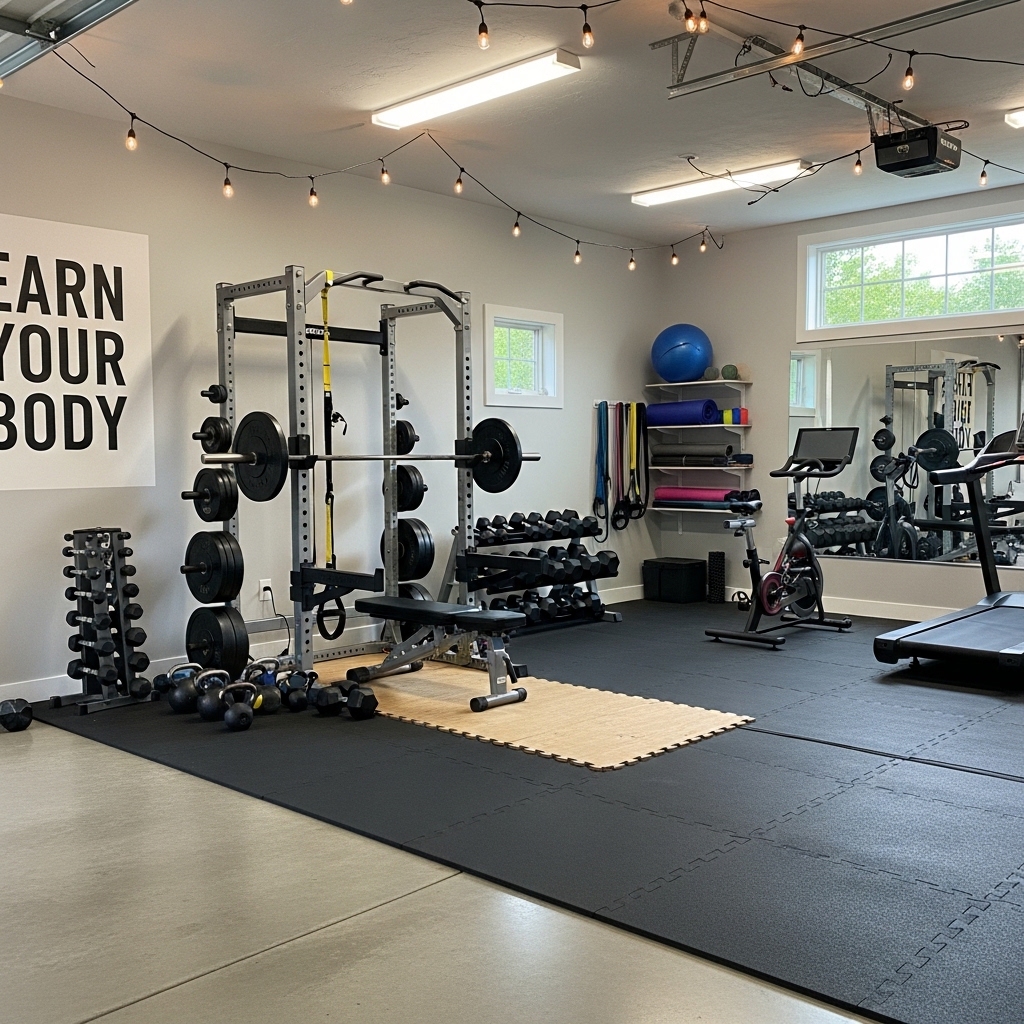
20 Garage Gym Ideas That Turn Your Concrete Space into a Fitness Sanctuary You Will Actually Use
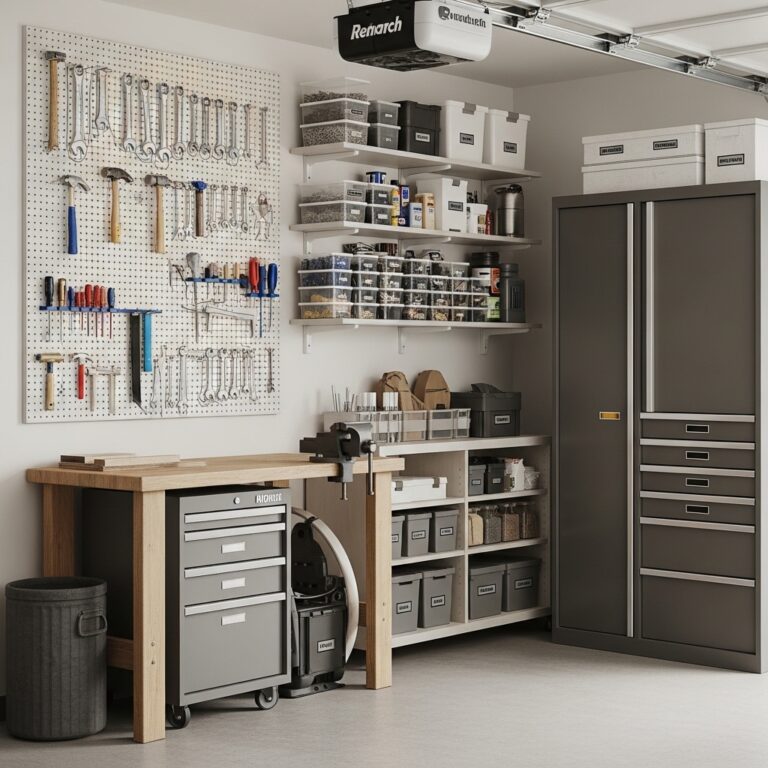
You have a garage. You have dreams of working out at home. But right now, your garage holds boxes and dust.
A garage gym sounds amazing until you realize the space is cold, dark, and completely uninspiring.
The difference between a dream and reality comes down to smart design choices that cost little money.
You do not need a professional fitness center. You need a functional space that makes you want to train.
Small upgrades change everything. Better lighting. Smarter flooring. Organized equipment. Real motivation.
This guide delivers 20 garage gym ideas that turn your concrete space into a fitness sanctuary you will actually use.
From flooring solutions to storage systems, each idea brings you closer to your home workout goals.
1. Lay Down Rubber Stall Mats for a True Gym Floor
Concrete floors destroy your joints. Dropped weights crack the surface. Cold seeps through your shoes.
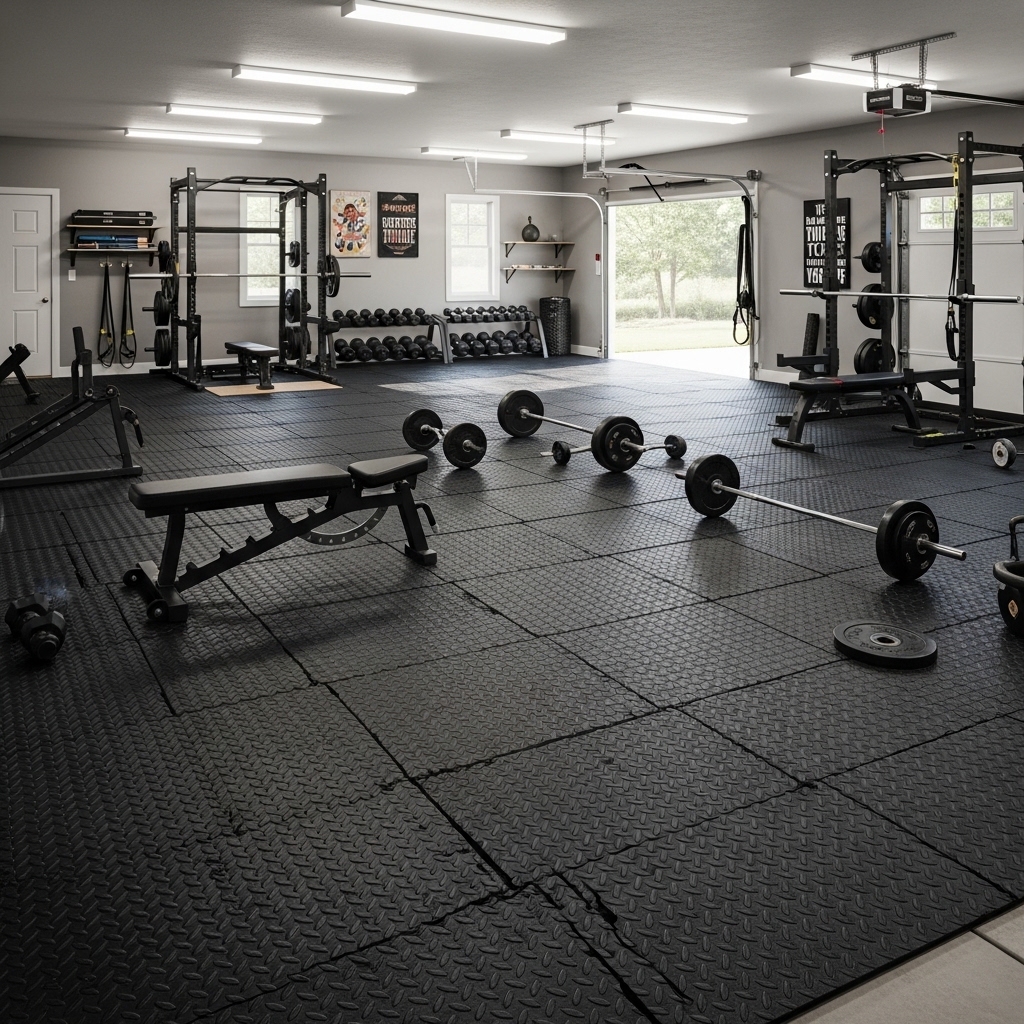
Buy rubber stall mats from a farm supply store. They are cheaper than gym flooring and exactly the same material.
Lay the mats across your entire workout area. They absorb impact. They insulate against cold. They protect your weights.
Your knees and your concrete will thank you after every single squat session.
Pro Tip: Let rubber mats air out in the sun for two days before installing. New rubber has a strong smell that fades with fresh air.
Mistake to Avoid: Do not buy interlocking foam tiles for heavy lifting. Foam compresses under weight and creates unstable footing.
2. Install Bright LED Shop Lights Over Your Training Area
Garages are dark. Dark spaces kill motivation. You cannot see your form. You feel sluggish.
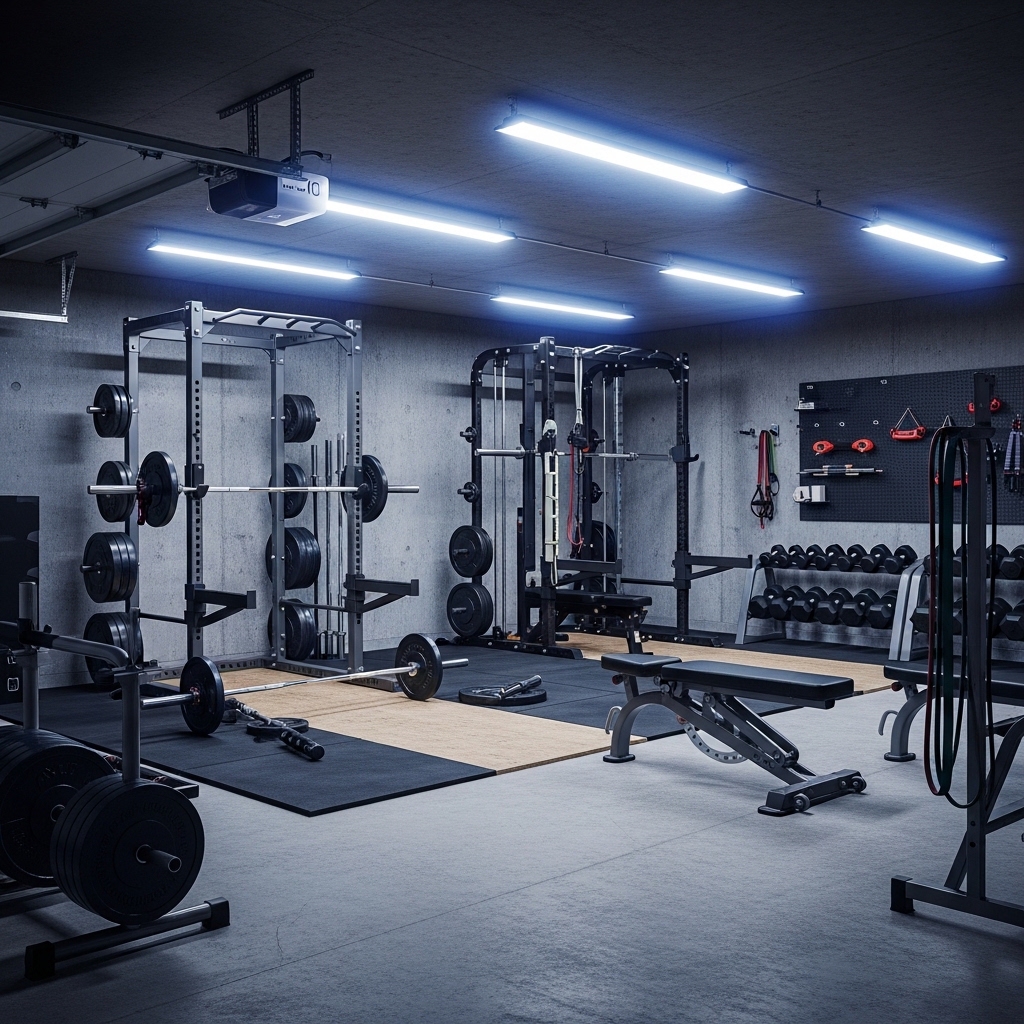
Replace your single bulb with four-foot LED shop lights. Daisy-chain them across your ceiling.
Bright white light at 5000K mimics daylight. Your space feels energized. Your form becomes visible.
Dim lighting makes you tired before you start. Bright light wakes up your brain and your muscles.
Pro Tip: Install lights directly above your main lifting area. Squat racks and bench presses need the most illumination.
Mistake to Avoid: Do not use warm yellow light in a garage gym. Yellow light makes the space feel sleepy. Cool white is for training.
3. Mount a Pull-Up Bar to Your Ceiling Joists
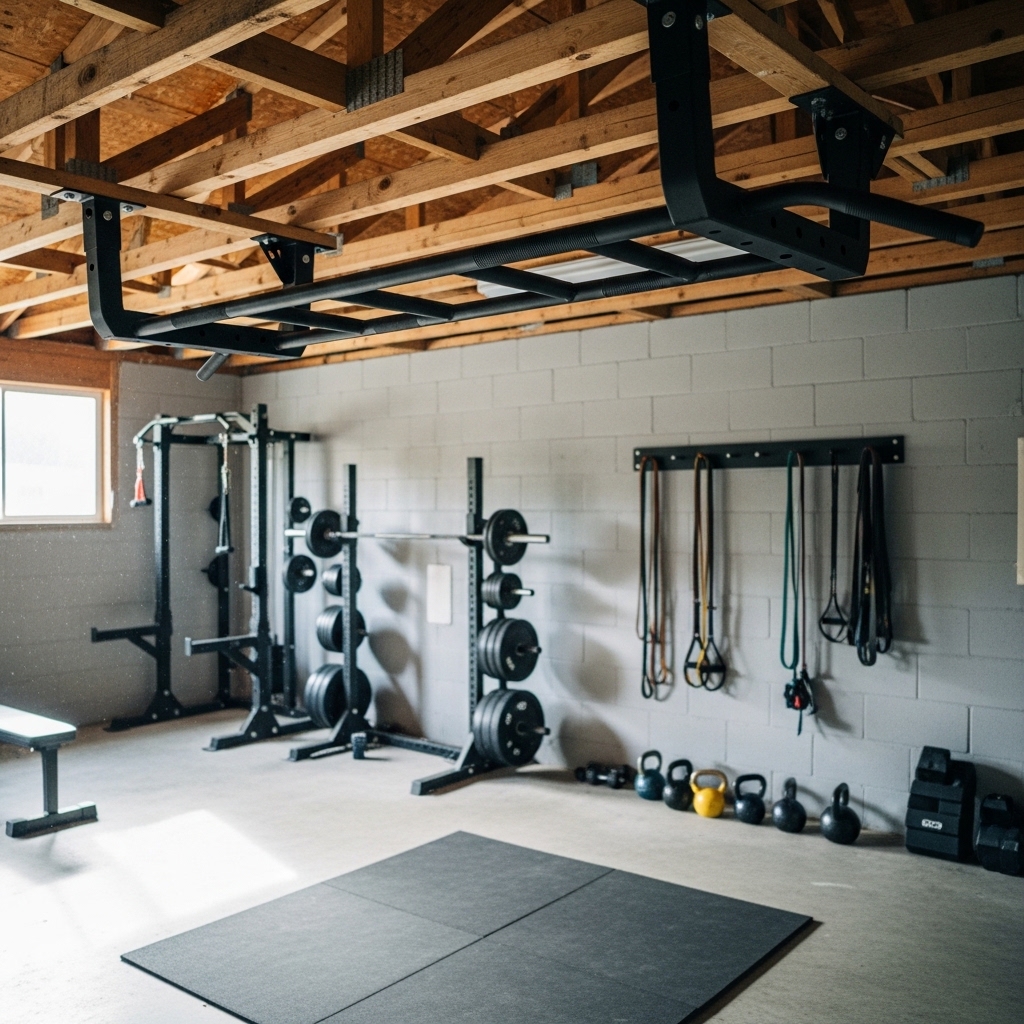
Doorframe pull-up bars wobble. They damage your door frame. They limit your grip positions.
Find your ceiling joists with a stud finder. Mount a wall-mounted or ceiling-mounted pull-up bar.
Bolt the bar directly into the joists. The bar will not move. You can kip. You can add weight.
A solid pull-up bar opens endless upper body exercises. Rows. Leg raises. Hangs. Muscle-ups.
Pro Tip: Install your bar at least 12 inches from the wall. This clearance allows full range of motion for pull-ups and muscle-ups.
Mistake to Avoid: Do not mount a pull-up bar into drywall alone. Drywall cannot support body weight. You must hit solid wood joists.
4. Create a Wall-Mounted Dumbbell Rack
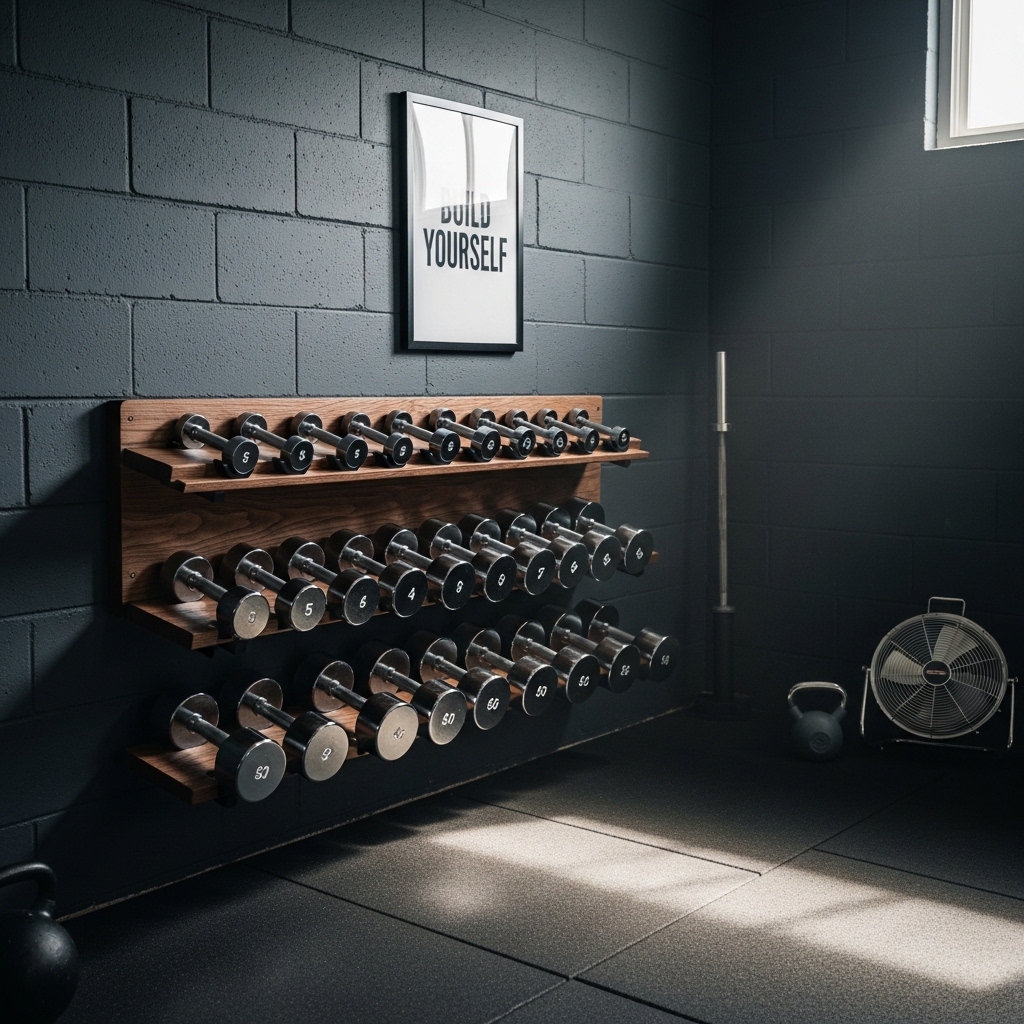
Dumbbells on the floor are trip hazards. You step over them. You kick them. You lose pairs.
Build or buy a wall-mounted dumbbell rack with angled shelves. Each pair has its own dedicated spot.
Arrange dumbbells from lightest on top to heaviest on bottom. The heaviest weights stay closest to the floor.
A wall rack keeps your floor clear and your weights organized by size.
Pro Tip: Leave two inches of space between each dumbbell pair. Easy grab in and out without banging knuckles.
Mistake to Avoid: Do not store dumbbells on a floor rack. Floor racks consume valuable workout space that wall racks preserve.
5. Paint One Wall a Bold Color for Energy
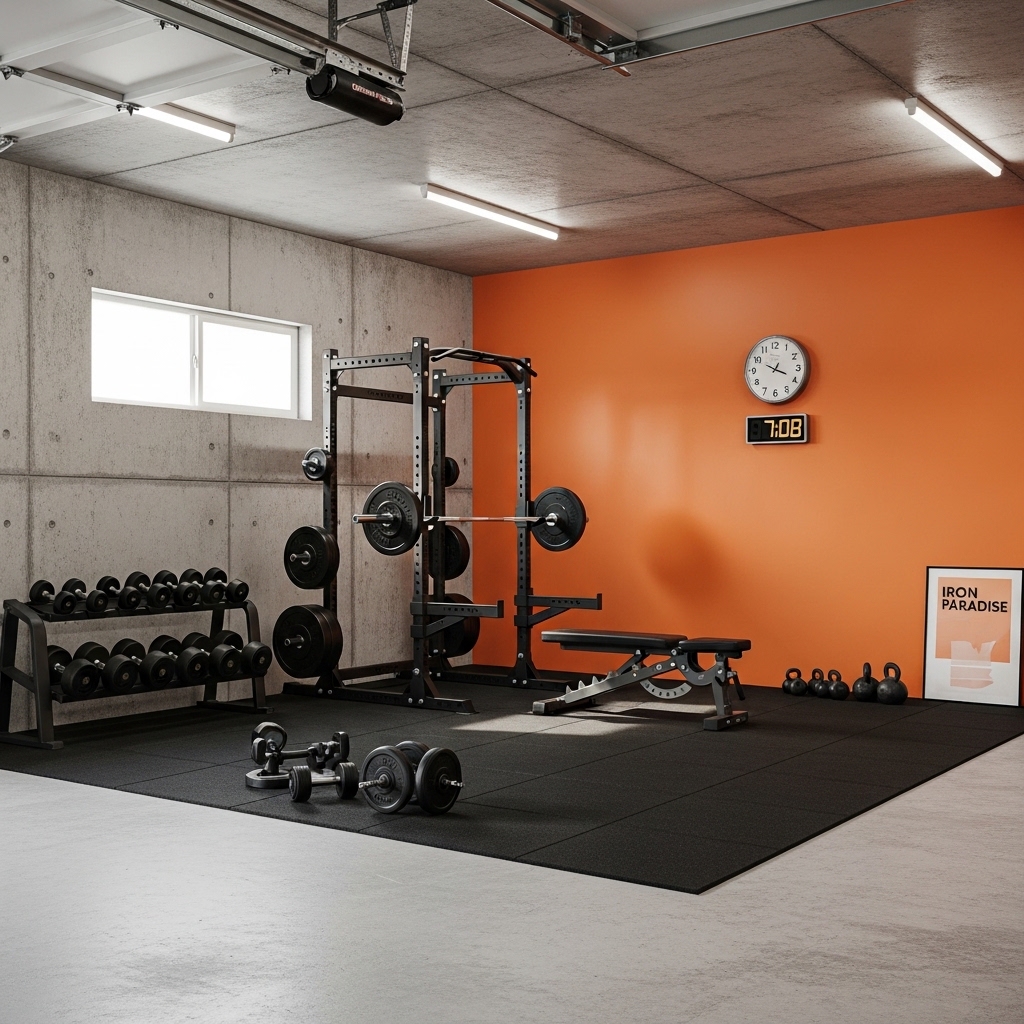
Gray concrete walls are depressing. Your garage feels like a prison. Your workout feels like punishment.
Paint one accent wall a bold, energetic color. Bright orange. Deep red. Electric blue. Vibrant yellow.
That colored wall becomes your focal point. Your eyes go there between sets. Your energy stays high.
Neutral walls are fine for storage. Bold walls are for spaces where you push your limits.
Pro Tip: Paint the wall you face during your main lifts. Squat facing the bold wall. Deadlift facing the bold wall.
Mistake to Avoid: Do not paint all four walls bold. One accent wall is energizing. Four bold walls are overwhelming and chaotic.
6. Install a Full-Length Mirror on Your Wall
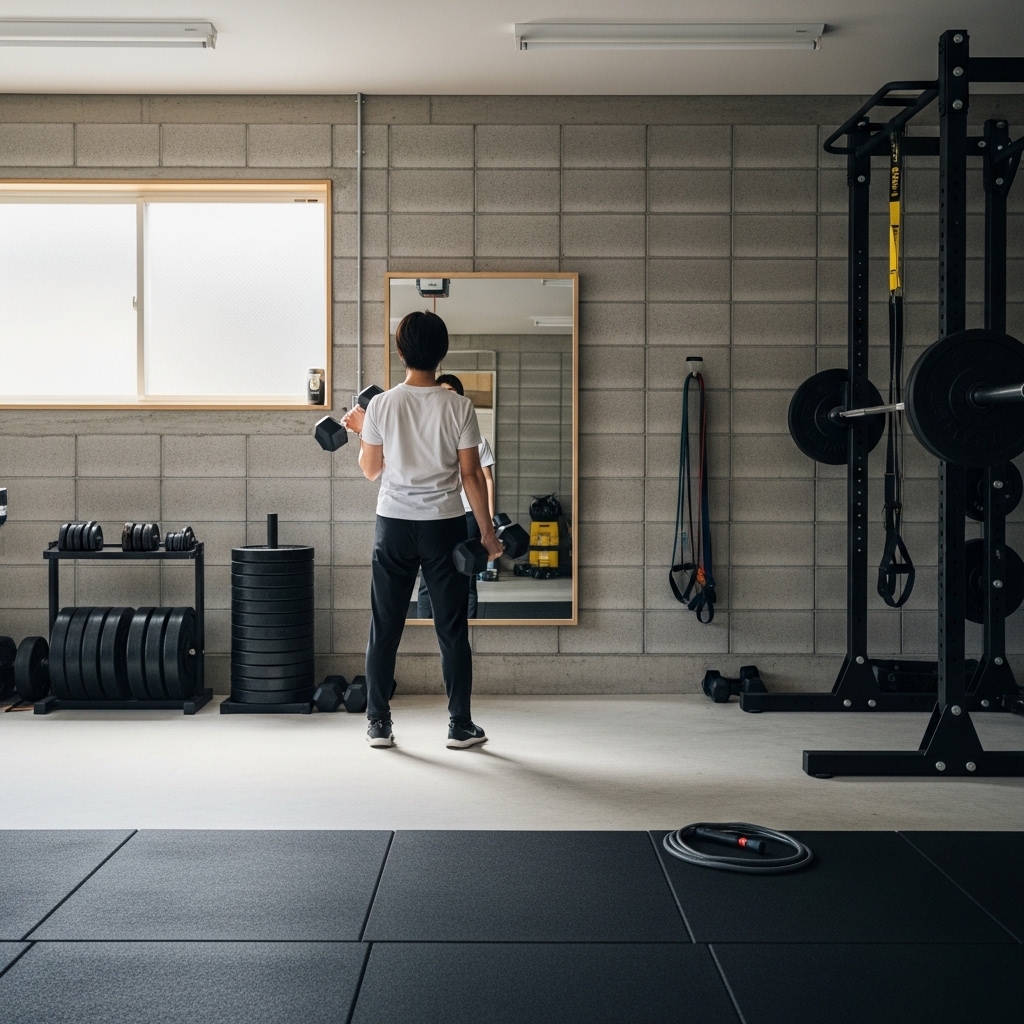
You cannot fix your form if you cannot see yourself. Bad form leads to injury and weak results.
Mount a large, shatterproof acrylic mirror on your wall. Make it at least four feet wide.
Position the mirror facing your main lifting area. Watch your squat depth. Check your deadlift back.
A mirror is your cheapest personal trainer. It never lies about your form.
Pro Tip: Install the mirror so the bottom edge is 12 inches from the floor. This height shows your full body from feet to head.
Mistake to Avoid: Do not use glass mirrors in a garage gym. Glass shatters when a weight hits it. Acrylic mirrors are shatterproof.
7. Build a Plywood Lifting Platform for Deadlifts
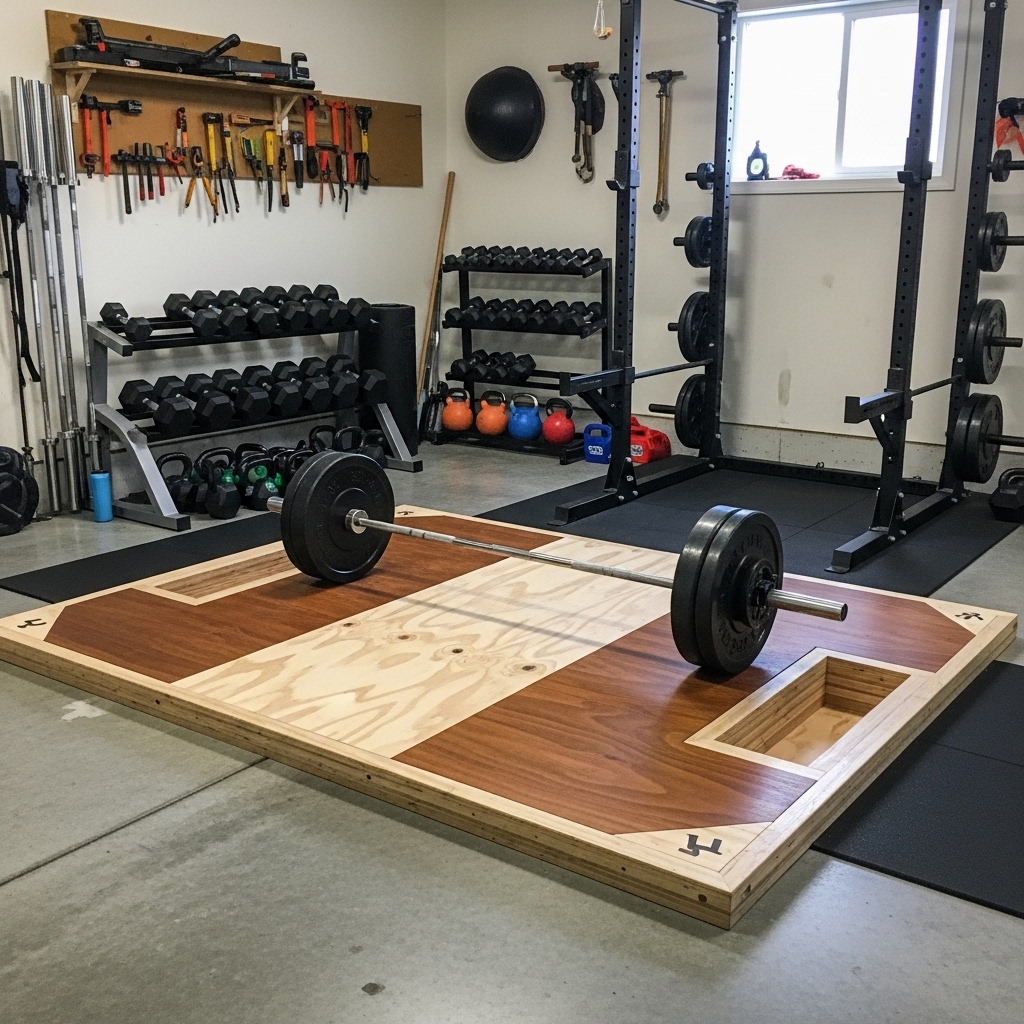
Deadlifting on concrete cracks your floor and damages your plates. Deadlifting on rubber alone still transfers shock.
Build a lifting platform with two layers of plywood and one layer of rubber stall mat in the center.
The plywood absorbs shock. The rubber gives you grip. Your floor stays intact. Your plates stay round.
A platform also defines your deadlift zone. You know exactly where to set up every single time.
Pro Tip: Make your platform eight feet by eight feet. This size accommodates deadlifts, Olympic lifts, and box jumps.
Mistake to Avoid: Do not skip the center rubber strip. Lifting on bare plywood is slippery. Rubber gives you the grip you need.
8. Use a Pegboard for Small Accessories
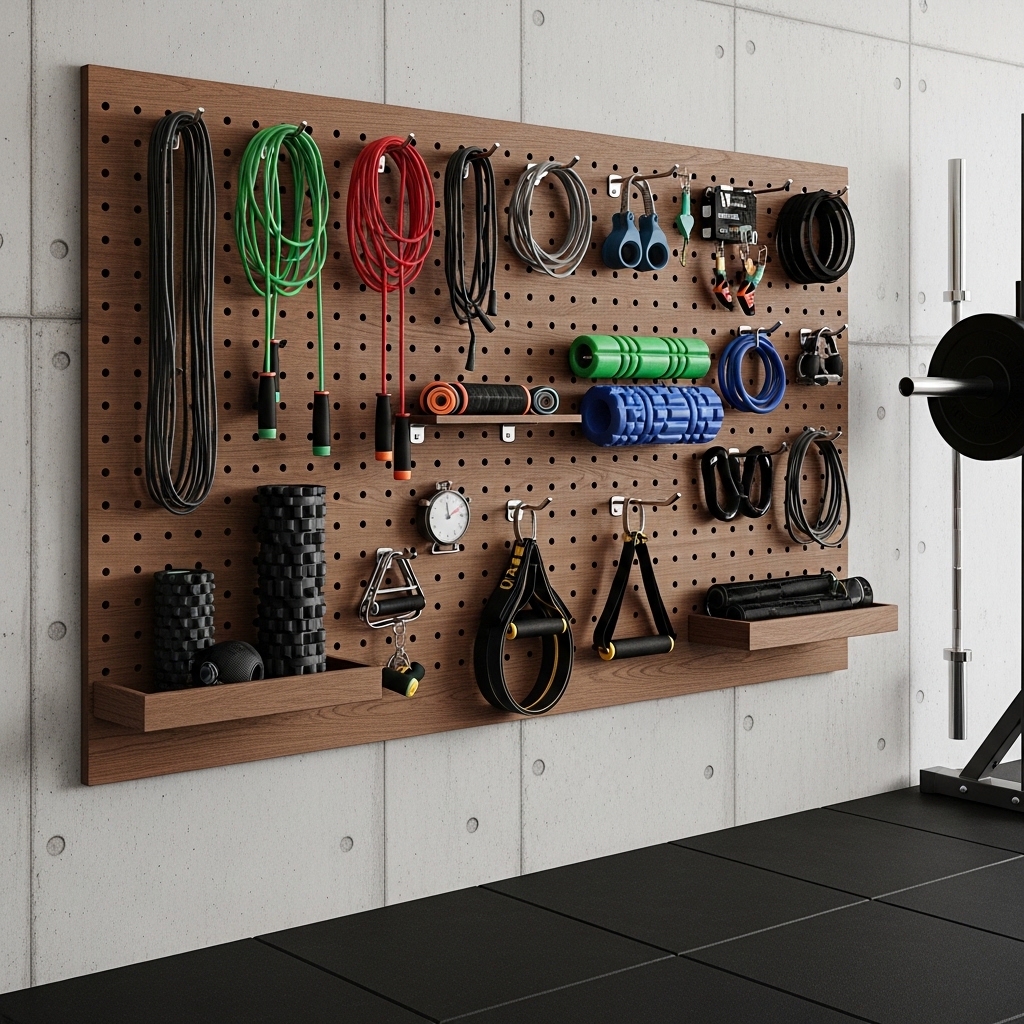
Small items get lost in garage gyms. Chalk bags. Lifting straps. Knee sleeves. Jump ropes.
Mount a large pegboard on your wall. Add hooks for every small accessory.
Hang your chalk bag. Loop your straps. Drape your jump rope. Slide in your resistance bands.
A pegboard keeps your small gear visible and accessible between sets.
Pro Tip: Paint your pegboard the same color as your accent wall. Matching colors create a cohesive, designed look.
Mistake to Avoid: Do not hang heavy items like kettlebells on a pegboard. Pegboard hooks have weight limits. Use floor storage for heavy gear.
9. Install a Suspension Trainer from Your Ceiling
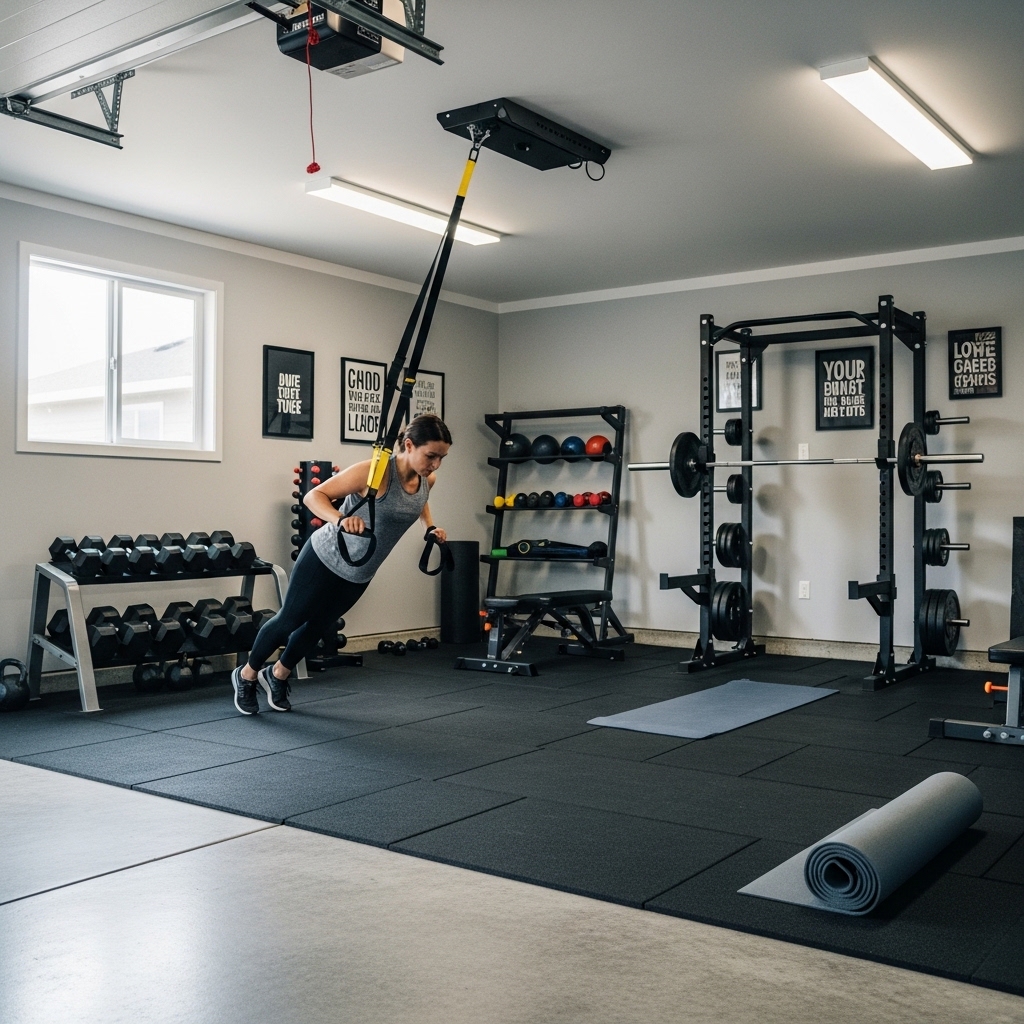
TRX-style suspension trainers need a secure anchor point. Your ceiling joists are perfect for this.
Bolt a suspension trainer anchor directly into a ceiling joist. Make sure the bolt is rated for 500 pounds.
Hang your suspension trainer from the anchor. Adjust the straps for rows, push-ups, fallouts, and hamstring curls.
Suspension training uses your body weight. It works anywhere. It stores in a small bag.
Pro Tip: Install your anchor over rubber flooring. If you fall, you land on padded surface, not concrete.
Mistake to Avoid: Do not anchor a suspension trainer to a door frame. Door frames are not designed for dynamic body weight loads.
10. Add a Whiteboard for Workout Tracking
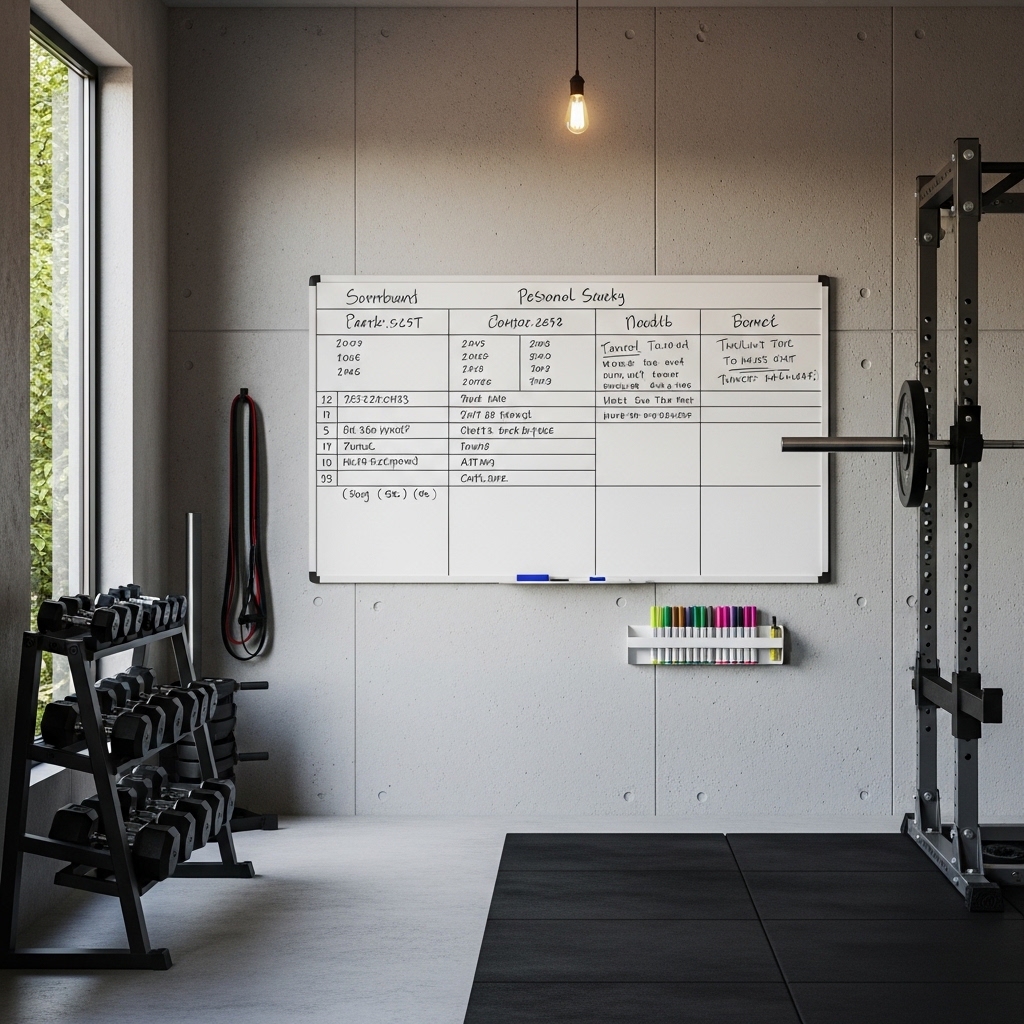
You forget what you lifted last week. You lose track of your progress. You stall without knowing it.
Mount a large whiteboard on your wall. Write your workout plan for the day before you start.
Record your sets, reps, and weights after each exercise. Track your progress over weeks and months.
A whiteboard holds you accountable. You see what you did. You plan what comes next.
Pro Tip: Divide your whiteboard into three sections. Warm-up. Main lifts. Accessory work. Each section has its own space.
Mistake to Avoid: Do not use a small whiteboard. Small boards run out of space. Buy the largest board your wall can fit.
11. Store Kettlebells on a Low, Sturdy Shelf
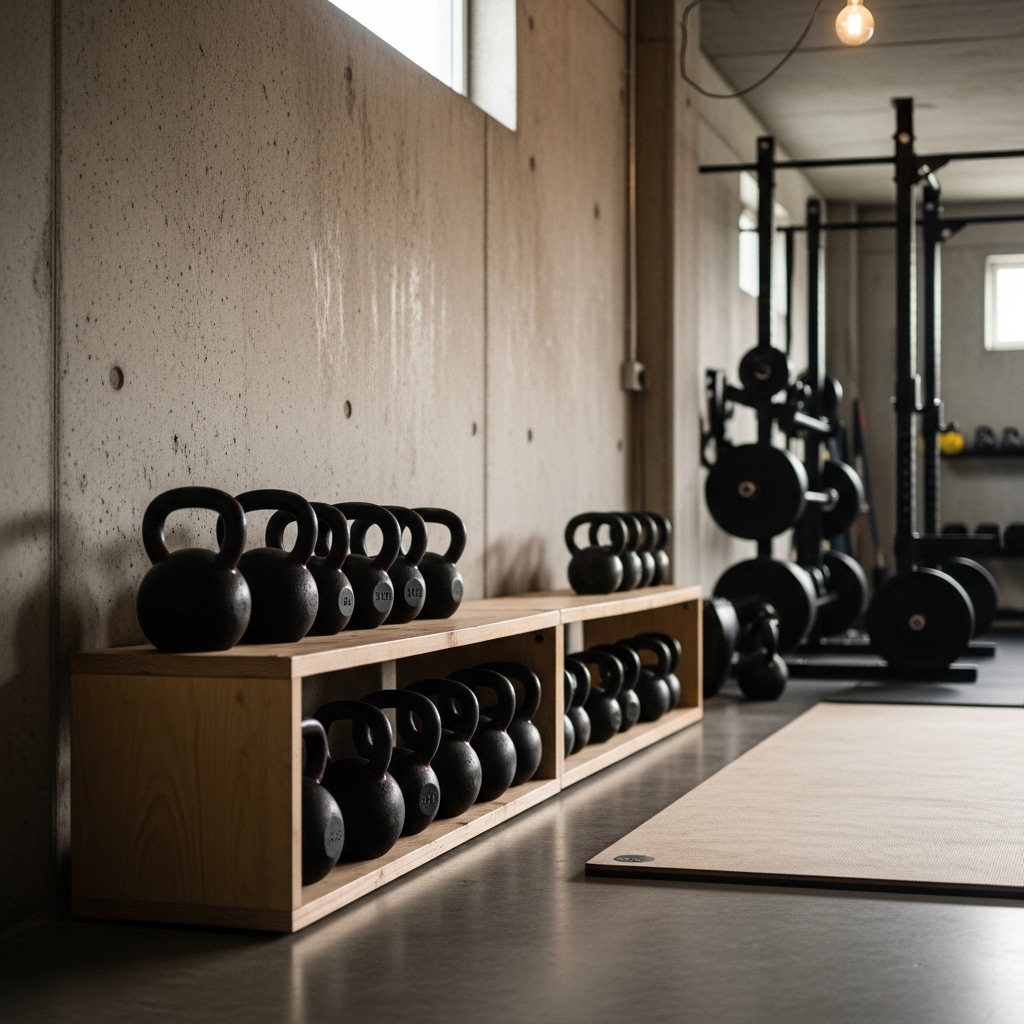
Kettlebells are round. They roll. They are heavy. They hurt when they land on your foot.
Build or buy a low, sturdy shelf specifically for kettlebells. Make the shelf only 12 inches high.
Store each kettlebell in its own cubby or on its own peg. Heaviest bells on the bottom shelf.
A low shelf prevents kettlebells from falling far. Your feet stay safe. Your bells stay organized.
Pro Tip: Arrange kettlebells by weight from left to right. Lightest on the left. Heaviest on the right.
Mistake to Avoid: Do not stack kettlebells on top of each other. Stacked bells fall and damage each other.
12. Hang a Speed Bag Platform from Your Ceiling
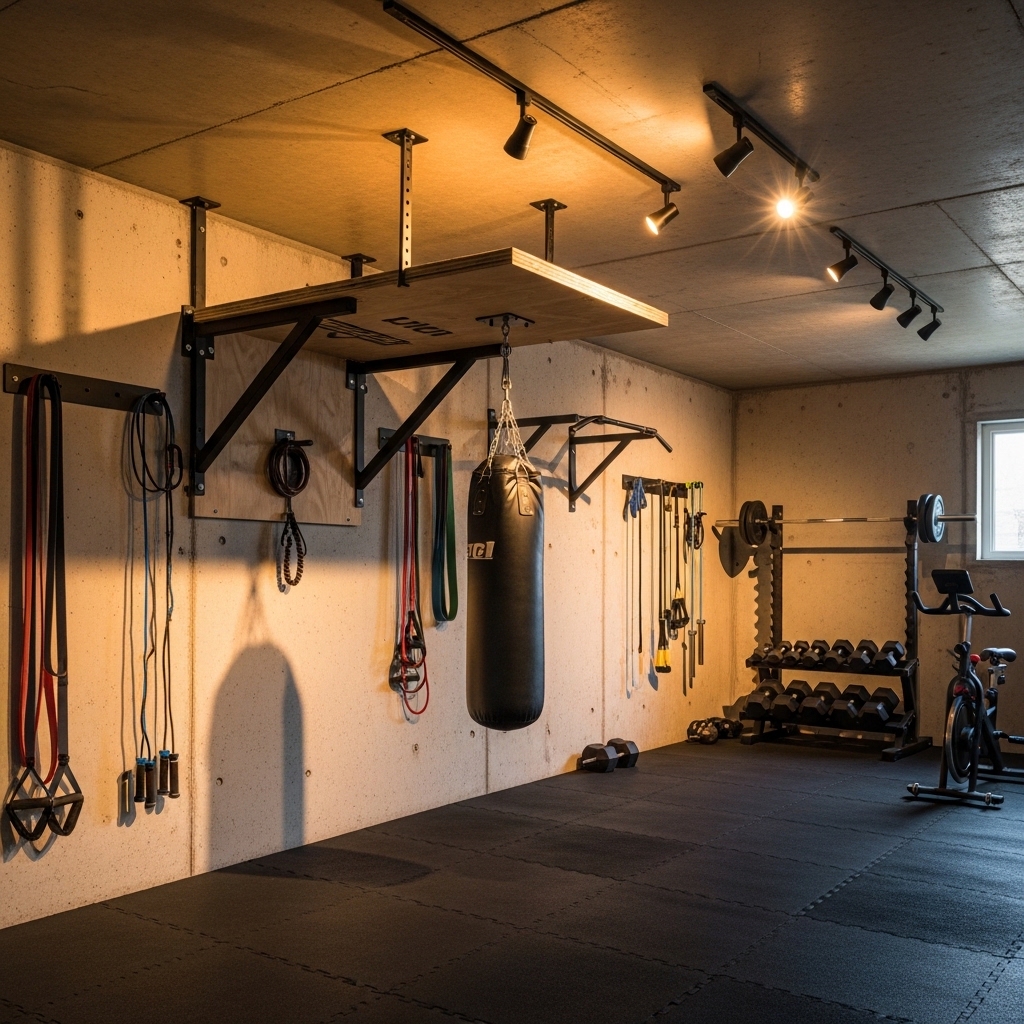
Boxing training belongs in a garage gym. The ceiling height is perfect for a speed bag.
Mount a speed bag platform to your ceiling joists. The platform hangs down to the correct height.
Attach your speed bag. Swivel, punch, and build shoulder endurance and hand-eye coordination.
A speed bag adds variety to your cardio training. It also looks incredibly cool in your garage.
Pro Tip: Install the platform at 68 inches from the floor. This height works for most adults between 5’4″ and 6’2″.
Mistake to Avoid: Do not use drywall anchors for a speed bag platform. The constant vibration will pull anchors out of drywall within weeks.
13. Create a Resistance Band Wall
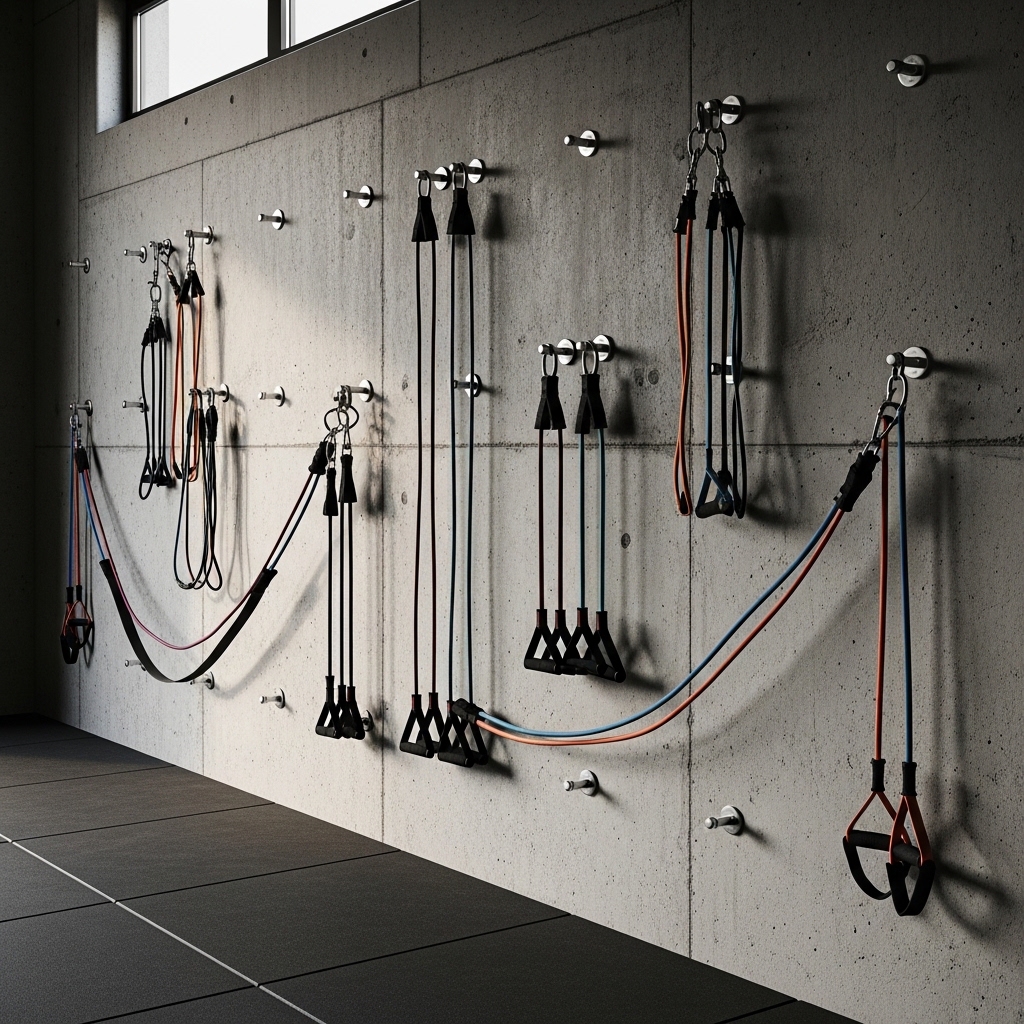
Resistance bands tangle. They get lost in bins. You buy duplicates because you cannot find the band you need.
Install a row of heavy-duty hooks on your wall. Loop each resistance band over its own hook.
Arrange bands by resistance level. Lightest on the left. Heaviest on the right.
A band wall shows you every band you own. No tangling. No lost bands. No duplicate purchases.
Pro Tip: Use color-coded bands. Yellow for light. Green for medium. Red for heavy. Black for extra heavy.
Mistake to Avoid: Do not hang bands in direct sunlight. UV rays degrade rubber over time. Hang them away from windows.
14. Install a Box Fan for Air Circulation
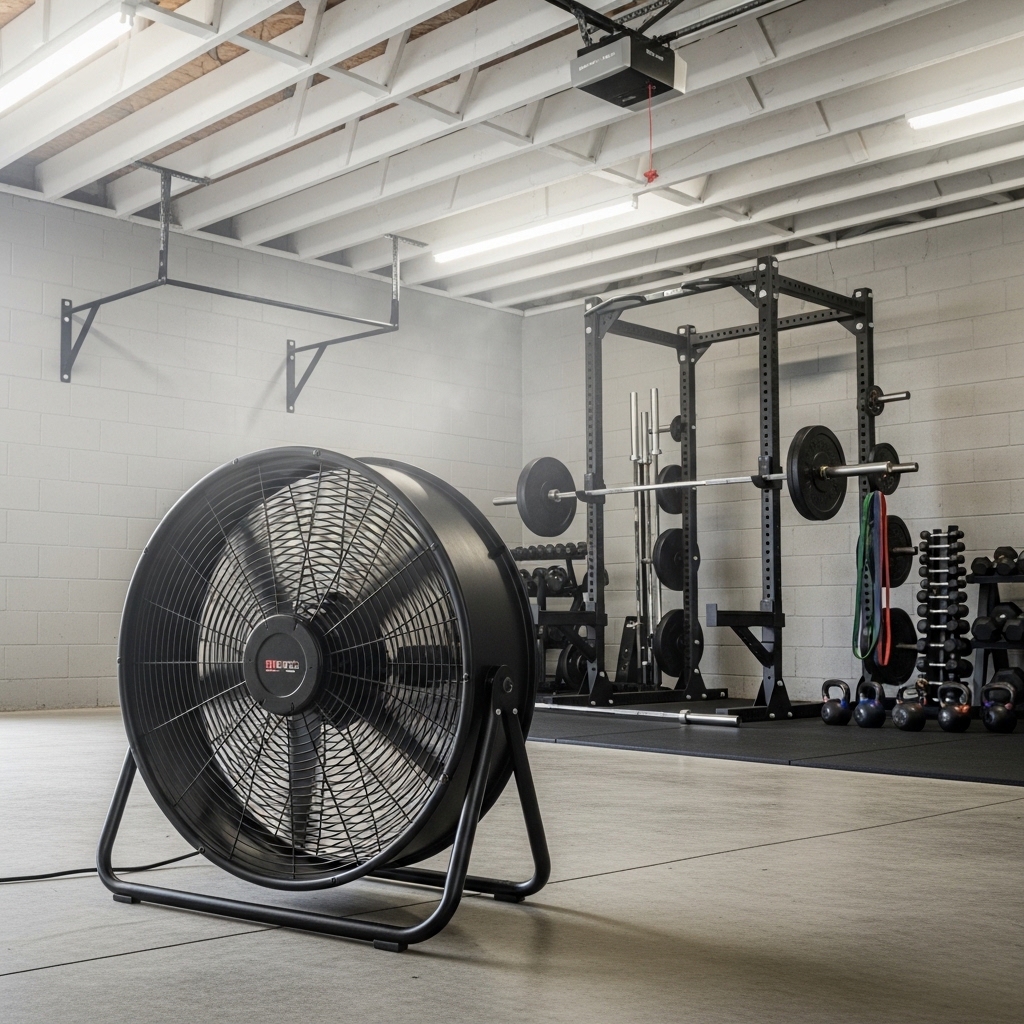
Garages are stuffy. Air gets stale. Sweat hangs in the air. You overheat faster.
Mount a high-velocity box fan on your wall or set one on a low shelf.
Point the fan at your main workout area. Turn it on before you warm up. Feel the air move.
Moving air cools your body, clears your mind, and makes hard sets feel more bearable.
Pro Tip: Install a second fan pointing in the opposite direction. Two fans create cross-circulation and move more air.
Mistake to Avoid: Do not point a fan directly at your face during heavy lifts. Air in your eyes is distracting. Point the fan at your chest.
15. Use a Rolling Cart for Supplements and Towels
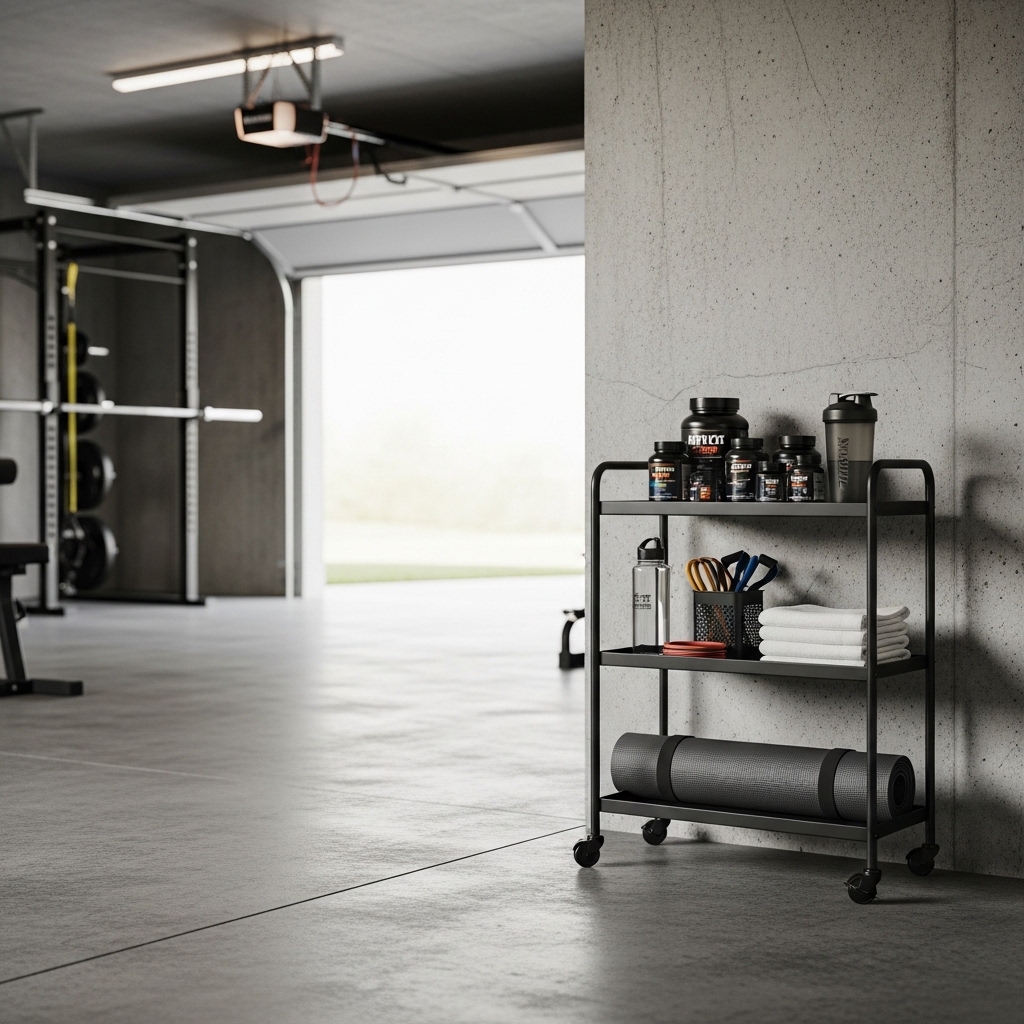
Your protein powder, shaker bottle, and towel end up on the floor or on your weight bench.
Buy a three-tier rolling cart. Top tier for protein and shaker. Middle tier for towel and chalk. Bottom tier for spare clothes.
Roll the cart next to your workout area. Everything you need is within arm’s reach.
A cart keeps your bench clear and your supplements organized.
Pro Tip: Choose a cart with locking casters. Lock the wheels so the cart stays put during heavy breathing and jumping.
Mistake to Avoid: Do not store food on your gym cart. Food crumbs attract pests to your garage. Supplements only.
16. Paint Your Floor with Epoxy Coating
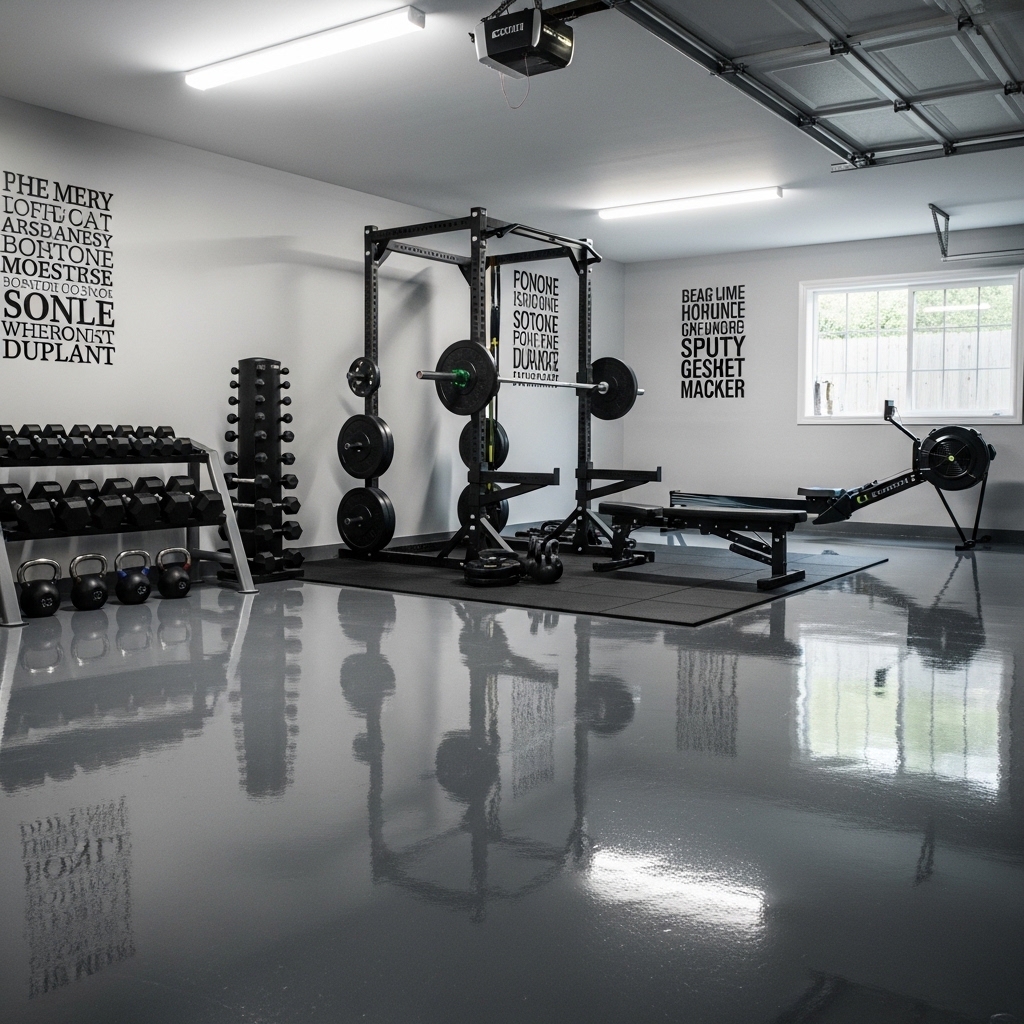
Plain concrete floors are dusty. Dust gets on your shoes. Dust gets on your weights. Dust gets in your lungs.
Apply a two-part epoxy coating to your garage floor. Choose a light gray or beige color.
Epoxy seals the concrete. No more dust. No more stains. Easy to mop.
A coated floor looks professional. It feels clean. It makes you want to train.
Pro Tip: Add anti-slip granules to your epoxy. The granules give you grip during sweaty workouts.
Mistake to Avoid: Do not skip the acid etching step. Etching opens the concrete pores so epoxy bonds properly.
17. Install a Bluetooth Speaker for Workout Music
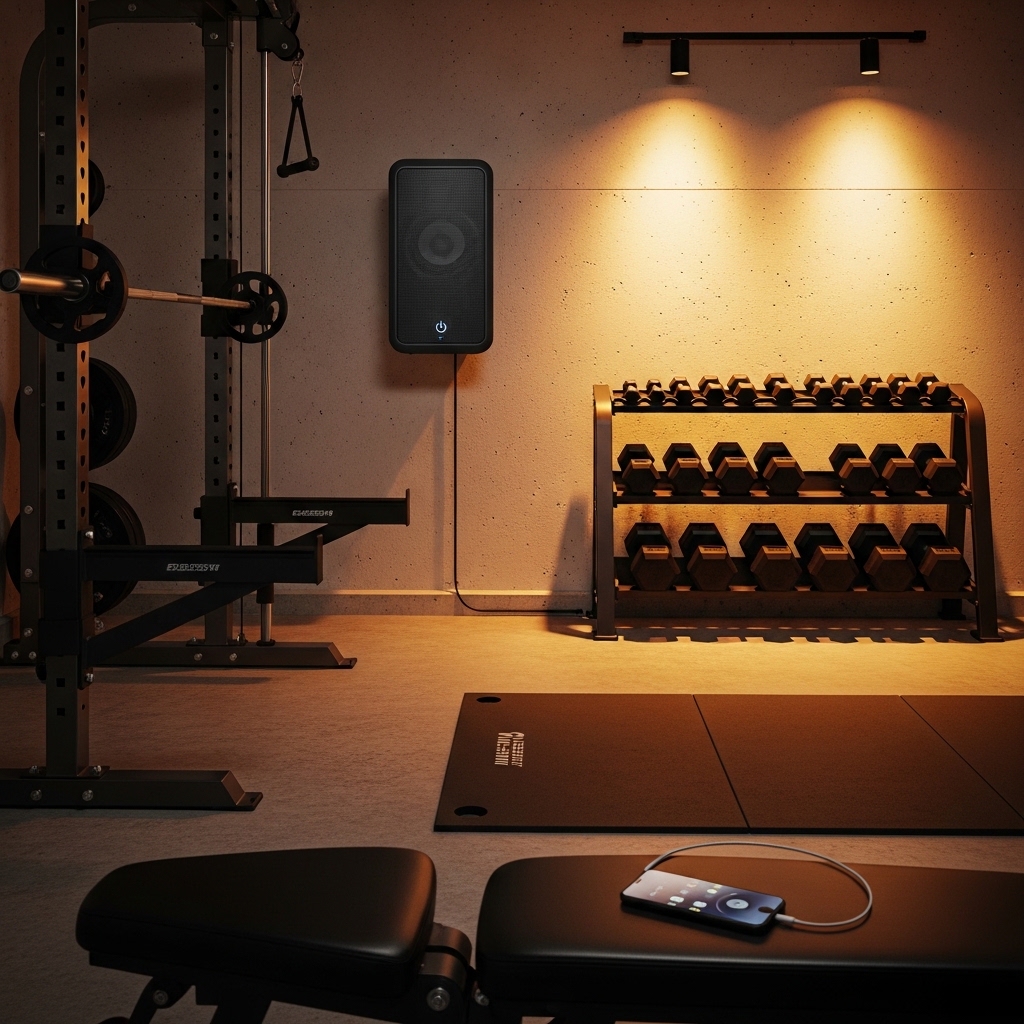
Music fuels your workouts. Your phone speaker is not loud enough. Headphones feel isolating.
Mount a weather-resistant Bluetooth speaker on your wall or shelf. Pair it with your phone.
Crank the volume for heavy sets. Lower it for cool-downs. Music sets the tone for every session.
Good music makes hard workouts feel easier. A good speaker makes good music sound better.
Pro Tip: Choose a speaker with a remote control. Change songs and volume without touching your phone with chalky hands.
Mistake to Avoid: Do not place your speaker on the floor. Floor speakers collect dust and get kicked. Mount it on a wall or shelf.
18. Use Heavy-Duty Shelving for Gear Storage
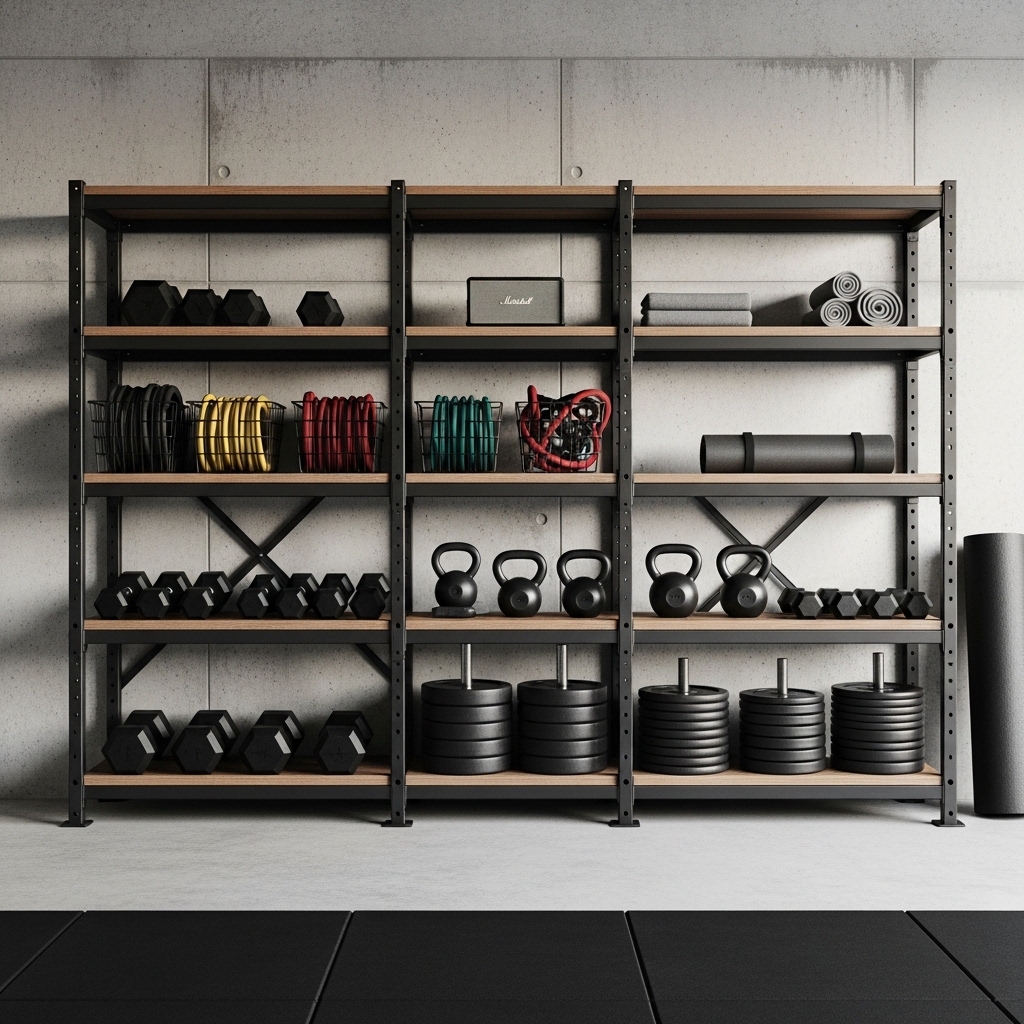
Your gym gear needs a home. Bins on the floor get crushed. Boxes collapse. Nothing stays organized.
Install heavy-duty wire shelving rated for 800 pounds per shelf.
Use clear bins on the shelves for smaller gear. Knee sleeves. Wrist wraps. Lifting belts. Jump ropes.
Heavy-duty shelves hold your entire gym. Your floor stays clear for training.
Pro Tip: Store your most-used gear on the middle shelf. Eye level is easiest to reach between sets.
Mistake to Avoid: Do not buy cheap plastic shelving for a garage gym. Plastic cracks under heavy weight. Steel shelving only.
19. Add a Timer or Clock on Your Wall
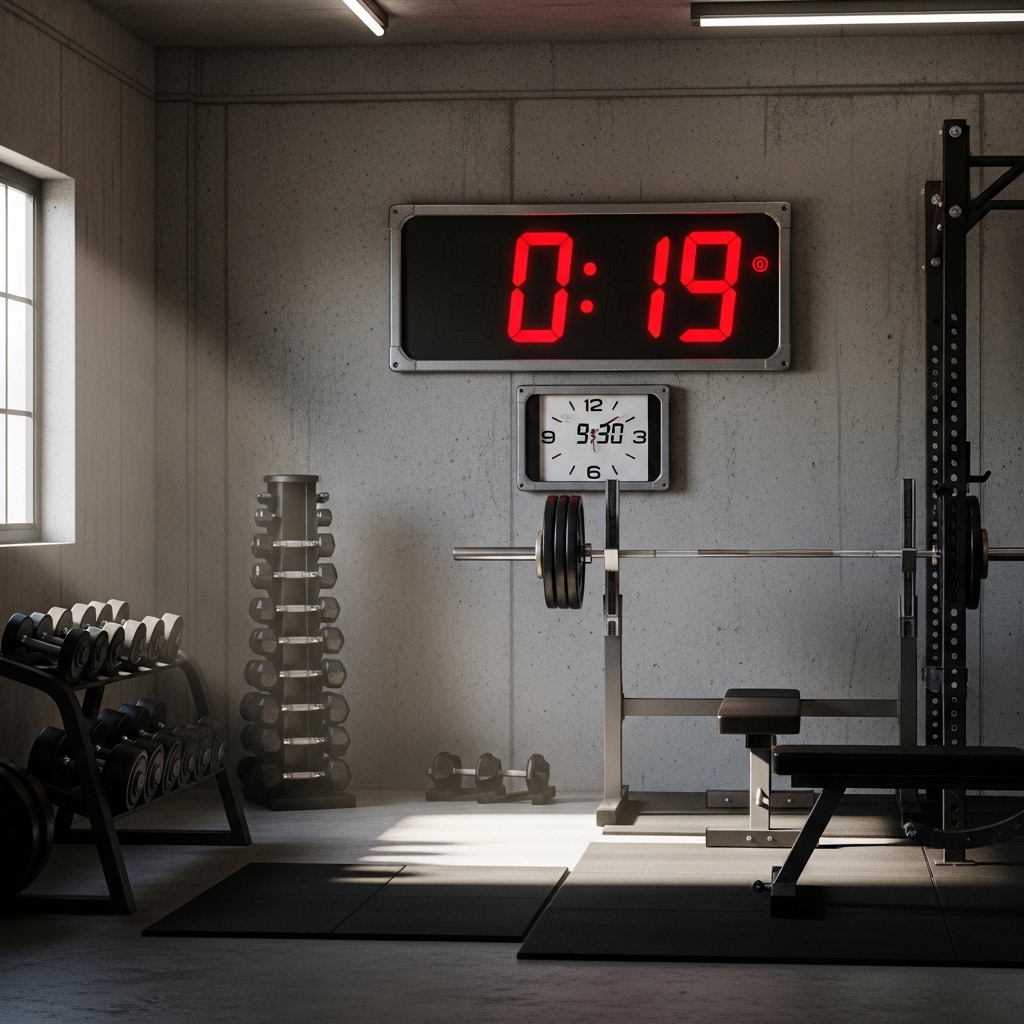
Rest periods matter. Too short and you fail your next set. Too long and you lose your intensity.
Mount a large gym timer or simple clock on your wall where you can see it from anywhere.
Set rest periods between sets. Watch the seconds tick down. Attack your next set on time.
A timer holds you accountable. No more guessing. No more resting too long.
Pro Tip: Choose a timer with a remote control. Start and stop rest periods without walking across your garage.
Mistake to Avoid: Do not use your phone as a timer. Your phone is a distraction machine. A wall timer is a focus tool.
20. Create a Cool-Down Zone with a Yoga Mat and Foam Roller
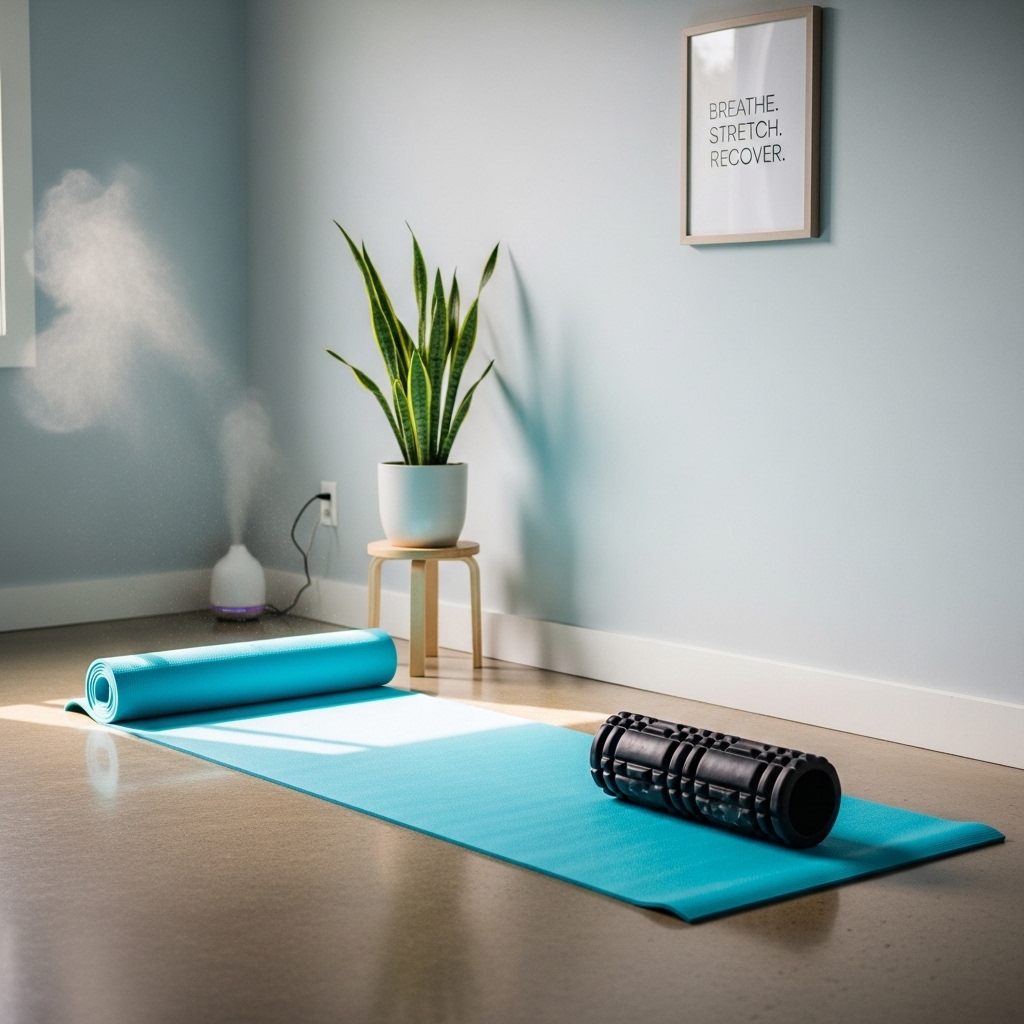
Training is not just about lifting heavy. Recovery is where your muscles actually grow.
Designate a corner of your garage for cool-down. Lay down a yoga mat. Lean a foam roller against the wall.
After your last heavy set, move to your cool-down zone. Stretch. Roll. Breathe.
A dedicated cool-down zone signals your brain that the workout is ending. Recovery begins.
Pro Tip: Add a lacrosse ball and massage stick to your cool-down zone. These tools reach tight spots the foam roller misses.
Mistake to Avoid: Do not skip cool-down because your space is messy. A dedicated zone removes that excuse entirely.
Conclusion
Your garage gym does not need to look like a commercial fitness center to be effective.
The twenty ideas above prove that small upgrades transform a concrete box into a training sanctuary.
Lay down rubber stall mats for a true gym floor that protects your joints and your concrete.
Install bright LED shop lights over your training area. Dark spaces kill motivation. Light fuels it.
Mount a pull-up bar to your ceiling joists. A solid bar opens endless upper body exercises.
Create a wall-mounted dumbbell rack. Dumbbells off the floor change everything about your space.
Paint one wall a bold color for energy. That wall becomes your focal point between sets.
Install a full-length mirror on your wall. Watch your form. Fix your technique. Stay safe.
Build a plywood lifting platform for deadlifts. Protect your floor. Protect your plates. Define your zone.
Use a pegboard for small accessories. Chalk, straps, and sleeves finally have a visible home.
Install a suspension trainer from your ceiling. Bodyweight training adds variety to heavy lifting.
Add a whiteboard for workout tracking. Write your plan. Record your results. See your progress.
Store kettlebells on a low, sturdy shelf. Heavy bells stay close to the floor where they belong.
Hang a speed bag platform from your ceiling. Boxing training builds cardio and coordination.
Create a resistance band wall. Bands stay untangled and visible. No more searching through bins.
Install a box fan for air circulation. Moving air keeps you cool during hard efforts.
Use a rolling cart for supplements and towels. Everything you need rolls to your workout area.
Paint your floor with epoxy coating. No more dust. No more stains. A professional look.
Install a Bluetooth speaker for workout music. Music fuels your sets. A good speaker delivers.
Use heavy-duty shelving for gear storage. Your floor stays clear. Your gear stays organized.
Add a timer or clock on your wall. Rest periods become precise. Your training improves.
Create a cool-down zone with a yoga mat and foam roller. Recovery is part of training.
Start with one garage gym idea this weekend. Lay down mats. Install lights. Paint a wall.
Then add another idea next month. Your garage gym should evolve as your training advances.
Your fitness journey deserves a space that inspires you. Your garage can become that space.
Take back your garage starting today. Your strongest workouts are waiting for you.