My First Home Decor Attempt vs. Now: A Side-by-Side Comparison of What Changed, What Stayed, and What Finally Worked
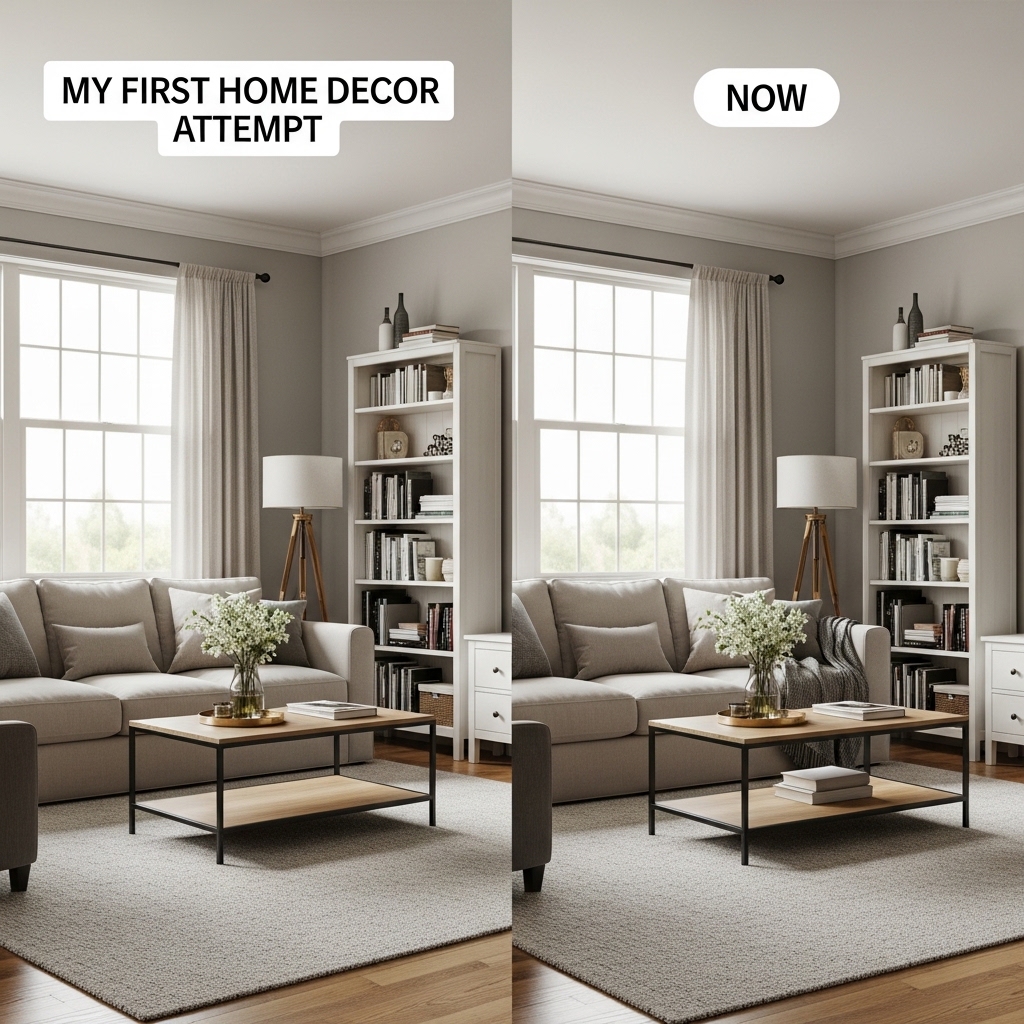
Everyone starts somewhere. Some start with good instincts. Others start with expensive mistakes.
The first home decorating attempt fell into the second category. Furniture was bought without measuring. Colors were chosen without testing. Layouts were copied from photos of rooms twice the actual size.
Years later, the approach is unrecognizable. The rooms finally work. The lessons learned along the way are worth sharing.
This roundup compares the first decor attempt to the current setup. Same person. Same budget constraints. Very different results.
Comparison Table: First Attempt vs. Current Setup
| Category | First Attempt | Current Setup | What Changed |
|---|---|---|---|
| Planning time | 2 hours | 2 months | Learned that rushing costs money |
| Furniture sources | 1 store | 7 sources (thrift, marketplace, discount) | Discovered better pieces outside big boxes |
| Matching pieces | 5 pieces matched exactly | 0 pieces match exactly | Broke the matching habit |
| Items returned or exchanged | 3 items | 0 items | Measure before buying now |
| Items donated within one year | 60% | 5% | Buy only what is truly needed |
| Satisfaction with space (1-10) | 4 | 9 | Experience taught what actually works |
Living Room: Then vs. Now
Then: The Showroom Mistake
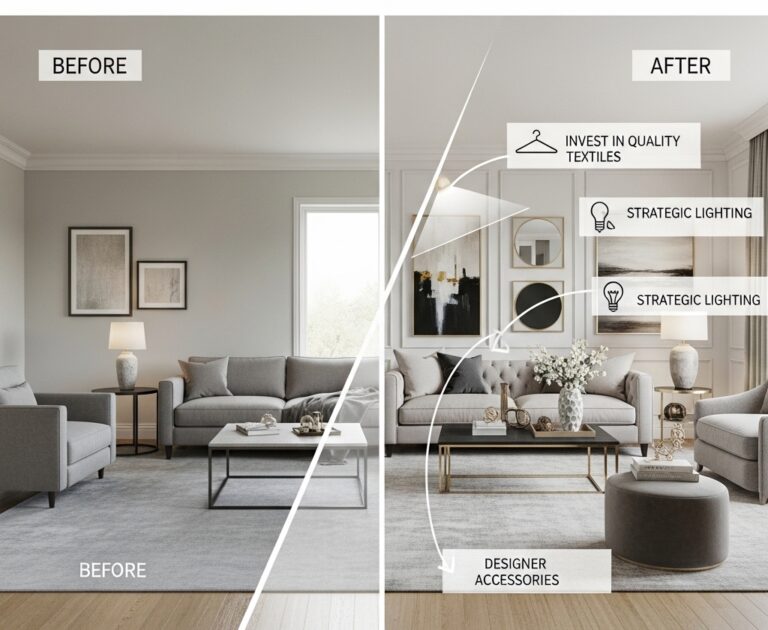
Sofa against one wall. Loveseat against the opposite wall. Coffee table dead center. Every piece from the same store. Every piece matching perfectly.
The problem was not the furniture quality. The problem was the layout. The distance between the sofas was too far for conversation. The coffee table was unreachable from the edges of the sofas. The room felt like a waiting room.
Money wasted: $1,200 on the set. $100 delivery. $75 in gas driving to return the loveseat that never worked.
Now: The Collected Approach
Sofa floated six inches from the wall. One thrifted armchair at an angle in the corner. No loveseat. Coffee table replaced with a storage ottoman that pulls double duty.
The sofa came from Facebook Marketplace. The armchair from an estate sale. The ottoman from a discount home store. Nothing matches. Everything works together.
Money spent: $250 total. Room feels twice as large. Conversation flows naturally.
Wall Color: Then vs. Now
Then: The Trendy Mistake
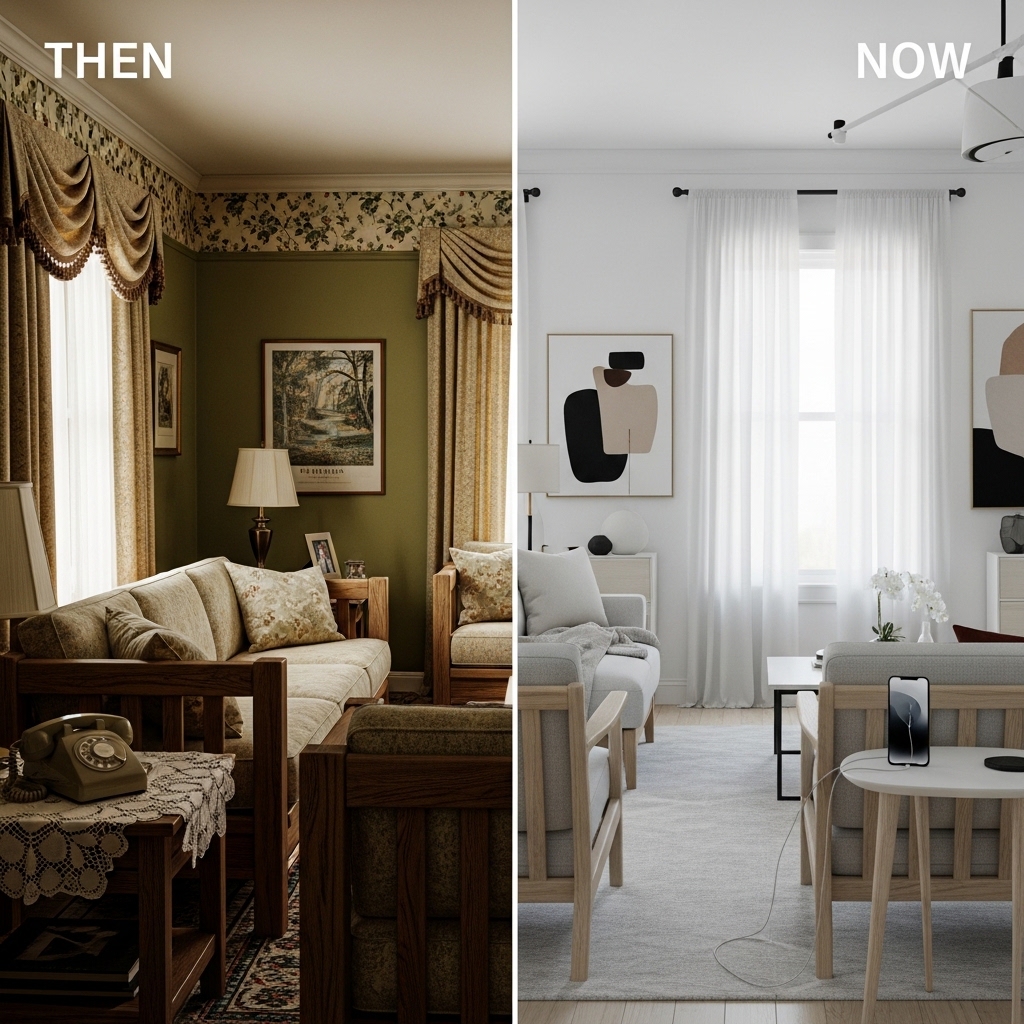
Dark navy accent wall. It looked amazing in the store display. It looked amazing on Instagram. On the actual wall, it absorbed all available light. The room felt like a cave. Morning felt like midnight.
Money wasted: $60 on paint. $25 on supplies. $0 on the headache of repainting six months later.
Now: The Light Approach
Warm white on all four walls. Ceiling painted a lighter version of the same white. No accent wall. No dark colors.
The room reflects light instead of absorbing it. The space feels open and airy. The walls recede instead of closing in.
Money spent: $50 on paint. $0 on repainting because the color still works years later.
Rug Size: Then vs. Now
Then: The Too-Small Mistake
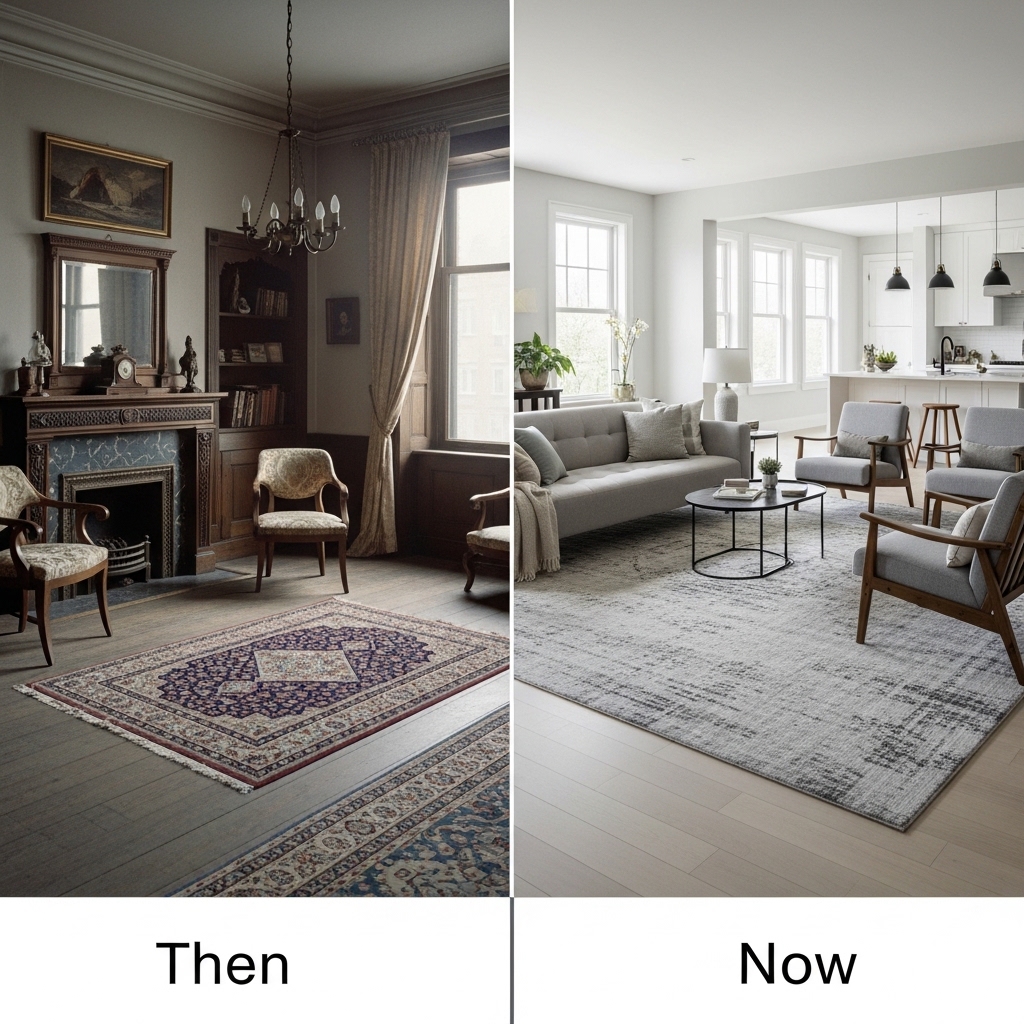
A 5×7 rug floated in the middle of the room. The rug was the right color. The rug was the wrong size.
Visible floor around all four edges created a frame. The frame highlighted how small the room actually was. The rug made the room feel chopped up and cramped.
Money wasted: $120 on a rug that was moved to a different room within a year.
Now: The Right-Size Rule
8×10 rug placed so the front legs of the sofa sit on it. The rug extends beyond the edges of the coffee table. No visible floor between the rug and the walls.
The room feels unified. The furniture feels connected. The space feels larger, not smaller.
Money spent: $150 on a rug that has lasted three years.
Coffee Table: Then vs. Now
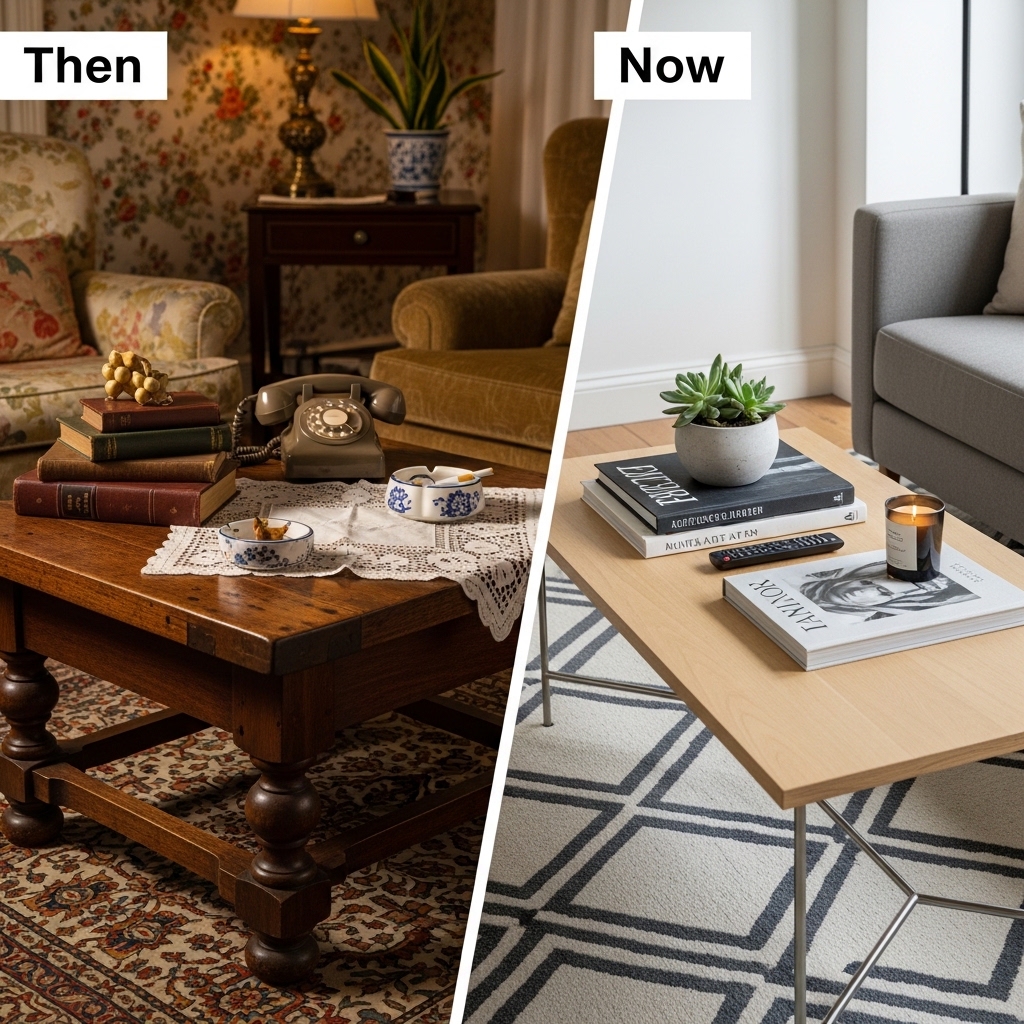
Then: The Oversized Mistake
48×48 square glass coffee table. It dominated the room. Walking paths were cramped. The glass showed every fingerprint, dust speck, and water ring.
The table was too wide to reach from the edges of the sofa. Drinks were always out of arm’s reach. The room revolved around a table that did not work.
Money wasted: $200 on a table that was given away within a year.
Now: The Multi-Functional Solution
Storage ottoman with a large tray on top. The ottoman serves as footrest, coffee table, extra seating, and hidden storage for blankets.
The round shape softens the room. The size is proportional to the sofa. The tray keeps drinks stable.
Money spent: $60 on the ottoman (thrifted). $15 on the tray. One piece serving four functions.
Lighting: Then vs. Now
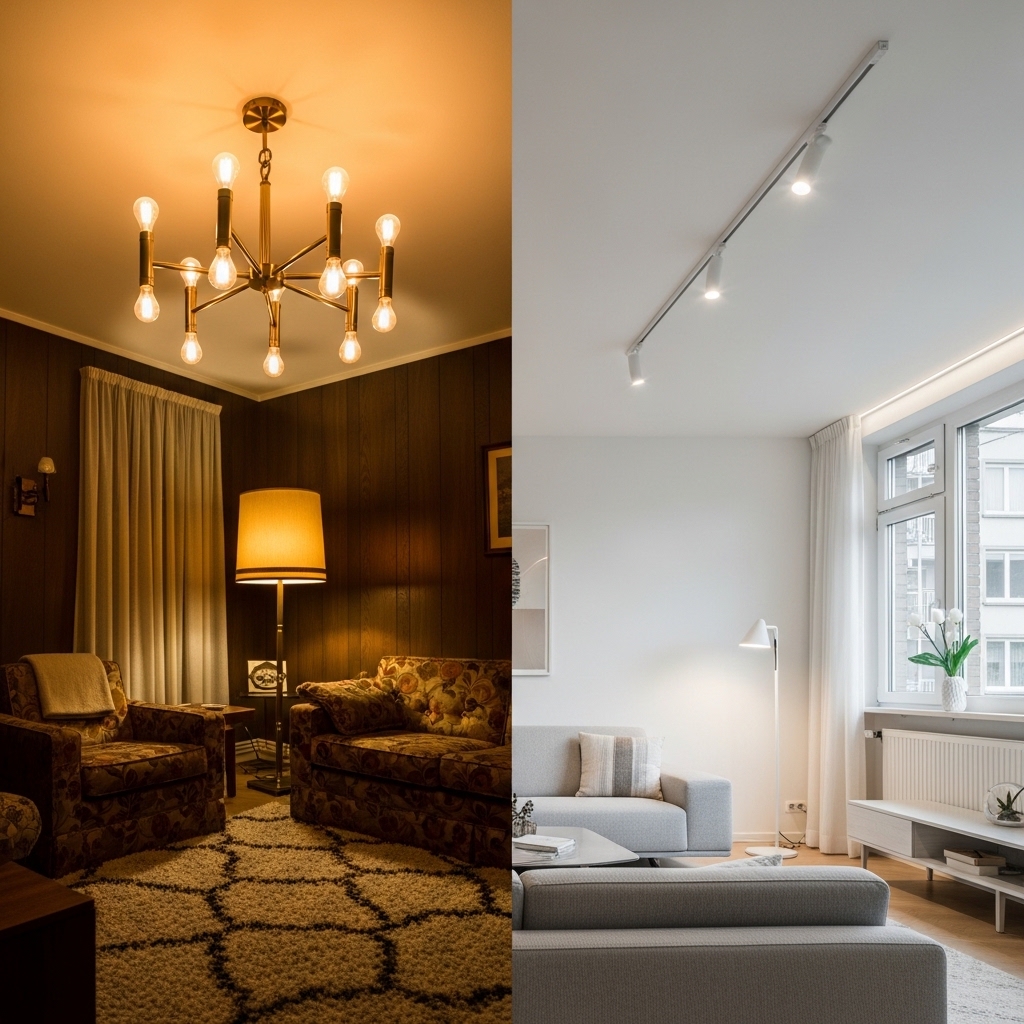
Then: The Single Source Mistake
One overhead light with a cool white bulb. Dark corners everywhere. Harsh shadows on faces. The room felt like an office.
Evenings were especially bad. The cool light signaled daytime to the brain. Winding down was impossible.
Money wasted: $0 on the light itself. Countless evenings of discomfort.
Now: The Layered Approach
Overhead light on a dimmer switch. Floor lamp in the darkest corner. Wall sconce above the sofa. Warm white bulbs throughout.
Dark corners disappeared. The room feels balanced at any time of day. The dimmer allows bright light for cleaning and warm light for evenings.
Money spent: $45 for floor lamp (thrifted). $30 for wall sconce. $15 for dimmer switch.
Window Treatments: Then vs. Now
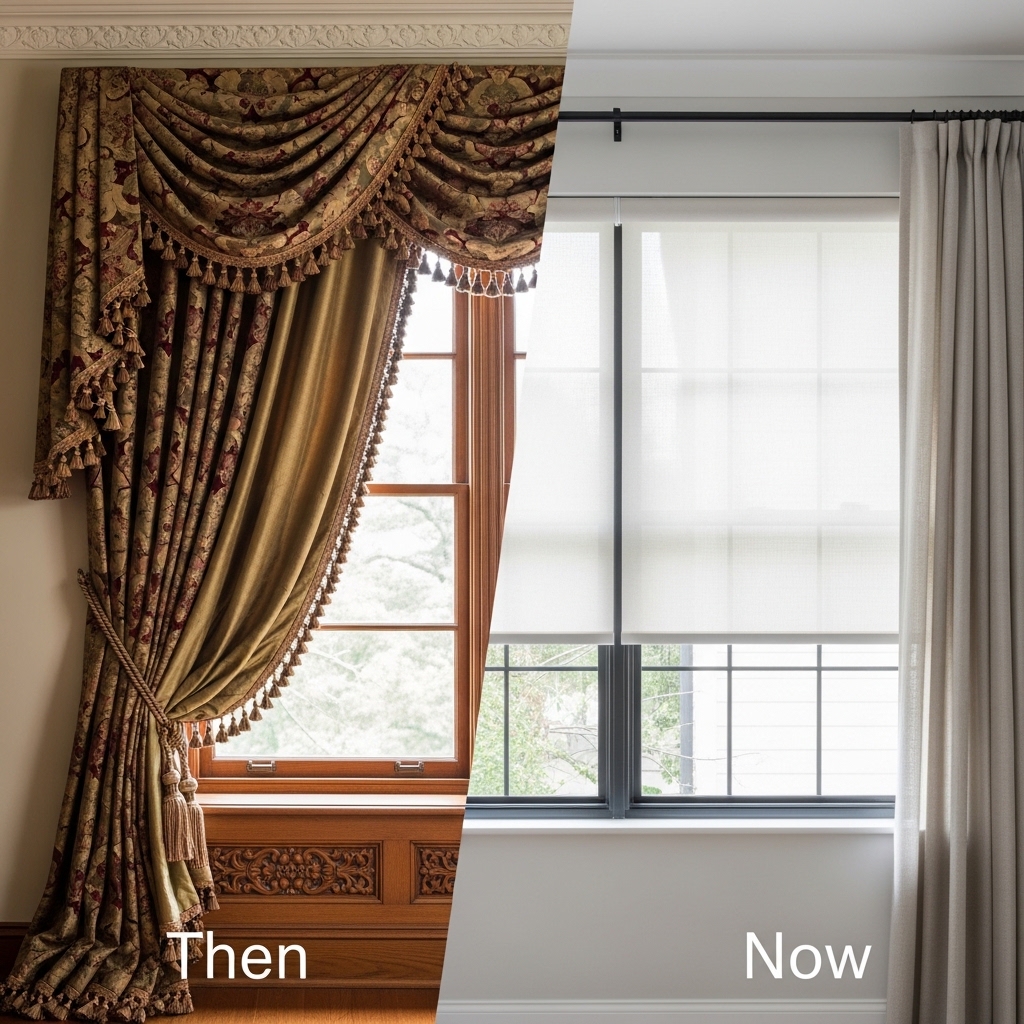
Then: The Rental Special
Cheap vinyl blinds. They were functional. They were also ugly. Dust collected on every slat. The room felt cheap and unfinished.
The blinds were left behind when moving out. The money spent on them was completely wasted.
Money wasted: $40 on blinds that were not worth taking to the next apartment.
Now: The Layered Solution
Blackout roller shades for light control and privacy. Sheer curtains over the shades for softness and style.
The shades block street lights for better sleep. The curtains add color and texture. The layered look is intentional and finished.
Money spent: $60 on shades. $40 on curtains and rod.
Art Placement: Then vs. Now
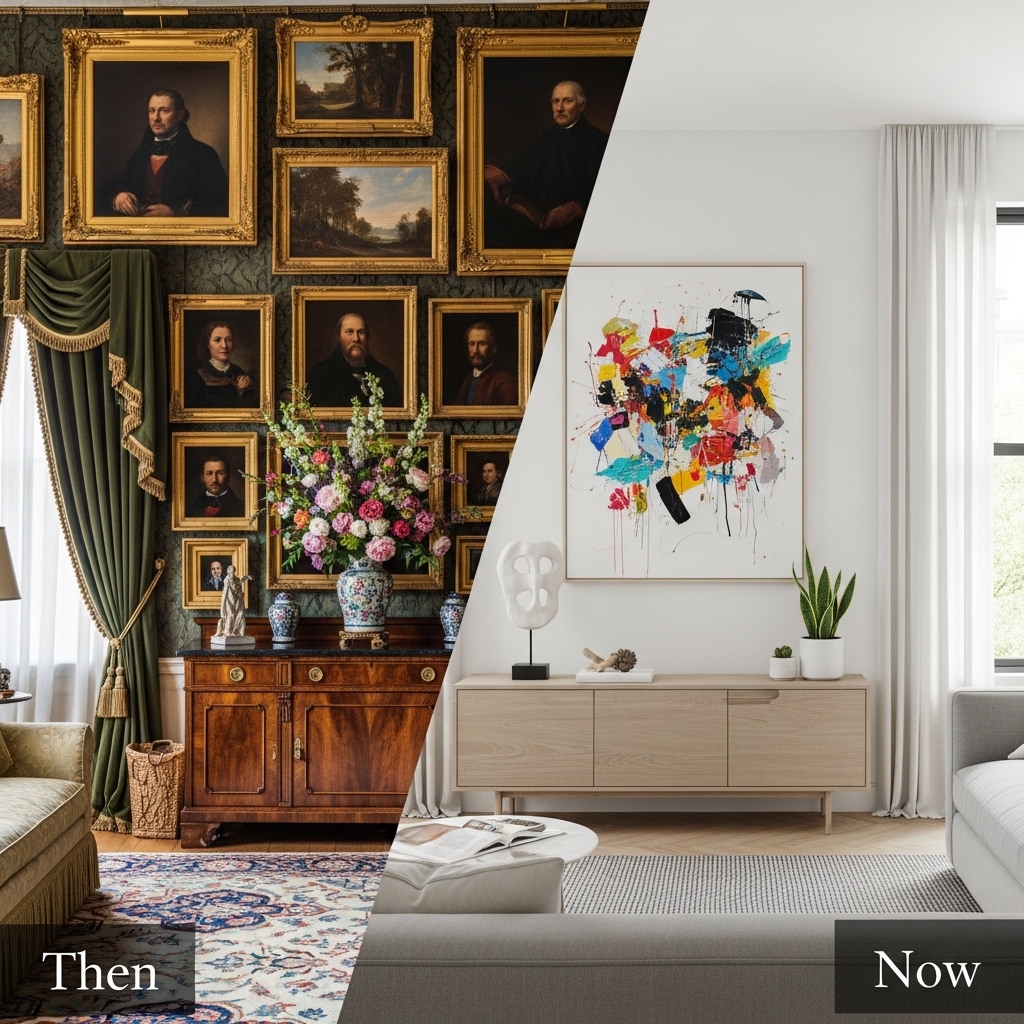
Then: The Too-High Mistake
Art hung at standing eye level. In a room with low ceilings, this meant the art felt disconnected from the furniture below.
The wall above the art was empty. The ceiling felt lower. The room felt chopped.
Money wasted: $0 on placement. Countless hours of visual discomfort.
Now: The Furniture Connection Rule
Art hung so the bottom of the frame sits 6-12 inches above the sofa. The art and sofa become a single visual unit.
The eye travels from the sofa to the art. The connection makes the room feel cohesive.
Money spent: $0 (rehung existing art at the correct height).
Throw Pillows: Then vs. Now
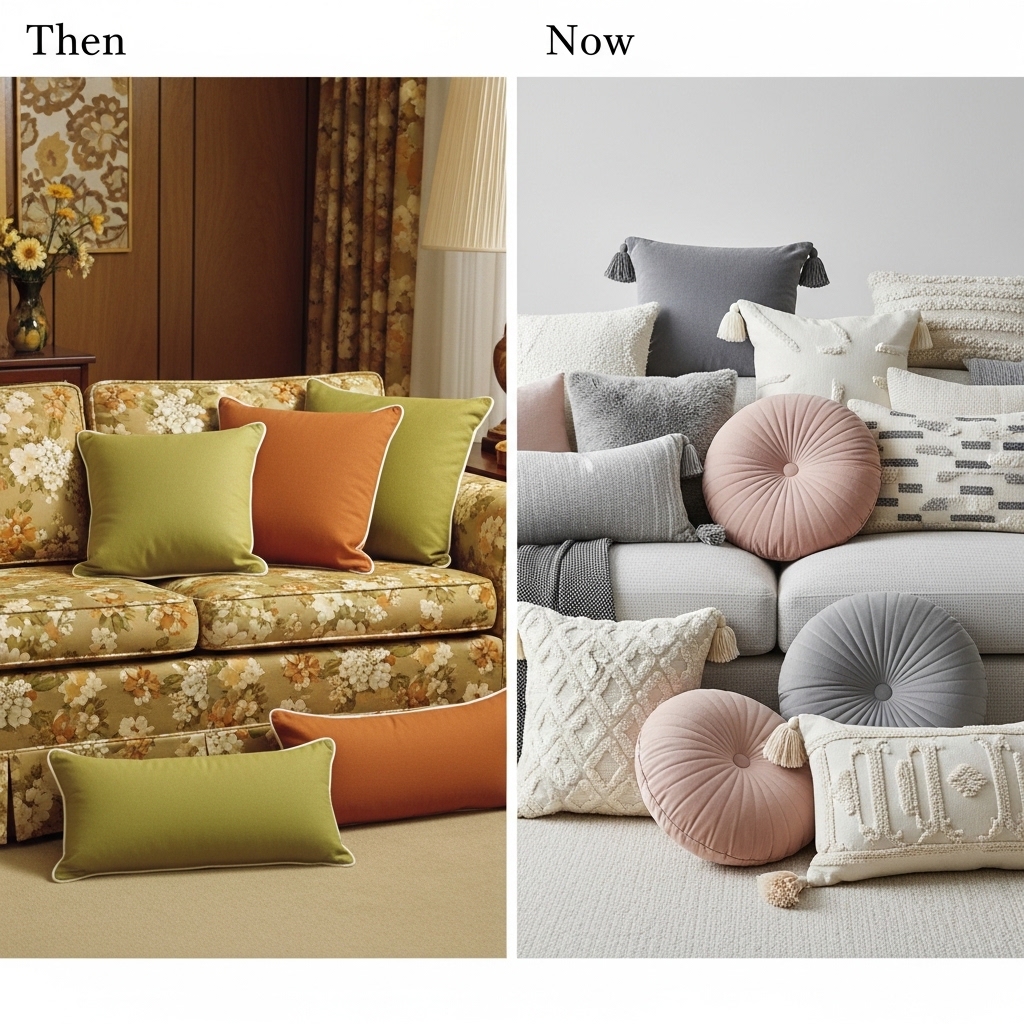
Then: The More-Is-Better Mistake
Six throw pillows on the sofa. They looked great in the store display. They were a nuisance in real life.
Every time someone wanted to sit, pillows had to be moved. Pillows ended up on the floor. Pillows ended up on the chair. The sofa was unusable as seating.
Money wasted: $90 on pillows that were constantly in the way.
Now: The Less-Is-More Rule
Two throw pillows on the sofa. One on each end. No pillows in the middle where people actually sit.
The sofa is usable without moving anything. The pillows add color without creating a chore.
Money spent: $30 on two quality pillows that have lasted years.
Furniture Placement: Then vs. Now
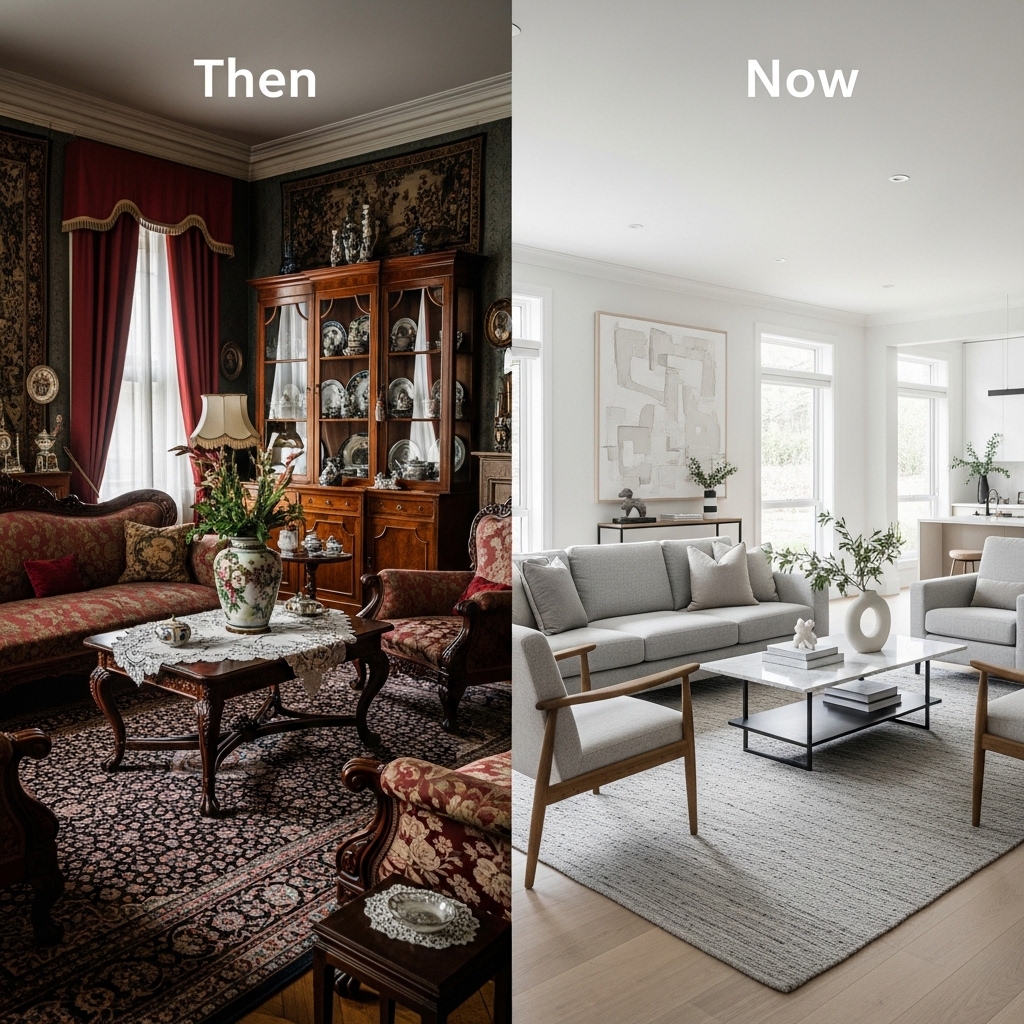
Then: The Against-the-Wall Mistake
Every piece of furniture pushed flat against the walls. Sofa against one wall. Loveseat against the opposite wall. Chairs in corners.
The center of the room was empty. The perimeter was crowded. The room felt like a ring of furniture around a void.
Money wasted: $0 on placement. The entire first year of uncomfortable layouts.
Now: The Float Technique
Sofa pulled six inches away from the wall. The gap creates visual depth. The room feels larger.
Chair floated at an angle in the corner. The angle breaks up straight lines. The layout feels dynamic instead of static.
Money spent: $0 (just moved existing furniture).
Shopping Habits: Then vs. Now
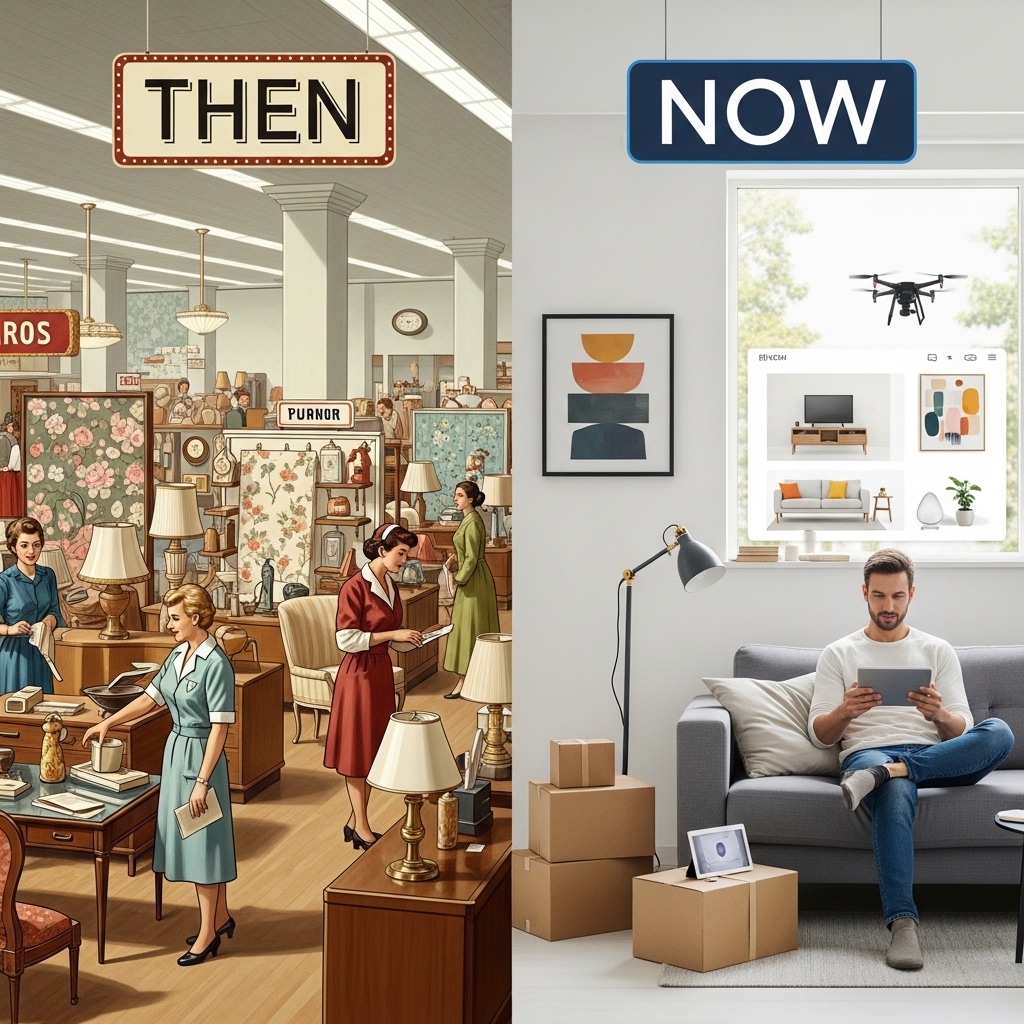
Then: The Impulse Mistake
Buy now, think later. If a piece looked good in the store, it came home. Measurements were an afterthought.
Returns were frequent. Regret was constant. The apartment filled with pieces that almost worked.
Money wasted: Hundreds of dollars in return fees, gas, and items that were never returned because the return window closed.
Now: The 24-Hour Rule
Non-essential purchases wait 24 hours. The impulse cools down. The real need becomes clear.
Most wants disappear within 24 hours. The money stays in the bank. The clutter never enters the home.
Money saved: Approximately $100 per month in avoided impulse purchases.
What Stayed the Same
Not everything changed. Some instincts were right from the beginning.
The Love for Natural Textures
Woven baskets, wood furniture, cotton throws. These were present in the first apartment. They are still present now.
Natural textures add warmth that cannot be faked. They hide wear better than smooth surfaces. They age gracefully.
The Refusal to Buy Art Prints
The first apartment had no mass-produced art prints. The current apartment also has none.
Art was thrifted, inherited, or made by friends. Each piece has a story. Each piece is unique.
The Belief That Homes Should Feel Lived In
Perfect rooms are not comfortable rooms. The first apartment was not perfect. The current apartment is also not perfect.
Both had dishes in the sink sometimes. Both had blankets draped over chairs. Both felt like homes, not showrooms.
The Biggest Lessons Learned
Lesson One: Measure Before Buying
The most expensive mistake is buying furniture that does not fit. A tape measure costs five dollars. Skipping it costs hundreds.
Lesson Two: One Store Is Not Enough
Matching sets look like catalogs. Collected rooms look like homes. Shop thrift stores, estate sales, and Facebook Marketplace.
Lesson Three: Light Colors Reflect Light
Dark colors absorb light. Small rooms need light reflection. Choose warm whites, light beiges, and soft grays.
Lesson Four: Rugs Must Be Large Enough
The front legs of the sofa must sit on the rug. A too-small rug makes the room feel smaller.
Lesson Five: Furniture Does Not Need Walls
Pull furniture away from walls. Float chairs at angles. The gaps create depth.
Lesson Six: Less Is More
Fewer pillows. Fewer accessories. Fewer pieces of furniture. Each remaining item gets noticed.
Final Comparison: The First Apartment vs. The Current Home
| Element | First Apartment | Current Home |
|---|---|---|
| Sofa | New, matching set, pushed against wall | Thrifted, no match, floated 6 inches |
| Coffee table | Oversized glass, too wide | Storage ottoman with tray, perfect size |
| Rug | 5×7 floating | 8×10 under sofa front legs |
| Wall color | Dark navy accent | Warm white throughout |
| Lighting | One overhead cool light | Layered warm light with dimmer |
| Windows | Vinyl blinds | Blackout shades + curtains |
| Art | Hung too high | Connected to furniture below |
| Pillows | Six, constantly in the way | Two, usable without moving |
| Shopping | Impulse, one store | 24-hour rule, multiple sources |
| Annual spending on decor | $1,800 | $400 |
| Satisfaction | 4/10 | 9/10 |
Conclusion
The first home decor attempt was a series of expensive lessons. The current setup is the result of applying those lessons.
Measure before buying. Shop multiple sources. Choose light colors. Buy large rugs. Float furniture away from walls. Layer lighting. Hang art at furniture height. Use fewer pillows. Wait 24 hours before impulse purchases.
Some instincts were right from the start. Natural textures. Unique art. Lived-in comfort. Those stayed.
Everything else changed. The rooms finally work. The money is spent more wisely. The satisfaction is finally high.
Start with one change. Measure a room. Float a sofa. Add a lamp. Small changes add up.
The first attempt is behind. The current setup is here. The next attempt will be even better.
Take back your home starting today. Experience is the best teacher. These lessons are now yours.