How to Design a Cozy Bedroom From Scratch: A Complete Guide to Creating Your Perfect Retreat
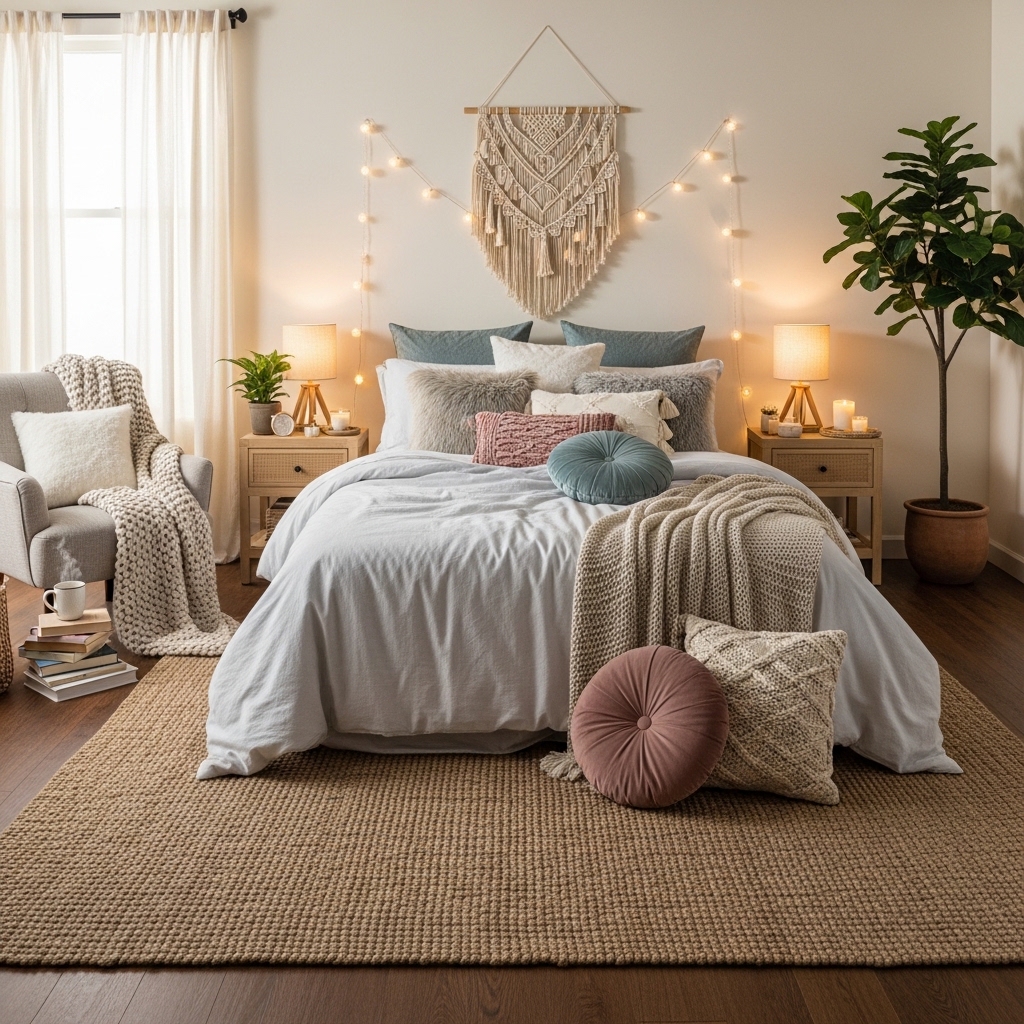
The bedroom was empty. White walls. Bare floor. No furniture. No personality. No idea where to start.
After years of sleeping in rooms that never felt quite right, the lessons finally became clear. A cozy bedroom is not about expensive bedding or designer furniture. It is about specific choices that signal comfort and rest.
This guide walks through the exact step-by-step process used to design a cozy bedroom from nothing. Every decision. Every purchase. Every mistake avoided. Every lesson learned.
Before Starting: The Cozy Bedroom Assessment
Before buying a single item, the room needed an honest assessment. What were the non-negotiables? What could be changed? What had to be worked around?
The Room Audit
The bedroom measured 10 feet by 12 feet with an 8-foot ceiling. A single 3-foot by 4-foot window sat centered on the 10-foot wall. The window faced east, which meant bright morning light and darker afternoons.
| Feature | Measurement | Implication |
|---|---|---|
| Room dimensions | 10′ x 12′ | Small, every inch matters |
| Ceiling height | 8′ | Standard, not tall |
| Window | 3′ x 4′, east-facing | Bright mornings, darker afternoons |
| Closet | Sliding doors on 12′ wall | Limited floor space near closet |
| Budget | $1,500 | Must cover all furniture and decor |
The Non-Negotiable Constraints
Every room has limitations. Identifying them early prevents falling in love with items that will not work.
Space Constraints
The room was small. Every piece of furniture needed to earn its footprint. No extra chairs. No oversized dressers. Just the essentials.
- Bed: Queen size maximum (60″ x 80″)
- Nightstands: Small, no wider than 20″ each
- Dresser: Narrow, tall preferred over wide
- Walking path: Minimum 30″ around bed
Lighting Constraints
The room had one overhead light. No existing lamps. No dimmer. The east-facing window meant bright mornings and limited afternoon light.
- Morning: Abundant natural light
- Afternoon: Dim, needs artificial light
- Evening: Only overhead light (too harsh)
Fixed Elements
- Wall color: White (rental, cannot change)
- Flooring: Light oak (rental, cannot change)
- Closet doors: Sliding (cannot remove)
Pro Tip: List your constraints before shopping. Keep the list on your phone for reference while browsing.
Mistake to Avoid: Do not buy a single item until the room is measured and constraints are listed.
The 10 Elements of a Cozy Bedroom
Before diving into the step-by-step process, understand what makes a bedroom feel cozy.
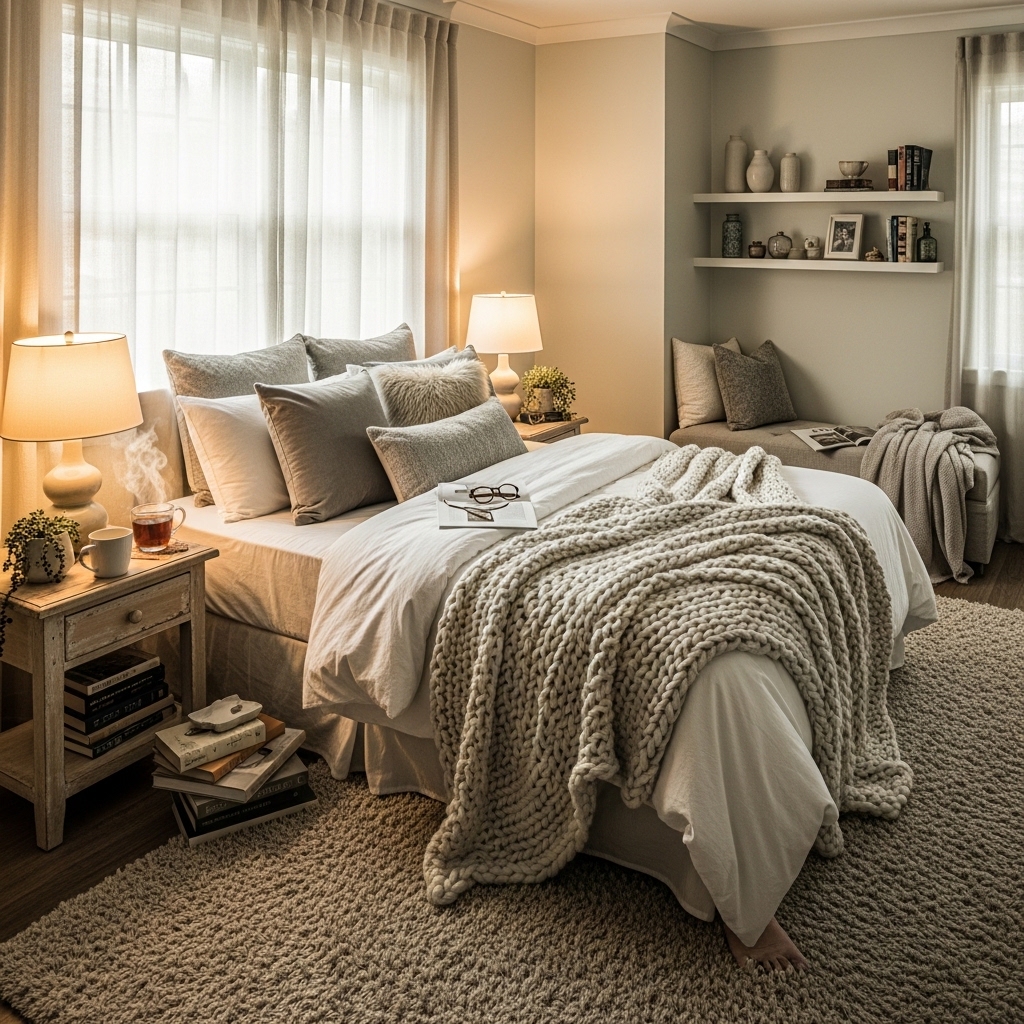
Element 1: Soft Lighting
Harsh light is the enemy of coziness. Soft, warm light signals relaxation.
The cozy rule: No overhead light without a dimmer. Add lamps at different heights. Use warm white bulbs (2700K).
Element 2: Layered Bedding
A single flat sheet and thin blanket feel cold and uninviting.
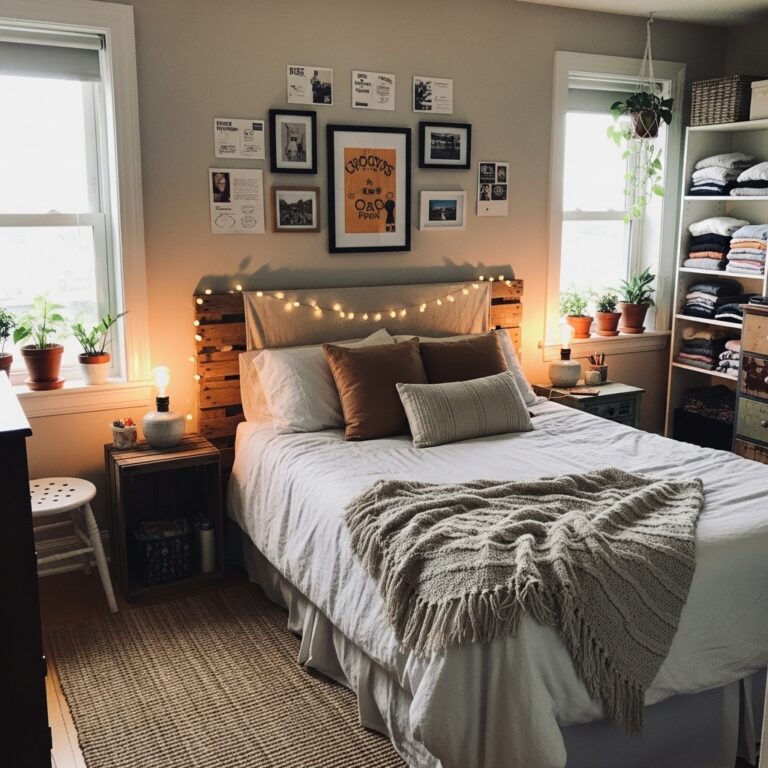
The cozy rule: Layer sheets, blankets, quilts, and duvets. Add texture with a throw blanket at the foot of the bed.
Element 3: Warm Colors
Cool colors (blue, gray, white) can feel cold. Warm colors (cream, beige, soft terracotta) feel cozy.
The cozy rule: Use warm undertones throughout. Cream instead of white. Warm beige instead of cool gray.
Element 4: Soft Textures
Hard surfaces feel cold. Soft surfaces feel cozy.
The cozy rule: Add velvet, wool, cotton, linen, and faux fur. Layer textures on the bed, floor, and windows.
Element 5: Personal Elements
A room that looks like a hotel room is not cozy. A room with personal items feels lived in.
The cozy rule: Add photos, books, art, and objects that matter to you.
Element 6: Window Treatments
Bare windows feel cold and unfinished. Soft fabric at the windows adds coziness.
The cozy rule: Add curtains or shades. Soften the window frame. Block harsh light when needed.
Element 7: A Cozy Floor
Bare floors feel cold underfoot. A soft surface adds warmth and comfort.
The cozy rule: Add a rug. The larger the better. The rug should extend beyond the bed.
Element 8: A Place to Sit
Getting dressed on the bed is awkward. A place to sit adds function and coziness.
The cozy rule: Add a small chair, bench, or ottoman. Even a small seat makes the room feel complete.
Element 9: Scent
Scent is often overlooked. The right scent signals relaxation.
The cozy rule: Add a candle, diffuser, or room spray. Lavender, vanilla, sandalwood, and cedar are cozy scents.
Element 10: Absence of Clutter
Clutter is the opposite of cozy. A cluttered room feels chaotic, not restful.
The cozy rule: Keep surfaces clear. Keep floors clear. Hide storage behind closed doors.
Pro Tip: Take a photo of your bedroom. Photos reveal clutter that your eyes have learned to ignore.
Mistake to Avoid: Do not confuse cozy with cluttered. Cozy is intentional. Clutter is chaos.
Step 1: Choose the Bed First
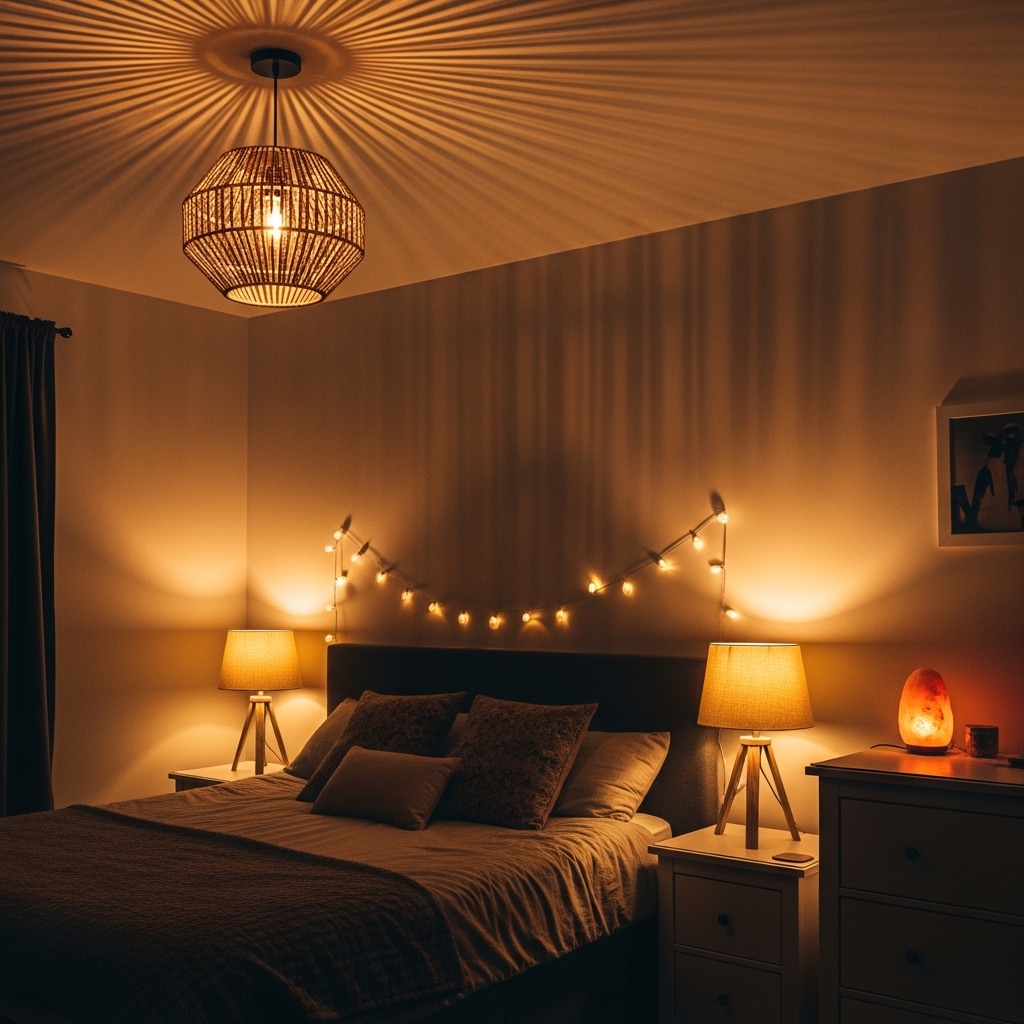
The bed is the anchor of any bedroom. Every other decision flows from it. Size. Height. Headboard. Placement.
Bed Size Selection
For a 10×12 room, a queen bed was the largest that would fit comfortably.
| Bed Size | Width | Length | Fits in 10×12? | Walking Path |
|---|---|---|---|---|
| Twin | 38″ | 75″ | Yes | Ample |
| Full | 54″ | 75″ | Yes | Good |
| Queen | 60″ | 80″ | Yes | Adequate |
| King | 76″ | 80″ | No | None |
Bed Height Consideration
The height of the bed affects how the room feels. Low beds (platform) feel modern but can be hard to get in and out of. High beds feel grand but can make the ceiling feel lower.
The cozy choice: Medium height. The top of the mattress at 24-26 inches from the floor.
Headboard Selection
A headboard anchors the bed and adds visual interest.
| Headboard Type | Effect | Best For |
|---|---|---|
| Upholstered (fabric) | Soft, cozy, absorbs sound | Small rooms, renters |
| Wood | Warm, natural, durable | Any room |
| Metal | Airy, light, less visual weight | Small rooms |
| No headboard | Minimal, modern | Very small rooms |
Bed Placement
In a small room, corner placement maximizes floor space.
| Placement | Pros | Cons |
|---|---|---|
| Centered on longest wall | Symmetrical, balanced | Less floor space |
| Corner anchored | Maximizes floor space | Only one nightstand possible |
| Floating | Creates depth | Needs larger room |
The choice: Corner anchored. The bed placed in the corner opposite the window. The headboard against the 12-foot wall. The foot of the bed facing the window.
Where the Bed Came From
The bed was not new. It came from Facebook Marketplace.
| Item | Original Price | Paid Price | Source |
|---|---|---|---|
| Queen bed frame (wood) | $400 | $150 | Facebook Marketplace |
| Queen mattress (new) | $600 | $600 | Online (memory foam in a box) |
| Upholstered headboard | $250 | $80 | Thrift store |
Pro Tip: Buy a new mattress. Used mattresses are risky. Buy the frame and headboard secondhand. Buy the mattress new.
Mistake to Avoid: Do not buy a bed frame without measuring. Measure the room. Measure the hallway. Measure the doorways.
Step 2: Layer the Bedding
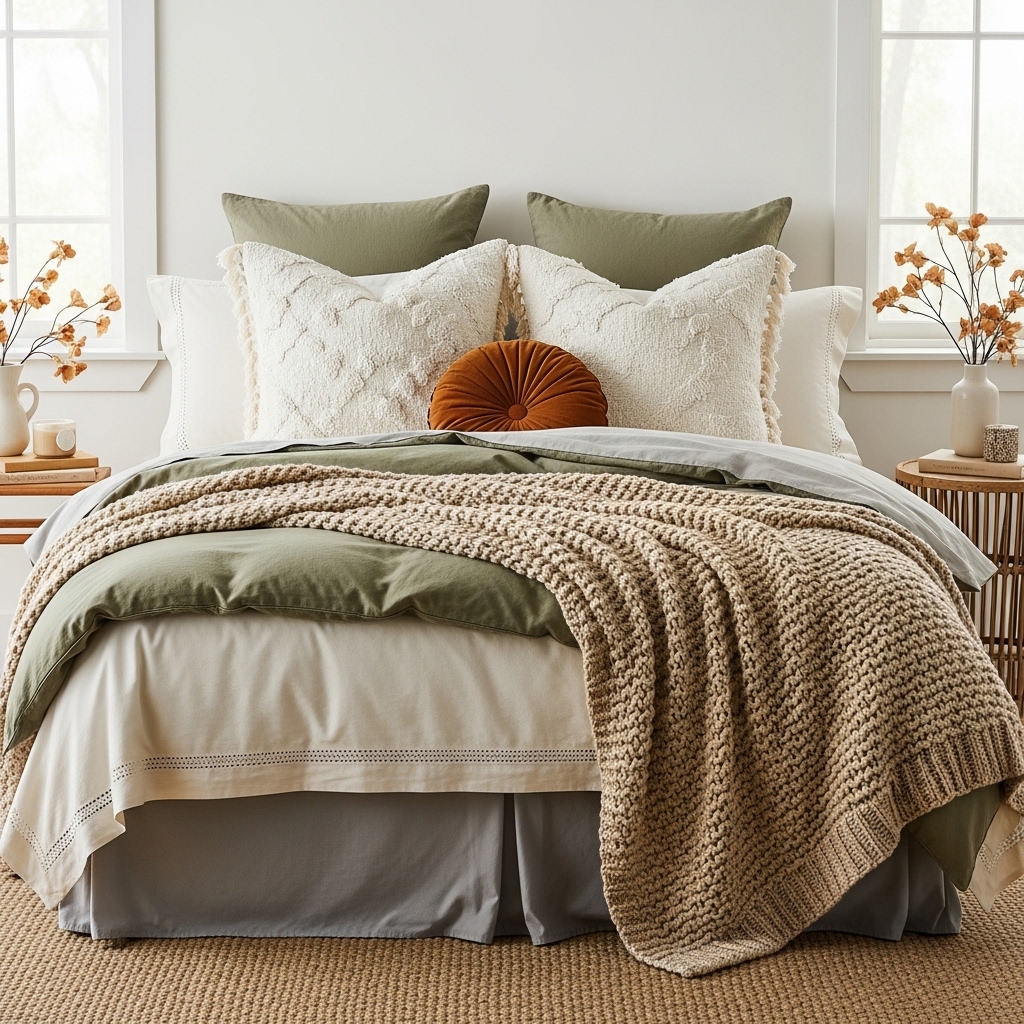
The bed is the focal point of the bedroom. Layered bedding makes the bed look inviting and cozy.
The Bedding Layer Formula
| Layer | Purpose | Example |
|---|---|---|
| Bottom sheet | Base | Fitted sheet, cotton |
| Top sheet | Layer between body and blanket | Flat sheet, cotton |
| Light blanket | Warmth without weight | Cotton quilt, wool blanket |
| Duvet or comforter | Main warmth | Down or down alternative |
| Throw blanket | Texture, color, foot-of-bed accent | Knitted, faux fur, woven |
Color Selection for Bedding
Warm neutrals create a cozy base. Cream, beige, taupe, warm white.
The cozy rule: Start with a neutral base. Add color and pattern with pillows and throws.
The Pillow Formula
| Pillow Type | Quantity | Placement |
|---|---|---|
| Sleeping pillows | 2 | Lying flat, under everything |
| Euro pillows (26″ x 26″) | 2 | Standing against headboard |
| Decorative pillows | 2-3 | In front of Euro pillows |
| Neck roll or lumbar | 1 | In front of decorative pillows |
Texture Layering
Mix textures for visual interest.
- Smooth: Cotton sheets, sateen duvet
- Textured: Knitted throw, quilted blanket
- Soft: Faux fur throw, velvet pillows
- Natural: Linen pillow shams, wool blanket
Where the Bedding Came From
| Item | Cost | Source |
|---|---|---|
| Cotton sheets (cream) | $40 | Target |
| Cotton quilt (beige) | $50 | Amazon |
| Down alternative duvet | $60 | IKEA |
| Duvet cover (cream linen) | $40 | IKEA |
| Knitted throw blanket (cream) | $25 | Thrift store |
| Euro pillows (2) + inserts | $40 | IKEA |
| Decorative pillows (3) | $45 | Amazon + thrifted covers |
Total bedding cost: $300
Pro Tip: Buy duvet inserts one size larger than the duvet cover. A queen insert in a full cover looks plump. A full insert in a queen cover looks flat.
Mistake to Avoid: Do not use too many decorative pillows. More than 3-4 makes the bed unusable for sleeping.
Step 3: Add Nightstands and Lighting
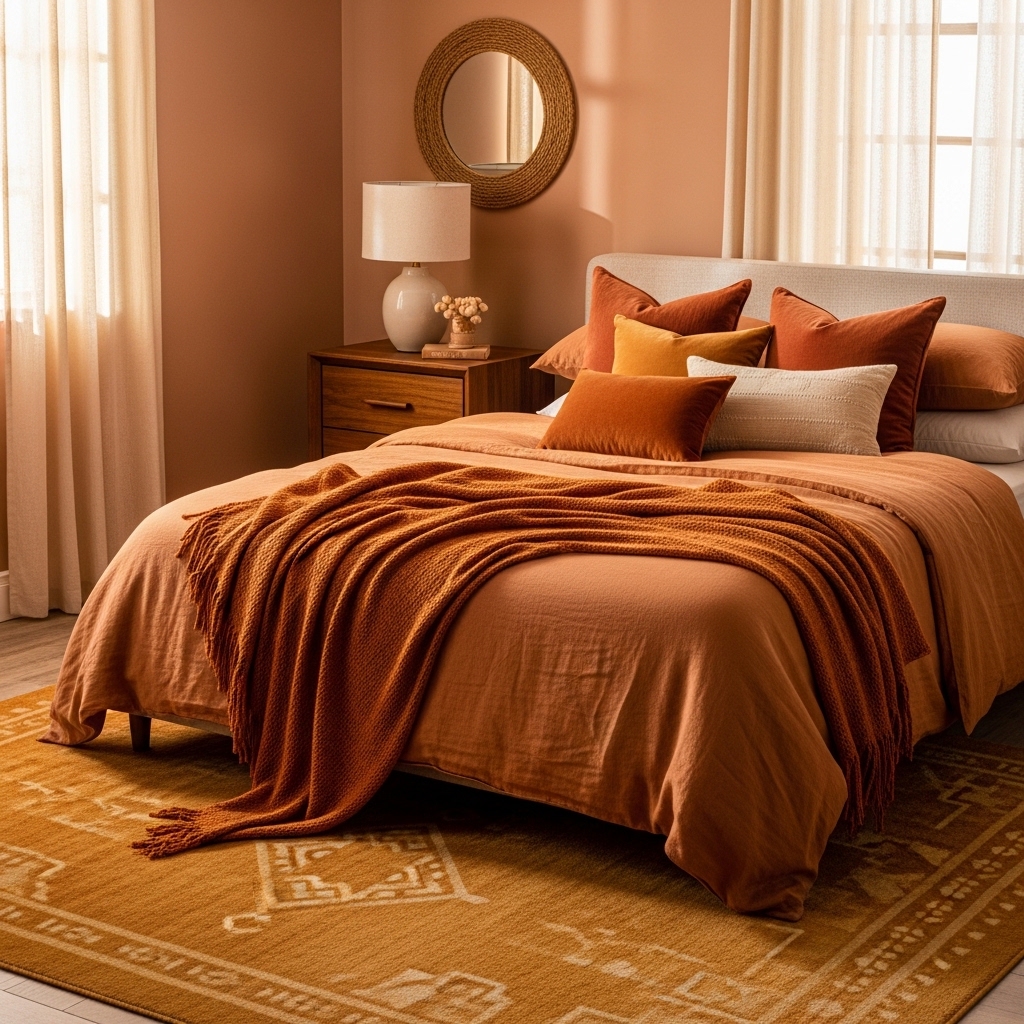
Nightstands provide surface space for lamps. Lamps provide soft, warm light.
Nightstand Selection
For a small room with a corner-anchored bed, only one nightstand fits. This was intentional.
| Nightstand Feature | Choice | Why |
|---|---|---|
| Size | 18″ wide x 24″ tall | Fits next to bed, not too bulky |
| Storage | One drawer | Hides small items |
| Material | Wood with warm tone | Adds warmth |
| Price | $25 | Thrifted |
Lamp Selection
The lamp needed to provide task lighting for reading and ambient light for evenings.
| Lamp Feature | Choice | Why |
|---|---|---|
| Height | 26″ | Bottom of shade at shoulder height when seated |
| Shade | Cream linen | Softens light, warm tone |
| Bulb | 2700K, 800 lumens | Warm white, bright enough for reading |
| Price | $15 base, $10 shade | Thrifted base, new shade from IKEA |
The Second Light Source
One lamp is not enough for a cozy bedroom. A second light source was needed on the opposite side of the room.
| Second Light | Placement | Price |
|---|---|---|
| Floor lamp | In corner opposite bed | $20 (thrifted) |
The Dimmer Addition
The overhead light was on a standard switch. A dimmer was added.
| Item | Cost | Time |
|---|---|---|
| Dimmer switch | $20 | 15 minutes to install |
Pro Tip: Use warm white bulbs (2700K) in all bedroom lamps. Cool light signals daytime. Warm light signals relaxation.
Mistake to Avoid: Do not rely on the overhead light alone. Overhead light is too harsh for a cozy bedroom.
Step 4: Add Window Treatments
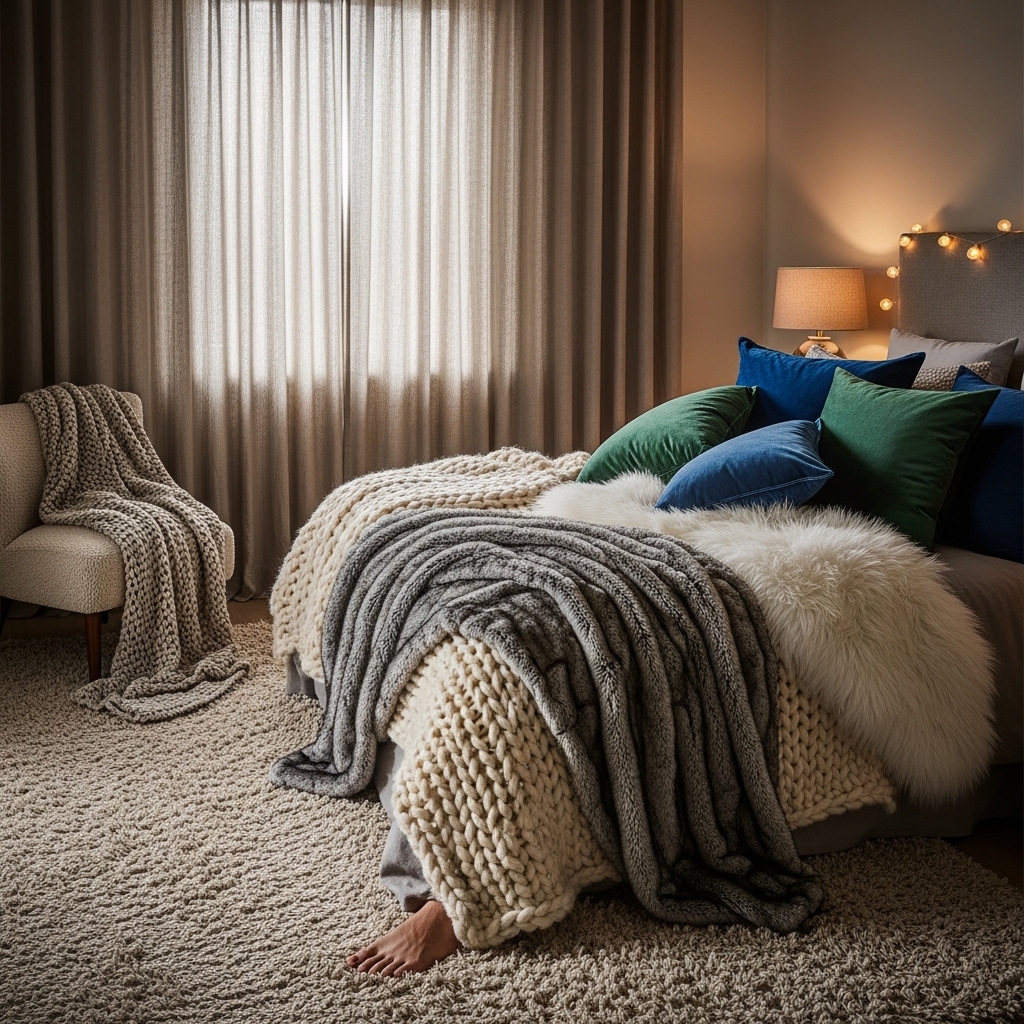
Bare windows feel cold and unfinished. Curtains add softness and coziness.
Curtain Selection
| Curtain Feature | Choice | Why |
|---|---|---|
| Length | 84″ | Ceiling to floor (8′ ceiling) |
| Color | Cream linen | Warm, neutral, textured |
| Lining | Light-filtering | Privacy without blocking all light |
| Price | $30 per panel | IKEA |
The Hanging Rule
The rod was hung 4 inches below the ceiling. The curtains kissed the floor.
| Before | After |
|---|---|
| Rod at window frame | Rod 4″ below ceiling |
| Curtains stopped at sill | Curtains kiss floor |
| Window looked small | Window looked larger |
The No-Drill Solution
Rental restrictions meant no drilling into walls. A tension rod was used.
| Rod Type | Cost | Installation |
|---|---|---|
| Tension rod (heavy-duty) | $25 | Twist to expand, no tools |
Pro Tip: Use curtain rings with clips. Rings slide easily on tension rods. Clips make adjusting length simple.
Mistake to Avoid: Do not buy curtains that are too short. Curtains that hover above the floor look cheap and unfinished.
Step 5: Add a Rug
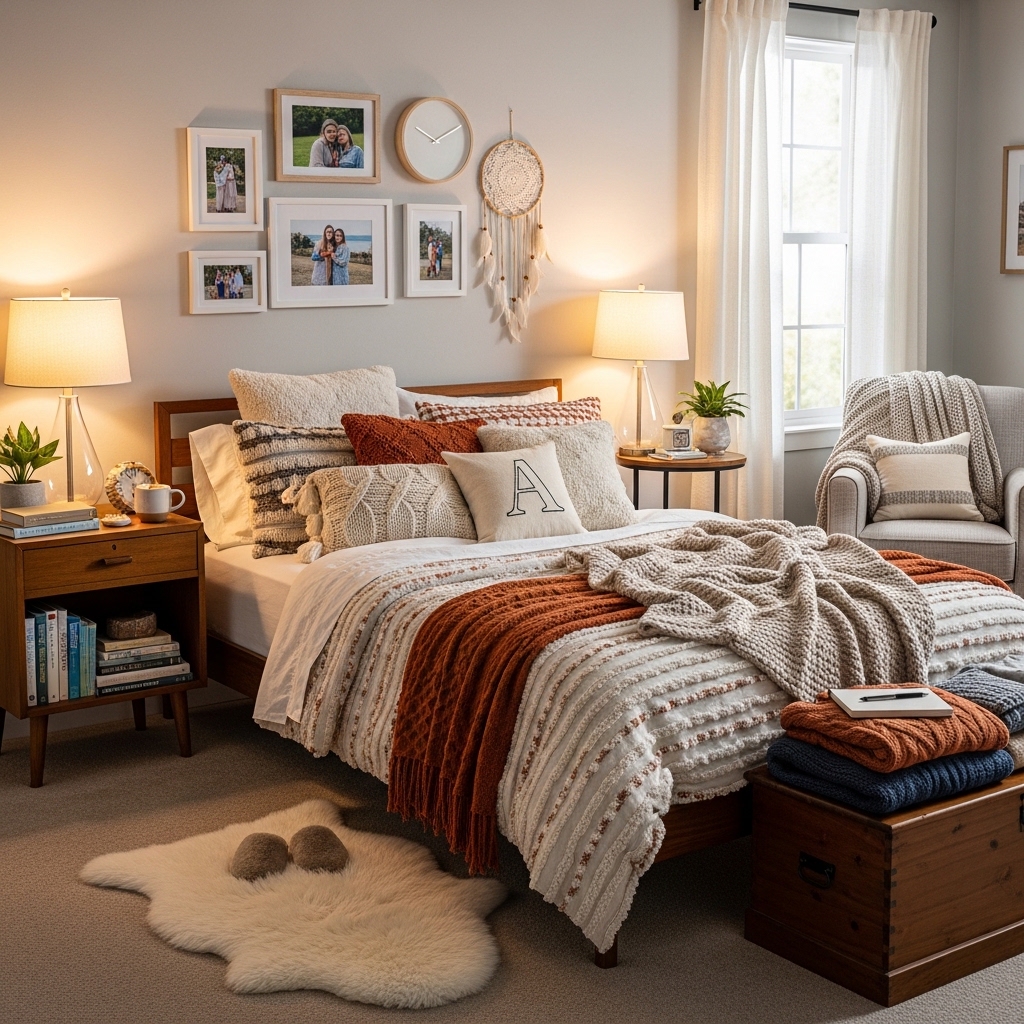
A bare floor feels cold underfoot. A rug adds warmth and defines the sleeping area.
Rug Size Selection
For a queen bed, the rug needed to extend beyond the bed on both sides and the foot.
| Rug Size | Coverage | Verdict |
|---|---|---|
| 5′ x 8′ | Under bed only, no extension | Too small |
| 8′ x 10′ | Extends 18″ beyond bed sides and foot | Perfect |
| 9′ x 12′ | Extends 24″ beyond, covers most floor | Also works |
Rug Color and Material
| Rug Feature | Choice | Why |
|---|---|---|
| Color | Cream with beige pattern | Warm, neutral, hides wear |
| Material | Wool | Durable, soft, natural |
| Price | $150 | Overstock clearance (originally $400) |
Placement Rule
The rug was placed so it extended 18 inches beyond the sides of the bed and 18 inches beyond the foot of the bed.
Pro Tip: Use rug tape to keep the rug flat. Curling corners look cheap and create tripping hazards.
Mistake to Avoid: Do not buy a rug that is too small. A small rug floating under the bed makes the room feel smaller.
Step 6: Add a Small Chair or Bench
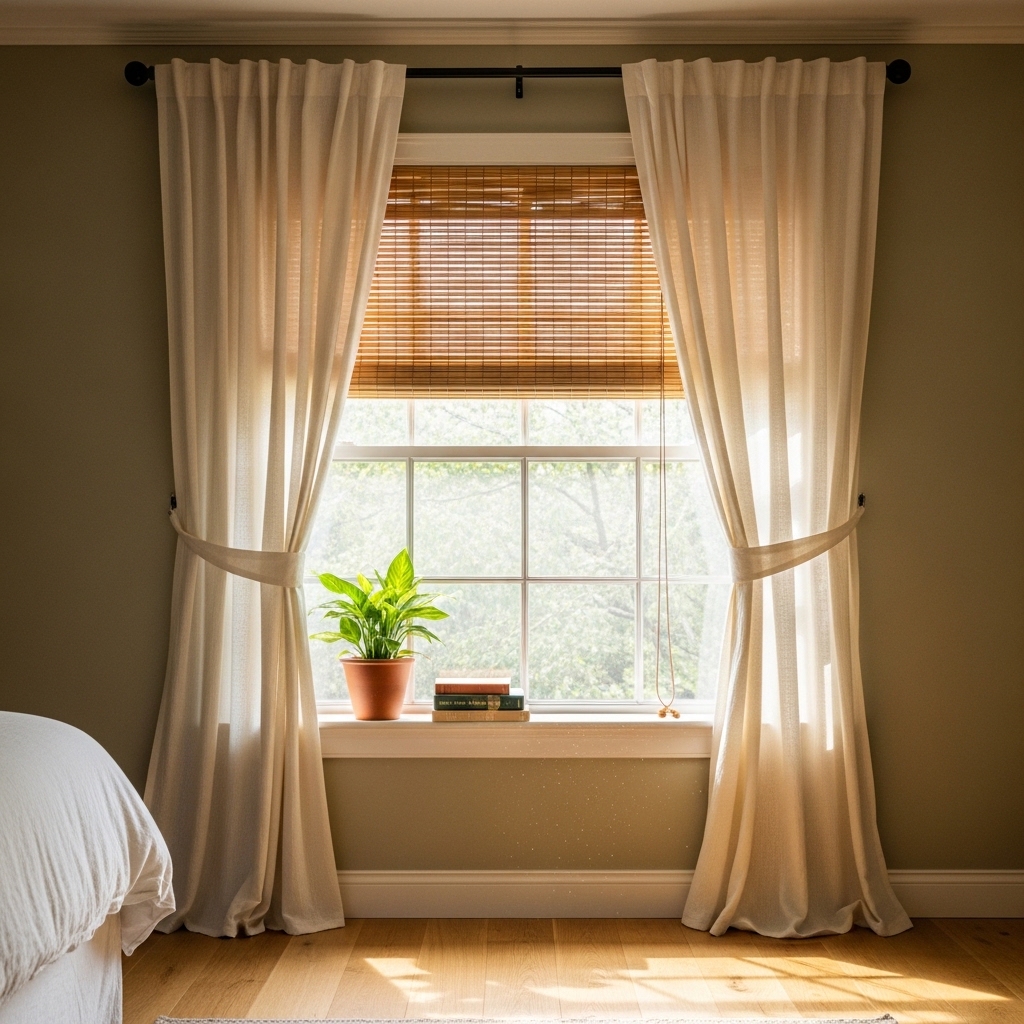
A place to sit makes the bedroom feel complete. Getting dressed on the bed is awkward.
Seating Selection
| Option | Pros | Cons | Price |
|---|---|---|---|
| Armchair | Comfortable, cozy | Takes more space | $50 (thrifted) |
| Bench | Narrow, fits small spaces | Less comfortable | $30 (thrifted) |
| Storage ottoman | Seating + storage | Shorter than chair | $25 (thrifted) |
The choice: A small armchair was placed in the corner near the window.
Where the Chair Came From
| Item | Source | Price |
|---|---|---|
| Small armchair (beige) | Thrift store | $40 |
| New cushion cover | Amazon | $15 |
Pro Tip: Look for chairs with removable cushion covers. Washable covers extend the life of thrifted furniture.
Mistake to Avoid: Do not buy a chair that is too large for the space. Measure the corner before shopping.
Step 7: Add Dresser or Storage
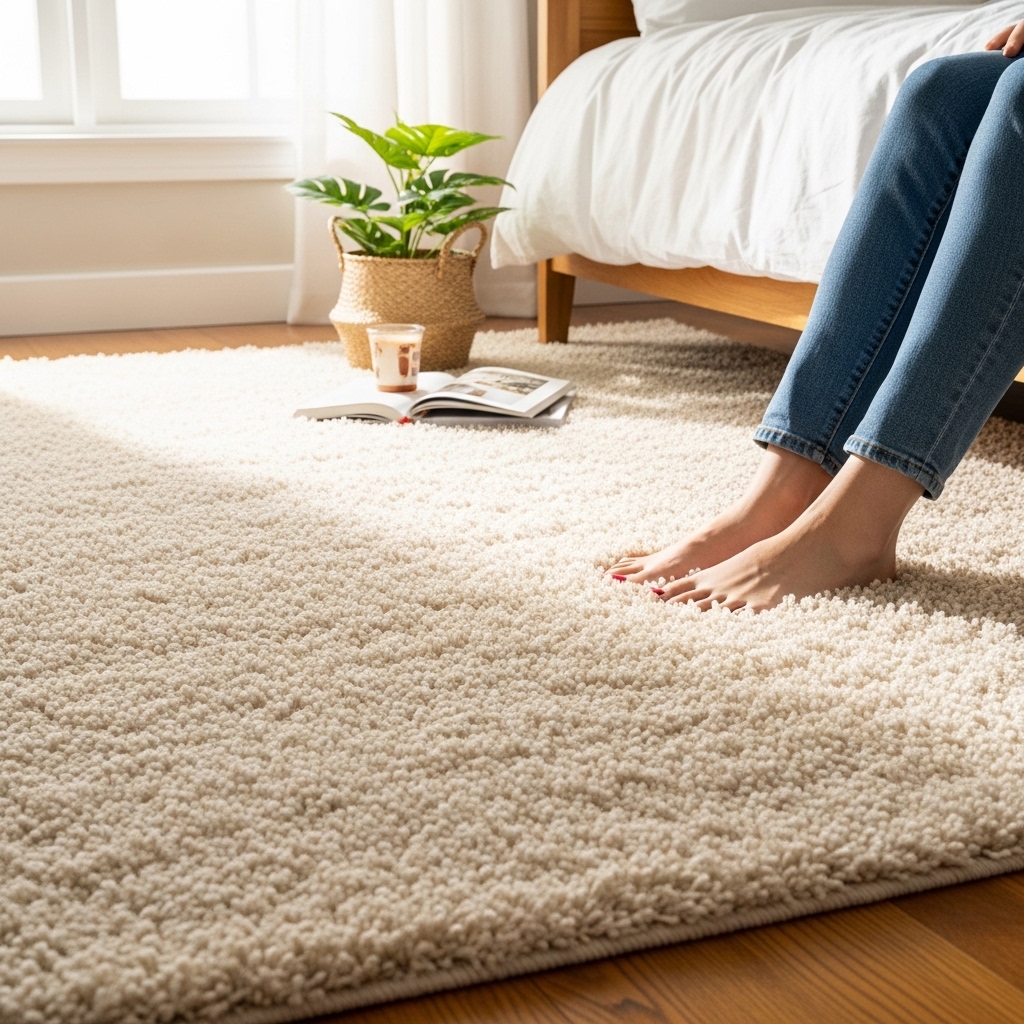
Clothing storage was needed. The closet was small. A dresser would provide additional storage.
Dresser Selection
| Dresser Feature | Choice | Why |
|---|---|---|
| Size | 30″ wide x 48″ tall | Narrow and tall, saves floor space |
| Color | Warm wood tone | Adds warmth, ties to bed frame |
| Storage | 5 drawers | Enough for folded items |
| Price | $80 | Facebook Marketplace |
Placement
The dresser was placed on the wall opposite the bed. This balanced the room. The bed on one wall. The dresser on the opposite wall.
What Goes in the Dresser
| Drawer | Contents |
|---|---|
| Top drawer | Socks, underwear, accessories |
| Middle drawers | Folded t-shirts, sweaters |
| Bottom drawer | Pajamas, loungewear |
Pro Tip: Use drawer dividers to keep small items organized. Dividers prevent socks from mixing with underwear.
Mistake to Avoid: Do not buy a dresser that is too wide. A wide dresser will block the walking path.
Step 8: Add Art and Wall Decor
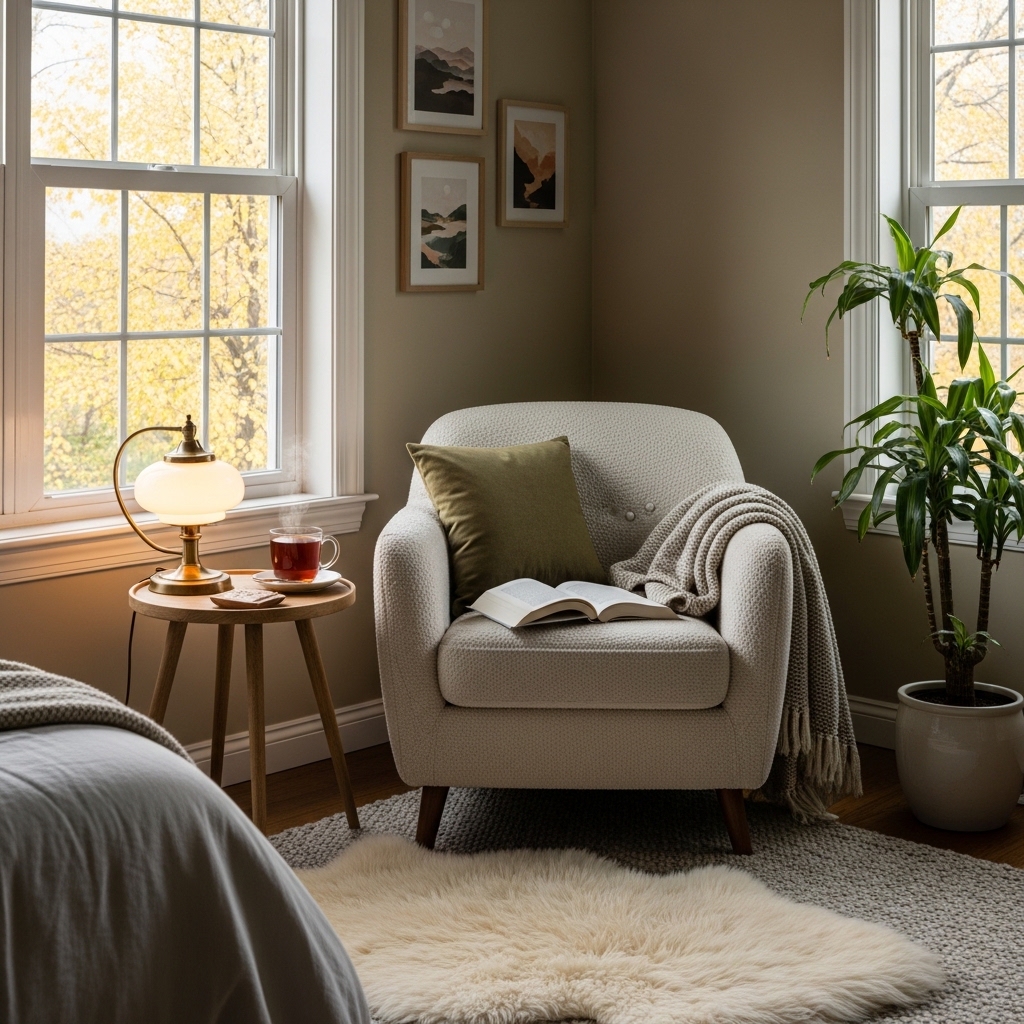
Empty walls feel cold. Art adds personality and color.
Art Selection
| Art Feature | Choice | Why |
|---|---|---|
| Size | One large piece (24″ x 36″) | Fills wall above dresser |
| Subject | Abstract landscape | Calming, neutral colors |
| Frame | Thin wood | Matches bed frame |
| Price | $0 for art, $15 for frame | Calendar page + thrifted frame |
Placement Rule
The art was hung so the center was at 57 inches from the floor. This is gallery height. It works in most rooms.
Where to Find Affordable Art
- Calendar pages: Large format calendars become art at the end of the year
- Book pages: Vintage botany or bird books have beautiful illustrations
- Your own photos: Print and frame your best photos
- Thrift stores: Frames are cheap. Swap in new art. Keep the frame.
Pro Tip: Use painter’s tape to outline art placement before hammering nails. Adjust the tape until the placement feels right.
Mistake to Avoid: Do not hang art too high. Art that is too high feels disconnected from the furniture below it.
Step 9: Add Soft Textures and Accessories
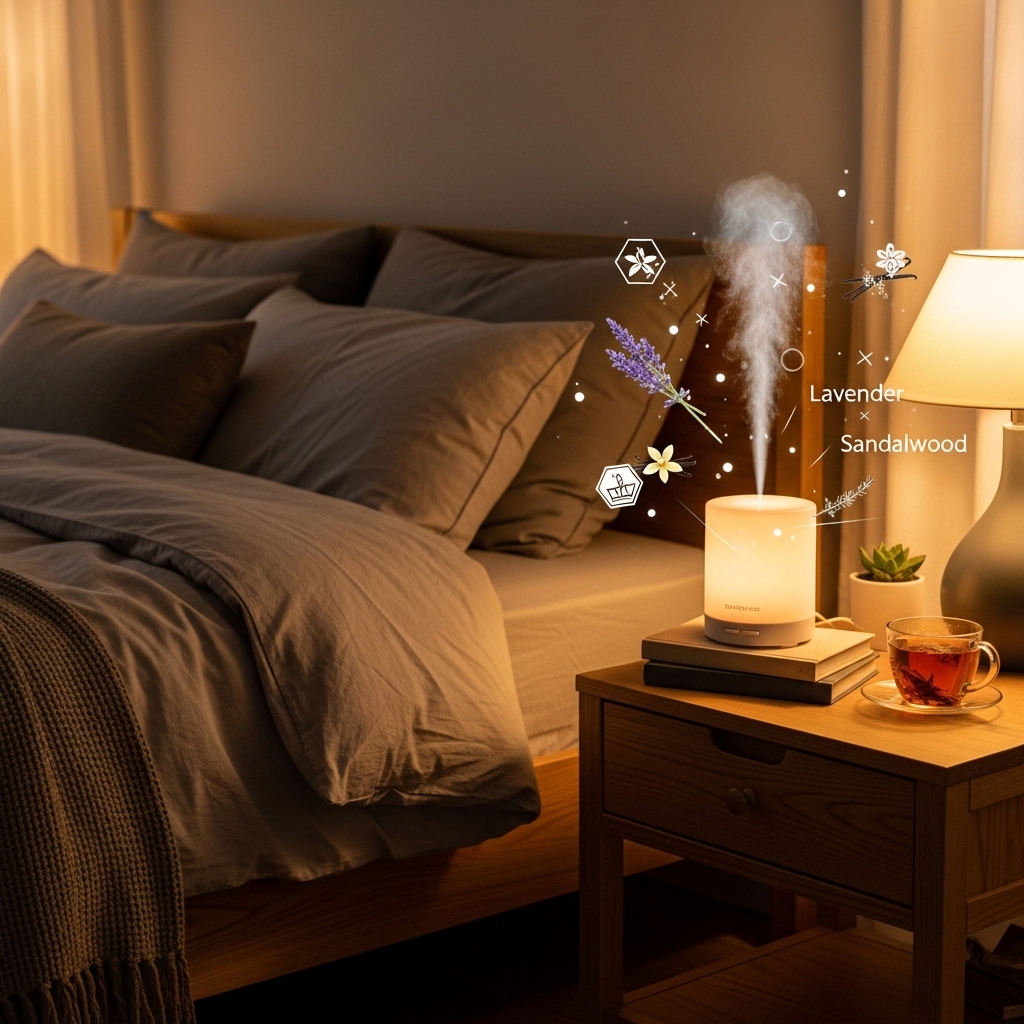
The final layer was small details that made the room feel cozy and lived in.
Throw Blanket
A second throw blanket was added to the chair.
| Item | Color | Price |
|---|---|---|
| Knitted throw | Cream | $20 (Target clearance) |
Pillows
Additional pillows were added to the chair and bed.
| Location | Pillow | Price |
|---|---|---|
| Chair | Small lumbar pillow (sage green) | $10 (thrifted) |
| Bed | Two decorative pillows (cream and beige) | Already owned |
Plants
A small plant added life to the dresser.
| Plant | Pot | Price |
|---|---|---|
| Snake plant (small) | Ceramic pot (cream) | $15 total |
Candle
A candle added warm light and cozy scent.
| Scent | Price |
|---|---|
| Lavender and vanilla | $10 (Target) |
Personal Items
- Frame photo: One photo on the nightstand ($0, already owned)
- Book: One book on the nightstand ($0, already owned)
- Small dish: For jewelry on the dresser ($3, thrifted)
Pro Tip: Use the rule of three for decor groupings. Three items on the dresser. Three items on the nightstand.
Mistake to Avoid: Do not add too many accessories. A cluttered room is not cozy. Choose a few meaningful items.
The Complete Bedroom: Before and After
| Element | Before | After | Cost |
|---|---|---|---|
| Bed | None | Queen wood frame + upholstered headboard | $230 |
| Mattress | None | Memory foam queen | $600 |
| Bedding | None | Sheets, quilt, duvet, pillows, throw | $300 |
| Nightstand | None | Small wood nightstand | $25 |
| Lamp | None | Thrifted lamp + new shade | $25 |
| Floor lamp | None | Thrifted arc lamp | $20 |
| Dimmer switch | None | Dimmer switch | $20 |
| Curtains | None | Cream linen + tension rod | $85 |
| Rug | None | 8’x10′ wool rug | $150 |
| Chair | None | Small armchair | $55 |
| Dresser | None | Wood dresser | $80 |
| Art | None | Calendar page + frame | $15 |
| Plant | None | Snake plant + pot | $15 |
| Candle | None | Lavender vanilla | $10 |
| Accessories | None | Photo, book, dish | $3 |
Total spent: $1,633 (slightly over the $1,500 budget)
Time invested: Approximately 2 months from empty room to finished space
The Cozy Bedroom Checklist
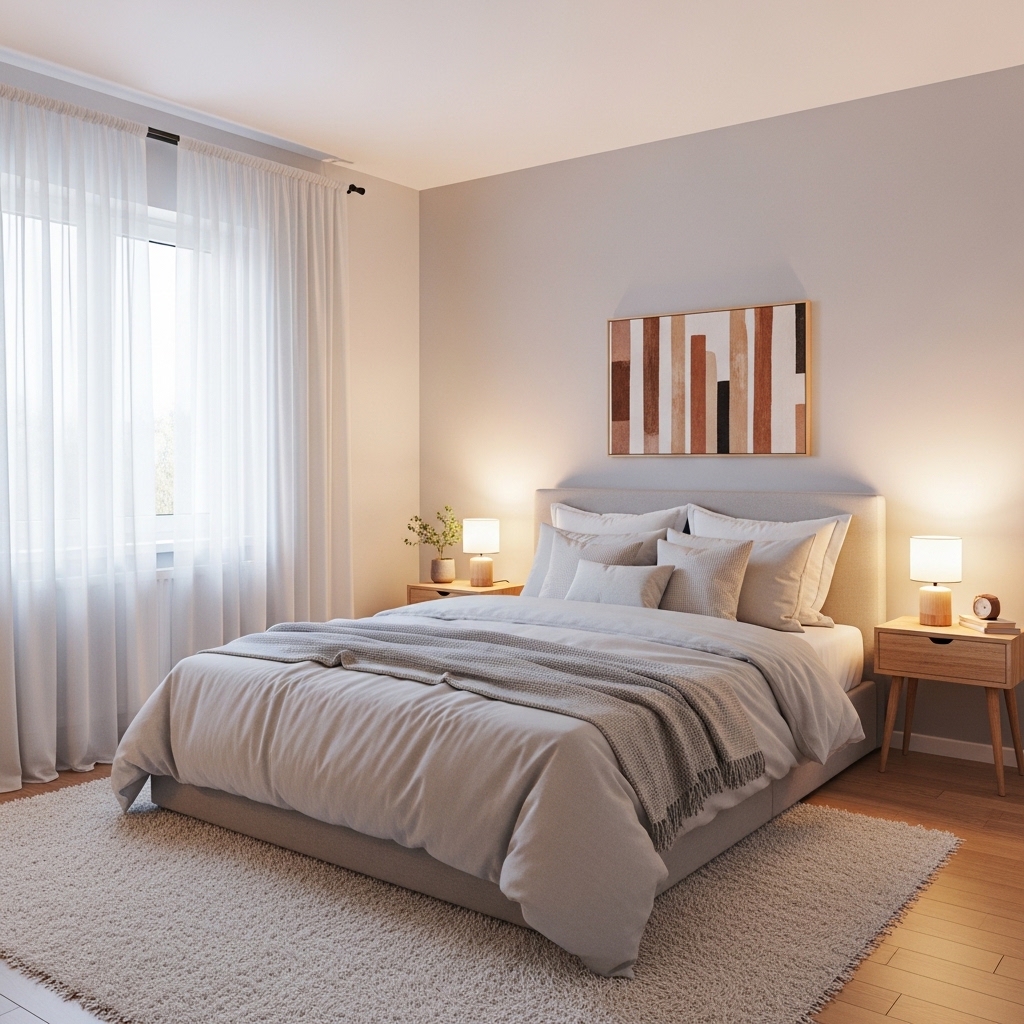
Use this checklist to ensure your bedroom has all the elements of coziness.
| Element | Done |
|---|---|
| Soft lighting (lamps + dimmer) | ☐ |
| Layered bedding (sheets + quilt + duvet + throw) | ☐ |
| Warm colors (cream, beige, warm neutrals) | ☐ |
| Soft textures (velvet, wool, cotton, linen) | ☐ |
| Personal elements (photos, books, meaningful objects) | ☐ |
| Window treatments (curtains or shades) | ☐ |
| A rug (extends beyond bed) | ☐ |
| A place to sit (chair or bench) | ☐ |
| Scent (candle, diffuser, or spray) | ☐ |
| Absence of clutter (clear surfaces, clear floors) | ☐ |
Frequently Asked Questions
What is the most important element for a cozy bedroom?
Soft lighting. Harsh light destroys coziness. Add lamps. Add a dimmer. Use warm white bulbs (2700K). No other change delivers as much cozy impact.
Can I make a bedroom cozy without spending much money?
Yes. Use what you already have. Layer blankets you already own. Add a lamp from another room. Remove clutter (free). Rearrange furniture (free). Soft lighting and absence of clutter cost nothing.
What colors are best for a cozy bedroom?
Warm neutrals. Cream, beige, taupe, warm gray, soft terracotta, sage green. Avoid cool colors (cool gray, true blue, pure white). Cool colors feel cold.
How do I make a rental bedroom cozy?
Use tension rods for curtains. Use command strips for art. Use removable wallpaper. Add lamps (no installation). Add a rug (covers ugly flooring). Add plants. Every cozy element works in rentals.
How many pillows are too many?
More than 4-5 decorative pillows makes the bed unusable for sleeping. Stick to 2-3 decorative pillows plus 2 sleeping pillows and 2 Euro pillows. The bed should still be easy to get into.
Conclusion
A cozy bedroom is not about expensive bedding or designer furniture. It is about specific choices that signal comfort and rest.
Ten elements work together to create coziness. Soft lighting. Layered bedding. Warm colors. Soft textures. Personal elements. Window treatments. A rug. A place to sit. Scent. Absence of clutter.
The Most Important Lesson
Start with the bed. Choose the right size. Layer the bedding. Add soft lighting. Everything else builds from there.
Start with one element today. Add a lamp. Layer a blanket. Remove clutter.
Small changes add up to dramatic transformations. The cozy bedroom of your dreams is within reach.
Take back your bedroom starting today. Element by element. Layer by layer. Decision by decision.