How to Make a Small Living Room Look Bigger Without Renovation | Space-Expanding Design Tricks | Budget-Friendly Layout Solutions
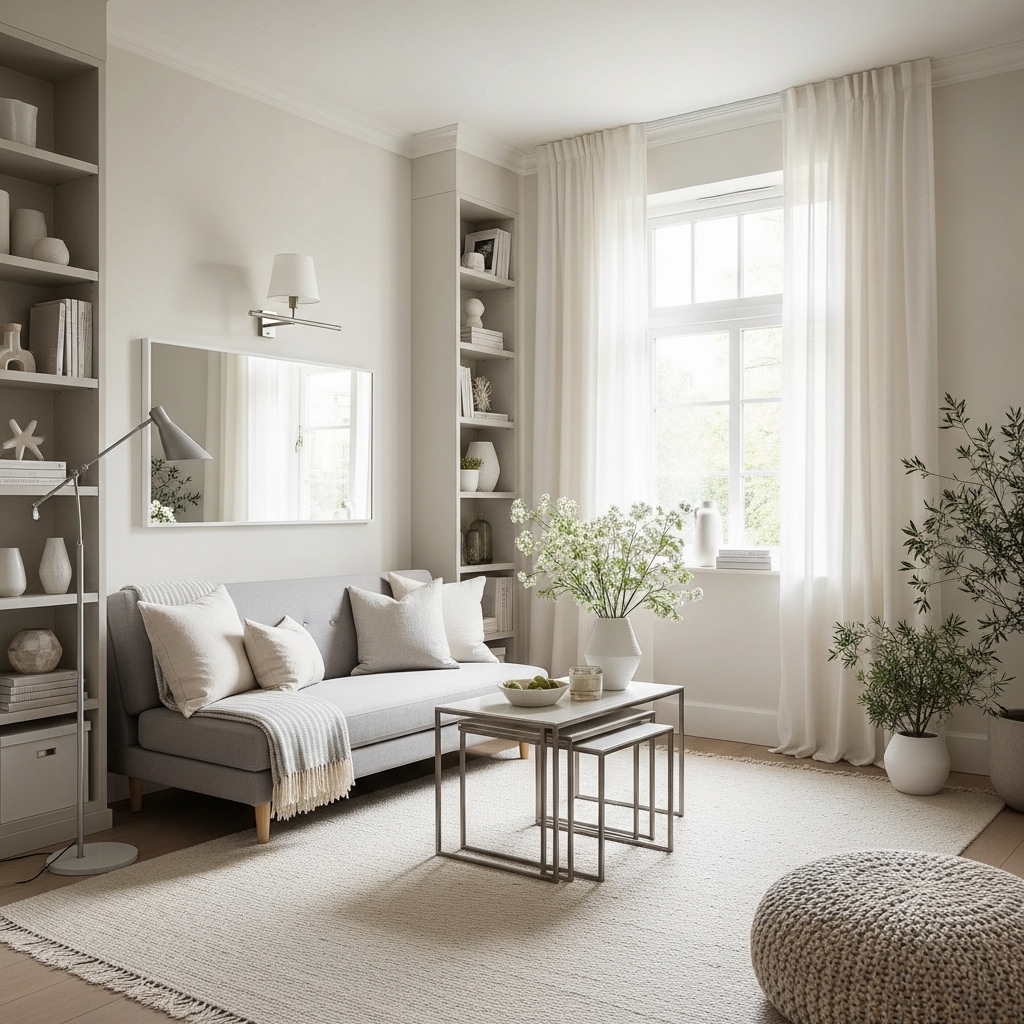
A small living room can feel like a design trap. Every piece of furniture seems too large. Every layout feels wrong. The fear is that the room will always feel cramped no matter what you do. Renovation is expensive. Knocking down walls is impractical. But small living rooms can look significantly larger without any construction at all.
The solution is not adding more. The solution is strategic choices in furniture placement, color, lighting, and decor. A few intentional changes can make a room feel twice its actual size. The key is understanding how the eye perceives space and using that knowledge to your advantage.
This article explains proven ways to make a small living room look bigger without renovation. No contractors. No demolition. Just smart design choices that anyone can implement in a weekend.
Why Small Living Rooms Feel Cramped
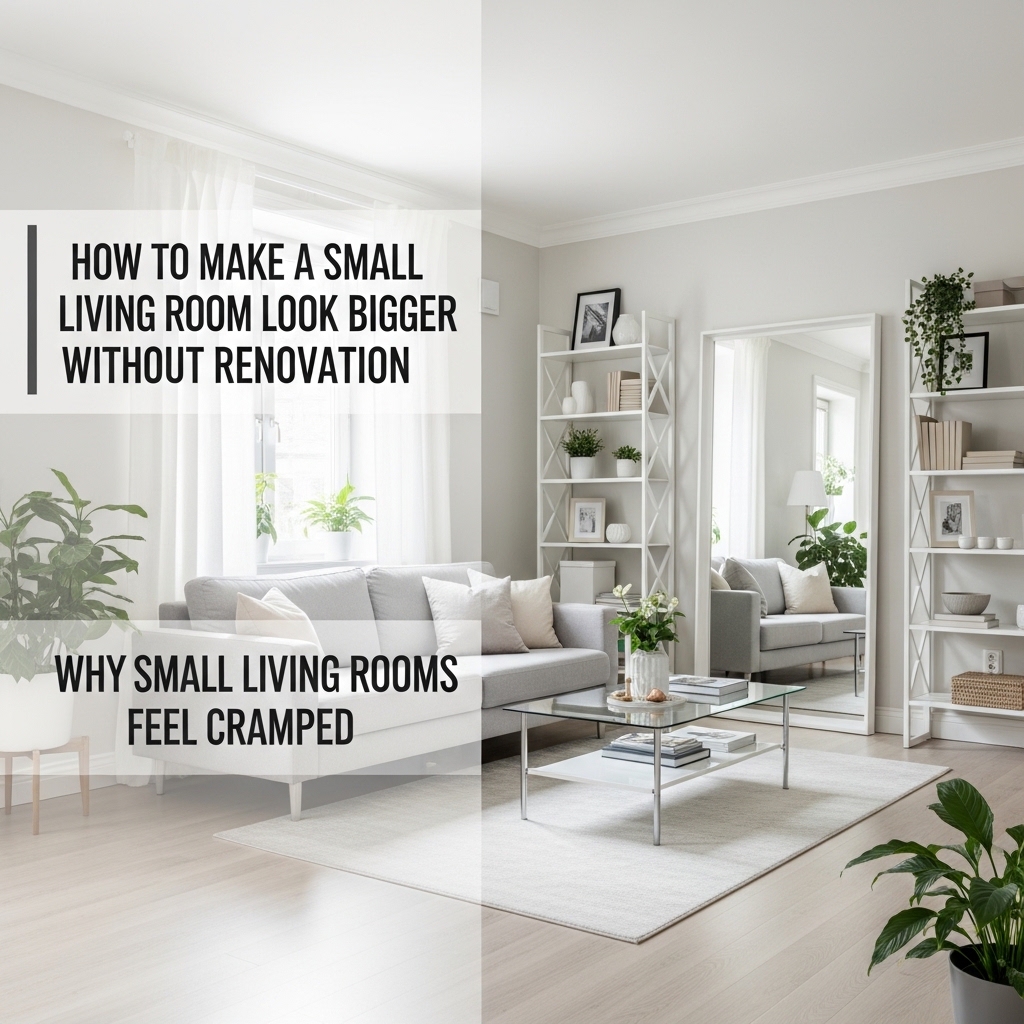
Before fixing the problem, understand what causes it. Small living rooms feel cramped for predictable reasons that have nothing to do with square footage.
The Three Hidden Culprits
Too much furniture. Every piece of furniture consumes floor space and visual attention. More pieces create more visual noise. The eye has nowhere to rest. The room feels busy, not cozy.
Wrong furniture placement. Furniture pushed against walls creates an empty no man’s land in the center of the room. The room feels like a waiting room. Conversation becomes difficult across the void.
Poor lighting. A single overhead light creates harsh shadows and dark corners. Dark corners make rooms feel smaller because the eye cannot see where the room ends.
The Mindset Shift That Changes Everything
A small room is not a limitation. It is an opportunity to design smarter. Every piece must earn its place. Empty space is not wasted space. Empty space is what makes small rooms feel larger.
Pro Tip: Take photos of your living room from every angle before changing anything. Photos reveal problems your eyes have learned to ignore.
Mistake to Avoid: Do not buy more furniture thinking it will solve the problem. In small rooms, less furniture creates more space.
Floating Furniture Away from Walls
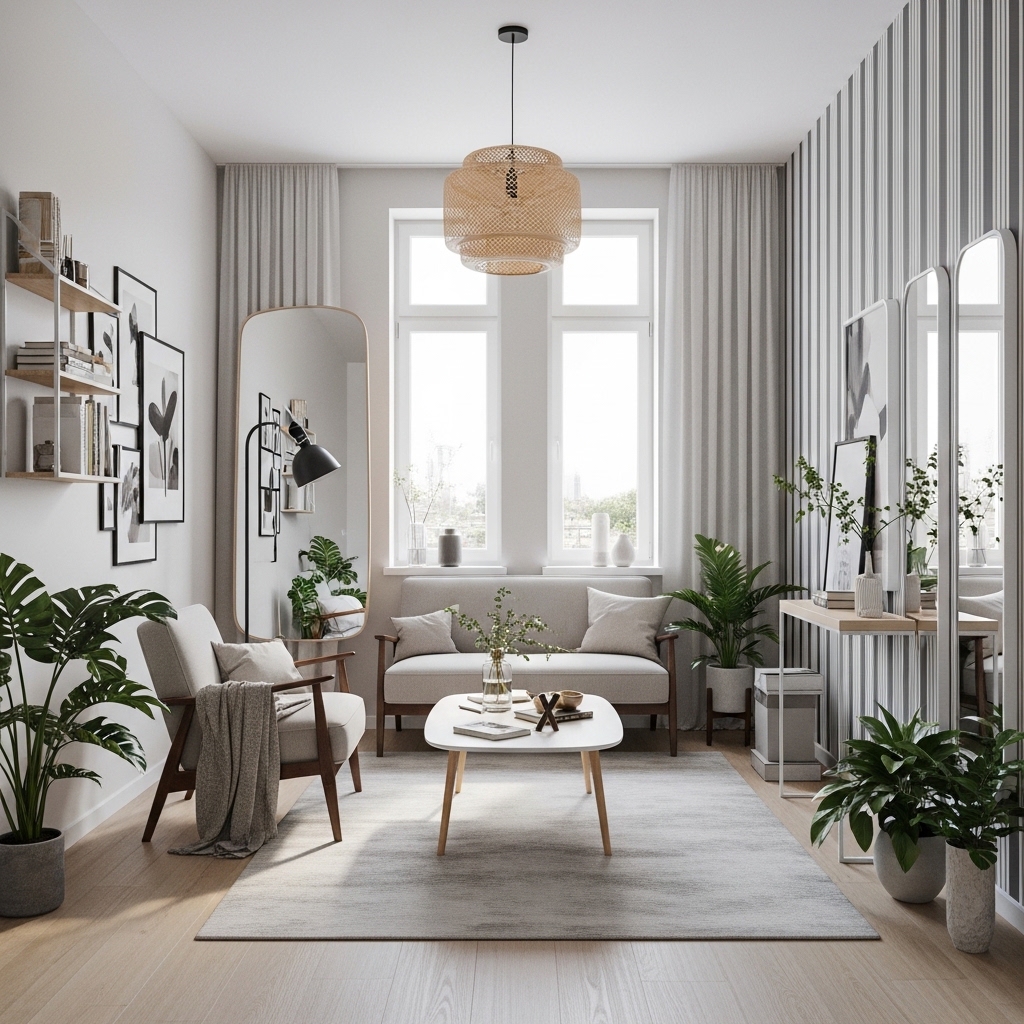
Conventional wisdom says push furniture against walls to open up the center. This is incorrect. A ring of furniture around the walls creates an empty void in the middle that feels awkward and unusable.
How Floating Creates Depth
When a sofa sits flush against the wall, the eye stops at the sofa. There is nowhere else to look. When the sofa sits six inches away from the wall, the eye sees the gap behind it. That gap registers as additional space. The room feels larger.
| Furniture Piece | Traditional Placement | Floating Placement | Visual Effect |
|---|---|---|---|
| Sofa | Flush against wall | 6-12 inches from wall | Creates depth behind sofa |
| Chairs | Pushed into corners | Angled toward center | Opens up corner space |
| Coffee table | Centered in room | Centered between seating | Defines conversation area |
How to Float Furniture in a Small Room
Start with the largest piece. Pull the sofa forward. Even six inches makes a difference. The gap behind the sofa allows light to pass through and creates visual depth.
Next, look at the corners. A chair pushed flat into a corner looks static and cramped. Angle the same chair toward the center of the room. The angled placement breaks up straight lines and invites conversation.
Finally, examine the coffee table. It should sit within 18 inches of the sofa. A table that is too far away cannot be reached. A table that is too close blocks the walking path.
Pro Tip: Use painter’s tape to outline new furniture positions on the floor before moving heavy pieces. Adjust the tape until the layout feels right.
Mistake to Avoid: Do not float furniture so far from walls that walking paths become blocked. Leave at least 30 inches for main walking paths.
Choosing the Right Rug Size
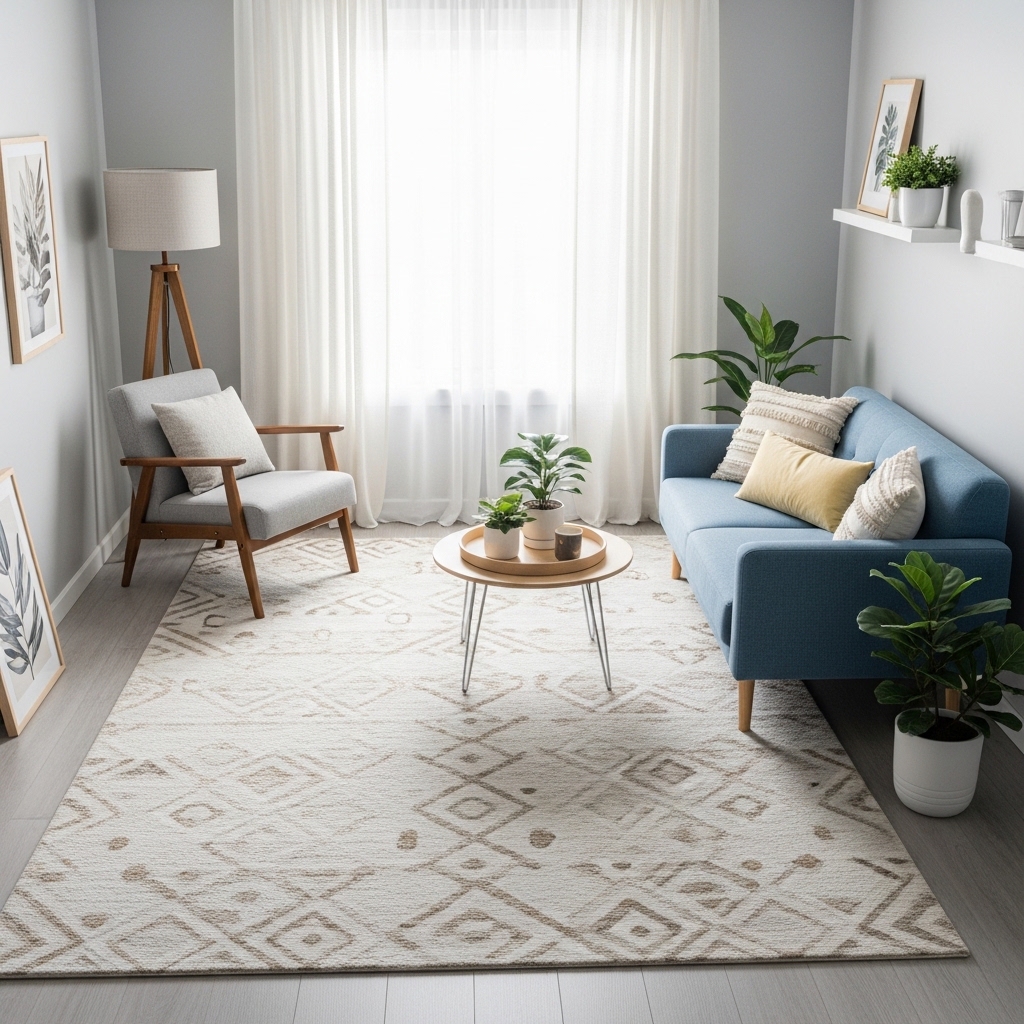
A too-small rug is one of the fastest ways to make a small room look smaller. Visible floor around all four edges creates a frame that highlights the room’s limitations.
The Rug Size Rule That Works
The front legs of all seating should sit on the rug. The rug should extend beyond the coffee table. The rug should come within 6-12 inches of the walls.
| Rug Size | Room Size | Effect |
|---|---|---|
| 5×7 feet | 10×10 feet | Too small, rug floats, room looks chopped |
| 8×10 feet | 10×10 feet | Correct size, front legs on rug, room unified |
| 9×12 feet | 12×12 feet | Ideal size, most floor covered, room feels larger |
How to Fix a Rug That Is Too Small
Do not throw the small rug away. Layer it. Place the small rug on top of a larger, neutral rug. The larger rug provides the correct scale. The smaller rug adds pattern and color.
A jute or sisal rug underneath costs less than buying a completely new large rug. The layered look is intentional and stylish. Use rug tape to keep layered rugs from shifting.
Pro Tip: Choose a rug with a subtle pattern or texture. Solid-colored rugs show every stain. Patterned rugs hide wear and tear.
Mistake to Avoid: Do not buy a rug that is too small because it is cheaper. A properly sized rug is worth the investment.
Using Mirrors to Double Visual Space
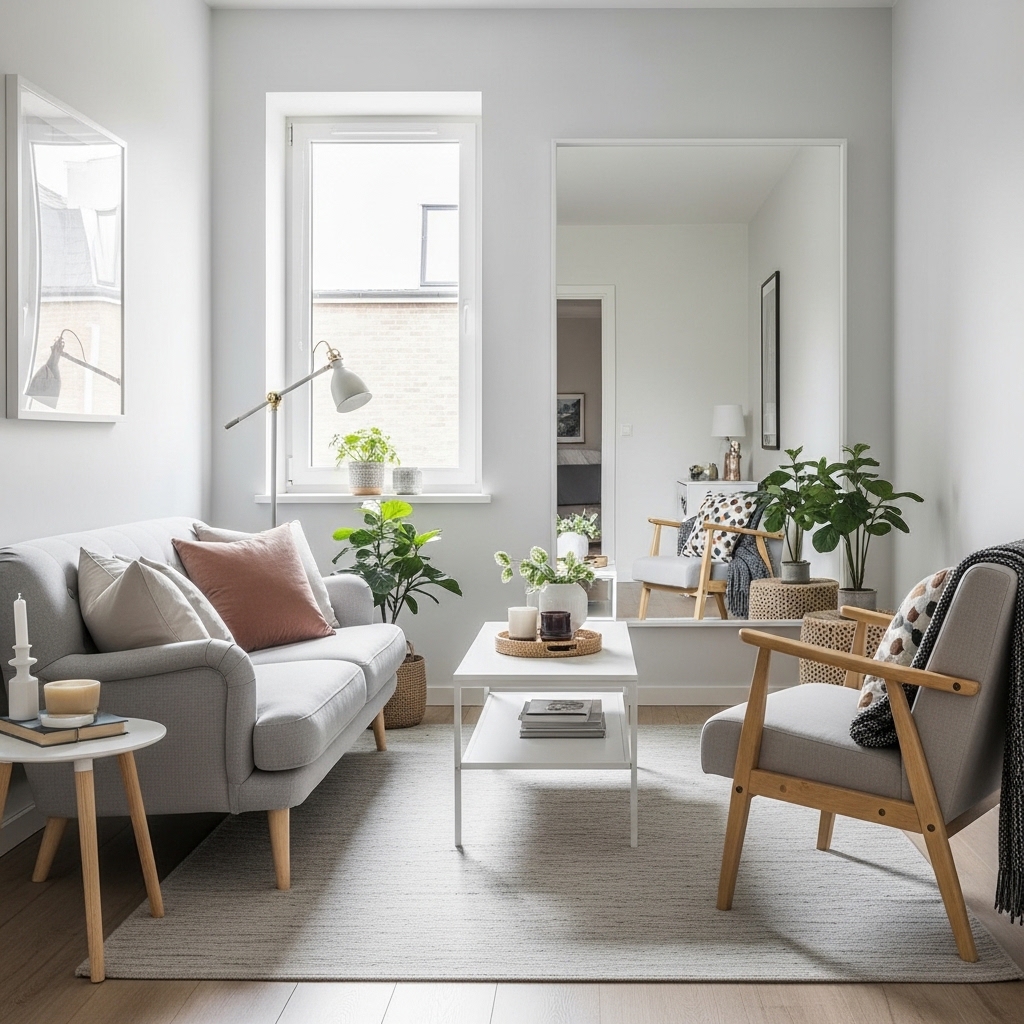
Mirrors are magic for small rooms. The right mirror in the right spot makes a room feel twice as large. The key is placement.
The Mirror Placement That Works Best
A large mirror placed opposite a window reflects the outdoor light and view. The room gains a second window. The reflected view adds depth that tricks the eye into seeing more space.
If a window is not available, place a mirror perpendicular to a window. The mirror bounces light deeper into the room. Dark corners disappear. The room feels brighter and larger.
How to Choose the Right Mirror
One large mirror is better than several small mirrors. A single large mirror creates a bigger impact. The minimum width should be at least half the width of the furniture below it.
| Mirror Placement | Effect | Best For |
|---|---|---|
| Opposite window | Reflects outdoor light and view | Dark rooms, rooms with one window |
| Perpendicular to window | Bounces light deeper into room | Long, narrow rooms |
| Behind a lamp | Doubles the light source | Dark corners |
| On a closet door | Adds depth without wall space | Bedrooms, small living rooms |
Pro Tip: Lean a large mirror against the wall instead of hanging it. Leaning mirrors feel more casual and create a different reflection angle.
Mistake to Avoid: Do not place a mirror directly facing a cluttered area. The mirror will reflect and double the clutter.
Selecting Light, Reflective Wall Colors
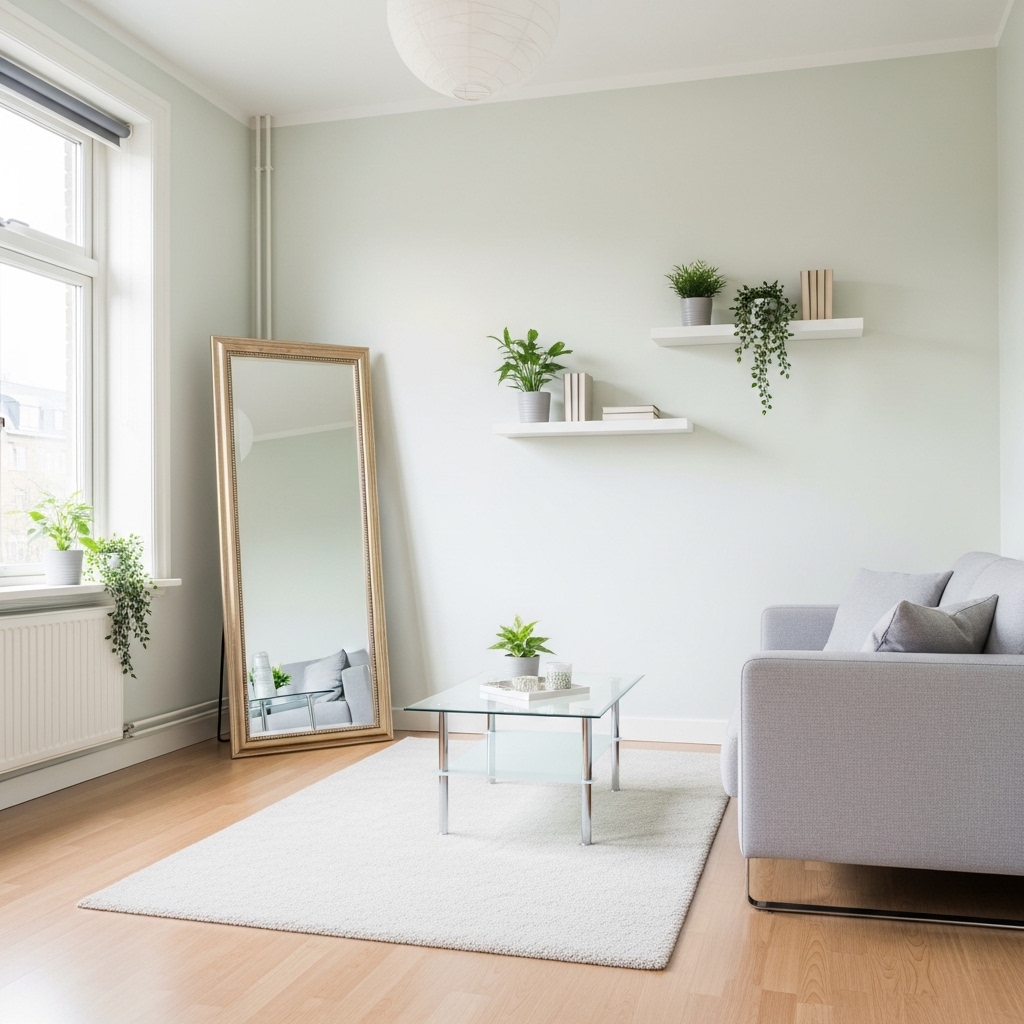
Wall color sets the foundation for the entire room. Dark colors absorb light. Light colors reflect light. Reflected light makes rooms feel larger.
The Best Paint Colors for Small Living Rooms
Warm whites reflect maximum light without feeling cold. Alabaster by Sherwin-Williams and White Dove by Benjamin Moore are excellent choices. They make walls recede. The room feels larger.
Pale blue-gray is another excellent option. It has cool undertones that recede visually. The walls feel farther away. The room feels larger. Palladian Blue by Benjamin Moore is a popular choice.
Soft sage green is earthy and calming. It adds color without overwhelming. It pairs well with wood, white, and beige. Clary Sage by Sherwin-Williams works well in small rooms.
Colors to Avoid in Small Living Rooms
Dark navy absorbs light and makes walls feel closer. Charcoal gray creates a cave-like atmosphere. Pure white feels cold and clinical. Bright colors are overstimulating.
If you love a dark color, use it on furniture or an accent wall. Keep the other walls light. One dark wall adds depth. Four dark walls shrink the room.
Pro Tip: Paint the ceiling a lighter version of the wall color. The lack of contrast between walls and ceiling makes the ceiling feel higher.
Mistake to Avoid: Do not choose paint color from a tiny swatch alone. Paint large samples on the wall and observe them for several days.
Layering Lighting to Eliminate Dark Corners
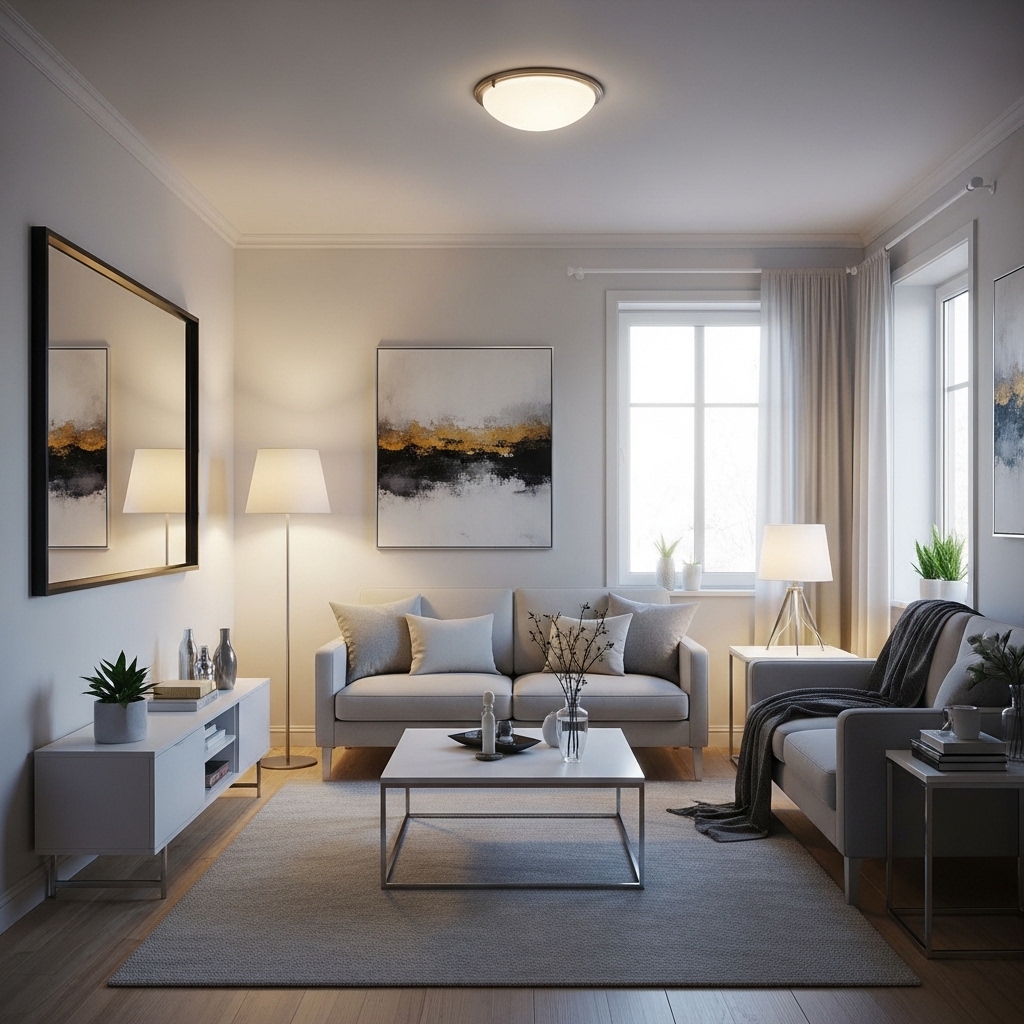
Dark corners make rooms feel smaller. The eye cannot see where the room ends. Layered lighting eliminates dark corners and creates depth.
The Three Layers of Light
Every room needs three layers of light. Ambient lighting comes from the ceiling and provides general illumination. Task lighting comes from table lamps or floor lamps and focuses on specific activities. Accent lighting comes from wall sconces or picture lights and adds mood and depth.
| Light Layer | Purpose | Examples | Bulb Temperature |
|---|---|---|---|
| Ambient | General illumination | Overhead fixture on dimmer | 2700K |
| Task | Reading, activities | Table lamp, floor lamp | 2700K |
| Accent | Mood, depth | Wall sconce, picture light | 2700K |
How to Add Layers Without Renovation
Add a floor lamp to the darkest corner of the room. The lamp does not need to be expensive. Thrift stores sell floor lamps for under twenty dollars.
Add a table lamp on a side table or console. The lamp provides task lighting and fills a dark spot.
Put the overhead light on a dimmer. Dimming changes the mood of a room instantly. Bright light for cleaning. Dim light for relaxing.
Pro Tip: Use warm white bulbs (2700K) in all lamps. Consistent color temperature creates cohesion. Mixed temperatures look chaotic.
Mistake to Avoid: Do not rely on ceiling lights alone. A room without lamps feels cold and unfinished.
Choosing Furniture with Exposed Legs
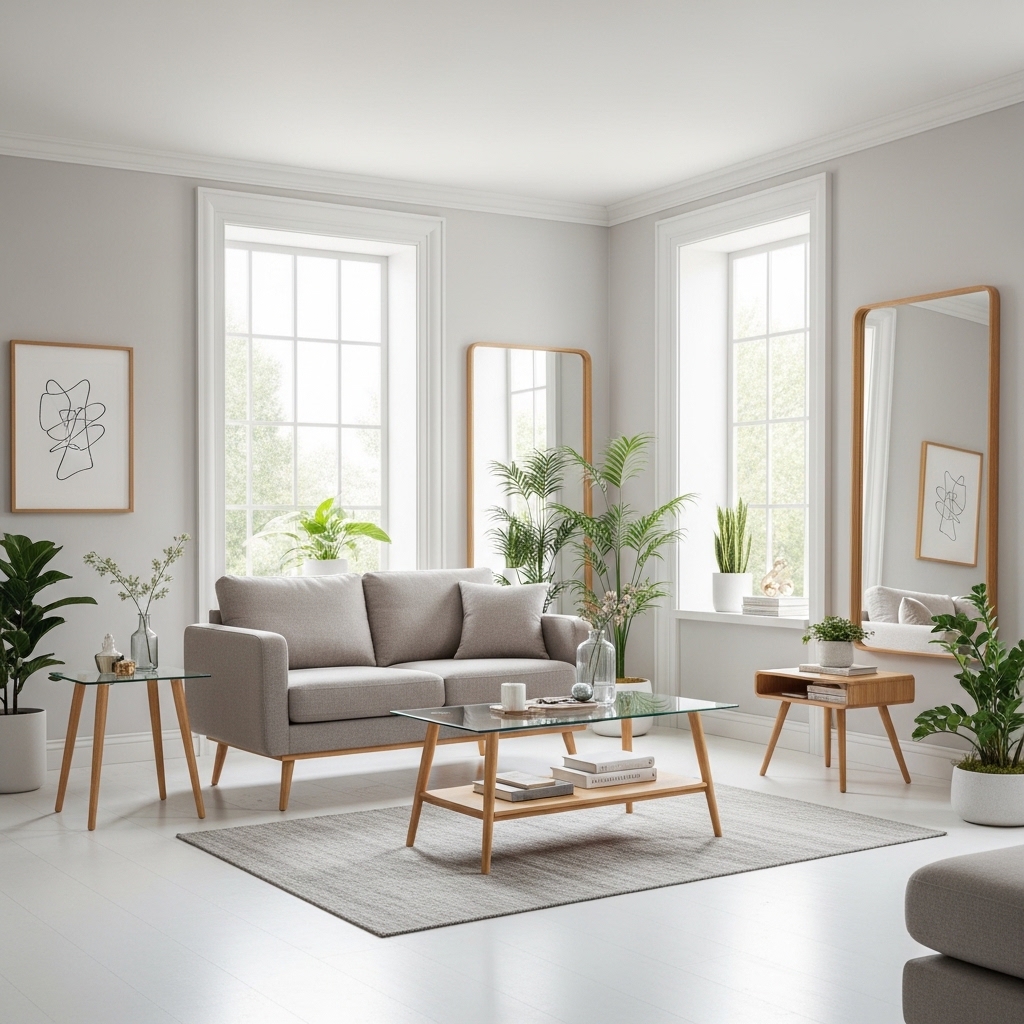
Furniture that sits directly on the floor looks heavy and bulky. Furniture with exposed legs creates visual space underneath. The room feels larger.
The Leg Rule for Small Rooms
Visible floor underneath furniture tricks the eye. The floor appears to continue beneath the piece. The room feels larger because more floor is visible.
| Leg Height | Visual Effect | Practical Effect |
|---|---|---|
| 2-3 inches | Sofa looks heavy, blocks light | Cannot clean underneath |
| 4-6 inches | Sofa looks lighter, visible floor | Vacuum fits underneath |
| 6-8 inches | Sofa looks airy, maximum visible floor | Robot vacuum fits underneath |
How to Apply the Leg Rule
When shopping for a sofa, look for exposed legs. Avoid sofas with skirts that hide the legs. The legs should be at least four inches tall.
The same rule applies to chairs, dressers, and console tables. Exposed legs make every piece look lighter. The room feels less crowded.
Pro Tip: Choose furniture with tapered legs. Tapered legs look more elegant than straight, blocky legs.
Mistake to Avoid: Do not block the space under furniture with stored items. The visual space is lost when the gap is filled.
Editing Surfaces to Reduce Visual Clutter
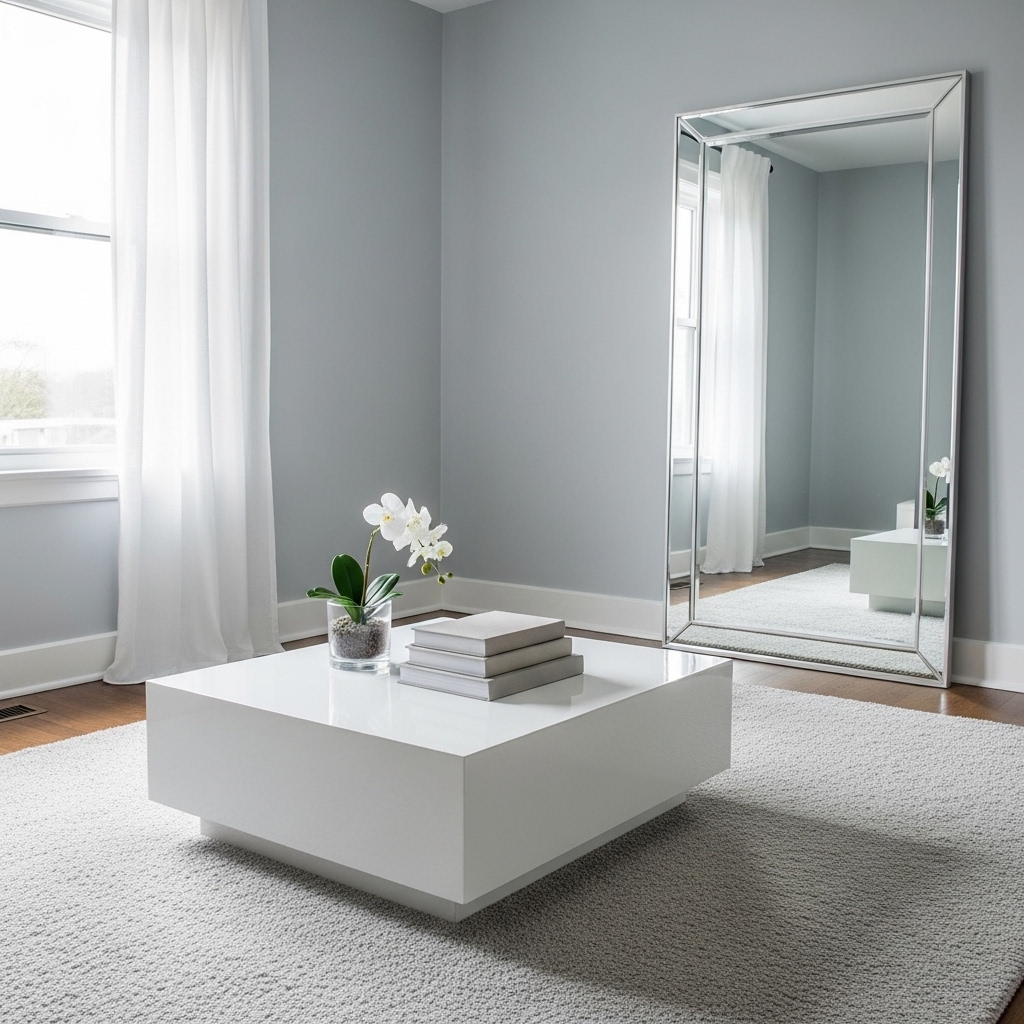
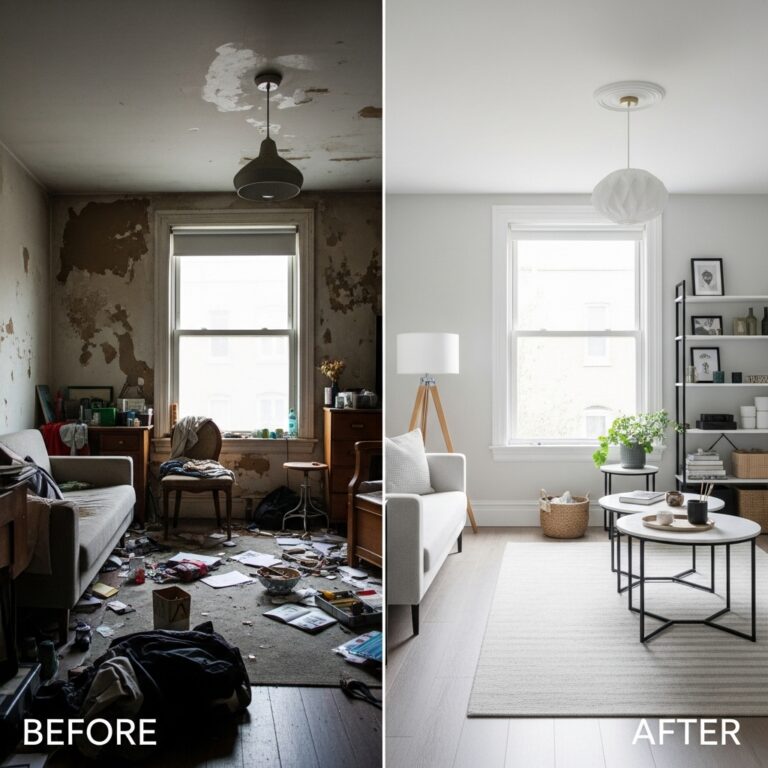
Cluttered surfaces look chaotic. The eye has nowhere to rest. The room feels busy and cramped. Editing surfaces is free and makes an immediate difference.
The Surface Curating Rule
Remove 50 percent of what is on every surface. Coffee table. End tables. Console. Bookshelves. Leave empty space. Empty space gives the eye a place to rest.
| Surface | Before (Cluttered) | After (Curated) |
|---|---|---|
| Coffee table | 12 items | 3 items + empty space |
| End table | 8 items | 2 items + empty space |
| Bookshelf | Completely full | 70% full, 30% empty |
How to Curate a Surface
Remove everything from the surface. Clean the surface. Add items back one at a time. Stop when the surface feels balanced. Then remove one more item. You probably have too many.
Use trays to corral items on surfaces. A tray contains the visual chaos. The items are still accessible. The look is intentional.
Pro Tip: Take a photo of the curated surface. Photos reveal whether the arrangement looks balanced or still too crowded.
Mistake to Avoid: Do not use surfaces as permanent storage. Surfaces are for display and daily items only.
Frequently Asked Questions
What is the single most effective change for a small living room?
Floating the sofa away from the wall. This costs nothing and makes an immediate difference. The gap behind the sofa creates visual depth that makes the room feel larger.
Can I use dark colors in a small living room?
Yes, but only as accents. A dark sofa or dark rug can anchor the room. Dark walls will make the room feel smaller. Use dark colors on furniture and accessories, not walls.
How do I make a small living room feel cozy without feeling cramped?
Focus on lighting. Layered lighting creates warmth and depth. Add soft textures like throws and pillows. Use warm white bulbs (2700K). Cozy is about light and texture, not more furniture.
What should I never do in a small living room?
Never block natural light. Never use furniture that is too large for the space. Never push all furniture against walls. Never buy a rug that is too small. Never use dark paint on walls.
Conclusion
A small living room can feel spacious. The difference is not square footage. The difference is strategy.
Float furniture away from walls to create depth. Choose a rug large enough for the front legs of all seating to sit on it. Add a mirror opposite a window to double the light and view. Paint walls a light, reflective color. Layer lighting to eliminate dark corners. Choose furniture with exposed legs. Edit surfaces to reduce visual clutter.
Start with one change today. Float the sofa. Add a floor lamp. Remove half the items from the coffee table. Small changes produce dramatic results. The small living room can feel open, functional, and comfortable.