Light Walls vs Dark Walls: Which Makes Room Bigger? | Color Psychology for Small Spaces | Expert Wall Color Guide
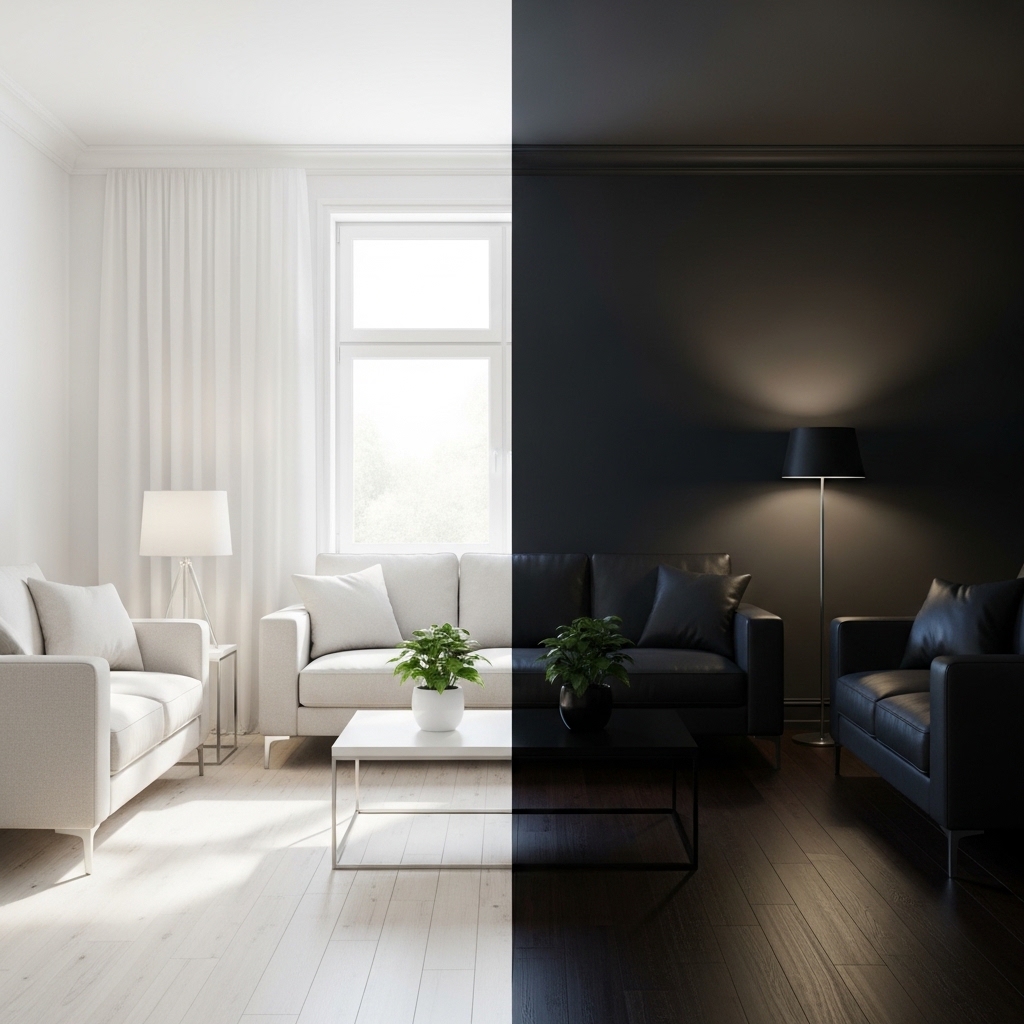
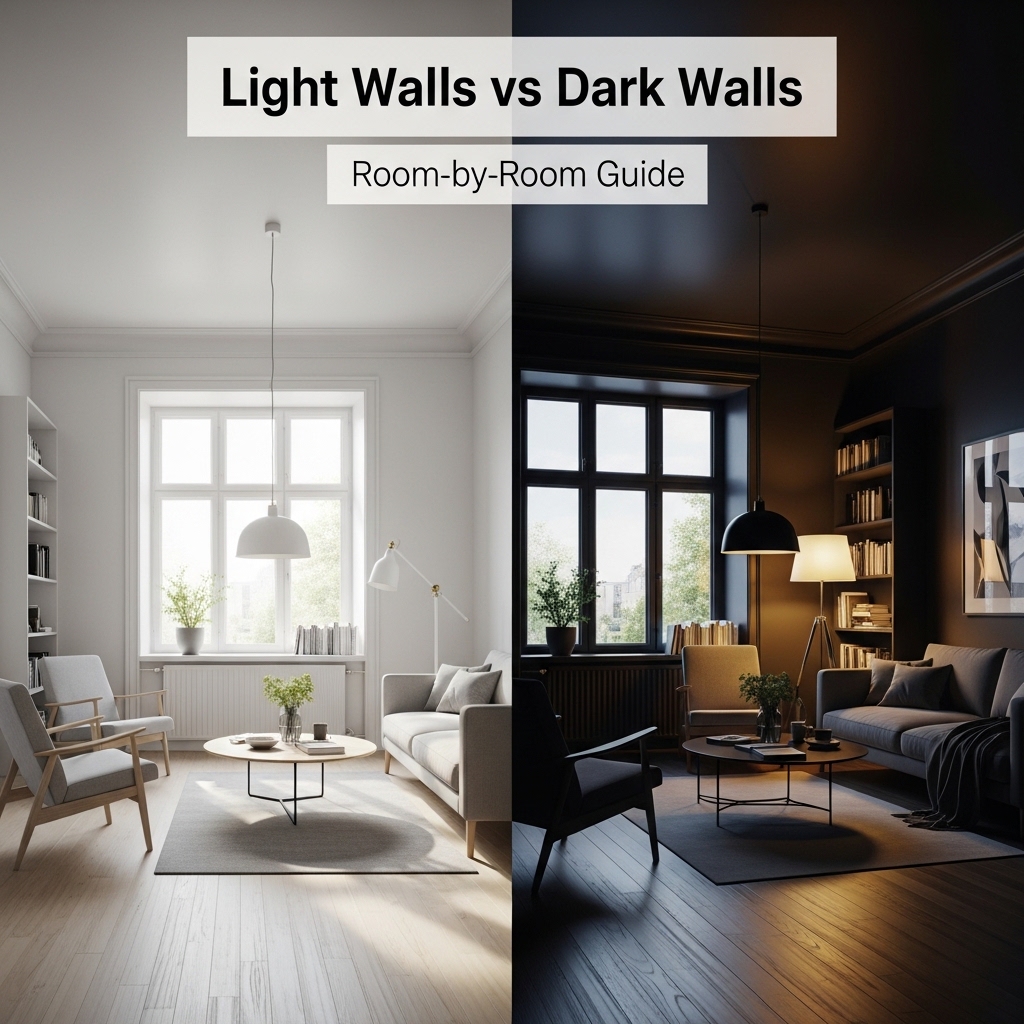
A fresh coat of paint is the cheapest way to transform a room. But which color? Light walls or dark walls? The answer seems obvious. Light walls make rooms look bigger. Dark walls make rooms look smaller.
But the truth is more nuanced. Light walls are not always the answer. Dark walls are not always a mistake. The right choice depends on the room’s size, light, and purpose.
This article explains when to choose light walls and when to choose dark walls. Science-backed guidance for making the right color choice.
The Science of Light and Color
Light colors reflect light. Dark colors absorb light. This is the fundamental difference.
Light Reflection Value (LRV)
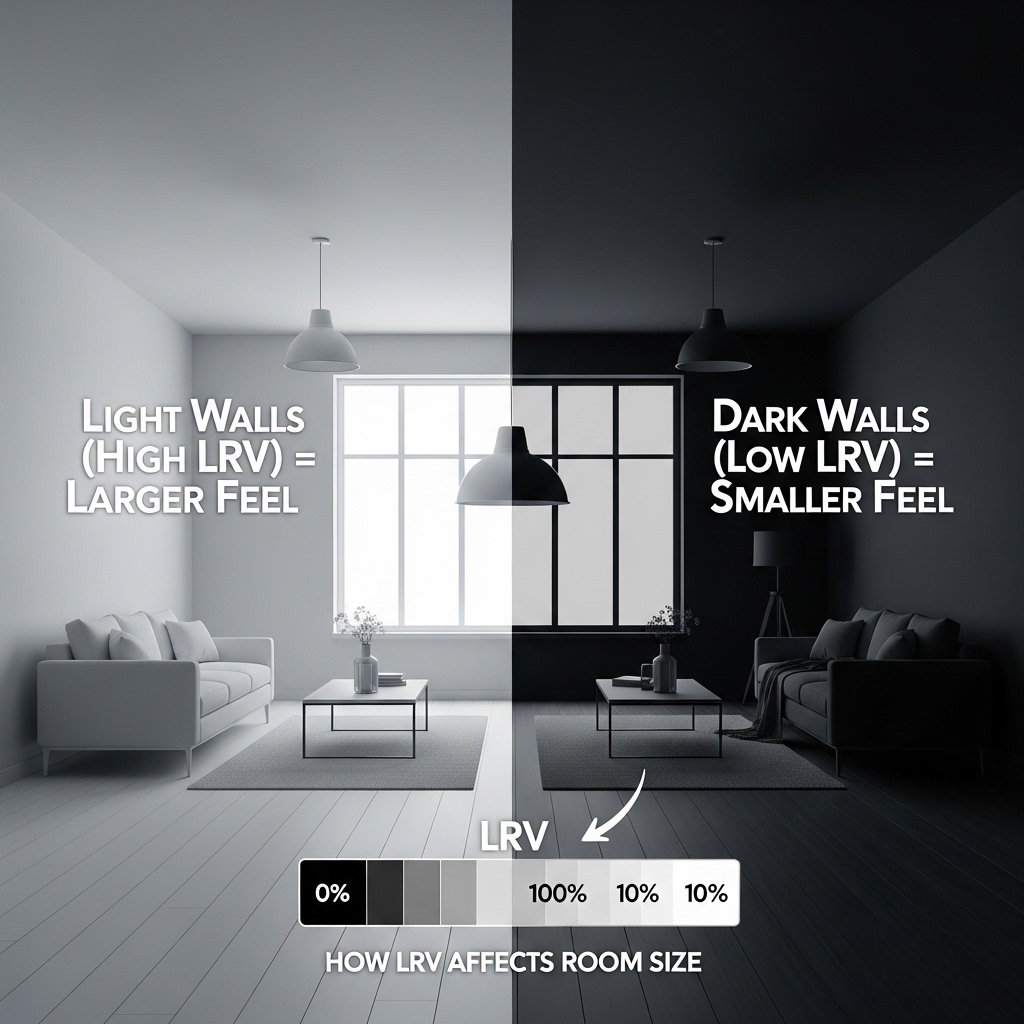
Paint colors are rated by Light Reflection Value (LRV). LRV measures how much light a color reflects. The scale runs from 0 (absolute black, absorbs all light) to 100 (pure white, reflects all light).
| LRV Range | Color Type | Effect |
|---|---|---|
| 70-100 | Light | Reflects most light, makes room feel larger |
| 40-70 | Medium | Reflects some light, neutral effect |
| 0-40 | Dark | Absorbs most light, makes room feel smaller |
How LRV Affects Room Size
A room with light walls reflects light around the space. The eye sees the reflected light and perceives more space. A room with dark walls absorbs light. The eye sees the light stop at the walls and perceives less space.
Pro Tip: Look for the LRV number on paint swatches. It is usually printed on the back. Choose LRV 70+ for small rooms.
Mistake to Avoid: Do not choose a color based on the swatch alone. The LRV number is more reliable than your eye under store lighting.
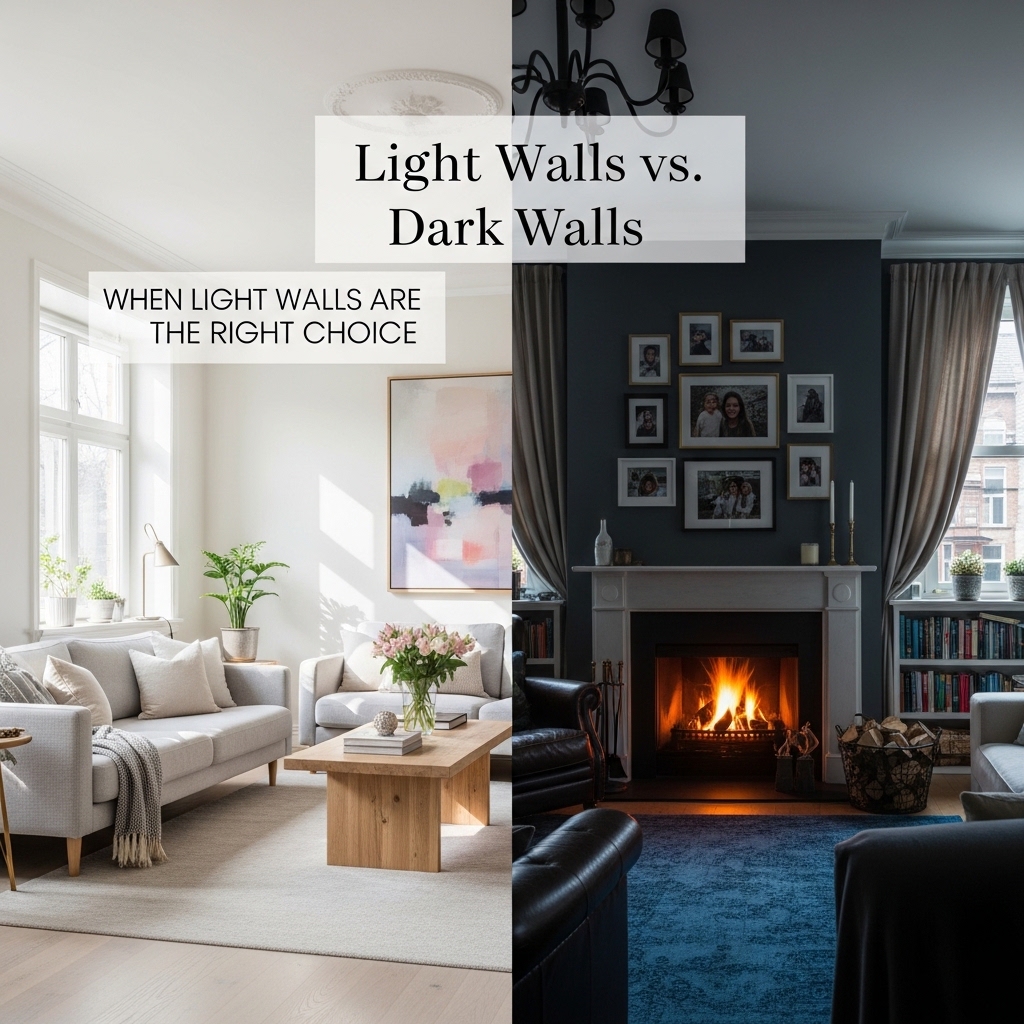
When Light Walls Are the Right Choice
Light walls are usually the right choice for small rooms. They reflect light. They make ceilings feel higher. They make walls recede.
Best Rooms for Light Walls
| Room Type | Why Light Walls Work |
|---|---|
| Small living room (under 150 sq ft) | Reflects limited light, makes space feel larger |
| Small bedroom (under 120 sq ft) | Creates calm, restful atmosphere |
| North-facing room | Balances cool, dim light with warmth |
| Room with no windows | Maximizes available artificial light |
| Hallway or entryway | Makes narrow space feel wider |
Best Light Wall Colors
| Color | LRV | Why It Works |
|---|---|---|
| Alabaster (SW 7008) | 82 | Warm white, reflects maximum light |
| White Dove (OC-17) | 85 | Soft white, warm undertones |
| Simply White (OC-117) | 91 | Clean white, slight warmth |
| Pale Oak (OC-20) | 70 | Light greige, more warmth than gray |
| Edgecomb Gray (HC-173) | 63 | Light greige, warm, versatile |
Pro Tip: Paint the ceiling a lighter version of the wall color. The lack of contrast makes the ceiling feel higher.
Mistake to Avoid: Do not use pure white (LRV 90+) in a north-facing room. Pure white can feel cold. Choose warm white instead.
When Dark Walls Are the Right Choice
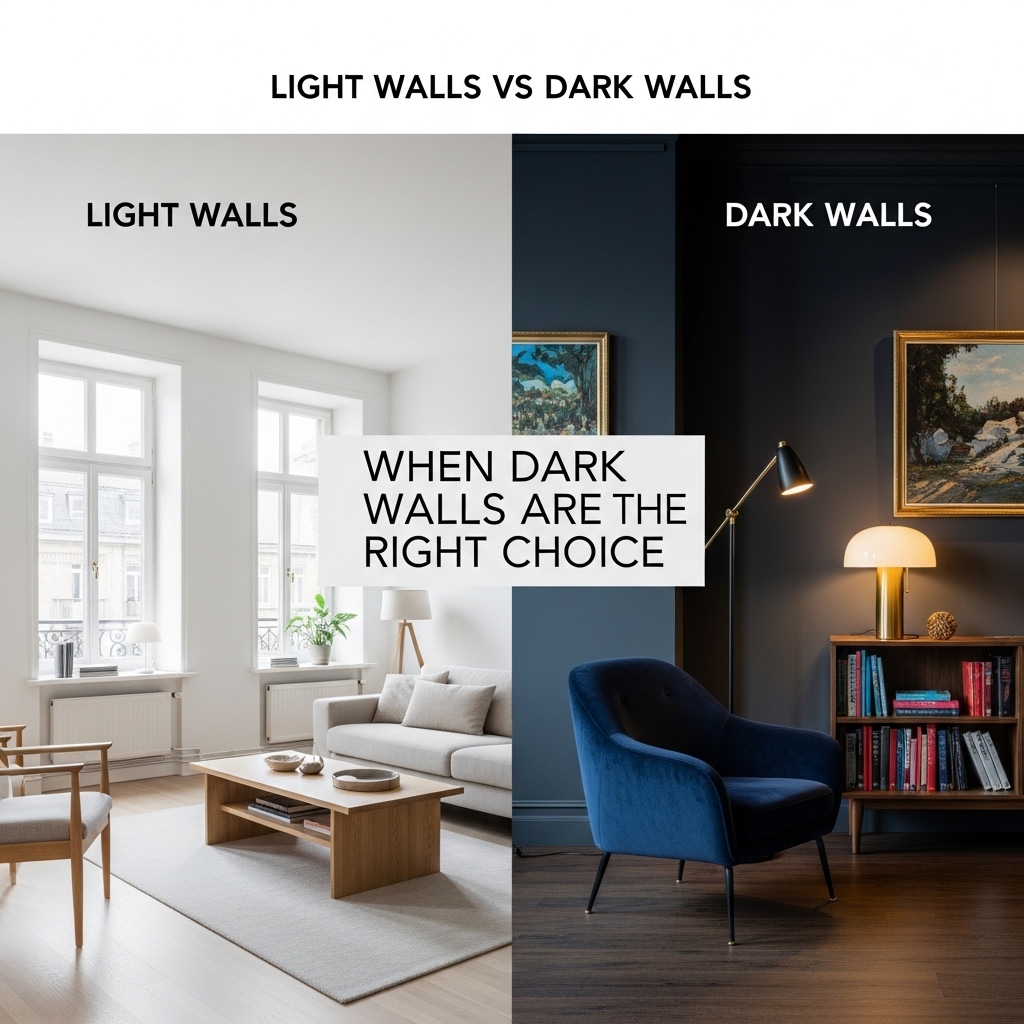
Dark walls can work beautifully. They add drama, depth, and coziness. But they are not for every room.
Best Rooms for Dark Walls
| Room Type | Why Dark Walls Work |
|---|---|
| Large living room (over 250 sq ft) | Adds intimacy to vast space |
| Large bedroom (over 200 sq ft) | Creates cozy, cocoon-like atmosphere |
| South-facing room | Balances bright, warm light |
| Room with high ceilings | Brings ceiling down visually |
| Home theater or media room | Enhances screen contrast |
Best Dark Wall Colors
| Color | LRV | Why It Works |
|---|---|---|
| Hale Navy (HC-154) | 7 | Deep blue, calming, dramatic |
| Iron Ore (SW 7069) | 12 | Dark gray, modern, sophisticated |
| Green Smoke (No. 47) | 15 | Deep green, earthy, cozy |
| Black Beauty (SW 6258) | 5 | True black, dramatic, bold |
The Dark Wall Rule
Dark walls work best in rooms that receive abundant natural light. A south-facing room with large windows can handle dark walls. A north-facing room with small windows cannot.
Pro Tip: Use dark walls on one accent wall only. The contrast between the dark wall and light walls creates depth.
Mistake to Avoid: Do not paint a small, north-facing room dark. The room will feel like a cave.
The Accent Wall Strategy
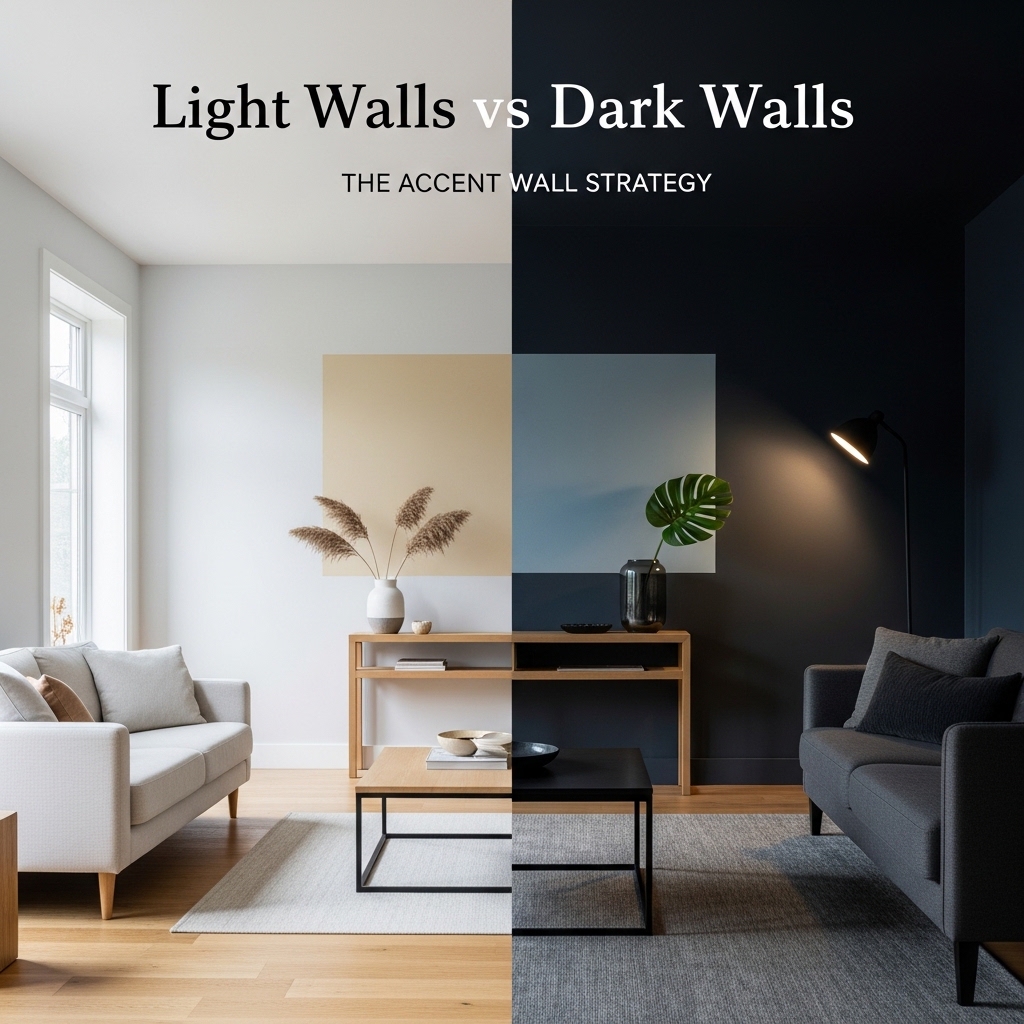
An accent wall is one wall painted a different color than the others. It is a compromise between light and dark.
When to Use an Accent Wall
| Situation | Accent Wall Color | Effect |
|---|---|---|
| You love dark colors but have a small room | Dark wall behind bed or sofa | Adds depth without overwhelming |
| You want to define a zone | Dark wall in one area | Visually separates space |
| You have a focal point | Dark wall behind fireplace or TV | Draws attention |
How to Choose the Accent Wall
Choose the wall that naturally draws attention. The wall behind the bed. The wall behind the sofa. The wall with the fireplace. The wall with the TV.
| Accent Wall Location | Why It Works |
|---|---|
| Behind bed | Frames the bed, creates focal point |
| Behind sofa | Anchors seating area |
| Behind TV | Reduces glare, adds depth |
| Fireplace wall | Enhances existing focal point |
Pro Tip: Paint the accent wall a darker version of the main wall color. The contrast is subtle but effective. Example: Main walls in Pale Oak (light greige), accent wall in Edgecomb Gray (medium greige).
Mistake to Avoid: Do not paint the accent wall on the smallest wall. The accent wall should be the largest or most prominent wall.
The Ceiling Rule
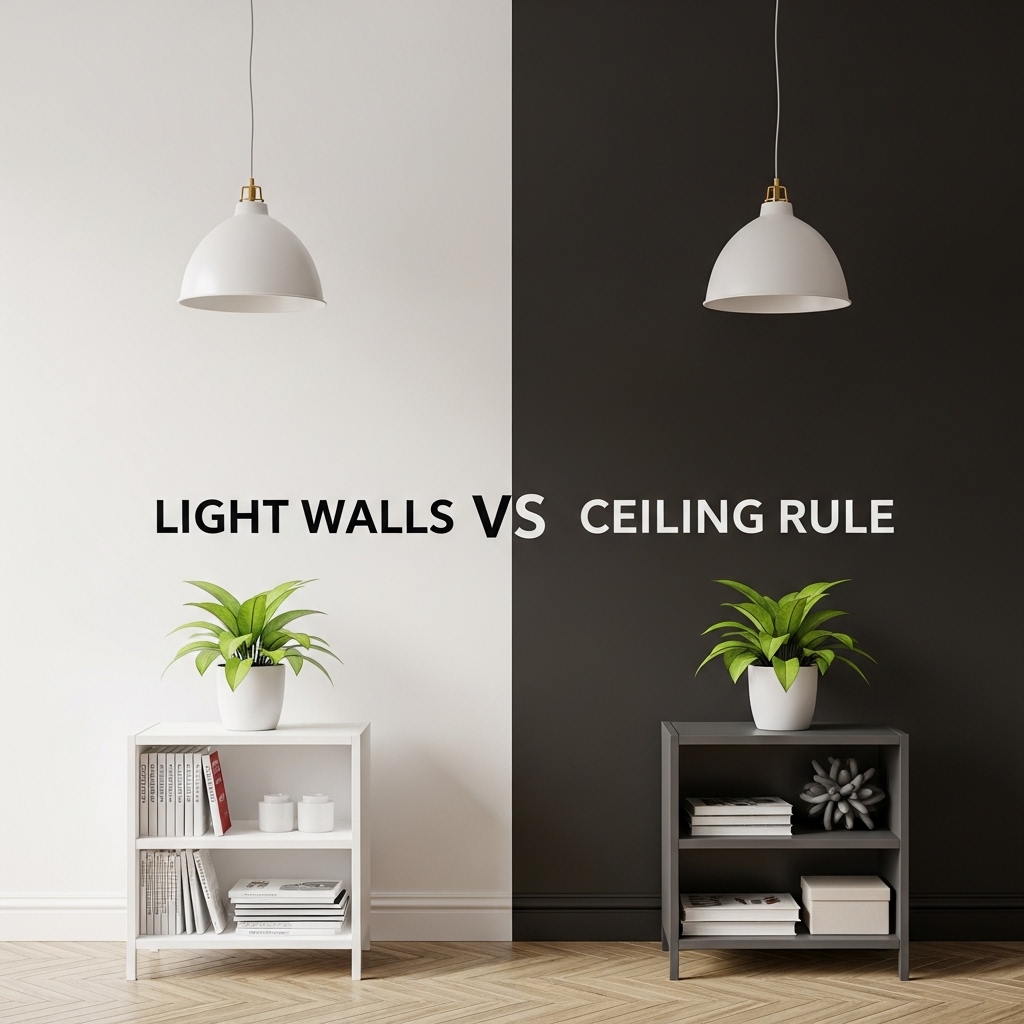
The ceiling is often overlooked. It should not be.
Light Ceilings
A light ceiling (white or light color) reflects light downward. The room feels brighter. The ceiling feels higher.
| Ceiling Color | Effect |
|---|---|
| White | Standard, reflects most light |
| Same as walls (lighter version) | Seamless, modern, ceiling feels higher |
| Lighter than walls | Traditional, safe |
Dark Ceilings
A dark ceiling absorbs light. The room feels cozier. The ceiling feels lower. Dark ceilings work in large rooms with high ceilings.
| Ceiling Color | Effect |
|---|---|
| Darker than walls | Dramatic, cozy, lowers visual height |
| Same as dark walls | Enveloping, cocoon-like |
Pro Tip: In a small room, always paint the ceiling white or a lighter version of the wall color. A dark ceiling will make the room feel smaller.
Mistake to Avoid: Do not paint the ceiling a different color than the walls without a clear reason. Contrast for contrast’s sake looks unplanned.
The Floor and Trim Consideration
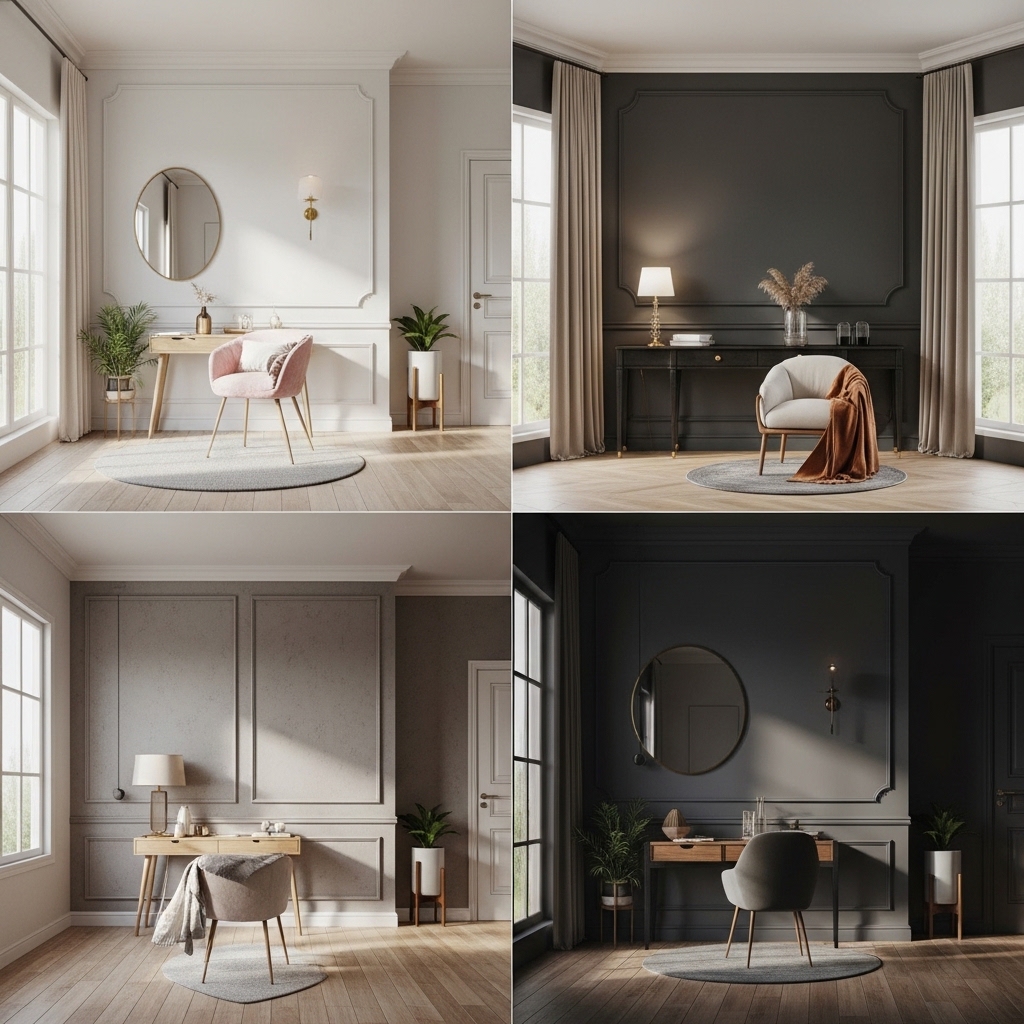
Wall color does not exist in isolation. It interacts with the floor and trim.
Floor Color
| Floor Color | Best Wall Color | Why |
|---|---|---|
| Dark wood | Light walls | Contrast creates balance |
| Light wood | Light or dark walls | Both work |
| Gray | Warm walls (beige, cream) | Warmth balances cool gray |
| Beige carpet | Light walls | Reflects light, lifts the room |
Trim Color
| Trim Color | Effect | Best With |
|---|---|---|
| White (pure) | High contrast, crisp | Light or dark walls |
| White (warm) | Soft contrast, warm | Warm light walls |
| Same as walls | Seamless, modern | Light walls |
Pro Tip: If your trim is off-white (landlord special), paint your walls a color that works with the off-white. Fighting the trim color creates a jarring look.
Mistake to Avoid: Do not paint walls dark without considering the floor. Dark walls over dark floors feel heavy and oppressive.
Room-by-Room Guide
Living Room
| Room Size | Light Exposure | Recommended Wall Color |
|---|---|---|
| Small (under 150 sq ft) | Any | Light (warm white, pale gray) |
| Medium (150-250 sq ft) | North-facing | Light to medium (beige, greige) |
| Medium (150-250 sq ft) | South-facing | Light to dark (any) |
| Large (over 250 sq ft) | Any | Light to dark (any) |
Bedroom
| Room Size | Desired Mood | Recommended Wall Color |
|---|---|---|
| Small (under 120 sq ft) | Calm | Light (warm white, pale blue-gray) |
| Small (under 120 sq ft) | Cozy | Medium (sage green, greige) |
| Large (over 200 sq ft) | Calm | Light to medium |
| Large (over 200 sq ft) | Dramatic | Dark (navy, charcoal) |
Bathroom
| Room Size | Light Exposure | Recommended Wall Color |
|---|---|---|
| Small (under 50 sq ft) | Any | Light (warm white, pale gray) |
| Large (over 50 sq ft) | North-facing | Light to medium |
| Large (over 50 sq ft) | South-facing | Light to dark |
Pro Tip: In a bathroom, consider the vanity color. Dark walls with a dark vanity feel heavy. Light walls with a dark vanity create balance.
Mistake to Avoid: Do not use dark walls in a bathroom with no window. The room will feel like a cave.
Frequently Asked Questions
Do light walls make a room look bigger?
Yes. Light walls reflect light. Reflected light makes the room feel larger. This is true for most rooms, especially small ones.
Can dark walls ever make a room look bigger?
No. Dark walls absorb light. Absorbed light makes the room feel smaller. But dark walls can add depth, drama, and coziness. They are not a mistake. They just do not make rooms look bigger.
What is the best wall color for a north-facing room?
Warm light colors. Alabaster (warm white), Pale Oak (light greige), or Accessible Beige (warm beige). These colors balance the cool, dim north light.
What is the best wall color for a south-facing room?
Any color works. South-facing rooms receive abundant warm light. Cool colors (pale blue-gray) balance the warmth. Dark colors add drama. Light colors feel bright and airy.
Conclusion
Light walls make rooms look bigger. Dark walls make rooms feel cozier. The right choice depends on the room’s size, light, and purpose.
For small rooms, choose light walls with LRV 70+. For large rooms, dark walls can add drama. Use accent walls to add depth without overwhelming. Paint ceilings white or lighter than walls. Consider the floor and trim.
Start with one room today. Check the LRV number. Consider the light exposure. Make an informed choice. The right wall color transforms the room.