How to Choose Curtains for Small Rooms | Window Treatment Guide | Space-Enhancing Curtain Tricks
Curtains are often an afterthought. They should not be. In a small room, curtains can make the ceiling feel higher, the window look larger, and the space feel more finished.
The wrong curtains make a small room feel smaller. Curtains that are too short make the ceiling feel lower. Curtains that are too narrow make the window look small. Curtains in dark colors absorb light.
The right curtains do the opposite. They draw the eye upward. They make the window a focal point. They add softness and warmth.
This article explains how to choose curtains for small rooms. Every rule applies to renters and homeowners alike.
Why Curtains Matter in Small Rooms
Bare windows make a room feel unfinished. The eye is drawn to the bare glass. The window looks smaller than it is. The room feels cold.
Curtains add softness to the hard surfaces of walls and windows. They add color and pattern without taking up floor space. They can make a small room feel significantly larger.
The Three Goals of Curtains in Small Rooms
| Goal | How Curtains Achieve It |
|---|---|
| Make ceilings feel higher | Hang rod near ceiling, not above window |
| Make windows look larger | Extend rod beyond window frame |
| Add softness and warmth | Fabric softens hard window frame |
The Rental Curtain Challenge
Many renters assume they cannot hang curtains. Drilling into walls is forbidden. This is not a problem. Tension rods hold curtains without screws. Command hooks hold lightweight rods. No damage. No lost deposit.
Pro Tip: Ask your landlord for permission to install curtain rods. Offer to patch holes before moving out. Many landlords will agree.
Mistake to Avoid: Do not leave windows bare. Bare windows look cold and unfinished. There is always a rental-friendly solution.
The Three Rules of Curtain Height
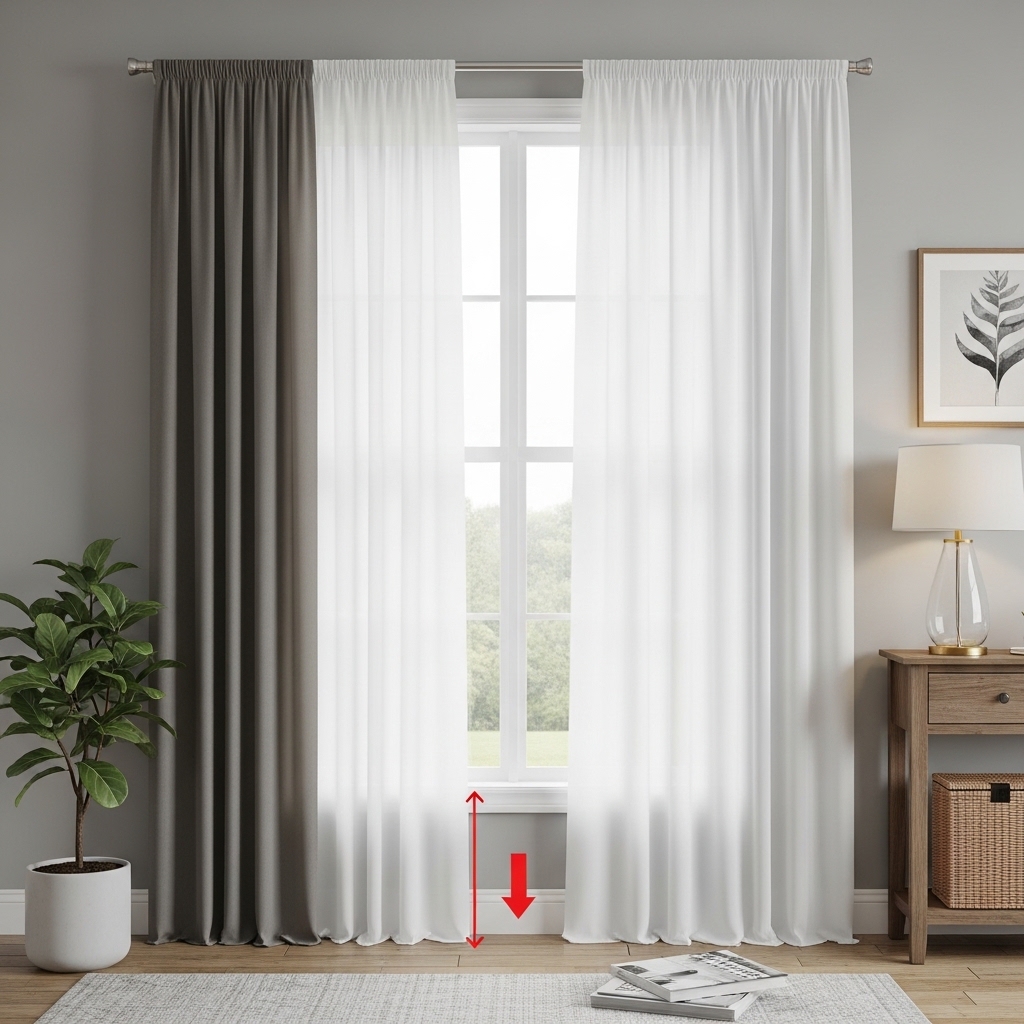
The height of the curtain rod determines how tall the ceiling feels. Most people hang rods just above the window frame. This is the worst possible placement.
Rule 1: Hang the Rod Near the Ceiling
The rod should hang 4-6 inches below the ceiling. Not above the window frame. The closer the rod is to the ceiling, the taller the ceiling feels.
| Rod Height | Effect on Ceiling |
|---|---|
| Just above window frame | Ceiling feels lower, window looks smaller |
| 4-6 inches below ceiling | Ceiling feels higher, window looks larger |
| At ceiling | Maximum height illusion |
Rule 2: Extend the Rod Beyond the Window
The rod should extend 6-12 inches beyond the window frame on each side. This makes the window look larger. It also allows curtains to stack completely off the glass when open.
| Rod Width | Effect on Window |
|---|---|
| Same as window | Window looks small, curtains block glass when open |
| 6-12 inches wider | Window looks larger, curtains stack off glass |
Rule 3: Curtains Should Kiss the Floor
The bottom of the curtain should just touch the floor. This is called kissing the floor. It looks tailored and intentional.
| Curtain Length | Effect |
|---|---|
| Stops at window sill | Looks cheap, unfinished |
| Hovers above floor | Looks awkward, collects dust |
| Kisses the floor | Tailored, intentional |
| Puddles on floor | Luxurious but collects dust, not for small rooms |
Pro Tip: Measure from the rod to the floor before buying curtains. Add 2-3 inches for hemming if needed. Curtains can be hemmed with iron-on tape (no sewing required).
Mistake to Avoid: Do not buy curtains that are too short. Short curtains make ceilings feel lower and windows look smaller.
Curtain Width: How Much Fabric You Need
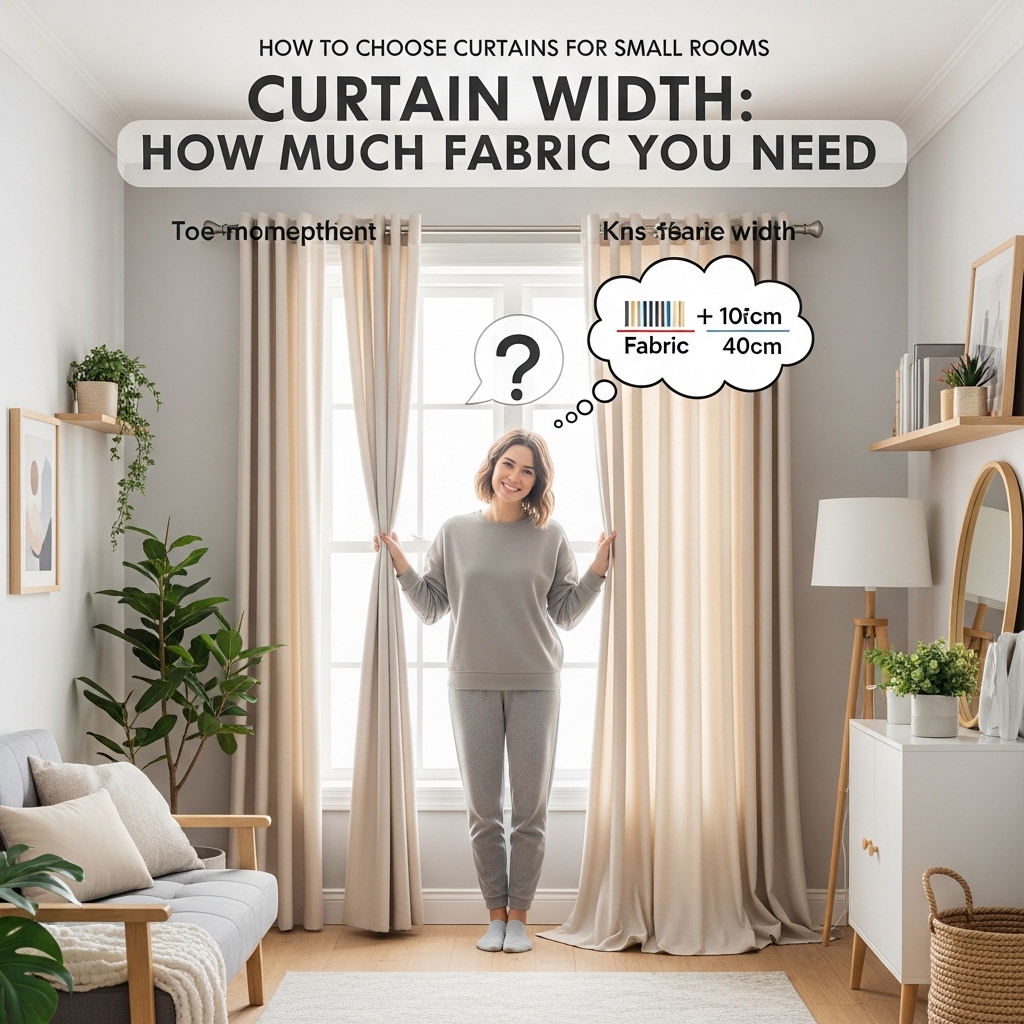
Curtains should look full when closed and stacked when open. Thin, flat curtains look cheap.
The Width Rule
The total width of the curtains should be 2 to 3 times the width of the window. This provides enough fabric for fullness.
| Window Width | Minimum Curtain Width | Ideal Curtain Width |
|---|---|---|
| 36 inches | 72 inches | 108 inches |
| 48 inches | 96 inches | 144 inches |
| 60 inches | 120 inches | 180 inches |
How to Achieve Fullness
Use two curtain panels, not one. One panel looks skimpy. Two panels provide symmetry and fullness.
If your window is wide, use four panels. Two on each side. The extra fabric creates a luxurious look.
Pro Tip: Buy curtain panels in pairs. Two panels of the same width provide double the fullness. Four panels provide quadruple the fullness.
Mistake to Avoid: Do not use a single curtain panel on a window. One panel looks unbalanced and cheap.
Curtain Color and Pattern for Small Rooms
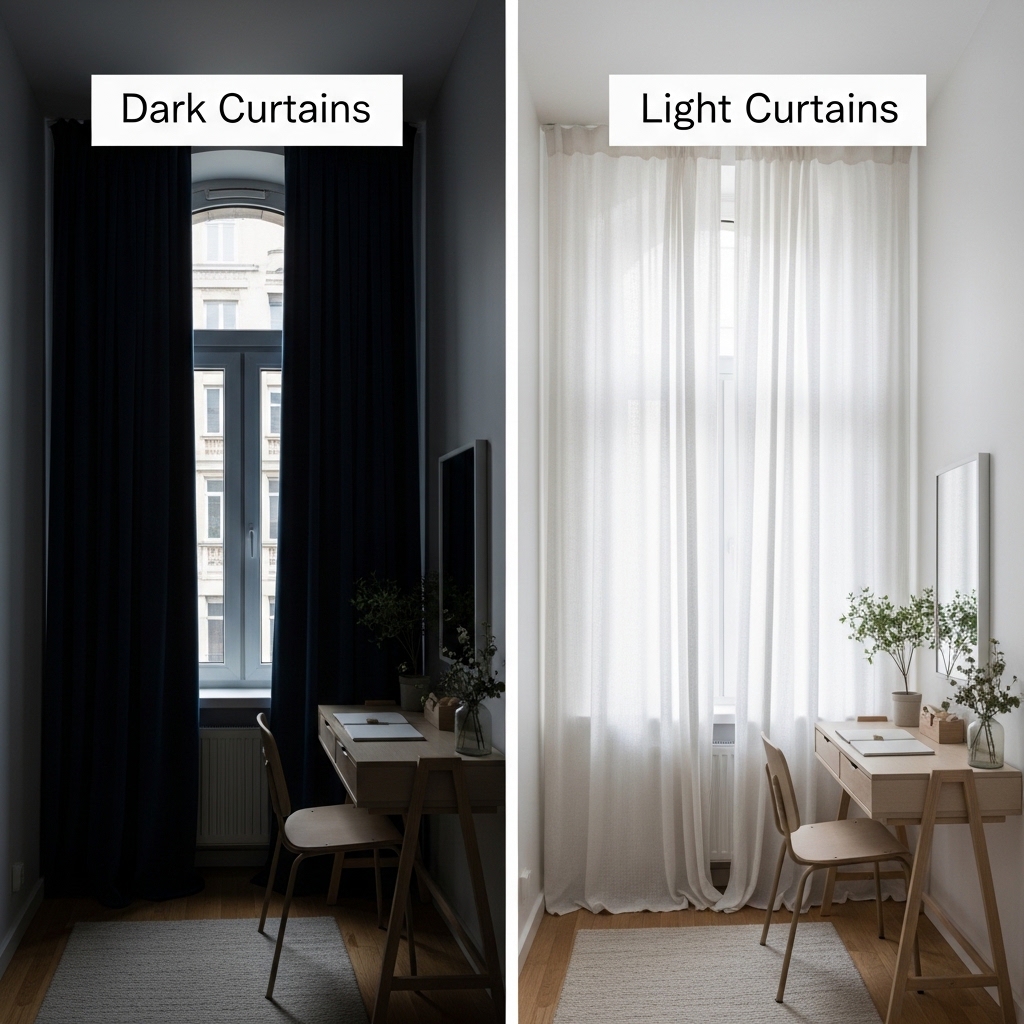
Color and pattern affect how large or small a room feels. The right choices make the room feel larger. The wrong choices make it feel smaller.
Light Colors vs. Dark Colors
Light curtains reflect light. Dark curtains absorb light. In a small room, light curtains are almost always the better choice.
| Curtain Color | Effect on Room |
|---|---|
| White, cream, beige | Reflect light, make room feel larger |
| Pastels | Add color while still reflecting light |
| Dark colors | Absorb light, make room feel smaller |
| Blackout (dark) | Blocks light, use only in bedrooms |
Patterns: Small vs. Large
Small, subtle patterns work well in small rooms. Large, bold patterns can overwhelm.
| Pattern Size | Effect |
|---|---|
| Small, subtle (pinstripes, small dots) | Adds interest without overwhelming |
| Medium, regular (stripes, geometric) | Works well, choose light colors |
| Large, bold (oversized floral, large geometric) | Can overwhelm small rooms |
The Stripe Trick
Vertical stripes draw the eye upward. This makes ceilings feel higher. Choose curtains with subtle vertical stripes for maximum height illusion.
Horizontal stripes draw the eye sideways. This makes windows feel wider. Choose horizontal stripes if your window is narrow.
Pro Tip: If you want dark curtains, use them on windows that face north. North light is already cool and dim. Dark curtains will make the room feel like a cave.
Mistake to Avoid: Do not choose curtains with large patterns in a very small room. The pattern will compete with the limited space.
Curtain Length: Floor-Length Only
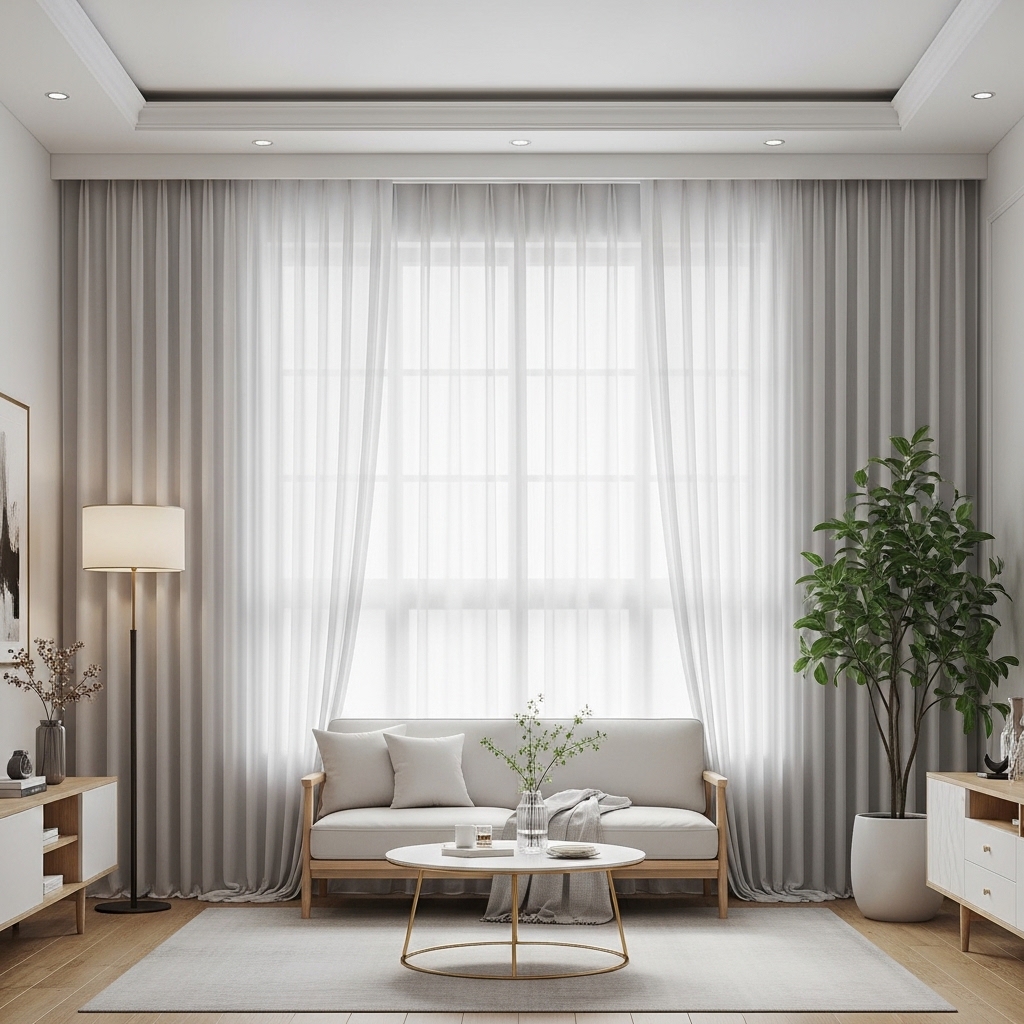
In small rooms, curtains should always be floor-length. Short curtains make the room feel chopped up.
The Case Against Short Curtains
Curtains that stop at the window sill make the ceiling feel lower. They make the window look smaller. They look cheap and unfinished. There is no good reason to use short curtains in a small room.
The Case for Floor-Length Curtains
Floor-length curtains create a continuous vertical line. The eye travels from the ceiling to the floor without interruption. This makes the room feel taller and more spacious.
| Curtain Length | Ceiling Feel | Window Feel | Overall Look |
|---|---|---|---|
| Window sill | Lower | Smaller | Cheap |
| Hovering above floor | Lower | Smaller | Awkward |
| Kissing floor | Higher | Larger | Tailored |
| Puddling on floor | Higher | Larger | Luxurious (not for small rooms) |
Pro Tip: Buy curtains longer than you need. Hem them to the exact length using iron-on hem tape. No sewing required.
Mistake to Avoid: Do not let curtains puddle on the floor in a small room. Puddling fabric collects dust and makes cleaning difficult.
Curtain Fabric for Small Rooms
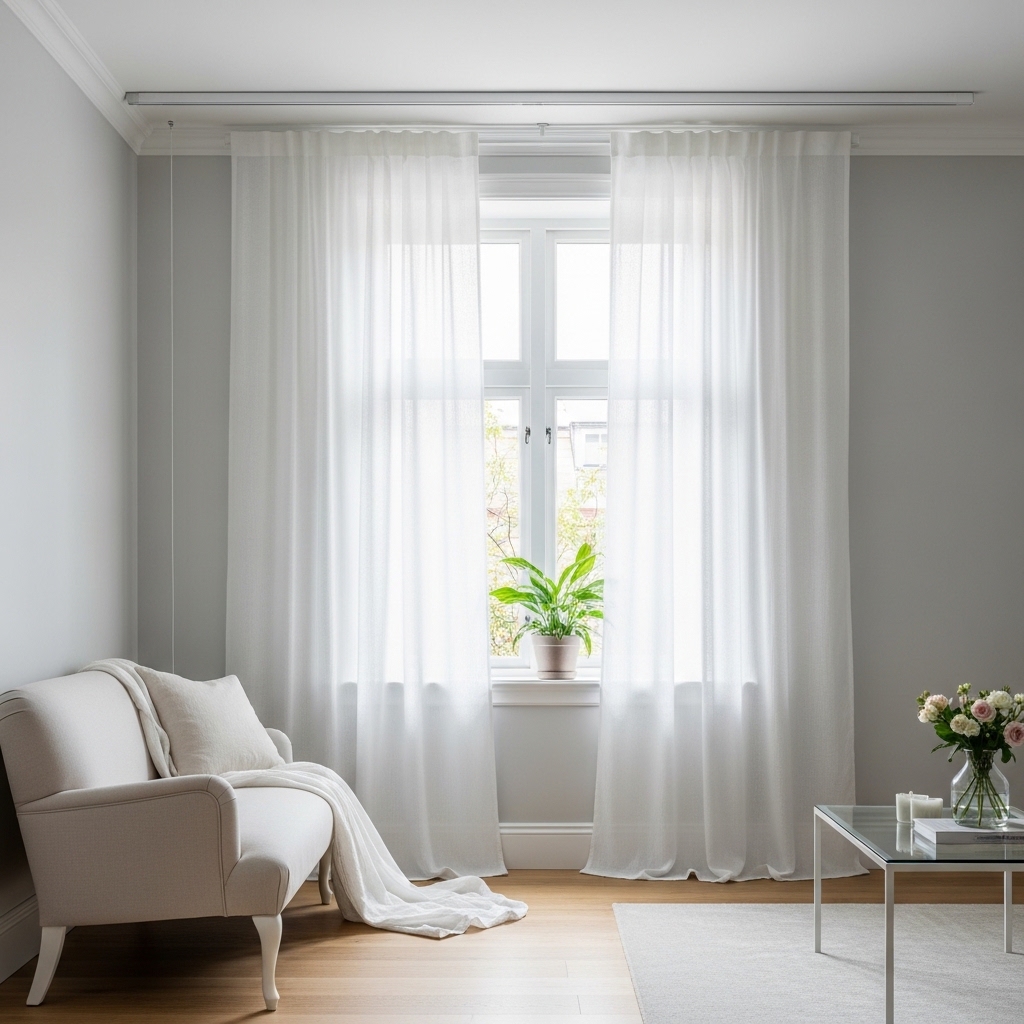
The fabric affects how the curtains hang, how much light they block, and how they feel.
Lightweight Fabrics
| Fabric | Effect | Best For |
|---|---|---|
| Linen | Airy, textured, natural | Living rooms, bedrooms |
| Cotton | Crisp, clean, easy to wash | Any room |
| Sheer | Filters light, provides privacy | Daytime privacy |
Medium-Weight Fabrics
| Fabric | Effect | Best For |
|---|---|---|
| Cotton-polyester blend | Durable, wrinkle-resistant | Any room |
| Velvet | Heavy, luxurious, warm | Bedrooms, winter |
Heavyweight Fabrics
| Fabric | Effect | Best For |
|---|---|---|
| Blackout lined | Blocks all light, insulates | Bedrooms, nurseries |
| Thermal lined | Insulates, blocks drafts | Cold rooms, winter |
Pro Tip: Layer sheers under heavier curtains. Sheers provide daytime privacy while letting in light. Heavier curtains provide nighttime privacy and insulation.
Mistake to Avoid: Do not use blackout curtains in a room with no natural light. The room will feel like a cave.
Curtain Hardware for Small Rooms
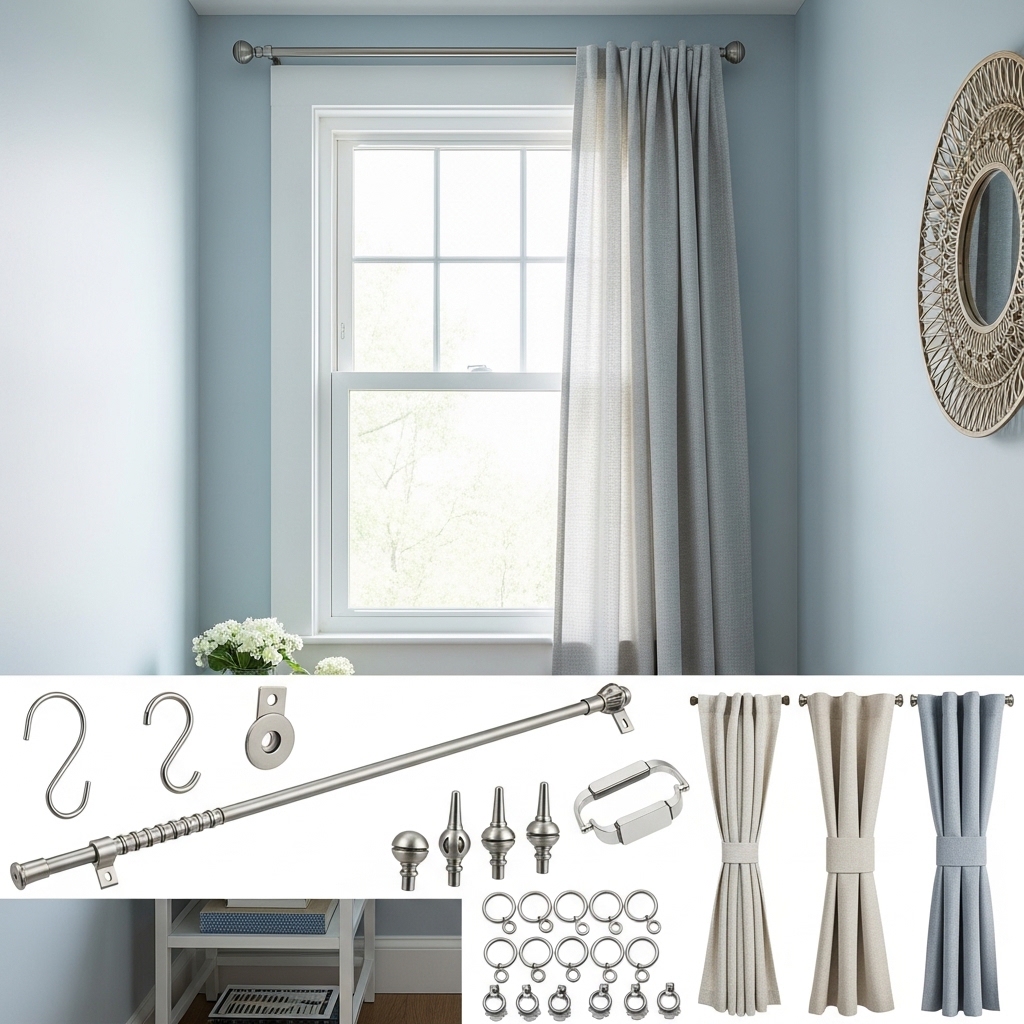
The rod and rings matter as much as the curtains. Visible hardware should be simple and unobtrusive.
Rod Thickness
Thin rods (1/2 inch to 3/4 inch) look best in small rooms. Thick rods (1 inch or more) add visual weight.
Rod Finish
| Finish | Effect | Best With |
|---|---|---|
| Matte black | Modern, grounding | Light curtains |
| Brass or gold | Warm, traditional | Warm-colored curtains |
| Nickel or silver | Cool, modern | Cool-colored curtains |
| White or cream | Disappears into wall | Light walls, light curtains |
Rings vs. Rod Pockets
| Hanging Method | Effect | Best For |
|---|---|---|
| Rings with clips | Curtains slide easily, adjustable length | Any curtain |
| Rod pocket | Curtains do not slide well, harder to adjust | Stationary panels |
Pro Tip: Use rings with clips for maximum flexibility. You can adjust the length by moving the clips. The rings slide easily on the rod.
Mistake to Avoid: Do not use decorative finials that are too large. Large finials add visual weight to the ends of the rod.
Frequently Asked Questions
What is the best curtain length for a small room?
Floor-length. Curtains should kiss the floor. Short curtains make the room feel smaller.
Can I use dark curtains in a small room?
Yes, but only in specific situations. Dark curtains work in bedrooms where light control is important. In living rooms, light curtains are almost always better.
How do I hang curtains in a rental without drilling?
Use tension rods for lightweight curtains. Use command hooks for heavier rods. Both are temporary and leave no damage.
Should curtains match the wall color?
They can. Curtains that match the wall color blend in and make the room feel larger. Curtains that contrast add visual interest. Both work. Choose based on your preference.
Conclusion
Curtains transform small rooms. The right curtains make ceilings feel higher, windows look larger, and rooms feel more finished.
Hang the rod near the ceiling. Extend the rod beyond the window. Curtains should kiss the floor. Choose light colors and subtle patterns. Use two panels for fullness. Select lightweight fabrics for most rooms.
Start with one window today. Measure correctly. Buy the right size. Hang at the correct height. Small changes produce dramatic results. The small room will feel larger and more intentional.