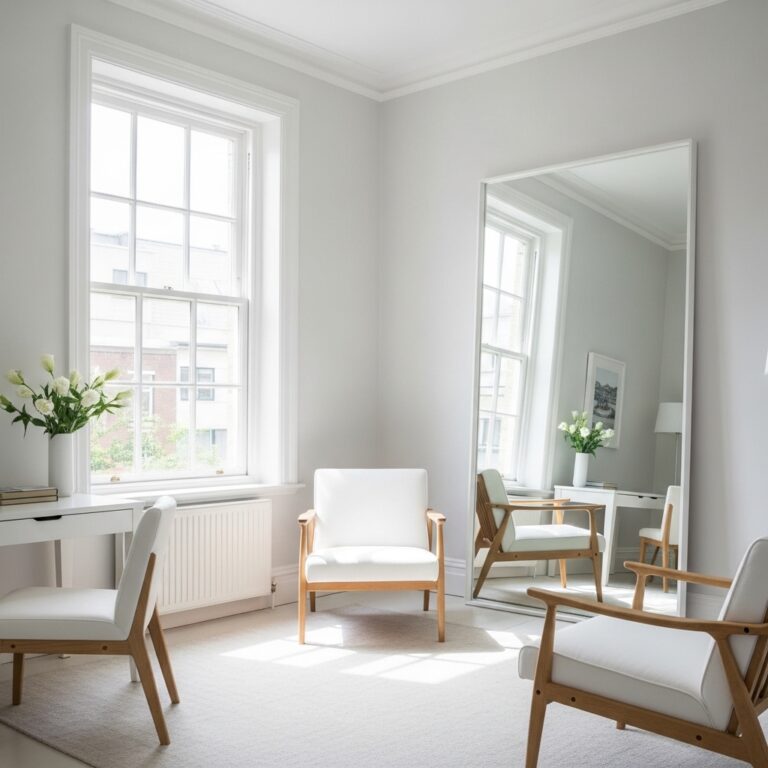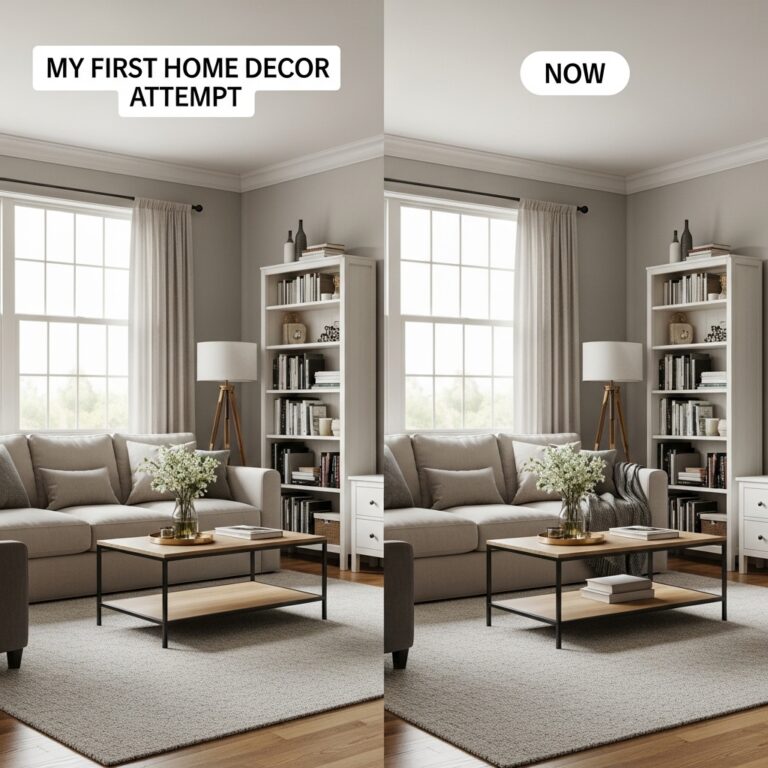
My Small Room Makeover: What Worked & What Failed
The room was 90 square feet. It held a bed, a dresser, a desk, and too much hope. Every layout felt wrong. Every purchase felt like a mistake.
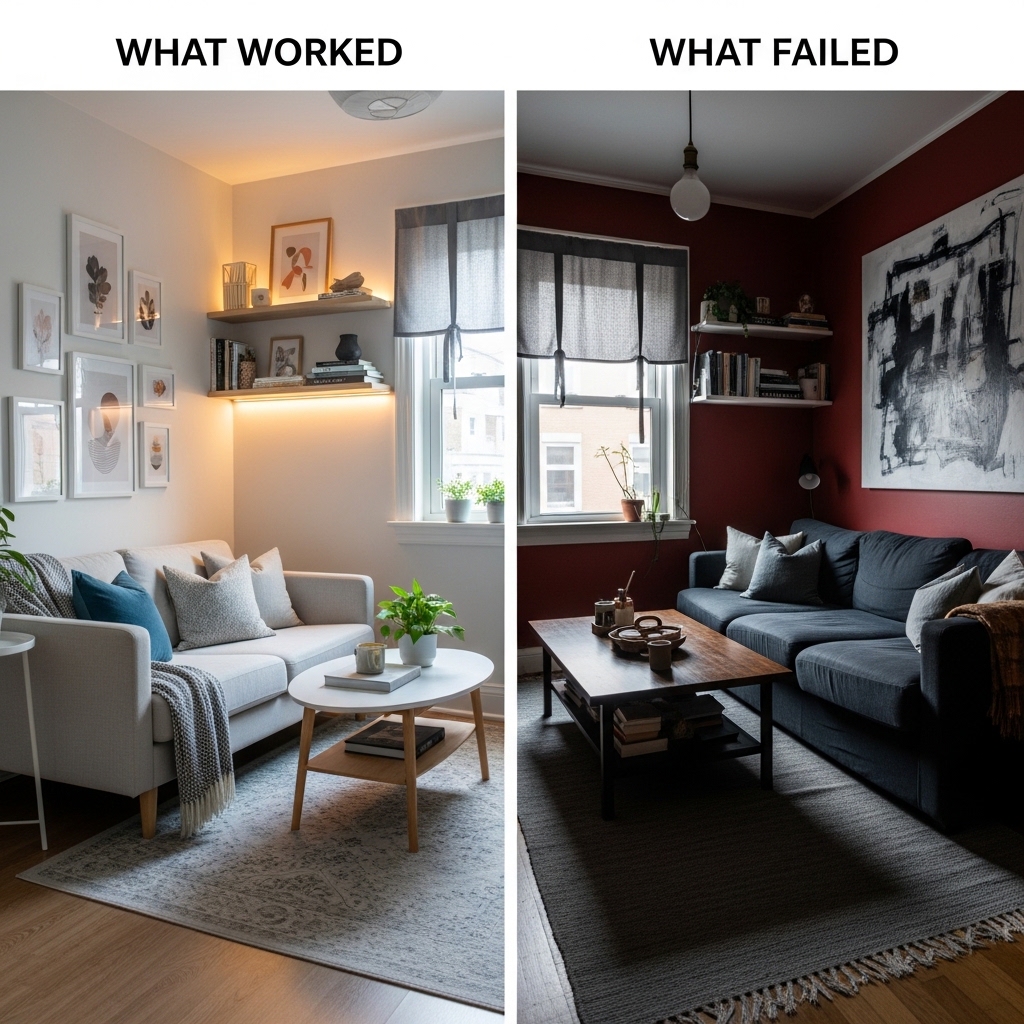
After three failed attempts, the lessons became clear. Some strategies worked. Some failed completely. This guide shares both.
Before Starting: The Small Room Assessment
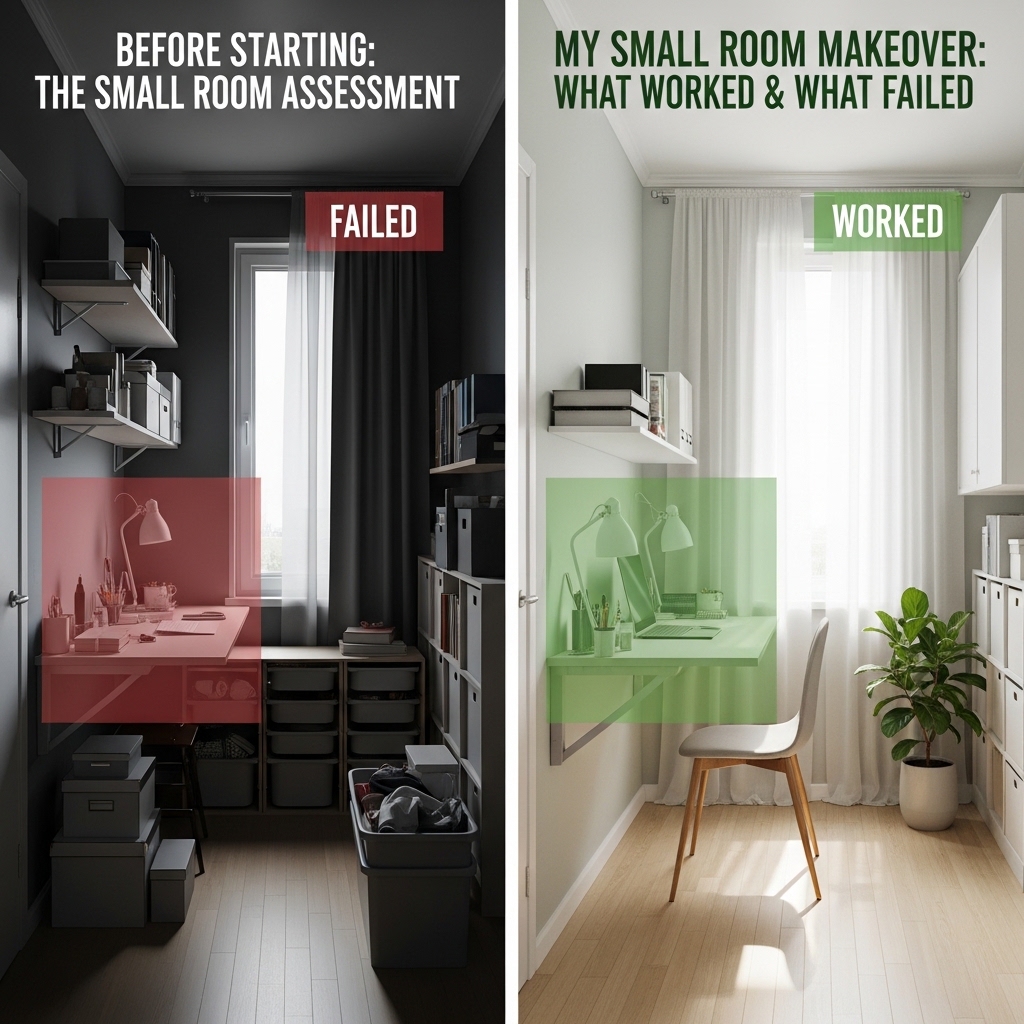
The bedroom measured 9 feet by 10 feet. One window faced north. One closet took up half of one wall.
| Constraint | Measurement | Implication |
|---|---|---|
| Room size | 9′ x 10′ | Extremely small |
| Window | North-facing | Cool, dim light |
| Closet | 4′ wide | Limited storage |
| Budget | $500 | Must cover all changes |
What Worked: Strategies That Made a Difference
Worked Strategy 1: Corner Bed Placement
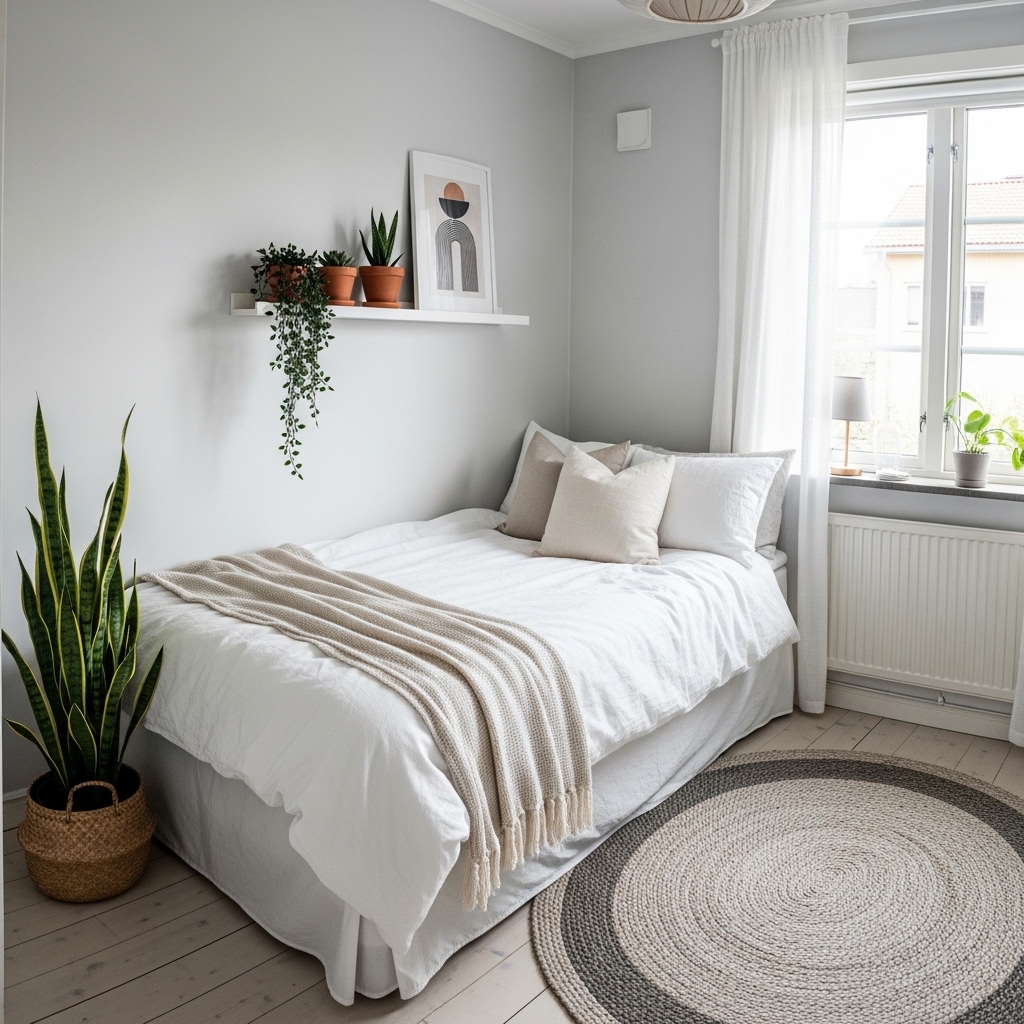
Centering the bed on the longest wall left no floor space. The room felt like a bed with a tiny border.
The change: The bed was moved into the corner. The headboard against one wall. The side against the other wall.
The result: The room gained 12 square feet of usable floor space. Walking paths opened up. The room felt twice as large.
| Layout | Floor Space Used | Walking Path |
|---|---|---|
| Bed centered | 60% | Cramped |
| Bed in corner | 40% | Open |
Pro Tip: Use a corner-anchored bed in any room under 100 square feet.
Mistake to Avoid: Do not center the bed in a very small room. Centering wastes floor space.
Worked Strategy 2: Vertical Storage
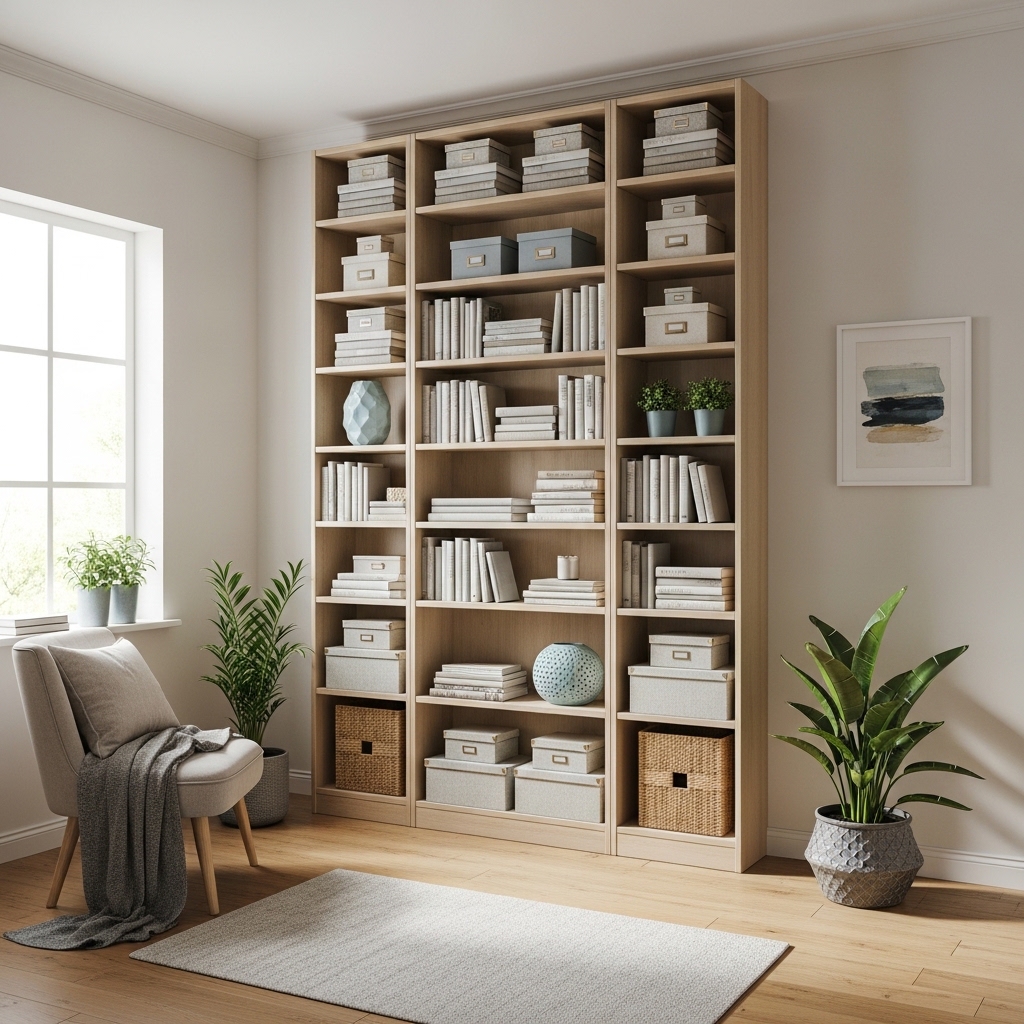
A low dresser consumed floor space and offered limited storage. The top became a dumping ground.
The change: The low dresser was removed. A tall, narrow bookshelf was added. The floor footprint was the same. The storage capacity doubled.
The result: The bookshelf held books, baskets for hidden storage, and decor on top. The floor stayed clear.
| Storage | Floor Space | Storage Capacity | Visual Impact |
|---|---|---|---|
| Low dresser | 6 sq ft | 6 cubic ft | Heavy, grounding |
| Tall bookshelf | 6 sq ft | 18 cubic ft | Light, draws eye up |
Pro Tip: Use the top shelves for off-season items. Use bottom shelves for daily items.
Mistake to Avoid: Do not push tall furniture against a short wall. Tall furniture needs tall walls.
Worked Strategy 3: Wall-Mounted Sconces
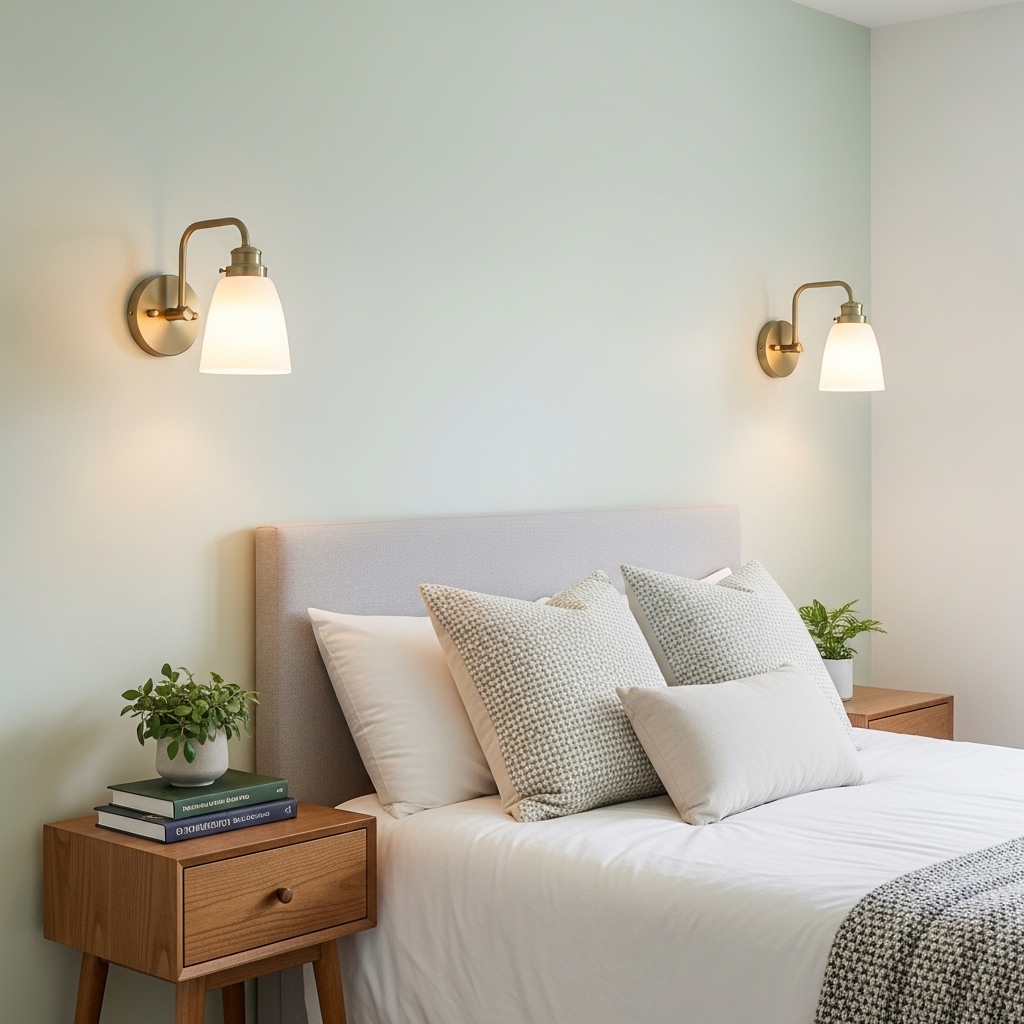
Table lamps took up nightstand space. The nightstands were too small for lamps and books.
The change: Plug-in wall sconces were mounted above the nightstands. No electrician required. Cords were hidden with cord covers.
The result: The nightstand surfaces were clear. The room had soft, warm light at eye level.
| Lighting | Floor Space Used | Nightstand Space | Installation |
|---|---|---|---|
| Table lamps | None (on nightstand) | 50% consumed | None |
| Wall sconces | None | 0% consumed | 30 minutes |
Pro Tip: Use plug-in sconces with cord covers. Covers hide cords against the wall.
Mistake to Avoid: Do not install sconces too high. The bottom of the shade should be at shoulder height when seated.
Worked Strategy 4: Light Colors Only
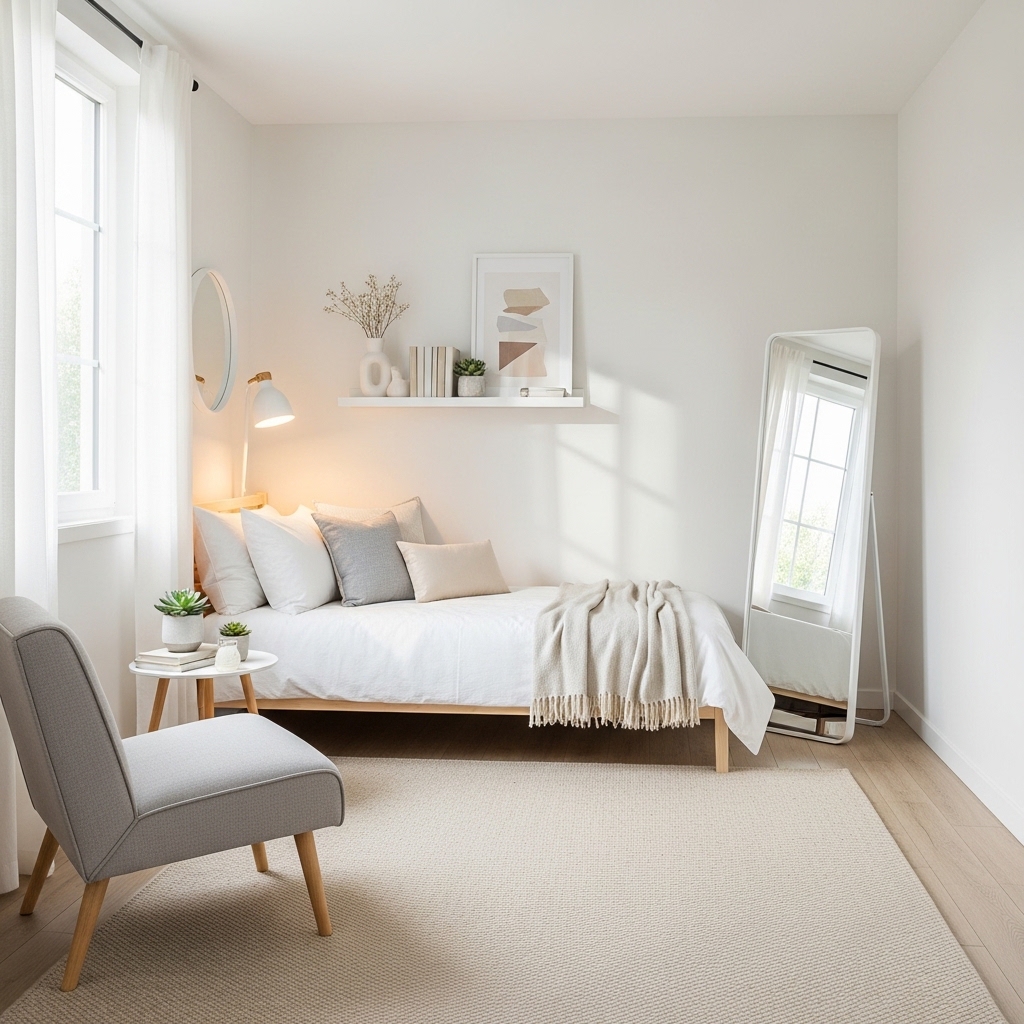
The room faced north. North light is cool and dim. Dark colors made the room feel like a cave.
The change: Walls were painted a warm creamy white. Bedding was cream and beige. The rug was cream with a subtle pattern.
The result: The room felt bright and airy despite the north-facing window.
| Color Choice | Room Feel |
|---|---|
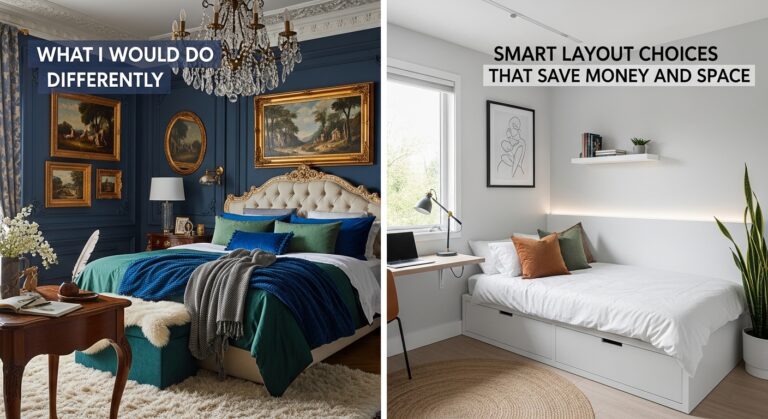
| Dark navy (before) | Cave-like, cramped |
| Warm white (after) | Bright, open |
Pro Tip: In north-facing rooms, use warm whites and creamy beiges. Avoid cool grays and true whites.
Mistake to Avoid: Do not use dark colors in north-facing rooms. Dark colors absorb the limited light.
Worked Strategy 5: A Large Rug
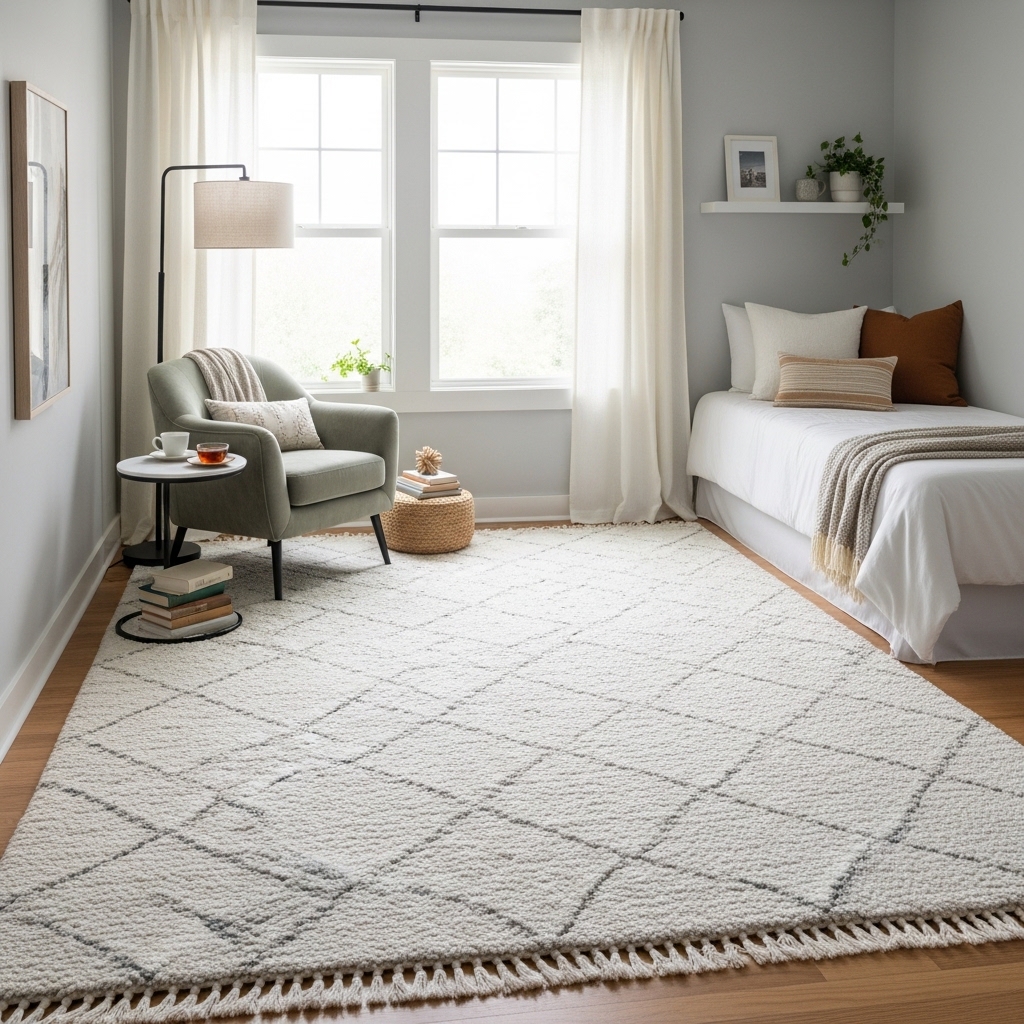
A small rug floated under the bed. Visible floor around the rug made the room feel chopped up.
The change: A larger rug was added. The rug extended 18 inches beyond the sides and foot of the bed.
The result: The room felt unified. The bed and rug became one visual unit.
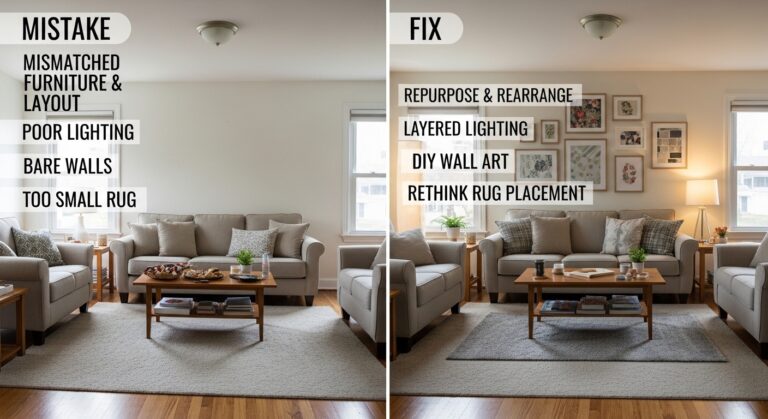
| Rug Size | Room Feel |
|---|---|
| 5′ x 7′ (too small) | Chopped up, cramped |
| 8′ x 10′ (correct) | Unified, larger |
Pro Tip: For a queen bed, use at least an 8′ x 10′ rug. For a full bed, use at least a 6′ x 9′ rug.
Mistake to Avoid: Do not buy a rug that is too small to save money. A properly sized rug is worth the investment.
What Failed: Strategies That Did Not Work
Failed Strategy 1: The Folding Desk
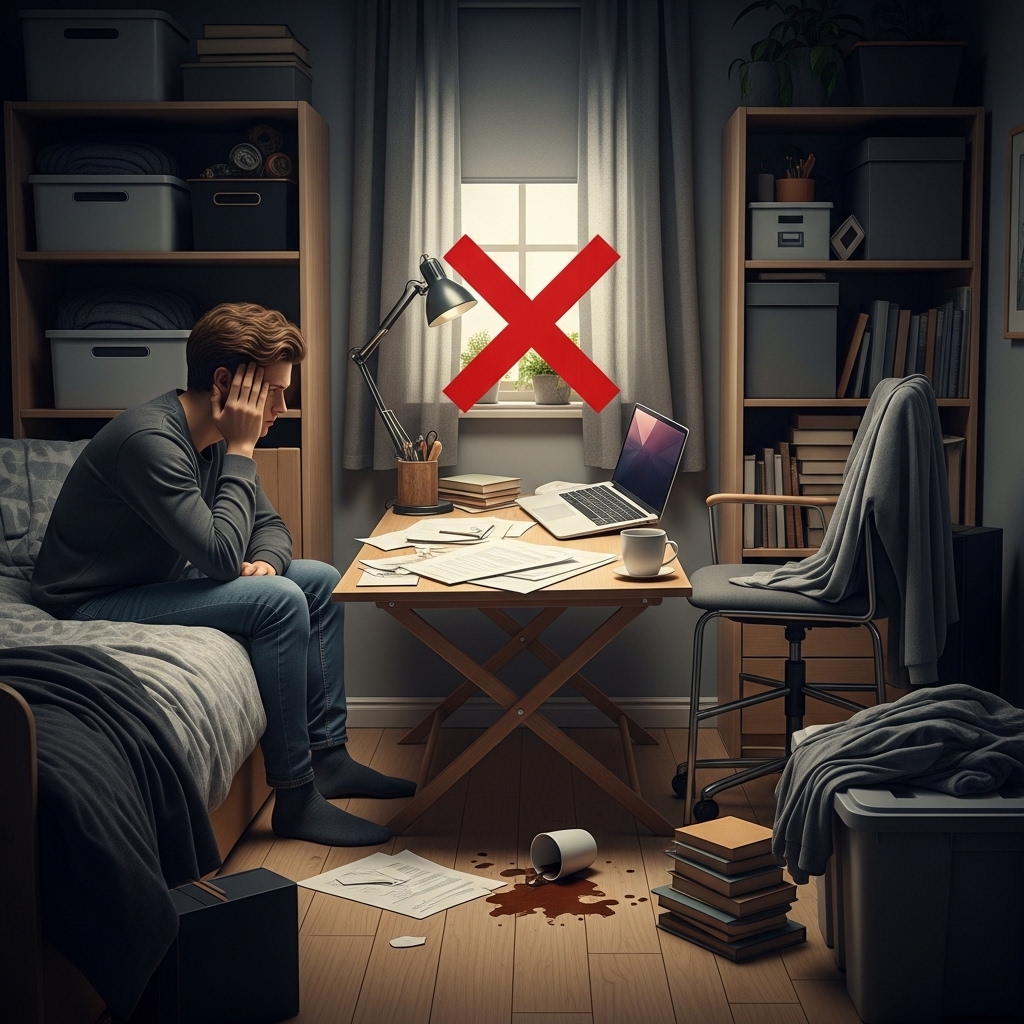
A folding desk was mounted on the wall. The idea was to have a workspace that folded flat when not in use.
Why it failed: The desk was never folded. Papers accumulated. The folded position was too much effort. The desk stayed down permanently.
The lesson: If you need a desk, commit to a desk. Folding furniture only works for people who will actually fold it.
| Solution | What Happened |
|---|---|
| Folding desk | Never folded, became permanent clutter |
| Small fixed desk | Used daily, stayed organized |
Pro Tip: Be honest about your habits. If you will not fold it, do not buy it.
Mistake to Avoid: Do not buy multi-functional furniture if you will only use one function.
Failed Strategy 2: The Under-Bed Storage Bins
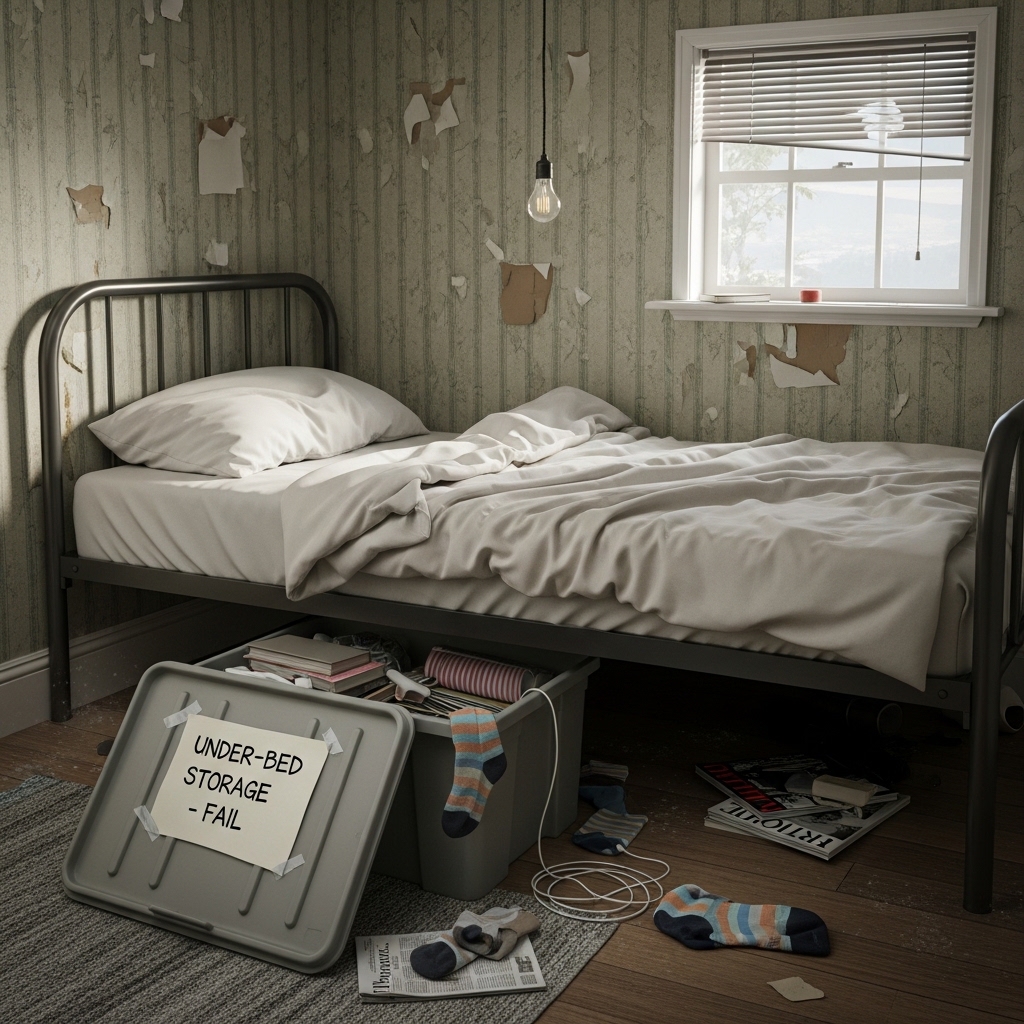
Clear plastic bins were placed under the bed. The idea was to store off-season clothes and extra bedding.
Why it failed: The bins collected dust. Pulling them out was difficult on carpet. Items were forgotten because they were out of sight.
The lesson: Under-bed storage only works with smooth flooring (hardwood, tile). On carpet, bins are too hard to access.
| Flooring | Under-Bed Storage Success |
|---|---|
| Carpet | Difficult to access, items forgotten |
| Hardwood | Easy to access, items remembered |
Pro Tip: If you have carpet, use vacuum storage bags instead of bins. Bags slide more easily than bins.
Mistake to Avoid: Do not store anything you need weekly under the bed. Under-bed is for seasonal items only.
Failed Strategy 3: The Decorative Ladder
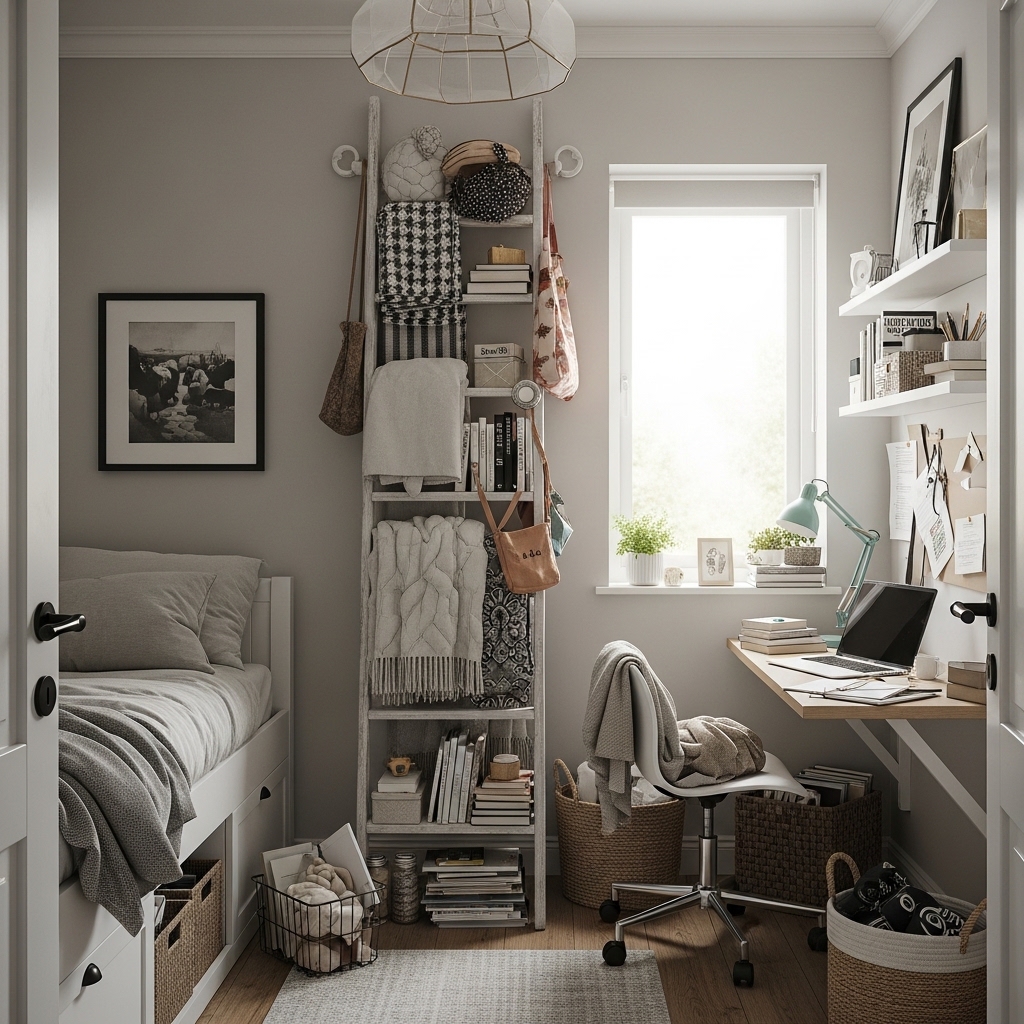
A wooden ladder leaned against the wall. The idea was to drape blankets and towels on it for a cozy look.
Why it failed: The ladder looked staged, not lived in. Blankets fell off. The ladder took up floor space that could have been used for storage.
The lesson: Decorative items that serve no function are wasted space in a small room.
| Item | Function | Space Used | Verdict |
|---|---|---|---|
| Decorative ladder | None | 2 sq ft | Failed |
| Wall hooks | Store blankets | 0 sq ft | Worked |
Pro Tip: Every item in a small room should serve a purpose. Decorative-only items are luxuries small rooms cannot afford.
Mistake to Avoid: Do not add decor that takes up floor space. Use walls for decor. Save floor space for function.
Failed Strategy 4: Matching Nightstands
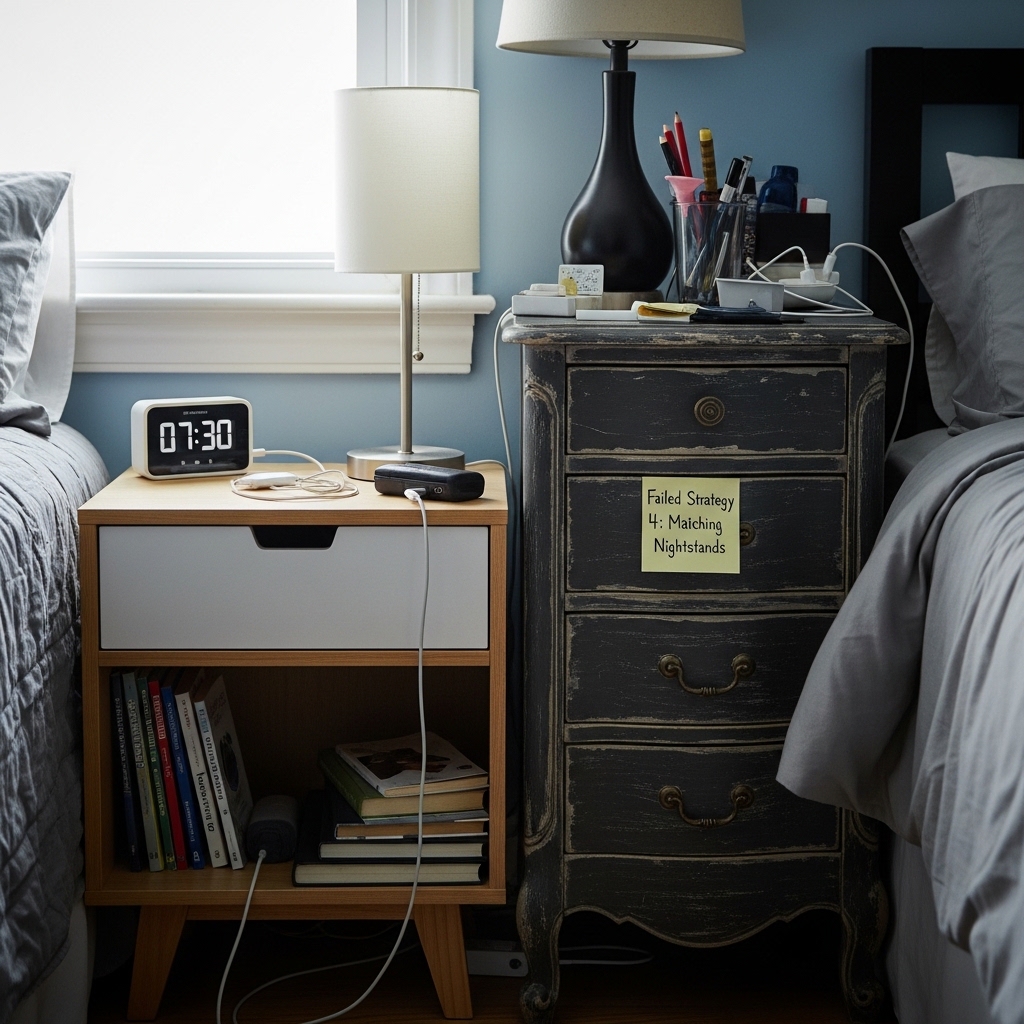
Two matching nightstands were purchased. The bed was in the corner. Only one nightstand fit.
Why it failed: The second nightstand sat in a corner, unused, for six months before being donated.
The lesson: Do not buy furniture in sets. Buy what fits. Buy what you need. Matching is overrated.
| Purchase | Used | Wasted |
|---|---|---|
| Two nightstands | One | One ($50 wasted) |
| One nightstand | One | None |
Pro Tip: Measure before buying. If only one nightstand fits, buy one nightstand.
Mistake to Avoid: Do not assume you need two of everything. Small rooms need fewer pieces.
Failed Strategy 5: The Floor Mirror
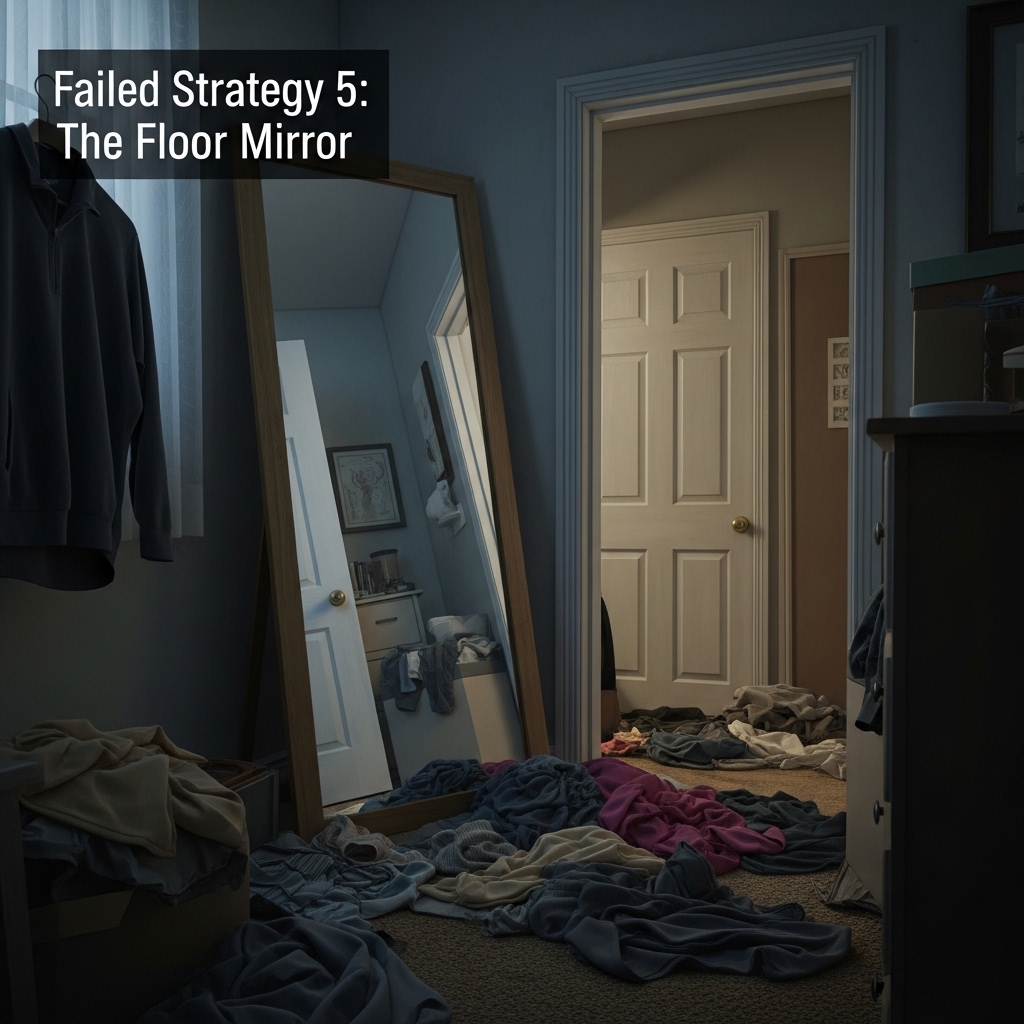
A large floor mirror leaned against the wall. The idea was to add depth and light.
Why it failed: The mirror took up 3 square feet of floor space. In a 90-square-foot room, 3 square feet is significant.
The lesson: In a very small room, mount mirrors on walls. Do not lean them on floors.
| Mirror Type | Floor Space Used | Works in Small Room? |
|---|---|---|
| Floor mirror (leaning) | 3 sq ft | No |
| Wall-mounted mirror | 0 sq ft | Yes |
Pro Tip: Mount the mirror on the back of the closet door. Zero floor space. Adds depth when the door is open.
Mistake to Avoid: Do not lean anything on the floor in a very small room. Every inch matters.
Before and After: The Final Room
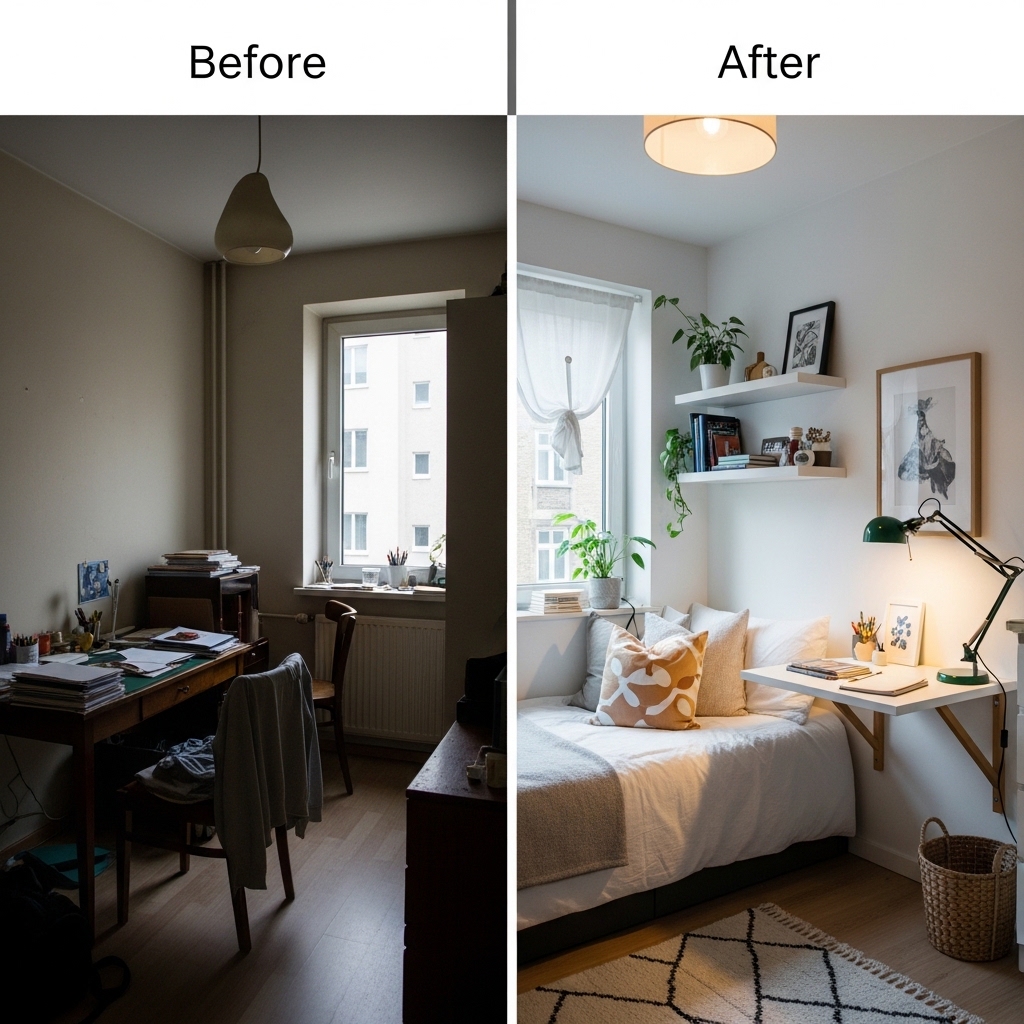
| Element | Before | After | Cost |
|---|---|---|---|
| Bed placement | Centered | Corner-anchored | $0 |
| Dresser | Low, wide | Tall, narrow bookshelf | $40 (thrifted) |
| Lighting | Table lamps | Wall sconces | $30 |
| Wall color | Dark navy | Warm white | $40 (paint) |
| Rug | 5’x7′ | 8’x10′ | $80 (clearance) |
| Folding desk | Yes | Removed, used lap desk | $0 |
| Under-bed bins | Yes, on carpet | No, stored elsewhere | $0 |
| Decorative ladder | Yes | Removed, added wall hooks | $10 (hooks) |
| Nightstands | Two | One | $25 (sold second, kept one) |
| Floor mirror | Yes | Wall-mounted on closet door | $0 (rehung) |
Total spent: $225
Time invested: 3 weekends
Key Takeaways from This Small Room Makeover
What Worked
- Corner bed placement
- Vertical storage
- Wall-mounted sconces
- Light colors only
- Large rug
What Failed
- Folding desk (never folded)
- Under-bed bins on carpet
- Decorative ladder (no function)
- Matching nightstands (only one fit)
- Floor mirror (took floor space)
The most important lesson: In a small room, every item must earn its footprint. If it does not serve a daily purpose or bring genuine joy, remove it.
Frequently Asked Questions
What is the single most effective change in a small room?
Corner bed placement. This costs nothing and adds usable floor space immediately.
What should I never do in a small room?
Never add furniture that does not serve a daily purpose. Never buy matching sets. Never leave items on the floor.
How do I know if a change will work?
Test before committing. Use painter’s tape to outline furniture footprints. Live with the tape for a day. If it feels wrong, do not buy the furniture.
Conclusion
A small room makeover is not about adding more. It is about removing what does not work.
Corner bed placement. Vertical storage. Wall-mounted lighting. Light colors. Large rugs. These strategies worked.
Folding furniture. Under-bed bins on carpet. Decorative ladders. Matching sets. Floor mirrors. These strategies failed.
Start with one change today. Move the bed to the corner. Remove one piece of furniture. Paint a wall.
Small changes add up to dramatic transformations. The small room can feel open, functional, and comfortable.