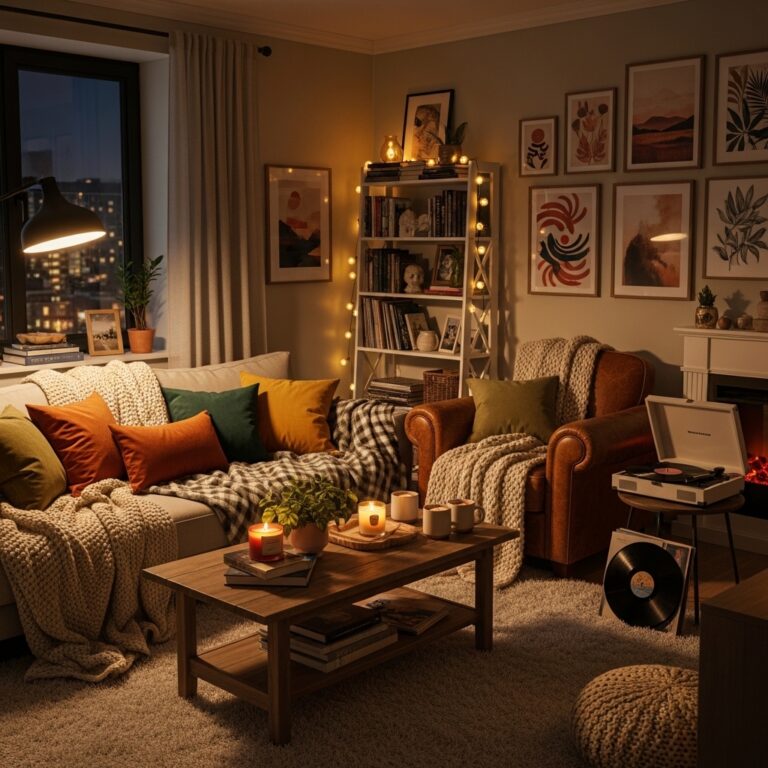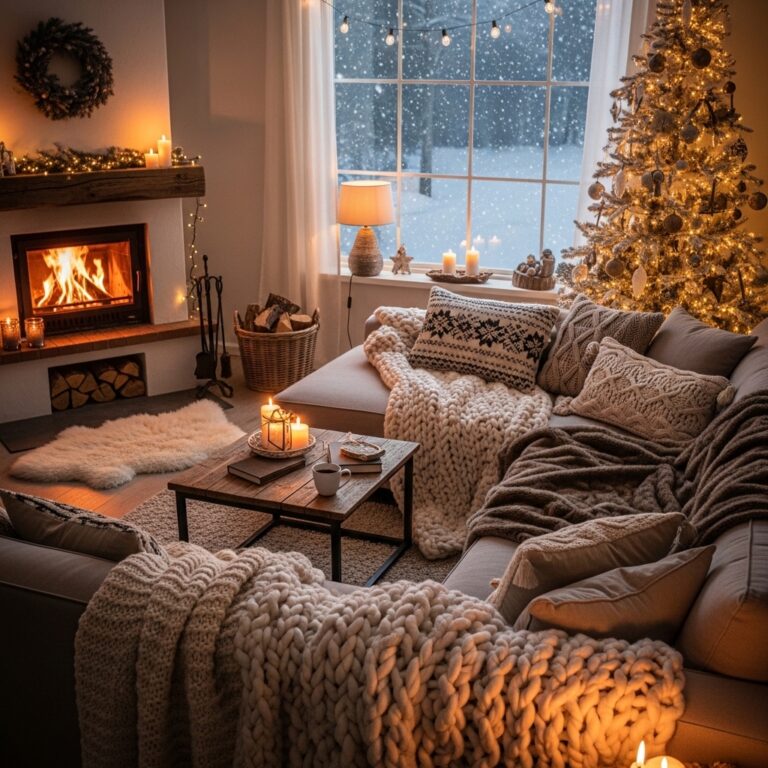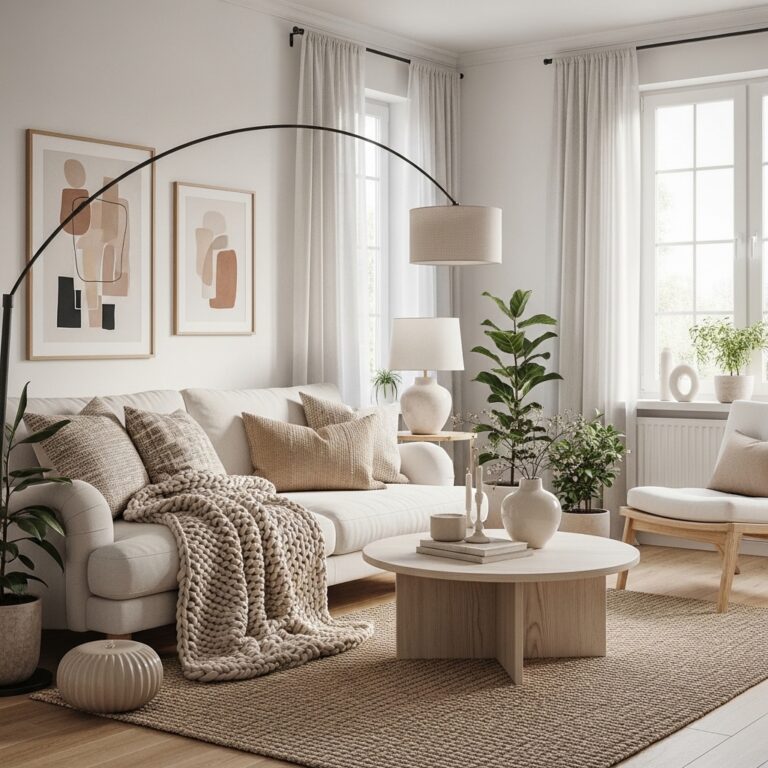
Best Lighting Ideas for Modern Homes | Layered Lighting Techniques | Budget-Friendly Fixtures That Transform Any Room
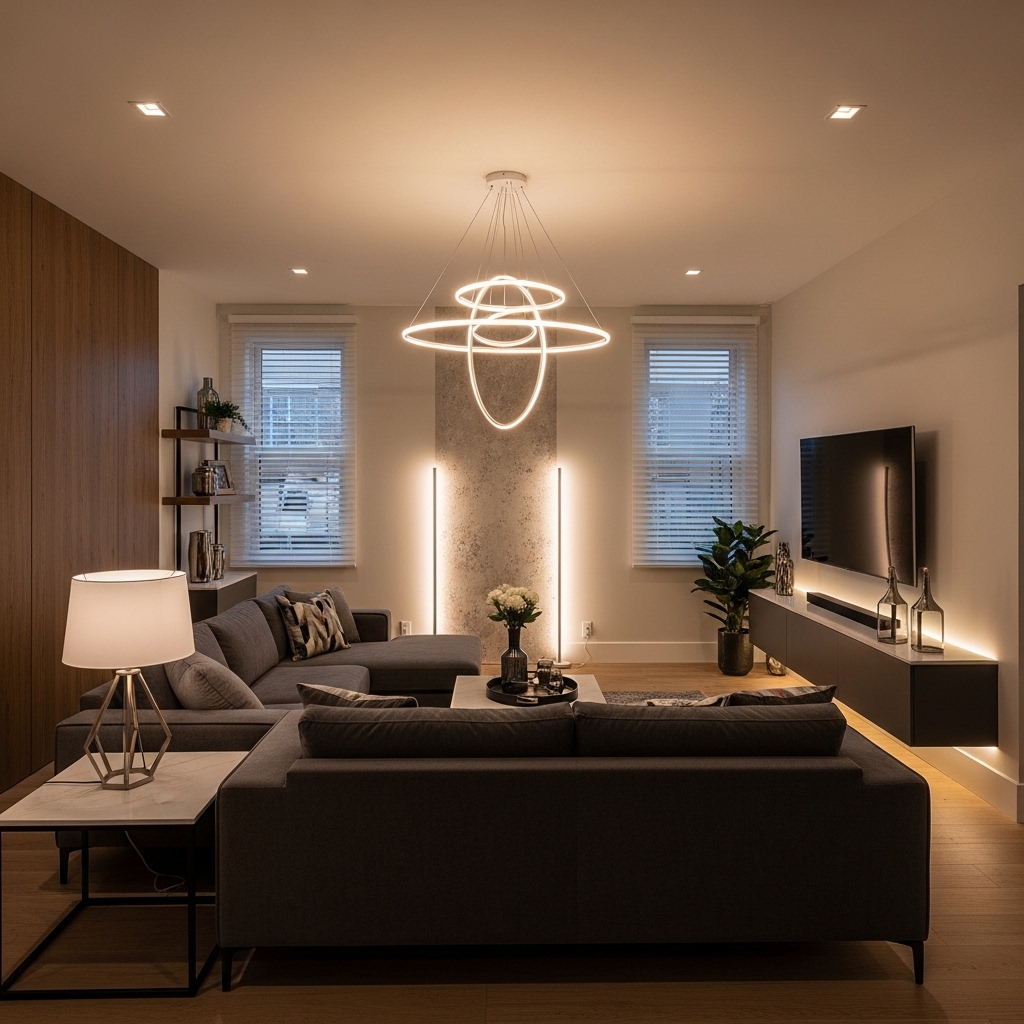
Lighting is the most undervalued element in home design. Bad lighting makes expensive furniture look cheap. Good lighting makes budget furniture look expensive. The difference is not the price of the fixture. The difference is understanding how light works in a space.
Modern lighting is not about fixtures. It is about layers, temperature, and placement. A single overhead light with a cool white bulb creates harsh shadows and dark corners. Three light sources with warm bulbs create depth, warmth, and visual interest.
This article delivers the best lighting ideas for modern homes. No electrician required for most solutions. No renovation needed. Just strategic choices that transform any room.
The Lighting Assessment
Before changing any lighting, assess what is wrong. Walk through each room at night. Turn on only the overhead light. What do you see?
The Three Signs of Bad Lighting
| Sign | What It Means | Fix |
|---|---|---|
| Dark corners | Not enough light sources | Add floor lamp or wall sconce |
| Harsh shadows | Single light source only | Layer with additional lamps |
| Uneven light | Bulbs have different color temperatures | Standardize on 2700K or 3000K |
The Modern Lighting Mindset
Old lighting assumes one overhead light per room is sufficient. New lighting understands that rooms need multiple light sources at different heights.
- Old approach: One ceiling fixture, cool white bulb, no dimmer
- New approach: Ambient + task + accent lighting, warm bulbs, dimmers everywhere
Pro Tip: Take photos of your room at night with only the overhead light on. The camera reveals dark corners your eyes have learned to ignore.
Mistake to Avoid: Do not rely on ceiling lights alone. A room without lamps feels cold and unfinished.
The 10 Best Lighting Ideas for Modern Homes
Idea 1: Layer Your Lighting
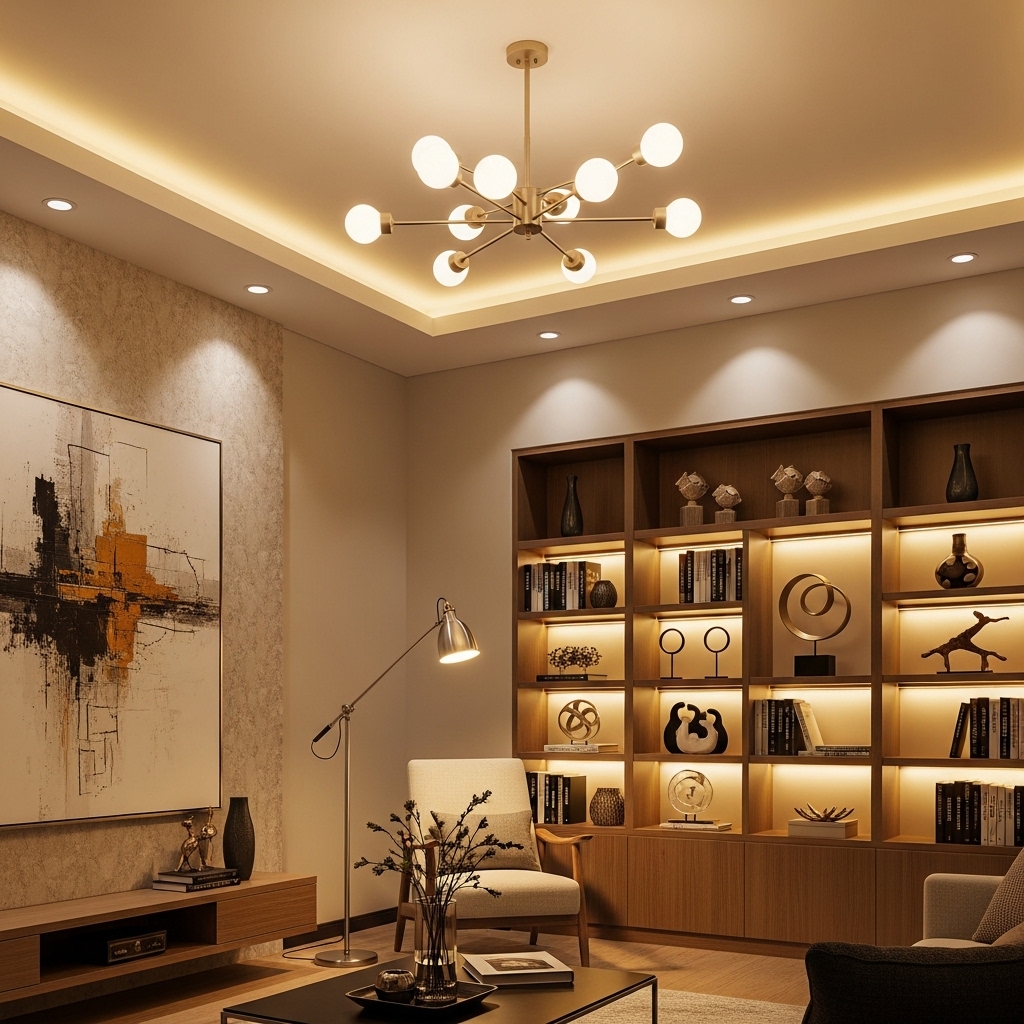
Every room needs three layers of light. Each layer serves a different purpose.
| Layer | Purpose | Height | Examples | Cost |
|---|---|---|---|---|
| Ambient | General illumination | Ceiling | Overhead fixture, flush mount | $$ |
| Task | Specific activities | Table or floor | Reading lamp, desk lamp | $ |
| Accent | Mood and depth | Wall or low | Picture light, floor lamp in corner | $ |
Why it works: Single light sources create harsh shadows and dark corners. Layered lighting eliminates shadows and creates depth. The eye moves through the room, registering dimension and warmth.
How to implement:
- Keep the overhead light for ambient illumination
- Add a table lamp on a nightstand or side table for task lighting
- Place a floor lamp in the darkest corner for accent lighting
Pro Tip: Put your overhead light on a dimmer. Dimming changes the mood of a room instantly.
Mistake to Avoid: Do not use the same light level for all activities. Bright light for cleaning. Dim light for relaxing.
Idea 2: Use Warm White Bulbs Everywhere
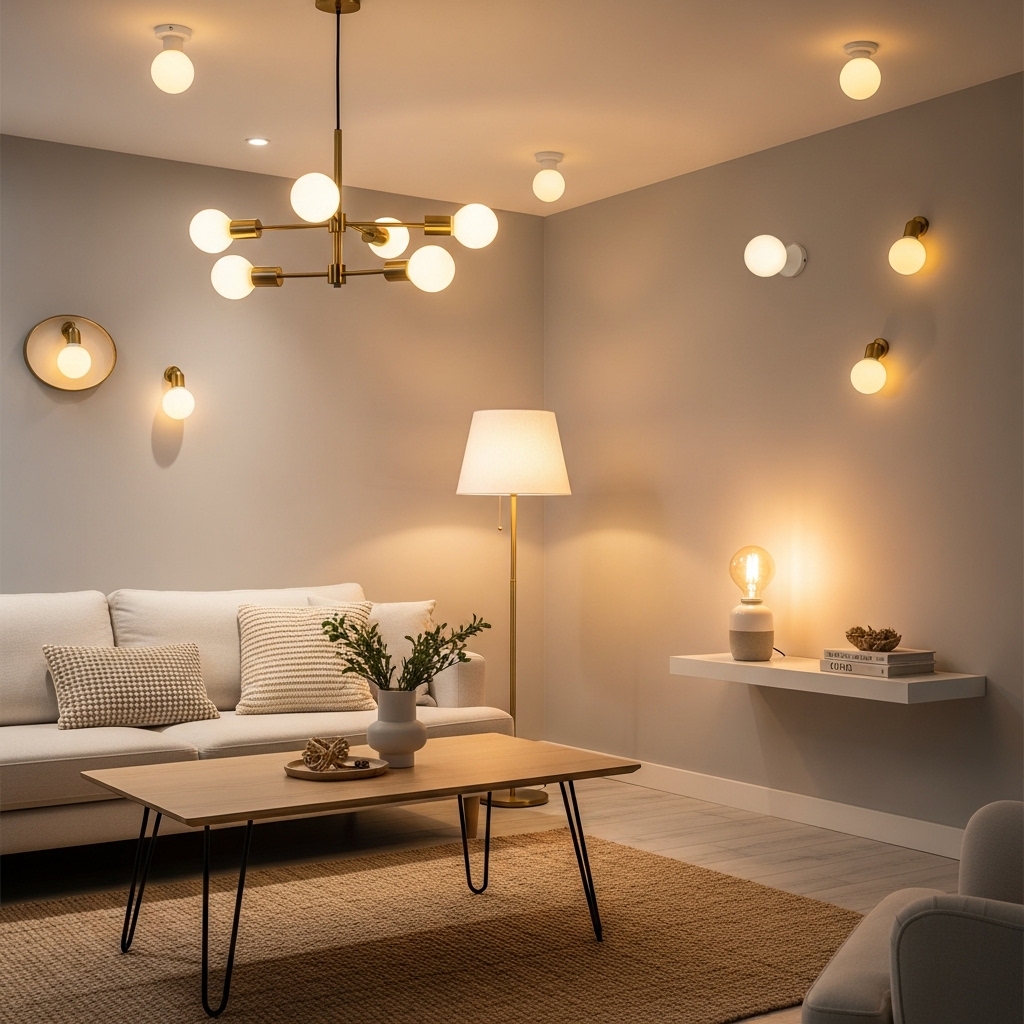
Bulb color temperature changes how a room feels. Measured in Kelvins (K), lower numbers produce warmer light.
| Temperature | Color | Best For | Feel |
|---|---|---|---|
| 2700K | Warm white | Living rooms, bedrooms | Cozy, inviting, relaxing |
| 3000K | Soft white | Kitchens, bathrooms | Clean, warm, flattering |
| 4000K | Cool white | Home offices, garages | Alert, focused, productive |
| 5000K | Daylight | Task lighting, art studios | Accurate color, harsh |
The modern rule: Use 2700K in living spaces. Use 3000K in kitchens and bathrooms. Use the same temperature throughout a room. Mixed temperatures look chaotic.
Why it works: Warm light signals relaxation to the brain. Cool light signals alertness. Using warm light in living rooms and bedrooms prepares the body for rest.
Pro Tip: Buy all bulbs for a room at the same time. Different batches can have slight color variations.
Mistake to Avoid: Do not mix 2700K and 5000K bulbs in the same room. The contrast is jarring and unplanned.
Idea 3: Add a Floor Lamp to Every Dark Corner
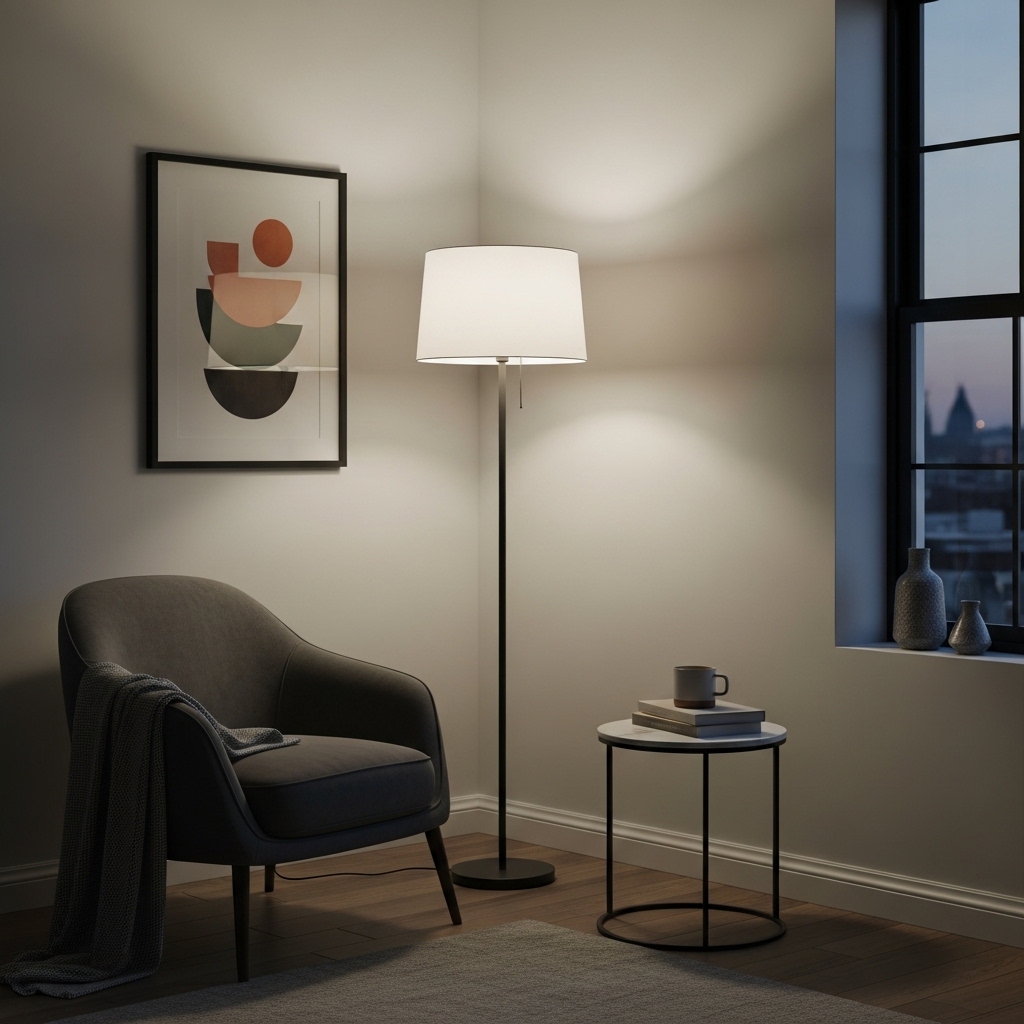
Dark corners make rooms feel smaller. A floor lamp in a dark corner makes the room feel larger. The eye sees light and registers more space.
| Corner Location | Lamp Type | Height | Price Range |
|---|---|---|---|
| Next to sofa | Arc lamp or tall standing lamp | 60-72 inches | $20-80 (thrifted) |
| Behind a chair | Reading lamp with adjustable arm | 48-60 inches | $15-50 |
| Empty corner | Statement lamp (colorful or sculptural) | 60-72 inches | $10-40 (thrifted) |
Why it works: Dark corners absorb light and create visual voids. A floor lamp fills the void with light. The corner becomes a feature instead of a problem.
How to choose a floor lamp:
- Look for lamps with shades that direct light upward. Upward light bounces off the ceiling and fills the room evenly.
- Choose a lamp with a weighted base. Lightweight lamps tip over easily.
- Thrift stores are excellent sources for floor lamps. New shades cost $10-20.
Pro Tip: Use a floor lamp with a dimmer switch. Bright light for reading. Dim light for evening ambiance.
Mistake to Avoid: Do not place a floor lamp in a walking path. Lamps get knocked over. People trip.
Idea 4: Install Plug-In Wall Sconces
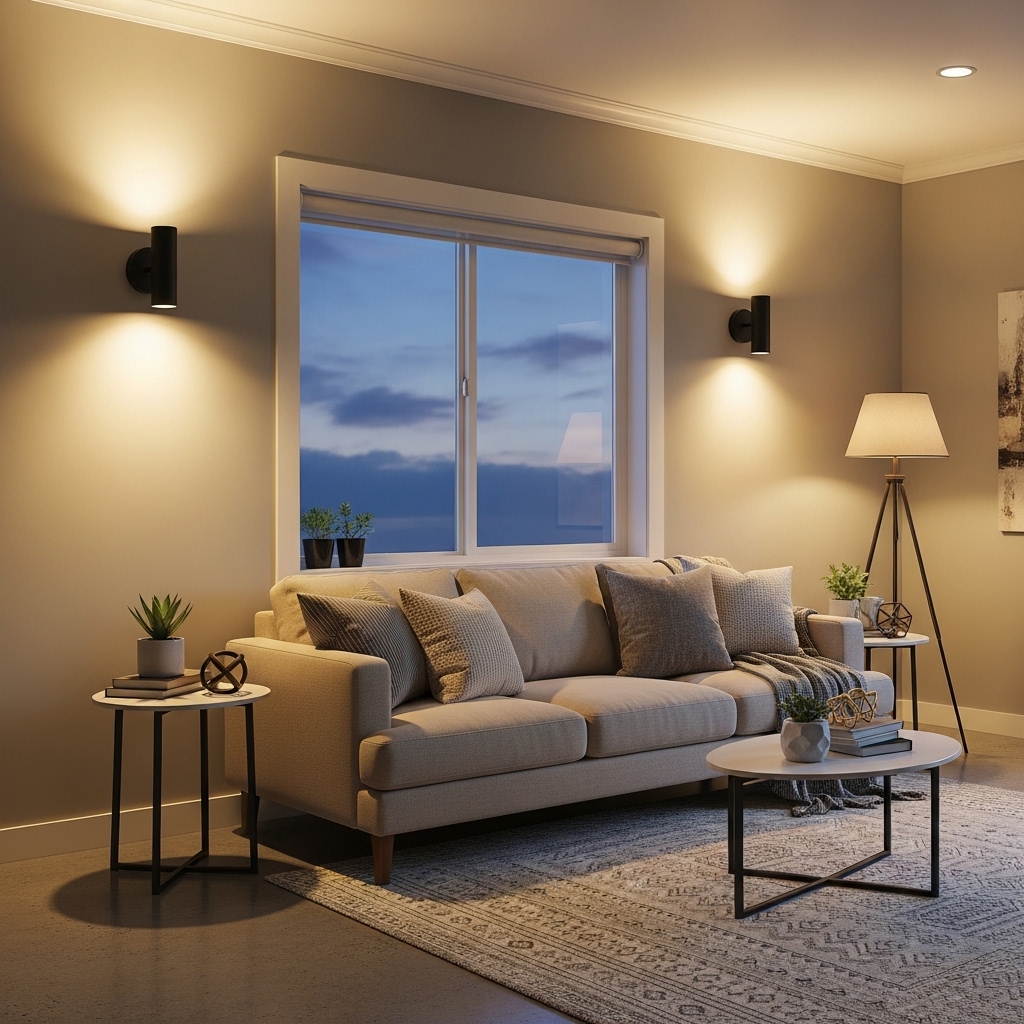
Wall sconces provide task lighting without taking up floor or table space. Plug-in versions require no electrician.
| Location | Sconce Type | Height from Floor | Installation |
|---|---|---|---|
| Above nightstand | Swing arm or fixed | 28-32 inches | Plug into outlet, hide cord |
| Above sofa | Picture light | 60-66 inches | Plug into outlet, use cord cover |
| Beside mirror | Vertical sconces | 60-66 inches | Plug into outlet, hide cord |
The plug-in solution: No electrician required. Plug-in sconces mount to the wall with screws or command strips. The cord plugs into a nearby outlet. Cord covers hide the cord against the wall.
Why it works: Wall sconces free up nightstand space. They provide light at the perfect height for reading. They add a layer of light that table lamps cannot provide.
Pro Tip: Use cord covers that match your wall color. The cord disappears against the wall. Paint the cord cover to match exactly.
Mistake to Avoid: Do not install sconces too high. The bottom of the shade should be at shoulder height when seated.
Idea 5: Use Picture Lights for Art
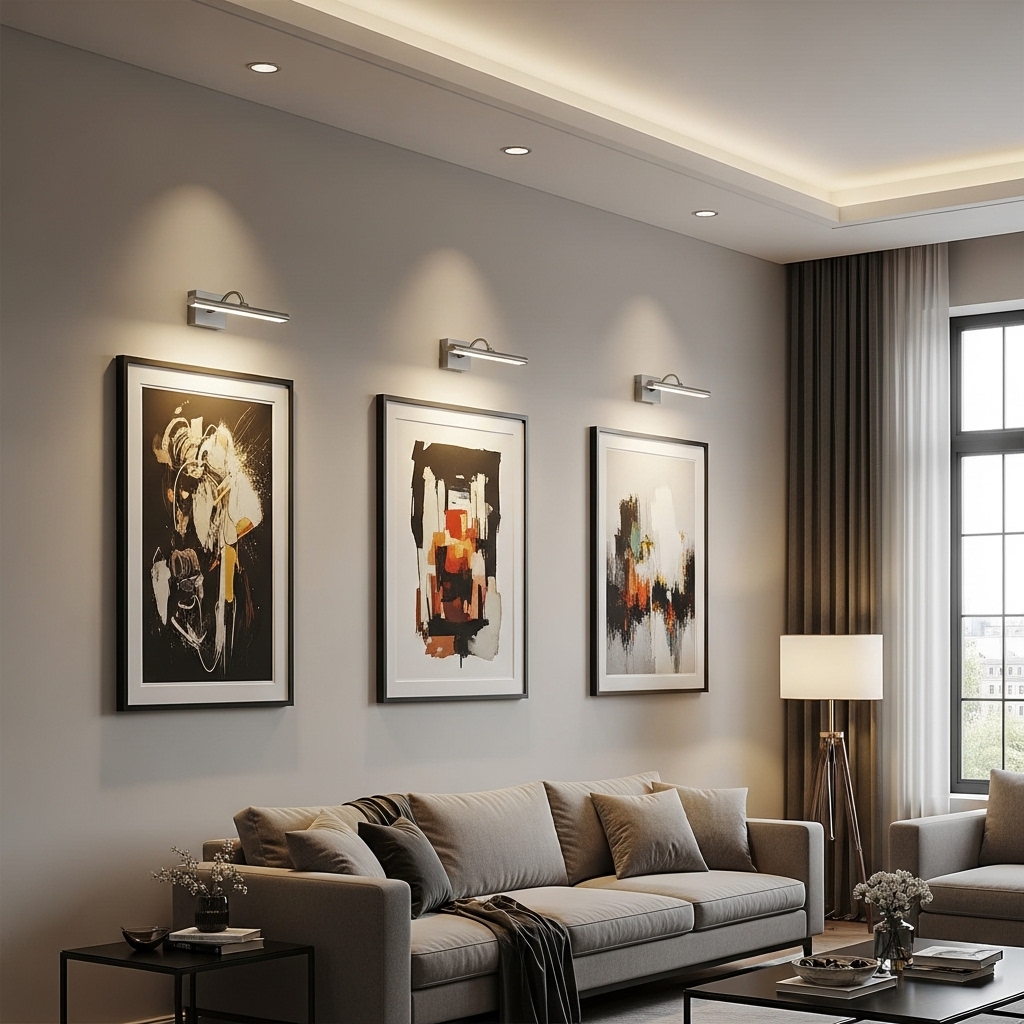
Art deserves its own light. A picture light makes art look like a museum piece. It adds a layer of accent light that creates depth.
| Art Size | Picture Light Size | Placement | Price Range |
|---|---|---|---|
| Small (16×20) | 12-16 inches wide | Centered above art | $15-30 |
| Medium (24×30) | 18-24 inches wide | Centered above art | $20-40 |
| Large (36×48) | 30-36 inches wide | Centered above art | $30-60 |
Why it works: Picture lights draw attention to art. They add a layer of light at a different height than other sources. The contrast creates visual depth.
How to install:
- Battery-operated picture lights require no wiring. Mount with command strips.
- Plug-in picture lights require an outlet. Hide the cord with a cord cover.
- Hardwired picture lights require an electrician (not recommended for rentals).
Pro Tip: Use battery-operated picture lights with remote controls. Turn the light on and off without reaching up.
Mistake to Avoid: Do not use a picture light that is wider than the art. The light should be slightly narrower than the frame.
Idea 6: Add Under-Cabinet Lighting
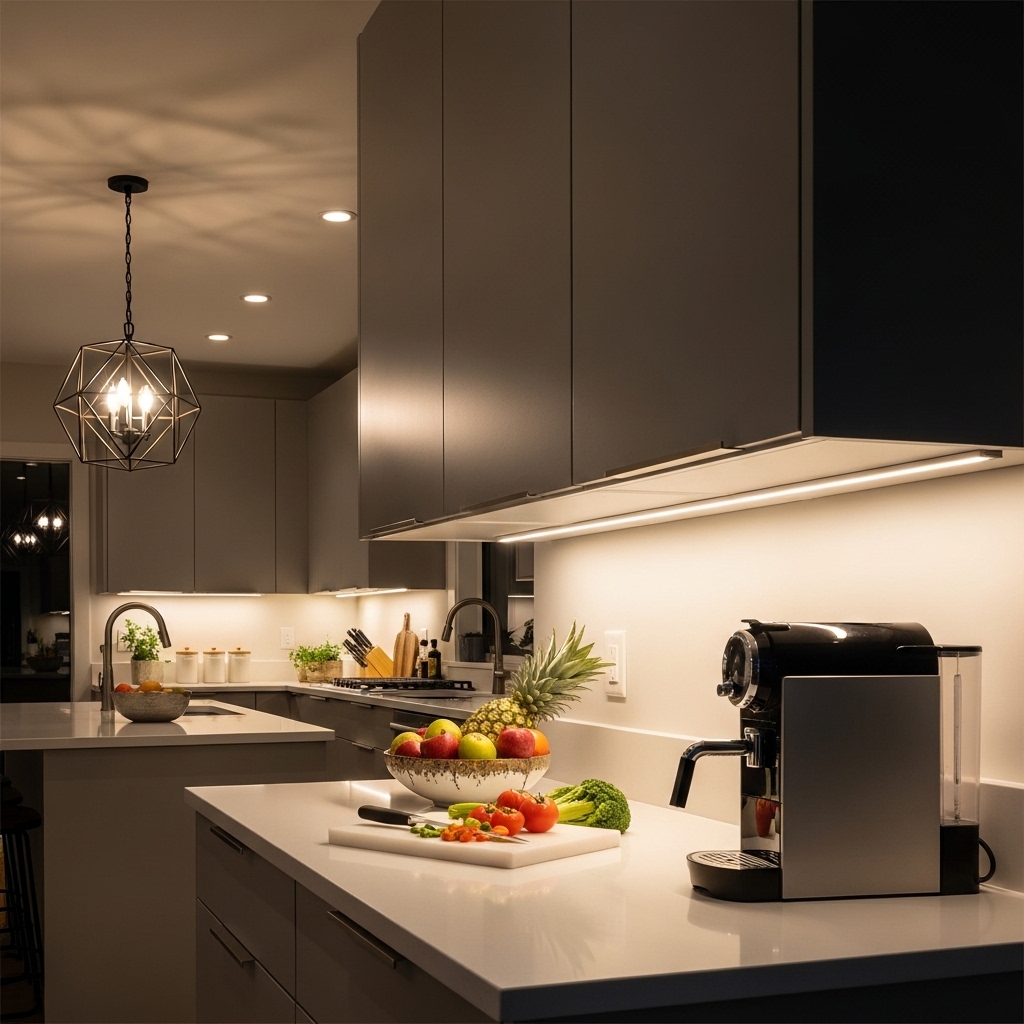
Kitchen counters are always in shadow. Overhead light does not reach the counter. The human body blocks the light when standing at the counter.
| Type | Pros | Cons | Cost | Best For |
|---|---|---|---|---|
| LED strip lights | Bright, even light, low profile | Requires outlet nearby | $20-50 | Long counter runs |
| Puck lights | Easy to install (battery or plug-in) | Creates spots, not even light | $15-30 | Small areas |
| Hardwired bars | Professional look, seamless | Requires electrician | $100-200 | Permanent installation |
Why it works: Under-cabinet lighting eliminates shadows on your workspace. Food prep is easier and safer. The kitchen looks more professional and expensive.
How to install LED strip lights:
- Measure the length of your cabinets
- Cut the LED strip to size at marked cut points
- Peel and stick the strip to the underside of the cabinet
- Plug into an outlet (hide the cord with a cord cover)
Pro Tip: Use LED strip lights with a dimmer and color temperature adjustment. Bright light for food prep. Warm light for evening ambiance.
Mistake to Avoid: Do not use warm white (2700K) under cabinets. Use 3000K or 4000K for task lighting where accurate color matters.
Idea 7: Add a Dimmer to Every Overhead Light
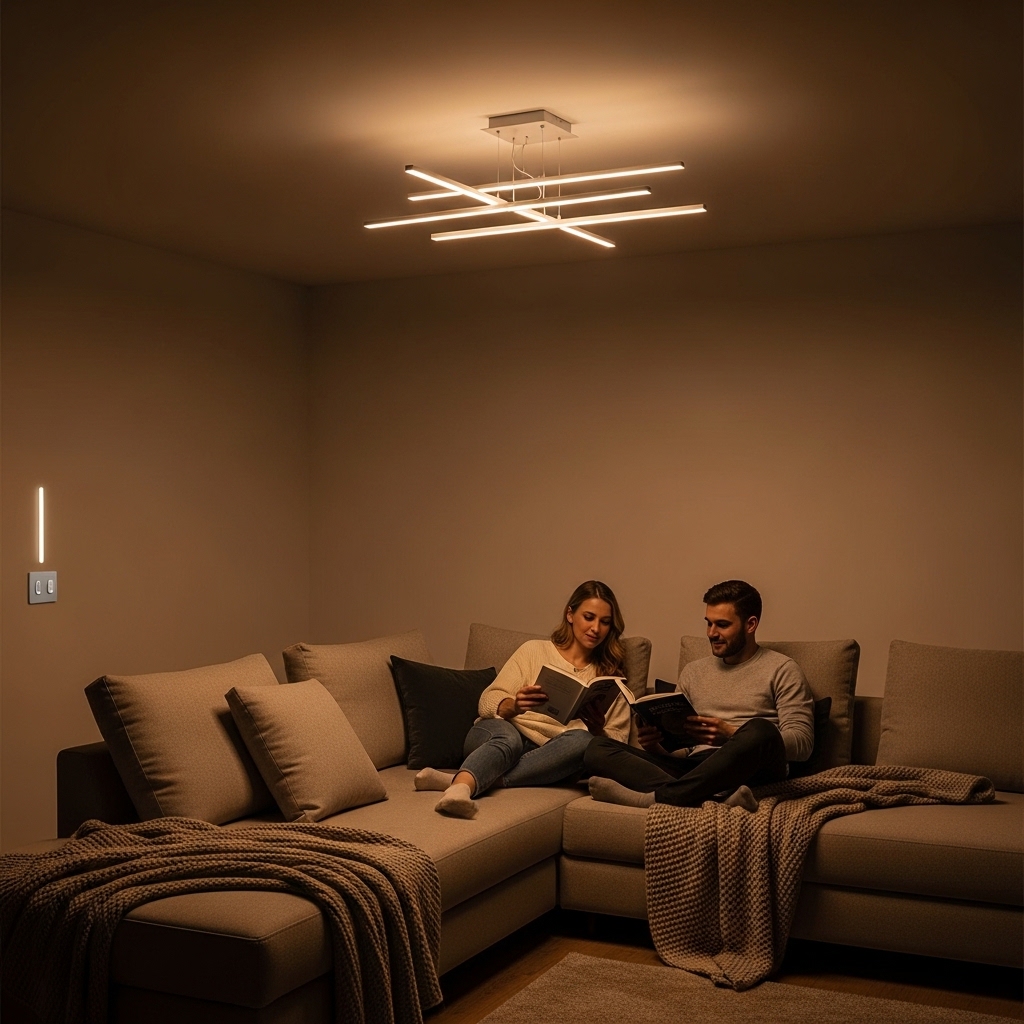
Overhead lights are too bright for evenings. They are too dim for cleaning. A dimmer fixes both problems. It is the single most impactful lighting change.
| Dimmer Type | Best For | Installation Difficulty | Price |
|---|---|---|---|
| Slide dimmer | Living rooms, bedrooms | Easy (replace existing switch) | $15-25 |
| Rotary dimmer | Dining rooms | Easy | $15-25 |
| Smart dimmer | Any room | Moderate (requires hub or Wi-Fi) | $30-50 |
| Toggle dimmer | Traditional style homes | Easy | $15-25 |
Why it works: Dimming changes the mood of a room instantly. Bright light for cleaning and tasks. Dim light for relaxing and evenings. One fixture serves multiple purposes.
How to install a dimmer:
- Turn off power at the circuit breaker
- Remove the existing switch plate
- Remove the existing switch
- Connect the dimmer wires (match colors: black to black, white to white, green to ground)
- Screw the dimmer into the box
- Attach the new switch plate
- Turn power back on
Pro Tip: Choose a dimmer with a preset button. One tap returns to your favorite brightness level every time.
Mistake to Avoid: Do not use a standard dimmer with LED bulbs. Check that your dimmer is LED-compatible. Incompatible dimmers cause flickering.
Idea 8: Use Statement Pendant Lights
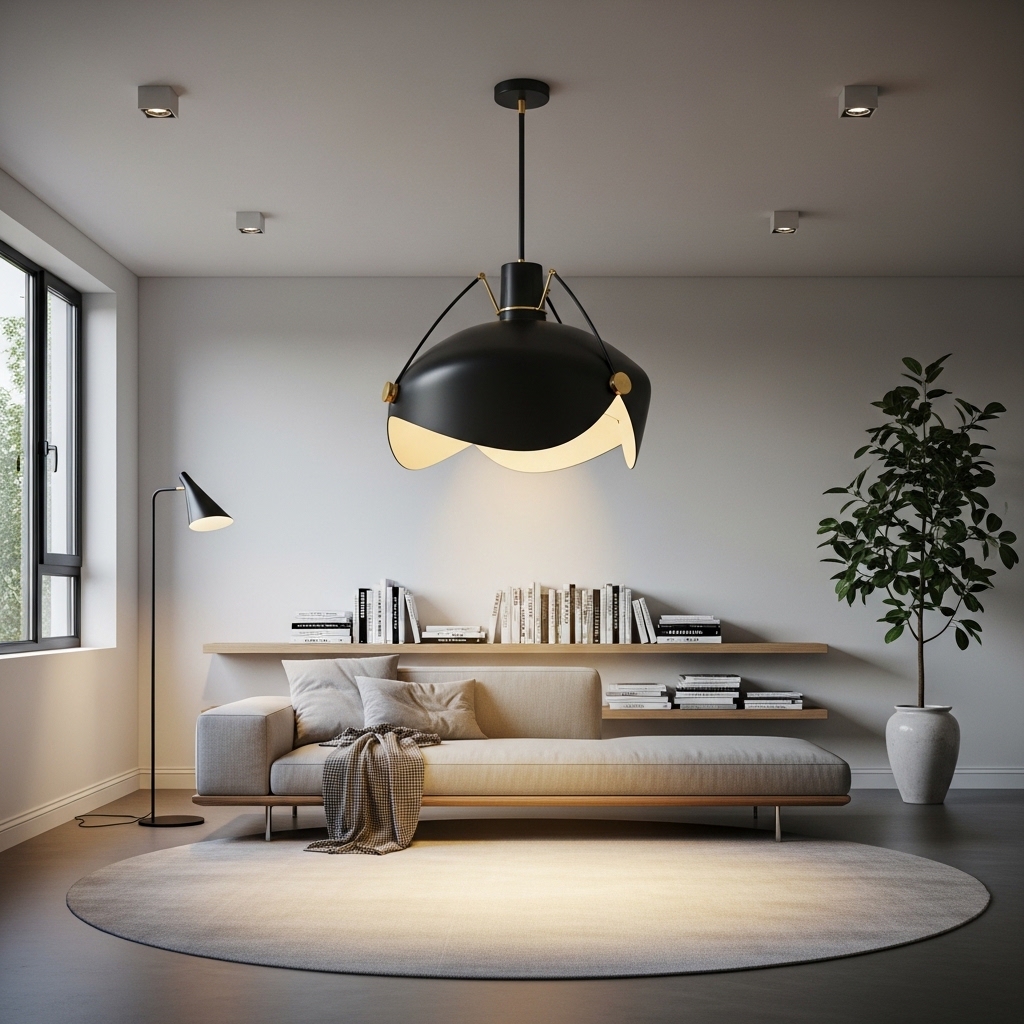
A statement pendant light is functional art. It provides ambient light and makes a design statement. It draws the eye upward, making ceilings feel higher.
| Location | Pendant Height | Size | Price Range |
|---|---|---|---|
| Above dining table | 30-36 inches above table | 1/2 to 2/3 width of table | $50-200 |
| Above kitchen island | 30-36 inches above counter | 2-3 pendants spaced evenly | $40-150 each |
| Above bedside | 24-30 inches above nightstand | Small, 8-12 inches wide | $30-80 |
Why it works: A statement pendant draws the eye. It becomes a focal point. It adds personality without taking up floor space.
How to choose a pendant light:
- For dining tables, choose a pendant that is half to two-thirds the width of the table
- For kitchen islands, use multiple smaller pendants spaced 24-30 inches apart
- For bedsides, choose a small pendant that does not overwhelm the nightstand
Pro Tip: Use a dimmer with pendant lights. Dimming allows you to use the pendant for both task lighting and ambiance.
Mistake to Avoid: Do not hang a pendant too low. People should not hit their heads. Minimum 30 inches above a table.
Idea 9: Add Tape Lighting Under the Bed Frame
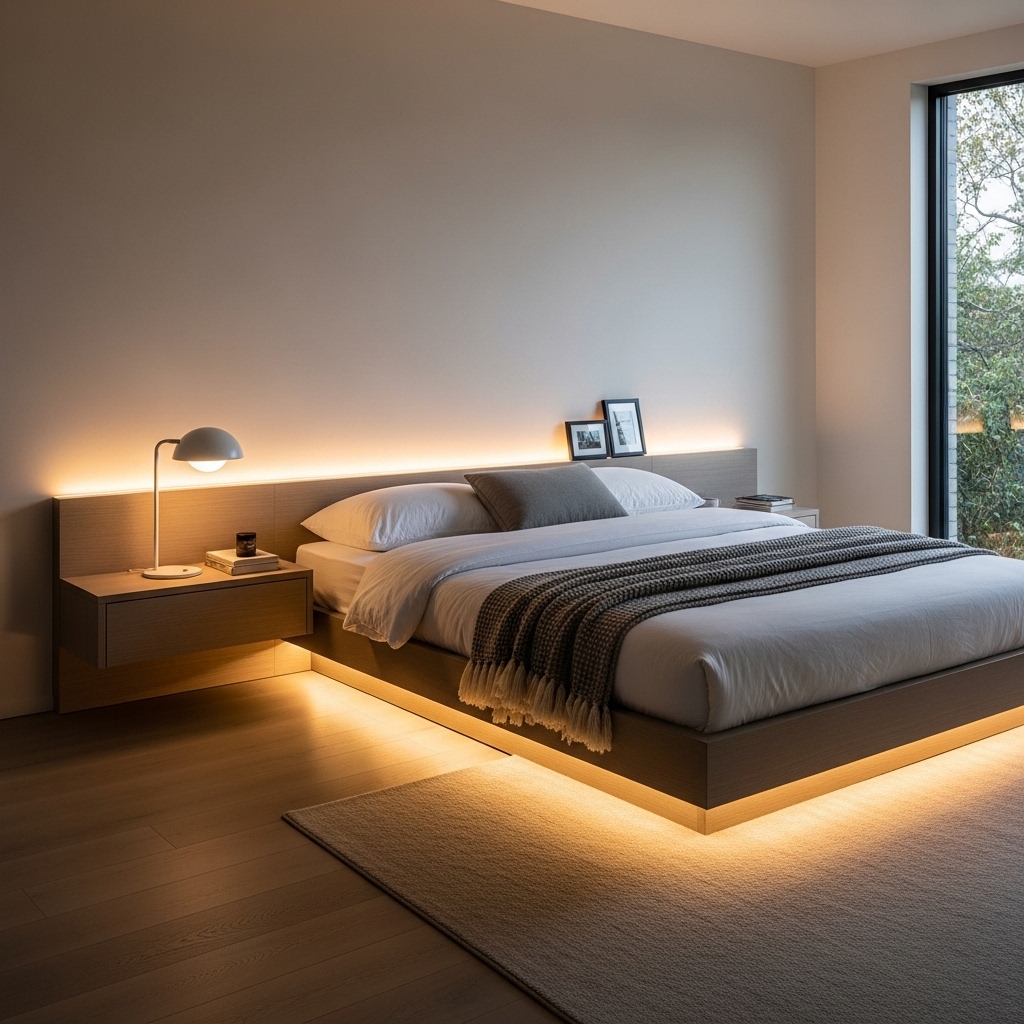
A floating bed effect is modern and dramatic. Tape lighting under the bed creates the illusion that the bed is floating. The soft glow adds depth without harsh light.
| Bed Type | Tape Placement | Effect | Cost |
|---|---|---|---|
| Platform bed | Around the perimeter, 2 inches from edge | Soft glow around entire bed | $15-30 |
| Bed with legs | Under the frame, facing down | Light pool on floor | $15-30 |
| Upholstered bed | Under the base, facing down | Subtle glow, floating effect | $15-30 |
Why it works: The glow under the bed creates depth. The bed looks lighter. The room looks larger. The effect is subtle but transformative.
How to install:
- Measure the perimeter of your bed frame
- Cut LED tape lighting to size
- Peel and stick to the underside of the bed frame
- Plug into an outlet (hide the cord)
Pro Tip: Use tape lighting with a remote control and timer. Turn it on for evenings. Set a timer to turn off at bedtime.
Mistake to Avoid: Do not use tape lighting that is too bright. The glow should be subtle, not blinding. 300-500 lumens is sufficient.
Idea 10: Use Smart Bulbs for Flexibility
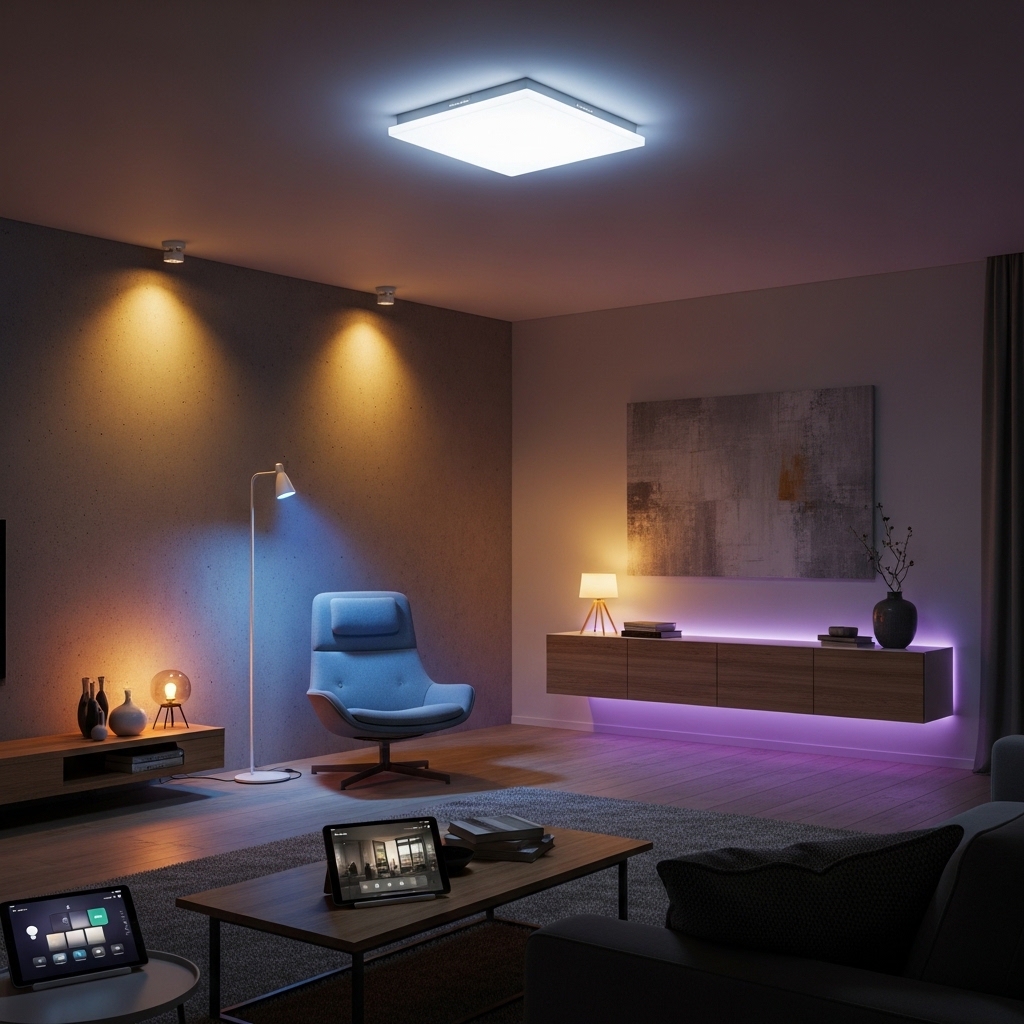
Smart bulbs change color temperature and brightness from your phone. One bulb serves multiple purposes. No dimmer switch required.
| Feature | Benefit | Price Range |
|---|---|---|
| Adjustable color temperature | Warm for evenings, cool for afternoons | $10-25 per bulb |
| Dimming | No dimmer switch needed | Included |
| Scheduling | Lights turn on/off automatically | Included |
| Remote control | Turn off lights from bed | Included |
| Voice control | Works with Alexa, Google Home | Included |
Why it works: One bulb serves multiple purposes. Warm light for relaxing. Cool light for focus. Bright light for cleaning. Dim light for evenings.
How to use smart bulbs:
- Replace existing bulbs with smart bulbs
- Download the companion app
- Connect bulbs to your Wi-Fi
- Set schedules (example: warm dim light after 8 PM)
- Control with phone or voice
Pro Tip: Set a schedule. Warm, dim light after 8 PM. Bright, cool light in the morning. The schedule automates good lighting habits.
Mistake to Avoid: Do not buy cheap smart bulbs. Cheap bulbs have poor color accuracy and unreliable connections. Stick to reputable brands like Philips Hue, LIFX, or GE Cync.
Lighting by Room: Quick Reference Guide
| Room | Ambient | Task | Accent | Bulb Temperature |
|---|---|---|---|---|
| Living room | Overhead on dimmer | Table lamps | Floor lamp, picture lights | 2700K |
| Bedroom | Overhead on dimmer | Bedside lamps or sconces | Tape light under bed | 2700K |
| Kitchen | Overhead (bright) | Under-cabinet lights | Pendant over island | 3000K |
| Bathroom | Overhead | Vanity lights | None | 3000K |
| Home office | Overhead | Desk lamp | Floor lamp | 4000K |
Pro Tip: Use the same bulb temperature throughout an open floor plan. Mixed temperatures look chaotic.
Mistake to Avoid: Do not use 5000K bulbs in living spaces. Daylight bulbs feel cold and clinical.
Frequently Asked Questions
What is the single most important lighting change?
Add a dimmer to your overhead light. This costs $15-25 and takes 15 minutes to install. The impact is immediate and dramatic.
How many light sources does a room need?
At least three. Ambient (overhead), task (table lamp), and accent (floor lamp in corner). More is better. Five sources create more depth than three.
Can I mix bulb color temperatures in the same room?
No. Stick to one temperature per room. Mixed temperatures look chaotic and unplanned. Choose 2700K for living spaces. Choose 3000K for kitchens and bathrooms.
What is the best bulb for reading?
A task lamp with a 2700K or 3000K bulb at 800 lumens. The lamp should be positioned so the light hits the page, not your eyes. A swing arm lamp provides the most flexibility.
Conclusion
Lighting transforms a room. Bad lighting makes expensive furniture look cheap. Good lighting makes budget furniture look expensive.
Ten ideas create modern lighting. Layer your lighting. Use warm white bulbs everywhere. Add a floor lamp to every dark corner. Install plug-in wall sconces. Use picture lights for art. Add under-cabinet lighting. Add a dimmer to every overhead light. Use statement pendant lights. Add tape lighting under the bed frame. Use smart bulbs for flexibility.
Start with one lighting idea today. Add a dimmer. Add a floor lamp. Change your bulbs to 2700K. Small changes produce dramatic results.