How to Decorate a Small Room Without Making It Look Crowded: 15 Proven Strategies That Actually Work
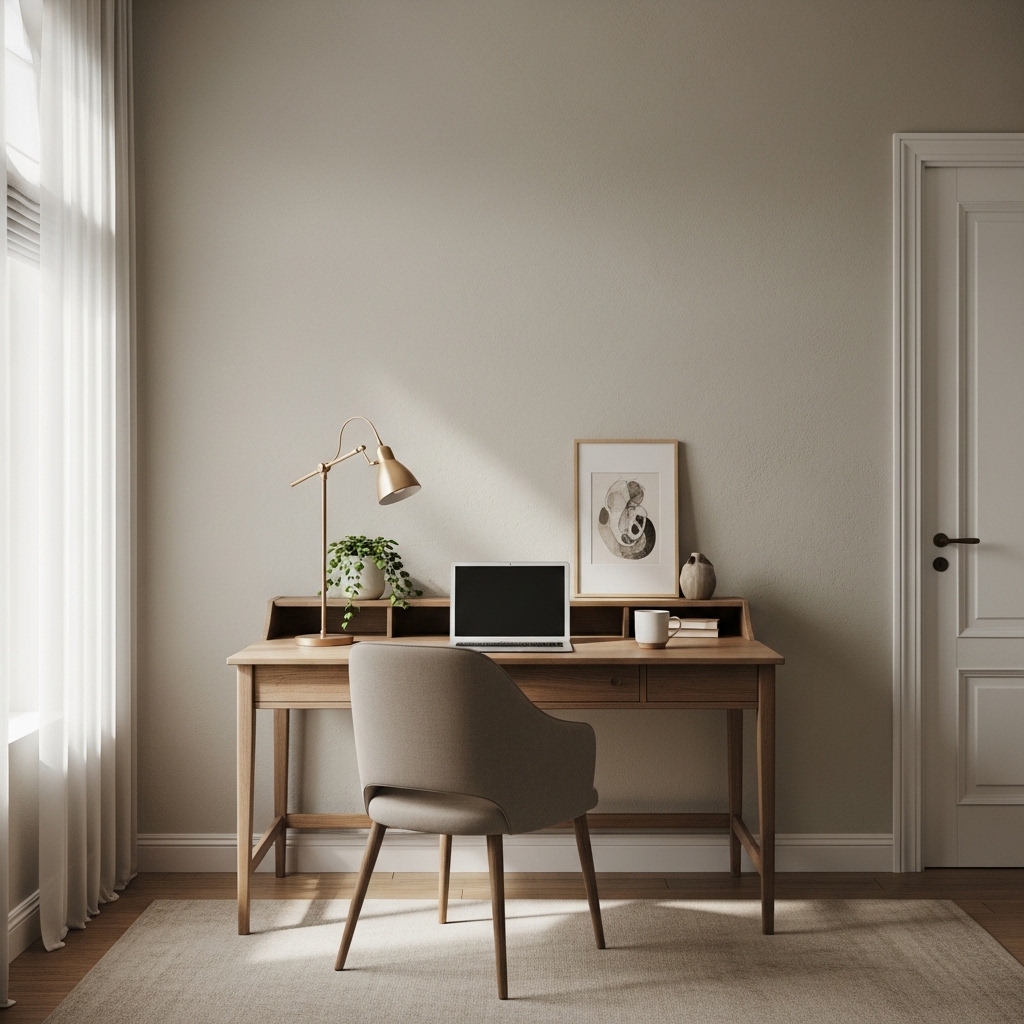
The room was small. Ten feet by twelve feet. Beige walls. Gray carpet. One window. No furniture yet. And a growing sense of panic about how to make it all fit.
Small rooms feel impossible. Every piece of furniture seems too large. Every layout option seems wrong. The fear is that the room will end up feeling like a crowded storage closet rather than a comfortable living space.
After years of trial and error in small apartments, the lessons finally became clear. There are specific strategies that work. And there are common mistakes that make small rooms feel even smaller.
This guide delivers 15 proven strategies for decorating a small room without making it look crowded. No demolition. No expensive contractors. Just smart choices that create space where none seems to exist.
Before Starting: The Small Room Assessment
Before buying a single item, the room needed an honest assessment. What were the non-negotiables? What could be changed? What had to be worked around?
The Room Audit
The room measured 10 feet by 12 feet with an 8-foot ceiling. A single 3-foot by 4-foot window sat centered on the 10-foot wall. The window faced north, which meant limited natural light throughout most of the day.
The walls were painted beige. The flooring was gray carpet. Both were rental constraints that could not be changed. The budget for the entire room was set at $600.
The Non-Negotiable Constraints
Every room has limitations. Identifying them early prevents falling in love with items that will not work.
Rental Restrictions
No painting walls meant color had to come from furniture, rugs, and accessories. Removable wallpaper was an option for future updates but was not in the budget.
No changing flooring meant a large area rug was essential to cover the gray carpet and define the seating area.
No drilling into certain walls meant tension rods for curtains and command strips for art. Heavy items needed to lean against walls or sit on furniture.
Budget Limitations
The $600 budget had to cover every item in the room. No existing furniture could be used. Everything needed to be purchased or thrifted.
- Sofa: $300 (half the budget, the anchor piece)
- Rug: $100 (large enough for the seating area)
- Coffee table: $60 (multi-functional preferred)
- Lamp: $40 (one floor lamp for layered lighting)
- Curtains: $40 (two panels and a tension rod)
- Art: $30 (one large piece or several small ones)
- Pillows and throw: $30 (texture and color)
Pro Tip: List your constraints before shopping. Keep the list on your phone for reference while browsing.
Mistake to Avoid: Do not buy a single item until the room is measured and constraints are listed.
The Core Problem: Why Small Rooms Feel Crowded
Before fixing the problem, understand what causes it. Small rooms feel crowded for predictable reasons.
The Three Main Culprits
Too much furniture: Every piece of furniture consumes floor space and visual attention. More pieces create more visual noise. The eye has nowhere to rest.
Wrong scale: A massive sofa in a tiny room dominates everything. Tiny accessories scattered around look like clutter. Scale matters more than style.
Poor layout: Furniture pushed against walls creates an empty no man’s land in the center. The room feels like a waiting room. Conversation becomes awkward.
The Mindset Shift
Small rooms need different rules. The goal is not to decorate. The goal is to create space where none seems to exist.
| Old Mindset | New Mindset |
|---|---|
| How can I fit more furniture in this room? | What can I remove to make this room feel larger? |
| Where can I put this decorative item? | Does this item earn its footprint? |
| I need more storage. | I need better storage. |
Pro Tip: Start with an empty room. Remove everything. Add items back one at a time. Stop when the room feels balanced.
Mistake to Avoid: Do not start buying storage bins before decluttering. Bins purchased early are often the wrong size for what remains.
Strategy 1: Choose a Light, Neutral Wall Color
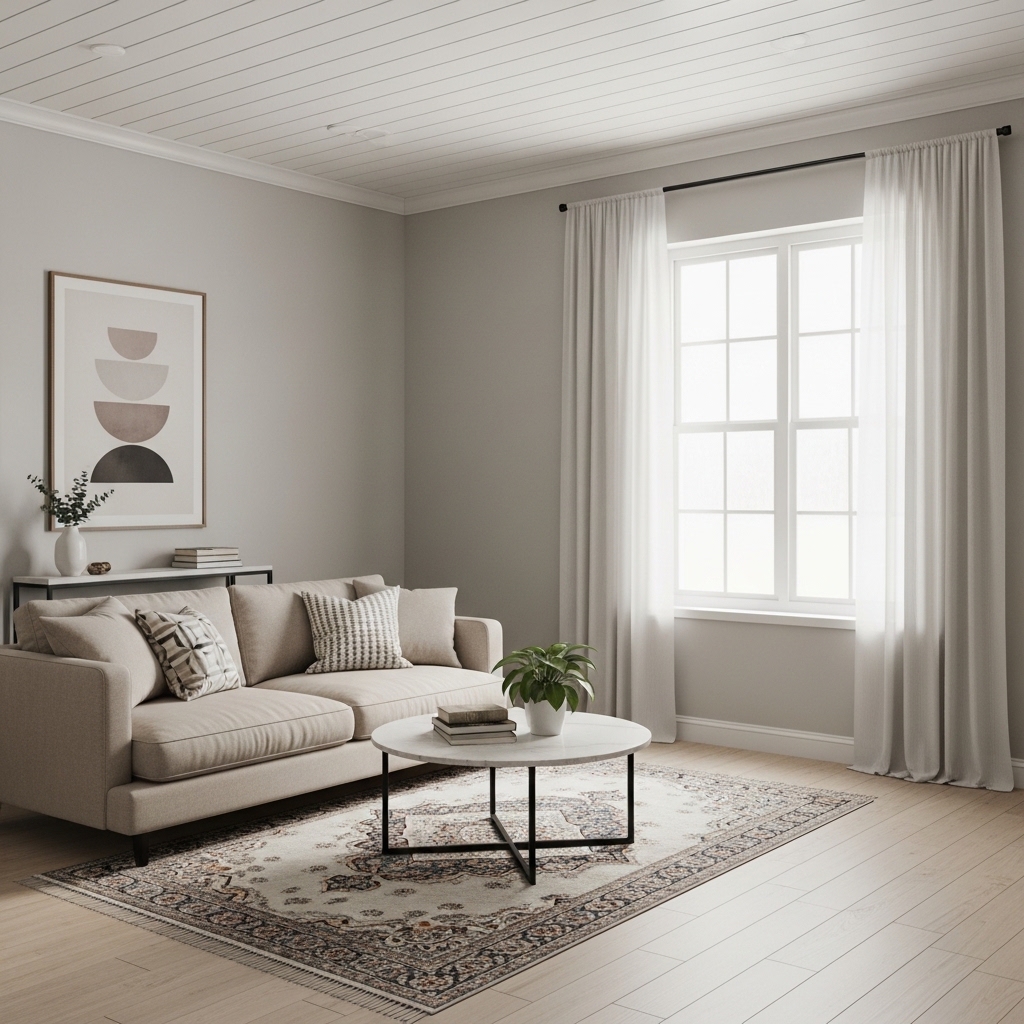
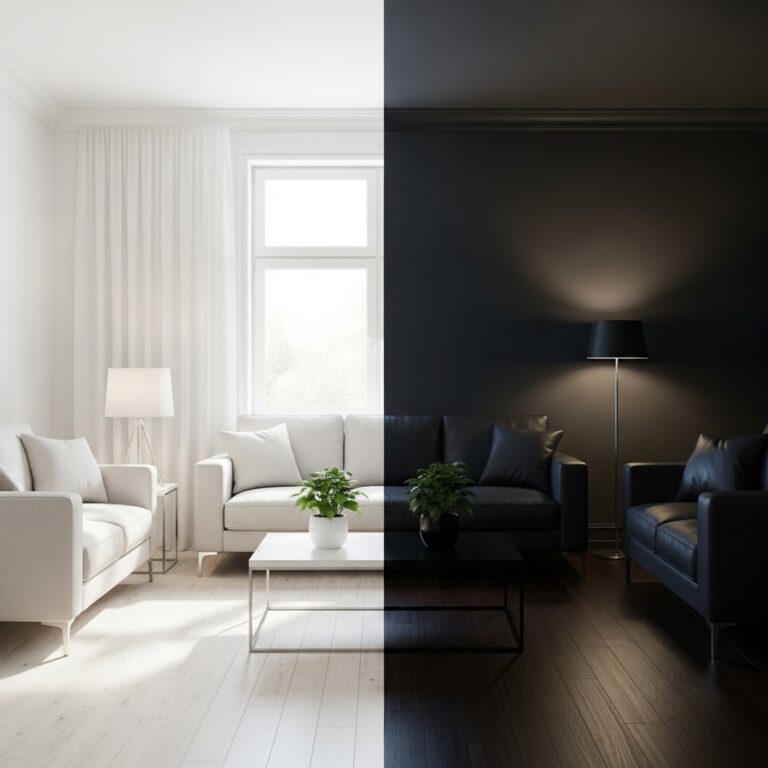
Wall color sets the foundation for the entire room. Dark colors absorb light. Light colors reflect light. Reflected light makes rooms feel larger.
Best Paint Colors for Small Rooms
| Color Family | Specific Shades | Why It Works |
|---|---|---|
| Warm whites | Creamy white, off-white, linen white | Reflects maximum light, feels clean but not cold |
| Light neutrals | Pale beige, warm gray, taupe | Adds warmth without darkening the room |
| Soft pastels | Pale blue, mint green, blush pink | Adds color while still reflecting light |
| Light earth tones | Sand, stone, driftwood | Natural, calming, light-reflecting |
Colors to Avoid in Small Rooms
- Dark navy or charcoal: Absorbs light, makes walls feel closer, creates a cave-like atmosphere
- Bright red or orange: Overstimulating, feels aggressive in small spaces
- Pure white: Can feel cold and clinical, shows every mark and scuff
- Dark brown: Heavy, oppressive, shrinks the room visually
The Monochromatic Shortcut
Paint the walls, trim, and ceiling the same light color. The lack of contrast between surfaces makes the room feel larger. The eye travels smoothly without stopping at color changes.
Pro Tip: Use a matte or flat finish on walls. Flat paint hides imperfections and absorbs less light than glossy finishes.
Mistake to Avoid: Do not paint a small room dark colors. Save dark colors for large rooms or powder rooms only.
Strategy 2: Use Furniture with Exposed Legs
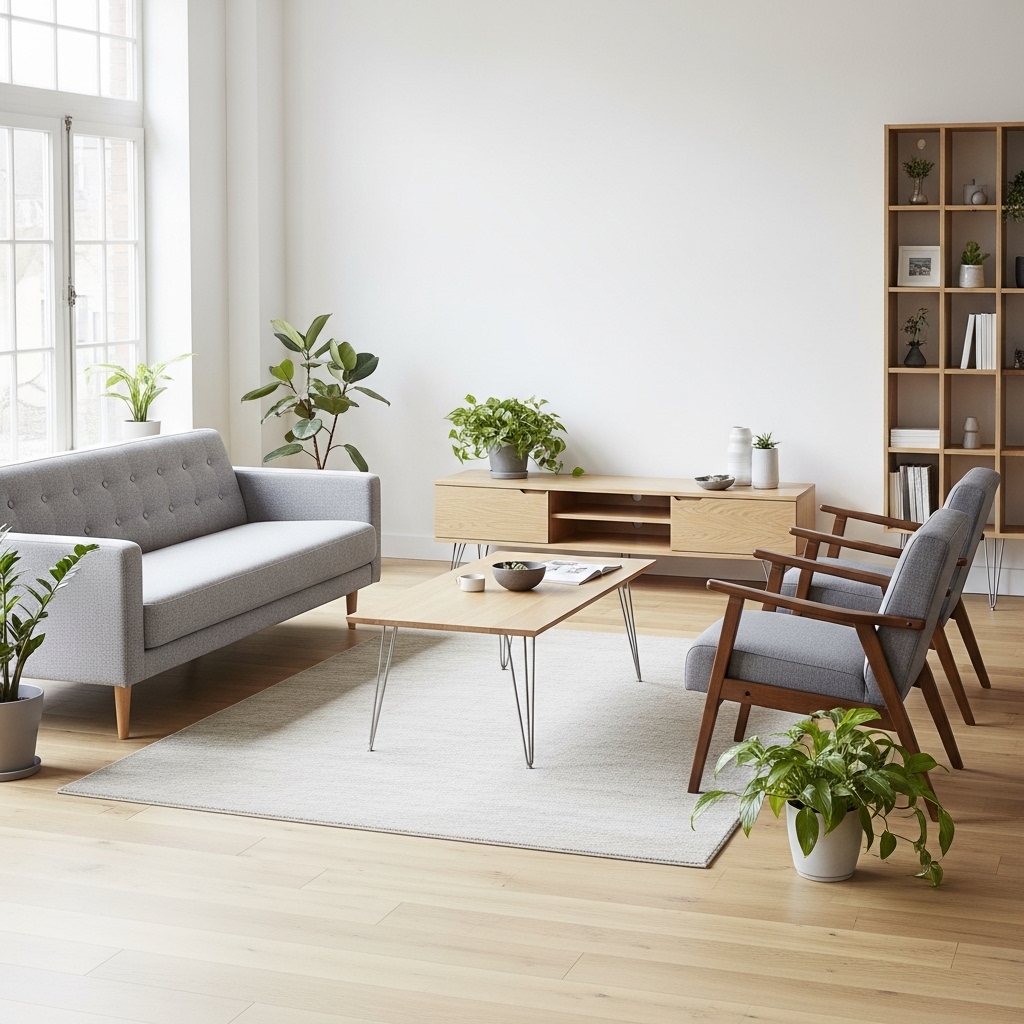
Furniture that sits directly on the floor looks heavy and bulky. Furniture with exposed legs creates visual space underneath.
The Leg Rule
| Furniture Type | Without Legs | With Legs |
|---|---|---|
| Sofa | Looks heavy, blocks light, traps dust | Looks lighter, visible floor underneath, easier to clean |
| Bed | Solid block, visually heavy | Airy, floating appearance, storage underneath |
| Dresser | Chunky, grounded | Lighter, room feels larger |
| Console | Heavy, wall-hugging | Airy, visible floor, less visual weight |
How Tall Should Legs Be?
- Minimum height: 4 inches from floor to bottom of furniture
- Ideal height: 6-8 inches for sofas and chairs
- Bed clearance: Enough for under-bed storage bins (at least 6 inches)
Why This Works
Visible floor underneath furniture tricks the eye. The floor appears to continue beneath the piece. The room feels larger because more floor is visible.
Pro Tip: Choose furniture with tapered legs. Tapered legs look more elegant than straight, blocky legs.
Mistake to Avoid: Do not block the space under furniture with stored items. The visual space is lost when the gap is filled.
Strategy 3: Float Furniture Away from Walls
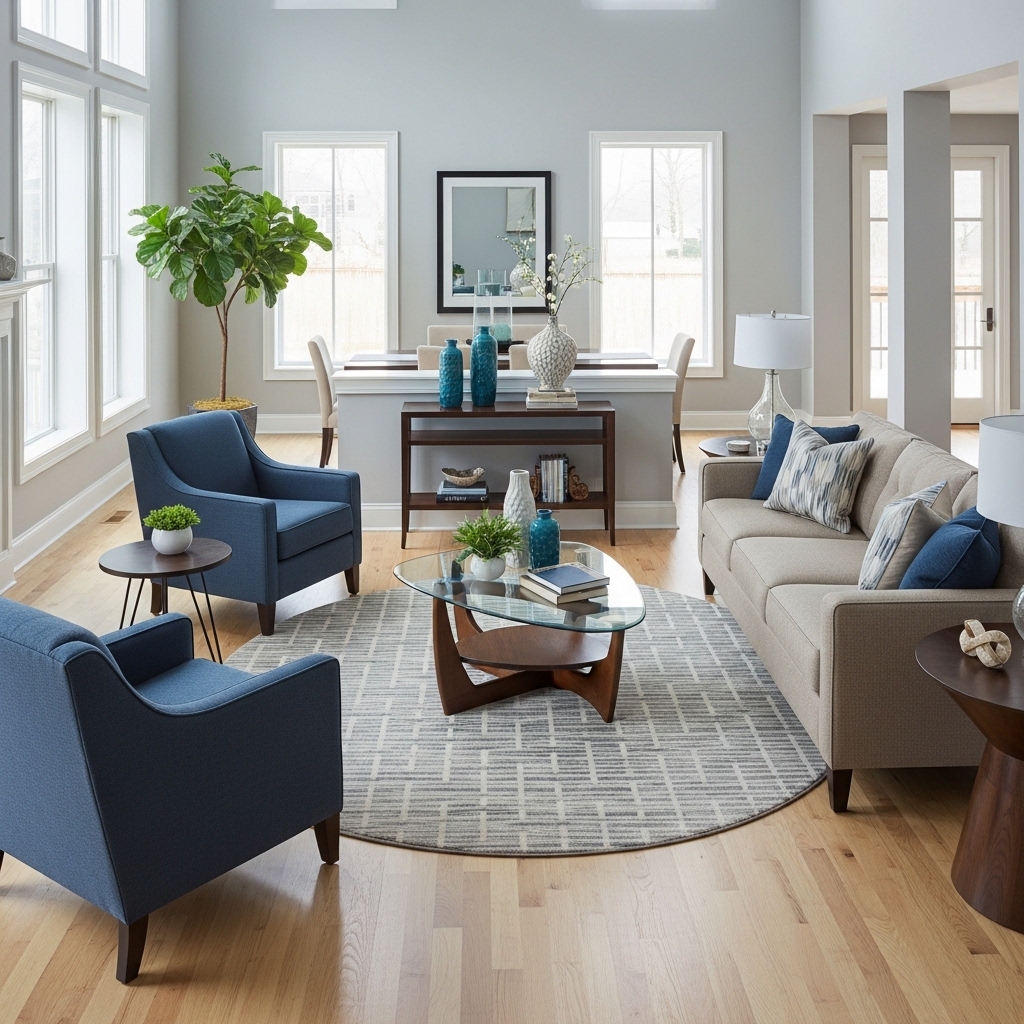
Conventional wisdom says push furniture against walls to open up the center. This does the opposite.
The Float Technique
| Furniture | Traditional Placement | Floating Placement | Effect |
|---|---|---|---|
| Sofa | Flush against wall | 6-12 inches from wall | Creates depth, allows curtains to hang |
| Chairs | In corners | Angled toward center | Breaks up straight lines, invites conversation |
| Desk | Facing wall | Facing into room | Room feels larger, better natural light |
| Bed | Centered on wall | Anchored in corner | Maximizes floor space |
The Depth Illusion
A gap behind furniture creates visual depth. The eye sees the gap and registers more space. A room with floating furniture feels larger than a room with everything pushed against walls.
How to Float in a Small Room
- Pull the sofa forward: Even 6 inches makes a difference. The gap behind the sofa creates depth.
- Angle a chair: One chair angled toward the center breaks up straight lines. The room feels more dynamic.
- Leave corners empty: Not every corner needs furniture. Empty corners make the room feel larger.
Pro Tip: Use painter’s tape to outline new furniture positions before moving. Adjust the tape until the layout feels right.
Mistake to Avoid: Do not float furniture so far from walls that walking paths become blocked. Leave at least 30 inches for main walking paths.
Strategy 4: Choose a Few Larger Pieces Instead of Many Small Ones
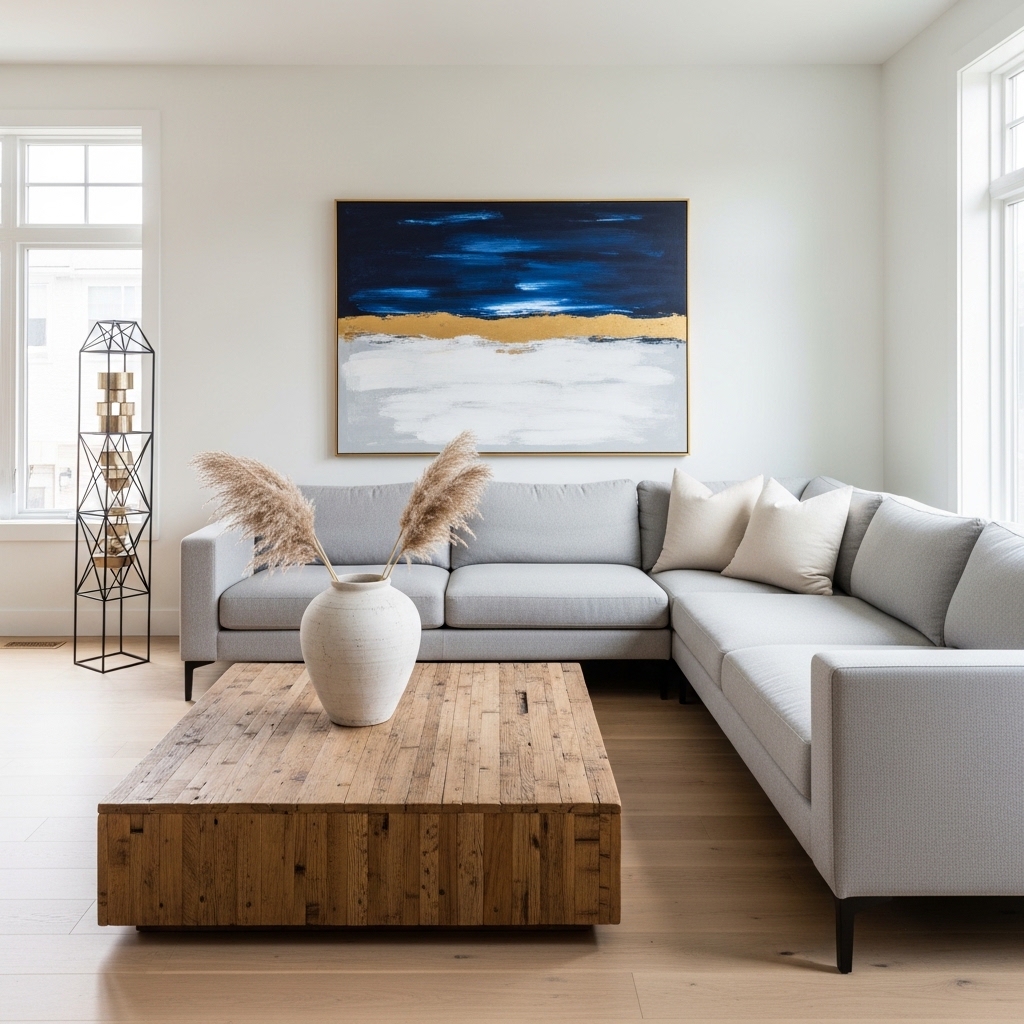
A tiny room filled with tiny furniture looks like a dollhouse. Lots of small pieces create visual clutter and make the space feel busy and cramped.
The Scale Rule
| Room Size | Furniture Strategy | Example |
|---|---|---|
| Very small (under 100 sq ft) | 2-3 larger pieces | Sofa, coffee table, one chair |
| Small (100-150 sq ft) | 3-4 larger pieces | Sofa, coffee table, two chairs |
| Medium (150-200 sq ft) | 4-5 larger pieces | Sofa, loveseat, coffee table, two chairs |
Why Larger Pieces Work Better
One substantial dresser takes up less visual space than three small shelves. A single large piece anchors the room. Many small pieces fragment it.
The eye processes one large piece as one thing. The eye processes ten small pieces as ten things. Less visual clutter equals a calmer, larger-feeling room.
What to Avoid
- Multiple small shelves: Replace with one tall bookshelf
- Several tiny side tables: Replace with one substantial coffee table
- Many small art pieces: Replace with one larger statement piece
- Scattered small rugs: Replace with one large area rug
Pro Tip: Choose one statement piece for the room. A large mirror. A substantial piece of art. A bold rug. One statement piece draws the eye and distracts from the room’s size.
Mistake to Avoid: Do not buy furniture in sets. Matching sets look like a showroom and often include pieces that are not needed.
Strategy 5: Use Vertical Storage to Free Up Floor Space
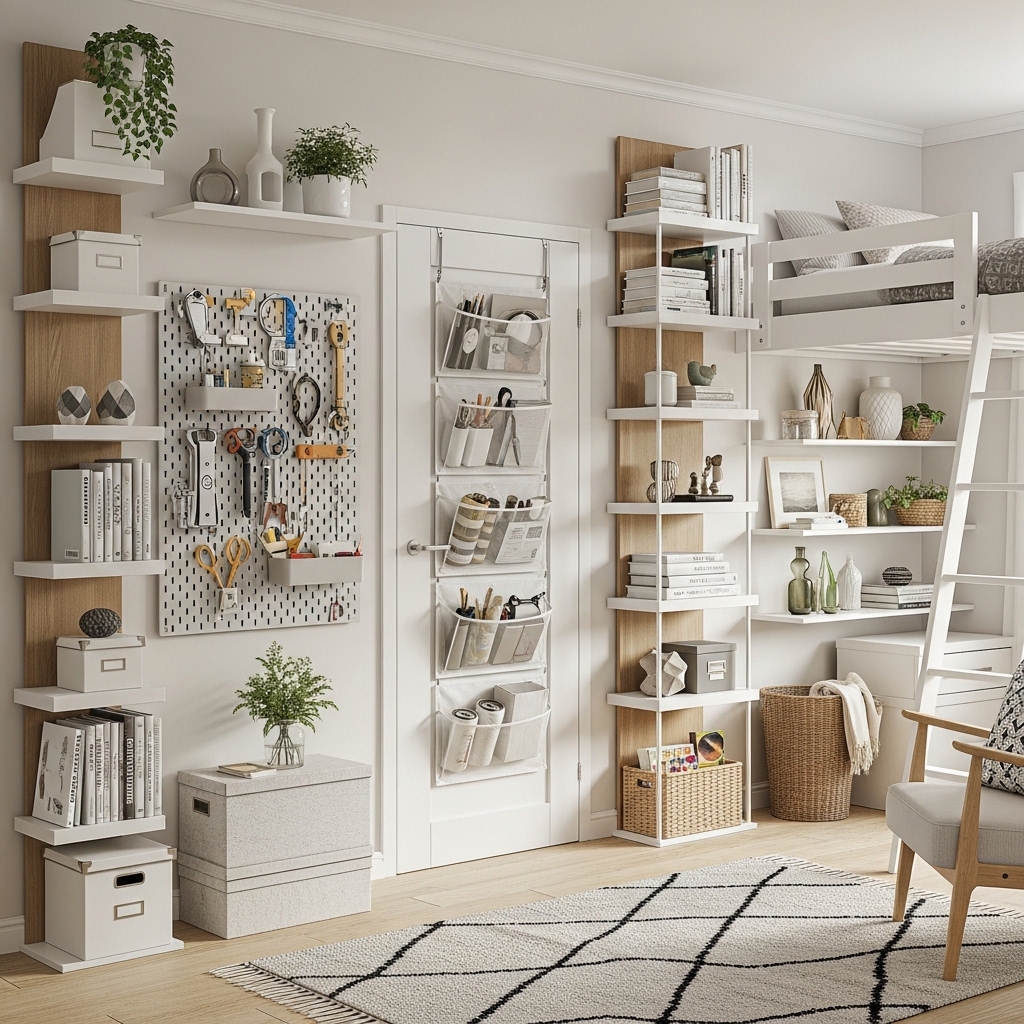
Floor space is the most valuable real estate in a small room. Vertical storage preserves floor space while adding storage capacity.
Vertical Storage Solutions
| Storage Type | Floor Space Used | Storage Capacity | Best For |
|---|---|---|---|
| Low dresser | High | Low | Daily items |
| Tall bookshelf | Low | High | Books, baskets, decor |
| Wall-mounted shelves | None | Medium | Display, light storage |
| Floor-to-ceiling cabinets | Low | Very high | Maximum storage |
| Over-door organizer | None | Low | Shoes, accessories |
The Tall Bookshelf Solution
Replace a low, wide dresser with a tall, narrow bookshelf. The floor footprint is the same or smaller. The storage capacity doubles or triples.
The tall bookshelf also draws the eye upward. The ceiling feels higher. The room feels larger.
Wall-Mounted Shelves
- Best for: Books, small plants, framed photos, display items
- Installation: Mount into wall studs or use heavy-duty anchors
- Placement: Install at varying heights for visual interest
- Weight limit: Check manufacturer specifications
Pro Tip: Use the top shelves for items used less frequently. Use bottom shelves for daily items. This puts everyday items within easy reach.
Mistake to Avoid: Do not push tall furniture against a short wall. Tall furniture needs tall walls to feel balanced.
Strategy 6: Let Natural Light In (And Add Layers of Artificial Light)
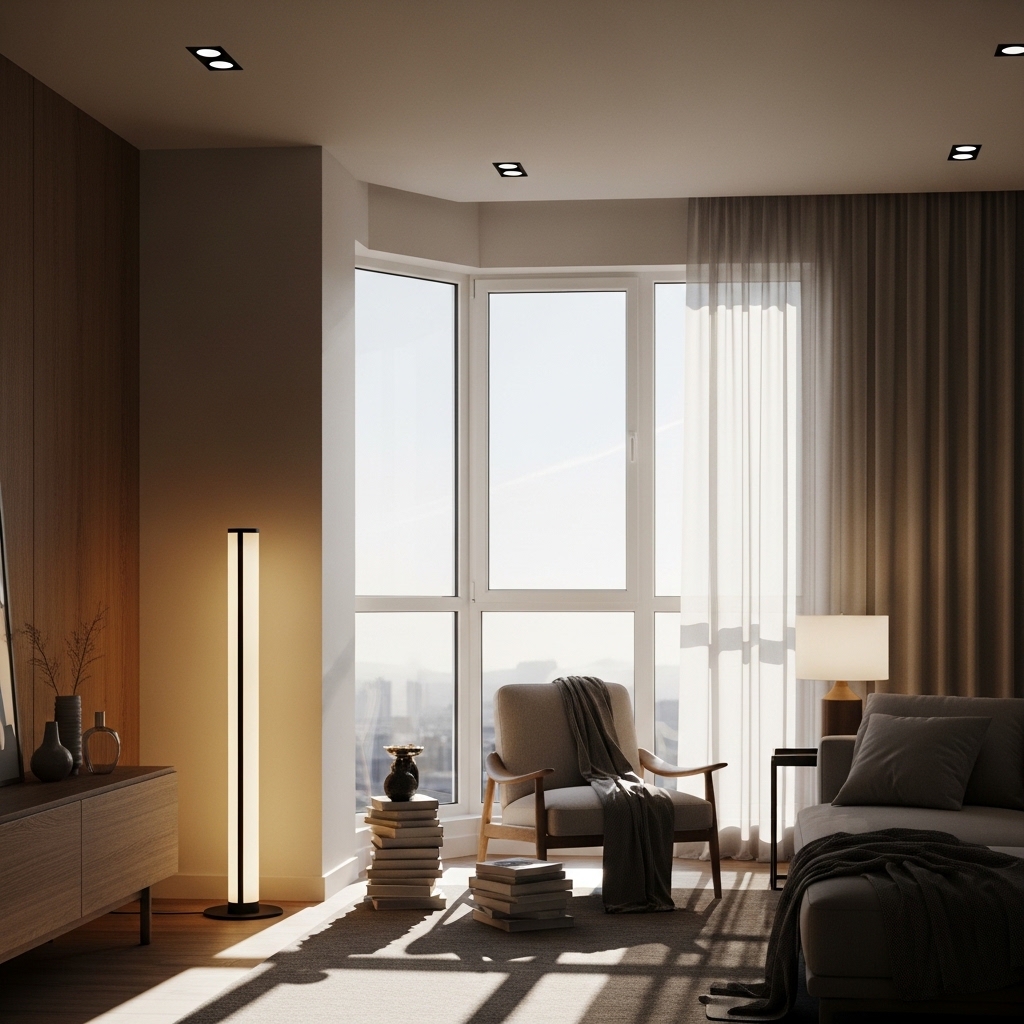
Light is the most powerful tool for making small rooms feel larger. Dark rooms feel smaller. Bright rooms feel more open.
Maximizing Natural Light
| Window Treatment | Light Impact | Best For |
|---|---|---|
| Sheer curtains | Filters light, provides privacy | Living rooms, bedrooms |
| No curtains | Maximum light | Rooms with privacy (high floors, rural areas) |
| Light-filtering shades | Diffuses harsh light | Rooms with intense sun |
| Blackout shades | Blocks all light | Bedrooms (use only when sleeping) |
What to Avoid at Windows
- Heavy drapes: Block light, feel heavy, make room feel smaller
- Furniture in front of windows: Blocks light, reduces view
- Dark blinds: Absorb light, darken the room
- Multiple window treatments: Too many layers block light
Layered Artificial Lighting
One overhead light is not enough. Dark corners make rooms feel smaller.
| Light Layer | Purpose | Examples |
|---|---|---|
| Ambient | General illumination | Overhead fixture on dimmer |
| Task | Specific activities | Reading lamp, desk lamp |
| Accent | Mood and depth | Floor lamp in corner, picture light |
The Dimmer Rule
Every overhead light should be on a dimmer. Dimming changes the mood of a room instantly. Bright light for cleaning and tasks. Dim light for evenings and relaxation.
Pro Tip: Use warm white bulbs (2700K) in living rooms and bedrooms. Warm light feels cozy and inviting. Cool light feels harsh and clinical.
Mistake to Avoid: Do not rely on ceiling lights alone. A room without lamps feels cold and unfinished. Add at least two additional light sources.
Strategy 7: Choose a Large Rug, Not a Small One
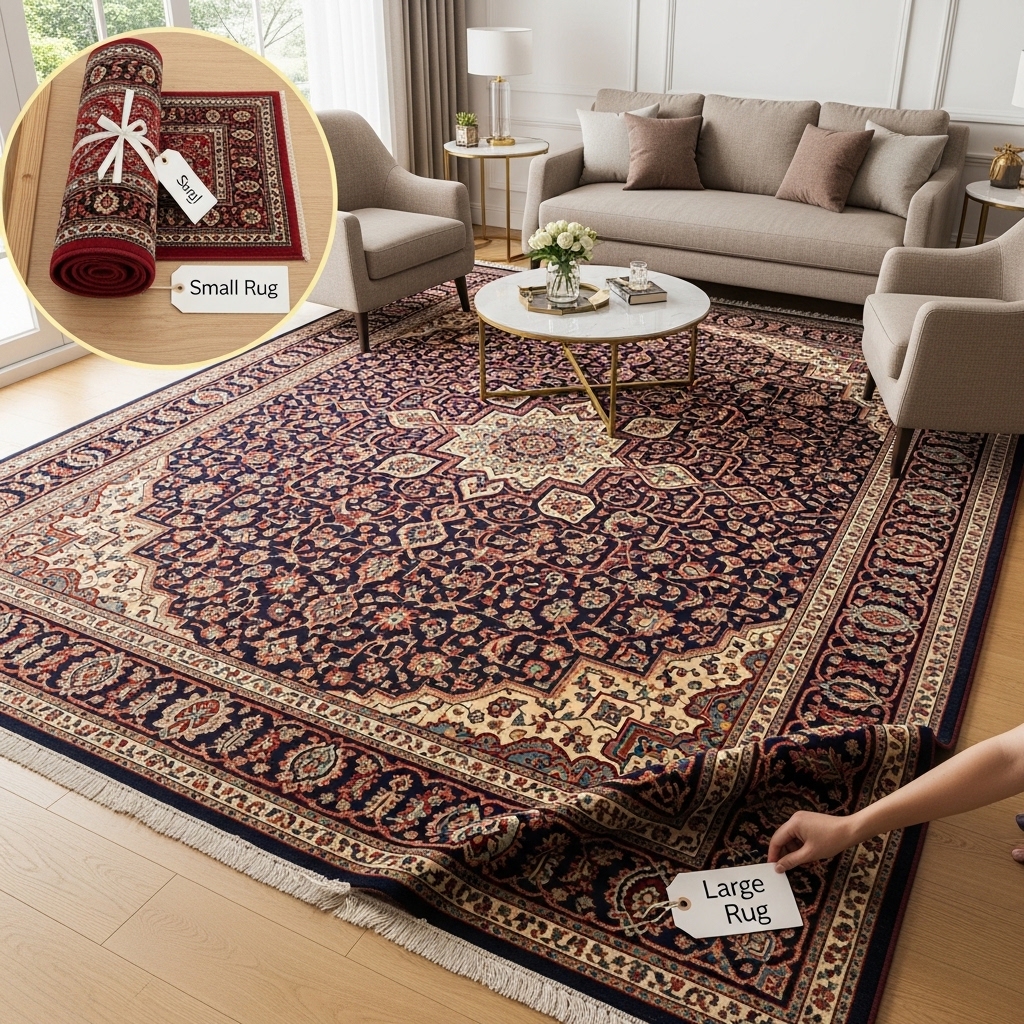
A small rug floating in the middle of a room makes the room feel smaller. Visible floor around all four edges creates a frame that highlights the room’s limitations.
The Rug Size Rule
| Room Size | Minimum Rug Size | Ideal Rug Size | Placement Rule |
|---|---|---|---|
| Small living room (10×10) | 5×8 | 8×10 | Front legs of sofa on rug |
| Small bedroom (10×10) | 5×8 | 8×10 | Extends 18 inches beyond bed sides |
| Small dining area | 5×8 | 6×9 | 2 feet beyond table on all sides |
Why Large Rugs Work
A large rug unifies the furniture. The front legs of the sofa and chairs sit on the rug. The furniture feels connected rather than floating separately.
The rug extends to within 6-12 inches of the walls. The floor between the rug and the wall is minimal. The room feels larger because the rug covers most of it.
The Rug Color Rule for Small Rooms
- Light rugs: Reflect light, make room feel larger, show stains more easily
- Patterned rugs: Hide stains, add visual interest, can feel busy in small rooms
- Neutral rugs: Safe choice, easy to match, may feel boring
- Bold rugs: Make a statement, can overwhelm a small room if too busy
Pro Tip: Use rug tape to keep large rugs flat. Curling corners look cheap and create tripping hazards.
Mistake to Avoid: Do not buy a rug that is too small because it is cheaper. A properly sized rug is worth the investment.
Strategy 8: Use Mirrors to Double Visual Space
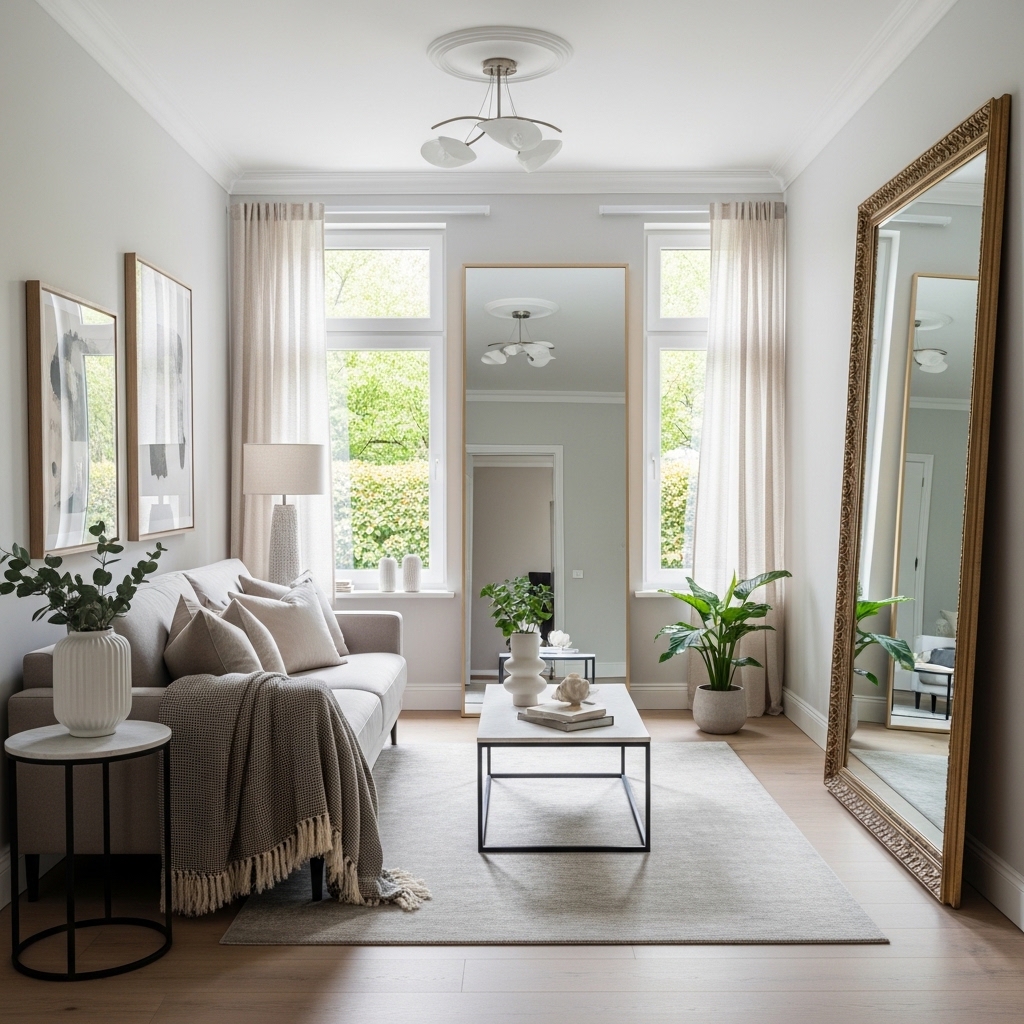
Mirrors are magic for small rooms. The right mirror in the right spot makes a room feel twice as large.
Mirror Placement Rules
| Placement | Effect | Best For |
|---|---|---|
| Opposite window | Reflects outdoor light and view | Dark rooms, rooms with one window |
| Perpendicular to window | Bounces light deeper into room | Long, narrow rooms |
| Behind a lamp | Doubles the light source | Dark corners |
| On a closet door | Adds depth without wall space | Bedrooms, entryways |
| Gallery wall of small mirrors | Creates light reflections | Rooms with limited wall space |
The Mirror Size Rule
- One large mirror: Better than several small mirrors. A large mirror creates a bigger impact.
- Minimum width: At least half the width of the furniture below it.
- Placement height: Center of mirror at 57-60 inches from floor (same as art).
Where to Find Affordable Mirrors
- Thrift stores: Large mirrors for under $20. Spray paint updates ugly frames.
- Facebook Marketplace: Moving sales often include mirrors. Negotiate prices.
- IKEA: Basic mirrors at low prices. Multiple mirrors can be combined.
- Restore (Habitat for Humanity): Donated mirrors, very low prices.
Pro Tip: Lean a large mirror against the wall instead of hanging it. Leaning mirrors feel more casual and create a different reflection angle.
Mistake to Avoid: Do not place a mirror directly facing a cluttered area. The mirror will reflect and double the clutter.
Strategy 9: Curate Surfaces, Do Not Clutter Them
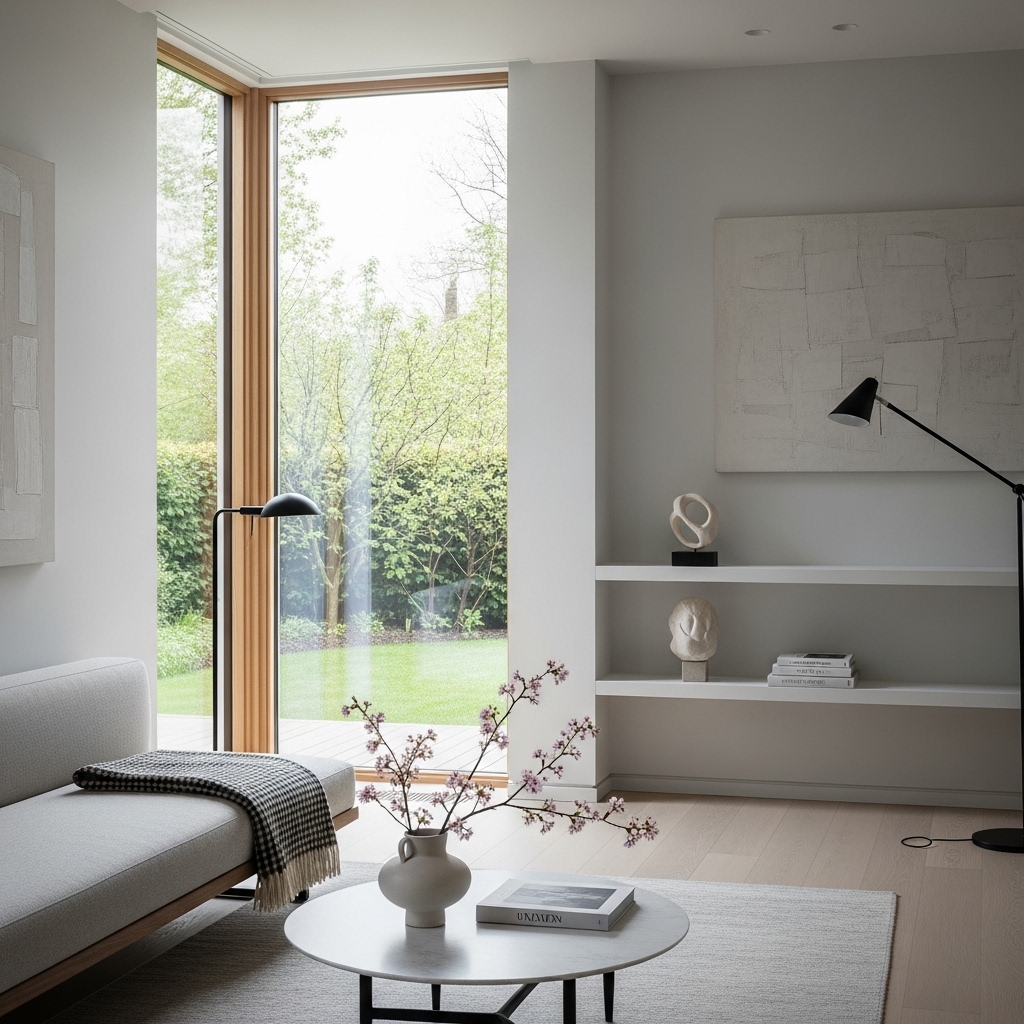
Every item on a surface demands attention. Too many items demand too much attention. The eye has nowhere to rest.
The Surface Curating Rule
| Surface Size | Maximum Items | Example |
|---|---|---|
| Small (nightstand) | 3 items | Lamp, book, small tray |
| Medium (coffee table) | 3-4 items | Books, tray, candle, small vase |
| Large (dresser) | 5 items | Lamp, jewelry box, photo, vase, catch-all tray |
The Negative Space Rule
Leave empty space on every surface. Empty space is not wasted. Empty space gives the eye a place to rest.
- Coffee table: Leave at least 30% of the surface empty
- Nightstand: Leave room to set down a glass of water
- Dresser: Leave space around each item
How to Curate a Surface
- Remove everything from the surface
- Clean the surface
- Add items back one at a time
- Stop when the surface feels balanced
- Remove one more item (you probably have too many)
Pro Tip: Use trays to corral items on surfaces. A tray contains the visual chaos. The items are still accessible. The look is intentional.
Mistake to Avoid: Do not use surfaces as permanent storage. Surfaces are for display and daily items only. Find homes for everything else.
Strategy 10: Use the Rule of Three for Decor
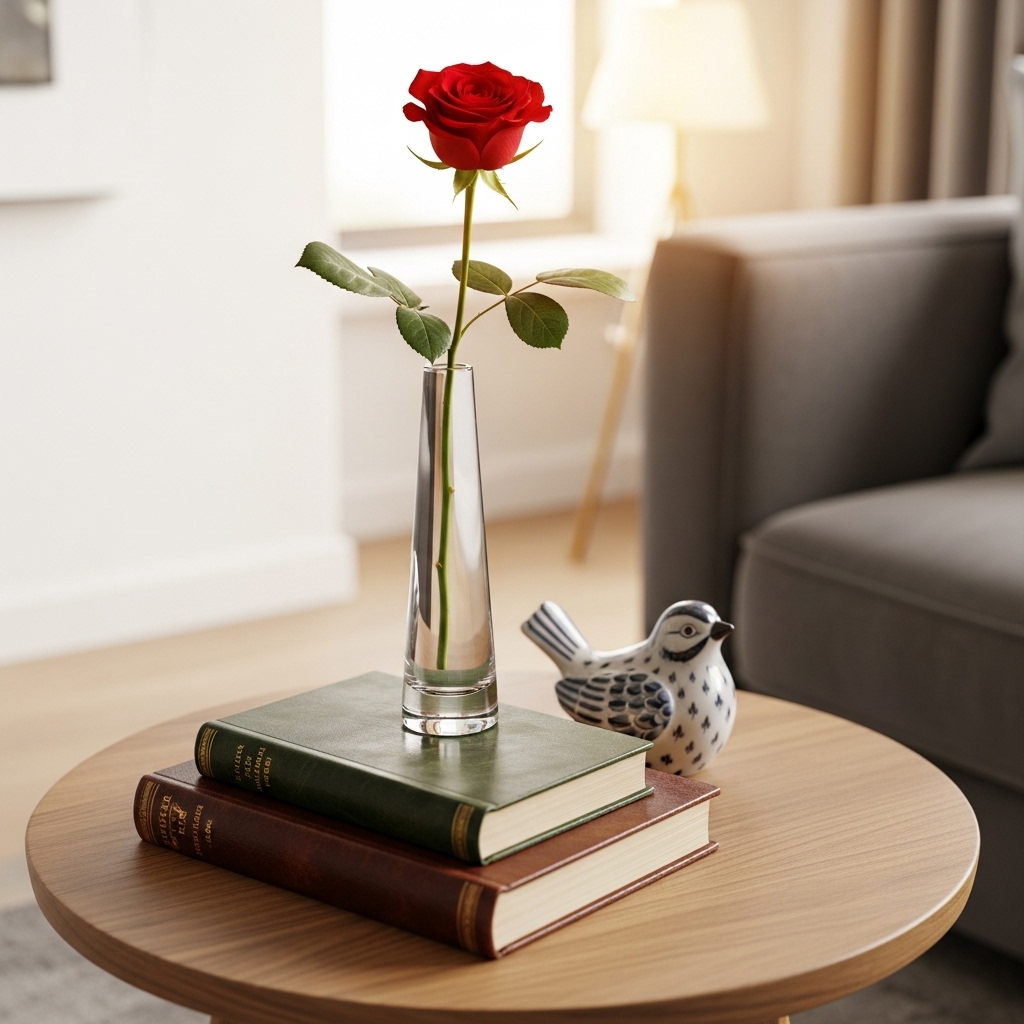
Decor scattered randomly looks messy. Decor grouped in odd numbers looks intentional.
The Rule of Three Explained
Groups of three are visually pleasing. The eye moves between the three items and perceives the arrangement as designed.
| Number of Items | Visual Effect | Best For |
|---|---|---|
| 1 item | Minimal, intentional | Statement pieces |
| 2 items | Balanced, symmetrical | Matching lamps or chairs |
| 3 items | Dynamic, interesting | Coffee table, shelf, mantel |
| 5 items | Collected, abundant | Gallery walls, large shelves |
How to Group Three Items
- Vary heights: Tall, medium, low
- Vary textures: Wood, glass, fabric, ceramic
- Keep a common element: Same color, same material, or same theme
Example: Coffee Table Arrangement
- Stack of 2-3 books (low, horizontal)
- Small vase with a single stem (medium, vertical)
- Small bowl or tray (low, round)
The three items have different heights. They have different textures (paper, glass, ceramic). They work together without matching.
Pro Tip: Use the triangle method. Place items so their tops form an imaginary triangle. The eye follows the triangle and perceives the arrangement as intentional.
Mistake to Avoid: Do not line up items in a straight row. Straight lines look stiff. Asymmetry looks natural and collected.
Strategy 11: Add a Plant for Life and Height
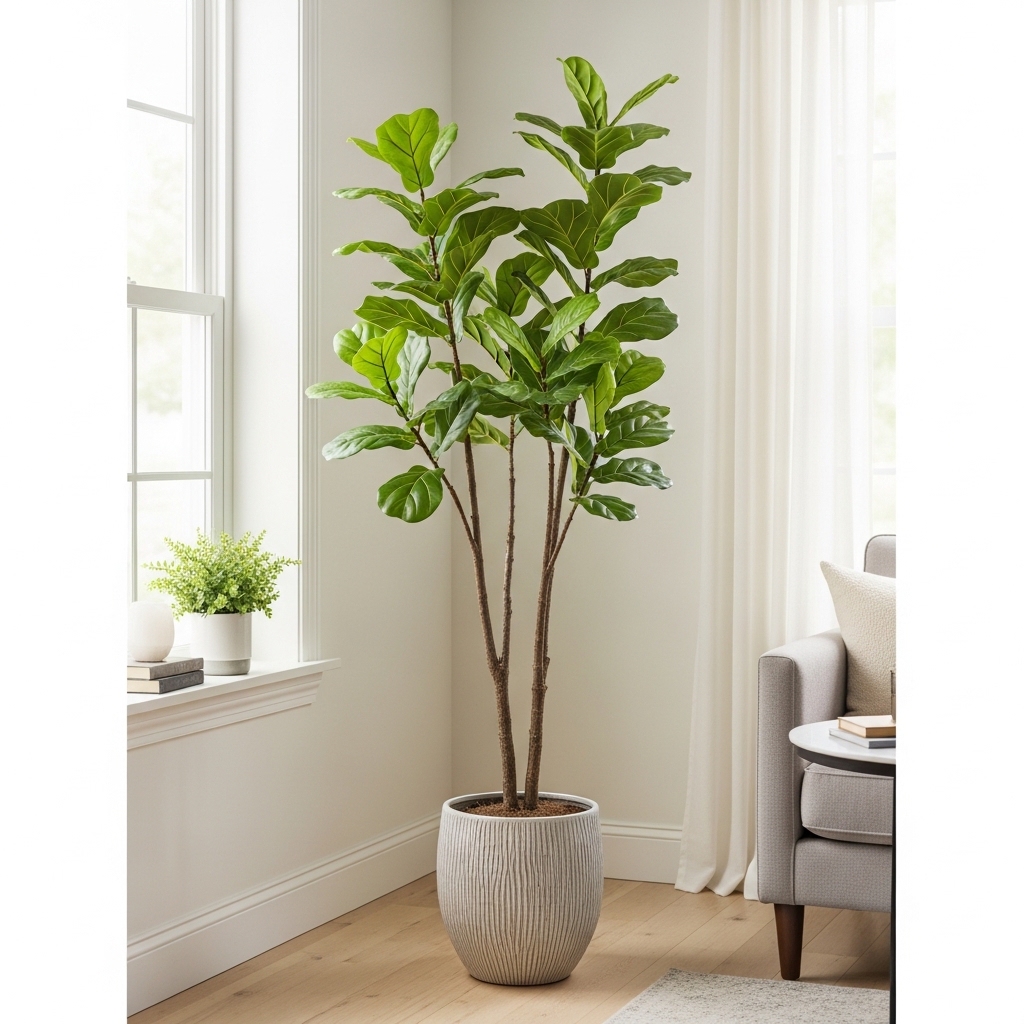
Plants add life, color, and texture. They also add vertical interest, drawing the eye upward.
Best Plants for Small Rooms
| Plant | Light Needed | Size | Maintenance |
|---|---|---|---|
| Snake plant | Low to bright | Up to 4 feet | Very low (water monthly) |
| ZZ plant | Low to bright | Up to 3 feet | Very low (water monthly) |
| Pothos | Low to bright | Trailing | Low (water weekly) |
| Peace lily | Low to medium | Up to 2 feet | Medium (water weekly) |
| Fiddle leaf fig | Bright indirect | Up to 6 feet | High (needs consistent care) |
Where to Place Plants
- Tall plant in a corner: Fills empty vertical space, draws eye upward
- Small plant on coffee table: Adds life to the center of the room
- Trailing plant on a high shelf: Adds interest at eye level
- Plant on a plant stand: Adds height without taking floor space
The Fake Plant Option
High-quality fake plants look real and require no maintenance. They are perfect for dark corners where real plants cannot survive.
- Look for: Realistic leaves, varied green tones, natural-looking stems
- Avoid: Shiny plastic leaves, uniform color, obviously fake flowers
Pro Tip: Choose a pot that complements the room. The pot is as important as the plant. A beautiful pot elevates a basic plant.
Mistake to Avoid: Do not buy a plant that requires more light than the room provides. The plant will die. Choose low-light plants for most indoor spaces.
Strategy 12: Use Curtains to Create Height
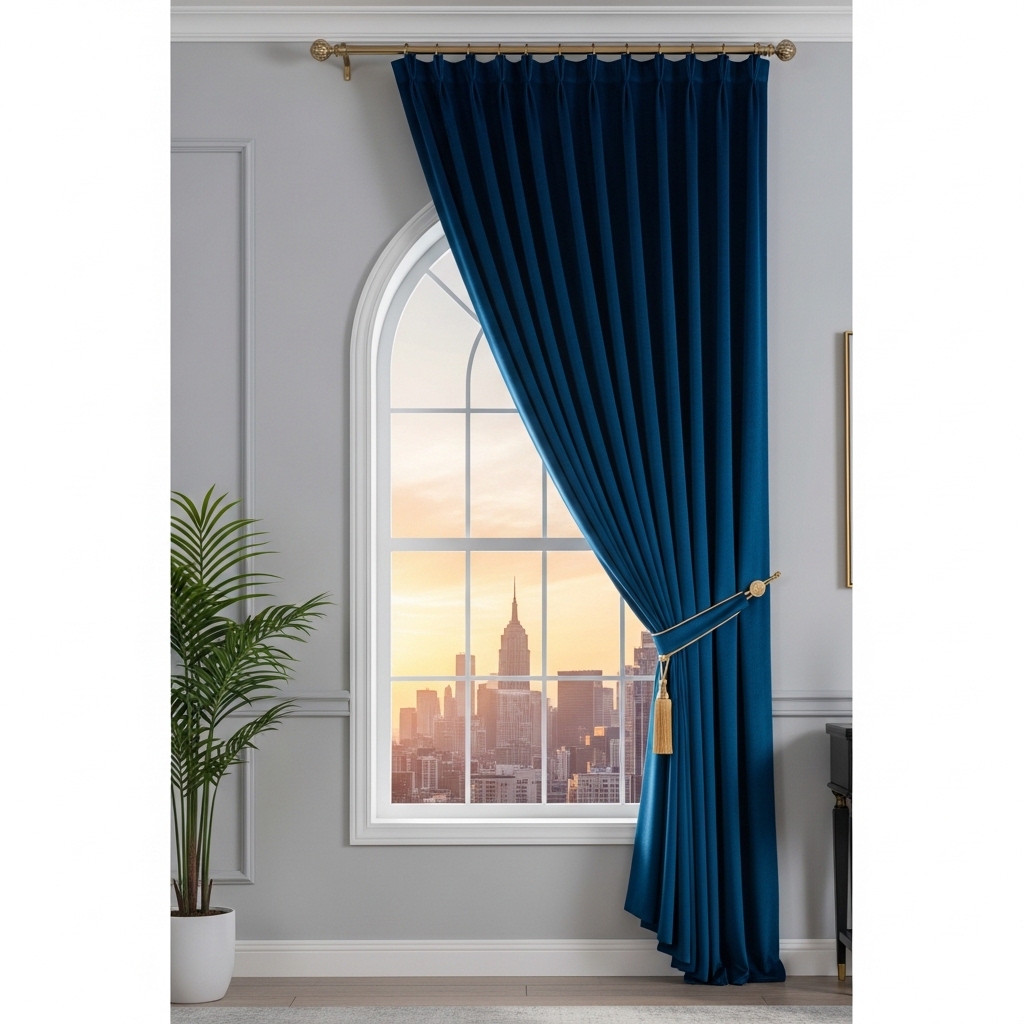
Curtains are not just for privacy. They are a design tool that can make ceilings feel higher and windows feel larger.
The Curtain Height Rule
| Installation | Effect | Best For |
|---|---|---|
| Rod just above window frame | Ceiling feels lower, window looks smaller | Never (avoid this) |
| Rod 4-6 inches below ceiling | Ceiling feels higher, window looks larger | Every room |
| Rod at ceiling | Maximum height illusion | Rooms with very low ceilings |
The Curtain Width Rule
| Installation | Effect | Best For |
|---|---|---|
| Rod same width as window | Window looks small, light blocked when open | Never (avoid this) |
| Rod 6-12 inches wider than window | Window looks larger, curtains stack off glass | Every room |
The Curtain Length Rule
| Length | Effect | Best For |
|---|---|---|
| Stops at window sill | Looks cheap, unfinished | Never (avoid this) |
| Hovers above floor | Looks awkward, collects dust | Never (avoid this) |
| Kisses the floor | Tailored, intentional | Most rooms |
| Puddles on floor | Luxurious, romantic | Formal spaces only |
Curtain Color for Small Rooms
- Light colors: Reflect light, make room feel larger
- Same color as walls: Blends in, maximizes light reflection
- Sheer fabrics: Filter light, provide privacy without blocking light
- Avoid: Heavy, dark drapes that block light and feel heavy
Pro Tip: Use curtain rings with clips. Rings slide easily. Clips make adjusting length simple. No sewing required.
Mistake to Avoid: Do not buy curtains that are too short. Curtains that hover above the floor look cheap and unfinished.
Strategy 13: Choose Furniture with Built-In Storage
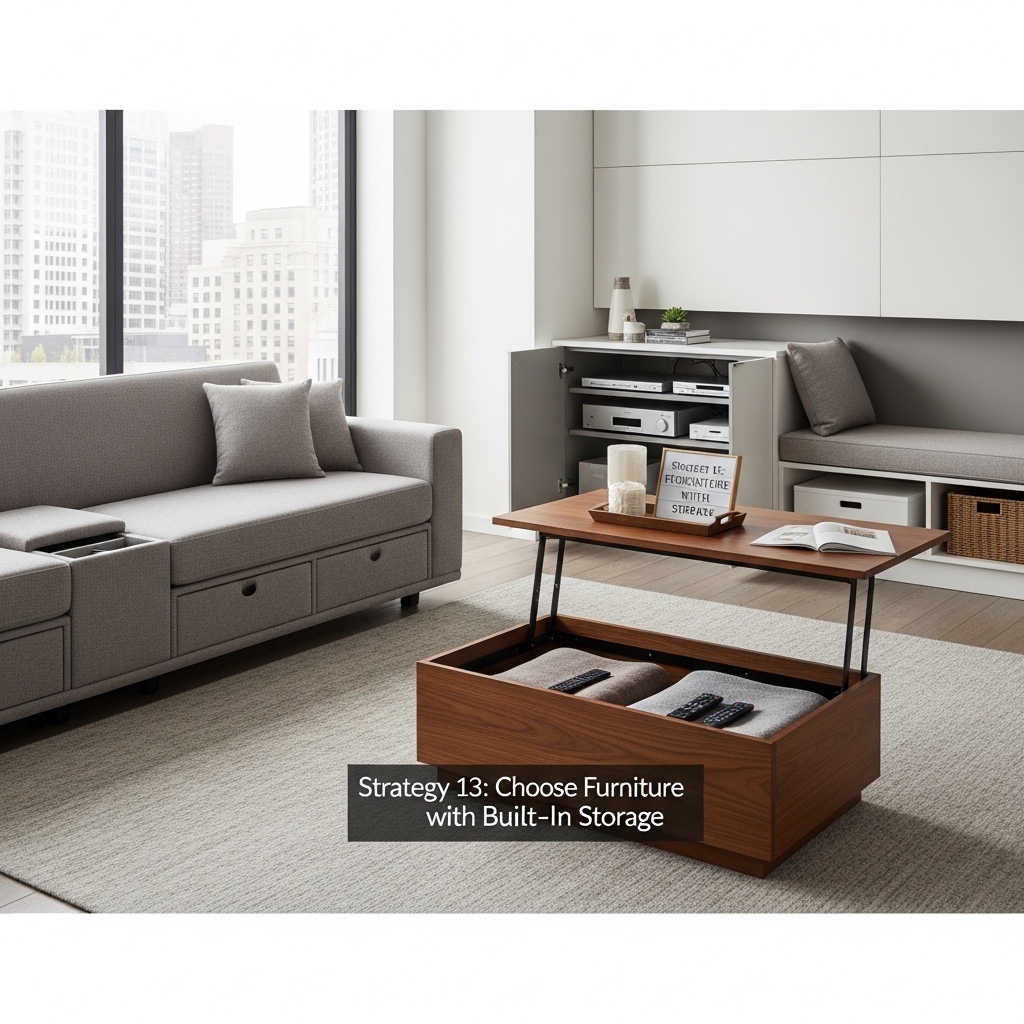
Every piece of furniture in a small room should earn its footprint. Single-purpose furniture wastes space.
Multi-Functional Furniture Options
| Furniture | Primary Function | Secondary Function | Space Saved |
|---|---|---|---|
| Storage ottoman | Seating | Hidden storage, footrest, table | Replaces coffee table |
| Bed with drawers | Sleeping | Clothing storage | Replaces dresser |
| Storage bench | Seating | Hidden storage | Replaces chair + storage bin |
| Nesting tables | Side tables | Compact storage | Replaces coffee table + end tables |
| Lift-top coffee table | Table | Hidden storage, desk | Replaces coffee table + desk |
The Storage Ottoman Solution
A storage ottoman replaces a coffee table. It provides a surface for drinks (with a tray). It provides hidden storage for blankets and pillows. It provides extra seating for guests.
One piece serves three functions. The floor space is the same as a coffee table. The utility is triple.
The Bed with Drawers
A bed with built-in drawers replaces a dresser. The drawers slide out from under the bed. The floor space under the bed becomes usable storage.
No extra furniture needed. No floor space consumed. The bed already takes up that footprint.
Pro Tip: If buying new furniture is not possible, add under-bed storage bins. Measure the height under your bed. Buy bins that fit perfectly.
Mistake to Avoid: Do not buy multi-functional furniture that is expensive and complicated. Simple pieces like storage ottomans work better and cost less.
Strategy 14: Keep Walkways Clear
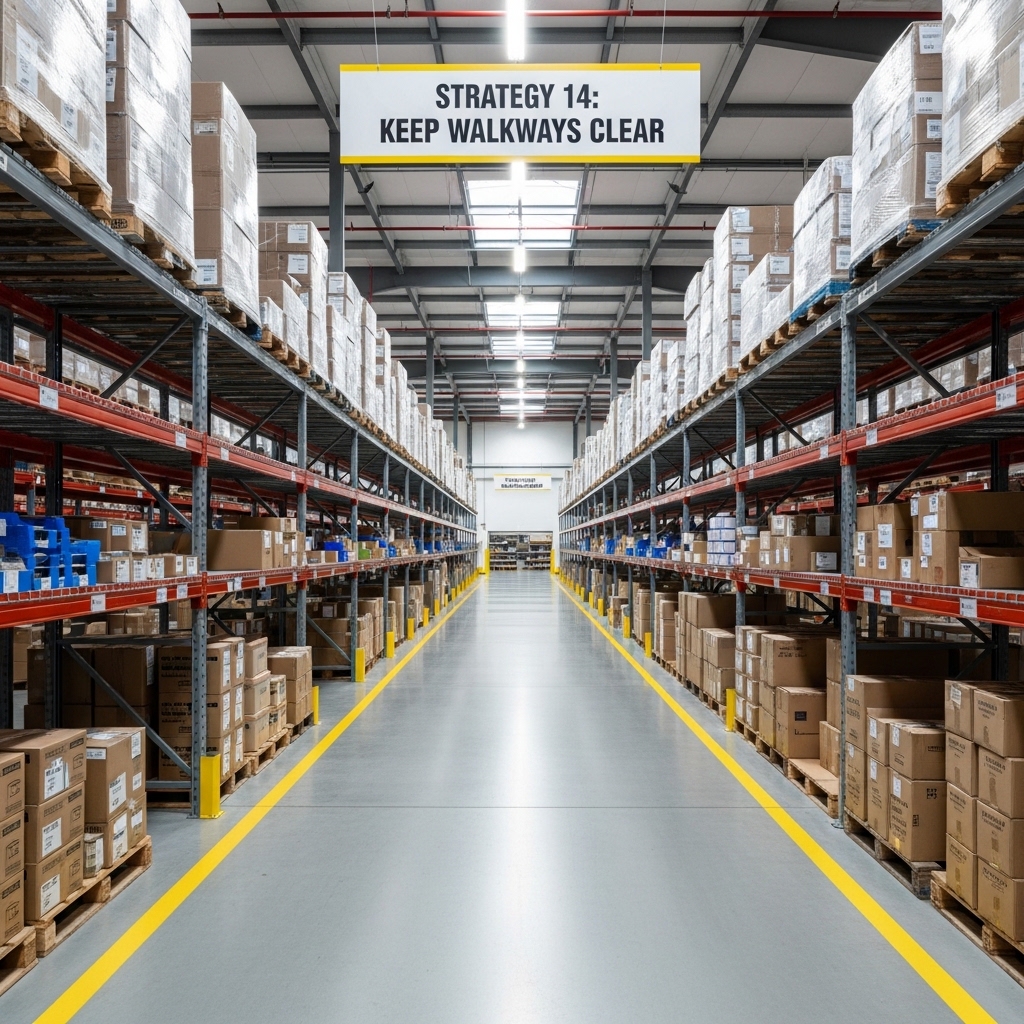
A small room with blocked walkways feels cramped and frustrating. Clear walkways make the room feel larger and more functional.
The Walking Path Rule
| Walkway Type | Minimum Width | Why |
|---|---|---|
| Main walkway (door to door) | 36 inches | Comfortable for one person |
| Secondary walkway | 30 inches | Tight but passable |
| Between sofa and coffee table | 18 inches | Enough to walk sideways |
| Behind sofa | 30 inches | Enough to pass behind seated person |
How to Test Walkways
- Walk from the door to every part of the room. Can you walk without squeezing?
- Sit on the sofa. Can someone walk behind you without asking you to move?
- Open every door fully. Does any furniture block the door swing?
What to Remove
- Extra chairs: One chair that blocks a walkway is not worth having
- Oversized coffee tables: A table that extends into walking paths is too large
- Floor lamps in pathways: Move lamps to corners or wall-mount them
- Storage bins on floor: Find wall or shelf homes for everything
Pro Tip: Use painter’s tape to mark walkways on the floor. Live with the tape for a day. Adjust furniture until all walkways meet the minimum widths.
Mistake to Avoid: Do not block doors. A door needs to swing fully open without hitting furniture. This is a safety issue, not just a comfort issue.
Strategy 15: Edit Before You Add
The final strategy is the most important. Edit before you add.
The Editing Checklist
| Question | If Yes | If No |
|---|---|---|
| Does this item serve a daily purpose? | Keep | Remove |
| Does this item bring joy? | Keep | Remove |
| Does this item fit the room’s scale? | Keep | Remove |
| Does this item work with the color scheme? | Keep | Remove |
| Would I buy this item again today? | Keep | Remove |
The One-In, One-Out Rule
For every new item brought into the room, one old item must leave. Donate. Sell. Trash.
This rule prevents accumulation. The room stays organized without constant effort.
The 24-Hour Rule
Non-essential purchases wait 24 hours. The impulse cools down. The real need becomes clear.
Most wants disappear within 24 hours. The money stays in the bank. The clutter never enters the room.
Pro Tip: Keep a donation box in the closet. When the box fills, take it to the donation center immediately.
Mistake to Avoid: Do not make exceptions to the one-in, one-out rule. One exception becomes two. Two becomes a pile.
Summary: The 15 Strategies at a Glance
| Strategy | Key Action | Time to Implement | Cost |
|---|---|---|---|
| 1. Light wall color | Paint walls a light, neutral color | 1 day | $ |
| 2. Furniture with legs | Replace heavy pieces with leggged furniture | Ongoing | $$ |
| 3. Float furniture | Pull pieces 6-12 inches from walls | 30 minutes | $0 |
| 4. Fewer, larger pieces | Replace many small items with fewer larger ones | Ongoing | Varies |
| 5. Vertical storage | Add tall bookshelves, wall shelves | 2 hours | $$ |
| 6. Let light in | Remove heavy drapes, add lamps | 1 hour | $ |
| 7. Large rug | Replace too-small rug with properly sized one | 30 minutes | $$ |
| 8. Mirrors | Add a large mirror opposite window | 15 minutes | $ |
| 9. Curate surfaces | Remove items from surfaces until space appears | 30 minutes | $0 |
| 10. Rule of three | Group decor in threes with varied heights | 15 minutes | $0 |
| 11. Add a plant | Place a tall plant in a corner | 10 minutes | $ |
| 12. High curtains | Raise curtain rod to near ceiling | 1 hour | $ |
| 13. Storage furniture | Choose pieces with built-in storage | Ongoing | $$ |
| 14. Clear walkways | Remove furniture blocking paths | 30 minutes | $0 |
| 15. Edit before adding | Remove one item for every new item | Ongoing | $0 |
Frequently Asked Questions
What is the single most effective change for a small room?
Paint the walls a light, neutral color. This costs under $100 and takes one day. The impact is immediate and dramatic. No other change delivers as much value for as little cost.
Can I use dark colors in a small room?
Yes, but only as accents. A dark sofa or dark rug can anchor a small room. Dark walls will make the room feel smaller. Use dark colors on furniture and accessories, not walls.
How do I make a small room feel cozy without feeling cramped?
Focus on lighting. Layered lighting (ambient, task, accent) creates warmth and depth. Add soft textures like throws and pillows. Use warm white bulbs (2700K). Cozy is about light and texture, not more furniture.
What should I never do in a small room?
Never block natural light. Never use furniture that is too large for the space. Never push all furniture against walls. Never buy a rug that is too small. Never use dark paint on walls.
How long does it take to transform a small room?
The painting takes one day. The furniture changes can take weeks or months if thrifting. The key is patience. Wait for the right pieces. Rushing leads to regret.
Conclusion
A small room can feel spacious. The difference is not square footage. The difference is strategy.
Fifteen strategies work together to create space where none seems to exist. Light walls reflect light. Furniture with legs creates visual space. Floating pieces add depth. Vertical storage preserves floor space. Large rugs unify furniture. Mirrors double visual space. Curated surfaces reduce visual noise. The rule of three creates intentional groupings. Plants add life and height. High curtains raise the ceiling. Multi-functional furniture earns its footprint. Clear walkways improve flow. Editing prevents accumulation.
The Most Important Lesson
A small room is never truly finished. It evolves. Needs change. Styles change. The best small rooms grow with the people who live in them.
Start with one strategy today. Paint the walls. Float the sofa. Add a mirror. Remove one item from every surface.
Small changes add up to dramatic transformations. The small room can feel open, functional, and comfortable.
Take back your small room starting today. Strategy by strategy. Decision by decision. Inch by inch.