How to Style a Coffee Table Like a Designer | Elevated Decor Techniques | Budget-Friendly Styling Tips
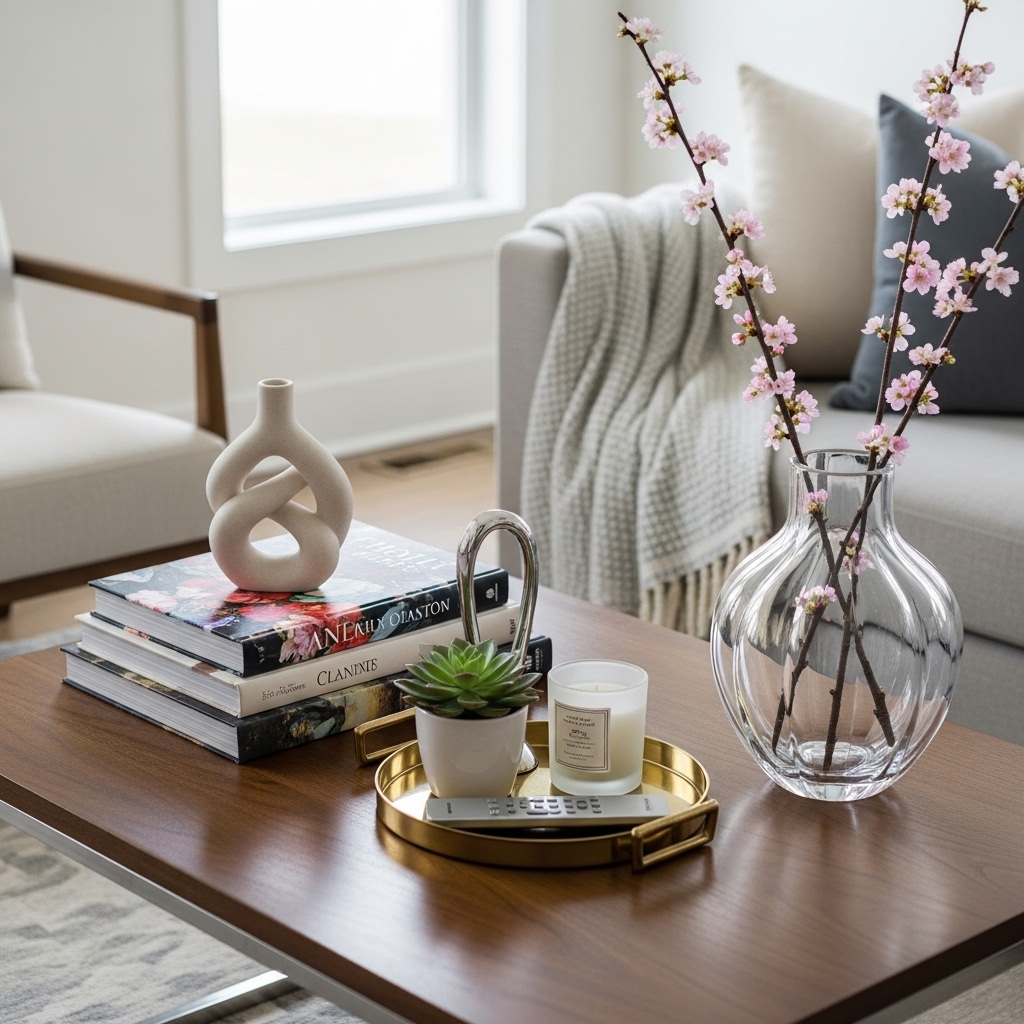
The coffee table is the center of the living room. It is the first thing people see. It is also the hardest surface to style correctly.
Most coffee tables are either completely empty or completely cluttered. Neither works. An empty coffee table looks forgotten. A cluttered coffee table looks chaotic.
Designers follow specific rules when styling coffee tables. The rules are simple. They cost little to nothing. They transform a basic table into a focal point.
This article explains how to style a coffee table like a designer. No expensive accessories required. Just intentional choices.
Why Coffee Table Styling Matters
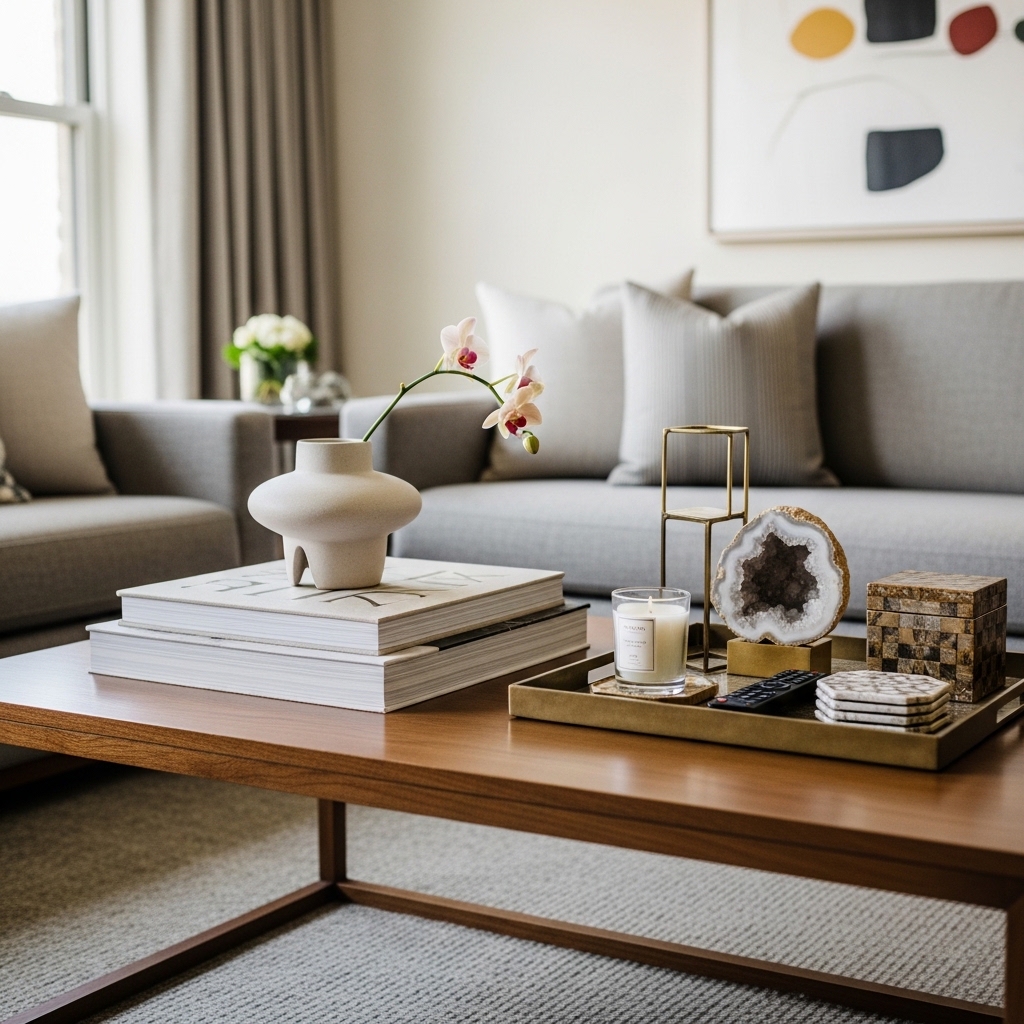
The coffee table anchors the seating area. It is within arm’s reach of every seat. It is where people put their drinks, books, and phones. It is also where clutter accumulates.
A well-styled coffee table signals that the whole room is intentional. A cluttered coffee table signals chaos. The difference is not the cost of the items. The difference is the thought behind the arrangement.
The Three Goals of Coffee Table Styling
Function first. The table must be usable. People need to set down drinks. Books need to be reachable. Remote controls need a home.
Visual balance. The arrangement should look intentional, not accidental. The eye should move smoothly across the table.
Seasonal flexibility. The styling should be easy to change. Swap a few items for a new season. No need to start over.
Pro Tip: Take a photo of your styled coffee table. Photos reveal imbalances that your eyes miss.
Mistake to Avoid: Do not style the coffee table so it becomes unusable. Leave room for a drink.
The Designer’s Coffee Table Formula
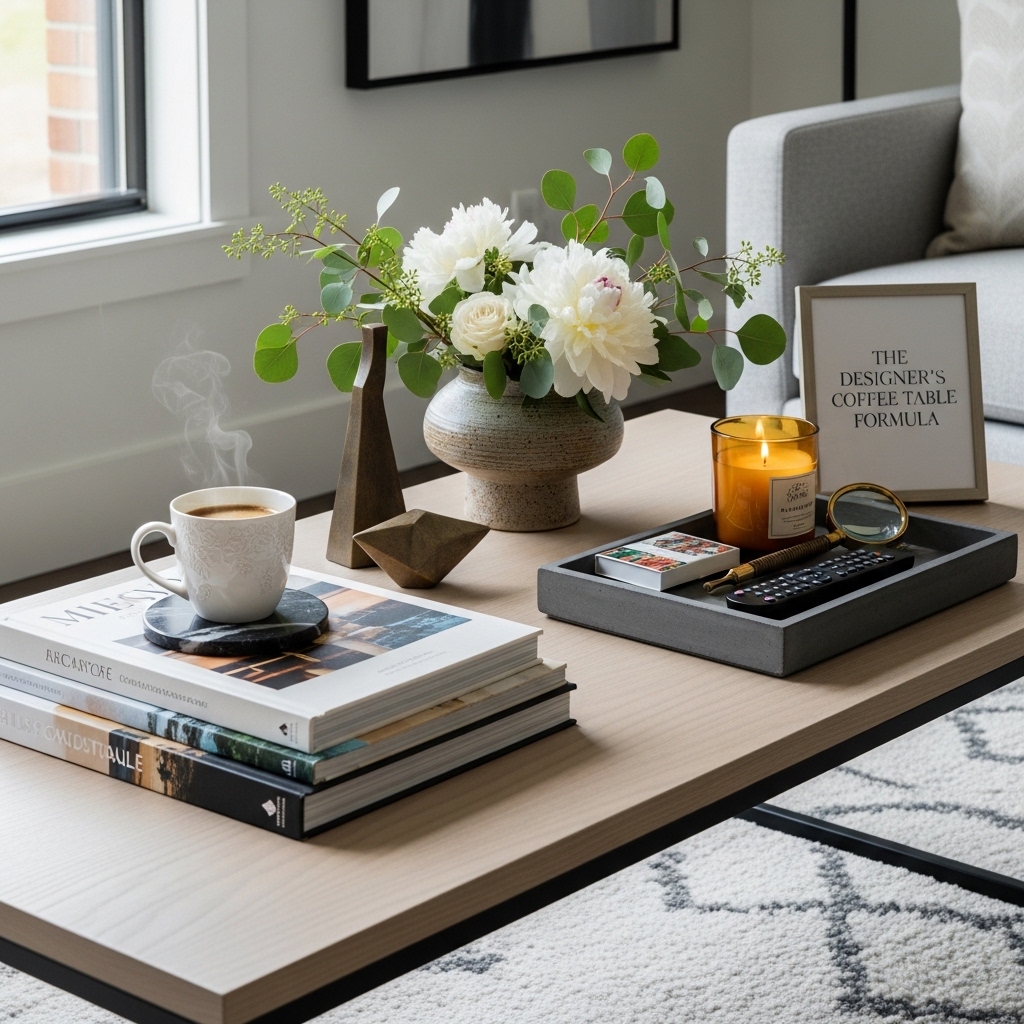
Designers use a simple formula for coffee table styling. The formula works for any table shape and any budget.
The Rule of Three
Groups of three are visually pleasing. The eye moves between the three items and perceives the arrangement as designed.
| Number of Items | Visual Effect | Best For |
|---|---|---|
| 1 item | Minimal, intentional | Very small tables |
| 2 items | Balanced, symmetrical | Matching lamps or objects |
| 3 items | Dynamic, interesting | Most coffee tables |
| 5 items | Collected, abundant | Large tables |
The Height Variation Principle
Items at the same height look flat. Varying heights creates visual interest.
| Height Level | Example Items | Placement |
|---|---|---|
| Low (1-3 inches) | Stack of books, small bowl, coaster | Front or sides |
| Medium (4-8 inches) | Vase, candle, small sculpture | Behind low items |
| Tall (9+ inches) | Large vase, tall candle, plant | Back or center |
The Texture Mixing Rule
Different textures add depth. A table with all smooth surfaces looks flat. A table with mixed textures looks rich.
| Texture | Examples |
|---|---|
| Smooth | Glass vase, ceramic bowl, glossy book cover |
| Textured | Woven tray, linen coaster, matte book cover |
| Organic | Wood, stone, plant, dried flowers |
| Soft | Faux fur, felt, velvet |
Pro Tip: Use the triangle method. Place items so their tops form an imaginary triangle. The eye follows the triangle.
Mistake to Avoid: Do not line up items in a straight row. Straight lines look stiff. Asymmetry looks natural.
The Anatomy of a Designer Coffee Table
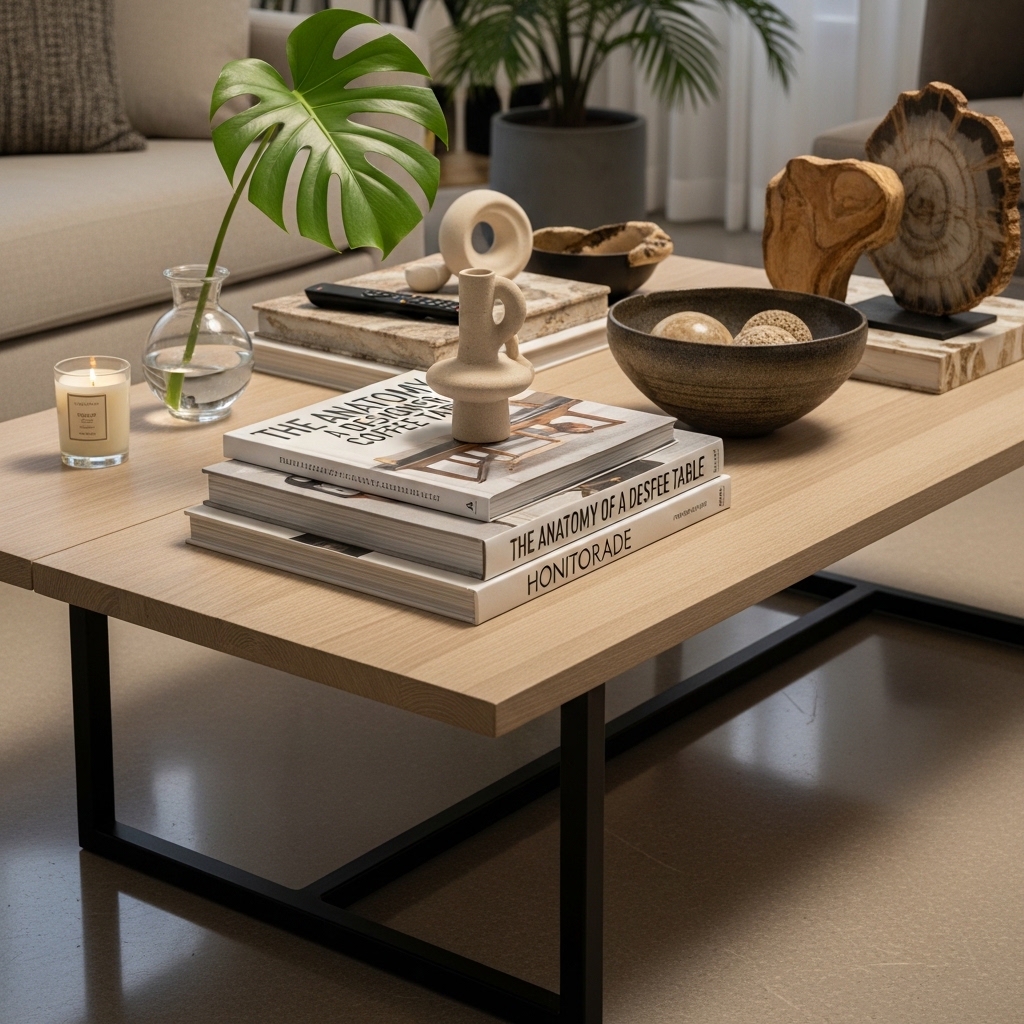
A well-styled coffee table has five components. Not all are required. Choose the ones that fit your style and table size.
Component 1: A Tray or Base
A tray corrals smaller items. It creates a defined area for the arrangement. It prevents items from sliding around.
| Tray Material | Style | Best For |
|---|---|---|
| Wood | Warm, natural | Farmhouse, rustic, traditional |
| Metal | Modern, industrial | Industrial, modern, contemporary |
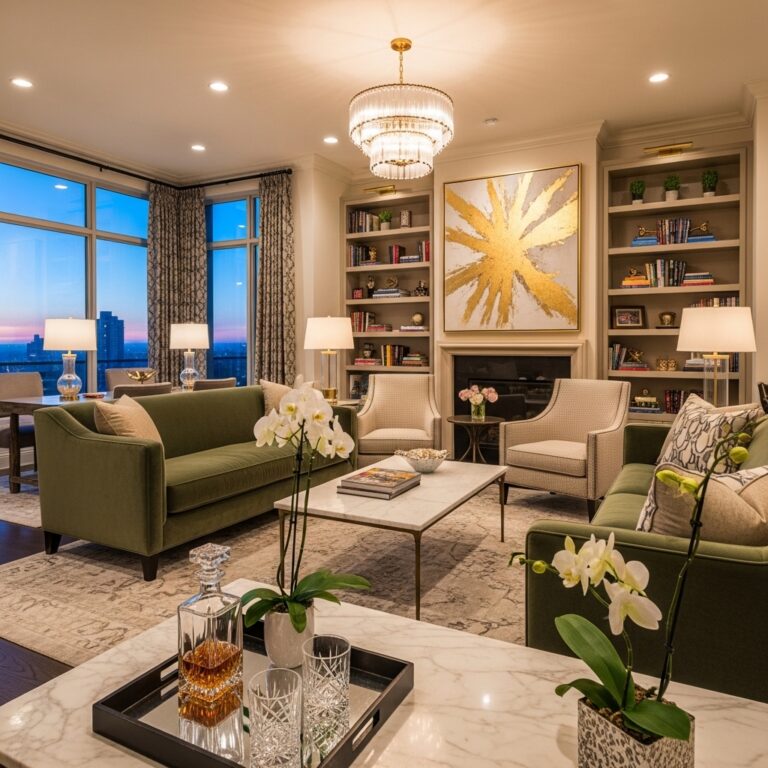
| Glass | Light, airy | Small tables, minimalist |
| Woven | Textured, boho | Bohemian, eclectic, coastal |
Component 2: Stacked Books
Books add height and color. They also add a sense of intellectual warmth. A room without books feels incomplete.
How to style books on a coffee table:
- Stack 2-4 books horizontally
- Vary the sizes (large on bottom, small on top)
- Choose books with complementary cover colors
- Use coffee table books (large format, visual)
Component 3: A Decorative Object
A decorative object adds personality. It does not need to be expensive. A thrifted vase, a ceramic bowl, or a small sculpture all work.
| Object Type | Why It Works | Budget Source |
|---|---|---|
| Ceramic vase | Adds color, texture, height | Thrift store ($5-10) |
| Wooden bowl | Natural, warm, can hold items | Thrift store ($3-8) |
| Glass cloche | Creates mini display, protects small items | Home goods store ($10-20) |
| Small sculpture | Artistic, personal, conversational | Thrift store, gift shop |
Component 4: A Natural Element
A natural element adds life and organic shape. It softens the hard lines of books and trays.
| Natural Element | Maintenance | Best For |
|---|---|---|
| Fresh flowers | High (replace weekly) | Special occasions |
| Dried flowers | Low (last months) | Everyday styling |
| Small plant | Medium (water weekly) | Long-term styling |
| Pampas grass | Very low (dust monthly) | Boho, modern |
Component 5: A Functional Item
The coffee table must be usable. Include an item that serves a purpose.
| Functional Item | Purpose |
|---|---|
| Coasters | Protect table from drinks |
| Small bowl | Catch remotes or loose items |
| Candle | Add warmth and scent |
| Magazine holder | Keep current reading accessible |
Pro Tip: Choose coasters that complement the tray or books. Matching colors create cohesion.
Mistake to Avoid: Do not put too many functional items on the table. One or two are sufficient.
Coffee Table Styling by Shape
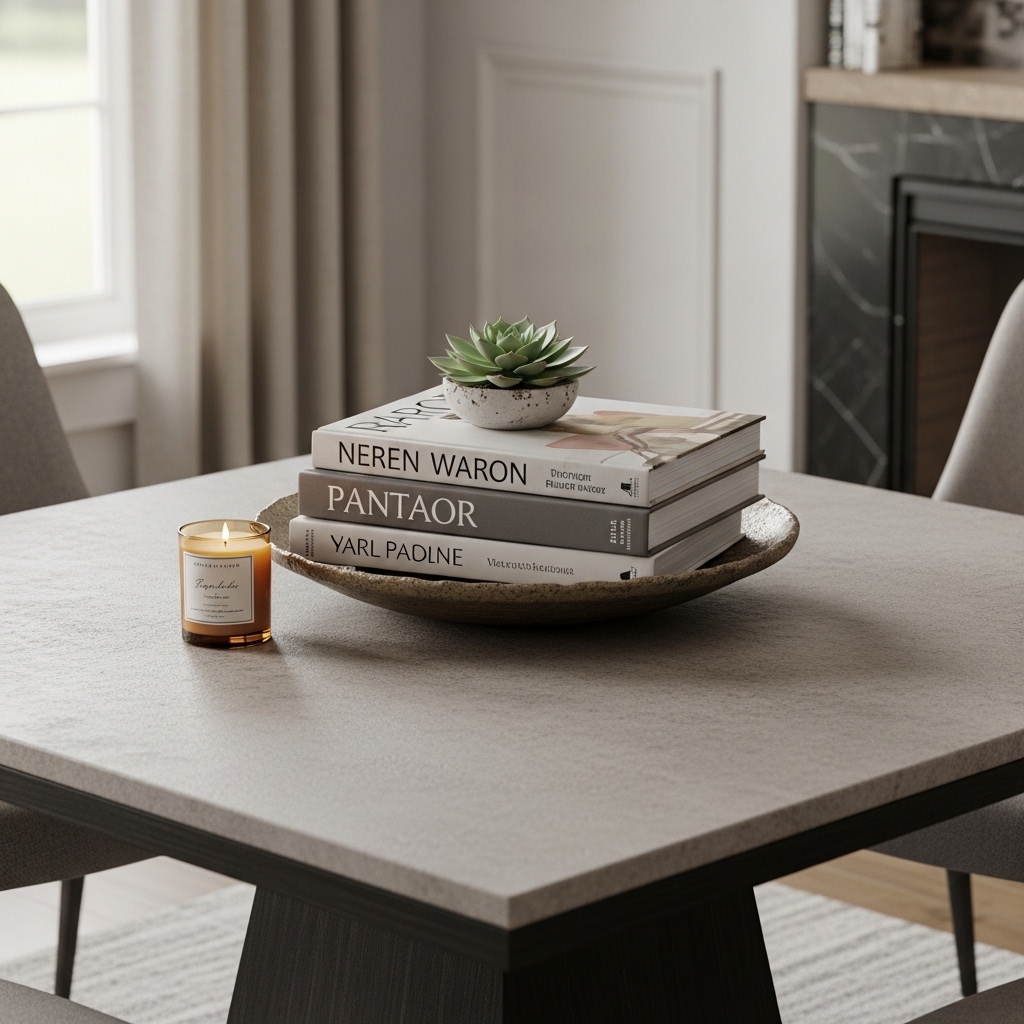
Different table shapes require different arrangements. What works on a round table does not work on a rectangular table.
Rectangular Coffee Table
A rectangular table has length. Use that length to create a linear arrangement.
The rectangular arrangement:
- Place a long tray in the center
- Add a stack of books at one end of the tray
- Add a vase or candle at the other end of the tray
- Leave the middle of the tray empty for drinks
Square Coffee Table
A square table has equal sides. Use a clustered arrangement in the center.
The square arrangement:
- Place a tray off-center (not in the exact middle)
- Stack books in the tray
- Add a small vase or candle next to the books
- Leave empty space on the rest of the table
Round Coffee Table
A round table has no corners. Use a triangular arrangement.
The round arrangement:
- Place three items in a triangle
- A stack of books
- A candle
- A small bowl
- The items should be close together, not spread to the edges
Pro Tip: On a small table, skip the tray. Tray takes up too much space. Place items directly on the table.
Mistake to Avoid: Do not spread items to the edges of a round table. Items near the edge get knocked off.
Seasonal Coffee Table Updates
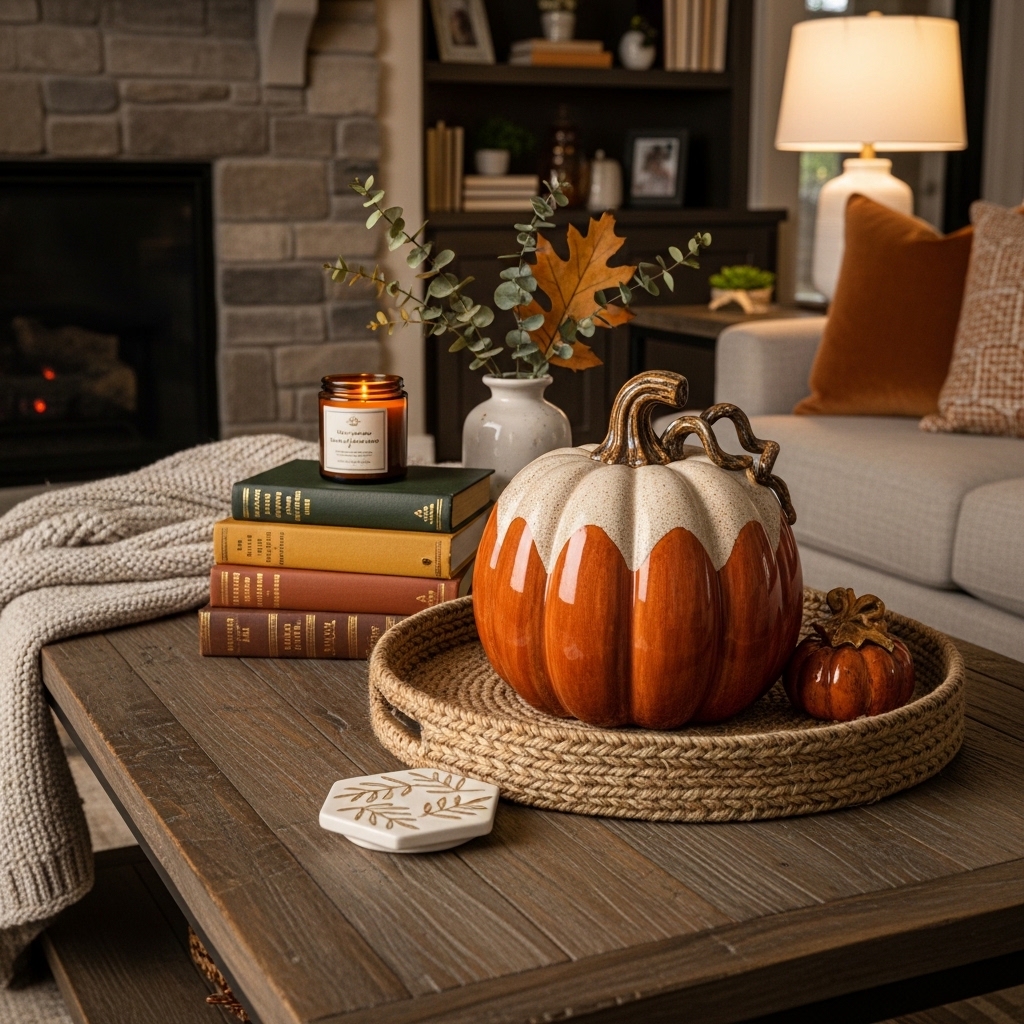
The coffee table is easy to update for seasons and holidays. Small changes make a big impact.
Spring
| Item | Why It Works |
|---|---|
| Fresh tulips or daffodils | Bright, cheerful, seasonal |
| Pastel-colored books | Soft, light, spring-like |
| Light wood tray | Warm, natural |
Summer
| Item | Why It Works |
|---|---|
| Seashells in a glass bowl | Coastal, beachy |
| Blue and white ceramics | Cool, refreshing |
| Pampas grass | Light, airy |
Fall
| Item | Why It Works |
|---|---|
| Dried leaves or branches | Seasonal, organic |
| Pumpkin or gourd (real or decorative) | Festive |
| Warm-colored books (orange, brown, burgundy) | Cozy, autumn |
Winter
| Item | Why It Works |
|---|---|
| Candle (pine, cedar, or vanilla scent) | Warm, cozy |
| Evergreen sprigs | Winter, fresh |
| Dark-colored books (navy, charcoal, deep green) | Rich, dramatic |
Pro Tip: Store off-season coffee table items in a bin under the bed. Swap them out when seasons change.
Mistake to Avoid: Do not leave seasonal items out year-round. A pumpkin in March looks out of place.
Common Coffee Table Styling Mistakes
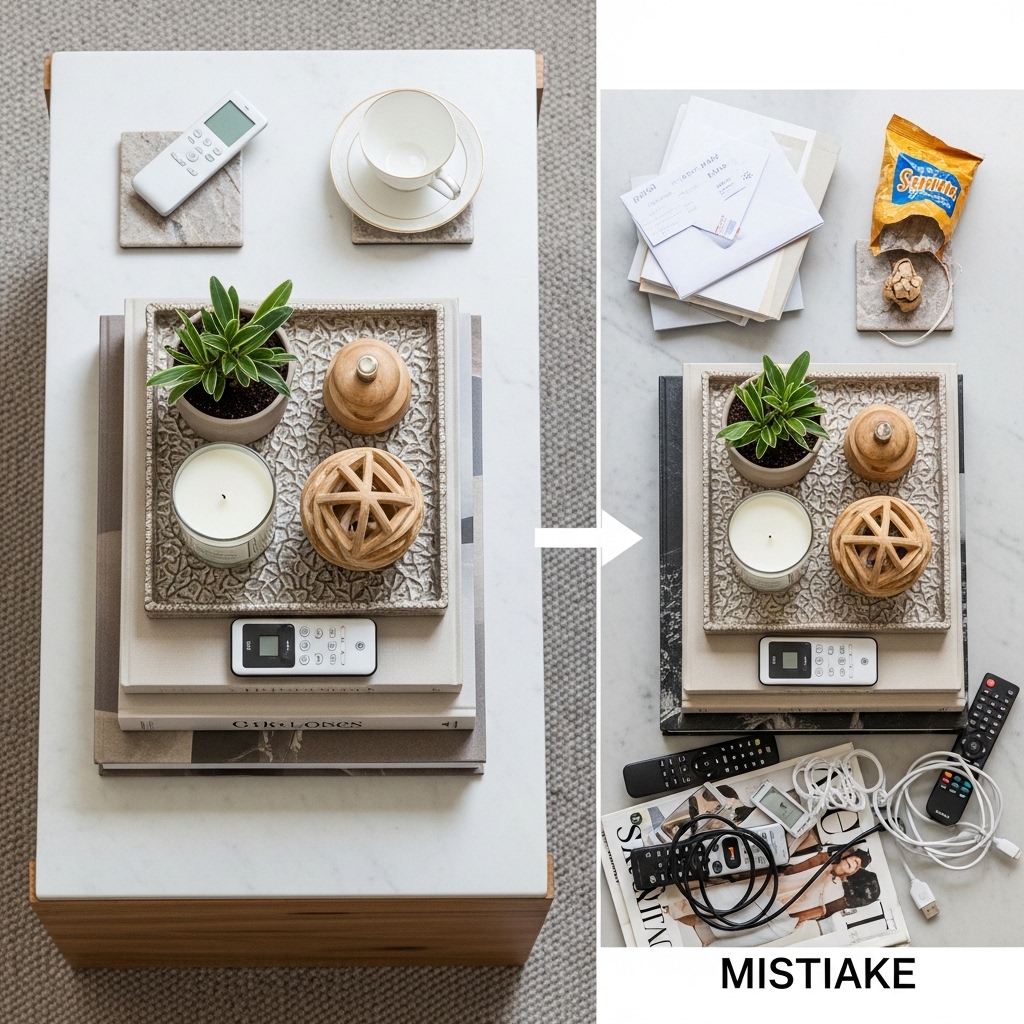
Mistake 1: Too Many Items
A coffee table covered with items is unusable. There is no room for a drink. The eye has nowhere to rest.
The fix: Remove half the items. Leave empty space. Empty space is not wasted space.
Mistake 2: All Items the Same Height
A flat arrangement looks boring. The eye moves horizontally across the table and stops.
The fix: Vary heights. Add a tall vase or a stack of books. Create peaks and valleys.
Mistake 3: No Function
A coffee table that looks good but cannot hold a drink is a failure. Styling must not sacrifice usability.
The fix: Leave room for a coaster and a drink. Ensure the arrangement does not block reach from the sofa.
Mistake 4: Matching Everything
Matching coasters, matching books, matching tray. The look is safe but boring.
The fix: Mix colors, textures, and materials. Collected looks more interesting than coordinated.
Pro Tip: Walk away and come back. Fresh eyes reveal mistakes that familiarity hides.
Mistake to Avoid: Do not style the coffee table once and never touch it again. Refresh it monthly.
Frequently Asked Questions
What should always be on a coffee table?
A surface for drinks. Everything else is optional. A coaster is the only essential item.
How many items should be on a coffee table?
Three to five items for a standard coffee table. Fewer for a small table. More for a large table.
Can I put a plant on my coffee table?
Yes. A small plant adds life and organic shape. Choose a low-maintenance plant like a succulent or small snake plant.
What is the easiest way to style a coffee table?
Start with a tray. Add a stack of books. Add a small vase or candle. Stop. This simple formula works every time.
Conclusion
A designer-styled coffee table is not about expensive accessories. It is about intentional choices.
Use a tray to corral items. Stack books for height and color. Add a decorative object for personality. Include a natural element for life. Leave room for function.
Vary heights. Mix textures. Use the rule of three. Avoid straight lines. Update seasonally.
Start with one change today. Add a tray. Remove half the items. Stack two books. Small changes produce dramatic results. The coffee table becomes the focal point it was meant to be.