How to Make Your Home Look Minimalist but Warm | Modern Minimalist Design | Balancing Simplicity and Comfort
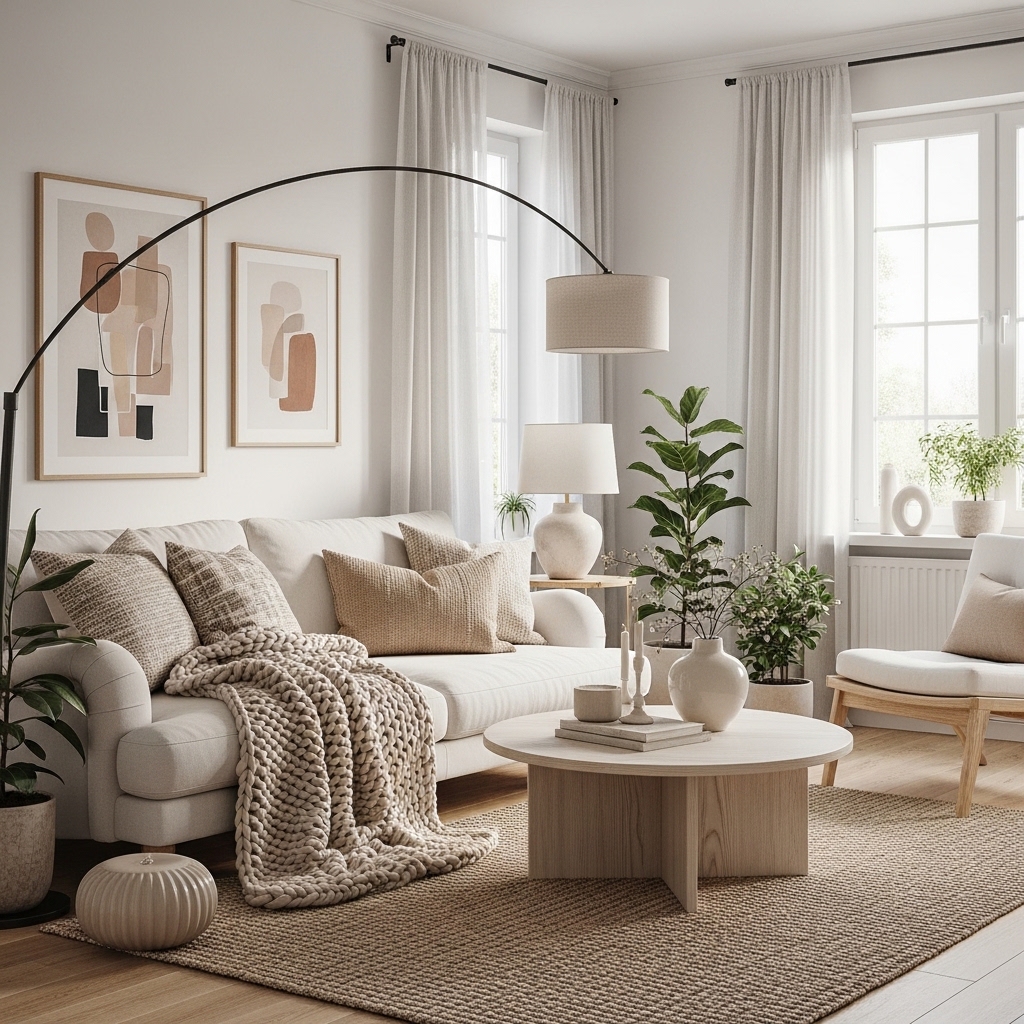
Minimalism has a reputation for being cold. White walls. Empty surfaces. No personality. A house that looks like no one lives there.
But true minimalism is not about emptiness. It is about intention. Every item earns its place. Nothing is there by accident. A minimalist home can be warm, inviting, and deeply personal.
The challenge is balancing simplicity with comfort. Too much stuff feels chaotic. Too little feels sterile. The sweet spot is in the middle.
This article explains how to make your home look minimalist but warm. No cold, sterile spaces. Just intentional, comfortable design.
Why Minimalism Feels Cold (And How to Fix It)
Minimalism became popular as a reaction to clutter. The idea was to remove everything unnecessary. What remained was clean and simple.
But many people took minimalism too far. They removed all personality. All color. All softness. The result was a home that looked like a hospital waiting room.
The Three Problems with Cold Minimalism
| Problem | Why It Happens | How to Fix |
|---|---|---|
| All white walls | Fear of color | Add warm neutrals (cream, beige) |
| No texture | Fear of clutter | Add wool, linen, wood, ceramic |
| No personal items | Fear of sentiment | Display a few meaningful objects |
The Warm Minimalism Mindset
Warm minimalism is not about having less. It is about having better. Every item serves a purpose or brings joy. Nothing is there by accident. But warmth is prioritized alongside simplicity.
Pro Tip: Take a photo of your room. Remove one item. Take another photo. Compare. The room will look better with less.
Mistake to Avoid: Do not remove everything. A room with no personality is not minimalist. It is empty.
Color: The Foundation of Warm Minimalism
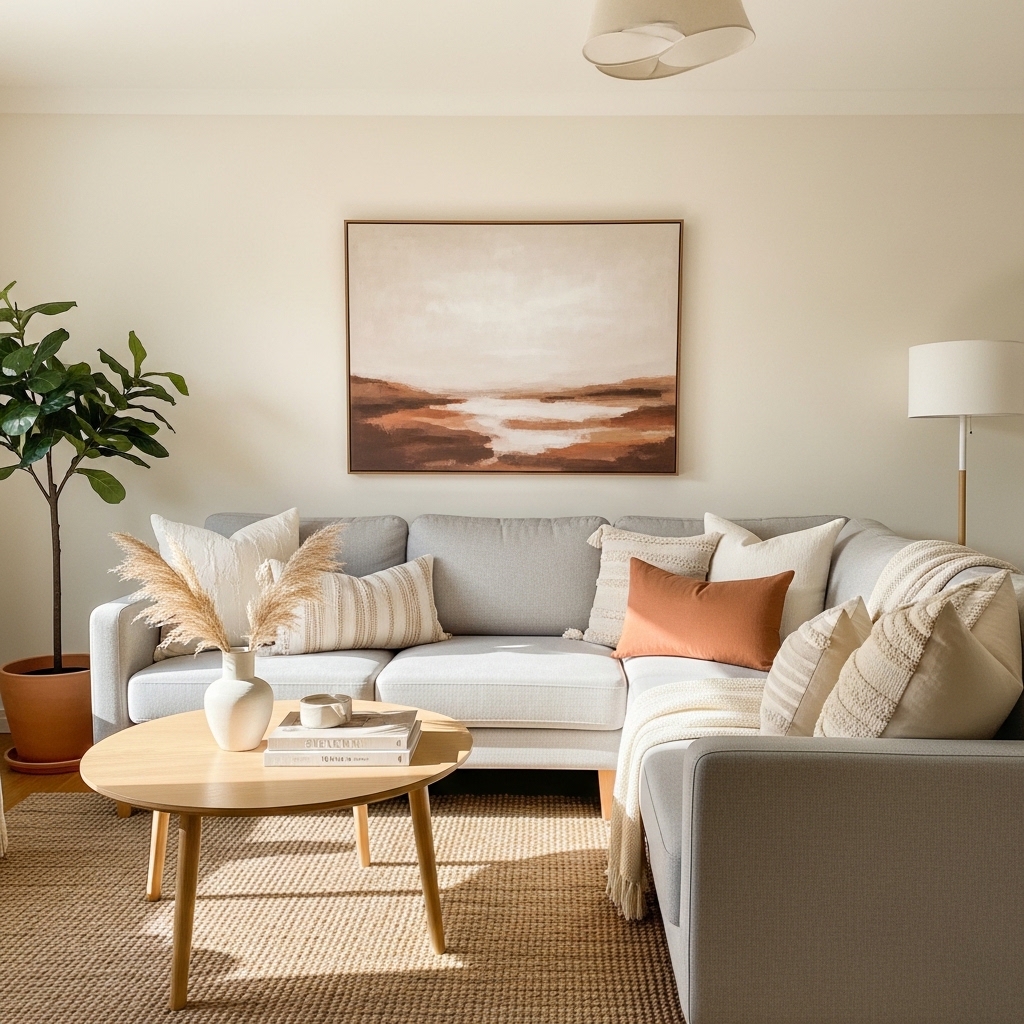
Color sets the tone for the entire room. In warm minimalism, color is present but restrained.
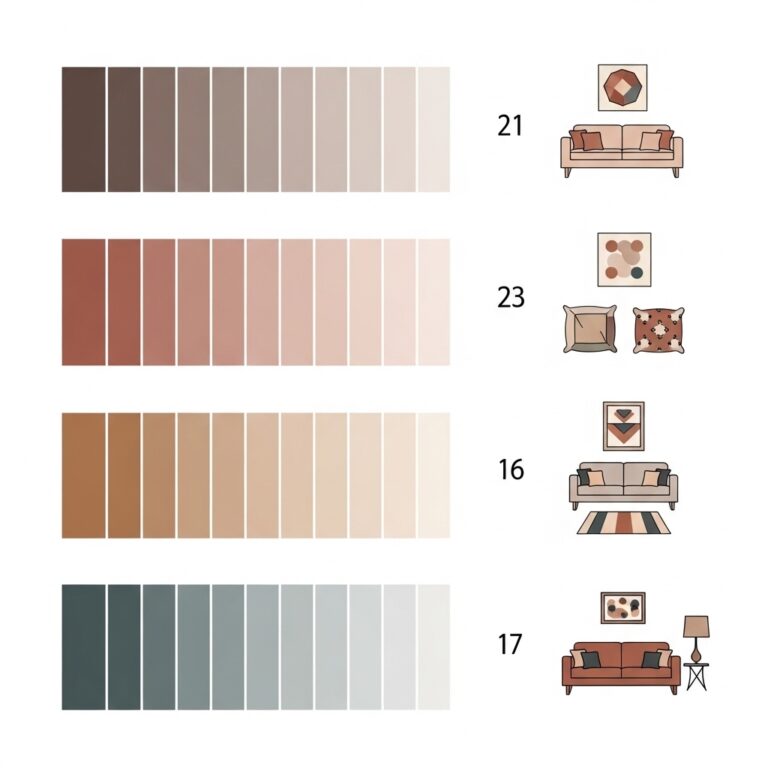
The Warm Minimalist Color Palette
| Color | Where to Use | Why It Works |
|---|---|---|
| Warm white | Walls, ceiling, trim | Reflects light, feels soft, not cold |
| Cream | Sofas, rugs, bedding | Warmer than white, pairs with everything |
| Beige | Curtains, upholstery, throws | Neutral, warm, hides wear |
| Taupe | Larger furniture pieces | Earthy, grounding |
| Sage green | Accent pillows, plants | Adds color without overwhelming |
| Terracotta | Small accessories, pottery | Warm, rich, natural |
The 80-20 Color Rule
Eighty percent of the room should be neutral. Twenty percent can be accent colors. The neutrals provide calm. The accents provide interest.
| Percentage | Color Type | Examples |
|---|---|---|
| 80% | Neutrals | Warm white, cream, beige, taupe |
| 20% | Accents | Sage green, terracotta, muted blue |
Pro Tip: Use the same neutral throughout the room. Different neutrals (cream and beige and taupe) can clash. Choose one neutral family.
Mistake to Avoid: Do not use pure white. Pure white feels cold. Choose warm white or off-white instead.
Texture: The Secret to Warmth
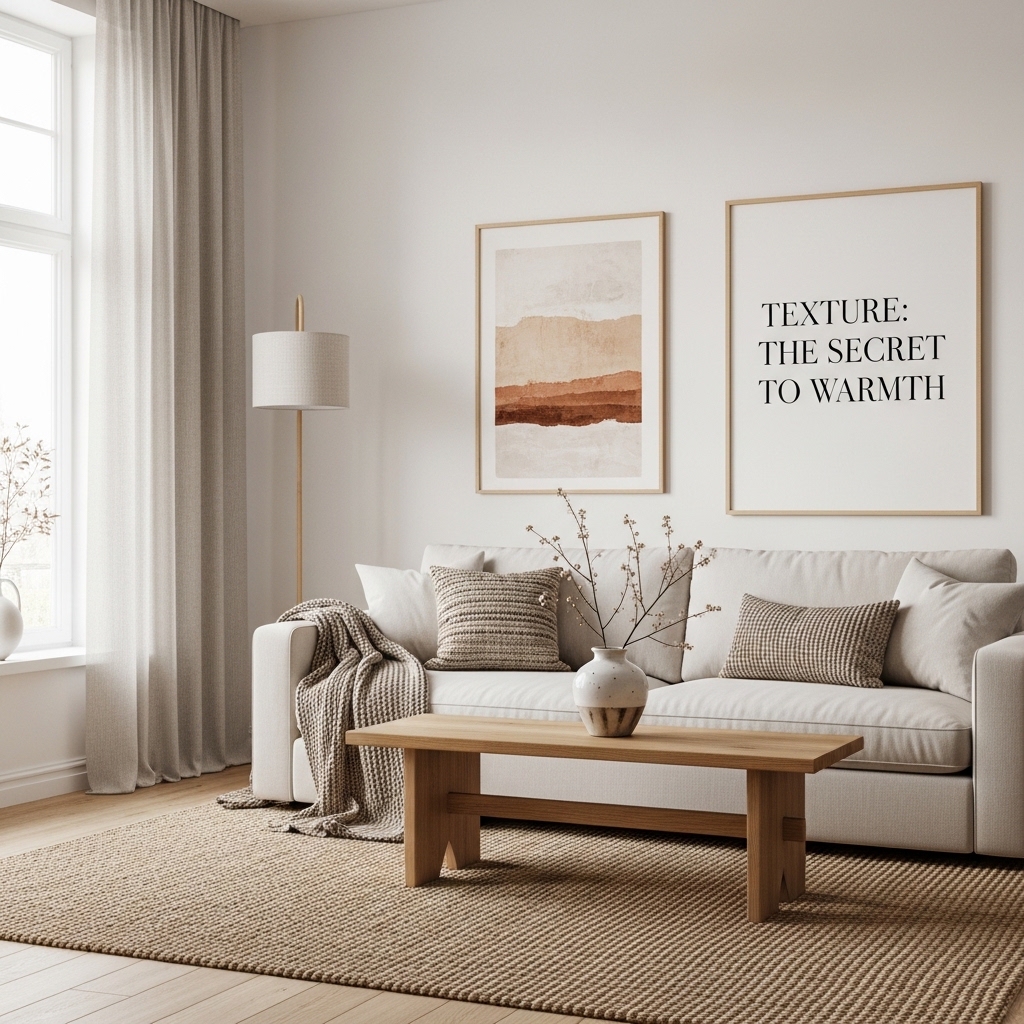
Texture is what makes a minimalist room feel warm. Without texture, surfaces feel flat and cold. With texture, they feel rich and inviting.
Where to Add Texture
Walls. A smooth painted wall is flat. Add texture with a woven wall hanging, a macrame piece, or a wood slat wall. Even a single textured piece changes the feel of the room.
Floors. Bare floors feel cold. An area rug adds texture and warmth. Choose wool, jute, or a flat-weave cotton rug.
Furniture. A leather sofa is smooth. Add a wool throw blanket over the back. Add a velvet pillow. The mix of textures creates depth.
Windows. Bare windows feel cold. Linen curtains add natural texture. They filter light and soften the room.
The Texture Mixing Formula
| Texture Type | Examples | Where to Use |
|---|---|---|
| Smooth | Leather, glass, polished wood | Sofa, coffee table, lamp base |
| Soft | Velvet, wool, fleece | Pillows, throws, rugs |
| Natural | Linen, jute, raw wood | Curtains, rugs, furniture |
| Organic | Plants, ceramic, stone | Decor, plant pots, accessories |
Pro Tip: Aim for at least three different textures in each room. A leather sofa (smooth), a wool throw (soft), and a jute rug (natural) create visual interest.
Mistake to Avoid: Do not use all smooth textures. A room of leather, glass, and metal feels cold.
Furniture: Clean Lines, Warm Materials
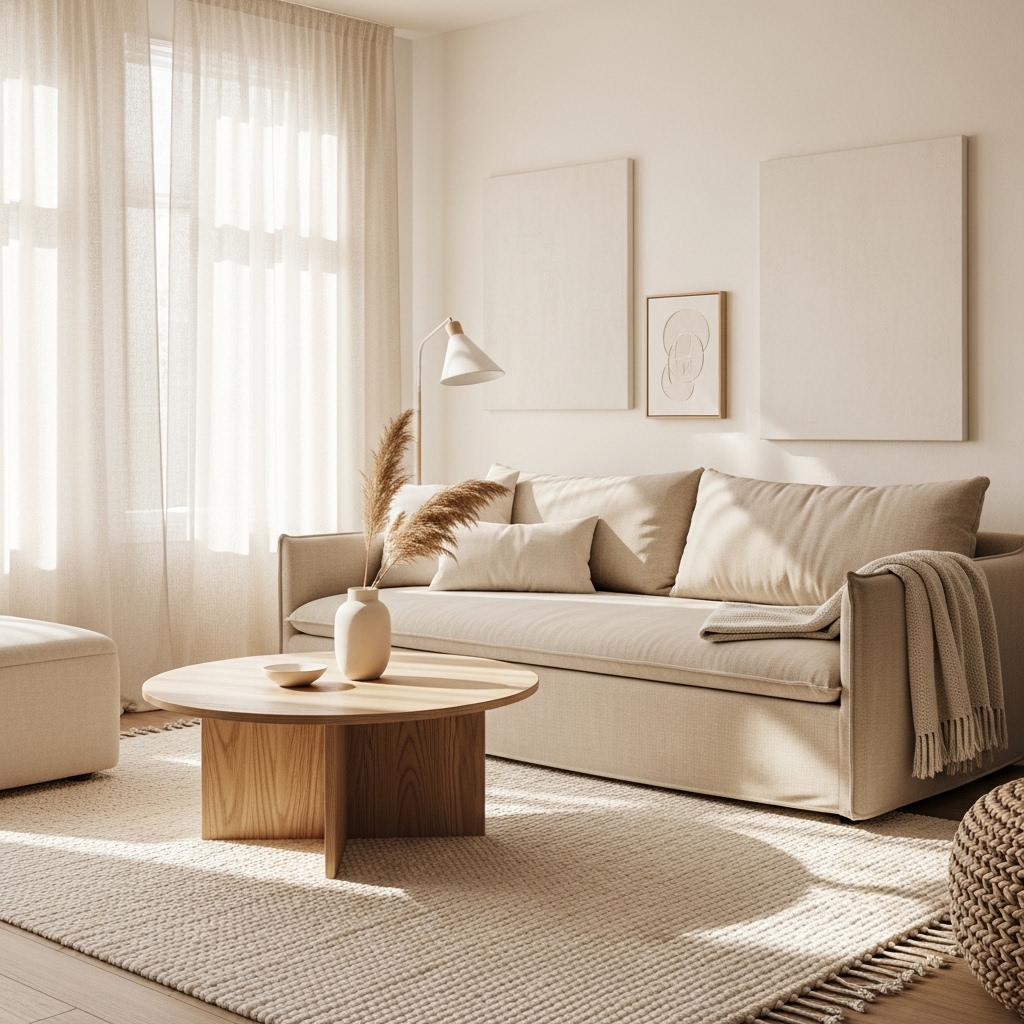
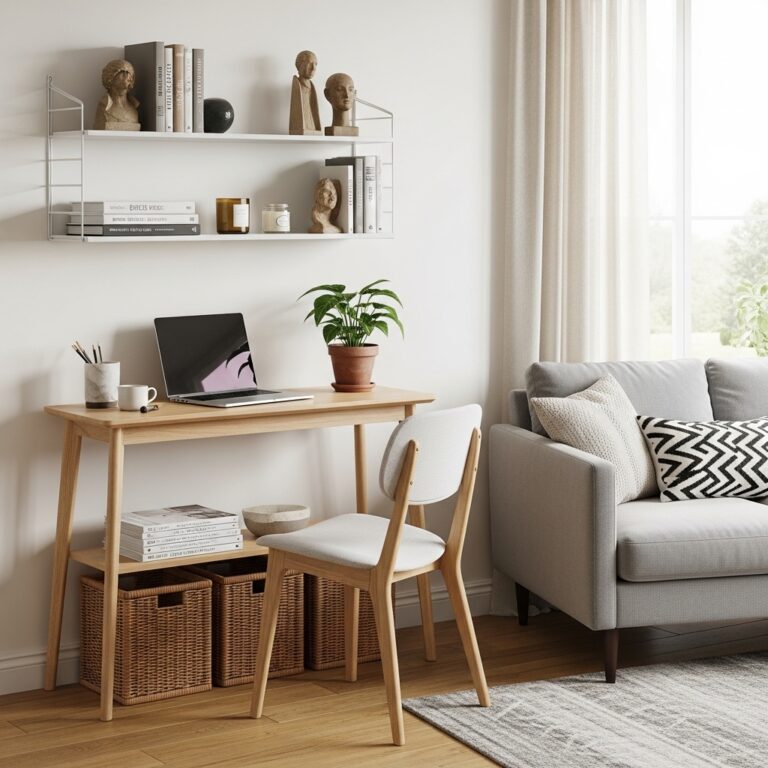
Warm minimalist furniture has clean lines but natural materials. Avoid plastic and particle board. Choose wood, wool, linen, and leather.
What to Look For
| Furniture Piece | Look For | Avoid |
|---|---|---|
| Sofa | Clean lines, exposed legs, natural fabric | Oversized, skirted, synthetic fabric |
| Coffee table | Simple shape, wood or stone | Glass, metal only, ornate details |
| Dining table | Solid wood, simple legs | Glass top, metal only, pedestal base |
| Shelving | Open, simple brackets | Heavy, ornate, enclosed |
The Leg Rule
Furniture with exposed legs looks lighter than furniture that sits directly on the floor. Choose pieces with legs at least 4 inches tall. The visible floor underneath creates visual space.
Pro Tip: Mix wood tones. A walnut coffee table with oak shelves adds depth. Matching wood tones can feel flat.
Mistake to Avoid: Do not buy furniture with skirts. Skirts hide the legs and make the piece look heavy.
Decluttering: The Minimalist Foundation
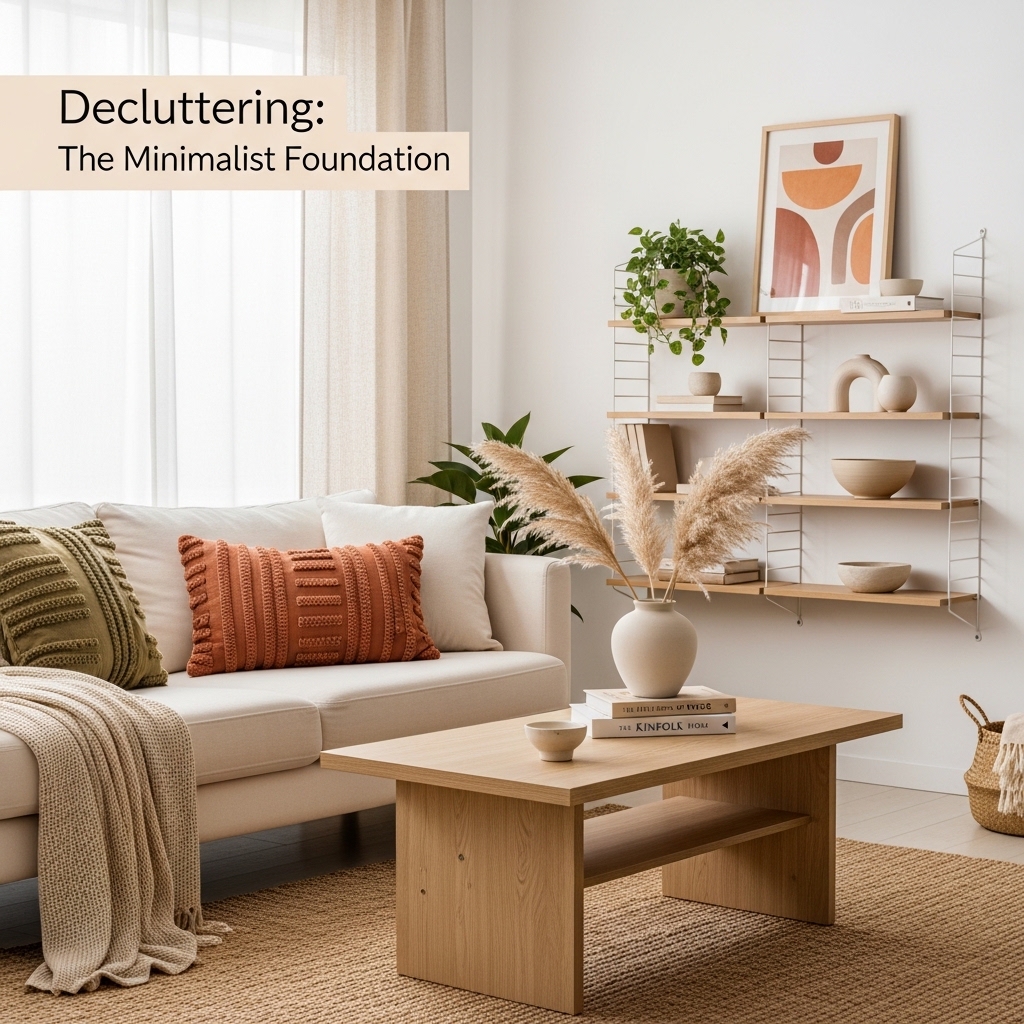
Warm minimalism requires decluttering. But the goal is not emptiness. The goal is intentionality.
The Decluttering Method
Remove everything from a surface. Add items back one at a time. Stop when the surface feels balanced. Then remove one more item. You probably have too many.
| Surface | Maximum Items | Example |
|---|---|---|
| Coffee table | 3-5 items | Tray, book, candle |
| Nightstand | 3 items | Lamp, book, small dish |
| Dresser | 5 items | Lamp, jewelry box, photo, vase, bowl |
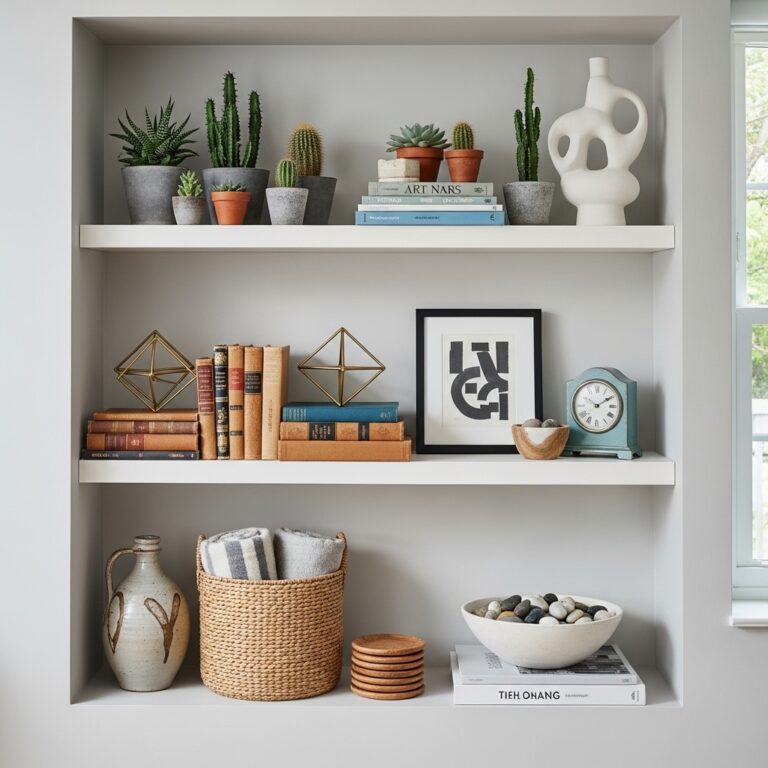
| Bookshelf | 70% full, 30% empty | Books, a few decorative objects |
The One-In, One-Out Rule
For every new item brought into the home, one old item must leave. This rule prevents accumulation. It keeps the home minimalist without constant effort.
Pro Tip: Keep a donation box in the closet. When the box fills, take it to the donation center immediately.
Mistake to Avoid: Do not make exceptions to the one-in, one-out rule. One exception becomes two. Two becomes a pile.
Personal Items: The Warmth Factor
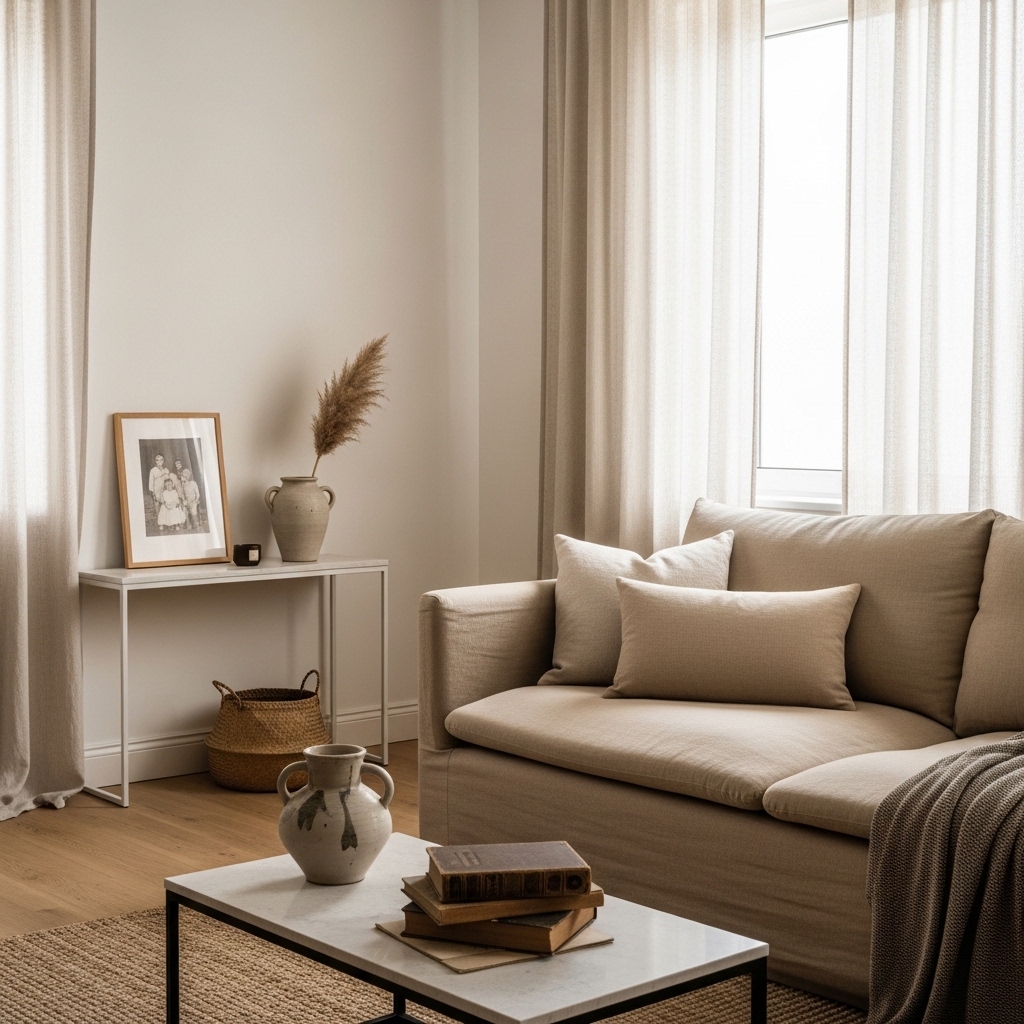
A minimalist home can still have personal items. The key is curation, not elimination.
What to Display
Photos. Frame one or two photos of loved ones. Do not clutter every surface with photos. Choose the most meaningful ones.
Art. Choose art that means something to you. A print from a favorite artist. A photo from a memorable trip. A drawing by your child.
Objects. A souvenir from a trip. A gift from a friend. An object that makes you smile. Display it where you will see it daily.
The Memory Rule
Every item in a warm minimalist home should have a purpose or a memory. If an item has neither, it is clutter.
Pro Tip: Rotate personal items seasonally. Display summer souvenirs in summer. Bring out winter items in winter. The rotation keeps the space feeling fresh.
Mistake to Avoid: Do not display every gift you have ever received. Choose the ones that matter most. Donate the rest.
Lighting: Warm and Layered
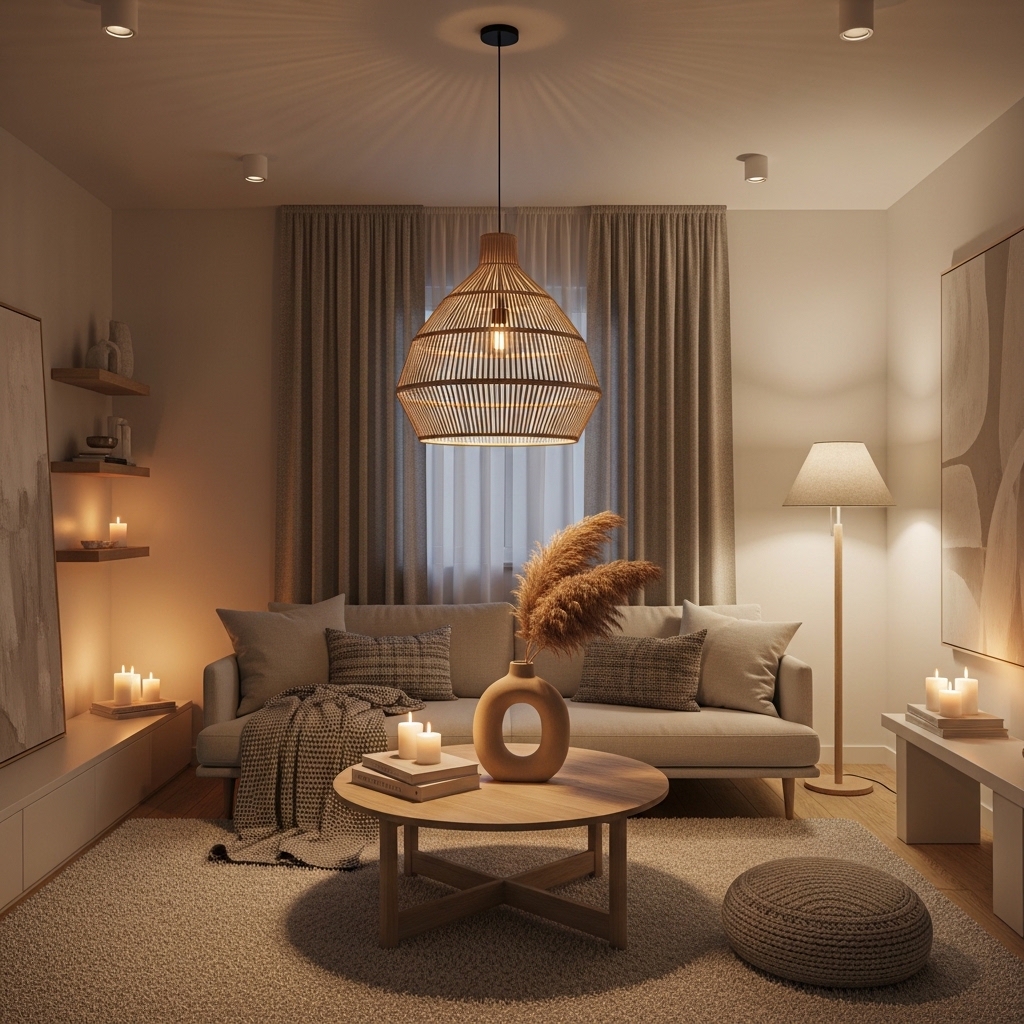
Lighting is essential for warm minimalism. Harsh overhead lights destroy warmth. Layered, warm lighting creates it.
The Warm Minimalist Lighting Formula
| Light Layer | Purpose | Bulb Temperature | Examples |
|---|---|---|---|
| Ambient | General illumination | 2700K | Overhead light on dimmer |
| Task | Reading, activities | 2700K | Table lamp, floor lamp |
| Accent | Mood, depth | 2700K | Picture light, wall sconce |
The Dimmer Rule
Every overhead light should be on a dimmer. Dimming changes the mood of a room instantly. Bright light for cleaning. Dim light for relaxing.
Pro Tip: Use the same color temperature (2700K) for all bulbs in a room. Mixed temperatures look chaotic.
Mistake to Avoid: Do not rely on overhead lights alone. A room without lamps feels cold and unfinished.
Frequently Asked Questions
What is the difference between minimalism and warm minimalism?
Minimalism focuses on removing excess. Warm minimalism adds back texture, color, and personal items. The result is simple but not cold.
Can a minimalist home have color?
Yes. Warm minimalism uses color in small doses. Sage green pillows. A terracotta vase. A muted blue throw. The neutrals dominate. The accents provide interest.
How do I make my minimalist home feel cozy?
Add texture. A wool throw. A jute rug. Linen curtains. Soft pillows. Warm lighting. These elements add warmth without adding clutter.
What should never be in a minimalist home?
Plastic. Particle board. Clutter. Items without purpose or memory. Mismatched furniture. Cool white light bulbs.
Conclusion
A minimalist home does not have to be cold. Warm minimalism balances simplicity with comfort. Light colors with warm undertones. Natural textures. Clean-lined furniture in warm materials. Curated personal items. Layered warm lighting.
Start with one change today. Add a wool throw. Change to warm white bulbs. Remove half the items from a surface. Small changes produce dramatic results. The home becomes minimalist but warm.