Open Shelving vs Cabinets: Which Looks Better? | Kitchen Storage Showdown | Pros and Cons of Each Style
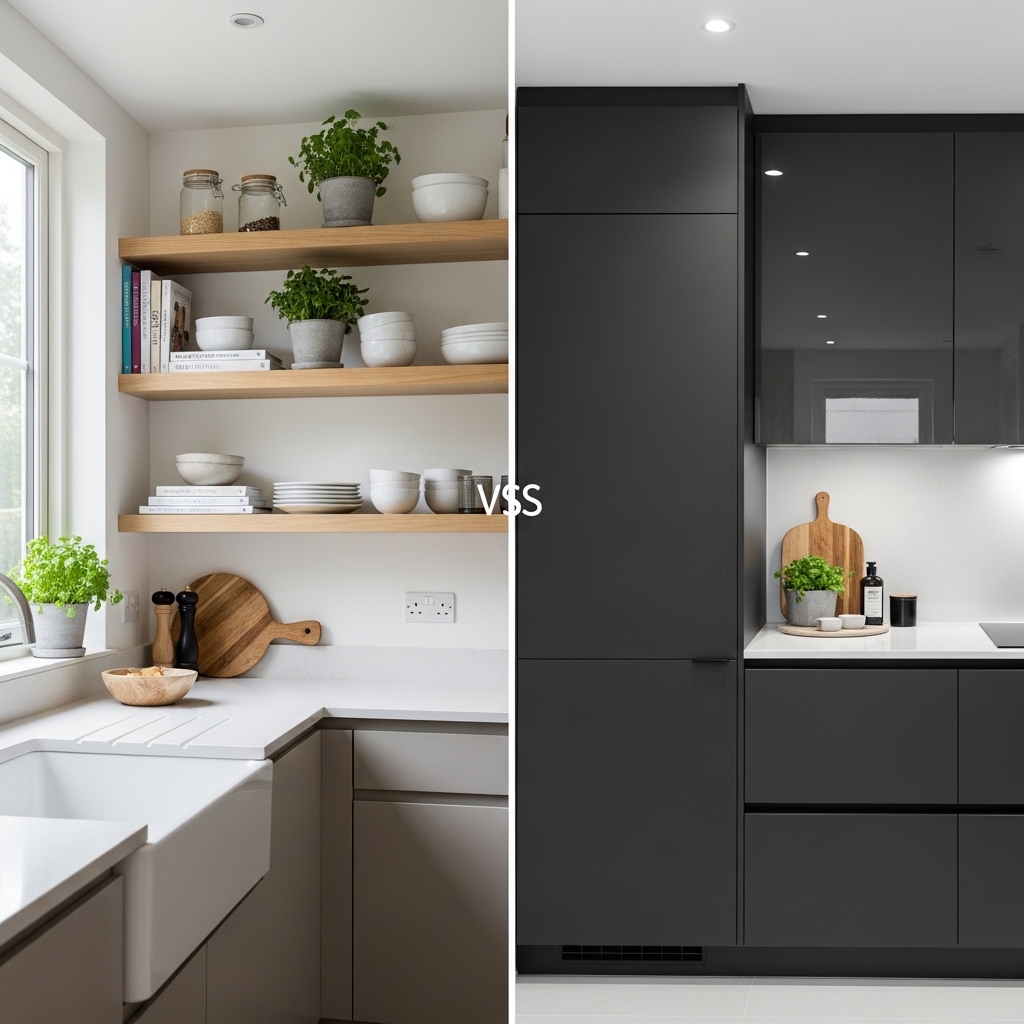
The kitchen is the heart of the home. It is also the most functional room. Every design choice must balance beauty with utility. Nowhere is this tension more apparent than in the decision between open shelving and cabinets.
Open shelving looks beautiful in photographs. Cabinets are practical. But the choice is not as simple as beauty versus function. Both options have strengths and weaknesses. Both can work beautifully in the right context.
This article compares open shelving and cabinets. The pros and cons of each. And guidance for choosing the right option for your kitchen.
The Aesthetic Difference
Open shelving and cabinets create completely different looks. Understanding the aesthetic difference is the first step.
The Open Shelving Look
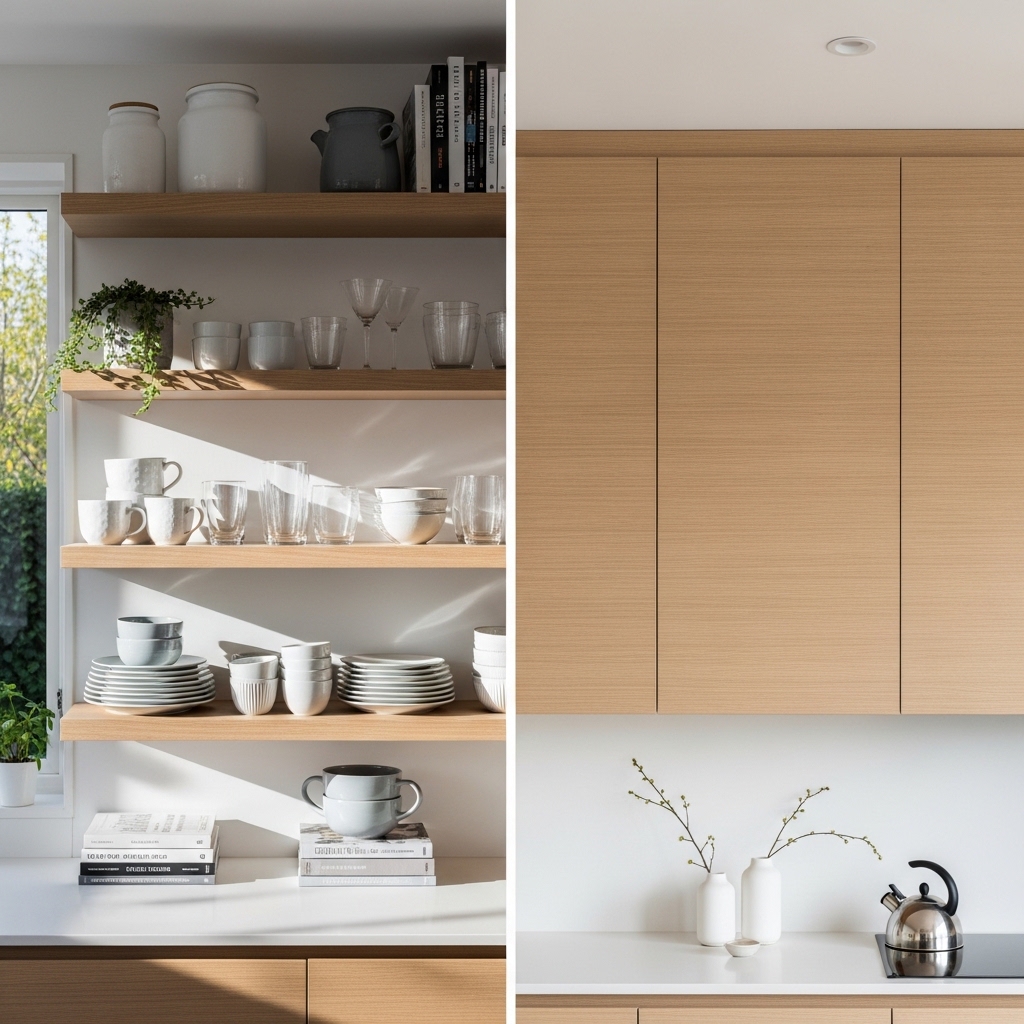
Open shelving feels airy, modern, and approachable. Dishes and glassware become part of the decor. The kitchen feels open and uncluttered. The lack of upper cabinets makes the room feel larger.
| Visual Effect | Why It Happens |
|---|---|
| Airy | No bulky cabinets blocking light |
| Modern | Clean lines, visible contents |
| Approachable | Dishes and glassware on display |
The Cabinet Look
Cabinets feel substantial, traditional, and tailored. The kitchen looks finished and intentional. Doors hide clutter. The room feels cohesive.
| Visual Effect | Why It Happens |
|---|---|
| Substantial | Solid doors, visible hardware |
| Traditional | Classic look, timeless |
| Tailored | Everything hidden, clean sightlines |
Pro Tip: Look at kitchen photos online. Notice which style appeals to you. Save images of both open shelving and cabinet kitchens. Compare them side by side.
Mistake to Avoid: Do not choose open shelving because it looks good in photos. Consider how you actually use your kitchen.
Pros of Open Shelving
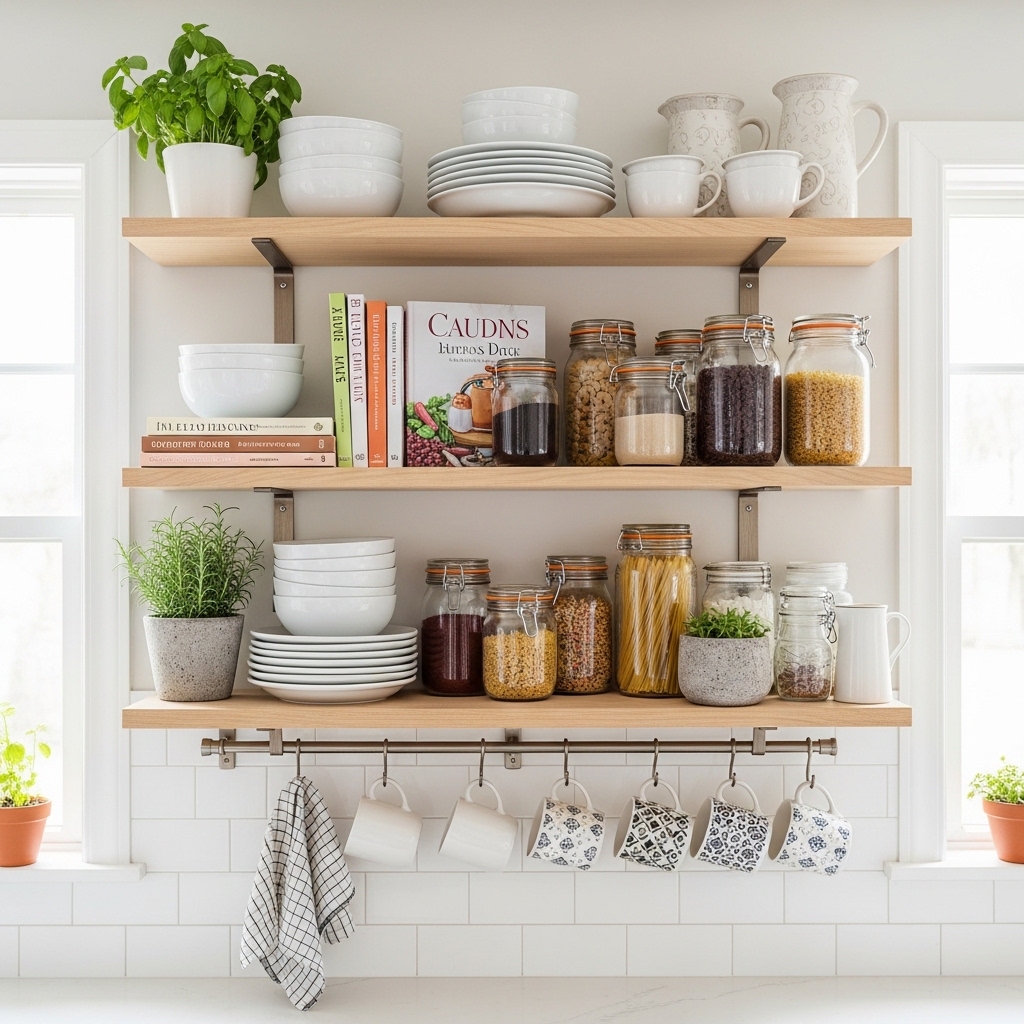
Open shelving has significant advantages. It is not just a trend. For the right kitchen, it is the best choice.
Pro 1: Makes the Kitchen Feel Larger
Upper cabinets block light and create visual weight. Removing them opens up the room. The kitchen feels larger and more spacious.
Pro 2: Forces Organization
There is nowhere to hide clutter. Every item on an open shelf must earn its place. This forces good habits. Dishes are put away promptly. Mugs are stacked neatly.
Pro 3: Easy Access
Grab a plate. Grab a glass. No doors to open. No hinges to navigate. Frequently used items are always within reach.
Pro 4: Budget-Friendly
Open shelves cost less than cabinets. A few wood boards and brackets are significantly cheaper than custom cabinetry. The savings can be substantial.
| Cost Comparison | Open Shelving | Cabinets |
|---|---|---|
| Materials | $50-200 per shelf | $200-1,000 per linear foot |
| Installation | DIY-friendly | Professional usually required |
| Total for small kitchen | $200-500 | $2,000-5,000 |
Pro Tip: Use open shelving for the most frequently used items. Plates. Glasses. Coffee mugs. Everyday bowls. These items are used too often to hide behind doors.
Mistake to Avoid: Do not put open shelves near the stove. Grease and dust will coat the items. Keep open shelves away from cooking areas.
Cons of Open Shelving
Open shelving is not for everyone. The disadvantages are significant.
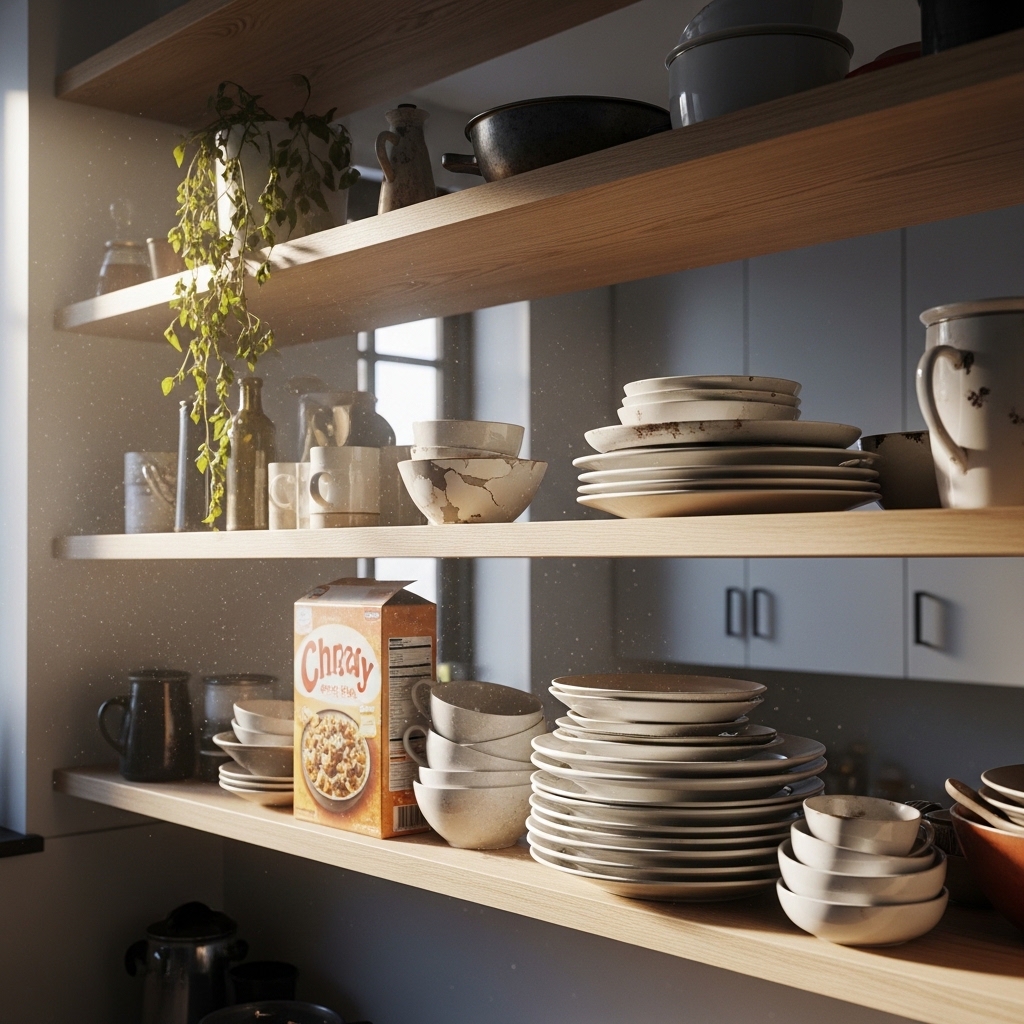
Con 1: Dust and Grease
Everything on open shelves gets dusty. In a kitchen, everything gets greasy. Dishes need to be washed before use, even if they were clean when put away.
Con 2: Requires Constant Styling
Open shelves are not storage. They are display. Dishes must be arranged neatly. Mugs must be stacked uniformly. The look requires constant maintenance.
Con 3: Limited Storage
Open shelves hold less than cabinets. Without doors, you cannot stack items to the ceiling. Without depth, you cannot store large pots or small appliances.
Con 4: Visual Clutter Risk
If your dishes do not match, open shelves will look chaotic. If you have too many items, the shelves will look crowded. The result is visual clutter, not beauty.
| Challenge | Why It Happens | Fix |
|---|---|---|
| Dust and grease | Open to kitchen air | Wash dishes before use |
| Constant styling | Every item visible | Limit number of items |
| Limited storage | No vertical space | Use cabinets for storage |
| Visual clutter | Mismatched items | Curate carefully |
Pro Tip: Use open shelving for matching dish sets only. Mismatched dishes look messy. A uniform set creates visual order.
Mistake to Avoid: Do not put small appliances on open shelves. A toaster, blender, or coffee maker creates visual clutter.
Pros of Cabinets
Cabinets are the traditional choice for good reason. They work.
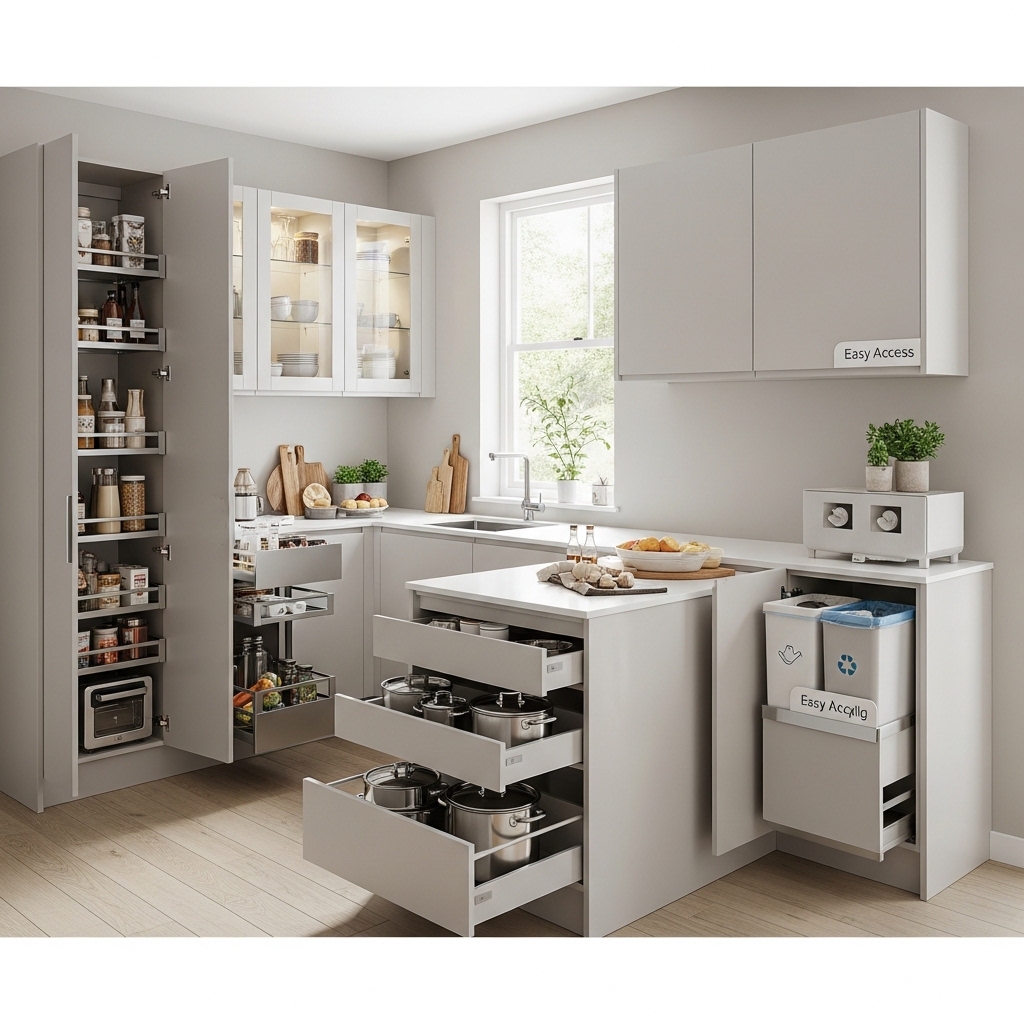
Pro 1: Hide Clutter
Doors hide everything. Mismatched dishes. Plastic containers. Overflowing supplies. Close the doors and the kitchen looks clean.
Pro 2: Protect Contents
Cabinets keep dust, grease, and pests away from dishes and food. Items stay clean between uses. No need to wash a plate before eating.
Pro 3: Maximum Storage
Cabinets use vertical space efficiently. Stack plates to the shelf above. Store pots in deep base cabinets. Use corner cabinets for otherwise wasted space.
Pro 4: Timeless Look
Well-designed cabinets never go out of style. Shaker cabinets have been popular for decades. They will likely remain popular for decades more.
| Advantage | Why It Matters |
|---|---|
| Hide clutter | Instant clean look |
| Protect contents | Less washing, safer food storage |
| Maximum storage | Use every inch of space |
| Timeless look | No need to update |
Pro Tip: Use upper cabinets for less frequently used items. Special occasion dishes. Extra glassware. Seasonal serveware. Keep everyday items in lower cabinets or drawers.
Mistake to Avoid: Do not fill every cabinet completely. Leave empty space. Empty space makes cabinets easier to use and reorganize.
Cons of Cabinets
Cabinets are not perfect. They have disadvantages.
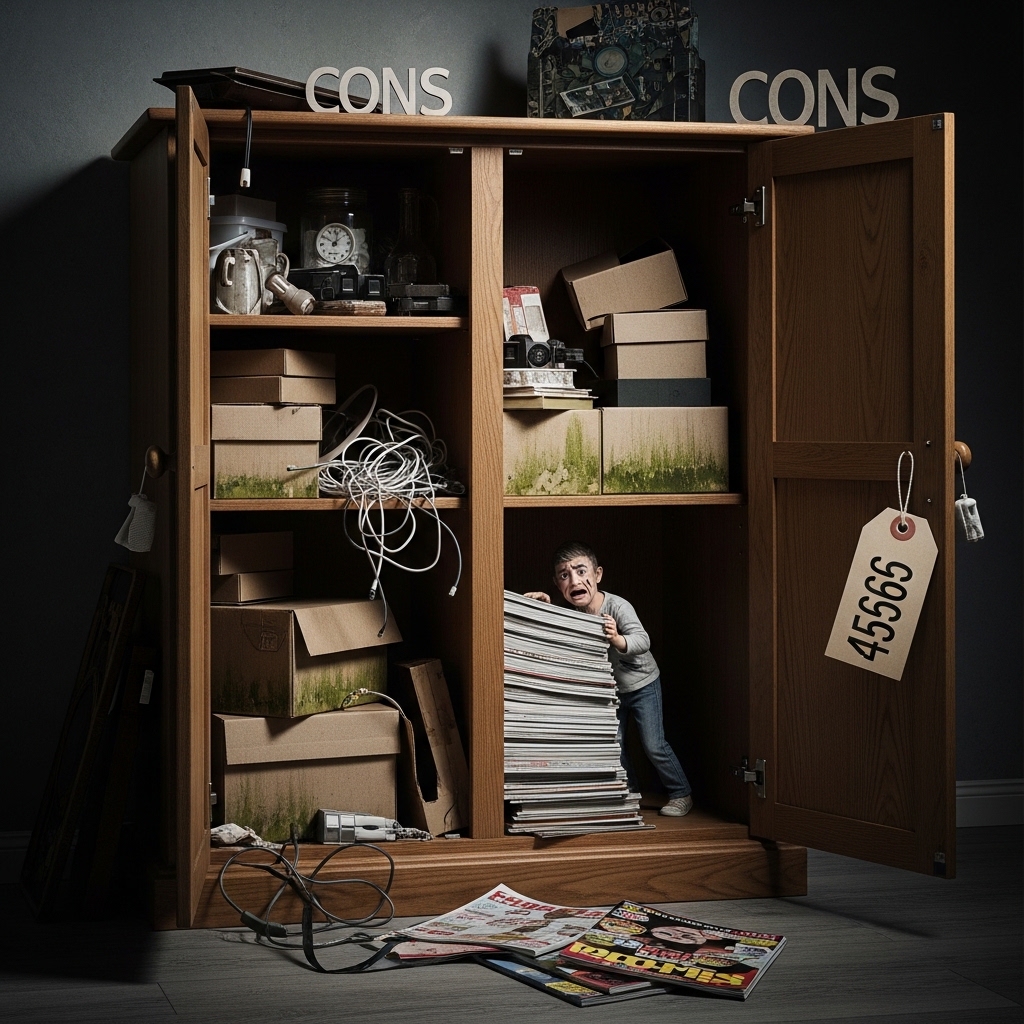
Con 1: Expensive
Quality cabinets are a significant investment. Custom cabinets can cost tens of thousands of dollars. Even stock cabinets are more expensive than open shelving.
Con 2: Can Feel Heavy
Upper cabinets block light and create visual weight. In a small kitchen, they can make the room feel cramped. The wall of cabinets can feel overwhelming.
Con 3: Items Get Lost
Behind closed doors, items are out of sight. Out of sight often means out of mind. You may forget what you own. You may buy duplicates.
Con 4: Difficult to Change
Once cabinets are installed, changing the layout is difficult. Moving a few open shelves is easy. Moving cabinets requires renovation.
| Challenge | Why It Happens | Fix |
|---|---|---|
| Expensive | Quality materials and labor | Mix open shelving with cabinets |
| Heavy feel | Solid doors block light | Use glass-front cabinets |
| Items get lost | Out of sight, out of mind | Label shelves, edit regularly |
| Difficult to change | Permanent installation | Plan carefully before installing |
Pro Tip: Mix open shelving with cabinets. Use open shelves on one wall. Use cabinets on the others. The combination balances beauty and function.
Mistake to Avoid: Do not install cabinets without considering the room’s light. Dark cabinets in a dark kitchen will feel oppressive.
The Hybrid Approach: Best of Both Worlds
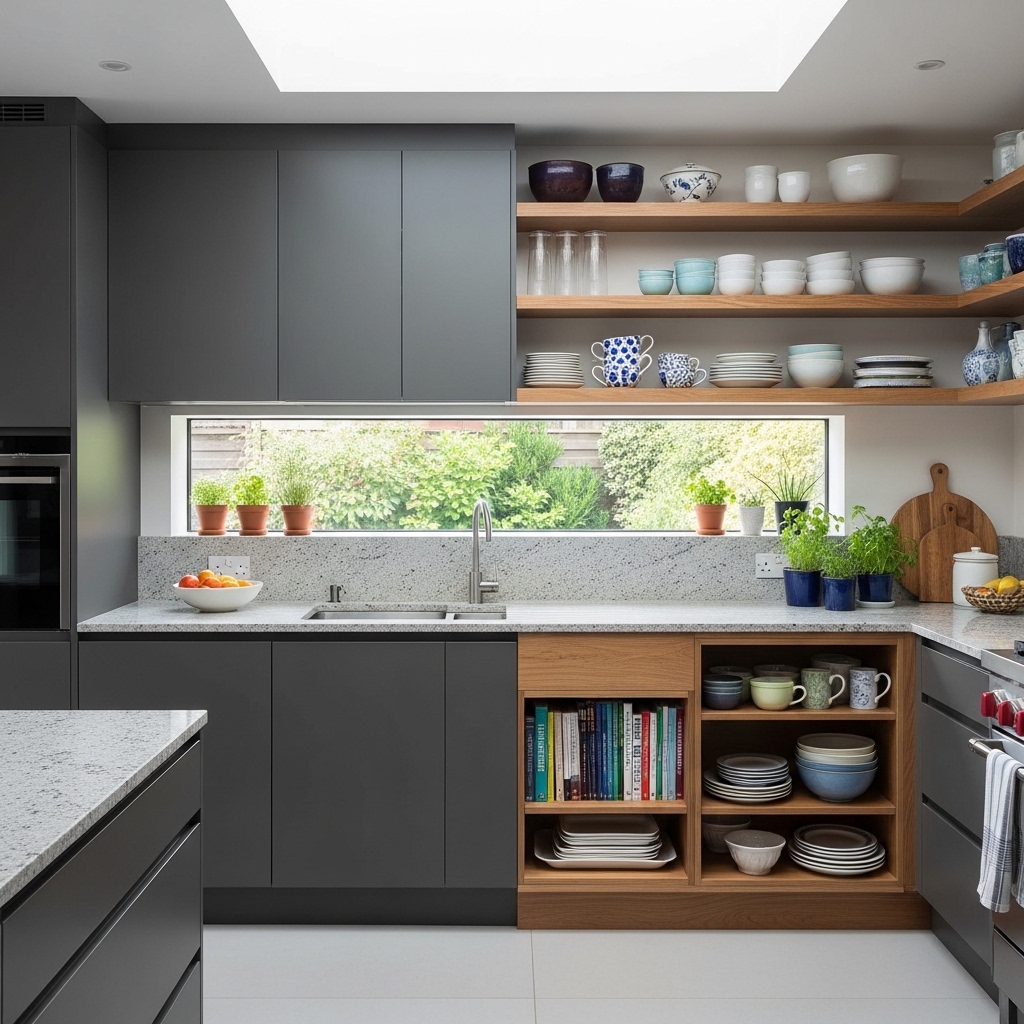
The best solution for many kitchens is a hybrid. Some open shelving. Some cabinets. Each used where it makes the most sense.
Where to Use Open Shelving
| Location | Why It Works |
|---|---|
| Above the sink | No upper cabinets blocking light |
| On a breakfast bar | Display pretty glassware, coffee mugs |
| On a narrow wall | Cabinets would be too deep |
| Around a window | Maintains light and view |
Where to Use Cabinets
| Location | Why It Works |
|---|---|
| Next to the stove | Hide cooking oils, spices, pots |
| Above the refrigerator | Maximum storage, out of sight |
| In a pantry | Store dry goods, canned items |
| For trash and recycling | Hide ugly bins |
The 70/30 Rule for Hybrid Kitchens
Seventy percent cabinets. Thirty percent open shelving. The cabinets provide storage. The open shelves provide visual interest.
| Percentage | Type | Purpose |
|---|---|---|
| 70% | Cabinets | Storage, hide clutter |
| 30% | Open shelving | Display, visual interest |
Pro Tip: Use open shelving for items that are both functional and beautiful. Hand-painted plates. Colored glassware. Matching coffee mugs. Everything else goes in cabinets.
Mistake to Avoid: Do not put open shelves in high-traffic areas where they will be bumped or splattered.
What to Put on Open Shelves
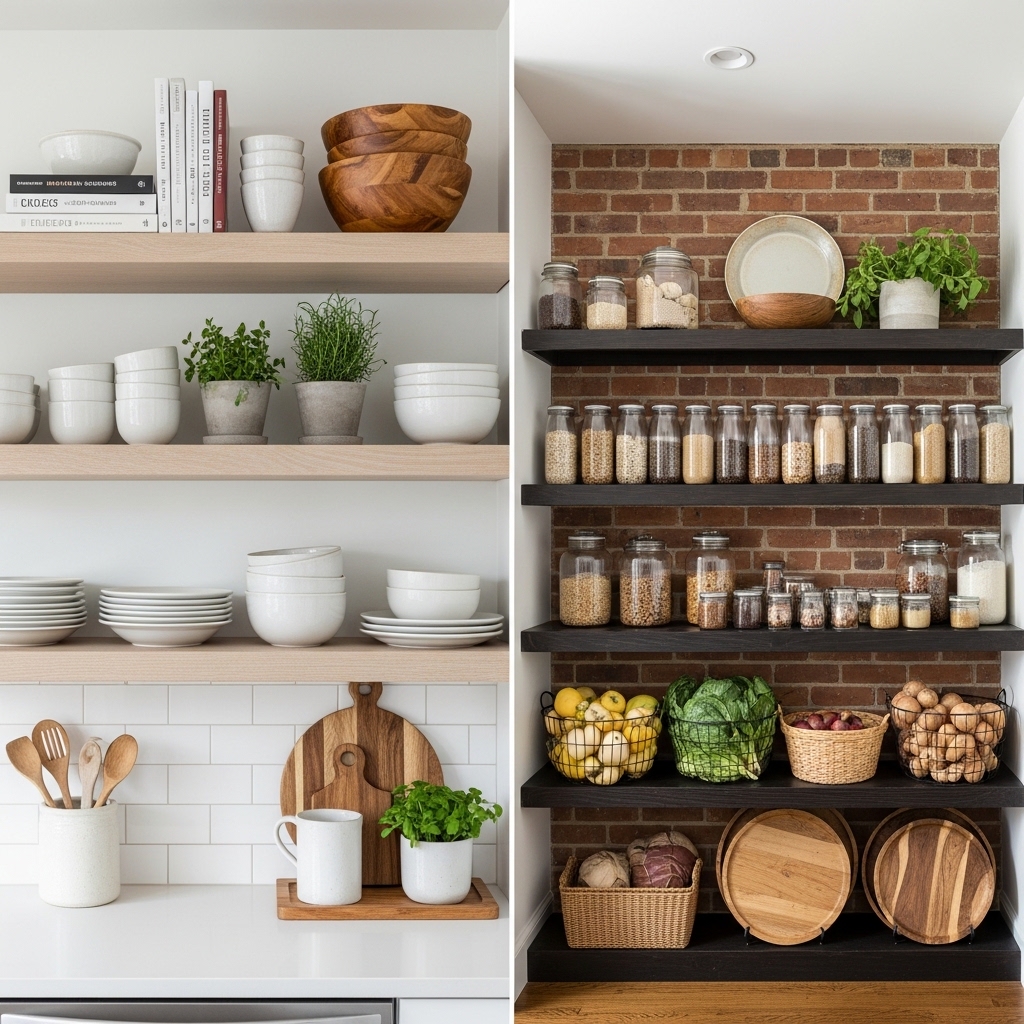
Not every item belongs on open shelves. Choose carefully.
Good Items for Open Shelves
| Category | Examples | Why It Works |
|---|---|---|
| Everyday dishes | Matching plates, bowls | Used often, look uniform |
| Glassware | Matching glasses, colored glass | Pretty, stack neatly |
| Coffee mugs | Matching set or curated collection | Adds personality |
| Cookbooks | Beautiful covers | Adds color and height |
| Plants | Small herbs, succulents | Adds life |
Bad Items for Open Shelves
| Category | Examples | Why to Avoid |
|---|---|---|
| Plastic containers | Mismatched lids, stained | Look cheap, create clutter |
| Small appliances | Toaster, blender, mixer | Visual clutter |
| Food storage | Cereal boxes, pasta bags | Not attractive |
| Mismatched items | Mixed patterns, colors | Chaotic look |
Pro Tip: Before putting an item on an open shelf, ask: Would I display this in a glass cabinet? If not, hide it behind a door.
Mistake to Avoid: Do not put too many items on open shelves. A crowded shelf looks like storage, not display.
Design Tips for Open Shelves
If you choose open shelving, style it intentionally.
The 70/30 Rule for Shelves
Fill 70% of the shelf. Leave 30% empty. The empty space highlights the items that remain.
The Color Coordination Rule
Group items by color. All white dishes together. All blue glassware together. The color block creates visual order.
The Height Variation Rule
Vary the heights of items. Tall items at the ends. Short items in the middle. The variation creates rhythm.
Pro Tip: Use shelf risers to create two levels of display. A riser lifts items in the back. The front row hides the riser. The shelf looks fuller without being crowded.
Mistake to Avoid: Do not push items to the back of the shelf. Items should sit near the front edge. The shelf looks more intentional.
Design Tips for Cabinets
If you choose cabinets, make them work for you.
Glass-Front Cabinets
Glass-front cabinets offer the beauty of open shelving with the protection of doors. Dust stays out. Items stay clean. The visual weight is lighter than solid doors.
| Glass Type | Effect |
|---|---|
| Clear glass | Maximum visibility, shows everything |
| Frosted glass | Hides some clutter, still light |
| Textured glass | Adds interest, hides minor clutter |
Under-Cabinet Lighting
Lighting under upper cabinets illuminates the counter. It also highlights the backsplash. The kitchen feels brighter and more expensive.
Pull-Out Shelves
Deep base cabinets are hard to use. Items get lost in the back. Pull-out shelves solve this problem. Pull the shelf out. Access everything. Push it back in.
Pro Tip: Use pull-out shelves in all lower cabinets. The extra accessibility is worth the cost. No more kneeling and digging.
Mistake to Avoid: Do not use glass-front cabinets if your dishes are mismatched. The glass will display the chaos.
Frequently Asked Questions
Is open shelving cheaper than cabinets?
Yes. Open shelves cost significantly less than cabinets. A few wood boards and brackets cost $50-200. A set of upper cabinets costs $2,000-5,000.
Does open shelving work in a small kitchen?
Yes. Open shelving can make a small kitchen feel larger. The lack of upper cabinets opens up the room. But open shelving holds less than cabinets. Balance storage needs with aesthetic goals.
What is the biggest downside of open shelving?
Dust and grease. Everything on open shelves gets dirty quickly. In a kitchen, the grease from cooking coats every item. Dishes need to be washed before use.
Can I mix open shelving and cabinets?
Yes. A hybrid approach is often the best solution. Use cabinets for storage. Use open shelves for display. The combination balances beauty and function.
Conclusion
Open shelving and cabinets both have strengths. Open shelving makes kitchens feel larger, forces organization, and costs less. Cabinets hide clutter, protect contents, and maximize storage.
The best choice depends on your kitchen, your habits, and your style. A hybrid approach often works best. Cabinets for storage. Open shelves for display.
Start with one wall today. Replace upper cabinets with open shelves. Or add glass-front cabinets to lighten the look. Small changes produce dramatic results.