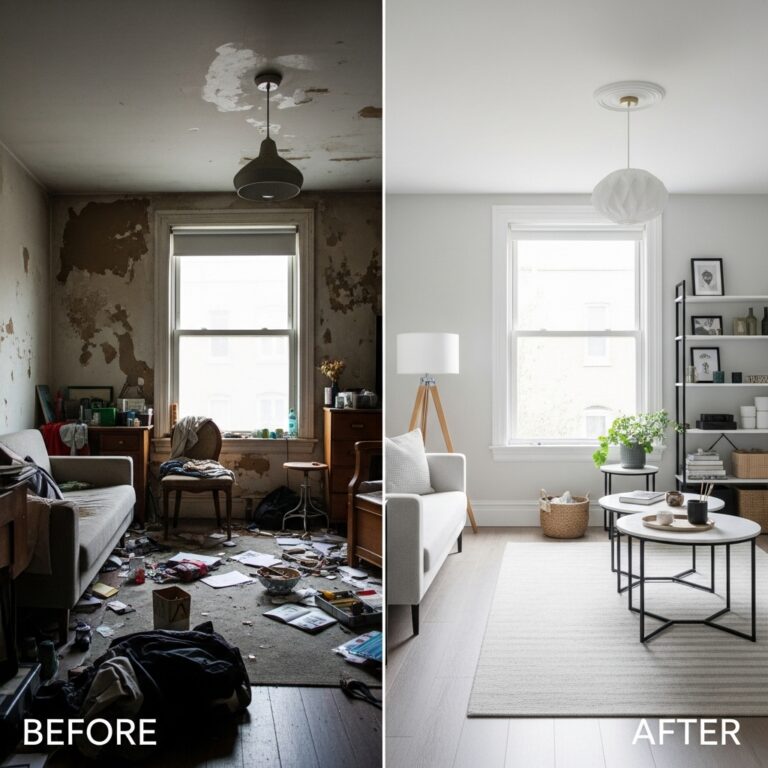
What Doesn’t Work in Small Living Rooms (From Experience) & Costly Mistakes That Made My Space Feel Cramped
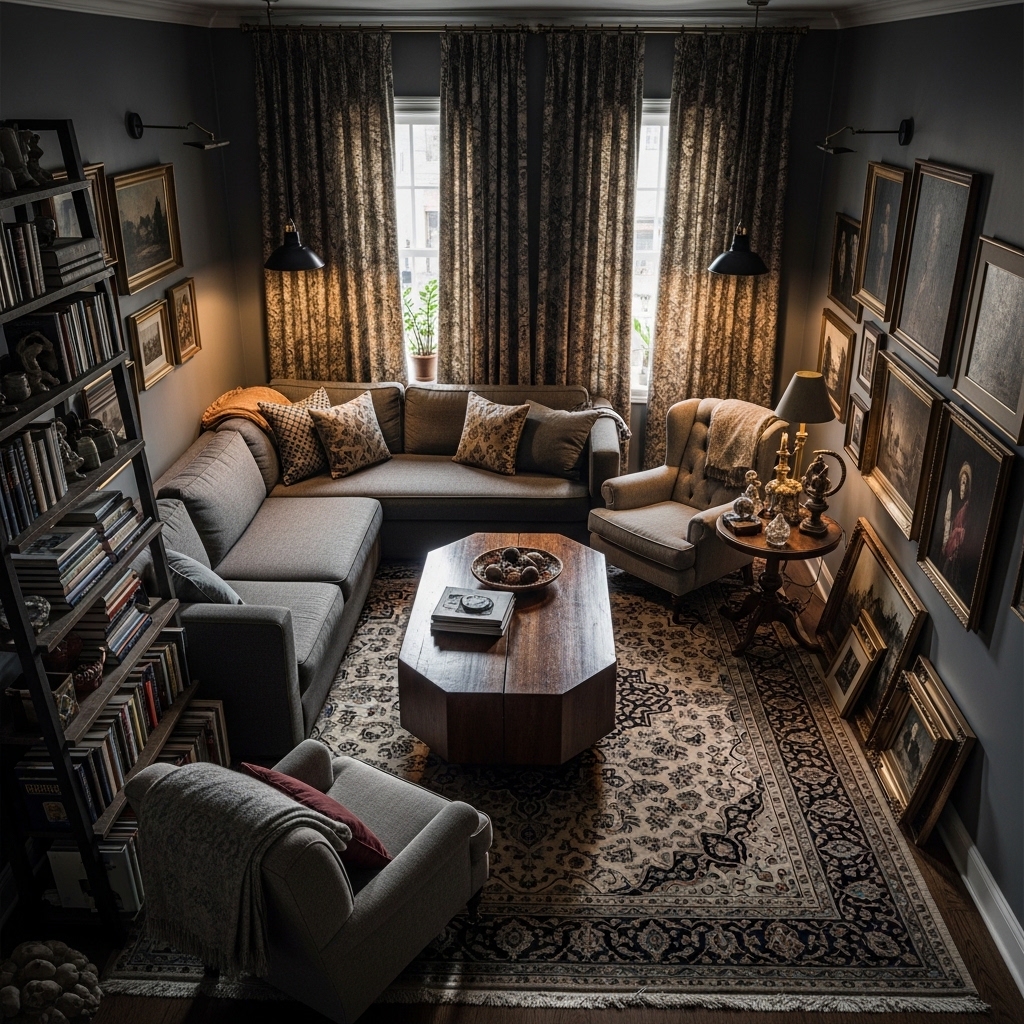
The living room should be the most comfortable room in the house. Mine was the most frustrating.
After years of trial and error, the list of failures grew long. Furniture that never fit. Layouts that never flowed. Purchases that were donated within months.
Each mistake cost money. Each mistake taught a lesson. Each lesson is now shared here so others can skip the expensive learning curve.
This guide reveals what does not work in small living rooms based on real experience. No theory. No staged photos. Just honest failures and what finally worked instead.
Why Small Living Rooms Fail Most People
Small living rooms fail for the same reasons. Too much furniture. Wrong-sized pieces. Poor layouts. Bad lighting.
The mistakes are not obvious until the room is fully furnished. By then, the money is spent and the frustration has settled in.
The Assumption That More Furniture Creates More Function
More furniture seems logical. More seating. More tables. More storage. The result is not more function. The result is less space to move.
Every piece of furniture needs breathing room. Cramped furniture is unusable furniture.
The Mistake of Buying Before Measuring
Online shopping makes it easy to buy without measuring. The sofa arrives. The sofa is too large. The return process is a nightmare.
Measuring takes five minutes. Skipping measuring costs hundreds of dollars.
What Doesn’t Work: Oversized Sectionals
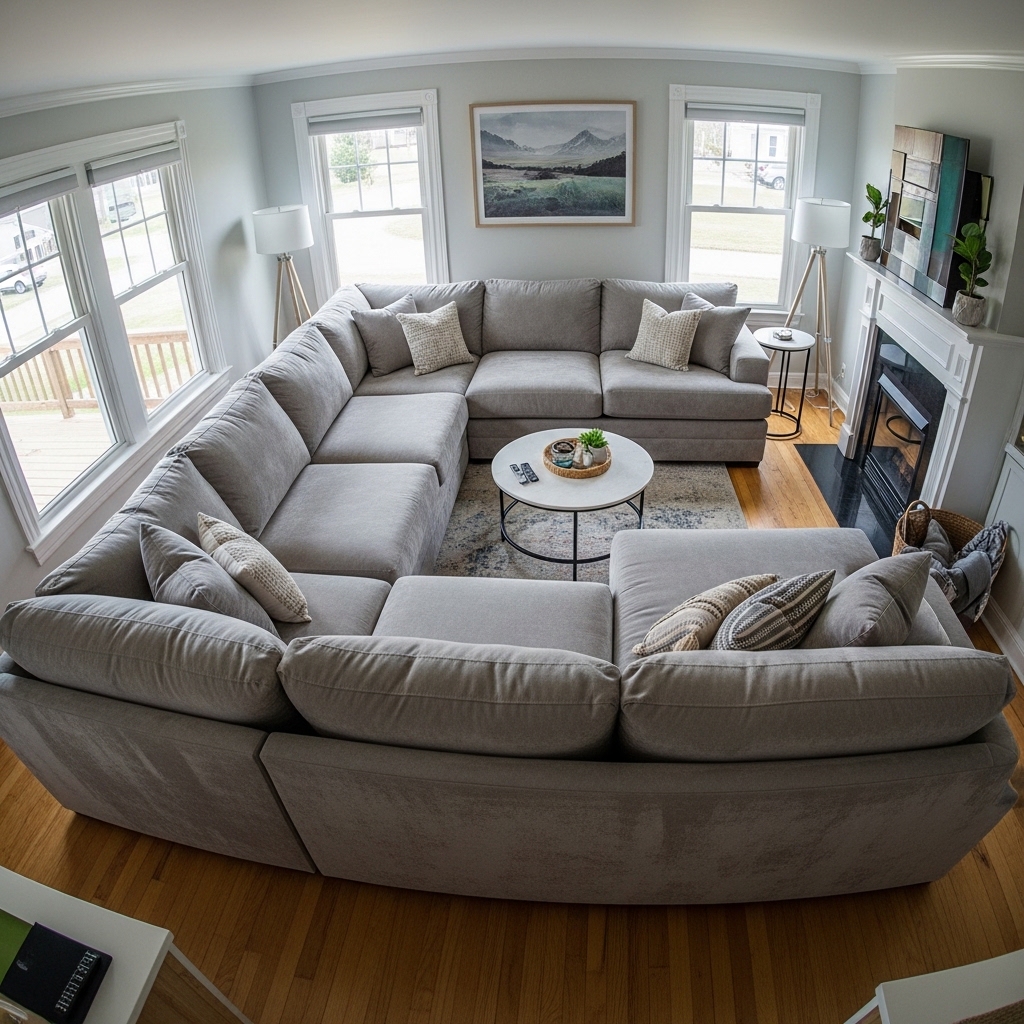
A large sectional sofa was purchased. The idea was plenty of seating for guests. The reality was no room to walk.
Why Sectionals Fail Small Living Rooms
Sectionals are designed for large spaces. They eat corners. They block walking paths. They dominate every layout.
| Sectional Size | Minimum Room Size Needed | Actual Room Size | Result |
|---|---|---|---|
| 96″ L-shaped | 15′ x 15′ | 11′ x 13′ | No walking path |
| 110″ U-shaped | 18′ x 18′ | 12′ x 14′ | Room completely filled |
What Worked Instead
A standard apartment-sized sofa replaced the sectional. The sofa was 72 inches wide. The depth was 32 inches instead of 40 inches.
The room gained back floor space. Walking paths opened up. The sofa still seated three people comfortably.
Pro Tip: Choose a sofa with a depth of 32 inches or less for small living rooms. Deeper sofas eat into walking space.
Mistake to Avoid: Do not buy a sectional without taping its footprint on the floor. Live with the tape outline for two days before purchasing.
What Doesn’t Work: Oversized Coffee Tables
A large square coffee table seemed practical. Surface space for drinks, books, and decor. The reality was a barrier in the middle of the room.
Why Large Coffee Tables Fail
A coffee table should be reachable from the sofa. A table that is too wide forces leaning. A table that is too long blocks the walking path.
| Coffee Table Size | Reachable from Sofa | Walking Path Clearance | Verdict |
|---|---|---|---|
| 48″ x 48″ square | No (too wide) | No (blocks path) | Fail |
| 42″ round | Yes | Yes (with space) | Pass |
| 36″ x 20″ rectangle | Yes | Yes | Pass |
| Two small nesting tables | Yes | Yes (nest when not used) | Best |
What Worked Instead
Two small nesting tables replaced the large coffee table. One table stayed near the sofa. The second table nested underneath when not needed.
When guests arrived, the second table pulled out for extra surface. When alone, the room felt open.
Pro Tip: Use a large tray on a small ottoman as a coffee table alternative. The tray creates a flat surface. The ottoman adds seating when the tray is removed.
Mistake to Avoid: Do not buy a coffee table wider than half the width of your sofa. A table that is too wide cannot be reached from the edges of the sofa.
What Doesn’t Work: Pushing All Furniture Against the Walls
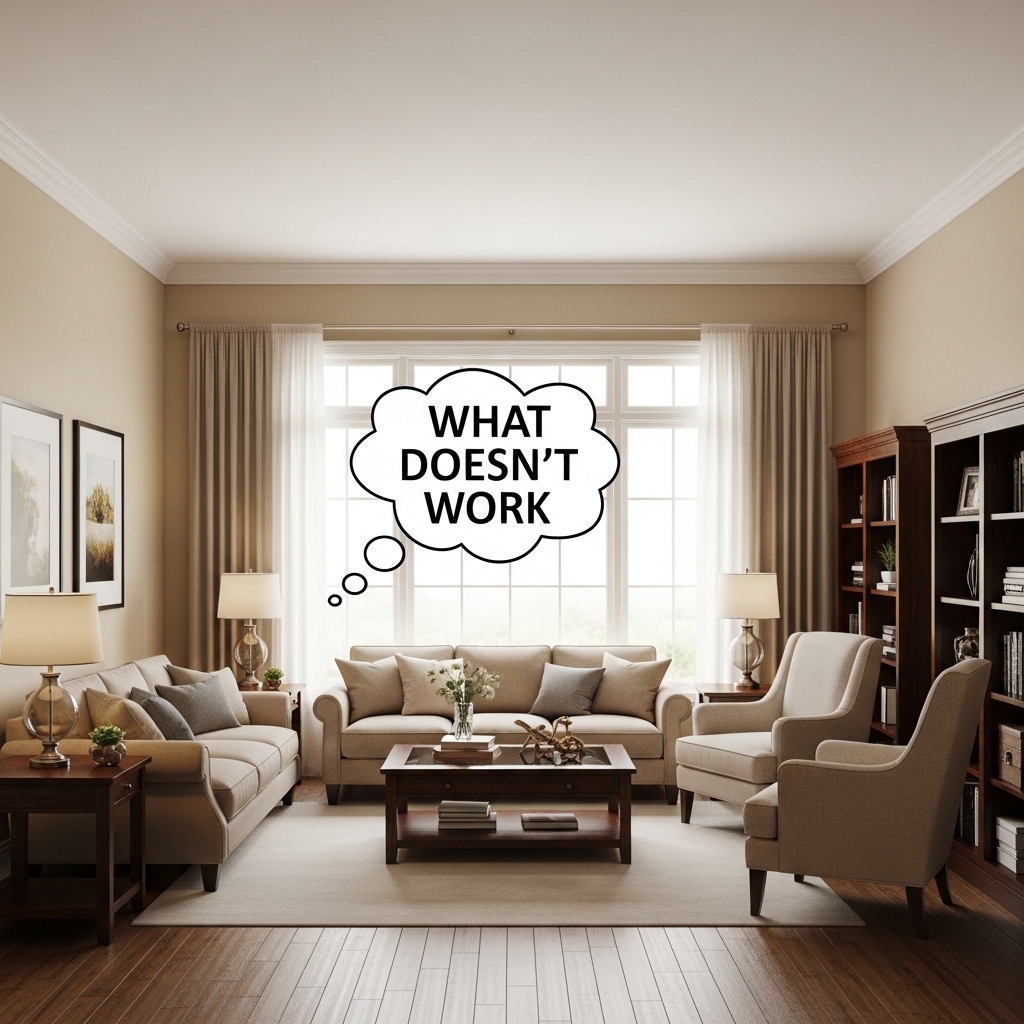
Conventional wisdom says push furniture to the perimeter to open up the center. This does the opposite.
Why Wall-Floating Fails
A ring of furniture around the walls creates an empty no man’s land in the middle. The room feels like a waiting room. The center is unusable.
| Layout | Feeling | Walking Path | Conversation Flow |
|---|---|---|---|
| All furniture against walls | Waiting room | Around the perimeter | Across a void |
| Furniture floated inward | Intentional | Through the center | Intimate and easy |
What Worked Instead
The sofa was pulled away from the wall. Not much. Six inches. The gap behind the sofa created visual depth. The room felt larger.
A small chair was floated at an angle in the corner. The angled chair broke up the straight lines. The room felt more dynamic.
Pro Tip: Float furniture so there is at least 30 inches of walking path behind it. The gap creates depth and allows traffic to pass.
Mistake to Avoid: Do not float furniture so far from walls that the room becomes a maze. Balance floating with open space.
What Doesn’t Work: Small Area Rugs
A small rug was placed in the center of the living room. The rug was the right color. The rug was the wrong size.
Why Small Rugs Fail
Visible floor around all four edges of a rug creates a frame. The frame highlights how small the room actually is.
| Rug Size | Room Size | Effect |
|---|---|---|
| 5′ x 7′ | 12′ x 14′ | Rug floats, room looks chopped |
| 8′ x 10′ | 12′ x 14′ | Front legs of sofa on rug, room unified |
| 9′ x 12′ | 12′ x 14′ | Most of floor covered, room feels larger |
The Rug Rule That Works
The front legs of the sofa should sit on the rug. The front legs of chairs should sit on the rug. The rug should extend beyond the edges of the coffee table.
A rug that is too small fails this rule. A rug that is too large creates wall-to-wall carpeting.
What Worked Instead
The small rug was moved to the bedroom where it fit correctly. The living room received a larger rug. The front legs of the sofa sat on the rug. The room felt connected for the first time.
Pro Tip: Use rug tape to keep large rugs flat. Rug tape prevents curling corners and tripping hazards.
Mistake to Avoid: Do not push a too-small rug against the wall. Floating rugs look worse than no rugs at all.
What Doesn’t Work: Matching Furniture Sets
A matching sofa, loveseat, and coffee table were purchased together. The room looked like a showroom. It also looked boring.
Why Matching Sets Fail
Matching sets lack personality. They look like everything came from one store on one day. There is no story. No history. No soul.
| Room Type | Matching Set | Collected Look |
|---|---|---|
| Visual interest | Low | High |
| Personality | None | Plenty |
| Flexibility | Fixed | Adaptable |
| Cost | Higher | Lower (thrifted pieces) |
What Worked Instead
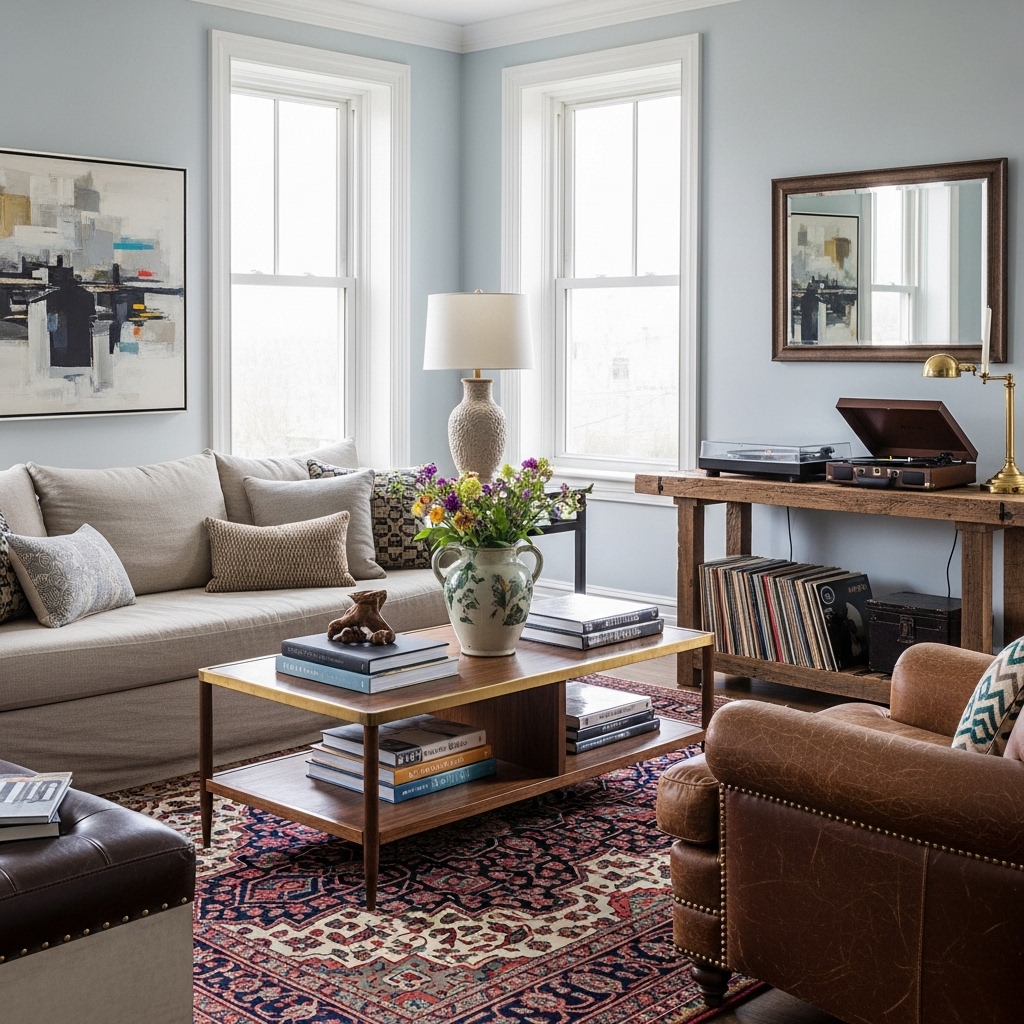
The matching loveseat was donated. A thrifted armchair replaced it. The chair was a different color and different style.
The room became more interesting. The mismatched pieces created conversation. The room felt like a home, not a catalog.
Pro Tip: Repeat a color or texture from the mismatched piece elsewhere in the room. Repetition creates cohesion without matching.
Mistake to Avoid: Do not mix more than three different wood tones in one room. Two is safe. Three is expert level.
What Doesn’t Work: Dark Paint Colors
A dark navy accent wall was painted. The color was beautiful in the store. The color was oppressive on the wall.
Why Dark Colors Fail in Small Living Rooms
Dark colors absorb light. Small living rooms have limited light to begin with. The result is a cave-like atmosphere.
| Wall Color | Light Reflection | Room Feel | Best For |
|---|---|---|---|
| Dark navy | Low (absorbs light) | Cave-like, heavy | Large rooms with abundant light |
| Charcoal gray | Low | Oppressive, dark | Accent walls only |
| Warm white | High (reflects light) | Open, airy | Small rooms, any light |
| Light beige | High | Warm, inviting | North-facing rooms |
What Worked Instead
The dark navy accent wall was repainted warm white. The entire room became one color. The ceiling was painted a lighter version of the same white.
The room felt twice as large. The light reflected off the walls. The dark corner that was always shadowed became bright.
Pro Tip: Paint the ceiling a lighter version of your wall color. White ceilings with colored walls create a harsh line. Matching tones create an enveloping feel.
Mistake to Avoid: Do not paint a small living room dark colors. Save dark colors for powder rooms or large spaces.
What Doesn’t Work: Floor Lamps That Take Up Too Much Space
A large floor lamp with a wide base was placed next to the sofa. The lamp provided good light. The lamp also blocked the walking path.
Why Large Floor Lamps Fail
Floor lamps need floor space. Wide bases consume inches that matter in small rooms. Walking paths narrow. The room feels cramped.
| Lamp Type | Base Size | Space Needed | Best For |
|---|---|---|---|
| Arc floor lamp | 12″ diameter | Large footprint | Corners only |
| Torchiere | 10″ diameter | Medium footprint | Behind furniture |
| Slim floor lamp | 6″ diameter | Small footprint | Anywhere |
| Wall sconce | 0″ (wall-mounted) | No floor space | Best for small rooms |
What Worked Instead
The large floor lamp was moved to a corner. A wall sconce was installed above the sofa. The sconce provided task lighting without consuming any floor space.
The corner where the lamp used to sit became open. The walking path widened. The room felt larger.
Pro Tip: Use plug-in wall sconces with cord covers. Cord covers hide the cord against the wall. No electrician required.
Mistake to Avoid: Do not place floor lamps in walking paths. Lamps get knocked over. People trip.
What Doesn’t Work: Too Many Throw Pillows
Throw pillows seem harmless. A few add color and texture. Too many become clutter.
The Throw Pillow Problem
Pillows ended up on the floor. Pillows ended up on the chair. Pillows ended up everywhere except the sofa.
Each pillow removal was a small chore before sitting down. The chore added up to daily frustration.
| Number of Pillows | Sofa Usability | Visual Clutter |
|---|---|---|
| 2 | Easy to sit, no removal needed | Minimal |
| 4 | Some removal needed | Moderate |
| 6 | Removal required before sitting | High |
| 8+ | Sofa is unusable as seating | Extreme |
What Worked Instead
Six pillows were reduced to two. The sofa became usable again. No pillows were moved before sitting. No pillows lived on the floor.
The two remaining pillows were rotated seasonally for a fresh look without adding clutter.
Pro Tip: Keep pillow inserts but swap covers seasonally. Cover storage takes less space than pillow storage. Covers cost less than new pillows.
Mistake to Avoid: Do not buy pillows without removable, washable covers. Covers that cannot be washed become stained and gross.
What Doesn’t Work: Blocking Windows with Furniture
A bookshelf was placed in front of a window. The window was small. The bookshelf made it smaller.
Why Window Blocking Fails
Windows are sources of light and views. Blocking a window reduces light and eliminates the view. The room feels smaller and darker.
| Window Treatment | Light Entering | View Visible | Room Feel |
|---|---|---|---|
| Unblocked window | Full light | Full view | Open, large |
| Partially blocked | Reduced light | Partial view | Constricted |
| Fully blocked | Minimal light | No view | Cave-like, small |
What Worked Instead
The bookshelf was moved to an empty wall. The window was left completely uncovered except for sheer curtains.
Light flooded into the room. The view of the trees outside became part of the room. The space felt connected to the outdoors.
Pro Tip: Hang curtains that stack completely off the window when open. Curtains that cover part of the window when open defeat the purpose.
Mistake to Avoid: Do not place any furniture taller than 24 inches in front of a window. Low furniture preserves the view. Tall furniture blocks it.
What Doesn’t Work: Ignoring Vertical Space
All decor was placed at eye level. The walls above were empty. The room felt short and squat.
Why Vertical Space Ignoring Fails
Eyes travel horizontally across a room with low decor. The ceiling feels low. The room feels cramped.
| Decor Placement | Eye Movement | Ceiling Feel |
|---|---|---|
| All at eye level | Horizontal only | Low, squat |
| Varied heights (floor to ceiling) | Vertical and horizontal | Tall, open |
What Worked Instead
Art was hung higher on the walls. A tall bookshelf was added in the corner. A floor lamp drew the eye upward.
The ceiling felt higher. The room felt larger. The vertical space that was previously empty became part of the design.
Pro Tip: Hang art so the center is at 57-60 inches from the floor. This is gallery height. It works in most rooms.
Mistake to Avoid: Do not hang art too high. Art that is too high feels disconnected from the furniture below it.
What Doesn’t Work: Clear Glass Coffee Tables
A glass coffee table seemed like a good idea. It would disappear visually. It would not add visual weight.
Why Glass Coffee Tables Fail
Glass coffee tables do not disappear. They collect fingerprints, dust, and water rings. Every imperfection is visible.
| Table Type | Visual Weight | Maintenance | Durability |
|---|---|---|---|
| Glass | Medium (shows everything) | High (constant cleaning) | Low (scratches, chips) |
| Wood | High (solid) | Low | High |
| Acrylic | Low (semi-transparent) | Medium (scratch-prone) | Medium |
What Worked Instead
A solid wood coffee table replaced the glass table. The wood table added warmth. The wood table hid fingerprints and water rings.
The room felt cozier. The maintenance dropped significantly.
Pro Tip: Choose a coffee table with a lower shelf. The shelf adds storage without adding visual weight. Baskets on the shelf hide clutter.
Mistake to Avoid: Do not choose a glass coffee table for a high-traffic living room. Glass shows every smudge and requires constant cleaning.
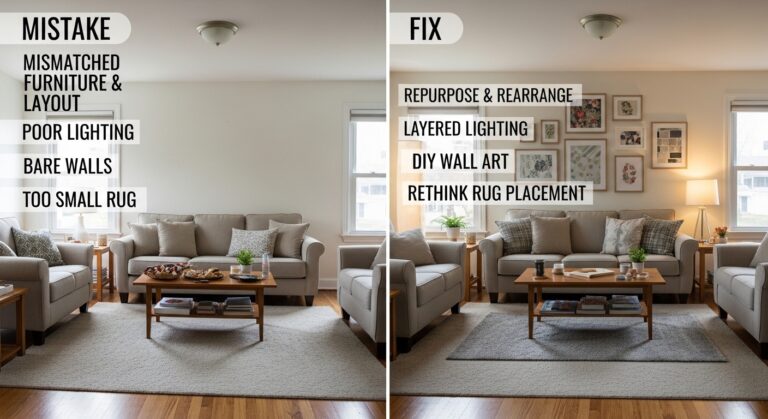
The Small Living Room That Finally Worked: Before and After
| Element | Before (What Didn’t Work) | After (What Worked) |
|---|---|---|
| Sofa | 96″ sectional | 72″ apartment sofa |
| Coffee table | 48″ square glass | 36″ round wood |
| Layout | All furniture against walls | Sofa floated 6″ from wall |
| Rug | 5’x7′ (too small) | 8’x10′ (front legs on rug) |
| Furniture | Matching set | Mixed pieces, thrifted chair |
| Wall color | Dark navy accent | Warm white throughout |
| Lighting | One large floor lamp | Wall sconce + slim floor lamp |
| Pillows | 6 pillows | 2 pillows |
| Window | Blocked by bookshelf | Unblocked, sheer curtains |
| Vertical space | Empty walls | Art at varying heights |
The 7-Day Small Living Room Fix Plan
Day one: Remove everything from the room. Every single item.
Day two: Measure the room. Note walking paths, door swings, and window locations.
Day three: Select the largest piece of furniture (sofa). Place it first. Float it if possible.
Day four: Add the second largest piece (chair or loveseat). Float at an angle if space allows.
Day five: Place the rug. Ensure front legs of all seating sit on the rug.
Day six: Add lighting. One floor lamp. One table lamp. One wall sconce.
Day seven: Add decor last. Two pillows. One piece of art hung at correct height.
Conclusion
Small living rooms fail for predictable reasons. Oversized furniture. Wrong-sized rugs. Poor layouts. Dark colors.
Each mistake was made. Each mistake cost money. Each mistake taught a lesson.
The lessons are simple. Measure before buying. Float furniture away from walls. Choose larger rugs. Avoid matching sets. Use light colors. Add vertical interest. Do not block windows.
Start with one fix today. Move the sofa six inches from the wall. Remove two pillows. Swap a dark lamp for a slim one.
Small changes compound into dramatic transformations. The small living room can feel open, functional, and comfortable.
Take back your living room starting today. What does not work is now clear. What does work is waiting to be tried.